This is the essential Exbats release. Loaded with hits and it’s own quirky ambition, this is a true fan-favorite. “I Got The Hots For Charlie Watts” was originally released in 2017 as a cassette on the late Burger Records. Featuring the tracks “Hercules, I’m A Witch, I Got Fights, I Was in Your Video, Kill Yr Boyfriend” and 2027, this is early Exbats at their most contagious sound. Written and recorded while Inez was still in high school and recorded on our second visit to Midtown Island Studios with Matt Rendon this record just about jumps out of it’s grooves. If you have the long out of print vinyl “E is 4 Exbats” this will fill in some blanks (“O Satan, I Wanna Fuck Bucky Barnes, What’s Good, Psycho, Live in Black“) and gives a clear picture of where we started.
A cool kid and her dad living in the middle of nowhere AZ, making songs like it mattered. and driving around the desert to play them (loud) for anyone who would listen. Let us know if you want it signed!
First 50 Ship with bonus early pandemic era 12″ single re-recording of “Hercules“.
Originally released January 19th, 2018
Inez McLain/drums,microphone Kenny McLain/guitar,microphone Matt Rendon/bass,mixing
Around the time “Running Up That Hill” took over the world earlier this summer, Kate Bush spoke about the phenomenon. As ever in her rare interviews, she was polite, solicitous and discreet to a fault. “I never listen to my old stuff,” she told the interviewer. “I hadn’t heard it for a really long time.”
For many of us in MOJO’s world, of course, “Running Up That Hill” and its parent album, “Hounds OfLove”, has been more or less a constant soundtrack for the past 37 years. In this month’s new MOJO, we dig deep into the mysteries of Bush’s uncanny classic and uncover truths and insights that’ll hopefully surprise Kate Ultras as well as Kate neophytes.
“Kate’s always in charge, ”Hounds Of Love” engineer Brian Tench tells us. “She asks your opinion, she asks questions, but she knows what she wants. She’s not happy until she hears what she wants to hear.”
Elsewhere, we put a clutch of cult heroes under the spotlight, with deep features on Neu!, Jackie Leven and Be-Bop Deluxe genius Bill Nelson. The Byrds talk us through their classic era; we get the inside story on Joni Mitchell’s return from the wilderness; and The Libertines tell us what they can remember about making “Up The Bracket“.
Plus: T Bone Burnett on Dylan, O’Brother and Billie Eilish, How To Buy The Staple Singers, Marcus King, Wilco, Ian Carr, Leonard Cohen, Julian Lennon, Lee “Scratch” Perry, Makaya McCraven… and all back to Wonder Woman’s!
It is now 11 years since Kate Bush was happy enough to release any new music. But what happens next remains tantalisingly uncertain – “Gardening,” she told Woman’s Hour, “is my thing now.” As it was, perhaps, in 1985: “Go into the garden/ Go under the ivy/ Under the leaves/ Away from the party…”
“Knees Deep,” the latest track from “Expert In A Dying Field” from The Beths, is all about singer Liz Stokes acknowledging her hesitance and fear. Appropriately, then, the video is a bungee jumping-focused visual. The band members gradually get into the thrill-seeking pastime before eventually convincing the not-so-sure Stokes to give it a go herself.
Stokes says of the song, “I’m the kind of person who wants to go swimming, but takes like ten minutes to get all the way into the cold water, slowly and painfully. I hate this about myself, and am kind of envious of people who can just jump straight in the deep end. In a shocking twist, this is also a metaphor?! For how I wish I was the kind of person who was brave and decisive instead of cautious and scared.”
“Knees Deep” is out now!, Wrote this one in late 2021, it was a late addition to the album and we’re glad you can hear it before the album comes out next month.
The Beths are: Elizabeth Stokes Jonathan Pearce Benjamin Sinclair Tristan Deck
“Knees Deep” features on The Beths’ forthcoming album “Expert In A Dying Field”, out September 16th via Carpark Records and Ivy League
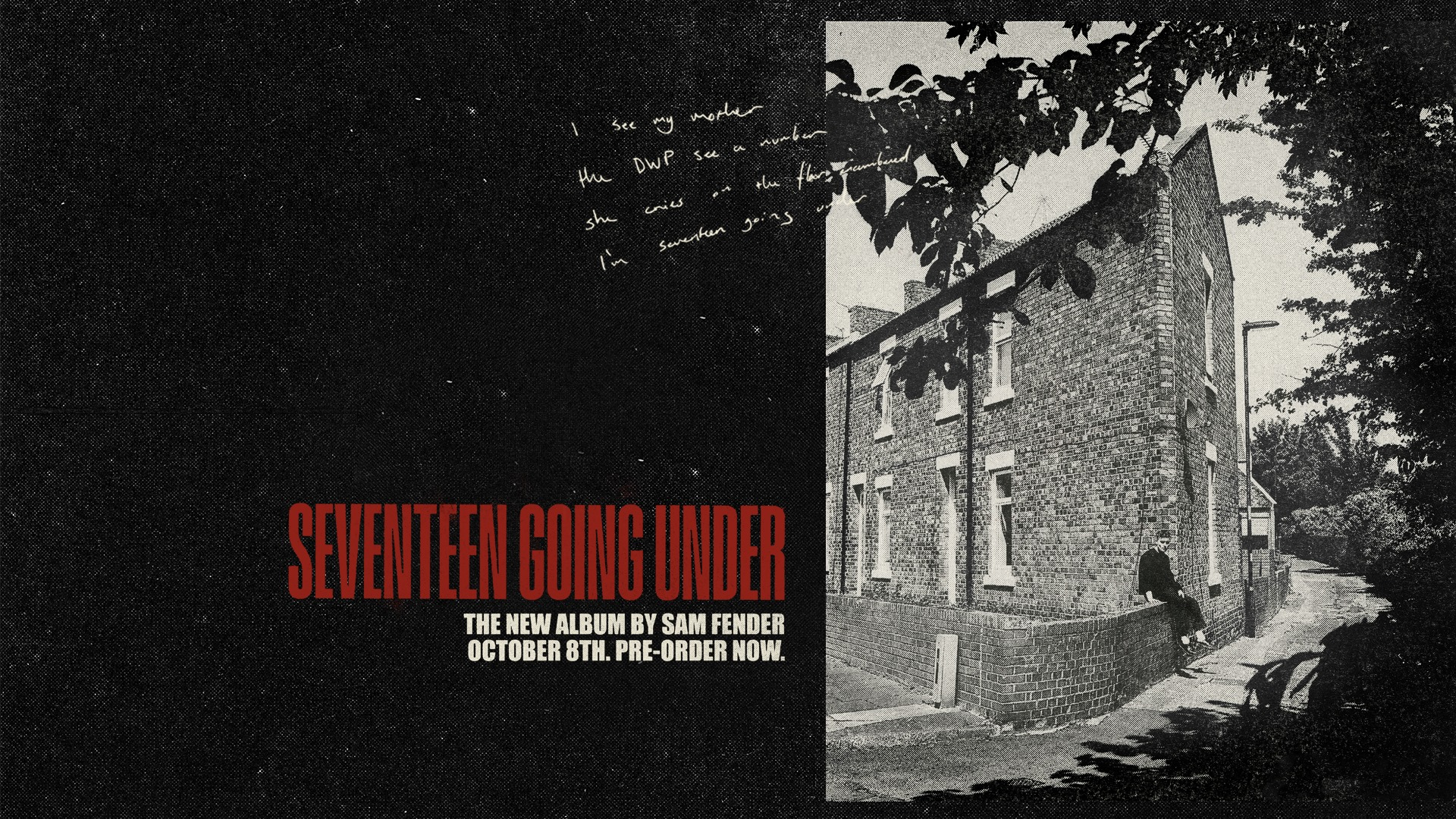
It just keeps getting better for Sam Fender, one of England’s biggest songwriters. With his second album, the brilliant and personal “Seventeen Going Under“, released in November 2021, Fender cemented his place in the pantheon of great British songwriters, earning praise from Adele, Elton John, and many more in the process. Since hearing the songs I had been a mild fan of Sam Fender during his first album cycle, but it wasn’t until late last year when “Seventeen Going Under” that I realized what a special artist he could be. Not only is his voice beautiful and his song writing poetic and affecting, he’s such a genuine, humble person to his love of Guinness, New York City, and Bruce Springsteen.
Sam has found a way of combining his northern English upbringing with a sense of universality that is rare these days, and he deserves the many accolades he’s receiving right now for “Seventeen Going Under”.
And it didn’t stop there — since the release of “Seventeen Going Under”, Fender was awarded the prestigious Ivor Novello song writing prize for “Best Song Musically and Lyrically,” supported The Rolling Stones at a show in London’s Hyde Park, headlined dozens of festivals around Europe, and, most recently, was nominated yesterday (July 26th) for the Mercury Prize, which awards the best album released in the UK.
It’s clear that the personal and therapeutic direction of “Seventeen Going Under” struck a chord with Fender’s audience just take a look at the heartfelt and deeply sincere praise in the YouTube comments of “Seventeen Going Under.” Not only was the title track’s iconic line “I was far too scared to hit him/ But I would hit him in a heartbeat now” a TikTok trend for several months, but thousands have rallied behind Sam Fender and his poetic working class stories, earning him the colloquial title of “Geordie Springsteen.
Fender’s identity as a Geordie — a nickname for people from Newcastle and its surrounding towns in the north east of England — is a major part of lyrics and persona, but his music itself is directly inspired by Springsteen’s detailed canon, complete with barnstorming tenor sax lines, expansive and anthemic chord combinations, and lyrics that address hardship and epiphanies.
Fender admits that Bruce Springsteen still looms large in his overall connection to music, nostalgia, and stories. “I saw him in Manchester and I just bawled my eyes out the whole show,” he says “Every song just means that much to me. Every single one of his songs is attached to a memory I have in my own life.” But unlike his fellow Springsteen worshipers from America (looking at you, Jack Antonoff), Fender seeks not just to emulate the cathartic sonics of The Boss, but to bring those ideas to a more modern, urgent place.
Take, for instance, the first lines of “Seventeen Going Under,” where Fender reminisces on his adolescence, crooning, “I remember the sickness was forever/ I remember snuff videos.” Already, within two lines, there’s an image of terminal illness followed by an image of violence, images that are both hyperbolic and far too real for a young boy to experience. The rest of the album follows suit with a myriad of personal epiphanies, reflecting on the various ways in which boys are urged to hold their own emotions hostage, the damage it inevitably does to the psyche, and the ways in which he’s rebuilding himself.
Power pop miniaturist Tony Molina is back with another batch of minute-long masterpieces, stylistically falling somewhere in between the Weezer cribbing of 2014’s “Dissed and Dismissed” and the ’60s pop classicism of 2016’s “Confront the Truth“.
“In The Fade” finds Molina still incorporating the delicate ’60s folk rock elements from his recent work, while also returning to some of the distortion and volume of his early days. The result is an album that offers something from every phase of his catalogue, almost like a Tony Molina greatest hits, except with all new songs. Very few artists can credibly evoke everything from The Beatles, to The Fastbacks, to Weezer, to Belle and Sebastian, and even fewer can do that while still sounding completely like themselves–but that’s why there’s only one Tony Molina.
Summer Shade Label was founded in Los Angeles and Boston in the year 2020 as a new bi-coastal, boutique label with an emphasis on riffs and hits. The new presence is a part of Run For Cover’s growing family and will allow established acts a new home while pushing young undiscovered artists to a wider audience, fuelled by a for-artists by-artists ethos with all songwriters owning their own music. New music is the core of Summer Shade, with a curated flow of new music coming to you through various forms of streaming and visual media.
The label’s first release comes from Tony Molina, one of modern guitar pop’s best and most unique songwriters. The Bay Area musician is serious about the craft that goes into songwriter, and not much else. Following “Kill The Lights“, his more pared-back 2018 full-length, Molina found that some listener reactions threw him off. “I kept hearing: ’Oh, he’s maturing, he’s getting into other shit, writing more mature stuff,” he explains. “I thought, ’Man, that’s kinda lame, no I’m not…’
“I Don’t Like That He” from Tony Molina’s album “In The Fade”, out August 12th on Summer Shade and Run For CoverRecords.
Growing up together in Kawartha Lakes, Heaps (Tanner Paré, Fred Kwon and Warren Frank, formerly of the Kents) carry themselves with a casual confidence in knowing who they’ve become in each other’s company. They look back over their shoulders at the question they first begged on their 2020 debut “What Is Heaps?” with a breezy clarity on their new EP, where gleaming dream-pop guitar on “Didn’t Matter Anyway” gives way to the understated soul mantra of “Laid Back” before the latter mutates into a glitchy post-rocker ahead of its second minute.
“Little Blue” is out now!, We wrote this over the past couple years through zoom calls, rehearsal rooms and little cottage retreats. Anything we could do to get around lockdowns and burnout. Anything to spend time together, really.
We loved the process of creating this EP. Feels like you can hear that in the tunes.
Official lyric video for Heaps’ new single ‘Didn’t Matter Anyway’. Heaps’ new EP, “Little Blue”, will be out everywhere Friday, July 22nd.
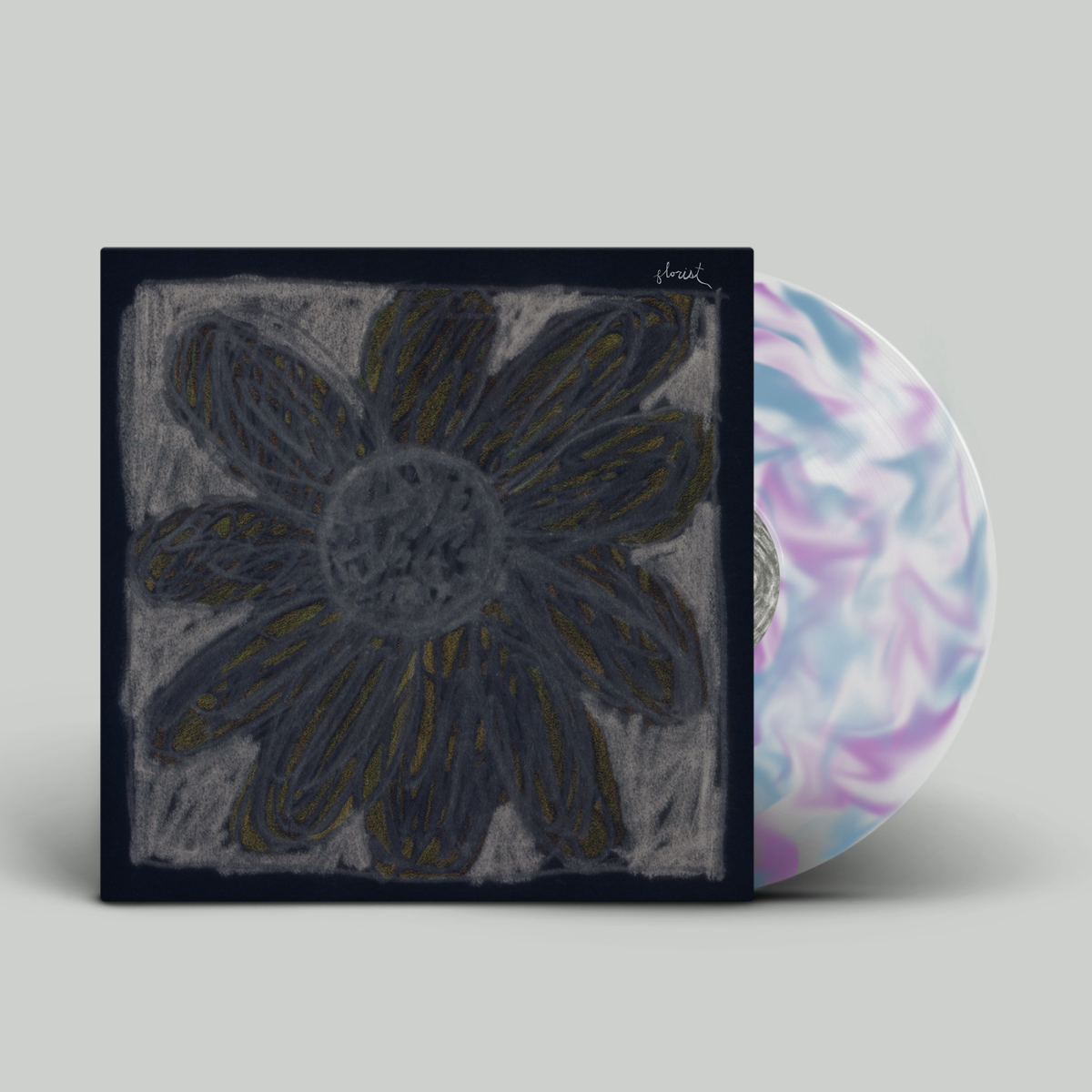
Florist’s fourth full-length album, and the first deserving of a self-titled designation. 19 tracks that culminate the decade-long journey of friendship and collaboration. Born of a concoction of love, loss and the power of family and friendship, Florist’s new self-titled effort is recorded over several hazy summer nights in Hudson Valley — finds the band at the intersection of staking out new ground and falling in love with each other all over again.
“It’s a portrait of who we are as collaborators, as really long term friends and as extended family as well,” leader Emily Sprague says of her band’s new self-titled album. Florist is also the strongest album of the band’s decade-long career, an immersive work that conveys the magic of the earth and of family, and the whole of the band’s heart.
It arrives just after the cap of a winding journey. In 2017, shortly after the release of the band’s sophomore record, “If Blue Could Be Happiness”, Sprague sequestered herself in Los Angeles, thousands of miles away from friends and family, and from the physical void and spiritual crisis left in the wake of her mother’s death. There, she took up surfing and released“Emily Alone“, which was essentially a solo album released under the Florist moniker.
Florist’s excellent self-titled new album came out this month and successfully marries vocalist Emily A. Sprague’s solo ambient soundscapes with the autobiographical folk songs she writes alongside her bandmates. “Feathers” falls into the latter category, Sprague’s delicate voice backed by a shimmering slide guitar, but the album is best consumed whole; a transportative experience.
Only after months of self reflection and therapy did Sprague realize that life in a silo is no way to live. That a life directed by fear is not much of a life. “The trauma response to losing my best friend, my mom, was to feel really afraid to get close to anybody ever again,” she says. “It’s sort of cheesy, but I realized that life is better when you share it. The answer isn’t to isolate yourself and be alone.”
So she began writing Emily Alone’s companion, the other side of the binary, a record that rings distinctly of Sprague’s tender and poetic spirit, filled with nature and wonder and tears, but without all the loneliness and seclusion. She also adopted a dog, who, she says, “completely changed my life.” “My mind just started exploding with all these thoughts about what it means to live with others, and live with love and care collaboration.”
Then, for all of June of 2019, amid a hot and rainy summer, Sprague (guitar, synth, vocals), Jonnie Baker (guitar, synth, sampling, bass, saxophone, vocals), Rick Spataro (bass, piano, synth, vocals) and Felix Walworth (percussion, synth, guitar, vocals) convened in a rented house in the Hudson Valley, to live and work together. It was the first time the quartet recorded that way, and for that long. “In the past we’d meet up for a couple of days, or one day here and there,” Spague recalls. “Living together for a month is a really big part of why the arrangements are the way they are, and also why the instrumentals are such a huge part of the record.”
They set up their gear on the screened-in front porch, which looked out onto a canopy of trees, allowing the sounds of nature to play a leading role throughout. Then, they experimented. The production and recording of the album directly reflects the organic ways in which the band worked that month, with whispering voices, crickets, rain and birds accenting the aleatoric quality of the instrumentation, each player drawing from the communal energy of the woods and their interpersonal bonds.
Poignant, guitar-centric meditation “Red Bird Pt. 2 (Morning)” carries on Sprague’s concern with love, loss and the natural world. “She’s in the birdsong/She won’t be gone,” she sings of her late mother, proffering a merciful sense of resolve. “Feathers” finds her facing her fears over threads of bowed guitar while “Dandelion” meditates on the beauty of our finite existence, pairing synth and fingerpicking with the spirit of Emily Dickinson. “Sci Fi Silence” occupies a liminal space between soul baring confession and contemplative new age, a swirl of analogue synth that culminates in a full-band meditation. “You’re not what I have, but what I love,” the band sings over and again until the words grow into a kind of mantra, a thing that at once pierces and heals.
The quartet played through muggy days and breezy nights, and often impromptu. “In between working on songs specifically, somebody would be sitting on the porch playing a little instrumental piece, and somebody else would be in the kitchen making dinner and stop, and go to the porch and pick up a random instrument,” Sprague explains. These creative bursts became the album’s ambient instrumental bridges, like “Variation” and “Jonnie on the Porch,” gentle moments that portray their life together in that particular moment. The bells heard throughout the album are from a collection housed in the rental, the animals were their neighbours.
The result is 19 tracks that feel like the culmination of a decade-long journey, their fourth full-length album, but the first deserving of a self-titled designation. “We called it Florist because this is not just my songs with a backing band,” Sprague explains. “It’s a practice. It’s a collaboration. It’s our one life. These are my best friends and the music is the way that it is because of that.”
After making the record they always knew they could, together, as one, Sprague could no longer live on the west coast without her band and blood. So, she returned home. Last year, she moved back to The Catskills to be closer to her father and her creative collaborators. She misses surfing, but finds peace in the area’s natural landscapes, and through a strengthening sense of physical reconnection. “A goal is to share the band’s connectedness and relationship, but also how we’re all connected,” she says. With Florist, Emily is no longer alone.
Florist’s self-titled album, out July 29th on Double Double WhammyRecords
Molina has dedicated his solo career to various guitar-pop sounds “In the Fade” is where you’ll find them all, The California-born songwriter started out in DIY hardcore bands, and took to releasing bite-sized power-pop tunes as a solo artist over a decade ago.
Amid acclaim for his restrained 2018 album “Kill The Lights”, one particular notion stuck in Tony Molina’s craw. “I kept hearing: ‘Oh, he’s maturing, he’s getting into other shit, writing more mature stuff,” he recalls in press materials. “I thought, ‘Man, that’s kinda lame, no I’m not … ’” As if to prove that his older sounds weren’t “immature,” and that he owns every style he’s explored across his singular career, the micro-pop iconoclast made “In The Fade”.
His longest record yet at 18 minutes, it encompasses the power-pop fuzz of “Dissed and Dismissed” and the swaggering guitar-monies of Ovens, It was with Ovens that Molina found his voice as a songwriter as well as the ‘60s acoustic-folk flourishes of “Confront theTruth” and “Kill the Lights”, all tied together with the unerring ear for melody and wry humour that define Molina’s solo output. Simply put, it’s an album that only Tony Molina could make, made on no one’s terms but his.
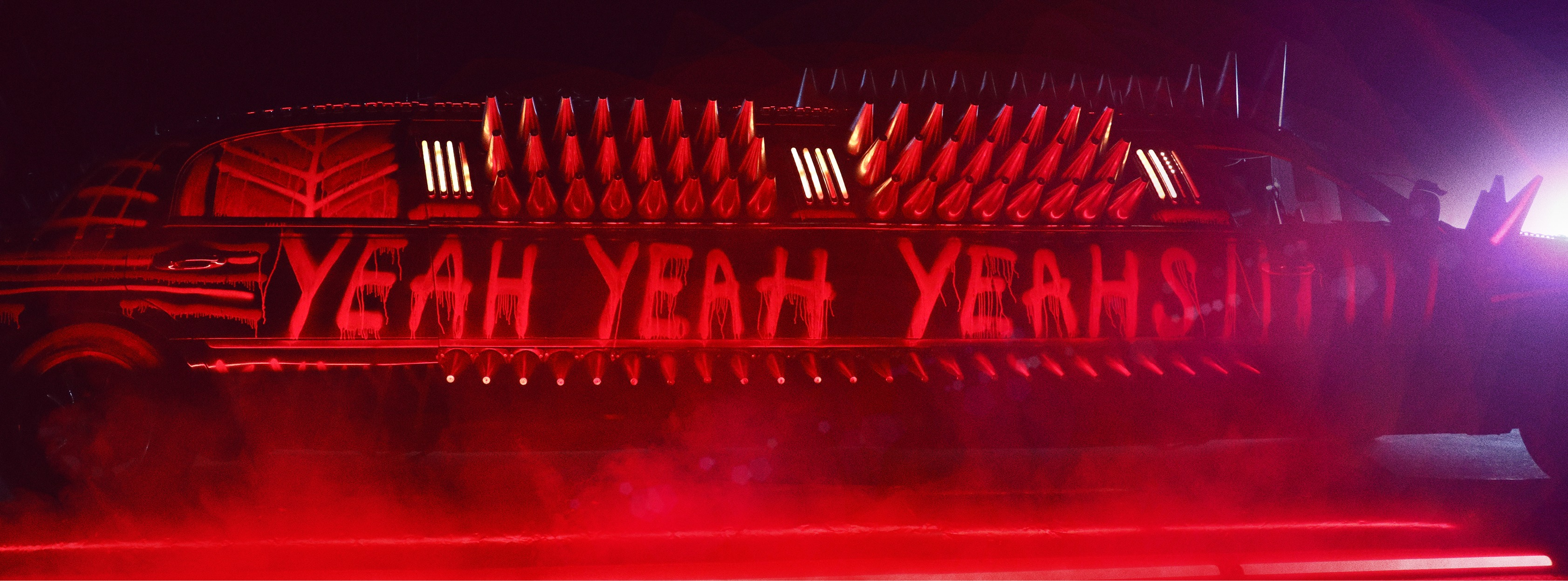
Back in June, the Yeah Yeah Yeahs announced their first album in nearly a decade, “Cool It Down”The announcement was joined by the gorgeous and sombre single “Spitting Off the Edge of the World” in collaboration with Perfume Genius.
“‘Burning’ is a song about that feeling, smoke signals for the soul. Begging to cool it down, just doing it the best we know how. Nick and I nodded to Frankie Valli’s ‘Begging,’ with the line ‘oooh lay your red hand on me baby.’ We’ve cut a rug to many a soulful sixties bangers in our day, it was in our DNA by the time we wrote ‘Burning,'” Karen O said of the single.
“Back when I was 19 living in the East Village, one night a roommate dragged me out of the apartment for an impromptu drink across the street,” Karen O shared in a statement. “I left a votive candle burning on a plastic Yaffa block which in my absence set flame to my room. Within an hour and a half of having one drink down the block firefighters had come and gone extinguishing the fire, I came home to find that a natural disaster had occurred (to my room) and most of my stuff, lost in the flames. All electronic goods were melted and demolished like my laptop, cameras, etc., but oddly enough the items that held the most sentimental value remained intact like sketchbooks, a favourite sweater with hearts across the chest, and photographs. I had photos of my parents in their youth where the fire burnt around the two of them as if there was some intangible force field protecting them, many photos like that, mysteriously leaving the beloved subjects untouched.”
She continued: “If the world is on fire I hope the most beloved stay protected and that we do all we can to protect what we cherish most in this life. ‘Burning’ is a song about that feeling, smoke signals for the soul. Begging to cool it down, just doing it the best we know how. Nick [Zinner] and I nodded to Frankie Valli’s ‘Begging,’ with the line, ‘Oooh, lay your red hand on me, baby.’ We’ve cut a rug to many a soulful ’60s banger in our day, it was in our DNA by the time we wrote ‘Burning.’”
Secretly Canadian Records It’s the second single from the trio’s forthcoming album “Cool It Down“, which is out September 30th.
The Los Angeles-based three-piece band and design collective Julie has shared two new tracks, “pg.4 a picture of three hedges” and “through your window” The tracks mark the first official release from the shoegaze group since their independently released 2021 EP “Pushing Daisies“. Despite the band’s DIY ethos, they have garnered a bit of a cult following, with standouts like “flutter” amassing thousands of streams. Julie seems to exist on the edge of a knife, the threat of ferocity laying dormant until the moment comes for them to cut deep.
There’s a sustained tension on “pg.4 a picture of three hedges” that crescendos after the should-be-sweet confession, “I like it when you smile.” Instead, the song cliff-jumps into an abyss of blistering, overdrive-drenched guitars and razor-sharp basslines.