British bedroom Indie queen, Nilüfer Yanya is a London-based singer-songwriter known for soft-spoken music that packs an emotional punch. She released her first EP in 2016, launching her career into the festival circuit; coming out with her debut album “Miss Universe” in 2019. As she’s progressed, she’s honed her talent while keeping her original jazzy bedroom pop style. Her release, “Feeling Lucky?”is a three-track EP with heavy 80’s influence, featuring spacious synths, echoing vocals, and accompanying music
“Same Damn Luck” is a slow-paced, glitzy track with an ethereal aura. A lo-fi metronomic beat ticks across the bottom of the song while her voice bounces above. Using minimal instrumentations, this track is vast with a bass that oozes into the background of the track, filling the space in your head. This song is a show of her prowess, unabashed, and without fear of vulnerability.
The music video is colourful collage that reflects her chameleon-like abilities to implement different stylings. “Same Damn Luck” as well as the singer’s other videos, are directed by her sister Molly Daniel. This video features Yanya in a tropical setting, swimming and modeling overlaid with picturesque B-roll.
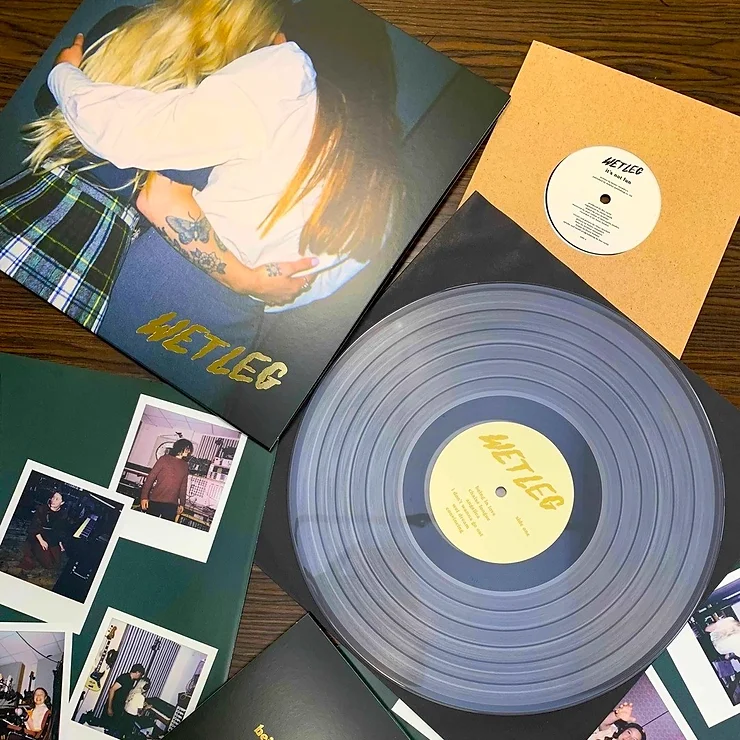
Wet Leg are one of the leading lights of a new wave of British bands, a group that also includes Yard Act and The Mysterines, that are making headway in North America. Wet Leg’s self-titled debut album is receiving many positive notices, and with good reason.
Wet Leg are a duo that hail from Isle of Wight, England and are comprised of vocalist/guitarist Rhian Teasdale and guitarist/vocalist Hester Chambers. Their debut single “Chaise Longue” went viral upon its release in June 2021. The success of the song surprised Teasdale and Chambers, as it had been the first tune that they had written and recorded as a duo. “Chaise Longue” is an off-kilter song that features Teasdale delivering some of the lyrics in a spoken-word monotone. It also includes some fun sexual innuendo. The song exploding out of the box the way that it did led some listeners to ponder whether or not WetLeg would be a one-hit wonder.
That question was put to rest with the release of their subsequent singles and this album. In fact, “Chaise Longue” isn’t even the best song on the album. That honour goes to the spectacular rocker “Angelica.” In addition, listeners of the album are surely pleased to discover that there are no throwaway tracks on it. All of the songs are worthwhile, and the album is a delight to listen to from start to finish. The lyrics are very frank and quite vivid, and in many cases, they echo how twentysomething people really talk. There is a very good chance that the album will be the breakout hit of the summer.
The opening track “Being In Love” is excellent guitar-based power pop with good vocals by Teasdale and Chambers. “Angelica” has something of a mid-1990s Britpop sound to it and a quiet/loud/quiet dynamic. They really rock out during the heavy bits. It features great guitar and perfect vocals. It’s magnificent.
“I Don’t Wanna Go Out” has standout vocals with quirky lyrics and some nice guitar work. It slows down a bit in the midsection for a somewhat dreamy effect and then picks up pace again. “Wet Dream” is another Britpop-like song, and its lyrics contain quite a bit of sexual innuendo. (Not surprising, given the title.) Teasdale and Chambers provide terrific vocals throughout, particularly in the chorus. And how can you not love a song that references the cult film Buffalo 66 in its lyrics?
“Convincing” has Chambers doing the lead vocal. It’s good guitar-based power pop and has the feel of Juliana Hatfield’s best work. “Loving You” is a bass-heavy track with nice guitar work and a strong Teasdale vocal. There is some great vocal interplay between Teasdale and Chambers in the song’s midsection. The electronica-sounding power pop of “Ur Mum” is outstanding. It’s something of a bizarre song that even includes a prolonged scream, but it works. The off-kilter but rocking “Oh No” features some nice guitar work and stellar vocals from Teasdale and Chambers.
The hushed “Piece of Shit” is a chilled-out song with a sweet-sounding Teasdale vocal that drops quite a few F bombs. The blues/pop hybrid tune “Supermarket” is a chilled-out, spacey listen. Bass heavy at the start, album closer “Too Late Now” features echo-laden guitar and a nice Teasdale vocal. She does a spoken-word bit in the song’s midsection. After that, it picks up pace for an alt-rock/power-pop vibe.
Wet Legis a debut that goes from strength to strength, and it makes the listener greatly anticipate what will come next. Teasdale and Chambers will be touring in support of this album for a while. Here’s hoping that they can find some time while on tour to work on their next batch of songs
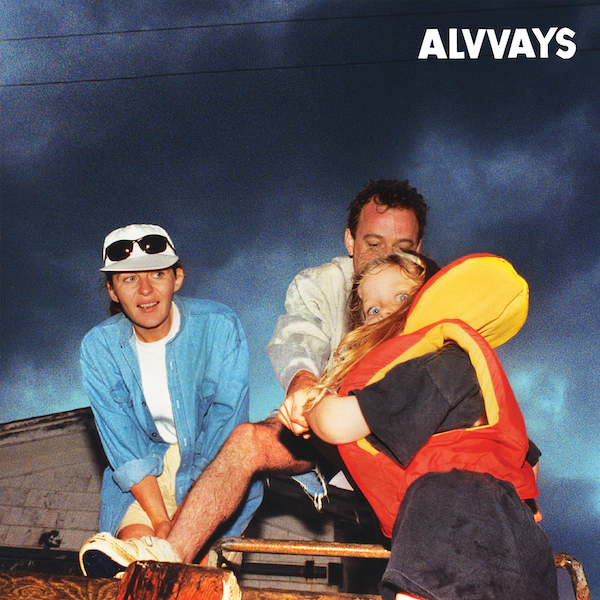
The long-awaited return of Alvvays continues to be one of this summer’s most pleasant surprises. Their latest single “Easy on Your Own?” is our second preview of “Blue Rev” (October. 7th Polyvinyl), the band’s first new album in five years. Alvvays shared “Blue Rev’s” opener “Pharmacist” upon its announcement last month, and now follow up with the album’s second track, “Easy on Your Own?”
It’s another brisk blast of the band’s signature dream-pop sound, with complex textures not previously found in their discography. Molly Rankin’s vocals sit lower in the mix than usual, entering alongside synth buzz and forceful low end before buzzing glide guitar envelops her voice a la My Bloody Valentine.
When her singing does burst through in the choruses, it hits like a ray of sunshine through the clouds, even though her lyrics (where discernible) describe a long-term relationship so damaged, it might not be worth saving. The song shudders to a stop in under three minutes, another concise stunner seemingly designed to reward repeat listens.
The general feeling of disaffection — tempered by urgency, turbulence and angst — is masterfully relayed in Alvvays’ third and best record so far. Replete with hooks, licks and clever lyrics that are never too-clever, “Blue Rev” is a monument to power pop furnished with a rich cultural and musical lexicon, and delivered with explosive defiance. Simply put, and as my best friend said, “It makes me wanna put my head inside a speaker.
Alvvays return with an album that keeps up their hot streak and we are here for it. Classic indie pop dynamics meet sweetly dark lyrical turns for an album that improves listen on listen. Welcome back Alvvays, we’ve missed you!
After their incredibly well received, completely genius debut album. caroline have crushed a UK and EU tour since the last email. They are an unstoppable force moving incredibly slowly. Festivals coming up, as well as a handful of dates in USA!
“caroline’s debut represents a reinvention that’s as stylishly coherent as it is surprising…Production subtleties sudden blurts of strings and a far-off vocal on “Good Morning (red)”, the faint whine on “Messen #7” abound and compound the set’s ear-swivelling impact.” – Uncut
8 people travelling around is a slog, and their MINIMAL live set up involved taking 5 guitars around. These troopers have been soldiering on in the face of adversity with nothing – but one of the greatest live shows you could ever hope to watch, and one of the most brilliant debut albums ever – to their name.
“Sometimes things sound much better when there’s empty space,” says Llewellyn. “Sometimes you might populate [a song] with too many things and forget that an element on its own is enough.” Elsewhere on the record the band have employed a collage-like technique, combining snippets of lo-fi recordings from a myriad of different locations – a barn in France, the members’ bedrooms and living rooms, the atmospheric swimming pool in which they also filmed sublime live sessions for ‘Dark blue’ and ‘Skydiving onto the library roof’ – with more traditional group sessions at the Total Refreshment Centre and their studio in Peckham.
I went to Motel Mozaique festival in Rotterdam to watch their 3 day artist residency there. The finale was an hour of improvised music with the incredible duo Able Noise and I filmed it and we recorded the audio, and I hope that sometime soon we can share it.
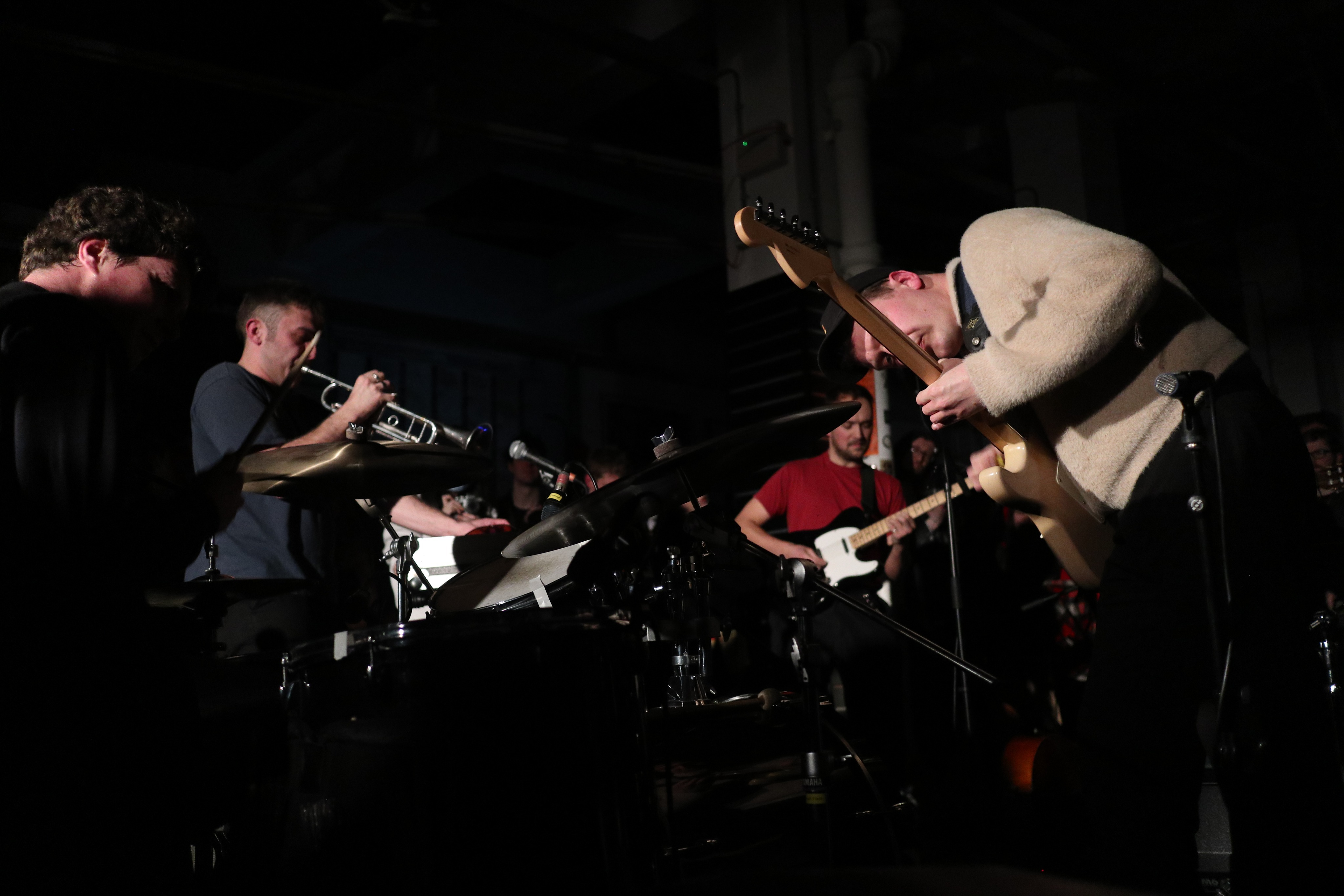
“For caroline are a superorganism that feeds off itself. There is all the fun of the fair to be had in watching how the band’s two electric guitarists, Caspar Hughes – who met Llewellyn at the University of Manchester – and O’Malley, egg each other on. At the close of Skydiving onto the Library Roof, they dare one another to leave bigger and bigger gaps between the clanging downstrokes they play in unison. It’s a musical staring contest that would be comedic if it weren’t so tense. Trumpeter Freddy Wordsworth watches both guitarists, judging when to add his blare.” – live review in The Observer
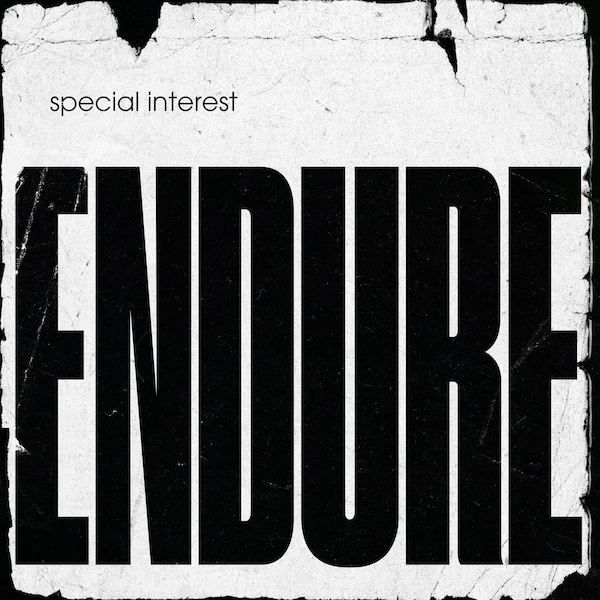
When Earth’s human race finally meets its demise — whether via climate catastrophe or impending asteroid or zombie apocalypse — the sound emitting from the last nightclub standing amid the rubble might sound like Special Interest’s “Endure“. The New Orleans band crafts a pummeling, righteous dance-punk opus that takes aim at fascism, gentrification and corporate greed while espousing the importance of community and pleasure.
The sounds of ’80s post-punk, house music and the spitfire cadence of ballroom manifestos melt into a chaotic, magnetic vision unmatched by any punk album this year.
On every level, Special Interest is uncompromising: in their adventurous sound, their high-energy live performances, and their convictions. Dance music and punk culture have flirted in the warehouse before, but Special Interest’s desire to dismantle genre is informed by a larger abolitionist worldview that resists constraint, category, and conformity. Their music is a soundtrack to dancing the pain away as much as raging against the machine.
Special Interest describes the experience of recording “Endure”as “inverted,” since the pandemic obviously stunted the possibilities of live performance, resulting in a new period of experimentation and sonic exploration in which old rules were cast out. Everything the group writes springs from the same source — a hard-hitting drum machine beat — but the possibilities are endless and the outcome always unpredictable. Ruth Mascelli’s work on drum machines and synthesizers provides a foundation, as varying beats lead the group into different directions: rave-ready drum and bass or ballroom-like house on the more dancefloor-friendly cuts, and marching kicks on No Wave-inflected tracks like “Foul”. “Cherry Blue Intention” brings together a sturdy post-punk bassline, shrieking guitar effects, and a jungle breakbeat into a driving anthem of an opening track.
The new songs recall the art rock of Sparks and The B-52s as much as politically-minded punk, and on “Midnight Legend,” the group is more overtly pop than ever before — making something fun during a time of frequent sadness became a central priority. But that doesn’t mean anything is simple or surface-level, with a darkness often treading beneath the smooth production. For as much as the band plays with dissonance, Maria Elena’s expressive guitar work and Nathan Cassiani’s grooving bass lines effortlessly weave together, and shade out the soundscape brought into existence by Alli Logout’s commanding vocal presence. Collaboration is central to the band’s creative process, and it’s difficult to imagine even one element from the whole of Special Interest subtracted from the equation. Their songs are living organisms, open to the possibility of experimentation and interpretation, but also not the property or creation of any one person.
Special interest release “Endure“, their third album and Rough Trade Records debut.
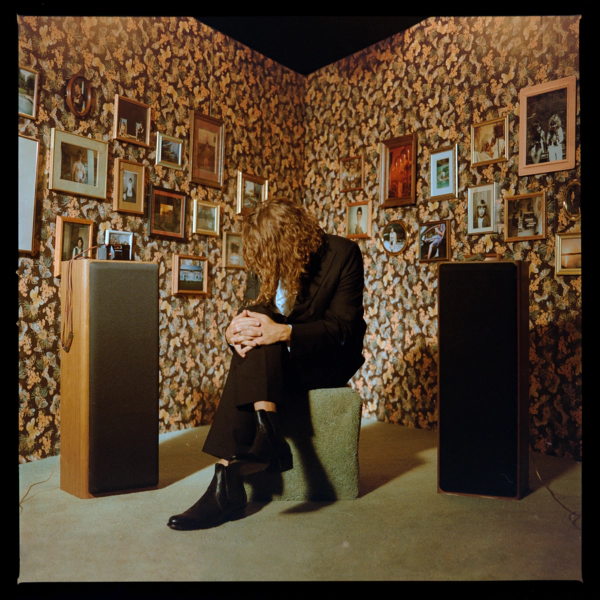
Kevin Morby has shared a video for his new single, “A Random Act of Kindness.” It is the latest release from his album, “This Is a Photograph“, which will be out on May 13th via Dead Oceans. View the Christopher Good-directed video below.
In a press release, Morby states: “In ‘A Random Act Of Kindness’ I set out to write a song where each line could be interpreted in two completely different ways. For example; when I sing the words ’out of trust…’ it could be heard as either I have lost my sense of trust in something or that I am committing an act with trust as my motive. It’s a song about the menacing nature of the sun rising during a dark time in one’s life only to further illuminate their pain and suffering—and how during these periods it is often the selfless acts of strangers that keeps a person going.
“Sonically I am so proud and surprised by where we ended up with this one. Producer Sam Cohen and I had set out to make a sort of windows-down-mid-tempo-cruiser and somehow, with weeks of exploration, made a sonic rocket ship that shoots you out into outer space over the course of four minutes. Enjoy!”
Upon announcement of the new album last month, Morby shared the song “This Is a Photograph,” which was one of our Songs of the Week. He later shared the album track “Rock Bottom.”
Another young, white rock songwriter pilgrimages to Memphis, mining the river city’s heritage of tragedy, triumph and soul-baring music that maps the route between the two? Stop the presses. But sequestered in a Peabody suite as the pandemic raged outside, Kevin Morby used Memphis’ legacy as a lens to look inward, to ask incisive questions about family, love, fame, careerism and what he wants from life itself over nuanced soul, folk and chamber ballads that unspool like a deep eddy. “The living took forever,” he offers during one such slow beauty, “but the dying went quick.” It’s a fitting existential mantra for these times, dispatched from a place accustomed to transmuting loss.
Morby’s previous studio album, Sundowner, came out in 2020 via Dead Oceans. “A Random Act Of Kindness” by Kevin Morby from the forthcoming album ‘This Is A Photograph’, out May 13th on Dead Oceans.
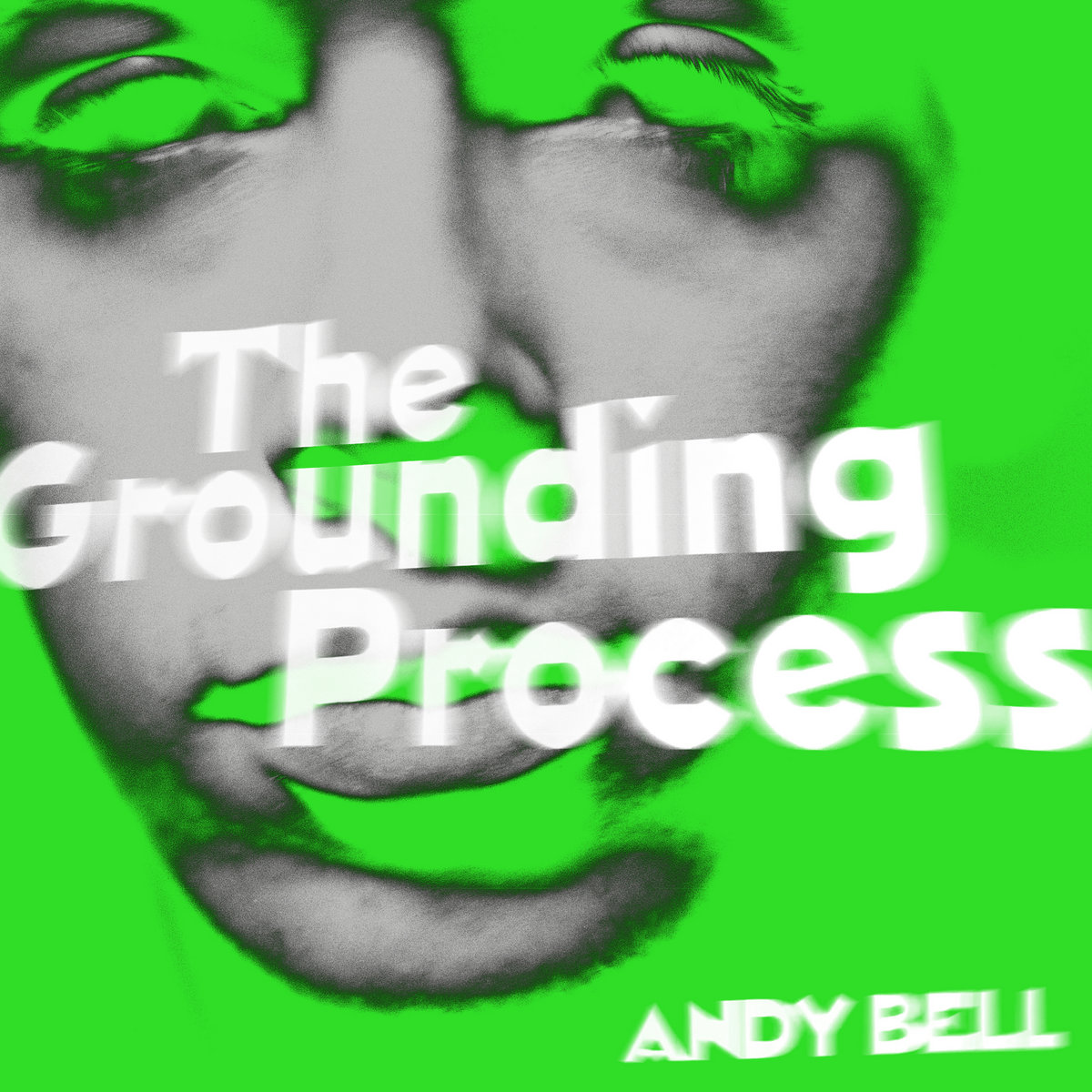
Ride’s Andy Bell has become a prolific solo artist, releasing EPs at a regular clip, the most recent of which is “Untitled FilmStill”s that features lovely covers of songs by Yoko Ono, The Kinks, Pentangle and, best of all, Arthur Russell’s “Our Last Night Together.” The original, mostly cello and voice, is spare and ghostly but Bell turns it into something more full, atmospheric and enveloping. Or as Bell puts it, “‘World Of Echo meets This Mortal Coil doing Skip Spence’.”
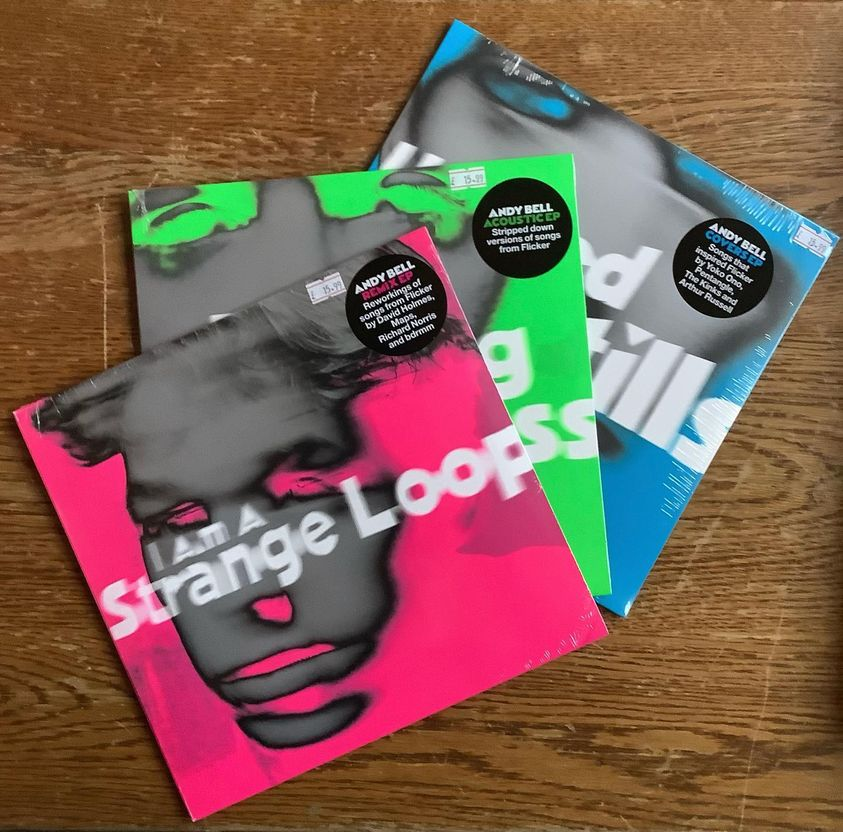
“I Am A Strange Loop” EP. (Ltd clear/pink splatter vinyl 10”, 1000 copies only).
‘I Am A Strange Loop’ is a brief remix EP of tracks from ‘Flicker’, the 2022 solo album from Ride co-frontman Andy Bell. The prestigious David Holmes transforms ‘The Sky Without You’ into a lysergic epic, while there are other remixes from James Chapman (a.k.a. Maps), record producer Richard Norris and contemporary shoegaze band bdrrm.
David Holmes requested the opening track as he had formed a bit of a connection with it, and what he came up with turns the song from an introductory taster, into a hallucinogenic beast, taking pride of place here as the opening track but in a whole different way to how ‘Flicker’ opens.
James Chapman AKA Maps has taken ‘It Gets Easier’ to a bigger, brighter and shinier place, he’s given quite a downbeat track a euphoric and epic sheen. James is an absolute master of electronic production and he’s taken the same care and attention over this remix as he does with his own wonderful music.
I couldn’t put Richard Norris’s lovely widescreen take on ‘Something Like Love’ better than the man himself – in his own words he found the “hitherto undiscovered sweet spot between ‘Roscoe’ and ‘Outdoor Miner’” and he tapped into the melancholy euphoria at the core of the song.
Jordan Smith from bdrmm’s very first remix blows my mind every time I play it. It is as constantly inventive, infectious and frankly ace as the band he plays in. This is a remix for headphones, there are so many great moments to love, all held together by a bassline worthy of Jah Wobble (by way of Andrew Weatherall). If this is Jordan’s first remix imagine what he’ll be coming up with in years to come. Astonishing!
A Place to Bury Strangers take no prisoners on their mix of ‘World Of Echo’ which is pure psych-punk adrenaline. The song is almost unrecognisable. There are glimpses of the original, but more than anything it’s an incredible, if slightly unhinged, APTBS track which I enjoy very much indeed.
Claude Cooper takers ‘Sidewinder’ to a ’60s-themed house party and gives it a big tequila shot and some magic mushrooms, Which takes us back to where we started with David Holmes’ radical mycology!
Thanks to all of the above for their incredible work on giving these songs from ‘Flicker’ a new technicolour life.
Andy Bell (Beady Eye, Oasis, Ride etc) has been alarmingly busy recently making two solo albums ‘The View From Halfway Down’ and ‘Flicker’ which both showcase his abilities as a songwriter with neat psychedelic tendencies.
On my debut solo album ‘The View From Halfway Down’ I did all of my promotion via Zoom and pre-recorded interviews and acoustic sessions. I enjoyed making the acoustic versions and decided to do some more for this album.
‘Something Like Love’ is the most popular song from ‘Flicker’ and one of the oldest, starting life in the ’90s. It’s probably the only one that dates back to the Ride era.
The riffs for ‘World Of Echo’ were written while I was on tour with Oasis, at the height of my La’s obsession. It went through a few iterations from then onwards, but never had a final melody until last year.
‘She Calls The Tune’ was the first song I wrote after I joined Oasis, ending a period of writers’ block which I had started going through some time in 1999. The ’90s had caught up with me, and I ended up moving to Sweden, seriously considering leaving music behind and becoming a full-time dad. Then a quite random series of events happened, and I ended up being invited to join Oasis, which lifted me right out of the doldrums and gave me a brand-new lease of life.
The song is all about getting over writers’ block! Its very first performance was to an audience of Liam Gallagher, Gem Archer and Richard Ashcroft in a Milan hotel room on tour. No pressure! I don’t think I ever saw this as an Oasis song, it’s very introspective, but I have them to thank for the fact that I was able to write songs again at all.
‘Lifeline’ was another riff I came up with while on tour with Oasis and another riff which had to wait a decade or two for a song to fit. I remember being on an Oasis UK tour with Shack, and sitting around backstage somewhere, on acoustics with Mick and John Head jamming around the Simon & Garfunkel version of ‘Scarborough Fair’, to which Noel said, “We need one of those, Andy B!” It was around this time I picked up the nickname ‘Spider-fingers’ because I was always working out these kinds of tunes on guitar. The riff for ‘Lifeline’ followed soon after, along with the one from [Beady Eye’s] ‘Girls In Uniform’. It was always called ‘Lifeline’ but I never found the right lyric for it until very recently.
‘Love Is The Frequency’ is a riff I came up with around the same time as ‘Millionaire’ – late Oasis / early Beady Eye-era. Again, I never had the melody at that time. You can hear the influence of The La’s in this song for sure, but maybe more so The Coral and their sound on the album version. It’s a bit of a sea shanty.
released November 4th, 2022
Here he makes some stripped down versions of tracks from ‘Flicker’ some of which were written back in his Ride days and on tour with Oasis.
The question is… does Andy Bell sleep? Not only is he releasing stripped down versions of tracks from his latest album ‘Flicker’ but this further EP sees him covering songs which inspired the album. Here the Ride, Oasis and Beady Eye guitarist showcases versions of tracks by Yoko Ono, The Kinks, Pentangle and Arthur Russell.
Andy says: “The ‘Flicker’ song ‘Jenny Holzer B. Goode’ refers to a few of the female artists from the music and art worlds who I find inspiring – along with Jenny Holzer, others referred to include Laurie Anderson, Yayoi Kusama, Elizabeth Fraser, Cindy Sherman and Yoko Ono. So, it felt right to cover ‘Listen, The Snow Is Falling’, my favourite Yoko song.”
“After doing a series of EPs we called ‘Ever Decreasing Circles’ last year, here’s this year’s retro TV reference, ‘Light Flight’, the theme tune from ’60s drama series Take Three Girls which was performed originally by Pentangle. The song came out in 1970 (the year I was born), and although I never knew about the TV show until recently, I’ve loved this track ever since I heard it on the 1997 folk compilation Transatlantic Ticket.
“Nat Cramp, head honcho of Sonic Cathedral, requested a cover of ‘The Way Love Used To Be’ and, as he gave me the puppy dog eyes, naturally I couldn’t refuse. I’d never heard this song despite being a big fan of The Kinks and owning the album it’s from (Percy), but it’s lovely and it felt very natural to cover it. All hail Ray Davies!
“Arthur Russell has been a big reference point for all my music away from ‘band world’. There is something impressionistic and open-ended about his records, and he was also unafraid of trying different styles, which I’ve found really inspirational. And there’s the fact that he worked alone, which is something I’ve got used to now, in-between band albums. I guess you could describe the production style I’m trying for on my version of ‘Our Last Night Together’ as ‘World Of Echo meets This Mortal Coil doing Skip Spence’.”
Andy Bell under exclusive licence to Sonic Cathedral Released on: 2022-03-25
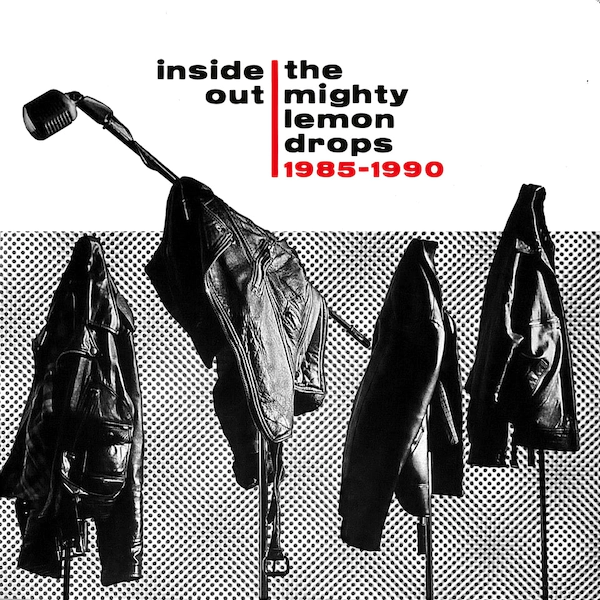
During the period 1986-1989, Wolverhampton’sThe Mighty Lemon Drops released three albums for Chrysalis Records, (via its ‘boutique indie’ label Blue Guitar, also home to premium 80s acts The Shop Assistants and Raymonde), and these are now collected, along with a plethora of 1985-1990 period bonus tracks into a handy 5CD set.
After being in a variety of local bands, (including Active Restraint, who actually numbered three of the four Lemon Drops in its line-up), the group came into being in 1985, shortly afterwards issuing an eight-track cassette at their gigs (included in full over on CD4), and releasing their debut single ‘Like An Angel’ via Dreamworld Records at the end of that year. The broodingly magnificent single would actually go on to take pride of place in the following year’s hallowed John Peel Festive Fifty.
The following year was a momentous one for the band; they were invited to provide a track for the legendary NME C86compilation, After appearing on NME’s hugely influential ‘C-86′ compilation, the band signed with Geoff Travis’ new Chrysalis subsidiary Blue Guitar for their debut album “Happy Head”, a collection of uncluttered songs with a chiming Rickenbacker sound that Sounds dubbed one of the 50 best albums of 1986, warmly received by critics and fans alike. At that time it was commonplace for bands to miss early singles and key tracks off their debut albums, but The Mighty Lemon Drops wisely avoided this trap and with Stephen Street (fresh from his work with The Smiths) on production duties, put out an absolute gem of a record, including fresh takes on ‘Like An Angel’ and its B-side ‘Something Happens’ along with re-recorded songs from their early cassette release.
The album still stands up perfectly today and hasn’t aged a jot, beginning with incendiary second single ‘The Other Side Of You’, the jangle-pop gold of third single ‘My Biggest Thrill’ and a stronger version of that C86 track, the title track ‘Happy Head’. The band drew comparisons with The Velvet Underground (which the day’s music press tended to do with any band who picked up a guitar) and Echo and the Bunnymen, although in truth by 1986 that legendary group would have killed for a dozen songs of this quality. Elsewhere on the record, ‘Hypnotised’ showed a softer side to the band as did ‘On My Mind’ , a beautiful song tucked away in the middle of side two.
1987 brought a non-album single, ‘Out Of Hand’, which is arguably the band’s greatest moment, a swoonsome Rickenbacker-led piece of pop perfection (courtesy of guitarist David Newton), singer Paul Marsh’s vocals never better. It is included here as a bonus track to CD2, which houses the band’s 1988 album “World Without End”. Where “Happy Head”was packed with an adrenaline rush of what was effectively been twelve single-worthy songs, its follow up was more considered and introspective, but every bit as good. The band came out of their comfort zone on the heartbreaking ‘Closer To You’ and the delicate (though it also packed a punch) ‘No Bounds’ , while the album’s two singles, ‘Inside Out’ (which received a lot of daytime airplay on Radio 1) and ‘Fall Down (Like The Rain)’ were far more instant. The group were by now selling out good-sized venues at home and in the USA, where they were a big hit on college radio across the land. The excellent, more urgent single version of ‘Fall Down…’ is included as a bonus track.
The band’s final album release for Chrysalis, (the Blue Guitar imprint now gone), “Laughter”, came just 18 months or so later in the Autumn of 1989, and increased their sonic palette still further. Lead single ‘Into The Heart Of Love’ sounded like a Top 10 hit (but sadly wasn’t) and follow-up ‘Beautiful Shame’ was another great single, and ‘Where Do We Go From Heaven’ reached the US Modern Rock Tracks Top 10; in another world it would have been a huge hit in the UK. The record was probably the band’s most varied, including the stop-start charm of ‘At Midnight’, a live favourite, and other winners like ‘Written In Fiction’ and ‘One In A Million’.
Across the set, there are contemporaneous B-sides, demos and Radio 1 sessions. Key B-sides include ‘Uptight’, the brilliant ‘Wait and See’ (previously only available on the double 7” single of ‘My Biggest Thrill’) and ‘Shine’.There are covers (The Standells ‘Sometimes Good Guys Don’t Wear White’ and The Rolling Stones ‘Paint It Black’ are amongst the handful here) and the session tracks are mainly chosen not to clash with the band’s 2014 single CD compilation ‘Uptight: The Early Recordings 1985/1986’. There are rarities too – the track ‘World Without End’not only didn’t make it onto the album of the same title but remains unreleased until now, and there are frantic takes on first album favourites ‘Take Me Up’ and ‘Pass You By’, and still so many more. The band only delved into the realm of the extended 12” version twice, with ‘Out Of Hand’ and ‘Inside Out’, both tastefully done and included on CD5.
It’s a lovingly curated box set with extensive sleeve notes by guitarist and song-writer David Newton, and very complete in that it includes every note that the band released officially in the period covered and a lot of extras that will be fascinating to fans of the group.Dave has also contributed to a high-profile new book, Whatever Happened To The C86 Kids? by Nige Tassell, which is bound to generate renewed interest in the band.
Inside Out… is a fitting (and overdue) retrospective of a much-loved band. The new five-disc boxed set anthology celebrating the recordings of The Mighty Lemon Drops, between 1985 and 1990 for Chrysalis Records imprint Blue The set featuring 83 tracks on five discs, including the albums “Happy Head”, “World Without End” and “Laughter” plus non-album singles, B-Sides / bonus tracks, US radio mixes, previously unreleased demos and rare session recordings.
Inside Out 1985-1990 was released on 25th November 2022 via Cherry Red Records.
High Vis were formed in 2016 from the ashes of some of the UK’s best hardcore bands. Gild-toothed frontman Graham Sayle’s anguished lyrics about life in working class Britain were familiar to fans of Tremors’ full-throttle thrash, but alongside his former bandmate Edward ‘Ski’ Harper and veterans of Dirty Money, DiE and The Smear, High Vis sought to transform that energy and intensity into something entirely new.
Like scene-mates Chubby and the Gang did by pulling in unlikely source material from classic doo-wop or Micromoon have by combining everything from psychedelia and metal into their high potency mix, High Vis’ 2019 debut album, “No Sense NoFeeling” showed the band were never going to be constrained by any sense of genre rules or regulations. Its claustrophobic rattle bore traces of Joy Division, Bauhaus, Crisis, The Cure and Gang Of Four lurking in the shadows. 2020’s synth-driven EP, Society Exists, was further evidence of the band’s restless creative MO.
High Vis’ second album “Blending” sees them open their viewfinder wider than ever before. Alongside longstanding favourites such as Fugazi and Echo and The Bunnymen; Ride and even Flock Of Seagulls were shared reference points as the band worked on the album together.
From the anthemic sweep of opener “Talk For Hours”, through the title track’s psychedelic swirl and “Fever Dream” baggy groove, it sees High Vis’ sound blossoming into something with an unlimited richness. The hazy drift of “Shame” or the melodic jangle of “Trauma Bonds” may take them until uncharted waters, but they still have all the power and bite that made “No Sense No Feeling” so remarkable. Lyrically, the album represents another leap forward too. Talking frankly about poverty, class politics, and the challenges of everyday life, Sayle’s lyrics have always addressed the downtrodden and discarded communities across Britain slipping below the waterline. This time around, Sayle’s lost not of that social consciousness, but he’s looked at himself and his own emotional landscape, and in the process created something that feels more universal, that reaches a hand-out to people and ultimately gives a message of hope.
“To me, the lyrics are less selfish,” reflects Sayle. “In the past, I couldn’t see past whatever was going on with me. It’s about accepting things and being open to conversations and learning to talk to people rather than just thinking that we’re all doomed.”
The song “Talk for Hours” is a prime example of that. Born out of an afternoon meeting up with an old group of mates “repeating the same thing and not actually learning anything about each other” it offers to actually break the cycle and to listen and speak frankly about shared feelings and experiences. “Trauma Bonds”, meanwhile, traces the broken lines of those living in lost communities, but ultimately realises that despite our shared scars, there’s still hope to move on to a better future.
“The message of the album is you’re not who you’re told you are,” Sayle summarises. “You’re not your class background. Whatever it is, you’re not that. Don’t resign yourself to thinking you can’t be this and you can’t be that.”
It’s a vitally important message right now, and one that could be the motto for not only “Blending”, but for High Vis themselves.