Have you watched the movie John Wick. It is obscenely violent, unbelievably cool, and very unrealistic. But one aspect that makes sense is the film’s central theme of grief, a significant portion of which is dedicated to the loss of a pet. There is no grief quite like the passing of an animal, especially one that’s a devoted companion. H.C. McEntire shared a song that Wick might raise his whiskey on the rocks to. “Rows of Clover,” the latest single from her latest album “Every Acre” that’s out January 27th, is a sprawling and tender ballad for grieving the loss of a “steadfast hound.” McEntire’s textural lyrics act as grounding couplets when overwhelming emotion can easily send one’s mindset into a spiral.
“As an artist, if what I’m after is meaning and understanding, then vulnerability is how I find my edges,” McEntire said. “In my experience, if that pursuit is honest and unfiltered, on some level it will also be uncomfortable. “Every Acre” encouraged a slow observation of everything around me—great heights and vast depths, immeasurable static, and some fragments still coming into focus.”
She goes on to note that the lyrics to the chorus were the first thing written for the entire album “They are dark and straightforward, unapologetic—a body in pain, a broken spirit, a tired heart. I needed to acknowledge my grief and depression in an unmistakable way; to name it and know the feeling of it being lifted by my lungs.”
“Every Acre” arrives January 27th via Merge Records
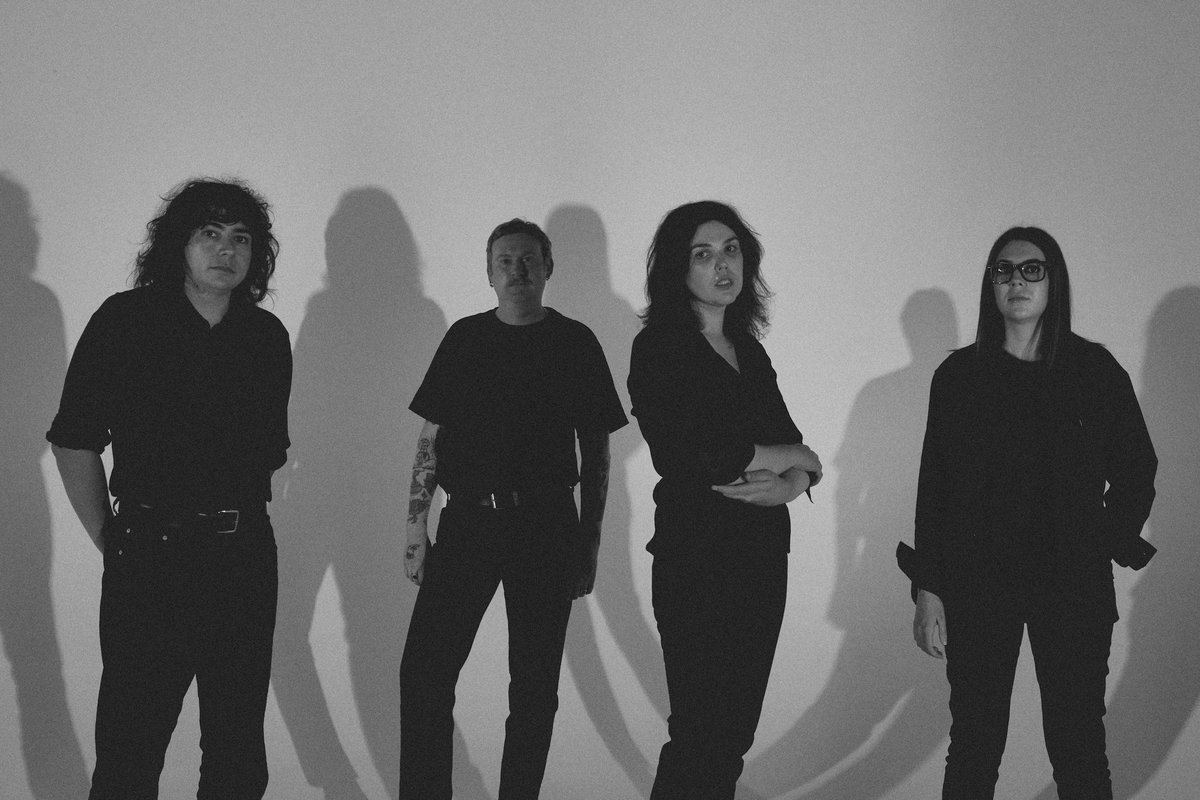
Achy joints. Dirty bosses. An effing UTI. These are the ailments that pile up in Special Interest’s working-class anthem “Foul,” which details a bubbling frustration with bad jobs. The New Orleans band makes danceable punk music that borrows from the angular, jittery rhythms of ’80s bands like ESG and Delta 5, with frenzied songs that carry a highly political bent. “Short-staffed! Overworked! Sleep-deprived! It’s an art,” band members Maria Elena and Alli Logout shriek in a call-and-response as a groovy, thumping bassline grounds the song’s noisy chaos.
“Foul” briefly calls to mind another New Orleans artist who helped turn exhaustion with overwork into accessible musical perfection: rapper Big Freedia, whose “release your job!” command set the tone for Beyoncé’s house hit “Break My Soul.” But where “Break My Soul” was all motivational pop, an empowered cry to listeners to hand off their daily stresses at coat check before meeting the star on the dancefloor, “Foul” is the sound of being physically unable to do so. The quartet—Alli Logout, Ruth Mascelli, Nathan Cassiani, and Maria Elena (who just goes by Maria)
Special Interest share a prickly sense of humour, and each member is quick to claim and grant credit for any given idea. The band’s bassist, Cassiani, suggested the sensory deprivation tank outing; he describes himself as “shy” and “reserved,” but reads more like the group’s quietly influential technician. Mascelli, on synths and drum machines, has a nervy, restless energy—he says that even the float session didn’t still his racing mind—but invariably speaks in complete thoughts. Maria, the guitarist, has the steady, unselfconscious presence of that one friend from the punk house, and when she’s finished eating, she unbuttons her pants. Logout, the frontperson, is the celebrity: a big talker and electric live performer, a vector for the kind of natural charisma that doesn’t intend to please anybody.
It buzzes with the energy of a fly trapped in a jar, as shouted complaints ping against the glass with no resolution in sight. “Foul” takes that enclosure and finds power within its limits, the music not a vehicle to escape life’s soul-draining conditions so much as a place to confront them.
The Hold Steady is 20 years old! Time flies when you’re having fun, but it’s still hard to believe that 2023 makes two decades of THS. Of course, we think growing out of our teenage years is reason to throw a party or two – this year will be full of Hold Steady celebrations to honour the music, positivity, and incredible community that have made the last twenty years so amazing.
The Hold Steady have announced a new album. “The Price of Progress” releases March 31st via the band’s own Positive Jams label and Thirty Tigers and is led by the single “Sideways Skull.” The band, which is celebrating its 20th anniversary, will also hit the road starting January 28th in Brooklyn, New York, for a series of special event concerts.
we are releasing our 9th studio album “The Price of Progress” on March 31st, 2023 via Positive Jams/Thirty Tigers. Produced by Josh Kaufman and recorded over the past year, this record features 10 new the Hold Steady songs, some of which we’ve been playing live in recent shows.
“The Price of Progress” is the follow-up to 2021’s “Open Door Policy”. The band recorded its ninth LP in Rhinebeck, New York, with production by Bonny Light Horseman’s Josh Kaufman and mixing by D. James Goodwin. “These are some of the most cinematic songs in the Hold Steady catalogue, and the record was a joy to make,” vocalist and guitarist Craig Finn wrote in a statement. “I feel like we went somewhere we haven’t before, which is a very exciting thing for a band that is two decades into our career.”
THE WEEKENDER 2023
Friday, March 10 – Electric Ballroom / London, UK, Saturday, March 11 – Electric Ballroom / London, UK, Sunday, March 12 – Colours Hoxton / London, UK – SOLD OUT
“Sideways Skull” · The Hold Steady · Craig Finn · Tad Kubler · Franz Nicolay
The year 1971 was a 12-month period where everything seemed to come together musically. Making headlines in 1971… A ban of cigarette ads on TV and radio stations went into effect. The Ed SullivanShow aired its last. Daredevil Evel Knievel set a world record by jumping over 19 cars on his motorcycle. Joe Frazier defeated Muhammad Ali in the so-called “Fight of the Century” at Madison Square Garden.
The world was ready to shake off the 60s and move forward into an uncertain future. This sense of possibility, both good and bad, hangs over the best albums of that year. The biggest acts of the 60s were trying new things, and plenty of new voices were emerging to challenge what had come before. Motown stars were taking big chances. TheBeatles were going solo. It was a year in which a list of the 50 most influential 1971 albums still doesn’t feel like it begins to scratch the surface. The Allman Brothers Band performed the two concerts that comprised their “Live at the Fillmore” album. The Fillmore East closed three months later. Jim Morrison died at age 27 in Paris, France. Walt Disney World opened in Orlando, Florida. Bob Dylan’s hour-long documentary film, Eat the Document, is premièred at New York’s Academy of Music. The film includes footage from Dylan’s 1966 UK tour. Led Zeppelin were on tour Ulster Hall, Belfast, Northern Ireland, sees the first live performance of iconic song “Stairway to Heaven”
The Rolling Stones open their UK tour in Newcastle upon Tyne, intended as a “farewell” to the UK prior to the band’s relocation to France.
The first Glastonbury Festival to take place at the summer solstice is held in South West England. Performers include David Bowie, Traffic, Fairport Convention, Quintessence and Hawkwind.
The Montreux Casino in Montreux, Switzerland, catches fire and burns during a performance by Frank Zappa and the Mothers of Invention when a fan fires a flare gun into its rafters. Members of Deep Purple, who were due to begin recording at the casino the next day, watched the scene from their hotel across Lake Geneva, and later immortalized the events in their song, “Smoke on the Water”.
It was not a great year for Frank Zappa as he breaks his leg after being pushed off the stage by a deranged fan at The Rainbow in London.
1971 was “the most febrile and creative time in the entire history of popular music”. It’s an enormous assertion but he makes his point with infectious enthusiasm . . . Whether you agree is beside the point.
This week in ‘71, Paul and Linda’s McCartney “Ram” LP reached number one on the NME. The album included Paul’s first number one single in America without the Beatles, “Uncle Albert/Admiral Halsey”.
The singer-songwriter movement was taking off in earnest via artists like Carole King, James Taylor, Harry Nilsson and Joni Mitchell. Other individual artists—David Bowie, Elton John, Rod Stewart, Marvin Gaye, Van Morrison and the now-former Beatles—had very distinctive musical personalities that would help shape the future of rock. Several of the bands that would come to define classic rock were just beginning to put down solid foundations—some holdovers from the ’60s (Pink Floyd, the Stones,the Who, the Doors, Jethro Tull, Led Zeppelin, Santana, ), others brand new new to us the Allmans, Sabbath, Yes, Alice Cooper
It was an exciting time for rock music, which was still growing in influence, commercially and culturally. Bands that had only recently performed in ballrooms and college gyms now played arenas and stadiums, and it was not uncommon for an album to sell many millions of copies.
Hundreds of albums released in 1971 here are some that represent the cream of the year’s crop. Many of these titles now remain cornerstones of any essential classic rock record collection, sounding as fresh now as when we first removed the vinyl from the shrink-wrapped album jacket.
“Paul benefited immensely from collaboration with the Beatles, particularly John Lennon, who held the reins in on McCartney’s cutsie-pie, florid attempts at pure rock muzak”. Playboy accused Paul of “substituting facility for any real substance”. “An excursion into almost unrelieved tedium” and “the worst thing Paul McCartney has ever done.”
“A bad record, a classic form/content mismatch”, and “obscenely producing a style of music meant to be soft and whimsical.” “Trouble is you expect too much from a man like Paul McCartney.”
“It would be naive to have expected the McCartneys to produce anything other than a mediocre record”.
Allman Brothers Band—”At Fillmore East”—Many consider it the greatest live rock album of all time, and it may very well be. If anyone still wasn’t sure if these southerners were a major new force, this slab of perfection put that doubt to rest. Many consider it the greatest live rock album of all time, and it may very well be.
The AllmanBrothers Band finally captured their unique on-stage chemistry in action with “At Fillmore East“, showcasing just how well the band jammed together. The Allman Brothers Band performed the two concerts that comprised their “Live at the Fillmore” album. Fillmore East closed three months later.
Badfinger—“Straight Up”—Their first two albums for the Beatles’ Apple label found them hovering in the Fabs’ shadows. With this Todd Rundgren-produced LP the British quartet truly came into its own, creating the prototypical power pop album.
The Band, ‘Cahoots’ – A surface reading of this album would have you to believe that chief songwriter Robbie Robertson was talking about a disappearing America. Dig deeper, however, and his lament seems aimed more at the disintegration of the Band.‘Cahoots’ finds the group suddenly reaching backward, reaching for everything, and nostalgia – as their frequent collaborator BobDylan once said – is death. It would be more than four years, an eternity back then, before another original Band album appeared, and that was the last one the founding five-man lineup managed.
The Beach Boys—“Surf’s Up”—The influence of Brian Wilson was on the wane as he retreated further from the band’s day-to-day activities. The tracks written by the others (“Disney Girls,” “Don’t Go Near the Water”) are fine, but the title track, co-written by Brian with Van Dyke Parks, is the album’s masterpiece. “Surf’s Up” saw The Beach Boys celebrating the natural world and warning of the dangers posed to it by encroaching industrialization in 1971. The album’s message only gets more powerful every year that passes. Originally titled, “Landlock”, “Surf’s Up” steals its name from closing track written by Wilson and Van Dyke Parks. Originally intended for “Smile”, an unfinished Beach Boys album that was scrapped in 1967, the track found its way to the album and made its dictating stamp on the name.
Black Sabbath—“Master of Reality”—Their third album and first to sell in huge quantities, this set is often credited with pushing the metal genre into darker, deeper waters. If Black Sabbath was still finding itself before, now they knew what they were. Many point to the foundational influence of “Master of Reality” on other bands and genres, but the album is no time capsule. Its songs have lost none of their elemental power.
Booker T & The M.G.’s – “Melting Pot” – One of the funkiest bands to ever record, Booker T. & the M.G.’s “Melting Pot” may be one of their funkiest albums ever in 1971.
David Bowie—“Hunky Dory”—It’s rarely cited as one of Bowie’s most significant works, and is more transitional than transformative. But there’s no denying that Bowie’s artistry was expanding into new areas, and the opening track, “Changes,” spelled out what he and the rock generation were going through. Featuring “Changes” and “Life on Mars?,” “Hunky Dory” served as an incredible prelude to Bowie’s transformation into Ziggy Stardust.
Alice Cooper—“Love it to Death”—Alice Cooper still referred to the band itself, not just its singer, when they released their third studio album, It contained what is still probably their best-known tune, “I’m Eighteen.” Later in the year, “Killer” further established Alice Cooper Band as one of the most important hard rock bands of the day. With singles like “Under My Wheels” and “Be My Lover,” “Killer” was another solid entry to Alice Cooper’s catalogue.
The Alice Cooper band’s best album was a transitional one for the group, which relocated to Detroit and absorbed the city’s grime for its refurnished rock ‘n’ roll. Gone was the blurry psychedelia of the first two albums, replaced by meat-and-potatoes guitar and songs that reflected the fears, anxieties and libidos of their growing audience. They were never better.
Commander Cody and His Lost Planet Airmen—“Lost in the Ozone”—Although best known for the hit single “Hot Rod Lincoln,” which appears on this debut, the eight-piece band slipped easily into western swing, rockabilly, country-rock and more.
David Crosby—“If I Could Only Remember My Name”—For his first solo album, Croz dug into his phone book and called upon members of Jefferson Airplane, the Grateful Dead, Santana and more, including pals Graham Nash, Neil Young and Joni Mitchell. While his other band released the excellent live document “4 Way Street” and Graham Nash put out “Songs forBeginners, David Crosby’s “If I Could Only Remember My Name” remains the best-remembered 1971 album from the hugely talented Crosby, Stills, Nash & Young quartet. It remains emblematic of that certain time and place.
Deep Purple – “Fireball” – None other than Metallica drummer Lars Ulrich credits this 1972 album as being an inspiration for his interest in heavy music. ‘Machine Head’ gets all of the accolades, but Deep Purple had been building toward it on more underrated projects like this one for some time. A few tweaks to their bubbling gumbo of heavy rock, blues and prog were still needed before it all came together one album later, but ‘Fireball’ – which topped the U.K. charts and hit the Top 40 stateside – offered more than its share of predictive, often improvisational-sounding successes.
The Doors—“L.A. Woman”—This is where it all ended for the Doors (if you discount those Morrison-less duds released after his death). And they went out on a high note, with the title track, “Riders on the Storm,” “Love Her Madly” and more. Six albums and a legacy that is still so strong.
With a miraculous ability to maintain a stripped back sound yet a ‘full’ sounding production, “L.A. Woman” remains up there with one of the greatest albums . With a combination of blues, funk and soul, it has been suggested that the best way to absorb “L.A. Woman” is to listen once for the sound and then listen again for the genius of Morrison.
With a blues voice from Morrison making it’s stamp on iconic tracks such as “Been Down So Long” and “Cars Hiss By MyWindow”, the record reeks with sophistication despite the stimulus taken throughout the creative process. The album acts as one of impeccable taste and musical judgement, being considered as one of their best and most disturbing pieces of work. There are wonderfully sensual moments on the record with bluesy rock beats combined with provocative timings and lustful beats. ‘Been Down So Long’ completes this fantasy perfectly and layers it with lyrics argued to be inspired by Richard Farina’s 1966 novel Been Down So Long It Looks Like Up To Me.
Emerson, Lake & Palmer—“Tarkus”—The trio released two albums in 1971 that came to define prog: this one and the live “Pictures at An Exhibition”. Both are pretty ambitious, to say the least, but “Tarkus” is the more durable: the side-long title track is a full-blown epic in the true sense of the word.
Faces—“A Nod Is As Good as a Wink…to a Blind Horse”—Following “Long Player” earlier in the year, “A Nod…” is where the Faces became something more than Rod Stewart’s backup band. Every track is a stone rock classic, starting with “Stay With Me,” one of their best loved tunes.
Aretha Franklin—“Live at Fillmore West”—When the Queen of Soul pulled in to San Francisco’s hippie central she didn’t know if they would accept her. Ha! They adored her, and she gave them a show to remember. The companion album by her band (and opening act) led by King Curtis is also killer.
Rory Gallagher – Deuce – Irish blues-rock guitar virtuoso Rory Gallagher went for a raw feel on “Deuce“, and the decision paid off handsomely, with rollicking numbers like “I’m Not Awake Yet.”
Marvin Gaye—“What’s Going On”—Motown’s Berry Gordy Jr. was reluctant to release this concept album about a returning Vietnam vet who finds a different America awaiting him. Not only was it a huge hit, but today it’s regularly cited as one of the greatest albums of all time. Sometimes the boss is just plain wrong. An album so revered that Rolling Stone recently named it the best album ever made, Marvin Gaye’s “What’s Going On” is a searing and important record that has transcended time.
Genesis – “Nursery Cryme” The first Genesis album to include Phil Collins and Steve Hackett, “Nursery Cryme” was the beginning of a new era for the group.
Grateful Dead—“Grateful Dead”—The band’s eponymous second live album is usually called “Skull & Roses” due to its iconic artwork (the band wanted to call it “Skullfuck”), and it marks a time when they briefly scaled back to the original quintet lineup. They were doing some serious rocking out in 1971 and many tunes on here stayed in their setlists till they quit.
Jimi Hendrix—“The Cry of Love”—Several of these recordings were not yet completed when Hendrix died in September 1970. The label released it as a posthumous tribute although we will never know if the artist would have been happy with the final product.
Humble Pie—“Performance: Rockin’ the Fillmore”—The English quartet led by former Small Faces singer Steve Marriott and guitarist/singer Peter Frampton had released four studio albums (including “Rock On” earlier in the year) but couldn’t catch a break in the U.S. Then they put out this live album. Bingo! Read our previously unpublished interview with Steve Marriott.
Isaac Hayes – “Theme From Shaft” One of the greatest soundtracks ever put together, “Shaft” sees Isaac Hayes at the height of his powers. The mostly instrumental double album soundtrack for the film “Shaft” was completely written and produced by Isaac Hayes. The so-called “blaxploitation” film starred Richard Roundtree as private detective John Shaft. The album earned three Grammy Awards and Hayes’ “Theme From “Shaft” was a No#1 smash, helping the album become the year’s 12th best seller.
Jethro Tull—“Aqualung”—They started out as a jazz-blues-rock hybrid, a formula they honed over three previous (and all excellent) studio albums. But it took a turn toward harder rock for Ian Anderson and company to break through to the top 10. The title track is a bona fide rock classic. Opening with one of 1971’s most iconic riffs, Jethro Tull’s “Aqualung” was a flute-featuring prog rock album that heavily featured religious themes.
Elton John—“Madman Across the Water”—Americans took readily to this British piano-playing fellow, sending his first couple of albums into the top 10. The live “11-17-70”, released earlier in ’71, demonstrated chops to spare.. This somewhat autobiographical affair (its songs, of course, were co-written with lyricist Bernie Taupin), featuring classics-to-be like “Tiny Dancer” and “Levon,” set the stage for the massive superstardom that would arrive the following year.
Janis Joplin—“Pearl” was posthumously released in January 1971, the interest it generated among music fans was no doubt driven in part by instincts to memorialize Janis Joplin. But what took it to No#1 for nine straight weeks was how the album finally captured her musical soul and realized her creative vision. Sadly, she was gone by the time her second solo album, which dominated the American charts, was released. Her only album recorded with the Full Tilt Boogie Band, it featured her definitive cover of Kris Kristofferson’s “Me and Bobby McGee” and several other soul-rock pearls.
John Lee Hooker & Canned Heat, ‘Hooker ‘n Heat’Canned Heat had just split with two of their Woodstock-era contributors when they discovered a boogie-blues camaraderie with legendary bluesman John Lee Hooker after a chance meeting at a Portland airport. They’d lose another crucial member – harpist Alan Wilson – before it was released. ‘Hooker ‘n Heat’ withstood every setback, however, as this muscular collaboration helped Hooker to his first-ever chart success.
Paul Kantner and Grace Slick—“Sunfighter”—With Jefferson Airplane nearing the end of its run (their 1971 album “Bark” sold well but was not as strong as previous ones), the individual band members concentrated on their own projects. Kantner and Slick were lovers at the time (their daughter China graces the album cover) and they invited a few dozen friends to help flesh out their newest songs.
King Crimson, ‘Islands’ – A transitional album that marked the last gasps of King Crimson’s earliest incarnation, ‘Islands’ relied on older material to round things out. (“The Letter” had been run through by the group’s original lineup, while “Song of the Gulls” traces back to the pre-Crimson band Giles Giles and Fripp.) That said, the brilliant, vaguely Zappa-esque “A Sailor’s Tale” points to the nervy genius just ahead as John Wetton came on board for a series of mind-blowing releases.
Carole King—“Tapestry”—Having co-written dozens of smash AM hits for others, the songwriter decided to sit down at her piano and cut her own tunes using her own voice. The result was one of the best-selling albums in history, #1 for an amazing 15 weeks. The singer-songwriter movement kicked into high gear here.Carole King was already a celebrated songwriter by the time she went solo, but the 1971 album “Tapestry” truly brought her talent to the masses.
The Kinks—“Muswell Hillbillies”—Moving to a new label (RCA), the stalwart English band did not have great commercial success with their latest (#100 in the U.S.), but it has grown in stature. Not quite a concept album like others before and after, it nonetheless contains some of Ray Davies’ most durable compositions. The Kinks’ portraits of everyday life in England throughout “Muswell Hillbillies” feel richer and richer with each passing year. The brilliance of Ray Davies’s songwriting is yet undeniable. Tongue-in-cheek lyrics, attention to texture, playful music-hall feel and poker face clownery – the familiar trademarks of The Kinks are also present on the album.
Led Zeppelin—“IV”—The album actually does not have an official title, but it has always been called “IV“ simply because that’s where it fell numerically in their catalog. Like its predecessors it was a massive success, as you might expect of an album that introduced “Stairway to Heaven,” “Black Dog,” “Rock and Roll,” “Going to California” and more. Officially untitled fourth studio album, which would become the biggest-selling album of the year (1972), the band’s biggest-selling album, and the fourth best-selling album of all time.
At the time, Led Zeppelin’s fourth album played like a summation of their career up to that point: part rock ‘n’ roll thunder, part Tolkien fantasy folk, part blues ripoff. But the band never played with more confidence, from Jimmy Page’s sterling production to the block-shaking rumble of John Bonham’s drums. Almost every song is a classic-rock staple now and for good reason: This is where Led Zeppelin sealed their legend once and for all.
John Lennon—“Imagine”—Lennon’s second post-Beatles solo album was a highly personal affair. Alternately angry (“Crippled Inside,” “How Do You Sleep?”), sweet (“Oh My Love,” “Jealous Guy”) and always brutally honest (the title track, “Gimme Some Truth”), it defined Lennon in the immediate aftermath of the maelstrom. As if the title track weren’t enough, “Imagine” also includes the unforgettable “Jealous Guy.”
Paul and Linda McCartney—“Ram”—The only album credited to both members of the couple, this followed Paul’s self-titled solo debut and preceded the debut by his new group Wings later in the year. “Ram” was a strong set of originals, some of them low-key to reflect the country life the couple was sharing. Regarded as one of the finest post-Beatles solo albums by Paul McCartney, “Ram” found Paul working hand-in-hand with his wife to create a masterpiece of small delights. Let’s briefly rewind a year. In April 1970, Beatle Paul released his first solo album, “McCartney”. On the day of its release he dropped a ‘self-interview’ into the hands of the media. From that moment on, it was evident that The Beatles were no more. Thirteen months later, people were still coming to terms with that, but Paul McCartney had already moved on. On the 17th May 1971, he released “Ram” and despite about a million more solo albums and stratospheric success with Wings, “Ram” is his best solo collection of work ever. At the time of its recording McCartney was spending much of his time down on the farm. “Ram” wasn’t recorded at McCartney’s Mull of Kintyre home (it was actually recorded in New York), but it sounds as if it was. It’s homespun, a million miles away from the way Phil Spector overproduced the final Beatles album, “Let It Be“.
John Martyn – Bless the Weather– The melancholic folk troubadour returned to his solo career with this celebrated collection of songs, “Bless The Weather“.
Joni Mitchell—“Blue”—Already beloved by a tuned-in segment of the rock/pop audience, Mitchell was still emerging as a wider commercial force. “Blue”, her fourth album, boosted her profile with brilliant songs like “A Case of You,” “Carey” and “California,” and has since found itself listed near the top of many all-time-greatest albums lists.This is the Joni Mitchell album. While the album is steeped in the artist’s personal life and is deeply tethered to specific times and places, it also transcends those boundaries. “California” isn’t just California. “Blue” isn’t just a person or a colour, but an atmosphere with dozens of shades that carry the listener from a playful mood to one that’s sentimental and melancholy. And “Carey” is so much more than a song about Cary Raditz, with whom Mitchell spent time as she wrote the album. It’s a song that’s a joy to sing and to play as it conjures some far-off place where worries ebb. We’ll go to the Mermaid Cafe, have fun tonight. By the time the album gets to “River”, I feel like I could cry. “Blue”, from start to finish, comforts and roars like a cinematic masterpiece. The songs are visual and evocative, tying us to Joni Mitchell’s memories while reminding us that each of the tracks are linked to our own recollections of the moments and spaces where we’ve heard them.
Each year from 1967 to 1972, the Moody Blues released a new studio album. 1971’s “Every Good Boy Deserves Favour”
Van Morrison—“Tupelo Honey”—Following the landmark “Moondance” and “His Band & Street Choir” albums with this somewhat subdued set (written while he was residing in bucolic Woodstock, N.Y.), the Irish bard captured the zeitgeist on tunes like “Wild Night” and the title track. his self-produced and commercially successful album of 1970. “Tupelo Honey” captures the time of Morrison’s short-term family idyll. The title, deriving its name from a specific type of monofloral honey, refers to his wife Janet Planet Risgbee, a native of Texas where tupelo trees allegedly grow in abundance. Rigsbee is also depicted on the album’s cover. Hence the romantic mood of most of the songs. The emotional intensity reaches its height on “You Are My Woman”, a captivating ballad with overtones of blues. With the brilliant flexibility of his voice, Van Morrison displays various shades of affection – from adoration to passionate longing.
Mothers—“Fillmore East—June 1971”—The incredibly prolific Frank Zappa recorded his latest group of Mothers (shortened from Mothers of Invention), fronted by former Turtles vocalists Howard Kaylan and Mark Volman, and enjoyed one of his most successful albums to date. The live versions of tunes like “The Mud Shark” and “Peaches en Regalia” are definitive.
Graham Nash—“Songs for Beginners”—His bandmates David Crosby, Stephen Stills and Neil Young had all released—or were about to—their own solo albums, so Nash gave it a shot. Turns out he had a lot to say too: songs like “Military Madness” and “Chicago” remain in his set list today, as relevant as they were in 1971.
New Riders of the Purple Sage—“New Riders of the Purple Sage”—All of the songs on the debut by this California-based country-rock outfit were written by singer John Dawson, aka Marmaduke. But the instant high profile the band enjoyed was due to the input of Jerry Garcia on pedal steel guitar.
Harry Nilsson—“Nilsson Schmilsson” His most commercially successful album included several of his best-known songs: “Coconut,” the Grammy-winning “Without You” and “Jump Into the Fire.” Although he’d released several albums prior to this one, this is when the rest of the world woke up to what the Beatles (among his biggest fans) had already known.
Pink Floyd—“Meddle”—With “Dark Side of the Moon” just a couple of years away, “Meddle” sometimes gets overlooked. It’s something of a transitional album, bridging their psychedelic, experimental early work with the more mainstream rock that would come soon. The side-long “Echoes” is a masterwork. “Meddle” decisively proved that Pink Floyd could go on to even greater heights without their co-founder and beloved frontman Syd Barrett.
Arguably, “Meddle” is the last great Pink Floyd album, before the almost architectural structures and increasingly dark themes of “Dark Side of The Moon” and its successors. This was due in part to Waters’ increasing song writing dominance in the band, evidenced here by the opening track to side two, “One of These Days”, with its leaden opening bass line and thunderous delivery. Following is a glorious and whimsical suite of songs; “Fearless”, “A Pillow of Winds”, “San Tropez”, and “Seamus“, all of which had their origins steeped in Syd’s legacy.
“Meddle” is a great album and deserved of further listening. “Echoes”, whilst pointing to what was to come, still maintained the psychedelic core that set the band on their journey four years previously, and the later part of side two is Pink Floyd having fun.
Poco—”Deliverin’—Their third album, and first live one, is country-rock at its finest. With Richie Furay, Jim Messina, TimothyB. Schmit, Rusty Young and George Grantham in the lineup, they were at their peak as songwriters and players.
Rolling Stones—“Sticky Fingers”—What can you say? One of the all-time great rock albums. This marked the first full Stones album for new guitarist Mick Taylor, who got to strut on tunes like “Brown Sugar,” “Bitch,” “Wild Horses” and the exquisite “Can’t You Hear Me Knocking.” One of the highwater marks of their ongoing career.
Songs like “Wild Horses”, “Sway”, and “Dead Flowers”. And I’m just a sucker for anything involving Gram Parsons. This is the best songwriting the Stones ever did, and it doesn’t feel like it’s fifty years old. They conjure the Delta blues like you’d never guess they could, and they perform a kind of sound that feels just at home in 2021 as it did in 1971. But you don’t have to take my word for it. You can trust the late, great Townes Van Zandt, whose cover of “Dead Flowers” has turned the song, and the album on which it appears, into something akin to an old-time standard.
Todd Rundgren—“Runt. The Ballad of Todd Rundgren”—Rundgren played most of the instruments himself, wrote all of the tunes, produced it and established his rep as a perfectionist. Heavy on the keyboard-based ballads, it’s not his best known and didn’t sell well, but it made many new fans.
Leon Russell – Leon Russell and the Shelter People – “The Ballad of Mad Dogs and Englishmen” was the standout track from Leon Russell and the Shelter People that promised an eventual commercial breakthrough.
Santana—“III”—How do you follow up a hugely successful debut album that coincided with a star-making performance at Woodstock? The third, It was actually self-titled, as was their debut, but has always taken on the Roman numeral to distinguish it. Whatever you call it, it marked yet another quantum leap for the San Francisco band, who watched it sail up to #1. They would continue to expand their musical horizons, not always to gratifying results, but this was a keeper. Carlos Santana’s unique Latin rock arguably reached its peak on this 1971 album, not least because of new hotshot guitarist Neal Schon.
Neal Schon, a teen prodigy who’d go on to co-found Journey, showed up just as the lineup that had powered Santana to fame at Woodstock began to fall apart. They still had plenty of fire left at this point (both “Everybody’s Everything” and “No One toDepend On” became radio favorites), but a subsequent turn toward jazzier fare split the band as it pushed Santana off the charts.
Sly and the Family Stone—“There’s a Riot Goin’ On”—Having enjoyed a swift ascent with their Woodstock appearance and late ’60s hits, the future of the band was in doubt after some dodgy doings. But Sly and company rallied on this funky, somewhat darker effort. Sly and the Family Stone’s fifth album sounds like the ’60s coming down from a terrible, life-altering high. It’s murky, muddy, depressing, deep and dripping with thick, oozing muck that sounded like it just had enough of whatever the era was throwing at it. After the good-time party music collected on the previous year’s essential ‘Greatest Hits’ set, ‘There’s a Riot Goin’ On’ was the sound of the morning after seen through half-shut eyes and a mind caked in the era’s desolation.
Cat Stevens—“Teaser and the Firecat”—Perhaps his most beloved album (along with the previous year’s “Tea for the Tillerman”), it contains such archetypal singer-songwriter classics as “Moonshadow,” “Morning Has Broken” and “Peace Train.”
Rod Stewart—“Every Picture Tells a Story”—He was fronting the Faces but that wasn’t enough for the Scottish rocker. This was the one that included “Maggie May,” but the title track, “Mandolin Wind” and his excellent covers also contributed to his growing reputation. “Every Picture Tells a Story” went to the #1 spot in the U.K., the U.S. and many other countries. The album also includes choice covers of Tim Hardin (“Reason to Believe”), the Temptations hit “(I Know) I’m Losing You” and Bob Dylan’s (“Tomorrow is a Long Time”), as well as the great title track.
James Taylor—“Mud Slide Slim and the Blue Horizon”—Following up a career-making record like “Sweet Baby James” couldn’t have been easy, but Taylor was on a roll. “You’ve Got a Friend,” his cover of the Carole King song, gave Taylor his only #1 single, and the album was massively popular and influential.
T. Rex—“Electric Warrior”—The former Tyrannosaurus Rex, led by the charismatic singer Marc Bolan, were glam royalty in the U.K., and while they never quite reached that level here, they did make a significant impact. Two of their most popular tracks, “Jeepster” and especially “Get it On,” originated here. It took Marc Bolan and T. Rex six albums before they finally hit on the formula that made them glam stars. A little glitter, a little sparkle and a whole lotta chunky guitar helped transition the group from starry-eyed folkies to gender-bending innovators. “Bang a Gong (Get It On)” was the hit, but all of ‘Electric Warrior’ sounds like that: the flashy future brought to life.
Traffic—“The Low Spark of High Heeled Boys”—The followup to “John Barleycorn Must Die” showed continued growth for the Steve Winwood-led band, with drummer Jim Capaldi taking more of a frontman’s role as well. The title track is one of the group’s best-remembered tunes.”The Low Spark of High Heeled Boys” saw the inimitable English group stretching out for lengthy jams with often surprising detours.
VariousArtists—“The Concert for Bangladesh”—When Ravi Shankar told his friend George Harrison that his homeland was in trouble, the former Beatle called up some friends—Clapton, Dylan, Ringo, Leon Russell and more—and asked them to meet him at Madison Square Garden to play some music. The concert was historic, and the album was and still is considered quintessential live rock.
The Who—”Who’s Next“—For some it’s not only the greatest Who album but the greatest of all rock albums. Hard to argue that one when it includes tunes like “Won’t Get Fooled Again,” and “Baba O’Riley.” “Who’s Next” redefined what this band was—and what they were capable of. Following the success of rock opera “Tommy”, The Who looked to create something just as ambitious with Lifehouse. The project never materialized, but Pete Townshend and the rest of the band emerged with “Who’s Next“, which contained iconic songs likeand “Behind Blue Eyes.”
Yes—”Fragile“—Coming off the very fine “The Yes Album”early in the year, the quintet (Jon Anderson, Steve Howe, ChrisSquire, Rick Wakeman and Bill Bruford)—possibly the band’s ultimate lineup—took their prog music up another level with radio favorites like “Roundabout” and “Long Distance Runaround.”
Even as Yes moved toward a creative apex, it seemed that the group was breaking apart. Of the nine tracks on ‘Fragile,’ only four were arranged and performed by the group as a whole. Still, ‘Fragile’ hurtled Yes – in their best-known lineup with the addition of endlessly inventive keyboardist Rick Wakeman – from cult favorites into a hard-charging, hit-making, standard-bearing phenomenon.
So, that’s it. 1971 in a nutshell. A year that brought album releases from three ex-Beatles, Bowie, Rolling Stones, The Kinks, Pink Floyd, Led Zeppelin, Black Sabbath, The Who, The Doors, Marvin Gaye, Carly Simon, Joni Mitchell, Van Morrison, T Rex, Sly Stone and The Beach Boys. There’s never been another year like it.
“Every Loser is Iggy Pop’s 19th solo album and his first to be released via a partnership between Atlantic and Gold Tooth Records, the new label founded by the album’s Grammy-winning, multi-platinum executive producer Andrew Watt. “I’m the guy with no shirt who rocks; Andrew and Gold Tooth get that, and we made a record together the old-fashioned way,” Iggy says. “The players are guys I’ve known since they were kids and the music will beat the shit out of you.” “Every Loser” harkens back to Iggy’s primordial roots while maintaining an undeniably modern lyrical point viewpoint and sonic palette.
It is an exemplary album of primal rock ’n’ roll — a master class in the art of lashing out with unequalled intensity and unflappable wit. The result is 11 songs by the man who refused to go gently into that good night on his previous album, 2019’s somber and contemplative “Free”, and is once again charging fearlessly at life itself.
Iggy Pop is a singer, songwriter, musician, author, record producer, DJ, and actor whose epic body of work has earned him both worldwide critical acclaim and fanatic cult success Credited as “The Godfather of Punk”, spearheading the ‘70s punk and ‘90s grunge movements.
Fireworks have just released their long-awaited “Higher Lonely Power”, their first album in nine years. It’s out via the band’s own label, Funeral Plant Collective.
“We appreciate the opportunity to create together and continued to do so during our hiatus, regardless of name and outlet,” guitarist Chris Mojan said. “Higher Lonely Power” gave us the chance to be selfish and self expressive, without the pressure or expectation that comes from playing in a band. We just needed to work through some personal things first, good and bad.”
“Higher Lonely Power” doesn’t include their 2019 comeback single “Demitasse,” but as that single hinted, this album is a massive leap forward from everything that Fireworks put out during their initial run. It’s an ever-changing journey that ranges from electronics-infused art rock to metallic post-hardcore to sweeping, string-laden climaxes to atmospheric dream pop to breakbeats to the driving energy of Fireworks’ earlier punky emo-pop records to so many other things that aren’t easily described with a few genres and adjectives. And even with all this new ground covered, it still sounds like Fireworks. I know it hasn’t even been out for a day, but I already feel confident calling this Fireworks’ best album yet.
The year of 1973 kicked off with the United Kingdom entering the European Economic Community, later to become the European Union, and it went downhill rapidly from there. The FA Cup final was between Sunderland and Leeds, In a year that saw the release of Led Zeppelin’s “Houses Of The Holy”, Pink Floyd’s “The Dark Side Of The Moon” and Alice Cooper’s “Billion Dollar Babies“. That would be one extremely big year for rock’n’roll music, for sure. “We had acid rock, baroque rock, country rock, dance, glam rock, hard rock, heavy metal, head music, hot-rod music, reggae, jazz, bubble-gum, funk and southern rock.”
The year began somewhat alarmingly with the release of Rick Wakeman’s mega-indulgent epic “The SixWives Of Henry VIII”, and then “climaxed” with Yes’s “Tales From Topographic Oceans” in December.
A little further down the scale, envisage a 12- month time-span that also saw Roxy’s Music’s “For Your Pleasure”, Bruce Springsteen’s “Greetings From Asbury Park, NJ , With his debut album, Bruce Springsteen gave a hint at his future direction, mixing solo cuts with full band performances. After the record was initially rejected by label president Clive Davis, who didn’t hear a viable single, Springsteen swiftly wrote two additional tracks, recording them on the same day: “Blinded by the Light” and “Spirit in the Night.”
Derek & The Dominoes’ “InConcert” hit the stores.
Emerson, Lake & Palmer came up with an album with the unlikely title of “Brain Salad Surgery“, complete with a bizarre cover by HR Giger, who was later to find fame designing the evil ET in the Alien movies. No one batted an eyelid when Messrs Mercury, May, Deacon and Taylor decided to call themselves Queen and include a track called “My Fairy King” on their debut album. (These were also more innocent times, remember.) The Sweet – who admittedly had suffered from a fair degree of record company puppetry – broke free from their bubble-gum past and included all-out rockers such as “Hell Raiser” “Blockbuster” and “Done Me Wrong Alright” on their 1973 self-titled album.
There were also some remarkable debut album’s in 1973. What we call classic rock these days originated in that year. We’ve mentioned Aerosmith, Queen, Skynyrd and the Dolls, but we shouldn’t ignore Camel “Camel”, The Scorpions “Lonesome Crow” or Cockney Rebel“The Human Menagerie” either.
A look through a 365-day period during which the likes of The Doobie Brothers’ “The Captain & Me”, KingCrimson “Larks’ Tongues In Aspic” and T.Rex’s “Tanx” additionally went on sale. it was such a fabulous year Or, as Todd Rundgren put it in 1973, wizards and true stars. . Prepare to step back in amazement, get set to open your peepers in surprise, because every single one of the above-mentioned albums – “Houses Of The Holy”, “Dark Side Of The Moon”, “Billion Dollar Babies” actually came out in a one single month in 1973. March, to be specific. It doesn’t stop there. The other 11 months of 1973 were pretty damn good as well.
An unknown called Mike Oldfield approached a bright-eyed young entrepreneur by the name of Richard Branson with an idea for an album called “Tubular Bells”, an ambitious 50-minute concept piece. Against the odds …“Tubular Bells” was a spectacular success, reaching No.1 in the UK, No.3 in the US, and providing the foundations for Branson’s now-sprawling Virgin empire.
Solo stardom was in the bag for former Beatles George Harrison with his “Living In The MaterialWorld” album, John Lennon with “Mind Games” and Paul McCartney & Wings with “Red Rose Speedway”. Even Ringo had a hit single with “Photograph”.
Also in 1973 bands released singles that mattered. The following 1973 A-sides remain the stuff of legend: 10cc’s Rubber Bullets; Aerosmith’s Dream On; Alice Cooper’s No More Mr Nice Guy; Bruce Springsteen’s Blinded By The Light (later a hit by Manfred Mann’s Earth Band, of course); Edgar Winter’s Frankenstein, Elton John’s Daniel, Saturday Night’s Alright For Fighting, Goodbye Yellow Brick Road, The Moody Blues’ “I’m Just A Singer In A Rock’N’Roll Band”, Mott The Hoople’s “Honaloochie Boogie” and All The Way From Memphis; Nazareth’s Broken Down Angel and Bad, Bad Boy; Queen’s Keep Yourself Alive and Liar; The Rolling Stones’ Angie; Status Quo’s Don’t Waste My Time, Paper Plane and Caroline; Slade’s Cum On Feel The Noize, Skweeze Me Pleeze Me and the all-time classic Yuletide song “Merry Xmas Everybody”.
Aerosmith wanted to look “like a rock band that would sell a million records” with their self-titled debut, as guitarist Joe Perry shared in the liner notes for the early demos collection 1971: The Road Starts Hear. It took a few years to accomplish that goal, but “Dream On” and the rest of Aerosmith would eventually help them get there.
“Who Do We Think We Are” was Deep Purple’s final album with vocalist Ian Gillan and bassist Roger Glover for over a decade (until 1984’s Perfect Strangers). Songs like “Woman From Tokyo” kept the band’s usual hard rock beat, but as a whole, the collection found them exploring more of a bluesy direction.
“Dixie Chicken” found Little Feat expanding their ranks, adding guitarist Paul Barrere and percussionist Sam Clayton. Guitarist Lowell George remained a heavy influence on the group’s sound and songwriting, also handling lead vocals on the bulk of the album’s tracks, including the signature “Fat Man in the Bathtub.”
Alice Cooper snared their best-selling album at the time with “Billion Dollar Babies”, which went to No. 1 in both the U.S. and U.K., eventually going platinum. The group’s sixth studio record spawned four hit singles, including the title track and “No More Mr. Nice Guy.”
Growing discord in the Faces ranks was evident in 1973, with Rod Stewart calling “Ooh La La “a bloody mess” during a promotional interview with Melody Maker. The tempestuous vocalist reportedly missed the first two weeks of recording and the album’s sessions were similarly chaotic. Guitarist Ronnie Wood sang the lead vocal on the title track, which remains one of the band’s best known songs.
The sessions for the album that became “The Captain and Me” found the Doobies leaning on a mix of jamming and revisiting older material that hadn’t been used. “Long Train Runnin,'” and “Without You” are two eventual fan favourites that made it to “The Captain and Me”, which went double platinum.
“Catch a Fire” helped to extend Bob Marley’s popularity to an international level. Boasting tracks like the ambling “Concrete Jungle,” the album’s success came at a cost, with Marley parting ways with core members of his band, the Wailers, after only one more album.
“Countdown to Ecstasy” was Steely Dan’s second studio album and the first to feature Donald Fagen exclusively as the lead vocalist.
Though it didn’t perform well commercially, it features well-known catalog tracks like “My Old School” and “Show Biz Kids.”
On the heels of their successful “Thick as a Brick”record, Jethro Tull continued to write conceptually for their sixth studio album, “A Passion Play”. Though “A Passion Play” faced harsh criticism upon release, the band still secured their second No. 1 album.
January gave us Free’s Heartbreaker, The Beach Boys released “Holland”, plus Little Feat bought us “Dixie Chicken”. Gram Parsons “GP”
February offered Deep Purple’s Who Do We Think We Are!, the final studio offering from the Mk II line-up (at least until the 1984 reunion) – The King Biscuit Flower Hour is first broadcast with performances by Blood, Sweat & Tears, The Mahavishnu Orchestra, and new artist Bruce Springsteen. Island Records released Traffic Shoot Out at the Fantasy Factory and John Martyn’s classic album “Solid Air”.
March Electric Light Orchestra released their second album “ELO 2/Electric Light Orchestra II“. Singer songwriter Tom Waits has “Closing Time” . The Faces had “Oh La La” .The director of talent acquisition at Columbia Records, John H. Hammond, suffers a non-fatal heart attack following a performance by one of his most recent finds, Bruce Springsteen.
April brought us David Bowie’s “Aladdin Sane“, Capitol Records releases two collections of The Beatles’ greatest hits, The Beatles 1962-1966 and The Beatles 1967-1970 (commonly referred to as the “Red Album” and the “Blue Album”, respectively) Country rock band The Eagles released “Desperado”
May set Mike Oldfield’s “Tubular Bells” a-chimin’ and Hawkwind’s classic space rock album “Space Ritual” .Prog rock was huge with Yes live album “Yes Song’s” …Nazareth release an all time fav’s rock albums “Razamanaz”.
June – another killer month, this – saw both Aerosmith’s “Aerosmith” and Iggy & The Stooges’ “RawPower” go on sale, Ronnie Lane plays his last show with Faces at the Edmonton Sundown in London. Lane had informed the band three weeks earlier that he was quitting. Ian Gillan quits Deep Purple
July’s undoubted highlight was the release of Queen’s debut album, Queen, David Bowie ‘retires’ his stage persona Ziggy Stardust in front of a shocked audience at the Hammersmith Odeon at the end of his British tour. “A Passion Play” a sort of rock opera from Jethro Tull. Dylan had his time in the movies and soundtracked his Pat Garrett & Billy the Kid. Lou Reed released “Berlin”.
In August The New York Dolls’ self-titled debut hit the stores and The Rolling Stones bought out “Goats Head Soup”
September was no slouch with Status Quo’s “Hello!”, Lynyrd’s Skynyrd’s “Pronounced Leh-NerdSkinHerd“, The Rolling Stones’ “Goats’ Head Soup” and Thin Lizzy’s “Vagabonds Of The Western World” fighting for shelf space. “The Wild, the Innocent & the E Street Shuffle” came from BruceSpringsteen. “It’s Only a Movie” is the seventh studio album by the British progressive rock band Family, their last original studio album before they disbanded that year.
Genesis were intent on Selling “England By The Pound” in October, Family play their last concert at De Montfort Hall at Leicester Polytechnic (now De Montfort University) before splitting up for good. A farewell party at a local Holiday Inn after the show ends in a good-natured melée, with people jumping in or pushed into the motel pool. “Goodbye Yellow Brick Road” is the seventh studio album by English singer-songwriter Elton John, a double LP. The album has sold more than 30 million copies worldwide and is widely regarded as John’s magnum opus.
“For Everyman” is the second album by American singer-songwriter Jackson Browne.
The Steve Miller Band formed in 1966 in San Francisco, California. The band is led by Steve Miller on guitar and lead vocals. The group had a string of mid- to late-1970s hit singles that are staples of classic rock, as well as several earlier psychedelic rock albums released “The Joker”. David Bowie‘s “Pin Ups” album Devised as a “stop-gap” album to appease his record label, it is a covers album, featuring songs by British bands from the 1960s that were influential to Bowie.
The Who brought mods to the masses with “Quadrophenia” in November the sixth studio album by the rock band released as a double album on 26th October 1973 by Track Records. It is the group’s third rock opera, the two previous being “A Quick One, While He’s Away” and “Tommy”. Set in London and Brighton in 1965, the story follows a young mod named Jimmy and his search for self-worth and importance. “Quadrophenia” is the only Who album entirely composed by Pete Townshend.The Who opened their “Quadrophenia” US tour with a concert at San Francisco’s Cow Palace, but drummer Keith Moon passes out and has to be carried off the stage. 19-year old fan Scot Halpin is selected from the audience to finish the show.
December CBGB music club opens in Manhattan, and Black Sabbath’s “Sabbath Bloody Sabbath” finished the year on the loudest of notes, “Stranded” the third album by English rock band Roxy Music, released by Island Records. “Stranded” was the first Roxy Music album on which BryanFerry was not the sole songwriter, with multi-instrumentalist Andy Mackay and guitarist Phil Manzanera also submitting songs. Billy Joel’s “Piano Man” his second studio album by the American on Columbia Records. The album emerged from legal difficulties with Joel’s former label, Family Productions, and ultimately became his first breakthrough album. Brothers Malcolm and Angus Young perform under the name AC/DC at the former Sydney nightclub ‘Chequers’ for their New Year’s Eve party. “Band on the Run” from McCartneys Wings its commercial performance was aided by two hit singles – “Jet” and “Band on the Run”. “Tales from Topographic Oceans” the sixth studio album by English prog-rock band Yes, On Atlantic Records.Yes frontman Jon Anderson devised the concept album during the band’s 1973 Japanese tour.
When the Auteurs released their debut album in 1993, the British press linked them with the massively popular Suede as part of a “glam revival.” While the band could blast out guitar-drenched rockers like Suede, the Auteurs came to life when they drew from the quiet side of such distinctively English guitar pop bands like the Kinks, and the Smiths, The Auteurs were a British alternative rock band of the 1990s, and a vehicle for songwriter Luke Haines who played guitar, piano and vocals. Formerly a member of the Servants, Haines created the Auteurs with his then-girlfriend Alice Readman on bass guitar, former classmate Glenn Collins on drums, and later added James Banbury on cello.
Luke Haines, the group’s guitarist, vocalist, and songwriter, wrote highly melodic pop songs that combined airy melodies along with the cutting social observations of Davies; they were sharp, intelligent songs, full of humour and gorgeous melancholy, even when loudly rocking. With their first two albums, “New Wave” and “Now I’m a Cowboy”, they earned a devoted cult in the U.K. without gathering much support in the United States. By the time the group released the Steve Albini-produced in early 1996 “AfterMurder Park”, by then they had even lost most of their cult audience in the U.K.
Accordingly, the album didnt do very well even on the indie charts. Before its release, Haines had dropped hints in interviews that the record might be the Auteurs’ last.
Six months later, he released an album with his side project, Baader Meinhof, although a new Auteurs record, “How I Learned to Love the Bootboys”, appeared in 1999. Haines then focused his energy on Black Box Recorder for a few years, released a pair of solo albums in 2001, and re-recorded several Auteurs songs with an orchestra for 2003’s “Das Capital”.
While an official break-up was never announced, LukeHaines continued to work primarily as a solo artist well in to the 2010s.
New Wave
The Auteurs demo tape and gig led to the band gaining a recording contract with Hut. Their first single “Show Girl” was praised by the British music magazine Melody Maker and the album “New Wave” (1993) was nominated for a Mercury Music Prize.
With their 1993 debut album, “New Wave”, the Auteurs established themselves as one of England’s best guitar bands of the early ’90s. Driven by the bittersweet, ironic song writing of Luke Haines, the band’s carefully crafted, three-minute pop songs are in the vein of the Kinks, the Smiths, and the Beatles, Yet the Auteurs never sound like imitators — they combine their influences into a signature sound, distinguished by Haines’ sharp lyrics and sighing melodies. [3 Loop’s 2014 reissue features remastered sound and 22 additional tracks, including B-sides, acoustic versions, demos, and a BBC session. Haines provides liner notes.]
Now I’m a Cowboy
Their next album “Now I’m a Cowboy” (1994), built on the themes of “New Wave” and contained Haines’ best known song, “Lenny Valentino”, “Brainchild” may have informed the title of the Auteurs‘ sophomore album, “Now I’m a Cowboy“, but it was the sneering, in-with-the-hip-crowd antics of the opening “Lenny Valentino” which flew in the face of the light retro-pop the band wielded just a year earlier. Rougher, sexier, more slipshod than before, this song had a lot to say, and the band was right behind it. But that’s not to imply that the band didn’t carry itself with equal aplomb across the rest of the set. The Auteurs blazed through a mixed mutant bag of smoothies and deadlies, where every title read like a trip around the world.
Meanwhile, pre-empting all that Pulp would later perfect, Luke Haines‘ feral lyricism touched on the struggle of upper and lower classes and the horror that falls when they collide. “New French Girlfriend” hashed Haines‘ vocals to bits with a yummy guitar, while “Chinese Bakery” is an off-kilter rock rampage across streets that slice uptown and downtown, leaving “The Upper Classes” to fill the breach.
Elsewhere, both “Life Classes/Life Model” and the sordid claustrophobia of “Underground Movies” emerge as biting commentary. “Now I’m a Cowboy” served the Auteurs well, becoming an edgily delicious bridge between their immediate past and their enduring future. Dig a little deeper and add a pinch of hindsight, however, and it’s also easy to discern the treasure trove of embryonic nuggets that would later surface in Haines’ Baader Meinhof and Black Box Recorder solo projects.
this was their breakthrough album “Now I’m a Cowboy”. As Haines has pointed out, this happened only because Radio One acquired a new controller who culled the old DJs and put indie music-loving former NMEjournalists in their place, but for a brief moment lunatics such as Haines and, to a greater extent, Jarvis Cocker and Noel Gallagher really did take over the asylum.
After Murder Park
The pairing of two curmudgeons like Luke Haines and Steve Albini in a studio seems like a marriage made in heaven to some, and the very thought triggers an instant headache to others. The Auteurs are unlike the typical downtrodden U.S. indie bands Albini usually works with, but they nonetheless walked out of Abbey Road Studios following a year during which Haines had spent most of his time in a wheelchair after jumping off a wall. With their nastiest-sounding record. That’s probably what Haines wanted, and that’s what he got. Grittier guitars and sharper drums don’t get in the way of the more intricate arrangements that involve strings and a dash of horn every now and then.
First single “Light Aircraft on Fire” is probably the most feisty Haines song yet, kicking down the doors with the opening line, “When you cut your lover’s slack, you’ll get a f*cking monster back.” Haines’ guitar lines sparkle during the chorus but dig like claws during the verses. Ace utility man James Banbury, in his usual Auteurs role as secret weapon, contributes threatening organ swells during the seething “New Brat in Town.” “After Murder Park” serves the usual combo platter of growlers and barbed lullabies, but Haines definitely sounds more embittered than usual, quite possibly the result of watching too many of Albini’s wildlife videos.
He paints plenty of “sucks to be you” scenarios with sneering flair, exposing the corrupted side of humanity just as well as his engineer when he’s on the other side of the glass. Not many fates could be worse than having Haines write a song with you as the subject, but listening to him air his insightful dirty laundry is an entirely unique experience. Pretentious and snotty as Haines might be, he’s one of the sharpest tools in the shed.
Haines made the Baader Meinhof album as a solo artist under the name Baader Meinhof, using some musicians from the Auteurs. The Auteurs supported Baader Meinhof at a London show in Camden’s Dingwalls for a one off show.
How I Learned to Love the Bootboys
The most refined of England’s bands manages to refine itself even further on their fourth disc. “How I Learned to Love theBootboys” is Luke Haines‘ most immediate sounding release to date, and even though his claim that each of the record’s 12 tracks are singles sounds a bit highfalutin, he’s not far off. While each of the Auteurs’ three prior LPs are equally arresting, there are points at which the mind tends to wander, but not here. Haines’ familiar themes of Englishness, youth, and hooliganism remain, playing like another short movie. The cohesiveness of the record is no small feat, given the wide-ranging sounds and moods.
Opening bedroom tale “The Rubettes” features a delicate, Brill Building lullaby chorus while a repetitive staccato riff offplays the fragility. The title track’s quiet chaos has Haines‘ whispered vocals buttressed by sirens, percolating electro bleeps, and a graceful dub bassline. “Your Gang Our Gang” relocates the fight scenes of Grease and West Side Story to the streets of London with equal doses of menace and tongue-in-cheek. Tough and joyful at the same time. Alice Readman left the band around the time of the last album, and was replaced by various musicians for live/touring purposes.
Luke Haines and Pete Hofmann attain the band’s best production yet. Haines’ guitar has never sounded so fittingly sharp while avoiding abrasiveness. Even guitar guru Steve Albini couldn’t coax such an ideal sound from his guitar. Haines’ supporting cast punches in with some excellent work, providing all the necessary support for an excellent record. Surely the few who have stuck around since “New Wave” are being spoiled rotten by the Auteurs’ remarkable consistency.
Das Capital
2003 saw him release “Das Capital”, a collection of re-recorded Auteurs era songs, with a couple of new tracks, apparently intended as closure for that band.”Hostalgia” is a term Luke Haines uses in the liner notes to “Das Capital”. He’s hostile towards nostalgia, and yet he didn’t let that get in the way of making new versions of old songs that were written throughout a bygone decade. Haines felt the songs were “slipping out of view,” so he went about re-recording them with full orchestra backing. The result is much more preferable to the cheap-fast “best of” routine that would’ve occurred, had the case been left up to someone else. As far as what songs were picked, it’s not quite the best representation imaginable; neither “Bailed Out” nor “Light Aircraft of Fire” receive new looks, for instance. Shortly into the disc, it becomes apparent that it’s intended to be taken as a record in its own right, not as a case of freshly polished trophies.
The ornate, expansive arrangements that unfold and sway throughout make it all ideal for a large concert hall. Given the characters and happenings present in Haines‘ songs — from showbiz kids to showgirl brides, from child murders to buildings set aflame — it’s only a matter of time before some troupe stitches together pieces of his back catalogue for their own Mamma Mia. Three new songs fit into the scheme, all of which show that the prospect of a fifth proper Auteurs record is a necessary thing. “Satan Wants Me” is prime Haines, with slaying lyrics, ensnaring hooks, stop-start dynamics, and dizzying swirls of strings. On the “New Wave” standard “Starstruck,” Haines is even more vulnerable than he was on the original, pushed further in that direction by the epic garden music that supports him. Whether considering his own work or the material he’s dealt with songwriting partner John Moore in Black Box Recorder, Haines has proved himself to be one of England’s greatest, sharpest, most sinister pop songwriters.
The unfortunate thing is that, instead of introducing his work to a new crop of people, “DasCapital” is more likely to function as a gift for the select few who have been following his work since “New Wave“. The select few will also enjoy reading Haines’ liner notes and reviews of his own records, provided here, complete with star ratings.
Baader Meinhof
Essentially a Luke Haines solo album, Baader Meinhof was originally released in September1996. Taking its name from two renowned members of The Red Army Faction, the album tells the story of the organisation and was recorded by Haines between Auteurs albums.
Long unavailable, the album has been remastered and expanded with five bonus tracks, including four previously unreleased tracks taken from a remix EP that was never commercially released.
The album will come with brand new sleeve-notes by Luke Haines.
Haines released a book entitled Bad Vibes, which serves dually as an autobiographical account of his years with the Auteurs, and as a record of the Britpop movement of the 1990s this association was not liked by Haines, who frequently made derogatory remarks about his peers. Throughout the book, he never refers to James Banbury by name, simply referring to him simply as “the Cellist”, although he is named in full in the acknowledgements.
In 2014, British independent label 3 Loop Music re-released all of the Auteurs’ albums (along with Haines’ “Baader Meinhoff” album) as expanded editions which featured b-sides, demos, radio session tracks, live recordings and remixes. “New Wave” and “Baader Meinhoff” were also re-released by the label on heavyweight 180gsm vinyl.
A new 6CD box set called “People ‘Round Here Don’t Like To Talk About It” (the opening line from the song ‘Unsolved ChildMurder’) is a celebration of one of the finest bands to emerge and evaporate in the hedonistic 1990s. The set brings together ‘The Complete EMI Recordings’ of 1990s British band The Auteurs.
The band’s frontman was Luke Haines who is still a prolific songwriter with many albums (his latest with R.E.M.’s Peter Buck is out now). He’s also an author, artist and music journalist (regularly contributing to Record Collector magazine).
The Auteurs were the brilliant British indie band fronted by the sharp-tongued songwriter Luke Haines who was also involved i other projects The Servants, Blackbox Recorder, Baader Meinhof.
The Auteurs released four ‘proper’ studio albums: “New Wave” (1993) hailed as a “canny time capsule, bundled up with all the retro glam of the era” , “Now I’m A Cowboy” (1994), “After Murder Park” (1996) and “How I Learned to Love The Bootboys” (1999) and‘Das Capital’ (2003).– all excellent – with each charting slightly lower than its predecessor in the UK, as Haines reacted to the commercial opportunities presented by Britpop, by digging his heels in and writing songs about child murder and German terrorist groups. The latter is a reference not to an Auteurs album, but rather the ‘side project’ that was Baader Meinhof. This “sonic experiment” was released in 1996, just six months after “After MurderPark” and is arguably one of the strongest and most interesting albums Haines was ever involved in, with its conceptual clarity, Tablas, Clavinets, Moog, bass synths and surprising levels of funk.
Out of the five albums, the sixth included here is “Das Capital“, which like Baader Meinhof “wasn’t really an Auteurs album” but included orchestral re-recordings of much of the band’s older material (plus three new songs). Issued in 2003, this was the last Haines album on the major-pretending-to-be-indie label Hut (actually EMI).
Hut actually released their own excellent 3CD summation of this era called “Luke Haines Is Dead” in 2005, so nearly 18 years later, how does this new 6CD box set compare?
Well, the new set is certainly generous with 56 bonus tracks including acoustic versions, bonus tracks from singles, remixes, demos, alternates and more. The obvious difference is that “People ‘Round Here Don’t Like To Talk About It” includes the full albums and rarities whereas “Luke Haines Is Dead” was a rarities-only affair.
Putting to one side that “Luke Haines Is Dead” spilled into the early part of Haines’ solo career, the most significant omission is the AuteursBBC sessions from the era. Some of these were included on “Luke Haines Is Dead” and all of them were on the various 3 Loop Music 2CD deluxe editions from seven or eight years ago. But we get nothing here, which means no ‘Kids Issue’ EP, for example. Haines explains in the booklet that comes with this set that “The Auteurs were never gonna give the Grateful Dead a run” and he wanted to keep the new package to a “manageable” six discs. The Auteurs Versus Muziq remix album is also not included because Luke, probably wisely, decided it doesn’t “fit in” with the rest of the material.
Despite being subtitled “The Complete EMI Recordings” there’s still the odd thing missing. “Luke Haines Is Dead” includes an early unreleased single version of ‘Bailed Out’ that for some reason never ended up on theNew Wave 2CD deluxe sets and isn’t repeated here and therefore appears to be unique to the 3CD set from 2005. There are a few bonus tracks on “People ‘Round Here Don’t Like To Talk About It” that are not on “Luke Haines Is Dead” but as far we can tell, these can all be found on the individual deluxe editions (including six very early 4-track recordings lifted from theNew Wave 2CD deluxe and appended to DasCapital in the new 6CD box set).
With all the Auteurs/Baader Meinhof 2CD deluxe editions and “Luke Haines Is Dead” set, long out-of-print this is nit-picking and largely moot. The new box set should be welcomed by those who missed those previous releases or have ‘got into’ Haines past output in more recent years.
A righteous 6CD Clamshell Box Set collecting the complete EMI Recordings of The Auteurs across 125 tracks.
Featuring all four albums by The Auteurs, along with Luke’s side project (the self-titled) Baader Meinhof album, ‘Das Capital’ and a stack of fantastic B-Sides, bonus tracks, demos, and other delights.
“People ‘Round Here Don’t Like To Talk About It: The Complete EMI Recordings” will be released on 10 February 2023, via Cherry Red.
Luke Haines is alive and well, possibly living in Buenos Aires, but definitely still making excellent solo and collaborative records. He will be touring this box set throughout February 2023
Margaret Glaspy‘s ‘Love Is Real’ is a song that captures you and won’t let go; an ode to love. Haunting and quivering, Glaspy’s vocal is a thing of majesty flecked with soul and draped in finger-picked acoustic guitars and sighing strings, it’s that rarity a voice that’s lived it, rendered with poignant lines like “it’s hard to win when you feel you’ve got a losing hand“. Glaspy sings a wistful and yet somehow powerful testament to wanting to exist in the world despite the struggle, when she sings “love is real/hope is strong/life is hard/ but you belong” her sentiment becomes universal. It’s an absolutely sublime heart-swelling moment of life-affirming reflection.
“Love Is Real” is the A-side to a single Glaspy released in March, right before she hits the road opening for Spoon. Here’s what he had to say about it: For the last three years, I’ve been humming this song. What you hear now is a voice memo of myself and Julian Lage playing it in our Brooklyn laundry room put to a string arrangement recorded at Sonic Ranch Studios in Texas.
This song has taken on many different meanings and in my mind it has been directed toward different people. In the end, I think I needed to hear this song the most to remember that love is real and that I belong. For all of the heartache that life brings, there is infinite love. Now, maybe it can be a reminder for someone else.
“Love Is Real” is from Margaret Glaspy’s ‘Love Is Real b/w Heart Shape’ double-single.