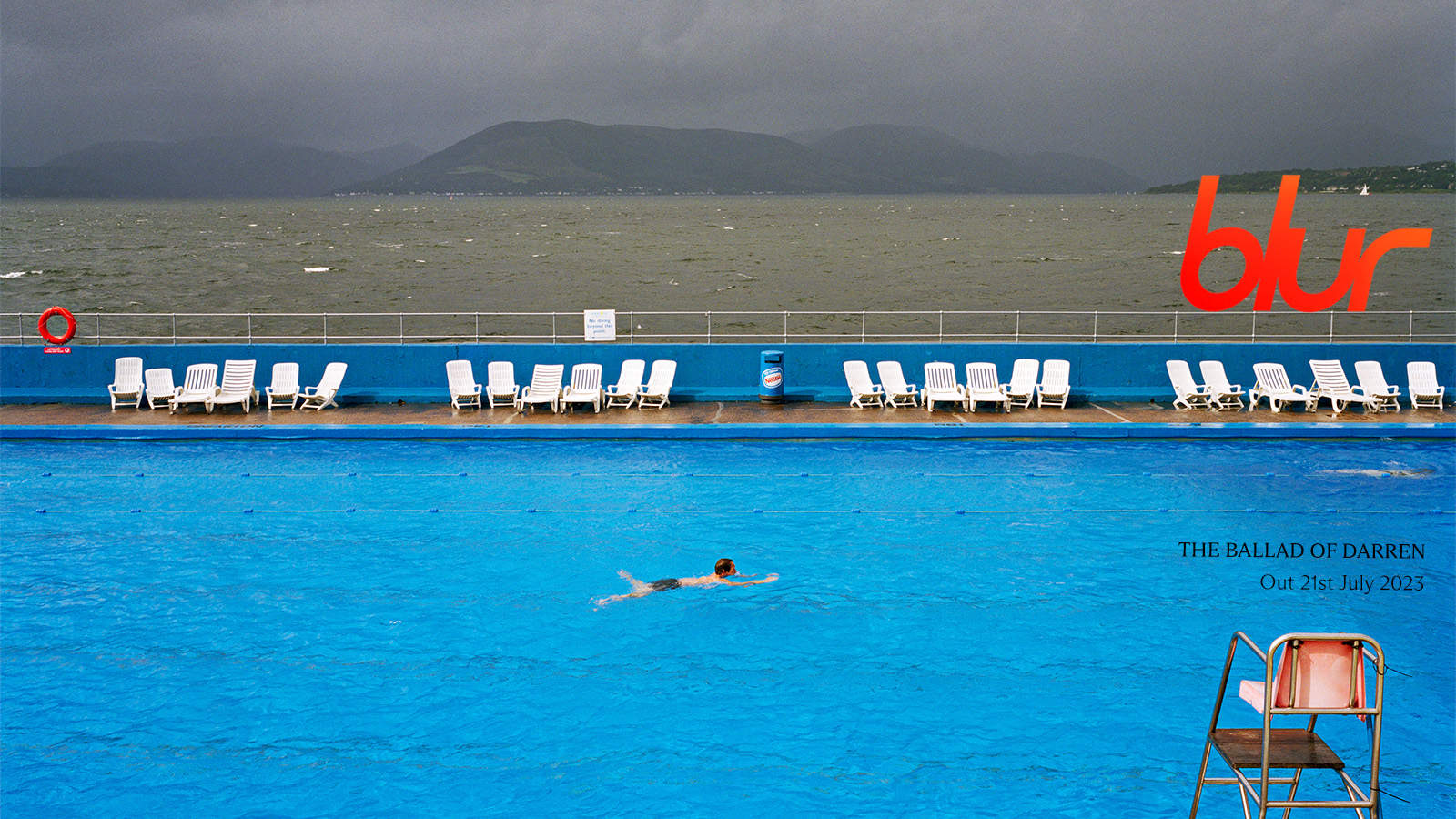
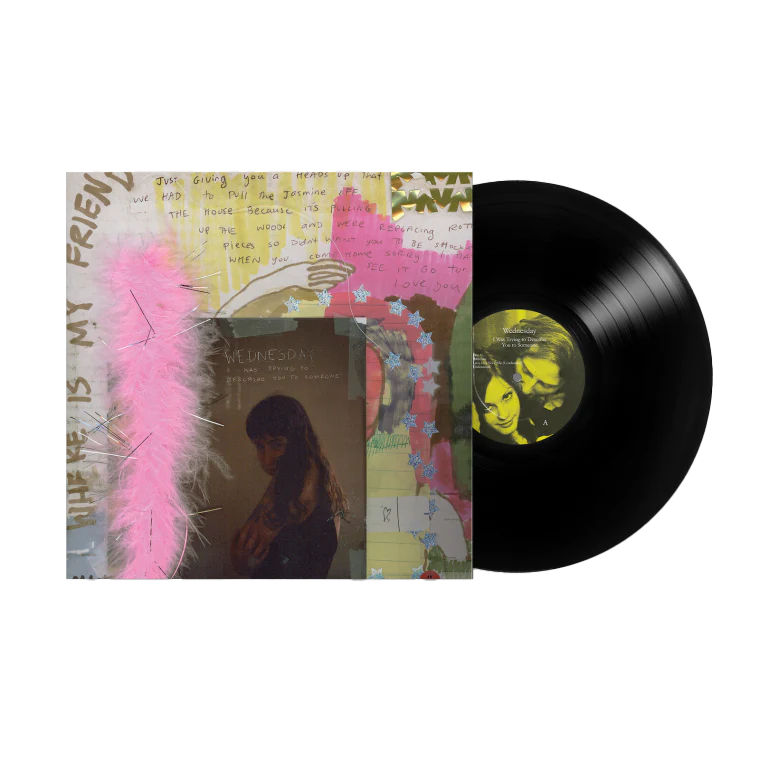
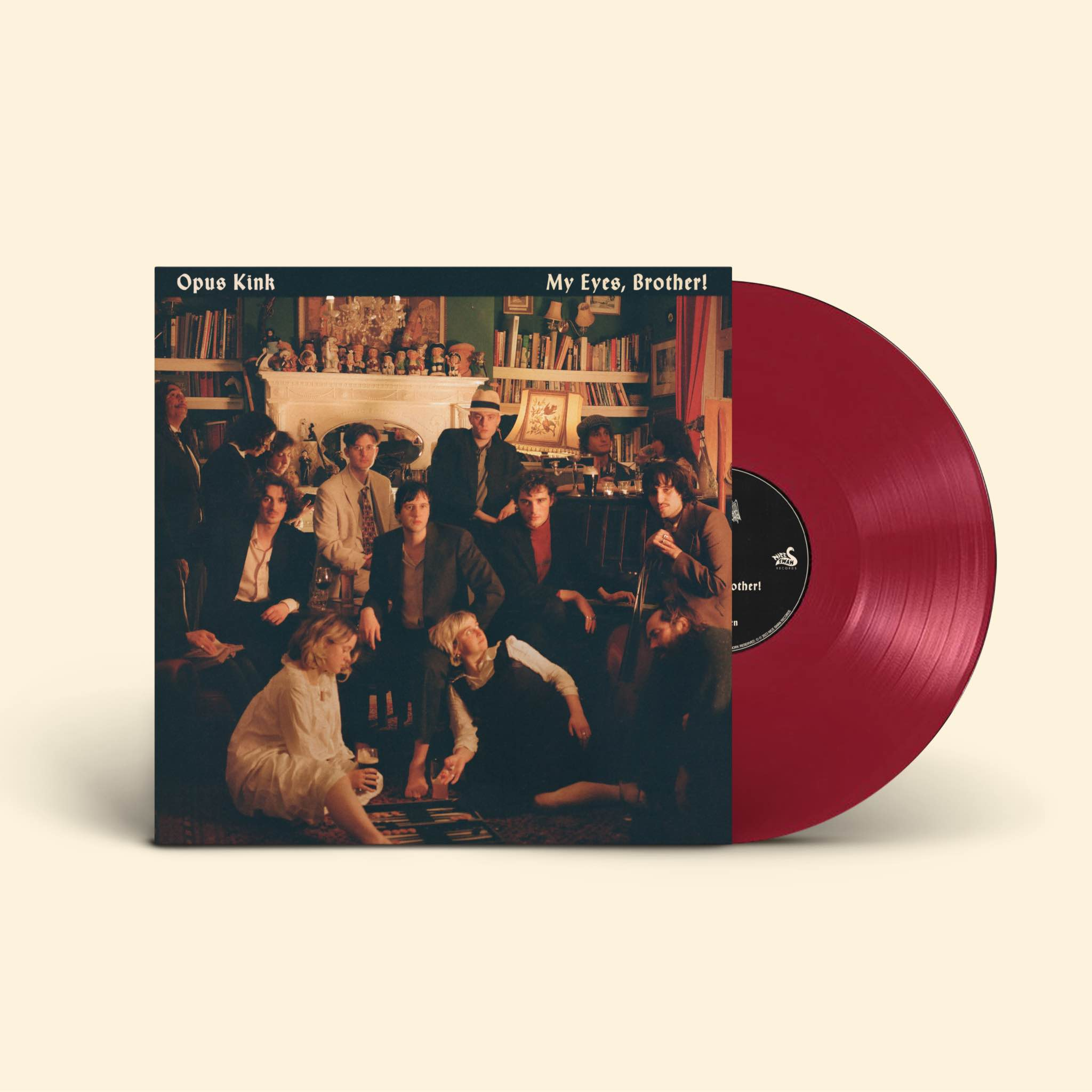
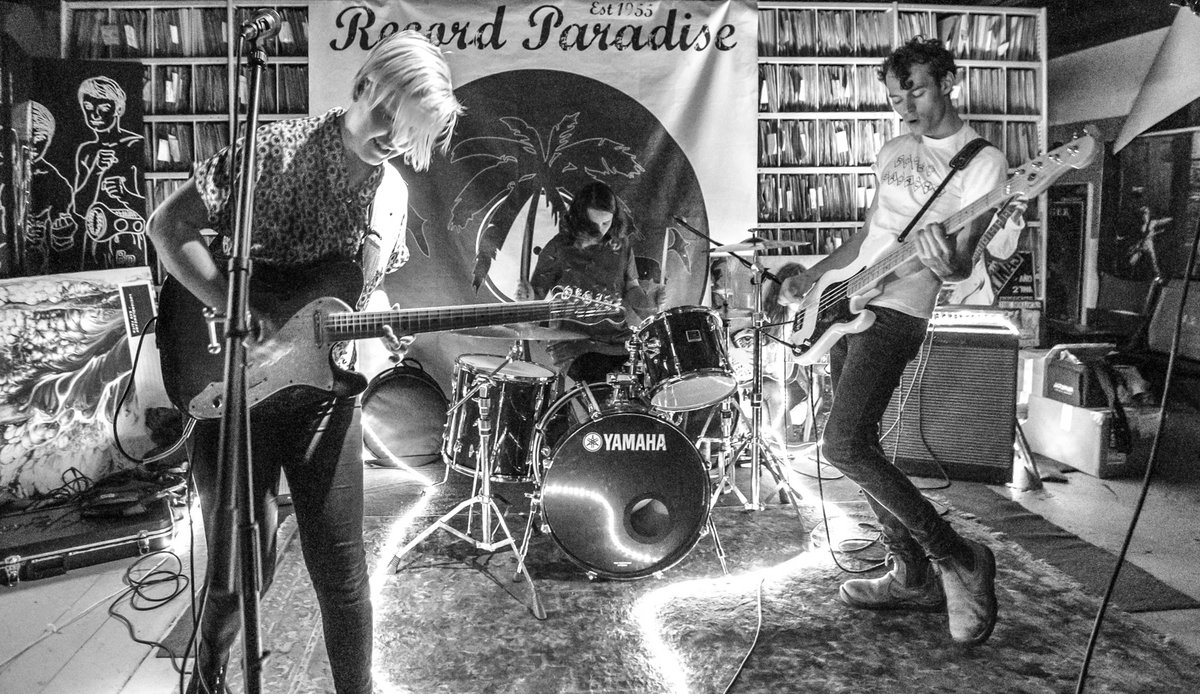
Detroit, MI three-piece Bonny Doon have shared a new single, ‘Crooked Creek’. It follows their recent track ‘San Francisco’, which accompanied the news that they had signed to ANTI- Records. Take a listen below.
“We were trying to be more free in our writing and I think this song is a good example,” the band’s Bobby Colombo said of ‘Crooked Creek’ in a statement. “We had a lot of fun with the words, which is sometimes not the fun part. I love writing with Bill’s voice in mind, and he was able to really capture the spirit of this one I think.”
Bonny Doon Release New Single ‘Crooked Creek’ –Bonny Doon is Bill Lennox, Bobby Colombo and Jake Kmiecik.
UK singer songwriter Fenne Lily — who moved to New York City in the time since she released her sophomore album, “Breach” in 2020 — has announced a new album, “Big Picture”, which was recorded at Brad Cook’s studio in North Carolina. Fenne Lily co-produced the album with Cook, save for one track that was produced with Christian Lee Hutson, with whom she’ll head out on an extensive tour later this year. Today, she’s sharing the album’s muted and shimmering lead single “Lights Light Up.”
“Iʼd never really written about love in the present tense before this, but even though I was still in love and not thinking about the end, there was something else going on subconsciously that led to a song about moving on before the moving on had begun,” she noted in a press release, continuing:
When it came time to record, the band and I had been playing it live for a while and itʼd become something joyful and positive, but when I started recording vocals, the lyrics made me cry. By that point the song was over a year old and I thought those wounds had healed but I guess it hurt to admit Iʼd been letting go of something while still trying to hold on.
“Lights Light Up” by Fenne Lily from the upcoming album ‘Big Picture’, out April 14th on Dead Oceans.
Ty Segall, his wife Denée, and the Cairo Gang’s Emmett Kelly recently announced their second album as THE C.I.A. It follows their self-titled 2018 debut LP.
Step into a sick rhythm. And I mean sickly. “Surgery Channel” is a constructed world where everything is piercing and pinpointed. Every single word brings confrontation. With an intro as intimate and uncomfortable as this, The C.I.A. make you question what could be happening here…or what they’re after. Denée Segall (vocals, lyrics) is both haunting and seducing us at once with her voice. Something unhinged might be about to happen and they’re calmly dangling it over your head. Is it the possibility of dismemberment? Revenge?
There is something about “Surgery Channel” that is sterile and covered in dirt at the same time. Maybe it’s the feeling of simultaneous anger and defeat. Maybe it’s what comes after. Or maybe it’s about the ever-so-brief silent spaces between notes and words. Rhythm would be nothing without empty space. Words are rhythm at The C.I.A.
“Vicious visage / Internal monologue / Blink and stare / The metal and the glare / Intentions negating / The ego ascertaining / A pause / A cue / A push to make a move” from “Better”.
There’s nothing wishy washy about The C.I.A. or the way they sound. It’s all about precision and aim But really, it’s a warning… amplified by the suspense of tick-tocking drum machine beats that resemble a hospital room. Ty Segall (bass, percussion, back up vocals) and Emmett Kelly (bass, synth, back up vocals) have painted a jarring and dissonant landscape behind Denée’s story. Their basses could easily be swapped for bone drills and you might not be able to tell the difference. Emmett’s modular synth envisions an environment reminiscent of the instrument itself, a mess of wires and pulsing red lights. Ty’s subtle use of electronic and analogue percussion fluctuates between the sound of a metal tray hitting the floor (“The Wait”), and the swish of an ultrasound scan (“Bubble”). At times, it projects the feeling of being probed and investigated. You could assume this reality has been lived by those at The C.I.A, though most listeners could only fear it. So… just how little of this portrayal is solely a work of imagination?
“I’ve been under / I’ve been down / Stripped and bound / Coming out” from “Under”.
“It’s a slight incision / Never really knowing / If we’re dead or living” from “Over”.
Dissection is but just one of the issues here. “Bubble” is a different story… of anxious desire. We will be consumed by what we must consume. Restraint backfires and drives a person to madness. Or maybe that’s just what they want you to think. It’s one of those tracks that feels as though Denée is whispering directly in your ear.
“She needed something to eat / She wanted to dine / But it was never enough / She was feeding all the time / She needed someone to see / To look at her and to vie / She puts her fist in her mouth / Tells you she’s losing her mind” from “Bubble”.
Both “Surgery Channel” and The C.I.A’s first Self-Titled record are ripe with straightforward conviction. However this most recent installment reveals a new side of their personality. Now The C.I.A. is communicating from an electrified, pulsating, metallic playpen that wants you to strut. “Impersonator” beckons a new groove, with call and response bass hooks that resemble a sequenced dance track and background vocals that invite a very steamy dynamic. High energy “You Can Be Here” is for those who can move fast, while “Bubble” is for those who want to sway in sultry slow motion. “Surgery Channel” shows punks a new way to move while remaining loyal to the traditions of catharsis and social commentary.
This record is an astute observation and blunt critique. Both inward and outward. It is an exploration into how harshly intimate that process can be. It was written in 2021 by Denée Segall, Ty Segall, and Emmett Kelly.
The new one is baptized “Surgery Channel” and lands next year, on 20th January.
Sofia Arreguin: “Step into a sick rhythm. And I mean sickly. “Surgery Channel” is a constructed world where everything is piercing and pinpointed. Every single word brings confrontation. With an intro as intimate and uncomfortable as this, The C.I.A. make you question what could be happening here…or what they’re after. Denée Segall (vocals, lyrics) is both haunting and seducing us at once with her voice. Something unhinged might be about to happen and they’re calmly dangling it over your head. Is it the possibility of dismemberment? Revenge? This record is an astute observation and blunt critique. Both inward and outward. It is an exploration into how harshly intimate that process can be.”
Following the lead single “Impersonator” the trio unleashed a second ripper. “Inhale/Exhale” is a fuzz and buzz crackerjack. Deranged guitars, deranged drums, and deranged vocals by Denée.
The second single from the new album: “Surgery Channel”. Out January 20th
New deluxe and epic expanded 40th anniversary edition of“Feline” from The Stranglers. It comes with ten extra tracks and rarities. The Stranglers were unstoppable throughout the seventies and eighties becoming one of Europe’s biggest bands, with “Feline” peaking at No. 4 in the UK album chart. Lead single ‘European Female’ peaked at No. 9 in the Singles chart and paved the way for the bands transition in sound, helping to cement their place in an ever-changing soundscape.
The European Female (In Celebration Of), by the Stranglers was the leading single from the album “Feline”, released in January 1983. Jean-Jacques Burnel, singer-songwriter, bass: The Stranglers’ “Feline” album was an attempt to marry the northern element of Europe – represented by synthesizers and electronic drums – with the southern element of Spanish and acoustic guitars.
“European Female (In Celebration Of)” was an attempt to address my identity and in a way it was my European version of Californian Girls by the Beach Boys. I was going out with a Parisian ballerina at the time, so I projected my idea of Europe on to a person. It was a passionate, very destructive relationship, but for three years she had me in her spell, which was the idea behind putting us in cages in the video.”
Dave Greenfield, keyboards: “The song was produced by Steve Churchyard and mixed by Tony Visconti. I just came up with something on my old synthesizer to go with the band’s bits. The best ideas come pretty quickly. The keyboard melody for “European Female” is mostly spontaneous, or very close to it. It’s just two chords, with arpeggios over them. It’s pretty simple, but it fits.”
And another great tune from the album, “Midnight Summer Dream”. Here is the Extended Version:
“Feline” is the seventh studio album by the Stranglers and was originally released on 22nd January 1983 on the Epic record label, their first for the label. The first edition came with a free one-sided 7″ single “Aural Sculpture Manifesto”. “Feline” drew heavily on two of the dominant musical influences in Europe of the time, by using primarily acoustic guitars and electronic drums as well as Dave Greenfield’s synthesizers. The American edition of the album included the British hit single “Golden Brown” as the closing track on side one of the original vinyl (and the fifth song in on the CD version)
Another Stranglers concept album, but a much lesser work than forerunner “La Folie”. While not an instant classic, it does repay repeated listening — especially the rustic English charms of “Midsummer Night’s Dream” and the more Eurocentric “Last Tango in Paris” and “All Roads Lead to Rome.” Instead of the belligerent tunefulness of yesteryear, the Stranglers were trying to expand their sound and reach.
“Feline” is a long ways from The Strangler’s first two legendary punk albums: “Rattus Norvegicus” and “No More Heroes”. Here, they play very interesting pop songs featuring vocals and melody. “Feline” has stood the test of time and remains one of my favourite Stranglers records. Great songs all the way through this album with masterpieces “It’s A Small World”, “Ships That Pass In The Night”, “Let’s Tango In Paris”, “Paradise”, “Golden Brown” and “Blue Sister”. For a band that fired out the raw aggression captured in their earlier days, it’s quite remarkable that they could make such an album like this one. Even more remarkable, “Feline” does appeal to most fans of early Stranglers. It does to me. A truly great album.
This new deluxe and epic expanded 40th anniversary edition of “Feline” from The Stranglers, will be a collectors item for years to come. This 2LP will be pressed onto red & transparent marble vinyl and features bonus tracks and rarities.
Hugh Cornwell – vocals, guitar, Jean-Jacques Burnel – bass, vocals (lead vocals on “European Female” and “Paradise”) Dave Greenfield – keyboards, Jet Black – drums, percussion
Screaming Females is a three piece rock band from New Brunswick, New Jersey. Once you start looking for them, you’ll see desire paths everywhere. In parks and driveways, parking lots and apartment complexes, in front of corner stores, libraries, schools and offices.
“Maybe there was one in your neighborhood growing up, a corner where everyone decided it took too long to go around, so they made their own pathway to cut through,” says Marissa Paternoster, singer and guitarist of Screaming Females. “There’s this cool unsaid group consciousness that comes together where everyone decides, this is the right way to go.”
Now a band for half the lifetime of its members, Screaming Females have long been pounding out their own desire path. Formed in 2005 in New Brunswick, NJ, the trio has consistently created a hearty, surprising mix of indie-, alt-, punk- and stoner-rock, all with their original line-up of Paternoster, “King Mike” Mike Abbate (bass) and Jarrett Dougherty (drums).
“Desire Pathway” was recorded at Minnesota’s Pachyderm Studios (where Nirvana recorded “In Utero”) and produced by Matt Bayles (Foxing, Pearl Jam, Mastodon, et al). Bright and full, the album captures the band at a time when nothing was certain other than their abiding desire to make music together. “Desire Pathway” opens with the Sabbathy hypnotism of “Brass Bell.” Following a swelling haze of synth, feedback shrieks, martial snares advance, and the band explodes into a bracing groove. Soon, Paternoster makes the cryptic announcement: “I have flown us to the moon,” and we’re off. The song has the effect of clearing one haze and replacing it with another, much heavier one.
Compared with their previous record (2018’s expansive “All at Once”), “Desire Pathway” feels refreshed and direct. “Beyond the Void” may gather gloomily, but it quickly releases into its jangly, memorable chorus. Lead single “Mourning Dove” successfully channels the Pixies into a tight, driving power-pop song that passionately declares “my love for you is too strong to hide.”
Now 17 years and eight albums in, Screaming Females are still making their own path in the world, still touring DIY and releasing music without compromise. The route might cut a little off the main road, but you’ll quickly see there’s a reason they’re on it. You just might like where it leads you.
We’re thrilled to announce our new album “DESIRE PATHWAY” out Feb 17th The first single, ‘Brass Bell’, is streaming now everywhere! Loads of new US/Canada/EU/UK tour dates.
We’re thrilled to announce that Gnoomes are back with the new record ‘Ax Ox’ which will come out via Rocket Recordings on the March 3rd.It’s been 3 years of making it, a whirl of emotions, but nothing makes us happier than knowing it’s gonna see the light of day soon! ‘Ax Ox’ is probably our most experimental record.
‘Ax Ox’ is available on ltd edition ‘Blue Swirl’ via the Bandcamp link, or you can pick it up the ltd ‘Oxblood Vinyl’ from your favourite record shop: https://gnoomes.bandcamp.com/album/ax-ox. “Ax Ox” runs through a gamut of vibrant emotion across its eleven tracks, from the elemental blast of kraut-pop that is ‘The Neighbour’ to the crystalline and techno-fied ‘Loops’, and across moments of jarring and skewed ambience such as ‘Mirror’ and ‘The Bridge’. Here the component parts that have always made up Gnoomes’ fresh and wide-eyed aesthetic – dreampop radiance, bold electronic experimentation and the propulsive motorik drive which moves them onward –are rendered still more vivid and transcendent, the product of a band unafraid to cross boundaries in pursuit of catharsis by any means necessary, and one still hopeful in spite of all that fate can throw at them.
Watch the hallucinogenic video for the first single to be released, the dance-floor driven ‘Loops’. The video (one that the ‘Butthole Surfers’ would have been proud of) was directed by the talented Perm based artist Baadwrk:
The cover artwork which we absolutely adore was made by the magnificent Игорь Скалецкий!.
Taken from Gnoomes new album ‘Ax Ox’ (Launch290). Released on Rocket Recordings on 03rd March 2023.
The Rolling Stones have released a live version of the classic song “Wild Horses”, taken from “GRRR Live!”, their upcoming live album, which is due to be released on February 10th.
“Wild Horses” was originally recorded at Muscle Shoals Sound Studio in Alabama in 1969, and eventually saw the light of day on The Stones’ iconic “Sticky Fingers” album two years later. The live version was recorded during the band’s 50 And Countingtour, at the Prudential Center in Newark, New Jersey, on December 15th, 2012.
The 2012 performance was originally broadcast as a pay-pay-view event billed “One More Shot” in partnership with World Wrestling Entertainment, and featured a number of special guests including Lady Gaga, John Mayer, The Black Keys,Bruce Springsteen and former Rolling Stone guitarist Mick Taylor.
More recently, the band released video of another performance of “Wild Horses”, filmed at London’s Olympic Stadium in 2018 and featuring a guest vocal from Florence And The Machine singer Florence Welch.
“GRRR Live!” will released as a triple black vinyl set, with an indies-only version on white vinyl, and a red vinyl variant that’s only available from the band’s website. It’s also released on 2CD, DVD + 2CD, BluRay+ 2CD.
The band have also announced a star-studded “immersive” virtual concert to celebrate the release of the album, which will take place on February 2nd at 8PM GMT .
A new 7CD That Petrol Emotion anthology is on the way from Demon Music.‘Every Beginning Has A Future’ contains all the studio albums and loads of bonus material.
Edsel will release “Every Beginning Has A Future”in November, a 7CD band-curated Anthology that bookends the decade in the spotlight of That Petrol Emotion.
The band were London based but originally from Northern Ireland and had an American singer in Steve Mack. They never quite had any hit singles (1987’s ‘Big Decision’ came closest stalling at #42) but their second album “Babble” was criticallly acclaimed at reached number 30 in the UK album charts.
A career-spanning retrospective box sets cause you to reassess an artist’s career, some merely reaffirm what you already thought about them. “Every Beginning Has A Future: An Anthology 1984-1994” – seven CDs and a booklet; five albums, a live set and enough b-sides, rarities and remixes to satisfy the most die-hard fan – causes the listener to ask questions, or rather one pressing question, over and over again: why weren’t That Petrol Emotion huge?.
They were that rarest of things, a band influenced by Captain Beefheart and Pere Ubu (the box set contains covers of the former’s ‘Zig Zag Wanderer’ and the latter’s ‘Non-alignment Pact’), who seemed to have genuine commercial potential: they were noticeably edgier and more overtly political than the O’Neill brothers’ former band The Undertones, but the pop smarts that had underpinned their previous outfit’s progress through punk and post-punk were still audibly intact, no matter how angular and scrabbly the guitars got. They had a great frontman, Seattle-born Steve Mack (discovered, it turns out, working in a London pizza restaurant that was managed by soon-to-famous comedian Jack Dee) and were, by all accounts, fantastic live. Despite being recorded in the band’s 90s death throes, the final CD in the set, taped onstage in London and Dublin, bears this out.
They were prescient and forward thinking. Fans of Beefheart and Pere Ubu they may have been, but they were also intent on fusing guitar rock with hip-hop, sample culture and dance music before the arrival of acid house’s Summer Of Love and the ensuing indie-dance movement: they weren’t the only band thinking like that at the time – there was Pop Will Eat Itself, Big Audio Dynamite and the pre-Mr C Shamen, as well as a host of more dimly-remembered names including Age Of Chance and Das Psych-Oh! Rangers – but That Petrol Emotion’s experiments in that field have aged noticeably better than most of their peers’.
Scattered throughout “Every Beginning Has A Future”, you hear tracks that sound remarkably like hit singles – ‘It’s A GoodThing’, ‘Big Decision’, ‘Sensitize’, ‘Hey Venus’. But none of them were: for some reason, That Petrol Emotion were condemned to what “Every Beginning Has A Future’s” excellent sleeve notes – by John Harris – calls “commercial underachievement”.
Manic Pop Thrill
They started strongly. Their 1986 debut album “Manic Pop Thrill” was rapturously received, topped the indie charts, and still sounds fantastic today: the propulsively urgent ‘Can’t Stop’ and the tender ‘A Natural Kind Of Joy’ and ‘A Million Miles Away’.
That Petrol Emotion’s scintillating debut reminds everyone, first and foremost, what an incredible musical alliance the O’Neill brothers can be. Following a succession of independent singles, they settled on DemonRecords for this inspired debut release. “It’s a Good Thing,” “Mouth Crazy,” and “Circusville” are typical of the contents — relentless pop hooks married to surging guitar chords, underpinned by hints of swamp blues and nods to garage rock and other mutant strains of the rock & roll animal. As naked, bold, and impassioned a record as had been heard in years. The title says it all.
There was something hugely impressive about their ability to render some defiantly left-field influences – not just Beefheart and Pere Ubu, but Can and Television – into songs with killer hooks and soaring choruses.
Babble
Its success led to a major label deal: presumably it was the ensuing increase in funds that allowed them to dramatically develop their sound on 1987’s “Babble”, augmenting the swampy riffs with then-cutting edge electronics which they were smart enough to use subtly, not always the case when a rock band of the era got their hands on a sampler.
Following the split of John O’Neil band’s former band the Undertones, the guitarist and principal songwriter returned to his hometown of Derry and teamed up with friend and fellow guitarist Raymond Gorman (ex- Bam Bam And The Calling) the two formed first a new songwriting project and then a new band, playing a couple of gigs with a drum machine and Gorman’s then-girlfriend as a singer. Another friend, drummer Ciaran McLaughlin (formerly with The Corner Boys), but who had also played a few Undertones gigs covering for an absent Billy Doherty) was the next member to join.
In autumn 1984, the nascent That Petrol Emotion relocated to London, where the existing three members were joined by John’s brother and former Undertones lead guitarist Damiel O’Neil who turned down an invitation to join Dexy’s Midnight Runners in order to work with TPE). Seattle- born American singer Steve Mack (at the time, on a year out from his studies and working in a pizzeria ) completed the lineup. In 2020, comedian Paul Whitehouse revealed that he had unsuccessfully auditioned for the band during this period.
This, the band’s second album and major label debut (released in 1987) broke into the UK Album Chart and won universal acclaim, being voted as one of the albums of the year by Rolling Stone Magazine critics, and receiving an A- ‘grade’ from Robert Christgau. In the UK, the single “Big Decision” charted at number 42. This would be the band’s highest chart position for a single release.
Babble really should have propelled That Petrol Emotion to mainstream success. The failure of singles ‘Big Decision’ and ‘Genius Move’ to set the charts alight tells you nothing about their quality, or indeed their commerciality, and everything about the almost unbridgeable gulf that existed between the world of John Peel, the NME and ‘alternative’ music – even ‘alternative’ music signed to a major label
End of the Millennium Psychosis Blues
They sounded slightly rattled on Babble’s follow-up “End Of The Millennium Psychosis Blues”, perhaps by its predecessor’s failure, or more likely by chief songwriter John O’ Neill’s announcement that he would leave the band following the album’s recording and subsequent tour. By some distance their least focussed album, it kept throwing out musical ideas that frequently worked – the folky ‘Cellophane’, ‘Groove Check’’ drum machine driven funk – but somehow didn’t hang together.
Although he stayed to record the album, the sessions were fraught with tension and foreboding. Gorman has recalled “it was a complete bombshell. When I look back now, we should have thrown him out there and then and got on with the new recording ourselves. Instead we meekly accepted everything and he hung around for another three or four months. It was a toxic situation.
Chemicrazy
By the time of 1990’s “Chemicrazy“, the musical climate had changed: Madchester was in the ascendant, the airwaves and charts alike were ostensibly open to indie bands who’d discovered dance music. That Petrol Emotion, who’d discovered dance music before they’d actually formed – their roots lay in an eclectic club night John O’ Neill and guitarist Reamann O’Gormain had started in early ’80s Derry – should theoretically have capitalised.
Produced by Scott Litt Working with Litt, the band developed a more alt rock style than before, as hinted at on the final track of the previous album “Under the Sky”. Although the album’s song were more intense than previous work, “Chemicrazy” also maintained a pure pop heart, Frustratingly for the band, however, the massive predicted sales for “Chemicrazy” never happened.
That they didn’t wasn’t for want of trying. “Chemicrazy” was stacked with potential hit singles – ‘Hey Venus’, ‘Tingle’, ‘Sensitize’ – although it had substantially more to offer than that: the fantastic ‘Scum Surfin’’ and ‘Gnaw Mark’ offered a more muscular take on the sound of Manic Pop Thrill.
Fireproof
Dropped from Virgin after years of critical acclaim had failed to translate into sales, That Petrol Emotion continued with this fine effort. But if singles like “Sensitize” had failed to make them pop stars, it was difficult to see how they were ever going to manage the trick. If by no means as compulsively listenable as “Chemicrazy”, “Fireproof” nonetheless has its moments. “Last of the True Believers” is one, as are the impassioned singles “Detonate My Dreams” and “Catch a Fire.” Yet without proper industry support, the game was up, and within a few months of release the members of That Petrol Emotion were variously back in the London dole queue or at home with their families in Northern Ireland.
1993’s “Fireproof” came out on their own label. It doesn’t sound remotely like the work of a band on their uppers – it’s potent and dark; largely recorded live in the studio, it junks the electronics and dance floor beats for a sound heavier than anything they’d previously released, although the pop inclinations that had been there all along still poke through on ‘Shangri-La’ and ‘Detonate My Dreams’. But in an interview around the time of its release, the band mentioned they had recently received a bank statement informing them they had the grand total of £65 in their account. Clearly things couldn’t continue: they broke up in May 1994.
That Petrol Emotion “Fireproof” was their heaviest, most riff-laden album to date released in 1993 – which, like their debut, reached number 1 in the UK Indie Chart. However, despite the generally positive press coverage (and the loyal fan base they had garnered over ten years and five full-length albums), That Petrol Emotion were failing to attain the level of sustained commercial success, or popularity, enjoyed by contemporaries such as My Bloody Valentine and Sonic Youth. As a result, the band split amicably in 1994.
That Petrol EmotionJohn Peel Session June 1985
This new 7CD set features all five albums (Manic Pop Thrill (1986), Babble (1987), End of the Millennium Psychosis Blues (1988), Chemicrazy (1990) and Fireproof (1993)).
There’s a bonus disc devoted to “Chemicrazy” and the other albums offer extra tracks in the form of non-album B-sides, bonus tracks, remixes, live recordings and fan club only releases. A live album at the end completes the seven-disc set which in total delivers 121 tracks.
This comes with a 52-page book with sleeve notes by John Harris and rare images and photographed memorabilia supplied by the band.
“Every Beginning Has A Future: An Anthology 1984-1994”will be released on 25th November 2022, via Edsel.
Following ‘Parallel Lines’ was no small task, but with their ‘Eat To The Beat’ album, Blondie proved they still had plenty of tasty licks up their sleeves.
With the all-conquering “Parallel Lines” taking Blondie to the Top 10 in the US and comfortably topping the charts in the UK, Debbie Harry and Co. were no longer the gritty punk upstarts that recorded “X Offender” – they were pop behemoths with a knack for turning out hooks at the drop of a hat. With producer Mike Chapman on hand to help fashion their new songs into radio-friendly anthems, it’s no surprise that “Parallel Lines” follow-up, “Eat To The Beat”, became the group’s second UK chart-topper, hitting No. 1 on October 13th, 1979, after its release earlier that month.
With their pop credentials firmly established, Blondie entered the studio ready to prove they could turn their hand to anything. Yet for all its stylistic carousing, “Eat To The Beat” provides a uniform listen thanks to the way it soundtracks a fantasy New York City of yellow taxis, wasted decadence, and bright-lights hunger with an exotic chic that, naturally, appealed to the group’s eagerly awaiting UK fanbase. Taking a cue from the ferocity of the group’s earliest outings, the title track is a sharp slice of Blondie’s patented pop-punk, while the likes of “Union City Blue” conjures the sort of romantic yearning you only ever get from finding yourself adrift in a city where anything can happen.
Switching styles with ease, opener “Dreaming” found the group at their most unashamedly bombastic, before offering a masterclass in street-smart punk-funk strutting, courtesy of “The Hardest Part.” Elsewhere, “Eat To The Beat” saw Blondie make their first notable foray into reggae, with “Die Young Stay Pretty” nodding towards “The Tide Is High” (which would top the charts on both sides of the Atlantic in 1980), while the hedonistic rush of “Atomic” was a perfectly calibrated export of New York City’s disco scene.
Often overlooked in favour of its big-hitting predecessor, “Eat To The Beat” had more bite than people remember, and went platinum in both the US and the UK. With the group at their most ambitious, they also created a promo video for each of the album’s 12 songs, further cementing the album as an unofficial Big Apple soundtrack while creating the world’s first video album in the process.
Acclaimed PiL documentary “The Public Image is Rotten“, After the breakup of the Sex Pistols, John Lydon / Johnny Rotten, formed Public Image Ltd(PiL)– his groundbreaking band which has lived on nearly 15 times as long as his first one. He kept the band alive ever since, through personnel and stylistic changes, fighting to constantly reinvent new ways of approaching music, while adhering to radical ideals of artistic integrity. John Lydon has not only redefined music, but also the true meaning of originality. Former and current bandmates, as well as fellow icons like Flea, Ad-Rock and Thurston Moore, add testimony to electrifying archival footage (including stills and audio from the infamous Ritz Show).
With his trademark acerbic wit and unpredictable candor, Lydon offers a behind-the-scenes look at one of music’s most influential and controversial careers.
Julien Temple’s “The Filth And The Fury” previously explained why seminal punks Sex Pistols still matter, but the in-depth PiL documentary “The Public Image Is Rotten” examines how John Lydon’s second band, Public Image Ltd, also influenced successive generations of future-shaping rock’n’roll acts.
Directed by Tabbert Fiiller (Cesar Chavez, The Activist) and produced by Abramorama, “The Public Image Is Rotten” delves deep into the iconic post-punk outfit’s history as they celebrate their 40th anniversary. The PiL documentary first premiered in London, on 3rd June, to coincide with the release of a multi-disc 5CD+2DVD box set of the same name, which includes a wealth of rare and previously unreleased material.
Presented chronologically, “The Public Image Is Rotten” picks up Lydon’s story from Sex Pistols’ split, in early 1978, and traces the fascinating – if irregular – arc of PiL’s career, from their inception in the spring of ’78 through to the present day.
The director has left precious few stones unturned. He’s been granted access to the band’s archive, so long-term fans will be thrilled to encounter reams of previously unseen footage, ranging from PiL’s very first gig in Brussels (December ’78), through to rarely-seen Top Of The Pops and Old Grey Whistle Test performances.
Additionally, the PiL documentary presents new (and extremely candid) interviews with band members both past and present. Securing commentary from Lydon’s original PiL bandmates Keith Levene, Jah Wobble and drummer Jim Walker is an especially notable coup, but Fiiller also captures valuable insight from PiL insiders/acolytes including music journalist Vivian Goldman and original Roxy Club DJ/filmmaker Don Letts. Alt.rock luminaries touched by the hand of PiL, such as Moby, Beastie Boys’ Adam Horovitz and Sonic Youth’s Thurston Moore have their say too, with Moore astutely noting that the band’s legendary debut single, ‘Public Image’, was the song “that really changed the landscape after punk”.
To the director’s immense credit, “The Public Image Is Rotten” also lingers long on the making of all PiL’s landmark albums. We discover how Lydon and company somehow channelled chaotic, nocturnal sessions at Richard Branson’s rural Manor Studio into the otherworldly “Metal Box”; get the inside track on 1981’s left-field masterpiece “Flowers Of Romance” from producer Nick Launay and long-term drummer Martin Atkins; and marvel as John Lydon gleefully recalls recording “Album” with an all-star cast including Bill Laswell, Steve Vai and legendary Cream drummer Ginger Baker.
Inevitably, Lydon is the film’s dominant presence, as large chunks of “The Public Image Is Rotten” derive from new interviews shot in the singer’s kitchen and living room in LA. These segments make for mesmerising viewing, with Lydon visibly moved while recalling his potentially life-threatening bout of meningitis during his childhood, yet quickly regaining his natural defiance when discussing Sex Pistols’ messy implosion and even the implausible Country Life butter ads which helped bankroll PiL’s second life after the band’s lengthy hiatus during the 90s and early 00s.
A sizeable cut above the average rock doc, “The Public Image Is Rotten” stakes its claim as both a highly absorbing tribute to one of rock’s most uncompromising bands and a finely-drawn portrait of a singular frontman who, in his own words, remains “one of the very few people in pop history who will not go away”.
The Public Image Is Rotten (Songs From The Heart) box set available now