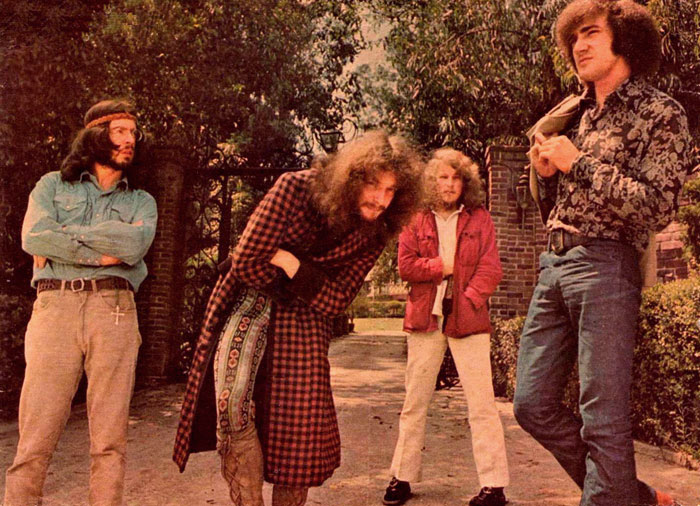
Jethro Tull are considered one of the most important rock bands and pioneers of progressive rock. In 1967, singer and multi-instrumentalist Ian Anderson founded the band together with Mick Abrahams, Glenn Cornick and Clive Bunker in Blackpool, UK. With thier trademark sound of the flute and Anderson’s extravagant stage performance. At the beginning of their career, the guys toured up and down the country through small clubs in England and gained a great deal of popularity thanks to their exotic and rousing rock sound.
The big breakthrough finally came in 1968 with the Sunbury Jazz Festival. In the following years, JethroTull became internationally known and, despite constant line-up changes, created titles for eternity with songs like “Locomotive Breath”. The influences in Ian Anderson’s complex song writing range from classical to jazz to experimental music. In the program “Swing In”, produced for WDR, filmmaker Wim van der Linden presents the bizarre everyday life of the band on their ’69 England tour.
Setlist 1. Nothing Is Easy 01:08 2. Bourée 06:49 3. Sweet Dream 19:33 4. For A Thousand Mothers 22:51
The Band: Ian Anderson: Flute and Lead Vocals Martin Barre; guitar, Flute Glenn Cornick: Bass Clive Bunker: Drums
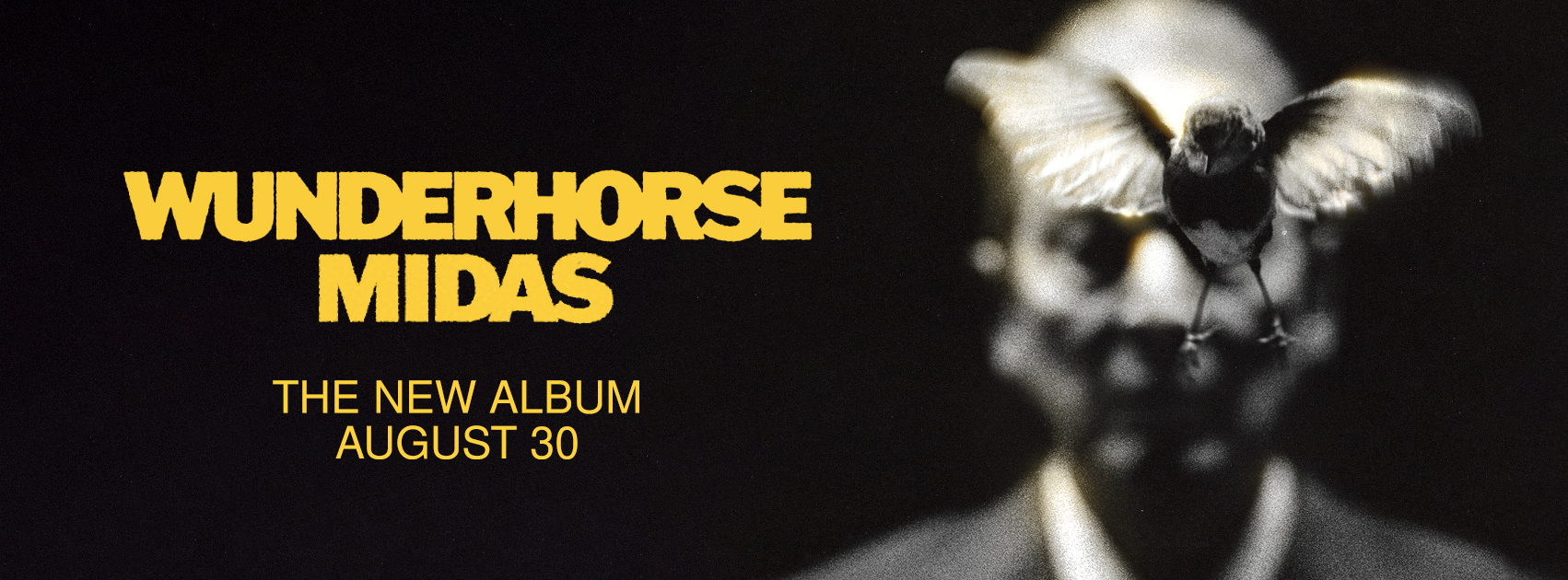
“I want it to feel like you’re right there in the room with us.” And in 10 songs and 40 minutes, Wunderhorse capture the raw power and energy that has set them apart as one of the most formidable live acts of recent years. With rugged hooks, unfiltered noise, and fierce melodic sensitivity, “Midas” rips up the script of traditional second albums and establishes the band as an endlessly addictive and rousing generational talent.
In late 2022, the release of their debut album “Cub” saw singles ‘Purple’ and ‘Leader of the Pack’ dominate radio airwaves. Landmark performances filling Glastonbury’s Woodsies Tent (FKA John Peel Stage) and selling out London’s Kentish Town Forum months in advance followed tours with Pixies and Fontaines D.C. and stadium appearances with Sam Fender, signalling the band’s arrival as one of the most prominent and exciting new guitar acts in the UK.
With Grammy Award-winning producer Craig Silvey (The Rolling Stones, The National, Florence and The Machine) on board for their sophomore record, the band looked to do something different. Their goal – in the very same studio that Nirvana put In Utero to tape and PJ Harvey recorded the Mercury Prize-nominated Rid of Me – was to push themselves outside of their comfort zones.
“There’s absolutely no faking on this record,” ends Slater, “it’s not supposed to be perfect; it’s supposed to be a snapshot, even if it is a bit of an ugly portrait. That’s how it was then, and that’s how you’re gonna see it.” And it sounds like you’re right there in the room with them.
“Midas” The song was written in a bathtub in Paris, and forgotten about until it resurfaced in Minnesota. Midas is the guy who makes you feel like a pencil stub but it’s always just business as far as he’s concerned.
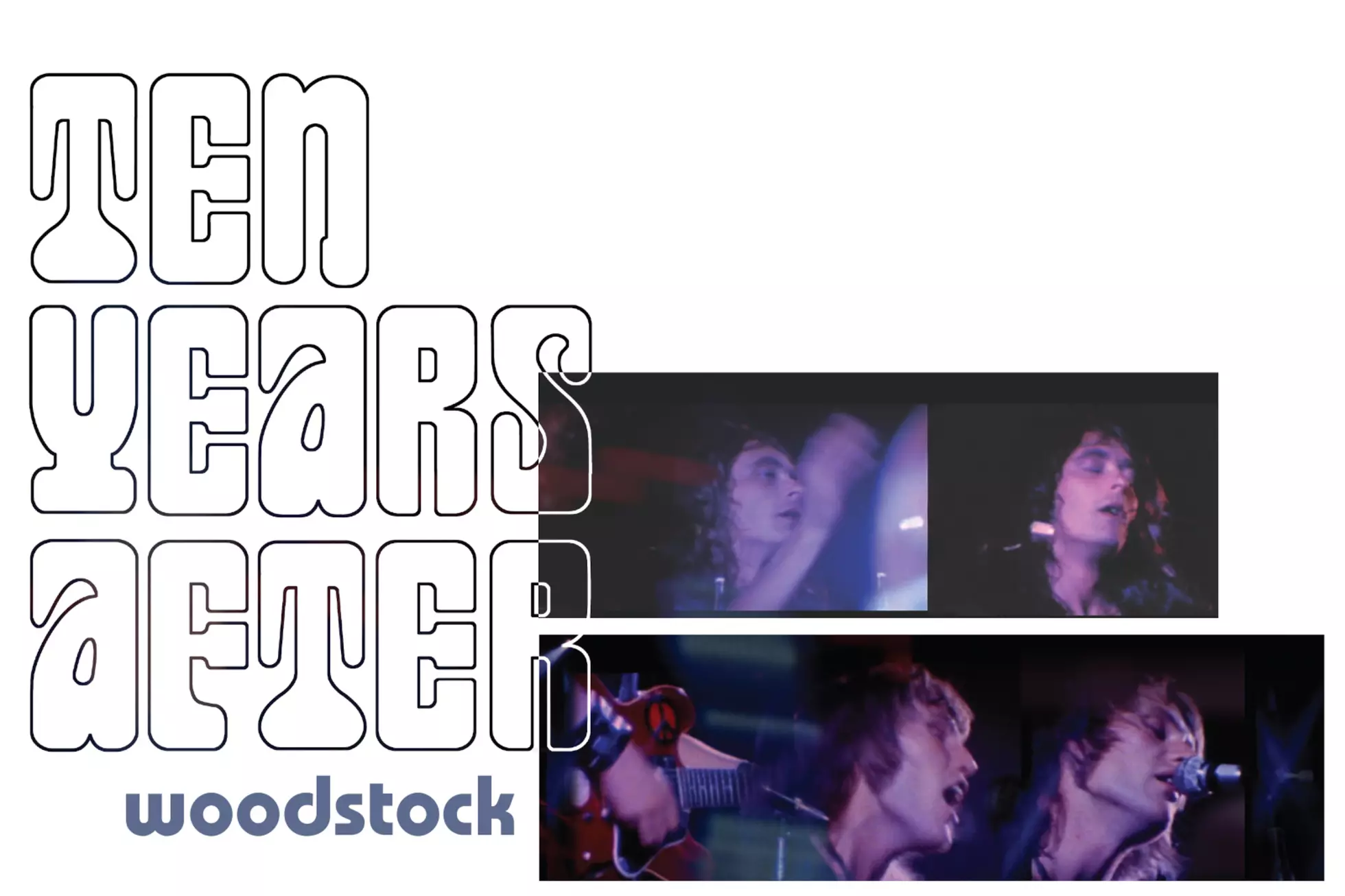
Ten Years After’s epic performance at Woodstock has been praised as one of the best performances of the three-day music festival in August 1969. It was also a breakthrough moment for the British band.
But until now their complete show has never been released as a stand-alone record. On August 16th, one day before the 55th anniversary of their historic show, the full hour long concert is being issued as a one-CD, two-LP set titled “Woodstock 1969“.
The British blues rock band led by guitarist Alvin Lee had released two studio albums and a live record when they took the stage in Bethel, New York, on August 17th at 8:15 p.m. Their third album, “Ssssh”, was released a few weeks after their Woodstock appearance .
Ten Years After’s set-closing performance of “I’m Going Home,” which clocks in at nearly 10 minutes, was featured on the “Woodstock: Music From the Original Soundtrack” album in 1970 as well as in the hit documentary released the same year.
While the band’s full performance at Woodstock was previously issued as part of 2019’s 38-CD (and pricey) “Woodstock – Back to the Garden: The Definitive 50th Anniversary Archive”, which included all songs from the history-making festival, the upcoming “Woodstock 1969” marks the first time Ten YearsAfter’s set is available as a stand-alone record.
The newly restored and mixed concert from the original 2″ multitrack tapes includes the band’s set-opening cover of Howlin’ Wolf’s “Spoonful,” two attempts at Sonny Boy Williamson’s “Good Morning Little Schoolgirl,” an 18-minute version of Al Kooper’s “I Can’t Keep From Crying Sometimes” and the epic closing song, “I’m Going Home,” a Lee original first found on 1968’s live LP “Undead”.
Ten Years After, ‘Woodstock 1969’ Track Listing: 1. Spoonful (7:40) 2. Good Morning Little Schoolgirl [False Start] (3:15) 3. Good Morning Little Schoolgirl (7:06) 4. The Hobbit (8:01) 5. I Can’t Keep From Crying Sometimes (18:01) 6. Help Me (19:32) 7. I’m Going Home (9:44)
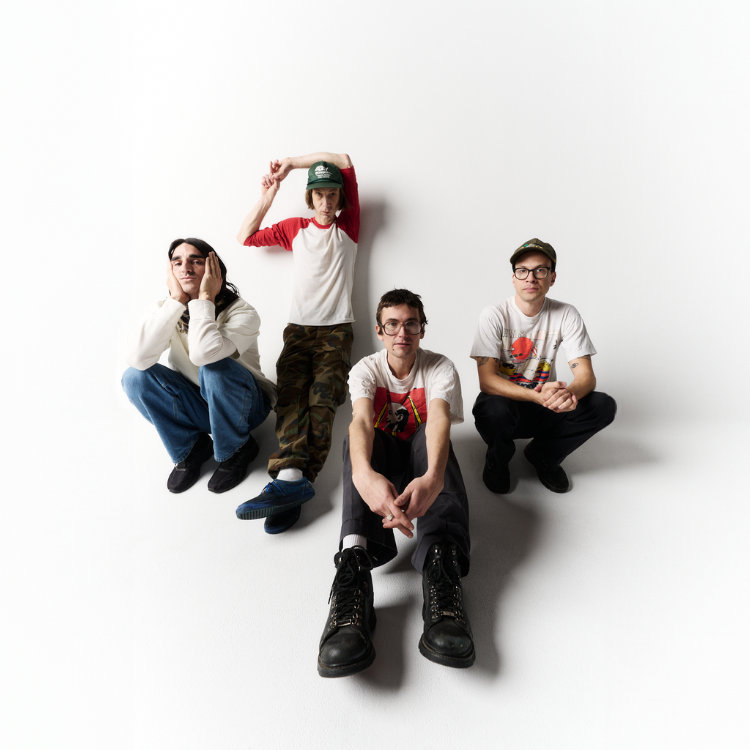
“Frog In Boiling Water”, produced by Chris Coady, was a four-year process that nearly broke the band before the album was completed. With an aim to push their sound, make a record that challenged them, and treat the band as a democracy for the first time, DIIV began an ambitious journey, both individually and collectively. A stunningly oppressive, heavy, beautiful shoegaze record, riddled with anxiety about capitalism and the state of the world. The album that finally convinced me to stop worrying and love DIIV.
This journey left their relationships with one another fraying, with the many complex dynamics of family, friendship and finances entangled, coupled with suspicions, resentments, bruised egos and anxious questions. They ultimately found their way through, and the result is 10 songs that mine a new lyrical and musical depth, those two halves mirroring one another inside a reflective and immersive whole. It is a mesmeric testament to enduring, to envisioning anything else on the other side while you remain here, in the slowly heating water of right now.
“Frog in Boiling Water”, both the title and the themes of the record, reference “The Boiling Frog” in Daniel Quinn’s The Story of B. The band explains, “If you drop a frog in a pot of boiling water, it will of course frantically try to clamber out. But if you place it gently in a pot of tepid water and turn the heat on low, the frog will sink into a tranquil stupor, exactly like one of us in a hot bath, and before long, with a smile on its face, it will unresistingly allow itself to be boiled to death.”
“We understand the metaphor to be one about a slow, sick, and overwhelmingly banal collapse of society under end-stage capitalism, the brutal realities we’ve maybe come to accept as normal. That’s the boiling water and we are the frogs. The album is more or less a collection of snapshots from various angles of our modern condition which we think highlights what this collapse looks like and, more particularly, what it feels like.”
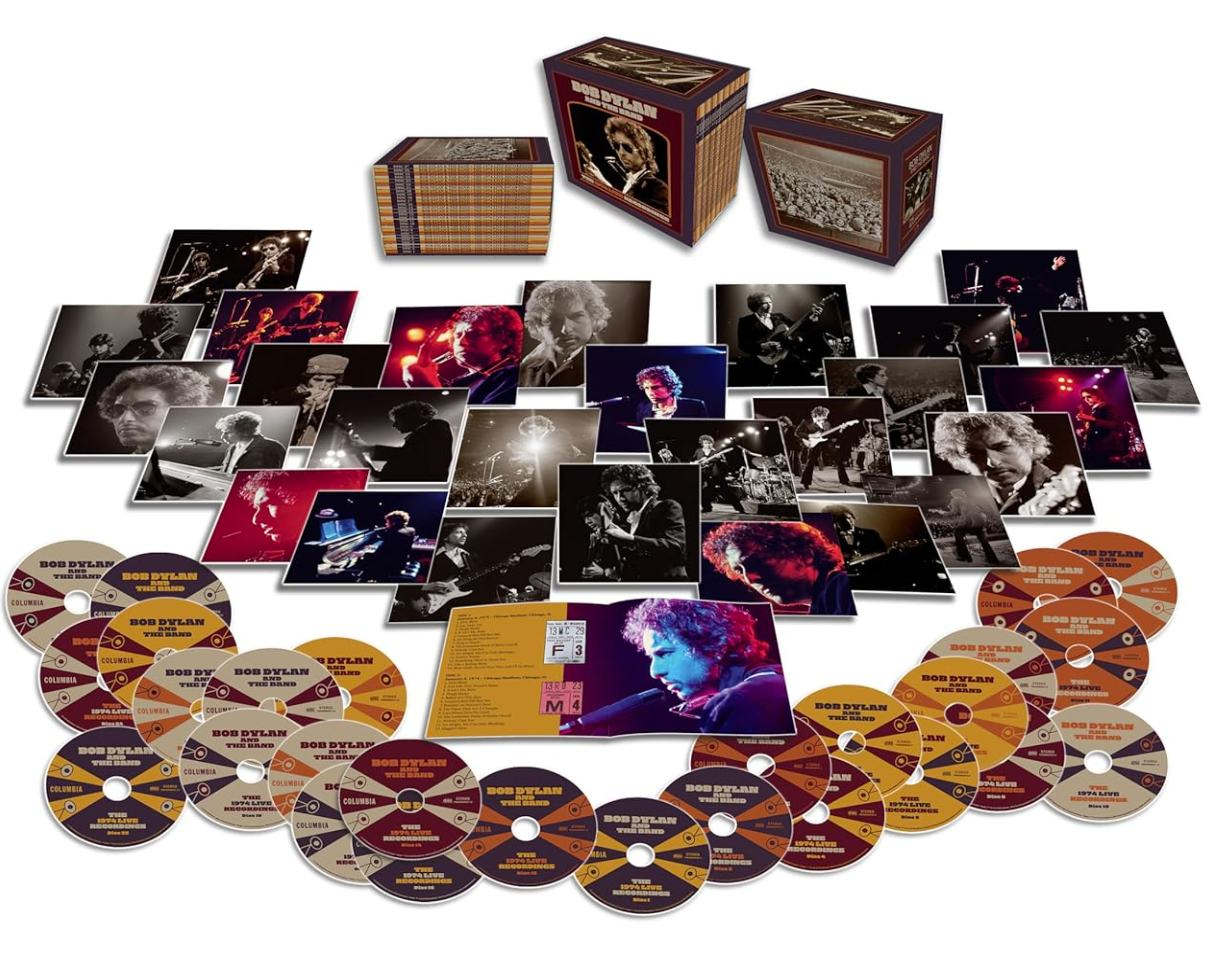
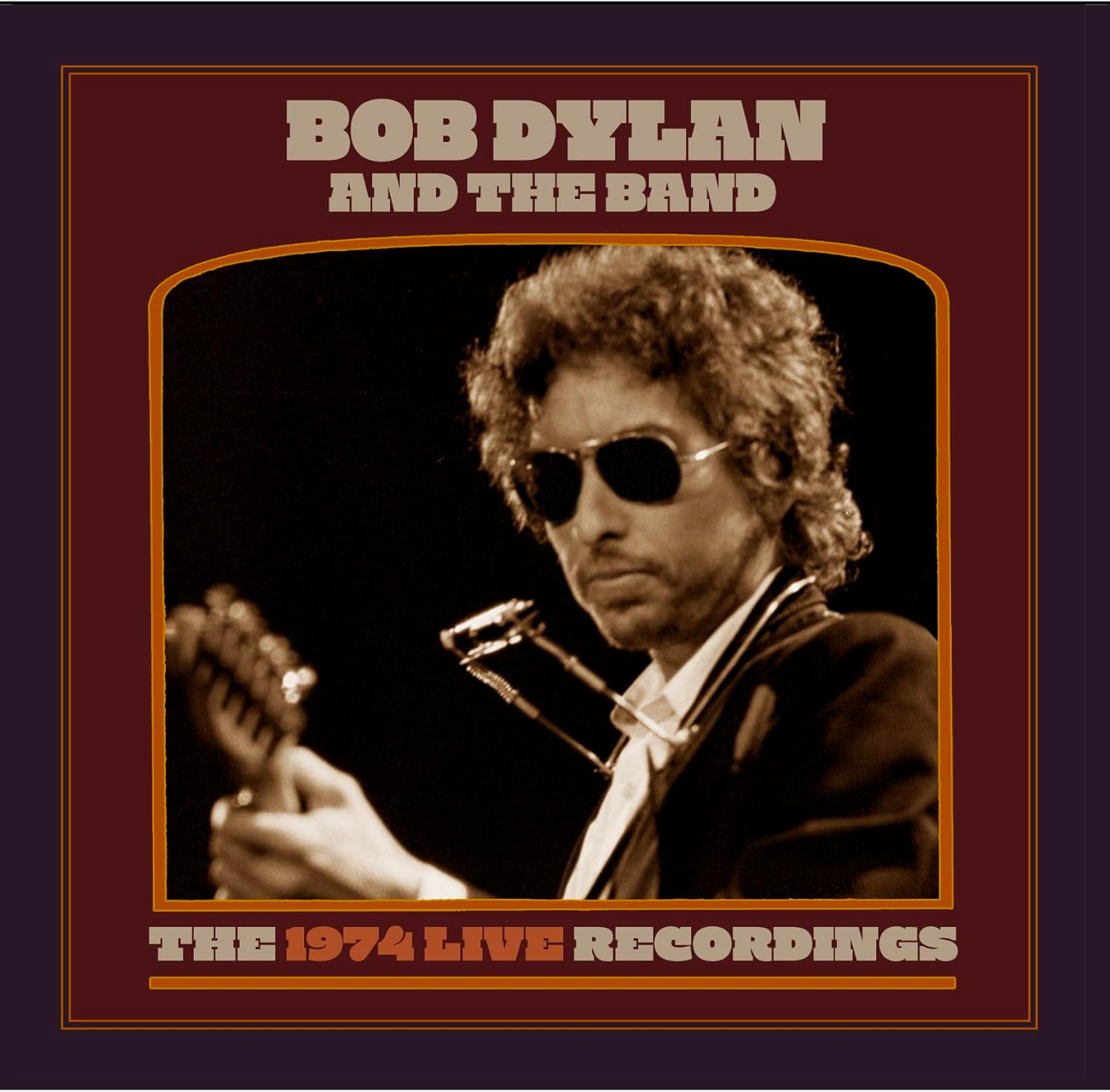
When Bob Dylan made his memorable return to the stage in 1974. Joining him were his friends and previous touring partners, The Band—Robbie Robertson, Levon Helm, Rick Danko, Garth Hudson and Richard Manuel—who had backed Dylan on the just-released album, “Planet Waves”. Though the arena tour lasted less than two months, from January 3rd through February 14th, it spanned 40 concerts in 21 cities, with many dates offering an afternoon show followed by an evening performance. The outing was documented later that year with a 2-LP set, “Before the Flood”. So Announced today for a September release: Bob Dylan “The 1974 Live Recordings”. 27 CDs worth of shows from his 1974 tour with The Band.
“The 1974 Live Recordings“, This New 431-Track Collection Of The Artist’s Arena Performances With The Band, To Be Released Across 27 Discs On Columbia Records / Legacy Recordings, release date September 20th
The Deluxe Box Set Features 417 Previously Unreleased Performances, Newly-Mixed Recordings And Liner Notes by Elizabeth Nelson Also a 3-LP Highlights Box Set To Be Released By Third Man Records, Featuring Songs From The 1974 Run Not Included on Original “Before The Flood” Live Album
A Never-Released Version Of “Forever Young,” Live in Seattle, February 9th, 1974 (Afternoon Show)
Columbia Records and Legacy Recordings, the catalogue division of Sony Music Entertainment, will release “The 1974 Live Recordings” on Friday, September 20, celebrating the 50th anniversary of Bob Dylan’s return to touring that year. Featuring all professionally recorded shows from the artist’s 1974 performances backed by The Band, With previously-unreleased Bob Dylan live tracks – including 133 recordings newly mixed from 16-track tape, and every single surviving soundboard recording – along with new liner notes by journalist and critic Elizabeth Nelson.
“Bob Dylan and the Band: The 1974 Live Recordings” includes performances of such classic rock favourites as “Like a Rolling Stone,” “Mr. Tambourine Man,” “All Along the Watchtower,” “Rainy Day Women #12 & 35” and “Knockin’ on Heaven’s Door.” The massive collection, however, does not include The Band’s own sets during those concerts.
In conjunction with The 1974 Live Recordings, Third Man Records has announced the September release of The 1974 Live Recordings – The Missing Songs From Before the Flood, a 3-LP / 1 x 7-inch set culled from the same recordings, featuring hand selected versions of every song Bob Dylan recorded that was not included on the original 1974 live album. Pressed exclusively on colored vinyl, the set will be available through The Vault,
This release represents the first release from Dylan’s vast archives since 2023’s “The Complete Budokan 1978“. His last studio album was 2020’s acclaimed “Rough and Rowdy Ways”.Dylan, who turned 83, on May 24th, is currently co-headlining the 2024 edition of the Outlaw Music Festival with Willie Nelson.
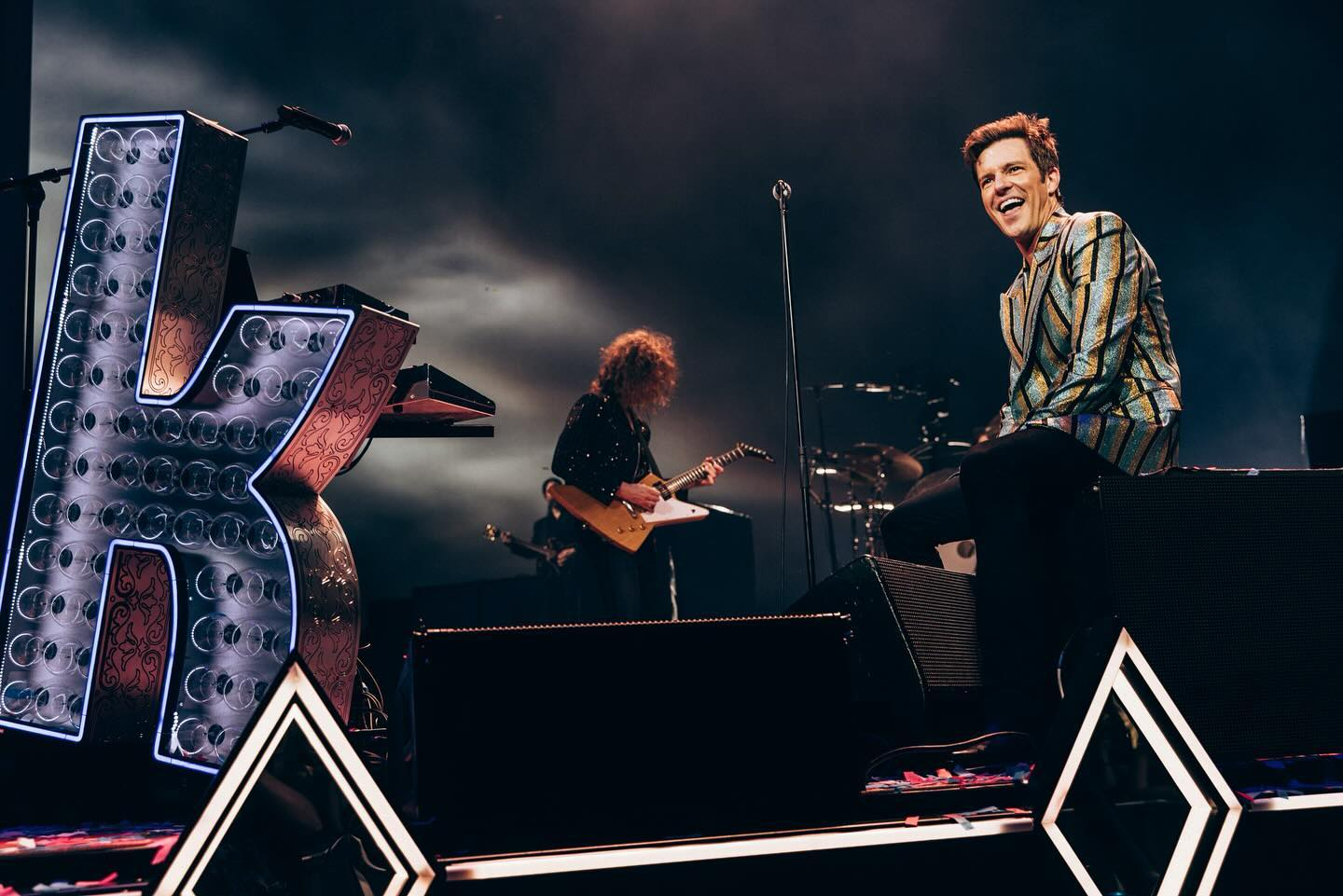
Brandon Flowers wishes he’d written The Waterboys’ ‘Whole of the Moon’. Flowers admitted he’s often “flustered” when he gets asked which tracks he wishes he’d penned himself but having had the time to ponder the question, he opted for the 1998 track and treated fans at London’s The O2 on Sunday (07.07.24) night to the band’s take on the song.
He told the audience: “People ask me all the time ‘What song do you wish you had written’ and I always sort of get flustered in the moment, there’s so much information going on, so many songs that you love, but I have an answer now, it’s ‘The Whole of the Moon’ by the Waterboys”
“We love performing it and we’re gonna play it for you tonight.” The band had initially planned to cover The Kinks’ ‘Come Dancing’ after Brandon “stole” a line from the song for the group’s own hit ‘Bones’, but performing it earlier on their ‘Rebel Diamonds’ tour had fallen flat.
He explained: “I was stealing [a line] from Ray Davies and a Kinks song, ‘Come Dancing’. “Everyone write down on your phones, go home and check out ‘Come Dancing’ by The Kinks, the legendary Kinks.
The band were playing the third show of their six-night residency at the venue and have kept things fresh by mixing up their set list each night. After kicking off with ‘My Own Soul’s Warning’ and the familiar ‘Enterlude’, Brandon teased the audience about their earlier gigs.
Fans sang along enthusiastically as the band barrelled through hit after hit including ‘Somebody Told Me’, ‘Caution’, ‘Runaways’ and closer ‘All These Things I’ve Done’, with spectacular visuals, explosions of confetti and a dazzling laser show all adding to the Las Vegas experience as Brandon and guitarist Dave Keuning prowled the diamond-shaped stage.
The band returned for a four-song encore which featured a tour debut for 2021’s ‘In Another Life’ before timeless classics ‘Mr. Brightside’ and ‘When You Were Young’. Brandon himself then wheeled out his own piano, decorated with a thank you message for fans, as they played out the crowd with ‘Exitlude’.
He also told the audience the gig was a dream come true.
The first official single from Du Blonde since 2021’s ‘Homecoming’, ‘Blame’ tells the story of tells the story of a long-time-coming explosion of rage and defiance in the face of gaslighting within an interpersonal relationship. Recalling the energy and dirt of Ziggy era Bowie, coupled with vocal harmonies reminiscent of ABBA and The Mamas and The Papas, Du Blonde becomes somewhat of a monster, unhinged and anxiety ridden, battling for breath and solid ground in a psychologically destabilising situation. The final lyrical refrain of the chorus says it all; “So next time you want to find someone to blame, you reach into your mouth and you find my name, just remember that I’m something that you created.”
The lyrical and rhythmic fury of the track is offset by the nursery rhyme melodies and humorous delivery we’ve come to expect from Du Blonde. ‘Blame’ proves to be both an extension of “Homecoming” and a foot placed firmly in a new era, one in which the songwriter and performer leans into and explores feelings of rage and injustice with even greater conviction, wrapping it all up with the types of vocal harmonies not seen since her debut, 2011’s ‘Yours Truly, Cellophane Nose’.
released July 8th, 2024 Written, performed, engineered and produced by Du Blonde
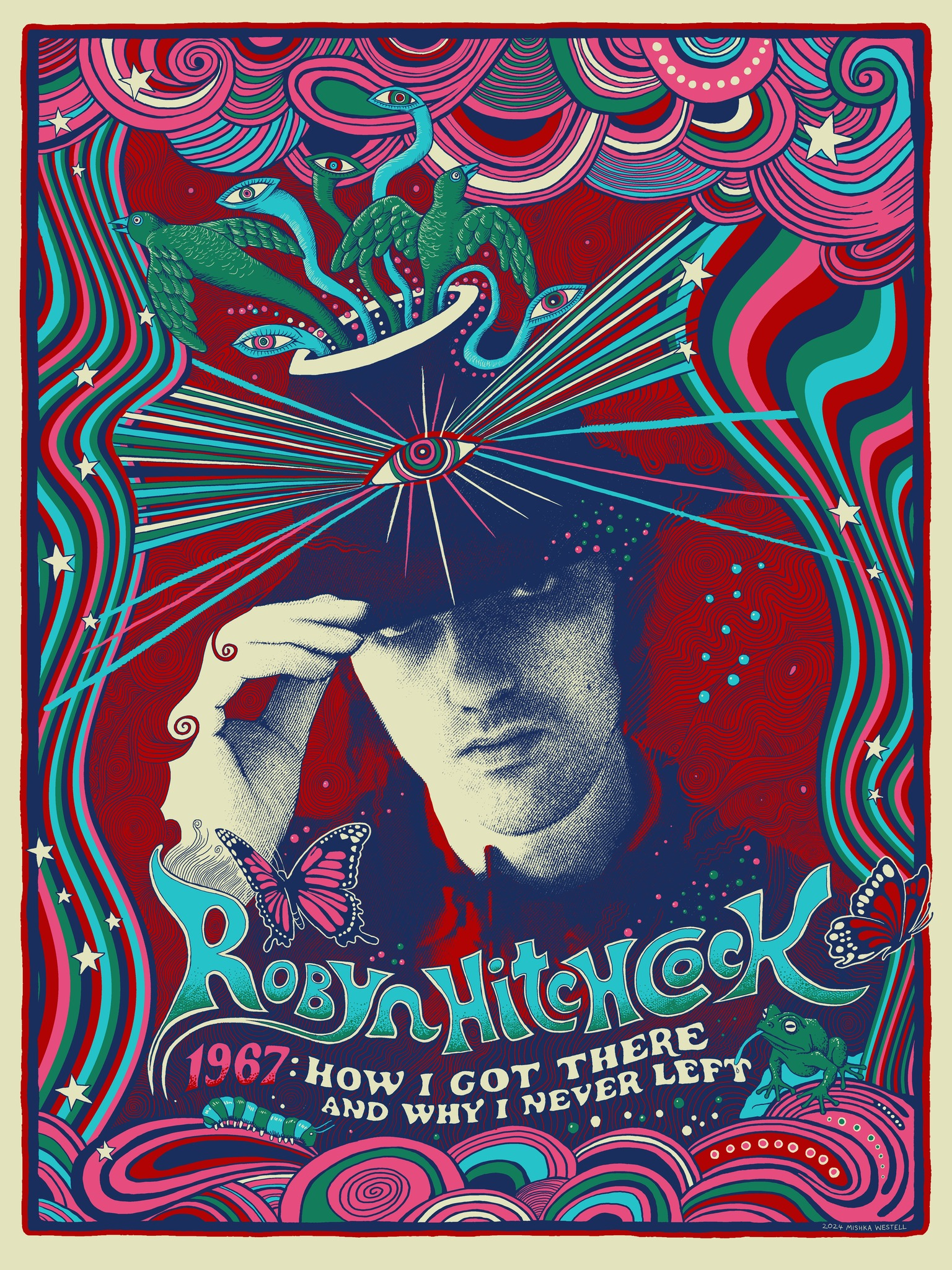
Robyn Hitchcock just released his memoir, “1967: How I Got There and Why I Never Left”, last week, and now he’s announced a companion album, titled “1967: Vacations In The Past”, which will be out September 13th via Tiny Ghost. In the memoir, Robyn explains why 1967 (when he was 14) was such a formative year for music,
For me, 1967 was the portal between childhood and the adult world, where these songs flickered in the air to greet me like hummingbirds. They’re full of saturated colour and melancholy, just as I was charged with hormones and regret as one part of me said goodbye to the other.
The album features covers of songs from the era, including ones by Pink Floyd, The Move, The Kinks, The Beatles, Jimi Hendrix, Small Faces, Traffic, and more. This cover of the Small Faces’ classic features Robyn’s former Soft Boys bandmate Kimberly Rew.
Forever after, I’ve wandered beneath the dayglo Waterloo Sunset and burned the Midnight Lamp, yearning for that time. A Whiter Shade of Pale, she’s the wan ghost that haunts me in summer twilight, all the way down to the river where the spectre of Emily plays, Ophelia-like, with strands of green waterweed. Look – they’re full of dead minnows! See, now she’s draping wet strips of it over her hair!
I hope enjoy listening to these tracks as much as I enjoyed recording them. Love on ya,Robyn H.
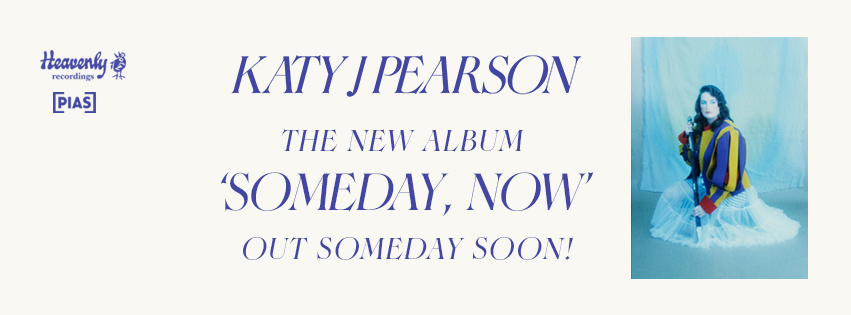
Katy J Pearson’s new album “Someday, Now” is out in September, and she’s given us another early taste with “Sky.” “‘Sky’ is a special one for me,” she says. “It was a very uplifting one to create and it felt really necessary at the time to write a song about telling myself that I am enough! Writing songs is a bizarre and magical thing and before I started thinking about album three I was pretty scared and felt a lot of doubt but this song really calmed my negative thoughts! I hope it does the same for you toooo!”
Recorded with supergroup Davey, Joel & Huw at Rockfield Studios
Wishy’s anticipated debut LP “Triple Seven” is out next month, and the latest single is the shoegazey “Sick Sweet.” “This song is about wanting something or someone despite doubts or misgivings,” Kevin Krauter says, “and laying it all on the line to see it through. I was inspired by an Oasis interview asking Liam Gallagher what his lyrics are generally about and he says something to the effect of ‘Just living life’ and ‘Just going for it.’ That’s the energy I put into this song.”
You could call Wishy’s story a lucky one. After prior monikers and iterations, Wishy was born as a kaleidoscope of alternative music’s semi-recent history, with traces of shoegaze, grunge and power-pop swirling together. On “Triple Seven”, Indiana songwriters Kevin Krauter and Nina Pitchkites’ musical synergy proves itself to be a rare one–the kind that sounds like someone striking gold. Part sly wink and part warm gratitude, it’s only fitting their much anticipated full length debut is titled “Triple Seven”, where Wishy’s penchant for indelible hooks is couched equally in pillowy atmospherics and scathing distortion.
By day Krauter works as a music teacher, giving drum and guitar lessons to students, while Pitchkites is a seamstress by trade and often makes embroidered merch for the band. Coming up in a scene defined by hardcore and emo, Krauter and Pitchkites instead found themselves writing melodies in their heads while driving to work, pulling music from the air and arriving at a blearier, more ethereal interpretation of Midwest expanse. Initially, their music oscillated between hazy dream-pop and heavier alt-rock.
The subject of their songs create a loose web of vignettes and snapshots, capturing Krauter and Pitchkites in a whirlwind couple of years — exiting the pandemic, embarking on an embryonic project, making sense of their musical pasts while forging a musical future alongside one another, each of them on a journey of self-acceptance and self-understanding. Sometimes gorgeous, sometimes festering, and always cathartic, “Triple Seven” is a vibrant and exhilarating document of self-discovery with the scope and heft of the bygone big-budget rock albums that inspired it.