Archive for the ‘CLASSIC ALBUMS’ Category

In August of 1985 The Cure released their 6th studio album “The Head On The Door”, and album that takes its title from the single Close to Me. this day in 1985

This record marks the return of bassist Simon Gallup who had departed after touring for the band’s 4th album Pornography . The album also saw Porl Thompson officially rejoin the band, as he had played guitar during the Malice and Easy Cure days. Also added to the lineup was drummer Boris Williams who had previously worked with the Thompson Twins, The album also included The hit singles  “Close To Me” and “In Between Days” With its variety of styles, it allowed the group to reach a wider audience in both Europe and North America. In the United Kingdom, it quickly became their most successful album to date.

The album was the first to to be released by singer/songwriter/guitarist Robert Smith after he had left Siouxsie and the Banshees in May of 1984.  Smith has stated that the Banshees album “Kaleidoscope” was a strong influence of the wide variety of tracks on The Head On the Door: be it Kyoto Song’s Japanese flavor or  The Blood’s Spanish style played in a Flamenco style. The piano tune in the track Six Different Ways was evolved from from the single Swimming Horses. The last song of the album, “Sinking”, was reminiscent of the band’s Faith era, while Close To Me was described as a disco type thing”

The Head on the Door is the first Cure album where all the songs were composed solely by singer and guitarist Robert Smith.

Following the ill informed controversy between The Cure’s The Walk, and New Order’s Blue Monday, is the even stronger similarity between The Cure’s single from this record “In Between Days to New order’s “Dreams Never End” . Regardless of what you believe from the rivalry above, the video only single A Night Like This admittedly reuses previous material by reworking the original melody from the early Easy Cure track Plastic Passion.

‘A Night Like This’  “I’m coming to find you, if it takes me all night / A witch hunt for another girl / For always and ever is always for you / Your trust, the most gorgeously stupid thing I ever cut in the world.”

One of Robert Smith’s greatest breakup songs, ‘A Night Like This’ (from 1985’s ‘The Head on the Door’) is filled with regret, sadness and a looming hopelessness that’s bound to repeat itself over and over again. The sax solo drives it home.

Here included is the full “Les Enfants du Rock” program from 1985 where The Cure are promoting “The Head On The Door”. Note that at 6 minutes and 45 seconds, Robert half jokingly derides founding member and keyboardist Lol Tolhurst for his alcoholism a subject that is addressed at length in Lol’s book “Cured The Story Of Two Imaginary Boys.

In 2006, the album was re-released by Fiction Records/Polydor Records labels, digitally remastered with various demos and live tracks from the era. Included were demos of the four B-Sides from the era (“The Exploding Boy”, “A Few Hours After This”, “A Man Inside My Mouth” and “Stop Dead”) and four previously unreleased songs. The remaining tracks included demos or live versions of all 10 songs from the first disc. One of the four new songs, “Mansolidgone”, is similar both musically and lyrically to another demo, “A Hand Inside My Mouth” (not to be confused with “A Man Inside My Mouth”) which appeared on “The Top”Deluxe Edition. Both songs, and the uncovered demo “Lime Time”, contain lyrics which would be later used in the songs “In Between Days” and “Six Different Ways.”

Tracklist:

1. In Between Days
2. Kyoto Song
3. The Blood
4. Six Different Ways
6. The Baby Screams
7. Close to Me
8. A Night Like This
9. Screw
10. Sinking

thanks to post.punk.com

Image result

London-trio Girl Ray’s rise has been pretty much metoric. The band only formed two years ago, but now signed to Moshi Moshi Records, they’ve recently put out their debut album “Earl Grey”, to massed critical acclaim. Following that release, the band have taken a brief break from playing basically every music festival going, and shared the video to new single, Don’t Go Back At Ten.

New cut ‘Don’t Go Back At Ten’ is a bittersweet offering, matching those chirpy, upbeat guitar lines with a downbeat vocal.

Poppy Hankin: “After a break-up I was super low, and as clichéd and teen-movie as it sounds, it was truly my friends who got me through it, making sure that I didn’t just mope about the whole time eating pots of cottage cheese and crying. I guess I wrote this one to cheer myself up in a way. Not many of the songs on the album are happy but this one is, kinda!”

The video is a nostalgic blast of early 00’s inspiration, that will either be a throwback to your formative years, or make you feel very old that anyone can feel nostalgic for such recent days. Musically, Don’t Go Back At Ten is one of the album’s highlights, scratchy electric guitars, steady drums and pulsing bass making for a winning backing to Poppy’s creative vocal melodies. Already one of the year’s break-out indie-pop acts, Girl Ray are showing no sign of slowing down anytime soon.

The official video for Girl Ray’s ‘Don’t Go Back at Ten’ which features on their debut album ‘Earl Grey’, out now on Moshi Moshi Records:

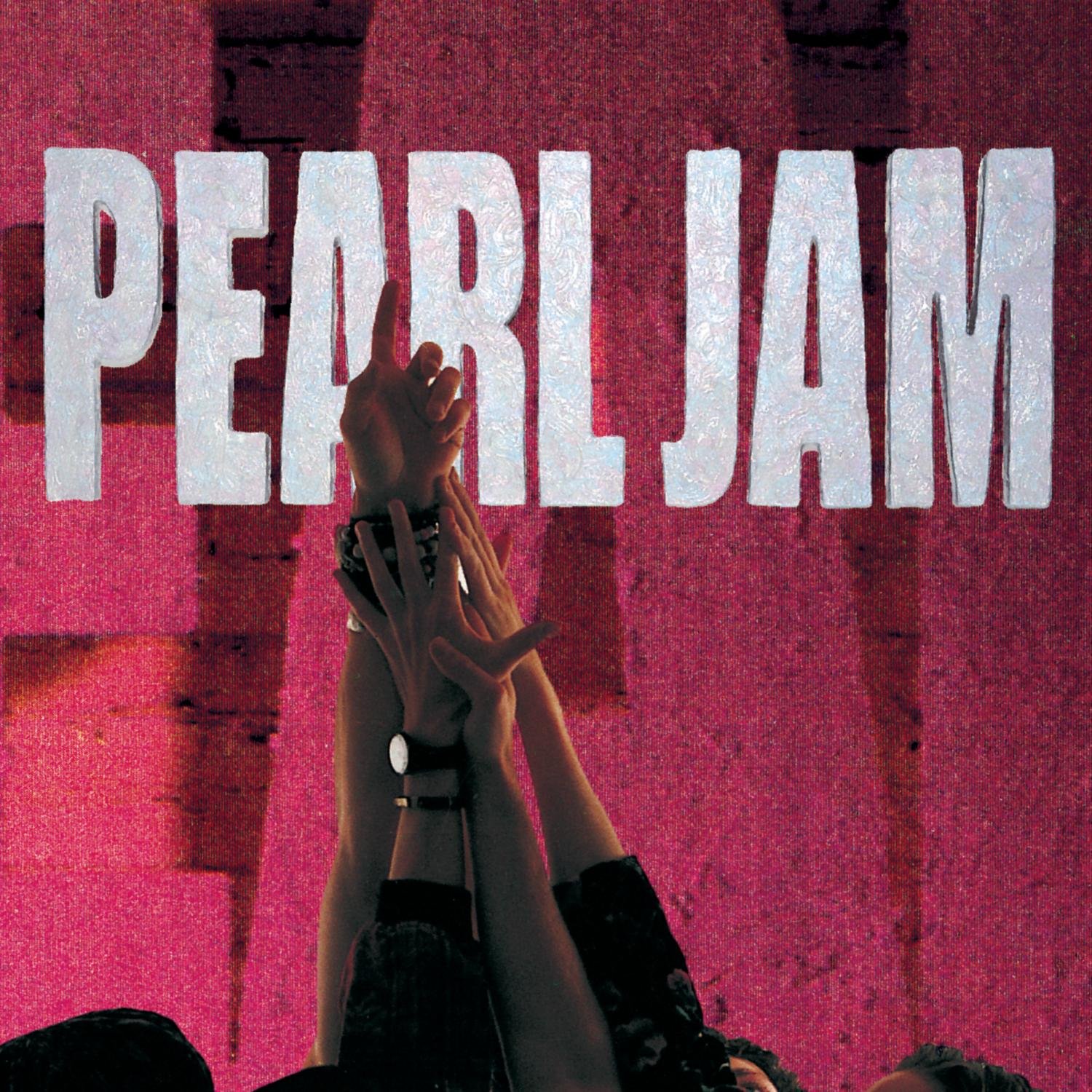
One of the most successful rock bands of the past quarter-century, Pearl Jam have released 10 studio LPs and numerous live records and official bootlegs over the course of their career, selling an estimated 60 million albums worldwide. But if they’d released only one record – their 1991 debut, Ten – their place in rock history would still be secure.

Pearl Jam sounded like a superstar group from the start. Released at the beginning of the grunge era, ‘Ten’ remains a timeless masterpiece because they sounded like they were weaned on classic rock. They’d make tougher and more nuanced records over the years, but ‘Ten’ is their most visceral offering, a powerful rock ‘n’ roll record that doubles as a mission statement.

Ten is the debut studio album by American rock band Pearl Jam,  released on August 27th, 1991 through Epic Records . Following the disbanding of bassist Jeff Ament and guitarist Stone Gossard’s previous group Mother Love Bone , the two then recruited vocalist Eddie Vedder and guitarist Mike McCready, and drummer Dave Krusen to form Pearl Jam in 1990. Most of the songs began as instrumental jams, to which Vedder added lyrics about topics such as depression, homelessness, and abuse.

Ten was not an immediate success, but by late 1992 . The album produced three hit singles: “Alive”, “Even Flow”, and “Jeremy”. While Pearl Jam was accused of jumping on the grunge bandwagon at the time despite the fact that Ten had been both recorded and released before Nirvana’s Nevermind—Ten was instrumental in popularizing alternative rock too the mainstream . In February 2013, the album crossed the 10 million mark in sales,  It remains Pearl Jam’s most commercially successful album

Pearl Jam


Edinburgh quartet the Spook School take their name from another group of four, a late 19th Century sect of the Glasgow School of Art who were given the nickname after ghostly figures in their art work. It is an appropriate title for a theatrical indie pop band that embraces life’s misinterpretations and messiness, and their message has never been more apparent than on their sophomore record Try to Be Hopeful . 

Try to Be Hopeful finds the group writing much more explicitly about queerness and identity. As singer and guitarist Nye Todd explained, “A lot of the lyrics I wrote on our first record were about coming to terms with being trans, whereas on this one the songs are more about a feeling of ‘Yeah, this is an identity! This is GOOD!”

“This is GOOD” is the overwhelming attitude of the record, given the sense that all of the depicted experiences—whether body dysmorphia, gigantic crushes, or the realization that identity is bigger than a hexadecimal—contain the possibility to be validating or enriching. This is not to say that the tracks on Try to Be Hopeful are naively optimistic; instead, as the title insinuates, they attempt positivity with a grain of salt. However, there is still plenty of room for fear to sneak in, as expressed in the album’s eponymous track: “I’ve been waiting outside for what seems like years/ When I finally get inside I’ll give in to the fear/ Of finally having what I want, I’ll finally know/ If this really really will fix me/ If my problems will all sail away.”

“Burn Masculinity” defends the title’s proclamation with the rationale that those of a certain gender should recognize their inherent, systematic privilege because “what good has it ever done?” Meanwhile, the penultimate track “Binary” claims that humans are not computers and thusly should not be “limited to binary desires.” The journey from “Burn Masculinity” to “Binary” offers a literal marker of growth. While recording, Nye began taking testosterone treatment, and the change in his voice is evident over the course of 11 tracks.

Much of Try to Be Hopeful is spent digging into the complexities of self and society with a lens that is simultaneously critical, sensitive, and goofy. Perhaps this final descriptor is most crucial: the Spook School’s eagerness to grow is comforting and inclusive. Lyrically, the band appears more serious on Try to Be Hopeful, but their noise-pop jams remain as joyful as ever. Take “I Want to Kiss You”, a track celebrating, clearly, desire with an unrestrained joy. “I want to run my fingers through your hair/ And you would say you’ve never done this before/ With someone like me,” the four sing in unison. It’s great fun, but the “with someone like me” phrase is a constant reminder that there is great risk in vulnerability. Reminds me of the awesome Buzzcocks. Their music is upbeat and fun

http://

Crocodiles

Echo and the Bunnymen’s superb debut album, “Crocodiles”, had one foot in the past and one in the future; while listeners could detect the influence of ’60s psychedelia and bands like The Doors, the 1980 album was also steeped in the darkness and anguish for which goth and post-punk would soon be known. Its dozen songs were exceptionally strong, and featured the group’s first two singles (a rerecorded “Pictures On My Wall” and “Rescue”) and soon-to-be concert staple “Do It Clean” (which had been left off the original U.K. pressing in the mistaken belief that it contained expletives). Frontman Ian McCulloch was a trenchcoat-wearing Doors fan at heart, and their debut single was as gloomy as it gets. The original version of “The Pictures on My Wall” is also one of the few Bunnymen recordings to actually feature Echo (the drum machine), but the version on their 1980 debut Crocodiles (with drummer Pete DeFritas) might be better.

Recorded at Eden Studios in London and at Rockfield Studios , Monmouth “Crocodiles” was produced by Bill Drummond and Davis Balfe , while Ian Broudie had already produced the single “Rescue”. The music and the cover of the album both reflect imagery of darkness and sorrowfulness. Echo & the Bunnymen were formed in 1978 and originally consisted of Ian McCulloch (lead vocals), Will Sergeant (lead guitar), Les Patterson (bass) and a drum machine . They released their debut single, “The Pictures on My Wall” in May 1979 on the independent label Zoo Records . The band then signed with WEA subsidiary label Korova and were persuaded to employ a drummer Pete De Freitas subsequently joined the band

Ian McCulloch is in fine voice throughout, and Will Sergeant’s playing makes him a clear contender for most underrated guitarist of the 1980s.  NME named “Crocodiles” one of the decade’s 50 greatest albums, and we’re hard-pressed to disagree…

Echo & the Buunymen

Image may contain: 1 person

Van Morrison has announced the details of his 37th studio album, Roll With the Punches, to be released this fall and supported with tour dates in the U.S. and U.K. . Due in stores on Sept.ember 22nd ., Punches arrives roughly a year after Morrison’s most recent effort, Keep Me Singing, which reached the Top 10 on both sides of the Atlantic. The 15-song track listing blends new original numbers with covers of classic blues numbers — a balance that, as Morrison argues in the press release announcing the new LP, reflects the approach he’s always taken to making music.

“From a very early age, I connected with the blues,” Morrison explains. “The thing about the blues is you don’t dissect it — you just do it. I’ve never over-analyzed what I do; I just do it. Music has to be about just doing it and that’s the way the blues works — it’s an attitude. I was lucky to have met people who were the real thing — people like John Lee Hooker, Jimmy Witherspoon, Bo Diddley, Little Walter and Mose Allison. I got to hang out with them and absorb what they did. They were people with no ego whatsoever and they helped me learn a lot.”

Calling the album as a whole “performance oriented,” Morrison says he focused on his interpretive approach while recording. “Each song is like a story and I’m performing that story,” he adds. “That’s been forgotten over years because people over-analyze things. I was a performer before I started writing songs and I’ve always felt like that’s what I do.”

Van Morrison, ‘Roll With the Punches’ Track Listing
“Roll with the Punches”
“Transformation”
“I Can Tell”
“Stormy Monday/Lonely Avenue”
“Goin’ to Chicago”
“Fame”
“Too Much Trouble”
“Bring It On Home to Me”
“Ordinary People”
“How Far from God”
“Teardrops from My Eyes”
“Automobile Blues”
“Benediction”
“Mean Old World”
“Ride On Josephine”

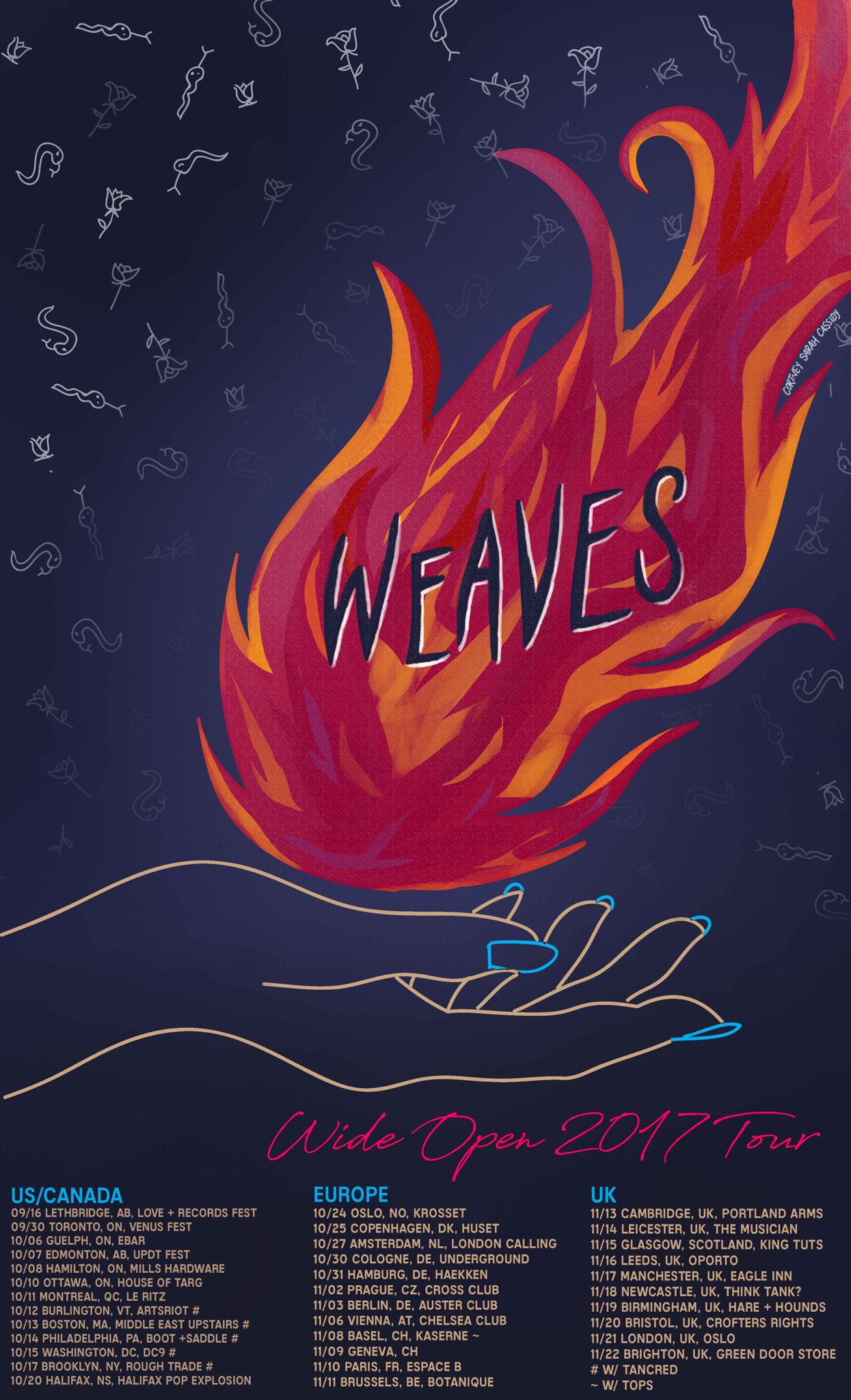
Weaves are a fantastic, noisy, and infectious rock band based in Toronto, Ontario. In 2016, Buzz Records released Weaves self titled debut album and it went on to be regarded as one of the finest records to ever come out of Toronto and was recently shortlisted for Canada’s top music prize . Singer and songwriter Jasmyn Burke, guitarist Morgan Waters, and drummer Spencer Cole, the band just announced that their follow-up record, “Wide Open” will be out October 6th,

http://

Almost since Beach Slang came into being, bandleader James Alex has taken to performing his group’s heartfelt anthems as more intimate solo renditions.

Appropriately dubbed “Quiet Slang,” these alternate reality versions of Beach Slang’s music have now simultaneously been stripped down and fleshed out in the studio to include piano and cello. The result is a collection of songs that peel away the layers of reverb and distortion to lay bare their starkly honest and emotional cores.

I suppose we’re all chasing something that resembles salvation, something that calms our bones. Maybe this is some small slice of that. Maybe it’s not. Maybe it’s chaos in soft clothes. Maybe it’s frightened. Maybe it’s fearless. Maybe it’s both. Or maybe it’s nothing. I don’t know, but I think about this: one day I’m going to be dust. And when my soul splits, maybe this will be the thing that sneaks me through the gates. If not, well, those are the breaks.

James Alex [Quiet Slang]

Beach Slang’s We Were Babies & We Were Dirtbags [Quiet Slang] is out October 20th, 2017.

Bs-preorder-rounded.jpg

On June 18th, 1986, John Mellencamp performed at an unusual venue: the Senate Subcommittee on Agricultural Production and Stabilization of Prices. Still using the Cougar moniker at that time, which an early manager saddled him with, Mellencamp had recently wrapped up touring behind the big blockbuster album “Scarecrow” a clear-eyed look at an America he felt alienated from.

“With Scarecrow, I was finally starting to find my feet as a songwriter,” he wrote in a 2016 Rock and Roll Hall of Fame exhibit. “For the first time, I realized what I thought I wanted to say in song. … I wanted it to be more akin to Tennessee Williams, John Steinbeck, Faulkner.

With the simple, Steinbeckian tunes of Scarecrow fresh in his mind, Mellencamp came to Washington, D.C., with fellow Farm Aid activist Willie Nelson to testify in support of the Family Farm bill sponsored by Democrat senator Tom Harkin from Iowa. In a few short years, Mellencamp went from singing “When I fight authority, authority always wins” to facing the nation’s mightiest authority.

“In Seymour, Ind., the town I grew up in, there used to be a John Deere dealership. It is no longer there,” he told the Senate committee. “When I am out on tour and I am talking to people, they are afraid. Their vision of the future is, ‘What is going to happen to my children in 20 years when, all of a sudden, three farmers are farming the state of Indiana and they also own all the food-processing plants?’”

“It seems funny and peculiar,” he added as the opposition against Harkin’s bill began to file out of the room. “After my shows and after Willie’s shows, people come up to us for advice. It is because they have got nobody to turn to.”

Most of Scarecrow mined deeply personal stories — “Rain on the Scarecrow,” “Small Town,” “Minutes to Memories.” But his work with Nelson and Farm Aid, and his growing connection to the national consciousness, turned his eye from personal to public pain as he penned songs for the follow-up album, The Lonesome Jubilee.

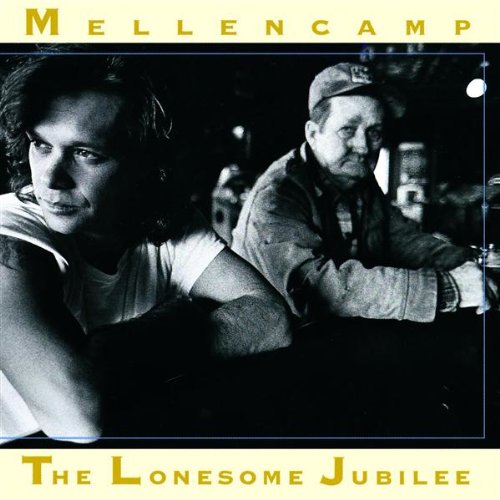
Released on August. 24th, 1987, a year after his Senate testimony, The Lonesome Jubilee became another Mellencamp blockbuster. It went triple platinum and spun out two Top 10 hits in “Paper in Fire” and “Cherry Bomb.” But today fans remember the album not as a pair of hits surrounded by album cuts, but as the singer’s most unified thematic and sonic vision. The Lonesome Jubilee is the ninth studio album by American singer-songwriter John Mellencamp, credited as John Cougar Mellencamp. The album was released by Mercury Records. 

Lyrically, The Lonesome Jubilee took on unemployment, poverty, homelessness, xenophobia, racism and the heavy burden of disillusionment Mellencamp saw weighing down his generation. The pain and contemplation show right there in the song titles: “We Are the People,” “Empty Hands,” “The Real Life,” “Down and Out in Paradise,” “Hard Times for an Honest Man.”

The album’s thesis statement came together in the lyrics of the opening track “Paper in Fire”: “There is a good life right across this green field/And each generation stares at it from afar/But we keep no check on our appetites/So the green fields turn to brown like paper in fire.”

The song burns with an intense energy while stinking of ache and angst. Even the famously cantankerous Mellencamp admitted it was an achievement. “After Scarecrow, the critics all kinda went, ‘Whoa, now we gotta pay attention to this guy,’” . “I think ‘Paper in Fire’ is the ultimate John Mellencamp song. I wasn’t trying to be on the radio anymore. Radio was on my side. There wasn’t any Woody Guthrie influence. There wasn’t any Rolling Stones influence. There wasn’t a Bob Dylan influence. I made the decision, much to everyone’s dismay, to use violins and accordions, and incorporate an Appalachian sound of original country. I tried to figure out how to make that work in rock ‘n’ roll.” “We were on the road for a long time after Scarecrow, so we were together a lot as a band,” Mellencamp said in a 1987 Creem Magazine feature. “For the first time ever, we talked about the record before we started. We had a very distinct vision of what should be happening here. At one point, The Lonesome Jubilee was supposed to be a double album, but at least 10 of the songs I’d written just didn’t stick together with the idea and the sound we had in mind. So I just put those songs on a shelf, and cut it back down to a single record. Now, in the past, it was always ‘Let’s make it up as we go along’ – and we did make some of The Lonesome Jubilee up as we went along. But we had a very clear idea of what we wanted it to sound like, even before it was written, right through to the day it was mastered.

Despite the themes, the album isn’t a sermon. Mellencamp’s words don’t come with solutions, or even wisdom. Instead, they just chronicle the mess and occasional but sustaining joys of life. While a big chunk of the album has the singer using his voice to speak for others — parents struggling to feed their families, but between the not-so-beautiful losers Mellencamp inserts his own stories. “Cherry Bomb” may be the most personal song he’s ever written.

The Band 

  • John Mellencamp – vocal, guitar
  • Kenny Aronoff – drums, percussion, backing vocals
  • Larry Crane – guitars, mandolin, harmonica, autoharp, banjo, backing vocals
  • John Cascella – accordion, keyboards, saxophone, melodica, penny whistle, claves
  • Lisa Germano – fiddle
  • Toby Myers – bass guitar, banjo, backing vocals
  • Pat Peterson – backing vocals, cowbell, tambourine
  • Crystal Taliefero – backing vocals
  • Mike Wanchic – guitars, dobro, banjo, dulcimer, backing vocals

Image of Jack Cooper - Sandgrown

Jack Cooper of Ultimate Painting’s fi­rst solo record is 9 concisely beautiful songs inspired by his hometown of Blackpool and his upbringing on England’s Fylde Coast. “Everyone’s from somewhere,” says Jack. “I don’t think it’s particularly important people know this album is about Blackpool, but I think everyone can empathise with the themes on the record.” Evoking the delicate but often widescreen musicality of Bill Fay and the abstract lyricism of the late 60s Scott Walker records, as well as the more experimental sounds of John Cale and Robert Wyatt, Sandgrown is a collection of tranquil ballads that evoke feelings of nostalgia and re-evaluation about where you come from, wherever that may be.

Jack spent the fi­rst 13 years of his life living in the rural village of Poulton-le- Fylde, about ­ve miles outside Blackpool. On moving into town, he spent his summers as a deckchair attendant. “There were just a lot of interesting people around all the time… weirdos who were drawn to the seaside in the summer. Winter would come and you had this huge community of people who didn’t really know what to do.” By the time Jack was 15, Blackpool’s role as a holiday destination was dwindling due to the introduction of cheap air travel to Europe. Stacks of deckchairs were increasingly left unused, and in the winter months it became a place of drugs, seedy bars and people struggling to get by without the tourist trade. As the Blackpool he knew slipped away, 20-year- old Jack moved to Manchester where he began playing in bands and recording. Sandgrown is about those formative years and the creation of it – “I’ve been trying to do this record since I was about 18… I bought my ­rst 4-track with the proceeds of a summer working on the promenade and I guess I got sidetracked along the way. I’ve been listening to Terry Allen’s ‘Lubbock (On Everything)’ a lot and I wanted to make something that painted a picture of a place as vividly as that. I love how Frank Sinatra’s ‘Watertown’ feels so cinematic.”

Uninhibited by band members for the fi­rst time was a freeing experience for Cooper. “Recording on my own liberated me to sing more like I actually sing. I think I‘ve spent a long time in loud bands singing in a way that can be heard through music,” Jack says. “The songs that I wrote for Sandgrown suit my voice more than anything I’ve done before.” “I love the physicality of working on tape. I’ve always had a 4-track but I sought out a particular machine. I’m not a huge Bruce Springsteen fan but I love the sound of Nebraska… I needed that speci­c machine.

http://