King Crimson’s third album “Lizard” was released in 1970. Described at the time by one critic as “The abyss where modern jazz and rock meet”,with its clashing styles, whirling improvisations, soaring classical-tinged themes and dramatic showcases, “Lizard” remains a remarkable album in the King Crimson catalogue. Given the ambitious ground it attempted to cover it is perhaps no surprise that it still has the capacity to polarise opinion amongst fans and band members alike.
This was King Crimson’s third album it is their strangest detour: a dense, dazzling swirl of free-jazz brass, knotty time signatures, and surrealist imagery. Jon Anderson of Yes even drops by for a guest vocal, adding to its otherworldly aura. The music veers between moments of startling beauty and dizzying dissonance, demanding patience and repeat listens. For many, it’s a bewildering misstep; for devoted fans, a bold, beguiling plunge into uncharted prog waters.
The album featured a guest performance from Yes vocalist Jon Anderson. He had been approached by Greg Lake who had relayed Fripp’s interest in having the singer record with King Crimson. “I said OK and gave him my number and then about three months later Bob rang me up and said I’m going to record next month,” Anderson remembers. He had no idea what he was going to sing until he turned up at Wessex, and then couldn’t help but smile when he saw the title. “Prince Rupert was the name of a train that would go past our school every Wednesday and I thought it’s so bizarre that he wrote this song which I sang and it had that kind of connection.
Afterwards I told Bob that story, and you know Bob Fripp, he just said ‘Oh. Thank you, Jon. Bye.’” laughs Anderson.
While“Cirkus” from the album was performed by the “Islands“-era line-up in 1971 it was not until the formation of the current incarnation of the group that tracks such as “Dawn Song”, “The Battle Of Glass Tears” “and “Prince Rupert’sLament” were played in concert for the very first time.
Mister Stormy has unearthed part of a session recorded during the making of King Crimson’s third studio album, “Lizard“. Taken directly from the 1970 session reels, the piece has Fripp working with oboist and cor anglais player, Robin Miller on the atmospheric “Dawn Song“. In this early take we hear how the piece was put together. Featuring Fripp on electric piano talking Robin Miller through the piece, we also hear Gordon Haskell’s vocal.
“Dawn Song” run-through and rehearsal
The album’s striking cover was executed by Gini Barris, who as Julie Felix’s housekeeper at the time had a KingCrimson connection through the folk singer’s managers, David Enthoven and John Gaydon. Commissioned by Peter Sinfield, and with only a set of lyrics to work with, over the next three months Barris seeded her beautiful illuminated lettering design with all kinds of commentaries and allusions upon the world suggested by the lyrics.
After the tragic death of Mother Love Bone frontman Andrew Wood, the surviving members teamed with Wood’s former roommate and Soundgarden frontman Chris Cornell to record a tribute album for their lost friend under the alias of Temple Of The Dog. Recorded in just 15 days, the self-titled record featured the melodic “Pushin’ Forward Back,” cautionary tale of addiction “Times Of Trouble,” and rocking 11 minute Wood’s dedication “Reach Down.” Temple Of The Dog was well received by critics but failed to fare well commercially, only gaining the public plaudits when re-released after the success of Pearl Jam and Soundgarden. Interesting fact; Eddie Vedder provided vocals on the cut “Hunger Strike.”
Temple of the Dog was actually released four months before Pearl Jam’s debut and nearly six months before Soundgarden’s seminal third LP. However, the album flew well below the radar of popular consciousness during the handful of months immediately following its release. Indeed it was only within the broader context of Ten and Badmotorfinger’s widespread success that people were compelled to reevaluate and embrace Temple of the Dog in a whole new light.
The story of the album’s genesis dates back even further, to the tragic circumstances that shook the Seattle music community on March 19th, 1990. This was the day that AndrewWood, the lead singer and songwriter for the influential bands Malfunkshun and Mother Love Bone, died from a heroin overdose at the age of 24. Reflecting on his friend and kindred musical spirit’s passing years later, Soundgarden frontman Chris Cornell confessed that “It wasn’t like this, ‘oh, he finally went and did it. We saw that coming.’ It wasn’t like that. It still had an air of real got-hit-by-a-bus kind of tragedy to it.
”Wood’s death came just days before the scheduled release of Mother Love Bone’s critically acclaimed debut album Apple, which would ultimately see the light of day four months later, courtesy of Stardog/Mercury Records.
As Cornell processed and grieved the loss of his friend, he found inspiration by way of composing a few songs in his friend’s honour. “Say Hello 2 Heaven” and “Reach Down” were the first compositions to emerge, representing considerably more subdued, melodic structures relative to the denser, more propulsive fare that defined Soundgarden’s signature heavy rock sound at the time. Encouraged by the songs’ direction, Cornell solicited the support of Wood’s Mother Love Bone bandmates and Pearl Jam founding members, Jeff Ament (bass) and Stone Gossard (rhythm guitar).
“The songs I wrote weren’t really stylistically like something my band Soundgarden would be used to playing or be natural for us to do,” Cornell explained during an April 1991 interview with radio station KISW. “But it was material that Andy really would have liked, so I didn’t really want to just throw it out the window or put it away in a box, y’know, put the tape away and never listen to it again. So I thought it would be good to make a single, and I thought it would be really great to record it with these guys,Stone and Jeff, because they were in his band and I just thought it would be a really fun thing to do.” Soon thereafter, the trio recruited Soundgarden drummer Matt Cameron (who also joined Pearl Jam in 1998), as well as future Pearl Jam co-founders Mike McCready (lead guitar) and Eddie Vedder (vocals).
The sextet branded themselves as Temple of the Dog, a nod to lyrics that Wood penned for the opening verse of Mother Love Bone’s “Man of Golden Words,” the ninth track on Apple (“Wanna show you something like the joy inside my heart / Seems I’ve been living in the temple of the dog / Where would I live, if I were a man of golden words? / Or would I live at all?”). Recorded in nimble fashion over the course of two weeks in November and December 1990 at Seattle’s famed London Bridge Studio and released in April 1991, the band’s self-titled debut album sold modestly at best in its first year in stores. But in the aftermath of Pearl Jam and Soundgarden’s dual breakthroughs later that year, the team at A&M Records seized the opportunity to capitalize on the bands’ collaboration, reissuing the album in the summer of 1992 and aggressively promoting the original lead single “Hunger Strike” to radio and MTV.
A harbinger of his song writing prowess that has evolved in thrilling ways with Soundgarden, Audioslave, and his solo career, Cornell wrote all ten songs that comprise Temple of the Dog. The aforementioned album opener and second single “Say Hello 2 Heaven” is the album’s most explicit and stirring tribute to Wood, with Cornell injecting the song with his unceasingly passionate vocals and penchant for unembellished introspection. Painfully poignant refrains such as “Now it seems like too much love / Is never enough” and “I never wanted / To write these words down for you / With the pages of phrases / Of things we’ll never do” shed light upon Cornell’s conflicted heart as he attempts to reconcile Wood’s death.
Clocking in at a generous eleven minutes and change, the gospel-tinged hymn “Reach Down” follows. Atop the moderately more amped-up arrangement, Cornell relays a dream he had of Wood before he adopts the perspective of his friend in reflecting upon his life and legacy (“And I’ve got room to spread my wings / And my messages of love, yeah / Love was my drug / But that’s not what I died of”). Written shortly after Cornell learned of Wood’s passing, the resonant “Reach Down” introduces a spiritual dimension to Cornell’s ruminations, which coalesce for an uplifting homage to his fallen friend.
The other eight songs that feature on Temple of the Dog were spawned from a handful of Cornell’s work-in-progress compositions and Ament and Gossard’s rough demos, which the band refined in the studio together. While the subtext within these songs is open to various interpretations, many of them can certainly be evaluated and contextualized in light of Wood’s death. The sobering “Times of Trouble” functions as Cornell’s desperate plea to a friend to avoid the futile solace of drug-fuelled escapism, while “Four Walled World” examines the metaphorical prison of a life constrained by pain and addiction, both serving as unequivocal allusions to Wood’s suffering and ultimate fate.
One of Cornell’s most enthralling vocal performances ever, album closer “All Night Thing” can most literally be interpreted as a man trying to find meaning within the ephemera of a one night stand or attempting to define a fledgling relationship that has no clear outcome. Or, within the broader context of the album’s predominant thematic thread, the songs can very well reference Wood and the permanence of his addictions, akin to a perpetual night.
Other notable standouts include the adrenalized third single “Pushin’ Forward Back,” which explores the push and pull of sustaining the support of a loved one, in this case the narrator’s mother. A prime showcase of McCready’s stellar guitar work, the somber “Call Me a Dog” depicts the struggles of a man confronted by the unreciprocated affection of a partner who believes he has not lived up to her unfair expectations.
The most instantly recognizable and universally beloved track here, of course, is the unforgettable “Hunger Strike,” in which Cornell and Vedder exchange identical verses atop a rather straightforward guitar-driven melody. In the book that accompanies Cameron Crowe’s Pearl Jam Twenty film documentary, a humbled Vedder recalls how he came to sing the second verse, explaining that “I just kind of stepped up and did it. And I remember being a little nervous about doing it, but [Cornell] was really happy about how it sounded, which was great. The fact that he asked me to be on that record, I mean, that’s the first time I was ever on a real record. So that could be one of my favourite songs that I’ve ever been on, or, for sure, the most meaningful.”
Upon cursory listen, “Hunger Strike” appears to rebuke the abuse of power, political, financial, psychological, or otherwise, with socialist, Robin Hood-like overtones of taking from the rich (“I don’t mind stealing bread from the mouths of decadence) while avoiding exploitation of the poor (“But I can’t feed on the powerless when my cup’s already overfilled”). “I was wanting to express the gratitude for my life, but also disdain for people where that’s not enough, where they want more,” Cornell confided in Pearl Jam Twenty. “There’s no way to really have a whole lot more than you need usually without taking from somebody else that can’t really afford to give it to you. It’s sort of about taking advantage of a person or people who really don’t have anything.”
But a closer inspection of the song’s lyrics suggest that “Hunger Strike” also contains the perspective of two bands bound for the big time, attempting to make sense of the fact that they are destined to soon benefit—financially and otherwise—from the same decadent, corporate machine they condemn, while many continue to suffer with far fewer means at their disposal.
In retrospect, Temple of the Dog is an amazing musical artifact that captures the convergence of two ambitious bands on the cusp of realizing their superpowers, global fame looming in the not too distant days ahead. A rare and unique proposition, indeed. “The camaraderie and the healthy competition part, I found later was unusual,” Cornell admitted in Pearl Jam Twenty. “And it was Johnny Ramone who actually pointed that out to me later, talking about the friendship he saw between Pearl Jam and Soundgarden, saying ‘I’ve never seen that before, New York wasn’t like that, we hated each other, we would screw each other up, at every turn if you could, you would mess the other band up.’ The best thing about it is, I think, that you learn from each other. And you’re inspired by each other. For me, Temple of the Dog grew out of that.”
The fact that the members of Temple of the Dog have performed these songs live on only a few occasions and never recorded again together only adds to Temple of the Dog’s undeniable mystique and brilliance, both of which are sure to endure for a long, long time to come.
Happy 25th Anniversary to Temple of the Dog’s eponymous debut album, originally released April 16th, 1991.
“Rain Dogs”, the eighth album by singer songwriter Tom Waits was released September 30th, in 1985. .
“A guy goes to the bathroom on the tire of a car, then a $70,000 car pulls up alongside and a woman with $150 stocking and a $700 shoe steps in a pool of blood, piss, and beer left by a guy who died a half hour before and is now lying cold somewhere on a slab.” Life in New York City according to Tom Waits.
Tom Waits had moved to New York from sunny California early in 1984, after releasing the album “swordfishtrombones”, a record that marked a drastic shift in his musical direction. Of the relocation to the Big Apple Waits said: “We moved here for the peace and quiet, you know. Somehow I was misinformed.” Perhaps not a tranquil city, but New York gave Tom Waits plenty of opportunities to observe the human condition, with a keen eye for people who live outside the mainstream. With his self-confessed tendency to ’gravitate towards abnormal behavior when I’m out on the street’, his songwriting after arriving in the city was a portrait of the down and outs, losers, out of luck drunkards and outcasts of society. The result was the milestone album “Rain Dogs”, a collection of songs with a loose thematic about life in the streets, or in particular, the gutters.
As a New York Times article from October 1985 observed, “Rain Dogs” is a haunting album, because it reminds us of the existence we would rather squeeze out of our vision. But given catastrophic bad luck, almost anybody could wind up there.”
The mood of the album settles upon you even before the needle drops on the record. The front cover, shot by Swedish photographer Anders Petersen, came from a collection of photos he took at the Café Lehmitz in Hamburg. The establishment was frequented by cab drivers, prostitutes and sailors who patronized it on shore leave. Petersen said about his photographs: “The people at the Café Lehmitz had a presence and a sincerity that I myself lacked. It was OK to be desperate, to be tender, to sit all alone or share the company of others. There was a great warmth and tolerance in this destitute setting.” Waits described the photograph as “Me and Liza Minnelli right after she got out of the Betty Ford Center.”
Waits unleashed his dark humour about the city of New York many times in interviews he gave in the mid-1980s. These are funny reads, but they give a glimpse into how he builds character stories by observing the world around him: “There is something interesting about Manhattan. Someone could stand out in the middle of Fourteenth Street stark naked, playing a trumpet with a dead pigeon on their head and no one would flinch. In fact, tomorrow there will probably be two guys like that. They’d be lease-letting, trying to get more subscribers.”
New York proved to be a fertile environment for Tom Waits, increasing his songwriting output. “Rain Dogs” contains 19 songs, many of them written in parallel to the songs that he planned for “Frank’s Wild Years” theatre show that premiered in 1986. Waits talked about how the city inspired him to write: “You can get in a taxi and just have him drive and start writing down words you see, information that is in your normal view: dry cleaners, custom tailors, alterations, electrical installations, Dunlop safety centre, lease, broker, sale…just start making a list of words that you see. And then you just kind of give yourself an assignment. You say, ‘I’m going to write a song and I’m going to use all these words in that song.’”
Another reason driving this outpour of songs had to do with a more earthly motive: royalties. After firing his manager Herb Cohen, he now owned his songs: “Maybe that’s why I write so many songs now, the songs I write now belong to me, not someone in the Bronx.”
Looking for a spot in New York to write and rehearse, Waits found a place on Washington Street which he described as ‘a little basement boiler room, a place where I can go at night and work and dream’. Sharing the space were non others than the Lounge Lizards, led by actor and sax player John Lurie.
That acquaintance led to future musical and acting collaborations between the two. Even more critical to the “Rain Dogs” album was Tom Waits reconnecting with Marc Ribot, a new recruit to the Lounge Lizards. Ribot, a guitar player with a knack for unusual sounds, first met Waits a few years earlier when the singer stayed in New York and Ribot was playing with Brenda and the Realtones. Waits quickly realized the potential of his unique guitar style and asked him to play on “Rain Dogs”. His contributions to the album were profound. Tom Waits on how Marc Ribot gets his sound: “He’s big on the devices. Appliances, guitar appliances. He has this whole apparatus made out of tinfoil and transistors that he kinda sticks on the guitar. Or he wraps the strings with gum, all kinds of things, just to get it to sound real industrial. It’s like he would take a blender, part of a blender, take the whole thing out and put it on the side of his guitar and it looks like a medical show.”
The album was recorded at the historic RCA studios, where 30 years earlier Elvis Presley recorded his first hit songs Hound Dog, Don’t Be Cruel and Blue Suede Shoes. Marc Ribot remembers the experience: “That was recorded in a big, old studio that doesn’t exist anymore – the old RCA Studio A on 6th Avenue in New York, Midtown. We just set up in the middle of this huge room and played like a garage band.”
One of “Rain Dogs’ most lasting achievements is its sonic experimentation. Tom Waits surrounded himself with like-minded musicians from the underground, avant-garde music scene in New York. They were after creating music that fell within the conventions of rock/pop music, but sounded nothing like typical rock/pop songs. Waits talked about that aspect of the album: “If I want a sound, I usually feel better if I’ve chased it and killed it, skinned it and cooked it. Most things you can get with a button nowadays. So if I was trying for a certain drum sound, my engineer would say: ‘Oh, for Christ’s sake, why are we wasting our time? Let’s just hit this little cup with a stick here, sample something, take a drum sound from another record and make it bigger in the mix, don’t worry about it.’ I’d say, ‘No, I would rather go in the bathroom and hit the door with a piece of two-by-four very hard.’”
Drummer Stephen Hodges, who plays on about half the songs on the album, recalls how Tom Waits asked him to play the drum set in a non-traditional way, avoiding cymbals and going for the tribal rhythms on the tom toms: “I can count on one hand and have a couple of fingers left over the number of single notes like ding, ding, ding I played on a cymbal with Tom Waits. He not only did not want a jazz trio, he did not want to hear a drum playing in that sibilance. He let marimba take over the 8th notes which was a really cool move.” Percussionist Michael Blair also mentioned the intentional lack of using cymbals on the album: “I am always very deliberate with my own use of cymbals, as the frequencies often distract from or obstruct the best parts of the guitar and voice sounds. So, I tend to stay out of the way. Stephen did, too.”
Lets get to the music, shall we? The album opens with the song “Singapore”. Tom Waits described a technique he used to come up with the idea of that song: “Sometimes I close my eyes real hard and I see a picture of what I want.” What materialized in his active mind was “Richard Burton with a bottle of festival brandy preparing to go on board a ship. I tried to make my voice like his.”
Waits recalled in an interview one of the lines in the song: “’In the kingdom of the blind the one-eyed man is king’ – I took that from Orwell I think.” He narrowly missed the mark by 400 years. The quote was coined by Dutch philosopher Desiderius Erasmus in the 16th century.
The new sonic adventures that Tom Waits took on this album hit you all at once from the first moment of that song. Most recognizable are his raspy voice and the jagged guitar lines by Ribot. Waits said about the guitarist that he “can sound like a mental institution and a car accident too”.
A sonic thread that goes through most of the songs on the album is the unique use of drums and percussion, the reason why Tom Waits described the instrumentation on his mid-1980s albums as a ‘junkyard orchestra’. Anything you can bang on was fair game on the album, and on “Singapore” the victim was a chest of drawers. Waits recalls: “On the last bar of the song the whole piece of furniture collapsed and there was nothing left of it. That’s what I think of when I hear the song. I see the pile of wood.” Michael Blair concurs: “One could say we showed a flagrant disrespect for home furnishings on that track.”
Blair came to work with Tom Waits through a recommendation from the album’s sound engineer Robert Musso. He talks about how his background appealed to the singer: “I was a trained percussionist with experience in avant-garde music and composers including Harry Partch, John Cage, and others. This combined with my ‘Ringo-esque’ drumming could be a good fit for the new songs.”
In 1983, after the release of “swordfishtrombones”, Tom Waits described the use of percussion instruments on his albums: “I’ve always been afraid of percussion for some reason. I was afraid of things sounding like a train wreck, like Buddy Rich having a seizure. I’ve made some strides; the bass marimbas, the boobams, metal long longs, African talking drums and so on.” Taking it to the next step, he could chose no better musician than Michael Blair, who came to the studio with a cavalry of percussion instruments in tow, and then some: “I brought in cases and cases of instruments to choose from. Tack drums from China, temple bowls from Japan, wood blocks from Thailand, 40 cymbals (many broken). Car parts, kitchen appliances. Zillions of shakers, tambourines, bells and gongs from all over the world. Three proper drum kits.”
You also heard a marimba on “Singapore”, and speaking of that wonderful instrument, listen to the next song where it takes a front seat. The combination of gongs, drums and the interlocking marimba rhythms on “Clap Hands” is fantastic. Interestingly the marimba parts were recorded on two separate recording sessions, first by Bobby Previte and then overdubbed by Michael Blair.
The lyrics of the song use the same rhyming rhythm used in The Clapping Song, a hit by Shirley Ellis in 1965.
Tom Waits’ family members get a mention in the next song, “Cemetery Polka“. Recalling snippets from family reunions, Waits recites the peculiarities of uncles Vernon, Biltmore, Violet Bill and Phil, and lest we forget auntie Maime.
In an interview Waits expressed regret over the name dropping of family members on that song: “Cemetery Polka” is a family album, a lot of my relatives are farmers, they’re eccentric, aren’t everyone’s relatives? Maybe it was stupid to put them on the album because now I get irate calls saying, Tom how can you talk about your Aunt Maime and your Uncle Biltmore like that?”
Here is a live version of the song from 1985, an opportunity to witness that magnificent junkyard orchestra. Transported 60 years back in time, this footage would have looked quite natural in a sweaty Berlin night club in the 1920s.
The next song was released as the first single from the album and is one of my favourites on it. “Jockey Full of Bourbon” has great imagery ala Damon Runyon’s classic short stories of the 1930s:
Shortly after his move to New York Waits met Jim Jarmusch at a party filled to the brim with celebrities. The grey-haired director recalls: “I’m kind of shy, and Tom seemed to be sort of in a corner also. He was sort of shy and guarded, yet he had an incredible sense of humour.” The two became good friends and Jarmusch invited Waits to play a role in his next film, a story of three down and out convicts who escape from a New Orleans jailhouse. The role had so much of Waits’ persona in it he hardly had to act.
We are talking, of course, about the classic independent cult movie “Down by Law”. It features one of the best opening sequences I know in cinema history, featuring the song “Jockey Full of Bourbon”. Starting with a shot of a stationary hearse in a cemetery, the camera travels thorough run-down urban and rural scenery, the song a perfect match to the visual.
The next song, “Tango Till They’re Sore“, is unique on this album for featuring Tom Waits playing a piano. This is an odd statement to make, given the singer’s stellar performances in the 1970s, usually in a piano trio setting. Waits talked about how the sound of a piano did not fit in with most of the songs on “Rain Dogs”: “I had a good band. I didn’t really feel compelled to sit down at the piano at all. The piano always brings me indoors, ya know? I was trying to explore some different ideas and some different places in the music and so the piano always feels like you know where you are. You can’t imagine a piano out in the yard unless it’s got some plastic over it, ya know?”
Excellent trombone part here by Bob Funk, member of Uptown Horns, a horn section group that toured with the Rolling Stones (“Steel Wheels”) and Robert Plant (“Honeydrippers”), and later played on The B52s’ hit Love Shack.
Speaking of the Rolling Stones, the next song features none other than Keith Richards, not a frequent guest musician on other artists’ albums. Waits on how they met: “We’re relatives, I didn’t realize it. We met in a women’s lingerie shop, we were buying brassieres for our wives.” Ok, scratch that, this is TomWaits being Tom Waits. Seriously, asking the rock n’ roll legend to play on the album started as a joke: “Somebody said, ‘Who do you want to play on the record?’ And I said, ‘Ah, Keith Richards …’ They said, ‘Call him right now.’ I was like, ‘Jesus, please don’t do that, I was just kiddin’ around.’” But the man of a thousand guitar licks was amiable and sent back a note “Let’s get the dance started.”
Richards plays on three songs on the album, one of them “Big Black Mariah”, where he expertly applies his trademark guitar style.Keithappeared on three tracks: “Big Black Mariah”, “Union Square” and “Blind Love” Waits tells this anecdote about how he got Richards to find the right part for the song: “I was trying to explain “Big Black Mariah” and finally I started to move in a certain way and he said, ‘Oh, why didn’t you do that to begin with? Now I know what you’re talking about.’”
Side one of the album ends with the song “Time“, in the best tradition of Tom Waits’ beautiful ballads you find in each of his albums. The imagery is again fantastic here, and you sometimes wonder what inspires him to come up with lines like these:
Well things are pretty lousy for a calendar girl, The boys just dive right off the cars and splash into the street. And when they’re on a roll she pulls a razor from her boot And a thousand pigeons fall around her feet.
Time to introduce another excellent musician who plays on most of the tracks on the album, bassist Larry Taylor. The veteran musician, best known as a member of the band Canned Heat with whom he performed at the Monterey International Pop Festival and Woodstock, met Tom Waits back in LA and played on his two previous albums “Heartattack and Vine” and “Swordfishtrombones”. Waits came to rely on Larry Taylor as the first musician to introduce a new song to: “Larry often served as the bed and the rock and the scout of a song’s destination. We fought. I can’t tell you how many times he threw the bass down in disgust, proclaiming, ‘I am not feeling it. I can’t play this shit,’ only to be coaxed back into the song and not only playing it, but helping to define it.”
The song took a whole new meaning when the dust settled after the 9/11 attacks in 2001. A week later the David Letterman Show resumed after the forced break, and featured a performance of the song by Tori Amos. The mood of the song and its lyrics had a memorable, healing effect on listeners.
The song features an accordion, a favourite instrument of Tom Waits at the time. It gets a featured solo spot at the opening of the next song, the title track that opens the second side of the album. Another great instrumentalist on the album is accordionist Bill Schimmel, a musician who helped putting the instrument back on the map and played it on the famous tango scene in the movie Scent of a Woman. Schimmel said of Tom Waits’ quest for new sounds: “Tom told me he wanted to use instruments nobody liked anymore. Somebody once said that every high-tech era is followed by a high-touch era, and nothing was more high-touch than the accordion. Tom was a proud Luddite.”
We are deep into the article and the album, so it is time to explain the meaning of its title. The original plan was to call the album Evening Train Wrecks, before deciding on the more apt “Rain Dogs”. What are Rain Dogs? One explanation by Waits: “You can get ’em in Coney Island. They’re little; they come in a bun. It’s just water in a bun, that’s all. It’s a bun that’s been . . . it’s a bun without a hot dog in it. It’s just . . . it’s been left out in the rain and they’re called a rain dog and they’re less expensive than a standard hot dog.” Another one: “A rain dog is anybody who eh . . . people who sleep in doorways; people who don’t have credit cards; people who don’t go to church; people who don’t have, ya know, a mortgage, ya know? Who fly in this whole plane by the seat of their pants. People who are going down the road . . . ya know?” Have your pick. I like one more explanation, taking dog for what it is – a dog: “You know dogs in the rain lose their way back home. They even seem to look up at you and ask if you can help them get back home. ‘Cause after it rains every place they peed on has been washed out. It’s like Mission Impossible. They go to sleep thinking the world is one way and they wake up and somebody moved the furniture.”
Talking about “Rain Dogs”, what about their brides? The short instrumental “Bride of Rain Dog” gives an opportunity for another musician to shine, this time reed player Ralph Carney who plays saxophones and clarinet on five tunes on the album.
Carney, who first met Waits when he was asked to play on a couple of tracks the singer wrote for the soundtrack of the documentary Streetwise (an excellent doc about homeless teenagers in 1984 Seattle), is featured even more prominently on the tour that followed “Rain Dogs”. Interviewed before starting that tour in London, Tom Waits referenced Ralph Carney’s odd sense of fashion: “I’ve told the band to smarten up. I will have to talk to my sax player, Ralph Carney, about his white socks, the white socks and the navy uniform, I’m not sure about that.” When Carney passed away in 2017, Waits posted this eulogy about him: “Ralph came from the land of strange and whimsical. He could be exploding like popping corn or stretched out like taffy, capable of circular breathing and punctuating and drawing shapes that dangled from your ears.”
Tom Waits created a tradition on his albums, many of them featuring a spoken word piece, a stream of conscience monologue set to background music. “Shore Leave” from “Swordfishtrombines” is a fine example. On “Rain Dogs” that honour goes to the song “9th & Hennepin“, named after a real intersection in Minneapolis. Waits, in one of his usual interview answers where the line between real life and fiction quickly blurs: “I was on 9th and Hennepin years ago in the middle of a pimp war, and 9th and Hennepin always stuck in my mind. To this day I’m sure there continues to be trouble at 9th and Hennepin. At this donut shop. They were playing ‘Our Day Will Come’ by Dinah Washington when these three 12-year-old pumps came in chinchilla coats armed with knives and, uh, forks and spoons and ladies and they started throwing them out in the street. Which was answered by live ammunition over their heads into our booth.”
We reach the last song in this article and also the best-known track from the album. It became a big hit for Rod Stewart when he covered it four years later. “Downtown Train” is as close as Waits got to a pop song on this album, and for that he needed a group of musicians outside the New York art and avant-garde community. Into the studio rolled guitarist G.E. Smith (Saturday Night Live, Hall and Oates), bassist Tony Levin (Peter Gabriel, King Crimson), drummer Mickey Curry (Hall and Oates, Bryan Adams), amassing hundreds of album credits between them. Tom Waits: “They were all well paid. All real nice guys. I tried that song with the other band and then . . . it just didn’t make it. So you can’t get the guys to play like this on some of the stuff. I just couldn’t find the right guys.”
The song was also the feature of a promo video directed by Jean Baptiste Mondino, an excellent choice if your goal was to produce a great looking black and white video clip for a pop song. A year earlier he swept the MTV awards with his clip for Don Henley’s The Boys of Summer, and in 1985 he filmed Sting’s sunning clip for the song Russians.
The clip gave visual to Tom Waits’ inhabitants of his inner world, which he summarized in an interview: “I’m still drawn to the ugly, I don’t know if it’s a flaw in my personality or something that happened when I was a child.”
Time to finish this review. I covered about half of the songs on the album, apologies if I skipped one of your favorites. If you are not familiar with the album, these songs should give you a pretty good idea what you are getting yourself into should you chose to buy the album (which you should).
On it’s release in 1977, Johnny Thunders & the Heartbreakers’ “L.A.M.F.” had a mastering fault, widely condemned as a ‘muddy mix’. Track Records went bust and the master was lost – so subsequent releases were compiled from outtake or re-mixes. Forty-four years later, the master has been found in an attic, and the classic punk album “L.A.M.F.” can at last be heard as the band and producers intended!
Soon after leaving the New York Dolls, guitarist Johnny Thunders and drummer Jerry Nolan formed theHeartbreakers with Television refugee Richard Hell. Their only album, 1977’s “L.A.M.F.”, is a cornerstone of the New York City punk scene, with songs like “Chinese Rocks” — cowritten by Dee Dee Ramone, whose band later recorded a version — chronicling drug abuse, perpetual disappointment and failure.
Found in an Attic – a punk rock archaeological discovery – a copy master of the original 1977 Track Records tape, without the ‘mud’!
This classic punk album, recorded in London by the New York band featuring two New York Dolls, was always controversial – and not just for the acronym. Upon release on Track Records in 1977, it was widely condemned for having a ‘muddy mix’ – later found to be a mastering fault. When Track went bust the following year, manager Lee Black Childers burgled the office and liberated the tapes – he found everything except the master-tape.
Originally saddled with a muddy, barely listenable mix, the Heartbreakers’ only album has been the center of discussion for decades. One thing is clear: The songs are almost uniformly great, anchored in mid-’70s power pop and on-the-horizon punk rock. Johnny Thunders and Jerry Nolan cut their teeth in punk pioneers New York Dolls, so the sentiments are genuine. That energy blazes through the opening cut “Born to Lose.”
Subsequent releases were remixed from the multi-tracks or compiled from outtake mixes – the ‘lost ’77 mixes’ in 1994 being well-received and the version most known ever since. A lift from the vinyl didn’t achieve much clarity. Meanwhile, fans found the ’77 cassette version didn’t have the infamous ‘mud’, nor did certain European vinyl matrixes.
In 2020 a chance meeting led to Daniel Secunda’s archives. He was an old-school music biz pioneer who became a Track Records director – and the Heartbreakers “L.A.M.F.” co-producer. Among his many tape boxes were two with no artist name, marked ‘Copy Master 12.7.77’. They turned out to be a crystal-clear “L.A.M.F.”, just as the band and producers intended it.
The group’s entire 11-song performance — including a cover of The Four Tops’ “Loving You Is Sweeter Than Ever,” is among the bonus material on “The Band: 50th Anniversary Edition”, a box set that came out November 2015. It sits among a newly remastered version of the album as well as 13 previously unreleased, alternate versions of the album tracks, and the group’s Robbie Robertson — who helped helm the reissue amidst projects such as his own new solo album, the Band documentary Once Were Brothersand scoring Martin Scorsese’s The Irishman — says pulling out the Woodstock tapes took him right back .
“When I listened to it, I had this flashback,” Robertson says with a chuckle. “We played on the final night and it had just gotten dark out and it was the perfect time to play, but we kinda thought, ‘I dunno if we fit in here.’ The audience was in ecstasy of their experience and the music and the mud and the partying and going crazy, and there’s people jumping up and down, screaming. And we go out and play this concert, and it was the equivalent of going out and playing hymns. It was so NOT what they were looking for. They stopped jumping up and down. Their arms weren’t in the air anymore. It was like they went into a spell, a whole different feeling. So we played and left and then they went back to the party.”
The set by The Band certainly speaks to the quality of The Band’s performance, though the group’s relative neophyte status as a live act on its own — after having toured with Bob Dylan — is what played a part in the recordings staying mostly in the vaults until now. “It was (manager) Albert Grossman who was saying, ‘I don’t think we should be part of that (film and album),’ although he had other acts on the show that were,” Robertson says. “I think because we had played many jobs as The Band before we played in front of 500,000 people he was quick to say, ‘When they play there’ll be nobody running around on stage with a camera. They have to be able to do their thing and communicate with one another musically, so no cameras’.” Robertson says there is Woodstock footage of The Band taken from a distance, but that remains in the vaults.
“I guess all these (audio) records were in a storage bin somewhere,” Robertson says. “I wasn’t paying close attention to it, but when we started working on “The Band” reissue they said, ‘This is a show you guys played in 1969. It’s a historic event; Maybe we should consider including it.’ It was, like, the original recording and original mix of it. It’s untouched, but it felt like it was appropriate to include in this.”
A coda to The Band’s Woodstock experience was their reception back in Woodstock itself, where the group was living at the time. “We got cold-shouldered,” Robertson remembers. “We were the only group actually from Woodstock, but (the festival) made it the most famous small town in the world and there were Volkswagen buses as far as the eye could see in every direction, coming toward Woodstock. The townspeople in Woodstock were not very happy that we participated.”
Levon Helm performed at Woodstock with ‘The Band’ as part of the Day Three line-up. From the moment the Woodstock festival was announced, people hoped that Woodstock, New York’s most famous citizen, Bob Dylan, would make an appearance. Seeing The Band on the posters and advertisements for the festival only poured fuel on the fire. Dylan didn’t come to the festival, but his former backing band did, and they performed most of their debut album for an enthusiastic audience.
Day Three, The Band Performed Sunday night, August 17th, 1969 from 10:00–10:50 PM
The Band Members at Woodstock: Robbie Robertson: guitar, vocals, Garth Hudson: organ, keyboards, saxophone, Richard Manuel: piano, drums, vocals, Rick Danko: bass, vocals, Levon Helm: drums, mandolin, vocals
The Band Woodstock Setlist: Chest Fever, Baby Don’t You Do It, Tears of Rage, We Can Talk, Long Black Veil, Don’t Ya Tell Henry. Ain’t No More Cane, This Wheel’s on Fire, I Shall Be Released, The Weight, Loving You is Sweeter Than Ever
“The Band”box set is just one of several active projects Robertson had been juggling recently. “Sinematic”, his sixth solo album, came out in September with guest appearances by Van Morrison, Citizen Cope and Derek Trucks — as well as the track “Once Were Brothers,” which is also the title of The Band documentary. Based on Robertson’s 2016 memoir Testimony, it premiered at the Toronto International Film Festival.
Having already demonstrated that Radiohead were capable of commercial success with the ’90s staple “Creep,” singer Thom Yorke steered the entire band in an entirely new direction. It all began with, of all things, him collaborating on the cover of this ground breaking LP with Stanley Donwood. But Yorke took it so far beyond the artwork, striding away from grunge into a considerably more experimental direction, from lyrics to introducing keyboards. Six charting singles sprang forth, with “My Iron Lung,”“Fake Plastic Trees” and the title track among them. This is yet another record on this list that demands to be listened to straight through not because every single song is so good but because it’s a total damn experience.
“The Bends” was different. The chem trails of grunge were still raining down on us. It sounds like a panic-addled diary typed out on a computer screen. It demands your attention and killed Radiohead’s early “Britpop” labels. It was everything for a middle schooler. “The Bends” still holds up after thirty years.
Radiohead was determined not to be just another Britpop or grunge group. “The Bends” was their first line of code to fill up an ominous blank screen after 1993’s “Pablo Honey” and the runaway “Creep” single that haunted them. Radiohead’s black mirror needed something colourful and brash to help them from falling into an endless abyss of narcissism and anxiety. “The Bends” filled that need.
This week marks the 30th anniversary of Radiohead’s sophomore-slump-dodger “The Bends”, which arrived March 13th, 1995. After three decades, the jury’s been in on “The Bends”. A hook-heavy album big enough to save the band from the cut-out bins of one-hit-wonderness, and arty enough to tee up its dystopian post-rock opus “OK Computer”, which followed in 1997, “The Bends” obliterated the band’s good-not-great 1993 debut “Pablo Honey” and its cursed hit “Creep.” And in the process, the album mastered the craft of angsty Britpop anthemia followers like Coldplay and Muse would use to fill stadiums for decades to come.
Suffice to say; “The Bends” has aged pretty well. The reviews it received upon its release, not so much. critic Kevin McKeough forecasted the future Rock Hall of Famers’ inevitable one-hit-wonder status, He chalked up his one-star review of “The Bends” to elements such as “Seattle wanna-be guitar parts,” calling the “clumsy, unpleasant guitar scorch” of “Bones” and the shimmering bad-trip psychedelia of “MyIron Lung” “particularly cringe-inducing.” Thom Yorke‘s ethereal vocals and woebegone melodies are tuneful enough but too self-absorbed to be catchy,”
Spin magazine’s Chuck Eddy was a little more redeeming, awarding “The Bends” a 5/10score with a review that put the album in league with contemporary sophomore efforts by the likes of Spin Doctors, Counting Crows and The Offspring, calling it “one of those follow-up albums [that] proves the band is afraid to be pigeonholed into the only style it’s very good at.”
Meanwhile, legendarily cantankerous Village Voice music critic Robert Christgau writing of Yorke’s lyrical angst and their accompanying three-guitar assault: “the words achieve precisely the same pitch of aesthetic necessity as the music, which is none at all.” None? At all? Has a take ever resonated so hot?
How did these scribes manage to miss the genius squalls of guitarist Johnny Greenwood generations then, now and in between found in alt-rock bangers like opener “Planet Telex” and “Just.” How could they be so cold to the visceral transcendence of ballads like “High and Dry” and “Fake Plastic Trees” — the album’s two biggest singles, and songs that took the melancholy loneliness and misfit despair of “Creep” to deeper levels? How was it not obvious to them that this band of Oxfordshire sonic architects were, this early on, well-studied and able enough to elevate their equally obvious college-rock influences like R.E.M., U2, The Smiths, Pixies and Pink Floyd with a devastating set of Britpop classics-on-arrival like “Bones,” “Black Star” and “Street Spirit (Fade Out)” — anthems that offered as much in the arena of head-haunting moods and melodies as they did spacious experimentation?
“Sulk”
“Sometimes you sulk / sometimes you burn / God rest your soul / When the loving comes and we’ve already gone / Just like your dad, you’ll never change.”
“Sulk” taps into Yorke’s early fascination with violent news headlines. The careening stadium rock song was inspired by a killing spree by a solitary shooter in Hungerford, England in 1987. As a teenager, I naturally glommed onto the defeatist lyrics above. They exalt the physical act of sulking into some type of odd narrative of a superhero battling themselves. Although this track is sitting in the basement of my personal ranking for “The Bends”, it epitomizes the internal wrestling between Britpop histrionics and post-rock composure that Radiohead embodied before diving headlong into studio experimentalism on future records. Trivia note: Yorke self-edited the concluding lyric “just shoot your gun” when “Sulk” was recorded in late 1994, since Kurt Cobain’s death was still casting a long shadow in the music world. He didn’t want anyone to mistake the lyrics as being about the late Nirvana leader. “Bones”
“I don’t want to be crippled and cracked / Shoulders, wrists, knees, and back / Ground to dust and ash / Crawling on all fours.”
Yorke has a lot of songs that highlight an almost unhealthy obsession with being incapacitated during this period in his life, as he inched closer to his thirties. Though he seems almost jovial in interviews these days after having children, “Bones” is the high watermark example of the old Thom. I listened to this song a lot when I was laid up last summer after breaking my left ankle ice skating. It’s a good song when you just feel deflated and want to connect with the raw energy of running away from our deepest fears: death and dismemberment. The lyrics always reminded me of Lot’s wife, when she turned into a pillar of salt after looking back at Sodom. That was always a stark image in my mind. Yorke might just be talking about the physical toll of touring, but he relays the sentiment at an almost Biblical scale.
“High and Dry”
“Drying up in conversation / You’ll be the one who cannot talk / All your insides fall to pieces / You just sit there wishing you could still make love.”
In a interview Yorke remembered his journey as a songwriter: “To begin with, writing songs was my way of dealing with shit. Early on it was all, ‘come inside my head and look at me.’ But that sort of thing doesn’t seem appropriate now. Tortured often seems the only way to do things early on, but that in itself becomes tired. By the time we were doing “Kid A” [their fourth album, released in 2000] I didn’t feel I was writing about myself at all. I was chopping up lines and pulling them out of a hat. They were emotional, but they weren’t anything to do with me.”
This song makes a good first impression solely from the vocal performance. “High and Dry,” which is a remix of an original demo from the “Pablo Honey”days, is often cheekily dedicated by Yorke to “older people, who don’t like loud music.” I’ve always been an old soul. “Bullet Proof…I Wish I Was”
“Wax me, mold me / Heat the pins and stab them in / You have turned me into this.”
Critics looking to psychoanalyze Thom Yorke’s depressive moods were initially attracted to this song’s tone of desperation like bugs to a porchlight. An acoustic version of “Bullet Proof” is an excellent companion piece to the “Fake Plastic Trees” single. It’s also beautiful, even without the guitar noise from Jonny Greenwood and Ed O’Brien. “Bullet Proof” resonated with me more during college after romantic heartbreaks, or times of yearning for romance. The gaping valleys surrounding the ellipsis in the middle of the track title in particular is tailormade for the text messaging age, when there are no words to communicate your knotted ball of feelings for the opposite sex. Periods become bullets in this track, and Radiohead knows how to drift within the spaces.
“Fake Plastic Trees”
“She looks like the real thing / She tastes like the real thing / My fake plastic love.”
You can get cheap and downplay the importance of “Fake Plastic Trees.” It’s a widely popular Radiohead song, after all. Sure, it may have been everywhere in the late ’90s and 2000s, a go-to school talent show staple for teenagers learning to play guitar. Remember when Thom Yorke had bleached blond hair? All of that doesn’t discount it being an incredible earworm that builds on itself like a musical Jacob’s Ladder. According to rock lore, Yorke went back to the studio after the band went to a Jeff Buckley concert and recorded the vocals in two takes. He then broke down and cried. “Fake Plastic Trees” casts a dirty light on the crass world of mass marketing and consumption. I’ve always loved the slow buildup as it grows from an acoustic dirge to a fully orchestrated menace.
“Black Star”
“Blame it on the black star / Blame it on the falling sky / Blame it on the satellite that beams me home.”
Jonny Greenwood’s influence becomes readily apparent on this track. R.E.M.’s Michael Stipe took ThomYorke under his wing when the band toured with Radiohead and Alanis Morisette and gave him a bit of advice about life in the public eye. The R.E.M. guitar jangle from Greenwood presages that early career connection between the bands, and is downright infectious. “The Bends” also saw the momentous entrance of Nigel Godrich’s influence, the band’s long time producer and de facto sixth member. He engineered “The Bends” and produced “Black Star.”
This is the beginning of a long time partnership that was only just starting up between the core group and Godrich. I’ve often inserted “Black Star” into my morning commute playlists—it had a hazy wake-up vibe, and I later discovered that Yorke joked that the song is about “getting back at 7 o’clock in the morning and gettin’ sexy.” I thought it was the most nihilistic song on the album.
“(Nice Dream)”
“I call up my friend, the good angel / But she’s out with her answerphone / She says that she’d love to come out but / The sea would electrocute us all.”
The swirling atmosphere for “(Nice Dream)” paves the way for Radiohead songs from the “Kid A” and Amnesiac” era. In a Matrix-like swap, the imaginary world turns into just a “nice dream” here, as the scales on the listeners’ eyes fall off. It smacks of the current online world, putting up a facade via TikTok or Instagram stories, when the reality is not nearly so rosy.
I found solitude in realizing that even when reality hits with an electric jolt, we can be strong enough to persevere, especially with family by our side.
“Just”
“Don’t get my sympathy / Hanging out the 15th floor / You’ve changed the locks three times / He still comes reeling through the door.”
Greenwood’s guitar playing is at its most intricate and commanding here, showing his love for the ever-ascending octatonic scale. Yorke challenged Greenwood in the studio to put as many chords into a song as possible, and this is the result. The music video for “Just” always fascinated me too, especially its cliffhanger ending where the camera zooms in on a middle-aged man’s mouth as he lies down in the middle of the road. What he ultimately says is up to the viewer, since the subtitles abruptly drop out.
“Planet Telex”
“You can force it but it will stay stung / You can crush it as dry as a bone / You can walk it home straight from school / You can kiss, you can break all the rules.”
This is one of my favourite opening tracks, It starts with the buzzing surge of the Roland Space Echo and reverb-heavy piano chords, and quickly veers into the shoegaze rock lane more than any other track on “The Bends”. It kickstarts the album so damn well. It’s a daydreaming song for sure, and helped define Radiohead’s purpose on the record and shake off early naysayers.
“The Bends”
“Where do we go from here? The planet is a gunboat in a sea of fear / And where are you?”
If you would have asked me to rank “The Bends” songs thirty years ago when I first listened to it, I would have easily put the title track at the top of my list. I was obsessed with its incredibly dark vibe, and thought a lot about hyperbaric chambers and saturation diving.
Saturation divers use a technique that allows them to reduce the risk of decompression sickness (“the bends”) when they work at great ocean depths for long periods of time. The concept still freaks me out, but there are people with claustrophilia who actually desire the confinement of small spaces. This song reminds me of all of that, and my latent anxiety about the bottom of the ocean. I still haven’t learned how to scuba dive. Maybe someday I’ll face my fears.
“Street Spirit (Fade Out)”
“This machine will, will not communicate / These thoughts and the strain I am under / be a world child, form a circle / before we all go under / and fade out again and fade out again.”
Yorke has often referred to the impact of Spotify on musicians and the industry as “the last desperate fart of a dying corpse.” When I first read that quote I laughed, as I occasionally do during Thom’s interviews. There’s an impishness to Yorke that I enjoy in live settings—and in his interactions with the press, there’s a side of him that I also see in myself. He delights in watching the establishment and industries we love straying away from old ideals and burning themselves down over and over, only to rise like the phoenix. “Street Spirit (Fade Out)” speaks to that intriguing conflict. Ed O’Brien’s arpeggiated guitar part uses an instrument created by the band’s guitar tech, Plank.
Yorke once called it the band’s “purest, saddest song.” It’s a spirit track for the downtrodden and brokenhearted, and it got me through multiple recessions and layoffs. “Street Spirit” was musically inspired by R.E.M. and Ben Okri’s 1991 novel The Famished Road. The book follows an abiku (“predestined to death”) spirit child living in an unnamed Nigerian city. This song always felt like that heavy weight of a straining culture above you, and the spirit fading out afterwards.
“My Iron Lung”
“We scratch our eternal itch / Our twentieth century bitch / and we are grateful for our iron lung.”
One of my all-time favourite stories from the making of “The Bends” centres on the sophomoric origins of the eerie album artwork. It’s actually just a grainy photograph taken from VHS footage of a CPR mannequin discovered at the University of Exeter. Radiohead were post-university twentysomethings at this point, fooling around while they created the artwork for the single “My Iron Lung.” A photograph of an actual iron lung wasn’t too appealing, so Stanley Donwood captured the now-iconic image by snapping a photo of a video playback with the CPR doll front and centre, looking toward the heavens.
Despite being lo-fi, it worked out—and Dorwood upped the ante with every Radiohead album cover after that.
“My Iron Lung” is the best song on the album for a variety of reasons, but for me it demarcates my transition into adulthood. I often turned it on to psych myself up before job interviews. It was Radiohead’s forceful reaction to 1993’s “Creep,” the young group’s hugely successful debut single off their debut LP, “Pablo Honey”. The cutting lyrics are self-referential and use an actual iron lung as a metaphor for the way “Creep” kept the band alive, but also crushed their true spirits as artists yearning for more adventurous sonic territories (“This is our new song / just like the last one / a total waste of time / my iron lung”).
This was a miniaturized detonation of an old song, whereas “Kid A”, years later, was an orchestrated dismantling of their discography thus far. The latter move opened a pathway to true reinvention every time they released something new. Radiohead will always be among the most cherished bands, “The Bends” was the beginning of that relationship.
Radiohead are:
Thom Yorke – lead vocals, guitars, piano; string arrangements
Good old Suede. The first two albums were brilliant (particularly 1994’s “Dog Man Star”), “Coming Up” was a perfect pop reinvention and then it all went tits up with the what-were-they-thinking “HeadMusic” followed by “A New Morning”. The latter was so bad the band broke up then disappeared for seven years.
Because they skipped most of the ‘noughties’, when they came back Suede were shocked to see that while their audience still liked shaking their bits, there were no ‘hits’ to speak of anymore. ‘Woolies’ was out of business, Top of the Pops was finished and the UK singles chart was so disfigured Damn! Or maybe not damn, because Suede were suddenly no longer judged by their hit singles any more.
Ten years earlier, no hits meant you were dumper-bound, but now everyone else was not having hits too Also, you didn’t even need a record label anymore, you could engage with some kind of ‘label services’ company, own your own music and stick it to ‘the man’.
‘Flytipping’ was the new single from Suede’s eighth studio album ‘The Blue Hour’ which is released on 21st September 2018. Suede Ltd/Warner Music Group
If you believe the narrative, around 2012 Brett Anderson gathered the band together, furrowed his brow and said “let’s record a triptych of albums”. “Alright then…” came the response. “The Blue Hour” is the third in that ‘triptych’, after 2013’s “Bloodsports” and 2016’s “Night Thoughts”.
So the idea with the last three albums is to be conceptual, to embrace widescreen grandeur and to reach beyond the confines of the three-minute pop song, and with “Night Thoughts” – which came with a feature film and even the standard pop promo. So with that in mind, “The Blue Hour” opener ‘As One’ is all ominous Ave Santani-style chanting mixed with John Barry guitar lines and the anthemic “Wastelands” ends with a spoken word linking section. This is a good thing, obviously. During the atmospheric “Roadkill” a conversation ensues about a ‘dead bird’ then lo and behold there is a song called “Dead Bird” later on.
The five band members sat down to talk about how everything came together for ‘The Blue Hour’. Here’s part 2: ‘Wastelands’ but I do really like this album, even if it’s VERY ‘Suede’ in places. During “Beyond TheOutskirts” Brett sings of ‘small town dreaming’ (a recurring Suede theme), but it’s still quite moving and the payoff line at the end about having the “same blank feeling… I wonder where you are tonight” is quite moving. This song also benefits from a great and satisfyingly rocky middle eight section. ‘Flytipping’ gets very close to parody in places, with lines like “I’ll take you to the verges” and “careful as you go”. For a while, I was wondering if there was any metaphor here at all and perhaps this was Brett genuinely singing about a baggy-jeaned white van man with no sense of social responsibility but I think he just about gets there in the end because he sings of ‘shiny things that turn into rust’, so it’s probably about relationships decaying on the hard shoulder of life. Or something.
‘Cold Hands’ is a great rocker, ‘Chalk Circles’ has some more of that chanting and ‘Life Is Golden’ is a mid-paced song with some sunny positivity. Arguably, “The Blue Hour” lacks a really massive standout track (and probably isn’t home to anything quite as good as Night Thoughts‘ ‘Outsiders’ and ‘NoTomorrow’) but with these thematic concept albums that can easily be flipped into a positive. It’s the sum of the whole and not about individual songs grabbing the spotlight.
Brett sings beautifully throughout and “The Blue Hour” is largely a triumph. It really suits them. Suede seem to have found their calling with these kinds of albums, 2018’s “The Blue Hour” feels like a sonic cousin to “Dog Man Star” and approaches the majesty of that record; sort of Suede 2.0’s version of that style and sound. “The Blue Hour” is great.
Since their formation in 1985 in Abingdon, Oxfordshire, Radiohead has emerged as the trailblazing English rock band that continues to captivate audiences with their distinctive sound and experimental spirit. The band’s lineup features Thom Yorke, a multi-talented artist contributing vocals, guitar, piano, and keyboards, alongside the Greenwood brothers Jonny, whose mastery extends to guitar, keyboards, and various other instruments, and Colin, the bassist.
Ed O’Brien adds his guitar skills and backing vocals, while Philip Selway solidifies the rhythm with his drumming and percussion. A collaborative force, Radiohead has fostered enduring partnerships with producer Nigel Godrich and cover artist Stanley Donwood since 1994, underscoring their commitment to innovation. Widely credited with pushing the boundaries of alternative rock,
Taking the time to explore music of the iconic British band Radiohead. I am among the really few listeners who didn’t get Radiohead in their early days. I gave “OK Computer” the third album release a few spins before but it never clicked. I’m aware of a few of the band’s more iconic singles “High And Dry”, “No Surprises”, “Karma Police” the inevitable “Creep” and the wonderful “Daydreaming” from 2016’s “A Moon Shaped Pool“. Apart from that I always considered Radiohead to be highly overrated. Thom Yorke‘s distinctive vocal performance never really clicked with me.
“Pablo Honey” emerged from three weeks of recording at Chipping Norton Studios. Singles like ‘Creep’, ‘Anyone Can Play Guitar’, and ‘Stop Whispering’ initially had modest impact, with ‘Creep’ eventually gaining international traction. The album’s transatlantic ambition was highlighted by a US tour with Belly and PJ Harvey. I started listening to their debut “Pablo Honey” and I got it, This album is more 90s teen angst than the actual 90s were and not just because it features “Creep“.
Opening track “You” comes with loud guitars and a screaming Thom Yorke. Immediately I get a feeling of “Oh this is gonna be tough” because Yorke’s voice is challenging. Noisy tracks like “Stop Whispering” continue that vibe. This is the sound of an angry young band that is still looking for its path, . There are more melodic approaches like “Thinking About You” . On the other hand songs like “Anyone Can Play Guitar” is a little cringy. As far as I’m informed “Pablo Honey” was considered the band’s weakest release and apparently they did’nt like it either. It’s interesting to witness the beginnings of such an influential band .
“The Bends” Radiohead’s second studio album, released on 13th March 1995 by Parlophone, marked a pivotal shift in their musical trajectory. Produced by John Leckie, with additional contributions from Radiohead, Nigel Godrich, and Jim Warren, the album showcased a fusion of guitar-driven melodies and introspective ballads, characterized by enigmatic lyrics. The recording process spanned RAK Studios, Abbey Road, and the Manor.
“The Bends” is a different situation, general considered to be their peak in terms of classic guitar rock. I find myself remembering tracks like “Just” and “Street Spirit (Fade Out)” The title-track puts the whole teen angst vibe into more ordered territory so I can see why this attracts a lot of people from that generation. I realize that I personally prefer the more melodic side of the band’s earlier work. “High And Dry” is a long time favourite,
I never realized how good “Fake Plastic Trees” is. Well, maybe it’s the strings but this is a hidden treasure. (Nice Dream) as well, despite the noisy ending (strings again). Still, noisier moments like “Sulk” make me shiver… Yorke’s voice is challenging on these songs. Although I actually like 90s guitar music I realize once again how tricky it is for me to connect with that sound. “The Bends” is apparently better than “Pablo Honey” but you don’t need to study Radiohead that much to realize this.
Released on 16th June 1997 by EMI, ‘OK Computer’ is the transformative third studio album from Radiohead. Produced by Nigel Godrich, it was crafted within the confines of their rehearsal space in Oxfordshire and the historic St Catherine’s Court mansion in Bath. Departing from their earlier guitar-focused style, the album’s intricate layers and abstract lyrics set the stage for Radiohead’s experimental evolution. ‘OK Computer’ hauntingly paints a world grappling with consumerism, isolation, and political unease, exhibiting a prophetic insight into the 21st century. Garnering critical acclaim,
It appears to be common sense that “OK Computer” is considered to be Radiohead‘s peak work. Following the first two albums I think it feels like the next logical step. The noisy angst is still there but it’s getting ordered and teams up with abstract structures. That’s the impression I get from the first two songs “Airbag” and “Paranoid Android“. Listening to a track like “Climbing Up The Walls” I can totally get why it influenced so many artists over the past twenty years. However, I still prefer their quieter songs. “No Surprises” remains indestructible and same goes for “Karma Police”.
I might have underestimated “Exit Music” a bit which I mainly know due to a really sweet cover version Vampire Weekend released ten years ago. It also got a better effect when being experienced via headphone’s. Especially “Subterranean Homesick Alien” really starts to make sense. “Exit Music” is a monster of a track and I have now massive respect for it.
The melancholic and melodic Radiohead are more my sound instead of the noisy chaotic ones. “Let Down” is another hidden treasure here. So it’s my favourite of the three albums which shouldn’t be a total surprise. Sometimes complex music needs a bit more time and that’s probably the most valuable lesson I learned on this day.
“Kid A” with it the probably most significant shift in the band’s history. Forget about the noisy guitars, its opening song “Everything In Its Right Place” surprises with a tender electronic beat and a fragile piano. I like where this is going. The title-track of their 2000 album heads for the same direction. This record definitely feels like a similar big break for Radiohead. Things are getting experimental, jazzy (I mean, that brass section on “The National Anthem” way different. There’s room for ambient textures, electronic beats and (again) pretty cinematic string sections. Especially the one on “How To Disappear Completely” instantly clicks with me. This feels more like the sound I associated with Radiohead in my mind.
“Kid A” marked a significant departure from their previous sound. Released on October 2nd, 2000, via Parlophone, it was the outcome of sessions across Paris, Copenhagen, Gloucestershire, and Oxfordshire, produced by Nigel Godrich. Thom Yorke, influenced by electronic, krautrock, and jazz, sought a new direction post the stress of promoting ‘OK Computer’ (1997). The album’s unique sonority was cultivated through modular synthesizers, ondes Martenot, and experimental manipulation of guitar, augmented with abstract, randomized lyrics.
“Kid A” was a challenge but its companion album – 2001’s “Amnesiac” takes things even further. It’s even weirder although there are tracks on it like “I Might Be Wrong” and “Knives Out” which I find quite interesting. Although these two albums are more adventurous and difficult than their predecessors I actually find them more appealing, especially the piano-driven moments. Maybe it’s due to the effect gentle electronic sounds and ambient textures and find it easier to connect with them. These two need a bit more time (and good headphones) but there is something about them which I find quite addictive. Oh, and I always respect musicians who take brave steps towards new directions.
“Amnesiac” Radiohead’s fifth studio album, released on 30th May 2001 via EMI subsidiaries Parlophone and Capitol Records, emerged from the same sessions as its predecessor, “Kid A” (2000), showcasing the band’s progressive sound. Melding electronic, classical, jazz, and krautrock influences, “Amnesiac’s” uniqueness shines. Notable tracks include the collaborative “Life in a Glasshouse” with jazz trumpeter Humphrey Lyttelton.
“Hail to the Thief”, the sixth studio album by English rock band Radiohead, arrived on 9th June 2003 through Parlophone worldwide and a day later via Capitol Records in the US. Marking the conclusion of their EMI contract, Radiohead fused electronic and rock elements in a burst of spontaneity. Recorded in just two weeks in Los Angeles, the album was produced by Nigel Godrich. Thom Yorke’s lyrics drew inspiration from the Iraq war and political climate, woven with influences from children’s literature. The album’s artwork, a Hollywood map, encapsulates the essence.
“Hail To The Thief” is not quite a dramatic twist as “Kid A” back then, more like a continuation of the “OK Computer” formula. Right from the beginning with the opening track “2 + 2 = 5” the record shows that the noisy guitars are back after taking a little break on the two predecessors. Now, it feels as if these two worlds find a way to coexist in some way. I really love the hypnotic way of “Where I End And You Begin” and the ghostly electronica of “The Gloaming” is fascinating. There’s even an almost pop-structured tune on the album with “Myxomatosis” the gritty rocker “There, There“.
Continuing the ride through the discography with 2007’s “In Rainbows” surfaced on 10th October 2007, shattering norms as it allowed listeners to pay what they wished for the download, followed by physical releases. Following their EMI contract’s end post-‘Hail to the Thief,’ Radiohead embarked on the album in early 2005, transitioning from initial producer Spike Stent to longtime collaborator Nigel Godrich. The eclectic recording locations spanned from country houses to London studios. Blending rock, electronic elements, and heartfelt lyrics, the album marked a departure. The innovative release approach drew global attention, lauded for its innovation yet critiqued for precedent-setting implications.
First tracks “15 Steps” and “Bodysnatchers” has got a driven krautrock-infected groove but over the course of the record things are slowing down and these are the moments I always enjoy. “Nude” got that wonderful string arrangement The dreamy and melancholic vibe of “Weird Fishes” and the majestic build-up of “All I Need”.
The musical perfection these guys are delivering on this one show that they are simply really crafted musicians I guess and in that position you might lose your interest in traditional song structures over the years. That’s another aspect Radiohead continue to push themselves forward with these albums and that might also explain the ‘event’ effect you get whenever they release a new album.
Departing from their earlier work like ‘In Rainbows’, this release marked a sonic evolution for the band. Utilizing sampling and looping techniques with producer Nigel Godrich, Radiohead crafted an intricate soundscape that defied traditional structures. The album’s evocative artwork, a collaborative effort by Thom Yorke and Stanley Donwood, drew from fairy tales and nature. While “Lotus Flower” became a viral internet meme, the album’s rhythmically complex tracks required the addition of a second drummer during their subsequent tour.
“The King Of Limbs” from 2011 is a relatively short affair with only eight tracks. It’s more electronic and minimalistic again and I think that was also the time when Thom Yorke and Modeselektor engaged in a friendship, right? Songs like “Bloom” and “Feral” are quite structure-lacking experiments and later on there are some really wonderful moments like “Codex” and “Giving Up The Ghost”. Also liking the laidback vibe of “Separator”, the record’s closing track.
It’s quite a moody and mellow album and maybe that’s when Radiohead entered a more mature phase in the bands devolpment where the noisy elements are less important than the musical and artistic challenge.
We’ve come a long away from “Creep” to something like “Separator”. That’s the thought I have while giving “The King Of Limbs” another spin. It’s fascinating to see how much these guys matured. “TKOL” is a solid but short record and now I only notice how close to a traditional pop song “Lotus Flower”, the record’s lead single, is which I mainly remembered for Yorke’s very artistic music video.
Moving on directly to the bands album “A Moon Shaped Pool”. Produced in collaboration with Nigel Godrich, the album was crafted across RAK Studios in London, Oxford’s own studio, and La Fabrique in Saint-Rémy-de-Provence, France. The orchestration includes Jonny Greenwood’s string and choral arrangements performed by the London Contemporary Orchestra. Addressing climate change, groupthink, and heartbreak, the lyrics resonate as responses to Thom Yorke’s personal experiences.
As I’ve been enjoying the string-focussed moments the most on the past albums I’m in for a special treat on this one as they are way more in the foreground. I knew that “Daydreaming” was a masterpiece and it still is but songs like “The Numbers” and “True Love Waits” are also pretty outstanding. There is some of the most reduced work of the band in recent years on this one. The folky “Desert Island Disk” is a great one and so is the silent piano-driven “Glass Eyes“. They remain musically sophisticated on this album and I think for the first time the beauty of the music itself gets a spot in the limelight. It’s still pretty complex but on “A Moon Shaped Pool” I feel like there’s also a more emotional approach within the band.
I do now have a better understanding on why they are such a holy grail for many music lovers. Each member appears to be a dedicated and highly crafted musician in his field and whenever these forces collide they are trying to push all their ambitions together for the best possible outcome. And it’s not about challenging their audience but also themselves. That’s why they appeal to get better with age, Most of the early stuff feels a bit outdated now and that makes it quite hard to get an emotional connection to “The Bends”, My favourite record of all those so far appears to be “Kid A” loving the overall vibe it provides and the cohesive story it tells.
The discography of English rock band Radiohead have released nine studio albums, one live album, five compilation albums, one remix album, nine video albums, seven EPs, 32 singles and 48 music videos.
Over the years, their discography and artistic evolution have garnered critical accolades, including multiple Grammy and Ivor Novello Awards, and a coveted place in the Rock and Roll Hall of Fame. As Radiohead’s sonic tapestry continues to reverberate, their impact on the musical landscape remains indelible. Listening to the entire back catalogue in such a short time feels a bit like watching a band grow up in hyperspeed mode. Throughout the past thirty years they remained creatively hungry and stubborn. They became one of the biggest cult bands in modern music without delivering a proper hit single following the 1990s while still delivering profound and critically praised music. The valuable lesson here: good music needs your time and attention; it can be challenging but ultimately rewarding.
With an overarching narrative concept, input from Brian Eno and an album cover by groundbreaking designers Hipgnosis, Genesis released “The Lamb Lies Down On Broadway” in November 1974. Fittingly, the live show that they took on the road was as much theatre as it was rock concert, bringing the story of the album’s protagonist, Rael, to life on stage. Closing out this period in Genesis’ history, album characters such as the Lamia and a Slipperman made up part of Gabriel’s visual arsenal, while the group themselves were firing on all cylinders, performing their new album in its entirety every night.
But by the time the tour came to a close, the band felt they had progressed as far as they could in this direction. Gabriel left the fold, issuing a press statement entitled ‘Out, Angels Out’ in August 1975.
Genesis would undergo yet another transformation in the months that followed, and by the time A Trick Of The Tail was released, in 1976, the baton had been passed to Phil Collins.
The album that’s seen by many fans of the classic 1970s Genesis line-up as their finest hour — or hour and a half, to be precise. The Lamb Lies Down On Broadway was released as a double LP on 18th November 1974. It played a huge part in making the group the progressive rock legends they became.
With only six weeks on the UK chart and a No. 10 peak, The Lamb, as admirers everywhere know it, was rather short-lived in strictly commercial terms. But it’s the earliest album in the Genesis catalogue that’s certified gold in the UK, and gave them their highest-charting release to that point at No. 41 in America, adding to the band’s growing reputation there.
With its complex tale of redemption focused on the subterranean character Rael, widely seen as the alter ego of frontman Peter Gabriel, the album established itself as one of the key concept albums of the initial “prog” heyday — even if devotees, to this day, continue to debate its possible meanings.
In making such an ambitious piece, Gabriel himself knew that Genesis were opening themselves up for vilification from the music press. “We’re easy to put down,” he admitted to the NME soon after the album’s release. You can say the characters are far fetched, the music over ornate, that we’re riding on my costume success. There – I’ve done it for you.
“However,” Gabriel went on, “in maybe ten years a group will emerge to take what we do a lot further. I look upon us as an early, clumsy prototype.”
Mike Rutherford, talking about The Lamb later in Hugh Fielder’s The Book Of Genesis, was quite matter-of-fact. “It was about a greasy Puerto Rican kid!” he said. “For once, we were writing about subject matter which was neither airy-fairy, nor romantic. We finally managed to get away from writing about unearthly things, which I think helped the album
Genesis had been building toward their sixth album since their formation, so it’s no surprise that their sprawling double-LP concept record is their masterpiece. Like most prog epics, it doesn’t make a whole lot of sense storywise, but the music and performances are among the genre’s all-time best. Singer Peter Gabriel left after its release, and the rest of the band eventually headed in a new, more lucrative direction.
Beady Eye an English rock band formed in 2009 by lead vocalist Liam Gallagher, guitarists Gem Archer and Andy Bell, and drummer Chris Sharrock, all former members of Oasis. In 2013, former Kasabian guitarist Jay Mehler joined the band playing bass guitar on tour. Liam Gallagher announced that November he and former Oasis band members had written new material as part of a new project, and could be gigging as early as a couple of months, and stated that “Oasis are done; this is something new”.
The discography of Beady Eye consists of two studio albums, one extended play, eleven singles and ten music videos. On the 19th November 2009, Liam Gallagher announced that he would be recording an album with Gem Archer, Andy Bell, Chris Sharrock around Christmas time, with a possible release date in July 2010. The band’s origins lie in the break-up of Oasis, after chief songwriter, lyricist and lead guitarist Noel Gallagher quit acrimoniously in August 2009. Oasis split up while on tour in France in August with Noel Gallagher citing Liam’s behaviour for the reason behind his departure. On the subject of his relationship with his brother, Liam said: “I love him to bits but we just don’t get on.
The remaining members gathered on and decided that they would “not quit making music together” and so renamed themselves “Beady Eye”. He told MTV: “We’ve been demo-ing some songs that we’ve had for a bit. Just doing that, on the quiet, not making a big fuss about it. After Christmas we might go in the studio and record them and hopefully have an album out in July.” He later said that the band would “do it in a different kind of way now. I’ll try and reconnect with a new band, new songs, and I’m feeling confident about the songs.” He was reported to be “feeling a million per cent confident that they could be better than Oasis.
On 9th November 2010 Beady Eye released their first single “Bring the Light” as a free download, A limited physical release followed, and charted at number sixty-one on the UK Singles Chart, topping the Indie and Rock charts. A second promotional single, “Four Letter Word”, was released on 26th December 2010. “The Roller” was announced as the band’s first commercial single,#
The band released two studio albums: “Different Gear, Still Speeding” (2011) The album was recorded in London at RAK studios in Autumn 2010 and produced by Steve Lillywhite. The band then undertook a short promotional tour of the UK and Europe in March 2011. A second single, “Millionaire”, Following a performance at Brixton Academy, they released a cover of “Across the Universe”, originally by The Beatles, as a download only single, The third single from their debut album, “The Beat Goes On”, was released on 18 July 2011 with a new B side, “In the Bubble with a Bullet”.
By the time “Different Gear…” emerged, its sense of ‘continuity Oasis’ felt mistimed – quite simply, the world wasn’t ready to welcome Oasis back yet, in any guise.
Despite the large Noel-shaped hole in the songwriting, Beady Eye’s debut had plenty in its favour, delivering flagrant Lennonisms “The Roller“, Who-esque thrills (titled Beatles And Stones, oddly), and piano-trashing rock’n’roll “Bring The Light” with a vitality that bespoke years of repression under the old regime.
“We could all have sat at home after Oasis split but what would have been the point of that,” Andy Bell said. “We had a couple of weeks off and then we were back in the studio demo-ing. We’re musicians, it’s what we do, it’s how we define ourselves.” Adds Gallagher, “We’re fired up, not because we thought we’d show everyone it could happen without you know who [Noel Gallagher], we’re fired up because we’re doing music.”
The album produced three additional singles: “Four Letter Word”, “Millionaire” and “The Beat Goes On”.
Beady Eye recorded the song “Blue Moon”, which is sung by Manchester City fans during matches, in support of Manchester City F.C.’s new 2011/12 kit. Liam Gallagher said “I’ve been a City fan since I was a kid, so to be involved with the launch of a new kit is colossal. Manchester City fans are known for having a lot of style and the new shirt looks mega. I love the soundwave idea and the Mod-inspired collar looks proper smart. “Blue Moon” is a top tune and has been City’s song for as long as I can remember. It’s been covered by loads of people but the only good one until now was the one Elvis did. I hope the fans buzz off our version and sing along to it at the stadium”.
The band toured UK, Europe and America from March to December 2011, initially shying from playing Oasis songs, because Liam Gallagher wanted the band to “become known for what it is”. Liam stated that Beady Eye would play Oasis songs. Beady Eye performed the Oasis classic “Wonderwall” at the London 2012 Olympics closing ceremony.
“BE” (2013) The album was produced by Dave Sitek who has previously produced records for Yeah Yeah Yeahs, TV on the Radio and Jane’s Addiction. The second Beady Eye album was recorded in London with super-producer Dave Sitek. ‘BE’ is retro as hell, but Sitek treats that (essential) aspect of the band’s identity with a wink, and in doing so, makes it feel oddly contemporary. Standout cuts are ‘Flick of the Finger’ which is like a fuzzy velvets with blaring trumpets, The four-minute song layers a horn section over a repetitive drumbeat and sees Liam adopt a stream-of-consciousness vocal style, as the track, which has no chorus, builds.‘Iz Rite’ comes across like the Beatles on ecstasy and ‘I’m Just Saying’ is super catchy but with that Sitek zing. The 11 track Standard CD and a 15 track Deluxe CD with four bonus tracks, housed in a Hard book sleeve and thick booklet. 14 track plus the Double vinyl in a Gatefold sleeve.
Released for Record Store Day, The box set includes three 7″ singles from “Different Gear, Still Speeding”:“Bring the Light”, “Four Letter Word” and “The Roller”. It also included three previously unreleased and exclusive live recordings of “The Beat Goes On”, “Three Ring Circus” and “Millionaire” Live session from KEXP radio as a digital download.
The album release was preceded by the release of the single “Second Bite of the Apple” was released in May. . The double A-side “Shine a Light” / “The World’s Not Set in Stone” . Their new double A-side “Iz Rite” / “Soul Love” was released on 25th November 2013.
Beady Eye’s debut single “The Roller” has been announced as the best selling vinyl single of 2011 in the UK. Follow up release “Millionaire” was the second best selling, and “The Beat Goes On” the fifth.
The documentary ‘Start Anew? A Film About Liam Gallagher and Beady Eye’ has won the People’s Choice Lovie Award.
After 2011’s “Different Gear, Still Speeding” showed the remaining members of Oasis could hold their own after the departure of their chief creative force, Liam, Gem Archer, Andy Bell and drummer ChrisSharrock could have quite easily stuck out another album of Oasis-lite. Instead, they hooked up with TV On The Radio’s Dave Sitek for what might be the most out-there sounding record any member of Oasis has been involved in. When it works – the Mexican standoff of opener “Flick Of The Finger”, “Face In TheCrowd’s” cinematic psych rock – the gamble pays off, but largely, for all its inventive sonic atmospherics, “BE” highlighted that Beady Eye simply didn’t have the songs.
Both the bands albums have reached the Top 5 in the UK Album Chart, but as of November 2013 they had only one UK Top 40 single, “The Roller”, However, Beady Eye received some acclaim for their music by Oasis fans, with Q claiming that their debut album is the best Liam has performed on since “What’s the Story) Morning Glory?”
On 25th October 2014, Liam Gallagher announced, via Twitter, that Beady Eye had disbanded. Gallagher would blame a lack of coverage for Beady Eye’s disbandment, as well as the diminishing size of crowds and venues, furthered by the second album’s failure to gain popularity in the United States resulting in the band not touring the US. Gallagher believes that if their third album had not been successful, “We’ll be playing pubs.


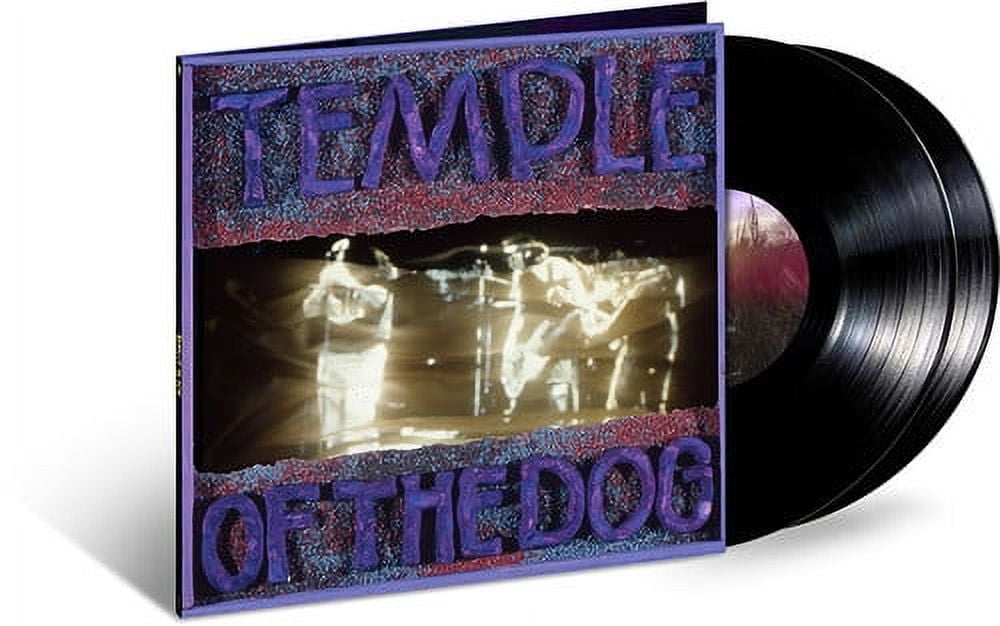


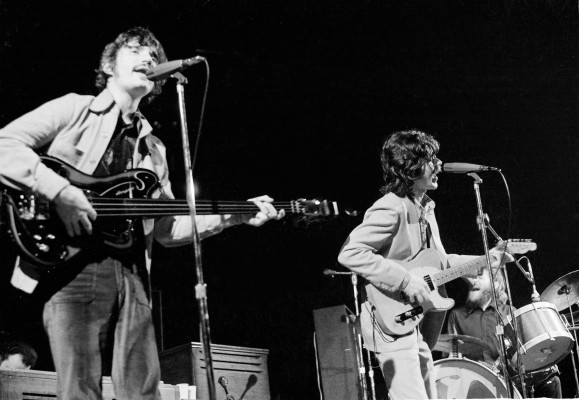
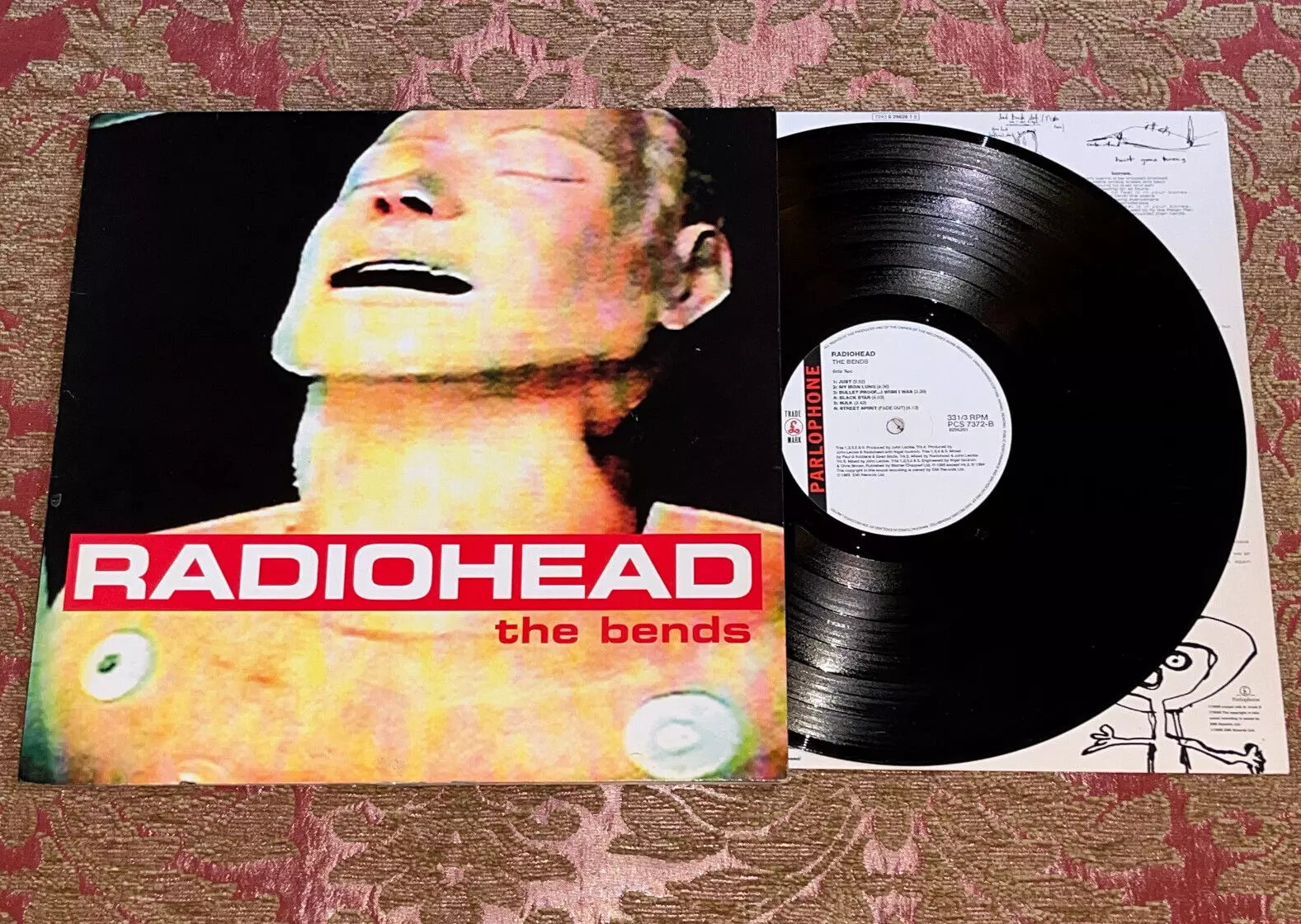

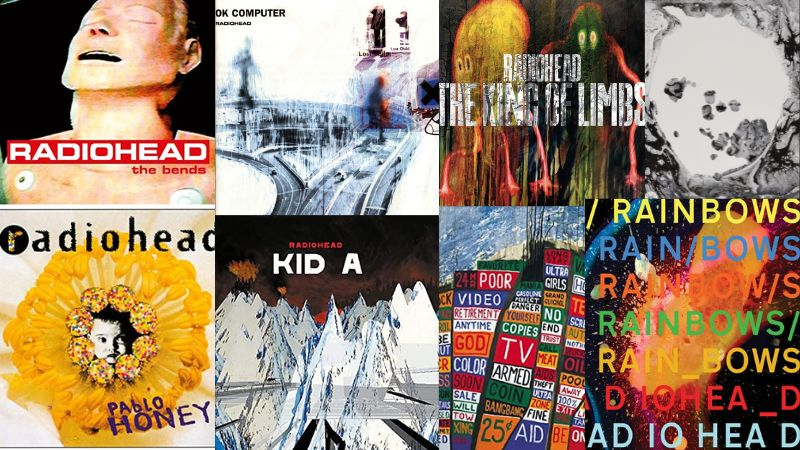
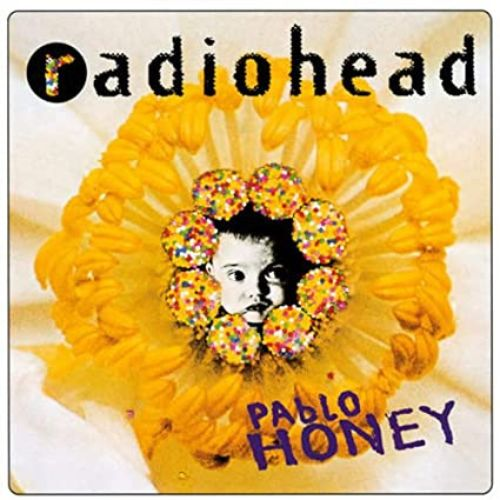
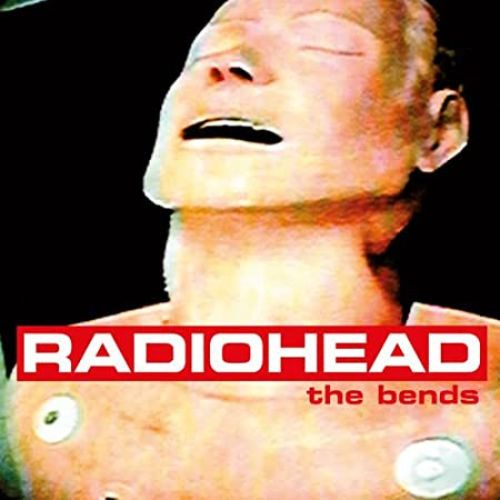
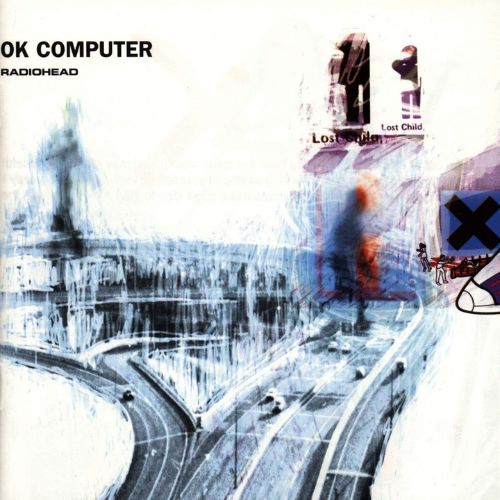
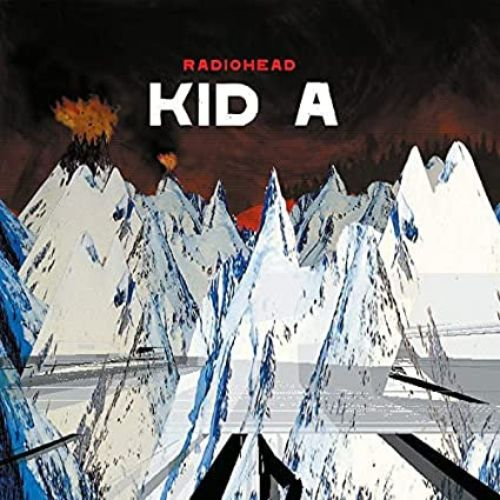
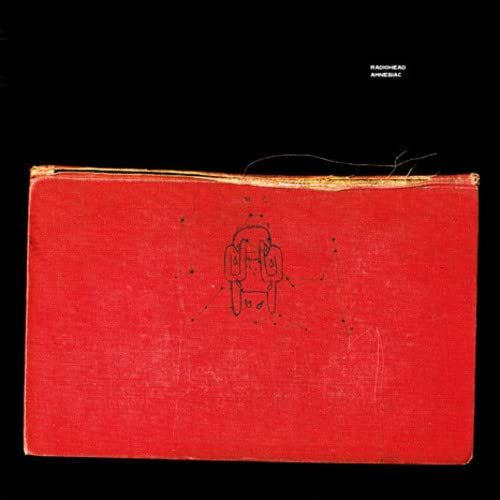
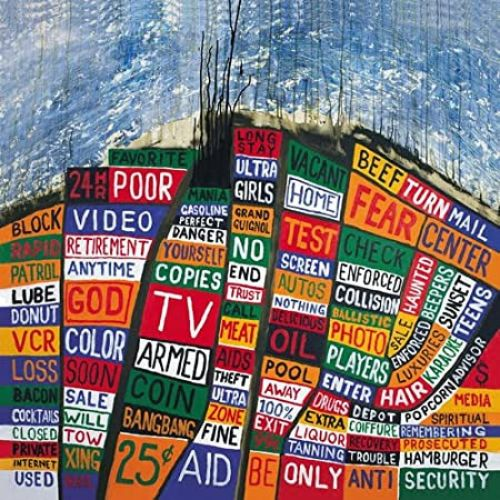
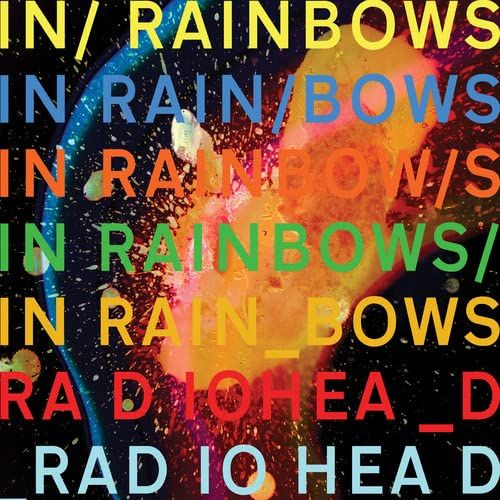
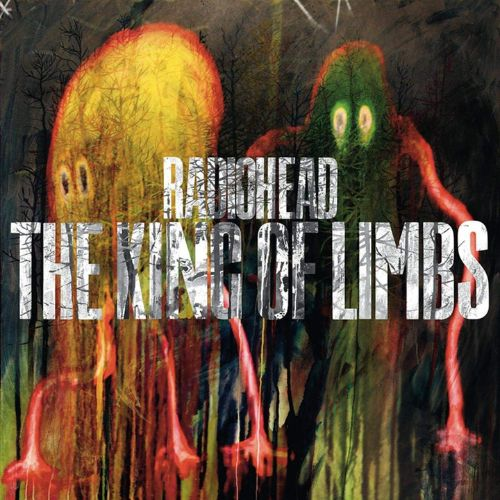
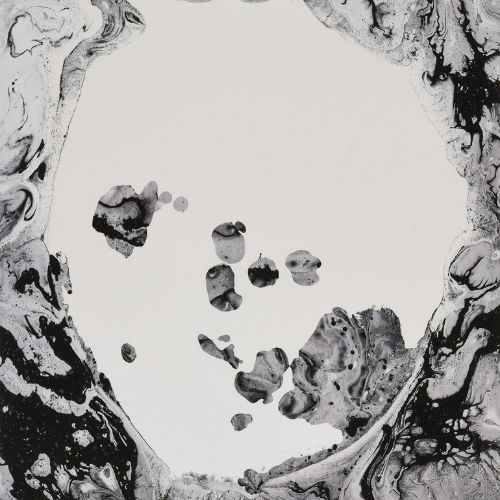


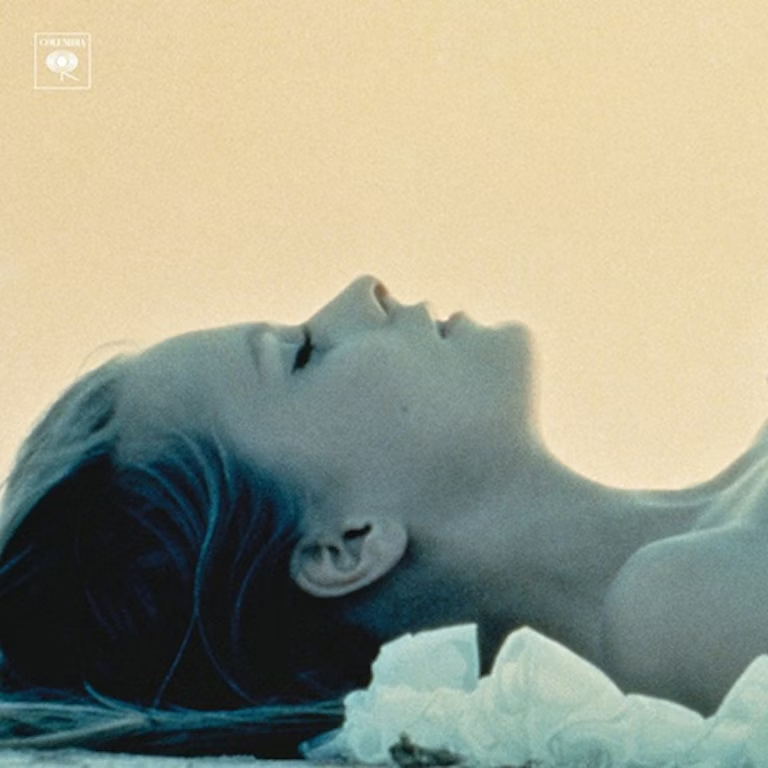
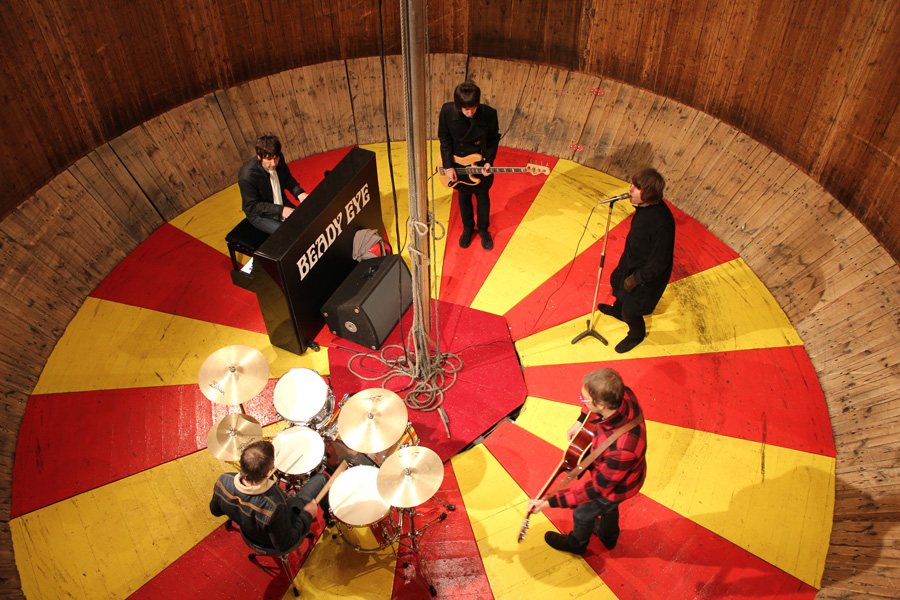
 The Fat Angel Sings