Posts Tagged ‘Traffic’

reDiscover ‘Alone Together’

Over the years there have been many records that have been given the tag, “lost classic” or “forgotten masterpiece”, and perhaps many of them are. But I like to think that this Dave Mason album released in June 1970 in America is one such Classic.
Dave had left Traffic and gone to the West Coast where he had met producer Tommy LiPuma who signed him to his, Blue Thumb Records – a label whose smattering of releases since 1968 included Captain Beefheart’s Strictly Personal, Aynsley Dunbar’s Retaliation and W.C. Fields’s, Anyone Who Hates Dogs and Children Can’t Be All Bad.

Dave Mason’s reputation was such that he attracted some of the best musicians around including some from Joe Cocker’s Mad Dogs and Englishman band. There’s Leon Russell, drummer, Jim Keltner, guitarist, Don Preston and singers Claudia Linnear and Rita Coolidge. Drummer, Jim Gordon and bass player Carl Radle, were also in the Cocker band and they, soon after recording “Alone Together”, become the Derek and the Dominos’ rhythm section; Larry Knechtel who played the piano on Bridge Over Troubled Waters also plays bass on Mason’s album. You get the picture, it really was the best musicians that could be assembled in 1970.

Recording was at Sunset Sound and Elektra Recording Studio with Bruce and Doug Botnick handling the engineering and Tommy LiPuma and Dave himself acting as producers; Al Schmitt did the mixing. We namecheck them because it’s the ‘sound’ of this record that is one of its strengths. It really did ‘play’ better than so many records at the time.

dave_mason-alone_together(1)

Aside from the brilliant musicianship what shines though on this record is Dave Mason’s song writing, there is not a dud among the eight tracks. The album opens with ‘Only you Know and I Know’, which could so easily have been a track from Mad Dogs – it has all the trademarks. ‘Can’t Stop Worrying, Can’t Stop Loving’ is the musical polar opposite from the groove of the opener. It is a delicate ballad that features Dave’s plaintive vocals; so often over-shadowed in Traffic by Stevie Winwood.

Waitin’ On You’ is back in the groove with some funky electric piano from Leon Russell. Side one of the original record closes with the stately, towering, ‘Shouldn’t Have Took More Than You Gave’ that is one of the real stand out tracks; it features Mason’s brilliant wah-wah guitar – the best since Eric Clapton’s ‘Tales of Brave Ulysses’, Leon Russell’s piano is just as superb.

‘Sad and Deep as You’ opens the second side and is another reflective song from Dave and it again shows that he’s no slouch in the vocal department. ‘World In Changes’ is a great song, acoustic layered guitars build under Dave’s vocal and the track brings out the best in the musicians – so tight and together. Russell’s organ underpins the whole track and he’s allowed a great solo towards the end of the song.

The penultimate track, ‘Just A Song’ is redolent of The Band and the beginnings of Americana, with its banjo motif and the gospel infused backing vocals from Bonnie Bramlett, Claudia, Rita and co. The album’s closer is arguably its best track, ‘Look at You Look at Me,’ a song Mason cowrote with Traffic’s drummer, Jim Capaldi, who also plays on it with his trademark tight sound. This is one of those songs that you can play to people and they will instantly ‘get it’. It’s quintessential 1970s rock…and that’s no bad thing.
When the album came out Billboard said, “Mason with help from friends Jim Capaldi and Leon Russell proves his mastery of the rock idiom once and for all. The lyric content and music content of every song catches the senses of the listener and creates excitement.” That sorta nails it, but this is an album that will take repeated listenings, trust us, we’ve been playing regularly for 45 years. It also reminds us that 8 songs does make an album, less can so often be more. Alone Together is perfection. As a little footnote, when the original LP came out it was a masterful piece of packaging, designed and photographed by Barry Feinstein and Tom Wilkes. Housed in a triple gatefold sleeve, a die cut triple fold-out picture jacket, with Dave’s head and top hat popping up when you opened the record. A number were pressed with marbled vinyl. It was impossible to see the grooves and it made it appear that the needle was floating above the record

All songs written and composed by Dave Mason, except where indicated.

1. “Only You Know and I Know” 0:00
2. “Can’t Stop Worrying, Can’t Stop Loving” 4:05
3. “Waitin’ on You” 7:09
4. “Shouldn’t Have Took More Than You Gave” 10:11
5. “World in Changes” 16:11
6. “Sad and Deep as You” 20:46
7. “Just a Song” 24:19
8. “Look at You Look at Me” (Dave Mason, Jim Capaldi) 27:20
Credits and personnel Dave Mason – guitar, vocals Bonnie Bramlett – vocals Leon Russell – keyboards Carl Radle – bass Chris Ethridge – bass Larry Knechtel – bass Jim Capaldi – drums Jim Gordon – drums Jim Keltner – drums Michael DeTemple – guitar Don Preston – keyboards John Simon – keyboards John Barbata – drums Rita Coolidge – vocals Mike Coolidge – vocals Claudia Lennear – vocals Lou Cooper – vocals Bob Norwood – vocals Jack Storti – vocals

Production Dave Mason, Tommy LiPuma – producer Bruce Botnick, Douglas Botnick – recording engineer Al Schmitt – mixing Barry Feinstein, Tom Wilkes – photography/design

Caught In ’70s Traffic One More Time

As the piano kicked in on ‘Something New’ at the same time as one of the most distinctive voices in rock, Traffic were back in the American album chart on this day 41 years ago with When The Eagle Flies. With Stevie Winwood  vocals and keyboards augmented by the work of Jim Capaldi, Chris Wood and now Rosko Gee (plus the uncredited Rebop Kwaku Baah), they would once again strike gold in the States — but this would be their last chart showing with a new studio record for very nearly 20 years. This ninth album by the British rock pacemakers gathered half a dozen new compositions by Winwood and Capaldi, and another, the equally impressive ‘Dream Gerrard,’ that Steve wrote with inimitable performer-humorist Vivian Stanshall, late of the Bonzo Dog Band. It arrived just over a year and a half after the band’s 1973 entry Shoot Out At The Fantasy Factory, after which they had released the On The Road memento of their concert in Germany that year.


traffic-on-the-roadTraffic-When-The-Eagle


Whereas Traffic’s recent studio endeavours had been produced by Winwood, When The Eagle Flies was overseen, like the live disc, by their Island label boss and confidant, Chris Blackwell. There was a subtle update to their sound, too, with the use of Moog and Mellotron keyboards, and an ever greater advance into a sophisticated jazz-rock style. But, with their status as FM album rock radio staples intact, there was no sign of any reduction in their American popularity.

While their British audience showed less enthusiasm for the new album, granting it only a fleeting top 40 place, Eagle entered the 28 September, 1974 US chart at No. 52 and became the group’s fourth top ten LP in a row there. Billboard called the album “a superb return.”

It reached No. 9 in a 27-week run, going gold by November, but after a promotional tour in the US in the autumn, Traffic called it a day. They were commemorated by two compilations in 1975 but the name was not revived by Winwood and Capaldi until 1994’s Far From Home.

https://www.youtube.com/watch?v=k8f7Kl36Vxo

On this date in 1967, Traffic released their debut album ‘Mr. Fantasy’. 

The second half of 1967 is memorable for many landmarks in the annals of pop history, but one that’s sometimes a little underplayed is the remarkable arrival of a new British rock force called Traffic.

In the space of less than six months, the band racked up no fewer than three top ten hits in the UK with ‘Paper Sun,’ ‘Hole In My Shoe’ and ‘Here We Go Round The Mulberry Bush.’ Then, exactly 48 years ago on the countdown on 30th December, 1967, they rounded off the year in style by charting with their first album, Mr. Fantasy.

Beneath the surface of what appeared to be a new driving force in creative British pop, all was less than harmonious, because by the time the album appeared, Dave Mason was about to split with his colleagues Steve Winwood, Jim Capaldi and Chris Wood. He returned to the fold in time for their self-titled follow-up of 1968.

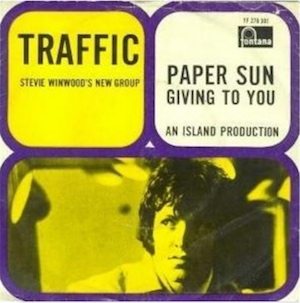
Paper Sun

“Dave Quits, But Traffic Keeps Moving’ was the Melody Maker’s headline in its 16 December issue. “It’s because there are things I want to do and for me to do them while still in the group would hang the others up,” he told the paper’s Chris Welch. “The best thing to do is leave. I decided ages ago.” Almost immediately, he started producing the debut album by Family, Music In A Doll’s House, which came out the following July.

https://www.youtube.com/watch?v=dYvEHlXRZlc

Nevertheless, Mason still had three solo compositions on Mr. Fantasy, in the form of ‘House For Everyone,’ ‘Utterly Simple’ and ‘Hope I Never Find Me There.’ He also had a co-write on the closing ‘Giving To You,’ with all six remaining tracks credited to the Winwood/Capaldi/Wood triumvirate. As a notable example of the way that the singles and album markets were now splitting in two, the album didn’t contain any of Traffic’s hit singles.

Mr. Fantasy opened on the chart at No. 38, as The Beatles‘ Sgt.Pepper’s Lonely Hearts Club Band continued at No. 1, in what turned out to be the penultimate week at the summit for that particular classic. The Traffic album then faltered at No. 40 before rallying in the new year to spend two weeks at No. 17, and then hitting a No. 16 peak in early February. In the US, a different version of the album, with alternative sequencing and the notable addition of ‘Smiling Phases,’ hit No. 88. Bigger achievements were in store for Traffic on both sides of the Atlantic.

Traffic Make Their Album Debut

reDiscover ‘Alone Together’

Over the years there have been many records that have been given the tag, “lost classic” or “forgotten masterpiece”, and perhaps many of them are. But we like to think that this Dave Mason album released in June 1970 is the real deal.
Dave Mason had left Traffic and gone to the West Coast where he had met producer Tommy LiPuma who signed him to his, Blue Thumb Records – a label whose smattering of releases since 1968 included Captain Beefheart’s Strictly Personal, Aynsley Dunbar’s Retaliation and W.C. Fields’s, Anyone Who Hates Dogs and Children Can’t Be All Bad.

Dave Mason’s reputation was such that he attracted some of the best musicians around including some from Joe Cocker’s Mad Dogs and Englishman band. There’s Leon Russell, drummer, Jim Keltner, guitarist, Don Preston and singers Claudia Linnear and Rita Coolidge. Drummer, Jim Gordon and bass player Carl Radle, were also in the Cocker band and they, soon after recording Alone Together, become the Derek and the Dominos’ rhythm section; Larry Knechtel who played the piano on Bridge Over Troubled Waters also plays bass on Mason’s album. You get the picture, it really was the best musicians that could be assembled in 1970.

Recording was at Sunset Sound and Elektra Recording Studio with Bruce and Doug Botnick handling the engineering and Tommy LiPuma and Dave himself acting as producers; Al Schmitt did the mixing. We namecheck them because it’s the ‘sound’ of this record that is one of its strengths. It really did ‘play’ better than so many records at the time.

Aside from the brilliant musicianship what shines though on this record is Dave Mason’s song writing, there is not a dud among the eight tracks. The album opens with ‘Only you Know and I Know’, which could so easily have been a track from Mad Dogs – it has all the trademarks. ‘Can’t Stop Worrying, Can’t Stop Loving’ is the musical polar opposite from the groove of the opener. It is a delicate ballad that features Dave’s plaintive vocals; so often over-shadowed in Traffic by Stevie Winwood.

‘Waitin’ On You’ is back in the groove with some funky electric piano from Leon Russell. Side one of the original record closes with the stately, towering, ‘Shouldn’t Have Took More Than You Gave’ that is one of the real stand out tracks; it features Mason’s brilliant wah-wah guitar – the best since Eric Clapton’s ‘Tales of Brave Ulysses’, Leon Russell’s piano is just as superb.

‘Sad and Deep as You’ opens the second side and is another reflective song from Dave and it again shows that he’s no slouch in the vocal department. ‘World In Changes’ is a great song, acoustic layered guitars build under Dave’s vocal and the track brings out the best in the musicians – so tight and together. Russell’s organ underpins the whole track and he’s allowed a great solo towards the end of the song.

The penultimate track, ‘Just A Song’ is redolent of The Band and the beginnings of Americana, with its banjo motif and the gospel infused backing vocals from Bonnie Bramlett, Claudia, Rita and co. The album’s closer is arguably its best track, ‘Look at You Look at Me,’ a song Mason co wrote with Traffic’s drummer, Jim Capaldi, who also plays on it with his trademark tight sound. This is one of those songs that you can play to people and they will instantly ‘get it’. It’s quintessential 1970s rock…and that’s no bad thing.
When the album came out Billboard said, “Mason with help from friends Jim Capaldi and Leon Russell proves his mastery of the rock idiom once and for all. The lyric content and music content of every song catches the senses of the listener and creates excitement.” That sorta nails it, but this is an album that will take repeated listenings, trust us, we’ve been playing regularly for 45 years. It also reminds us that 8 songs does make an album, less can so often be more. Alone Together is perfection.

alonetogether2

As a little footnote, when the original LP came out it was a masterful piece of packaging, designed and photographed by Barry Feinstein and Tom Wilkes. Housed in a triple gatefold sleeve, a die cut triple fold-out picture jacket, with Dave’s head and top hat popping up when you opened the record. A number were pressed with marbled vinyl. It was impossible to see the grooves and it made it appear that the needle was floating above the record.

Steve Winwood performs a solo acoustic version of Traffic‘s  “John Barleycorn (Must Die)” was the fourth album by the rock band Traffic, released in 1970, on Island Records in the United Kingdom, John Barleycorn is a Traditional English Folk Song . The character of John Barleycorn in the song is a personification of the important cereal crop barley and of the alcoholic beverages made from it, beer and whisky. In the song, John Barleycorn is represented as suffering attacks, death and indignities that correspond to the various stages of barley cultivation, such as reaping and malting.


Traffic-John_Barleycorn_Must_Die_(album_cover)

In the beginning of 1970, after the demise of Blind Faith, the band having lasted barely six months, Steve Winwood returned to the studio ostensibly to make his first solo album, originally  going to be titled Mad Shadows. He recorded two tracks with producer Guy Stevens, “Stranger to Himself” and “Every Mother’s Son”, but yearned for like-minded musicians to accompany. Inviting Wood and Capaldi to join him, Winwood’s solo album became the reunion of Traffic, and a re-launch of the band’s career. It was their highest charting album in the US,  In addition, the album  also featured the single “Empty Pages” .

As did most of their albums, it featured influences from jazz and blues, but the version of the traditional English folk tune “John Barleycorn” also showed the musicians attending to the same strains of folk baroque and electric folk as contemporary British bandsPentangle and Fairport Convention.

Steve Winwood oversaw a deluxe edition  of the album that was released in March 2011, featuring the original studio album, digitally remastered on disc one, plus a second disc of bonus material including a set at Fillmore East concert with alternate mixes and versions of album tracks.

trafficshootouts

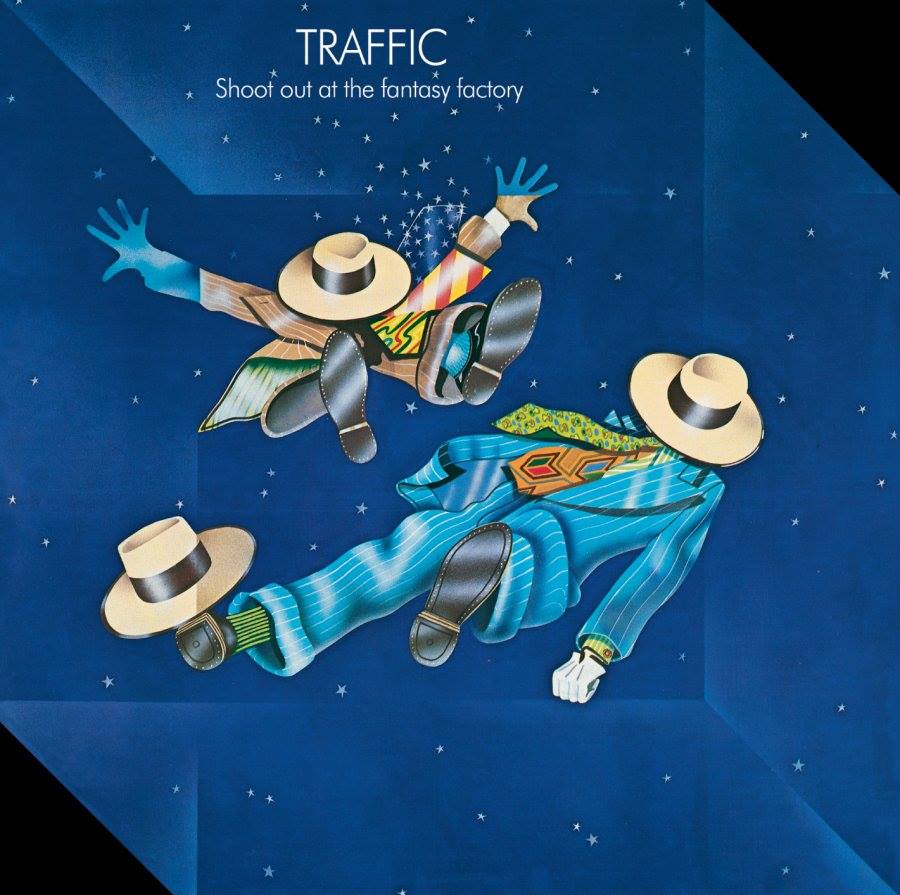
“Shoot Out at the Fantasy Factory”, released in 1973, was the seventh album and sixth studio album by the band Traffic. It followed their 1971 album “The Low Spark of High Heeled Boysand contained five songs. while achieving poorer reviews than its predecessor, the album did reach number six on the American charts, one space higher than “Low Spark”  Like its predecessor, the original jacket for the “Shoot Out” LP had its top right and bottom left corners clipped. The album was remastered for CD in 2003.

What an excellent band assembled here, with the band adding Muscle Shoals rhythm section greats David Hood on bass and Roger Hawkins on drums. That band would tour that year and record the fantastic live album “On The Road”, also featuring the song “(Sometimes I Feel So) Uninspired”.
Steve Winwood talked about the song with Musician Magazine in 1982: “That song reflected a lot of things: the state of rock n’ roll world at that point, my own frame of mind, and struggle with my health. It was just an honest thing: the song was talking about a definite sometime-feeling I get. We can’t be inspired all the time, can we? And those of us, who are made to feel that we have to be, grow weary and even sick from the stress of the crazy, unfair responsibility put on us.”
Winwood plays a fantastic, inspired (ha!) guitar solo on this tune.
The beautiful cover art is by Tony Wright who created many great covers in the 1970s,

All songs written by Steve Winwood and Jim Capaldi unless otherwise indicated.

  1. “Shoot Out at the Fantasy Factory” – 6:05
  2. “Roll Right Stones” – 13:40
  3. “Evening Blue” – 5:19
  4. “Tragic Magic” (Chris Wood) – 6:43
  5. “(Sometimes I Feel So) Uninspired” – 7:31

After two exemplary releases, Traffic released “Shoot Out at the Fantasy Factory”, which begins with the title track, based on a guitar riff reminiscent of the recent Deep Purple hit “Smoke on the Water,” and continues through the lengthy “Roll Right Stones,” the folkish ballad “Evening Blue,” reed player Chris Wood’s instrumental “Tragic Magic,” and the uncertain self-help song “(Sometimes I Feel So) Uninspired.” Lyricist Jim Capaldi was co-credited with Steve Winwood as the album’s producer, and he may have contributed to the cleaner mix that made his words easier to understand. Meanwhile, the rhythm section had been replaced by Muscle Shoals studio aces David Hood and Roger Hawkins. Capaldi sings no songs here, and Chris Wood’s flute and saxophone, so often the flavouring of Traffic songs, are largely absent. Muscle Shoals rhythm section, Barry Beckett, Roger Hawkins, David Hood along with Jimmy Johnson for contributing their musical skills on this and the live “On The Road” live album that followed.

Remembering Jim Capaldi who died from stomach cancer,  born 2nd August 1944 – 28th January 2005

Nicola James “Jim” Capaldi  was an English musician and songwriter. His musical career lasted more than four decades. He co-founded Traffic in Birmingham with Steve Winwood, and the band’s psychedelic rock was influential in Britain and the United States. Capaldi and Winwood wrote many of Traffic’s major hits and most of the tracks on the band’s ten albums. He was inducted into the Rock and Roll Hall of Fame as a part of Traffic’s original line-up. Jim Capaldi also performed with several famous musicians, including Jimi Hendrix, Eric Clapton, George Harrison, Alvin Lee, and Mylon LeFevre. He has also written lyrics to songs for other artists,

As a solo artist he scored more than a half dozen chart hits in various countries, the most well-known being “That’s Love“, “Shoe Shine“, and his cover of “Love Hurts“.

Following his death, several tributes in celebration of Capaldi’s life and music came out under the name Dear Mr Fantasy. The first was a tribute concert that took place at the Roundhouse in Camden Town, London on Sunday, 21 January 2007. The performances were evenly split between Capaldi’s solo songs and his work with Traffic. All profits went to The Jubilee Action Street Children Appeal. A recording of the concert was released as a double CD set the same year.

Jim Capaldi’s success as a lyricist continued throughout his life. In 1990 One and Only Man“, a Steve Winwood song for which Capaldi wrote the lyrics, reached the Top 20 in the USA. He was a five times winner of BMI/Ascap Awards for the “most played compositions in America”, and sales of songs written or co-written by him exceeded 25 million units. He numbered Bob Marley among his friends, and they travelled together while Marley was writing the Catch A Fire album. Capaldi wrote the lyrics to “This Is Reggae Music”.

In the 1980s, Capaldi collaborated with Carlos Santana contributing songs and ideas to Santana’s projects and in the 1990s he co-wrote (with Paul Carrack) the song “Love Will Keep Us Alive“, 

In 1993, Traffic reformed and toured the US and UK. Capaldi and Winwood recorded a new album, Far from Home, without the other members of the band. In 1998 he paired up again with Dave Mason on an extensive American tour.

The second such tribute, Dear Mr. Fantasy: The Jim Capaldi Story, is a four-disc boxed set released in July 2011. Though a slight majority of the tracks came from Capaldi’s solo albums, it also included some of his work with the Hellions, Deep Feeling, and Traffic, a few rare non-album tracks, and more than ten previously unreleased recordings,

The third and final tribute is a book of Capaldi’s handwritten lyrics, released in November 2011. The ideas of a boxed set and lyrics book had been conceived by Jim Capaldi shortly before he died, and their releases were prepared by his widow Aninha in fulfilment of a last promise to him.

Dear Mr. Fantasyis a rock song by Traffic from their 1967 album, Mr. Fantasy. An extended live version of the song also appears on the 1971 Traffic album “Welcome to the Canteen. The lyrics were written by Jim Capaldi, while the music was written by Steve Winwood and Chris Wood.

Stephen Stills sings the lead and plays lead guitar. I don’t have the liner notes so I am not sure who is on organ – it could be Stills, Nash, Joe Vitale, Mike Finnegan, or Paul Harris. They are all credited to the album. Graham Nash fills in on the harmony vocals while David Crosby is missing in action. Stills also adds his own verse in the process of this recording. Crosby, Stills,  & Nash  version added two new verses to their original’s lyrics

Each time you choose to sing the rock & roll blues,
you take everybody’s loneliness with you.
What do you lose each time you face down a room?
All of us see our changes through you.
So sing of the ocean of tears you have sailed,
Strangers and lovers that took you.
All of us sang, and all of us failed.
In one way we don’t ever hear you.

This song was recorded in 1980, however, it remained unreleased until 1991 when it appeared on two compilation CDs:  “CSN” (the boxed set) and “Carry On.” It is quite a bit heavier than Traffic’s original recording from 1967 which is below. While I appreciate this rendition, it would be hard for anyone to improve on the  Traffic original.

https://www.youtube.com/watch?v=kwtgpKZeTxI

low spark

Traffic performed most of “The Low Spark Of High Heeled Boys” plus songs from the “John Barleycorn” album at a concert in Santa Monica in 1972. It was released on VHS, however never on DVD. All the songs from it can be seen as separate videos or the entire concert downloaded by going to YouTube and entering: Traffic Santa Monica Civic Center ’72.ve

Traffic released The Low Spark of High Heeled Boys (1971), which was a Top 10 American album but did not chart in the UK the vinyl sleeve for the album is also notable for its die-cut cover. It sold over half a million copies in 1972.  Once again, however, personnel problems split the band as Grech and Gordon left the band in December 1971 and the month after, Stevie Winwood’s struggles with Illness brought Traffic to a standstill. At This Time Jim Capaldi used this hiatus to record a solo album tiltled “Oh How we Danced”  which would prove to be the beginning of a long and successful solo career. The album included a surplus recording from The Low Spark of High-Heeled Boys, “Open Your Heart”, and the new tracks featured members of the Muscle Shoals studio house band. The new Traffic  line-up of Stevie Winwood Jim Capaldi Chris Wood, plus additional members Rebop Kwaku Baah Hawkins, Hood) toured America in early 1972 to promote the Album, and their concert at the Civic Center in 1972 was recorded and captured on colour videotape with multiple cameras. The 64-minute performance is thought to be the only extended live footage of the group.

.


Traffic-John_Barleycorn_Must_Die_(album_cover)


The fourth album from the English rock Band TRAFFIC, regarded as their definative recording, released in 1970 on Island records featured the single “Empty Stages” recorded at Island studios and Olympic studios in London from February to  April 1970 and produced by Chris Blackwell and Guy Stevens, Stevie Winwood who was still only 22 but had already served his apprenticeship in the Spencer Davis Group an then with the supergroup Blind Faith, had entered the studios to record what was to be a solo album titled Mad Shadows he wanted like minded musicians to join him and invited Chris Woods saxes and other wind instruments and Jim Capaldi drumming, therefore becoming a reunited Traffic and particulary a relaunch of the band’s career. With Jazz and Blues a forefront to the bands sound it also included a contempoary version of the English seventeenth century folk song ” John Barleycorn” with similarities to what was happening with bands like Pentangle and Fairport Convention. Reissued in 1999 with five bonus tracks, then in 2011 a deluxe version had the whole of the Live Fillmore East concert plus some demos,

https://www.youtube.com/watch?v=jZohWYK1GBc