Posts Tagged ‘The Rolling Stones’

Rolling Stones Records

The Rolling Stones didn’t end up touring the U.S. in the immediate wake of the April 1976 release of “Black and Blue”. However, the band still managed to cause controversy in the States, thanks to the album’s ad campaign and a Sunset Boulevard billboard promoting the record.
The ad featured model Anita Russell sitting atop an unfolded copy of the “Black and Blue” LP. She’s bound with rope and wearing dark makeup, to make it look like she was bruised by a beating. The giant billboard was even more controversial, as it contained the same image of Russell and the LP, but added the text, “I’m ‘Black and Blue’ from the Rolling Stones – and I love it!” in giant script.
Reaction to both the ad and billboard was fierce. “This campaign exploits and sensationalizes violence against a woman for the purpose of increased record sales. The ad contributes to the myth that women like to be beaten and condones a permissive attitude towards the brutalization of women.”
Five stealth women “armed with buckets of fire-engine-red paint” visited the billboard one night and triumphantly defaced it, scrawling “This is a crime against women” near the text and also painting over Jagger’s face, the stealth artists also painted the “women’s movement symbol” next to the Stones’ iconic tongue logo.

Atlantic Records took down the billboard soon after, “It was not the intention of Atlantic, Mick [Jagger] or the Rolling Stones to offend anyone.”

The Rolling Stones recorded “Black and Blue” while auditioning Mick Taylor’s replacement, so it’s unfair to criticize it, really, for being longer on grooves and jams than songs, especially since that’s what’s good about it. Yes, there are two songs that are undeniable highlights “Memory Motel” and “Fool to Cry,” the album’s two ballads and, therefore, the two that had to be written and arranged, not knocked out in the studio; they’re also the ones that don’t quite make as much sense, though they still work in the context of the record. As the Stones work Ron Wood into their fabric. And the remarkable thing is, apart from “Hand of Fate” and “Crazy Mama,”. They play with reggae extensively, funk and disco less so, making both sound like integral parts of the Stones’ lifeblood.

Rolling Stone magazine wrote at the time: “In a way, “Black and Blue” is an admirable
album just for its refusal to bow to the past. A few songs here try to sound like “Brown Sugar” and “Tumbling Dice” and those few aren’t the best ones. Still, the Stones have problems. Keith Richard recently has seemed to run out of melodic ideas altogether and, like the majority of their post-Exile on Main Street repertoire, the new numbers are based on loose riffs rather than tight song structures. Like the Who or any rock band, the Stones are obsessed in their way with age and time, but unlike the rest, they’ve matured with confident gracefulness. For Soul Survivors, I guess, dying before you get old is simply not relevant.”

Image result for rolling stones black and blue

The band that made “Black and Blue” isn’t the same one that made “12 x 5” or even “Aftermath”. But that doesn’t mean today’s Stones are not a great band playing great music. They’re a different sort of band, playing a different kind of music. Too much of “Black and Blue” picks up the trail of “Fingerprint File.” “Hot Stuff,” which opens side one, and “Hey Negrita,” which opens side two, are intricate funk jams, fusing reggae, Latin rhythms and the Meters’ brand of funk without achieving the focused mood of “Fingerprint File.” Some of the playing is exceptional — on “Hot Stuff,” Charlie Watts might be playing .44 magnums instead of drums.

There is plenty of good stuff left, although all of it is marred by the need for fuller, firmer instrumentation. “Hand of Fate,” which isn’t as melodic as the Stones riff usually is, is brought to life by a blistering Wayne Perkins guitar solo and Jagger’s incredibly live vocal. “Crazy Mama,” the wild little rocker that closes the set, is hot stuff. It sounds as out of control as the Faces, although Wood doesn’t play on it. (He’s “in the band,” but he only plays on two songs.) The lyrics are marvelous: “‘Cause if you really think you can push it/I’m gonna bust your knees with a bullet.” Those two are the only hard rockers on the album, and the only time Jagger pulls the standard macho-demonic act, too.

Since the “Memory Motel” was the only place in the area with a pool table and a piano, The Stones would occasionally come by and hang out at the bar. The owners at the time were not impressed…they hated The Stones. The Memory Motel is in Montauk on Long Island. It’s near The Church Estate, which Andy Warhol bought in 1972. Arthur Schneider, who owns the Memory Motel, said that The Stones stayed at Warhol’s estate when they were on tour in 1975-’76.

“Memory Motel,” a sort of return to “Moonlight Mile,” the stops are all pulled out. Once more, Watts propels the tune with his drumming. The story begins when Mick meets a girl before last summer’s tour. (The real memory motel is near the house in Montauk, Long Island, where the band rehearsed.) But it soon becomes entangled with his recollections of the tour.

But “Memory Motel” is more than just a vignette or two. In the end, it becomes the perfect agony-of-the-road song, for it dwells not just on the difficulties of touring, but also on the ultimate joys: As Watts moves in like a locomotive, pushing the song upward, Jagger explains in one brief flash what it’s worth to him, what keeps him coming back for more: “What’s all this laughter on the 22nd floor?/It’s just some friends of mine/And they’re bustin’ down the door!” There’s no way to capture the exhilaration he expresses as his pals roust him from his reverie, lifting him away from his cares. For that one moment, at least, Jagger feels his music as deeply as he ever has. Jagger’s voice swooping and snaking around Preston’s piano and harmonies. If “Black and Blue” leaves us nothing else, it is the knowledge that Jagger has become a total pro in a way that, of rock’s great white vocalists, only Rod Stewart and Van Morrison can match. With Mick Taylor gone, The Stones were auditioning lead guitarists while recording “Black And Blue”. Harvey Mandel from Canned Heat played lead on this while session man Wayne Perkins played acoustic, but Ron Wood eventually got the job.

It has a haunting melody and lyrics that stick with you. Some say the Hannah in the song is referring to Carly Simon and some say it’s Annie Leibovitz. Whoever the muse was, they inspired a beautiful song.

It’s widely speculated that “Hannah Honey” with the curled nose is none other than Carly Simon. Jagger had been romantically linked to Carly around this time, and her physical traits are eerily similar to the song’s descriptions. One theory is that Simon wrote “You’re So Vain” after a one-night-stand with Jagger at The Memory Motel. Simon has never said who that song is about. 

Mick Jagger and Keith Richards duet on vocals. Richards did not play guitar on the track – a rarity. Jagger played the acoustic piano, Richards the electric piano, and Billy Preston the synthesizer.

On their live album version “No Security“, Dave Matthews duets with Jagger in place of Richards. Matthews joined The Stones onstage from time to time and also sang this with Jagger on a televised St. Louis concert in 1997

The Rolling Stones

  • Mick Jagger – lead vocals (all tracks), backing vocals (1, 3, 4), percussion (1), piano (4), electric piano (7), electric guitar (8)
  • Keith Richards – electric guitar (all but 4), backing vocals (1-5, 8), electric piano (4), bass guitar (8), piano (8), co-lead vocals (4)
  • Bill Wyman – bass guitar (all but 8), percussion (1)
  • Charlie Watts – drums (all tracks), percussion (1)

Additional personnel

  • Billy Preston – piano (1, 2, 5, 6, 8), organ (5, 6), synthesizer (4), percussion (6), backing vocals (1, 4, 5, 6)
  • Nicky Hopkins – piano (7), synthesizer (7), organ (3)
  • Harvey Mandel – electric guitar (1, 4)
  • Wayne Perkins – electric guitar (2, 7), acoustic guitar (4)
  • Ronnie Wood – electric guitar (3, 5, 8), backing vocals (1, 2, 4, 5, 8),
  • Ollie E. Brown – percussion (1-3, 5, 8)
  • Ian Stewart – percussion (1)
  • Arif Mardin – horn arrangement (6)
May be an image of 3 people and text that says 'ROLLING STONES T A BIGGER BANG LIVE ON COPACABANA BEACH'

The Rolling Stones’ first studio album of the new millennium, 2005’s “A Bigger Bang“, made its mark around the world.  It charted in the top five in almost two dozen countries and earned Platinum or Gold certifications in the U.S., U.K., and other international territories.  Jagger, Richards, Watts, and Wood supported the album with “A Bigger Bang, the Tour“, between 2005-2007 – and it became the highest-grossing concert tour of all time (until U2 usurped its crown).  On February 8th, 2006, the Stones took the proceedings to Copacabana Beach in Rio de Janeiro, Brazil for a massive free concert.  That show was captured on film and released to cinemas and DVD while the audio was broadcast on XM Radio.  Now, the mega-show is coming to various formats in remixed, re-edited, and remastered form as The Rolling Stones: A Bigger Bang – Live on Copacabana Beach released on July 9th from Eagle Rock Entertainment.  

Welcome to Rio De Janeiro and the Rolling Stones’ legendary show in front of 1.5 million people, one of the biggest free concerts in history, The Rolling Stones’ performance on February 18th 2006 was an historic event; a critical moment in Rock ‘n’ Roll history. 
As Mick Jagger, Keith Richards, Ronnie Wood, and Charlie Watts fire on all pistons from one track to the next, the crowd continues to meet their energy waving Brazilian and British flags while rocking out in the tropical evening sunset.  With incredible staging and graphics, this fully restored and remastered concert from their ‘A Bigger Bang’ world tour now includes four  previously unreleased tracks; “Tumbling Dice”, “Oh No, Not You Again”, “This Place is Empty” and “Sympathy For The Devil”.

Held on February 8th, 2009 in front of the Copacabana Palace Hotel in Rio de Janeiro (Brazil) this legendary Rolling Stones concert will be treated to a physical and digital release, remixed, reissued and remastered. A film that captures one of the greatest free concerts and a critical moment in the history of rock’n’roll”, commented the band.

Scheduled for July 9th, this historic concert will be available in a variety of formats: DVD-2CD, SD BD-2CD, 2DVD-2CD Deluxe, 3LP pressed on blue, yellow and green vinyl, 3LP pressed on transparent vinyl (available only on Sound Of Vinyl and digital.

Mick Jagger’s band has scheduled the release of digital EP for May 28th, which will contain five songs: Sympathy For The Devil, Wild Horses, You Got Me Rocking, Happy and Rough Justice. All were recorded during the concert, with the exception of Rough Justice, which came from a concert in Salt Lake City in 2005. The latter will only be available on deluxe versions.

A limited edition 10″ vinyl picture disc containing Rain Fall Down (Live on Copacabana Beach) and Rough Justice (Live In Salt Lake City) was also announced for Record Store Day on June 12th.

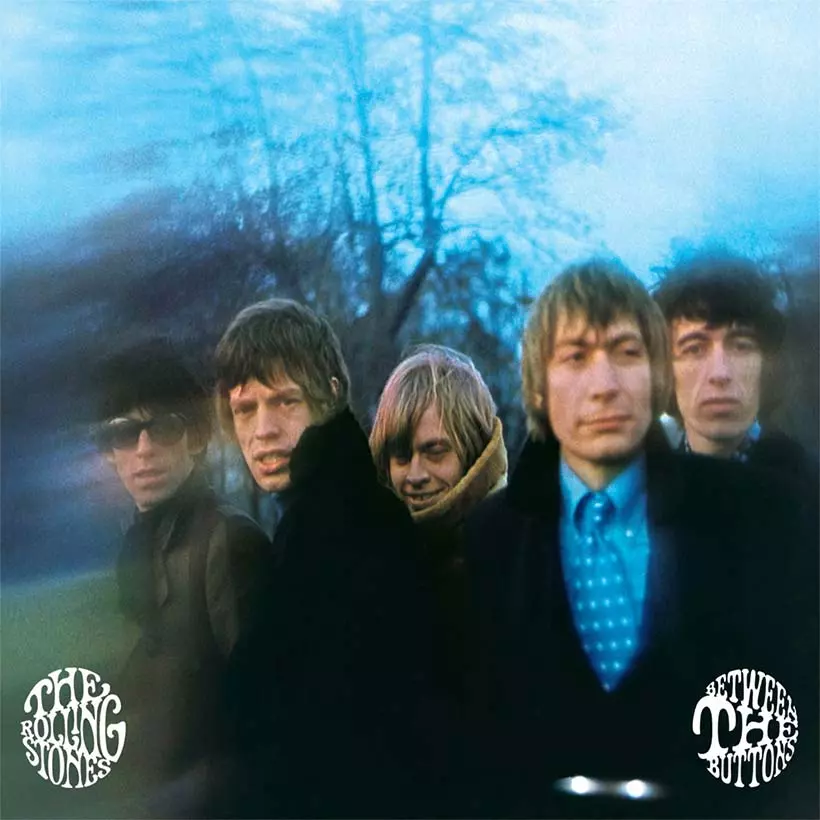
The Rolling Stones Between The Buttons album cover 820

1967 was a highly successful year for The Rolling Stones. It started with the release of “Between The Buttons” and ended with the stylistic about-turn of “Their Satanic Majesties Request”. Released on Decca RecordsBetween The Buttons came out first in the UK, on 20th January 1967, with a revised US edition following on 11th February.

Between The Buttons’ title came about by chance, following an off-the-cuff remark made by producer Andrew Loog Oldham to drummer Charlie Watts, who was doing some sketches for the artwork. Watts asked what they were going to call the album and Oldham used a euphemism for “undecided”. “Andrew told me to do the drawings for the LP and he told me the title was ‘between the buttons’,” Watts told Melody Maker “I thought he meant the title was Between The Buttons, so it stayed with it.”

Some of the album was recorded in August 1966 with Dave Hassinger at RCA Studios in Hollywood – the last session to be recorded in what had been the band’s “hit factory” – before being completed in London at the newly-opened Olympic Sound Studios in November that year. Some of the tracks were started in America and finished in England’s capitol. The Stones were fresher by the time they were recording back home, having taken a break from touring. “Between The Buttons” was the first time we took a breath and distanced ourselves a little from the madness of touring and all,” recalled guitarist Keith Richards. “So in a way, to us it felt like a bit of a new beginning… plus, everyone was stoned out of their brains.”

“Between the Buttons” was The Rolling Stones’ first album since April 1966’s Aftermath and it became their fifth UK studio album. It remains one of the Stones’ less well-known records, however, which is a pity as it contains some strong songs.

Besides the five band members – Mick Jagger, who took lead vocals on all tracks and also played the tambourine and harmonica, was joined by RichardsBrian Jones, Bill Wyman and Watts – there were several guest musicians. Ian Stewart plays piano and organ, and Nicky Hopkins plays piano, as does Jack Nitzsche. The track ‘Connection’ was performed live at the London Palladium the week after the album came out and was featured in the Martin Scorsese documentary Shine A Light, in 2008.

By late 1966, recording technology was allowing for greater experimentation, and though every track on Between The Buttons is credited to Jagger and Richards, there are certainly very different styles of music and song writing to be heard on the album. ‘Yesterday’s Papers’ has the distinction of being the first song to be written solely by Jagger and features Nitzsche on harpsichord. On ‘Something Happened to Me Yesterday’, the multi-talented Jones plays saxophone, trombone and clarinet.

Two tracks were exclusive to the UK album version. The first was the gentle waltz ‘Back Street Girl’, written by Richards and Jagger. In an interview with Jagger in Rolling Stone magazine, in 1968, the singer said it was his favourite song on the album. Jones showed some of his jazz leanings on this track: the musician, who was such an admirer of the jazz saxophonist Julian “Cannonball” Adderley that he named his son after him, demonstrated that he had imbued some of the influences of Milt Jackson in his vibraphone playing. The accordion playing was by Nick De Caro.

The second UK-only song on the album was ‘Please Go Home’, which was based on a Bo Diddley-style beat. It was later released in America on the compilation album Flowers.

“Trouble In Mind (Brian Jones)” A fun outtake from the “Between the Buttons” sessions (November 8th – 26th 1966: London, Olympic Sound Studios.). Great piano work from Ian Stewart and a multi-instrument player Brian Jones playing the kazoo’s.

https://www.youtube.com/watch?v=DEIfxi-RftQ

The US version of “Between The Buttons” was the band’s seventh studio release stateside, and it stamped its own individuality with the choice of a new opening song. The album started with ‘Let’s Spend the Night Together’, a song co-written by Jagger and Richards, and which became a favourite of David Bowie’s. It had been released as a double-A-side single in the UK in January 1967, paired with ‘Ruby Tuesday’, which was also added to the US track list.

The UK and US versions of “Between The Buttons” shared the songs ‘Yesterday’s Papers’, ‘Connection’, ‘She Smiled Sweetly’, ‘Cool, Calm And Collected’, ‘My Obsession’, ‘All Sold Out’, ‘Who’s Been Sleeping Here’, ‘Complicated’, ‘Miss Amanda Jones’ and ‘Something Happened To Me Yesterday’.

Billboard reviewed the US album favourably in February 1967. “Every LP by the Stones has been a hot chart item, and this latest collection will be no exception,” they wrote. “Their hard-driving beat is evident throughout, and their singles hits ‘Ruby Tuesday’ and ‘Let’s Spend the Night Together’ are included adding immediate sales appeal. ‘Miss Amanda Jones’ and ‘Cool, Calm And Collected’ are outstanding in this winning package.” Between The Buttons reached No.2 in the album charts in the US, one place higher than in the UK.

The album artwork features cartoons and drawings by Charlie Watts, and the cover features a photograph taken by Gered Mankowitz in mid-November 1966, following an all-night recording session at Olympic Sound Studios. The band went to Primrose Hill park, in north London, just after dawn, arriving in a Rolls Royce. Mankowitz said the photograph, which he made deliberately bleary by spreading Vaseline on his lens, captured “the ethereal, druggy feel of the time”, adding, “There was this well-known London character called Maxie – a sort of prototype hippie – just standing on his own playing the flute. Mick walked up to him and offered him a joint and his only response was, ‘Ah, breakfast!’”

The Rolling Stones: Confessin’ The Blues 10in Book Pack

ORIGINAL BLUES MASTERPIECES HAND-PICKED AND CURATED IN COLLABORATION WITH THE ROLLING STONES. DONATION TO WILLIE DIXON’S BLUES HEAVEN FOUNDATION

COVER ARTWORK BY RONNIE WOOD

`If you don’t know the blues… there’s no point in picking up the guitar and playing rock and roll or any other form of popular music’ – Keith Richards

As well as being the biggest band in the world, The Rolling Stones are also the biggest champions of the blues, so who better to curate a compilation in collaboration with BMG and Universal, of the music that inspired them throughout their career?. “Confessin’ The Blues” collects together the greatest bluesmen ever and provides a perfect education to the genre. The track-listing on the various formats have been chosen by The Rolling Stones in collaboration with BMG and Universal and will be released on BMG on 9th November.

The Rolling Stones have long been supporters of the Blues from before the start of their career right through to their latest album, Blue & Lonesome which featured their interpretations of the classics, many of which appear in their original versions here on Confessin’ The Blues. Mick Jagger was an early fan of the Blues: “The first Muddy Waters album that was really popular was Muddy Waters at Newport, which was the first album I ever bought”. As such big supporters of the genre, the band and BMG/Universal have decided that 10% of BMG’s net receipts* from the sale of this album will be donated to Willie Dixon’s Blues Heaven Foundation non-profit organisation in the United States).

Confessin’ The Blues includes tracks by the biggest Blues pioneers including Howlin’ Wolf, John Lee Hooker, Elmore James, Muddy Waters, Chuck Berry, Big Bill Broonzy and Robert Johnson. All of these artists had an impact on the nascent Rolling Stones, be they influencing Keith’s guitar licks or Mick’s vocals and lyrics. As Ronnie Wood says: “That’s how Mick and Keith first got close as well, on the train coming back from college. They noticed each other’s record collection and it was, “Hey, you’ve got Muddy Waters. You must be a good guy, let’s form a band”.

The Book Pack version contains 5 x 10’’ vinyls and an extended essay by music journalist Colin Larkin. It also contains 4 removeable art card prints by noted blues illustrator Christoph Mueller. The album cover artwork comes courtesy of Stones guitarist Ronnie Wood who has added his own personal twist to the project by painting his interpretation of a Bluesman.

Confessin’ The Blues is a real musical education from those who know the genre best, the greatest living band on the planet, The Rolling Stones.

Originally released in 1975, Metamorphosis was first official rarities compilation under The Rolling Stones’ name. You’ll hear outtakes, demos, and other rarities from The Stones’ early days, featuring session legends like Big Jim Sullivan, Clem Cattini, and one Jimmy Page.

Side two, meanwhile, includes session material from Beggars Banquet and Let It Bleed. Though the result may have been a bit piecemeal, Metamorphosis presets a compelling collection of intriguing rarities and critical session material. Now, the compilation arrives on hunter green vinyl with a special iron-on of the album artwork. After the release of Hot Rocks 1964–1971 in 1971, an album titled “Necrophilia” was compiled for release as the follow-up, with the aid of Andrew Loog Oldham, featuring many previously unreleased (or, more accurately, discarded) outtakes from the Rolling Stones’ Decca/London period. While that project failed to materialise—with More Hot Rocks (Big Hits & Fazed Cookies) being released in its place—most of the unreleased songs were held over for a future project. In 1974, to give it an air of authority, Bill Wyman involved himself in compiling an album he entitled Black Box. However, Allen Klein wanted more Mick Jagger/Keith Richards songs in the project for monetary reasons, and Wyman’s version remained unreleased.

Metamorphosis was issued in its place. Most tracks that appear on side one of the vinyl album are outtakes, written by Jagger and Richards for other artists to perform. They were mostly recorded with session musicians like Big Jim Sullivan on guitar, Clem Cattini on drums, and Jimmy Page on guitar, and were not intended for release by the Rolling Stones. Indeed, on most of these tracks the only Rolling Stones member who appears is Jagger. While “Out of Time” and “Heart of Stone” were already well known, they appear here in drastically different renditions, with session players providing the backing.

Side two includes unreleased band recordings created up until the Sticky Fingers sessions of 1970. Some people found that the song “I’d Much Rather Be With the Boys” had a homosexual subtext, so The Toggery Five version changed the lyric to “I’d rather be out with the boys.” Released in June 1975, Metamorphosis came out the same day as the band’s authorised hits collection Made in the Shade and was also seen to be cashing in on The Rolling Stones’ summer Tour of the Americas. While the critical reception was lukewarm—many felt some of the songs were best left unreleased— Metamorphosis still managed to reach No. 8 in the US, though it only made No. 45 in the UK. Two singles, “Out of Time” (featuring Jagger singing over the same backing track used for Chris Farlowe’s 1966 version) and a cover of Stevie Wonder’s “I Don’t Know Why” briefly made the singles charts.

Upon its initial release, Metamorphosis was released with 16 songs in the UK, while the American edition had only 14—omitting tracks “Some Things Just Stick in Your Mind” and “We’re Wastin’ Time”. The album’s cover art alludes to Franz Kafka’s The Metamorphosis.

Image may contain: 1 person, text

The War On Drugs have remixed The Rolling Stones’ recently unearthed 1974 Jimmy Page collaboration “Scarlet,”. The track is a previously unreleased 1974 track featuring Jimmy Page that will feature on the upcoming deluxe reissue of Goats Head Soup.

Says The War On Drugs’ Adam Granduciel: “I just re-imagined the song as if I had Mick, Keith and Jimmy in the room with me. After messing with my Linn Drum for a bit, the song fell into this double time thing and I just went with it. I called my friend and bandmate, Dave Hartley, to fill out the bass on the new groove. Then I figured if I had Jimmy Page in the room I’d probably ask him to plug into my favourite rack flanger so that’s what I did. My friend Anthony LaMarca added some last minute percussion. I’m so honoured to have gotten to work on this especially since ‘Angie’ was probably the first ‘rock’ song that I asked to be played on repeat when I was really young. Hope you enjoy it!”

Welcome to Goats Head Soup 2020 — coming September 4th & featuring unheard tracks, demos, outtakes, live performances & more. You can listen to one of three unheard tracks – and pre-order the album across multiple formats, including expansive 4LP & 4CD boxsets. This classic album has been restored to its full glory with a new stereo album mix, sourced from the original session files:

Buy Online The Rolling Stones - NME Poll Winners 1965 EP

In 1965 The Rolling Stones picked up NME awards for Best New Group, Best British R’n’B Group and Best New Disc Or TV Singer. They celebrated with a gig at the Wembley Empire Pool where their live prowess could clearly be heard, despite the screams of 10,000 highly-energized fans. “Everybody Needs Somebody To Love” was performed at a slower pace than usual and formed a medley with “Pain In My Heart. Around and Around” featured a pair of densely interwoven guitars whilst “The Last Time” benefited from distinctive Keith Richards  on backing vocals.

Tracklisting:
SIDE ONE
1 Everybody Needs Somebody To Love
2 Pain In My Heart
SIDE TWO
1 Around And Around
2 The Last Time

Image may contain: 1 person, closeup, text that says 'The Rolling Stones GOATS HEAD SOUP 2020 Featuring unheard tracks, demos, outtakes, liveperformances more. Out September 4th.'

The Rolling Stones have released a video for “Scarlet,” the recently unearthed song they recorded in 1974 with Led Zeppelin’s Jimmy Page on guitar. Normal People actor Paul Mescal stars in the video, which was “filmed with a socially distanced shoot” at Claridge’s hotel in London.

“Scarlet” is one of three previously unreleased songs on the upcoming deluxe edition of “Goats Head Soup”, which comes out on September 4th. The set also contains a remastered edition of the 1973 album, demos, outtakes and alternate mixes from the era — plus a complete show from the Goats Head Soup tour recorded in Brussels, Belgium, on October 17th, 1973. That gig was originally released in 2011 under the title “Brussels Affair”.

The Stones recorded “Scarlet” with Jimmy Page and Traffic bassist Ric Grech in October 1974. “My recollection is we walked in at the end of a Zeppelin session,” Richards said in a statement earlier this year. “They were just leaving, and we were booked in next and I believe that Jimmy decided to stay. We weren’t actually cutting it as a track; it was basically for a demo, a demonstration, you know, just to get the feel of it, but it came out well, with a line-up like that, you know, we better use it.‘”

Prior to the pandemic, the Stones planned on playing North American stadiums this summer as part of their ongoing No Filter tour. Those shows have since been delayed indefinitely. During the downtime, the Stones performed a virtual rendition of “You Can’t Always Get What You Want” at the One World – Together at Home fundraising event. They also released “Living in a Ghost Town,” their first original song since 2012.


The Rolling Stones have unveiled plans to drop a previously unreleased concert film, “Steel Wheels Live”. The film documents the band’s 1989 show in Atlantic City, New Jersey.

Having not hit the road for most of the 80s, The Steel Wheels Tour was an astounding return for the Rolling Stones, not least as it was the longest tour they had by that point undertaken. It was also to be their last with Bill Wyman. “Steel Wheels Live” was recorded towards the end of the band’s 60-date run through the stadiums of North America, in the second half of 1989.

The Steel Wheels Tour (later rebranded the Urban Jungle Tour) kicked off in August 1989 was in support of the band’s 19th studio album (in the UK) which was released the same month. It lasted a whole year and the North American leg finished at the Convention Centre in Atlantic City, New Jersey in December 1989.

The gate-busting ticket sales were one thing, but the stage and lighting design of The Steel Wheels Tour set the pace for superstar tours as we know them today. Special guest appearances from Axl Rose, Izzy Stradlin, Eric Clapton and John Lee Hooker on this Atlantic City date make this an even more extraordinary document of the band’s return to touring. Guns N’ Roses’ Axl Rose and Izzy Stradlin, who joined the stalwart rockers on stage for a performance of ‘Salt Of the Earth’. Eric Clapton popped up for a performance of ‘Little Red Roster’, who was then joined by blues icon John Lee Hooker on ‘Boogie Chillen’.

https://www.youtube.com/watch?v=VVwEMM4NpqY

This evening bore witness to The Rolling Stones infamous backstage run-in with president Donald Trump. So it goes, The Stones’ tour producer Michael Cohl found a way to earn the band more money by staging the concert as a pay-per-view event, like UFC but with riffs.

In order to pull the feat off, Cohl needed to find a promoter who was willing to front the cost for the band to play. That promoter ended up being no other than Donald Trump.

The band were initially reluctant to be involved with Trump in any capacity. To help sweeten the deal, Cohl wrote up a contract that barred Trump from promoting the concert in one of his press conferences, and attending the concert.

The Stones had such power in those days that the 6:40 p.m. slot on the national evening news was going to be an interview with the Stones to talk about and promote the pay-per-view,” Cohl explained in an interview . “At about 5:50 p.m. I get word that I have to come to the press room in the next building. I run to the press room in the next building and what do you think is happening? There’s Donald Trump giving a press conference, in our room!. “I give him the [come here gesture]. ‘Come on, Donald, what are you doing? A) You promised us you wouldn’t even be here and, B) you promised you would never do this.’ He says, ‘But they begged me to go up, Michael! They begged me to go up!’ I say, ‘Stop it. Stop it. This could be crazy. Do what you said you would. Don’t make a liar of yourself.’”

Unfortunately for Trump, Cohl had left his walkie-talkie in the dressing room, and The Rolling Stones overheard the altercation between the two. Keith Richards, in his infinite, unhinged glory, simply had enough, and subsequently pulled a knife on Trump.

“They call me back [into the dressing room],” Cohl explained. “At which point Keith pulls out his knife and slams it on the table and says, ‘What the hell do I have you for? Do I have to go over there and fire him myself? One of us is leaving the building – either him, or us.’ I said, ‘No. I’ll go do it. Don’t you worry.’”

No photo description available.

Another new old song from the upcoming reissue of Goats Head Soup. This one features Jimmy Page and was probably named after his daughter. It has a very cool groove to it.

The Stones’ Keith Richards has his own recollections on how “Scarlet” took shape and how “we walked in at the end of a Zeppelin session. They were just leaving, and we were booked in next and I believe that Jimmy decided to stay.”


“Scarlet” was a freak accident. “We weren’t actually cutting it as a track,” enthuses Richards in a statement, “it was basically for a demo, a demonstration, you know, just to get the feel of it, but it came out well, with a line up like that, you know, we better use it.‘’. Goats Head Soup 2020 — coming September 4th & featuring unheard tracks, demos, outtakes, live performances & more. You can listen to ‘Criss Cross’  and now today the track “Scarlet” one of three unheard tracks – and pre-order the album across multiple formats, including expansive 4LP & 4CD boxsets. This classic album has been restored to its full glory with a new stereo album mix, sourced from the original session files:

Originally recorded in October 1974, this track has never been released before – featuring legendary Led Zeppelin guitarist Jimmy Page and guests Blind Faith’s Rick Grech on bass. “I remember first jamming this with Jimmy and Keith in Ronnie’s basement studio. It was a great session.” – Mick Jagger

One of three unheard tracks featured on Goats Head Soup 2020, sitting alongside an all-new stereo mix of the original 1973 album, plus demos, outtakes, live performances & more. Goats Head Soup 2020, out September 4th! Another prized jewel in the Rolling Stones‘ unmatched catalogue is restored to its full glory. Features the new stereo album mix, sourced from the original session files.


The Rolling Stones: Goats Head Soup 2020 – Half Speed Master 180g Vinyl + Bonus Etched 7”