‘Meddle’ didn’t have a very auspicious start, having evolved out of a series of experiments in music making with everyday objects titled ‘Nothings,’ ‘Son of Nothings’ and then ‘Return of the Son of Nothings.’ Yet, in exploring so far outside of the realm of the every day, they were clearly onto something. ‘One of These Days’ and ‘Echoes’ (both featuring weirdly involving instrumental elements) became signature favorites, while an unused song evolved into ‘Brain Damage’ for ‘The Dark Side of the Moon.’ They were mere steps away from greatness.
Arriving bereft of ideas, Pink Floyd did something that was becoming increasingly rare on Meddle: They collaborated together in the studio.
At first, this didn’t lead to much. The album, before its arrival on October. 31st, 1971, was actually known as Nothing, Parts 1-24. Recorded in a series of locales around London between concert dates, Meddle eventually came together with help – both instrumentally and lyrically – from all four members, a stark contrast to the Roger Waters-dominated albums to come in the ’70s.
“When we started on Meddle, we went into it with a very different working basis to any previous album in so much that we went into the studios with nothing prepared, and did a month of – well, we just called them nothings,” NickMason said Ted Alvy of KPPC-FM in 1971. “I mean, they were ideas that were put down extremely roughly. They might have been just a few chords, or they might have been a rhythm idea, or something else – and this was just put down, and then we took a month and examined what we got.”
What emerged was the bridge between their earliest recordings and the career-making triumph of 1973’s The Dark Side of the Moon. Meddle still boasted the wide-open improvisational gumption of transitional albums like 1968’s A Saucerful of Secrets, 1969’s Ummagumma and 1970’s Atom Heart Mother, but their focus started to narrow. In some ways, the LP represents the best of both worlds.
They got there together, swapping musical ideas and – in the case of the album-opening “One of These Days” – even swapping places. David Gilmour took up the bass as the song opens, before being joined by Waters. (You’ll notice the second double-tracked instrument has a flatter sound. “We didn’t have a spare set of strings for the spare bass guitar, so the second bass is very dull sounding,” Gilmour told Guitar World in 1993. “We sent a roadie out to buy some strings, but he wandered off to see his girlfriend instead.”) Mason takes a rare vocal turn on “One of These Days,” as well.
A swirling breeze links that song to the tender “A Pillow of Winds,” which was inspired by time spent by Waters and Mason with their wives in the south of France. Waters’ “San Tropez” – the only song here not co-written with Gilmour – also recalls trips to the French Riviera. Together, Pink Floyd bring an impish humor to songs like “Fearless,” which features a field recording of a Liverpool soccer club singing “You’ll Never Walk Alone” – forcing Pink Floyd to co-credit Rodgers and Hammerstein – while “Seamus” includes the howling of Small Faces/Humble Pie vocalist Steve Marriott’s dog, whom Gilmour was watching.
Meddle will always be defined, however, by its side two-encompassing closing track, “Echoes.” The song, which stretched to 23 minutes, again grew out of a collaborative moment – this time onstage, when the song was reportedly introduced as “Return of the Son of Nothing.”
Richard Wright wrote the long piano intro and the chord progression, while Waters added lyrics – after coming up with the idea of running Wright’s original “ping” sound through a Leslie rotating speaker. Gilmour achieved the seagull sounds by reversing the inputs on a wah pedal.
“Things like ‘Echoes’ would be all of us in a rehearsal room, just sitting there thinking, playing – working out ideas to see if they went anywhere,” Wright told Rolling Stone in 1987. “It’s a nice way to work – and I think, in a way, the most ‘Floyd-ian’ material we ever did came about that way.”
“Echoes,” which later provided the title to a career-spanning retrospective, was Pink Floyd’s breakthrough moment. An complex and stirring finale, “Echoes” holds together as one narrative piece, unlike the lengthy title track from Atom Heart Mother.
‘Meddle’ (1971): “Echoes”
Pink Floyd spreads way, way, way out on this extended epic – at 23-plus minutes, the length of an entire side of vinyl. It’s not the duration of “Echoes” that’s noteworthy, only that the extra running time allows for such a wealth of noises and ideas. If the early, psychedelic Floyd stuff was “space rock,” this is “deep sea rock,” and just as enchanting. Wright creates a submarine-like “ping” while Gilmour dreams up a pod of whales by plugging a wah-wah pedal in backwards. Nick Mason guides the ever-changing song, and Roger Waters writes of wind, water and, more importantly, humanity. The band believed this mix of outward-looking lyricism and dynamic sounds was the stepping stone to full album suites, like Dark Side of the Moon. (And, if you agree with Waters, this descending chord motif led to Andrew Lloyd Webber’s Phantom of the Opera.)
“I think ‘Echoes’ is the masterwork of the album – the one where we were all discovering what Pink Floyd is about,” Gilmour told Guitar World. “Meddle is really the album where all four of us were finding our feet – the way we wanted Pink Floyd to be, much more than on Ummagumma or Atom Heart Mother. Although Atom Heart Mother has some pointers and directions as to where we would finally go, it’s not as important as Meddle was.”
Even though Meddle reached No. 3 in the U.K., the U.S. was proving a tougher market to conquer. The album actually finished 15 spots further back from Atom Heart Mother, at a paltry No. 70. Still, the stage was set – as evidenced by the appearance in these sessions of “Brain Damage,” which would later help close out The Dark Side of the Moon.
“All those stages are part of a general evolution, made of progression and dead times,” Mason mused in 1973, as Pink Floyd found themselves finally on the cusp of superstardom. “They weren’t exactly succeeding experiments, but rather exercises about a particular aspect of music, so you could evolve after that. Anyway, we never did an album saying, ‘That’s it, we reached the zenith.’ On the contrary, we always asked ourselves: ‘What will we do next?’”
Pink Floyd’s sixth album was a turning point of sorts, as the band inched closer to more structured songs, as opposed to the atmospheric set pieces that dominated their previous records. ‘Echoes,’ ‘Meddle”s highlight, still runs more than 23 minutes, but its mix of long instrumental passages and vocal patches is a precursor to the career-changing ‘The Dark Side of the Moon.’
Pink Floyd, released on 31st October 1971 by Harvest Records.
Pink Floyd‘s eighth album, more or less, was a symbolic break from their past — the moment where their long, drawn-out prog tendencies gave way to tighter, shorter and more focused “song”-oriented tracks. And they marked the occasion with their best concept album, a ‘2001’-like mind-expanding look at the fragility of life, time and sanity through the lens of their own experiences. They’d go on to explore some of ‘Moon”s themes — music-business greed, Syd Barrett‘s mental breakdown on later records.released four concept albums during the 1970s; The Dark Side of the Moon (1973), Wish You Were Here (1975), Animals(1977), and The Wall (1979). The most notable of these is “The Dark Side of the Moon”, which achieved a level of commercial success far beyond that of any other progressive rock album before or since.
Roger Waters, who was the dominant – though not yet dominating – force in the band when they recorded Dark Side Of The Moon, has his own theory. “The music’s quite compelling but I think there’s something more. Maybe it’s the simplicity of the ideas that appeal to a generation going though puberty and trying to make sense of it all. There’s certainly something in Roger’s theory, particularly if you accept (as most women do) that most men never get much further than puberty. And like porn, men can go back to Dark Side Of The Moon over and over again. Released in March 1973, over a year after the band had previewed most of the tracks at London’s Rainbow Theatre, Dark Side Of The Moon caught the prevailing feeling perfectly. For a while Pink Floyd called their planned album Eclipse, but when Medicine Head’s album failed to make any impact they reverted to Plan A. The recording was long – they spent six months in the studio in between tours of Europe, America and Japan – but it wasn’t laborious. David Gilmour reckons that playing the songs live beforehand made a big difference. “You couldn’t do that now of course. You’d be bootlegged out of existence. But when we went into the studio we all knew the material. The playing was very good. It had a natural feel.”
Pink Floyd’s 1973 album The Dark Side of the Moon has become legendary for a lot of reasons, including the 741 weeks it spent on the album chart, the iconic cover art and the urban-legend connection to The Wizard of Oz. But this track-by-track approach to the LP centres on the music – the sounds, creation and concept behind one of the most successful, popular and celebrated albums in rock history. Over four decades have passed since Pink Floyd’s Dark Side Of The Moon was released, and it remains far and away the most successful concept album ever made. Its 45 million claimed sales dwarf all other contenders as well as later Pink Floyd albums including Wish You Were Here, Animals and The Wall– which many fans might argue are better concept albums. But the rest of the world does not agree.
It was also headphone heaven. You could lie back and hear the heartbeat gradually getting louder, mingled with a disembodied Scottish voice saying ‘I’ve been mad for fucking years’ and a maniacal laugh before being blotted out by a helicopter noise whirring from one ear to another. That in turn collides with a screaming female voice before subsiding into the slow, deliberate beat and soothing guitars of Breathe. Just as you’ve relaxed into the song, however, it suddenly shifts gears and you are being carried long by a rapid hi-hat rhythm and electronic riff while atmospherics, voices, footsteps, airplanes and bits of feedback fly by on either side of your head. It all ends in a dull explosion and more running footsteps. As it dies away there’s the reassuring tick of a clock which just has time to lull you again before a cacophony of alarm clocks shatters your senses and leads into the heavy ponderous guitar chimes of Time.
You are now eight minutes into the album, and there’s another 35 to go. The sonic experience of the album is as vivid now as it was then.
“Speak to Me”
The line on Dark Side isn’t just that it’s a masterpiece, but that it’s a masterpiece because the album displays Pink Floyd at the apex of the members’ collaboration. After former frontman Syd Barrett left the psychedelic rockers rudderless, they gradually found a collective focus by 1972, with bassist Roger Waters handling the concepts (and lyrics), guitarist David Gilmour and Rick Wright contributing musical ideas and vocals and drummer Nick Mason maintaining a steady beat while messing with brain-tickling sound effects.
Each of Floyd’s four members received writing credits on Dark Side, although Mason was listed as the sole composer of album opener “Speak to Me.” It was a decision that proved controversial in the later, more acrimonious days of the band .
Devoid of lyrics, the one-plus-minute track isn’t much of a song. Conceived in the later stages of the album’s recording sessions at London’s Abbey Road Studios, “Speak to Me” was created as a starting point for this grand, contemplative LP.
“It’s kind of a classical overture, a standard device used for hundreds of years,” Waters said in 2003, “put some elements of the work together at the beginning, as a taster.”
“Speak to Me” might have been classical in concept, but it was more experimental in execution, with layers of fragmented sonic references to Dark Side’s forthcoming songs. You can hear ticking clocks (“Time”), a cash register (“Money”), crazy laughter (“Brain Damage”) and a woman’s scream (“The Great Gig in the Sky”), all interwoven with the sound of a pulsing heartbeat – created by futzing with the recording of a kick drum. The same pulse is heard at the album’s end, suggesting a continuous cycle.
When Pink Floyd debuted Dark Side’s suite of songs at live concerts (more than a year before the album’s release), the heartbeat sound stood alone as a long introduction that would transition from a venue filled with loud crowd talk to the band’s first proper tune, “Breathe.” For the recorded version, the so-called overture became shorter, but denser – not just featuring elements of other songs, but also snippets of spoken word.
Waters had the idea of recording interviews with people who worked with the band or at Abbey Road Studios, and seeing if the answers might dovetail with some of the weighty lyrical themes of Dark Side. The questions would begin easy (“What’s your favorite colour?”) and progress to more difficult subject matter (such as violence or mental instability). The voices on “Speak to Me” belong to the band’s road manager Chris Adamson admitting, “I’ve been mad for fucking years … ,” and Abbey Road doorman Gerry O’Driscoll saying, “I’ve always been mad … ”
In fact, the track’s title came as a result of these interviews. Every time he tested the sound levels to record each interview, audio engineer Alan Parsons would say, “Speak to me” into the talk-back microphone. The phrase stuck. Although Parsons named the piece, Floyd’s drummer was credited for the sonic wizardry on the Dark Side sleeve.
“It was an assembly that I did with existing music,” Mason said, years later. “You could say there’s no original material there, or you could say it’s an entirely original assembly. Yet Waters, Gilmour and Wright disagreed with Mason’s memory, instead suggesting that the writing credit was a gift between bandmates – a token of publishing generosity from Pink Floyd’s bassist to the band’s drummer. After Waters split with the band in the ’80s, he didn’t only stop speaking to his former mates, he didn’t want Mason to get any creative recognition for “Speak to Me.”
“I went through many years when I really regretted having given away half the writing credits, particularly ‘Speak to Me’,” Waters said. “I gave it to [Mason]. Nobody else had anything to do with it at all.”
“Breathe”
Because the whooshing backwards chord segues from “Speak to Me” right into “Breathe,” the two compositions were most often combined into one track on digital era re-releases. But these are separate pieces, treated as such on the original vinyl release (on which “Breathe” was listed as “Breathe in the Air”). While “Speak” began the album, “Breathe” set the tone for Dark Side.
The first true song on the LP had its roots in a tune, also titled “Breathe,” that Waters had written for a documentary called The Body. Although the two songs don’t have much in common, their lyricist did reuse the title and the opening line for Dark Side. It was a suitable beginning for an album about the universal elements (and impediments) of existence. The first line appears to mark the first breath of life: “Breathe, breathe in the air … ”
“I think we all thought – and Roger definitely thought – that a lot of the lyrics we had been using were a little too indirect,” Gilmour said. “There was definitely a feeling that the words were going to be very clear and specific. That was a leap forward. Things would mean what they meant. That was a distinct step away from what we had done before.”
Waters would later sort of cringe at the naked simplicity of some of his Dark Side lyrics, particularly “Breathe,” which follows its first line with “Don’t be afraid to care.” But if the naivete of those words rankled the musician in hindsight, their universality may have helped so many listeners connect deeply with this music. In a matter of a few lines, “Breathe” describes birth, offers parental advice (with a pointed caveat) then helplessly sinks into the infinite loop of the rat race – or is it the rabbit race?
“The lyrics … are an exhortation directed mainly at myself, but also at anybody else who cares to listen,” Waters told Mojo. “It’s about trying to be true to one’s path.”
Waters wrote the words, but Gilmour’s voice contained the delicate power to deliver them – double-tracking his vocal takes to strengthen his breathy cries. His guitar work might be “Breathe’s” defining characteristic – a combination of Stratocaster and lap steel that plants itself in blues structure while zooming to the outer reaches of the universe. The spacey approach was a refined version of what Floyd had done with “Echoes” on 1971’s Meddle.
Wright, who shared musical credit with Waters and Gilmour on the song, added textures of keyboard, namely twinkles of Fender Rhodes electric piano and erupting swells of Hammond organ. He also brought in a hint of jazz, via his choice of a minor chord on the way from G to E, right before the verse begins.
“I came from jazz basically … that’s my favourite, that’s my inspiration,” Wright said on the Classic Albums documentary series about “The Dark Side of the Moon”. “The interesting thing about this song … that is totally down to a chord I had heard on, actually, Miles Davis’ album Kind of Blue. … That chord, I just loved.”
“Breathe” would also contribute to Dark Side being looked at as an album-length work. Just as there were sonic and lyrical references to other songs in the LP’s first and last tracks, “Breathe” made a second appearance as a reprise following “Time” with a slightly different musical approach, a weary word about work and a sneer in the direction of organized religion.
The repeating musical theme “was a bit avant-garde,” according to Mason. “And it was a bloody good device not to have to write anything else.”
“On the Run”
Before “On the Run” existed as one of Dark Side’s most experimental tracks existed as a less exceptional guitar-driven jam. When Pink Floyd performed the Dark Side song cycle before they recorded it, the band played something called “The Travel Sequence,” after “Breathe” and before “Time.” It was a kind of interlude to connect two of the major songs.
As Waters was coming up with the lyrical ideas for what would become Pink Floyd’s most famous album, he thought of a list of the things that he thought prevented humanity from progressing. Some of these became the focus (and even the titles) of songs: money, time, morality, violence, etc. One of the more personal themes on Waters’ list was travel, because as a constantly gigging band, the members of Pink Floyd were often on the road, in the air or “On the Run,” so to speak. Recording technology was evolving rapidly around the band. They used the new VCS3 – the latest synthesiser on the market, albeit still quite primitive – to generate the helicopter noises and Rick Wright used it inventively on On The Run. Half-way through making the album they switched to the new Dolby sound reduction system to give the music greater clarity and separation. But the real masterstroke came late on when Roger decided to link the tracks with bits of speech.
“It’s about fear of flying, which we all developed at some time,” Waters said in 2003. Wright had a slightly different take: “I was exhausted by the treadmill, the grind of traveling. For me, it expressed that rather than the fear of crashing in an aircraft.”
Perhaps because it was so personal, Waters didn’t compose lyrics about this particular fear, and the song remained an instrumental. When the Floyd members entered Abbey Road Studios to begin recording Dark Side, “The Travel Sequence” turned into something more bizarre, futuristic, frightening and alien. As that stage jam became “On the Run,” the track found its backbone in a synthesizer, the EMS Synthi AKS.
“I put an eight-note sequence into the Synthi and sped it up,” Gilmour recalled. “Roger thought it wasn’t quite right. He put in another, quite like mine. I hate to say, it was marginally better.”
If the constantly oscillating, ever-repeating sci-fi sound of the Synthi AKS didn’t fully represent what Wright called “the grind of traveling,” extra effects hammered the idea home. Along with heavily manipulated guitar and organ, folded into the track were an airport announcement (“Have your baggage and passport ready …“), other synthesized noises (which sounded like a vehicle swooping past) and a little more everyman philosophy (“Live for today, gone tomorrow. That’s me,” as said by Floyd road manager Roger “The Hat” Manifold).
Engineer Parsons has claimed it was his idea to add the sound of a man’s running footsteps and gasps of heavy breathing. “Often I’d carry on experimenting after they had gone,” he recalled. “The footsteps were done by Peter James, the assistant engineer, running around Studio 2, breathing heavily and panting. They loved it when they heard it the next day.”
Going out with a, quite literal, bang, “On the Run” ends with the sound of a plane crash – leaving little interpretation to how a traveling band felt about their concert schedule. The track’s finale became even more dramatic when performed on the tour to promote Dark Side, as Pink Floyd arranged for a huge model airplane to “fly” across arenas and “crash” in a rigged explosion. The stagecraft, although intense, seemed to lighten the band’s dark thoughts on the subject of air travel.
“We’ve had all sorts of things over the years, so I don’t think it put any of us off,” Gilmour remembered about the special effect. “It was jolly entertaining.”
“Time”
Like many tracks on our list of the Top 10 Pink Floyd Songs, ‘Time’ works better as part of a bigger album concept than as a standalone cut. But it’s ‘The Dark Side of the Moon”s linchpin and features the album’s best performances, especially Nick Mason’s drum solo near the beginning of the song and David Gilmour’s ripping guitar solo in the middle.
Everyone in Pink Floyd gets their shot at the spotlight in “Time.” Mason does his drum solo on the rototoms in the big build-up, Wright came up with some of the epic chord changes and offers his gentle lead vocal (for the last time on record until the ’90s) on the bridges, Gilmour’s snarling singing on the verses is only outdone by his blistering guitar solo and Waters (as throughout Dark Side) came up with the idea and wrote all the lyrics.
“Time” is the only song on the album on which all four members receive a writing credit – making it the zenith of collaboration on what the Floyd guys have always claimed was their most cohesive LP as co-workers. And it’s only appropriate that each gets his moment on a track that focuses on living in the moment.
Waters has said the words for “Time” came from a eureka moment he experienced as he approached the age of 30 and Floyd were putting together Dark Side. He had spent his adolescence and young adulthood waiting for life to begin, only to discover that he was already living it. The notion is reflected in the lyric, “And then one day you find 10 years have got behind you / No one told you when to run, you missed the starting gun.”
“I suddenly thought at 29, ‘Hang on, it’s happening’,” Waters told Mojo. “It has been right from the beginning, and there isn’t suddenly a line when the training stops and life starts. … To be here now, this is it. Make the most of it.”
When the band began to record “Time” in the studio and audio engineer Parsons learned of the song’s title, he offered his own contribution. Not long before Floyd started sessions for Dark Side,Parsons had gone to a watchmaker’s shop to record a range of clocks going off. He planned to use the sounds on a release that would demonstrate the capabilities of quadraphonic sound. Instead, the tolling clocks became a memorable part of “Time,” presaging the song’s slow climb.
“We were doing the song ‘Time,’ and he said, ‘Listen, I just did all these things, I did all these clocks’,” Gilmour remembered in 1984, “and so we wheeled out his tape and listened to it and said, ‘Great! Stick it on!’ And that, actually, is Alan Parsons’s idea.”
The engineer wasn’t the only outsider to make a key contribution to “Time.” Dark Side’s most dynamic track featured vocal backing by four female singers – Doris Troy, Leslie Duncan, Liza Strike and Barry St. John. Recordings of the women’s voices were fed through a pioneering pitch-shifting device invented at Abbey Road Studios. The Frequency Translator wasn’t employed as suggested; instead Floyd members and Parsons manipulated the vocals to bring a greater “swishing” sweep to the soulful “oohs” and “aahs.”
Everything about “Time” was big: its cacophony of clocks, its sonic range from hushed tick-tocking to full-throated rock exuberance, its notions about the hourglass of life, its seven-minute length. It also might be Dark Side’s hardest-rocking moment with Waters’ bass digging deep into the song’s funky gait and Gilmour burning through everything with his blazing arrow of a guitar solo coated in space echo.
“Some punch, some rock guitar,” is how the guitarist described the approach in 2011. “You know, once you’ve had that guitar up so loud on the stage, where you can lean back and volume will stop you from falling backward, that’s a hard drug to kick.” In “Time’s closing moments, Pink Floyd break the fourth wall. Wright’s lamenting vocals deliver Waters’s lyrics: “The time is gone, the song is over / Thought I’d something more to say … ” The album’s lyricist isn’t just using the song to write about the human perception of time, he’s using the creative process as a metaphor for life and how the clock will inevitably run out on everyone.
“Maybe we all suffer from the feeling of lost opportunities, or you could have done better, or done more,” Waters told us. “Maybe it’s comforting to hear that feeling expressed in a piece of work that’s been as successful as this one. People often think, ‘If only … I could write the hit song, or have the success, everything would be okay.’ It’s very nice, but it doesn’t solve any of the problems you might feel about yourself.”
Then, via a dissonant chord, “Time” transitions to a one-verse reprise of “Breathe” (same melody, but new words). The reprise – all but exhaled by Gilmour – gets a lot done in a mere eight lines. It reiterates the “stop and smell the roses” idea of “Breathe” proper, connects to the chimes of “Time” (“the tolling of the iron bell”) and introduces some old-time religion (“hear the softly spoken magic spells”). All of it just in time for Dark Side to move on to mortality
“The Great Gig in the Sky”
Because of her singing on “The Great Gig in the Sky,” Clare Torry’s name is inextricably linked to Pink Floyd. And she wasn’t even a fan of the band.
The idea to bring in a singer to “wail” on the track happened late in the recording sessions for Dark Side (mid-January 1973, only about a month-and-a-half before the album’s release). When Pink Floyd had performed the Dark Side material live in 1972, before recording it, this spot in the song cycle had been taken by something termed “The Mortality Sequence.” The theme was religion and death, exemplified by Wright playing an organ with taped snippets of recorded prayers and Christian commentary playing over the live performance.
When the band got into Abbey Road Studios, Wright refined the piece and crafted something more delicate, playing piano as the tune’s lead instrument. Gilmour contributed pedal steel, Waters played bass and Mason handled the drums. Everyone seemed to love the instrumental (Waters later praised it as “really beautiful” and one of “the best things that Rick did”), yet some of the members felt it needed something more.
The idea of keeping the prayers and Bible verses from the live edition was quickly dispatched and the band moved on to trying to use recordings of astronauts communicating in space (which didn’t gel) as well as subjects from Waters’ interview idea (two of whom ended up on the completed track). But the quotes from Abbey Road doorman Gerry O’Driscoll – “And I am not frightened of dying … ” – and Patricia “Puddie” Watts, wife of road manager Peter Watts – “I never said I was frightened of dying” – weren’t quite enough to capture the emotion of a song about death.
No one remembers whose idea it was but eventually the guys in Floyd decided that a female singer might do the trick. Engineer Parsons suggested a young singer-songwriter named Clare Torry, because he had been impressed by the power of her voice on a cover of the Doors’ “Light My Fire.” The 25-year-old singer initially was reluctant to take part. Torry wasn’t into progressive rock and had tickets to a Chuck Berry concert on the Saturday night proposed for the session, but she eventually agreed when the date was set for a Sunday.
“I think one has to give Clare credit — she was just told to go in and ‘do your thing,’ so effectively she wrote what she did,” Parsons said in 1998. “She wailed over a nice chord sequence. There was no melodic guidance at all apart from ‘a bit more wailly here’ or ‘more sombre there.’ The vocal was done in one session – three hours – no time at all, then a couple of tracks were compiled for the final version.”
The members of Pink Floyd had been at a loss at how to direct someone to sing a completely wordless part for a song that was serious yet carried the playful title of “The Great Gig in the Sky.” Although they came away impressed with Torry’s hair-raising, even terrifying, vocal takes, the guys’ stone-faced manner belied their approval. “The only thing I could think of was to make myself sound like an instrument, a guitar or whatever, and not to think like a vocalist,” Torry recalled. “I did three or four takes very quickly, it was left totally up to me, and they said, ‘Thank you very much.’ In fact, other than Dave Gilmour, I had the impression they were infinitely bored with the whole thing, and when I left I remember thinking to myself, ‘That will never see the light of day’.”
Torry didn’t know she had become part of Pink Floyd’s hit album – and, eventually, one of the most beloved LPs of all time – until she spotted Dark Side in a record shop one day and saw that she was credited on the sleeve. Although Wright was listed as the song’s sole writer, that changed after a retired Torry sued the band and EMI in 2004, resulting in a settlement that gave the singer-songwriting credit on subsequent reissues of the album.
“I get so excited when I hear Clare singing,” Wright said in 2003. “For me, it’s not necessarily death. I hear terror and fear and huge emotion, in the middle bit especially, and the way the voice blends with the band.”
“Money”
Once the band started to receive some attention, the concept of fame and its trappings became an obsession for Waters . Ironically, ‘Money’ — an anti-greed rant — became the group’s first hit single and set ‘The Dark Side of the Moon’ on its path to one of the bestselling albums ever made. Its massive popularity only added to Waters’ list of complaints.
It’s one of the most famous intros in music and one of the most famous riffs on a centrepiece to one of the most famous albums with one of the most famous covers of all time. But before ‘Money’ was the track your dad used as an example of “real music” when he came into your room while you were listening to Deadmau5, it was just a crude demo that Roger Waters had toyed around with.
What’s rather remarkable though is not only the way the rather short demo expanded into a six-minute epic, but the way the themes of the song and most of the lyrics were already in Waters’ head.
Pink Floyd hadn’t had a hit single since 1967. That was back when they were a psychedelic outfit led by Syd Barrett. By the mid-’70s, the singles chart just wasn’t the kinetic playground for progressive rock bands. Groups of Floyd’s ilk gravitated toward longer artistic statements: albums with big concepts, extended tracks and lots of room for listeners’ minds to wander. This wasn’t Top 40 stuff.
Yet, suddenly in 1973, it was. A couple months after the release of Dark Side, Pink Floyd put out an edited-down version of “Money” as a single in the U.S. and it soared to No. 13 on the chart, helping to take the British band from an underground act to a popular sensation in North America. Sure the song was catchy with its distinctive, rubber-band bass line and blistering solo breaks – yet it was still a surprise that a song written in the decidedly un-pop time signature of 7/4, with a sound effects loop, an unsung chorus and a subversive attitude toward capitalism would become a Top 20 single on American radio.
As with all of the Dark Side material, Waters was responsible for those sarcastic lyrics, which were written to a strange rhythm as the bassist was considering the elements that could prove dangerous to a thriving society. As a rock musician who was working to be rich and famous, but also had notions of socialism, Waters decided to go the “funny and clever” route. In addition to the off-kilter time signature, Waters came up with the idea of creating a sound effects loop that would insert into the track the literal sounds of money (coins, bags of cash, registers, etc.). Drummer Mason helped Waters begin collecting this rhythmic loop in the song’s home demo stage.
“I had drilled holes in old pennies and then threaded them on to strings,” Mason explained in his autobiography Inside Out. “They gave one sound on the loop of seven. Roger had recorded coins swirling around in the mixing bowl [his then-wife] Judy used for her pottery. Each sound was measured out on the tape with a ruler before being cut to the same length and then carefully spliced together.” The final version of the seven jangling, ripping, clinking and ringing sounds was used by Dark Side engineer Parsons as a click-track, to which the members of Pink Floyd played when recording “Money” at Abbey Road Studios. Because Parsons slowly faded out the effects in the band’s headphones, the song begins to move faster after the guys were untethered from their weird metronome.
Wright and Gilmour initially weren’t thrilled with the Waters composition. The keyboardist later claimed it was the one song that didn’t fit with the rest of Dark Side and also disagreed with the political nature of the lyrics at the time (after all, he was the one who agreed for “The Great Gig in the Sky” to be used in a commercial for headache medicine). Gilmour was, at first, unsure about singing and playing to the awkward 7/4 time. Although he came around to the idea, he made sure that “Money” switched to a more standard 4/4 time for his series of guitar solos.
He didn’t merely dash off the solos, which include some of the heaviest rock on the entire album and, essentially, take the place of the choruses in a typical song structure. Gilmour treated each iteration differently, changing the guitar he played (a Fender Stratocaster on the first two solos, a customized Lewis guitar capable of achieving higher notes on the last one). He also planned the contrast of a “wet” sound – reverb and delay effects on the first solo – with a “dry” approach in the middle, then returning to a fuller aesthetic for the final, more chaotic turn. Much of his driving approach on guitar was a tribute to the Memphis sound.
“I was a big Booker T. fan,” Gilmour later revealed, in reference to Stax Records house band, Booker T. and the M.G.’s. “I had the Green Onions album when I was a teenager. … It was something I thought we could incorporate into our sound without anyone spotting where the influence had come from. And to me, it worked. Nice white English architecture students getting funky is a bit of an odd thought.” Another R&B element was added with the addition of Dick Parry’s blurting and squealing saxophone. The story goes that Gilmour told his former bandmate to play like the saxophonist in a cartoon ad that ran before movies in Britain.
“I played with him. He was a jazz player. You’d be in two or three different groups at a time sometimes. My group in Cambridge very rarely had a gig on a Sunday night, and Dick had a regular spot in a ballroom on a Sunday night. We got this jazz trio thing going on,” Gilmour said in 2003. “Pink Floyd … really didn’t know how to get hold of a sax player or anything. We wanted to try a sax on ‘Money’ and ‘Us and Them,’ so we got Dick in.”
In addition to Parry’s sax work, Pink Floyd filtered in more of spoken-word snippets, of the same variety that had appeared on other tracks. A run of a variety of voices (including Wings member Henry McCullough) close out the song, not responding to financial questions, but matters of conflict, perhaps as a preview of Dark Side’s next track.
Looking back decades later, the irony was not lost on the band regarding “Money” being, in many ways, responsible for the vast material success of Pink Floyd. It was practically a prophecy, given the lyric that Waters wrote and Gilmour sang “Money, it’s a hit.” .“We were by no means rich at that time. ‘Money’ is the single that helped to really break us in America,” Gilmour said. “It was the track that made us guilty of what it propounds, funnily enough.”
“Us and Them”
The oldest song in Dark Side, “Us and Them” dates from four years before the album’s release, when Pink Floyd had been commissioned by film director Michelangelo Antonioni to create soundtrack music for Zabriskie Point. Wright, the band’s keyboardist, had written this subdued, melancholy piece to work as a contrast to a scene that depicted a campus riot. As such, it had the working title of “The Violence Sequence.”
“It has quite a simple chord sequence, except for the rather strange third chord, influenced by jazz,” Wright told Uncut, referencing the D minor chord with a major seventh. “It was an augmented chord, hardly ever used in pop music then.” It proved unusual for pop music and, as it turned out, a bit too unusual for Antonioni as well. While the Italian director loved Floyd material such as “Careful With That Axe, Eugene,” he wasn’t thrilled with Wright’s slow, piano tune. Waters recalled the filmmaker’s reaction: “It’s beautiful, but is it too sad, you know? It makes me think of church.” Antonioni chose not to use “The Violence Sequence” for his movie.
A few years later, Pink Floyd were starting to assemble material for what would become Dark Side and Wright was still kicking around this chord progression in his brain. The song ended up underscoring a different sort of conflict: warfare, prejudice and inequality as depicted in lyrics written by Waters. The bandmates worked on the song, now called “Us and Them” together, adding a new musical section and words that paid heed to the forces that prevent human beings from connecting.
“We needed a middle-eight. I came up with the chords for that,” Wright said. “It’s very flowing and sweet if you look at the verse, then there’s the contrast, this big, harder chorus. With the lyrics about the war and the general sitting back – it worked so well. Wright and Waters were so pleased with “Us and Them,” which Pink Floyd performed while on tour before making Dark Side, that the deceptively serene song became the first one recorded for the album when the band entered Abbey Road Studios in June 1972. Gilmour sings the lead part, his voice processed with an echo effect to enhance the dichotomy of certain lines (i.e. “Us … us … us … us … us … us … us … and them … them … them … them … them … them … them …”).
Wright’s vocals come in to harmonize in the crescendo of the choruses, as do the voices of Doris Troy, Leslie Duncan, Liza Strike and Barry St. John, who sing backup on other tracks (“Time,”“Brain Damage” and “Eclipse”).
“All our vocals are perfectly balanced – for instance, on ‘Us and Them’,” Gilmour noticed. “I did I don’t know how many harmony vocals, then the girls on top. It’s really great, really uplifting. You can move one element a fraction and the whole thing falls to pieces.”
As with “Money” it was Pink Floyd’s guitarist who brought in old pal Dick Parry to play saxophone on the track. The jazzman delivers two solos, each breathy and moody, in stark contrast to the honking assignment on his other Dark Side appearance. Just before his second solo on “Us and Them” listeners hear yet another of the album’s spoken-word snippets, with roadie Roger “The Hat” Manifold holding forth on the theme of violence (“So if you give ’em a quick short, sharp, shock, they won’t do it again”).
Wright and Waters, the song’s co-writers who would so often find themselves at odds in the post-Dark Side era, would eventually look back fondly on “Us and Them.” Even in the years in which they were not talking to one another, they each considered their collaboration a highlight, if not the all-out centerpiece, of Pink Floyd’s most legendary album.
“It’s a great example of the music and the lyrics combining to create emotion,” Wright said in 2003. A few years earlier, Waters had offered, “The whole idea, the political idea of humanism and whether it could or should have any effect on any of us, that’s what the record is about really – conflict, our failure to connect with one another.”
“Any Colour You Like”
Isolation, paranoia and mental breakdown are the unrelenting themes of the last three tracks,Any Colour You Like, Brain Damage and Eclipse. Roger would pursue these themes with a vengeance on later Pink Floyd albums, driven by his hatred of authoritarian leaders and their bureaucratic henchmen, and his rage at the death of his father right at the end of World War II.
When the Dark Side collection of songs existed as merely a concert set – before Pink Floyd went into the studio to record the album – the material included two instrumental jams that both served as connective tissue for the entire cycle. There was one jam in between “Breathe” and “Time” (which was radically altered for the album to become “On the Run”) and there was another between “Us and Them” and “Brain Damage.” Because Floyd had deep-sixed the first jam, the members were content with keeping the second one for the LP, although it still got the full studio treatment. Segueing from “Us and Them,” the instrumental is led by a heavily addled EMS VCS 3 synthesizer played by Wright, which eventually yields the floor to Gilmour’s guitar playing, including a harmonized solo. Wright also contributes organ and another synth, while Waters plays bass and Mason is on drums.
The funky instrumental has been occasionally referred to as the second reprise of “Breathe” because it has the same rhythm (albeit more up-tempo) and boasts a similar chord sequence to that song (although stepped down from E minor to D minor). So even if “Any Colour You Like” doesn’t have an obvious impact on the overall themes of Dark Side, it does play into a repeated musical element of the LP.
“It’s not a vital part of the narrative,” Gilmour said in 2003, “but there are moments when it’s nice to get off the leash and just play.” Yet Waters, who is the only Floyd member not credited with writing the song, has claimed that “Any Colour You Like” does contain an underlying message to match some of the other impediments to progress explored in the lyrics and music of Dark Side.
Although it has been suggested that the title is an in-joke, referencing Floyd roadie Chris Adamson’s catchphrase, Waters told author Phil Rose that the phrase originated with his memory of salesmen hawking cheap items out of a van. “If they had sets of china, and they were all the same colour, they would say, ‘You can ’ave ’em, 10 bob to you, love. Any colour you like, they’re all blue’,” Waters recalled in Which One’s Pink? “And that was just part of that patter. So, metaphorically, ‘Any Colour You Like’ is interesting, in that sense, because it denotes offering a choice where there is none.”
“Brain Damage”
‘The Dark Side of the Moon’s penultimate track is more or less the theme song of Pink Floyd’s most popular album. More than any other cut on the record, ‘Brain Damage’ surveys the mental scars left on both the band and Syd Barrett after their former bandmate’s mental illness forced his departure (first from the group and eventually from reality). This centerpiece segues into the closing ‘Eclipse,’ so feel free to tag it on.
This track gave the entire album its title. When Waters was first working on it, around the time that 1971’s Meddle was being recorded, “The Dark Side of the Moon” was the name given to the song. Before it arrived at its final name, “Brain Damage,” it had the working title “The Lunatic Song” – named as such for the lyrics’ frequent use of the term.
The song’s first line is “The lunatic is on the grass,” a general reference to “keep off the grass” signs and a specific memory of a beautiful lawn in Waters’ hometown of Cambridge on which he desperately wanted to run around. The songwriter would later remark that the real lunatics are the ones trying to prevent people from lazing on a nice patch of grass.
But the larger inspiration for Waters’ acoustic-based tune was his former bandmate, and Pink Floyd’s first frontman, Syd Barrett. His relationship with, and proximity to, someone with destabilizing mental illness would greatly impact Waters’ work in Pink Floyd, including parts of Wish You Were Here and The Wall. In “Brain Damage,” the lyric “And if the band you’re in starts playing different tunes” is a nod to concerts in which Barrett would be performing a completely different song to the one that the band had agreed to play.
“It was a huge shock to me to see the ravages of schizophrenia at those close quarters,” Waters said in 2003. “There’s no way to deal with it. Certainly there wasn’t with Syd.”
So “Brain Damage” was, in part, Waters’ way of dealing with this. It wasn’t just references to Barrett, grass and lobotomies, but a display of empathy for the folks on the fringes – “defending the notion of being different,” as the songwriter put it on the Classic Albums documentary. The song’s lyrical hook, after all, is “I’ll see you on the dark side of the moon,” as if to say that there isn’t that much different between Barrett and Waters. “It’s also to suggest that there’s a camaraderie involved in the idea of people who are prepared to walk the dark places alone,” Waters said. “You’re not alone! A number of us are prepared to open ourselves up to all those possibilities.”
At the time Pink Floyd were making Dark Side, Waters was still self-conscious about his singing voice, especially in contrast the expressiveness of Gilmour’s vocals. But it was the guitarist who convinced Waters to sing on “Brain Damage,” possibly because of how personal the lyrics were.
Besides, it’s not like the recording did a disservice to the apprehensive singer. Waters stands alone on the quieter verses, but is joined by Gilmour and the backing contingent of Doris Troy, LeslieDuncan, Liza Strike and Barry St. John on the operatic choruses, which blast out of the simple, folky tune.
Gilmour’s sighing space guitar, Wright’s bum-rushing Hammond organ and Mason’s thunderous drums make “Brain Damage” suitable for Dark Side’s widescreen canvas, while clips of road manager Peter Watts laughing like a maniac maintain the conceptual connections.
“It’s very simple, and also it has the mini-Moog,” said Wright, who wasn’t thrilled, originally, with the recording. “It’s got a hotel orchestra kind of sound. I love the chorus, and the girls blended in so beautifully.” “Brain Damage” also blended in so well with Dark Side’s final track, “Eclipse,” that the pair are usually performed in concert or played on the radio in tandem, causing many fans to consider them one piece – even though they were written as separate songs.
“Eclipse”
Pink Floyd were already in the process of a 1972 road-test of the material that would turn into Dark Side when lyricist and bassist Waters realized the suite of songs was missing something. Sure, the band had big, dramatic think-pieces such as “Time” and “Money” and “Us and Them,” but not a song that tied all of the themes together.
“I suggested it all needed an ending,” Waters told Uncut. “I wrote ‘Eclipse’ and brought it into a gig in Colston Hall in Bristol [the eighth of the tour on which the Dark Side songs were being played], on a piece of lined paper with the lyrics written out.”
But it wasn’t titled “Eclipse” at the time; it was called “End.” That’s because Pink Floyd were considering calling the entire piece Eclipse, scared off of the original Dark Side of the Moon moniker because another British band, Medicine Head, was releasing an LP with that title. That album proved unsuccessful, Pink Floyd reverted to their plan and “Eclipse” became the name of the record’s final track.
Lyrically, the conclusion does what Waters set out to achieve, forging bonds between many of the other songs on Dark Side. In the first line, Waters practically repeats a lyric from “Breathe” (“All that you touch / And all that you see”), while other phrases in this litany of themes bring to mind “Money” (“And all that you buy, beg, borrow or steal”), “Time” (“And all that is now / And all that is gone / And all that’s to come”) and “Us and Them” (“And all that you fight / And everyone you slight”).
If Waters met his goal as a lyricist, it would require the entire band to take this short, repetitive song into (interstellar) overdrive. Shooting straight out of “Brain Damage,” a giant wave of Wright’s Hammond heralds this musical and thematic climax, punctuated by Mason’s drums and surrounded by Gilmour’s twinkling guitars.
“I remember working hard on making it build and adding harmonies that join in as you go through the song,” Gilmour about recording the song. “Because there’s nothing to it – there’s no chorus, there’s no middle eight, there’s just a straight list. So, every four lines we’ll do something different.”
A big part of that build was the addition of the same female vocalists – Doris Troy, Leslie Duncan, Liza Strike and Barry St. John – who had appeared elsewhere on Dark Side. It provided consistency, in terms of the album, and emotion, in terms of the song. Where they did a lot of ooh-ing and ahh-ing on other tracks, the women are less restrained on “Eclipse.” Troy, in particular, goes all-out with her wailing, providing a tie to Clare Torry’s turn on “The Great Gig in the Sky” while also underscoring the universality Waters was trying to get across in this conclusion. One of the lyrics she echoes in her soulful howl is “Everyone you meet.” Meanwhile, nearly every line that Waters sings contains the word “all,” “everyone” or “everything.”
The song, and album, culminates in the final lines: “And everything under the sun is in tune / But the sun is eclipsed by the moon.” It isn’t merely a reference to the album’s title or the lyric in “Brain Damage,” but a crystallization of everything Waters intended Dark Side to be about.
“It isn’t very positive, but it’s very true,” he admitted in 2003. “Saying that there’s the potential to express the positive side of everything, but that all the stuff that we have talked about on the rest of the record has the potential to get in the way, and it’s up to us to make a change. We all get to choose to some extent … ”
Then the organ fades into the darkness and listeners hear one last interview snippet, a final thought from Abbey Road Studios doorman Gerry O’Driscoll, “There is no dark side of the moon, really. Matter of fact, it’s all dark.” And Dark Side retreats to Mason’s drumbeat pulse, the same steady sound of life heard at the album’s start.
Album cover designers Hipgnosis, who’d worked with the band since 1968’s Saucerful Of Secrets, were coming up with various ideas. Storm Thorgerson remembers they had seven or eight but the one the band picked was sparked off by Rick Wright, “who wanted something simple, clinical and precise”.
Hipgnosis deliberately missed out one colour of the spectrum as the light passed through the prism – purple – as they didn’t think it would show up against the black background. The gatefold sleeve was designed so that the light rays on the inner sleeve joined up precisely with the outer sleeve. But nowhere on the front cover, back cover or the spine did it say “Pink Floyd” or “Dark Side Of The Moon” And even on the inner sleeve the only reference you could find was “Produced by Pink Floyd” in the credits.
The title didn’t appear until you got to the record label, unless you happened to scan the lyrics on the inner sleeve and came across the last line of Brain Damage, ‘I’ll see you on the dark side of the moon’. Stuck inside the record sleeve were two posters: a grainy, green-filtered picture of the pyramids and one featuring the band, with an attempt to make the Pink Floyd name as difficult to read as possible.
When one mentions Pink Floyd, a reverence fills the air. This is particularly true when any of their original content is being prepared for a Deluxe release. And for Pink Floyd, much of their catalog has been explored to their cores and released in multiple deluxe packages. So, is there room for one more?
On November 29th, (and just in time for Christmas gift-giving), this massive 15-disc package called “The Later Years: 1987-2019″. Confirmed earlier this year by Aubrey Powell (co-owner of Hipgnosis, the oft-used album design company started with the late great Storm Thorgerson), this box set will definitely arrive for Pink Floyd fans and hard-core completists. The years indicate music created after the departure of Roger Waters and would likely include unused and previously unavailable studio and live materials. These treasures would work from A Momentary Lapse of Reason through 2014’sThe Endless River. A Delicate Sound of Thunder representing the tour for A Momentary Lapse of Reason, andPulse representing the tour for The Division Bell are both likely to be explored in this box set.
For now, the content is speculative. But there is a product shot that brings a lot of hope. Stay tuned for information from ALL fronts once the news is released for actual disc content. A Momentary Lapse of Reason is rumored to have a 5.1 Surround mix available for this box. As with The Early Years, a wealth of extras will accompany the pricey box.
In a side note, Powell also revealed that the 5.1 SACD for Animals would see release sometime early 2020.
Later this year, Pink Floyd will release “The Later Years”. Due November 29th, the massive box set collects the iconic rockers’ post-Roger Waters work, including rare live recordings and previously unreleased tracks. As the title suggests, this version of High Hopes is an early version of the song and features an electric guitar solo and slightly different lyrics.
Today we get to hear one of those unreleased offerings, as Pink Floyd have shared an early demo version of “High Hopes” off 1994’sThe Division Bell. “High Hopes” originally closed out The Division Bell, and actually features the title lyric. This newly revealed demo version of the track has some distinct differences in the level mixing, with David Gilmour’s vocals riding high alongside the ringing piano. Most notably, drums appear to be almost entirely absent, interestingly giving it a heavier, more ominous feel.
Among the other highlights featured The Later Years is a new version of 1987’s A Momentary Lapse of Reason. It utilizes freshly restored keyboard tracks from Richard Wright and completely new drums from Nick Mason. The box is filled out with a number of live albums, concert films, and more previously unreleased rarities.
Included on ‘The Later Years’, a 16-disc box set (5xCDs, 6xBlu-Rays, 5xDVDs) covering the material created by David Gilmour, Nick Mason and Richard Wright from 1987 onwards, with unreleased audio and audiovisual material, including the 1989 Venice and 1990 Knebworth concerts, as well as updated, restored and remixed audio and video, 2 x 7” singles, 60-page hardback Photo Book, 40-page hardback Credits Book, Lyrics Book, 3 x reproduction tour programmes, card envelope containing collectible memorabilia, plus Blu-rays and DVDs in individual wallets. Release date is 29th November 2019, with a 12-track ‘Highlights’ package (2-LP or 1-CD) available on the same day.
Pink Floyd’s “The Division Bell”, released in March 1994, became the band’s first album since 1975’s Wish You Were Here to reach No.1 in both the UK and US. Their 14th studio release also went multi-platinum and turned out to be a lone victory for prog rock. In October 1985, three years after Floyd’s The Final Cut, founder member/bass guitarist Roger Waters had took out a High Court application to try to prevent the Floyd name being used again. In December, he informed the group’s record company that he was leaving the band, and that Pink Floyd were no more.
Unfortunately for Waters, David Gilmour had no intention of laying Floyd to rest. “Dave absolutely saw red, and finally got it together to go back to work,” wrote drummer Nick Mason in his memoir, Inside Out. A year later, the Waters-less Pink Floyd made their debut with “A Momentary Lapse Of Reason”. The album had an arduous birth. Gilmour worked briefly with several outside songwriters, and the process was frequently interrupted by calls from lawyers tasked with defending the band’s decision to continue. Waters even tried to stop the new Floyd from touring. But his protests failed to halt the band.
A Momentary Lapse… was denounced by Waters as “a fair forgery”, but still it reached No.3 in Britain and America, and was promoted with a tour that turned Pink Floyd into the second highest grossing act of 1987. “I didn’t think it was the best Pink Floyd album ever made,” said Gilmour.
Rick Wright, who’d left the group under duress in 1979, had returned midway through the sessions, but wasn’t made a full-time member again. Instead, Wright’s name topped a list of 16 session musicians and backing singers deployed to help bring the band back from the dead.
The Division Bell should also be remembered for its music rather than the intra-band bickering that had blighted the previous nine years. But it proved that Floyd could still be a commercial success without Waters, the man who’d devised the concepts for The Dark Side Of The Moon, Wish You Were Here and The Wall. By spring, Gilmour had moved the operation to his houseboat-cum-studio, Astoria, on the Thames, and he brought in The Wall and A Momentary Lapse… co-producer Bob Ezrin. Having amassed around 65 of what Nick Mason described as “riffs, patterns and musical doodles”, “we had what we called ‘the big listen’,” explained Gilmour, “where everyone voted on each piece of music.”
The first steps towards making The Division Bell began in January 1993 with Gilmour, Mason and Wright jamming at the Floyd’s own Britannia Row Studios in North London. Before long, Guy Pratt, who’d played on the Momentary Lapse… tour, joined them. It was a dream come true for the bassist who, as a teenager, had watched Floyd play The Wall at Earls Court. “It was thrilling to know you were playing on a Pink Floyd record,” said Pratt, who recalled Gilmour gently instructing him to lose “90 per cent of the notes I was playing”.
Ideas were merged or discarded. But so much material was left over that the band briefly considered, then rejected, the idea of releasing some of it on a separate album, “including a set we dubbed ‘The Big Spliff’,” wrote Mason, which was, apparently “the kind of ambient mood music being adopted by bands like The Orb”.
The whittling-down process continued, but Floyd’s voting system was abandoned when the others discovered that Rick Wright was awarding his ideas the highest possible score, and everybody else’s the lowest. Part of the problem was that Wright still wasn’t a full Pink Floyd member: “It came very close to a point where I wasn’t going to do the album, because I didn’t feel that what we’d agreed was fair.” In the end, Wright was fully reinstated, and had a credit on four of the final album’s 11 tracks. joined by Guy Pratt and fellow touring Floyd musicians, guitarist Tim Renwick, percussionist Gary Wallis and keyboard player Jon Carin – entered Olympic Studios in Barnes, West London, and recorded a handful of new songs.
High Hopes was partly inspired by Gilmour’s childhood and adolescence in Cambridge. Its beautiful lap steel guitar solo evoked Shine On You Crazy Diamond, while composer Michael Kamen’s orchestral arrangement flashed back to the strings and woodwind he’d used on Comfortably Numb. In the meantime, Floyd dragged some of their vintage keyboards out of storage and sampled their sounds on Take It Back and Marooned. Rick Wright was delighted: “My influence can be heard on tracks like Marooned. Those were the kind of things that I gave the Floyd in the past and it was good that they were now getting used again.”
In fact, the whole album was full of familiar motifs. Dark Side… and Wish You Were Here saxophonist Dick Parry returned to the fold. But so too did Dark Side… mixing supervisor Chris Thomas, who helped oversee the final mix instead of Bob Ezrin. “That was disappointing,” understated the producer. On the final album, High Hopes’ themes of nostalgia and reflection were reprised in the Gilmour/Samson/Laird-Clowes composition Poles Apart. Its first verse was apparently inspired by Syd Barrett; its second by Roger Waters. What Bob Ezrin called “the broader concept” of The Division Bell was communication and the difficulties thereof: between friends, wives and lovers, and former bandmates.
The clues were there in titles such as Lost For Words and Keep Talking, the last of which sampled scientist Stephen Hawking’s voice. “It’s more of a wish that all problems can be solved through discussion than a belief,” said Gilmour, who was well aware of the irony considering Pink Floyd’s poor track record in communicating with each other.
However, The Division Bell also seemed to have a subtext: rebirth. On Wearing The Inside Out, Rick Wright cast himself as a man venturing back into the world after years of isolation. “There’s a lot of emotional honesty there,” said Ezrin. “Fans pick up on a sad and vulnerable side of Rick.” Wright wasn’t the only one being emotionally honest. Gilmour talked about ‘killing the past’ on Coming Back To Life. Many took this as a reference to embracing his relationship with Polly Samson (whom he’d marry in July ’94) and rejecting the hedonistic lifestyle he’d been enjoying for the past few years.
Warner Music Group in association with Pink Floyd Records is releasing a 25th anniversary edition of ‘The Division Bell’, the band’s 1994 multi-million selling album that included the Grammy Award winning track “Marooned” (Best Rock Instrumental Performance) on June 7th. This Limited Edition 25th anniversary edition will be available on translucent blue vinyl (echoing the original limited blue vinyl release in 1994).
‘The Division Bell’ was the last studio album to be recorded by the band: David Gilmour, Nick Mason and Richard Wright. The album debuted at No 1 in the UK, the USA, Australia and New Zealand, staying at the top of the US charts for 4 weeks; it also went to No 1 in six other countries and, to date, has reached total album sales of over 12 million. The album was recorded by the band at Astoria and Britannia Row Studios with the majority of the lyrics being written by Polly Samson and David Gilmour. ‘The Division Bell’ contains Pink Floyd’s only Grammy-awarded track, the instrumental ‘Marooned’. A video for Marooned was made for the 20th Anniversary Immersion release of the album and has now had almost 25 million views
‘The Division Bell’ sleeve artwork was the first Pink Floyd image to be featured on a Royal Mail stamp, in an issue of ‘Classic Album Covers’. The iconic album artwork of the two huge metal heads in profile talking to each other (and in turn, creating a third forward-facing head) was provided by long-time Floyd collaborator Storm Thorgerson.
The album was remastered for the release in 2014 by James Guthrie, Joel Plante and Doug Sax at The Mastering Lab from the original analogue tapes. Bob Ezrin and David Gilmour produced the original album, with orchestral arrangements by the late Michael Kamen.
Track Listing: Disc 1 Side 1
Cluster One (Richard Wright, David Gilmour)
What Do You Want From Me (Music: David Gilmour, Richard Wright – Lyrics: Polly Samson, David Gilmour)
Poles Apart (Music: David Gilmour – Lyrics: Polly Samson, David Gilmour, Nick Laird-Clowes)
Disc 1 Side 2
Marooned (Richard Wright, David Gilmour)
A Great Day For Freedom (Music: David Gilmour – Lyrics: Polly Samson , David Gilmour)
Wearing The Inside Out (Music: Richard Wright – Lyrics: Anthony Moore)
Disc 2 Side 1
Take It Back (Music: David Gilmour, Bob Ezrin – Lyrics: Polly Samson, David Gilmour, Nick Laird-Clowes)
Coming Back To Life (David Gilmour)
Keep Talking (Music: David Gilmour, Richard Wright – Lyrics: Polly Samson, David Gilmour)
Disc 2 Side 2
Lost For Words (Music: David Gilmour – Lyrics: Polly Samson, David Gilmour)
High Hopes (Music: David Gilmour – Lyrics: Polly Samson, David Gilmour)
The legendary Pink Floyd concert at the First International Pop Festival in Rome in May 1968. This well recorded performance captures RogerWaters, Dave Gilmour, Richard Wright and Nick Mason in their very early Post-Barrett era; the time when the band was busy trying to reinvent themselves after the crucial split with genius Syd Barrett. This was even before the release of their second album, when Waters and Co. really began to extend the classic three / four minute song format towards longer and more open sound forms. A marvelous track list including seminal compositions and psychedelic manifestos such as Astronomy Domine, Set The Control for the Heart of the Sun andInterstellar Overdrive all great sparks for visionary instrumental progressions and far out improvisations. The album ends with an excerpt of Roger Water’s voice from a radio interview broadcast.
Side A:
1. Astronomy Domine
2. Interstellar Overdrive Side B:
1. Set The Controls For The Heart Of The Sun
2. Roger Waters Interview
LP – Limited Edition of 500 Copies on Green Vinyl.
Pink Floyd released Animals on 23rd January 1977. Although it was the seminal band’s tenth studio album, it remains one of their most famous for its Orwellian socio-political critique, an iconic cover and early prog inclinations.
Animals also marked the beginnings of dissent within the band over a chief songwriter. Three years after it’s release keyboardist Richard Wright would leave the band and The Wall would be hit shelves, casting a gargantuan shadow across the humble forerunner. Steeped in woeful political distaste and harder rock breakdowns, Animals rates as highly as Pink Floyd’s most well-known albums for more intrepid fans, but it’s recording process was one of the shakiest they ever accomplished. Here’s five things you didn’t know about the birthday record and it’s mascot, Algie the pig.
Animals is a concept album, based on the flaws of capitalism. Various castes in society are represented as different types of animals (Dogs as the businessmen, sheep as the powerless pawns, and pigs as the ruthless leaders). Although this album mainly attacks capitalism, several components are similar to George Orwell’s novel “Animal Farm”: In the book various animals (mainly pigs, sheep, dogs, etc.) represent different roles assumed by individuals in a communist society.
A bracing reinvention of the Orwell theme from ‘Animal Farm,’ ‘Animals’ found Pink Floyd pushing back – and hard – against the looming, punk-driven idea that they had grown soft into middle age. At the time, this searing commentary on societal decay in the late-’70s couldn’t have seemed more different from its predecessors. Today, it’s clear that ‘Animals’ represents the first stirrings of Waters‘ more political bent (one that would dominate his recordings past his association with the group he co-founded), even as it finds Richard Wright making his last important contributions of the Waters era.
Behind Dark Side of the Moon and The Wall towers Animals, as the third iconic Pink Floyd record but feels more important than ever. Oddly the cover’s concept was conceived by Roger Waters himself. This being said, Floyd approached long time collaborators Hipgnosis to make the final product happen.
While Hipgnosis were originally approached by Floyd in 1968 to design the artwork for their second album A Saucerful of Secrets, it was the album cover for Dark Side of The Moon in 1973 which shot the design group to international fame. Hipgnosis’ surreal photographic style used old school film manipulation techniques such as multiple exposures, mechanical cut-and-pasting and general darkroom wizardry, which served as a precursor to modern, digital forms of photo manipulation. Manual photoshop, if you will.
Animals’ best track “Dogs” delivers even more incredible guitar work from Dave Gilmour, who makes his instrument cry and cackle, moan and mock, surge and slice. But this 17-minute leviathan is a brilliant collaboration between Floyd’s members – not just co-writers Waters and Gilmour (who each sing lead for a while), but also Mason (who pounds and cracks his way through the song’s changing tempos) and Wright (who plays no less than five different keyboards to bring a variety of textures to the epic). As lyricist, Waters is in full-on deride mode, as he writes about Machiavellian menace, but the writing is so crisp and clever (“And it’s too late to lose the weight you used to need to throw around”), the scoffing becomes sport.
The Pig, While Hipgnosis may have been a pioneer of collage techniques, there was no photo trickery involved in the cover of Animals. Floyd commissioned German company Ballon Fabrik and Australian artist Jeffrey Shaw to collaborate on the construction of the 12 meter long piggy, which was manoeuvred into position on December 2nd 1966.
The pig has gone on to serve as a motif for political vitriol, English rock and everything Pink Floyd. It appeared in the backdrop of a shot in Alfonso Cuarón’s thriller Children of Men which imagines a dystopian England similar to Animals’ vision of the future . Danny Boyle made a more lighthearted reference to the porcine balloon in his short Isle of Wonder for London’s 2012 Olympics.
The Studio, Previously to 1975, Floyd had struck a deal with EMI which allowed them unlimited recording time in return for reduced earnings from sales. When this deal expired the band bought a three story block in North London and made it their own. Britannia Row Studios was largely comprised of church halls, and Animals was the first album recorded there after it’s renovation. Pink Floyd went on to record The Wall in the same location, the echoing school chorus of “Another Brick In The Wall” owing it’s sound to the towering studio.
While singer and guitarist David Gilmour is only credited for the music of one track, the epic “Dogs” (previously known as “You Gotta Be Crazy”), this song and “Raving and Drooling”, a Waters song which would later become “Sheep”, were created at the same time as “Shine On You Crazy Diamond”, and originally destined for Wish You Were Here. Their creation process was similar to the method the band used during the late sixties and early seventies. They would adapt and expand their compositions by performing them live, and later in the studio find a more coherent form and concept for the whole album, with Waters writing the lyrics. Animals was the last Pink Floyd album created in this way, as the subsequent The Wall and The Final Cut, were primarily conceived by Waters and worked out in the studio with some input from Gilmour. Although Rick Wright admittedly did not contribute much compositionally, he had some influence on the arrangement of the songs, including solo playing on “Dogs” and “Sheep”. As with “Welcome to the Machine” and “Wish You Were Here” , Waters wrote “Pigs on the Wing” and “Pigs (Three Different Ones)” to tie together the other songs in the album’s concept. His dominance in the writing credits and the discrepancy with the actual creation process is directly related to the increasing tensions within the band.
Animals began to be formulated 20 years after George Orwell published the canonical Animal Farm, a political allegory of the Russian revolution and Stalinist era of the soviet union.
Pink Floyd’s album borrowed heavily from the ruleset of Orwell’s fable, and each song’s title represents an element, or animal, within the capitalist British regime of their time.
The album is bookended by parts one and two of Pigs on the Wing, a short intro and outro on a record otherwise dominated by immensely long jams. Dogs represents the businessmen, deceptive, vicious but ultimately lonely. The narrative within the lyrics tells of two dogs, one younger and one older, coming to realise the doomed reality of their own existence, while the young is encouraged to break the mould and dissent from his fate.
As with Animal Farm, Pigs (Three Different Ones) represents the flawed, gluttonous personalities which sit at the top of society’s ladder despite their horrific traits. The Sheep suffer under the power of pigs and dogs, mindlessly following suit with the herd around them. Parts 1 and 2 were linked by a guitar bridge performed by Snowy White (subsequently available on White’s 1996 album “Goldtop: Groups & Sessions”),
The anti-establishmentarian soul of Animals has never been as relevant as it is today. If you need some proof, here’s a video Roger Waters posted which depicts him playing Pigslive to 300,000 screaming fans in Mexico City:
For many fans, Animals represents the turning point at which Roger Waters took the reigns of Pink Floyd. The entire album save for Dogs, which was co-written by David Gilmour, was written by Waters.
Speaking to Mojo Magazine in 2008, Gilmour had the following to say.
“Roger’s thing is to dominate, but I am happy to stand up for myself and argue vociferously as to the merits of different pieces of music, which is what I did on Animals. I didn’t feel remotely squeezed out of that album. Ninety per cent of the song “Dogs” was mine. That song was almost the whole of one side, so that’s half of Animals.”
Animals was almost a fully-realised artistic vision for Waters, but the control didn’t end there. When work on the album ceased, Waters pitched the concept of The Wall to his band mates, who were initially cautious but agreed to follow Waters once again.
In 1985 Waters left Pink Floyd, eventually calling them a “spent force” and splitting the band in their separate directions.
The giant, helium-filled pig seen on the cover was actually flown over Battersea Power Station for the photo shoot (under the direction of Storm Thorgerson). On the first day of shooting, a marksman was on hand in case the pig broke free. However, according to Thorgerson, this was considered an “insurance problem”, and he was not hired for the second day of shooting. Ironically, on December 3rd, 1976, during the second day, a gust of wind broke the pig free of its moorings. Because there was no one to shoot the pig down, it sailed away into the morning sky. A passenger plane reported seeing the pig, causing all the flights at London Heathrow Airport to be delayed. A police helicopter was sent up to track the pig, but was forced to return after following the pig to an altitude of 5,000 feet. A warning was sent out to pilots that a giant, flying pink pig was loose in the area. The CAA lost radar contact on the pig near Chatham in Kent, at a height of 18,000 feet and flying East. It finally landed in a farmer’s field, without much damage.
Roger Waters has revealed a failed attempt at civility with his former Pink Floyd bandmates over a reissues of the “Animals” album, He discussed the attempted peace meeting during a conversation with Rolling Stone. “I wrote out sort of a plan,” Waters explained, adding that both David Gilmour and Nick Mason were in the room for this conversation. “But my plan didn’t bear fruit.”
Pressed on whether his peace plan was part of a bigger Pink Floyd reunion discussion, Waters was defiant. “No, [a reunion] wouldn’t be nice,” he said. “It would be fucking awful. Obviously, if you’re a fan of those days of Pink Floyd, well, then you have a different point of view. I had to live through it. That was my life. And I know in the wake of it, I’ve been cast as something of a villain by whoever, whatever. So be it. I can live with that. But would I trade my liberty for those chains? No fucking way.”
Waters also revealed that the discussion with Gilmour and Mason was focused on reissues. “[The conversation] was just can we release the remastered vinyl of Animals without it turning into the third World War?” he explained, referring to the 5.1 surround sound mix of Pink Floyd’s 1977 album, which has been in the works for more than two years now. “I actually suggested going democratic,” Waters noted. “I said, ‘Why don’t we just have a vote? There’s only three of us. And then we can decide all those like that.’ And at least we can just get on. But they wouldn’t have that. They didn’t want it.”
Waters was recently forced to postpone his 2020 This is Not a Drill tour as a result of the coronavirus pandemic. That hasn’t stopped the musician from continuing to plan and create. “I’m working on the tour every day,” he confessed, adding that he’s been writing a new song to fit in with the This is Not a Drill set list.
“Scream Thy Last Scream” is a song by Pink Floyd, written by frontman Syd Barrett and scheduled to be the band’s next single after “See Emily Play” , Its first official release was on The Early Years 1965-1972 box set in November 2016. The song features several changes in tempo, a sped-up double-tracked vocal part by Barrett, while drummer Nick Mason simultaneously sings the normal part (one of only 4 moments he ever sang on a Floyd record),a range of bells, crowd noises, an instrumental section that continually increases in speed featuring wah-wah guitar solos and keyboards, and surreal lyrics. Barrett is only clearly audible on one line in the song, “she’ll be scrubbing bubbles on all fours”
“Scream Thy Last Scream’ has lead vocals by Nick Mason,” noted David Gilmour in 2002. “We did actually perform that one a few times in my very early years with Pink Floyd. I don’t know if they ‘Scream Thy Last Scream’ and ‘Vegetable Man’ were ever finally mixed.
Nick Mason – lead vocals, drums
Syd Barrett – guitar, sped-up double-tracked vocals, vocals (one line)
Wish You Were Here is the ninth studio album by English rock band Pink Floyd. It was first released on 12th September 1975 in the United Kingdom by Harvest Records.
It debuted at No. 1 on both sides of the Atlantic, and has been tabbed by both Gilmour and Wright as their favourite Pink Floyd album. Still, ‘Wish You Were Here’ was no ‘Dark Side of the Moon’; it never could be. And that – as much as anything seems to have relegated this 1975 follow-up to a life of perpetual underrated status. It’s a pity. There isn’t a more conceptually concise Pink Floyd album, nor one as musically inviting. Even as DaveGilmour and, in particular, Richard Wright pushed the work into deeper, more progressive musical themes, they helped fashion the last truly collaborative studio project between RogerWaters and his increasingly disgruntled bandmates.
Inspired by material the group composed while performing in Europe, During 1974, Pink Floyd sketched out three new compositions, “Raving and Drooling”, “You Gotta Be Crazy” and “Shine On You Crazy Diamond”. These songs were performed during a series of concerts in France and England, the band’s first tour since 1973’s The Dark Side of the Moon.
The album was recorded in numerous sessions at Abbey Road Studios in London. Two of its songs criticise the music business, another expresses alienation, and the multi-part composition “Shine On You Crazy Diamond” is a tribute to Pink Floyd founder Syd Barrett, who had left seven years earlier due to mental health problems. The band used studio effects and synthesizers, and brought in guest singers: Roy Harper, who provided the lead vocals on “Have a Cigar”, and Venetta Fields, who added backing vocals to “Shine On You Crazy Diamond”. After several weeks, Waters began to visualise another concept. The three new compositions from 1974’s tour were at least a starting point for a new album, and “Shine On You Crazy Diamond” seemed a reasonable choice as a centrepiece for the new work. Mostly an instrumental twenty-minute-plus piece similar to “Echoes”, the opening four-note guitar phrase reminded Waters of the lingering ghost of former band-member Syd Barrett.Gilmour had composed the phrase entirely by accident, but was encouraged by Waters‘ positive response.Waters wanted to split “Shine On You Crazy Diamond”, and sandwich two new songs between its two halves.
The album begins with a long instrumental preamble and segues into the lyrics for “Shine On You Crazy Diamond”, a tribute to Syd Barrett, whose mental breakdown had forced him to leave the group seven years earlier. Barrett is fondly recalled with lines such as “Remember when you were young, you shone like the sun” and “You reached for the secret too soon, you cried for the moon”.
Wish You Were Here is also a critique of the music business. “Shine On” crosses seamlessly into “Welcome to the Machine”, a song that begins with an opening door (described by Waters as a symbol of musical discovery and progress betrayed by a music industry more interested in greed and success) and ends with a party, the latter epitomising “the lack of contact and real feelings between people”. Similarly, “Have a Cigar” scorns record industry “fat-cats” with the lyrics repeating a stream of cliches heard by rising new-comers in the industry, and including the question “by the way, which one’s Pink?” asked of the band on at least one occasion. The lyrics of the next song, “Wish You Were Here”, relate both to Barrett’s condition, and to the dichotomy of Waters’ character, with greed and ambition battling with compassion and idealism. The album closes with a reprise of “Shine On” and further instrumental excursions.
Wish You Were Here topped the charts in the United Kingdom and the United States, and Harvest Records‘ parent company EMI was unable to print enough copies to meet demand. Although it initially received mixed reviews from critics, the album went on to receive critical acclaim,
Everyone wanted a piece of Pink Floyd after ‘The Dark Side of the Moon’ sold a gazillion copies , especially the shady music-industry types Waters never trusted. ‘Have a Cigar’ is all about those clueless suits. “By the way, which one’s Pink?” sings guest Roy Harper, a British folkie, summing up the era.
‘Shine on You Crazy Diamond’ was originally released as a two-song, eight-part, 26-minute suite on the band’s follow-up to the mega-popular ‘The Dark Side of the Moon.’ And like several Floyd projects from the period, the song references former bandmate Syd Barrett’s descent into mental illness. It’s an epic piece, the bookends to one of the group’s most durable LPs.
The members of Pink Floyd were still friendly with Syd Barrett after he left the group in 1968. He even showed up in the studio, somewhat unrecognizable, while they were recording of their ninth album. ‘The Dark Side of the Moon’ touched on the mental illness that crippled Barrett, but ‘Wish You Were Here’ was an album-length tribute to both his genius and madness. The title track ties Barrett’s plight to Waters‘ own distancing from society.
The band played much of Wish You Were Here on 5th July 1975 at the Knebworth music festival. Roy Harper, was also performing at the same event, on discovering that his stage costume was missing, proceeded to destroy one of Pink Floyd’s vans, injuring himself in the process. This delayed the normal setup procedure of the band’s sound system. As a pair of World War II Spitfire aircraft had been booked to fly over the crowd during their entrance, the band were not able to delay their set. The result was that a power supply ssue pushed Wright’s keyboards completely out of tune, damaging the band’s performance. At one point he left the stage, but the band were able to continue with a less sensitive keyboard, a piano and a simpler light show. Following a brief intermission, they returned to perform The Dark Side of the Moon, but critics displeased about being denied access backstage savaged the performance
The Wish You Were Here – Immersion Box Set includes the new stereo digital remaster (2011) by James Guthrie on CD, an unreleased 5.1 Surround Mix (2009) by James Guthrie on DVD and Blu-ray, a Quad Mix (which had been released only on vinyl LP and 8-track tape) on DVD, as well as the original stereo mix (1975) on DVD and Blu-ray
Pink Floyd
David Gilmour – vocals, guitars, lap steel guitar, EMS Synthi AKS, tape effects, additional bass
The 1970’s saw a run of albums released by Pink Floyd containing songs whose invention, ambition and creativity continues to dazzle and resonate with a global audience by even today standards. The passage of time has done little to diminish the quality of these songs’ and their capacity to astonish, move and enthral.
As one of rock music’s most successful acts, Pink Floyd have sold more than 200 million albums worldwide. “Dark Side of the Moon” is third on the list of most albums ever sold, with more than 45 million copies; The Wall sold another 30 million to date—both hit Number 1 on the charts. In all, Pink Floyd have released 14 studio albums, three live albums, three box sets, 26 singles, and 10 music videos. Pink Floyd was inducted into the Rock and Roll Hall of Fame in 1996, the UK Music Hall of Fame in 2005, and awarded a Grammy in 1995.
Atom Heart Mother Suite (1970) Atom Heart Mother
Though collaborations between rock bands and orchestras were nothing even in 1970, Floyd’s willfully experimental and typically idiosyncratic approach put them in a field of their own. The title track for their fifth studio album finds Ron Geesin’s bold score for brass, strings and chorus enhancing the surreal and often dream-like quality that so characteristic of this side-long extravaganza.
Echoes (1971) Meddle
With their desire in developing long-form writing well established by 1971, Echoes showcases their refined, consummate grasp of textural detail. From the very first ‘sonar’ ping through to the exultant, radiant climax, via strange alien hinterlands, the piece ripples steadily outwards; a sustained masterclass in controlled tension and triumphant release.
One Of These Days (1971) Meddle
What might otherwise be a nondescript riff is collectively transformed into an elemental howl of rage on this opening track from Meddle. Transposing music concrete techniques onto an unstoppable head-shaking force, torrents of echo-enhanced bass, snarling guitar, propulsive beats and slashing keyboards coalesce into one of most formidable moments in the Pink Floyd canon.
Time (1973) Dark Side Of The Moon
As impressive a piece of musical engineering as the inner workings of the massed clocks which open it. This DarkSide Of The Moon staple sees Gilmour’s impassioned guitar effortlessly falling in slow motion slo-mo into a plangent bed of backing vocals, though it’s Rick Wright’s diffident and unvarnished vocal – ‘hanging on in quiet desperation’ – which deftly steals the show.
Money (1973) Dark Side Of The Moon Floyd’s affection for experimentation pays off as it seamlessly merges found-sound tape loops with quirky time signatures to fashion this unlikely hit. Dick Parry’s shrill, klaxon-like tenor sax adds another surprising dimension to their palette, but it’s Waters‘ barbed lyric and Gilmour’s exquisitely structured soloing that really hits the jackpot.
Shine On You Crazy Diamond Parts 1 – 5 (1975) Wish You Were Here Pink Floyd frequently prove dramatic music needn’t be all about fiery grandstanding, and never more so on this emotive two-part epic that bookends Wish You Were Here. Unfolding at a glacial pace, Waters’ meditative lamentation of Syd Barrett’s tragic arc from brilliance to illness smoulders with a fierce, heartfelt intensity. The emotional weight of the tolling four-note motif ushers in one of Gilmour’s more thoughtful excursions.
Wish You Were Here (1975) Wish You Were Here Pink Floyd’s intimate vulnerability remains startling, even at the height of their fame. On the title track of 1975’s Wish You Were, melancholic recognition that something and someone has been irrevocably lost is tempered by the acceptance that time has moved on. Neatly avoiding any showiness, sentimentality or self-pity, this is undoubtedly Pink Floyd at their most poignant.
Sheep (1977) Animals
Emerging from the cosseted glow of Wright’s electric piano, Pink Floyd go for the jugular with their most caustic cut from Animals. Underpinned by Waters‘ glowering bass, Gilmour’s strafing chords graze and bite through Mason’s driving pulse. As the pensive atmosphere bleeds out into the grotesque, distorted psalm, it’s genuinely chilling.
Comfortably Numb (1979) The Wall
Though Waters’ sombre account of an individual’s slide into personal dislocation and isolation is grim and unflinching, Gilmour’s anthemic solo magically transcends the bleak subject matter. Taking on a life of its own in concert, its sonorous tones rally the spirits, articulating the human need to connect with one another.
Waiting For The Worms (1979) The Wall
The unhinged fascistic whine of Roger Waters’ histrionic demagogue brings 1979’s The Wall hurtling towards its chaotic climax. More unsettling however, are the emollient tones voiced by Gilmour – reasonable on the surface, but beneath their respectable veneer just as vile. Juxtaposing sunny harmonies against darker, grinding riffs, Floyd’s brutal, uncompromising psychodrama remains ominously disconcerting.


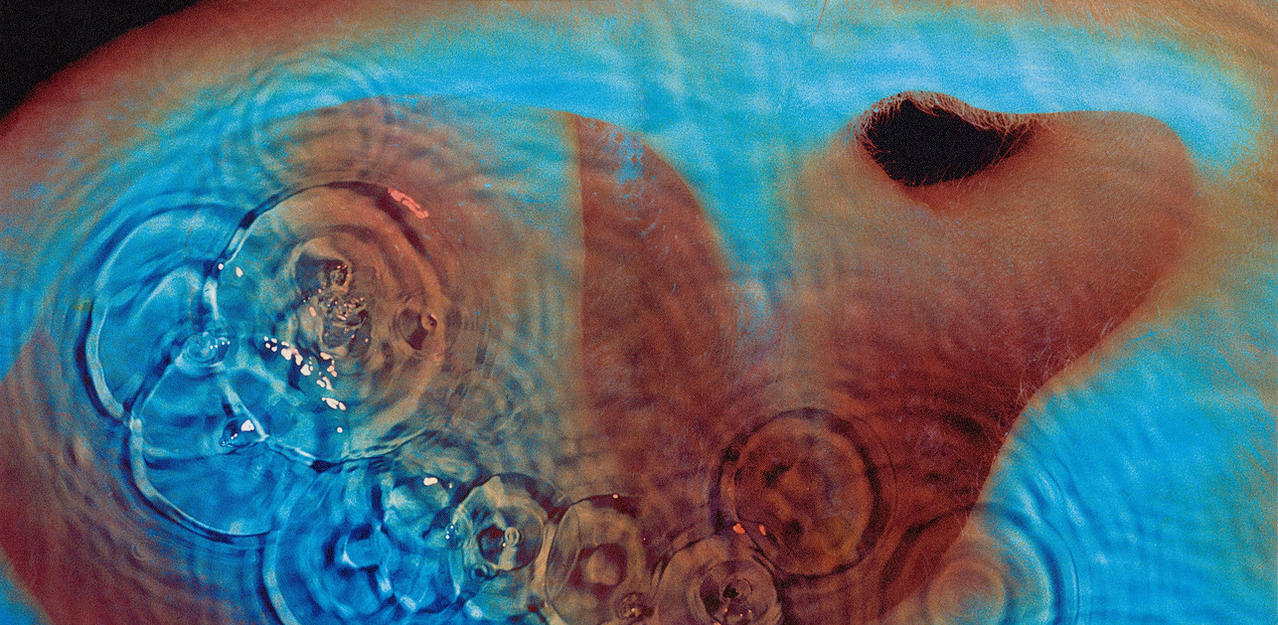

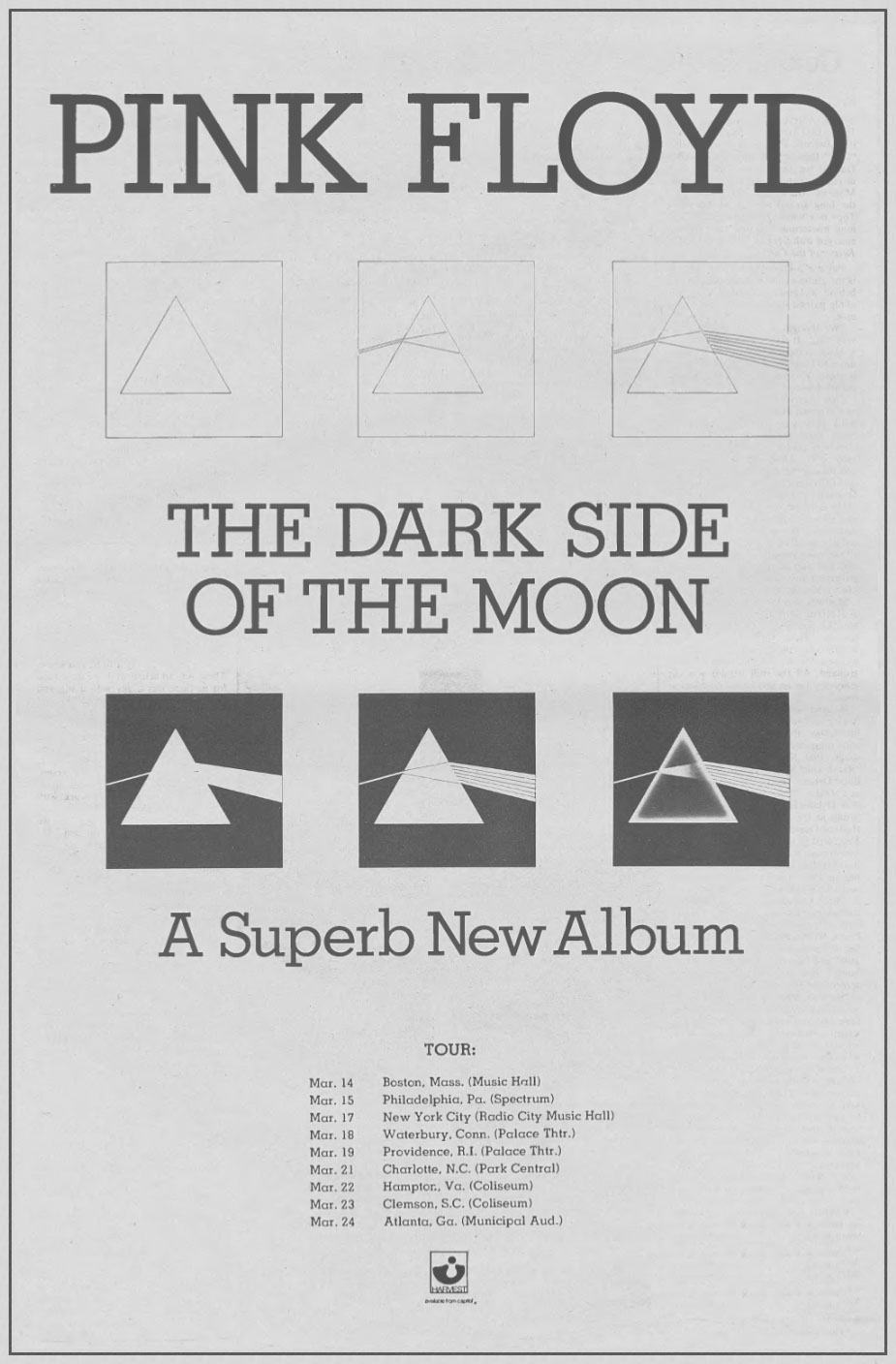
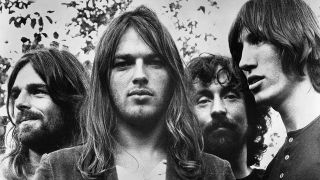


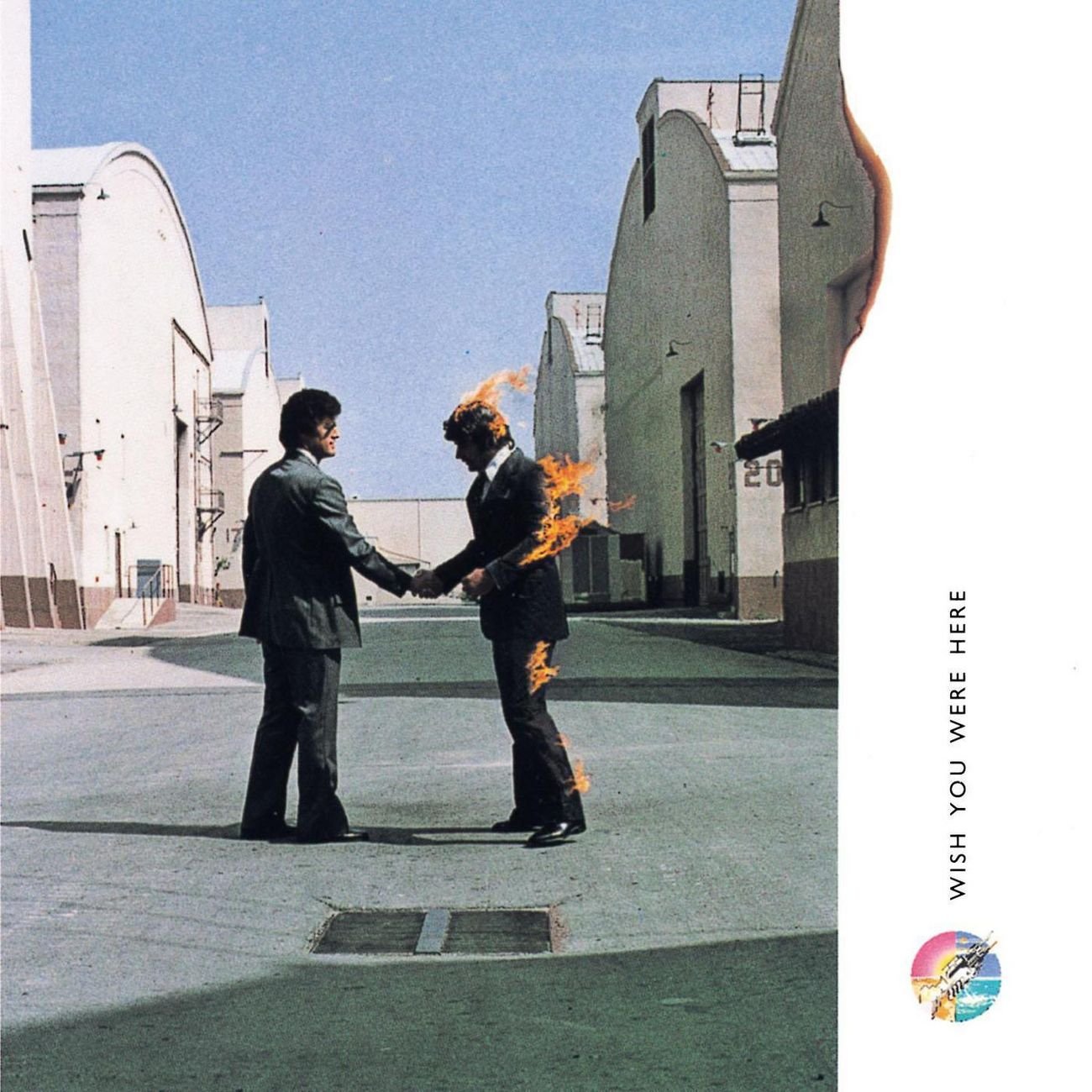


 The Fat Angel Sings