


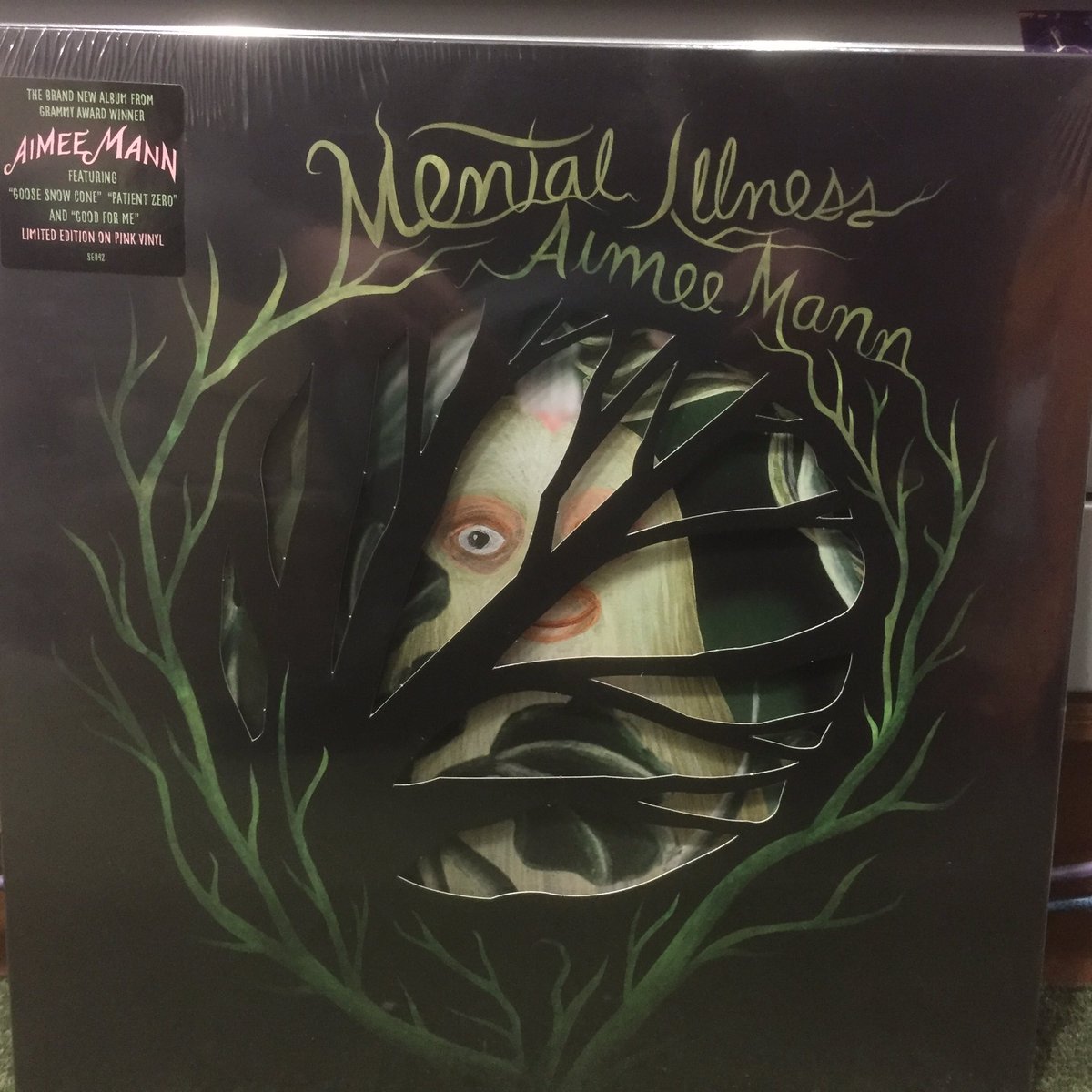
Five years following 2012’s Charmer, and some choice hang time with New Jersey bard Ted Leo as The Both, Singer Songwriter Aimee Mann decided it was about time to create her “saddest, slowest, and most acoustic” album to date. Needless to say, she succeeded on all three counts with her ninth studio album, Mental Illness, a lush tapestry of sounds that are about as melancholy as they are embalming. Mann writes musical snapshots, documenting the smallest details to convey rich inner worlds. By eschewing the lush instrumentation of some of her early solo work, Mann and producer Paul Bryan give the record an exceptionally spacious feel; most songs find her singing over a piano or single acoustic guitar, augmented occasionally by strings or subtle harmonies. The spare arrangements highlight Mann’s melodies—contemplative, longing, vulnerable—as well as her words—solitary, reflective, honest.
Melancholy feels good sometimes, and with a voice as affecting and nuanced as Mann’s, it’s easy to get wrapped up in the drama. Songs like “You Never Loved Me”, “Simple Fix”, and “Patient Zero” reel on by with poppy melodies that stick in your head long after you’ve tossed the vinyl back in its sleeve. Aided by strings, piano, soft percussion, and a choir comprised of Leo, Jonathan Coulton, and longtime producer Paul Bryan, Mental Illness capitalizes on our curious attraction to sadness, for instance, those lonely nights we often yearn for amid happier times — and that’s an illness we’ll never shake.
‘Goose Snow Cone’ was enough to convince me. If you’re not familiar with this album then I imagine it will be enough for you too. It’s a pretty much perfect bit of songwriting. The melody is outrageously catchy, the arrangement perfectly matched and the performance utterly commanding.
The best cut off Aimee Mann’s stunning, new record, Mental Illness, shows how much can be done with a straightforward strum, plaintive singing, and a few background strings. On “Simple Fix”, she captures the universal feeling of being in a relationship that falls into the same rut time and time again. Unfortunately, the simplest solutions are often the hardest to follow through.
No song on Aimee Mann’s excellent Mental Illness addressed that album title as bluntly or as unsentimentally as “Lies of Summer,” a story-song about a bipolar kid who loses himself in an institution while his family untangles his lies and crimes. Mann’s tone alternates between wry dismissal and clinical fascination, as though the face behind the Plexiglas was an intriguing specimen to be studied and dissected.

 The Fat Angel Sings