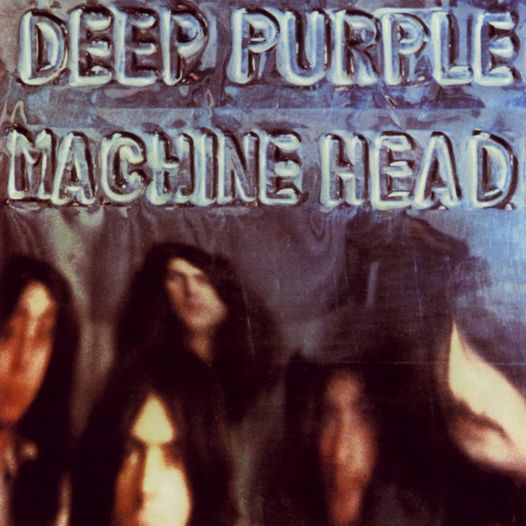
Posts Tagged ‘Machine Head’

Deep Purple’s “Fireball” was the second album recorded with the Mark II line-up. It was another No.1 hit in the UK, but despite its success there was a nagging feeling within the band that the best was yet to come. As 1971 drew to a close, it was time for a change of scene.

After four years, five albums and some line-up changes, Deep Purple finally hit their stride on ‘Machine Head.’ “Smoke on the Water” instantly made the Guitar Riff Hall of Fame, and the remainder of the record – especially the opening “Highway Star” – made the band one of the biggest on the planet. More records and more line-up changes over the years haven’t dulled the impact of ‘Machine Head.’

Roger Glover (bassist): We needed to make another record, and we’d become pretty successful, and accountants and lawyers and management said: “You know, if you record outside of England you pay a different tax rate.” And that’s the reason we were in Switzerland. It could have been Germany or France, anywhere as long as it was out of England. 

Jon Lord (keyboard player): We’d heard the Rolling Stones had a wonderful mobile studio, so we contacted them and we were able to get hold of that. And the reason we went to Montreux was because we were going to be in America at the end of 1971, but Ian Gillan got ill. It was hepatitis, I think – which was the disease to have at the time. 

“…Machine Head is a stroke of genius…Even if the Purple hadn’t recorded a note and “Machine Head” had been released as a 12” empty cardboard sleeve with that title on it, then that would have been enough”

Glover: “Highway Star” is the opening track on the album. Ritchie is the driving force behind this. He plays with such precision – that driving, machine-gun effect. I came up with the title and a couple of lines. Most of he song is Gillan’s, and everyone joined in on the arrangement. The thing that really impressed me when I first heard it again after so many years was Paicey is swinging – and we’re all playing straight. And that’s the essence of rock’n’roll. 

Bach goes heavy rock on the opening track from the classic album “Machine Head” by Deep Purple, released this month in 1972. Both Jon Lord’s organ solo and Richie Blackmore’s guitar solo borrow heavily from the arpeggiated baroque styling of the classical composer.

Blackmore: “I wrote that out note for note about a week before we recorded it. And that is one of the only times I have ever done that. I wanted it to sound like someone driving in a fast car, for it to be one of those songs you would listen to while speeding. And I wanted a very definite Bach sound, which is why I wrote it out—and why I played those very rigid arpeggios across that very familiar Bach progression—Dm, Gm, Cmaj, Amaj.

Ian Gillan (vocalist): “Fireball” gave us a chance to actually bring out what I always call the funk in the band, instead of just pure English rock. However, when we got to doing “Machine Head”, there was a lot of pressure to do what most people saw as a follow-up to “In Rock”. We’d got to get back to doing that rock stuff, and that was pretty much how we approached it. 

Jon Lord worked his part out to mine. The keyboard solo is quite a bit more difficult than mine because of all those 16th notes.

Blackmore: We did “Smoke On The Water” there, and the riff I made up in the spur of the moment. I just threw it together with Ian Paice. Roger Glover joined in. We went outside to the mobile unit and were listening back to one of the takes, and there was some hammering on the door. It was the local police, and they were trying to stop the whole thing because it was so loud. We knew that they were coming to close everything down. We said to Martin Birch, our engineer: “Let’s see if we have a take.” So they were outside hammering and taking out their guns… It was getting pretty hostile.

Blackmore: With “Space Truckin”’, I remember in the early sixties there was a TV series called Batman. And I had this riff that was similar to the theme tune, and I saw how simple that was. I came up with this riff and took it to Ian Gillan and said: “I have this idea and it’s so simple and so silly.” I went over into the corner and played it to him very quietly – I was very shy – and he grasped it immediately, and said: “I think we can use it.” And that turned into “Space Truckin’

Paice: My favourite track rhythmically on “Machine Head” is “Space Truckin’, because of its solidity and simplicity – it’s about the only time Ritchie played block Chuck Berry chords, four to the bar.

Over the years, I’ve always played that solo note for note—again, one of the few where I’ve done that—but it just got faster and faster onstage because we would drink more and more whiskey. Jon would have to play his already difficult part faster and faster and he would get very annoyed about it.”

Ritchie Blackmore – guitar, Ian Gillan – vocals, Roger Glover – bass, Jon Lord – keyboards, Hammond organ, Ian Paice – drums, percussion
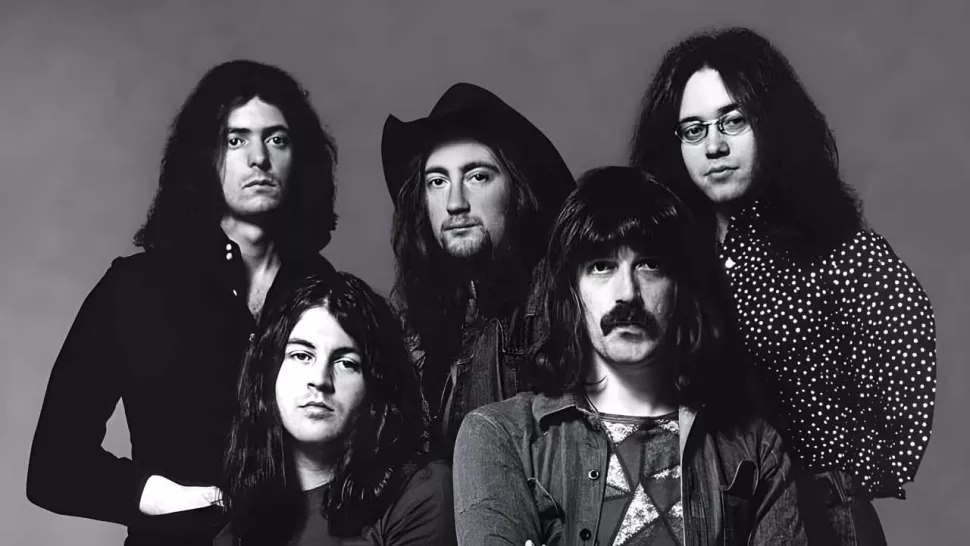
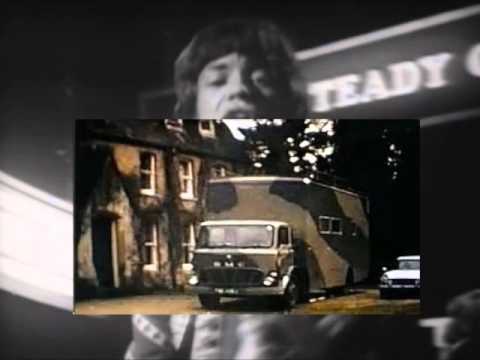
Image result for the rolling stone mobile studio images

Mobile recording studios have a longer history than you might think. As early as the 1920s, record companies in both the U.K. and the U.S. were experimenting with location recording, albeit with incredibly primitive equipment. This was the pre-magnetic tape era, after all.

In the U.K., the pioneer was EMI, closely followed by its chief rival, Decca. The purpose, for the most part, was to record live concerts of classical music, and while the equipment changed out of recognition during the following 30 years or so, that purpose remained: to capture live performances.

By the time rock music arrived around the mid ’60s, a new generation of mobile studios appeared that would capture some of the most important recordings of the era. And curiously, most of them were not recordings of live gigs. That was because the mobile studio soon became used as much for the freedom it offered artists to record in domestic locations as for capturing their stage performances.

Digital technology has helped bring about the demise of the mobile truck since the turn of the millennium. Now, artists can of course record on devices as small as an iPad (to name but one famous example, Damon Albarn recorded the Gorillaz album The Fall in just that way). Even if you don’t want to be quite as stripped-down as Albarn, a laptop armed with plugins and a small digital mixer can offer almost as much as a fully fledged mobile studio at far less cost.

However, before the mobile trucks rumbled off into the distance, the freedom they provided in that short period produced some remarkable recordings. Here are six of them.

The Who, Live at Leeds (1970)

This album, still regarded by many critics as the finest live rock LP ever, was originally designed to be Live at Hull and Leeds. It was recorded by the Pye Records mobile on eight-track analogue tape machines installed beneath the auditorium in a cloakroom. At this stage, mobile trucks were used simply to carry recording equipment to a gig. That equipment then had to be removed, assembled, and used in whatever space could be found.

With nothing more than split cables from the vocal, speaker, and drum microphones, the two recordings were plagued with technical problems. Some of the bass track from Hull was lost, and the Leeds concert suffered from crackles, which have caused controversy ever since. Years later, when the crackles were erased using digital wizardry, some fans objected that they removed the authenticity of the recordings.

Originally released as a single six-track vinyl LP, Live At Leeds has since appeared in many incarnations, some with and some without the infamous crackles. The Hull gig recorded the night before (February 13th) has been released, too, with John Entwistle’s missing bass parts replaced with carefully synced recordings from Leeds. There are those who claim that Live At Hull 1970 is even better than the raw and powerful Live At Leeds. They can both be heard on the 40th Anniversary collectors’ edition.

Led Zeppelin, IV (1971)

You could toss a coin over whether Led Zeppelin’s III or IV was the more significant album, but it doesn’t really matter for our purposes—both made very extensive use of the Rolling Stones Mobile (RSM) and were released before two other other landmark RSM recordings, the Stones’ Exile On Main St. and Deep Purple’s Machine Head.

A former 18th-century poorhouse, Headley Grange in Hampshire was the chosen venue, as it had been for much of Zeppelin III. The majestic sound of John Bonham’s drums—sampled a thousand times and still used today—was created in wood-paneled Headley Grange with a pair of distant Neumann condenser mics. It has probably never been equalled.

The Rolling Stones, Exile On Main St. (1972)

Just as The Who’s Live At Leeds is regarded by some as their finest hour, so the Stones’ Exile On Main St. stands as a testament to the band at its peak—even if a wobbly one at times.

In 1970, Mick Jagger bought Stargroves, a country house in Hampshire. The band’s pianist and tour manager, Ian Stewart, suggested that in order to make full use of it, they needed their own mobile studio. This saw the birth of the most famous truck of them all, the Rolling Stones Mobile. It is one of the few things you can use the word legendary about without risk of exaggeration.

Unlike earlier trucks, the Stones Mobile had a control room inside the vehicle, so it really could go anywhere and do almost anything. The band used it to record most of the Sticky Fingers album, and a year later, beset with taxation problems, they decamped to the Villa Nellcôte in the South of France, with the RSM following.

The sessions that followed have become the stuff of rock legend and lore. Beside the technical problems imposed by an unsuitable recording environment—a cramped, damp basement—and compounded by an erratic power supply, the band’s “personal issues” should have made the resulting album a shambles. Indeed, engineer Andy Johns described them as “the worst band in the world” for much of the time. But somehow, in true Stones fashion, what emerged from the chaos was one of rock’s most memorable and charismatic albums. It just reeks of authenticity thanks, at least in part, to the location and the way in which most of it was recorded.

Deep Purple, Machine Head 1972

If Exile On Main St. really put the Stones Mobile on the map, it was Deep Purple who immortalized it in “Smoke On The Water.” The song recalls the night in 1971 when the Casino in Montreux, Switzerland burned down following a gig by Frank Zappa and The Mothers Of Invention.

The plan had been to record the next Deep Purple album in the Casino, but the fire put paid to that. A couple of other venues in the town were hastily found for the recording sessions, which produced, among others, “Smoke On The Water,” the lyrics of which refer to the RSM as “the Rolling truck Stones thing.”

The Who, Quadrophenia 1973

On the face of it, this seems an unlikely album to have emerged from a mobile studio, and in fact it was made at an unlikely location, too. Ronnie Lane’s Mobile (known as the LMS) was parked in Battersea, south-west London for much of the recording of Quadrophenia, in an urban jungle outside a still uncompleted Ramport Studios, which The Who were in the process of building.

Ronnie Lane, the ex-Faces bass player, had chosen an American Airstream trailer for his mobile studio, and Bad Company, Led Zeppelin (notably on Physical Graffiti), Rick Wakeman, and Eric Clapton were just some of the musicians who would make excellent use of it. Of all the British golden-era mobiles, Lane’s was one of the most successful.

Radiohead, OK Computer 1997

There were many impressive albums recorded using mobile studios between The Who’s Live At Leeds in 1970 and Radiohead’s OK Computer in 1997, and there were more mobiles than we have space to include here, among them Jethro Tull’s Maison Rouge, Virgin’s Manor Mobile, and Mickie Most’s RAK.

By the late ’90s, however, the era of the truck was coming to an end—and OK Computer provides fitting mood music. Relatively inexpensive and highly portable digital equipment and computers meant that the need for a large studio on wheels was passing.

In fact, OK Computer wasn’t recorded using a truck at all, but it epitomizes why mobile trucks had been so popular: location recording enabled a band to work at their own pace, in their own way, in an environment completely unlike an essentially sterile fixed-site studio.

For this album, which Rolling Stone described as “the last masterpiece of the alt-rock movement,” Radiohead were given a reputed £100,000 by their record company. Their producer Nigel Goodrich used it to buy recording equipment for use in St Catherine’s Court, a spectacular manor house near Bath in Somerset, owned at the time by actress Jane Seymour. In the same way that the natural acoustics of Headley Grange helped Led Zeppelin achieve astonishing looseness, vitality, and depth, so St Catherine’s Court added its brooding presence to a haunted, dark, and troubled album.

One thing binds together the albums featured here: none of them could have been made in a traditional fixed-location recording studio. In the case of recordings of gigs, it’s obvious why that should be. But a common quality shared by the albums featured here is the live ambience of an environment that wasn’t carefully designed to sound neutral. In the age of Pro Tools sameness, that is definitely something to be cherished.

There is another angle, too. Musicians often complain that “clocking in” to record every day is too much like going to work, especially in a traditional city-center studio. In a residential location, they can not only experiment with different sounds but also socialize and make music in a freer and more creative way. You may not be able to quantify that.