In 1965, The Rolling Stones were on the cusp of true rock ‘n’ roll greatness, and the album “Out Of Our Heads”, released on the Decca label, would further entrench their reputation. One of my absolute favourite Stones albums is their third British release ‘Out Of Our Heads’. Issued in 1965 on Decca, this album sounds so much punkier and heavier than the two blues/R&B albums preceding it. As soon as ‘She Said Yeah’ smashes through your speakers like a sledgehammer it’s a full on experience until ‘I’m Free’ closes the album.
I realise that other countries had a different track selection for this album but I’ve always found the British issue to be the best because Decca didn’t pad it out with singles.
Available as the killer Mono issue (pushing around £200 for mint copies) and the Stones first album to be issued in (very poor) Stereo in Britain (much rarer but still around £200). An essential album.
Having returned from an American tour, the band were cocked and primed with a collection of soul material, much of which remained unknown to the bulk of English teenagers at the time, meaning that The Stones could record their own versions safe in the knowledge that whatever they presented was as fresh and exciting as anything from the other side of the Atlantic.
The US edition of the album opens with Don Covay’s 1964 soul hit “Mercy, Mercy,” and while not quite as superb as the original, The Stones do a pretty good job all the same in at least capturing the song’s essence. Next is Marvin Gaye’s “Hitch Hike,” where the English quintet assert their ever-growing sophistication in emulating American black music, albeit with an English bent.
Apparently “The Last Time” owes its origins from an old gospel tune, given a complete Phil Spector makeover (i.e. his famous ‘wall of sound’), and transformed into something else entirely. Backed with the spiteful ballad “Play With Fire,” both tracks would prove to be one of their most popular and strongest singles yet of self-penned material. Another original (a rarity for this album) is “The Spider And The Fly,” a R&B/Jimmy Reed inspired number and one that would become a staple of their early shows throughout this period.
The band’s cover of Bert Russell’s soul classic “Cry To Me” and Sam Cooke’s “Good Times” are both strong cuts, despite Jagger’s vocal limitations . Otis Redding’s (although written by Roosevelt Jamison) “That’s How Strong My Love Is” is given a fine reworking, so too “I’m All Right,” a recording which first appeared on the EP Got Live If You Want It.
A special mention should be made of founding member Brian Jones, whose spirited playing shines throughout this record, and whose contribution to The Stones sound and look when starting out should never be forgotten, nor underestimated. Just listen to the way he wails his harmonica on “The Under Assistant West Coast Promotion Man,” and his acoustic guitar during “Good Times.” Jones may not have been much of a songwriter, yet his presence and talent as a musician was just as important as Jagger and Richards themselves.
“(I Can’t Get No) Satisfaction” is arguably the standout track, with Jagger’s insouciant delivery and Richards’ tough as steel main riff. Along with “The Last Time,” “Satisfaction” was the song which helped propel the group to #1 in both the UK and US, a position from which they rarely deviated off from this point onwards.
From an historical perspective, Out Of Our Heads is just as important as anything the band would go on to record over the next few years. This was largely raw, gritty English R&B the way it should be. And even after all this time, it hasn’t dated one iota.
The official promo video for ‘Ain’t Too Proud To Beg’, the 1974 single by the Rolling Stones. ‘Aint’ Too Proud ToBeg’ was originally performed by the Temptations in 1966 and was composed by Norman Whitfield and Edward Holland Jr. The Rolling Stones recorded the song at Musicland, Munich in November 1973 and it was released in October 1974 and peaked at number 17 on the billboard charts. It features on the album It’s OnlyRock ‘N’ Roll. The track features Mick Jagger on lead vocals, Keith Richards on rhythm guitar, Charlie Watts on drums, Mick Taylor on lead guitar and Bill Wyman on bass, along with Billy Preston on keys and clavinet, and Ed Leach on cowbell. The video was directed Michael Lindsay-Hogg, who directed many promos for the Rolling Stones including ‘Child Of The Moon’, ‘Jumpin’ Jack Flash’, ‘It’s Only Rock ‘N’ Roll’ and ‘Start Me Up’. Ain’t To Proud To Beg (single version)
This week in 1974: The Rolling Stones scored their 5th US chart topping album with their 12th British & 14th American studio release, ‘It’s Only Rock ‘N Roll’, released on Rolling Stones Records (it peaked at #2 in the UK); the LP’s success was fueled largely by its two main singles the title track & a cover of the 1966 Motown hit for The Temptations, “Ain’t Too Proud to Beg” it was the first album that Keith Richards & Mick Jagger produced together for the band, under their adopted moniker of ‘The Glimmer Twins’…
Recorded in the 1970s, ‘It’s Only Rock ‘n Roll (But I Like It)’ is as iconic a Rolling Stones song as any that the band cut in the 1960s. It is a song with a tangled web of a history having first been recorded on 24th July 1973, not in a traditional studio but at The Wick, Ronnie Wood’s home in Richmond. According to Bill Wyman, who admittedly wasn’t there, “On Tuesday 24th July, Mick and Keith went to Ronnie Wood’s house, the Wick in Richmond, and recorded a version of ‘It’s Only Rock and Roll’, with Ronnie, Kenney Jones, and IanMcLagan.” Ronnie, Jones and McLagan were all in The Faces along with Ronnie Lane and Rod Stewart. Other reports have David Bowie at Ronnie’s house, but that Keith was not there.
Whatever the truth that has been long forgotten, as to who was there and who wasn’t, this was the genesis of the song. Sometime later in the year Willie Weeks, an American session musician who worked with both GeorgeHarrison and David Bowie around this time, added bass to the song. In April 1974 the basic track that was recorded at Ronnie’s house was used to finish the song, at this time Ian Stewart added his distinctive piano to the track.
According to Mick, “The idea of the song has to do with our public persona at the time. I was getting a bit tired of people having a go, all that, ‘oh, it’s not as good as their last one’ business. The single sleeve had a picture of me with a pen digging into me as if it were a sword. It was a light hearted, anti-journalistic sort of thing.”
The song became the title track for their 1974 album and was released as a single on 26th July 1974, three months before the LP came out. But the record company at the time were not sure it was a single, According to Keith there was opposition to it, but as he said at the time, “That song is a classic. The title alone is a classic and that’s the whole thing about it.”
The Rolling Stones‘ official promo video for ‘It’s Only Rock ‘N’ Roll (But I Like It)’. The track is the title single from the album It’s Only Rock and Roll (1974). Written by Mick Jagger and Keith Richards, and produced by the Glimmer Twins, the song went straight to number one in the US charts when it was released.
The video features Mick Jagger, Keith Richards, Charlie Watts, Bill Wyman and Mick Taylor dressed in sailor suits performing in a circus tent that fills with bubbles that features the band in sailor suits, playing in a tent which gradually filled with bubbles. The froth was detergent and the reason they wore the sailor suits was because none of them wanted to ruin their own clothes. According to Keith, “Poor old Charlie nearly drowned… because we forgot he was sitting down.”
The video was directed by filmmaker Michael Lindsay-Hogg, who also directed the promo videos “Neighbours”,“Jumping Jack Flash” and “Child Of The Moon”. Lindsay-Hogg also directed promos for the Beatles and the Who.
It went top 20 in both America and the UK and has been played at just about every live show ever since.
In 1972 The Rolling Stones With Stevie Wonder at Madison Square Garden, New York, NY July 26th
On JULY 26, 1972, Mick Jagger celebrated his 29th birthday on stage at Madison Square Garden as The Rolling Stones brought down the curtain on what was arguably the most chaotic tour of their career.
Promoting their Exile On Main St album, musically speaking The Stones were in ferocious form, as this rough-edged soundboard recording of Jumping Jack Flash taken from the soundboard at their NY show proves.
1972 was the year that the Rolling Stones became, as they loudly proclaimed on tour, the “Greatest Rock ’N’ Roll Band in the World!” Following the violent disaster of their Hell’s Angels–policed Altamont mega-festival outside of San Francisco on December 6th, 1969—where three people were killed in accidents and another, Meredith Hunter, was murdered—the Stones disappeared for a while. They went into exile, both real and imagined. Exile from the tax man in England that gazed hungrily on their collected bank accounts and exile as culture warriors—street fighting men—dedicated to the fanciful belief that they could change the world.
The Stones didn’t sit idle in their time out of from the spotlight. They locked themselves away in the sweaty, dank basement of Keith Richards’s mansion in Nellcôte, France, for months on end and came out with their magnum opus: Exile on Main Street. It was a double-album, 18 tracks total, that recounted the near-entire history of blues, country, soul and rock ’n’ roll in the grittiest, most exhilarating way imaginable. Released on May 12th, 1972, it sold nearly a million copies in its first week alone.
When plotting their upcoming tour of the United States, the band was intent on making a different impression than they had on their previous jaunt. These shows were going to produce some of the most in-demand tickets of all time, and the Stones and their handlers wanted to be professionals about it. They would do their best to mitigate the violence and mania that seemed to follow their every stop on their last tour, while moving through the country with a degree of style and class that rivaled any visiting foreign dignitary that the U.S. had ever hosted.
Everything about the outing was over the top. The Stones surrounded themselves with the beautiful and the important—Truman Capote, Hugh Hefner, Zsa Zsa Gabor, Woody Allen and Bob Dylan. They heavily courted the press. They blew their minds out with weed, cocaine and tequila, all while staging some of the most incredible sets of live rock music ever seen. Music was just part of what informed The Stones’ touring cavalcade. By this point in their career, the band had managed to bisect the worlds of music and celebrity, creating their own social enclaves, and enjoying what Keith Richards described as a piratical lifestyle.
Said the band’s tour manager of the time, Pete Rudge: “With the Stones you’ll meet Mick’s little gang – the Truman Capotes and the Princess Lee Radziwills. Then on the other hand you’ll meet Keith’s little gang – the Kenneth Angers and William Burroughs. You can be exposed to every aspect. You can meet anybody, and that tends to rub off.
Over 500,000 people mailed in postcards for the mere chance to buy a pass to one of the four shows at Madison Square Garden. Purchases were limited to two per customer at a sticker price of $6.50, but the market was soon flooded with scalped passes that were being hawked at $50 or more.
After months of anticipation, the S.T.P. tour—which, depending on who you asked, either stood for the synthetic hallucinogenic of the same name or simply the Stones Tour Party—kicked off in Vancouver on June 3rd, 1972. The band and its managers picked this far-flung locale to start their summer swing so that they could knock off the rust before taking their show to more media-saturated markets in San Francisco and Los Angeles. The gig went well. The stop in Seattle went better, and by the time they made it to the Winterland Ballroom in the “City by the Bay,” they were cooking.
Over the next two months, the Rolling Stones and their coterie of crew members and hangers-on crisscrossed North America. At each stop along the way, the local citizenry paused their lives long enough to gawk at, rejoice in or denounce the “event of the year.” In Chicago, the band stayed at Hugh Hefner’s Playboy Mansion when they couldn’t get secure enough hotel rooms elsewhere. In Houston and Fort Worth, Texas, they brought out a Hollywood film crew to capture the show for posterity. Eventually, that footage would get chopped up and released as Ladies and Gentlemen: The Rolling Stones.
A separate, more illicit documentary was also in the works that captured the band’s candid offstage exploits. That film, titled Cocksucker Blues, was produced by Stones manager Marshall Chess and directed by Robert Frank. Though it would never receive an official release, if you search down some of the darker corners of the Internet, it’s not too hard to find. Viewer discretion is advised.
“New York is New York is New York,” famed concert promoter Bill Graham explained to author Robert Greenfield, who tagged along for most of the tour and penned the book A Journey Through America with the Rolling Stones. “’Til you do it there, it hasn’t happened. They could have sold the Garden out for a year. They are the biggest draw in the history of mankind. Only one other guy ever came close—Gandhi.”
New York was ready for the Stones, and the Stones were more than ready to take a bite out of the Big Apple. The band’s four shows spread over three nights at Madison Square Garden were the unquestioned highlights of the tour, with the final night pegged as the can’t-miss gig. Everyone wanted in on the action.
The scene backstage before the last show is a madhouse. Television host Dick Cavett is on hand to interview MickJagger and the rest of the band for an hour-long special. This famous face and that famous face drift in and out of view hoping to get a coveted moment of personal time with someone in the band before they make their way out in front of the masses. Few are successful. Makeup is applied, last-minute documents are signed and the tequila sunrises flow like water.
Before the Stones can take the stage at MSG, the audience is treated to a searing set of music from the opening act, Stevie Wonder, who is just then promoting his latest album, Music of My Mind while on the verge of putting out an even greater work, Talking Book. It was a huge coup for the headliners to get the Motown piano virtuoso at this precise moment. His single “Superstition” is one of the biggest songs of 1972, well on its way to claiming the top spot on the charts a few months down the road.
Stevie Wonder is the perfect foil for the Rolling Stones. He isn’t going to compete with them on their terms like another white blues-based rock band like Humble Pie or the Allman Brothers might. He’s a different thing entirely. His stage show, while rapturous, is centered on his superb musicianship, his incredible songwriting and his own joyful persona.
A little under an hour after Wonder leaves, the Stones make their grand entrance and launch into “Brown Sugar.”Jagger appears dazzling in his sleeveless white jumpsuit, dotted with big sparkling sequins, and a long red sash tethered at the waist. A single, large aquamarine jewel is glued to the center of his forehead. His main foil and “Glimmer Twin” Keith Richards, ever the rock ’n’ roll pirate, is decked out in black leather pants and a flowing, white blouse, which is left unbuttoned to reveal his gleaming white, sweat-glazed chest.
Jagger eats up most of the attention, hopping across the stage, preening like a prized turkey. His arms flail all around, pointing in multiple directions one moment and enticing the crowd to clap along in the next. “Gold coast slave ship bound for cotton fields / Sold in the market down in New Orleans.” The subject matter is chilling, but the thousands singing along sound positively ebullient shouting back each word at their puffy-lipped Messiah.
The pace picks up even more on the next song, “Bitch,” which is played at a far faster clip than the recorded version. By the time they get to “Gimme Shelter” they’re locked in. The shot of adrenaline that comes from getting smacked in the face by 18,000 people simultaneously has worn off, and the Stones settle into their regular groove.
“They had a unique lighting system that they invented,” photographer Bob Gruen told me. The rig was designed by Woodstock MC Chip Monck, who installed a 40-foot by 8-foot array of mirrors near the top of the front of the stage. It was set at a 45-degree angle and had lights shined into it and reflected back onto the band.
Gruen explained, “Up until then in arenas, you had a large spotlight called a Super Trooper, this big carbon arc light up around the rafters in the arena shining down on the stage. They had eight Super Troopers at the back of the stage shining into this Mylar mirror, shining back onto the band. It was the brightest show I’ve ever seen.”
The Stones hit their marks with precision. Keith sounds appropriately cheery during his turn on the microphone for “Happy.” Charlie Watts keeps the party chugging along, crashing cymbals and kicking the hell out of his bass drum on “Bye Bye Johnny.” Mick Taylor sounds like a man possessed during his regular extended solo on “Midnight Rambler,” proving that he is the best pure musician in the band.
Still, it’s Jagger that the fans have come to see, and he doesn’t disappoint. The singer remains the ultimate icon of style and panache. Even with all the obvious effort and energy he expends on stage, he does so in a way that screams cool. When they reach the final song of the main set, “Street Fighting Man,” he’s flinging blood red rose petals over the heads of those screaming their vocal cords to shreds in the front row.
The night isn’t quite over yet. A few moments pass and the band reemerges for a rare encore with Stevie Wonder in tow to perform the latter’s hit “Uptight (Everything’s Alright).” As that song comes to an end, Richards kicks into the instantly recognizable riff to “Satisfaction,” and he and the rest of the band take flight.
The performance is breathtaking. Bobby Keys’s sax mingles with Wonder’s backing band, transforming the straight-ahead rocker into a full, swinging soul sensation. Jagger is giving everything he’s got left in the tank, pushing his voice harder and harder, straining to be heard above the cacophony.
As the last notes of their biggest hit ping across the cavernous walls of the basketball arena, a giant, burning cake is brought onto the stage to commemorate Jagger’s 29th birthday. The crowd is enticed to sing “Happy Birthday.” Somewhere, someone picks up a pie and a full-on food fight takes place in front of thousands of fans. Only Watts seems to be off-limits from the chaos. Once the supply of pies runs out, Mick jumps forward to give the crowd a salute and then he and the rest of the band depart for the last time.
A few hours later, the Stones and their crew, along with a host of the well-to-do, find themselves at the St. Regis Hotel to take part in a final party hosted by Atlantic Records head Ahmet Ertegun. In jarring contrast to the friendly atmosphere inside the Garden, the mood here is almost somber. Everyone in the band are all physically and emotionally spent. The party wraps sometime around dawn and they all scatter to the wind.
Set List
Brown Sugar
Bitch
Rocks Off
Gimme Shelter
Happy
Tumbling Dice
Love in Vain
Sweet Virginia
You Can’t Always Get What You Want
All Down the Line
Midnight Rambler
Bye Bye Johnny
Rip This Joint
Jumpin’ Jack Flash
Street Fighting Man
Uptight (Everything’s Alright)
(I Can’t Get No) Satisfaction
Musicians:
Mick Jagger: Vocals
Keith Richards: Guitar
Mick Taylor: Guitar
Charlie Watts: Drums
Bill Wyman: Bass
Bobby Keys: Saxophone
chek out Corbin Reiff who will release his first-ever book, Lighters in the Sky: The All-Time Greatest Concerts, 1960-2016.
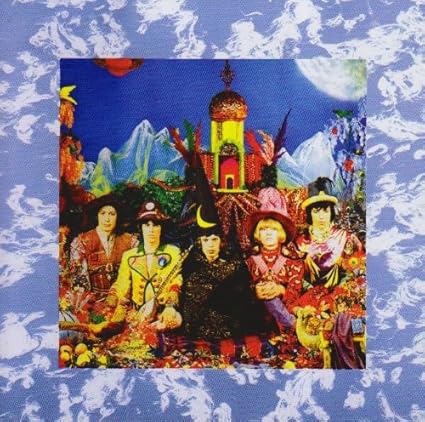
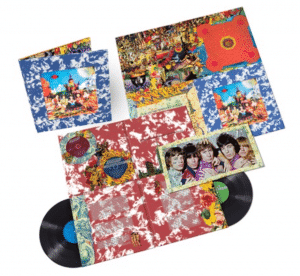
The Rolling Stones would not be the first band one might think of in connection with the Summer of Love and the blossoming sound of psychedelia. Yet the Stones spent much of 1967, on and off, recording the album that became “Their Satanic Majesties Request”. Wholly unique in the band’s catalogue, it fused the band’s gritty sensibility with psychedelic effects, more lavish instrumentation, and experimental sounds. Underscoring its nature as a conceptual work, it was also the first album by the Rolling Stones to feature identical track listings on both sides of the Atlantic. The album is receiving a 50th anniversary box set from ABKCO. On September 22nd, the label will reissue the album as a 2-LP/2-hybrid SACD collection featuring both the stereo and mono versions of every song, as newly remastered by Bob Ludwig. Their Satanic Majesties Request – 50th Anniversary Special Edition is appropriately decked out with Michael Cooper’s original 3-D lenticular cover photograph.
Following the departure of Andrew Loog Oldham midway through recording, after numerous clashes with the band, Their Satanic Majesties Request became the first self-produced album from the Stones. Released in December 1967 as the band’s sixth British and eighth American studio album, it arrived on the Decca label in the United Kingdom and London Records in the United States. Though critics were initially lukewarm, it’s risen in stature over the years, and has attracted cover versions from artists ranging from KISS to The Damned and Arcade Fire. During its recording, Mick Jagger, Keith Richards, Brian Jones, Bill Wyman, and Charlie Watts were joined by guests including a pre-Led Zeppelin John Paul Jones providing string arrangements, plus pianist Nicky Hopkins, and background vocalists Steve Marriott and Ronnie Lane of the Small Faces.
Historian Rob Bowman provides the box set’s new liner notes, placing the album into context of one of the band’s wildest periods and making the case for it as a benchmark release as the group transitioned from edgy R&B to pure rock. “She’s a Rainbow” (a minor hit in the U.S.) and “2,000 Light Years from Home” capture the band at their most potently psychedelic, while “Citadel” anticipated the harder-rocking direction that would soon be embraced. “Sing All This Together,” “Gomper,” and “On with the Show” showcase a looser, more freeform style of songwriting and playing. “In Another Land” has landmark status, too, as the only Rolling Stones track both written and sung by bassist Bill Wyman. He was joined on the song by Marriott and Lane (recording next door) on vocals, Marriott on guitar, Hopkins on harpsichord, Watts on drums, and Mick and Keith on vocals.
BUY NOW FROM AMAZON.COM
Their Satanic Majesties Request – 50th Anniversary Special Edition restores Michael Cooper’s original lenticular cover artwork, and the discs are housed in a fold-out album-style numbered package with a 20-page book including more of Cooper’s photos from the original session. As the album was originally issued in both stereo and mono, the upcoming edition will include the entire remastered album on 180-gram vinyl in stereo, another 180-gram vinyl record in mono, and two hybrid Super Audio CDs (one in stereo and one in mono). Hybrid SACDs are playable in all CD players. No additional outtakes or session material has been added to this collection.
Look for the special edition box on September 22 from ABKCO! Pre-order links are live, below!
The Rolling Stones, Their Satanic Majesties Request – 50th Anniversary Special Edition
50 years after its release, The Rolling Stones’ Their Satanic Majesties Request receives a deluxe 2LP and 2CD reissue, newly remastered and featuring replica ground-breaking 3D artwork plus book. Limited numbers available with free psychedelic slipmat!
During the Rolling Stones’ 1973 tour of Europe, the band would usually end the show with their 1968 single (and Beggars Banquet album track), “Street Fighting Man.” On occasion, the Stones’ performance of the tune on the ‘73 jaunt could be magical. One such version was professionally recorded—and bootlegged—eventually seeing official release in 2011, before fading back into obscurity.
“Street Fighting Man,” like most of the Rolling Stones’ best stuff from the late ‘60s and early ‘70s, is not only a fucking great song, but the studio version sounds cool.
Believe it or not, what you’re hearing during the opening moments of is Keith Richards’ acoustic guitar, which was recorded using a cheap cassette deck, giving it an overloaded, electric character. Charlie Watts used a 1930s practice drum kit on the intro, also captured with the tape recorder, the thin tone of the kit adding to the lo-fi effect. As the song progresses, Indian instruments are heard, giving the track a psychedelic quality. One of those instruments, the shehnai (essentially an Indian oboe) produces the wailing sound heard towards the end of the song. Mick Jagger’s lyrics—is he calling for revolution?—are open to interpretation. Jagger’s words, and the fact that his vocals are partially buried in the mix, contribute to the mysterious nature of “Street Fighting Man.”
In support of their new record, Goat’s Head Soup, the Stones launched the 1973 European trek on September 1st in Vienna. Though significantly less dramatic than their infamous 1972 U.S. tour, the outing still had its moments. Take this one, in which saxophonist Bobby Keys quits the band right before the first of two scheduled performances that were to take place in Brussels, Belgium, on October 17th. In his autobiography, Life, Richards describes the scene:
No sign of Bobby at the band assembly that day, and finally I was asked if I knew where my buddy was—there had been no reply from his hotel room. So I went to his room and said, Bob, we gotta go, we gotta go right now. He’s got a cigar, bathtub full of champagne and this French chick in [the tub] with him. And he said, fuck off. So be it.
The Rolling Stones had booked the shows in Brussels due to its proximity to France, as they were banned from entering the country after behaving badly while recording Exile on Main St. in Villefranche-sur-Mer. The Brussels gigs took place at the Forest National Arena.
With a live album in mind, the Rolling Stones recorded both Brussels performances. Though the live LP idea was eventually scrapped, the public did eventually get to hear portions of the Belgian recordings via the syndicated radio program, The King Biscuit Flower Hour in both stereo and FM quadraphonic 4-track. Naturally, the KBFH broadcast was subsequently bootlegged.
On the Brussels recordings, the Stones—augmented by keyboardist Billy Preston, as well a horn section—are in fine form, for sure, but the absolute highlight of the tapes is the version of “Street Fighting Man,” the final song played during each of their sets that day. From the get-go, the energy of the band is palpable. Keith, especially, stands out, as he doesn’t seem to be playing his guitar as much as stabbing the thing, but it’s when Mick Taylor steps on his wah-wah pedal (in place of the shehnai) that this rendition starts to become spectacular. As the number continues, Bill Wyman’s bass swoops, the horns squeak and squawk, and the tempo increases and increases until the music ceases to be just that, morphing into a riotous, stunning wave of sound.
In 2011, after decades of praise from fans who heard the Brussels tapes, the Stones finally granted the release of a selection of the recordings. Nicking the title from one of the bootlegs of the Belgium gigs,Brussels Affair (Live 1973)was made available as a download via Google Play and the Rolling Stones’ website, as well as a limited edition box Set .But the box is now out-of-print, and, for some reason, you can’t even buy the download anymore. Currently, the only way you can pick up the release (through official channels, that is) is if you splurge for the japanese set. I bought the download when it came out, and can say that the recordings, given a fresh remix by BobClearmountain, sound stellar (much better than what’s heard above, which is from the bootleg version).
The live footage of “Street Fighting Man” is from the second of two shows the Stones played in Frankfurt on September 30th, 1973. Per usual, it was the closing song of their set.
Or at least maybe he co-wrote it. maybe he gave the lyrics to Keith. Whatever, I don’t care. Is it Gram’s style of songwriting, we also know the Stones‘ style, both before and after meeting Gram (and musically, Ry Cooder).
Now in the February ’13 issue of Uncut we have Mick’s brother saying it was a Gram Parsons’ composition (“not that he ever got anything for it”). And we have an old quote from Mick himself, “I remember we sat around originally doing this with Gram Parsons…” Etc. Really Mick, you “remember” that much… in ’71? And knowing Gram, I imagine he wasn’t doing anything? Just sitting around, watching?.
No, there’s no proof. Unless you believe in the analysis of art and life as proof.Is it possible that the original lyrics, written by Gram and perhaps modified slightly by the Rolling Stones, were written about/for Gram’s sister Little Avis. Gram Parsons felt tremendous responsibility for Avis after their parents’ death, and overwhelming guilt at times for leaving her. And, no doubt, some guilt over what was happening to him, and that he would also soon be leaving her for good. “Faith has been broken, tears must be cried.” His letters to Avis mirror the thoughts and feelings in the song. The notebook, with the lyrics and chords to Wild Horses wtitten in Grams handwriting that people point to as “evidence” that Gram wrote the song actually points to the opposite conclusion. The lyrics are all written out exactly as they are on the record. When you compose a song you scribble out lines, try new ones and write stuff in the matgins. It looks messy. The version in Gram’s notebook looks more like it was transcribed from another source.
Keith Richards has stated in interviews and in writing that he began writing the song for his son, Marlon, as he was about to leave on tour. He showed the roughed out lyrics to Mick and Mick turned it into a love song. What reason would Keith have to lie about it? He has always gone out of his way to sing Gram’s praises. Mick and Keith are two of the most prolific song writers in the history of popular music history and have more big hits under their belts than you can count. They also have a history of doing lots of covers and giving the writers of those covers their due.
Childhood living is easy to do The things you wanted I bought them for you Graceless lady you know who I am, You know I can’t let you slide through my hands
I watched you suffer a dull aching pain, Now you’ve decided to show me the same No sweeping exits or offstage lines Can make me feel bitter or treat you unkind
I know I dreamed you a sin and a lie, I have my freedom but I don’t have much time Faith has been broken, tears must be cried, Let’s do some living after we die
Wild horses couldn’t drag me away.
Originally published in Gram Parsons InterNational blog, 2013
Written by Keef as he brooded over Anita’s dalliance with Mick, “Gimme Shelter” represented something darker and more universal: rape, murder and the death of the 1960s spirit.
“You get lucky sometimes,” Keith Richards says of “Gimme Shelter”, the greatest song he ever wrote. “It was a shitty day. I had nothing better to do.”
The tone is lightweight, almost laughable. Yet the song was wrought from the heaviest of materials. The Rolling Stones were still trying to climb out of the career-grave that their critically derided 1967 album Their SatanicMajesties Request had left them in, their plans persistently thwarted by the rapidly disintegrating physical and emotional state of their other founder-member guitarist, Brian Jones.
Their 1968 follow-up, Beggars Banquet, recorded largely with just Keith on guitar, had been a classic, but their final hit with Jones, Jumpin’ Jack Flash, had been their only chart single in the UK for 18 months. Now with Keith’s old lady – Anita Pallenberg, stolen from Jones the year before – filming sex scenes with Mick Jagger for his movie debut in Performance, Keith’s mind was all doom and gloom as he sat snorting coke and heroin at gallery owner Robert Fraser’s Mayfair apartment one stormy day that autumn.
Lounging with his guitar in a room decorated with Tibetan skulls, tantric art and Moroccan tapestries, chain-smoking and depressed at the thought of Anita being with Mick, Keith began to strum as lightning flashed across the London sky.
“It was just a terrible fucking day,” he recalls in his memoir, Life, “this incredible storm over London. So I got into that mode – looking at all these people… running like hell.”
Leaning on the same open chords that had become his signature, he crooned, ‘Oh, a storm is threatening, my very life today.’ Sounded good. He continued to strum, added another line: ‘If I don’t get some shelter, oh yeah, I’m gonna fade away…’
Six months later, when the Stones reconvened to begin work on their next album, Let It Bleed, the song of ultimate doom Keith had begun that stormy day, now titled Gimme Shelter, was among the first he and Jagger began working on with producer Jimmy Miller.
There were other monumental moments on the album to come, not least Jagger’s You Can’t Always Get What YouWant. But everything the Stones would become, everything they would be glorified as – the greatest, most legendary, most daring and sophisticated and dark and evil and sexy and cool rock’n’roll band in the world – would be summed up by the apocalyptic Gimme Shelter, the album’s opening track.
It would be another six months, though, before they’d finished with it. In the meantime the Rolling Stones went through the most turbulent period – artistically, personally, commercially – of their career.
After Jones, who had officially been ousted from the group in June ’69, was found dead in his swimming pool just three weeks later, the Stones went ahead with their planned free concert in Hyde Park, with new guitarist Mick Taylor.
They also announced their first US tour for three years, due to start in November. First though, they had to complete the album. Miller argued there was something missing from Gimme Shelter, something that would turn good into great. They found what they were looking for in 20-year-old Merry Clayton. Suggested by producer and long-time Stones acolyte Jack Nitzsche, Clayton had made her name through duets and backing vocals for Ray Charles, Burt Bacharach and Elvis Presley, among many others.
She laughingly recalls how she was about to go to bed when she got Nitzsche’s call: “It was almost midnight. I was pregnant at the time and I thought, there’s no way in the world I’m getting out of bed to go down to some studio in the middle of the night.”
But her husband, jazz saxophonist Curtis Amy, talked her into it.
“I’m wearing these beautiful pink pyjamas, my hair was up in rollers. But I took this Chanel scarf, wrapped it round the rollers so it looked really cute, went to the bathroom and put on a little lip blush – ’cos there’s no way I’m going to the studio other than beautiful!” Throwing a fur coat around her shoulders, she turned up at the studio “ready to work”. She admits to being somewhat nonplussed when she read the lyrics Jagger handed to her.
“I’m like, ‘Rape, murder…’? You sure that’s what you want me to sing, honey? He’s just laughing. Him and Keith.”
They began the session, and the effect was instant. “You listen to the original tape you can hear Mick whooping and hollering in the background,” Merry says.
Of course, there would be a grim postscript to the story of Gimme Shelter. While it became the most praised album-only track in the Stones canon – “The cleverest amalgam of powerful sounds the Stones have yet created,” reckoned International Times; “Ecstatic, ironic, all-powerful, an erotic exorcism for a doomed decade,” claimed Newsweek – it also became the emblem of the moment when the 60s dream flared into the 70s nightmare.
Released on the same day in December 1969 as the Stones’ ill-starred, bad-acid-and-cheap-wine appearance at Altamont Speedway in northern California, at which teenager Meredith Hunter was stabbed to death by Hells Angels, Gimme Shelter would also become the all-too appropriate title of the Maysles brothers’ documentary film of that debacle: the moment when the Stones’ music seemed to become a mythic force unto itself. Or as AlbertGoldman put it: “An obsessively lovely specimen of tribal rock… rainmaking music [repeating] over an endless drone until it has soaked its way through your soul.”
“They hand me the lyrics, and I’m looking, thinking, ‘Rape? Murder? I’m working with a bunch of fools!’”
Less a backing singer on Gimme Shelter, she was virtually a co-singer with Jagger.
“I remember saying to the boys [Jagger and Richards]: ‘I hope this don’t take all night, ’cos I gotta get my beauty sleep,’” she chuckles now. “But that song became the start of a whole new thing for me.”
Indeed, the 70s found Merry supplying vocals for Lynyrd Skynyrd (Sweet Home Alabama), The Who (as the Acid Queen in the original 1972 stage production of Tommy), Neil Young and countless others. But Gimme Shelter became Merry’s signature tune and the title of her 1970 debut solo album.
Currently, Merry Clayton can be seen telling – and singing – her story in the documentary movie 20 Feet From Stardom, in which she and several other noted backing singers reveal the stories behind a lifetime of classic songs. “Honey, we saw it all,” she purrs. “Only we were never supposed to tell about it – until now!”
Release Date,December 6th, 1969, on the album Let It Bleed
Rolling Stones guitarist Keith Richards has released the visual for his new solo single ‘Trouble’ via Apple Music. The single will appear on a new solo album titled “Crosseyed Heart”, It is Richards’ first solo album in a staggering 23 years.
The video for the track was shared through Apple’s new streaming service, Apple Music, and features the guitar legend performing in a studio with the most gleeful of smiles. It was shot at New York’s Germano Studios, where most of the album was recorded.
The new album : “Crosseyed Heart “ Available on september the 18th 2015
Acknowledged as perhaps the greatest rhythm guitarist in rock & roll, Keith Richards is even more legendary for his near-miraculous ability to survive the most debauched excesses of the rock & roll lifestyle. His prodigious consumption of drugs and alcohol has been well documented, and would likely have destroyed anyone with a less amazing endurance level.
Keith Richards born 18 December 1943 is an English musician, songwriter and founding member of the English rock band The Rolling Stones. Richards had created “rock’s greatest single body of riffs,” ranking him 4th on its list of 100 best guitarists. Fourteen songs that Richards wrote with the Rolling Stones’ lead vocalist Mick Jagger are listed among “500 Greatest Songs of All Time.” Keith Richards’s notoriety for illicit drug use stems in part from several drug busts during the late 1960s and 1970s and his candor regarding his addiction to, and eventual abstinence from, heroin.


:format(jpeg):mode_rgb():quality(90)/discogs-images/R-1810380-1401631305-6065.jpeg.jpg)




 .
.


 The Fat Angel Sings