As hugely inventive and successful as they were, 10cc can get overlooked in critics’ lists of acts that broke free from the moon-June rigidity of the pop format to bring a free wheeling sensibility to the charts. Indeed, asked to cite a pioneering British art rock act of the 1970s many would plumb for the more seriously minded Roxy Music, with perhaps Steve Harley’s Cockney Rebel coming a close second. But 10cc beat both bands hands down, if we can define success via chart statistics — 10cc scored three No.1 singles: ‘Rubber Bullets’ (1973), ‘I’m Not In Love’ (1975) and ‘Dreadlock Holiday’ (1978); and eight Top 10 hits between 1973 and 1977: ‘Donna’, ‘The Dean And I’, ‘The Wall Street Shuffle’, ‘Life Is A Minestrone’, ‘Art For Art’s Sake’, ‘I’m Mandy, Fly Me’, ‘The Things We Do For Love’ and ‘Good Morning Judge’.
There was substance behind their style and, following a modest start with their debut, 10cc, they had an impressive run on the UK album charts too with their next five LPs going Top 10 — Sheet Music(No.9), The Original Soundtrack(No.3), How Dare You! (No.5),Deceptive Bends (No.3) and Bloody Tourists(No.3). Unusually, all four members were songwriters, singers, multi-instrumentals and producers, which accounts for the abundance of ideas and styles on 10cc’s records. There was a rich textured brilliance to their sound, and many of their greatest moments were mini pop symphonies, dedicated if not to God, as Brian Wilson might have preferred, then at least to Art. Purely for its own sake, of course.
10cc comprised Eric Stewart, Graham Gouldman, Kevin Godley and Lol Creme — all hailing from the hotbed of musical talent that was the Greater Manchester area. The quartet just didn’t land with their pop wizardry out of nowhere of course, and each member had paid his dues in the 1960s, often achieving considerable success.
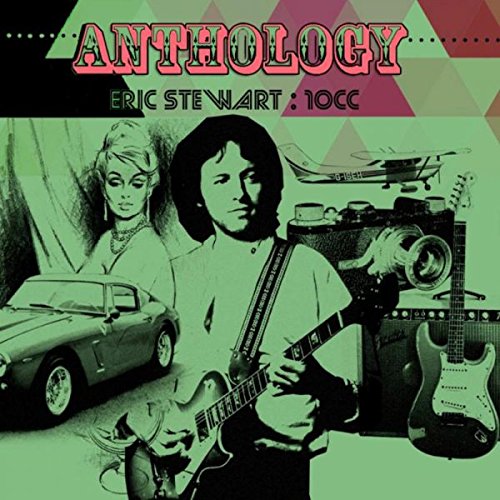
Eric Stewart had played guitar in Wayne Fontana and The Mindbenders. He co-wrote a couple of B-sides and assumed lead vocals for the post-Fontana ‘A Groovy Kind Of Love’, which hit No.2 on both sides of the Atlantic and sold a million copies.
Graham Gouldman was the frontman for The Whirlwinds and The Mockingbirds. Establishing himself as a songwriter, he supplied a string of hits for other bands, including ‘For Your Love’, ‘Heart Full Of Soul’ and ‘Evil Hearted You’ for The Yardbirds; ‘Look Through Any Window’ and ‘Bus Stop’ for The Hollies; and successful songs for Herman’s Hermits. In 1968 he joined Eric Stewart in The Mindbenders. A year later, Gouldman accepted an invitation from Jerry Kasenetz and Jeff Katz in New York to work as a staff writer at their bubblegum pop factory Super K Productions. It was here that the seed of 10cc’s musical vision was sown.
Gouldman brought Stewart plus friends Kevin Godley and Lol Creme into the fold by suggesting that the Englishmen could create commercial nuggets cheaper than local New Yorkers. By this time Gouldman and Stewart had invested their royalties into their own Strawberry Studios, based in Stockport, Greater Manchester, and so could keep recording costs to a minimum. Kasenetz and Katz agreed to the venture, block-booking Strawberry for three months in late 1969.
Art school graduates Godley and Creme had known each other, and Gouldman, since the rock’n’roll Fifties, when they’d all rehearsed their various teenage bands at the local branch of the Jewish Lads Brigade — think The Smiths’ Salford Lads Club with an ethnic twist.
In 1968 Godley and Creme recorded a single of psychedelic whimsy, ‘Seeing Things Green’, showcasing the Creme falsetto that became so familiar in 10cc, under the preposterous name Yellow Bellow Room Boom. A year later they cut ‘I’m Beside Myself’ for Giorgio Gomelski’s Marmalade label at Strawberry Studios, under the equally absurd moniker Frabjoy and The Runcible Spoon.
Once on the Super K payroll the Brits factory-farmed a healthy supply of pop froth, working in various different styles, forging the all-rounded pop template for 10cc. Godley: “It was really like a machine. Twenty tracks… We used to do the voices, everything… even the female backing vocals.” Their efforts resulted in a run of 45s that Kasenetz and Katz issued under several different names including Crazy Elephant, whose ‘Gimme Gimme Good Lovin’ ’ made No.12 both in the UK and US.
When Gouldman returned to New York to work out his Super K contract the remaining trio continued at Strawberry, and released a single, ‘Neanderthal Man’, under the name Hotlegs. This song, too, became a huge hit, eventually selling two million copies worldwide and reaching No.2 in the UK. A Hotlegs album “Thinks: School Stinks” followed later in 1971. There were some false starts, though. The single, ‘Umbopo’, released as Doctor Father, did nothing, and neither did their cover of Paul Simon’s ‘Cecilia’ issued as The New Wave Band.
Graham Gouldman returned from New York for more session work at Strawberry, and the quartet backed Neil Sedaka on his comeback album Solitaire (1972) and its follow up The Tra-La Days Are Over (1973). The flat fee they received for their efforts convinced the band that they should be concentrating on their own material.
They took their song ‘Donna’, inspired by Frank Zappa’s doo-wop pastiches and boasting a marvellous Creme falsetto, to pop entrepreneur Jonathan King, who singed the band to his label UK Records. King named them 10cc and ‘Donna’ shot to No.2 in Britain — followed by their first No.1, ‘Rubber Bullets’
Four fantastic albums followed, each brimming with pop invention and stylistic ingenuity, and 10cc became one of biggest acts of the Seventies, before the group divided in two, with Godley and Creme branching out as a duo, leaving Stewart and Gouldman to recruit new members. The band’s breakthrough years came in an era of outrageous stage costumes but there was no glitter or glam for 10cc and their was all in their music — in the very showiness of their writing, arrangements, production, and performances.
10cc (1973) set out the band’s stall as clever purveyors of wit, pastiche and melody, with the sounds of the 1950s updated to the Seventies via futuristic guitar effects and studio flair. Three hit singles, ‘Donna’ and ‘Rubber Bullets’ and ‘The Dean And I’, sit alongside the one the didn’t sell, the death-disc skit ‘Johnny Don’t Do It’, plus highlights such as ‘The Hospital Song’ and the more straightforward rocker ‘Speed Kills’. In the beginning, 10cc was created to experiment on the current state of pop music and on the debut album in 1973 it certainly pushed boundaries. The hooks are everywhere and although the band was often accused of being “too clever” lyrically, the gems are all over. The hilarious “Sand In My Face” remains a hoot. They upped the ante with the adventurous and idiosyncratic Sheet Music (1974) that many, including themselves, consider their best album. parodies of 1950’s Doo Wop with “Donna” and “Johnny Don’t Do it.” You want proof this album is still relevant over 30 years later? “Headline Hustler,” a commentary on the scandal-hungry media is more true today than it ever was. The combination of the four songwriters is best shown on “The Dean and I,” with both parody musical and melodic harmonies that would dominate later releases.

There is no pop album at that time that comes close to Sheet Music in terms of catchiness, musical and arranging brilliance, lyric cleverness, incredible vocals, and fun. Although you can start to see the Kevin Godley and Lol Crème’s distinctive sound emerge here on “Hotel”. Again, still relevant today! “Silly Love” is full of crushing riffs and horrible puns. They also didn’t take themselves serious as “The Worst Band in The World.”
There’s the No.10 hit ‘The Wall Street Shuffle’, the non-hit ‘The Worst Band In The World’. Paul McCartney and Brian Wilson influences abound and the variety of styles widens to take in reggae. ‘Clockwork Creep’ is a bizarre conversation between a bomb and a jumbo jet, and the poignant ballad ‘Old Wild Men’ introduces Godley and Creme’s effects device for the guitar, the ‘Gizmo’. about old rock stars and how would they still be playing around, on “dead strings and old drums.”

10cc moved to Mercury Records for The Original Soundtrack in 1975 on the strength of one song, ‘I’m Not In Love’, a dreamy multi-layered masterpiece that took the pop symphony idea to new heights. It was their second No.1 and their biggest hit in the States, peaking at No.2. This is the album where the entire world discovered 10cc due to the brilliant single which set the standard for lush production. Another slice of pop genius “Life Is A Minestrone” is a memorable gem.
Opening track ‘Une Nuit À Paris’ is even more ambitious: a suite in three parts, nearly nine minutes long and filled with multiple characters, some singing in a French accent becomes part of an elaborate radio operetta, as Godley and Crème’s vision dominates. The ‘Second Sitting For The Last Supper’ returns to the rock band format to deliver a lyrical tirade against organized religion, while lead single ‘Life Is A Minestrone’ fades in to recall the musical pulse of ‘Rubber Bullets’. But not every track shines as brightly (“Flying Junk”). The band begins to suffer from internal tension, and cracks are starting to show.

The rare and estimable ability to create both catchy, bitesize singles that sounded great on the radio, and sophisticated, ambitious album content, was never better illustrated than in the hands of 10cc. By the time they reached their third long player, The Original Soundtrack, that skill had become second nature to these four innovative British musicians. The album made its UK chart debut on 22nd March, 1975.
Produced as usual by 10cc themselves, the record would soon have the calling card of a typically amusing and irreverent hit single, ‘Life Is A Minestrone.’ Within a few weeks of that reaching No. 7 in the UK, clamour for ‘I’m Not In Love’ to be released as a swift follow-up led to that extraordinary ballad racing to No. 1.
The album itself showed 10cc in their most confident and expansive form to date, opening with the episodic Kevin Godley and Lol Crème composition ‘Une Nuit A Paris,’ all eight minutes and 40 seconds of it. For all of the band’s pop sensibilities, The Original Soundtrack contained some dark lyrical themes, addressing the pornography trade on Graham Gouldman and Eric Stewart’s ‘Blackmail’ and the drug trafficking industry on their ‘Flying Junk.’
Soundtrack debuted on the British album survey at No. 6 and spent its first ten weeks inside the top ten, peaking at No. 3 in the ninth of those, in May. It stayed in the top 40 all the way into October, reappearing intermittently until well over a year after its release. The LP’s aggregate of 40 weeks on the bestsellers remained the best tally of 10cc’s career.
The New Musical Express critic Charles Shaar Murray, notoriously ascerbic in much of his writing, was fulsome in his praise, marvelling at 10cc’s creative autonomy on The Original Soundtrack. “Once they scuttle into Strawberry Studios,” he wrote, “and get stuck into their composing, arranging, producing, engineering, overdubbing, compressing, mixing and so on and so forth, they mess your mind around a treat.”

How Dare You! (1976) was the watershed 10cc album, the last one to feature the artier half of the partnership, Godley and Creme. In musical terms, they left on a high, and the record is packed solid with melodic hooks, heady harmonies, crazy lyrical conceits and shifting arrangements — all the usual 10cc trademarks. Would be dictators get a platform on ‘I Wanna Rule The World’, while hit single ‘Art For Art’s Sake’ has a poke at the very same commercially minded artists they used to be themselves back in the Super K days. Its follow-up ‘I’m Mandy, Fly Me’ revisits that old chestnut, the airline disaster scenario, while the finale ‘Don’t Hang Up’ is a wry look at divorce. Unusually, the title track is an instrumental. At this point, despite commercial success the band starts to fracture, as Creme/Godley/Stewart/Gouldman make one last classic here. Hit singles “I’m Mandy Fly Me” still prove the band can make brilliant music. And the humour is still there on “I Wanna Rule The World,” “Head Room” and “Iceberg.” After this album, the Stewart/Gouldman duo would need to carry the 10cc name.

Just when you though the band was done, the Stewart/Gouldman duo pull out all the stops and deliver the monster hits “Things We Do For Love” and “People In Love.” And Graham Gouldman throws every hook he knows at this album as almost every song is catchy and accessible. “Honeymoon With Troop B” and “You’ve got A Cold” aren’t as witty as earlier 10cc, but still lots of fun. But “Feel The Benefit” tries a little too hard to replicate past glories. Unfortunately from here, the only direction to go is down.
Deceptive Bends(1977) was a strong album despite Godley and Creme’s absence, and yielded the hit single ‘Good Morning Judge’, plus the ballad ‘People In Love’, which didn’t chart. The approach was simpler and more direct than before, with fewer mid-song mood swings, but the overall result was still witty and well crafted. Highlights include the looking-for-love ‘Marriage Bureau Rendezvous’ .
10cc had been in their element as one of the most darkly humorous and wickedly inventive British pop-rock bands for some five years, when they unveiled their fifth studio album. Deceptive Bends was well up to their usual standard, and continued the group’s admirable track record despite the fact that, as the press were delighted to point out, they were now “5cc,” with Kevin Godley and Lol Crème having left after the group’s previous album How Dare You.

Undaunted, Eric Stewart and Graham Gouldman continued under the group name, assisted by multi-instrumentalist Paul Burgess. The new record was previewed around Christmas 1976 by their engagingly catchy composition ‘The Things We Do For Love.’ After that hit No. 6, the much-awaited album made its first UK chart appearance on 14th May 1977
Recorded as usual at their own Strawberry Studios, the album had another in 10cc’s series of striking album covers, designed by Hipgnosis. Eschewing some of the conceptual feel and episodic structures of previous albums, Bends was a more direct affair, as was underlined again when another of their intelligent but catchy singles, ‘Good Morning Judge,’ which went one place higher than its predecessor at No. 5.

1978’s Bloody Touristswas a final fanfare of sorts before events overtook 10cc — punk and new wave was now sweeping away the old guard on the one hand, and on the other Eric Stewart sustained injuries in a car accident that kept him away from music for a while. It was their last high-charting album, and yielded the reggae-flavoured No.1 single ‘Dreadlock Holiday’, also their last big single. While there were plenty of ingenious lyrical narratives, the stripped-down approach of Deceptive Bends had set a new trend, and ‘Take These Chains’, ‘Last Night’ and ‘For You And I’ featured straightforward arrangements, while ‘Tokyo’ is, if anything, under-produced. Listen to: “Shock On The Tube (Don’t Want Love),” “You and I” and “Reds In My Bed”
Graham Gouldman was once in conversation with a gentleman from Jamaica, and, remembering one of that country’s great sporting specialities, said to him “You must like cricket.” “I don’t like cricket,” he replied. ”I love it.” So one of the most memorable lyrics in any 1970s chart-topper was born.
The song in question, of course, was ‘Dreadlock Holiday,’ written by Gouldman with Eric Stewart, who by now was his sole partner in 10cc after the departure of Lol Creme and Kevin Godley. On 23rd September, 1978, the Mercury single replaced the Commodores’ ‘Three Times A Lady’ to spend a week at the UK chart summit and become 10cc’s third No. 1 there after ‘Rubber Bullets’ in 1973 and ‘I’m Not In Love’ two years later.
The Caribbean-flavoured ‘Dreadlock Holiday’ was also inspired in part by a holiday in Barbados taken by Stewart, his friend Justin Hayward of the Moody Blues and their families. There, while they were on a parasailing raft, another Jamaican native showed great interest in a silver chain worn by Hayward. The star told him it was a present from his mother, and when Eric got home, he described the incident to Graham. It became another key image in the song.

Sadly, 10cc would never make even the top 40 of the UK chart again, apart from a modest No. 29 peak for a re-recording of ‘I’m Not In Love’ in 1995. But ‘Dreadlock Holiday’ remains a highlight in one of the most distinguished British pop catalogues.

There are plenty of delights to be found on the band’s final five albums, Look Hear(1980) There was a long gap between Bloody Tourists and this album. The reason was that Eric had a very serious road accident that put him out of commission for over a year. Consequently when we reconvened many things had changed. Although it has its moments, it lacks the inventiveness and spark of the previous albums, It does have a great ‘Hipgnosis’ designed cover though. At this point Graham Gouldman was solo (Eric Stewart was out of commission) and while its not terrible, its not at all memorable either. “How’m I ever Going To Say Goodbye” sums up Graham’s feeling at the time I guess.

Ten Out Of 10 (1981),
Our record company, in an effort to give 10cc more appeal in the USA, suggested we work with an American writer/producer. Enter Andrew Gold. The three tracks that he co-wrote and produced with us were all released as singles. As a result of this Eric and I asked Andrew to join the band but, due to his own commitments and a fear of flying, he didn’t. A great shame as his contribution really helped lift this album.

Windows In The Jungle(1983), This album certainly had Its moments, ‘Feel the Love’ is one for me, and is also notable for having the superb Steve Gadd and Simon Philips on drums. We went back to Strawberry North studios in Stockport to record this album for reasons I can’t remember. This was to be the last recording by 10cc at Strawberry North in Stockport.

Meanwhile (1992), which enjoyed a brief reunion between the four original members, and Mirror Mirror (1995), but 10cc’s golden years were the 1970s, when they produced some of the finest, wonderfully progressive pop music to ever come out of the UK. After many years apart, pursuing different projects, Eric and I got back together to write a new batch of songs. All was going well until we started recording in New York. Our record company wanted us to have an American producer, Gary Katz. He was very good at choosing the other musicians that would work with us including the late, great Jeff Porcaro on drums and Freddie Washington on bass. Both amazing musicians. Unfortunately this album suffered from a lack of communication between ourselves and Gary. He seemed to spend more time on the phone than in the control room. Eric left the recording early. Bad vibes all round. Consequently I cannot listen to ‘Meanwhile’.

The relation between Eric and I had got so bad at this time that this album was really two solo albums put together under the name 10cc. For all that it had some very good moments. It was helped by the fact that it was co-produced by the talented Adrian Lee who oversaw the project. This album produced 10cc’s last single. Ironically it was called ‘Ready to go Home’.



 The Fat Angel Sings