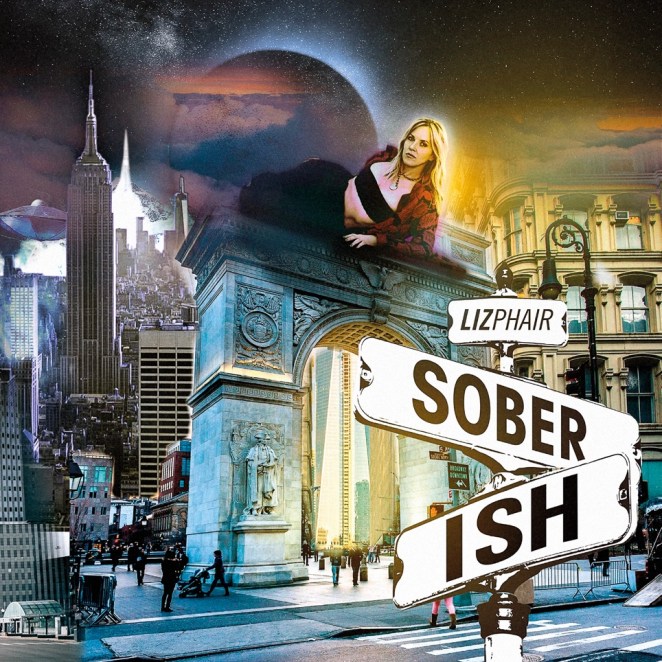
It’s nearly 30 years since “Exile in Guyville”, Liz Phair’s coming-of-age, being a woman of the 1990s, the “Supernova” singer is releasing her seventh album titled “Soberish”, out June 4th, a narrative on where she stands today, and her deeper musical roots, with the self-reflective track “Spanish Doors.”
Phair’s first release in 11 years, following Funstyle (2010), Soberish(Chrysalis Records), produced and engineered by longtime collaborator Brad Wood, who also helmed Exile In Guyville, and follow ups Whip-Smart(1994) and whitechocolatespaceegg(1998), finds Phair reverting back to her earlier musical blossoming and art school days at Oberlin.
“I found my inspiration for Soberish by delving into an early era of my music development, my art school years spent listening to art rock and new wave music non-stop on my Walkman—The English Beat, The Specials, Madness, R.E.M.s ‘Automatic for the People,’ Yazoo, The Psychedelic Furs, Talking Heads, Velvet Underground, Laurie Anderson, and the Cars,” says Phair. “The city came alive for me as a young person, the bands in my headphones lending me the courage to explore.”
On opening track “Spanish Doors,” which she describes as “the fracturing of a beautiful life, when everything you counted on is suddenly thrown up for grabs,” Phair sings Locked up in the bathroom staring at the sink / I don’t want to see anybody I know / I don’t want to be anywhere you and I used to go.
“I drew inspiration from a friend who was going through a divorce, but the actions in the lyrics are my own,” reveals Phair. “I relate to hiding out in the bathroom when everyone around you is having a good time but your life just fell apart. You look at yourself in the mirror and wonder who you are now, shadows of doubt creeping into your eyes. Just a few moments ago you were a whole, confident person and now you wonder how you’ll ever get the magic back.”
Following up Phair’s other Soberish single “Hey Lou,” a tribute to Lou Reed and Laurie Anderson, and her revealing 2019 memoir Horror Stories, “Soberish” is about partying and all those self-delusions, whether chasing new loves or a returning to a constant state of escapism for a few moments of elation.
“It’s not self-destructive or out of control,” says Phair. “It’s as simple as the cycle of dreaming and waking up. That’s why I chose to symbolize ‘Soberish’ with a crossroads, with a street sign. It’s best described as a simple pivot of perspective.”
She adds, “When you meet your ‘ish’ self again after a period of sobriety, there’s a deep recognition and emotional relief that floods you, reminding you that there is more to life, more to reality and to your own soul than you are consciously aware of. But if you reach for too much of a good thing, or starve yourself with too little, you’ll lose that critical balance.”
We were supposed to get Soberish, Liz Phair’s first album since 2010’s Funstyle, last year, but the COVID-19 pandemic upended those plans. Phair gave us a peek of what’s to come back in 2019 with “Good Side” and she released second single “Hey Lou” (about Lou Reed and Laurie Anderson’s longstanding relationship) earlier this year. Now, we have a release date for Soberish.
Soberish finally arrives on June 4th, and a press release describes it as “a portrait of Phair in the present tense, taking all of the facets of her melodic output over the years and synthesizing them into a beautiful, perfect whole.” Digital liner notes mention that Phair’s forthcoming record is influenced by music she listened to during her art school years.
William The Conqueror have paid their damn dues. Like the sportsman cutting chipped teeth in the lower leagues before shooting to the very top, this band have lugged all the amps, placated the in-house sound guy for an easier life, their nails dirty, their hair unkempt. Enough. Naming yourself after one of British history’s most pivotal figures is a bold move, but then William The Conqueror could scarcely be accused of lacking ambition.
A group whose literary flair and in-depth musicality marks them out from the crowd, the three-piece set about constructing their new album last year.
Except it’s never enough, because despite their slinky, swampy, razor-sharp, blues-drenched, guitar thrashed alt. rock songs that form new album, Maverick Thinker and suggest that the door is opening for bigger rooms and broader audiences, it’s those sticky basement bar stages where the songs have always shed a skin and come alive. The record put the three piece behind the glass at Sound City Studios in LA, treading the same carpet as the likes of Nirvana, Johnny Cash, Neil Young, and Fleetwood Mac, and they might well have inhaled the spirit of them all.
William The Conqueror’s protagonist is Ruarri Joseph who knows his way around a melody and a verse. Joseph’s wryness suggests life just ain’t plain sailin’ and he fizzes that sigh and lament into something that breathes heavy with heart and with soul.
Pieced together as the world seemed to collapse, ‘Maverick Thinker’ is shot through with a don’t-look-back attitude, imbuing each song with a potent form of energy.
William The Conqueror began when Ruarri Joseph, a singer/songwriter in his own right, decided to retire his solo career after catching a glimpse of his own tour poster and realising the picture before him didn’t really represent reality. ‘It just seemed totally alien to me,’ he admits. ‘It didn’t seem like anything I’d done necessarily spoke of who I was.’
Soon after, he began experimenting with bassist, Naomi Holmes, and drummer, Harry Harding, examining themes from his childhood through the lens of a teenager named William. Starting out with secret gigs, Joseph emphasises the importance of playing those small venues and going back to their roots. ‘That was the cool thing about scrapping being a solo artist and starting completely from scratch, and building from the bottom all the way up. You’ve got no one looking over your shoulder. It takes away the insecurities I suppose.’
After their debut album Proud Disturber of the Peace, the band worked with esteemed producer, Ethan Johns, for their follow up, Bleeding on The Soundtrack, and recently signed to Chrysalis Records. Initially planning to make their latest release, Maverick Thinker, in a home studio, they were later persuaded to make a trip to Sound City Studios. The intention being to immerse themselves in the vibrant musical culture and artistic scene of Los Angeles, but, instead, found themselves in a ghost town as the pandemic hit.
Despite the strange circumstances, William the Conqueror continued with their work. The album was self-produced by the band along with recording engineer, Joseph Lorge, who also, after the band were forced to fly home early, played the guitar solo for the title track. ‘Having an engineer you can trust, you can focus everything about yourself on the performance. He knew the studio inside out.’ Though the location may have changed, they took their customary recording approach of tracking live, capturing the spirit and integrity of their shows without losing themselves in the production.
For a three-piece, William the Conqueror live up to their name and fill an incredible amount of space – commanding your attention with the depth and vitality of a much larger outfit. ‘It was an economical thing to begin with,’ says Joseph. ‘I have this thing about working in threes. I like the format.’ So far, Joseph hasn’t been tempted into arranging beyond their current numbers, with the recorded output staying mainly faithful to their on-stage sound. ‘There’s something quite nice about some kind of creative restriction,’ he says – ‘it makes you think outside the box.’
‘Working in threes is always nice – a little treble approach with a three-piece band. I had the idea of a trilogy in my head – a child, father, mother kind of thing. Then I read something by Herman Hesse about the three stages of development in life being innocence, disillusionment, and faith – the idea, that we all go through that kind of journey.’
When it comes to song writing, Joseph takes a more relaxed approach which is evident in his colloquial vocal tone and conversational manner. ‘My favourite kind of writing is the stuff where you’re not really aware of what it is that’s going down on the paper at the time.’ The band’s recent single, Move On, was written in this way. ‘It came from the idea of being overwhelmed – drowning in ideas and not knowing where to begin.’ Together, with a roving bassline and restless high hats, the imagery depicts twists in the roads and towns by the coast. It was a retrospective realisation that the song was about a hitchhiking trip his mother had embarked on in her youth.
Maverick Thinker’s second single, Jesus Died a Young Man, is an ode to some of Joseph’s early religious experiences and features staggered guitars and a mantra-like chorus that wouldn’t feel out of place at a faith healer show. Joseph’s vocals are dry and almost conversational – culminating in an exasperated wail, amidst the pounding rhythm section. ‘I was quite lost and looking for something to show me the way out of curiosity. Had I encountered a really good teacher, I probably would have fallen for it because of that charlatanism – drunk on the spirit, hands in the air kind of stuff,’ he says. ‘There’s something particularly sinister about televised evangelists – it’s a sort of next-level possession.’ Accompanied by a video featuring a channel flickering between swaggering televangelists, news channels and predatory nature clips, there’s a definite cynicism and an unsettling air.
As well as writing, recording and releasing music, Joseph has also authored an accompanying novel as well as producing a podcast adaptation. ‘The music and the book – they fit together. If you read the book and listen to the record, you can hear things crossing over.’
Joseph has been keeping himself busy during lockdown. When not writing songs, you can witness his other creative efforts through the band’s latest music videos including Wake Up – made entirely of 1920s horror movie footage. ‘That’s what you have to do when you’ve not got a budget for a music video.
Liz Phair addresses the romance between Lou Reed and Laurie Anderson, pondering how they might have felt and interacted privately in her new song “Hey Lou.” Produced by long time collaborator Brad Wood, it’s Phair’s first new song in two years following the Wood-produced “Good Side.” There’s more to come. Phair is all set to release her first album of new material in a decade, entitled “Soberish”, following a deal struck with U.K. Chrysalis Records.
“Hey Lou” dropped at midnight and is accompanied with a fun, Toben Seymour-music video featuring music’s quirkiest pair and a cameo from Andy Warhol, all rendered as puppets. It’s the Chicago-based singer and songwriter’s first release since 2019’s “Good Side.” Have you ever wondered what love looks like for your favourite celebrity couple behind closed doors? Hey Lou imagines a day in the life of two music legends, whose union was an inspiration for rock fans.
Due out at an unspecified date in 2021, “Soberish” will be supported this summer when Phair hits the road.
Cherry Red’s longtime association with Scottish rockers Big Country – which manifested in a release of the group’s last album The Journey in 2013 and continued with deluxe reissues of latter-day and live bootleg material in 2017 and 2018 – continues with another multi-disc anthology project due this September.
Cherry Red Records are pleased to announce the release of “Out Beyond The River: The Complete Compulsion Recordings”, a newly remastered six disc boxed set featuring the original classic line-up of Scottish rock giants Big Country, fronted by the late Stuart Adamson. A new 5 Disc boxed set anthology (5CDs / 1 DVD) celebrating the recordings of Big Country, made between 1993 and 1994 for Chrysalis Records imprint Compulsion. Featuring 71 tracks on five discs, including the albums ‘The Buffalo Skinners’ and the double live album ‘Without The Aid Of A Safety Net’, recorded at Barrowlands Ballroom in Glasgow on 29th December 1993. Includes rare B-Sides / bonus tracks, US radio mixes, previously unreleased instrumental demos, plus the original demo for every track on ‘The Buffalo Skinners’ album. DVD includes highlights from the Glasgow Barrowlands concert, together with promo videos for the singles ‘Ships’ and ‘Alone’ DVD is UK region PAL.
Out Beyond The River – The Compulsion Years Anthology showcases the group’s journey through the mid-’90s as they released The Buffalo Skinners, which was their sixth album, in 1993. After seeing all their albums reach the U.K. Top 10 in the ’80s (plus a No. 2 compilation, Through a Big Country, in 1990), the group fell on hard times as musical tastes shifted. They left long time label Phonogram for Vertigo in the U.K. and recorded the difficult No Place Like Home in 1991. Drummer Mark Brzezicki left the group during recording, leaving frontman Stuart Adamson, guitarist Bruce Watson and bassist Tony Butler to continue as a trio; following poor sales of 1988’s Peace In Our Time in America, the album was not released stateside.
But hope was around the corner: veteran A&R man Chris Briggs, who’d recently begun mentoring Robbie Williams of Take That fame, was lured to Chrysalis/EMI with the allowance to create Compulsion Records, a new label. His first signee: Big Country – a fitting reunion, as Briggs had signed the group to Phonogram more than a decade earlier. With a renewed sense of energy – the group produced this one themselves – The Buffalo Skinners was a return to and refreshment of the classic guitar-driven Big Country sound, continuing the group’s foray into pointed political lyrics (“What Are You Working For,” “The Selling Of America,” “We’re Not In Kansas” – the latter revisited after kicking off No Place Like Home). Best of all, the group returned to the U.K. Top 40 twice for the first time since 1989 with “Alone” and another re-recorded track from No Place, “Ships.” An American deal with 20th Century-Fox’s fledgling music arm yielded a moderate modern rock cut, “The One I Love.”
The group continued doing what they did best – namely, hitting the road. With Brzezicki back behind the drum kit, the quartet packed European theaters and American small clubs, rousing audiences with favourites new and old (and, in a nod to current rock trends, often offering an “unplugged” portion of the set – an accidental moment of brilliance after a venue they performed at that year lost power). At the close of 1993, Big Country performed a trio of dates in Scotland and England recorded for a live album and video, Without The Aid Of a Safety Net. Considered by fans to be one of the definitive concert documents of the group, the album earned them another U.K. Top 40 placement.
That rousing period, and everything in between, makes up Out Beyond The River. This 5CD/DVD set includes previously expanded editions of The Buffalo Skinners and Without The Aid Of a Safety Net issued by EMI in 2005 (the latter of which was presented across two discs for a complete concert experience). Another two bonus discs collect The Buffalo Skinners‘ various, uncompiled B-sides, remixes and early versions, including unreleased instrumental demos and monitor mixes alongside demos released on rare fan collections. The box wraps up with a DVD of the original Without The Aid Of a Safety Net film and two music videos. (Unfortunately, the DVD seems to be PAL-only.) Like previous Big Country boxes from Cherry Red, each disc is housed in its own mini-jacket, encased in a clamshell case.
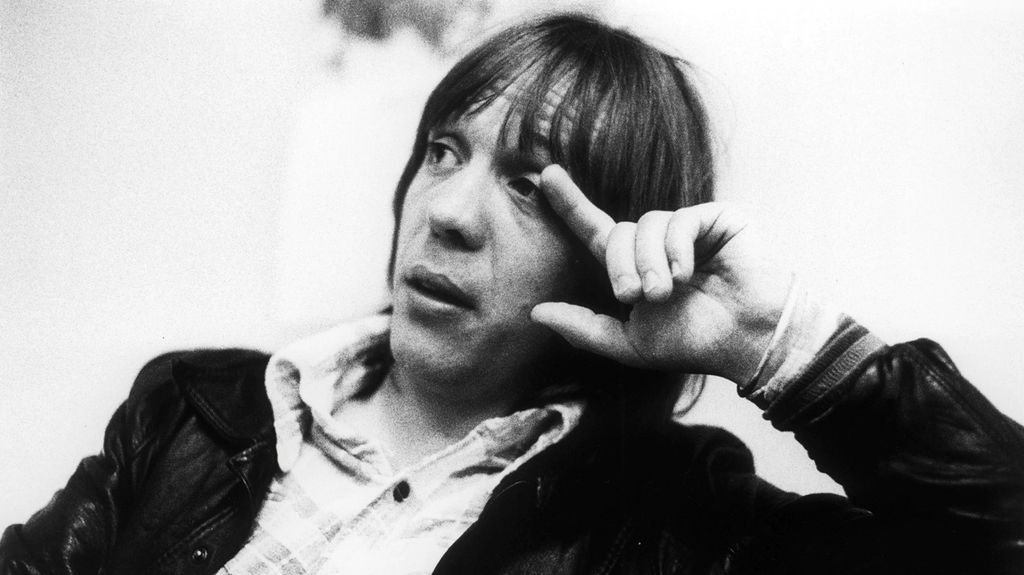
Robin Trower is one of the great English grandmasters of the guitar. A musician and songwriter with a celestial blues sound and deep spiritual roots, he achieved star billing in the 1970s when he scored a string of Top 10 albums in America. Trower grew up in Southend-on-Sea, where as a teenager he formed The Paramounts with singer and pianist Gary Brooker. A band that straddled both the beat and blues booms of the 1960s, The Paramounts enjoyed an early minor hit single with Poison Ivy in 1963,
You didn’t have to be a guitarist to appreciate Robin Trower’s talent. In the mid 1970’s, Robin Trower released a string of albums that rivaled everything else being released in the rock god guitarist genre. Smoking solos, killer riffs and great tunes defined the Robin Trower sound.
Trower joined old classmate and bandmate Gary Brooker in his new band Procul Harum in 1967 replacing departing guitarist Ray Royer. Trower played on the band’s first five albums, including “Shine on Brightly,” and “A Salty Dog” But he had an epiphany after hearing Jimi Hendrix at the Isle of Wight in August 1970 and left Procul Harum in 1971. After a short stint in Jude, a power trio with his future bass player and lead singer James Dewar, Trower formed the Robin Trower Band in 1973, with drummer Reg Isidore (later Bill Lordan), and Dewar. After releasing “Twice Removed From Yesterday in 1973, Trower and the band hit the jackpot with a trio of Top 10 albums beginning with “Bridge of Sighs,” in 1974.
The title track was densely textured with a great opening riff that was a theme throughout the dark, ethereal song. “For Earth Below,” followed in 1975 and “Robin Trower Live,’ in 1976. Trower’s guitar work became more Hendrix-like over the years and the power trio gave him room to spread his wings in that direction. He closed out the 70s with the great “Caravan to Midnight,” (1978) with some powerful soloing on “My Love (Burning Love)” and “Fool.” In the early 1980s, Trower hooked up with Cream bassist Jack Bruce and his two former drummers Lordan and Isidore for two high powered albums “BLT,” (1981) and “Truce (1982).
These discs are well worth seeking out for the interplay between Bruce and Trower. Album sales began to flag after the 1983 release “Back it Up,” with Dewar returning to his lead vocal duties, and Trower was dropped from his label. But no matter, he had built up such a huge following that he has continued touring and recording to this day. Robin Trower is a titan – a guitar slinger extraordinaire.
Trower has nevertheless endured. Still writing and recording, he has always sought fresh horizons, and has just released and another new album, Time And Emotion. And he continues to tour, proudly showcasing a repertoire from the 1970s that runs like a thread of steel through the core of British blues-rock culture.
Bridge Of Sighs – Chrysalis, 1974
Robin Trower’s breakthrough album, Bridge Of Sighs peaked at No.7 in the US and remains one of the pillars of his repertoire to this day. “Bridge of Sighs,”was a blockbuster album for Robin Trower. The album reached the top 10 album charts in 1973. Every track on the record was killer.
The song’s opening bass and drum groove sets in motion a monster rocking riff that is one for the ages, The dramatic time shift in the middle of the song set the way for another incredible Robin Trower guitar solo.
Beginning with the stuttering riff of Day Of The Eagle, the album combines urgency with gravitas. ‘A cold wind blows and gods look down in anger on this poor child,’ Dewar sings as the title track unfolds with a vast, slow momentum, like a planet drifting through the void. The song’s opening riff is classic Robin Trower. What separated Robin Trower from other rock guitarist like Jimmy Page, Ritchie Blackmore, Brian May, and so on was the way Trower used 9th’s and 11th’s in such a slick groove based way without shoving them down the listener’s throat. It was such brilliant playing.
Perhaps Trower’s most famous album is Bridge of Sighs (1974). This album remains one of the pillars of his repertoire to this day. Beginning with the stuttering riff of Day Of The Eagle, the album combines urgency with gravitas., along with his first and third solo albums, was produced by his former Procol Harum bandmate, organist Matthew Fisher. Lady Love is an irresistible, cowbell-grooved rocker and Too Rolling Stoned romps along until the incredible five-minute, one-bass-note run-out groove. Stoner blues‑rock redefined.
For Earth Below – Chrysalis, 1975
With Matthew Fisher producing for the third time and Bill Lordan taking over on drums, this is the album where everything came together for Trower. Dewar is at his best on Fine Day and Gonna Be More Suspicious, while Lordan takes the band to a new level of rhythmic sophistication with the intricate cymbal figures and funky snare and hi-hat combinations of A Tale Untold and Confessin’ Midnight.
After the success of “Bridge of Sighs”, Robin Trower came roaring back one year later with another rocking blues infused album that was every bit as good as Bridge of Sighs. Robin Trower’s For Earth Below was even more successful than Bridge of Sighs as the record For Earth Belowhit the number five-spot on the Billboard top 100 albums. “Confessin’ Midnight,” knocked listeners out with a heavy lick that resonated throughout the song and laid the groundwork for another blistering Robin Trower explosive guitar solo’s.
Trower’s songwriting and soloing takes the three musicians soaring across the musical cosmos, especially on the slow blues of the title track and the keening outro of A Tale Untold. Take a listen again to the standout track “Shame The Devil.” The killer album opener was simple proof that Robin Trower was on fire during the mid seventies.
Long Misty Days – Chrysalis, 1976
Trower, Dewar and Lordan consolidated their magic touch with this bold and confident album. Emerging as a sure‑footed songwriting team, Trower and Dewar are co-credited on every song, apart from a gritty cover of the Sutherland Brothers’s epic singalong “Sailing”.
With its dense wash of overdriven guitar sound, the title track is testament to Trower’s skill as a manipulator of sonic textures. Delicate and graceful yet executed with crushing power, this sound influenced future generations of bands, from Hüsker Dü to Smashing Pumpkins. From the opening moments of this incredible piece of music, you know you’re in for something special. Robin Trower’s “Caledonia,” is among our favourite Robin Trower studio recording. The fast funky guitar riff that balances itself between Robin Trower’s solo guitar licks will make you want to buy every Robin Trower recording ever released. It’s that good and easily one of the best Robin Trower songs ever released on vinyl.
The Robin Trower song “Long Misty Days,” was the title track to Robin Trower’s fourth album. The record Long Misty Days was released in October of 1976. Of all the Robin Trower songs nestled in a slow blues groove, “Long Misty Days,” stand out among the best of them. This is a slow blues song, but there is this sublet driving force that fuels the groove into an arena of specter undiscovered by most artist. It’s what made Robin Trower so special.
Twice Removed From Yesterday – Chrysalis, 1973
It may have been a pure coincidence that Trower’s first album was released in the same year Free split up, but the timing couldn’t have been better: it marked the arrival of a new guitar hero who evoked the spirit of the late Hendrix, together with a vocalist (Dewar) with an R&B timbre redolent of Paul Rodgers. Trower retained Dewar as his bassist, who took on lead vocals as well, and recruited drummer Reg Isidore (later replaced by Bill Lordan) to form the Robin Trower Band. Robin Trower’s “Sinner Song,” was released on his first solo album, Twice Removed From Yesterday.
The Robin Trower band was essentially a trio that consisted of Robin Trower on guitar, James Dewar on bass and lead vocals and Reg Isidore on drums. It could be argued that James Dewar might have been the most popular rock singer of the 1970’s that most people had never heard of. If you had never seen Robin Trower live, than you would have probably assumed that it was Robin Trower also handling the lead vocals. However, that was not the case and Dewar probably never got the recognition he deserved for the killer vocals tracks he recorded with the Robin Trower trio both in and out of the studio. Stevie Ray Vaughan had given much credit to Jimi Hendrix as inspiring so much of his playing. But if you are aware of both Robin Trower and Stevie Ray Vaughan’s catalogues, you can’t help but notice that Stevie Ray Vaughan was probably also listening to Trower.
The slow, drifting menace of opening cut I Can’t Wait Much Longer established an unhurried, Free-like template that carried through to songs such as Hannah, a reworking of BB King’s Rock Me Baby and the exquisite track Daydream.
Robin Trower Live! – Chrysalis, 1976
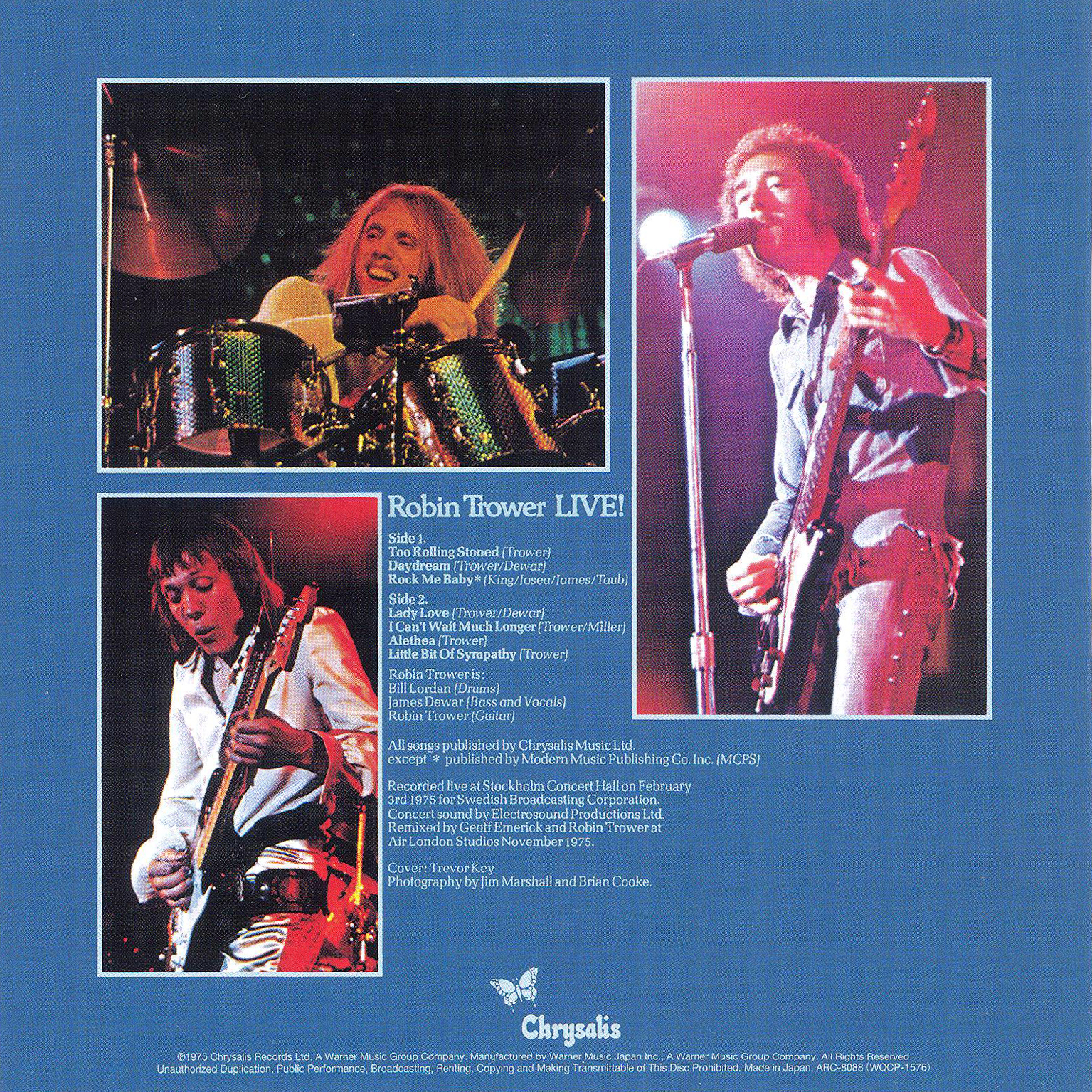
Robin Trower Live would probably be among the top the list of live rock albums. Of there is The Rolling Stones Get Yer Ya Ya’s Out, Foghat’s Foghat Live, Led Zeppelin’s soundtrack to The Song Remains The Same, Rush, All The World’s A Stage, Lou Reed’s Rock and Roll Animal and Lynyrd Skynyrd’s One More From The Road but the 1975 Live album that Robin Trower released was one of the most smoking guitar records ever issued. This one cranks past eleven. The airy opening to “Daydream,” is a bit reminiscent of Jimi Hendrix’s “Little Wing.” However, the song than takes on its own spellbinding groove that simply mesmerized the audience. The songs unbelievable second solo will drop your jaw and bend your knees.From the opening high-energy rip through Too Rolling Stoned to the dense thundercloud chords of I Can’t Wait Much Longer, this Stockholm recording concert recording captures the classic Trower trio at an early, elemental peak of power.
Along with fast, muscular run-throughs of Lady Love, Alethea and Little Bit Of Sympathy, the album boasts the definitive recorded version of Daydream, with Trower lovingly sculpting the individual notes like clay on a potter’s wheel, and then whipping them into clusters in a swirling blizzard of sound.
The guitar work on the live performance of “Little Bit Of Symphony,” and “Rock Me Baby,” was just so outstanding that it made it impossible to pick between these two killer performances. Both live tracks were released on Robin Trower’s magnificent earth shattering, Robin Trower “Live” album. The Live album stemmed from a radio broadcast from a stadium show in Sweden in 1975. The band is as loose at they could get and the interplay between Robin Trower and bassist James Dewar is astonishing.
On “Rock Me Baby,” , Robin Trower sounds as if he is playing lead guitar through the entire track. We would say this is Robin Trower’s peak moment, but the man has continued to perform and record brilliantly 40 years onward. However, if you’re looking to buy only one Robin Trower CD or at east looking for a place to star, we highly recommend Robin Trower Live.
B.L.T. – Chrysalis, 1981
This was the first of many occasions when Trower teamed up with ex-Cream legend Jack Bruce. Their collaborations always produced something thoughtful and off the beaten path. With Bill Lordan on drums, the three-way musical interplay on Into Money and What It Is is strong, supple and undeniably funky.
Bruce applies his Glasgow bawl to tunes and lyrics mostly written by Trower and Keith Reid. No Island Lost has a Voodoo Chile (Slight Return) vibe, while Life On Earth recalls some vintage Cream moves. One of the great overlooked power trio albums.
20th Century Blues – V-12, 1994
After a period of extended line-ups in the 1980s, Trower returned to the trio format with Livingstone Brown (vocals/bass) and Clive Mayuyu (drums), and got back to basics with 20th Century Blues, the first album released on his own V-12 label.
Brown’s voice and bass are modestly positioned in the mix, but he provides a solid backbone for Trower’s immense guitar excursions on songs such as Extermination Blues and Lowell Fulson’sReconsider Baby. The rhythm section gets funky on Prisoner Of Blues while Trower plays some Shaft-style wah-wah.
The new wave of British heavy metal was just revving up. And it was during that transitional period when many of Europe’s most promising rock bands of the day were gaining notoriety Likee Jethro Tull, the Uriah Heeps, the DeepPurps, the Thin Lizzys and the like. It also was during that time when a fledgling progressive band from London began making its presence known on the international scene. And it was 45 years ago this month (May 1974), when UFO released one of its quintessential studio sets.
Produced by Leo Lyons, bassist for the legendary British band, Ten Years After, “Phenomenon” was the third record from UFO. Featuring founding members, vocalist Phil Mogg, bassist Pete Way and drummer Andy Parker, it marked the band’s debut for Chrysalis Records — the label that would release most of the iconic UFO catalog. “Phenomenon” also was noteworthy for being the first UFO LP to feature then-relatively unknown 19-year-old guitar ace, Michael Schenker sandwiched between his two stints with the Scorpions.
One of the most beautiful aspects of music, particularly rock music back in that day was that it was a time when music artists were afforded the freedom to be just that — artists. And although UFO would become known largely as a high-energy European metal band, Phenomenon represents a creative effort free of boundaries — a genuinely gorgeous piece of art painted with very broad brushstrokes.
Phil Mogg’s vocals were honest and pure, from start to finish. Parker’s efficient, dry-sounding drum work added a certain oomph to the record’s organic feel. And Schenker and Way’s raw guitar and bass contributions were simply magical. Yet, despite the authentic classic rock sound and the heart-stopping performances, what made Phenomenon truly special was the songs themselves — most of which were penned by Mogg and Schenker.
The ten-song slab kicks off nicely with the driving early BÖC-flavored, “Too Young to Know.” While not exactly reflective of the band’s future hard rock blueprint, the melodic, acoustic-based tunes, “Crystal Light” and “Time on My Hands” are both bona fide stand-outs.
Serving up several slices of less-tasted treats, including the down and dirty, Humble Pie-style remake of the Willie Dixon classic, “Built for Comfort,” Phenomenon also is arguably best known for its two signature staples, the arena-sized, hard rockin classics “Doctor Doctor” and “Rock Bottom.”
Props are also owed to Schenker for his masterful job of pinning blistering lead work to melodic acoustic riffs on “Space Child,” as well as for his emotion-filled, biting work on “Queen of the Deep”— the record-closing epic that showcases Mogg’s most passionate performance.
In sum, while UFO has produced more than 20 celebrated studio records during its impressive 50-year career, Phenomenon just might remain the band’s strongest work to date — a compelling collection that’s well worth revisiting, or discovering for the very first time.
The backlash began before Generation X had even put out their first album. Although the London group played fast and loud, they also had a knack for melody, and some of punk’s bands and fans weren’t certain that Generation X were the real thing. In the British music press, accusations flew that the quartet were “using” the nascent punk genre to become pop stars.
Yet the band had their punk credentials singer Billy Idol had been part of the Sex Pistols-backing “Bromley Contingent” and bassist Tony James had played with the Clash’s Mick Jones in the London S.S. Was it possible to simultaneously love punk rock and the Beatles and the Stones? Apparently such nuance was ill-advised in 1977-78.
Before, and during, the backlash, Generation X had steadily grown a healthy fan base in London, playing gigs opening up for the headline punk bands (including the Ramones) and joining bills with the next wave (such as the Jam and the Police). They signed a deal with Chrysalis Records, put out their debut single in the fall of 1977 and became the first of the punk groups to play the mainstream music TV program Top of the Pops – which both aided Generation X’s popularity and fueled the sell-out notions of the band’s detractors.
But it was clear that the band was made for TV, particularly singer Idol with his high cheekbones, shock of bleach-blond hair and Elvis-like sneer. On Top of the Pops, Idol bounced his way through “Your Generation,” a song that carried the influence of the Who in more than its title. Songwriters Idol and James were unabashed Who fans, as was Generation X’s newly recruited drummer Mark Laff, whose idol was Keith Moon.
“Tony and I increasingly looked to the Who as a guide when attempting to suss out our development,” Idol recalled in his autobiography, Dancing With Myself. “I discovered a Pete Townshend Eel Pie songbook with notations for some incredible chords and progressions. I used this book as a guide, taking off from Townshend’s ideas with some of my own, making it up as I went along. I wanted our songs to ring out as if they were a call to arms.”
In a departure from the typical division of labor, singer Idol wrote the bulk of the music for Generation X songs, while James penned the majority of the lyrics. Drummer Laff and guitarist Bob “Derwood” Andrews brought their spin to the tunes when performing or recording.
After the release of a couple singles, the foursome went into T.W. Studios to spend two weeks making their debut LP with producer Martin Rushent, who had just helmed releases by the Stranglers and the Buzzcocks. T.W. was a small studio, in Fulham in West London, that had been converted from a garage into a recording space. Looking back, Idol thought that was appropriate.
“The first Generation X album was essentially our stage show with a few overdubs,” Idol wrote. “Recording it in a converted garage made it garage-rock, which was perfect for punk and our musical sensibilities at the time.”
Tracks recorded for the album included the melodic charge of “Ready Steady Go” (the LP’s lead single and a reference to a ’60s music show), “One Hundred Punks” (a song about loyal punk fans) and “From the Heart” (which Idol saw as a “punk love song”). “Promises, Promises” had its roots in early ’70s glam rock.
“It was inspired by Mott [the Hoople] and it’s a very Mott-type lyric,” James said in 2010. “Billy wrote a great tune for it. It was very heartfelt, but still played on that generational thing. Listening to it now … well it sounds too fast! But then everything was. It’s a nice tale of the moment.”
A punk band taking lessons from glam acts such as Mott, T. Rex or David Bowie wasn’t particularly unique (these were also references for the Pistols and the Clash, after all). But there probably weren’t too many of Generation X’s contemporaries being inspired by Born to Run.
“Tony played me Bruce Springsteen’s ‘Jungleland,’ which rocked but also had a gripping storyline and several moving parts that led to a crescendo,” Idol recalled. “I dug the idea of a narrative culled from his personal history; it inspired me to dig deep and come up with my own equivalent from the raw materials of my life.”
The result was “Kiss Me Deadly,” perhaps the lead “punk”-sounding song on the album, with its slow build, talk-sung beginning and four-and-a-half-minute length. Idol wrote the music to James’s words, drawing on Springsteen’s widescreen songwriting, as well as the Who’s multi-part story songs.
When Generation X’s self-titled debut arrived on March 17th, 1978, it didn’t convince the naysayers, but it did prove successful – going to No. 29 on the U.K. chart with “Ready Steady Go” topping out at No. 47 on the singles spread. In the U.S., Generation X was issued with a different track listing, substituting some singles and B-sides for album tracks and slapping on the band’s ska-addled cover of John Lennon’s ”Gimme Some Truth” as an opener (which likely didn’t help the band’s punk persona, even if Idol saw the former Beatle as a punk-adjacent figure).
To promote the LP overseas, Chrysalis refused to send the entire band, so only Idol made the trip to New York and California, hanging out with American punk heroes such as Patti Smith and Darby Crash. Although Generation X would stay together for a few more years (and for two more LPs), Idol has claimed that the promotional trek marked the beginning of his notions of being a solo star.
This is the Deluxe Edition of Generation X, the self-titled 1978 debut album of one of the great British punk bands of the late 1970s.
Generation X’s story is deeply rooted in the London punk scene. Brian James who went on to form The Clash and The Damned respectively. Both Idol and Tony James joined punk band Chelsea in early 1976 before leaving to form Generation X.
The Generation X expanded deluxe edition CD set has been newly remastered from the original production tapes and includes 11 previously unreleased recordings. CD1 contains the original UK 11 track album with CD2 including all the A and B-sides of their singles from the period, 11 previously unreleased outtakes, a single mix and a number of mixes made by engineer Alan Winstanley (Madness, Elvis Costello, Morrissey).
This 2CD is an 8-Panel Digipak with O-Card and 12-page booklet, with previously unseen photos and newly commissioned sleeve notes by journalist Adrian Thrills.
The expanded deluxe edition vinyl box set has also been newly remastered and cut from the original production tapes. LP1 contains the original UK 11 track album, LP2 includes all the A and B-sides of their singles from the period and LP3 contains 11 previously unreleased outtakes.
Ten Years After were an English blues rock band who, between 1968 and 1973, had eight albums in the UK Top 40 albums chart and twelve albums in the US Billboard 200. Vocalist, guitarist and principle songwriter Alvin Lee formed The Jaybirds with bassist Leo Lyons in England in the early 1960s. Joined by Chick Churchill on keyboards and Ric Lee on bass, they switched their name to Ten Years After in 1966; a reference to the birth of rock ‘n’ roll with Elvis Presley a decade earlier.
This limited LP on green vinyl is Exclusive for RSD and the first of a handful of releases to comemorate the 50th Anniversary of the bands legendary appearance at Woodstock in 1969. The Cap Ferrat Sessions took place during the recording of their ‘ Rock & Roll Music To The World’ album and first appeared on the 2017 10CD Box Set ‘ 1969-1974’ . This is the first release outside the box set and first time on vinyl.
Tracklist:
Look At Yourself (2017 Remaster)
Running Around (2017 Remaster)
Holy Shit (2017 Remaster)
There’s A Feeling (2017 Remaster)
I Hear You Calling My Name (2017 Remaster)







 was a blockbuster album for Robin Trower. The album reached the top 10 album charts in 1973. Every track on the record was killer.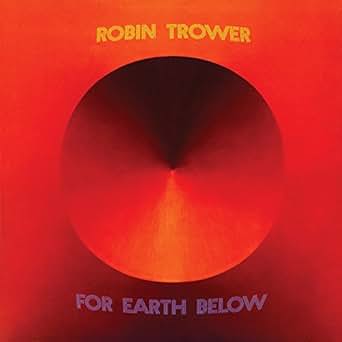
 , Robin Trower came roaring back one year later with another rocking blues infused album that was every bit as good as Bridge of Sighs
 . Robin Trower’s For Earth Below
 was even more successful than Bridge of Sighs
 as the record For Earth Below
  hit the number five-spot on the Billboard top 100 albums. “Confessin’ Midnight,” knocked listeners out with a heavy lick that resonated throughout the song and laid the groundwork for another blistering Robin Trower explosive guitar solo’s.
:format(jpeg):mode_rgb():quality(90)/discogs-images/R-869115-1167479560.jpeg.jpg)

 .
.
 , Rush, All The World’s A Stage
 , Lou Reed’s Rock and Roll Animal and Lynyrd Skynyrd’s One More From The Road but the 1975 Live album that Robin Trower released was one of the most smoking guitar records ever issued. This one cranks past eleven. The airy opening to “Daydream,” is a bit reminiscent of Jimi Hendrix’s “Little Wing.” However, the song than takes on its own spellbinding groove that simply mesmerized the audience. The songs unbelievable second solo will drop your jaw and bend your knees.From the opening high-energy rip through Too Rolling Stoned to the dense thundercloud chords of I Can’t Wait Much Longer, this Stockholm recording concert recording captures the classic Trower trio at an early, elemental peak of power.
 .
.



 The Fat Angel Sings