Posts Tagged ‘Buddah Records’

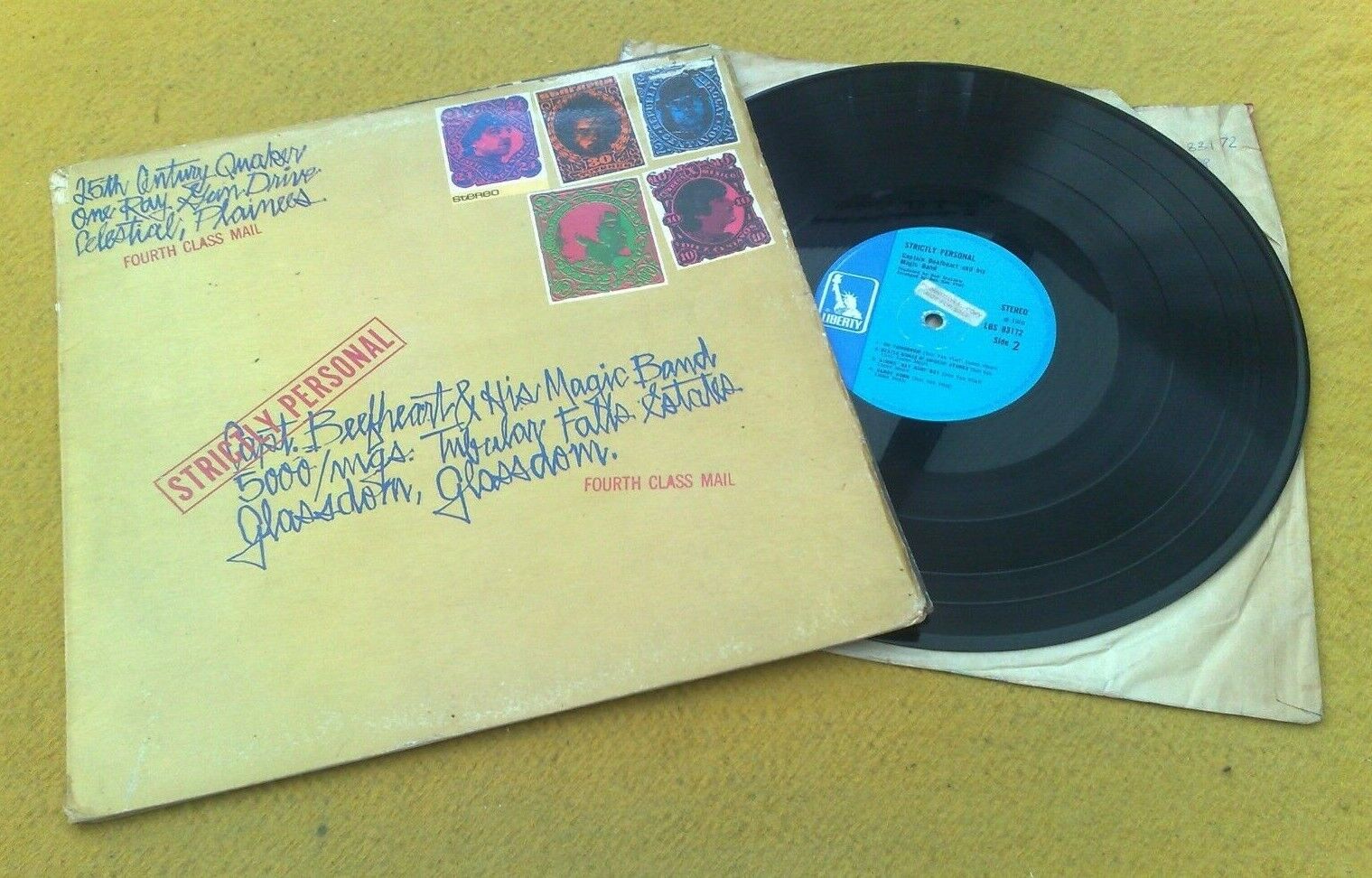
An overview of Captain Beefheart’s 1968 studio album “Strictly Personal”, Ultimately a failed attempt at a double album (the partner project released years later under the title, ‘Mirror Man’), this second record from Beefheart and his unwavering Magic Band is a pivotal point in his career whereby it provides a nod to the past (the debut, ‘Safe As Milk’) and prognosticates things to come (‘Trout Mask Replica’). This album comfortably bridges the predictable and “formulaic” nature of the songs on the debut, yet takes the music in unconventional directions; just listen to the song “Son Of Mirror Man – Mere Man” or “Kandy Korn” to illustrate the point. Gone are the traditional Blues song forms, yet the soul and musical vocabulary used is still very rooted deeply in that Delta Blues style.

The songs still have a strong semblance of unity where the instruments largely play in complementary ways while the vocals follow, yet diverge and are clearly becoming more abstract in definition and delivery. Opening with “Ah Feel Like Ahcid,” an a cappella blues workout with its roots in Son House’s “Death Letter,” the brief (barely 35 minutes) album is at the same time simpler and weirder than Safe As Milk had been.  ‘Beatle Bones ’N Smokin’ Stones’ might just be the signature tune of the album to foreshadow what is to come…the breakdown of conventional forms, idioms, expectations and ultimately what could be done in a “Pop/Rock” format was galvanized with this album. It wasn’t until ‘Trout Mask Replica’ that it was completely realized.

The Captain; He frustrated, hurt, abused, rebuked and demoralized more than a handful of musicians in his artistic pursuit of absolute freedom. While I think that he achieved his goal…and created unparalleled music in the process, the result is timeless and “tip my cap” to all of those who bore the weight of his tyranny, persevered and ultimately created this incredibly groundbreaking music.

Producer Bob Krasnow was the owner of Blue Thumb added phasing and reverberation effects to the recordings, which have since been the topic of much discussion among music fans and critics. The original intention was to record the album for Buddah Records entitled “It Comes to You in a Plain Brown Wrapper” (Strictly Personal’s sleeve design is a relic of this initial concept). A considerable amount of material was recorded for the project during the period of October–November 1967 with Krasnow producing. Buddah Records, however, declined to release the album, which appeared in revised form the following year. Strictly Personal features re-recorded versions of songs from the 1967 sessions. Beefheart subsequently condemned the production. He said the effects were added without his knowledge or approval. These comments became public only after sales of the album failed to reach expectations. It has been claimed by other band members that he initially agreed to the use of these sounds. Regardless, Beefheart did release his later recordings with a much more basic and unprocessed sound.  The CD I May Be Hungry But I Sure Ain’t Weird contains all of those ’67 tracks, except Korn Ring Finger recorded for the sessions.
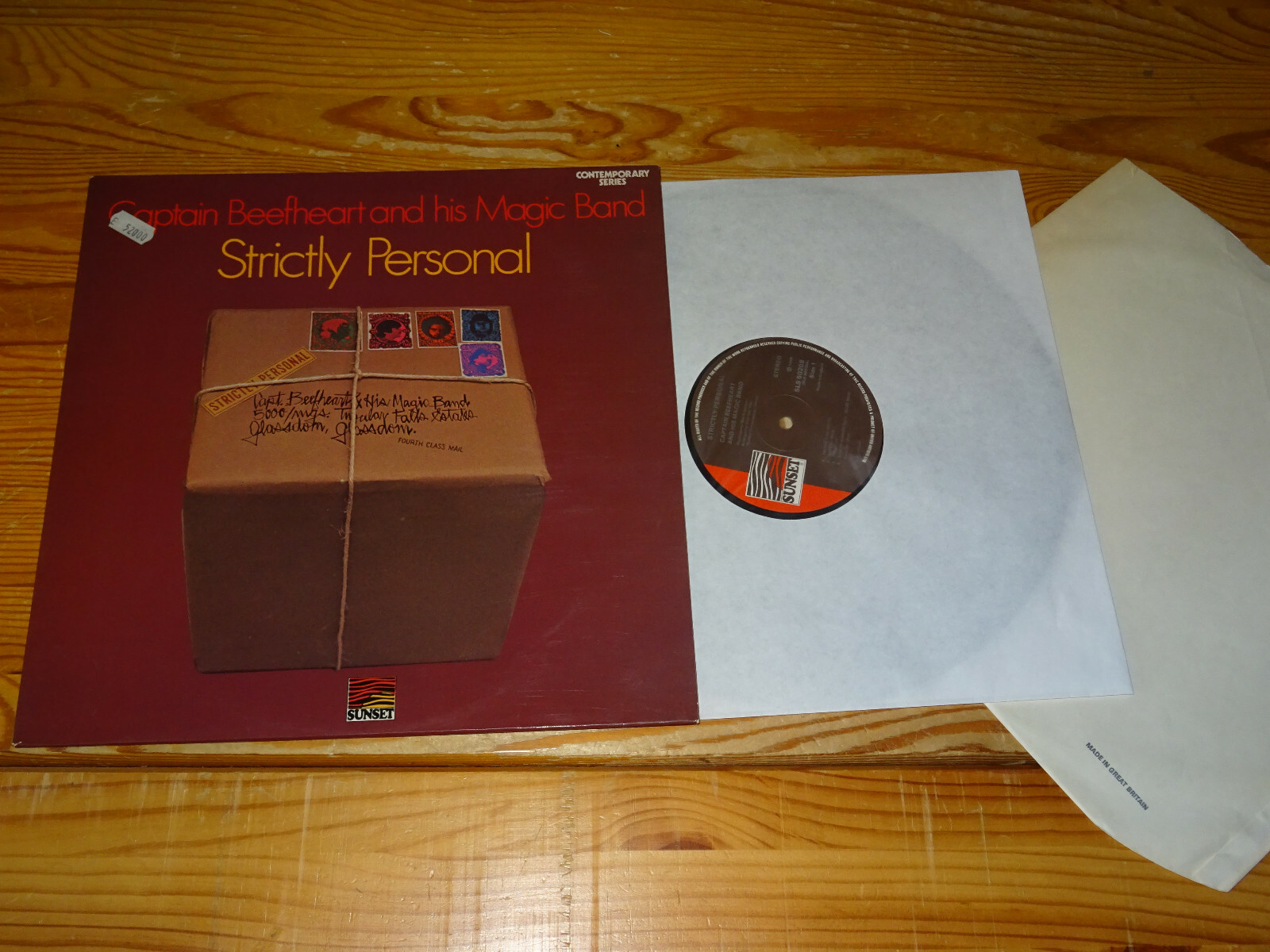
Buddah released some recordings from the earlier sessions, along with an earlier version of “Kandy Korn”, as Mirror Man in 1971. Much other material from the 1967 sessions has since been released: This album has long since been out of print, but all eleven tracks can be found spread across The Mirror Man Sessions and the current version of Safe as Milk. Some of these tracks were also used for a vinyl-only release by the Sundazed label in 2008 bearing the original intended title of It Comes to You in a Plain Brown Wrapper but this release does not duplicate the original album’s concept or sequence.

‘Strictly Personal’ is not only required listening to every Captain Beefheart fan, I think it deserves mention of one of the most Avant-Garde albums in the Pop/Rock genre (is that even possible?!?!) Hopefully, some who visit this page will investigate this landmark recording and comment on my emotions, but this is a Huge milestone in his development as a “musical” artist and what (along with a healthy dose of competition he felt with fellow friend and maverick, Frank Zappa) created the Beefheart aesthetic.

thanks for words by Brent Rusche

Originally released in October 1968 as the first album on the Blue Thumb Records

The Magic Band:

  • Don Van Vliet – vocals, harmonica
  • Alex St. Clair – guitar
  • Jeff Cotton – guitar
  • Jerry Handley – bass
  • John French – drums

reDiscover Captain Beefheart’s ‘Safe As Milk’

Captain Beefheart and his Magic Band “accessible” earliest outing, Safe As Milk, is shot through with unexpected detours; a collision of influences, from Delta blues to popular candy bars; and a torrent of esoteric lyrics that more than earn themselves song titles the likes of ‘Zig Zag Wanderer’ (“You can dance/You can prance/Freeze these old timbers/Drop some beams,” indeed).

Despite having released a couple of singles for A&M in 1966, the label found Beefheart’s subsequent demos too perplexing to release as an album, so the good Captain took them to Bob Krasnow, vice president of Kama Sutra Records. Krasnow agreed to issue Beefheart and The Magic Band’s debut on his nascent Buddah subsidiary, in September 1967. Recruiting fledgling guitarist Ry Cooder on an array of guitars and percussion instruments was another masterstroke decision, as Cooder ensured that Safe As Milk kept one foot in the authentic Americana camp, while allowing Beefheart to digress on his flights of fancy.

Perhaps both the album’s authentic blues influences and Beefheart’s early attempts at deconstructing them hit perfection on the likes of opener ‘Sure ’Nuff ‘N’ Yes, I Do’ and the epochal ‘Electricity’. The former cops a lick from blues classic ‘Rollin’ And Tumblin’’, with Beefheart introducing himself: “I was born in the desert, came up in New Orleans,” the first of many myth-making proclamations from the man born Don Van Vliet. The latter, however, is where the Beefheart legend really begins. With a tortured Theramin line, a maelstrom of slide guitars and Beefheart’s own vocals approximating the very sound of electricity itself (it’s said that his voice was so powerful that it destroyed the microphone during the recording sessions), the song fairly approximates the sound of Tesla coils mating.

Not that Safe As Milk leaps from one overwhelming barrage to another. ‘I’m Glad’ is a comparatively straightforward doo-wop outing, while ‘Abba Zaba’, named after Beefheart’s favourite peanut butter-infused sweet, hides a relatively delicate arrangement underneath layers of inscrutable lyrics.

Even in the anything-goes atmosphere of 1967, a year that saw The Beatles release Sgt Pepper’s Lonely Hearts Club Band, The Doors issue their self-titled debut, the Rolling Stones accept Their Satanic Majesties Request, Hendrix ask Are You Experienced? and The Velvet Underground emerge with their nihilistic debut, Safe As Milk was considered too weird to stick. Naturally, it went nowhere in the charts. It did, however, establish Beefheart as a compelling songwriter whose disregard for conventional song structures would pay dividends on albums to come.

This is the Buddah Records’ remastered reissue of The Magic Band’s 1967 debut album, “Safe as Milk”. The reissue was released in 1999, containing the original 12 tracks, as well as 7 bonus tracks that were originally intended for the unreleased “Brown Wrapper” follow-up album. The bonus tracks were recorded about 2 months after the original release of Safe as Milk, as well as from the same sessions used to record the songs for the 1971 album “Mirror Man”.

While more conventional and accessible than Beefheart’s later work, “Safe As Milk” is still an incredible album that introduced the bluesy, idiosyncratic, and experimental groundwork that would be expanded upon in The Magic Band’s later work such as Trout Mask Replica. The non-replicable sound of the band can most easily be heard in Electricity, through the Captain’s raw, sour vocals, the constantly-changing tempo, and Samuel Hoffman’s fitting use of the theremin.

Image may contain: text

This letter was sent out to promote the Abba Zaba 45 in the US in late August 1967, and takes the opportunity to give the album an extra push too. I guess Cecil was Cecil Holmes, Marty was Marty Thau, Bob was Bob Krasnow, and Neil was Neil Bogart.

Just this year, Sundazed Music released a mono reissue of the album in both CD and LP format – it’s a restoration of the original mono mix owned by the original album producer Richard Perry, featuring an incredibly improved production quality (primarily making Beefheart’s vocals mono as opposed to being far-left or far-right as noticeable in the video).

1: Sure ‘Nuff ‘n Yes I Do – 0:00
2: Zig Zag Wanderer – 2:15
3: Call On Me – 4:55
4: Dropout Boogie – 7:32
5: I’m Glad – 10:04
6: Electricity – 13:35
7: Yellow Brick Road – 16:42
8: Abba Zaba – 19:11
9: Plastic Factory – 21:55
10: Where There’s Woman – 25:04
11: Grown So Ugly – 27:13
12: Autumn’s Child – 29:40
13: Safe as Milk (Take 5)* – 33:42
14: On Tomorrow* – 37:56
15: Big Black Baby Shoes* – 44:53
16: Flower Pot* – 49:43
17: Dirty Blue Gene* – 53:39
18: Trust Us (Take 9)* – 56:23
19: Korn Ring Finger* – 1:03:45