In the early ’90s, Meg Ryan wasn’t just preventing Tom Hanks from being Sleepless in Seattle. The movie star also was helping R.E.M. avoid getting a “Parental Advisory” sticker stamped on their new album.
At the same time that Ryan was filming the aforementioned romantic comedy in the spring/summer of 1992, R.E.M. were finishing work on the band’s eighth studio album, Automatic for the People, at Bad Animals in Seattle. One of the last tracks to receive a final vocal from Michael Stipe was a lusty, airy love ballad they were planning to call “F–k Me Kitten” after a line that Stipe repeats towards the end of the song.
“Meg Ryan came by and she just loved the song,” said guitarist Peter Buck in 1992. “But she said, ‘You know, when I grew up if the word ‘F–k’ was in the title and it was on the cover, I couldn’t buy it in my town.’ And we thought, ‘That makes sense.’ You want to reach people. You don’t want someone to arbitrarily say, ‘You can’t hear this.’”
So, in a goofy stab at self-censorship, R.E.M. opted to change the obscenity in the title to “Star,” a reference to the asterisks that would stand in for offensive language. It also appeared to be a nod to the Rolling Stones, who had once humorously altered the title of “Starf–ker” to “Star Star.” But, just like the Stones before them, R.E.M. retained the blue language in the recording, simply changing the title to “Star Me Kitten.”
When the song was originally conceived, it carried the less risqué (and less interesting) working title of “HeyLove,” perhaps a gesture to one of the recording’s inspirations, 10cc’s “I’m Not in Love.” Bassist-keyboardist MikeMills wanted to achieve an effect similar to the English group’s ethereal, layered backing vocals on the ’70s hit. He told Scott Litt about his thoughts and the producer came up with the idea of recording Mills as he sang different notes, then playing them back on a mixing board, with each fader controlling a separate note. The musician could then create a weird choral backing by positioning the faders.
“I just played my voice and brought in the notes that needed to be there, very haphazard and random,” Mills said “I could never play it the same way twice.”
For the track, recorded at Bearsville Sound Studios in Woodstock, New York, Mills also laid down a wafting Hammond organ part, the sound of which caused Buck to add tremolo guitar that made him think of David Lynch’s Twin Peaks. The guitarist thought that the Lynchian influence carried over to Stipe’s vocals. Buck called “Star Me Kitten” a “Frank Booth-type love song,” because it reminded him of Dennis Hopper’s character in Blue Velvet.
The frontman hadn’t copped to a filmic influence on for the lyrics, which he gargles in a voice that barely rises above a whisper. Stipe said that at least one of the lines was inspired by the time R.E.M. spent making Automatic in Miami (in between their days in Woodstock and Seattle).
“I remember we worked in Miami a lot on that record,” said Stipe in 2011. “I can still drive down – there’s a boulevard in Miami, off of Miami Beach, that has advertisements for keys and how much it costs and you get three for the price of one. And that, of course, became a lyric…”
It actually became the first line in “Star Me Kitten,” as Stipe initially blocks his lover’s access (he’s got three keys “and you can’t have one”). As the song stumbles along, the singer explores their relationship, questioning what happened and remembering how it once was – “You, me, we used to be on fire” – before revealing a carnal desire.
“It’s a very twisted love song,” Mills said. “And Michael’s just saying, ‘Yeah, relationships are tough and ours may not be the best, but go ahead. What are you waiting for? F–k me!’”
“Star Me Kitten” was one of the last Automatictunes to be completed in Seattle, where Meg Ryan gave her sage advice and Stipe recorded his hushed singing. But those wouldn’t be the only vocals applied to this song. It would get even more twisted when R.E.M. collaborated with beat poet William S. Burroughs, who mostly talked (rather than sang) Stipe’s lines on an alternate version. This take on “Star Me Kitten” was released on 1996’s Songs in the Key of X: Music From and Inspired by the X-Files and has subsequently appeared on R.E.M. rarities compilations.
Despite being a difficult song to replicate, the band performed “Star Me Kitten” almost 30 times on their 1995 world tour in support of Monster, with drummer Bill Berry switching to bass so that Mills could “play” the recordings of his backing vocals. The band never returned to playing the song on subsequent treks. Maybe they would have altered their plans if they knew Meg was coming.
R.E.M. began crafting their follow-up to Out of Time, just as the album was becoming a multi-platinum blockbuster in the spring and summer of 1991. They wanted to do something totally different, from a musical vantage point. Where their seventh full-length studio release has been delicate (mandolins), pastoral (string sections) and often cheery (“Shiny Happy People” anyone?), R.E.M. were planning to come up with a batch of rockers. This next disc would be hard, fast and loud, the sonic successor to the crunchiest material on 1987’s Document and 1988’s Green.
Those songs proved elusive, however, and the sounds uninspiring. So, R.E.M.’s instrumental trio (guitarist PeterBuck, bassist/keyboardist Mike Mills, drummer Bill Berry) gravitated to tracks that were more acoustic-based and shadowy in spirit. Automatic for the People began to discover its brooding sound – and later gained lyrics to match, from singer Michael Stipe.
By the spring of 1992, when R.E.M. were recording the album in a number of studios from Florida and Washington to New York and Louisiana, only one of those battle-hardened rock tracks remained in play. It was the song with the working title of “Howler Monkey,” a surging rock epic partially inspired by Neil Young.
“The song is written in Neil Young’s tuning – not that he owns it,” Buck said in 1992. “But the Es are tuned down to D, like in ‘Cinnamon Girl.’ I admit it; he’s the one I learned that tuning from.”
The muscular, abrasive aesthetic of the instrumental track appeared to provoke Stipe’s thoughts and feelings about the last dozen years of U.S. presidential administrations, including Ronald Reagan and George H.W. Bush. The lyrics that Stipe wrote were, as he later self-effacingly put it, “a barely adult reaction to the Iran-Contra scandal.”
The song was the most biting and specific political critique of R.E.M.’s then-12-year career. Sure, Stipe had already become a spokesman for left-wing causes and had written a few socially conscious songs (including “Welcome to the Occupation,” which was also partly about the Iran-Contra scandal), but nothing had yet approached this: The frontman lambasts the leaders and their followers, lists election years, slams the media and mocks the current president for unceremoniously vomiting at a state dinner (“how to walk in dignity with throw-up on your shoes”). In between calling his least-favorite politicians bastards and yelling “F— you,” Stipe characterizes Reagan’s and Bush’s America as an uncaring “Ignoreland.”
“That’s what ‘Ignoreland’ is – America,” Mills said after Automatic’s release. “It’s people who only get their information from sound bites and television, and who don’t really bother to research the presidential candidates – or ultimately the more important ones, who are your local candidates.”
Over the raging background, Stipe frothed about how politics could be played for sport, chanting “Defense, defense, defense, defense …” like a member of an impassioned football crowd clamoring for more tax dollars to be spent on the military. “Ignoreland” is angry, but it’s amusing and poetic anger, with a surprisingly self-conscious turn at the end. “Michael’s rolling against Republican politics,” Mills noted. “And the last verse is really great – ‘I know that this is vitriol, no solution, spleen-venting / But I feel better having screamed. Don’t you?’ It’s really great.”
Stipe’s vocals were processed through an amplifier “to get that cold anger in his voice that you get with natural distortion,” according to Buck. The effect also helped his voice hang with the titanic chomp of the music, a near-cacophony of instrumentation. Berry pounded hard. Mills thundered on a fuzz bass. Knox Chandler, who played on “Sweetness Follows,” returned to contribute “rock ’n’ roll cello.” Even producer Scott Litt got in on the action, playing Stevie Wonder on a funky clavinet and snarling harmonica.
No one, however, was outdone by Buck as he slathered “Ignoreland” in layers of guitar: electrics, heavily modified acoustics and even one played with an EBow. As the guitarist sustaining notes with his EBow on one overdubbed guitar and bending notes on another, “you’ve got one note held and the other pushing out,” Buck revealed “and it makes the feel really unsettling.”
With all of those elements stacked up, the recording proved tricky to mix (certainly in comparison to the more spare songs on the remainder of Automatic for the People. Although Buck claimed to be satisfied with Litt’s final mix, Mills and Stipe were less impressed. There was a dispute about how loud the fuzz bass should be and, within a couple of years, both of the band’s Michaels felt that “Ignoreland” should have been, ahem, ignored by the band and left off the track list.
But fans, particularly R.E.M.’s more rock-inclined audience, gravitated to the song – a buzzsaw in a land of nail clippers. Even though the band didn’t release “Ignoreland” as a single, the track got picked up by DJs at rock stations . A month after R.E.M. released Automatic for the People in October 1992, Bill Clinton was elected to the U.S. presidency, becoming the first Democrat to be elected during the band’s run. Although R.E.M. didn’t tour to promote the album (which would have forced them to decide if “Ignoreland” was now out of date or still applicable), Stipe appeared at MTV’s Inaugural Ball in 1993, performing with Natalie Merchant and 10,000 Maniacs.
“Ignoreland” wouldn’t make its live debut until 16 years later, when R.E.M. (now without Berry) began playing the song while the George W. Bush administration was in its last throes. On what would be the band’s final tour, Stipe thought that the old chestnut became “more powerful” in its live rendition – in addition to remaining politically relevant. “It just flew up out of nowhere and suddenly mattered again,” Stipe wrote in 2008. “I think we’ve played it every night this tour.”
“Sweetness Follows” is the centerpiece of R.E.M.’s Automatic for the People, filling that role both logistically (it’s the sixth track of 12) and thematically. Rock writers, reacting to the album’s release in 1992 and in the decades after, have noted how the song might best represent the whole: gloomy with some rough edges, and mournful lyrics that appear to be about death or, more significantly, loss.
The grief comes in a steady torrent, right from the opening line, in which Michael Stipe sings, “Readying to bury your father and your mother.” Deep bends of cello jab alongside equally cutting introspection, concerning matters in a family that was anything but tight-knit (“Distanced from one / Blind to the other”). No matter if the song’s siblings are actually preparing to attend their parents’ funeral, or simply saying farewell to a broken relationship with their mother and father, the aftermath is the title phrase. “Ohhhh,” Stipe warbles in a drawn-out howl, “sweetness follows.”
Is R.E.M.’s frontman being sincere or sarcastic? The lyrics are cryptic enough to be read multiple ways, and the listener’s interpretation can fill the hollowed-out relationships of “Sweetness Follows.” Whatever their explanations, fans can rest assured that they’re probably getting it wrong. When asked in 2008 about which R.E.M. songs have been given the most surprising fan interpretation, Stipe listed “Sweetness Follows” first – even before the more famously misunderstood “The One I Love.”
Before Stipe added lyrics to the composition, “Sweetness Follows” entered the world as a demo by guitarist Peter Buck (with the working title “Cello Scud” by the time R.E.M. were gathering the Automatic demos in February 1992 at John Keane’s studio in Athens, Ga.). In the end, Buck thinks he’s the only R.E.M. member who played an instrument on the album version, finalized with producer Scott Litt at Bearsville Sound Studios in Woodstock, N. Y.
“Peter wrote the bulk of it,” bassist/keyboardist Mike Mills said. “Actually, it’s mostly a demo. There’s no bass on it at all. It’s all cello, played through an amp.”
The cello part came courtesy of Knox Chandler, the one-time Psychedelic Furs collaborator who had worked with Buck on a side project. As Mills said, Chandler sawed away at the instrument, which was distorted through an amplifier. In addition, Buck contributed waves of guitar feedback, which he said “fills the space and pushes the song to a different level.”
“I did that a lot on the record, putting weird, harsh things underneath which undercut the song,” he said in 1992. “‘Sweetness Follows’ would be too saccharine if it didn’t have that discordant cello back there.”
Harsh things, discordant cello, an absence of drums and an abundance of difficult emotions meant that “Sweetness Follows” wasn’t an obvious choice for a single. However, the Automatic album track drew the attention of film director – and former rock journalist – Cameron Crowe, who chose to include the song in 2001’s Vanilla Sky. (The Tom Cruise vehicle also featured a re-recording of the R.E.M. leftover “All the Right Friends.”)
Not long before the movie entered production – but seven years after Automatic for the People was released – R.E.M. began performing “Sweetness Follows” in concert. The surging cello part was played on electric bass on the band’s 1999 tour, the first without drummer Bill Berry, who didn’t play on the original track.
That same year, when R.E.M. played Glastonbury, Stipe dedicated their performance of the song to Jean Eavis, the recently deceased wife of festival founder Michael Eavis (which, one would assume, means “Sweetness Follows” is not to be perceived as sarcastic at all). After playing the song regularly when promoting Up, the band would return to “Sweetness Follows” on subsequent tours through 2008, but only when the mood struck them.
“We play it occasionally,” Mills commented in 2007. “There are a lot of songs that we really enjoy, but you don’t want to play them every night.”
When talking about R.E.M.’s Automatic for the People, bassist/keyboardist Mike Mills claimed that the band recorded their 1992 album “in the four corners of the U.S.” While that statement might contain a slight misunderstanding of geography, it’s true that R.E.M. seemed to approach their new record like a progressive dinner. Recordings were done in Athens, Ga.; Woodstock, N.Y.; Miami, Atlanta, Seattle and New Orleans.
In March of ’92, they spent a little more than a week in the Crescent City, setting up camp at Daniel Lanois’Kingsway Studio in the French Quarter. R.E.M. had already tracked a bunch of demos in their hometown of Athens, so the idea was to possibly create or refine a few more, while conjuring whatever strange sounds seemed to manifest.
Kingsway “is an old, haunted mansion – supposedly haunted – and filled with kind of neat, old antiques, neat instruments,” guitarist Peter Buck said in a 1992 promotional video. “And [we] did demos there, some of which ended up on the record.”
The band recorded much of “Drive” – vocals, guitar, bass and drums – by playing live-to-tape at the studio. Impressed with the results, R.E.M. decided to push further.
“It was two in the morning. There were a couple of bottles of wine around,” Buck said. “Then Daniel said, ‘Why don’t you just write some songs here? I sat down with a bottle of wine and wrote three things.”
One of them turned out to be the efficiently titled “New Orleans Instrumental No. 1.” The moody little number featured little more than quivering electric piano, thick-cut bass and an ear-catching foghorn guitar. You could almost hear the smoke billowing in a late-night club.
“That’s a groovy little thing. Peter had a volume pedal or some sort of weird guitar that made those noises,” Mills recalled . “We were just messing around making sounds, and decided to throw that song together. That came out of the sound of that guitar – that’s what got that song going.” Although a longer version exists, the two-minute, 13-second edit of the instrumental composition became the fifth track on Automatic. It’s more than a palette-cleanser between “Everybody Hurts” and “Sweetness Follows”; “New Orleans” seems to mirror the deeply felt emotions strung throughout the album.
Meanwhile, another song from those Kingsway sessions – named “New Orleans Instrumental No. 2,” of course – became the B-side to the single release of “Man on the Moon.” That track had a totally different feel, described by Buck as sounding like a “deranged piña colada commercial.”
Unlike Out of Time’s “Endgame” – the first instrumental to make a proper R.E.M. studio disc – “New Orleans Instrumental No. 1” was never performed by the band in concert. One of the lower-profile songs to grace an R.E.M. album, the tune recently got its time in the sun (or, more appropriately, the dark). The instrumental popped up in director Edgar Wright’s 2017 feature film Baby Driver, which was filmed, partially, in New Orleans.
“I would never claim to say that we captured any of New Orleans,” Buck confessed. “But I really wanted to conspicuously try and get a late-night horn feel, that muted trumpet thing.”
R.E.M. named their eighth studio album, 1992’s Automatic for the People, after a slogan employed by Weaver D’s, a joint in their hometown of Athens, Ga., that specialized in soul food. But the musicians didn’t just enjoy soul food, they were fans of soul music – an influence that got obscured by the music press’ constant references to the Byrds and New York punks.
But R.E.M. loved R&B records. They goofily covered Archie Bell and the Drells’ “Tighten Up” in the ’80s and some soul aficionados compared Bill Berry’s drumming to that of Booker T. and the MG’s member Al Jackson Jr.
It was Berry who came up with the rough idea for R.E.M.’s most soulful original song, “Everybody Hurts.” In mid-1991, Berry, guitarist Peter Buck and bassist/keyboardist Mike Mills met up to begin working on music for the band’s follow-up to Out of Time. (Singer Michael Stipe would enter the creative process later, which was standard operating procedure for R.E.M.) One day, the drummer, who also played other instruments, brought in a new idea. “Bill wrote most of it,” Mills has said. “He came in with the chords on guitar. We were actually playing with Bill on guitar, Peter on bass and me on drums. It sounded terrible. We thought, ‘This sucks. Let’s demo it playing our own instruments, play it right.’”
Buck described the initial version of the song, which had no chorus or bridge, as a country-ish ballad. As R.E.M.’s instrumental trio kept at it, the song began to develop a more soulful feeling.
“We went through about four different ideas and how to approach it and eventually came to that Stax, Otis Redding, ‘Pain in My Heart’ kind of vibe,” Buck recalled, “I’m not sure if Michael would have copped that reference, but to a lot of our fans it was a Staxxy-type thing,”
With Mills playing Booker T. Jones to Buck’s Steve Cropper, “Everybody Hurts” became something of a soul ballad. It had the some of the trademarks of a Stax ballad, including an arpeggiated guitar part, electric piano and 12/8 time signature.
“But then it’s shuffled through us. Like the bridge is in a way-weird different key,” Buck said in 1992. “We’re not Otis Redding. But given that, we took some of the influence, that music we loved for years.”
Berry, Buck and Mills didn’t think that Stipe would respond to their slow and simple approach, and that this track would be consigned to the b-sides and rarities bin. But the singer ended up taking to “Everybody Hurts,” which displayed a much different approach – both in lyrics and performance – to early R.E.M. While Stipe would play fast and loose with enunciation on songs such as “Gardening at Night” and “9-9,” that habit had slowly faded with R.E.M.’s rise to rock prominence. “Everybody Hurts” took one more step forward in being clear and direct. “There’s a time for obfuscation,”said Mills . “But this wasn’t it.”
Many times since the release of Automatic, R.E.M.’s members have discussed the lyrical ideas of “EverybodyHurts,” explaining that the anti-suicide sentiments of the song were directed at teenagers – or anyone, really – who might need to be reminded that so many people share pain, sadness and dark thoughts. The band had written political songs before (and elsewhere on this album), but this was R.E.M.’s first “message song.” And the message was, “You’re not alone.”
In an ironic twist, the man who was most responsible for the song ended up barely playing on it. Instead of Berry’s drumming, the majority of the track features a metronome-like beat created by a $20 Univox drum machine, although Bill was the one who programmed it.
Stipe “and I cut it live with this dumb drum machine which is just as wooden as you can get,” said the drummer in 1992. “We wanted to get this flow around that: Human and non-human at the same time.”
Berry’s normal drums show up for the song’s bridge, and again at the end, when his crisp pounding helps bring “Everybody Hurts” to a soaring conclusion – aided in no small part by full complement of strings. The orchestration was the work members of the Atlanta Symphony Orchestra, supervised by John Paul Jones. Via producer Scott Litt, R.E.M. had asked the Led Zeppelin bassist about arranging strings for “Everybody Hurts” and three other Automatic songs. He agreed and collaborated on the overdubs in the spring of ’92.
“John Paul Jones was great to work with,” Buck said in Reveal: The Story of R.E.M. “He knows his way backwards and forwards on just about every instrument. He’s a great arranger and a super sweet guy.”
“Everybody Hurts” became the fourth track on Automatic for the People, which came out in October 1992, as well as the fourth single R.E.M. released from the album. The song became a smash overseas, hitting No. 7 in the U.K., No. 4 in the Netherlands and No. 6 in Australia, where it remains the highest-charting hit of the band’s career. “Everybody Hurts” also went over well in R.E.M.’s home country, going to No. 29 on the charts, The commercial success was helped, maybe even overshadowed, by the song’s music video.
In one of R.E.M.’s most iconic clips, the band finds themselves in the middle of a traffic jam (shot by Jake Scott on a freeway in San Antonio). Subtitles flutter between song lyrics and – in a Fellini-esque touch – the unheard thoughts of R.E.M.’s fellow motorists, in snippets that are funny, strange and devastating. The band gets out of their car, Stipe starts to sing and everyone is moved to just get out and walk.
“Michael is probably the best artist I’ve worked with in terms of understanding his performance, even though he’s so insecure all the time,” Scott, who is the son of big-time film director Ridley Scott said in 1995. “In ‘Everybody Hurts,’ he felt exposed and agoraphobic and I think that worked for the video. It’s rare that somebody has the confidence and awareness to look awkward and quite afraid in front of the camera.”
MTV agreed, playing the video early and often and awarding it multiple Moonmen at 1993’s Video Music Awards, at which R.E.M. performed the song for only the second time in public. (As with Out of Time, the band had again chosen to forgo a tour to promote Automatic.) But in the following years, “Everybody Hurts” became a frequent part of R.E.M.’s set and was featured at the band’s final full performance in 2008 in Mexico City. It’s been part of each best-of collection that includes the group’s Warner Bros. years.
“Everybody Hurts” also became bigger than just one of R.E.M.’s hits. In Nevada, a state that has a high rate of teen suicide, the legislature celebrated the song for its message. A U.K. counselling service based an ad campaign around the hit, hoping to help more young people who were contemplating suicide. And, in 2010, R.E.M. gave their permission for the song’s use (sans royalties) for an all-star charity single that sought to raise money for the people of Haiti after that year’s earthquake.
If the song has been perceived as too square, maudlin or basic by some music fans, Mills thinks that’s due to the song’s overexposure on the airwaves. But it’s clear that the members of R.E.M. take pride in it, especially Stipe.
“I don’t remember singing it, but I still kind of can’t believe my voice is on this recording,” he wrote in Part Lies, Part Heart, Part Truth, Part Garbage 1982-2011. “It’s very pure. This song instantly belonged to everyone except us, and that honestly means the world to me.”
As R.E.M. were completing work on their eighth studio album, Automatic for the People, in the late spring of 1992, the quartet’s members grew concerned about the final track listing. For the most part, this was a batch of dark songs about difficult subjects. Perhaps a bit of levity, in the form of the buoyant “The Sidewinder Sleeps Tonite,” would be welcome in the running order.
“We included this song on Automatic in order to break the prevailing mood of the album,” guitarist Peter Buck wrote in the liner notes for In Time: The Best of R.E.M. 1988-2003. “Given that the record dealt with mortality, the passage of time, suicide and family, we felt that a light spot was needed. In retrospect, the consensus amongst the band is that this might be a little too lightweight.”
Like the majority of the songs on this album, “Sidewinder” first came to life in rehearsal/demo sessions conducted by the instrumentalists in the band: Buck, bassist/keyboardist Mike Mills and drummer Bill Berry. Following a couple months of promotion for 1991’s Out of Time, the trio holed up in R.E.M.’s hometown of Athens, Ga., and began working on what they had planned to be a big rock record. But the tracks that most intrigued them – and singer Michael Stipe – turned out to be the quieter, acoustic-driven ones, and the melancholy music that would symbolize Automatic for the People started to coalesce.
But amid some of the softer, slower, minor-key stuff was an upbeat boogie, created the same day that the men came up with the music for “Man on the Moon.” Both were melody-forward, but the former seemed to recall R.E.M.’s sunniest moments, such as “Shiny Happy People” and “Stand.” It only became bolder with John Paul Jones’ string arrangement, added after the bulk of the album sessions in Atlanta.
“The other guys gave me this new song that is so beyond ‘Stand’ that it makes ‘Stand’ sound like a dirge,” Stipe has said in 1992, perhaps referring to what would become “The Sidewinder Sleeps Tonite.” “I mentioned it and they all started laughing. But it sounds like that song ‘The Sound of Philadelphia’ by MFSB. It’s really out there.”
R.E.M’s singer went “really out there” in penning the lyrics to “Sidewinder,” writing lines that list food (“A can of beans or black-eyed peas / Nescafe and ice”) or could be snippets of overheard conversation (“Uou can’t lay a patch by computer design / It’s just a lot of stupid, stupid signs”) or obsess over the tiny details (“There are scratches around the coin slot”).
But that’s not to say that this song isn’t sub-sub-sub-substantial. “Sidewinder” seems to be offering glimpses of a transient lifestyle with the hallmarks of a roadside motel – instant food, strange characters and pay phones. Although Stipe wrote the lyrics, the details may have mirrored aspects of guitarist Buck’s life, seeing as his first marriage was in trouble during the Automatic era.
“I didn’t even have a house,” he revealed in the documentary R.E.M. by MTV. “I was driving around listening to cassettes and staying in $19-a-night motels.”
The “Sidewinder” mentioned in the song’s title is a snake, perhaps a metaphor for the drifting narrator, or maybe it refers to the public phone that is so central to the lyrics. Some old-timey telephones were called sidewinders, because of the coil of cord that wound on the side of the machine.
It’s also possible that in the chorus (where Stipe squeezes nine syllables into the space of four, “callmewhenyoutrytowakeherup”), the “her” that he’s singing about could refer to the phone. If cars, boats and spaceships can be “shes,” why can’t a pay phone be a “her”?
Despite wearing a lighter pallor, “Sidewinder” still ties into one of Automatic’s main themes: youth, or rather, memories of youth. You can hear Stipe laugh as he sings, following the namecheck of Dr. Seuss (because he’s incapable of saying the children’s author’s name as Dr. Zeus). He goes on to sing about the Cat in the Hat and cartoons, in a lyric of which the singer is particular fond.
“Sidewinder” “holds on of my favorite lines ever, in ‘their world has flat backgrounds and little need to sleep but to dream’,” he wrote in the liner notes to Part Lies, Part Heart, Part Truth, Part Garbage 1982-2011. “Cartoon characters never just get sleepy, they always have to have a dream of some floaty kind.”
In the recording stage, the song’s working title was “Wake Her Up,” before it was changed to “The Sidewinder Sleeps Tonite” – a reference to the old Tokens’ doo-wop hit “The Lion Sleeps Tonight.” Stipe even cops that song’s “eee-dee-dee-dee” intro in the R.E.M. song’s opening moments. The guys had a genuine love for the song, which they had been covering since R.E.M.’s earliest shows, and decided to clear their nod to the pop classic with its songwriters.
“We actually paid them for that,” Buck revealed in 1992. “We didn’t want some guy, down the road, going, ‘You owe me two million dollars.’ So we called them up and said, ‘We’re calling it “The Sidewinder Sleeps Tonite” and the singer kind of paraphrases the line.’ In any court of law, we couldn’t have been nailed. Because the song doesn’t have anything to do with it. But you don’t want someone to feel that you’re stealing from them.”
R.E.M. also promised to cover “The Lion Sleeps Tonight,” allowing Stipe to squeal with joy on the B-side of the “Sidewinder” single, thus ensuring the songwriters some royalties. Which is what happened when the band put out the song as Automatic’s third single in the winter of 1993, a few months after the album’s release. It kind of flopped in the U.S. (“Sidewinder” fared well on rock radio, but didn’t match the reaction to “Drive” or “Man on the Moon”), but went to No. 17 in the U.K.
Although “The Sidewinder Sleeps Tonite” has featured on multiple best-of compilations – including 2003’s In Time and 2011’s career-spanning Part Lies, Part Heart, Part Truth, Part Garbage – R.E.M. never played the song in concert. It is one of only two tracks from Automatic for the People to never make it into a concert (the other being “New Orleans Instrumental No. 1”).
“That’s a song that to this day I’m not really sure what it’s about, but it’s a lot of fun,” Mills said in 2007. “We never do it live, but it’s a good record. It’s just one of those songs that never seemed like it need to be done live. We might’ve messed around with it at sound check a couple of times, but it never felt like something we should really try.”
“Try Not to Breathe” is a pretty bleak command. And, indeed, the second track from R.E.M.’sAutomatic for the People is about death. But the song’s title originated with a much more innocuous statement.
During the demo stages for the album, which would come out in October 1992, guitarist Peter Buck was recording the groundwork for a possible new tune on acoustic guitar.
“We were doing the demo, and I had the mic for my guitar right up against my mouth. I was kind of huffing,” Buck said in 1992. “So John [Keane], the engineer, said, ‘You’re making too much noise.’ So I said, ‘OK, take two. I’ll try not to breathe.’ I just meant that I wouldn’t breathe during the take. But Michael [Stipe] heard it and said, ‘Oh, that’s a nice title.’”
Stipe took the idea away and returned with a completed lyric, a scene of someone on their deathbed, told from the perspective of person who is about to shuffle off this mortal coil. The singer came up with a poetic depiction of what this ailing figure would be feeling and thinking. There’s discomfort (“I can hold my head still with my hands at my knees”), but also strength (“The decision is mine”) and acceptance of the end (“I have lived a full life”).
In interviews at the time of Automatic’s release, Buck and bassist/keyboardist Mike Mills talked about the subject of “Try Not to Breathe” as a man (probably because Stipe is male). But the frontman later revealed his deeply personal connection to the song. He was writing about his grandmother. He was reflecting his feelings by imagining hers in what appears to be an internal monologue. She conveys love to her family silently, as thoughts run through her head: “I will try not to burden you / I can hold these inside / I will hold my breath until all these shivers subside / Just look in my eyes.”
Some rock critics and fans marveled at the capacity of a rock singer in his early 30s to write so movingly about an elderly woman. But in this, Stipe might have not only been inspired by his grandmother, but by another songwriter who had a gift for embodying people beyond his years in compositions: John Prine. For a couple years, Stipe had been singing Prine’s “Hello in There” at performances with Natalie Merchant and/or Billy Bragg, bringing an earnest empathy to the song’s portrayal of sad and lonely, elderly folks.
Long before it had lyrics, or a title, “Try Not to Breathe” was one of the first tracks conceived for Automatic for the People. During the final days of making Out of Time in 1990, Buck offered it to be the counterpart to Stipe’s“Nightswimming” lyrics. When the singer opted for Mills’s circular piano idea instead, the guitarist got his idea on tape at Prince’s Paisley Park Studios (where R.E.M. were mixing Out of Time).
The waltzing instrumental returned for the 1992 demo and recording sessions for Automatic, some of which took place at Woodstock, N.Y.’s Bearsville Sound Studios. At that point, the song was nicknamed “6/8 Sailor” for its time signature, then was marked “Passion” when the final touches were added at Bad Animals in Seattle.
“Chord structure-wise, it could be some kind of a mountain ballad,” was how Buck described the track that would appear as “Try Not to Breathe” on the final album. “But then it has electronically altered background vocals and feedback in the bridge, to give it an unsettling feel.”
Like “Drive” before it, this recording crackles in its mix of elements. There’s the roughed-up components (which Buck describes above) and the rattle that seems to be counting down the last moments. But there’s also those long, twangy guitar strains that seem to bend into eternity, drummer Bill Berry’s tasteful tom hits that give just enough to push the song forward, and Mills’ organ overdub, which adds grace to such finality.
If his keyboard playing brings grace to “Try Not to Breathe,” Mills’ backing vocals carry deliverance. Near the middle of the song, R.E.M.’s not-so-secret weapon swoops in to do his best Smokey Robinson. He’s a resplendent echo of the dying woman’s last thoughts: “Something to flyyyyy.” He’s nothing short of an angel, not coming to save the day, but to help make it better. Mills’ vocal performance is what stayed with him, long after he finished work on Automatic.
“A beautiful song, personally one of my favorite backing vocals that I ever did,” he said in 2007. “I felt like John Lennon when I came up with it. It’s very nice to feel like John Lennon even if it’s just for five seconds.”
As the album’s second track, “Try Not to Breathe” establishes the theme of mortality found on half of the 12 songs on Automatic for the People, but it was the first song on the album to deal with death. Musically, it carries over the acoustic foundation and dark sonic aesthetic from “Drive.” It helped define the album as more subdued and pensive, certainly less guitar-forward than much of Green or Document.
“On quiet little songs like ‘Try Not to Breathe’ … the guitar is always there, but it’s a discordant guitar bubbling under the surface,” comments Buck. “Automatic for the People isn’t a real rockin’ album, but I think that’s fine, because there are enough of those around this year as it is!”
Of course, R.E.M. had initially indicated that their follow-up to the blockbuster, but gentle, Out of Time would be a big, rock record. Instead, in the burgeoning era of Nirvana and Pearl Jam, they were offering a death rattle.
“My feeling was – not in a negative way – is that it was kind of a down record with a lot of minor keys,”said Buck in 2017, “and we were at the age when Michael was thinking a lot about mortality, so I didn’t expect it to be a huge hit.”
Yet, Automatic for the People, with the death-focused “Try Not to Breathe” in a prominent position, became a multi-platinum and critical success, displaying R.E.M. at the height of their cultural importance.
Before R.E.M. was finished making Out of Time, they had begun crafting Automatic for the People. They just didn’t know it yet.
In December 1990, they traveled to Prince’s famous Paisley Park Studios outside of Minneapolis to put the finishing touches and create the final mixes for Out of Time, which would come out a few months later. The band recorded a demo version of “Drive” on the final day of mixing for their soon-to-be blockbuster release.
“It wasn’t actually in the running for that album,” guitarist Peter Buck said in 1992. “When we’re mixing or doing overdubs, we all sit around with guitars and just play. I put this thing down on tape and then [bassist/keyboardist] Mike [Mills] added some stuff. We thought it might be a good B-side for that album.”
But “Drive” turned into much more than a B-side. Along with two other tracks that can trace their origins to PaisleyPark (“Nightswimming” and “Try Not to Breathe”), the sparse acoustic guitar-propelled song eventually would set the tone for the Automatic for the People sessions. Although Buck, Mills and drummer Bill Berry initially tried to fashion a follow-up out of up-tempo rockers – sort of counter-programming after the delicate, pastoral Out of Time– the faster, harder songs had less appeal, both to the instrumental trio of R.E.M. and the band’s frontman Michael Stipe.
The way the group usually recorded was that Buck, Mills and Berry would first create a slate of instrumental demos, and then Stipe would write lyrics to the ones that most intrigued him. Buck credits the R.E.M. singer for plucking the minor-key “Drive” off the scrap heap.
“I had it on a cassette of demos and I always fast-forwarded through it,” Buck recalled. “I thought it was the most boring thing I’d ever heard. Then, all of a sudden, Michael had these lyrics, which defined the song for me.”
It’s ironic that, on the song that would become Automatic’s first track (and lead single), Stipe helps introduce this ballad-heavy record with the line, “Hey, kids, rock and roll.” The rest of the band loved the idea of having rock and roll in the lyrics, but not necessarily in the music, although Stipe maintained he wasn’t being snarky, but paying tribute to David Essex’s “Rock On” (a similarly spare recording featuring the same phrase).
“There were, before punk, a few songs that resonated with me,” said Stipe in 2009. “One was David Essex’s ‘Rock On.’ ‘Drive’ is a homage to that.”
But “Drive” was more about telling kids to rock – even “around the clock” in a nod to the dawn of the genre. The lyrics appear to be about control, with “elder statesman” Stipe (he was barely over 30 at the time), reminding a younger generation to think for themselves. Certain lines also suggest a political angle. “Bush-whacked” gives you an idea of what Stipe thought then-President George H.W. Bush was doing to the country. “Ollie, Ollie in come free” might reference disgraced military man Oliver North, while also recalling a childhood game. Lost youth would be a running theme throughout Automatic.
“It’s a subtle, political thing. Michael specifically mentions the term ‘Bush-whacked,’” Buck said. “But if you want to take it like ‘Stand,’ that’s cool too. You like to think that you can appreciate these songs on any level you want to. I have a lot of records I listen to when I’m just doing the dishes.”
With the lyrics mostly in place, in early 1992, R.E.M. recorded a more complete demo version of “Drive” at John Keane Studios, a favorite establishment for the band to work in their hometown of Athens, Ga. Before the bulk of the Automatic sessions were to take place in March and April, the group spent a little more than a week in the Big Easy, playing and recording in Daniel Lanois’ Kingsway Studio.
“We did demos in New Orleans at Daniel Lanois’ studio, which is an old, haunted mansion – supposedly haunted – and filled with kind of neat, old antiques, neat instruments,” Buck said in a promotional video. “And [we] did demos there, some of which ended up on the record. ‘Drive’ is a live take from there. Bass, drums, guitar and vocals – all live.”
The demo recording was so alluring – with spindly acoustic guitar, deep bass, thunder-crack drums and Stipe’s rich vocals, set against a mass of empty space – that it became the foundation for the final track. Again, “Drive” was setting the tone for Automatic and the work that was yet to take place in Woodstock, N.Y.; Miami, Atlanta and Seattle in the spring of ’92.
R.E.M. would add to “Drive” during some of those sessions. An overdubbed melodica appears at the 45-second mark, bringing some sweet to round out the stark, but also serving as the sort of piercing ring you’d hear in the aftermath of an explosion. But in this case, the explosion happens secondary to the aftermath, when Buck’s overdubbed fuzz guitar (plucked with a nickel for blunt force) crashes in like a fire bomb, setting the emptiness alight.
The emotion is not just carried in Stipe’s cavernous voice, but also in the symphonic strings that pair with the melodica about a minute-and-a-half into the song. According to Berry, the band were in Miami when they decided that strings might benefit some of the Automatic material, including “Drive.” As fans of John Paul Jones’ orchestrations as a member of Led Zeppelin, they contacted the multi-instrumentalist, who agreed to arrange and oversee the additions.
“Doing the string arrangements for that album was a great experience, actually,” said Jones in 2010. “They sent me the demos of their songs, and we went into a studio in Atlanta, with members of the Atlanta Symphony Orchestra. They were great songs, something you can really get your teeth into as an arranger.”
The strings lift “Drive,” but also swirl around its primary instruments, sometimes tangling with Buck’s fuzzed-up slashes. What began as a relatively subdued, haunting acoustic number turned into something much more vigorous: a track that built and built and built over the course of four-plus minutes, only to set down gently once more. ScottLitt (who had co-produced R.E.M.’s previous three LPs and would work on this one and the next two) thought that the sort of dynamism on display on “Drive” was a result of the band’s love of Queen.
“The arrangement of ‘Drive’ was, in part, inspired by Queen,” Litt said in 1995. “Pete and Mike are big Queen fans. Queen records, for all their bombast, sounded like each player had a personality.”
In the final stages of work, “Drive” was chosen to be the track that would lead off the album. It would also be the first single to be released from the album, on October. 1st, 1992, just a few days before Automatic for the People hit stores. Once more, “Drive” was setting the tone.
As a song without a chorus, “Drive” was a curious choice for the lead single. Perhaps, R.E.M. thought that that after “Losing My Religion” – a tune with a mandolin riff – had become a pop smash, anything was possible. “Drive” didn’t quite reach those heights, although this dark gem went to No. 28 (and did even better in Canada and Europe), became plastered on rock radio and served as the gateway for fans to Automatic.
The song’s video, featured prominently on MTV, also served as a signpost. Directed by frequent collaborator PeterCare (from Stipe’s concept), the black-and-white clip appeared to take its cues from Anton Corbijn’s crisp band photos found in theAutomatic CD booklet, but added an element of danger. Strobe lights flash, a crowd of outstretched arms swells like a stormy sea and R.E.M.’s frontman appears to be taking part in one unpleasant crowd-surf or the victim of an angry mob. Cutaways are made to Buck, Mills and Berry, each blasted with a fire hose, in a strange appropriation of civil rights era images.
Automatic’s music videos became more important for the band’s image following R.E.M.’s decision not to promote the album with a tour (which had also happened the year earlier with Out of Time). However, the band did knock out one show in Athens for a Greenpeace benefit. At the concert, R.E.M. played a handful of tunes from the new record, including “Drive,” which featured a dramatically different approach. Instead of beginning with the haunting acoustic intro like on the record, the performance took the song’s name literally, launching with a pile driver of electric guitar and organ. The live version of “Drive” metastasized into herky-jerky funk-rock workout.
Although the live reimagining was recorded and released on 1994’s Alternative NRG (also to benefit Greenpeace) and became a B-side, most fans were introduced to the high-energy “Drive” during R.E.M.’s performance at the 1993 MTV Video Music Awards. It’s continued to be the way the band played the song on their massive Monster tour in ’95.
“We’ve played it a lot, it’s been in virtually every show that we’ve done since we’ve put it out, and after a while, you know, you want to give things a little bit of a different treatment,” said Mills in 2007. “The MTV Awards we did, it was fun to do, that was a chance to surprise a whole lot of people at one time. Music is not immutable, it’s organic, and while there are some songs we never change live, that was one that could do with a little moving around.”
The live version of “Drive” was released on the bonus disc of rarities and B-sides that came with special editions of In Time: The Best of R.E.M. 1988-2003. Despite “Drive’s” status as a hit single, the original recording was left off the main edition, as well as the career-spanning compilation, Part Lies, Part Heart, Part Truth, Part Garbage 1982-2011 – out-shouldered by Automatic for the People’s other notable singles.
But it remained a live favorite through to the end of R.E.M.’s performing days, and the band eventually reverted to playing “Drive” in a rendition that more closely resembled the original recording. It was one of five Automatic selections the group performed at their final full concert in 2008 in Mexico City. “Drive” was played early in the show, again helping to set the tone.
R.E.M. announced on October. 30th, 1997 that drummer Bill Berry was leaving the group, Long-running fans of the alternative rockers took the news hard. After all, R.E.M. were a democratic unit, who had maintained order by remaining friends as their band became more and more popular in the late ’80s and early ’90s. They credited all of their songs to Berry, Peter Buck, Mike Mills and Michael Stipe, no matter who created them. And just a couple of years prior to this big reveal, the quartet had infamously claimed that if any member left the band, R.E.M. would cease to exist.
Fans who had taken R.E.M. at their earnest word had to wonder, would Berry’s departure mean the end of the band?. “The first thing he said when he dropped this bombshell on us is if it was going to break up the band, he wasn’t going to leave,” frontman Stipe said. the day after the announcement. Berry concurred: “I was prepared to [stay]. I said it and I meant it.” . The drummer explained that when the group had reconvened in Hawaii to begin working on their new record (what would become 1998’s Up), he no longer felt the same passion for making music that Buck, Mills and Stipe shared.
But, after a multi-week process of denial, anger, sadness and acceptance, it became clear to the other members of R.E.M. that Berry was no longer happy in the band. The 39-year-old was ready to retire and become a hay farmer, trading in his drumsticks for a pitchfork.
“I found myself wandering out to the beach and looking at the waves and stuff while the other guys were inside working away,” Berry said. “I put some things on tape, but my heart wasn’t in it.”
After careful consideration and lots of conversations with his bandmates, Berry decided it was time for him to redirect his focus to something other than music. The drummer, who had always been an early riser, decided to put his energy into his hay farm in Farmington, outside of Athens.
“I’ve been playing the drums since age nine,” Berry said in an official statement from the band. “I’m at a point in my life where my priorities have shifted. I loved my 17 years with R.E.M. but I’m ready to … move on to a different phase of my life.”
The other three members of R.E.M. noticed Berry’s physical and creative absence. After all, he wasn’t “just” the drummer in the band. Since the four guys had founded the band in 1980 in Athens, Ga., Berry had contributed guitar, bass, mandolin, piano and vocals to R.E.M. performances, demos and album recordings. He was R.E.M.’s editor, a voice for getting to the hook and a force against getting too fussy.
And he’d been a significant melodic contributor alongside guitarist Buck and bassist/keyboardist Mills, coming up with the initial ideals for “Man on the Moon,” “Perfect Circle” and “Everybody Hurts” among many other songs.
Other Berry songs included “Driver 8”, “Cant Get There from Here” and “I Took Your Name”. The song Berry was also responsible for toning down the lyrics of the song “Welcome to the Occupation.” Stipe’s original lyric was “Hang your freedom fighters” which, given the Reagan administration’s active support for the contra “freedom fighters” in Nicaragua, sounded very violent and militant, although Stipe himself countered that the line could be taken multiple ways (“hang” as in either “lynch” or “frame on a wall”). Berry’s objection ultimately led the line to be changed to “hang your freedom higher.”
On the final R.E.M. studio album to feature Berry, 1996’s New Adventures in Hi-Fi, he had co-written the appropriately titled “Leave.”
When asked if his uneasy feelings dated back to working on the previous album, Berry said they did not – although it had been a tumultuous couple of years. R.E.M. had been cobbling together New Adventures while they were touring the world in 1995, their first huge trek in six years. It was also the tour that saw three of R.E.M.’s four members land in the hospital, with the most serious circumstance involving Berry.
On March 1st, 1995, in Lausanne, Switzerland, Berry collapsed on stage mid-set, the result of what turned out to be two aneurysms on the right side of his brain. The drummer underwent a successful craniotomy, rested up and made a full recovery. Before long, he was playing golf and back to touring with his bandmates. Even though Berry had survived, the experience had an effect on his future.
“I would say that the opportunity I had to reflect while lying on my back in a Swiss hospital bed,” Berry said in 1997. “I began to sense that my priorities had shifted somewhat and that I was looking forward to maybe a simpler life… with less travel involved.” Mills, who had known Berry since they were teenagers in Macon, Ga, said he noticed that his friend had grown increasingly weary of life on the road. Berry also admitted to having grown tired of being in the media spotlight, doing interviews, existing as a public figure and appearing in videos.
In the meantime, R.E.M. moved into a different phase of their career. Buck, Mills and Stipe claimed they would not replace Berry with a full-time drummer, instead becoming a trio that would rely on the assistance of hired hands. The transition wasn’t easy. With Berry’s exit, Stipe entered a depression that carried over into writer’s block. The first recording sessions without R.E.M.’s founding drummer were difficult and didn’t always feature the band members working together. They nearly broke up, almost breaking the promise they had given Berry.
But the dense, electronic tangle of Up arrived just under a year after Berry’s official departure and R.E.M. continued on. A 1999 tour helped them congeal as a three-piece, augmented by drummer Joey Waronker, and touring multi-instrumentalists Scott McCaughey and Ken Stringfellow. Ministry thumper Bill Rieflin would eventually become R.E.M.’s go-to percussionist as they performed and recorded in the ’00s, before calling it a day in 2011.
Although Berry never rejoined R.E.M. on a permanent basis, he did partner with his old band mates on a variety of one-off occasions between 2003 and 2007, usually for shows that did require him to travel too far (i.e. concerts in Raleigh, N. C., and Athens and a wedding reception for an R.E.M. guitar tech). When the band were welcomed into the Rock and Roll Hall of Fame in 2007, Berry agreed to man the drums at the induction ceremony.
“It’s a great chance to get back together and perform with R.E.M., which I always loved doing,” he said ahead of the performance. “This opportunity also does not require me to climb onto [a] bus or plane to do it again and again for several consecutive months.”
In the lead-up to the ceremony, Berry also made one last recording with Buck, Mills and Stipe – a cover of John Lennon’s “#9 Dream” for a charity album. And, following R.E.M.’s 2011 breakup, Berry and Mills have been known to join Buck onstage to play songs like “(Don’t Go Back to) Rockville” or “(I Am) Superman” when the Minus 5 (of which Buck and McCaughey are members) come to Athens and play the 40 Watt Club.
Looking back on R.E.M.’s 31 years as a band, it’s difficult not to see the drummer’s exit as one of a few signposts in the band’s career. Coming as R.E.M.’s records were about to stop becoming event releases (as mainstream music tastes were shifting), the departure of Bill Berry is an easy demarcation point for when the band entered a popular and – some would say – creative decline. “They were never the same without Berry” is both a true statement and a lazy criticism.
“It’s the end of an era for us… Berry, Buck, Mills, Stipe... and that’s sad,” Stipe said in 1997. “For me, Mike and Peter, as R.E.M., are we still R.E.M.? I guess a three-legged dog is still a dog. It just has to learn how to run differently.”
In the summer of 2007, R.E.M. set up camp for five nights at Dublin, Ireland’s venerable Olympia Theatre to explore new material, test out arrangements, and rehearse songs for their 14th studio album, Accelerate, later released in 2008.
The 39 tracks on the 2-disc set, recorded over the course of the 5-night stint, cover a wide range of material from R.E.M’s back catalogue including deep cuts and fan favorites not performed live in years. In a moment of candor upon entering into unchartered territory, vocalist Michael Stipe dubbed it “an experiment in terror,” but “the terror was for nothing “Live at the Olympia” one of the best non-studio records released this year.”
Select songs from the performances would later be on the 2009 live album Live at The Olympia. The album is a two-CD release, and contains a total of 39 songs. In addition, a DVD with a documentary entitled This Is Not a Show directed by Vincent Moon is included.
All this is to say that if you missed a chance to pick up a copy in 2007, here’s your second opportunity to get what’s been called “the best R.E.M. record you never heard.” This must-have release has just been reissued on Craft Recordings and should suit the tastes of both longtime fans and the uninitiated alike.
The 39 tracks on the 2-disc set, recorded over the course of the residency, cover a wide range of material digging deep into the bands earliest tracks, and eschewing the obvious hits. This is a must-have for fans of R.E.M.: Aside from the thrill of hearing a legendary band working through raw material, Live at the Olympia offers the chance to re-live a wealth of deep cuts that R.E.M. rarely performed over the course of their career.
Rock and Roll Hall of Fame inductee and Award-winning band R.E.M. is one of the most revered bands to emerge from the American underground. Singer Michael Stipe, guitarist Peter Buck, bassist Mike Mills and drummer Bill Berry helped originate college rock during the post-punk scene of the 80s. The Athens, GA-based group toured relentlessly for the first decade of their career, refining their idiosyncratic blend of brash tunefulness, poetic lyrics, chiming guitars and evocative vocals. By the early 90s, R.E.M. had become one of the most popular and critically acclaimed bands in the world. With an extraordinary three-decade-long run of creative vitality, R.E.M. have established a powerful legacy as one of the most enduring and essential rock bands in popular music history.


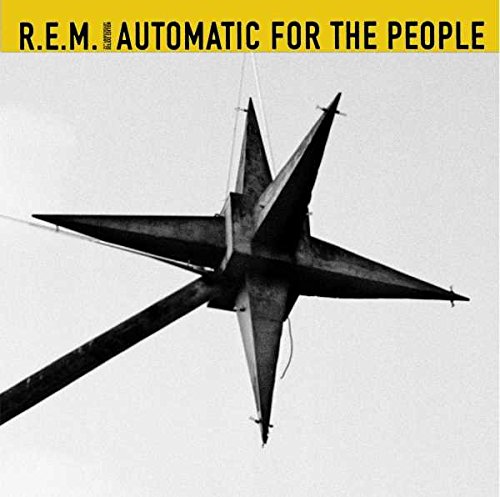
![Automatic For The People [25th Anniversary Edition]](https://images-na.ssl-images-amazon.com/images/I/51BPBA%2B4ovL._SX425_.jpg)


 The Fat Angel Sings