
Posts Tagged ‘A Short History of Decay’

Singer songwriter John Murry is gearing up to release his next record, following the success of A Short History of Decay, which was praised by Uncut, Q Magazine, The Quietus, MOJO Magazine and Sunday Times. First from the upcoming album is ‘Oscar Wilde (Came Here To Make Fun Of You)’, a cryptic Americana single that walks the line between the comedic and the serious.

Out now. Both the track and video for Oscar Wilde (Came Here To Make Fun Of You), directed by Aiden Gillan is out now. Really glad to be getting new music out there and hope you’re digging it.

Y’all know we love music that’s left-of-centre here at Unrecorded. Stick indie or alternative before a genre and no doubt we’ll be giving it a spin. One sub-genre that doesn’t get enough light on the blog is alternative Americana and so we were stoked when John Murry‘s new single ‘Oscar Wilde (Came Here To Make Fun Of You)’ made it’s way into our inbox. 

It’s a hard hitting piece of song writing that derives inspiration from some of life’s darkest moments, but as we can see from the music video, this doesn’t mean Murry takes himself too seriously. Directed by Irish actor Aiden Gillen (who you may know from The Wire, Game of Throne or Peaky Blinders), the visuals are obscure and avant-garde, making space for the watcher to figure out the meaning behind it all for themselves.

“We had been talking about various ideas for videos for a while,” Gillen says, “And I had this idea of John floating around my house – or did that happen in real life? – anyways I liked the idea of a John puppet floating around upside down and mentioned this to him, His ex had made this puppet with an uncanny likeness and I used whatever technology I had to hand – a phone camera, a stabilising gimbal and a two-euro macro lens to try and make something that looked nice for the puppet part. I mean, it’s not all in focus, but there a bit too much of that these days. I was asked for the puppet back, but I’d already lost it somewhere.”

‘The Stars are God’s Bullet Holes’ is not an album for an ordinary world, because it’s not an ordinary album.

It’s an album to dive deep into and submerge yourself in, and to emerge from aware that this world is a remarkable place, and that John Murry is a remarkable artist. John Murry’s third album is starlit and wondrous, like being wrapped in the softest black velvet. it’s an album of startling imagery and insinuating melodies, of cold moonlight and searing heat. it’s a record that penetrates to the very heart of you, searing with its burning honesty, its unsparing intimacy and its twisted beauty.

John Murry is gearing up to release his next record, following the success of A Short History of Decay,
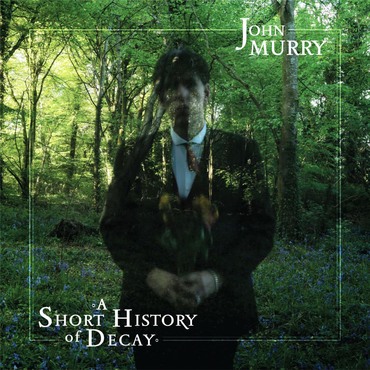
John murry 1400 x1400

This one has been on repeat for over a week now and it’s stunning, frankly. John Murry is currently based in Ireland and originally from Mississippi.

John Murry’s life story in itself is the stuff of legends. From an unhappy, over-medicated childhood to drug addiction, musical success, and another fall into addiction and even prison, his life story reads like a book. He also was adopted into William Faulkner’s family at birth (a cousin of his mother). John certainly need not look far for inspiration.

A Short History of Decay is an album that resulted from a chance meeting with Cowboy Junkies guitarist Michael Timmins. Recorded over a five day period with an emphasis on off-the-cuff creativity, the album is a strong statement by an iconoclastic artist, backed by a tight group of excellent musicians. This is a sonically adventurous release, frantic and understated at the same time, with cavernous piano, telephone vocals, sudden volleys of fuzzed-out guitar, and the backup vocals of Cait O’Riordan ( the Pogues,Elvis Costello) .

Silver or Lead starts off with a sombre piano, joined by minimal drums and bass. The song walks a tightrope between sombre dirge and a more hopeful sing-along chorus while remaining solidly entrenched in Murry’s trademark melancholy.

Under a Darker Moon is a grinding and sputtering along happily on a solid bed of bone-dry drums and psychotic guitars. Wrong Man reminds me of Nebraska era Bruce Springsteen and is one of the strongest cuts on the album. Murry’s vocals on this song give me a mental picture of the world’s loneliest monk, preaching to the buzzards and rattlesnakes in the Mohave Desert, right before the fiery ball in the sky claims his sanity.

Another mid-tempo rocker is Defacing Sunday Bulletins, with Murry’s spine-tingling telephone vocals steering the sonic mayhem with steady if slightly trembling, hand. Miss Magdalene is an achingly beautiful acoustic song reminiscent of Leonard Cohen at his most morose.

Originally an Afghan Wigs tune, What Jail is Like is a guitar-driven ballad with sad piano, tribal drums, and some of that good old-fashioned backwards guitar. The lyrics take on extra poignancy in light of Murry’s life story.

Some artists become legends. They become household names. Most people will know at least one or two of their songs. For whatever reason their mainstream success transcends commercialism.  A Short History of Decay is a gripping album, sonically adventurous, by an artist who’s paid his dues, came out a stronger man and an iconoclastic artist who made a career out of transforming tragedy and hardship into stark beauty.

John Murry was adopted at birth into the family of William Faulkner. Some have speculated that the Faulkner blood might also run in his veins, but that should be left for a Southern Gothic novel yet to be written (or perhaps re-written). Raised in Tupelo, Mississippi, in the shadow of Elvis, his undiagnosed autism led to troubles at an early age which led to prescribed medication, which led to un-prescribed medication which led to being institutionalised for addiction and mental health issues at a too young age. Eventually, discarded onto the streets of Memphis, he found music, which became the one constant positive force in his life. Memphis led to San Francisco and San Francisco led to heroin and heroin led to a near fatal overdose on the corner of 16th and Mission, so harrowingly memorialized in his song Little Colored Balloons.

Music again came to his rescue and led him to Tim Mooney (American Music Club) and the group of musicians that helped create his 2012 masterpiece The Graceless Age. The accolades rolled in…And John toured the world. He entranced and devastated audiences with his raw, unfiltered live performances, and it looked like his trajectory was set, that music had won and would have the final word. And then Tim Mooney, John’s mentor, his beacon, his bedrock, died suddenly and unexpectedly… and John’s world fell back in to chaos. Over the next few years, John would lose the footing that he had struggled so hard to establish. He would lose his wife, his daughter, temporarily his freedom and ultimately his country.

Somewhere along this volatile journey, John crossed paths with Michael Timmins of Cowboy Junkies. John had opened for the band at a show in Glasgow and Michael watched side-stage transfixed by John’s performance. Over the next few years the two of them kept in touch, they talked about the music business, politics, books, but most of all they talked about music. And they talked about making an album together. Michael wanted to capture the rawness of John’s songs, capture the vibe that he experienced that night in Glasgow and was even more convinced of this approach when John came through Toronto opening for Chuck Prophet and did a solo set at The Horseshoe Tavern, which was as disarming and emotional as the set of music that he had experienced in Glasgow a couple of years earlier. “On The Graceless Age you can hear John’s affinity to artists such as Mark Linkous and Mark Lanegan, but seeing him on stage, with just his guitar and his songs reminded me of Townes (Van Zandt), that raw-boned, exquisite beauty, so real that it borders on the uncomfortable, you feel you should look away, but it’s just too compelling to do so. The pain, the intensity, the honesty just draws you deeper”.

Eventually John completed his descent and landed in Kilkenny, Ireland where he found some solid ground as part of a welcoming arts community. Michael then convinced him to travel to his Toronto studio where Michael put a band together consisting of brother Peter Timmins (Cowboy Junkies) on drums and Josh Finlayson (Skydiggers, Gord Downie, Lee Harvey Osmond) on bass. John brought along Cait O’Riordan (The Pogues, Elvis Costello) whom he had met in Ireland and who wanted to be a part of John’s journey. The five of them put aside five days to record all bed tracks and overdubs, with the brief that they would let the songs dictate where the journey took them, spontaneity was the order of the week. Michael Timmins describes the sessions, “I felt that it was important that John got out of his own way and that we set up a situation where he would just play and sing and the rest of us would just react, no second guessing, just react and capture the moment. It was a very inspired and inspiring week of playing and recording. Very intense. And I think we captured the raw essence of John’s writing and playing”.

A Short History Of Decay is an intensely personal document of an artist’s fall from grace. It contains all the tragic elements of that unwritten Southern Gothic novel: the revelations of a man coming to terms with the personal shortcomings, the flaws and the perverse twists of fate that led him to the end of one journey and the beginning of another.

John Murry will be Live in-store at Rough Trade Nottingham to perform tracks from his new album ‘A Short History of Decay’, released 14th July on TV Records Ltd.

2.30pm Doors // 3.00pm On-stage // 3.45pm Signing.