Amsterdam four-piece Pip Blom are releasing a new album, “Welcome Break”, on October 8 via Heavenly Recordings. On Tuesday they shared its third single, “You Don’t Want This” via an amusing and colourful video for the song.
Sara Elzinga directed the “You Don’t Want This” video and had this to say in a press release: “When I first heard ‘You Don’t Want This,’ I recognized the feeling of self-consciousness; knowing that people have a certain way of looking at you, that does not necessarily comply with the image you have of yourself. The concept of a Matryoshka doll then stuck in my head, having these multiple versions of yourself that are hidden at first. The set reminds us of a dollhouse, of someone who is so comfortable in their own scenery, they forget to look at the world outside of the room. Though rather than making a music video about anxiety, I wanted the video to be about self-acceptance. Smiling back at yourself, instead of constantly criticizing which is something people tend to do.”
Previously they shared Welcome Break’s first single “Keep It Together” via a video featuring the band in an aerobics class. Then they shared its second single, “It Should Have Been Fun”.
Get your ears and eyes on the brand new Pip Blom single and video, ‘You Don’t Want This’, the latest to be released from the forthcoming album, ‘Welcome Break.
“Welcome Break” is the band’s second album, the follow-up to 2019’s “Boat” . Pip Blom are a band, but it’s also the name of the band’s frontwoman. The band also features her brother, Tender Blom. Pip wrote 20 songs in her bedroom in her parent’s house and 16 became demos. The album was recorded at Big Jelly Studios in Ramsgate, England over three weeks with engineer Al Harle.
For Warren Zevon, “Sentimental Hygiene” signalled more than a bid for a career reset. His star had fallen far in the decade since his self-titled 1976 Asylum Records debut album and the commercial triumph for its sequel, ExcitableBoy, and its hair-raising single hit, “Werewolves of London.” With Asylum’s first artist and poster boy Jackson Browne as champion and co-producer, those LPs projected Zevon as both ultimate L.A. insider and subversive rock enfant terrible, alternating sophisticated, literate songs with rampaging rockers, backed by a cast of blue-chip musical guests.
Performances by assorted Eagles, Beach Boys, Fleetwood Mac members and even an Everly Brother endorsed the Chicago-born Southern Californian as rock aristocrat while his songs veered from conventional pop tropes to spin noir-infused fables of violence, bruised relationships and comic pratfalls. Monsters, psychopaths, and mercenaries shared the grooves with self-absorbed hipsters and wasted libertines, contrasting cinematic vistas with gritty, urban squalor in a City of the Angels with no Tequila Sunrises but plenty of hangovers.
By the early ’80s, however, Zevon’s recording contract and marriage both unravelled. The hard-boiled persona that bragged of “drinking heartbreak motor oil and Bombay gin” was eclipsed by real-life alcoholism. A nightmare rather than dream come true, a published profile depicted the “Crack-Up and Resurrection” marked by an intervention and the first of Zevon’s multiple stays in rehab.
Resurrection was short-lived as his diminished career left Zevon relying on solo club dates and recasting songs as “heavy metal folk,” relying on only his piano or guitar. A new relationship and a move east to Philadelphia isolated him from L.A.’s fast lane, but his struggles with substance abuse continued even as a path back began with a seeming demotion in 1984. Still signed to Eagles manager Irving Azoff’s Front Line Management, Zevon was reassigned to a new manager recently promoted from a lower rung as publicist.
If he was initially skeptical of that recruit, manager Andrew Slater proved an ardent fan and savvy advocate who leveraged a college friendship with Peter Buck, now co-founder and guitarist with R.E.M., to revitalize Zevon. A clutch of club dates in R.E.M.’s Athens, Georgia, stomping grounds found Zevon backed by the rising alternative stars in pseudonymous guise as a band dubbed hindu love gods. The link was further strengthened when Buck, bassist Mike Mills and drummer Bill Berry backed Zevon on demos of new material to court a new contract.
Moving back to California, Zevon’s fortunes brightened decisively in March 1986 when he achieved hard-won sobriety that would last for 17 years. Further validation came that autumn with the inclusion of “Werewolves of London” on the soundtrack to Martin Scorsese’s The Color of Moneyand the release of an Asylum compilation, both landing Zevon back on the album charts. His renewed visibility and strong new material clinched his manager’s pitch to the newly launched Virgin America label.
A sober and focused Warren Zevon entrusted Andrew Slater to join him in producing the Virgin debut alongside engineer and co-producer Niko Bolas. R.E.M.’s Buck, Mills and Berry served as rhythm section for most of the resulting tracks, with strategic guest appearances from other friends and familiars. The title track opens with a muscular attack in a grim existential anthem of survival that stalks meaning amid the slog of daily life, Zevon’s stoic baritone anchored by dense synthesizer voicings, with Neil Young providing an archetypal solo outlined in blistering single notes.
A positive outcome from Zevon’s ’80s exile to solo club gigs was a renewed focus on guitar, which shaped some of his toughest new material. “Boom Boom Mancini,” written while watching boxer Ray “Boom Boom” Mancini’s bout with Bobby Chacon on HBO, was one of the first songs he’d played with the three R.E.M. members as well as his second foray into lionizing professional athletes. For Zevon, a high school dropout whose high intelligence and autodidact’s curiosity attracted him to literary as well as musical heroes, finding tragic heroism in the ring followed in the footsteps of Norman Mailer as well as Bob Dylan, Miles Davis and Paul Simon, explored here in Mancini’s fate in the unintended death of an opponent in the ring.
Dylan himself appears on “The Factory,” a track that reflects a heightened empathy for working men and women also threaded through the album’s title song. Zevon’s admiration for Dylan would be reciprocated by the latter’s lively cameo on harmonica, continued in Dylan’s concert performances of Zevon’s songs over the years.
Among songs that had been road-tested in Zevon’s live gigs between the end of his Asylum career and …Hygiene, his seventh solo set, “Trouble Waiting to Happen” had elicited strong audience reactions among fans familiar with his offstage misadventures as well as the more flamboyant alter egos in his songs. The lyrics are wryly self-referential:
“The mailman brought me the Rolling Stone… It said I was living at home alone… I read things I didn’t know I’d done It sounded like a lot of fun I guess I’ve been bad or something…”
The song’s comic fatalism is remarkable given its genesis just days after learning he had been dropped by his label. Co-written with erstwhile label mate J.D. Souther, the track features another Asylum alumnus, Don Henley, on vocal harmonies while Stray Cats guitarist Brian Setzer guests on lead.
Zevon follows the shaggy dog complaint of “Trouble Waiting to Happen” with the first and best of the album’s two ballads, written as a confessional plea for reconciliation with his estranged wife, Crystal. All pretense of toughness is abandoned in a vulnerable oath of repentance and emotional devotion, set to one of Zevon’s loveliest melodies and a lissome arrangement featuring Henley’s harmonies, Mike Campbell and Waddy Wachtel on guitars, and Jai Winding and Zevon on keyboards. Pledging “I’ll never make you sad again, ’cause I swear I’ve changed since then,” he vows that “it’ll be alright if we disagree.”
Zevon’s plea was rejected, although his close friendship with his ex-wife and father of daughter Ariel would endure to the end of his life.
Zevon often mingled memoir with myth to make himself a punchline, a tactic inspired here by an earlier remark by longtime friend Jorge Calderon, who dubbed a fashionable rehab retreat “Detox Mansion.” With his own struggles now public record, Zevon lampoons celebrity recovery on a walking tour set to a hard, syncopated attack by drummer Berry and David Lindley’s slashing lap steel as the singer brags of “rakin’ leaves with Liza, me and Liz clean up the yard.”
R.E.M.’s role is most explicit on “Bad Karma,” with Michael Stipe joining his bandmates as backing vocalist on a hard luck complaint decorated with sitar arabesques. Buck, Mills, and Berry share song-writing credits on “Even a Dog Can Shake Hands,” in which Zevon’s alter ego is a rock star besieged by hangers-on while he’s “trying to survive up on Mulholland Drive,” bombarded by “all the worms and the gnomes…having lunch at Le Dome,” then a Sunset Strip destination for the glitterati.
A penchant for stories set against 20th century geopolitics that yielded earlier Zevon originals returns on the album’s strangest track, “Leave My Monkey Alone,” alluding to the 1950s’ Mau Mau rebellion in Kenya. Swahili lyrics, a mix of funk and dance rhythms, and the involvement of P-Funk overlord George Clinton and Red Hot Chili Peppers bassist Flea range far beyond Zevon’s Tinseltown locales.
Released on August 29th, 1987, “Sentimental Hygiene” was supported with a major campaign, with a music video, tour dates and the album budget all confirming his new label’s commitment. Critical reception greeted the set as his strongest since Excitable Boy, but the album failed to chart in the U.S. Zevon would record subsequent albums for Giant and Artemis before passing away on September 7th, 2003, after a struggle with mesothelioma.
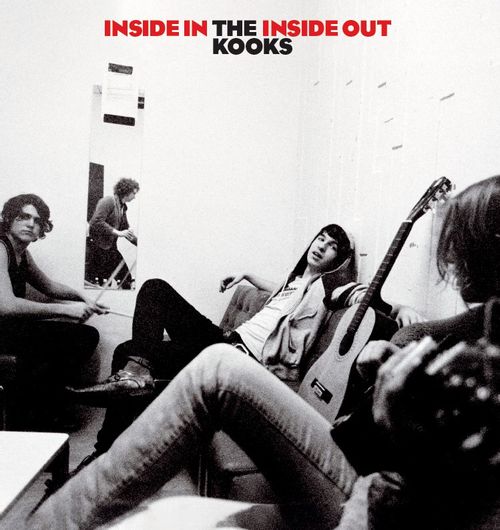
Originally released mid-January 2006, The Kooks debut album “Inside In Inside Out“, Virgin records/UMC celebrate it’s 15th anniversary in 2021 with a Deluxe Edition featuring the original album remastered plus thirteen previously unreleased tracks. Originally released in 2006, the quadruple-platinum-selling album spawns timeless hits including BRIT nominated “She Moves In Her Own Way,” “Seaside,” and the band’s top five single “Naive.” With over 1.3 billion streams on Spotify today, the unstoppable Inside In / Inside Out is a record that fizzes with the exuberance of youth and a certified staple of British indie which continues to win over new fans as its remarkable streaming figures prove. Inside In / Inside Out became an essential classic and remains so today.
In celebration of its 15th anniversary, The Kooks today unveil the long-awaited reissue of their seminal debut album “Inside in / Inside Out”.Repackaged for new and old fans alike, the deluxe edition features the original album remastered and thirteen previously unreleased tracks.
The release is coupled with a nostalgic visual for “She Moves In Her Own Way” featuring unseen footage from the iconic music video in 2008, directed by Diane Martel (The Killers, The 1975, The White Stripes). The new video shows a fresh band from Brighton celebrating their successful debut album on the road; a wholesome time capsule that is reminiscent of an unforgettable era in pop culture for British Indie bands.
Speaking about the reissue, The Kooks say: “We’re delighted that Inside In/Inside Out has been reissued to celebrate its 15th anniversary” said Luke. “It brings back so many fond memories of our early days as a band and we can’t wait to celebrate it again on tour next year.”
It’s a record that fizzes with the exuberance of youth, “Inside In Inside Out” is a certified classic of British indie which continues to win new fans as it’s remarkable streaming figures prove. highlights from the Deluxe Edition include: 4 alternative versions of hits Seaside, Ooh la, She Moves In Her Own Way and Naïve taken from the original album recording sessions by producer Tony Hoffer (tracks 1, 2, 9, 12 from disc two) unheard demos that range from acoustic jams such as “Inaudible Melodies” (a Jack Johnson cover) + theory of a pop star to full-blast studio demos such as “Sofa Song” and Matchbox” that capture the youthful exuberance of this quintessential indie band. 8,000 word sleeve notes based on new interviews with the original band members written by former Q magazine editor Niall Doherty. remaster of the original album by John Davis (metropolis) all tracks previously unreleased on the bonus disc (except ‘In My Opinion’)
It’s also packed with unheard demos that range from acoustic jams such as Jack Johnson’s “Inaudible Melodies” and “Theory Of A Pop Star” to full-blast studio demos such as “Sofa Son” and “Matchbox” that capture the youthful exuberance of this quintessential indie band. Other features include an 8,000-word sleeve-note based on new interviews with the original band members.
The Kooks have enjoyed an impressive rise to fame since the release of their debut album, which reached Number One in the U.K. Album Charts. Since then, they’ve gone on to release four further albums with their most recent Let’s Go Sunshine achieving top ten status in the U.K. Album Charts in 2018.
Hand Habits’ new album, “Fun House”, is out October 22nd.
There is a moment halfway through Hand Habits’ Fun House at which musician Meg Duffy asks the question, “How many times must I rewind the tape?” It’s a fitting question planted squarely in the middle of a sonically adventurous record concerned largely with making sense and taking stock. How much time must we spend examining our own past in order to fully understand it? How can we safely acknowledge pain in order to release it and fully actualize who we are supposed to be? Buffeted by strings, synths, and a gently-shook tambourine, the aptly-titled track, “The Answer,” highlights the emotional engine at the heart of the record. “I know the answer,” Duffy sings, “Here’s what I hope to find – it’s always mine.”
“Fun House” is Duffy’s most ambitious Hand Habits album to date. Produced by Sasami Ashworth (SASAMI) and engineered by Kyle Thomas (King Tuff), the record was not intended as a reaction to the pandemic, but it was very much the result of taking a difficult, if much-needed, moment of pause. “When the pandemic happened, everything stopped,” recalls Duffy. “I had been touring consistently for five years, both on my own and playing in other people’s bands, so I wasn’t really writing a lot in between. It had been full pedal to the metal in terms of traveling and scheduling, which meant I really didn’t have a lot of time to think about how I felt or really check in with myself. Then, when the world basically stopped, it turned out to be the longest I’ve been alone in my entire life — without being in a relationship, without being on the road, without working myself to exhaustion — and the result was really like, holy shit. I slammed on the brakes and everything psychologically that I’d been pushing down and ignoring for the past few years suddenly flew to the foreground.”
What started out as a very personal reckoning eventually blossomed into a fruitful and convenient means of making new music. Grounded in LA and sharing a house with Ashworth and Thomas, who also runs a studio space in the building, Duffy began to flesh out the songs that would eventually become Fun House. Emboldened by going into therapy and coaxed by Ashworth to push the songs into unexpected new shapes, the resulting music was more acutely personal and stylistically adventurous than anything they had attempted before. The new songs also became a prism through which Duffy could begin to self-actualize in a new way.
While Fun House shares some of the same hallmarks as previous Hand Habits releases —a kind of outré queer sensibility, a gentle sense of vulnerability — the record is a marked sonic departure from the often muted tones of 2019’s “Placeholder” and 2017’s “Wildly Idle (Humble Before the Void)”. Instead, the tracks on “Fun House” sparkle, moving in unexpected directions and eschewing any specific genre. Tracks like “Aquamarine” and “More than Love” package narratives about loss, romantic longing, and childhood trauma inside polished synth pop (“Suicide / Lost a life / Well then who am I? / Why can’t you talk about it?”) while “Gold Rust” and “Concrete and Feathers” have a ragged, Neil Young quality. Friend and collaborator Mike Hadreas (of Perfume Genius) contributes vocals on “No Difference” and “Just to Hear You,” making for one of the record’s most sanguine moments, his voice providing a perfect counterpoint to Duffy. The push/pull of styles, paired with songs that move deftly between the present and past, give the record a wildly diverse, hall of mirrors quality that befits its name. Where previous Hand Habits records could be fairly insular affairs, both in their creation and their execution, Fun House feels ebullient, lush, a fully-realized conversation.
“Fun House is lush, bright, in constant forward motion, in a constant state of change. Duffy’s third and best record, it possesses some grimy, earthen magic.”-The FADER “Fun House could be their most experimental (and exciting) album to date.” -FLOOD
Fun House is now available for pre-order on multiple colour vinyl options, CD, tape, and digitally.
Patti Smith has just surprise-released a new seven-song EP, “Live at Electric Lady“, as part of the legendary studio and Spotify’s ongoing series. It’s Patti’s first newly-recorded music released since 2012’s “Banga”, and it was recorded live-in-studio this past April with her long time band members Lenny Kaye, Tony Shanahan, and J.D. Daugherty, plus her son Jackson Smith.
Patti recorded her classic debut album Horses at Electric Lady back in 1975, and this EP includes a fiery version of “Birdland” from that album. It also includes a mostly-piano-and-vocal cover of Stevie Wonder’s “Blame It On the Sun” from 1972’s Talking Book, which was also recorded at Electric Lady, and a bare-bones acoustic cover of Bob Dylan‘s 1964 classic “One Too Many Mornings.” (She also wished Bob a happy 80th birthday before playing the song.) The EP also includes versions of two other ’70s classics (“Ghost Dance” and “Broken Flag”) plus two more recent songs (“April Fool” and “Peaceable Kingdom”), and it reminds you that Patti and her band are still commanding performers. The ’70s songs sound just as stunning and hypnotic as the original studio versions
Patti said, “We are very proud to be part of Spotify’s Live at Electric Lady series, our favourite recording studio. It was a unique challenge and offered us an exciting and innovative platform. We are grateful to Spotify for their generous support and willingness to present a live performance with all its possibilities of risk and revelation.”
And Electric Lady’s GM/Partner Lee Foster added, “Prior to recording, I had been discussing cover song options to present to Patti with Tony Shanahan, Patti’s MD and long time bassist/pianist. We’d yet to mention to Patti that we’d hoped to record a cover during the session, so she was unaware at the time. Days went by and Tony and I couldn’t find the right song together. Then, as we’d just begun to agonize over it, he called me excitedly and asked “is ‘Blame It On the Sun’ from Talking Book [Stevie Wonder’s 1972 album recorded at Electric Lady]?” I looked quickly to confirm and told him yes. For no reason at all that morning Patti had texted him to say that the song was stuck in her head and that she wanted the band to learn it.
Earlier this year, Annie Blackman made her Father/Daughter Records debut with a trio of songs that were pretty and swirling and immersive. Today, she’s back with another new single, “Glitch,” that’s much more pithy and direct. It’s one of those songs where the words start tumbling out and don’t stop and Blackman has a lot of funny and cutting observations about the world and our place in it, inspired by a documentary about simulation theory. The opening lines will give you a taste of what to expect: “Tell the doctor I don’t smoke but that’s not exactly true/ I like to light the camel ones, but just because I think the camel’s cute.” There’s also a swelling chorus but the song really sparks when it feels like Blackman is speaking straight at you.
The New Jersey singer-songwriter Annie Blackman has released their new single “Glitch”.
The track, which can be heard below, is part of the singer’s single series with Father/Daughter Records. Blackman said this about the new tune: “I wrote this song the morning after watching a documentary about simulation theory. Despite it sending me into a bit of an existential tailspin, I thought there was something so funny about the whole thing. The idea of my banal little life as a video game being played by an alien at once puts everything and absolutely nothing into perspective. I wanted to sing about that in a sort of tongue-in-cheek way.”
We are really excited to announce that “Sleepover”, the second album by Mildred Maude, will be released on vinyl, CD, tape and all digital platforms on October 22nd. It was produced by the band with Tom Joyce and Seamus Constance, recorded at Sawmills Studio in Cornwall and has been mastered by Simon Scott.
The vinyl has a locked groove and comes in three versions: standard translucent red, a Rough Trade exclusive translucent green and a white and green splatter, only available from Bandcamp.
Way back in the pre-lockdown days of 2019, Mildred Maude were the most exciting live band we had seen in a long time when we put them on at The Social. Three seemingly disparate characters from Cornwall – Matt Ashdown (guitar), Lee Wade (bass) and Louie Newlands (drums) – they were named after one of their grandmas and played an improvised noise that always seemed to be teetering on the edge of chaos, but also something incredibly beautiful at the same time, like a cross between Sonic Youth and Slowdive. It was utterly thrilling.
The new album bears the influence of Stereolab, Can, Butthole Surfers, Yo La Tengo and Sun Ra, among others, with three of its four tracks being over 10 minutes in length. ‘Trevena’ is the loping opener (“It was just a warm up, really,” says Louie, “but it turned out good so we kept it”); ‘Elliott’s Floor’ initially turned into My Bloody Valentine’s ‘OnlyShallow’ by mistake and on the vinyl version it never ends, thanks to a locked groove; ‘Glen Plays Moses’ is just epic in every way, crossing a Red Sea of sound, with half of Matt’s guitar parts played with a screwdriver.
Innerstrings’ incredible video for the edit premiered yesterday
The odd one out is ‘Chemo Brain’ – just under three minutes of Fugazi-esque frenzy, named after a side-effect of Lee’s cancer treatment that makes him have sudden mental blocks, and explains his constructive, repetitive basslines that underpin the band. The album artwork is also inspired by his treatment – it’s a molecular model of cyclophosphamide, one of the drugs Lee was given, that Matt made after looking through old scientific journals.
Their DIY approach has been the only way for them to get anywhere in Cornwall, where they say they feel more in tune with Aphex Twin, Luke Vibert and the Rephlex Records crowd from the 1990s than any current scene. They do, however, unintentionally have something in common with the medieval Miracle Plays that would take place in a plen an gwari (Cornish for ‘playing place’). “They were notoriously noisy to attract people to them,” explains Matt, “but were also events that brought communities together, and we like our live shows to have a sense of togetherness.”
Matt says he is also inspired by historic places of worship. “There are some great places in Cornwall such as St Just Church and the open air Gwennap Pit in Redruth where John Wesley preached in the 18th century and where John Peel once interviewed Aphex Twin. It’s these beautiful spaces that I try to imagine we’re in when we’re playing live – so it’s fitting that we’re releasing this new album on Sonic Cathedral.”
“We formed after Lee (Wade, bass) was booed offstage at a John Peel Day gig, almost died from cancer, and spent remission finding new musicians in shipping containers,” explains guitarist Matt Ashdown of Mildred Maude’s somewhat unusual origins. “We found ourselves gelling over needing outlets for unconstrained musical expression, almost like a support group in a way.”
Naming themselves after drummer Louie Newlands’ grandmother – Josephine Mildred Maude Gulliver – they set about offering something radically new to the Cornish music scene. “We all wanted to have fun and not take ourselves too seriously,” says Lee. “We found we shared a kind of DIY ethic in that we knew our music didn’t quite fit in and we just had to put ourselves forwards for things – that’s how after just three gigs we had already played with The Fall and Lorelle Meets The Obsolete.”
Their debut album, 2017’s cult classic CPA I-III, was an extension of their live shows, which are all one never-ending song called ‘Cosmic Pink Alignment’. On the new album, “Sleepover”, the songs have proper titles. “We thought continuing to name album tracks as parts of CPA would lose the simplicity of the concept,” explains Matt. “Our shows always consist of motifs and ideas that have come out of previous gigs or recordings, so even though we perhaps won’t directly be playing the songs, parts of them will emerge during our live shows, which is quite an organic approach to touring an album like this.”
Sleepover also differs from its predecessor through its use of space and, at times, its overwhelming beauty.
“It’s always our approach to offset noise with beauty,” claims Matt. “When I was at art college I read Nietzsche’s The Birth of Tragedy from the Spirit of Music, and I always seem to think back to that balance of Dionysian and Apollonian elements when we make music. Maybe for this album the balance swings towards beauty because we had a little more time to be still, and moments of chaotic ecstasy kind of just naturally unravelled with the dynamics of bass and drums.”
“The space stemmed from the fact we were conscious we were making an album,” adds Louie. “We were perhaps a little more relaxed and comfortable with what we were doing and we seemed to start some of the tracks gently, which set the dynamic. The surrounding environment at Sawmills Studio helped with this, too.”
An edited excerpt of ‘Glen Plays Moses’, the second single from Mildred Maude’s new album ‘Sleepover’, which is released on October 22nd.
The magical Mega Bog returns with another fantastical off-world transmission, the most sophisticated, exploratory, and accessible statement yet from surrealist songwriter and avant-pop prospector Erin Birgy. Featuring JamesKrivchenia (Big Thief), who co-produced, and Zach Burba (iji) among its cast of vibrant players, “Life, and Another” bristles with painterly technicolour surface textures while plumbing fathomless depths of feeling.
Cohabiting with “Life, and Another”s co-producer, engineer, and percussionist James Krivchenia (Big Thief) in a small cabin near the Rio Grande off of NM State Route 68, Birgy found herself often alone, suspended between their separate touring schedules. In these silent time passages, Birgy experienced a complete loss of self amid the expanse. Frequently thinking about death in the middle of nowhere opened a familiar black hole of troubling projections, and any desire to find freedom or remain positive continued to fold back into self-destructive thought and fear.
“Life, and Another”, the forthcoming album from Erin Birgy’s shapeshifting group Mega Bog, is so dense with information that it could conceivably come with its own volume of CliffsNotes… It’s a firehose of cryptic metaphors, veiled allusions, and seemingly disconnected thoughts sprayed against a bright, skeletal frame of jagged jazz-prog. At every turn lies a surfeit of detail that is thrilling and bewildering in equal measure.
“Maybe You Died,” though, is different. Where songs like “Weight of the Earth, on Paper” and “Crumb Back” are wiry and spry, this one is subdued: a sullen, minor-key slow burn led by the synths and guitars reminiscent of ’80s Springsteen in his elegiac mode. Birgy begins with a narrative setup whose economy could rival that of the world’s most famous six-word story: “Smell of wintergreen/Chewing gum/In a Coach leather bag/You gave me/Mom found/Curb sale/What an amazing/Two dollars,” she murmurs, covering four of the five senses in her first three lines alone.
Dark as everything may actually be, Birgy always manages to stay with trouble and conjure the extraordinary resulting music.
Recorded over several sessions in various studios Life bleeds with instrumental contributions from longtime and new collaborators, including Aaron Otheim, Zach Burba of iji, Will Segerstrom, Matt Bachmann, Andrew Dorset of Lake, James Krivchenia of Big Thief, Meg Duffy of Hand Habits, Jade Tcimpidis, Alex Liebman, and co-engineers Geoff Treager and Phil Hartunian. Listeners know by now they can trust Mega Bog to continuously lead them into deeper and wilder, spiritual pop territories. Skittering piano glissandos, haunting psychic background voices, and tequila-inspired improvisations creep and crawl over the dark-night-of-the-soul rock and roll dreamscape, before vanishing to make way for invocations of quiet clarity and living-breathing instrumental passages.
8/10. Wonderfully eclectic and strangely uplifting… a dense, fantastical odyssey… a grooving flight of fancy into humid rhythms, unhinged cabaret vocals, furious guitar, and free-jazz skronk. – Uncut
4 stars. As Life, and Another finishes, the lingering feeling is that it exists beyond definable time and space. Audaciously, it all coheres. The vision is precise and the execution meticulous. – MOJO
Chamber-popper Erin Birgy unveils her gem of a new album with a synth-pop ballad that wafts through with all the poignancy and loveliness of Prefab Sprout. – The Guardian
For fans of Laurie Anderson, Kate Bush, Kevin Ayers, Bridget St John, David Bowie, Cate Le Bon, Aldous Harding, Big Thief and Nico.
It’s always been a mystery why The Joy Formidable never got bigger than they are. The band’s big guitar dreamgrunge has always struck the right balance between anthemic melody and ethereal noise, and they’ve become a festival favourite to boot. Maybe they were just a decade or so too late to catch the wave of alt.rock’s initial popularity, blasting out after casual fans had turned their attention to other forms, and alt.rock radio had sunk into the era of downtuned hair metal like Creed and Nickelback. Regardless of whether or not The Joy Formidable enjoyed the success that was rightfully theirs, the Welsh combo hasn’t slowed down, releasing its fifth LP “Into the Blue“.
Anyone’s who’s followed the band over the past thirteen years knows what to expect here: guitars that crunch, wail and shimmer, a steady rhythm section ready to pound or swing as required, and axewoman Ritzy Bryan’s forthright coo. Bryan and partner Rhydian Dafydd have refined their approach over the years, but never shifted gears – and that’s a good thing, as there are few bands that do what they do so well. With such stylistic consistency, then, on The Joy Formidable records it all comes down to songs – and that’s another area in which they never fail.
“Into the Blue” is jampacked with excellent tunes, from the anthemic rocker “Chimes” and the whimsical crunge “Gotta Feed My Dog” to the spacy pop song “Back to Nothing” and the psychedelic roar “Sevier.” The acoustic-to-electric epic “Left Too Soon” ends the album with exactly the kind of heady rock drama in which the band expertly specializes.
In the pole position, the title track serves as a summing up, both of what to expect from the record and what The Joy Formidable has honed itself into over the years. The band’s dedication to its craft and vision makes Into the Blue possibly its strongest albums yet.
‘Into The Blue’ – Album Available now. Out August 20th
Kramies is an American songwriter, creator of dreamy folklore, crossing the boundaries between eerie sceneries and fairytale-laden myths.
“Days Of,” the first single off Kramies’ new self-titled EP, is the alluring and emotional center-piece from this beautiful new constellation of songs. The track officially releases today, August 20th, at Bandcamp and all streaming sites.
Produced by Patrick Carney of the Black Keys, the powerful “Days Of” also features Carney on drums and guitar, as well as Jason Lytle of Grandaddy on synths and other sounds.
The union of talent between these beloved artists, as well as Kramies’ individual distinctive style and vocals, results in an example of finely honed craft. With lyrics reflecting on mortality and nostalgia set to flourishes of sonic creativity, “Days Of” paves the way for what is to be Kramies’ most highly anticipated EP yet.
Produced by Patrick Carney of the Black Keys, “Days Of” also features Carney on drums and guitar as well as JasonLytle of Grandaddy on synths.
Released August 19th, 2021 Song & Lyrics by Kramies
Produced by: Patrick Carney & Marc Whitmore
Kramies: Vocals, Guitars Patrick Carney: Drums, Guitar Jason Lytle: Synths & Sounds