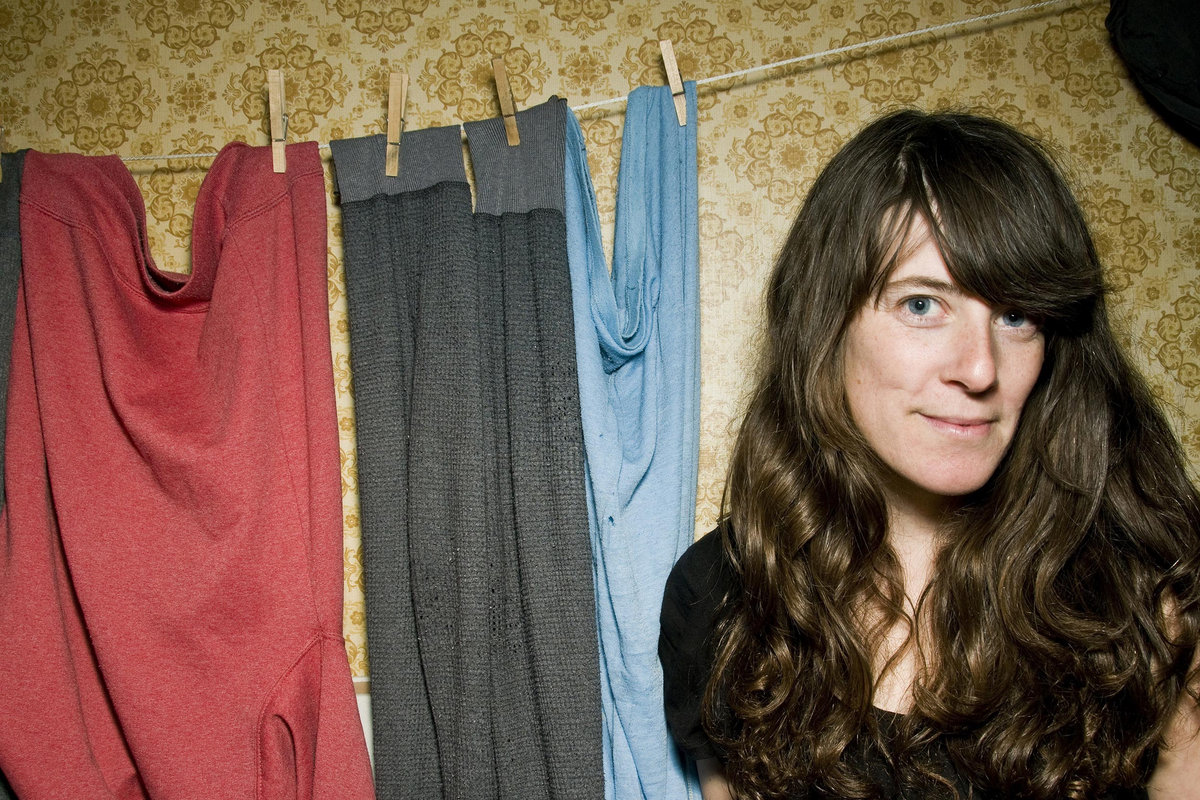
I’ve released a new solo song for the occasion and it’s a spooky one. “Silence of the Organs” was written and recorded in December 2020, during the most surreal holiday season of my lifetime; isolated from most of our friends and family for fear of accidentally killing each other. The song is a four-parter. I wrote the lyrics stream-of-consciousness style, combining some autobiography of my own experience as a sick person with some observations on how the world around me seemed to be reacting to the pandemic. I was really into making tape loops at the time – that’s the creepy ambient bed you can hear in the background. It’s a bit more on the experimental side of the Typhoon/Kyle Morton musical continuum, but you can still tap your foot to it. This song was originally released as part of the DePaul Humanties Center’s “Sickness and Solitude” project and owes a deep debt of gratitude to H. Peter Steeves and the DHC. Available only on Bandcamp for the time being. As always, thanks for listening. Yrs, Kyle
Released October 29th, 2021 Written, recorded and performed by Kyle Morton
The Janitors peddlers of heavy drones and fuzzed nightmares since 2004 from Sweden, based in Stockholm had their new album written and studio time booked in the north of Sweden – ready to unleash their latest shamanic fuzz meltdowns and follow up to the “Horn Ur Marken” album from 2017. Then corona hit and everything changed. The band figured they would go down into their own studio to work on those tunes some more until things passed over but instead they ended up recording other songs that turned into “Noisolation Sessions Vol. 1” released in 2020 including some of the best songs The Janitors ever produced. As corona kept a tight grip on us all the band didn’t really know what to do next. So they started to record again and the result is “Noisolation Sessions vol. 2″, a collection of eight dark and noisy songs that are not aimed at the faint of heart. Instead The Janitors display a hypnotic, monotone and evil drone that fuzzes in all the right places. “The Noisolation Sessions Vol. 2” LP is a co-release between Cardinal Fuzz and Little Cloud plus Bad Afro records.
This wasn’t our choice to be made. We really didn’t want to do this record. But this pest that fell upon us kept pushing. So after Volume 1, we started recording again. But without the confinement of the regulations we put up for the first volume. We allowed ourselves to think beyond just one night of creativity and this is what we came up with.
These songs really reflect us at this moment. Not sure if that means anything to anyone except us. But it’s important to us. This is a testimony of what we left behind and what we hope for the future. And no matter how much we try to scream through our instruments, everything gets captured in the delay. In the rhythm of the decay. In the reminiscence of the reverb. We are trapped in this sonic world.. All we said is trapped in the echo. And that echo is for you to find.
As always we leave you with a raised long finger to the right wing fascist death machine. Take care and remember, you need to know how to howl to give yourself an escape route.
Written, recorded, produced, mixed and artwork by The Janitors
Across the album’s ten songs, The KVB masterfully pull together their trademark components; radiant guitars, textural synths and an ear for a moody, brooding melody all presented here with with a renewed dynamism.
The initial writing sessions for the album took place in Spain in early 2019, where the duo found influence from “half built luxury villas, still unfinished from the crash in 2008. There was something eerie and beautiful about the desolate landscapes and concrete in the sunshine . ” There has always been an element of dystopia through their sound, but now there is also more of a rapturous release.
Throughout the album lyrical themes combine double meanings and a sleight of hand is present; Le Corbousier’s brutalist ‘Unité d’habitation’ informs the title track and via the French-to-English translation ‘Unité ‘becomes‘ Unity ’– a rallying cry to totality on the dancefloor. ‘Unbound’ is informed by the classic shoegaze stylings of Slowdive and Ride but also late-modern poet Keston Sutherland and the idea of recreating a special moment lost to the past. Beginning with a blast of electronic drums, lead single ‘World on Fire’ instantly kicks in with a euphoric blend of guitars and synths beneath Nicholas Wood’s and Kat Day’s breathy-yet-powerful vocal duet. Second single ‘Unity’ is built around a pulsing synth arpeggio that wouldn’t sound out of place on Trans Europe Express, but is augmented by detached, deadpan vocals and dream-pop sonics.
Canadian singer-songwriter Julie Doiron is back with “I Thought of You”, her first album under her own name since 2012’s “So Many Days”. She shared “Darkness to Light” ahead of the upbeat, twang-tinged record, which features the French-language song “Et Mon Amour.” Doiron joined Phil Elverum for a collaborative album in 2019.
Everything is coming together in Julie Doiron’s world, from embracing her electric past, to embarking on a new and energetic phase of her solo career with some of the most upbeat and inspiring songs of her recording career. Julie Doiron is back with “I Thought Of You“, her first solo record since 2012’s “So ManyDays“, emanating a radiative force with nothing more than her guitar and her unmistakably indomitable voice. In her time away from the solo spotlight she has remained deeply entwined with music, releasing a critically acclaimed record with members of Cancer Bats and Eamon McGrath as Julie and The Wrong Guys, translating some of her previous work for Spanish label Acuarela, and returning to her otherworldly collaboration with Mount Eerie for Lost Wisdom pt 2. On “I Thought Of You”, Julie enlists close and trusted friends: the uber-prolific and multi-talented Daniel Romano, superstar drummer Ian Romano, and Quebecois songwriter Dany Placard on bass. We live for these moments, when our dearest friends find their way back to the places they love, and we once again hear their voices rise back into our lives.
Released November 26th, 2021
Julie Dorion – Vocals, Guitar Dany Placard – Bass Daniel Romano – Guitars, Keys, Percussion Ian Romano – Drums Michael Feuerstack – Pedal Steel on Darkness To Light
Lemonheads’ seminal album ‘It’s A Shame About Ray’, lovingly reissued for it’s 30th Anniversary. The long overdue reissue includes a slew of extra material, including an unreleased ‘My Drug Buddy’ KCRW session track from 1992 featuring Juliana Hatfield, B-sides from singles ‘It’s A Shame About Ray’ and ‘Confetti’, a track from the ‘Mrs. Robinson/Being Round’ EP, alongside demos that will be released for the first time on vinyl. This reissue celebrates their prestigious fifth album, the deluxe book back editions feature new liner notes and unseen photos.
Described By Music Journalist’s As “A 30-Minute Insight Into What It’s Like To Live Hard And Fast And Loose And Happy With Like-Minded Buddies, Fuelled By A Shared Love For Similar Bands And Drugs And Booze And Freedom.”. ‘It’s A Shame About Ray’ Had A Considerable Impact Back In Those Heady, Carefree Days Of ’92, The Record Perfectly Captures Evan Dando’s Ability To Effortlessly Encapsulate Teenage Longing And Lust Over The Course Of A Two-Minute Pop Song.
Singles Such As ‘My Drug Buddy’ And The Breezy Perfect Pop Of The Title Track Might Stand Out (Plus The Add-On Of ‘Mrs. Robinson’ Which Later Copies Included), But The Album’s Real Strength Lies In The Tracks In-Between; The Truly Fantastic ‘Confetti’ (Written About Evan’s Parents’ Divorce), And The Eye-Wateringly Casual Acoustic Cover Of ‘Frank Mills’ (From The “Hippie” Musical Hair), A Version That Seems To Resonate With Every Ounce Of Pathos And Emotion Felt For The Lost 1960s Generation.
To Hear EvanDando Sing Lines Like ‘I Love Him/But It Embarrasses Me/To Walk Down The Street With Him/He Lives In Brooklyn Somewhere/And He Wears His White Crash Helmet’ Is To Truly Appreciate How Wonderful And Tantalising Pop Music Can Be. Then, There’s The Rush Of Insurgency And Brattishness On The Wonderfully Truncated ‘Bit Part’; The Topsy-Turvy ‘Ceiling Fan In My Spoon’... This Was Male Teenage Skinny-Tie Pop Music On A Level Of Brilliance With The Kinks, Early Undertones, Wipers.
Ray still sounds revelatory in its restlessness, mixing college pop with country flair and relocating Gus Van Sant’s Portland atmosphere to New England.”
The long-simmering promise of Evan Dando finally boiled over into something close to stardom back in 1992 with the release of Lemonheads’ fifth album “It’s A Shame About Ray”. On it, the movie star handsome singer/songwriter crystallized a folk-pop sound with a little help from longtime compatriot Juliana Hatfield and bared his lustful and goofy self in his lyrics of dopesick hunger (“My Drug Buddy”), stoned reverie (“Ceiling Fan in My Spoon”), romantic longing and the wide-eyed delight of a toddler out for a ride in a stroller. For the album’s 30th anniversary, Fire Records followed the trail that Dando took before and after its release, gathering demo versions and equally great B-sides like a version of “Shakey Ground,” a song by Australian alt-rock group Smudge, and an acoustic rendition of ABBA’s “Knowing Me, Knowing You” that left this writer weak in the knees when he heard it at the tender age of 17. And, of course, the bonus disc kicks off with the Lemonheads’ massively successful cover of “Mrs. Robinson,” a song originally recorded for another archival release (the 25th anniversary of The Graduate) that became Dando’s biggest selling single.
The Lemonheads – “It’s A Shame About Ray” :30th Anniversary (Vinyl 2LP) £28.99 (March 4th)
Leif Vollebekk is a Canadian indie folk singer-songwriter, whose 2017 album “Twin Solitude” was a shortlisted finalist for the 2017 Polaris Music Prize.
“I’m Not Your Lover” is out today. But it’s not the version on the record. It’s a recording of the band and I playing it live, for the first time, at the Troubadour in LA. It was one of our last shows of 2020. When I first heard it, I thought it sounded better than the album version. It felt freer. Freer is good. And so it is now out there for you to imbibe. I hope it resonates for you, too. The video was directed by Kaveh Nabatian. We endeavoured to find footage of that night (to the many of you who sent material to us : thank you) but we couldn’t piece it together.
So we reshot the whole thing in the polar opposite location of that sweaty packed club in West Hollywood, the wilderness of Quebec. I like to think that’s where all tours eventually end and also begin. Speaking of, all tour dates for 2022 are now announced.
Thanks for the music, Olivier Fairfield (drums) Michael Felber (bass), Parker Shper (keys), Scotty Crowe (everything) Harris Shper (recording/mix)
Frazey Obadiah Ford is a Canadian singer-songwriter and actress. She was a founding member of The BeGood Tanyas. Her third album U kin B the Sun, Ford inhabits an entire world of shapeshifting rhythm, elevating every beat and groove with the subtle magnetism of her mesmerizing voice.
Recorded during the sessions for 2020’s “U Kin B The Sun” album but unheard until now, the song is “simply about the devastating amount of love you have for a child,” explains Ford. She began writing the song not long after the birth of her son Saul, who’s now a teenager, but only completed it recently.
“Saul” also features in Ford’s recent video for “U Kin B The Sun”:
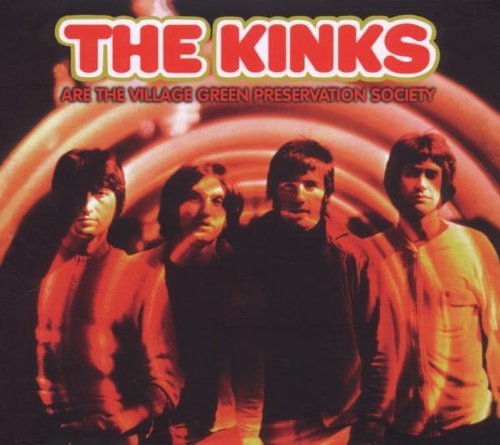
While many other rock artists during the last part of the ’60s dismissed and pushed aside the mores and ideals of their parents and earlier generations, The Kinksembraced them, finding peace and a sense of harmony in the aftermath of the Summer of Love. Frontman Ray Davies invests too much heart and perspective for this song cycle about lost British traditions to be mere satire of the nostalgia and sentiment found in its words and music.
“The Kinks Are the Village Green Preservation Society”, a masterpiece that was completely out of step with Swinging London, while at the same time being utterly timeless. “These were rock/folk tunes,” Ray Davies says now. “But it was unlike anything the Kinks had done before. We were known for ‘You Really Got Me,’ after all.”
Devoid of any obvious singles, or any fancy production techniques, the album is a true pleasure from beginning to end, arguably running circles around the competition in both song writing and cohesiveness, and 45 years later is more influential than ever.
Often cited as one of the most quintessentially English albums of its era, “The Kinks Are The Village Green Preservation Society” was venerated by critics though largely overlooked itself by the buying public at the tme. Released in the same year as The Beatles’ “The White Album“, Pink Floyd’s “A Saucerful of Secrets“, and The Band’s “Music from Big Pink, Ray Davies’ concept LP had little in common with the rest of his contemporaries, many of whom were either looking to America for musical stimulation, or tripping themselves into outer space. Instead, Davies turned to his beloved England for inspiration, writing a collection of tunes full of intriguing characters.
Released (November. 22nd) in 1968: after nearly two months of delays, The Kinks released in the UK one of rock’s most enduring concept albums ‘on Pye Records (in the US three months later on Reprise Records); It was the group’s 6th studio LP was the last by the original quartet (with bassist Pete Quaife leaving in early-’69); a collection of vignettes of English life, the album served as a virtual thematic template for the ‘Britpop‘ movement of the ’90s; although arguably the band’s most important & influential long-form work, it failed to chart upon release, selling about 100,000 copies.
The title track is a tender ode to an England that was ever rapidly changing, especially throughout the 1960’s, where Davies and Co. are determined to conserve what remains of their country’s traditionally conservative culture, preserving “the old ways from being abused/Protecting the new ways for me and for you/What more can we do”.
“It was obscure the week it came out,” Dave Davies jokes of the album. “Something Else” is probably my favourite Kinks album, but “Village Green” was just so good. We put those songs together in our front room, and we drew really heavily on our environment and our family, who had supported us, and I think that’s why it has such a distinctive English flavour and why the songs are so intimate in a way. Ray has such a great way of drawing characters. The song ‘Picture Book’ is like sitting in the front room looking at old photographs with your mum.”
The sentimentalism continues with “Do You Remember Walter” (a far more cynical take on aging than McCartney’s “When I’m Sixty-four”), “Picture Book”, and the deliciously languid “Sitting by the Riverside”. Davies laments the demise of old British Rail on “The Last of the Steam Powered Trains”, while yearning for pastoral sanity on “Animal Farm”.
“Village Green” was made at a time when we were banned from touring in America and we didn’t have much airplay,” Ray Davies says. “But I think the reason it’s become so beloved in retrospect is that it reaches people like folk music. Not many people have the “Village Green” record, but many people know it. I think it’s more to do with the sensibility, because it’s very different to typical rock music. I wasn’t worried about airplay and, whether I designed it that way or not, I reached people rather than record companies and little by little it broke through.”
Davies is right about the folky nature of the music. But it’s that very simplicity that gives the album its distinctive, if utterly straightforward, sound. While other records of the time can sound dated or perhaps too precious, Village Green has always sounded fresh and accessible, a work of an immensely in-sync group at the height of its powers, while still retaining a bit of that garage edge that makes rock ‘n’ roll so exciting.
“Everything about it was a low-achieving record, in every sense,” Ray Davies jokes. “But I intended that. We used a lot of ambient sound in recording the drums and things like that. Some people would say that made it sound like it wasn’t well-produced, but that’s the sound I wanted and it added to the poetic value of the record. It was designed to be that way.”
“That was a sound I was really into at the time,” Dave Davies remembers. “Pete [Quaife, The Kinks‘ bass player] and I were trying to get the excitement of our performances on record and that’s just the way it came out. On songs like ‘Big Sky,’ I’d think of a bass part and give it to him and he’d change it around — play off the melody, like Paul McCartney was starting to do at the time, because they both started as guitar players — and it would create something completely different and also really new-sounding.”
Ray was finding inspiration in unusual places.
“I was at a music industry schmooze fest and I couldn’t cope with all the business talk,” he says of the origin of “Big Sky.” “I conceived and wrote it on the balcony of the Carlton Hotel in Cannes [France]. I know it sounds very grand. But I had to share a room with my publisher, and so out of frustration I knocked over the geranium from our fourth floor balcony and the first line of the song, ‘Big sky looks down on all the people looking up at the big sky,’ came to me while I was looking out from the balcony of the hotel. I was in a situation I was not happy in, so I went into this world of irony and pathos and used my imagination that one day we’ll be free from all this. Because I’m sure there are lots of people like me who feel confused in a world that’s going mad and you try to find a spiritual way through it. It’s quite a spiritual record.”
The neo-psychedelic “Phenomenal Cat”, “All My Friends Were There” (which could have been penned by Syd Barrett), and “Wicked Annabella” (I can imagine a pre-T-Rex Marc Bolan grooving to this one), are all cleverly written and arranged, and slowly etch their way into the memory upon repeat listens.
As Ray Davies says in the liner notes contained within the mammoth 3-disc deluxe edition, “It’s the most successful failure of all time.”. However over the decades appreciation for the album has multiplied, whose whimsical tales of English rural life and quaint eccentrics never seems to date. Many of these tunes have a delicacy as well as poignancy to them, not to mention a sturdy nod to American blues, Psychedelia, and folk-rock, along with a nostalgic measure of old-fashioned Music-Hall.
This is one of those classic LPs that must be absorbed and enjoyed from beginning to end, where throughout Davies paints a picture of a society that was as imaginary as it was genuine. A world invented as much on fact as it was on fiction. That it lacked a “Waterloo Sunset” or “You Really Got Me” was likely the real reason why it failed to reach a wider audience, and due not to any musical deficiency on the part of The Kinks themselves.
Originally issued in mono, “Village Green” can now be enjoyed in stereo (remastered from first generation tapes no less), making for a far superior listen (the mono version has been preserved on disc two for all the purists). However it’s the third disc that will have many a Kinks archivist’s pulse quicken, and is a Kinks fanatic’s dream come true. 55 minutes of outtakes, alternate mixes and other assorted rarities, the majority of which were previously unavailable. Only Ray Davies could have written lines such as “We are the Office Block Persecution Affinity/Gave save little shops, china cups and virginity” .
Tracklist:
01 The village green preservation society 02 Do you remember Walter 02:53 03 Picture book 05:21 04 Johnny Thunder 07:58 05 Last of the steam – powered trains 10:28 06 Big sky 14:40 07 Sitting by the riverside 17:32 08 Animal farm 23:00 09 Village green 25:13 10 Starstruck 27:42 11 Phenomenal cat 30:23 12 All of my friends were there 32:49 13 Wicked Annabella 35:33 14 Monica 37:53 15 People take picture of each other
While the British rock scene was littered with all sorts of underrated bands in the ’70s, the same was true across the pond in the United States. While bands such as Aerosmith and the Eagles were tearing up the charts, other acts were trying to scrape together a living by hitting the road and selling themselves on their live act. One such band was Little Feat, a group out of Los Angeles formed in 1969 that never made a hit single, but still managed to catch the attention of much bigger acts, to the point where Led Zeppelin guitarist Jimmy Page told Rolling Stone magazine in a 1975 interview that Little Feat was his favourite American band.
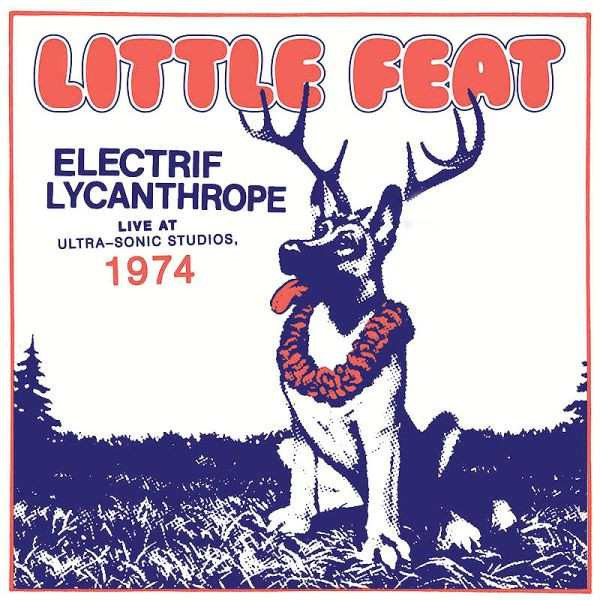
Nestled between the classic LP releases Dixie Chicken and Feats Don’t Fail Me Now and playing for a small and intimate assembled studio audience, this recording finds Little Feat in their prime live from Ultrasonic Studios in Hempstead, NY on September 9th, 1974. Often discussed as their ‘best’ line up, this recording features the 1974 version of Little Feat containing Lowell George (Guitar, Vocals), Paul Barrere (Guitar, Vocals), Kenny Gradney (Bass), Richie Hayward (Drums,Vocals) Sam Clayton (Percussion, Vocals), and Bill Payne (Keyboards). With excerpts of this performance only available previously as a legendary 70’s bootleg, this would be the first time the full-length performance would be available directly from the original pre-FM broadcast master tapes.
This release serves as an excellent introduction to one of rock ‘n’ roll’s best – yet criminally unsung – outfits. The recording captures the band cranking out songs from what are arguably two of their three best studio albums, at the pinnacle of their chemistry.
The late Lowell George didn’t get enough flowers during his lifetime, and has still missed out on any wealth of bouquets for being an innovator when it came to melodic, funky jazz-rock songcraft or for his Little Feat band (who still make magnificent new albums and tour) being early jam band VIPs. If you want to check out Lowell and Little Feat’s entire catalogue , find Rad Gumbo: The Complete Warner Bros. Years1971-1990, or start with the punchy, never-before-released rough house of “Electrif Lycanthrope”. Wolfen and Zappa-esque (George was once a Mother of Invention), the live, rugged funk of Little Feat is a necessity for any blue-eyed soul adventurers.
On the back of former Frank Zappa guitarist Lowell George, Little Feat produced a catchy catalogue of rock blending elements of folk, funk, blues, and country up until the group disbanded in 1979 shortly before Lowell’s death. If you’ve somehow made it this long without discovering Little Feat, you owe it to yourself to give them a listen (their live album “Waiting For Columbus” is great place to start).
Little Feat “Live At Ultrasonic Studios” [WLIR] Hempstead, NY September 19, 1974 Pre-FM (tracks 1 to 9) FM broadcast (tracks 10 to 12) Finally time to have Little Feat aboard, and they arrive with a classic recording at the Ultrasonic Studios on September 1974. This one is not rare at all, it is more as a way of recognising and remembering the fine music that the band played and still plays.
Lowell George – guitar, vocals Paul Barrére – guitar, vocals Bill Payne – keyboards, vocals Kenny Gradney – bass, vocals Richie Hayward – drums, vocals Sam Clayton – percussion, vocals This is ridiculously great! This recording presents them at their peak. Little Feat has one of the greatest rhythm sections ever. The sound quality is great and the performance is outstanding! Check out “The Fan, Fat Man In The Bath Tub” or “Spanish Moon” at least.