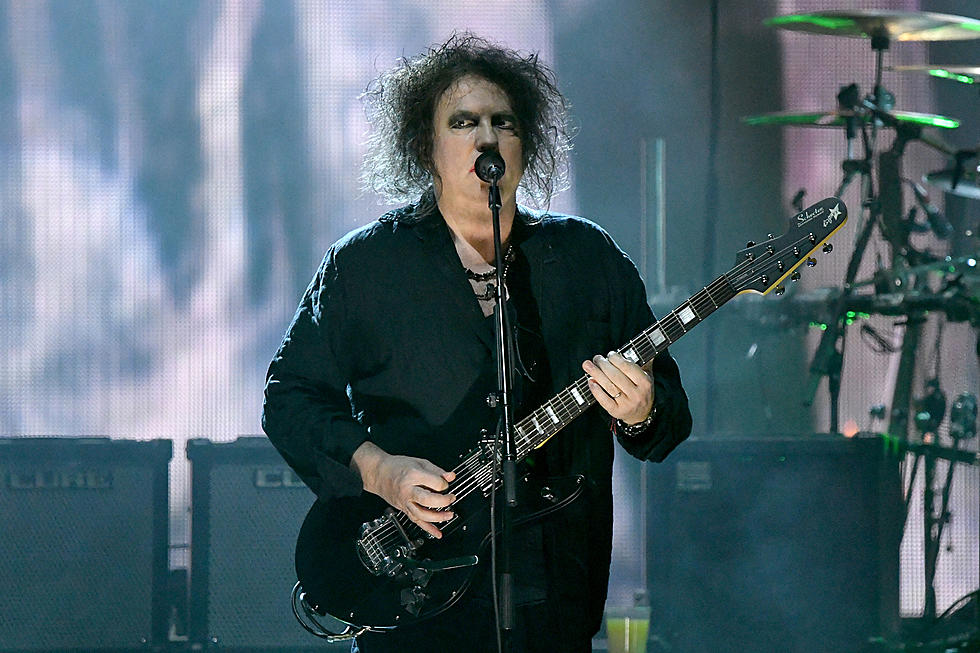
A hidden challenge when getting into The Cure is denouncing the stereotypes that have long followed the band. On the surface, a Cure record may come across like a wall-to-wall mope fest, and while there’s truth in that, it’s not the totality of the band’s being. Though it should be obvious from the existence of songs like “Friday I’m in Love,” “The Lovecats,” or “Doing the Unstuck,” there’s a joyful giddiness undercutting much of frontman Robert Smith’s work. Though his art may skew toward the self-serious there’s more to The Cure than what a cursory glance would reveal.
So how does one get into The Cure, a band who has a catalogue that’s not just vast, but full of worthwhile material? And how does one make sense of a discography that includes everything from goth to pop and post-punk to psych? The only way to understand The Cure is to embrace the twists and turns of their discography, knowing that if one part of their sound doesn’t appeal to you, there’s another half-dozen that may.
While it’s important to dispel the myth that The Cure works in a mopey mode, it’s just as imperative to approach that material head-on. As early as 1980, the band was already crafting desolate, despairing songs—and composing the nearly half-hour-long drone piece, “Carnage Visors”, to accompany 1981’s “Faith” but they would perfect it on 1989’s “Disintegration”. Though not constructed as complimentary pieces, the one-two punch of “Plainsong” into “Pictures of You” makes for one of the most evocative introductions ever committed to tape. The two songs lean on one another, with the wintry introduction of “Plainsong” allowing the pop-laced epic that follows it to be graced with an even bigger impact.
No song in the band’s arsenal highlights their ability to marry sprawling ambiance with gentle pop hooks better than “Pictures of You.” Built on Simon Gallup’s shimmering bassline and a simple drum groove, the song pushes forward slowly, allowing swells of synth to add to the song’s desolate aura. Hell, it even uses wind chimes effectively. Like much of “Disintegration”, “Pictures of You” could just as easily have been an instrumental, and for the first two minutes, it’s exactly that. But it’s in that space that The Cure showcases their power, taking a bleak colour palette and imbuing it with soft flashes of light. And when Smith’s vocals enter the fold, with the iconic opening line “I’ve been looking so long at these pictures of you / That I almost believe that they’re real,” it speaks to the band’s ability to work in an esoteric mode and unleash a memorable hook when you least expect it.
You can see the band first playing with this form in the early 80s, with “Seventeen Seconds” and “Faith” offering more compact, post-punk versions of the band’s all-consuming sound. With songs like “A Forest” and “The Drowning Man” in tow, the band was able to position themselves as a leader in the quickly evolving goth scene while still retaining a post-punk snarl. By the time of “Disintegration”, they’d have perfected this sound and have made it a commercially viable pursuit. It’s why, on 1992’s “Wish”, they’d spend half the record working in this mode, turning in glacially slow epics like “Trust” and “To Wish Impossible Things,” only to buck expectations by releasing their bubbliest concoctions to date.
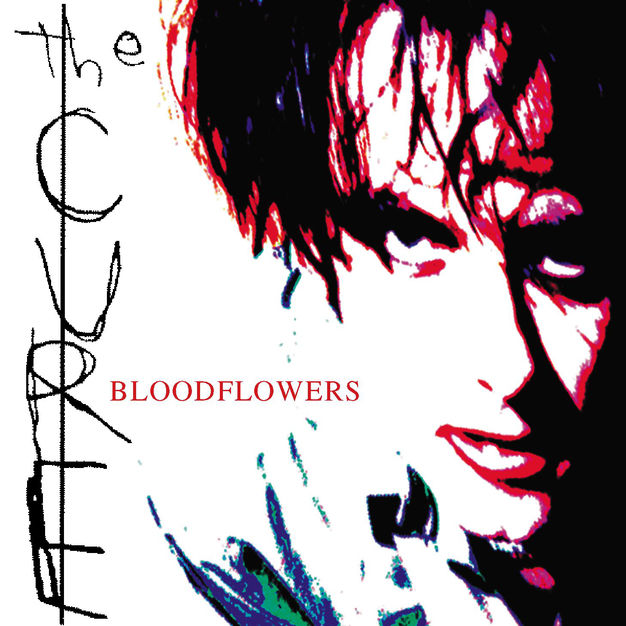
Though 1996’s “Wild Mood Swings” is often seen as the first failure after a decade of highs, it still has songs that are worth digging for. “Treasure” offers perhaps the shortest version of The Cure’s esotericism, and it’s a sound the band would return to fully with 2000’s “Bloodflowers”. Considered the final act in “The Trilogy,” alongside “Disintegration” and 1982’s “Pornography”, the record may not fully measure up to those staggering heights but when it works, it shows that Smith is still capable of making good on his ambition. “The Last Day of Summer” and the closing title track both warrant their length, and even if the 11-minute “Watching Me Fall” sees Smith’s affection for My Bloody Valentine’s “Loveless” taking root in his own music.
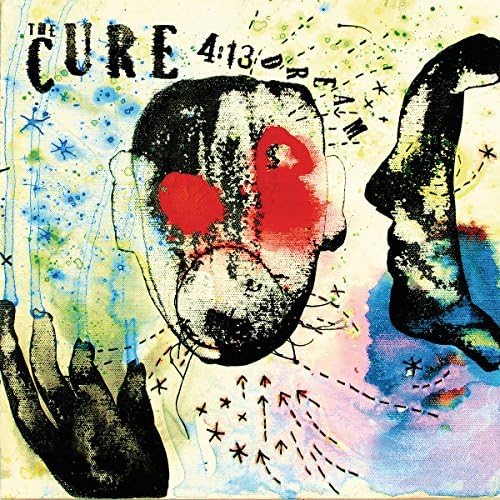
While the pair of albums that followed are often seen as minor, they have moments that keep them from being totally disposable. “Lost” opens the band’s self-titled 2004 album, and though it’s got more of a driving chug than anything that came before it, the track builds to a cathartic release that’s as off-putting and powerful as anything the band did in the 80s. While both “The Cure” and “4:13 Dream” suffer from subpar production, songs like “Underneath the Stars” prove the band’s later period still warrants exploration.

For a band that made its name on brooding compositions, The Cure has dashed off their fair share of gooey pop gems, too. While picking up a copy of 2001’s “Greatest Hits” could easily satiate a newbie, it’s the way these songs are injected into albums to dip and dart across genre lines that makes them most effective.
“Boys Don’t Cry” is an obvious starting point, culled from the album of the same name, it showcases the band in its embryonic stage, still sounding like a lean, mechanical post-punk band. As iconic as it is, it’s not the only treasure to be found in those early years, as “Jumping Someone Else’s Train” and “10:15 Saturday Night” prove that The Cure can be peppy without losing their bite.
1985’s “The Head on the Door” would be the band’s breakout moment, featuring the now radio staples “In Between Days” and “Close to Me,” alongside such should-be hits as “Six Different Ways” and “Push.” The latter would be the kind of riff-forward song that showcased Smith’s proficiency as a guitarist—something he’s long been underrated for and would be brought to the forefront on the band’s sprawling album from 1987, “Kiss Me, Kiss Me, Kiss Me”. It’s easy to see how “Kiss Me” would get the band tagged as alt-rock at the time, with songs like “The Kiss,” “Torture,” and “All I Want” being sinewy, rage-filled tracks that could be seen as an inspiration on acts like the Smashing Pumpkins. But here, also, were the band’s giddiest numbers, from the pitch-perfect “Just Like Heaven” to the horn-laced “Why Can’t I be You?” and “Hey You!!!” all the way down to softly lilting “Catch.”
Even those mope-fuelled records still have their bright spots, with “Disintegration’s” “Lovesong” being one of the band’s most iconic tracks, and “Wish” pulling itself out of the pit of despair with “High” and “Doing the Unstuck” . Even with “Wild Mood Swings‘ near universal derision, “Mint Car” is as tightly constructed as any of the songs from the band’s golden era. The same can even be said of “The End of the World” and “The Only One” from the band’s records in the 2000s, which are just as ebullient and infectious as their more renowned hits.
Though The Cure’s first forays into full-on goth music came by way of “Seventeen Seconds” and “Faith”, they were the building blocks upon which the band would create their first full masterpiece, 1982’s “Pornography”. Though the preceding pair of records was increasingly stark and devoid of pop hallmarks, “Pornography” was the sound of human beings bottoming out. “One Hundred Years” opens the record with the cacophonous boom of a drum machine and is paired with guitars that sound like they are warping off the record itself. The LSD-fuelled recording session, paired with Smith’s depressive streak and desire to make the “ultimate ‘fuck off’ record” results in the clearest inspiration on acts like Nine Inch Nails. There is no trace of hope to be found on “Pornography”, and it makes songs like “The Hanging Garden” and the aptly titled “Cold” capable of sucking the joy right out of a room.
Part of Smith’s grand plan was to have “Pornography” be the end of The Cure. And for a brief spell, it was. Simon Gallup left the band at the end of the record’s support tour, and Smith was spending more time playing guitar for Siouxsie and the Banshees. After doing a one-off project called The Glove alongside the Banshees’ Steven Severin, he returned to The Cure and made “The Top”, a record that is as close to a solo album as Smith ever produced. Though not as overwhelming as “Pornography” the inclusion of “The Caterpillar” keeps it from being totally murky—the record remains indebted to its predecessor while also shifting toward psychedelic influences that had previously gone untapped.
“The Top” is far from the band’s best, but songs like “Shake Dog Shake,” “Give Me It,” and the closing title track are feral, unhinged freak-outs that demand attention, and show Smith’s capability for expressing pure, unvarnished anger.
The same can be said of deeper cuts from “Kiss Me”, with “If Only Tonight We Could Sleep,” “The Snakepit,” and “Like Cockatoos” sounding inspired by hallucinogens even if Smith had long kicked the habit (though he’d return to it for “Disintegration”). But it also showcases “The Kiss,” as heavy and pounding of a track as The Cure ever committed to tape in their heyday. These songs aren’t always easy listens, as they rarely adhere to a single sonic touchstone, but that’s also what makes them so essential.
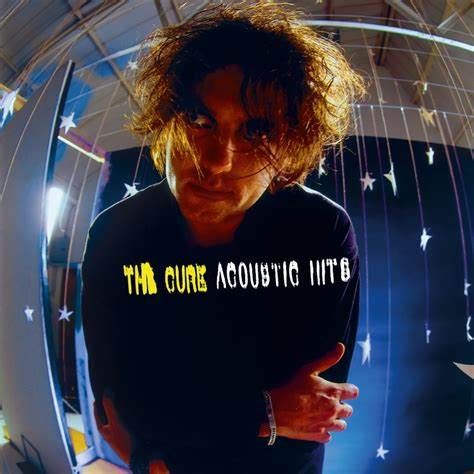
As noted above, The Cure has a lot of singles and EPs, and while those kinds of releases can often be havens for half-baked throwaways, that’s not the case here. Not only that, The Cure is a completists nightmare, as singles were often released on multiple formats, each with their own unique add-ons, and sometimes those even differed by which region—be it US or UK—that they were released in. As a result, The Cure’s catalogue of deep cuts can dwarf most band’s proper releases. And while there are things that are inessential—most of the remixes, along with the remix album “Mixed Up”, can be tossed aside there’s plenty of tracks that rank among the band’s best.
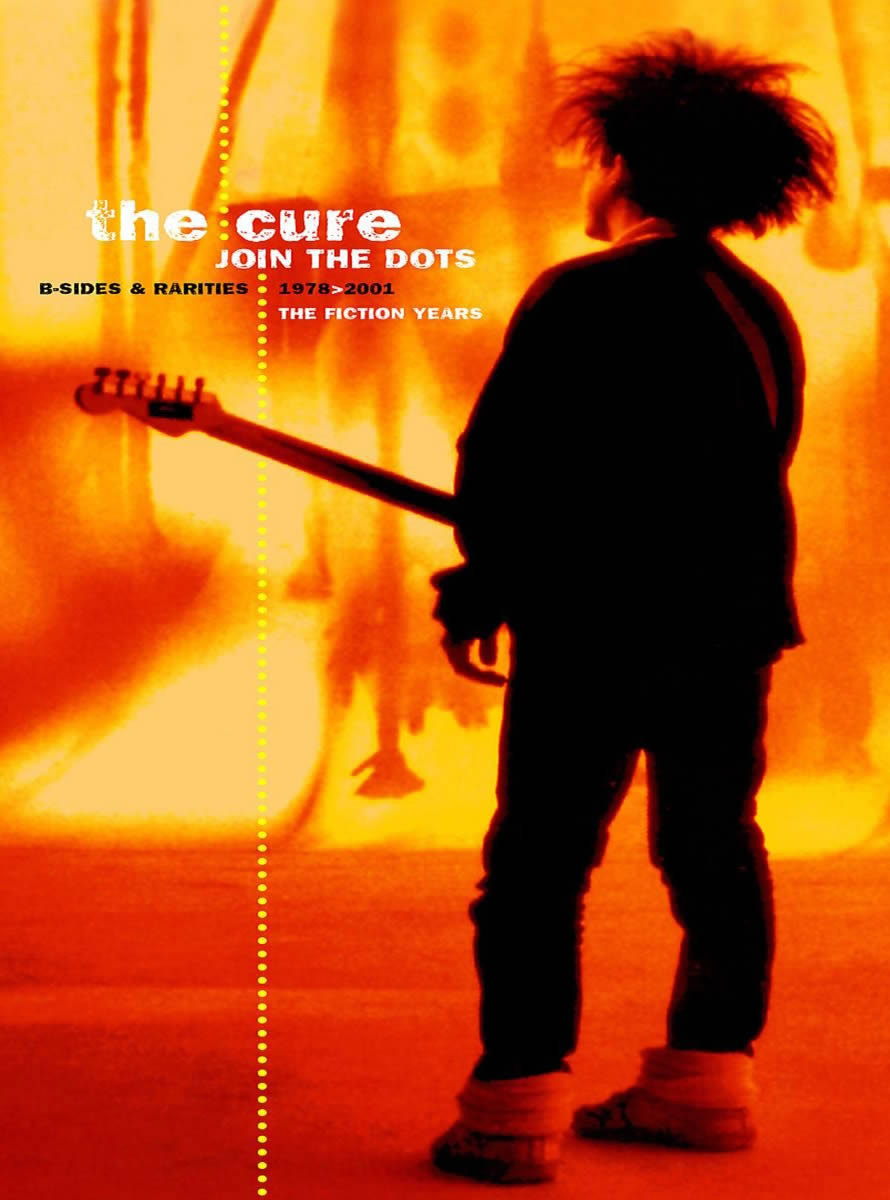
Thankfully, “Join the Dots: B-Sides & Rarities 1978–2001 (The Fiction Years)” does a great job of collecting a bulk of essentials. Though it omits “Cut Here,” a bonus track from 2001’s “Greatest Hits” compilation, as well as the limited edition Acoustic Hits companion piece, which saw the band tackling their most known in a stripped-down format, “Join the Dots” gives you most of what you need. It works through the band’s history chronologically, allowing you to see the band evolve almost in real time. Granted, “Join the Dots” is nearly five hours long, and even if you were just to cherry-pick the very best material, you’d still have a couple album’s worth of songs. From post-punk ragers like “Pillbox Tales,” to the anthemic chorus in “The Exploding Boy,” all the way to the Wild Mood Swings cut “A Pink Dream,” The Cure proves they’re a band worth getting lost in.
The Cure’s catalogue of music that helped shape an era.
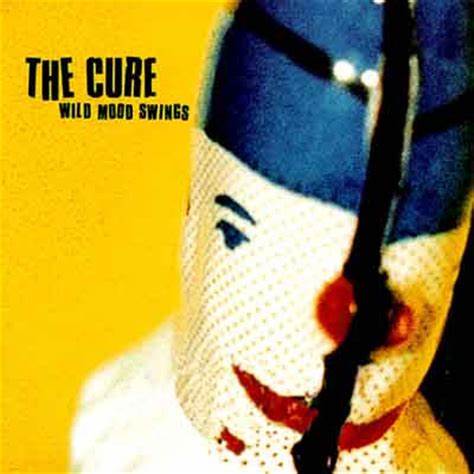
‘Wild Mood Swings’ (1996)
The Cure’s 10th album sounds like kind of a mess because it was made under stormy conditions. Various members were in and out of the group at the time, and, after scoring the highest-charting album of its career with 1992’s ‘Wish,’ Robert Smith took a four-year break – the longest hiatus between Cure albums at the time – that ended with an overlong, and underdeveloped, set of songs.








:format(jpeg):mode_rgb():quality(90)/discogs-images/R-751772-1155144458.jpeg.jpg)
:format(jpeg):mode_rgb():quality(90)/discogs-images/R-1499680-1224315996.jpeg.jpg)

:format(jpeg):mode_rgb():quality(90)/discogs-images/R-9275086-1477775020-4065.jpeg.jpg)