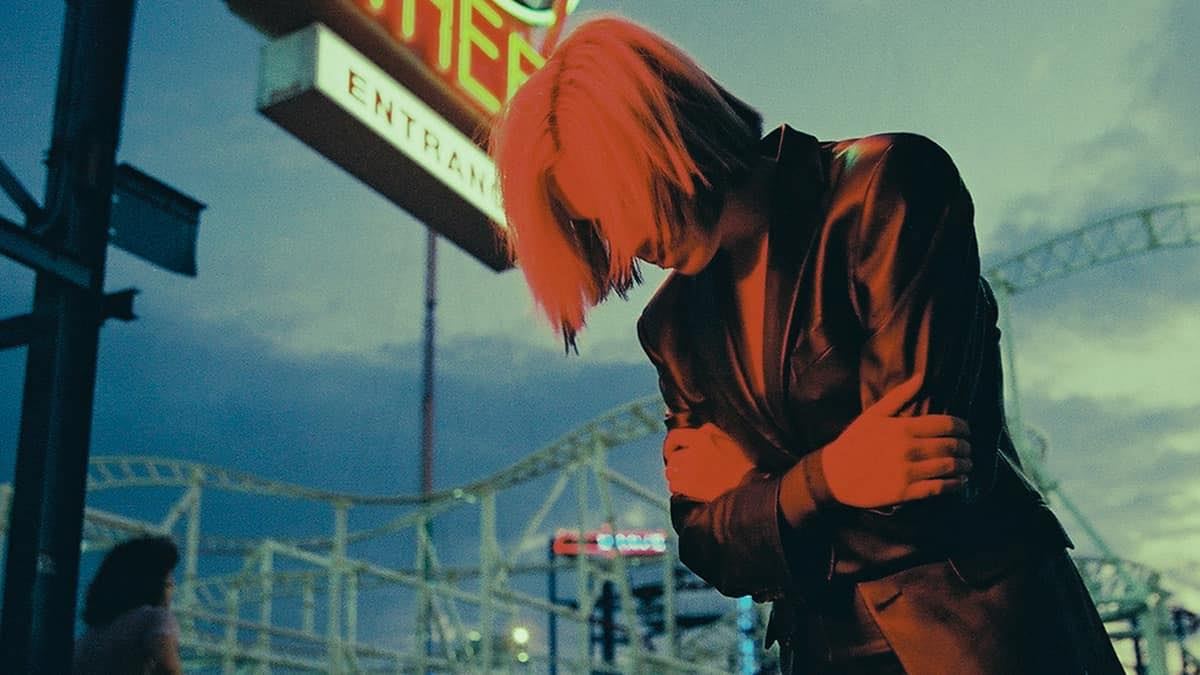
“‘Nothing Gives Me Pleasure’ is about trying to love yourself when it feels like no one else will,” Girlpool’sHarmony Tividad says. “It was written during a time when I was working so hard to get someone specific to love and recognize me. On the path to doing that, I diluted myself so much that I lost sight of my own needs. This video plays with the lengths we go to to feel loved and how so many faces of intimacy may disguise what love actually looks like to us specifically. I have a history of getting lost in the labyrinth in the struggle for affection. In this video I wanted to interface with my own patterns in the attempt to better see and love myself.” It’s from their new album, “Forgiveness“, due out next month via ANTI-Records.
“Nothing Gives Me Pleasure” by Girlpool From the album ‘Forgiveness’, available April 29 on ANTI-Records
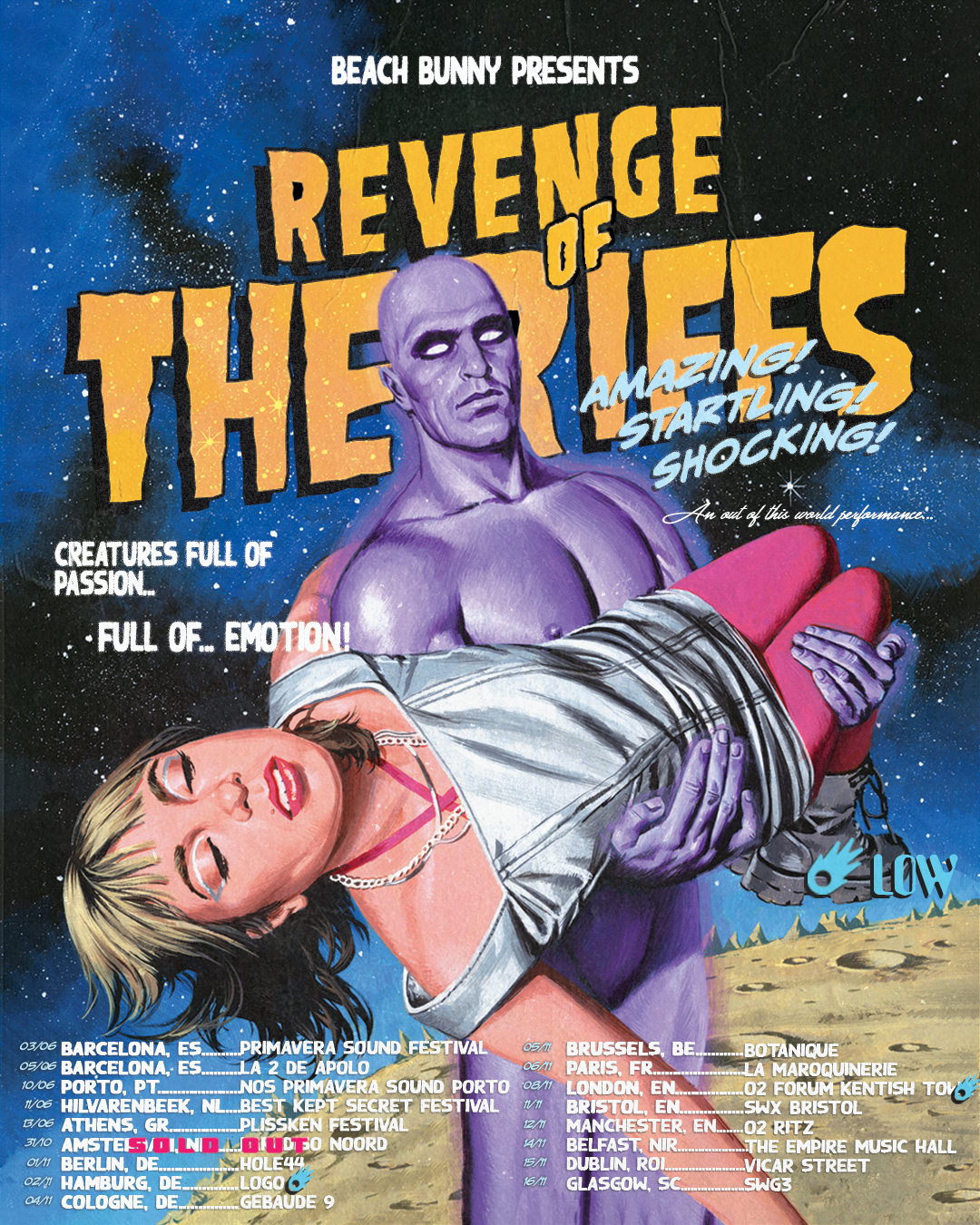
Our new single “Karaoke” from our upcoming album “Emotional Creature” is out now! “Karaoke” is part one of the upcoming triology of videos we having come your way. Chicago’s Beach Bunny are releasing their new album “Emotional Creature” on July 22nd via Mom+Pop Music. They’ve already shared a couple singles, “Fire Escape” and “Oxygen,” and now they’ve shared a third titled “Karaoke” along with a video written by bandleader Lili Trifilio and directed by Eliza Chance. The visual also has a guest appearance from actor and comedian Bob Odenkirk.
“Karaoke” details the small moments that take up one’s entire headspace when falling for someone else—a turn in conversation that results in an eruption of laughter, eye contact that makes one’s heart burst. Trifilio sings as if capturing these moments in real time, turning these romantic details into monuments for her memory. “‘Karaoke’ is a song about having a crush,” Trifilio shared. “It’s about infatuation, fleeting feelings, and the bittersweet nature of uncertainty. It’s about learning pieces of who someone is and liking them before even knowing the whole story.”
The visual finds the group in their groovy spaceship where they watch a TV showing scenes involving Trifilio and a purple creature (whose hands appear on the album’s cover). At the video’s end, Odenkirk beams in with an important message—Star Agent 0 (presumably the purple dude) has been captured. “Time is of the essence. The entire universe is counting on you,” he warns. It seems it’s not only matters of the heart at stake.
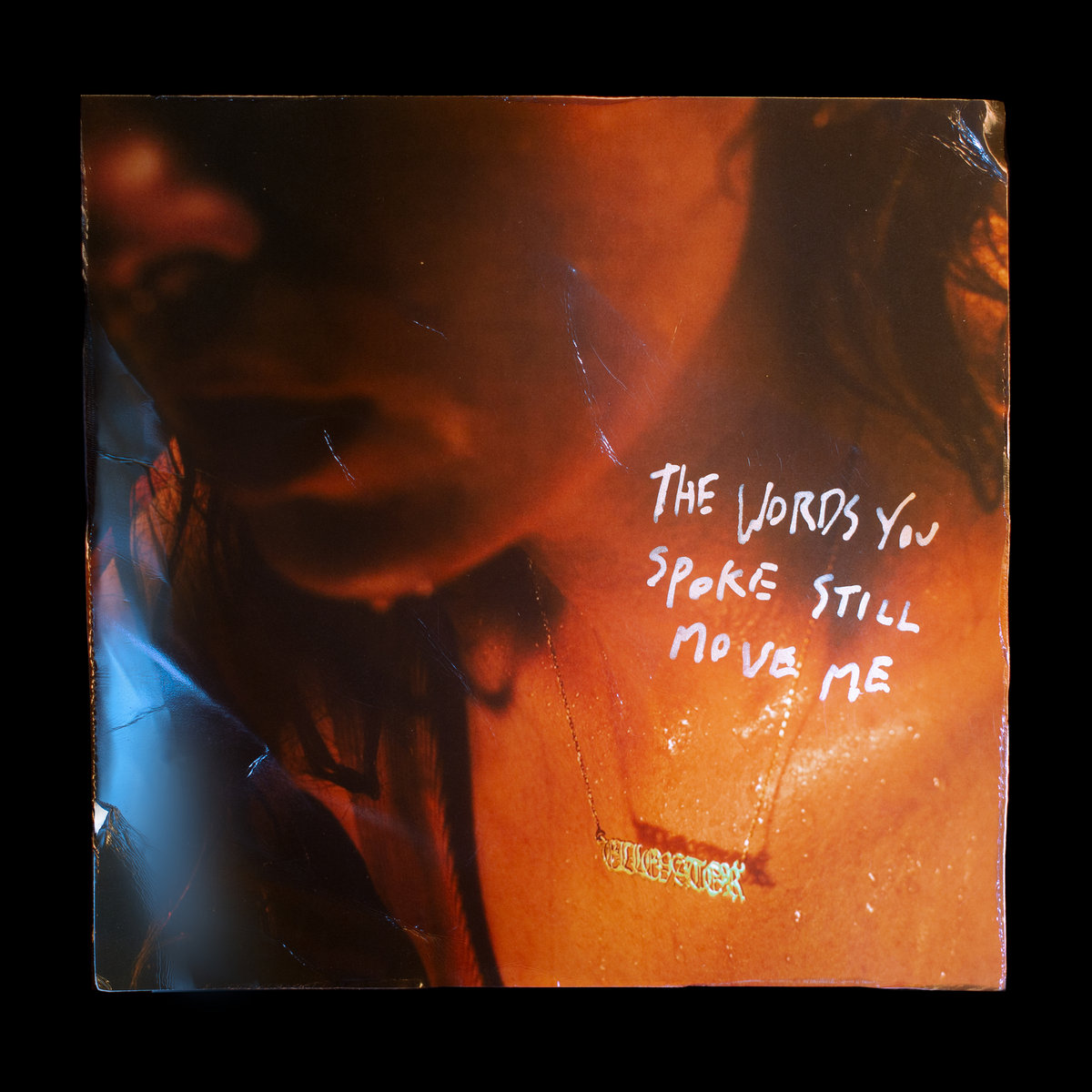
It would be too easy to call “The Words You Spoke Still Move Me” is a record about religion, dealing as much as it does with relationships, grief, and identity even its thoughts on spirituality are more complicated than that, with “Charlie IO” taking aim at psychedelics as another mode of spiritual bypassing. Ellevator’s verses are dense with re-purposed images, It could be my own baggage, but there are moments in which I’m convinced the band does something similar in their sound, which falls into even more interesting than just hard and soft rock. They share a stadium-sized ambition with Canadian indie bands of the 2000s (most closely, Metric) especially when the guitars soar in on the chorus of “Claws”
“When I was 17 I moved to the other side of the world and joined what I’d now call a cult,” recalled NabiSue Bersche, lead singer of Ellevator, on her formative days spent in the Charismatic church. “I won’t deny that I had an incredible and life-changing experience there, but as I’ve gotten further away from it I’ve realized how there was way more damage done than good.” She brings that perspective on survival and truth-seeking to the Hamilton, Ontario trio’s debut album “The Words You Spoke Still Move Me”, produced by Chris Walla in all its shimmering, electric-piano-laden ecstasy and righteous anger. On “Slip,”Bersche pleads for freedom, singing from the perspective of a mythical selkie taken captive by a cult leader—by the bridge, she drowns him and returns to the sea, a different kind of baptism that lends credence to Ellevator’s cheeky claim to be the “World’s Hardest Soft Rock Band.”
While Ellevator’s lyrics are startlingly grounded and their melodies are often impeccable, the soft atmospheres billow out to the point that they start to go thin. The energy also seems to peter out by the last track, “Party Trick,” one of a few misses that keep “The Words You Spoke” from feeling like a cohesive work rather than a strong collection of songs.
Then there are tracks like “The Prism,” which verges on losing itself in vaporous guitars before Ellevator parts the fog and delivers one of the album’s most surprising and sobering shifts in tone, suddenly bare and vulnerable again. This is a flashy record, but unlike the charlatans it prophesies against, you can usually trust it to deliver fire when it shows you the smoke.
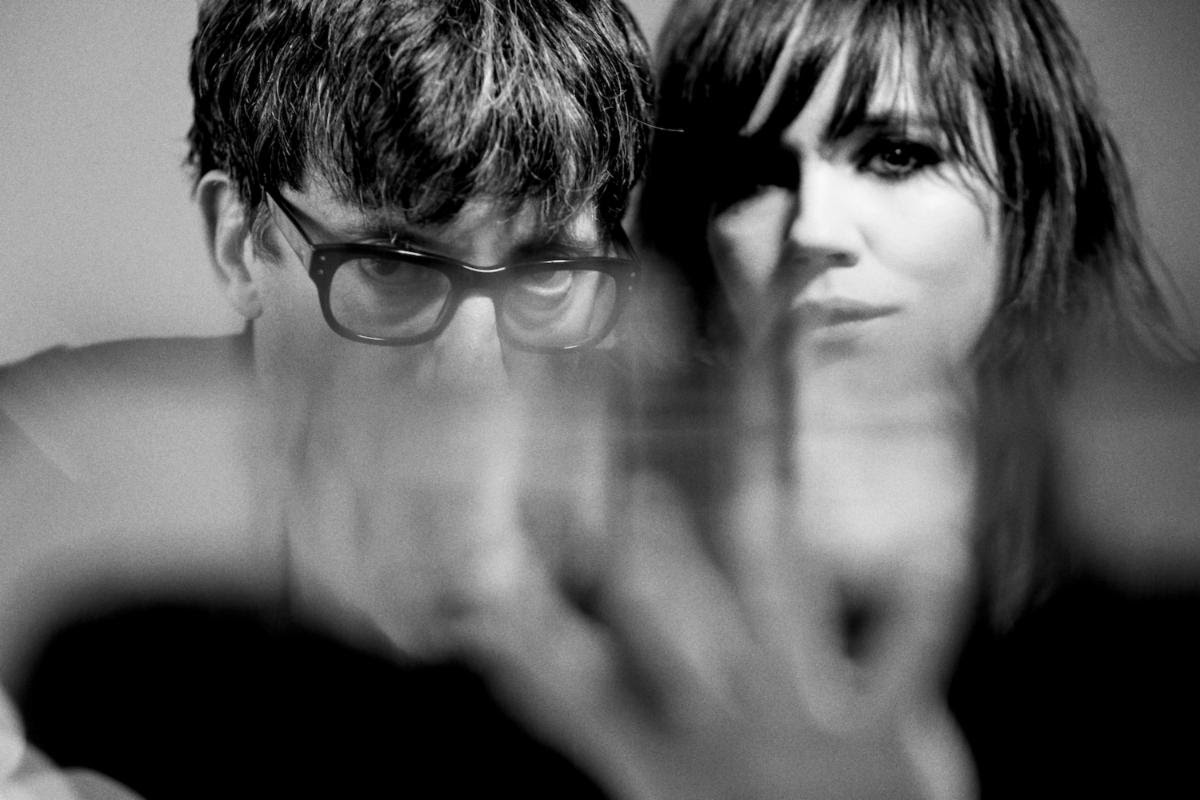
The Pipettes’ Rose Elinor Dougall and Blur’s Graham Coxon announced a new collaborative project called The WAEVE. Today, they’ve shared their first single, an upbeat, punky track called “Something Pretty” that braids post-punk, dream-pop, and conventional rock ‘n’ roll together. It’s fun!
The duo also performed their first live show at The Lexington in London. “We are greatly looking forward to unleashing our new sound live at the Lexington,” the band said ahead of their debut show. “We’ve been locked away, busy translating the varied sounds of our songs into a dynamic live show, with the help of some great musician friends. We invite you to surrender to the world of The WAEVE.”
The WAEVE…. the coming together of two musicians, who through working together have formed a new, singular, sonic identity. Themes of oblivion and surrender are juxtaposed with suggestions of hopefulness and light.
Against a brutal global backdrop of impending apocalypse and despair, Graham Coxon and Rose Elinor Dougall strove to free themselves through the defiant, blind optimism of making music.
Hearing the opening track on Sunflower Bean’s new album “Headful of Sugar”, it would be understandable if you felt like you’d stepped onto the set of a high-speed crime caper, with dollar bills flying in the air after a dramatic heist. “Who Put You Up to This?,” is a neon-lit single punctuated by soaring riffs, is the perfect introduction to the trio’s third record, as Julia Cumming, Nick Kivlen, and Olive Faber charge headfirst into taking risks.
This was part of Sunflower Bean’s mentality when the record came together, Cumming explains “I think taking risks for big rewards is a theme on the record, for sure,” she says. “Even with putting out this record, I think we tried to take a lot of risks with our sound. You never know how they’re gonna pay off, but you take a chance because it’s what you believe you should do.”
The band spent the recent period of forced confinement mostly with each other, resulting in the trio not only emerging as a more confident version of themselves, but also, consequently, with their most adventurous album to date. Over the course of “Headful of Sugar”, Sunflower Bean embrace both rock and pop music in a much bolder fashion than before; their riffs never seem to miss a mark, and the slick, cinematic stylings match the fictional and personal narratives found throughout. Take “In Flight,” where they embrace the fleeting nature of existence: “Life is short and the cliffs are high / I don’t have to close my eyes to see us in flight,” Kivlen sings.
A huge part of the band veering in this direction was Faber taking the reins when engineering the album, allowing Sunflower Bean to find out more about themselves, as Kivlen explains. “We trusted ourselves completely for the first time by deciding that we were going to record everything and demo everything [ourselves]. We were just trusting that we could do it, and that’s so important. I think that helped us play our instruments better. You have to figure out how to speak your own voice to the fullest.”
For the recording of the new album, they consciously kept things small. “We wanted to create this little quarantine group,” Kivlen continues. “We tried to create a sort of energy like we were at a party when we recorded. It was very much like everyone walking around the house doing whatever you want—listening to music really loud, drinking, eating, whatever—and just trying to foster this insular environment.”
“It’s an honour to be a New York band, especially right now—there’s a really new, exciting energy in the city. I feel more proud than ever.”
“Another big theme on the record is letting go,” Cumming says. “I think because of the lack of control that we had in our lives, on our work [during the pandemic], I think it definitely gave us more of an interest in celebrating the unknown and stepping out of our past selves.” Adds Kivlen, “There are a lot of lyrics about going out and meeting people, or going to the airport and flying somewhere new. It’s about just having this sort of lust for life that we didn’t have before.”
Sunflower Bean’s new album ‘Headful of Sugar’ out May 6th.
The extraordinary and searingly honest personal story of musician Miki Berenyi, revealing the highs and lows of navigating the madness of the ’90s music industry. Formed in 1988, Lush were part of the London gig scene during one of the most vibrant and creative periods in UK music. now, Miki Berenyi, tells all. The book begins with her childhood of extremes. from the bohemian lifestyle of her father’s social circle to the privileged glamour of her mother’s acting career, Miki’s young life was a blur of travel, celebrities and private schooling. but frequent relocation, parental neglect and the dark presence of her abusive grandmother resulted in crippling shyness, mental-health issues and a vulnerability to exploitation.
The route out of this hole was music – a passion shared by schoolmate Emma Anderson, the teenagers began attending gigs together and would eventually go on to form Lush. Peppered with anecdotes involving a cast of hundreds (including Blur, Sean Connery, Tracey Emin, Pearl Jam and the Red Hot Chili Peppers), this uncompromising autobiography documents Lush’s thrilling rise, dispiriting fall and subsequent bounceback, reliving the tours, recording sessions and problematic managers they experienced along the way. but at the heart of the book are Miki’s own battles: the conflict between her mouthy public persona and her thin-skinned private identity; the trials of being a woman in an infuriatingly male world; the struggle to find a middle ground between safe indie obscurity and sell-out international success. the memoir also explores Miki’s complex relationship with Emma – one that has fluctuated between camaraderie and rivalry over the years – and addresses the most devastating tragedy of all: the suicide of her soulmate, Lush drummer Chris Acland. Told through frank confession, wry humour and emotional honesty, this is the incredible tale of a trailblazing woman and a seminal band.
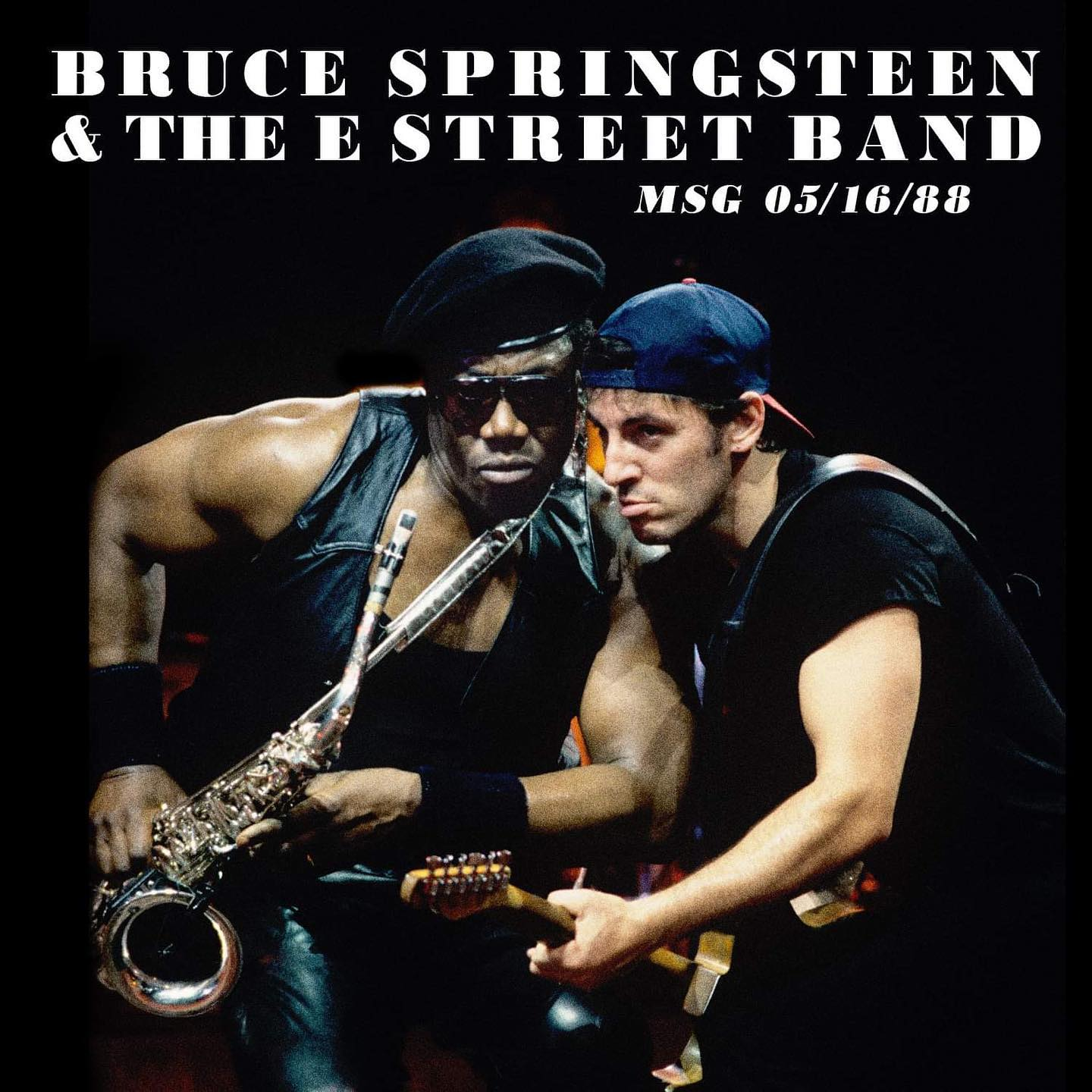
The official release live of the month is “MSG 05/16/88”
The final stage of the 1988 US tour opens May 16th at Madison Square Garden in New York with a sensational show set up in this month’s official live. The setlist includes 32 songs that reflect the “Tunnelof Love Express Tour” show structure and some goodies and premiere tours. The album’s nine tracks (including the last performance of “Walk Like A Man” until 2005), added “Boom Boom”, “Be True”, “AdamRaised a Cain”, “Seeds”, “War”, “Born In The USA” and “Light Of Day”, the premiere tour of “Rosalita (Come Out Tonight) “and the versions of “Cover Me” and “Part Man, Part Monkey” which respectively include “Gimme Shelter” and “Love Is Strange” in the others. The solo acoustic version of “Born To Run” is extraordinary and remains among the most suggestive ever performed.
In addition to this Bruce’s first show with the E Street Band at MSG after eight years he also saw a special instrumental closure with “New York, New York” and a rare cover of “Crying” by Roy Orbison. Orbison’s“In Dreams” is also included in the live, recorded during the soundcheck and never performed on tour.
The Tunnel of Love tour again? That’s surely a sentiment some are expressing with this month’s release of New York 5/16/88, the outstanding opening night performance from the final, five-show stand on the US leg of the 1988 tour.
On the surface the POV is understandable, as most shows on the Tunnel of Love Express Tour shared the same narrative arc and core songs. However beautifully realized it was, the argument goes, how distinctive is one Tunnel show from another?
It’s curious that 1988 comes in for such carping when one of Bruce’s most-beloved tours, in support of “Darkness on the Edge of Town” ten years earlier, followed a similar formula, largely sticking to a consistent group of songs for the core set, augmented by select cover versions and rarities that made a particular show extra special.
Both tours showcased a trove of material not found on Springsteen’s studio albums. In 1988, that included originals “Be True,” “Seeds,” “Part Man, Part Monkey,” “Light of Day,” and “I’m a Coward,” the latter a (nearly) complete rewrite of Geno Washington’s “Geno Is a Coward.” Bruce played those five songs across the US tour. But as the Express rolled on, cover songs—most entirely new to Springsteen setlists—began to appear, seemingly out of nowhere. But behind the scenes, their origin was part of the 1988 journey all along.
While the ’88 main set stayed consistent over the tour’s first two months, Bruce and the band operated as a virtual jukebox during their afternoon soundchecks,, test-driving dozens of cover songs. Eventually, some graduated from these private rehearsals to the main set.
These pre-show performances were explorations of the music Bruce and the band—and importantly, the horn section—grew up on or newly admired. Long soundchecks, like those that took place in Atlanta,Tacoma, and New York, were practically mini-concerts played for their own enjoyment.
On opening night at Madison Square Garden, cover songs born in soundchecks ultimately tip the show from good to great. Now released in brilliant, multi-track audio with one very special bonus track, in the immortal words of Nigel Tufnel, MSG Night One “goes to 11.”
John Lee Hooker’s “Boom Boom” is the first cover of the night, newly added to the set two shows prior in Minneapolis. Gritty guitar and horns combine to give “Boom Boom” swagger, and its inclusion feels topical given the subject matter (“take you in my arms, I’m in love with you”). Bruce tosses in a long, bonus “make loooove” to eliminate any ambiguity.
Between “Boom Boom” and the first set’s other cover, Edwin Starr’s depressingly still-appropriate “War ” we are treated to a number of terrific performances. “Adam Raised a Cain,” reborn in 1988, offers a weighty lead vocal, including a fresh exchange with Nils towards the end. Bruce’s guitar work at the top of “Adam” and later in the solo are fiery, and the horns raise the drama to arena level. “Two Faces” is thoughtfully rendered and thematically resonant, as is “Cover Me”: Bruce dips into lyrics from the Rolling Stones’ “Gimme Shelter,” declaring “I need a little shelter now,” “It’s just a kiss away,” and his own revealing improvisation, “I can’t see no sunshine.” Not surprisingly given the circumstances we get an especially earnest “Brilliant Disguise,” too.
The cracking first set ends with another epic “Born in the U.S.A.,” played at a seemingly pacier tempo and loaded with emotive guitar soloing, synthesizer pitch-wheel bending, and a nifty bit of Max Weinberg cymbal pinging between channels as Bruce’s voice rises to sing, “I’ve got a picture of him in her arms.”
The second set keeps pace with the first, and while there are no surprises per se (those are still to come), the band is playing at their 1988 peak. For highlights, first among equals is “Walk Like a Man,” making its second full-band appearance in the Archive series and sounding more vivid and widescreen than the version captured in Detroit in March. The arrangement features what might be the best work by the Horns of Love of the entire tour. While everyone in the band is playing brilliantly, Garry Tallent’s bass gives the song a lush bed on which the other instrumentation flourishes. It’s a stunner.
The encores on the 1988 tour were consistently strong, and the addition of “Have Love, Will Travel” by The Sonics delightfully balances the Memphis soul of “Raise Your Hand” and “Sweet Soul Music” with Northwest garage rock. “Have Love” is another song that graduated from the encore to the main set, and for the night’s most special moment, Bruce played that hand again.
“I’m gonna do a song now that’s a favourite song of mine,” he says. “I don’t sing it as good as the guy that originally sang it, but I like it a lot, and this is my night in the big room. I just love this song.”
What follows is a majestic, reverent, and perfectly arranged rendition of Roy Oribson’s “Crying.” Optimized for his vocal range, the performance features Springsteen singing with stunning control. What Orbison brings the song in soaring, operatic notes, Bruce makes up for with power and conviction. What a treat to add it to the master song list of the Live Archive series.
It’s no surprise that Bruce was feeling triumphant at the end of the night, and his band commemorates the moment in the most Big Apple way possible, playing an instrumental “New York, New York” for his walk-off music.
“New York, New York” was the last song of the 5/16/88 show, but it isn’t the final track on this release. We’re gifted a glimpse into those legendary soundtracks with the inclusion of “In Dreams,” recorded pre-show.
Bruce’s Orbison bonafides were well established even before participating in the television tribute special A Black and White Night, shot in September 1987. He had explored The Big O’s music in soundchecks for weeks leading up to New York City. The only E Street Band performances of “Crying” appeared during this MSG run, but “In Dreams” never even made it to the show.
The Archive has been fortunate to feature two other songs from 1988 soundchecks, “For You Love” from 5/23 and “Reason to Believe” from 3/28. But “In Dreams,” perhaps the most mystical song in the Orbison canon, feels most like we’ve snuck into the venue early and heard something only intended for the musicians on stage. What a treat. When “In Dreams” finishes, Bruce offers a self-review of their performance that I won’t spoil, but you’re sure to smile as I did.
The first night at Madison Square Garden in 1988 is an outstanding “Tunnel of Love” performance and, better still, a previously unheard and worthy homage to one of the biggest musical influences in Springsteen’s career.
Miracle Legion were a Connecticut-based band that immediately sprang to life on the heels of a post-R.E.M. guitar rock boom, chiefly because lead singer Mark Mulcahy’s voice bore an uncanny resemblance to Michael Stipe’s, and the arpeggio guitar structures were akin to Peter Buck’s sound.
Band Camp Friday is here again.Today we are happy to release ’No Flags’ by Miracle Legion. It’s ML opening for Pere Ubu in Birmingham England. Recorded on the 4th of July 1989, it’s the last show of a long and wonderful tour. Great set, great sound. Even an encore. Very nice, and I think our first live show from the UK on BC.
Oh to be in England on the 4th of July……Give them a good look at the one that got away. This show was the last show of a very long and very groovy tour opening for Pere Ubu. Nobody was confident enough to drive on the wrong side so they hired us a driver who had at some point worked for Pink Floyd. Not sure what if anything he did for them, but likely was not driving. After several very close calls and one chance at a fatality we protested. Our manager at the time, Brad Lee, flew in from New Jersey to fire him, Pink Floyd be damned. Mr. Lee showed up in a Birmingham rage and made you man redundant.
Free from English terror once again. In his bag the manager had four tiny paper flags. Four flags of freedom. We clucked with pride, but then somebody said this was a no flags show. No flags. Maybe it’s better that way…..In rock.
Band Camp Friday is the one day the artists get all the money from whatever you buy.
Guitar played by R.D. Neal The Younger of Edinburgh Drumming by Arch Duke Anthony ’Sir Anthony’ Boutier Sung by The Earl of Mark J. Mulcahy Bass played by Lord D. Allen McCaffrey
Recorded July 4th at The Irish Centre in Birmingham UK
Special thanks to David Thomas,Tony Maimone, Scott Krauss, Eric Drew Feldman, and most especially to the beautiful Jim Jones.