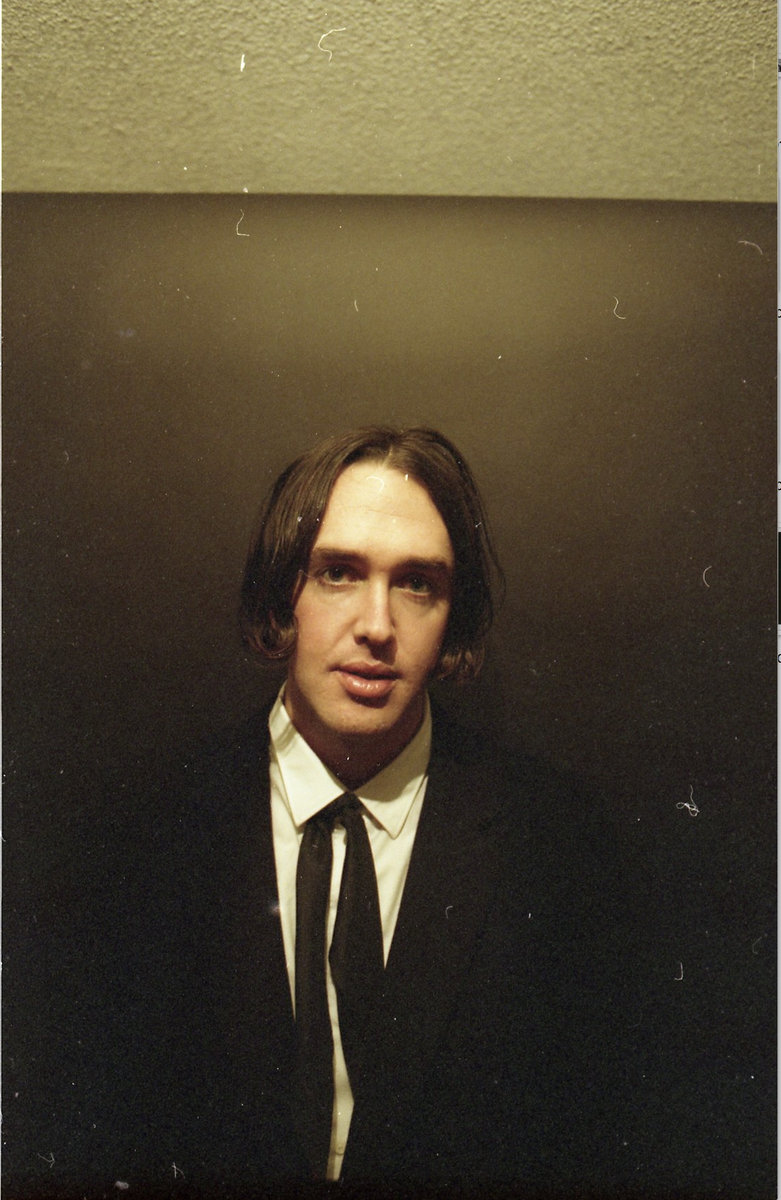
Los Angeles-based musician John Cudlip came of age cueing dream-pop records to the beachside backdrop of his hometown in Orange County. He’s a student of the sound — melodic, textured guitar music and a believer that, when honest and real, it can enthrall and facilitate catharsis.
Launder (John Cudlip) crafts the sort of album you could dive into and swim circles around. A wash of sound, “Happening” has a certain depth to it that is rare for a debut, and an effortless fluidity as each song flows into the next. Cudlip decided to fully immerse himself in writing the album, a nearly three-year process that produced about 60 demos, while embracing sobriety and directing all of his “once-destructive addictive tendencies into studio craft,” according to a press release. A wash of sound, the double LP balances a swirl of guitars with Cudlip’s gauzy vocals.
What feels like a relic from the early shoegaze days, the album belongs amongst the likes of Souvlaki and Isn’t Anything (which isn’t surprising since Sonny DiPerri, who also worked with My Bloody Valentine, co-produced, engineered and mixed “Happening“). With lush layers of sound and a cascade of fuzz, Launder is on track to create this generation’s Loveless.
The Rubs, were one of the finest of Chicago’s last wave of rock’n roll resuscitation of the late 2010s, who uprooted the whole project for greener pastures in Kansas City, MO, yet still continues to churn forth incredible hooks by the bucket-load, no matter where they land. Here we have the anxiously awaited third long-player, “Dust” – still entirely written, composed, and performed by the one-man-army that is JoeyRubbish, and still creating those invigorating waves of euphoria you’ve come to know and love from this essential hit-machine. After settling into a new living situation in a new city, the hits just kept pouring out, and as the dust settled after several reconfigurations over the next years, the “Dust” LP finally took its final, gleaming form, as the LP you have here. It’s another knockout collection of pristine power-pop bangers laced with mesmerizing guitar and/or sizzling mellotron solos, woven into impossibly contagious harmonies .
And as The Rubs have always had a clear window open on the meat-grinder of influences, with this outing you’ll feel whisps of the ethereal late 60s Kinks, soft explosions twisting effortlessly around core-revitalizing melodic exercises that might even make the Everlys blush with envy. “Dust” is one of those eternal records that seems like its always been here, and will always remain, its just always been behind a corner you hadn’t looked around yet. The sheer quality of these tracks and seamless execution are a marvel of the modern world’s DIY ethos in practice. There don’t seem to be many folks making records this brutally simple and honest in these sad, sad times, and its our hope that “Dust’s” hypnotic allure sticks to you as well, as it always has that tendency to do in a world of endless static electricity.
Recommended If You Like: The Beat, Donny Denim, The Jeanies, Kinks, The Toms, Plimsouls, Nick Lowe, Real Kids, The Fevers, Dutchess & Duke, Rockpile, Wreckless Eric
The Canadian band Metric returns with the successor to the almost four-year-old “Art Of Doubt”, which was of the high level that we have come to expect from the band over the past twenty years. The band based around Emily Haines delivers their eighth album with “Formentera” and it is an album that shows that Metric had not yet reached its creative peak. After all, “Formentera” is a great album, which in my opinion stands out above its predecessors. The vinyl artwork for Metric’s new album, “Formentera”, includes a motto that sums up the past few years: This Is What Happened. It’s an understatement that manages to say everything. Even real places become imaginary when they are so far out of reach. Named for an idyllic island near Ibiza off the coast of Spain, “Formentera” is a place that, for Metric, only existed on a page in a “dream destinations” travel book that lay open on a desk in the new recording studio that guitarist Jimmy Shaw built in 2020, in a rural hamlet north of Toronto. This is the setting where the band’s eighth album took shape. Metric’s sound is both genre-defying and genre-defining. Emily Haines, JimmyShaw, bassist Joshua Winstead and drummer Joules Scott Key started playing together in NYC in 2001.
The album opens with a real sledgehammer. The more than ten-minute opening track “Doomscroller” shows a cross-section of the band’s entire oeuvre and impresses from the first to the last note. “Doomscroller” opens with synth-pop, then drags you towards the dance floor with impressive beats, has beautiful piano interludes with atmospheric synths and at the end of the track also turns into a real and gently gritty guitar song. It delivers an instant classic of the kind that isn’t made today.
Musically, the opening track grabs you by the throat, but Emily Haines’ great vocals also ensure that the Canadian band’s new album immediately makes an indelible impression. The downside of the brilliant opening track is of course that the remaining 35 minutes of the album maintains a pretty high level.
On “Formentera“, as usual, the band is influenced by the new wave as it developed from the late 70s, but Metric certainly does not get stuck in the influences from a now distant past. “Formentera” also sounds as fresh and contemporary as we now expect from Metric.
In the fascinating opening track, the guitars certainly do not play the leading role, but on the rest of the album the band excels again with excellent guitar work, which delivers both irresistibly tasty guitar runs and modest but accurate guitar walls. It is guitar work that is combined with here and there firmly set synths and of course with the so recognizable vocals of Emily Haines, who still provides Metric with a special sound of her own.
Metric does not shy away from the grand and compelling songs on “Formentera” and applies for an open spot on the festival grounds this summer, but the band also opts for more subdued songs here and there and always puts enough adventure into its songs, so that “Formentera” continues to stimulate the imagination easily.
Metric’s new album plays a winning match after the masterful opening track, but the other songs on the album have also come to life since the first listen, so I dare to call “Formentera” the provisional crown on the work of the Canadian band.
Metric unfortunately still has a fairly modest status, but listen to the band’s new album and it seems to me that Emily Haines and her fellow musicians will pack you mercilessly, provided of course you love especially new wave influenced songs with a leading role for both guitars and keyboards.
Old World Underground, Where Are You Now?, the band’s debut, celebrates its twentieth anniversary next year, but it’s never too late to embrace a world band like Metric.
Natasha Janfaza releases her debut EP with Washington, DC Rock/Electronic record label House of Joy. Combining nostalgic alternative concepts with experimental production, Natasha’s voice delivers earnest yet urgent anxiety, pulling you into her world with catchy hooks and subversive instrumentation with drummer Brendan Canty (Fugazi, Rites of Spring, The Messthetics). “Vanilla“, the eight-track debut from Tunnel, set for release on July 15th via DC label House of Joy. Janfaza handled all song writing duties, sings and plays a good chunk of the instruments. Her collaborators for the release are producers and multi-instrumentalists D. Saperstein and Owen Wuerker, both of whom Janfaza knew from the D.C. scene, and drummer Brendan Canty, known for his work with Fugazi, Rites of Spring and The Messthetics.
Together, they made an album that’s equally noisy and sublime, harking back to 1990s indie rock despite a very 2020s recording process (save for one song, “Figure 5,” which was written back in 2019, when Janfaza was still living in D.C., the album came together through remote collaboration). Tunnel’s short East Coast tour this month will mark the first time the full band has played together on the same stage.
released July 15, 2022
All songs written by Natasha Janfaza Lead vocals, backup vocals, guitar, bass, synthesizer: Natasha Janfaza Guitar, bass, synthesizer, drum machine, backup vocals: D Saperstein Guitar, bass, synthesizer, drum machine: Owen Wuerker Drums, drum machine: Brendan Canty
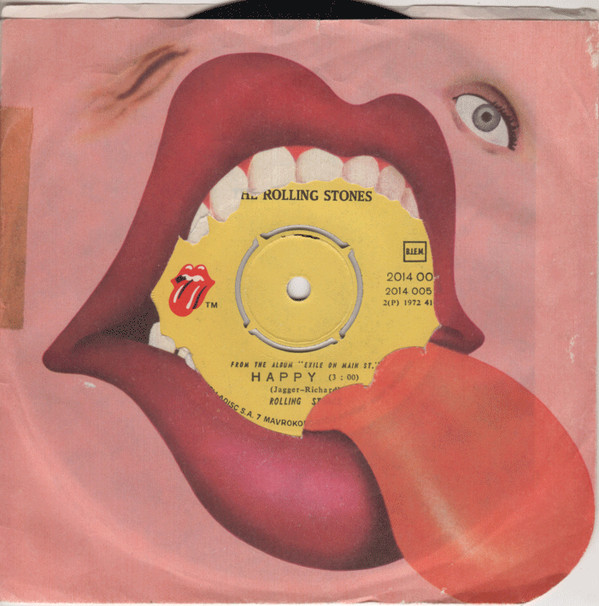
The creation of one of Keith Richards’ best-known songs didn’t happen overnight. It happened in just one afternoon. As Richards recalled, “Happy” the only single to ever chart on the Hot 100 with him singing lead, appeared in a matter of hours. “At noon it never existed,” he wrote in his 2010 autobiography, “Life”. “At four o’clock it was on tape.”
In 1972, the Rolling Stones had fled to the south of France, evading a complicated tax situation in the U.K. Richards was renting the Villa Nellcote, a sprawling mansion near the sea where the band had set up its makeshift mobile studio in the basement to record “Exile on Main St”. But looks could be deceiving.
“That Nellcote thing was very, very difficult,” Mick Jagger said in 2017. “The house looks great, but I can assure you the basement did not look very good. Things were getting done, but they were very disorganized. … We should’ve recorded in the drawing room, which is what we did in my house in England before, but we didn’t. We were very impatient and we ended up in Keith’s basement, and the basement was crummy in every possible way. But it wasn’t the ideal recording environment. It was very hard to record there. Probably the sound in there was adequate, but there were power problems, which made it very difficult. And we took ages and ages and ages to get it to work.”
It wasn’t just the equipment that was unreliable. If you walked into the Villa Nellcote on any given day in 1972, the chances of finding all members of the band sober and ready to work, let alone present on the premises, were slim to none. “It was very druggy, so it was totally unstructured,” Charlie Watts later remembered. “We went on to Keith time. When he woke up, we’d go and record something, and if he was awake for 15 hours, we’d play for 15 hours.”
Richards may have been calling several shots, but he wasn’t alone in the structure-fluid schedule. “At that time, I was no more out of it than anybody else,” in 2016. “Charlie was hitting the Cognac like a motherfucker, Mick loves his wine – but that didn’t even occur to us. People did what they wanted to do. It was like, ‘Are you going to go into that room and come up with something? If you do that, I don’t give a damn if you’re snorting God.’ What fuel you’re running on is immaterial, as long as you come up with the goods.”
This was more or less the situation when “Happy” began to take shape. Richards, who had written parts of the song earlier in the day, was in the studio with producer Jimmy Miller and saxophonist Bobby Keys, waiting for the rest of the band to show up. They casually jammed in the meantime. “We got something going,” he wrote in “Life”. “We were rocking, everything was set up and so we said, well, let’s start to work it down, and then we’ll probably hit it with the guys later.”
Richards made use of a subtle guitar trick he’d employ frequently throughout the Stones‘ catalogue: He used a five-string guitar in open G tuning. “At the time, I suppose, I thought I was not going to get any better on the six-string,” Richards said in 2015. “I thought, well, take one string off and then reinvent things. That will help me, and it did, for what I wanted to do. It’s a rather unique tuning, and I don’t recommend it for everybody.”
The lyrics for “Happy” poured out of him as he made up on the spot with no real connection to anything tangible: “Never got a lift out of Lear jets / When I can fly way back home.”
“It was just alliteration, trying to set up a story,” Richards recalled. “There has to be some thin plotline, although in a lot of my songs you’d be hard-pressed to find it. But here, you’re broke and it’s evening. And you want to go out, but you ain’t got shit. I’m busted before I start. [‘Well I never kept a dollar past sunset / It always burned a hole in my pants.’] I need a love to keep me happy, because if it’s real love, it will be free! Don’t have to pay for it. I need a love to keep me happy because I’ve spent the fucking money and I have none left, and it’s night time and I’m looking to have a good time, but I ain’t got shit.”
The chaotic nature of the “Exile” recording sessions often meant that Miller, struggling with addiction issues himself, would pull double duty producing the album and performing on it. He plays drums on “Happy”; Richards later overdubbed himself playing bass and more guitar, Jim Price added trumpet and trombone, and Jagger sang backing vocals.
This was how things went for a great deal of “Exile“. “You’ve got two piano players, you’ve got two horn players, Jimmy Miller playing drums sometimes,” Jagger recalled. “Mick Taylor playing bass if Bill [Wyman] wasn’t there – you’ve got all kinds of combinations going on.”
Watts told a different story in 2016, recalling that he and Miller “played together on ‘Happy” Regardless, Miller was a cohesive force at Nellcote when there was little organization to be found. “I thought he was the best producer we ever had,” Watts said. “Jimmy was a hands-on type of guy. When we played, he could never keep still, so he’d always be banging something – a drum or a cowbell.”
Released as the second single from “Exile” on July 15, 1972, “Happy” debuted on the Billboard Hot 100 at No. 69. By August, it reached No. 22, and it now ranks among the top 15 most-played Stones songs, with more than 500 live performances.
“Great songs write themselves,” Richard wrote in “Life“. “You’re just being led by the nose or the ears. The skill is not to interfere with it too much. Ignore intelligence, ignore everything; just follow where it takes you.”
“Forever Night” is the latest album from Night Shop, the songwriting project of Justin Sullivan and his first full length album on Dangerbird Records.
Before launching the band in 2017, Sullivan’s primary musical contributions came from behind the drum kit. A frequent collaborator with Kevin Morby —playing with Morby and Cassie Ramone in The Babies and then performing on Morby’s first four studio albums and playing steadily in his touring band until 2016—Sullivan has also performed live with Waxahatchee, Hand Habits and Anna St. Louis, and continues to play in LA post-punk outfit Flat Worms.
But while those musical experiences created a musical education of sorts for Sullivan, the genesis of NightShop was found in stepping away from music for a time. “I lost a good friend and former bandmate under tragic, heart breaking circumstances,” recalls Sullivan, “and I had been missing a lot of life events back home, which culminated in me having a panic attack in a tour van in Portugal. I needed to take myself off the road and tend to my mental health and relationships. I also had to accept that I might not tour again — that I might not be able to sustain that kind of life anymore.”
That period of retreating from music as a full time affair, working a steady job and addressing his health resulted in a renewal of sorts. “It was really transformative; music became simple again,” explains Sullivan. “It was the thing I couldn’t wait to do when I got home from work. It allowed me to reconnect with the joy of just creating.”
It was also the first time he had picked up a guitar with the intention of writing songs.
“From my first high school punk band,” says Sullivan, “I was always writing lyrics and would sing while playing drums, but I never picked up other instruments. For me, drums felt sort of safe — like the most ‘practical trade’ or something. A lot of the journey of this project, and me playing music in general, is overcoming shame. Namely the shame that music was something for other, more special people to do.”
The latest signpost on this journey is “Forever Night”,a record that begins with the titular song, moving with the jacked-up pace of a long forgotten power pop anthem being hummed on a city avenue outside the late night cafe. As Sullivan puts it:
“It’s a song about feeling grateful and inspired by the pace and lessons of the city and the pace and lessons of getting to experience a life spent playing music.”
From there, the album flows through various sonic moods and tones while the lyrics invoke literary themes and imagery, like a back-pocket paperback brought to an all-night diner, where an old jazz standard plays.
There’s the slow burn ballad and Ulysses-referencing “For a While”, which Sullivan says is about making peace with the past: “What if ‘coming home’ really just meant acceptance?”
The Divine Comedyinspired-“Let Me Let It Go” is an exuberant rave-up that sets its early-rock-and-roll rhythms and shining horn arrangements to a “meditation on courtly love”, referencing the moment when Dante saw his muse Beatrice in the town square. “A journey to hell, the pursuit of art, the Shangri-Las, and finding peace in what is, not how we think things should be,” Sullivan says.
A life spent on the road is reflected in the frequent geographical name checks on the record—from Pensacola to Paris to the New Jersey Turnpike—as well as Sullivan’s jubilance in revealing influences that range from classic film noir to Andrew Lloyd Weber to to the seedy underbelly of Old Hollywood to Ani DiFranco.
The disparate influences are held together by common earnestness and even optimism, especially striking when Sullivan is foretelling of certain doom. To wit, “The End of Time” which he says is: “an attempt to capture what it feels like when the world feels like it is cascading towards oblivion and yet, somehow you can still feel such unbridled excitement when you see a certain person walk into the room.”
While the lyrics are clearly the driving force of the experience, the sonic vision of the record was also one that was thoughtfully considered.
“Forever Night” features a reunion with Meg Duffy (Hand Habits), a long time touring compatriot in the Kevin Morby band and their first time on vinyl together since Morby’s “City Music”. Duffy provides bass to most of the songs and sings on “Just to Get Home”. Another frequent collaborator Jarvis Taveniere (Purple Mountains, Woods) co-produced the album, which also features Evan Weiss (Sparks) on guitar, drummer Tiffanie Lanmon and Alex Fischel (Spoon) as well as backing vocal performances from JessWilliamson on “For a While” and Anna St. Louis on “Let Me Let It Go”.
The warm feeling of a tight-knit band playing music together late into the night is an authentic one. The primary sessions for the album took place over a three day period at Valentine’s, a classic ‘60s Los Angeles recording studio that had fallen into disrepair and had only recently been revitalized, with the original recording console, cavernous room sound and aesthetic touches preserved. The band tracked live with Sullivan singing much of the vocals in a first take along with the band.
“Previously — due to the constraints of costs and time — I would build records from the ground up,” explains Sullivan,” and work with whatever schedule best accommodated the friends who were playing on the song. I like working that way, but my favourite recording experiences were always when the band is truly locked in, playing the songs together live in the studio. That feeling of total, unspoken connection.”
And while “Forever Night”is clearly his most realized work and the sound of a songwriter fully coming into his own, it’s this sense of continuum of working with others that Sullivan says is the through line that defines all of his endeavors:
“This is a special album to me but it is also merely part of the continued joy of making music with my friends. If we’re still here, after all these years, then we’re very, very lucky. So let’s enjoy it and let’s do it to honour those who couldn’t make it to this day, for whatever reason. Let’s not take it for granted.”
From the album, “Forever Night”, available now on Dangerbird Records.
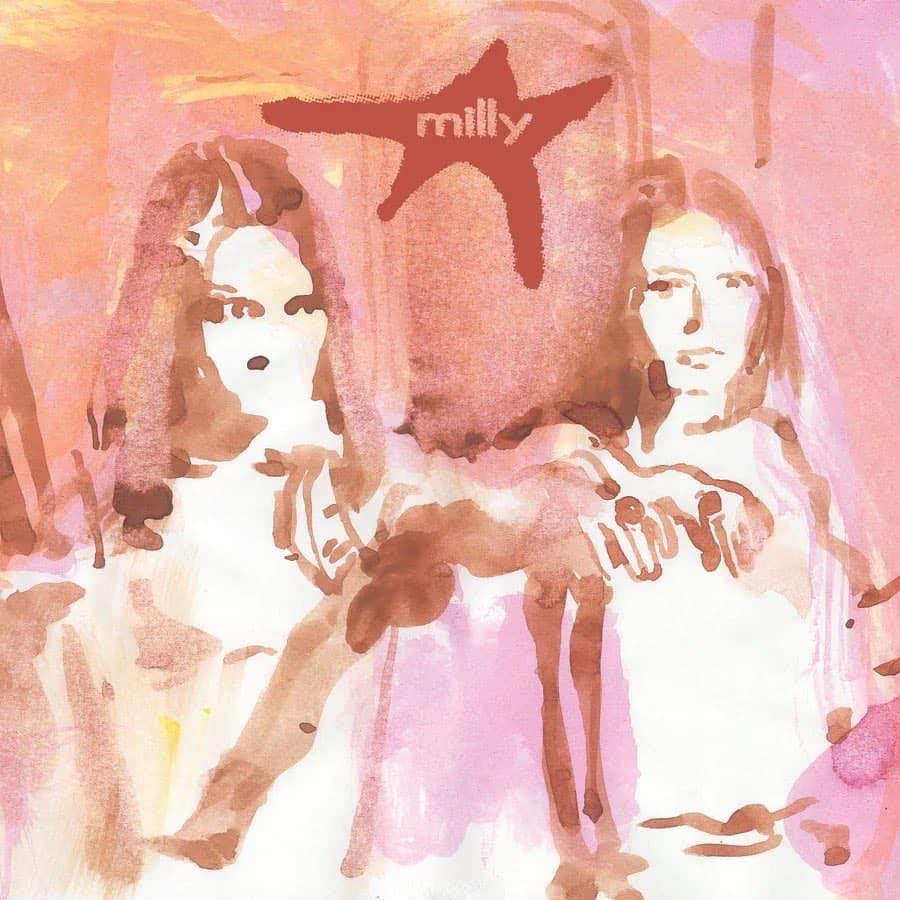
Milly is a rock band from Los Angeles fronted by songwriter and multi-instrumentalist Brendan Dyer. Their sound melds together elements of classic shoegaze, slowcore, and lo-fi indie rock, coalescing into an intense, singular musical impression. Milly began as Dyer’s home recording project in his hometown of Bristol, Connecticut before finally taking its current formation as a live band in Los Angeles.
On the album’s crushing lead single, Dyer explains “The song is about people who think they can solve other people’s problems for them when they can’t even balance their own shit. We want to aid others which is admirable but first we need to check in on ourselves to decide whether or not that’s actually possible. Anyone can be a hero if they try…”
Past Praise for MILLY:
“a band that fuses the wall-of-guitar sounds of Hum and Catherine with early emo like Sunny Day Real Estate and minimalist beauty à la Belly, resulting in a warm bath of fuzzed-out indie rock that nonetheless balances the riffing with gentler moments of airy shoegaze” – AV Club
“Meeting at the midpoint between shoegaze and ’90s-style alt-rock, “Talking Secret” lets torrents of guitars overwhelm bandleader Brendan Dyer’s hazily moody vocals” – NPR
““Crawling tempos and dazed, cinematic lo-fi… a band to watch” – Paste Magazine
“A fuzz-laden jammer that re-envisages J Mascis at the head of a dream pop outfit” – Clash
Milly announce their highly anticipated debut album“Eternal Ring“, set for release September 30th via cult indie label Dangerbird Records
The best music reflects a wide-screen view of the world back at us, helping distill the universal into something far more personal. Since forming in Austin in 2004, The Black Angels have become standard-bearers for modern psych-rock that does exactly that, which is one of many reasons why the group’s new album, “Wilderness of Mirrors”, feels so aptly named. In the five years since the band’s prior album, “Death Song“, and the two-plus years spent working on “Wilderness of Mirrors”, pandemics, political tumult and the ongoing devastation of the environment have provided ample fodder for the Black Angels’ signature sonic approach.
“Wilderness of Mirrors” expertly refines the Black Angels’ psychedelic rock attack alongside a host of intriguing sounds and textures. There are classic blasts of fuzzed-out guitars meant to simultaneously perk up the ears and jumpstart the mind, alongside melancholy, acoustic guitar-driven newfound experiments. Mellotron, strings, and other keyboards also play a more prominent role on “Wilderness of Mirrors” than ever before.
Even amidst these new experimentations, The Black Angels remain masterfully true to psych-rock forebears such as Syd Barrett, Roky Erickson, Arthur Lee and the members of the Velvet Underground, all of whom are namechecked on album highlight “The River.” “The Velvet Underground song ‘I’ll Be Your Mirror’ – that’s what every Black Angels album has been about,” says vocalist/bassist Alex Maas. “You can’t work out your struggles unless you bring them to the forefront and think about them. If we can all think about them, maybe we can help save ourselves.”
“Firefly” now from our forthcoming album “Wilderness of Mirrors”
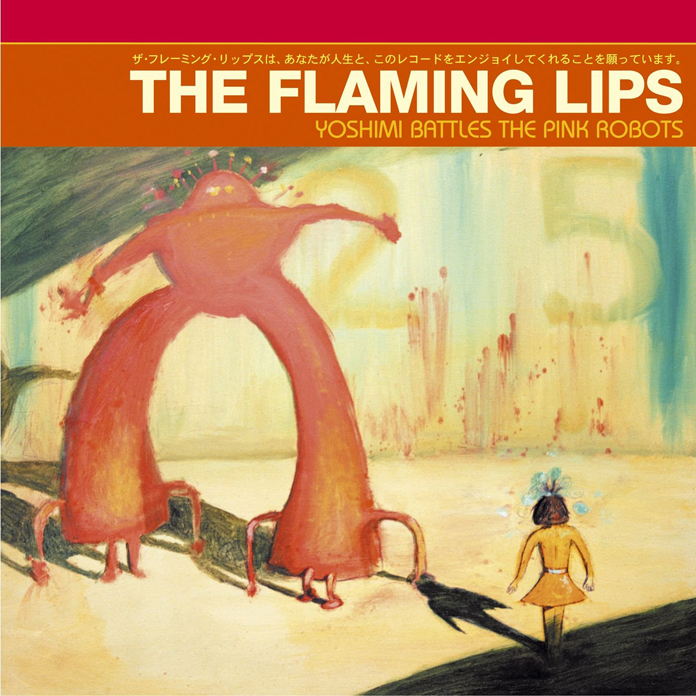
The Flaming Lips had already pulled off some of alt-rock’s bravest (or, at the very least, weirdest) experiments: the 23-minute noise assault of “Hell’s Angels Cracker Factory,” the communal chaos of their “boom box experiment,” the four-CDs-at-once design of “Zaireeka“. “When we were going to make “Yoshimi Battles the Pink Robots”, to us we were experimenting with pop music,” the band’s frontman, co-writer and overall ringleader, Wayne Coyne, said “We would listen to things like Nelly Furtado and Madonna, and we would say, ‘Why don’t we try to do that to our music?’.
The Oklahoma City-based neo-psychedelic rockers The Flaming Lips had been recording music together for nearly 20 years prior to the release of their critically acclaimed 10th studio album “Yoshimi Battles the PinkRobots”. A solid follow-up to the group’s 1999-released breakthrough and ultimate masterpiece The Soft Bulletin, Yoshimi Battles the Pink Robotscontinues The Flaming Lips’ creative vision into the overwhelmingly dystopian 21st century, as appropriately represented throughout its storyline, in which Japanese alt rock heroine Yoshimi P-We seeks to overcome a race of sentient machines hell bent upon humanity’s destruction. This plot line, however, is exceedingly loose and takes a backseat to the album’s soundscapes, which are lush with melancholic intimacy such blue waves of cosmic introspection to be expected of any great psychedelic release. In its time, Yoshimimarked a turning point in modern music, The Flaming Lips having proved themselves by successfully expanding upon the sonic mastery demonstrated on The Soft Bulletin. Their ninth LP, 1999’s The Soft Bulletin, was roundly labelled a masterpiece, recalling a darker and more blown-out version of the Beach Boys’ wide-eyed symphonic pop circa Pet Sounds. But the group by now the core unit of Coyne, multi-instrumentalist Steven Drozd, bassist Michael Ivins and long time producer and engineer Dave Fridmann got way more single-oriented with “Yoshimi”.
Opening track “Fight Test,” which bore a striking resemblance to Cat Stevens’ own 1970-released hit “Father and Son” and resulted in a lawsuit against the group, finds frontman Wayne Coyne contemplating: “I thought I was smart/I thought I was right/I thought it better not to fight/I thought there was a virtue/In always bein’ cool,” introducing the album’s themes of conflict and combat.
This remains among The Flaming Lips’ top tracks, embodying the group’s vast, spacey, far-out sound—an intermingling of ’60s and ’70s psychedelic rock and ’90s and ’00s experimental pop, rich in synthesizers and computer effects. Having won his lawsuit against the group, Stevens still receives royalties for “Fight Test.” The Flaming Lips’ retro-futuristic sense of idealism is never better realized than on Yoshimi, especially on part one of its title track, which remains a superior indie rock composition, now a classic of its genre. Coyne’s comic book account of Yoshimi P-We’s preparation for combat, which includes exercising and “taking lots of vitamins,” adds an air of good humour to the entire ordeal, complementing the track’s sunnily upbeat melodic disposition. “Yoshimi Battles the Pink Robots, Pt. 1” is an album standout, as well as a great introductory track for those unfamiliar with The Flaming Lips’ music.
Continuing in the album (and group’s) vein of signature cosmic mysticism, expansive neo-psych jam “In the Morning of the Magicians” appropriately draws its title from 1960-published New Age conspiracy theory survey The Morning of the Magicians. Similarly, the subsequent “Ego Tripping at the Gates of Hell,” which briefly returns the group to something resembling the sound of 1995’s Clouds Taste Metallic, further details Coyne and company’s celestial mission, alternating between bad trip pessimism and euphoric bliss as only scattered children of the psychedelic age can. Tracks such as “One More Robot/Sympathy 3000-21,” “Are You a Hypnotist??,” and “Approaching Pavonis Mons by Balloon (Utopia Planitia)” all round the album’s trippy sound out well, each track stylish and sonically rich, displaying the group’s studio wizardry, as it merges sincere neo-psychedelia with alt rock, as well as dream and electro-pop.
Yoshimi Battles the Pink Robots’ crown jewel, however, arrives in the form of initially unassuming dream pop ballad “It’s Summertime,” which repeated listens will surely reveal as being among The Flaming Lips’ greatest songs and the Yoshimitrack that sums the album’s sentiments up most concisely.
Lyrically, “It’s Summertime” finds Coyne at his most introspective, as he assures the listener, “When you look inside, all you’ll see/Is a self-reflected inner sadness.” This track is a work of peculiar beauty, one which may not immediately stand out amidst the ambitious bombast of the album’s remainder, but is most definitely worth the consideration.
Gloriously sublime space pop revelation “Do You Realize??,” currently a fan favourite and formerly the Official Rock Song of Oklahoma, continues this ontological reflection, as Coyne inquires: “Do you realize that everyone you know someday will die?” The downtempo “All We Have Is Now” appears to reiterate its predecessor’s message, its soundscape a swirling science fiction carnival of intergalactic proportions, as Coyne seems to accept his own mortality and ultimate existential insignificance, confessing, “You and me were never meant to be part of the future.” This line in particular is integral to the album’s overarching message, which ultimately encourages the listener to dream freely, while not failing to remind us that life on earth is brief.
Yoshimi Battles the Pink Robots received critical acclaim upon its release, going on to receive a Grammy Award for Best Instrumental Performance. At that point in their career, The Flaming Lips had officially broken through, after decades of hard work and perseverance as a promising alt rock act. The group would continue its creative streak with 2006’s At War with the Mystics, completing what may be considered an unofficial trilogy of top-notch releases, alongside The Soft Bulletinand Yoshimi, distinguishing itself as one of the most unique and able musical acts of its generation.
The Flaming Lips also remain one of rocks must see major artists. While the group has never quite returned to the artistic heights of its 1999-2006 output, The Flaming Lips remain ahead of many of their peers, their elaborate live performances and seemingly endless supply of charisma keeping them several steps ahead of the pack. Yoshimi Battles the Pink Robotsis a monumental release, finding Wayne Coyne and company, after years of toiling away in relative obscurity, triumphing at long last, the results still as blissfully visceral as they were 20 years ago.