

A mesmerising and intimate performance of ‘Incomprehensible’ by Big Thief, live in session from Maida Vale Studios for Huw Stephens on BBC Radio 6 Music.
A mesmerising and intimate performance of ‘Incomprehensible’ by Big Thief, live in session from Maida Vale Studios for Huw Stephens on BBC Radio 6 Music.

Elder’s “Through Zero” is a nine-minute progressive metal suite that showcases the band’s signature blend of heavy riffs, melodic passages, and psychedelic textures, though some critics note its structure may feel overcomplicated.
2026’s “Through Zero” is a jump into Porcupine Tree/Portishead-like pensive Disco/Post-Rock territory with nocturnal-oriented soundscapes, some Drop C pentatonics akin to Mastodon and “synthwave” digital synth patterns (“Capture/Release”) in addition to more familiar Soundgarden/Opeth-like technical breakdowns (title track).
However, the material is too long to impress, and the over-reliance on off-metered “progressive” cerebral writing penalizes the listening in the long run.
“Through Zero” is the first single from Elder’s upcoming seventh album of the same name, set for release on May 29th, 2026 The track runs approximately nine minutes and is described as a layered, multi-movement suite that immediately establishes a gripping atmosphere with intricate riffing and melodic instrumentation
Nick DiSalvo’s vocals are integrated smoothly, complementing the bright, expansive instrumentation and building toward an arena-prog peak without sacrificing accessibility
Elder continues to blend progressive rock, heavy psych, and doom metal, drawing comparisons to bands like Baroness, Monolord, and Pallbearer
The track features multiple distinct movements, instrumental breaks, and callbacks to earlier riffs, reflecting Elder’s mastery of hypnotic grooves, crushing riffs, and ethereal atmospherics, The album as a whole is expected to contain six compositions, maintaining the band’s tradition of long, immersive tracks

This week, Dublin four-piece Gilla Band shared a new song, “Giraffe,” their first in almost four years, and have announced some new tour dates .
“Giraffe” is also available as a limited edition picture disc 7-inch on Rough Trade Records.
The hugely original and influential Dublin four piece will also be touring the UK / Europe at the start of 2027. “Giraffe” is the first new music from Gilla Band in nearly 4 years and to mark this the band are releasing a very limited 7” picture disc.
For over ten years now, the Dublin quartet — vocalist Dara Kiely, guitarist Alan Duggan Borges, bassist Daniel Fox, and drummer Adam Faulkner — have been redefining what you could loosely call “rock music” in the 21st century, influencing a wide swath of similarly forward-thinking guitar acts along the way.
The band perfected a vision that wasn’t quite post-punk, wasn’t quite noise-rock, wasn’t quite anything besides an idiosyncratic, ground-breaking hybrid that could only come from the four of them – “Giraffe” is their bold new offering.
Gilla Band were formerly known as Girl Band, but changed their name in 2021. The band features vocalist Dara Kiely, guitarist Alan Duggan Borges, bassist Daniel Fox, and drummer Adam Faulkner.
Kiely had this to say about the single in a press release, in relation to what goes on inside his head: “It can be a very scattered and sometimes lonely place. Feeling unloved and finding it difficult to articulate what I’m actually thinking. The song’s outro indirectly details a kind of confirmation that affection toward me does exist. While I appreciate it, I still find that hard to believe.”
The band’s last album was 2022’s “Most Normal”.

Ian Sweet (the project of Jilian Medford) is releasing a new album, Shiverstruck, on July 24th via Polyvinyl. This week she has shared its second single, “Jilian.”
Medford had this to say about the song in a press release: “‘Jilian’ is about the small mistakes that somehow make life feel both cruel and hilarious at the same time. Over the past few years, I’ve struggled to understand who I am when everything familiar feels farther away. This song became me speaking directly to myself, calling myself out and finally saying the things out loud that I’ve been avoiding. It’s about realizing I’m still still here and there’s still so much life left to live. This song feels like hitting the reset button.”
Previously IAN SWEET shared the album’s lead single “Criminal Kissing,”

50th anniversary reissue of the Flamin’ Groovies seminal album “Shake Some Action”. Taking notes from the British Invasion and inspiration under the San Francisco sun, the Flamin’ Groovies became synonymous with the stylish, raunchy rock of the early-1960s, with “Shake Some Action” remaining their undisputed classic.
A lot had happened with the Flamin’ Groovies in the nearly five years that separated the epochal “Teenage Head” album and their return to American record racks with “Shake Some Action“. The Groovies lost their record deal with Buddah, lead singer Roy Loney had quit the band leaving Cyril Jordan as uncontested leader, and they had spent a lot of time in Europe, building a significant following in the United Kingdom. As a result, the Flamin’ Groovies on “Shake Some Action” almost sound like a different band, albeit one driven by a similar obsession with the utter coolness of pre-hippie rock & roll. (The fact that Jordan and bassist George Alexander were the only holdovers from the “Teenage Head” line-up probably had a lot to do with the different approach as well.)
The rawer blues and rockabilly accents were gone from the Groovies’ sound, with the guitar-fuelled cool of the British Invasion era taking their place. While this version of the Flamin’ Groovies didn’t rock out with the same manic fervour as they did on “Flamingo” or “Teenage Head”, they could indeed rock when they felt so inclined, as demonstrated by the glorious “Please Please Girl,” “I Can’t Hide,” and “Let the Boy Rock and Roll,” while the Brit-flavored take on “St. Louis Blues” showed that some shades of the old band were still visible.
And the title cut was a stunner — a brilliant evocation of the adventurous side of British rock circa 1966, “Shake Some Action” was tough, moody, wounded, and gloriously melodic all at once, and by its lonesome served as a superb justification for the Groovies’ new creative direction. If “Shake Some Action” was the first salvo from the new and improved Flamin’ Groovies, it also demonstrated that this edition of the band had as much promise as the Loney-fronted group.
Earning a perfect 5-star review from AllMusic and an 8.5/10 from Pitchfork, “Shake Some Action” is upheld for its ability to sound moody, wild, and unabashedly “’60s”. Includes the album remastered from the original analogue tape as well as a bonus disc including previously unreleased alternate mixes/versions from the original recording sessions as well as the surviving reels of the band performing live at The Roxy in Hollywood in 1976.
Includes the classic title track, “You Tore Me Down”, “I’ll Cry Alone”, “I Can’t Hide” and more.
![[PRE-ORDER] Flamin' Groovies - Shake Some Action [Rhino Spirit Of '76 Exclusive] [Release Date: 07/17/2026]](https://www.plaidroomrecords.com/cdn/shop/files/0081227804350.ps.jpg?v=1779996724&width=1500)
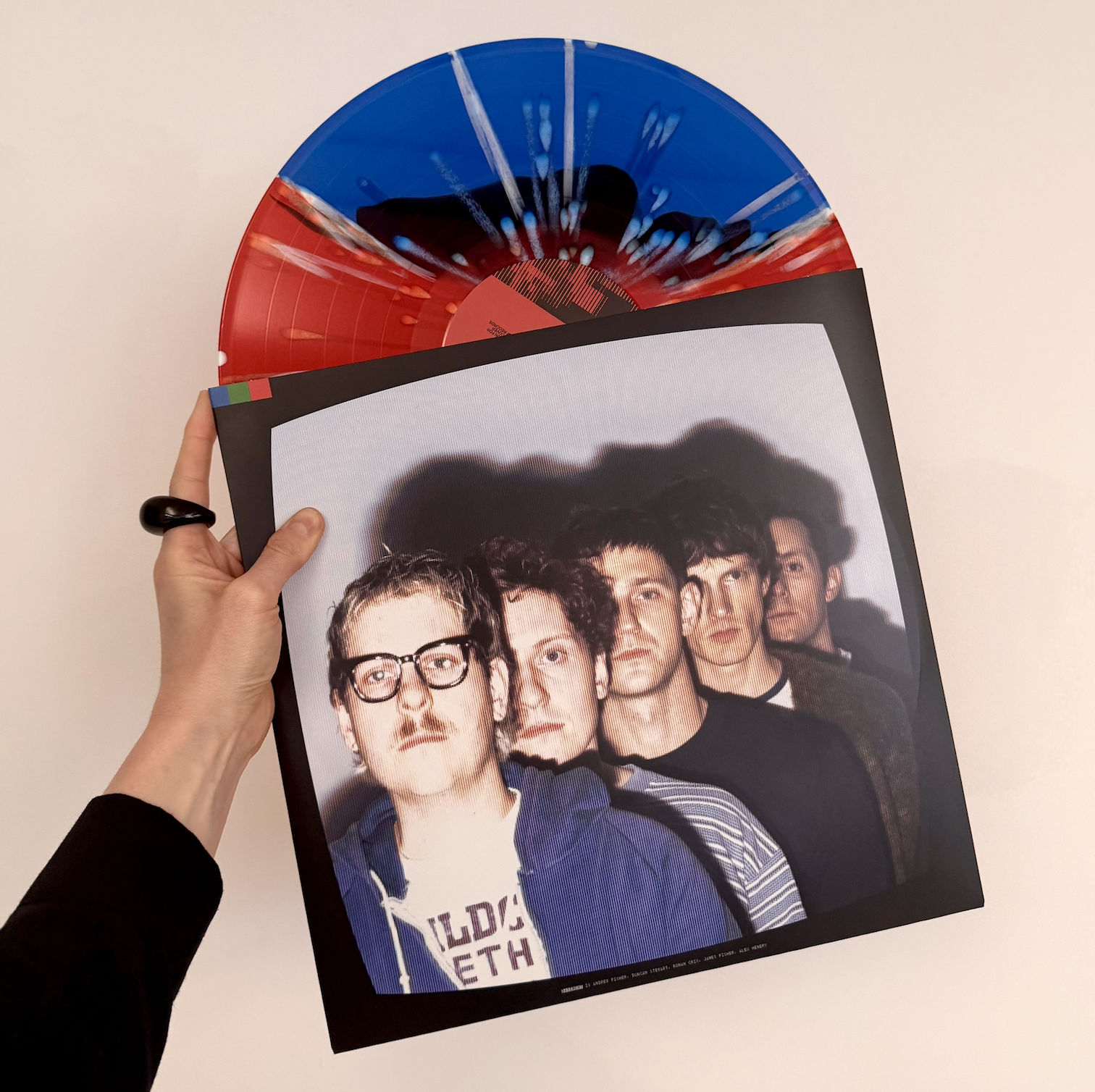
Beautifully crafted and bass-heavy in parts, Basement return loud, melodic and emotional with the most ‘alive’ record of their career to date. Formed in Ipswich in 2009, following the break-up of pop punk band This for Fun, Basement are brothers Andrew Fisher (lead vocals) and James Fisher (drums), lead guitarist Ronan Crix, rhythm guitarist Alex Henery, and bassist Duncan Stewart. The band’s early releases offered a punk-emo fusion, always rooted in melodic hooks. Inspired by the raw, DIY sound of outfits like Sunny Day Real Estate and Jawbreaker, the British alternative rock mainstays have evolved their sound into a much more expansive and atmospheric space, drawing on high-tempo hardcore drums and adrenaline-fuelled riffs.
Massive hooks and guitars that hit hard. Basement reassert the relentless energy and charged emotion that still sits at the heart of everything they do. Described by the band as a ‘hard reset’, “Wired captures both their moodier and bass-heavy sides, on tracks like “Broken By Desire” and their loud, emotional choruses on the title track “Wired”. Their first album in eight years, this release marks Basement’s return to the established Boston hardcore label Run For Cover, their fourth album for the label following their departure for Beside Myself on Fueled by Ramen in 2018.

This week, Wild Pink (the band led by John Ross) announced a new album, Still Coming Down, and shared its first single, “Round of Applause At the End of the World,” via a music video. “Still Coming Down” is due out August 21st on Fire Talk Records.
“Still Coming Down” follows 2024’s “Dulling the Horns“. It was recorded across one week in Asheville, NC at the Drop of Sun studios, working with producer and engineer Alex Farrar (Bnny, Wednesday, Samia). Vocal takes were done more quickly than on previous Wild Pink albums.
“There was not a ton of overthinking,” Ross says in a press release.
The album also features longtime Wild Pink member Dan Keegan on drums, along with guests Meg Duffy (aka Hand Habits) and MJ Lenderman and his The Wind bandmates Landon George and Xandy Chelmis.
Wild Pink’s 2022 album, ILYSM, was inspired by Ross’ cancer diagnosis. Since then he’s beat cancer and become a father for the first time.
“Strangely, I feel like I’ve found my voice on this record,” he says.
Wild Pink is an artist known for their captivating indie rock sound. Drawing inspiration from a range of genres, including folk and punk, *Wild Pink* creates music that is both introspective and melodic. With their heartfelt lyrics and dreamy guitar riffs, the band has gained a dedicated following. Fans of *Bonny Doon*, *Strange Ranger*, and *Tomberlin* will appreciate Wild Pink’s unique blend of emotional storytelling and catchy hooks.
Formed in New York City, Wild Pink quickly made a name for themselves with their debut album “Wild Pink” in 2017. Since then, they have continued to impress listeners with their evocative songwriting and lush instrumentation. Their sophomore album “Yolk in the Fur” further solidified their place in the indie music scene, earning critical acclaim for its richly layered soundscapes.
With influences ranging from classic rock to contemporary indie pop, Wild Pink brings a fresh perspective to the music world. Their songs explore themes of love, loss, and self-discovery with honesty and vulnerability. Whether performing live or recording in the studio, Wild Pink delivers an unforgettable experience that resonates with audiences on a deep level.

Henry McCullough, Chris Stainton and Alan Spenner ( of The Grease Band ) joined original Spooky Tooth members Harrison, Grosvenor and Kellie to complete the album. The Grease Band members had achieved international prominence the year before, backing Joe Cocker at Woodstock. The album was co-produced by Stainton and Chris Blackwell.
As one reviewer commented, “…Harrison proved more than ready to command center stage in ‘Puff’. His interplay with the newly augmented band mimicked the heavy rock-soul vibe Cocker tapped on his debut. That was most obvious in a cover of The Beatles’ “I Am the Walrus”.
Perhaps “The Last Gasp” would have been a more apt title here. Spooky Tooth appeared to be on its last legs, and being propped up by members of the Grease Band, this record should have been merely one of those contract fulfillments, but it isn’t. It’s a good, solid effort that includes a burning cover of the Beatles’ “I Am the Walrus.” Unfortunately, Spooky Tooth didn’t stay together to reap the rewards of this new combination of musicians.
— Mike Harrison: vocals
— Luther Grosvenor: guitar
— Henry McCulloch: guitar
— Chris Stainton: organ, guitar, bass guitar
— Alan Spenner: bass guitar
— Mike Kellie: drums
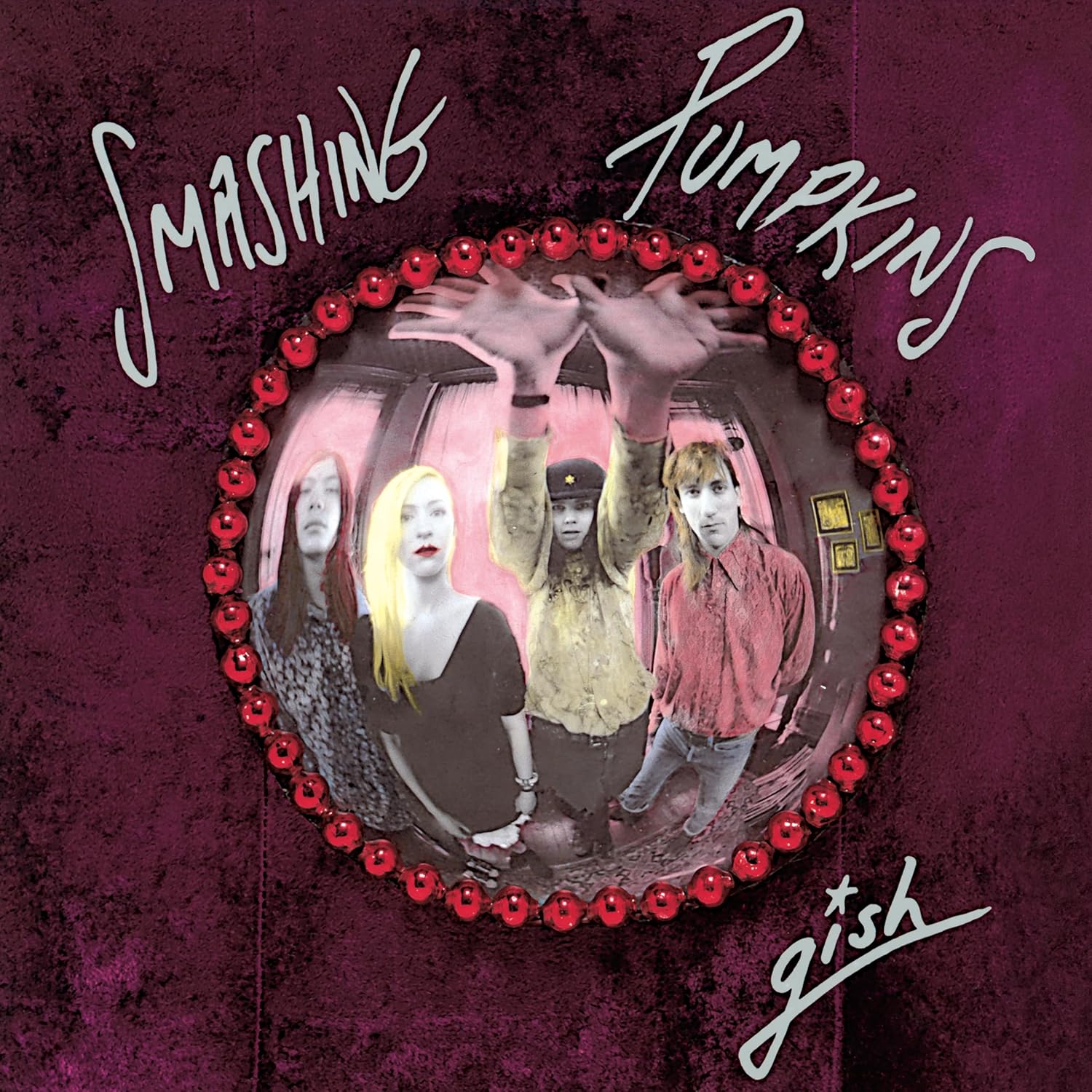
Courtney Love once told Billy Corgan that his debut album annoyed her. Not because it was bad – quite the opposite. It annoyed her because it was so accomplished that it sounded like a second album. It’s a perfect observation, and one that cuts to the heart of what makes “Gish” such a fascinating record thirty-five years on from its May 1991 release. This is an album that, on paper, shouldn’t work as well as it does. A debut by a band barely two years old, recorded in a modest Wisconsin studio for twenty thousand dollars, on an indie label, by a group of twenty-somethings from Chicago with no real precedent for the sound they were trying to make. And yet what they produced was startlingly assured: psychedelic, intricately layered, full of rolling moods. It didn’t sound like a first attempt at anything. It sounded like a statement.
Love’s observation came with a challenge, too. She apparently teased Corgan for his obscure, hippy-ish lyrics on “Gish” and pushed him to write more directly – a provocation that, by Corgan’s own account, fed directly into the sharper, more confessional songwriting of his actual second album, “Siamese Dream“. But that’s getting ahead of the story. “Gish” has spent thirty-five years being treated as a prologue to the main event. “Siamese Dream” and “Mellon Collie and the Infinite Sadness” get the reverence and the mythology. “Gish” gets a pat on the head and a “pretty good for a debut.”
Back in 1991 it felt like no-one quite knew what to make of Smashing Pumpkins. Keen to connect the Chicago quartet to the flowering of US alt rock, Melody Maker’s review of “Gish” talks about the band’s debut in terms of a hard rock experience, the contents within marked “highly greased, chromed-up black biker metal”, for example. Across the pond Rolling Stone concerned themselves with its “meticulously calculated chaos” and “swirling energy”. There’s truth in all of that, but neither quite nails it. Most of the press at the time tied themselves in knots trying to work out what Smashing Pumpkins actually were. Within a few years that would be easy. Nirvana’s “Nevermind” opened the idea of mainstream alternative rock like a flower and the Pumpkins slipped right in behind it with “Siamese Dream’s” sonic shimmer; wrapping bruiser riffs, punchy pop, elegant melancholia and space jams into something that felt very self-contained with a solid identity.
Two years earlier, though, when the idea that Gen X’s deconstructed, damaged freaks and ghouls could saturate the American mainstream seemed ludicrous, “Gish” was a trickier thing for the pigeonhole-fanciers of the music press to get their head around. The Pumpkins were from Chicago, and the fact they didn’t hail from the hipster coasts felt important: more grounded and less self-conscious than the painfully arty Sonic Youth or Jane’s Addiction. But they certainly weren’t Big Black. You couldn’t imagine them on their hometown’s hipper indie labels, Touch ‘N’ Go or Wax Trax. Their obvious love of Black Sabbath connected them to the sodden, sludgy sounds of the Pacific North West and they’d put out a single on Sub Pop, but they didn’t have the grotty, snotty urchin vibe of the punk rock underground that marked out Mudhoney, TAD and Nirvana. There was art-for-art’s sake whimsy that felt of a piece with the college radio scene, indebted to kitchen sink British indie and goth, but also a sincere and unembarrassed hard rock virtuosity that was completely at odds with that. Could you be a classic rock band and a gothy shoegaze act at the same time? Billy Corgan, passing time as a pizza delivery boy listening to a cassette that had Joy Division’s “Unknown Pleasures” on one side and Metallica’s “Ride The Lightning” on the other, who loved both The Beatles and the Banshees, who employed a cool-as-fuck arty goth couple on guitar and bass on the one hand, and a virtuoso jazz and polka drummer with a mullet on the other, who wore paisley shirts while shredding metal riffs and dropping acid, thought, “fucking yes”. This can all be the same band.
Hence “Gish”, a debut record that often does all of that in a single song. Take ‘Bury Me’, which sports the album’s meatiest riff and most typically hard-rock construction but tags a gorgeous, pinwheeling coda; a journey that makes no sense on paper but sounds as natural as breathing on disc. Take ‘Rhinocerous’ which meanders in a hazy dream right up until the point Corgan rips out a face-melting solo. Take ‘I Am One’, a slinky rock beast that would be interrupted on tour every night with an elongated “art rant” jam section before resolving into twin solos. “Gish” does all of this. It has hippie bliss-outs like ‘Suffer’ and delicious, mini goth-pop epics like ‘Snail’ and none of it feels weird, placed side-by-side. No wonder the hacks of the day struggled to find the right box.
We should acknowledge, at this juncture, that calling “Gish” the band’s debut is technically true but slightly misleading. It sounds like a second record for a reason. By the time they arrived at Butch Vig’s Smart Studios in Madison, Wisconsin, in December 1990, the Pumpkins had already written, recorded and discarded at least an album’s worth of material, a lot of it really strong. Songs like ‘Spiteface’, ‘East’, ‘Egg’ and ‘Jennifer Ever’ – “doomy little goth pop songs”, as Corgan would later say – were sold on demo tapes at shows, played to death in clubs and eventually abandoned as the sound evolved, honed and got closer and closer to what was in Billy Corgan’s head. The ‘I Am One’ single had appeared on the tiny and somewhat ironically named Limited Potential label, ‘Tristessa’, the recording of which paired the band with Vig for the first time, was part of Sub Pop’s legendary singles club. This was not a band fumbling towards an identity. They knew exactly who they were. “Gish” was less a debut than their formal introduction to the world at large. A statement of intent. “Here’s who we are. Imagine what we’re going to do next”.
The recording sessions, spread across roughly forty working days from December 1990 to March 1991, paired the band with Butch Vig, then a relatively unknown producer working out of his own Smart Studios. The budget was twenty thousand dollars, funded by Caroline Records – a subsidiary of Virgin, but one that operated with the autonomy of a genuine indie. The choice to release on Caroline rather than going straight to Virgin was a deliberate one on Corgan’s part. He didn’t want the pressure of a major label debut hanging over his first record. He wanted room to experiment, to figure out how to translate the sound in his head onto tape without the pressure of radio singles. He wanted permission for Smashing Pumpkins to be their weird, outsider selves. Permission a nervy major may not have allowed. It was a shrewd move, and one that shaped the album’s character. There’s a freedom to “Gish” that comes, at least in part, because unlike the records that came next, it wasn’t made with an expectation that it needed to conquer the world. It was weird, psychedelic and out-of-step with the college rock playbook, and happy to be so.
The Corgan-Vig relationship turned out to be one of those rare creative partnerships where both parties push each other to uncomfortable heights. Vig, accustomed to recording indie bands in three or four days, suddenly had someone willing to spend hours chasing a guitar tone, someone with a specific vision that he was prepared to go the distance to realise. Corgan, ambitious but studio-green, had a producer who matched his perfectionism without being intimidated by it. “I was over the moon,” Vig later recalled of the extended sessions. “I’d found a comrade-in-arms who wanted to push me, and who really wanted me to push him.” They’d go in for fourteen- or fifteen-hour days, constantly upping the ante, neither willing to settle. It was the beginning of a relationship that would define both men’s careers – Vig packed up from the “Gish” sessions and went almost directly to Los Angeles to record “Nevermind” with Nirvana (“a lot of people are gonna be after him when they hear that record.” as Corgan, who’d had a sneak peak, told Spiral Scratch that summer. Something of an understatement). Corgan has since claimed, with a mixture of pride and mischief, that Vig took his guitar tone to the Nirvana sessions with him. It’s certainly the case that the producer arrived in LA with a very clear idea of how to make guitars sound enormous, and it’s hard to imagine those forty-one days in Madison didn’t inform it.
It is, of course, well-established that Corgan played nearly all of the guitar and bass parts on “Gish” himself, playing James Iha’s guitar parts and D’arcy Wretzky’s bass lines using their own instruments. This is the detail that tends to dominate discussions of the album’s making, and it’s worth noting both what it tells us and what it doesn’t. It tells us that Corgan was, from the very start, a control freak of the first order (though he’d argue that this was partly expediency: he knew he could get everything done faster on his own) – a tendency that would intensify to near-pathological levels on “Siamese Dream” and remain a defining feature of his career. What it doesn’t tell us is that the album sounds like a solo project. It doesn’t. These songs came out of the rehearsal room, where Iha and Wretzky channelled Corgan’s visions into their own musical voicing. Those sessions were genuinely collaborative – Iha even gets a co-writing credit on ‘I Am One’. Corgan wasn’t just playing bass and guitar parts, he was playing Wretzky and Iha’s bass and guitar parts, replicating their style, polished to his own perfectionist standards.
His bandmates are on the record in spirit, even if they’re not literally present in the mix. They’re also both there in voice. James Iha’s backing vox are clearly present on ‘Bury Me’, while Wretzky gets a whole lead vocal on the wistful dreampop of closer ‘Daydream’. Smashing Pumpkins were, and indeed are, a force dominated by a single personality, that’s absolutely true. But “Gish” is the product of a band. Change one of the four and it’s a different album.
There’s also the not-insignificant matter of the one instrument Corgan couldn’t replicate: Jimmy Chamberlin’s drums.
Chamberlin’s playing on “Gish” is extraordinary. A jazz drummer by background, he brought a swing and dynamism to the Pumpkins’ that nobody else in alternative music was offering. His fills are enormous, his feel is impeccable, and the propulsive physicality of his playing anchors even the most sprawling, psychedelic passages. The drum sound itself is a thing of beauty – Vig recorded Chamberlin’s kit unprocessed and unsampled, and the live-room acoustics of Smart Studios, with its odd angles and absence of parallel walls, gave the recordings a natural resonance that sounds as gorgeous today as it did in 1991. Listen to the breakdown of ‘Siva’ on a good set of headphones and lose yourself in the tones and the dynamics as Chamberlin ripples across the toms and strokes and glances at his snare before beating the shit out of it to bring in the rest of the band and the song’s final movement. It’s world-class playing.
‘Siva’ is the best example here of what Smashing Pumpkins could do across a single song, and it’s pretty much the entire album in miniature: a psychedelic, riff-heavy pop monster that breaks open midway through into a whispery, dreamy passage of picked guitar and hushed vocals before crashing back with redoubled ferocity. Corgan called this approach “flow arranging,” and it’s the secret architecture of the entire album. Other bands could do quiet/loud/quiet/loud, Smashing Pumpkins had gears and levels all the way down. The tension between the extremes, the journey across them and the refusal to settle on one mode when you can have four or five is what makes “Gish” such a satisfying listening experience 35 years on, quite unlike anything else the US underground put out in 1991.
‘Rhinoceros’, though, might be the album’s masterpiece, or at least its most complete realisation of the Pumpkins’ aesthetic up to that point. Built on a bed of shimmering, layered guitars – reportedly an eventual seventeen tracks of feedback and overdubs – it starts gently and builds gradually, hushed and dreamlike right up until the point the other shoe drops and it explodes into something bigger, hungrier and more desperate sounding. It’s the soft and the heavy not competing but feeding each other: one of those songs that sounds simultaneously vast and intimate. If you wanted to play someone a single track that explained what the Smashing Pumpkins were about (something Courtney Love apparently does regularly), before the fame and the mythology and the butterfly wings, this is the one.
Elsewhere, ‘Bury Me’ rides a galloping, classic-rock riff through the most urgent Billy Corgan vocals on the record. ‘Crush’ is gorgeous and gauzy, a love song draped in delay and reverb that anticipates the dreamier moments of “Siamese Dream”. ‘Window Paine’ is an exercise in deconstruction, building from the bass and kick drum through tremolo guitars before erupting into a frenzied climax. ‘Tristessa’, re-recorded from the earlier Sub Pop single, is a grinding rocker and the most alt-rock thing here, while ‘Daydream’, the album’s closing track, sung by Wretzky in a fragile, beautiful vocal that channels the Cocteau Twins and My Bloody Valentine is a perfect comedown after the intensity of what preceded it. The strings that seep in beneath the acoustic guitar give the album a final, unexpected grace note and point forward to what Corgan would do in the coming years with ‘Disarm’.
The lyrics are, as Love noted, often oblique. Corgan himself has described “Gish” as “almost like an instrumental album – it just happens to have singing on it.” He’s not entirely wrong. The words are frequently subsumed by the music, and where they surface they tend towards a vaguely spiritual, quasi-mystical register – pain and transcendence, desire and dissolution. Corgan has called it “an album about spiritual ascension,” which is the sort of statement that sounds either profound or pretentious depending on your tolerance for such things. But the lyrics work because they’re not really asking to be parsed as poetry. They function more as another texture, another layer in the mix, and the emotional content comes through in Corgan’s delivery: that divisive, distinctive voice, more mannered then than it would become, which like that of Robert Smith or Morrissey or Ian Curtis is unmistakably his, sometimes a snarl, sometimes a coo, and unlike anyone else operating at the time. If the music didn’t carry a distinct enough identity, the voice put Smashing Pumpkins out of their own. No-one else sounded like this.
“Gish” sold slowly at first. It debuted at a barely-there number 195 on the Billboard 200 and spent precisely one week on the chart. But it topped the College Music Journal chart, which tracked airplay on the college radio stations that were the lifeblood of American indie music, and it became an underground phenomenon. Within a year it had sold a hundred thousand copies – extraordinary numbers for an indie release at the time. Corgan has claimed, not unreasonably, that for a period “Gish” was the best-selling independently released album in America. This is broadly true, with the caveat that Caroline Records’ relationship with Virgin made the definition of “independent” slightly elastic. It held that position until 1994, when the Offspring’s Smash – released on the genuinely independent Epitaph, obliterated all records by selling over eleven million copies worldwide. Still, for a debut album on a quasi-indie label, with no real radio hits and no MTV support to speak of, “Gish’s” commercial trajectory was remarkable. It was certified gold in 1994, buoyed by the success of “Siamese Dream“, and eventually went platinum in 1999. It still does extremely respectable numbers on streaming.
Not that all of those sales are, necessarily, the same album. Billy Corgan’s drive for sonic perfection has given the album a more varied mastering history than many of its peers. “Gish” has been through three distinct versions: the original 1991 Caroline pressing, mastered by Howie Weinberg from Digital Audio Tape; a 1994 remaster, also by Weinberg, when Virgin reissued it to capitalise on the “Siamese Dream” boom; and a full 2011 remaster by Bob Ludwig – one of the most respected mastering engineers in the business – for the deluxe 20th anniversary reissue. Each iteration polishes the album a little further, buffs the edges a little brighter. The “Gish” most people hear today is not quite the “Gish” that came out in 1991. It has been through Corgan’s quality-control process twice over, refined across three decades by the same perfectionist who would drive himself close to insanity on “Siamese Dream“. Whether you call that restoration or revisionism depends on your philosophy of remastering, but it’s worth noting for an audience of collectors that the 35th anniversary vinyl uses Ludwig’s 2011 retooling – the most sonically accomplished version of the album, but also the one most distant from the original tapes as Weinberg and Vig left them. It’s brighter and punchier, more recognisably the band of “Mellon Collie” and beyond, but loses some of the appealing haziness of the 90s masters.
“Gish” was proof of concept. It demonstrated that you could be heavy and pretty at the same time, that you could draw from metal and shoegaze and psychedelia without belonging to any of those camps, that a debut album on an indie label could sound as ambitious and fully realised as anything being released by a band three albums deep. It also established the blueprint the Pumpkins would spend the next decade expanding: the dynamic extremes, the layered guitars, the emotional rawness couched in sonic grandeur. Everything that “Siamese Dream” perfected and “Mellon Collie” took to its extreme was already here, in embryo, announced with quiet confidence. Though Corgan has been around the houses musically since 1991, his compass needle, if left to spin free, will eventually point back to the “Gish” plan. It’s there on “Siamese Dream” and it’s there, thirty years later, on 2024’s “Aghori Mori Mei”.
Does it hold up? Absolutely. Thirty-five years on, “Gish” sounds neither dated nor quaint. The production, which seemed impossibly lush for an indie debut in 1991, has aged beautifully – aided, admittedly, by Ludwig’s sympathetic remaster – and there’s a warmth and weight to it that digital-era recordings often struggle to match. The songs remain compelling, the performances are ferocious, and Chamberlin’s drumming is, if anything, more impressive now that you can appreciate just how far ahead of his peers he was. There are moments where the album sags slightly – the mid-section, around ‘Suffer’ and ‘Crush’, can feel a little airless if you’re not in the right mood – but these are minor complaints against an album that gets so much so spectacularly right.
It’s tempting to view “Gish” purely as a stepping stone, the album the Pumpkins had to make before they could make the albums that made them famous. But that sells it short. This is not a band finding their feet – they were already running. And it’s not a band finding their voice. They’d got there already. It’s a band using that voice fully for the first time, immediately, to say something that nobody else was saying. The fact that they’d go on to say it louder, and to more people, doesn’t diminish the power of this first utterance. Courtney Love was right. It does sound like a second album. Which, in the best possible way, makes it one of the great debut albums in alternative rock.

A lot of you probably know by now that our son Blake is making his own music, under the name Family Stereo, and has recently signed to the lovely Bella Union records. Debut album “The Thread” is released July 31st, and this is the second single from it. I first heard this song a year ago when Blake played it at the kitchen table and said, “Here’s something I’ve just written”. I thought, oh yeah that’s great. Tracey Thorn.
And now it is out in the world, with beautiful production from Sam and lap steel from Dov. It’s called “Waiting on Nina“, and it’s gorgeous, a woozy, dreamy slice of summer.
A clear sense of confidence in restraint radiates out of the debut album from Blake Watt, the London-based singer/songwriter who records as Family Stereo. The pleasure lies in the delicacy of measure on The Thread, an album of folk-tinged and brush-stroked reflections on distance and connection that majors in an evocative kind of narrative economy, suggesting rather than telling its stories. Inviting, dynamic and subtly cinematic, its artfully crafted precision feels like the work of a fast-maturing talent.
The record arrives in the aftermath of a string of prodigious EPs from the 25-year-old Blake, son of Everything but the Girl’s Tracey Thorn and Ben Watt. The development from those early works is clear, but it’s the kind of evolution that prefers to refine rather than embellish. As Blake says, “I think my writing has been getting more pared-back as I’ve progressed. I find more and more that simple is better. I love telling a story in the simplest way or conveying a feeling in the simplest way, with not too many frills.”
That intuitive clarity is evident on the album opener, ‘Remedy’, where Blake suggests a history at a stroke with the opening line (“After all you said and all I did…”). The haunting arrangement is minimalist yet richly expressive, Blake’s spare piano and producer Sam Hodder-Williams’s synth shimmers maintaining a mood of emotional suspension with a featherlight touch and an elegantly unhurried grasp of melody. Blake’s warmly tender vocal, too, gets the measure of the song in its controlled sense of pace and understatement.
Throughout the record, details accrue in finely judged increments. The plangent soft rock of ‘Waiting on Nina’ navigates themes of personal discovery over Dov Sikowitz’s luminous lapsteel. ‘Sea Change’ touches on how relationships move in time over mellifluous synths, used to evoke a mood rather than stress a melody. ‘Fault Lines’ navigates the mysteries in the spaces between people with a falling shiver of ethereal synths, a pulsing rhythm and a lean lyricism; etching out the bare bones of a story, Blake tells the listener all they need to fill in the blanks. Touches of mandolin, banjo and mellotron help flesh out the songs’ ambient surroundings elsewhere.
A former drama student, he understands the value of implication over explication, referencing New York’s Wooster Group as an influence. “They would present these disparate images on stage, like a tent with a light emanating from within and an old gramophone playing old music. And they’ll have someone reading out a transcript of a telephone call from their mother or something, and it conjures up different feelings. They will have an overarching story but it’s more impressionist. I like that brush-strokes approach.”
The title track bears out the point, acting as a kind of album centrepiece in the way it conveys the record’s core story through themes and motifs – “images of space, distance, wide open country, badlands, tunnels”, says Blake. While the influence is a long-distance relationship, literalism is deftly avoided. “I like asking questions more than answering them in lyrics,” says Blake. “A lot of the lyric writers I like do that. They will tell a story through snapshots rather than, you know, this happened and then that happened. I don’t like lyrics that are too literal because it doesn’t let the mind explore what they could be inferring. I’m trying to capture a feeling, or a sense of not understanding a feeling and trying to get to grips with that feeling.”
The rapturous dream-state reverie of ‘Removed’ illustrates the power of understated images, its red moons and figures in white conjuring ghostly tableaux; Blake credits the influence of The Wicker Man for the song’s enveloping mood. The mantric ‘Collapsing’ is similarly haunted, while ‘DLR’ shows a discreet dynamism and a canny grasp of contrast, its upbeat folk-rock melody framing a contemplation on growing up with youthful spritz. The dramatic crescendo of ‘Silhouette on the Hill’ – another striking image – is all the more powerful for the restraint shown elsewhere on the record, lending a tale of “connections missed” an understated yet tangible force. And in the record’s climax, ‘Three Moon Trail’ contemplates a gentle arrival before ‘Tunnels’ closes the record on a question mark, sending you tunnelling back to the album’s opening to trace rhyming motifs and images across its emotional route map.
Formerly a drummer, Blake began making his way toward these songs of travel and distance when he took up the guitar at 15. From influences including Elliott Smith, John Martyn, Bob Dylan, Neil Young and Adrianne Lenker, he made formative forays into folk-pop with songs such as ‘Robot Boy’ and ‘My Favourite Band’; whimsical gems with a distinct sense of levity and unforced melody. He honed his voice live, across slots at festivals including Kendal Calling, headline shows from London’s Windmill to the Lexington, and gigs supporting the likes of Lichen Slow and Midlake. Eagle-eyed audiences might have spotted him at London’s Moth Club in 2025 performing with a reconvened Everything but the Girl, where a cover of ‘Removed’ held firm amid a carefully curated setlist. With support from John Kennedy on Radio X, standout EP tracks like ‘Matter’ and ‘I Knew I Loved You Then!’ plotted a sure, steady growth, while the gorgeously autumnal ‘Early Promise’ has notched up an impressive 215,000-ish Spotify streams.
Building on – and, to some extent, dismantling – those foundations, The Thread was recorded over nine months in the north London studio of album producer and close collaborator Sam Hodder-Williams, who also provided string arrangements and multitasked across acoustic/electric guitar, mandolin, synths and more. “Musically, I wanted to explore folk songwriting but with a kind of lush arrangement,” says Blake. “Sam is very good at realising a sound, and he can write string arrangements, and we wanted to throw everything in the pot but keep it kind of natural. I wanted to explore the pared-back thing but then his arrangements are quite lush, and I think they complement each other quite nicely.”
With collaborators including Pendo Masote on violin, Tom Allan on banjo, Ella Bleakley on backing vocals (‘Tunnels’) and George Vaux on bass helping add hints of colour, the result is an album of lush melodies and moods, a record that moves at its own pace, maps out a space of its own making and invites the listener in. “There’s so much good music coming out at the moment and it is quite an understated record,” says Blake, “but I hope that people give it some time. I’m just trying to explore the craft as much as I can and to get better all the time.” Follow The Thread, then: it will lead you somewhere special.
releases July 31st, 2026
Dedicated to all jangly indie/guitar/jangle-pop
Show a little faith there's magic in the night
Horror, Science Fiction, Comic Books and More
IN MEMORY EVERYTHING SEEMS TO HAPPEN TO MUSIC - Tennessee Williams
A Celebration of Thrillers, Noire and Black Comedy by Pamela Lowe Saldana
Join me as I listen to every single #1 single!
Two Guys In Search of Great Music
Hoping to make the world more beautiful
hear ye, hear ye!
Celebrating music craftsmanship
Favorite song lists, reviews, featured indie artists, and music commentary.
A Blog About Music, Vinyl, More Music and (Sometimes) Music...
Eclectic reviews of ambient, psychedelic, post-rock, folk and progressive rock ... etc.!
A transparent attempt to promote a writing career
Quality articles about the golden age of music
Slow molasses drip under a tipped-up crescent moon.
Click Header to Return Home
to Rock, Country, Blues & Jazz
A Glasgow view of Americana and related music and writings.
Rewind the Review
A stroll down memory lane through my music collection
the best music of yesterday today and the tomorrow, every era every genre

