On the first full moon of 2023, Peter releases the first new song from his forthcoming album “i/o”. Written and produced by Peter, “Panopticom” was recorded at Real World Studios in Wiltshire and The Beehive in London.
Peter Gabriel plans to release a new song from his upcoming album, “i/o”, every full moon. The singer released the first song from the album at midnight Friday. Titled “Panopticom,” the track features electronics from Brian Eno. “i/o”will mark Gabriel’s first album in more than a decade.
“Some of what I’m writing about this time is the idea that we seem incredibly capable of destroying the planet that gave us birth and that unless we find ways to reconnect ourselves to nature and to the natural world we are going to lose a lot,” Gabriel said in a statement on his website. “A simple way of thinking about where we fit into all of this is looking up at the sky … and the moon has always drawn me to it.”
The first track released “Panopticom” references an idea that Peter has been working on to initiate the creation of an infinitely expandable accessible data globe. The aim is to “allow the world to see itself better and understand more of what’s really going on”.
‘The first song is based on an idea I have been working on to initiate the creation of an infinitely expandable accessible data globe: “The Panopticom“. We are beginning to connect a like-minded group of people who might be able to bring this to life, to allow the world to see itself better and understand more of what’s really going on.’ -pg
Musically “Panopticom” drives along powered by the engine-room of long-time collaborators Tony Levin, David Rhodes and Manu Katché, underpinned by haunting electronics from Brian Eno. Additional backing vocals from Ríoghnach Connolly of TheBreath. The lyric is, in part, inspired by the extraordinary work of three groups, Forensic Architecture, Bellingcat and the Gabriel co-founded pioneering human rights organisation WITNESS.
Drums: Manu Katché Rhythm Programming: Peter Gabriel, Oli Jacobs, Richard Chappell Bass: Tony Levin Electric Guitar: David Rhodes Acoustic Guitar: Katie May Synths: Peter Gabriel Additional Synths: Oli Jacobs Bells and Haunting Synths: Brian Eno Backing Vocals: Peter Gabriel, David Rhodes, Ríoghnach Connolly Lead Vocals: Peter Gabriel
released January 6, 2023 Words and Music Peter Gabriel
Gabriel released two singles in 2016, “I’m Amazing” and “The Veil”, but his most recent album, “New Blood”, arrived in 2011, and included orchestral re-recordings of his older songs. In 2010, he released an LP of cover songs called “Scratch My Back”. His most recent album of original songs, “Up“, was released in 2002.
New music from ex Swimmer One / Seafieldroad singer-songwriter, now living in Outer Hebrides and signed to Wee Studio Records.
“Non Swimmers” brings together new solo versions of three songs by my old band Swimmer One. All are completely different from the originals. “But My Heart is Still Broken” is as much a sequel to “But My Heart is Broken” as it is a cover, with a mostly new lyric.
The EP is part of a broader celebration of the 20th anniversary of Swimmer One’s debut single, “We Just Make Music For Ourselves”. If you like it, please look out for Outliers, a 2023 Swimmer One compilation including the band’s first new music in over a decade. We’re also releasing remastered versions of Swimmer One’s two albums, “The Regional Variations” (from 2007) and “Dead Orchestras” (from 2010).
This EP is dedicated to everyone who’s struggling to stay afloat.
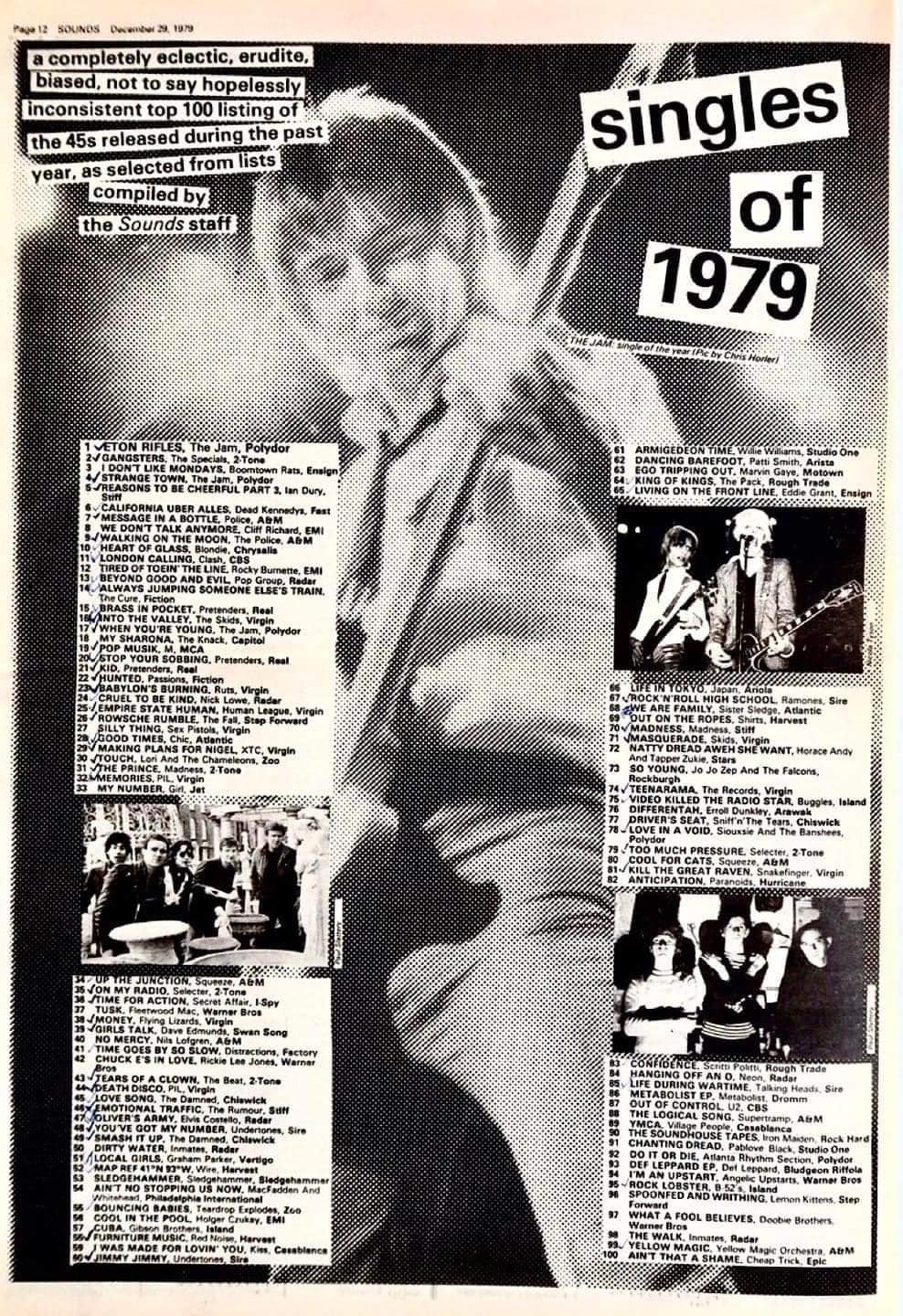
Over forty years ago, the music industry was officially in recession but that didn’t mean that the quality of the music itself had diminished. The late 1970s was a time of seismic change for popular music with punk’s year zero of 1977 fuelling the rise of Independent record labels and the major record labels struggling to keep pace as punk evolved into new wave.
There was also the disco phenomenon, which had reached its peak in music’s most schizophrenic year – 1978. In truth, 1979’s singles charts didn’t vary too much from the previous year. Despite the best efforts of disco haters such as Chicago disc jockey Steve Dahl, who blew up a crate of dance records in a “death of disco” stunt, the glitter ball sensation refused to go away, with some unlikely artists hitching a ride.
But, like the previous year, 1979 was all about the sheer diversity of the music on offer. And the singles charts offered ample evidence of that eclectic mix of styles, finding room for everyone from ska revivalists to rock dinosaurs, classic rock acts to post-punk pioneers as well as the original punk acts, while also offering a glimpse of the future with the first successful rap and synth pop records. It all made for a heady confection, one of the best years for the 45.
The Boomtown Rats – I Don’t Like Mondays
A hugely effective piano driven ballad inspired by the 1979 school shooting in San Diego when 16-year-old Brenda Spencer killed two adults and wounded eight children with the rifle her father had given her as a Christmas present. Her explanation: “I don’t like Mondays. This livens up the day” struck a chord with Bob Geldof and he composed the lyrics based around what he felt was a senseless act committed for a senseless reason. The song chimed with UK listeners as well and spent four weeks at number one, although whether that was due to sympathy over the tragic events or an empathy with that Monday morning feeling we all face from time to time, is open to question. Spencer is eligible for parole in August
Nick Lowe – Cruel to Be Kind
A co-write with Ian Gomm that dated back to both men’s time with seminal pub rockers Brinsley Schwatz was inspired by Harold Melvin & the Bluenote’s “The Love I Lost”. Lowe rerecorded the song for his excellent “Labour of Lust”album and it became an unexpected hit, reaching number 12 on both sides of the Atlantic. It shouldn’t really have been a surprise. With his trademark sweet and sour wordplay, “Cruel to Be Kind” is one of a handful of late 1970s classics from the venerable Lowe, one of the key figures of the era for British music.
Thin Lizzy – Waiting for an Alibi
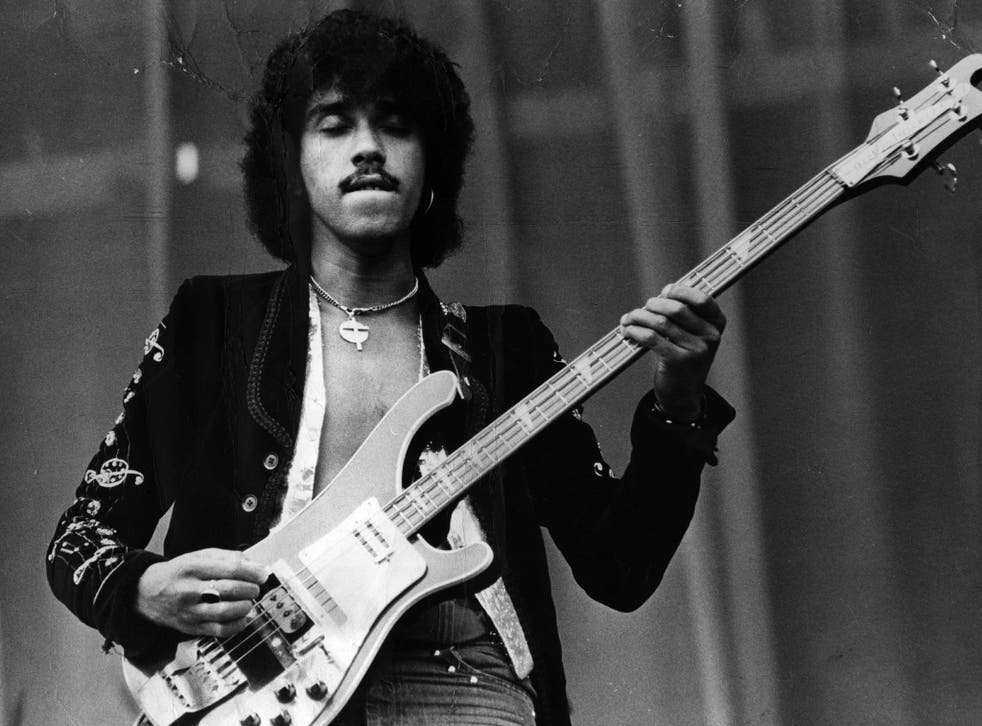
After their debut hit in 1972 with “Whiskey in the Jar”, Thin Lizzy spent four long years during which they could barely get arrested. However, 1976’s “Jailbreak” album and attendant single “The Boys Are Back in Town” launched them back into the limelight and kick started a run of some of the best rock singles of the second half of the seventies. That they should do it in the face of the punk onslaught is probably testament to their slightly edgy image. “Waiting for an Alibi” finds the band at their commercial and artistic peak, twin lead guitars to the fore and Phil Lynott demonstrating all of his lyrical dexterity and natural rock star charisma.
XTC – Making Plans For Nigel
A typically quirky slice of art-pop from XTC which damned British Gas with faint praise in Colin Moulding’s autobiographical lyrics about parents mapping out a career for their offspring. British Gas was so chuffed to be name-checked in a top 20 hit that they wheeled out several employees called Nigel to rather reluctantly espouse the pleasures of working for the firm, but nevertheless, it’s still a great record from England’s answer to Talking Heads.
Joe Jackson – Is She Really Going Out With Him?
Classically trained Jackson came to prominence as part of the new-wave pack with this, his first single, even though it bombed when first released in 1978. It was rereleased when debut album“Look Sharp”took off, the title a canny nod to both the Damned’s “New Rose” and the Shangri-Las’ “Leader of the Pack”. The song’s perceptive and witty lyrics struck a chord with love-lorn males of a certain age who couldn’t fathom how certain guys got certain girls and was a hit on both sides of the Atlantic, earning Jackson a Grammy nomination and kickstarting his varied and never less than interesting career.
Pink Floyd – Another Brick in the Wall (Part 2)
The Floyd’s first UK single since 1967’s “See Emily Play” enjoyed a five-week run at number one and made for a rather unlikely Christmas number one. No doubt, buyers were attracted by the chorus sung by pupils of Islington Green School and the disco beat, but the message of the song, protesting against those who misuse power, was decidedly unfestive. Great David Gilmour guitar solo though.
The Pretenders – Brass in Pocket
Who would have guessed that spiky former NME scribe Chrissie Hynde possessed a voice of liquid gold and a natural songwriter’s gifts for melody and a catchy hook? The Pretenders had already lit up the singles charts earlier in the year with “Kid” and “Stop Your Sobbing”, but “Brass in Pocket” captured lightning in a bottle with Hynde’s sassy and seductive vocal inverting rock’s traditional male posturing with her dynamic band providing wonderfully assured backing. Released at the tail end of 1979, “Brass in Pocket” would eventually displace “Another Brick in the Wall” at the top of the charts in January the following year.
The Police – Message in a Bottle
It took the great British public a while to catch on to the Police. Early singles “Fall Out”, “So Lonely” and “Roxanne” bombed and “Can’t Stand Losing You” barely scraped into the top 50, despite this writer spending his hard-earned cash on it. However, in early 1979 “Roxanne” gained some success across the Atlantic and it was rereleased in the UK, reaching number 12, signalling the start of one of the great singles bands chart career. Pop-pickers finally recognised “Can’t Stand Losing You’s” gallows humour charm and ushered it to number two, but this was the song that really made them, a breathless metaphor laden adrenaline rush and the first of five superb number ones.
Sugarhill Gang – Rapper’s Delight
The first mainstream rap record was built on a sample of an equally influential record: Chic’s “Good Times”. It established the genre’s basic tropes and brought hip hop out from the New York underground scene, paving the way for much of what was to come. Perhaps buoyed by its perceived novelty value, “Rapper’s Delight” was surprisingly a bigger hit in the UK (No 3) than America, but the genie was out of the bottle.
Squeeze – Up the Junction
The point at which the great song-writing partnership of Glen Tilbrook and Chris Difford really hit their stride, a tragicomedy kitchen sink drama in three minutes. This timeless gem was Squeeze’s second successive number two, following “Cool For Cats”.
Michael Jackson – Don’t Stop ‘Til You Get Enough
One of the great artist/producer partnerships starts here with the lead-off track from “Off the Wall”, Jackson’s first solo album with Quincy Jones after leaving Motown. This was the first song that Jackson had full creative control over, introducing his adult falsetto and signature vocal tics and the result was a gloriously funky floor filler which stormed the the charts, topping the Billboard Hot 100 and hitting number three in the UK, winning Jackson a Grammy in the process.
The Specials – Gangsters
Instant success for Jerry Dammers’ fledgling 2-Tone label with its first release which fused punk energy with 1960s Ska (notably Prince Buster’s “Al Capone”) into a sound that was both retro and fresh. “Gangsters” reached number six in the charts, a terrific eponymous debut album followed and soon, Madness, the Beat and others joined the label that changed the musical and cultural landscape of the time.
Tubeway Army – Are ‘Friends’ Electric
Former punk Gary Numan discovered the synthesiser and in one fell swoop briefly displaced Bowie as pop music’s most lovable alien. Drawing heavily on Bowie, Eno and Krautrock, Numan combined two different songs on an out of tune piano, added a repetitive but unforgettable riff and a flat monotone vocal, and somehow ended up at number one for four weeks with a record about robot prostitutes.
Blondie – Heart of Glass
“Heart of Glass” had been kicking around almost since Blondie were formed, but it’s amazing what a drum machine and synthesiser can do. A canny fusion of new wave and Euro-disco from the previous year’s “Parallel Lines” album sparked the Blondie juggernaut with the first of their five number ones, spending four weeks at the top, alienating their disco hating new wave peers in the process.
Elvis Costello – Oliver’s Army
Not for the first time, Costello proved himself the master of the Trojan Horse pop song with the glorious melody, Abbaesque piano and catchy singalong quality of “Oliver’s Army” allowing his views on major issues to infiltrate the nation’s living rooms. In this case, Costello had British imperialism and the Irish troubles in his sights and was typically uncompromising with the language he used. The result was one of Costello’s greatest songs and his biggest hit, spending three weeks at number two.
Chic – Good Times
Arguably the greatest disco record, endlessly sampled, hugely influential. The Chic hallmarks are all here: swirling strings, the much imitated bass line (listen to Queen’s “Another One Bites the Dust”), chucking guitar, and lustrous production. If this record doesn’t move you, check your pulse.
Gloria Gaynor – I Will Survive
Or is this the greatest disco record? Let’s settle for the greatest disco record not involving Nile Rodgers and Bernard Edwards. It’s certainly the ultimate disco anthem, the ultimate female empowerment anthem and the ultimate LGBT anthem. A number one on both sides of the Atlantic, amazingly, given its iconic status, the potential of “I Will Survive” wasn’t originally recognised by Gaynor’s record label Polydor, which stuck it on the B side of her 1978 single “Substitute”. It wasn’t until club DJs starting playing “I Will Survive” that Polydor twigged and flipped the record and the rest as they say, is history.
Joy Division – Transmission
The stand alone single recorded before, but released after debut album “Unknown Pleasures”, is one of the great post-punk anthems. A pulsating bass line drives “Transmission”, Bernard Sumner’s piercing guitar lodges itself in your brain despite the best efforts of Stephen Morris’s pounding drums to knock it out again, and with Ian Curtis’s haunting, doom-laden delivery comes the realisation that the chorus “Dance, dance, dance, dance, dance, to the radio” isn’t a command or an exhortation, it’s a warning.
The Jam – The Eton Rifles
As the year progressed, so did the Jam’s growing impetus as they began to establish themselves as one of the great singles bands, with every release a keenly anticipated event. After “Strange Town” and “When You’re Young”, and just when you thought it couldn’t get better, along came “The Eton Rifles”, a devastating critique of the British class system and social inequality which Paul Weller was inspired to write after viewing footage of Eton pupils jeering a Right to Work March. “Eton Rifles” became theJam’s first top 10 single, reaching number three and Weller had never sounded so articulate, so passionate, so witty, as he took his place in the canon of great English songwriters.
The Clash – London Calling
“I wanted it to sound like it was coming through fog over the Thames”, was how Joe Strummer described the anthemic title track from The Clash’s seminal third album. And it was the fear of the Thames flooding London that fuelled Strummer’s lyrics detailing a world hurtling towards the Apocalypse, (“The ice age is coming”, “The wheat is growin’ thin”). “London Calling” (the title references the BBC wartime World Service address) also reflects on the group’s internal struggles and the end of the punk rock era that the Clash embodied as they evolved into a great rock ‘n’ roll band. A momentous record, once heard never forgotten, the greatest Clash song, and the greatest single of 1979.
On their 4th full-length album (but 17th vinyl offering if you include previous 7”s and EPs) the Portland, OR band rediscover the beauty of firsts.
“A Colossal Waste of Light” marks the first time the band wrote songs remotely (“it ended up being fun & weird to send out a very simple version of a song and see who came back first with another part for it”, John Moen looks back), their first reunion at the Destination: Universe studio post-isolation, and their first batch of melodious new tunes since “The Accidental Falls”, the band’s 2020 project with poet, lyricist and Tim Buckley collaborator Larry Beckett (an extra-ordinary pairing that allowed Eyelids’ two frontmen/tunesmiths, Chris Slusarenko and John Moen, to find a new, multilayered appreciation for the art of songcraft).
“A Colossal Waste of Light”is the first Eyelids album to feature new bass player Victor Krummenacher (Camper Van Beethoven, Monks of Doom). The artistry he brings to the songs is seasoned and fresh in equal measure. Alongside JonathanDrews’ expressive yet mysteriously ethereal guitar playing and Paulie Pulvirenti’s imaginative and powerful drumming, the finished LP is the perfect summation of Eyelids’ new and old ways of collaborating together.
“ACWOL frames Eyelids as one of today’s most compelling purveyors of lopsided guitar pop workouts and earworm- laden vocal melodies.”
Every track feels like its own journey and having songs from two songwriters at the top of their game makes for a most dynamic, immersive narrative as their songs follow one another throughout. As a whole, it’s thrilling, moving, mercurial, absorbing, soothing, and unmistakably Eyelids.
Black Belt Eagle Scout’s forthcoming album, “The Land, The Water, The Sky”, is out February 10th. As previewed in lead single “My Blood Runs Through This Land,” the album is a love letter to indigenous strength and healing, and a story of hope, as it details the joy of returning. Today, Black Belt Eagle Scout presents a new single/video, “Nobody,” a song uplifting representation, nestled comfortably in an album about home.
Thrumming percussion gives way to swelling licks of electric guitar, and in the more mellow moments, Katherine Paul’s voice resonates: “Nobody sang it for me like I wanna sing it to you.” The “Nobody” video was filmed and edited by Evan Benally Atwood, and continues to build on the ongoing creative collaborations between Atwood and Paul.
Of the song, Katherine Paul says: “When I was growing up, I didn’t have very many Native role models to look to on TV or the radio. It was within my own community that I found inspiring role models through our elders and our community leaders.
With Native representation in music and television slowly growing, I often ask myself where I stand within representation in music and how I want to be seen. This song is about the relationship I have with my own representation in music. A day spending time with family and the land are what brings Indigenous joy within the music video for “Nobody.” We see the love that Indigenous families have and the laughter that brings us together. Evan’s work in capturing the meaning of kinship is incredible.”
“I love the chorus,” says Evan. ““Nobody sang it for me like I wanna sing it to you” to me, it says a lot and inspired this idea of seeing three generations of women care for each other and create joy together. It is healing experience to spend time with the land and laugh with family.”
This land runs through Katherine Paul’s blood. And it called to her. In dreams she saw the river, her ancestors, and her home. When the land calls, you listen. And KP found herself far from her ancestral lands during a time of collective trauma, when the world was wounded and in need of healing. In 2020 she made the journey from Portland back to the Skagit River, back to the cedar trees that stand tall and shrouded in fog, back to the tide flats and the mountains, back to Swinomish.
It is a powerful thing to return to our ancestral lands and often times the journey is not easy. Like the salmon through the currents, like the tide as it crawls to shore this is a story of return. It is the call and response. It is the outstretched arms of the people who came before, welcoming her home. “The Land, The Water, The Sky” is a celebration of lineage and strength. Even in its deepest moments of loneliness and grief, of frustration over a world wrought with colonial violence and pain, the songs remind us that if we slow down, if we listen to the waves and the wind through the trees, we will remember to breathe.
There is a reimagining of Sedna who was offered to the sea, and a beautiful rumination on sacrifice and humanity, and what it means to hold the stories that work to teach us something.
Chord progressions born out of moments of sadness and solitude transform into the islands that sit blue along the horizon. The Salish Sea curves along her homelands, and when the singer is close to this water she is reminded of her grandmother, how she looked out at these same islands, and she’s held by spirit and memory.
This is a story of hope, as it details the joy of returning. Katherine Paul’s journey home wasn’t made alone, and the songs are crowded with loved ones and relatives, like a really good party. And as the songs walk us through the land it is important we hover over the images and the beauty, the moments that mark this album as site specific. The power of this land is woven throughout, telling the story of narrow waterways, brush strokes, salmon stinta, and above all healing.
Back in the ’90s, there wasn’t much in common between Supergrass and Radiohead, aside from their Oxford roots. As Gaz Coombes has matured, however, his music has morphed closer to that of Thom Yorke and co. “World’s Strongest Man” is Coombes’ third album away from his former group, and it continues his voyage towards a more soulful, experimental and serious sound.
Supergrass always took inspiration from Bowie, but there are some wonderfully warped electronic soul cuts here, a little like something from Station To Station or Heroes – “Deep Pockets’ motorik funk, say, or “Walk The Walk’s” grooving drones, with Coombes trying out his best lip-curling falsetto a la Josh Homme.
Elsewhere, there are a host of ballads that evoke Radiohead’s slower, more mournful moments: “Slow Motion Life” suggests the singer has been listening to “Pyramid Song”, his voice thin and keening like Yorke’s, while “Weird Dreams” mixes atmospheric drum machines and electronics, a chorus of Coombes’ and, finally, a stately, plodding piano.
That’s not to suggest that “World’s Strongest Man” is just a faux-In Rainbows. With glockenspiel, sampled vocals and warped strings, “Shit (I’ve Done It Again)” sounds like nothing Coombes has ever attempted, and is reminiscent of the slow, vocoder-led groove of prime Air, with Coombes singing: “Anyone can be the star…” In Waves” suggests what Supergrass might have sounded like if they were still together, with a garagey guitar riff, fragmented bass, off-kilter drums and massed harmonies in constant movement throughout. The title track, meanwhile, is a circling delight, with Coombes examining the nature of masculinity over a rising, distorted crescendo of slow, guitar-led funk.
As a whole, “World’s Strongest Man” may not quite have the effervescent pop chops of Supergrass’ best work, but it’s Coombes’ finest effort so far as a solo artist, and comes with its own austere, but no less powerful, charm.
‘World’s Strongest Man’ is a bold, ambitious, free-thinking, future-facing rock’n’roll record.
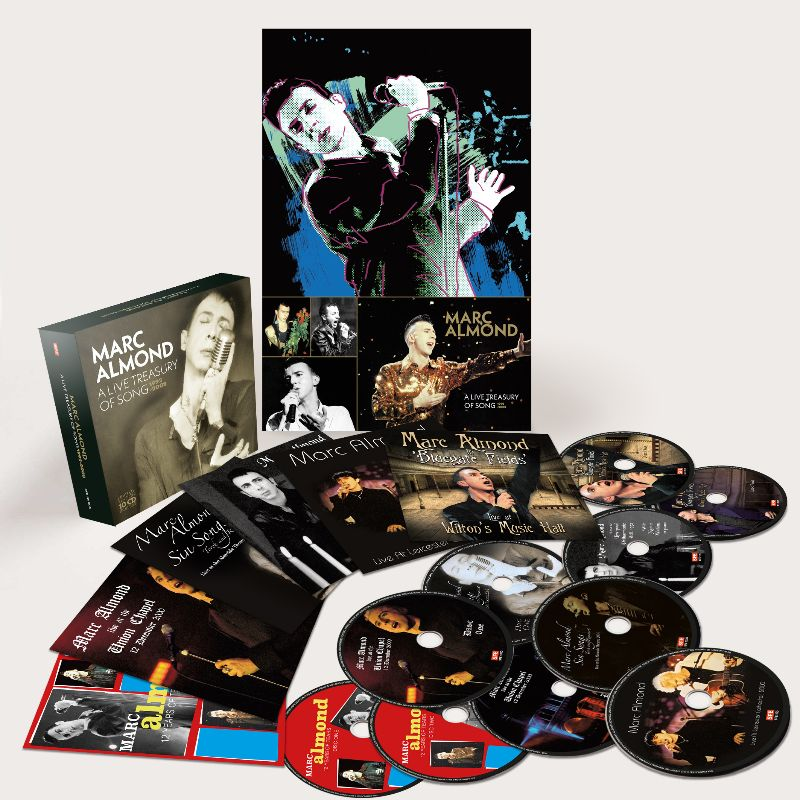
An unprecedented 147 track Marc Almond live celebration! 73 of the tracks appearing on CD for the very first time as part of this unparalleled package of over 10 1/2 hours of music. A 10 CD deluxe box set available for a strictly limited period. Featuring rare and stunning landmark mid-career concert recordings performed by Marc Almond. In a specially designed art box with an exclusive illustrated fold out credits poster with each concert’s discs packaged in their own individually designed sleeve.
Though the sleazy electro-pop of Soft Cell has forever been endearing and gone darkly beyond the genre’s norm, vocalist MarcAlmond’s solo leaps into tortured, self-penned cabaret, toreador soul, and gothic pop has been even more dramatic. I’ll leave you with the notion of Edith Piaf and Rufus Wainwright playing Russian roulette with each other at a café in Paris with Lotte Lenya as the event’s referee.
Released December 16th, 2022.
73 of the tracks appearing on CD for the very first time as part of this unparalleled package of over 10 1/2 hours of music.
A 10 CD deluxe box set available for a strictly limited period.
Featuring rare and stunning landmark mid-career concert recordings performed by Marc Almond.
DISC ONE: Marc Almond – Live At Liverpool Philharmonic Hall, June 1992 [16 tracks, 66 mins]
DISCS TWO & THREE: Marc Almond – Twelve Years Of Tears – The ‘As Live’ Video Soundtrack – Royal Albert Hall – September, 1992 [21 tracks, 121 mins]
DISC FOUR: Marc Almond – Live At Leicester Cathedral, February 2000 [16 tracks – 67 mins]
DISCS FIVE & SIX: Marc Almond – Live At The Union Chapel, December 2000 [22 tracks – 97 mins]
DISCS SEVEN & EIGHT: Marc Almond – Sin Songs, Torch & Romance – Live At The Almeida Theatre, July 2004 [35 tracks, 131 mins], never previously released on CD
DISCS NINE & TEN: Marc Almond – Bluegate Fields – Live At Wilton’s Music Hall, May 2008 [27 songs, 140mins]
‘There is talent and there is skill, but there’s a certain amount of magic attached to songwriting.’ – Paul Weller
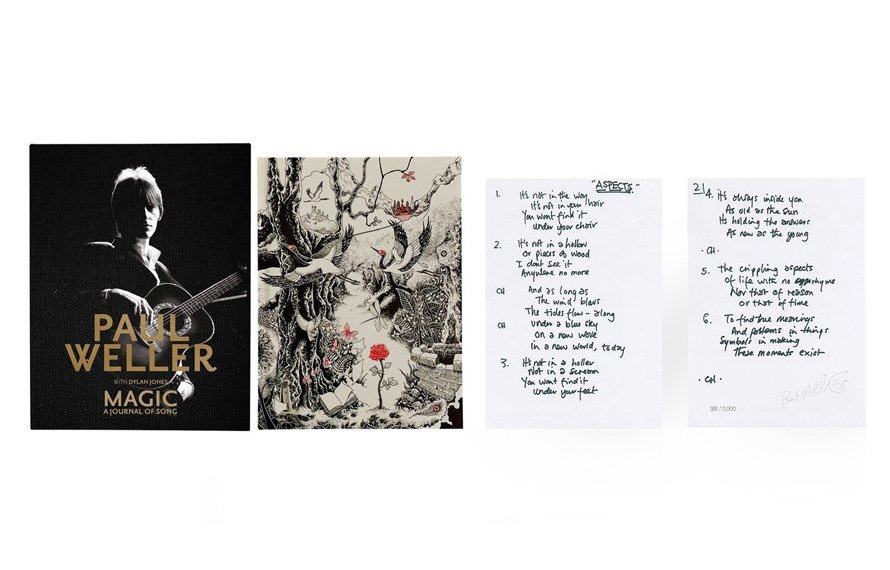
“Magic: A Journal of Song” is a fascinating portrait of one of Britain’s most prolific songwriters. Magic combines a selection of over 100 lyrics from across Paul Weller’s musical life, proving him to be the ultimate shapeshifter: from The Jam’s punk sensibilities to the genre-defying Style Council, through to a remarkable 30-year solo career. His third Genesis edition, Magic is narrated by Weller and illustrated with more than 450 photographs and pieces of ephemera throughout. A revealing commentary garnered over a series of conversations with journalist and author Dylan Jones covers the songs, the stories and inspirations behind them, and all of the 28 albums of Weller’s ever-evolving musical journey.
‘As a songwriter, Paul Weller has proved that he is not only beyond reproach, in some senses he is quite possibly without equal.’ – Dylan Jones
‘The thing I have discovered is that music in its truest sense is beyond any trend or movement or category.’ – Paul Weller
The photography featured is pulled from a range of never-before-seen negatives and iconic shoots that chronicle Paul Weller in detail throughout his extraordinary career.
From the early days of The Jam, when the band played local talent competitions in Woking, through to performing in London, Tokyo and New York, Magic captures both the energy of their live shows as well as behind the scenes, in the studio and backstage. Later experimental images of The Style Council in Normandy and Paris recall the band’s European influences. Weller’s extensive solo career is documented by a range of photographers and friends, whose work shows Weller rediscovering himself as an artist.
Photography by globally recognised photographers is presented, including Janette Beckman, Julian Broad, Anton Corbijn, Jill Furmanovsky, Nick Knight, Mary McCartney, Pennie Smith, and many more. Together, their photographs capture historic performances, rehearsals, video shoots, and studio sessions.
Each album is personally introduced by Weller, alongside the album artwork and photoshoot outtakes.
‘First and foremost, I try to satisfy something inside myself. And if other people get it and they share in it? That’s fantastic.’ – Paul Weller
Offering unprecedented insight into his creative process, Weller’s personally curated selection of over 100 song lyrics is accompanied by an illuminating commentary of over 25,000 words. As told to journalist and author, Dylan Jones, Magic: A Journal of Song presents Weller’s most candid and intimate account of his musical life to date. From founding The Jam as a teenager, through his time as one half of The Style Council, to his years as a solo musician, Magic is Weller’s definitive document of his songwriting career.
Paul Weller is an award-winning musician with a career spanning almost 50 years. He has been an integral part of the British music scene since the early 1970s, when he founded The Jam. Following this, he teamed up with keyboardist Mick Talbot to create The Style Council, in which political statements were aired to nostalgic, summer-soaked melodies, and has gone on to have a hugely successful solo career. As a songwriter, Weller is considered on par with artists such as Paul McCartney and David Bowie and has received awards from the BRITs (Lifetime Achievement Award), NME Awards (Godlike Genius Award) and a GQ Award for Songwriter of the Year.
‘Over the years, he has developed an encyclopaedic knowledge of dozens of different genres. But more importantly, he still writes and performs with the enthusiasm of a teenager.’ – Dylan Jones
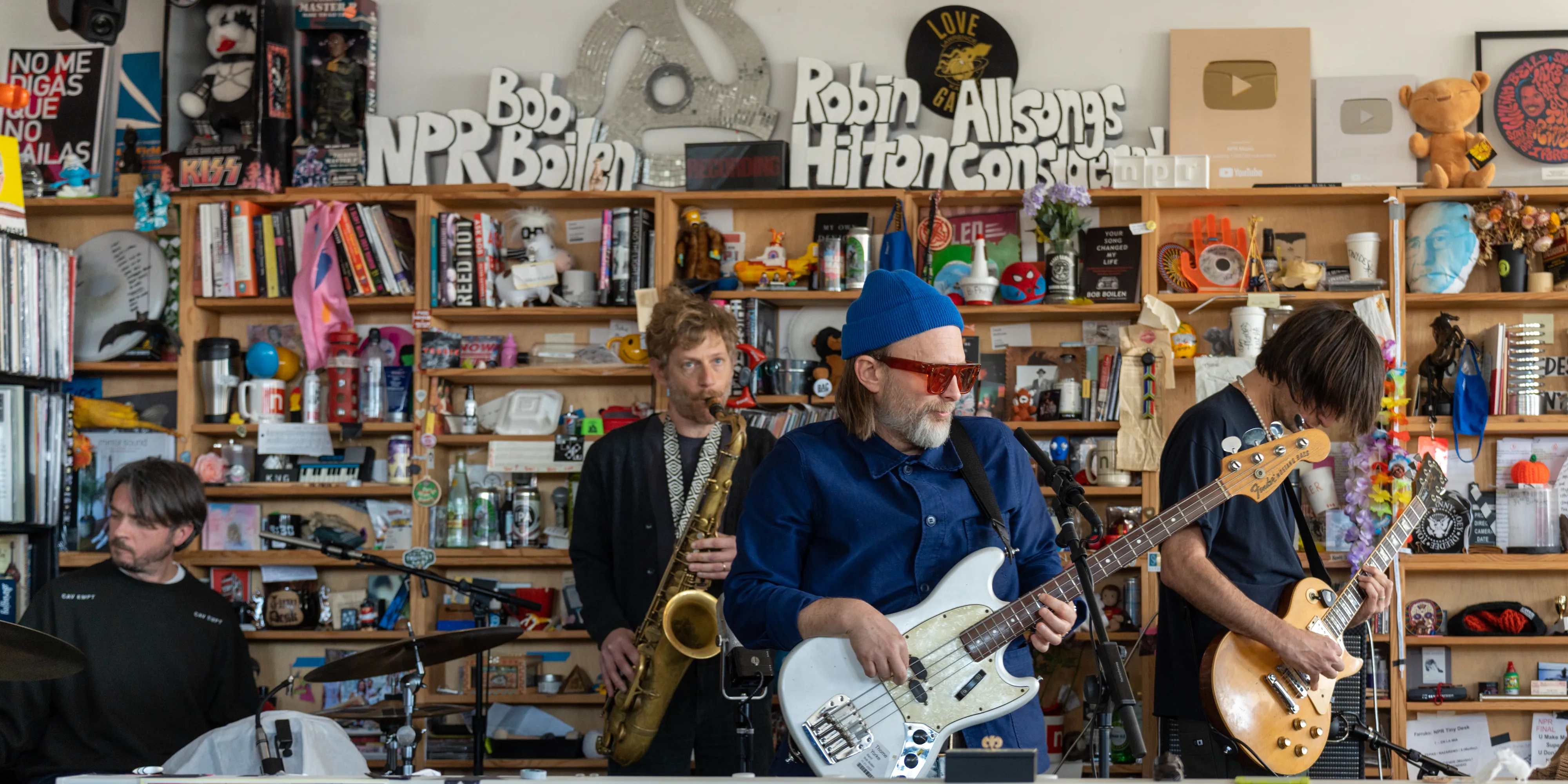
Supergroup The Smile featuring Radiohead members Thom Yorke & Jonny Greenwood and Sons of Kemet drummerTom Skinner amazed with their long-awaited debut LP “A Light For Attracting Attention” last May. An entrancing and riveting work with Yorke at is feverish and vulnerable best.
To keep the momentum going the band shared a live album “Live At Montreux Festival – July 2022” a few months later. It’s clear that The Smilewas not a one-off project.
Two days ago they played a 3-songs Tiny Desk set (live concerts hosted by NPR Music at the desk of All Songs Considered hostBob Boilen in Washington, D.C.)
Setlist: “Pana-vision”, “The Smoke”, “Skrting On the Surface”
Originally released in 1975, “No Heavy Petting” is UFO’s fifth studio album and the last to be produced by Ten Years After’s Leo Lyons. Stepping up from the rawer sound of “Force It”, the album was their first to feature a permanent keyboard player in the band and gave a nod to what was to come. The album includes a number of tracks that were to become staples of their live set for many years, including “Natural Thing” and “I’m A Loser” This newly remastered clear vinyl 3LP gatefold deluxe version includes the Roundhouse 1976 live set previously unavailable on vinyl.
A classic rock album from ‘75, “No Heavy Petting” . The album includes the classic tracks “Highway Lady”, “Belladonna”, and “I’m A Loser”. Chrysalis Records now presents the 2023 remaster, across two exceptional expanded formats with both including the Live At the Roundhouse 1976 concert.