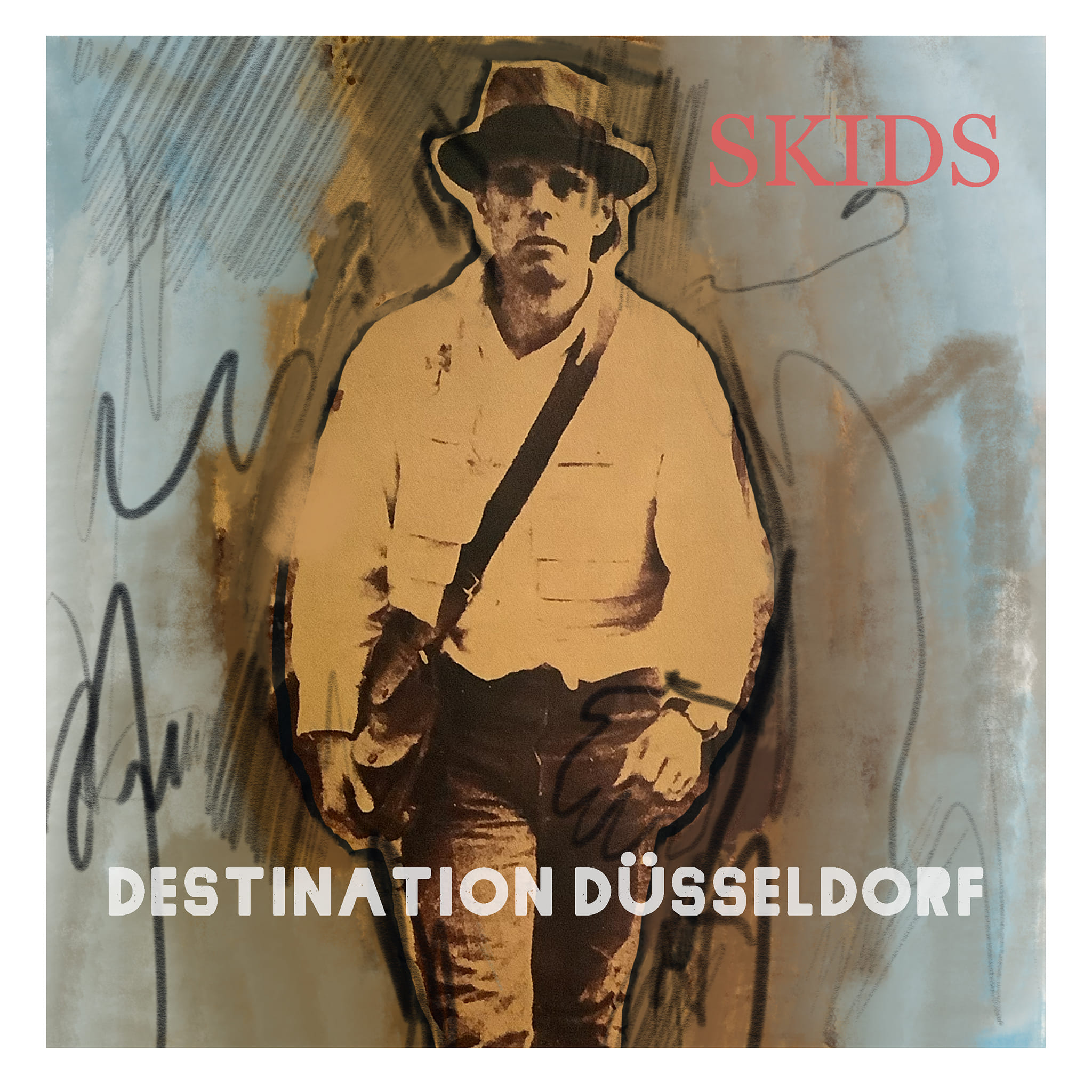
“Destination Dusseldorf”is the brand new studio album from Scotland’s legendary Skids. The band note Europe as an ongoing inspiration for the new LP; “from the beauty of the Renaissance to the savagery of many wars, the highs and lows have been from there as an ongoing and ever evolving influence. This new album follows in the footsteps of “Days In Europa” as a celebration of friendship and shared experiences.”
The new album “Destination Dusseldorf” follows in the footsteps of “Days In Europa” as a celebration of friendship and shared experiences. The cover shows the brilliant Jospeh Beuys striding towards us from his base in Dusseldorf full of confidence and optimism believing that we can do the right thing for the people and the landscapes that surround us. He is a philosopher, an artist, but most importantly a human being, a hero who never hid from the challenges of life.
Given that we aren’t sure what (if anything anymore) we can find out after death, I really wonder what Stuart Adamson thinks of both his bands Skids and Big Country carrying on without him? The former of which now release their new album ‘Destination Dusseldorf’. Adamson was such a distinctive player its hard to imagine it without him though I’m sure guitar pedals now have a bagpipe setting that can be utilised. I mean, it’s like The Armoury Show without Richard Jobson.
“Destination Dusseldorf” – the new LP from The Skids will be officially released on Friday.
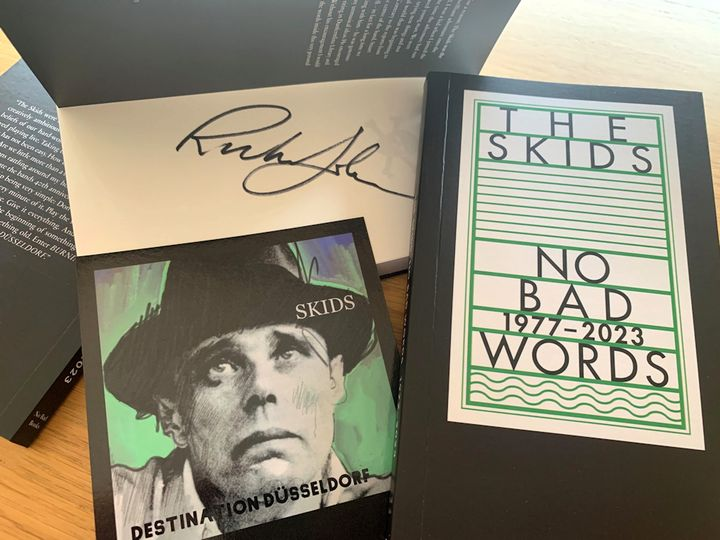
The Skids – No Bad Words 1977-2023 (Richard Jobson) Signed 2023 Updated Edition
“No Bad Words” includes all The Skids lyrics written by Richard Jobson with commentaries on selected songs from the first four albums, plus the whole of “Burning Cities”, and 2023’s “Destination Dusseldorf” album.
Limited Edition hardback signed by Richard Jobson, plus exclusive “Destination Dusseldorf” postcard.
“Smalltown Stardust” sees Thomas evolve once more, fully embracing the pop elements that crept into “The Other” with production help from Sasami, who’s lent a dynamic snap to her own works along with Hand Habits in the past few years. The guitar still pervades, providing a glam crunch to many of the songs, but it’s no longer the only driving force. Layers of drums, strings, and Thomas’ voice feeling comfortingly close mic’d and confessional mark the new record. The dichotomy of the album’s grandiosity and the lyrical longing for the townie tenure push against each other, creating a tension that resolves somewhere in upper echelons of Tuff’s velour pop wonderland.
There are times in our life when we feel magic in the air. When new love arrives, or we find ourselves lost in a moment of creation with others who share our vision. A sense that: this is who I want to be. This is what I want to share.
It’s a fleeting feeling and one that Kyle Thomas, the singer-songwriter who records and performs as King Tuff, found himself longing for in the spring of 2020.
But knowing he couldn’t simply recreate this time in his life at will, Thomas—who hails from Brattleboro, Vermont—set out to write a love letter to those cherished moments of inspiration and to the small town that formed him. The one where he first nurtured his songwriting impulses, bouncing ideas off other like-minded artists. The kind of place where the changing of the seasons always delivered a sense of perspective and fresh artistic inspiration. Where he felt a deeper connection with nature and sense of community that had once been so close at hand.
“I wanted to make an album to remind myself that life is magical,” he reflects.
And so, Thomas seized upon his memories, creating what he calls “an album about love and nature and youth.”
The result is “Smalltown Stardust”, a spiritual, tender and ultimately joyous record that might come as a shock to those with only a passing knowledge of the artist’s back catalogue. On “Smalltown Stardust”, Thomas takes us on his journey to a place where past and present collide, where he can be a dreamer in love with all that he sees. Images of his youth abound: from Route 91 which runs through his hometown (in “Smalltown Stardust”); to Redtooth, a spectre who used to roam the streets (“Bandits Of Blue Sky”); to old friends, old haunts and old dreams (“Always Find Me”); to Vermont’s Rock River, which gave its name to a song of a torch still burning for past love: “Those days are gone and we can’t rewind/ Cuz people grow and places change/ But my love for you will never fade away.”
But at the core of “Smalltown Stardust” is Thomas’s desire to commune with nature on a spiritual level. Images of the natural world, from blizzards to green mountains to cloudy days, fill the songs and create a setting unmistakably far away from Los Angeles. “I consider nature to be my religion,” he explains, and “Smalltown Stardust” is nothing if not a spiritual exploration. Thomas’s identification as a sort of eternal spiritual seeker is underscored in one of the album’s sweetest moments, “A Meditation,” which features a home audio recording of Thomas as an eight year old, trying his hand at leading a meditation. It’s a journey that he continues to this day, as he intones on “Portrait of God”: “Walking in the woods, wading in the river” and “breathing in the mountain air” before heading back to a place where he finds himself “Oil painting in my garage/ Let my colours flow/ I’m working on my portrait of God.”
While so much of “Smalltown Stardust” invokes idealized traces and places of Thomas’s past, the album’s recording process made his communal vision a reality. Thomas’s Los Angeles home in 2020 formed a micro-scene of sorts, with housemates Meg Duffy (Hand Habits) and Sasami Ashworth recording their own heralded albums (2021’s Fun House and 2022’s Squeeze, respectively) at the same time. A shared spirit dominated an era spent largely on the premises, with Thomas serving as engineer and contributor to both records, and Ashworth working as co-producer on “Smalltown Stardust”. Thomas describes the time with a fitting metaphor: “I’ve always thrived around other people making things. You want to bloom with each other.” Ashworth’s contributions are vital to the album: she co-wrote a majority of the record and contributed vocals, arrangements, and instrumentation to each song. As Thomas notes, “I tried to follow her vision a lot. It helps to open your world to collaborators. You always get something completely different than you would have expected.”
With the gorgeous orchestral tones of “Love Letter to Plants,” it’s immediately clear that Thomas is declaring a wider vision of what his music can be. Gone are many of the squalling guitars of previous KingTuff records, replaced with thoughtful, tender touches of cello and violin on “Love Letter to Plants,” “Pebbles In A Stream” and “The Bandits Of Blue Sky”; a plaintive saxophone on “Always Find Me”; and orchestral vocal harmonies with Ashworth that lift the songs to a celestial plane. (Though the rollicking, joyous leads on “Portrait of God” show Thomas hasn’t lost his touch on guitar.) On “How I Love,” Thomas makes clear that all of this is by design: “So lost in nothing but noise for so many years, I forgot to love.”
In the end, “Smalltown Stardust” is not merely a nostalgia trip. In making the record, Thomas not only conjured a special time in his life, he found new inspiration, surrounded by a small circle of collaborators and a sense of love and wonder for nature. If the first King Tuff record was content to merely state Thomas was no longer dead, “Smalltown Stardust” is a paean to what that life means. A statement of belief and a hymnal to the magic still to behold all around us. “I’m a different person now than I was 20 years ago when I first started it. But oddly, when I first started the band, it was more like this,” he says. Which is to say, things have come full circle. Or as Thomas intones on “The Wheel”:
“Ooh we were just kids then… Caught up in the turning of the wheel…. And it’s coming ‘round again.”
Terry pick up right where they left us — offering up jangled and jilted pop that’s strained through a wobbly post-punk filter. Guitars strum and squirm, sparring with itchy organs. The band layers in strings and horns, but as an antithesis to the kind of pristine pop that normally implements such accoutrements, Terry add them to their menagerie of home-brewed mayhem. In the past a slight lacquer of these elements has cropped up, but never in such prominence. The shift pushes the band out of their wrangled-punk bunker, spilling out into the streets, turning pop pirouettes under a wrinkled sun.
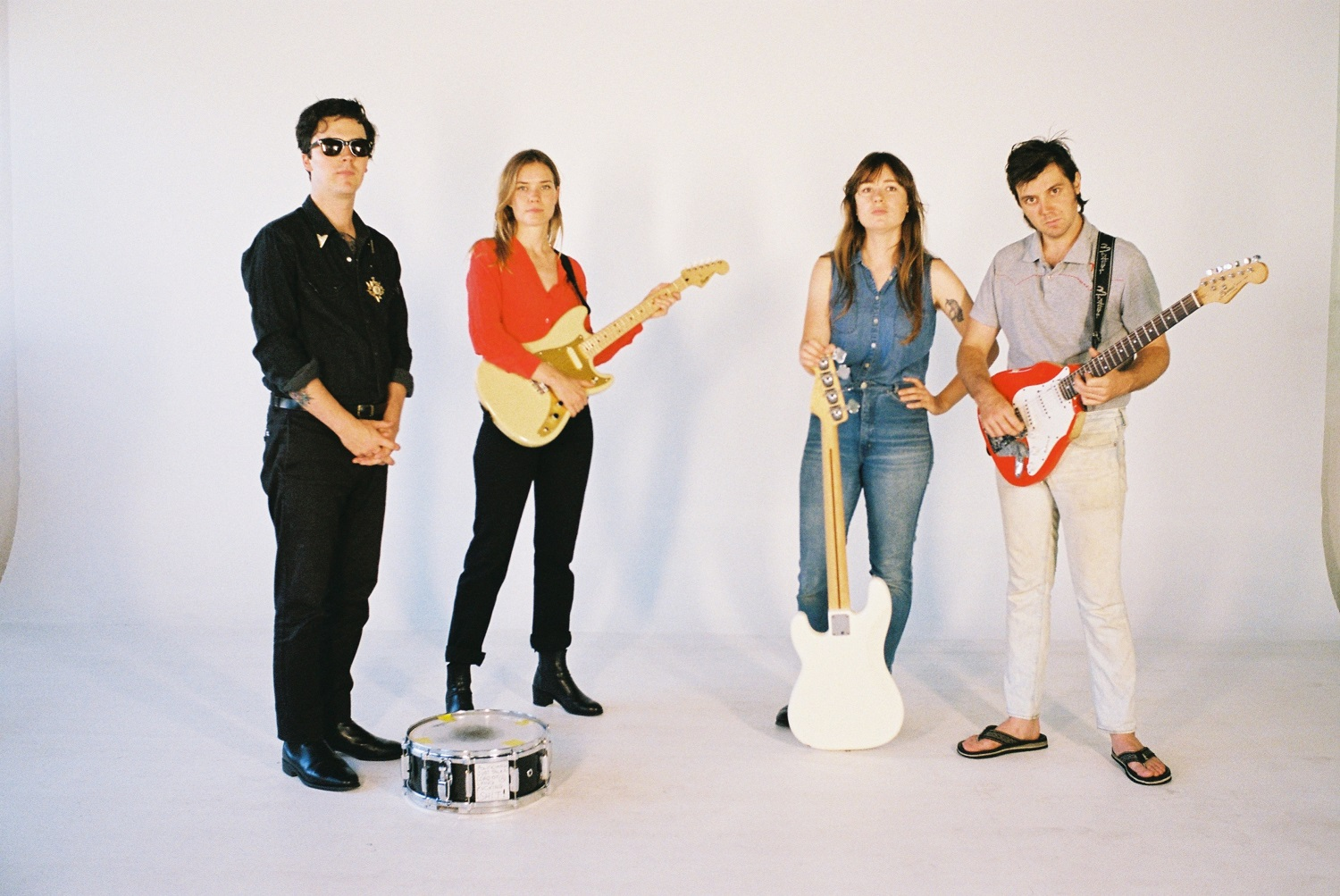
“Call me Terry”. Five years on from the last record, “I’m Terry”, the Australian four-piece welcome their new album, “Call Me Terry” . Terry is made up of Amy Hill, Al Montfort, Xanthe Waite & Zephyr Pavey who formed in Mexico City in 2015 after seeing Trotsky’s deathbed. Seven years, four albums and four 7’s later, you can now “Call Me Terry”. Over the past few years, Terry has kept busy with writing and recording “Call Me Terry” and alternating side projects, including Constant Mongrel, The UV Race, Primo!, Sleeper & Snake, Chateau, Rocky. Terry recorded “Call Me Terry” demos in 2019, sharing further demos during 2020 isolation before getting together to record at the legendary Terry HQ Ringwood Studios in 2022. Overdubs were completed in Terry home studios over the year.
Lyrically, in true Terry fashion, the record wastes no time in scrutinising Australia’s corrupt, colonial history. They sing it loud and sprawl it across the jacket of this record, highlighting the greed, privilege and entitlement of white, wealthy “Australia”.
Musically, “Call Me Terry” has the classic Terry punk sound; four vocals singing as one, sharp guitars and quirky synths, rolling bass and drums. But the sugar on top here may just be some of their finest horn, string and piano performances to date – all of which never feel crowded, cluttered or over-involved. Rest assured Al still gives his famed Fuzz Factory a workout – and throws his tremolo into the pedal chain. It goes off. Since day dot it’s been hard to reference a band that really sound like Terry. Truly a sound of their own! Listen to what Terry has to say.
“Call Me Terry” released April 14th through Upset the Rhythm and Anti Fade Records (AU/NZ).
The band sticks with the decade of decadence as their blueprint, but leaves behind the dust and dreams of West Coast cowboys and Canyon troubadours. Triptides embraces a disco skitter behind the kit, sliding deftly between the towering heights of modern psych-pop and a cream-crushed dose of blue-eyed soul doused with a touch of Yacht-rock’s gloss. Triptides is shedding the word “psychedelic” from its vocabulary – Maybe because after over a decade of adventurous songs and albums across genres and styles–ranging from bedroom pop to prog rock to Laurel Canyon country–the term “interdimensional” feels more appropriate to the Southern California-based band. Driven by the songwriting mind of multi-instrumentalist Glenn Brigman with longtime collaborator and multi-instrumentalist Stephen Burns, Triptides is moving through a galaxy of music following only their own compass. And with their latest album, “Starlight” ( via Curation Records), the duo proves there is a lot more they wish to explore.
It’s as close as the band has come to a full-tilt festival filler. Running on wisps of Gaucho and Takin’ It Easy, the new album feels more meticulous than anything in Triptides’ catalogue. If you held the notion of having Triptides typecast, “Starlight” is here to shake those assumptions.
With tightly interwoven rhythm guitars and basslines, coupled with Brigman’s keen sense of melody and harmony, there’s a new energy shining through with “Starlight”. It’s quite a departure from last year’s laid back acoustic strummer, “So Many Days”, and it’s lightyears from the surf-rock-cassette era of the group. But despite the unexpected movements, from the sounds and structures, you can instantly tell that it’s Triptides behind the wheel–ready to launch you to another star.
Triptides is moving through a galaxy of music following only their own compass. In an almost-jazzy fusion of electric keyboard textures and dancefloor grooves that dives into the worlds of Stereolab, Steely Dan and Cortex. With tightly interwoven rhythm guitars and basslines, coupled with Brigman’s keen sense of melody and harmony, there’s a new energy shining through with “Starlight”. This is the third chapter that started with fuzzed-out “Alter Echoes” and the folk-jangled “So Many Days”.
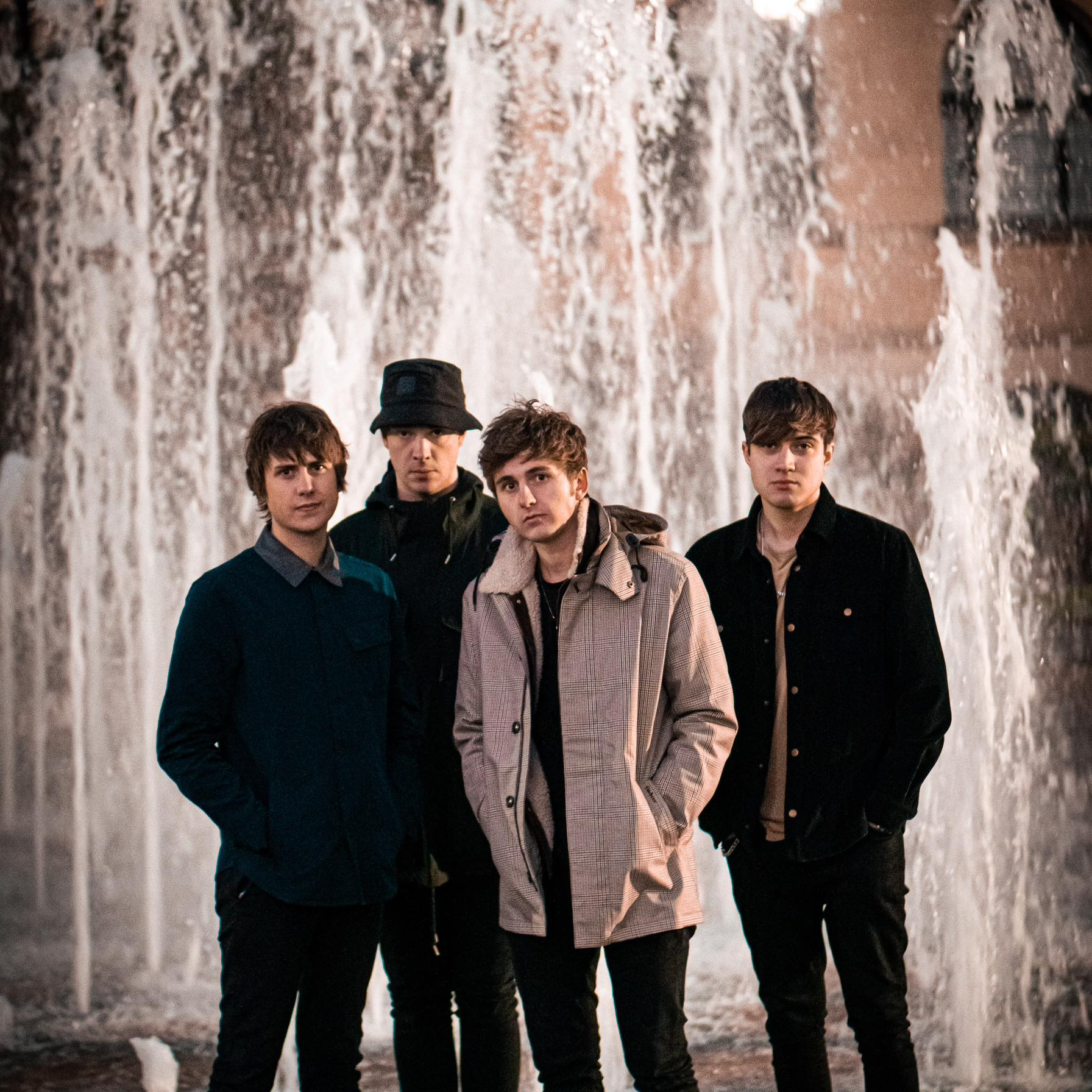
“People Like Me and You”, the fourth album from South Yorkshires Indie rock Band, The Sherlocks.
It’s the latest set from the indie / alt-rock quartet after three acclaimed albums which include their 2017 debut “Live For The Moment” and last year’s “World I Understand” – both of which hit the Top 10. They’ve also established a fiery live reputation on the back of sold-out headline shows,
Vocalist/Guitarist Kiaran teases, “The new album is honestly full of really good songs with strong choruses. When we were going in to make this album, we went in there with ideas as opposed to fully fledged songs and I believe that’s where the magic lies in this record.”
Their biggest, brightest and most expansive record to date with production elements and fresh sonic touches that broaden their guitar / bass / drums foundations. It’s a collection filled with personal and quintessential Sherlocks lyrical themes that are informed by the passing of time and the realisation that everyone is stepping into different stages in their lives – touching upon nostalgia, ageing, flawed relationships and escaping the rat race on wild, woozy weekends.
“PEOPLE LIKE ME & YOU” is going to be our biggest album we’ve ever released. The album isn’t coming out until august
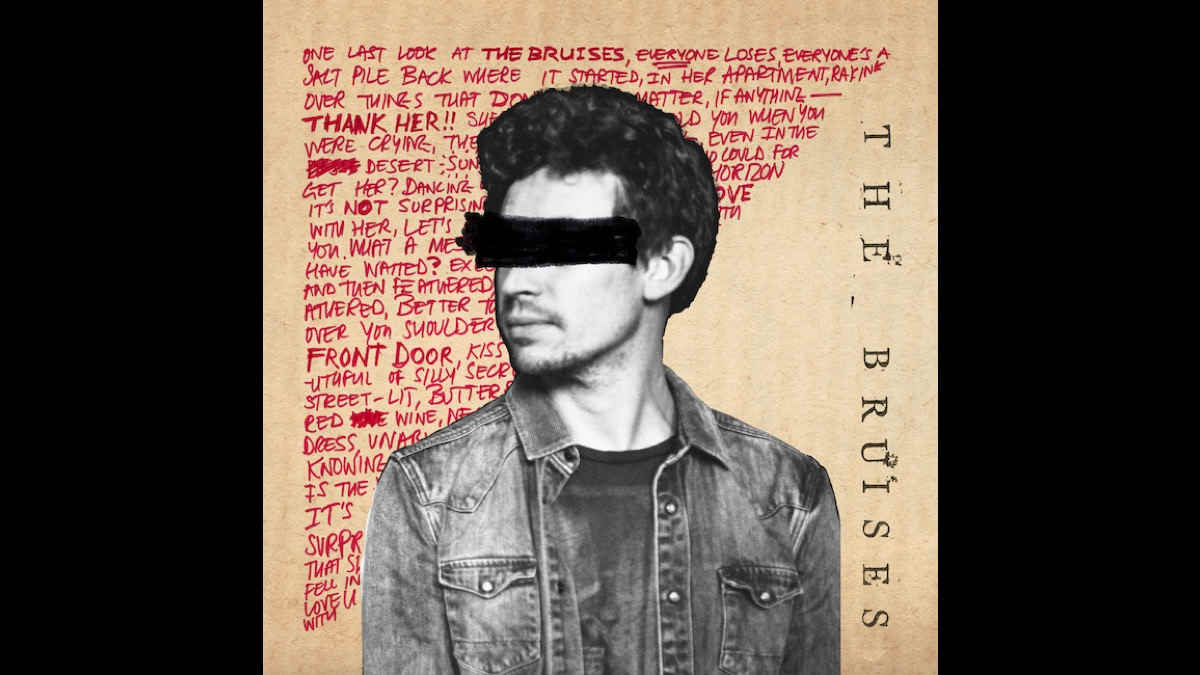
Introducing, The Bruises. The third single from our forthcoming album ‘Excuse Me While I Vanish’, out 28th July on Chrysalis Records, the track is the follow-up to last month’s single ‘The Puppet and the Puppeteer’. The ten tracks on ‘Excuse Me While I Vanish’ marry earworm tunes with insistent, imperious, soaring rock shapes, punctuated by chorus hooks that are simultaneously nuanced and anthemic.
‘Excuse Me While I Vanish’, very nearly didn’t happen. Following the imposition of lockdown restrictions, Joseph found himself cocooned at home in Cornwall, ruminating on an uncertain creative future, watching on as his wife Mandy, a valiant mental health social worker, engaged with the all-too-real dilemmas of the pandemic-riven here and now. Her example motivated Joseph to become a temporary care worker, an experience which would provide renewed focus and influence the songwriting on the new album.
I started making videos with archival footage back in lockdown. There was no touring or work, I needed something that required no editing. A timeless image in a single take that I’d find within an hour of searching. It needed an opening shot I could put a title over and it needed to fade to black, magically and coincidentally at the same time the track ends. Not only that, it needed to convey the meaning of a song that attempts to articulate the complexities of a 23-year marriage, written from the point of view of an alter-ego so detached from reality he calls himself William The Conqueror.
I don’t know what I was searching for. I clicked on an image of a ballerina, muted the sound, pressed play on the song and sat back.
While William was bellowing at the top of his lungs, being complicated and forgetting to breathe, there was Laurie McDonald, juxtaposed to the singer’s desperation. A ballerina in 1975 trying to perform The Dying Swan on a frozen lake. She was graceful, calm, precise, undeterred by the uncertain footing. She’d slip sometimes but she never let on. She was stoic and focused. She’d get through it in her own time, all she had to do was stay committed.
It said everything I needed it to. So, thank you to Laurie for making this film 48 years ago. You saved William’s bacon big time.
Kentucky-born Richard Meyers moved to New York City after dropping out of high school in 1966 aspiring to become a poet. He and his best friend from high school, Tom Miller, founded the rock band the Neon Boys, which later became Television in 1973. They changed their names: Miller became Tom Verlaine, and Meyers became Richard Hell. The group were one of the first rock band’s to play the club CBGB, which soon became a breeding ground for the early punk rock scene in New York.
After a stint with Television and The Heartbreakers (both with essential early punk albums of their own), Richard Hell assembled a backing band called the Voidoids and released one of the era’s seminal albums. The title track has become a quintessential punk track and the entire album takes you through an entire checklist of what made the ‘70s New York music scene so exhilarating. “Blank Generation” has its fair share of volume and punch, but Richard Hell’s charismatic energetic stage presence vocal performances and wore torn clothing held together with safety pins and spiked his hair and the angular musicality of Robert Quine’s guitar playing make it a completely unique entry in the early punk catalogue.
Disputes with Verlaine led to Hell’s departure from Television in April 1975, and he co-founded theHeartbreakers with New York Dolls guitarist Johnny Thunders and drummer Jerry Nolan. Hell lasted less than a year with this band. Hell was influenced and also drew from and covered garage rock bands such as the Seeds and the Count Five, both found on the 1972 Nuggets compilation.
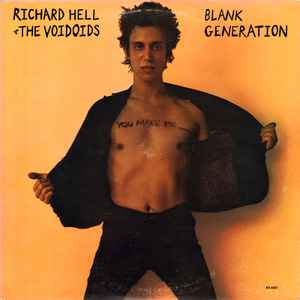
Richard Hell had written the song “Blank Generation” while still in Television; he had played it regularly with the band since at least 1974, and later with the Heartbreakers. The Voidoids released a 7″ Blank Generation EP in November 1976 on Ork Records containing “Blank Generation”, “Another World” and “You Gotta Lose”. The cover featured a black-and-white photo by Hell’s former girlfriend and unofficial CBGB photographer Roberta Bayley, depicting a bare-chested Hell with an open jeans zipper.
According to Hell, they recorded and mixed the entire album at Electric Lady Studios in New York City across three weeks beginning on March 1977. Two months later, they were informed that the album release would be delayed until September because their label, Sire Records, was changing distributors. “In the meantime, I had noticed a lot of things about the record that I thought we could have done better,” recalls Hell. He asked their label if they could re-record the album, and after getting their approval, they booked three weeks in late June and early July at Plaza Sound Studio, located on the eighth floor of Radio City Music Hall. The final LP would use the Plaza Sound recordings for every song except “Liars Beware,” “New Pleasure” and “Another World,” where the Electric Lady recordings were retained. Their rendition of John and Tom Fogerty’s “Walking on the Water” was also added to the LP during the Plaza Sound sessions; the song had been added to their repertoire after it debuted during a CBGB performance.
Famous rock critic Lester Bangs,reviwed the record labeling it “seminal” and “essential to any modern music collection”, and describing the music as “shattering assaults by a band that prophesied the later No Wave punk-jazz fusion”
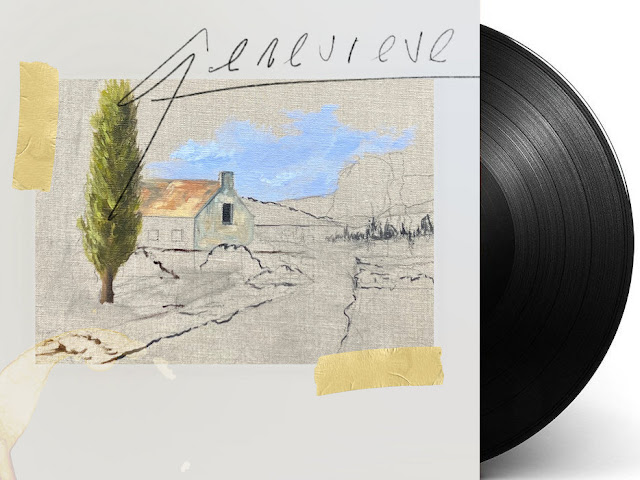
Uncle Tupelo only lasted a few years, but was the basis of both Wilco and Son Volt. In the early years of alt-country, I had a bit more with the albums of The Jayhawks, which showed a more melodic sound than the raw sound of Uncle Tupelo. When listening to “Genevieve” by the American band Fust, reminds you of the early albums of The Jayhawks and that is still a pleasant association.
Fust is a band from Durham, North Carolina, and released their debut album two years ago. That album didn’t get a whole lot of attention at the time, but “Genevieve” popped up in the recommendations of both Paste and Pitchfork last week . The fact that “Genevieve” was received so enthusiastically surprised me, because usually there is not much room for these types of albums on both platforms.
At “Genevieve”, Fust joins the pioneering days of alt-country and does so in a great way. There have been times when we have been inundated with these kinds of albums, but in recent years I have unfortunately seen them less and less. “Genevieve” is an album that absolutely deserves the label alt-country. The Durham band starts with the country rock of the 70s, but hasn’t stuck in this decade. The sound of Fust sometimes sounds nice and full, especially when the pedal steel is used, but “Genevieve” also contains a number of more subdued songs.
When a female voice pops up here and there, you can hear how much added value harmonies could have in the band’s sound. On this second album, Fust guarantees songs that stick around, but that are also interesting enough to keep entertaining.
The band has an excellent singer and also guarantees a lot of musical fireworks. This is mainly due to the guitars, which are prominent in the mix, but the contributions of keyboards and the pedal steel are also beautiful. Especially when the guitars are soloing, I hear a lot of similarities with the music of The Jayhawks, but Fust also has his own style, especially because of the vocals and the full sound.
It’s amazing how Fust manages to reproduce the sound from the early years of alt-country. The band does not stop there, because the band also sounds absolutely contemporary on its second album. The fact that Fust sounds like a timeless alt-country album is also to the credit of producer Alex Farrar, one of the emerging talents in North Carolina, who once again delivers craftsmanship.
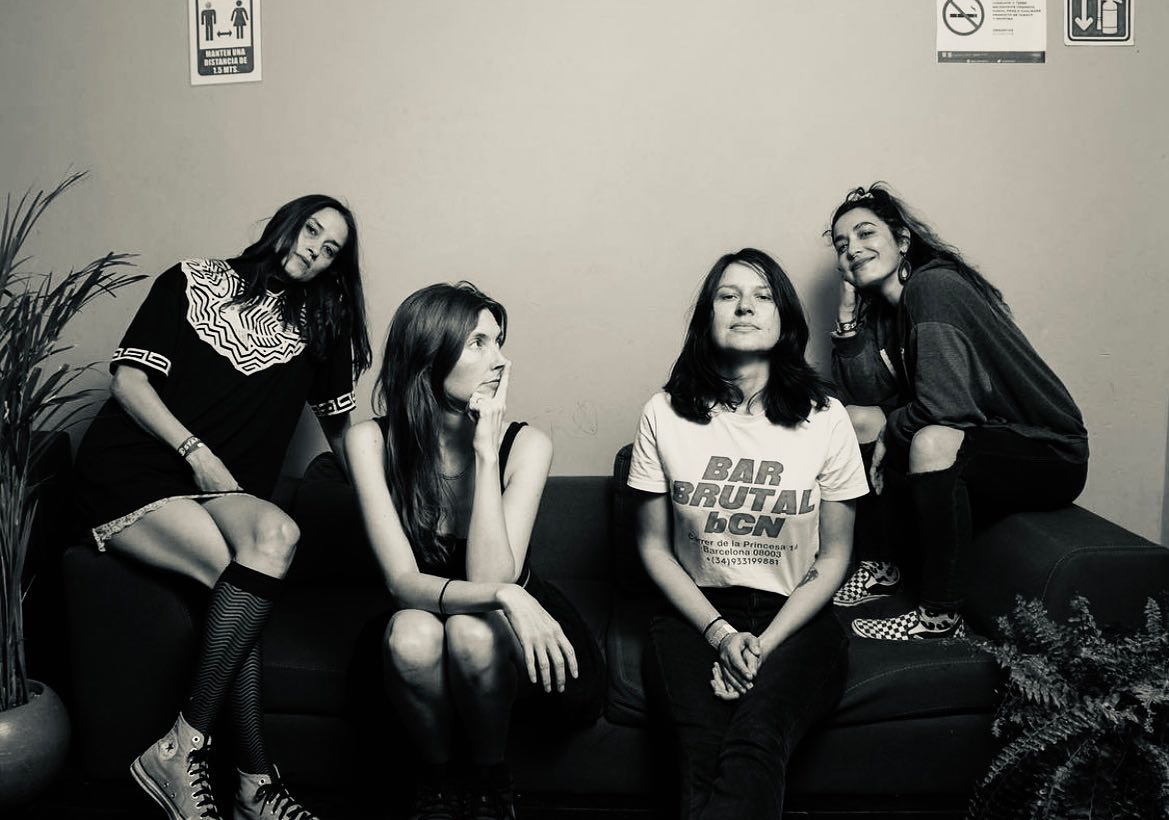
American indie rock band Warpaint from Los Angeles, California, were formed in 2004. The band consists of Emily Kokal (vocals, guitar), Theresa Wayman (vocals, guitar), Jenny Lee Lindberg (bass, vocals), and Stella Mozgawa (drums). The original lineup consisted of childhood friends Wayman and Kokal alongside sisters Lindberg and Shannyn Sossamon. The band played around the Los Angeles area for three years, writing songs (“Stars”, “Beetles” and “Elephants”) which would eventually compose their debut EP. Warpaint’s style has been characterized as art rock, dream pop and psychedelic rock. They play expansive, lushly-harmonic psych-rock songs with enough time-changes to satisfy even the most beardy prog-rock bong-tokers. The band has also cited hip-hop as an influence of their work. Two songs have been named after their favourite rappers: Biggy and Dre.
To date, the band has released four studio albums: “The Fool” (2010), “Warpaint” (2014), “Heads Up” (2016), and “Radiate Like This” (2022).
“Exquisite Corpse”
The band began recording their debut EP, “Exquisite Corpse”, in December 2007, with producer Jacob Bercovici. The sessions took over two months and concluded with mixing and mastering by Red Hot Chili Peppers guitarist John Frusciante, who was also Kokal’s boyfriend at the time. Former RHCP guitarist Josh Klinghoffer performed drums and guitar on the EP. Australian drummer Mozgawa (formerly of Mink and Swahili Blonde) joined the band in the winter of 2009. Shortly afterwards, Warpaint self-released the EP in 2008, In 2009, “Exquisite Corpse” was re-released worldwide by Manimal Vinyl, to critical acclaim.
If there’s one thing to be said of Warpaint’s debut EP, ‘Exquisite Corpse’, it is this: The whole thing oozes sex, seduction, and a drug-like haze. In fact, at times it can seem that everything is designed this way – but never overwhelmingly so, as the EP generally feels very spontaneous. Firstly, it is impossibly smooth, slick almost; though instead of feeling overly polished and manufactured, it feels wholly organic. Secondly, the breathy vocals of Emily Kokal (lead vocalist) and Theresa Wayman (back-ups, lead on ‘Beetles’) are siren-like, entrancing and inviting throughout.
Shimmering guitar melodies characterised by hammer-ons and gentle arpeggios flow in and out of another like water, simultaneously marrying tendencies from shoegaze, post-rock and psychedelica – sometimes in the space of one song (‘Elephants’). All of this is masterfully underpinned by the elegant bass lines penned by Jenny Lee Lindberg, often melodies themselves, as opposed to simple root-note progressions. The relationship between the guitars, and between guitars and bass is, at times, sensually breath-taking, and goes a long way to defining the album’s sound and feel. This tentative, but no less effective interplay between the two is especially gorgeous on the ‘How Strange, Innocence’-era Explosions in the Sky flavoured ‘Stars’. The rhythm section is completed by Jenny’s sister, Shannyn Sossamon, a competent drummer (Warpaint’s rhythm section would exponentially improve after the arrival of Stella Mozgawa after ‘Exquisite Corpse’s” release), but an effective one nonetheless. For example, it is her drumming which facilitates a mesmerising mood change in the EP’s opener.
“The Fool”
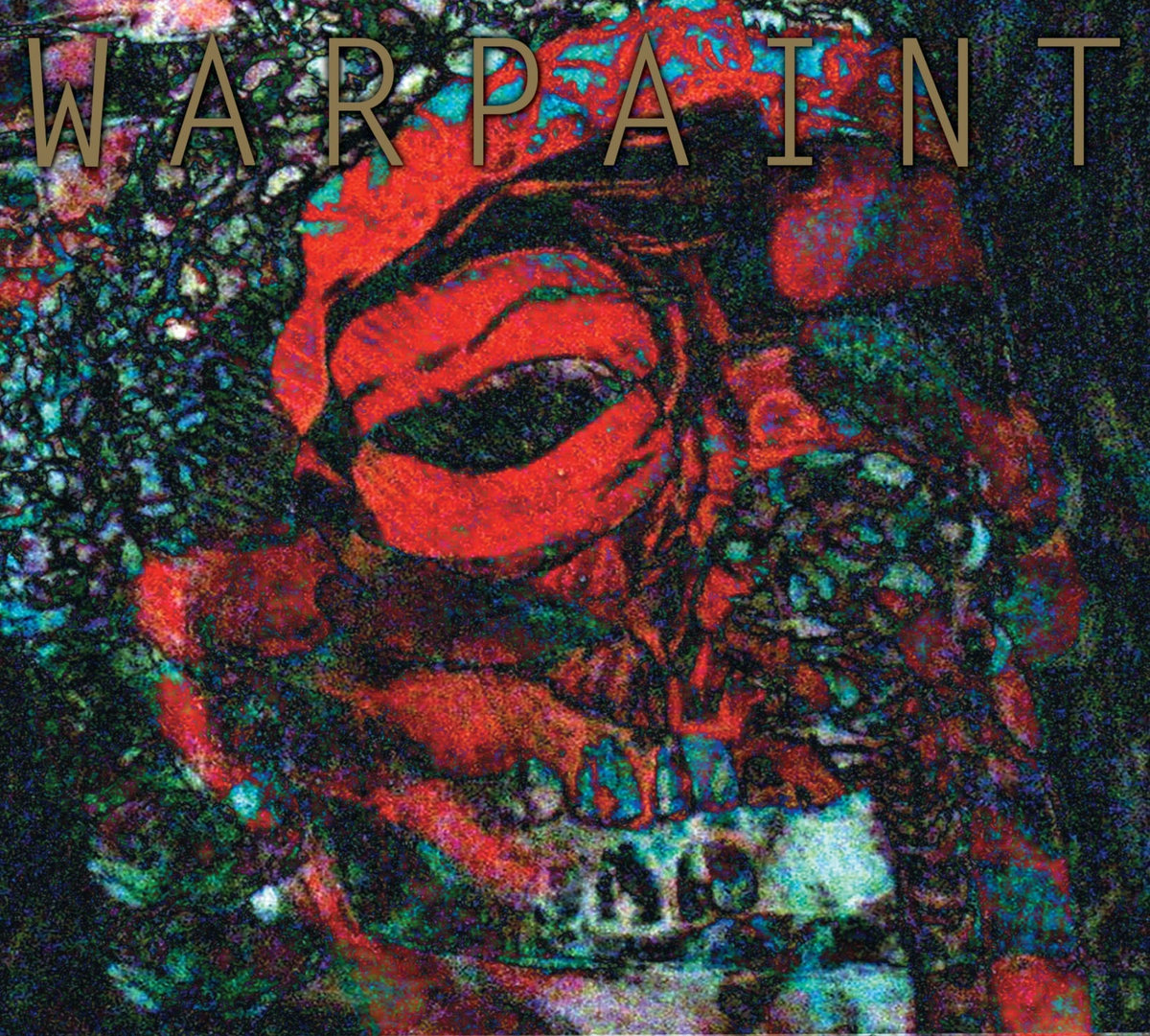
In October 2010, the band released their debut album, “The Fool.” The album received a glowing review from various music magazine’s “Shadows”, the first single from their debut album, was released as 12″ vinyl on January 2011. A remix of the single, “Shadows (Neon Lights Remix)”, proved popular.
Warpaint toured the U.S. and Europe in the spring and summer of 2011 to promote the album. They played at various major festivals including Glastonbury Festival, Reading and Leeds Festivals, Coachella Valley Music and Arts Festival, Rock Werchter, and Electric Picnic. In 2011, the rerelease of the track “Undertow” as a single.
On Warpaint’s debut album the LA-based quartet might be addressing their listeners directly. “Now I’ve got you in the undertow,” singer-guitarists Emily Kokal and Theresa Wayman chime, in voices sweet and lethally seductive. The line feels apposite because Warpaint make music to submerge yourself in, Ripples of guitar rise above and sink beneath bold waves of bass, while drum lines surge hither and thither, pushing the songs to change their course. There is something subtly contrary about this band: their most enigmatic song bears the name Warpaint, while their least-composed song – which opens in a fury of shouted vocals and uncoils in a meandering jam of slowly detuned guitars – is called Composure. But if this slipperiness makes them intriguing, it’s the consistent sensuality of Warpaint’s sound that makes them mesmerise.
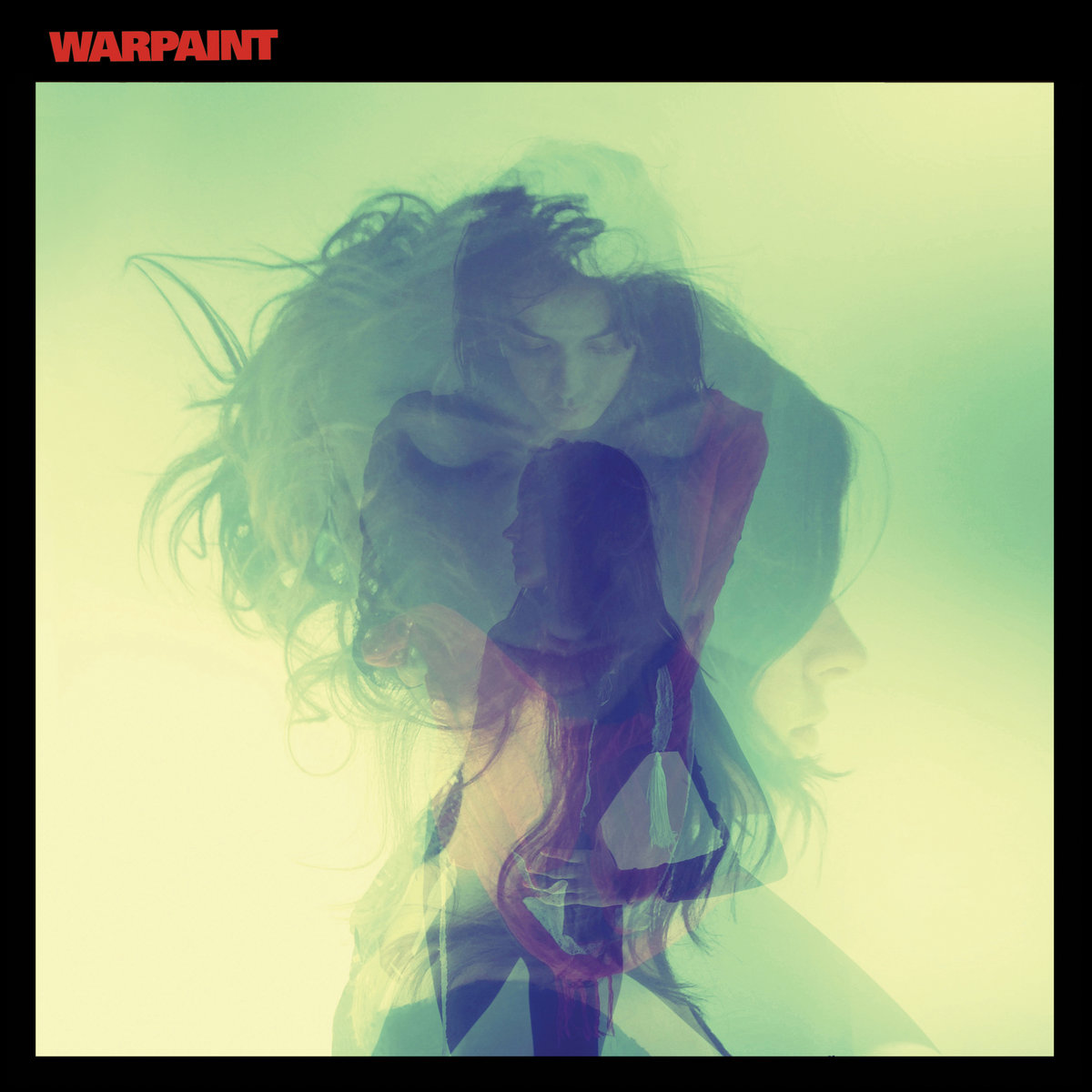
“Warpaint”
As early as 2011, drummer Mozgawa, in an interview with NME, expressed the band’s intention to “experiment and write with one another” as the current line-up had never composed songs “from the ground up” together. Bassist Lindberg further indicated that most of the newer songs were written by “just jam[ming] and free-flow[ing] onstage”. In February 2013, Wayman confirmed that the band intended to create a minimalist sound on “Warpaint”, revealing that the band developed the songs at soundchecks, and experimented more with acoustic guitars and percussion instruments on the album. Lead vocalist Kokal noted that R&B and rap music were influences on “Warpaint” and stated that the album featured “things that have drum machines and ambience, music that’s more than standard rock”. Kokal added that the album was largely keyboards-based, which contributed to the overall sound being “definitely different” from the band’s previous album, “The Fool”.
Produced and mixed by Flood, except two tracks which were mixed by Nigel Godrich, A snippet of the album’s lead single, “Love Is to Die”, was featured in an advertisement for Calvin Klein and later as part of a teaser for an upcoming documentary of the same name about the recording of Warpaint.
A music video, composed of a two-song vignette from the second album—“Disco//very” and “Keep it Healthy” Directed by Laban Pheidias, the video featured skateboarding from professional skateboarders Justin Eldridge, Kris Markovich and Patrick Melcher.
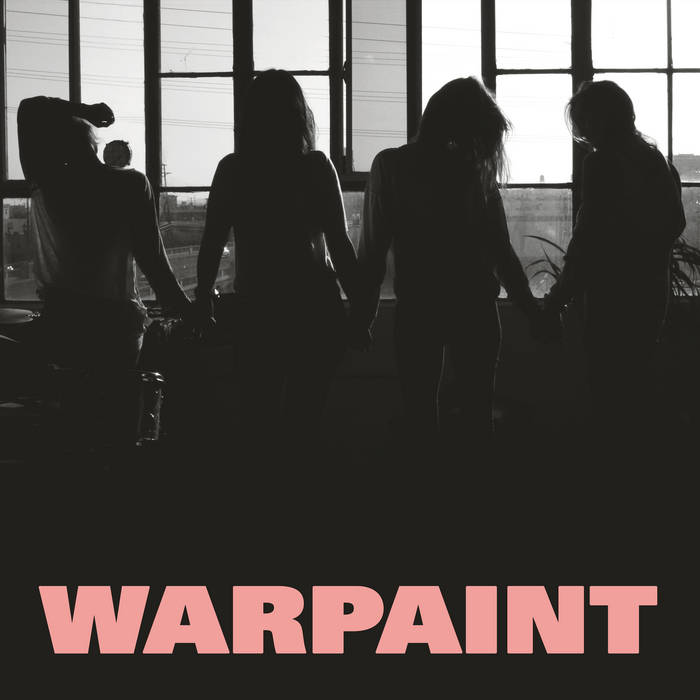
“Heads Up”
On August 2016, Warpaint released a single titled “New Song”,and announced the September release of its third studio album, “Heads Up” they toured as special guest and opening act of Depeche Mode’s Global Spirit Tour. Their four dates opening for Depeche Mode at the Hollywood Bowl marked the first time a band played four consecutive shows at the famed Los Angeles venue. The band also toured in support of Harry Styles on a handful of dates.
After delving in various solo endeavors, including bassist Jenny Lee Lindberg’s solo debut, the members of Warpaint reconvened and began recording the new LP in January. Accompanied by producer Jacob Bercovici, who helped helm their 2008 “Exquisite Corpse” EP, they logged time in local studio House on the Hill as well as Papap’s Palace and their own home studios.
The Los Angeles dream pop outfit tried a new approach during the sessions for “Heads Up” for the first time ever, they recorded in pairs and alone rather than as a full band, a press release notes. “The doors were a little more open in terms of what was accepted and what wasn’t, because we were sharing ideas so rapidly between us,” says the band’s drummer Stella Mozgawa of the recording process. “The roles that each of us individually had or had established were a little more malleable.”
The band were largely inactive across 2020 and 2021, with Mozgawa returning to Australia and recording with Courtney Barnett.
“Radiate Like This”
Warpaint then new album their first since 2016’s called “Radiate Like This” their first song from the album, “Champion” The song is about “being a champion to oneself and for others,” the band said in a press release. “We are all in this together, life is too short not to strive for excellence in all that we do.”
On “Champion” Theresa Wayman started this in my room at my house in El Sereno. I actually sampled a Warpaint song “The Stall” – and that’s what started the whole thing. Then made the beat. I use logic and a program called geist to make beats… We went to Stella’s house/studio out in Joshua Tree to do some preproduction and I showed the girls my demo. We put it on and Stella started playing along with it…really brought it to life to have her layers over it. And then Jen wrote the acoustic guitar… This was one of the first songs we made for the album.
As a drummer Stella Mozgawa in Warpaint, she’s always leaned into her psych background and in this episode we hear how much it has helped her to navigate her way in Warpaint, and any other musical project or otherwise that she’s been involved with—from producing for Courtney Barnett to playing with Kurt Vile.a band with three strong lyricists, she knows her strengths are in the sonic production aspects of songwriting. But after 12 years of “being in each other’s pockets” through three albums she shares some of the struggles she experienced with completing songs like “Send Nudes” and “Champion” the standout opening and closing tracks of “Radiate Like This“.
This one was started by Em. We also worked on this in that first desert session. I wrote that guitar line in the verses really quickly..felt like I was channelling something..that can sound cliche but it’s not always like that! I really felt it with this one. In fact, everything about this song came together like that. Em’s vocals, that middle bridge section, all of it! I’m in love with this one!
Hard To Tell youEm wrote this song on guitar originally. We recorded a version like that at an early recording session in Joshua tree at Rancho De La Luna. It had a much longer arrangement… We then re-imagined it with synths..leaned into an 80s synth ballad feel. This one also came together quickly. I had a lot of fun weaving guitar lines around the vocals in the verses… We did a lot of pre-production on this one at our rehearsal space downtown before we ever went to the studio.
“Stevie” is a love song that was originally written by Emily. She started during the heads up album but it didn’t make it on there. She would play the chords during soundchecks from time to time and we’d all start playing along. Always found the progression very alluring.
There was a little demo chasing with this one because the beat Stella did when we first started demoing just had this perfect feel that was hard to recreate. We got it in the end but re-recorded it 3 times in 3 different studios.
“Like Sweetness” was started this one on piano. Stella and I were working at our rehearsal space downtown, doing a lot of demoing and trying to find out where this album wanted to go. We did a few different demos of this one on piano and then moved it over to the prophet. The initial beat she played on this one was really laid back, a lot of ride. We changed it when we got to the studio… was too similar to another track so we had to dig for something else. Nice where it ended up. It’s a song about self-love.
“Trouble” is another piano song that Em wrote a while ago… finally came together after a couple of different versions. We all played this in our rehearsal space and figured out the arrangement. Played our parts and fell into the song really easily. One of the only ones we recorded together as a band at the same time. Did it at the studio in highland park, 64 Sound. We tried to get the piano at the desert studio but that didn’t work out. And then we still didn’t have the right piano take. Emily re-did it and finally got it at a studio in Portland, Oregon during the pandemic. Also, love the harmonies on this one. We did a lot of work on honing those during the pandemic.
Proof Love the harms on this one. And all the little sonic gems… Stella, Emily and I did a lot of work on this one at the rehearsal space downtown…throwing paint at the wall with my prophet 12 and piano and guitar. And then we arranged them all into the song and that generally helped structure the song. The proof is in the pudding melody was a funny little thing my brother Ivan (he worked with us on ‘Head’s Up’) and Emily made up during a party, years ago. Em realized that this was finally its moment to make it to actual song status! Love it.
Altar is also from the very first batch of songs that were sprinkled with love during the Stella desert studio session. I wrote this song around the time I started champion. The drums, em guitars in the chorus and the bass was added right away. The structure was still very long when we went into the studio. We added more parts but it wasn’t until our remote arranging sessions during the pandemic that we really trimmed it up. I went out to Emily’s house a couple of times during the pandemic and we added more guitar to a few songs. The ending em guitar part that really changes the tone of the song in such an interesting way, came from one of these sessions.
Melting is the only song on the album that came from a jam, written in true Warpaint fashion. It was arranged and written by all of us in the room together. We wrote and recorded this one a year before we did any of the other ones. Did a version with producer Jon Congleton in a studio in LA. I loved that recording but it was also such early days that we needed to breathe different life into it and make it match our other songs a bit more. Em, and I added more guitars during the pandemic at one of our home desert recording sessions.
Send Nudes is a song written during the pandemic. I went on a camping trip with my family and this was written around a campfire. Initially called camping song. Inspired by Erykah Badu and her song, Phone Down. The incredible effective simplicity of that song is addictive. So I approached from that angle. What was initially “send a cup of noodles” quickly became “send a couple nudes”.. Took it out of the PG zone once the kids went to bed ;). Stella did her drums in a studio in Melbourne. One of those back and forth file sharing songs. Not ideal but do-able. At least I got to be in person with Jen to get the bass.
Each of the 10 tracks on the LP were crafted layer by intricate layer, which has yielded a more refined and sharper sounding record overall in comparison to the groups previous releases. Emily Kokal, one-fourth of Warpaint elaborating that “Radiate Like This” captures what’s always been the magic of Warpaint—the delicate interplay of four separate parts coalescing in motion while somehow allowing each individual to shine a little brighter.”
“Long before their entwined voices took them around the world — first as harmony singers for Jenny Lewis, then as leaders of their own critically acclaimed band — The Watson Twins grew up in the American South. They sang in the church choir. They listened to gospel classics and country standards. Those sounds became part of their musical foundation, connecting the siblings to their Kentucky hometown even after they relocated to Los Angeles and, years later, settled in Nashville. Chandraand Leigh Watson’s southern roots break through the surface once again with Holler. Recorded with their Tennessee-based touring band and produced by Grammy nominee Butch Walker, it’s an album that highlights the identical twin sisters’ songwriting chops and vocal chemistry.
Together, these 10 songs nod to the siblings’ old-school influences while boldly pushing forward into new territory. Captured during a series of live-in-the-studio recording sessions, Holler isn’t just The Watson Twins’ most collaborative album to date — it’s their strongest, too.”
The official music video for The Watson Twins’ song “Holler”, the title track from their forthcoming album available June 23rd on Bloodshot Records.