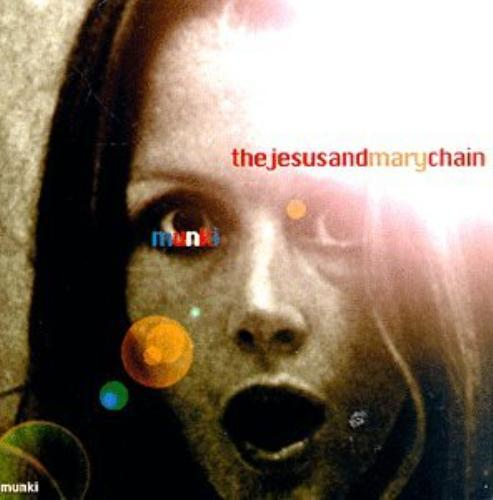
The Jesus and Mary Chain’s 1984 debut single, “Upside Down,” turned the UK indie scene upside down with its then-novel approach of taking a Phil Spector-eque pop song and wrapping it in pummeling noise and feedback. It also put Creation Records on the map, paving the way for House of Love, My Bloody Valentine, Ride and many more of the label’s most famous groups. JAMC made the leap to Warner Bros immediately after this single but Creation founder Alan McGee stayed the band’s manager, and JAMC quickly became alt-rock stars. By the late-’90s, though, Jim and William Reid felt chewed up and spit out by the music industry and weren’t getting along with each other so well, either. If Warner had lost interest in the band after five albums, McGee had not, and welcomed the Reids back to CreationRecords with open arms. Bookended by the supercatchy “I Love Rock N’ Roll” and tinnitus-inducing “I Hate Rock N‘ Roll,” the sprawling, 17-track “Munki” plays like a career retrospective, including buzzsaw pop, semi-acoustic numbers, duets with Hope Sandoval, and dissonant noise jams. Munki served as a great final word on the JAMC...till they reformed and made a new album 19 years later.
The Jesus and Mary Chain’s Sub Pop label debut, “Munki”, is schizophrenic and impassioned, a record that both summarizes the band’s career to date and cleans the slate for their future. Virtually each of the 17 tracks here echoes a prior moment in the Chain’s existence, moving at breakneck pace from the volcanic noise of their earliest material to the bleak grace of “Darklands”, through to the sleek, supercharged pop of “Automatic” . In a sense, it’s an ideal primer to the Reid brothers’ mercurial world, flirting with both brilliance and mediocrity; even after well over a decade, the Jesus and Mary Chain continue to thrill, irritate, and confound — they’re a true love/hate obsession.
This and the “Stoned and Dethroned” editions sound fabulous in their Demon incarnations. Definitely adds depth to the wonderful album that is “Munki”. (But you should also pick up the deluxe CD version from 2011 – The B-Sides are excellent.)
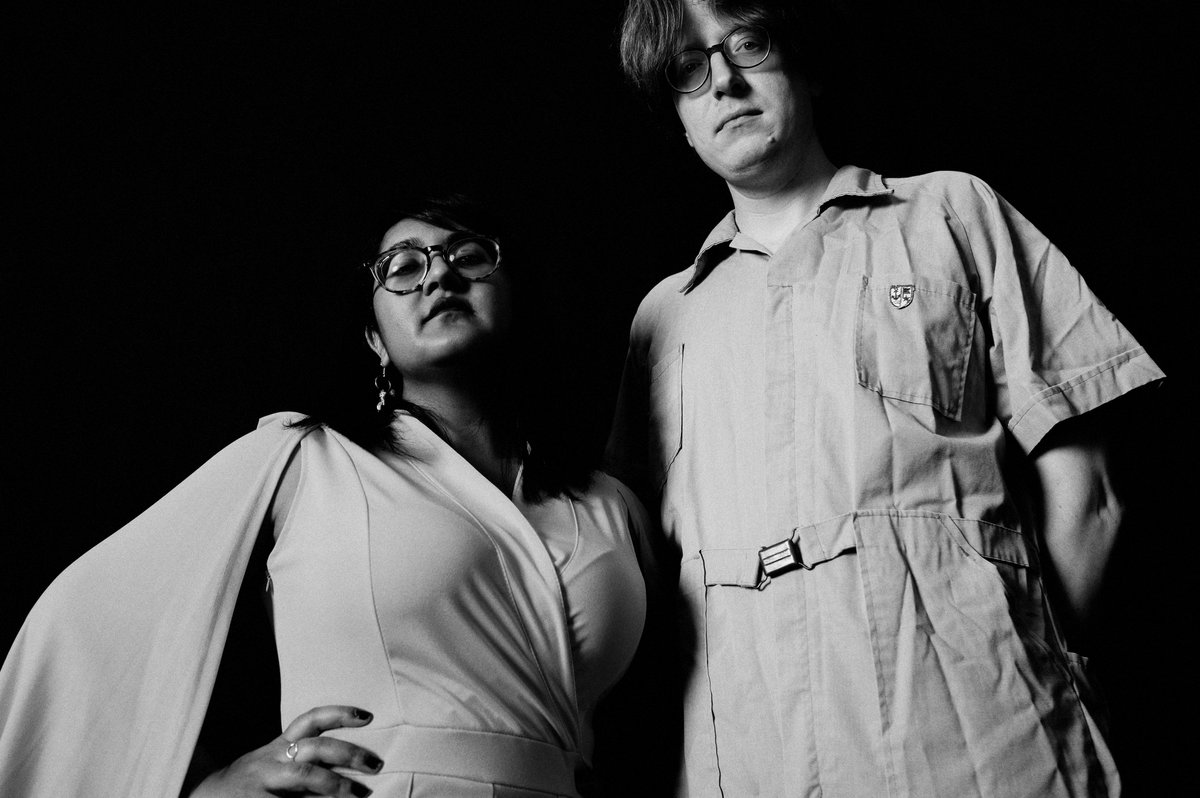
Sweeping Promises dropped out of nowhere the summer of 2020 with “Hunger for a Way Out”, one of the best debuts of the year, a record that found Lira Mondal and Caufield Schnu fully formed, compressing decades of post-punk, punk, riot girl, alt-rock, etc into punchy pop diamonds. The songs were purposefully lo-fi, had no room for solos or jams, only hooks, with Mondal belting out memorable chorus after memorable chorus. “Hunger” played, and still does, like a greatest hits album. Three years later, having relocated from Boston to Lawrence, KS and signed to Sub Pop everywhere except North America (they’re currently still on Feel It here), the duo are back with their follow up.
Signing to a Big Indie doesn’t seem to have changed Sweeping Promises one bit. “Good Living Is Coming For You” — is that title a warning, like “the call is coming from inside the house!” — sounds like it was recorded on cassette and redubbed a few times, with a hissy compressed sound that is clearly a stylistic choice and doesn’t detract from another wonderful batch of razor-sharp earworms.
The density of the hooks on these 10 songs, most under three minutes, is staggering, with basslines worthy of early Cure, slash-and-burn riffage, bleating sax, weirdo keyboards, drums that wallop without being showy, and Mondal’s voice which just seems to have gotten better over the last three years. Across punky burners “Eraser,” “You Shatter”, nervy skronk “Connoisseur of Salt,” and dancy new wave pop “Throw the Dice,”“Walk in Place”, Sweeping Promises deliver the goods with confidence and swagger. “Petit Four” is the whole album in a song: funky, anxious, angry, and fun, with Mondal delivering guttural screams and heavenly harmonies over a tight rhythm section groove and wonderful little guitar parts.
New single ‘Eraser’ out now. New album ‘Good Living Is Coming For You’ out June 30th via Feel It Records (North America) and Sub-Pop (Rest of World).
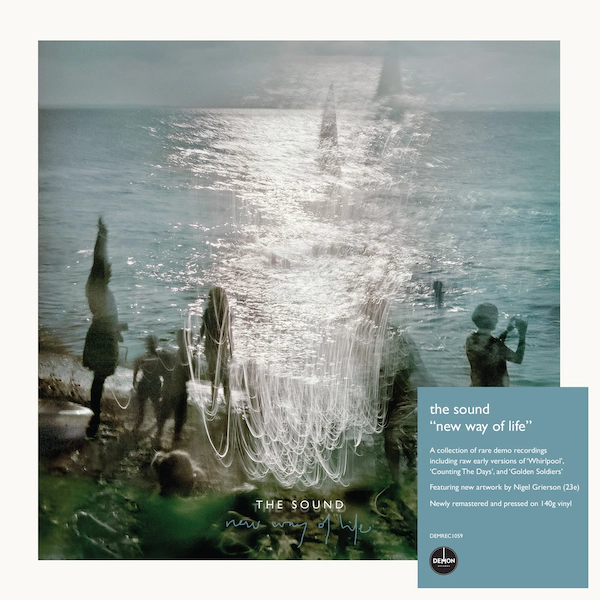
The Sound were an English post-punk band that formed in South London in 1979. The band was formed by lead vocalist, guitarist, and songwriter Adrian Borland, drummer Mike Dudley, bassist Graham Bailey, and keyboardist Benita “Bi” Marshall. The Sound became known for their introspective lyrics and soaring melodies, and their debut album “Jeopardy” was highly influential in the post-punk movement. Despite critical acclaim, the band never reached the same commercial heights as their peers and disbanded in 1988 but their music has maintained a cult following and is revered by post-punk and alternative music fans.
Demon Records is proud to present “New Way of Life” a new collection featuring The Sound’s ‘lost’ demo recordings, on vinyl for the first time. These recordings capture urgent, high energy versions of tracks from the Statik Records era including “Counting The Days”, “Whirlpool”, and “Love Is Not A Ghost”. Featuring new artwork from acclaimed photographer and filmmaker Nigel Grierson. Grierson previously worked on artwork for The Sound’s “Head And Hearts” album as part of legendary design duo 23 Envelope with Vaughan Oliver. Previously only available on CD as part of the 2015 Edsel boxset, these demo recordings have been newly remastered for this release by Phil Kinrade at AIR Mastering. Pressed on 140g vinyl, cut by Barry Grint at AIR Mastering.
Bolstered by the pandemic-era additions of bassist Nikki “Pickle” Smith and drummer Nick Aguilar, LosAngeles-by-way-of-Indiana rock outfit Frankie and the Witch Fingers come storming back on their new album, “Data Doom”, which will be released September 1st through the Reverberation Appreciation Society and Greenway Records.
The nine-track project was recorded at the band’s L.A. practice space and is led by the single “Mild Davis,” a fusion of grit-encrusted guitars and icy synths set to an odd 7/4 time signature. “That song pretty much sums up the energy of the entire record,” Aguilar has said. “That’s why we felt it would be the most appropriate one to be the lead single.” Adds vocalist/guitarist Dylan Sizemore, “It’s very different from anything we’ve done in the past. We wanted the first statement from the album to be something new and fresh.”
Since Sizemore and guitarist Josh Menashe formed Frankie and the Witch Fingers as a house party band in Bloomington, Ind., in 2013, the quartet has gradually become a heavy hitter in underground rock, punk, and psychedelic circles. The Los Angeles psych-punk quartet Frankie and the Witch Fingers have returned with their seventh studio album “Data Doom”, the band has shared album highlight “Mild Davis” with a mind-bending animated music video. Inspired by Miles Davis’ early-70s electric work, the track’s dizzying 7/4 meter winds through chunky riffs, commanding vocals and proggy synths before crash-landing in a minefield of angular guitar harmonies.
“Art is always a backlash to itself,” Smith says when asked if perhaps younger listeners may be gravitating back to rock’n’roll at a time when pop music feels more sleek and clean than ever. “Everything always goes in cycles, but I feel like people who come see our shows are rowdy as hell. They’re happy to be there. They’re really engaged in what’s happening, so I don’t think rock’n’roll has gone anywhere.”
“Data Doom”, finds Frankie and the Witch Fingers incorporating everything from conga-flecked Afrobeat (“Doom Boom”) to horn-fueled rave-ups (“Burn Me Down,” “Weird Dog”) and propulsive, Devo-style synth-rock (“Futurephobic”). Sizemore credits this newly eclectic sound to the arrival of Smith and Aguilar, two fellow music nerds who came to Frankie and the Witch Fingers from the bands DeathValley Girls and Mike Watt, respectively.
“We’ve got these hidden talents within the band, and we don’t always get to explore them,” Sizemore says. “Because we had so much time in the studio and we had these things lying around, it was really easy to be, like, oh, we need a texture here. Maybe try that? Or, bring in the congas today. It all felt very spontaneous but at the same time, it’s inside everyone to be able to do that.”
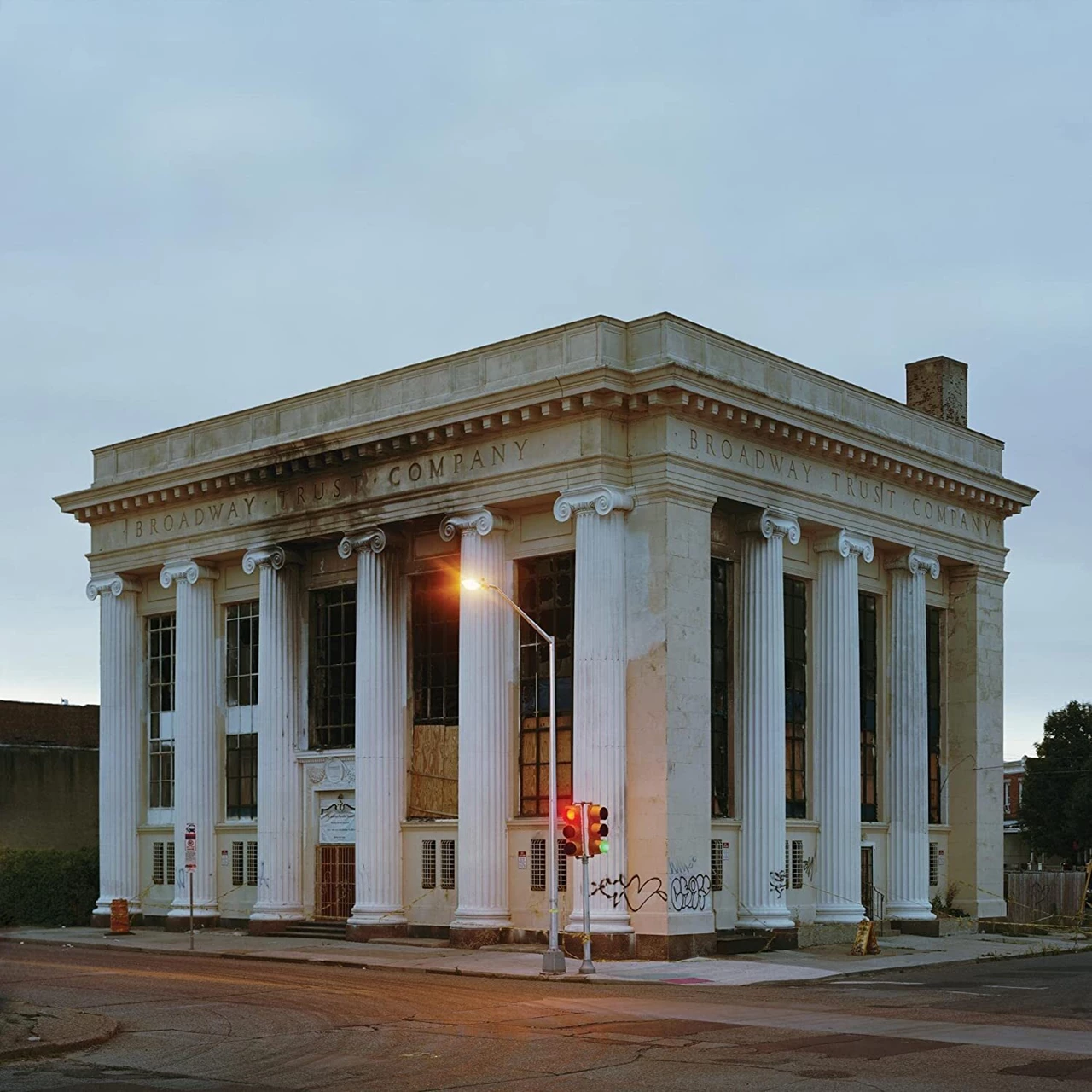
The album arrives as The Hold Steady mark the 20th anniversary of their foundation bringing new ideas, sounds, and textures to a still-evolving canon of nine studio album releases that began with 2004’s ‘Almost Killed Me’.
The ninth album from the Hold Steady, according to Craig Finn, features “some of the most cinematic songs” in their discography. Bonny Light Horseman’s Josh Kaufman is the producer of the new record, which arrives in time for the band’s 20th anniversary.
“The Price of Progress” is The Hold Steady’s most musically adventurous collection of songs so far, pairing singer Craig Finn’s vivid storytelling with arrangements that go in some unexpected directions. That’s not to say that Tad Kubler has forsaken guitar riffs: the lead single, “Sideways Skull,” is full of guitars that thrum like a glasspack muffler at a stoplight, while opening track “Grand Junction” unfolds over a loping, guttural guitar line, with punctuation from horns.
Elsewhere, though, things are pretty different—two songs even feature congas, a first for the band. Perhaps the biggest departure is “Understudies,” which offers a call-and-response between Kubler’s guitar and Franz Nicolay’s piano near the beginning before sashaying along on a beat rooted in disco, the same way that Pink Floyd’s “Another Brick in the Wall, Pt. 2,” has a disco edge.
“The Price of Progress” pushes its thunderous brand of punk, blues, and rock further than ever. It pays off with irresistible curveballs like “Understudies,” a song about showbiz with a funky, “Miss You”-style groove by guitar heroes Steve Selvidge and Tad Kubler. It all rolls straight into the sky on the undulant “Distortions of Faith,” about a pop star who takes a paid gig in a dictatorship and tries not to think too hard about it on the flight back. Indeed, no one writes like Craig Finn.
The riddles of faith and fragility that permeate classic early albums like“Separation Sunday” and “Boys and Girls in America” have metastasized into middle-aged malaise, where the passage of time hovers like a cruel joke. Finn fixates on people engaged in “facsimiles of fun”: married life (“Perdido”), Adderall-fueled hookups (“Sixers”), and adult softball leagues (“Carlos Is Crying”). “New medication for the same old depression,” as he puts it on “Sideways Skull.” It’s the one song here where Finn’s characters find joy, or something close to it. As the pyro-rocker protagonist laments, “It’s hard to fully rock in a halfway house.”
Finn’s lyrics are as evocative as ever, and though the characters in these songs have problems, they aren’t all as desperate or druggy as some of the ne’er-do-wells on previous Hold Steady albums. That he keeps finding new ways to sing thoughtfully about people facing challenges is a testament to his skill as a storyteller, and to his empathy as a narrator. The fact that Finn fronts a group of musicians who are as keen as he is to rethink and refine what they do seems almost too good to be true, and yet each album reaches a little further than the one before. “The Price of Progress” is progress indeed.
The new album “Price of Progress” came out March 31st, 2023
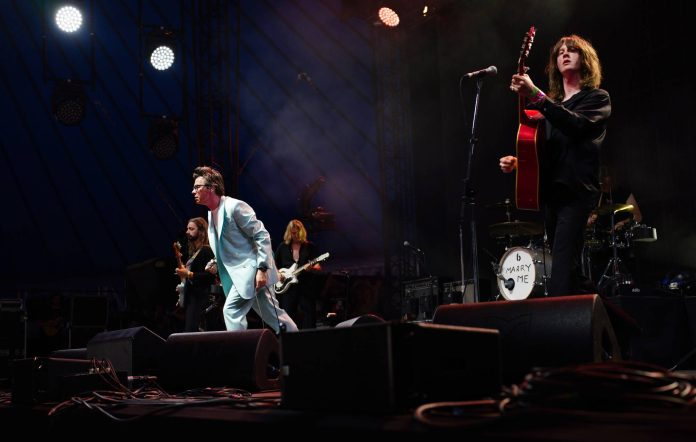
Fans have reacted to Blossoms and Rick Astley‘s suprise set at Glastonbury consisting solely of covers from The Smiths‘ discography. The musicians’ supergroup covers band played an hour-long set at the Woodsies Stage today (June 24th). Blossoms, dressed up in all-black outfits consisting of frilly shirts, black bellbottoms and impeccable hair were joined by Astley who sported a sharp pale blue suit.
The gang opened the set with ‘This Charming Man’, ‘What Difference Does It Make’ and ‘Big Mouth Strikes Again’. Both fans who were in attendance as well as those tuned in via the festival’s livestream took to social media to share their reactions to the set.
“I can’t tell you how much I love doing this,” Astley told NME of the covers band. “I know it’s sacrilege and they should hang the lot of us on the line for doing it, but I also just don’t care. I’m 57. I’ve talked it over with the guys from Blossoms many times and said, ‘If at any moment any of you decide that you don’t want to do this, just holler’. They’re in the middle of their career, four albums in. I’ve got nothing to lose. You can hang me, you can do whatever you want. It doesn’t matter.”
He continued: “I’ve had an unbelievable time in music and I’m ever so grateful for it. I’m aware of how fickle it is, how you can be totally out in the desert and no one will pick up the phone or let you in the building. It’s a delicate thing playing those songs because they mean so much to people.
Another fan shared: “Rick Astley & Blossoms are delivering a masterful set of Smiths songs. Phenomenal performance and the #Glastonbury crowd at Woodsies Stage are loving it.”
Setlist: Rick Astley with Blossoms, Glastonbury, UK — 6/24/23
1. “This Charming Man” 2. “What Difference Does It Make?” 3. “Bigmouth Strikes Again” 4. “Cemetry Gates” 5. “Ask” 6. “Hand in Glove” 7. “Some Girls Are Bigger Than Others” 8. “The Boy With the Thorn in His Side” 9. “Girlfriend in a Coma” 10. “Heaven Knows I’m Miserable Now” 11. “Panic” 12. “William, It Was Really Nothing” 13. “Barbarism Begins at Home” 14. “Please, Please, Please Let Me Get What I Want” 15. “How Soon Is Now?” 16. “There Is a Light That Never Goes Out”
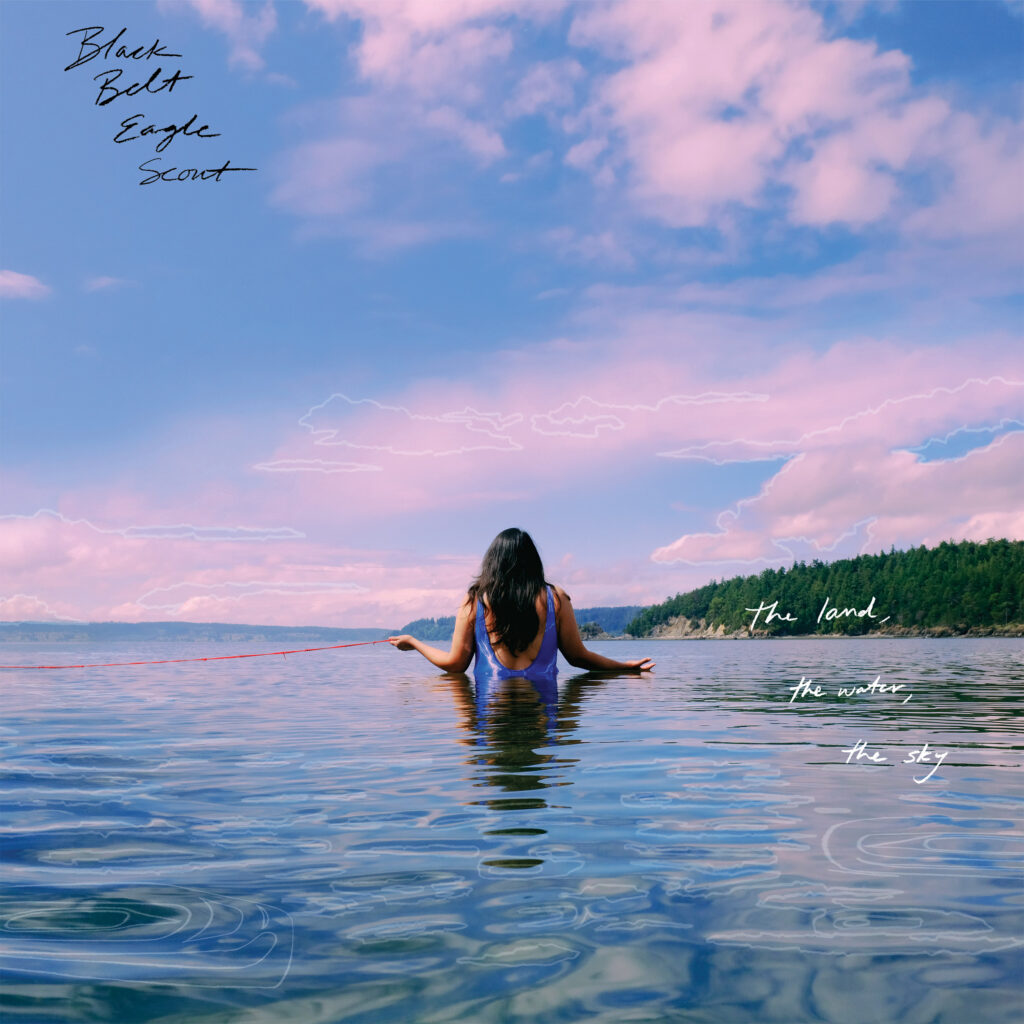
Katherine Paul, who performs as Black Belt Eagle Scout, cements her place as one of the most exciting young indie voices on “The Land, The Water, The Sky”. She honours her Swinomish roots with a stunning portrait of her native ancestry, capturing both the trauma and beauty of her Canadian homeland and the nearby Skagit River. Lush guitars, strings, and mellotron evoke the clashing serenity and tension on songs such as “On the River” and “Sedna,” while the connection to home is driven further by the presence of her parents’ voices on the penultimate track “Spaces,” with her father’s booming chant closing the song.
This land runs through Katherine Paul’s blood. And it called to her. In dreams she saw the river, her ancestors, and her home. When the land calls, you listen. And KP found herself far from her ancestral lands during a time of collective trauma, when the world was wounded and in need of healing. In 2020 she made the journey from Portland back to the Skagit River, back to the cedartrees that stand tall and shrouded in fog, back to the tide flats and the mountains, back to Swinomish.
It is a powerful thing to return to our ancestral lands and often times the journey is not easy. Like the salmon through the currents, like the tide as it crawls to shore this is a story of return. It is the call and response. It is the outstretched arms of the people who came before, welcoming her home. “The Land, The Water, The Sky” is a celebration of lineage and strength. Even in its deepest moments of loneliness and grief, of frustration over a world wrought with colonial violence and pain, the songs remind us that if we slow down, if we listen to the waves and the wind through the trees, we will remember to breathe.
Frank Zappa the enigmatic composer released somewhere around 60 albums in his lifetime. His first, the game-changing avant-rock experiment “Freak Out!”, came out in 1966, when he was 25. Twenty-seven years later, he died from prostate cancer only at the age 52.
That means he averaged roughly two projects a year during his recording era—an absurd figure on its own. But that’s not including the mind-boggling amount of posthumous releases—expanded box sets; grainy-sounding, glorified bootlegs; odds-and-sods rarity patchworks—carefully excavated from his vast vault in the decades since.
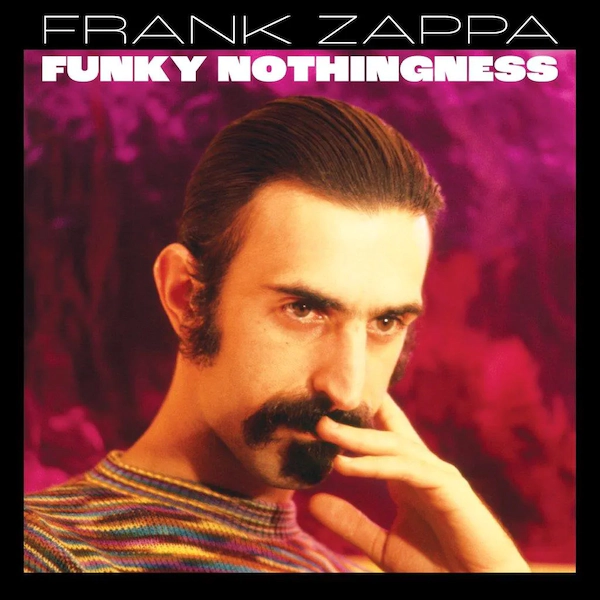
All of this archival material is fascinating for Frank Zappa-heads, and some of it approaches the realm of revelatory. And that high bar of quality proves, despite Zappa’s antsy shapeshifting and intimidating prolificacy, that his “official” catalogue only teased a fraction of the wild ideas jumping around his brain. The latest proof of this is “Funky Nothingness”, a 3-CD (or 2-LP) set presenting an alternate-universe Zappa path—a missing link between the fiery, fusion-meets-blues-rock swirl of “Hot Rats” and the freewheeling musical buffet of “Chunga’s Revenge”.
The tracks, most previously unreleased, were recorded in early 1970 at L.A.’s Record Plant, utilizing a tight crew of players: multi-instrumentalist Ian Underwood, singer-violinist Don “Sugarcane” Harris, bassist Max Bennett, and recently recruited drum virtuoso Aynsley Dunbar. (The one deviation is notable: The title cut, a pleasant but inessential blues throwaway, was tracked during a 1967 session for what became “Uncle Meat”.)
The chemistry between that group was intense—even their longest, most meandering jams are worth savouring for one reason or another. There’s a raunchy, 12-minute edition of Lightnin’ Slim’s blues piece “I’m a Rollin’ Stone,” later reshaped into the backing track for 1974’s “Stink-Foot,” is full of exquisite detail, including a Zappa guitar solo that crests into a hammer-on tornado. Equally revealing is the nine-minute “Basement Version” of “Chunga’s Revenge,” a starker and more psychedelic approach than the jazzy, skronky shape it later took. With Underwood’s glimmering electric piano and Dunbar’s supple, subtle drum groove, it suggests Pink Floyd with R&B/funk chops.
Admittedly, it’s harder to recommend the looser-than-loose “Basement Jam,” which rarely exceeds the low expectations of its afterthought title. (Zappa tosses off solid, if sorta entry-level, versions of his signature guitar moves, and the rhythm section just kinda bangs around.) But even within all this stretching out and searching, there’s a graspable sense of purpose: The widely bootlegged “Twinkle Tits,” for example, morphs from a buttoned-up, classical-styled waltz into a blues-rock workout with an onslaught of smoking solos.
With so many legacy-artist posthumous sets, it’s hard to avoid a certain level of brain mush. The final stretches often feel like pointlessly processed outtakes of alternate takes of fake takes of imaginary takes. It’s like extracurricular archaeology, and it’s often not very fun. But even when you’re working up a sweat with your shovel, “Funky Nothingness” rewards the strain.
This release is basically the follow up to “The Hot Rats Sessions”. Frank Zappa used a very stripped-down combo featuring Don “Surgarcane” Harris on violin and vocals. The music concentrates heavily on instrumental and blues-oriented material. This album consists of many unreleased tracks that Frank Zappa bypassed but kept his eye on during his career. He just never got around to releasing them. Some of the tracks were almost included on “The Lost Episodes” album. 90 minutes of music will be mixed for the first time. The remaining music was mixed and edited by Frank Zappa. The vinyl will only contain the tracks FZ edited and mixed.
Ian Shelton always gets right to the point. It’s what people like the most about him. He formed the band Militarie Gun during the pandemic, recording demos on his iPhone, and visiting his practice space every day. He treated it like a job, using his pandemic assistance like a label advance. But he wasn’t sure if anyone was going to care until they played their first show, a 2021 surprise set in a friend’s backyard in Los Angeles.
By then, the band’s EPs, 2020’s “My Life Is Over” and 2021’s two-part “All Roads Lead To The Gun” had been released and were catching on in hardcore and punk circles. These initial audiences, who’d been cooped up for the past year and needed a release, were eager to scream along with Shelton’s words back at him, starting with the opening song “Don’t Pick Up The Phone.”
“Specifically ‘I want money, I want love,’ was a thing that people sang along the hardest at the first show,” he remembers, quoting his song “Don’t Pick Up the Phone.” “And I was like, I can’t believe that such simple lyrics have captured people because obviously, it seems kind of silly or just overly simplistic, but this still catches you. It catches people and they love singing it back.”
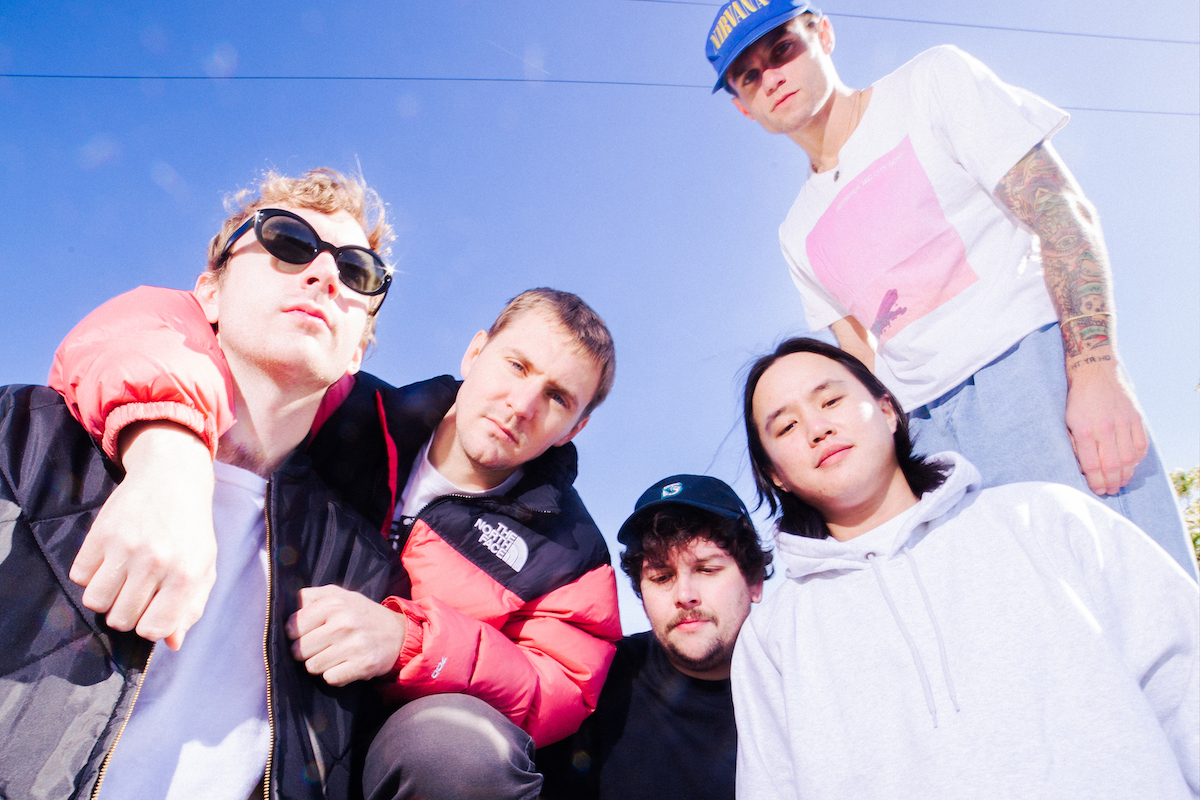
Militarie Gun traffic in songs that catch you the first time you hear them, and that don’t need more than two minutes to make an impact. Their new album, “Life Under the Gun”, has 12 of them in less than a half hour, each one telling you exactly what’s on Shelton’s mind. He can’t help being an open book, even if he sometimes worries about how he comes off.
“Very High,” is a hard-strummed pop-rock banger that sounds like if The Lemonheads got in the mosh-pit, It revolves around a brilliantly simple chorus: “I’ve been feeling pretty down/so I get/very high.”
“I just was honestly using a lot of drugs at the time, not in an especially bleak way, but around that time, there was nothing going on in life and I was really aiming for numbing my reality ’cause it was so painfully boring and slow and it was pandemic times and there just was nothing to be done,” he says, noting that he was enjoying and delivering legal weed at the time.
Versions of “Very High” have been around since the earliest days of Militarie Gun, Shelton says. “We were afraid of the song for a long time,” he says. “The lyrics are almost plainly stupid… But I prefer them that way and I was nervous about that simplicity and putting that out to people.”
Specifically, Shelton admits he was wary about the reaction from a lot of the “cool guys or people” that I would assume would have been the haters of the song have actually personally hit me to be like, ‘Oh this is a great song,’ or said something very positive about it.”
Militarie Gun is from the world of hardcore punk, sharing members with scene stalwarts such as Drug Church and Modern Color, and, by and large, mostly makes hardcore punk. “Very High,” isn’t technically all that hardcore on the surface, but that’s not much of a problem for the current wave of bands and fans redefining what the genre sounds and feels like these days.
“We just identify with the ethos and the DIY nature of hardcore,” he says, “which is also kind of laughable now, considering obviously we have a team of people surrounding us.”
Growing up in the Bay Area, Shelton was introduced to punk and hardcore at a young age, which made for a rude culture shock when his parents moved the family to Enumclaw, Wa., a small town mostly-known for a bizarre “horse sex case” that you’re better off not Googling.
He grew up the child of two “constantly relapsing alcoholics,” and didn’t meet his biological father until he was 12. A school counselor introduced him to the straight-edge scene, and he grew up attending Alateen meetings and attending his parents’ Alcoholics Anonymous meetings. He attended his first punk show, the arty-hardcore band Ceremony, at 15, and later moved to moved to Seattle and then L.A. He sang and drummed in the ultra-aggressive band Regional Justice Center, named for the institution in which his brother has been incarcerated for assault.
Regional Justice Center was preparing for shows when the pandemic hit, and then largely went inactive. (Though Shelton says there’s a finished album from the group that will one day get released.) He admits he has an addictive personality and a near-pathological need to make music. Shelton immediately began working on new songs during quarantine, something that combined the aggression and catharsis that drew him to hardcore, with the melody and songcraft he loved in decidedly non-hardcore bands like Guided by Voices and Pavement.
“My original intention was somewhere between Born Against and Greg Ginn’s guitar playing, and then eventually Modest Mouse kind of really entered the matrix heavily,” he says, “and that hodgepodge of things that I think that, specifically, probably a lot of hardcore kids either aren’t very interested in or talk shit on things like Modest Mouse. But I wasn’t thinking that way early on.”
By filtering hardcore energy through what could be considered the prism of Classic Alternative And Indie Rock, Militarie Gun, along with like-minded peers such as Scowl, High Vis and the now fully mainstream Turnstile helped to breathe life back into both genres, landing somewhere new in the process.
“I very vividly remember him sending me the demo for ‘Very High,’ right after he wrote it and I was just blown away by how overtly poppy it was while still very much feeling like an MG song,” remembers James Goodson. He is Militarie Gun’s former publicist, and like Shelton, the longtime punk underwent a spiritual rebirth in the pandemic, emerging with the tough power-pop outfit Dazy, who toured with Militarie Gun; the two even collaborated last year for the instant scene classic “Pressure Cooker.”
He remembers hearing songs from “Life Under the Gun” even in its nascent stages, as a sign that his friend wasn’t interested in being hemmed by anyone’s opinions about what is and what isn’t allowed in the subculture he’s found a home in.
“I think that was right around when the EPs were coming out, or maybe even before, so it was really impressive to see how he was already pushing their sound so early on,” he adds. “I’m always inspired by the way Ian will have a clear vision for something and will relentlessly chip away at it until he’s seen it through to the best of his ability.”
Shelton estimates that Militarie Gun, which also includes guitarists Nick Cogan and William Acuña, drummer Vince Nguyen, and bassist Max Epstein, played 90 shows as soon as touring become a feasible thing for bands, and then didn’t stop, all while obsessively writing and reworking the songs that would eventually constitute their debut album.
“Our first tour was 50 shows in like 50-plus days. And it was like every other day we listened to our demos of the album and it was just obsessing over what was going to be “Life Under the Gun,” he says, “and we went in with the sequence already figured out, we knew what it needed to be. And basically, those two years have just been trying our best to make way for whatever needed to happen now.
“Before we ever played a show, we had these songs demoed in full and so we knew that the reality would not catch up to what we believed ourselves to be for quite some time.” From early single “Ain’t No Flowers,” he’s deployed a recognizable, onomatopoeic “oof-oof” grunt that he often deploys to announce his presence, like a hardcore version of a sexy-sounding woman saying “Maybach Music.”
“I’m a big fan of hip-hop and the idea that you know who’s about to start singing before they start singing is a huge thing. It was really important to me and just I don’t ever want it to be confused with who’s singing.”
Shelton often brings up the idea of “incompetent hands.” He learned how to play guitar for Militarie Gun, but notes, “I definitely am getting a little more skilled, but the incompetent hands thing is the filter that makes the songs good I think. I don’t think anyone wants to hear virtuosic guitar playing in a Militarie Gun song. I certainly don’t think I do.
“So it’s about chasing the naivete of it, of not looking past simplicity to stay in somewhat of a youthful mindset for creating a song.”
But while he has a first-thought, best though, instinctual approach to songwriting, lyrically he knew he wanted to go deep for his debut. He knew he wanted to examine his upbringing, and how his parent’s substance abuse and perpetual poverty impacted him in ways he’s still coming to grips with.
“I can’t outrun these sets of topics and I really have to address them head-on. I don’t think it helps come to terms or rationalize or really do a ton internally, but I think what its biggest asset to me is just that it kind of puts all of it on the outside of myself so I could view it in a different way,” he says.
While demoing the album with co-producer Taylor Young, an engineer they were working with said “Man, all these songs are pretty fucking depressing. I don’t know if you’ve realized that.’ And I was like, ‘Oh, I guess I didn’t realize that ’cause at the same time I’m trying to make more or less a pop-rock record.’ And then you look at the body of work and that was actually when I realized that that was the theme of the record. I didn’t know that there was a theme and I kind of zoomed out and was like, ‘Oh, all these songs intersect with this one general concept.”
Ultimately, much of “Life Under the Gun” revolves around the idea that the only way to make peace with your past is to forgive and come to terms with your pain, a simple concept that is difficult for many people to accept.
“I think forgiveness is somewhat easy for me. I think that I’ve always been in the cycle of being apologized to. I think that there was this law of life of fuck up, forgive, fuck up, forgive. There was always kind of new amends being made because my mother was a constant relapsing alcoholic,” he says.
It was important to him to discuss forgiveness “because I felt like the culture at large was so unkind. And it didn’t make sense to me. You have to admit that you also fuck up. So it’s just silly, the concept that you don’t forgive others, but… would ever expect your own forgiveness?”.
“Life Under the Gun” will be released on Loma Vista, a prominent indie that is the home to St. Vincent and Ghost. Militarie Gun was the first hardcore act to get signed after Turnstile blew up after the breakthrough success of Glow On, and “Life Under the Gun” is a useful bellwether of just how big this scene can get, and whether hardcore is on its way to becoming a major new youth music, and whether Militare Gun and their upcoming tour mates Scowl are set to win the hearts of America’s teenagers.
“I’m loving the records that are coming out and seeing the success of our peers. These are all people I’ve been around for 10 years and to see everyone have the same passion level and the same drive this whole time and just finally getting on is incredible,” he says. “I think we’re at the point where just Turnstile is the next Foo Fighters, Red Hot Chili Peppers, that’s just this generation’s band.”
His friends in Turnstile have shown Shelton what level a hardcore band can rise to. Like them, he’s had a song in a Taco Bell commercial, because we all have to eat. Turnstile has been playing arenas since “Glow On” and will be a Riot Fest headliner in the fall. It’s a path that Shelton admits he wouldn’t mind following.
“As long as the music that we are making is genuine, I’m happy with whatever result,” he says. “So do I want a big reality in exchange for making music I’m not passionate about? No, not in any way. but if the songs that I like making do get success because they’re the songs I like making them, then of course I want that but I don’t want it at the expense of the creative.”
The Militarie Gun modus operandi is catchy and abrasive, and makes certain to never lose sight of either side; even the singles have rough edges that can’t be sanded off, and they continue to traffic in confrontational poses (album covers with pictures of burning RVs on them, merchandise that features drawings of police officers getting stabbed). He wants to reach people, and he wants to offer them the same outlet that once saved him. It’s why hardcore is having such a moment, and why he will be fine no matter what happens because he’ll always have a home there.
“I think people just want vulnerability, I think they want honesty. I love pop music, I love all sorts of things, but there’s not that honesty in every place. It is somewhat a difficult thing to come by,” he says. “And if there’s one thing that hardcore and punk music does offer, at its best, I think it offers emotional vulnerability and honesty.
“I was just an angry kid and I was looking for angry things. I wanted to scream. I’ve got problems. I’m a fucked up kid. It’s as simple as that and hopefully, we and our peers can provide that same catharsis to this next generation of people.”
Like the rest ot the world, Neil Young went into seclusion in 2020, looking for social distance and viral safety in the wilderness as the COVID-19 pandemic swept the planet. He kept in touch through streamed performances from his cabin hideaway, but the touring life of this essential classic rocker and folk singer was on indefinite hold, even as the music world came stumbling back to life. No one could say when – or if – he would return to the stage.
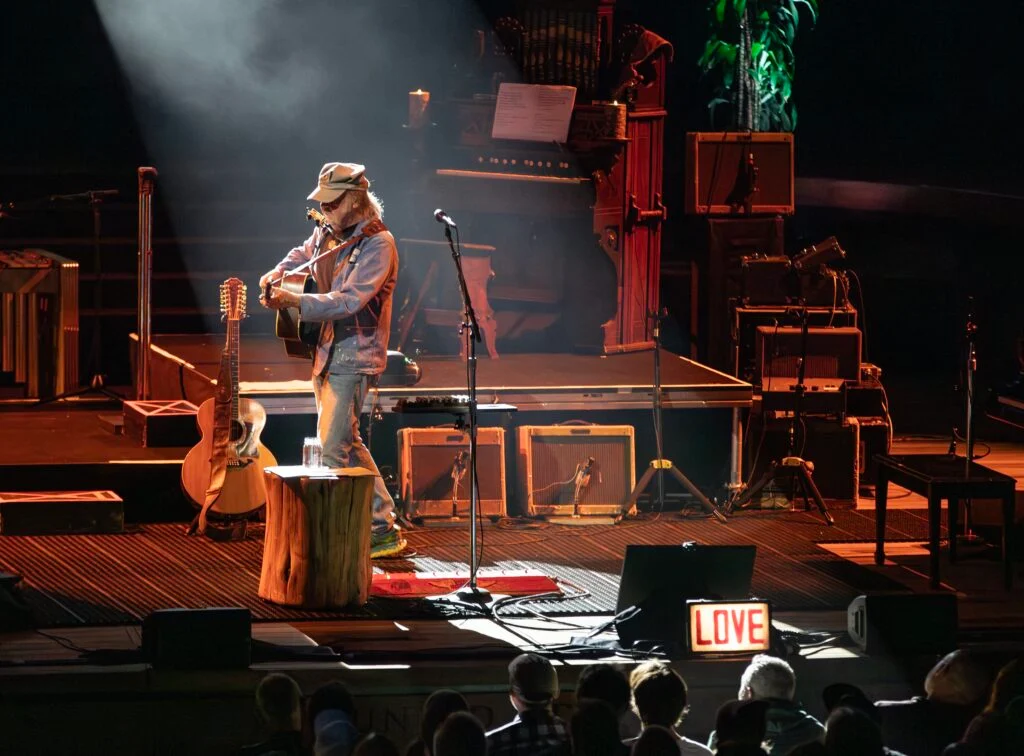
But last night (June 30th) in Los Angeles, Young ended his long hiatus, launching his first tour since 2019 with an intimate solo set loaded both with rarities and some of his biggest hits, including “Heart of Gold” and “Ohio.” For Neil Young and his fans, the obscure and the familiar have long carried equal weight. At 77 years old, Young just rolls onward with his music of deep feeling, and neither rust nor the accumulated years have done much to slow him down.
Young had previously explained that he wanted this solo acoustic tour to focus on songs he hasn’t played live. “I don’t want to come back and do the same songs again,” Young said [via Rolling Stone]. “I’ll feel like I was on some sort of carnival ride. I’d rather be doing these other songs I haven’t done. … They are songs that apply to my life right now and apply to everyone’s lives in this era that we’re in.”
For this first show, Young chose the 1,200-capacity Ford Theater, right across the canyon from the much larger Hollywood Bowl. He’s been playing arenas and big amphitheaters for 50 years and has rarely appeared at a small venue (like the beloved L.A. honky-tonk the Palomino back in 1984), so Friday’s 90-year-old theater location was a statement on starting things back at human scale. Young arrived dressed for the train-themed Coastal Tour in shades of faded blue and gray, spattered with white paint on his back, the brim of an engineer’s cap low over his forehead.
He began the night with a surprising choice, “I’m the Ocean,” a driving guitar epic from his 1995 “Mirror Ball” album with the rock band Pearl Jam. The song was a bristling highlight from that record, but Young hasn’t performed it live since 1997, The acoustic reinterpretation perhaps captured something of his current state of mind, with lyrics declaring, “People my age / they don’t do the things I do / they go somewhere / while I run away with you.”
Young also played “Song X” from that same album, this time on electric guitar, as he stomped on his effects pedals for a heavy and luxurious riff, fading out with a blast of reverb.
“A Dream That Can Last” was performed on upright piano, with Young’s imprecise playing only adding to the charm of its tumbling melody. “I’m so happy I was here before AI was here,” he joked. Following the bright and heavy tones of “Prime of Life,” Young ambled over to the grand piano for “When I Hold You in My Arms,” electric guitar still slung over his shoulder. An overlooked gem from 2002’s “Are You Passionate?”, and recorded originally with Booker T. & the MG’s, the song began with a cheerful piano melody before Young spun on his stool to solo on guitar for a gently searing blues line, tapping the heels of both feet to the rhythm as he played.
If Young’s performance at the Ford at times seemed made up as he went along, the outlines were meticulously planned and paced. Crew members quietly stepped on and off stage to hand Young a guitar or to switch out a piano bench with a stool, or occasionally add brief accompaniment on piano or tap a small xylophone. Behind him, a model train sat on a track, which Young was unable to get moving when he arrived — the one glitch of the evening.
The lights were kept low, and Young was an amusing host between songs, as he joked about finding his old pump organ decades earlier “in a junk store on Main Street in Memphis City” and paying just $800 to bring it home. “I’m a good shopper,” he said to laughs.
When he stood beside the organ and asked the crowd to choose between “Mother Earth” or “Mr. Soul,” many in the crowd predictably shouted for the latter, an early ripper from his days in Buffalo Springfield. That may have just been a tease, as Young was soon back at the organ playing the heavy, majestic chords of “Mother Earth,” a better and more soulful choice for the night.
After a raging “Ohio” on electric guitar came a poignant “Days That Used To Be,” which looked back on his generation of idealists and the compromises that followed the 1960s. Recorded originally with Crazy Horse in 1990, its message was more devastating as an acoustic ballad, as Young sang, “seems like such a simple thing to follow one’s own dream / but possessions and concession are not often what they seem … but we never had to make those deals / in the days that used to be.”
Another major theme of the night, and of his overall career, has been the defense of the environment. He began the encore by attempting to get the crowd to sing along to the anthemic “Love Earth,” scolding with a half-serious “You suck!” when fans fell short. Young closed with a wistful, emotional “Four Strong Winds,” a folk song originally recorded by the Canadian duo Ian and Sylvia before it appeared on his own 1978 album “Comes a Time”.
Neil Young said his goodbyes to a standing ovation from a crowd packed with fans, friends, and family. He began to leave, but before the lights went up, turned around and got back to centerstage in time to finish one more thing: finally getting that model train to run.
Neil Young June 30th, 2023 Set List 1. “I’m the Ocean” (From Mirror Ball, 1995) 2. “Homefires” (From Archives Vol. II, 2020) 3. “Burned” (From Buffalo Springfield, 1966) 4. “On the Way Home” (From Last Time Around, 1968) 5. “If You Got Love” 6. “My Heart” (From Sleeps With Angels, 1994) 7. “A Dream That Can Last” (From Sleeps With Angels, 1994) 8. “Song X” (From Mirror Ball, 1995) 9. “Prime of Life” (From Sleeps With Angels, 1994) 10. “When I Hold You in My Arms” (From Are You Passionate?, 2002) 11. “Mother Earth (Natural Anthem)” (From Ragged Glory, 1990) 12. “Ohio” (Crosby, Stills, Nash and Young single, 1970) 13. “Days That Used to Be” (From Ragged Glory, 1990) 14. “Don’t Forget Love” (From Barn, 2021) 15. “Heart of Gold” (From Harvest, 1972) 16. “Love Earth” (From World Record, 2022) 17. “Four Strong Winds” (Ian and Sylvia cover)