Thrilled to announce I will release my sixth studio album ‘Jonny’ Friday, October 13th.
On his latest album as The Drums, New York-based indie pop artist Jonny Pierce plunges into the work of healing from childhood trauma and the long shadow it casts over adulthood.
The sparkling, eponymous Jonny unfurls a love letter to a galaxy of younger selves, all hungry to be nourished, all rejoicing now that they finally get to belong. Playful, heartbreaking, raucous, and serene all in turn, Jonny embraces the mess of life in all its facets. It renders the magic that happens when you fall in love with yourself down to the marrow.
Soaring to alt-pop prestige on arrival, The Drums have released studio albums that deftly walk the line of aching melancholy and irresistible pop sensibilities, presented through a kaleidoscope of pastel guitars, reverb, modular synthesizers and drum machines. It’s a sound that’s wholly unique, and unmistakably The Drums.
16 songs birthed out of my deepest wounds and out of my wildest joys. When I listen back to it, I hear my soul reflected back at me. I think you’ll find yourself somewhere in it too. For today however, I offer you a brand new single from the album. Listen to “Better”
released July 12th, 2023
Written, performed, produced, engineered and mixed by Jonny Pierce All Instruments played by Jonny Pierce
A 5CD set containing remastered 84 tracks; 52 tracks are on CD for the first time of which 22 tracks are previously unreleased. Beautifully packaged in a high-quality clamshell box containing the 5 individual CDs in card wallet sleeves. Featuring expanded versions of the band’s first three albums plus two additional discs containing their first two EPs, tracks by Landscape III and a comprehensive selection of 7” edits, 12” extended versions, remixes, B-sides, instrumentals and live tracks. With a fully illustrated 52-page perfect bound book containing brand new sleevenotes, lyrics, biographies, archive photos, original artwork, press cuttings and more.
The set includes expanded versions of the band’s first three albums plus two additional discs containing their first two much-loved “Event Horizon” EPs, tracks by Landscape III and a comprehensive selection of 7″ edits, 12″ extended versions, remixes, B-sides, instrumentals and live tracks + a 2023 remix of top five hit ‘Einstein a Go-Go’
All tracks were mastered from high-resolution digitisations of the original analogue master tapes. The ‘previously released’ tracks from the analogue stereo two tracks, the ‘remixes’ and ‘instrumentals’ from digitisations of the original analogue multi-tracks, and the ‘live’ tracks were mastered from edited digitisations of the original analogue stereo live recordings. Released with the full involvement of all the original band members.
On 21st July we will release ‘Landscape A Go-Go: The Story Of Landscape 1977-83’, a 5CD collection of the seminal catalogue from the synth-pop pioneers who spearheaded a new electronic movement over four decades ago, best known for the groundbreaking singles ‘Einstein a Go-Go’ and ‘Norman Bates’.
‘Landscape A Go Go’ features expanded versions of the band’s first three albums (‘Landscape’, ‘From theTea-rooms of Mars …. to the Hell-holes of Uranus’, ‘Manhattan Boogie-Woogie’), plus two additional discs containing their much-loved “Event Horizon” EPs, tracks by Landscape III and a comprehensive selection of 7″ edits, 12″ extended versions, remixes, B-sides, instrumentals, and live tracks, alongside a new, 2023 remix of top five hit ‘Einstein A Go-Go’.
Notable highlights include the electro-pop brilliance of Landscape’s first vocal release ‘European Man’ (with both the 7″ and 12″ versions available for the first time ever on CD) – presciently catalogued ‘EDM 1’ for Electronic Dance Music – which dealt with the impact of computers on society and universal basic income, alongside the previously unreleased tracks ‘(I’d Love to) Fly Away’ and ‘When the Chips Are Down’, recorded at the start of the ‘Tea-rooms’ sessions. In addition, this exhaustive collection also includes a fully illustrated 52-page booklet containing brand new sleeve notes, lyrics, biographies, archive photos, original artwork, press cuttings and more.
“The Wreck Of The Edmund Fitzgerald” was on the original “Black Album” release. ‘Alien’ AND ‘Untitled 1’ are from these sessions. Think of this as a companion record to the “Black Album”.
“What will theDandys do next,” you ask? Well, we’ve got some shows lined up for this October with The Black Angels we know you’ll flip over.
Courtney Taylor-Taylor Peter Holmström Zia McCabe Brent DeBoer
Last month, L.A. psychedelic rockers Frankie and the Witch Fingers returned with a new single called “Mild Davis,” which continued the punky retro haze the group has come to be known for within a community of like-minded artists in their Southern Californian garage-rock scene. Yet “Futurephobic,” the follow-up single from their forthcoming record “Data Doom”,feels much more in line with the album title’s vintage dystopian sci-fi connotations, swapping weed-smoke riffs for frigid new wave pulses and staccato vocal deliveries.
“The main riff was an idea we came up with during the writing process for our album “Monsters Eating People Eating Monsters”…but we kept it in our back pockets, as it wasn’t quite fitting in with the theme of that album,” the band shares. “When we started writing “Data Doom“, it re-emerged very organically and everyone latched onto the idea surprisingly fast and ran with it. We expanded on the main riff and came up with the other parts and overall arrangement while writing with our new lineup in our studio in LA. The whole process went surprisingly smoothly.
We added backing vocals and overdubs while on tour last year in Europe, doing all the passes to complete the song from various apart-hotels, attics in France and Amsterdam.”
Although the recording process was smooth, the recording’s post-punky flow is anything but. To match the song’s ’80s B-movie aesthetic is a video that leans into that decade’s sci-fi/horror imagery, wherein Ronald McDonald does a pretty bad job of selling the viewer his product.
The Los Angeles psych-punks’ new LP “Data Doom” lands September 1st via Greenway Records and The Reverberation Appreciation Society.
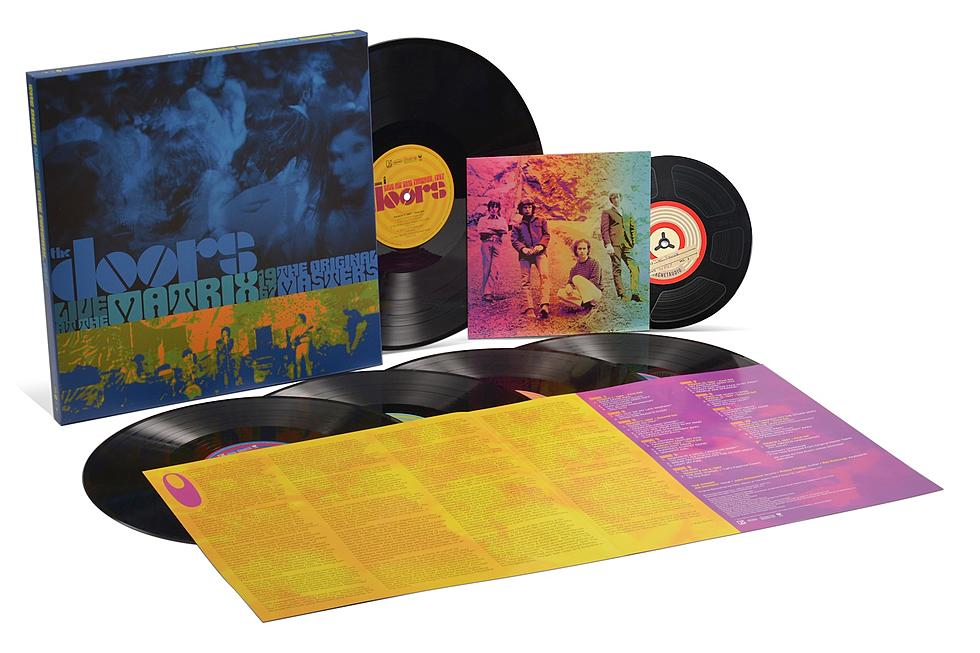
A new box set from the Doors titled “Live at the Matrix 1967: The Original Masters” will arrive on September. 8th, showcasing the group’s live prowess as they were on the cusp of stardom. The Doors were a few months away from stardom in March 1967 when they played five sparsely attended shows at a small club in San Francisco called The Matrix.
The collection will be available on a three-CD and five-LP configurations, limited to 21,000 and 14,000 copies, respectively. Bootlegs of The Matrix shows have circulated among fans for years and were popular despite the poor audio quality of most copies. The sound began improving in 1997 when the first two songs from The Matrix shows were officially released on The Doors: Box Set. Even more performances followed in 2008 on “Live at the Matrix 1967” regrettably, it was discovered soon after that all the recordings were sourced from third-generation tapes, not the originals.
“Live at the Matrix 1967” is culled from five shows that the Doors played in March of that year at the Matrix, a San Francisco pizza parlor-turned-nightclub co-owned by Peter Abram and Jefferson Airplane founder Marty Balin. The performances have circulated as bootlegs for years, and the songs on the upcoming box set have been sourced entirely from Abram’s original master recordings and remastered by the Doors’ longtime engineer and mixer Bruce Botnick.
The vinyl version of Live at the Matrix 1967 contains all 37 songs performed across the five shows. A March 7th rendition of the jazz instrumental “Bag’s Groove” is exclusive to the vinyl set and comes on a 7″ single — one of two never-before-heard recordings along with “All Blues.”
The “Live at the Matrix 1967” performances took place just two months after the Doors released their eponymous debut album and six weeks before the single release of “Light My Fire,” which catapulted to the top of the charts in the summer of 1967. “We were on the lip of great success, and we didn’t know it,” drummer John Densmore said of the landmark recordings.
The Doors ‘Live at the Matrix 1967’ Box Set Arriving in September
Cheerbleederz are Kathryn, Phoebe and Sophie, three pals from London. They formed the band through a mutual appreciation for their other projects and the desire to write music in a collaborative, and unselfconscious space.
Already boasting a fine pedigree of lo-fi underground hits between their individual members’ various bands (Fresh, ME REX, and Happy Accidents), with their new project the trio have hit upon an instantly infectious brand of no-frills, melody-driven punk. Taking influence from the likes of The Breeders, Snail Mail, Hop Along, Alvvays, Charly Bliss and Cayetana, their songs touch thoughtfully on the lived experiences of women and marginalised people
It’s here! The magnificore DIY trio of true punks Cheerbleederz have finally unleashed their new album ‘Even In Jest’ to the world. Oh world, YOU. ARE. WELCOME!
There are wonderful words fizzing all about the internet, but these ones from Punktastic are very pleasant and will get you right to the point if you’ve not heard these chums before.
“Sitting about halfway between the bright pop sound of The Big Moon and the more DIY punk of bands like Martha, it feels friendly and accessible but with an edge. At times…wonderfully noisy including angular guitar tones…you can’t escape this being an intensely likeable record.”
London-based ‘indie-supergroup’ SUEP announce their long-awaited debut mini-album “Shop”, a collection of six oddball, car-boot-sale pop songs with a sprinkling of theatrical storytelling. Led by Georgie Stott (of Porridge Radio, Garden Centre) and Josh Harvey, SUEP was born out of a near-decade of playing in sheds and barns with like minded personnel, holding a mutual love for Paul McCartney, Jona Lewie, the B-52s, Devo and other performative freaks enjoying themselves.
Following a move to London from Brighton, the pair added George Nicholls (The GN Band, Joanna Gruesome, The Tubs), Will William Deacon (PC World, Garden Centre), and Ollie Chapman (Boil King) to the line-up. The five-piece take turns writing songs and taking the lead vocal duties in a wonderfully playful but coherent collaboration, with their debut mini-album “Shop” being a kaleidoscopic off kilter pop ride, taking the listener through haunted castles, deprived encounters, days lost to the imagination in bed, and through the integral friendships that give SUEP the energy to keep dancing to their own beat.
The album was arranged and recorded in the Red Lion Boys Club, an ex-youth centre in which Georgie and Josh both lived. Using equipment collected by Josh in his travels as a bootsale and market trader, the sports hall was transformed into a makeshift studio for a few days, with sessions conducted by producer Matthew Green (Sniffany & The Nits, The Tubs, etc.)
Mark Riley (BBC 6 Music) described SUEP’s debut single and album opener, ‘Domesticated Dream’ (2021) as “perfect pop music.”
The joyfully kitsch track brims with a 70s Yamaha disco beat, deep bass, nostalgic drum machines, and hooky melodies. Possibly the most psychedelic and infectious track born out of lockdown, it tackles homelife, drinking too much, and making big plans that never come to fruition, but with a big technicoloured positivity for the future of the human-race, with the chorus’ refrain, “the psychedelic 4000s,” predicting the return of the psychedelic Age of Aquarius in a couple of millennia time.
The following single ‘Misery’ (2021) is pure cosmic swing-pop wizardry in part inspired by spy music and The Supremes. Ollie, The track’s baritone vocalist, describes it as “A love song disguised as a song about loss. It’s about cherishing the things that matter but it’s also about having the courage to say goodbye,” with each line of the song a small story about a different character.
Whilst latest “Shop” taster ‘In Good Health’ is darkly euphoric like a pleasantly strange meeting of Siouxsie Sioux and Jona Lewie. It’s a playfully discombobulating mix of 80s jangly guitar, chirpy keyboard and moody post-punk tackling mental health, drug addiction, and the power of friendship, written after the song’s vocalist Georgie came out of hospital following a mental health crisis. “I wanted to write a song that encapsulated how important my relationships with my friends and boyfriend were at that time” she explains “…and one that also felt dark like I did at the time. I couldn’t go outside due to anxiety surrounding my health so I stayed inside for weeks.
People would visit and watch films with me or let me tattoo them or make music with me. My community helped me recover.” Elsewhere on “Shop” is ‘Just The Job’ fronted by Harvey and described by him as “About the relief of accepting a menial existence, and allowing life to be boring – but (within that) how the small things are the important ones, how pulling a sicky or extra long lunch break are important things to do for yourself, and how easy it is to miss the joy of every day once you get comfortable in a routine.” It’s an anthem for working people who’ve had enough – and a crowd favourite at SUEP gigs.
The darker undertones and post-punk angles of the Georgie-fronted ‘Onions’ is inspired by the crapness of cliques, with the band calling the song “A cry of welcome to all;” and finally the hooky ‘Friend of Mine,’ described as “A love letter to all the people that come and go throughout your life no matter how long you know them” – another number recalling Jona Lewie, mixed with a little sprinkling of Jonathan Richman in Harvey’s vocal delivery.
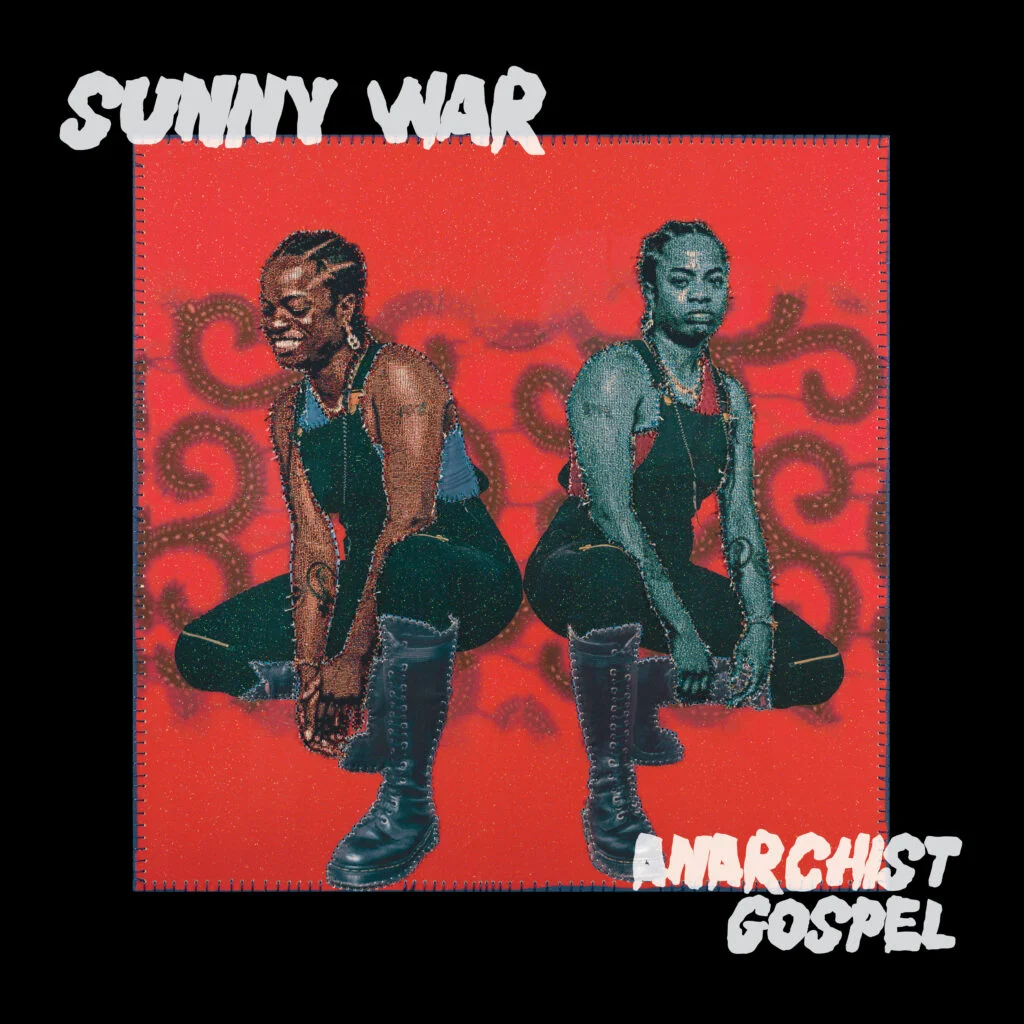
Having gone from high school acoustic DIY punk to homeless Venice boardwalk busker to acclaimed folk/blues-rooted singer/songwriter, Sunny War flings poison-tipped arrows on her startlingly personal new album — many pointing right at her, some already having found flesh. Largely written in her LosAngeles apartment with the lights off and empty bottles surrounding her after a breakup, the songs grapple with depression, addiction, and love’s death, yet are inviting in their darkness. The tone is set with opener “Love’s Death Bed,” its gloom floating on cascades of deft fingerpicking and spirited, gospel-like call-and-response with a chorus including guest Allison Russell.
The mix of frank emotions and engaging tones continues throughout, from spritely group sings to muted solitary contemplation. There’s fire too: a cover of Ween’s “Baby Bitch” features a children’s chorus (in truth, three adult men with voices sped up, Chipmunks-style) singing “Fuck you, you stinking asshole.
“I feel like there are two sides of me,” says the now Nashville-based singer-songwriter and guitar virtuoso known as Sunny War. “One of them is very self-destructive, and the other is trying to work with that other half to keep things balanced.” That’s the central conflict on her fourth album, the eclectic and innovative “Anarchist Gospel”, which documents a time when it looked like the self-destructive side might win out.
Extreme emotions can make that battle all the more perilous, yet from such trials Sunny has crafted a set of songs that draw on a range of ideas and styles, as though she’s marshaling all her forces to get her ideas across: ecstatic gospel, dusty country blues, thoughtful folk, rip-roaring rock and roll, even avant garde studio experiments. She melds them together into a powerful statement of survival, revealing a probing songwriter who indulges no comforting platitudes and a highly innovative guitarist who deploys spidery riffs throughout every song.
Because it promises not healing but resilience and perseverance, because it doesn’t take shit for granted, “Anarchist Gospel” holds up under such intense emotional pressure, acknowledging the pain of living while searching for something that lies just beyond ourselves, some sense of balance between the bad and the good.
The Rolling Stones didn’t end up touring the U.S. in the immediate wake of the April 1976 release of “Black and Blue”. However, the band still managed to cause controversy in the States, thanks to the album’s ad campaign and a Sunset Boulevard billboard promoting the record. The ad featured model Anita Russell sitting atop an unfolded copy of the “Black and Blue” LP. She’s bound with rope and wearing dark makeup, to make it look like she was bruised by a beating. The giant billboard was even more controversial, as it contained the same image of Russell and the LP, but added the text, “I’m ‘Black and Blue’ from the Rolling Stones – and I love it!” in giant script. Reaction to both the ad and billboard was fierce. “This campaign exploits and sensationalizes violence against a woman for the purpose of increased record sales. The ad contributes to the myth that women like to be beaten and condones a permissive attitude towards the brutalization of women.” Five stealth women “armed with buckets of fire-engine-red paint” visited the billboard one night and triumphantly defaced it, scrawling “This is a crime against women” near the text and also painting over Jagger’s face, the stealth artists also painted the “women’s movement symbol” next to the Stones’ iconic tongue logo.
Atlantic Records took down the billboard soon after, “It was not the intention of Atlantic, Mick [Jagger] or the Rolling Stones to offend anyone.”
The Rolling Stones recorded “Black and Blue” while auditioning Mick Taylor’s replacement, so it’s unfair to criticize it, really, for being longer on grooves and jams than songs, especially since that’s what’s good about it. Yes, there are two songs that are undeniable highlights “Memory Motel” and “Fool to Cry,” the album’s two ballads and, therefore, the two that had to be written and arranged, not knocked out in the studio; they’re also the ones that don’t quite make as much sense, though they still work in the context of the record. As the Stones work Ron Wood into their fabric. And the remarkable thing is, apart from “Hand of Fate” and “Crazy Mama,”. They play with reggae extensively, funk and disco less so, making both sound like integral parts of the Stones’ lifeblood.
Rolling Stone magazine wrote at the time: “In a way, “Black and Blue” is an admirable album just for its refusal to bow to the past. A few songs here try to sound like “Brown Sugar” and “Tumbling Dice” and those few aren’t the best ones. Still, the Stones have problems. Keith Richard recently has seemed to run out of melodic ideas altogether and, like the majority of their post-Exile onMain Street repertoire, the new numbers are based on loose riffs rather than tight song structures. Like the Who or any rock band, the Stones are obsessed in their way with age and time, but unlike the rest, they’ve matured with confident gracefulness. For Soul Survivors, I guess, dying before you get old is simply not relevant.”
The band that made “Black and Blue” isn’t the same one that made “12 x 5” or even “Aftermath”. But that doesn’t mean today’s Stones are not a great band playing great music. They’re a different sort of band, playing a different kind of music. Too much of “Black and Blue” picks up the trail of “Fingerprint File.” “Hot Stuff,” which opens side one, and “Hey Negrita,” which opens side two, are intricate funk jams, fusing reggae, Latin rhythms and the Meters’ brand of funk without achieving the focused mood of “Fingerprint File.” Some of the playing is exceptional — on “Hot Stuff,” Charlie Watts might be playing .44 magnums instead of drums.
There is plenty of good stuff left, although all of it is marred by the need for fuller, firmer instrumentation. “Hand of Fate,” which isn’t as melodic as the Stones riff usually is, is brought to life by a blistering WaynePerkins guitar solo and Jagger’s incredibly live vocal. “Crazy Mama,” the wild little rocker that closes the set, is hot stuff. It sounds as out of control as the Faces, although Wood doesn’t play on it. (He’s “in the band,” but he only plays on two songs.) The lyrics are marvelous: “‘Cause if you really think you can push it/I’m gonna bust your knees with a bullet.” Those two are the only hard rockers on the album, and the only time Jagger pulls the standard macho-demonic act, too.
Since the “Memory Motel” was the only place in the area with a pool table and a piano, The Stones would occasionally come by and hang out at the bar. The owners at the time were not impressed…they hated The Stones. The Memory Motel is in Montauk on Long Island. It’s near The Church Estate, which Andy Warhol bought in 1972. Arthur Schneider, who owns the Memory Motel, said that The Stones stayed at Warhol’s estate when they were on tour in 1975-’76.
“Memory Motel,” a sort of return to “Moonlight Mile,” the stops are all pulled out. Once more, Watts propels the tune with his drumming. The story begins when Mick meets a girl before last summer’s tour. (The real memory motel is near the house in Montauk, Long Island, where the band rehearsed.) But it soon becomes entangled with his recollections of the tour.
But “Memory Motel” is more than just a vignette or two. In the end, it becomes the perfect agony-of-the-road song, for it dwells not just on the difficulties of touring, but also on the ultimate joys: As Watts moves in like a locomotive, pushing the song upward, Jagger explains in one brief flash what it’s worth to him, what keeps him coming back for more: “What’s all this laughter on the 22nd floor?/It’s just some friends of mine/And they’re bustin’ down the door!” There’s no way to capture the exhilaration he expresses as his pals roust him from his reverie, lifting him away from his cares. For that one moment, at least, Jagger feels his music as deeply as he ever has. Jagger’s voice swooping and snaking around Preston’s piano and harmonies. If “Black and Blue” leaves us nothing else, it is the knowledge that Jagger has become a total pro in a way that, of rock’s great white vocalists, only Rod Stewart and Van Morrison can match. With Mick Taylor gone, The Stones were auditioning lead guitarists while recording “Black And Blue”. Harvey Mandel from Canned Heat played lead on this while session man Wayne Perkins played acoustic, but Ron Wood eventually got the job.
It has a haunting melody and lyrics that stick with you. Some say the Hannah in the song is referring to Carly Simon and some say it’s Annie Leibovitz. Whoever the muse was, they inspired a beautiful song.
It’s widely speculated that “Hannah Honey” with the curled nose is none other than Carly Simon. Jagger had been romantically linked to Carly around this time, and her physical traits are eerily similar to the song’s descriptions. One theory is that Simon wrote “You’re So Vain” after a one-night-stand with Jagger at The Memory Motel. Simon has never said who that song is about.
Mick Jagger and Keith Richards duet on vocals. Richards did not play guitar on the track – a rarity. Jagger played the acoustic piano, Richards the electric piano, and Billy Preston the synthesizer.
On their live album version “No Security“, Dave Matthews duets with Jagger in place of Richards. Matthews joined The Stones onstage from time to time and also sang this with Jagger on a televised St. Louis concert in 1997
The Rolling Stones
Mick Jagger – lead vocals (all tracks), backing vocals (1, 3, 4), percussion (1), piano (4), electric piano (7), electric guitar (8)
Keith Richards – electric guitar (all but 4), backing vocals (1-5, 8), electric piano (4), bass guitar (8), piano (8), co-lead vocals (4)
Bill Wyman – bass guitar (all but 8), percussion (1)
Charlie Watts – drums (all tracks), percussion (1)
Additional personnel
Billy Preston – piano (1, 2, 5, 6, 8), organ (5, 6), synthesizer (4), percussion (6), backing vocals (1, 4, 5, 6)
Nicky Hopkins – piano (7), synthesizer (7), organ (3)
Harvey Mandel – electric guitar (1, 4)
Wayne Perkins – electric guitar (2, 7), acoustic guitar (4)
Ronnie Wood – electric guitar (3, 5, 8), backing vocals (1, 2, 4, 5, 8),
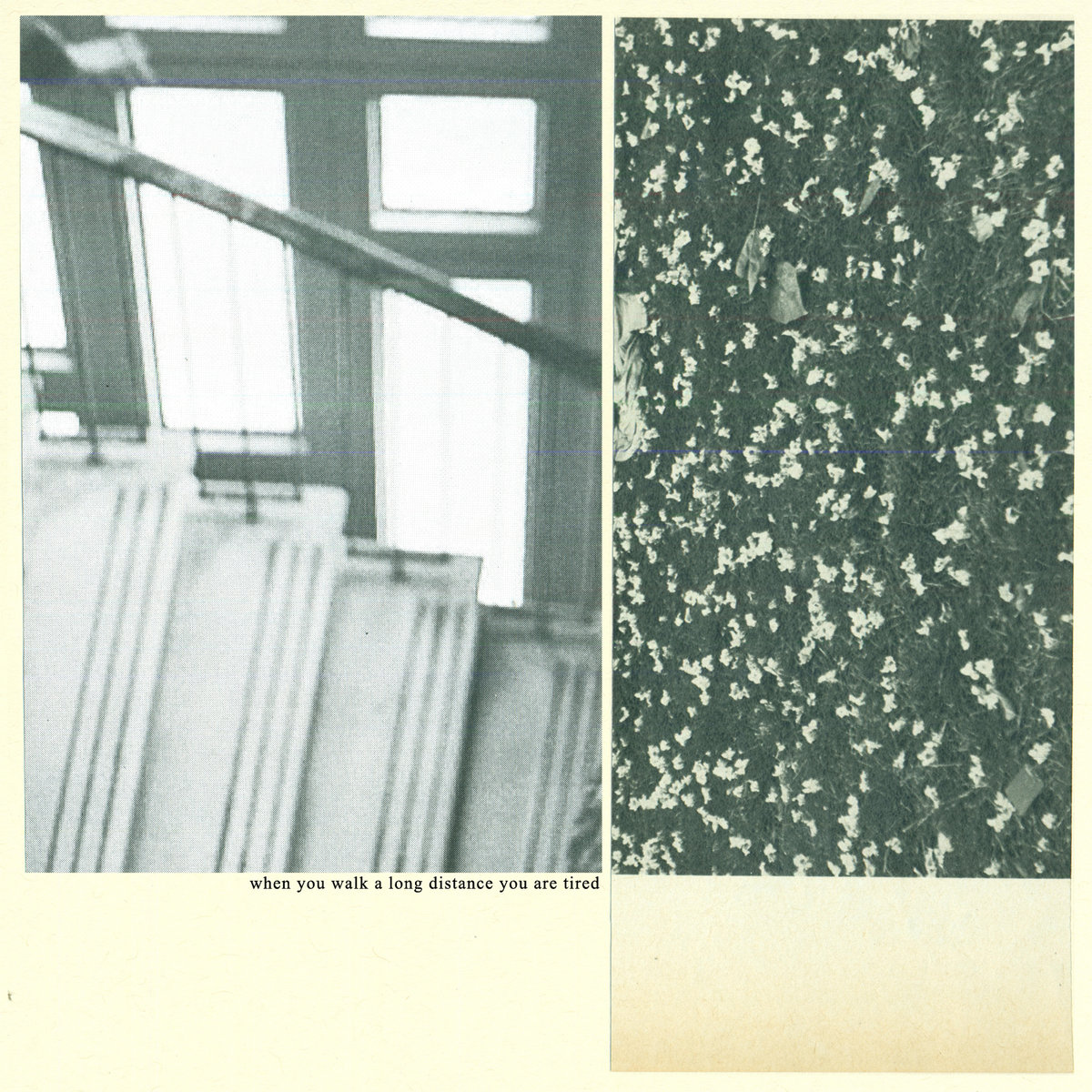
Mothers was an American band from Athens, Georgia, composed of Kristine Leschper, Matthew Anderegg, Chris Taylor, and Garrett Burke. They released only two albums before disbanding their debut “When You Walk a Long Distance You Are Tired”, released on Wichita Recordings in England to a lot of good press attention in February 2016. Their second follow up titled “Render Another Ugly Method”, was released in September 2018 on ANTI- Records.
Mothers were originally formed in 2013 as the solo project of musician Kristine Leschper. Leschper started making music while she was a student studying printmaking at the Lamar Dodd School of Art. Over the next year, Leschper began to gather a large following alongside acclaim in the Georgia music scene. Leschper decided to recruit other musicians from Athens to form a full band.
Mothers garnered what Leschper considers a “small but devoted” following, some of whom were resistant to her decision to expand the project into a full-fledged band. One of those fans was Mothers’ eventual drummer, Matthew Anderegg, who befriended Leschper through the intimate Athens music scene. Both Leschper and Anderegg describe it as an everyone-knows-everyone kind of place; a city with a small-town feel. But Athens has a long, storied presence on the national radar as a place deeply grounded in the arts, and especially in music. That makes it a hard place to escape, and though Mothers intended on staying their Leschper expects to move on in the somewhat foreseeable future. “It’s so wonderfully cheap to live here,” Leschper says when I ask her to describe exactly what attracted her to the city in the first place. Sometime after they met, he invited Leschper to record in his home and the two started to add to her arrangements, eventually incorporating Anderegg’s drums and eventually inviting guitarist Drew Kirby in to work out the rest.
In November 2015, When the bands debut single “No Crying In Baseball” was released, Leschper said that it was a song about being willfully vulnerable, about showing your offender where it hurts without resorting to hysterics, about realizing that weaknesses can be shouted and celebrated and owned without embarrassment. It’s crafted like an argument, albeit an internal one, and its declarative, abrasive, unrestrained delivery introduced us to Leschper’s powerful presence and the heart she wears on a tattered sleeve.
Leschper developed new confidence in the months after recording her debut full-length, and the band began to pursue a more dissonant sound. Just two weeks after that first show, Kirby, Anderegg and Leschper booked time at Chase Park Transduction and started recording material for their debut album, “When You Walk a Long Distance You Are Tired”.
Explaining why she felt the album needed to be recorded so quickly, Leschper says, “It was important for me to make that record when we did for my mental health. I was struggling a lot personally, and those songs were all written when I was going to art school and trying to figure my shit out. I was trying to figure out what kind of person I was and what I wanted to put out into the world. It sort of feels like documentation of this time in my life.”
“When You Walk a Long Distance You Are Tired”
The initial 14 tracks for the album—the final release was pared down to eight—were recorded in just two weeks. Though their time in the studio was short, the members of Mothers all considered it to be a profound experience.
“It was a really, really intense process,” says Anderegg. “I think everyone was kind of freaking out the whole time. It was brutal. It was a very serious session for a very serious record. It’s not a lighthearted record at all. It’s the kind of record that requires prior commitment to some extent, in the sense that you have to be willing to dive in and take your time with it.”
Comprised mostly of Leschper’s previous solo material reworked and re-recorded live with a band, “Tired’s” push-and-pull between quieter moments and raucous guitar-and-drum breaks is a living document of Mothers’ slow and fruitful transition into a more collaborative project.
For lack of a better phrase, started blowing the fuck up. Features from The Fader, Brooklyn Magazine, Stereogum and Paste started hyping the band as “the next big thing,” and shout-outs from NPR and Spotify pushed the streams of their singles to well over 1 million plays—all before the release of that first album. At the time “Tired” was one of the most consistent and exciting records to emerge from the Athens music scene in at least a decade. It’s as emotional, beautiful and human as the band itself. On a local level, some already view Mothers as hometown heroes, and praise from national publications is just beginning.
Render Another Ugly Method
Mothers scored one of the best albums of 2016 with their full-length debut, “When You Walk A Long Distance You Are Tired”. The follow-up LP, “Render Another Ugly Method” through ANTI- Records, the effort spans a total of 11 tracks and features production from Grammy-winner John Congleton (St. Vincent, The War on Drugs). “The first time I heard Mothers I knew it was a band that I wanted to work with,” Congleton shared in a press statement. “So special and idiosyncratic, it is impossible to ignore their point of view. I loved making the record and seeing them work.”
The first single released is “Blame Kit”, which frames “the body as an object that can be expanded or collapsed, inhabited or deserted,”
“Pink” is the second track to come from the album, after “Blame Kit”.
““Pink” deals with the passage of time,” explains Mothers lead singer and songwriter Kristine Leschper. “It describes a series of memories within cars – cars of my childhood, recent past, and present – and subsequent feelings of childlike removal and helplessness. The video aims to reciprocate these three vignettes of idling, through limited actions and minimalist set design divided into three parts.”
Mothers attempt to exist in two places at once – both singular and collaborative, sprawling and concise, present and distant. Kristine Leschper, songwriter and founding member of the project, explains that it is in the space between opposites that she finds herself. The multifaceted is, by nature, fragmented – each facet reflecting a slightly different perspective of the whole. It is in this way that their latest record, “Render Another Ugly Method”, attempts to gain an expanded view of its surroundings through splintered sound, thought, and image. By conversing with her own experiences of attempting to validate herself through work, Leschper moves toward understanding the harmful and often indulgent nature of inextricably coupling the quality of your creative output to your right to exist.