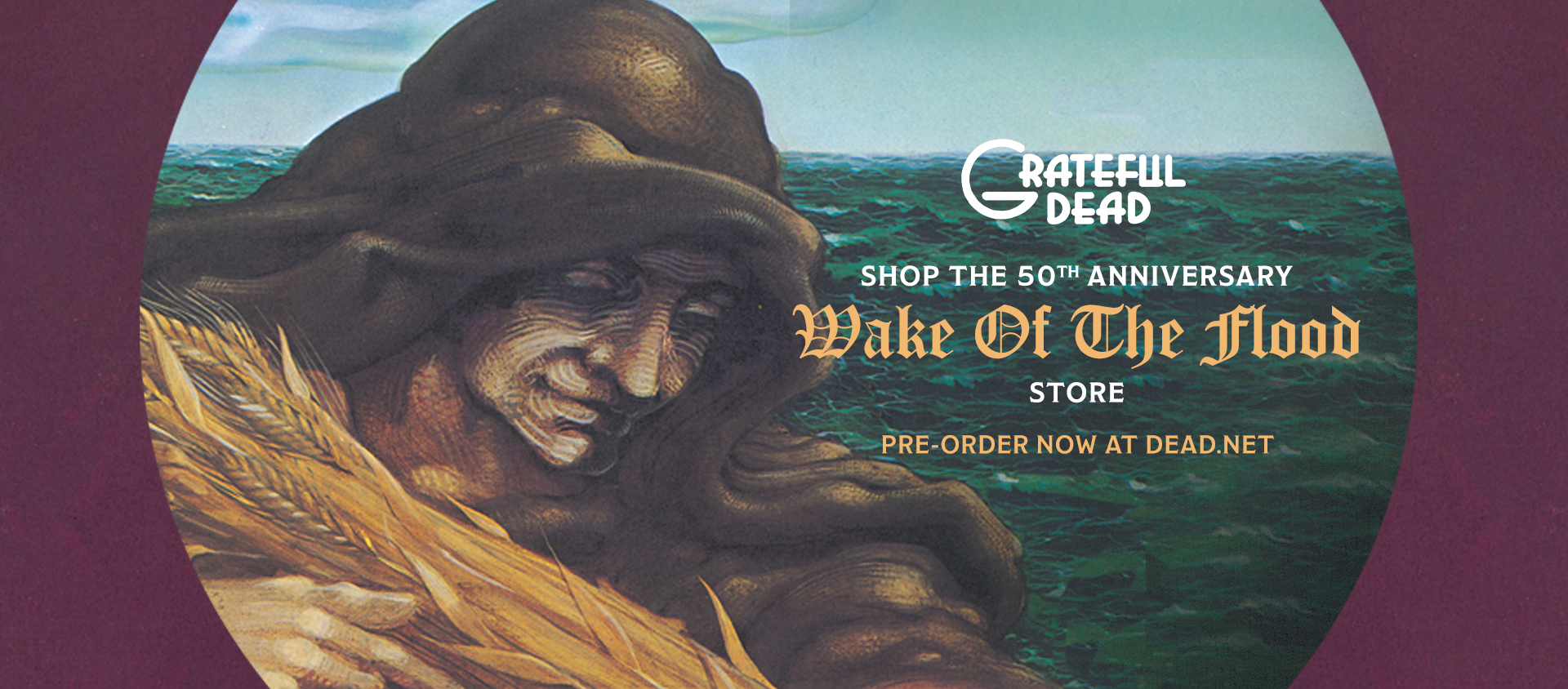
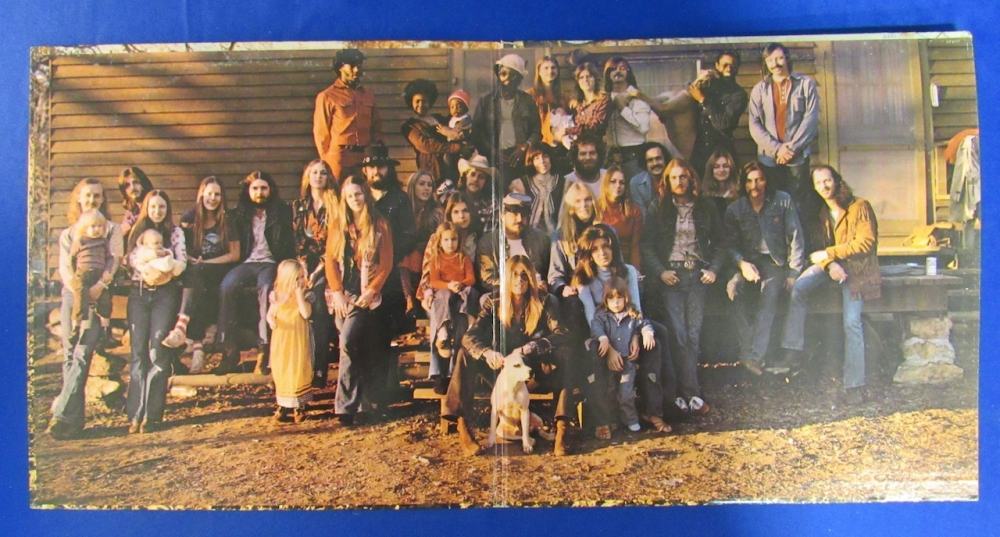
The Grateful Dead has announced a 50th-anniversary release of their 1973 album “Wake of theFlood” featuring previously unheard material. As the debut album from their own record label, Grateful Dead Records, “Wake Of The Flood” marked a period of transition, growth, endurance and optimism for the band. While songs like “Eyes Of The World,” “Stella Blue,” and “Mississippi Half-Step Uptown Toodeloo” were largely road-tested for more than half a year beforehand, and have remained staples of live sets by any number of Dead-related bands ever since, the album and record label delivered both a profound artistic statement and proof of concept for the community, ideals and future the band were building.
“Wake of the Flood – 50th Anniversary Deluxe Edition” will be released September 29th. The collection, will be available as two-CD or digital sets, will include re-mastered versions of the album’s seven original songs, along with previously unreleased demo recordings of “Eyes of the World” and “Here Comes Sunshine” that were recorded in early 1973.
Originally released on October 1973, “Wake of the Flood” was recorded following the death of GratefulDead founding member Ron “Pigpen” McKernan. It was the first album released on the band’s record label and represented an evolution in their style. The Dead brought a wide variety of influences to the table on the LP, including country, folk, R&B, jazz and rock.
The second disc is made up of live material recorded on November 1st, 1973, at Northwestern University’sMcGaw Memorial Hall. The set opens with “Weather Report Suite” and closes with “Mississippi Half-Step.” In between, it features one of the group’s trademark jams, made up of “Morning Dew,” ”Playing in the Band” (twice) and ”Uncle John’s Band.”
“Here Comes Sunshine 1973”, “Dave’s Picks Vols. 45-48”, and Bob Weir “Ace” They were not only one of the most well-documented live acts in history, but quite active in the studio as well, and that means that Dead Heads can always expect plenty of goodies from their vaults. This year’s bounty included an expanded look at their sixth studio LP, 1973’s “Wake of The Flood; Here Comes Sunshine 1973“, a 17-CD anthology of complete shows from their spring tour of that year; four new volumes in the ongoing “Dave’sPicks” series, all featuring classic ’70s concerts; and finally, a reissue of Bob Weir’s debut solo album, “Ace”, which was actually a thinly disguised Dead album.
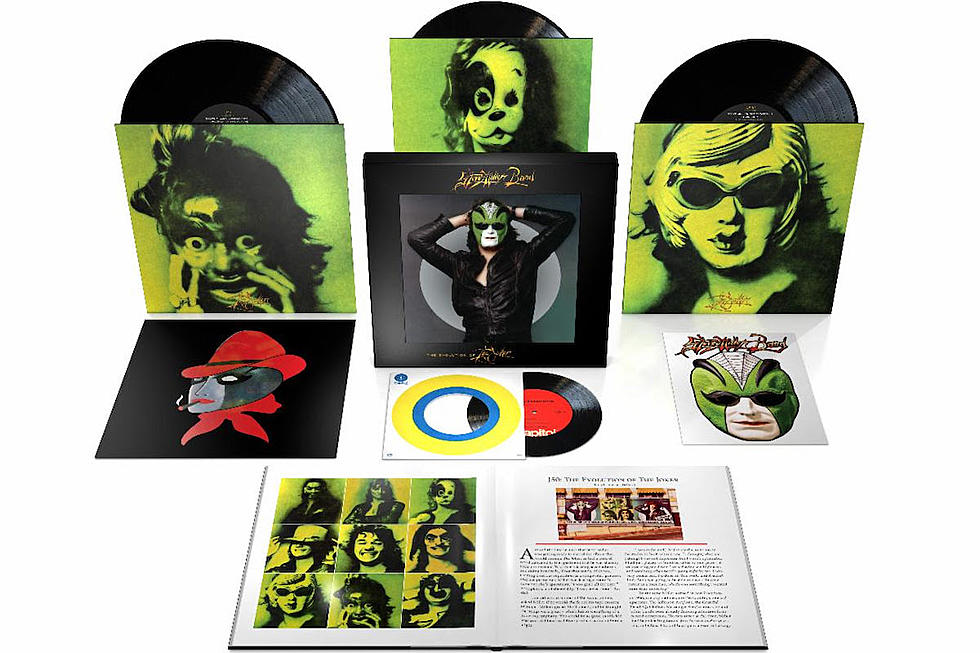
Steve Miller Band will commemorate the 50th anniversary of his classic album “The Joker” with the “J50: The Evolution of The Joker” box set, which arrives on Sept. 15.
“J50” will be available in two-CD, three-LP (plus bonus 7″) and digital formats. Miller is previewing the collection with “The Joker Suite,” which showcases his musical journey to the album’s chart-topping title track and includes the previously unreleased songs “Lidi” and “Travelin’.”
Miller curated the “J50” box set, which chronologically places the original album alongside 27 previously unreleased recordings, including songwriting tapes made in hotel rooms and at live performances, studio outtakes and rehearsals and audio commentary tracks. It also features exclusive liner notes from Miller and music journalist Anthony DeCurtis.
“The most important rule that every kid out there who wants to make a record should remember is: When you go into the studio, be ready to do the whole performance the first time you do it because that’s going to be the best time you do it,” Miller noted in a press release announcing the set. “The whole thing is to capture the first performance. That’s a lot of what “The Joker’s” about. It was all first takes, and first takes are always better than perfect takes.”
Reflecting on the star-making title track, Miller said, “To make a hit record, I thought it was best to have five hooks. Not one, not two, not three, not four, but five, if you really wanted to deliver a hit. Like if you take ‘The Joker.’ ‘Some people call me the Space Cowboy.’ What the hell was that? Then it continues and it gets your attention again: the slide guitar, the chorus, the harmony, the wolf whistle. It all adds up. All of these things are just elements of writing. You learn those elements, and you’re always playing with them.”
Steve Miller is honouring the 50th anniversary of the chart-topping, RIAA Platinum-certified studio album “‘J50: The Evolution of The Joker’ arrives everywhere September 15th, and available to listen to today is “The Joker Suite,” a collection that shows the development of album’s title track over four songs: “Lidi – Studio,” “Lidi / Travelin’ (Harmonics – Looking for A Chorus For The Joker),” “Travelin’ (Looking for A Chorus For The Joker)” & “The Joker – Album Version.”
“Love of Will” is the only solo studio album by David McComb, released in March 1994. The album was recorded and mixed between June and August 1993, at Platinum Studios with additional mixing at Metropolis and Sing Sing Studios. McComb selected 13 songs out of a pile of 35 and recorded them at Platinum Studios, Melbourne with producer Nick Mainsbridge,
He also said, “I wanted to be certain that every song was right. I’m not obsessed with longevity, but a song has to last a few years. There’s no point doing something that’ll only last a few months. The criterion is for the songs to be as powerful as they can be.”
Triffids drummer Alsy MacDonald said, “I think those songs were specifically designed to be recorded not by the Triffids. And Dave was less worried about atmospherics it’s a rootsier album.” “Evil” Graham Lee added, “the songs that the Triffids could have done, we wouldn’t have played like that. It’s a straightforward band record.
Videos were made for the singles from the album, “Setting You Free” and “Clear Out My Mind”.
In 1994, David McComb, the leading light of Australian band The Triffids, released his only solo album, ‘Love Of Will’. He drew on members of Nick Cave and The Bad Seeds and The Blackeyed Susans as well as members of The Triffids for backing support, notably Graham ‘Evil’ Lee. The result is a collection that sounds partly different from the Triffids catalogue, while retaining the unmistakeable McComb touch. Sharing some songwriting with Will Akers lent a gospel flavour to tunes such as ‘Nothing Good’, ‘Leaning’ and the haunting ‘The Lord Burns Every Clue’, and two other songs are collaborations with Graham Lee and Adam Peters. Easily overlooked if you are a fan of The Triffids’ records, but well worth exploring as a complement to those musical gems.
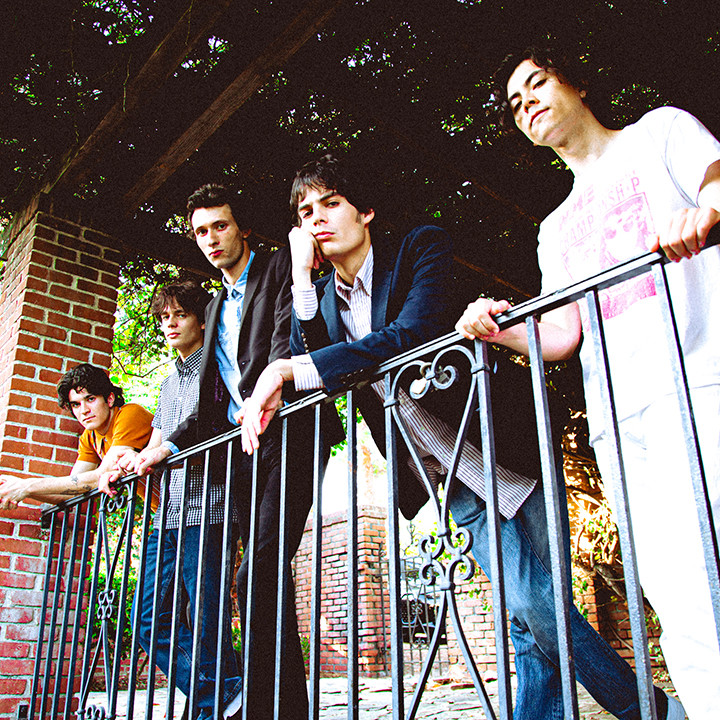
If “Not Giving Up” by Pleasure Pill sounds more refined than most bands’ third songs, there’s a good reason for that. Even if they’re technically “new,” the San Diego quintet has been around the local and regional punk and indie scene for a decade at this point all in different bands.
Lead singer Jonah Paz put the group together after cutting his teeth with DIY bands, bringing in his brother and rhythm guitarist, Ethan Paz, longtime friends Luke Blake (lead guitar) and Ivan Delgado (bass), and Dom Friedly on drums. The outcome was a cleaner, catchier, and more professional group than anything that any of them had ever played on before — and thus with a ceiling that they hadn’t even dreamed of.
“The transition into a band for us was pretty smooth, because we all knew the way things work in a band,” Paz says. “I had a good chunk of the songs ready before we were even a band. I think we all just realized that the songs were of a different caliber than the other stuff that we’d been a part of, so why not give it the attention that it needs?”
“We really put our heart and soul into rehearsing these songs, so I’m super psyched about how they’ve come out,” Blake adds. “I think it’s the moment in our music careers that we’re all most proud of and feel the most confident about, just because we know how good it is. We’ve all been playing music for over 10 years in many bands, but this is definitely the thing we’re most excited about.”
Pleasure Pill is equal parts timeless pop and modern rock, that grew up on ‘90s and 2000s punk and indie, tracks like “Not Giving Up” could be played opening stadiums just as easily as they could fill the air of a sweaty smaller venue packed with crowd surfers.
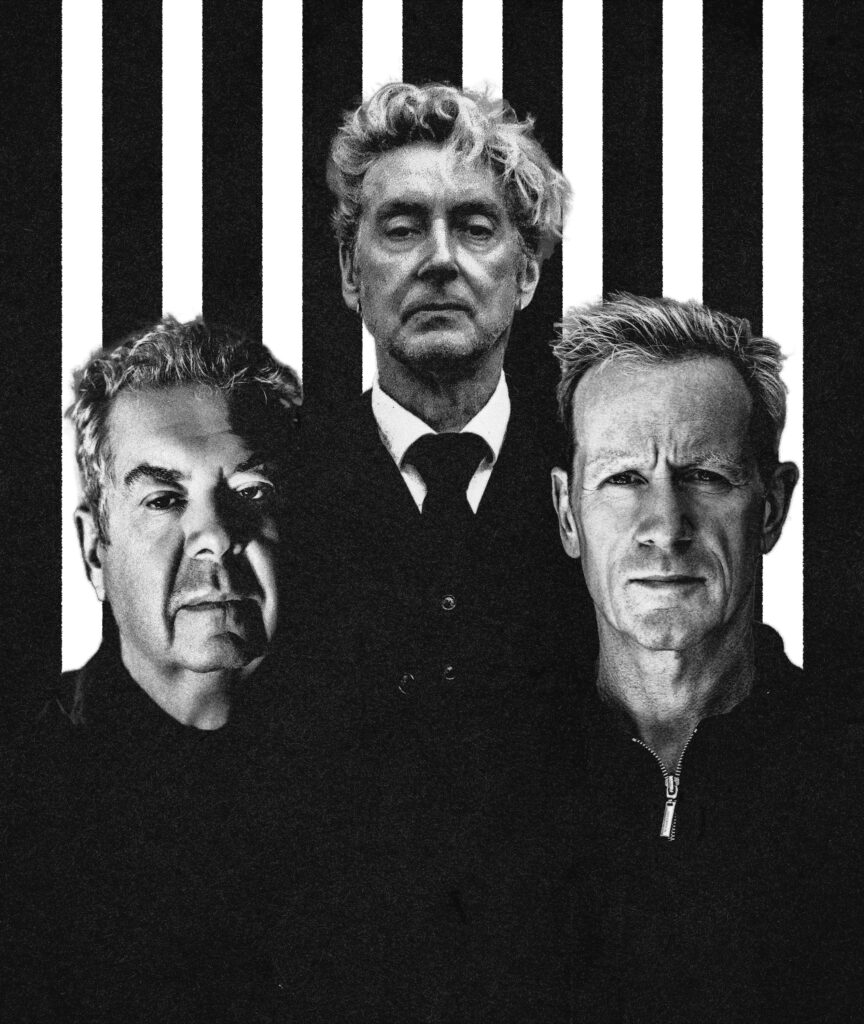
The Cure drummer Lol Tolhurst, Siouxsie & the Banshees drummer Budgie, and veteran producer Garret“Jacknife” Lee have teamed for “Los Angeles”, their debut album under their own names. Due out November 3rd from Play It Again Sam, the 13-track effort sports guest appearances from U2’s the Edge,Modest Mouse’s Isaac Brock, Primal Scream’s Bobby Gillespie, and IDLES’ Mark Bowen, among many others.
The first single and title track is enlivened with vocals from LCD Soundsystem’sJames Murphy and is out with a video directed by John Liwag.
Longtime friends from their days in the legendary U.K. post-punk and goth scene and the co-hosts of the Curious Creatures podcast, Tolhurst and Budgie hatched the idea to make music together after a December 2018 meeting in Los Angeles. After two sessions a few months later, including one at the house of Motley Crue’s Tommy Lee, they sought out assistance from Lee, who advised them to start all over. “Lol is very leveling,” Budgie says. “He calls himself a pragmatist, whereas I’m very impetuous, and it was like Garret was bridging the two, in his consultation room.”
What began taking shape as an instrumental record navigated another new twist at the outset of the COVID-19 pandemic in early 2020, when Tolhurst reached out to Murphy about potentially adding some vocals. He then put out feelers to other singing friends, resulting in eventual contributions from Gillespie, Brock, and Lonnie Holley, among others.
The trio is hoping to perform some live shows in some fashion in the future, and Tolhurst is also releasing his second book, “GOTH: A History”, in September. The volume is said to explore “creative giants like the Cure, Siouxsie & the Banshees, Bauhaus, Joy Division, and many more great bands that offered a place of refuge for the misfits of the 80s and ever since.”
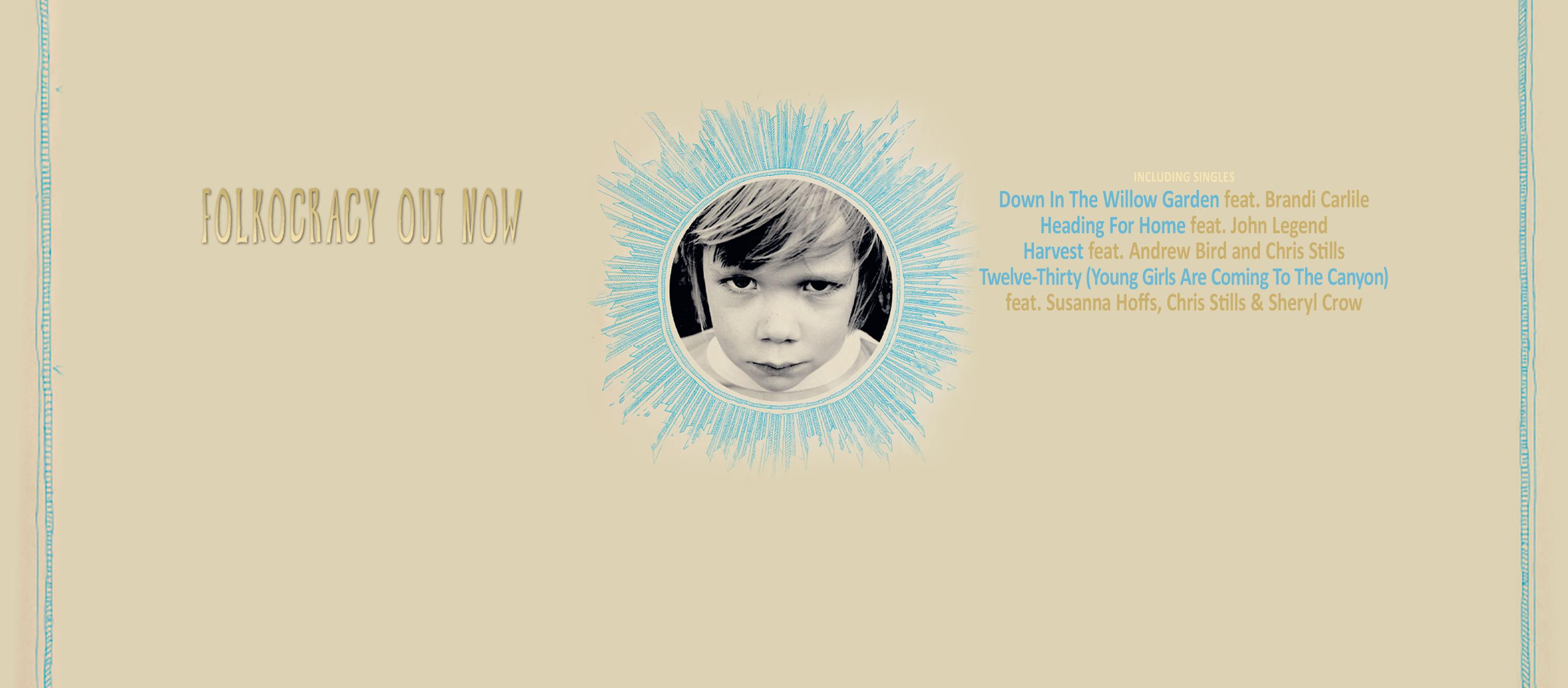
Rufus Wainwright has celebrated his 50th birthday by performing a cover of Neil Young‘s ‘Harvest Moon’ live, To celebrate his milestone, Wainwright held a party titled “Rufus & Friends 50 isn’t the end” at the Montauk Lighthouse in New York.
“This album is almost like a recorded birthday party and birthday present to myself. I just invited all the singers that I greatly admire and always wanted to sing with,” Wainwright said in a press statement.
During the set, he covered ‘Harvest Moon’ with Chris Stills, a song which he covered on recent covers album ‘Folkocracy’.
Rufus Wainwright & Chris Stills perform Neil Young’s “Harvest Moon” together.
‘Folkocracy’ came out last month and features guest contributions from David Byrne, ANOHNI, JohnLegend and more.
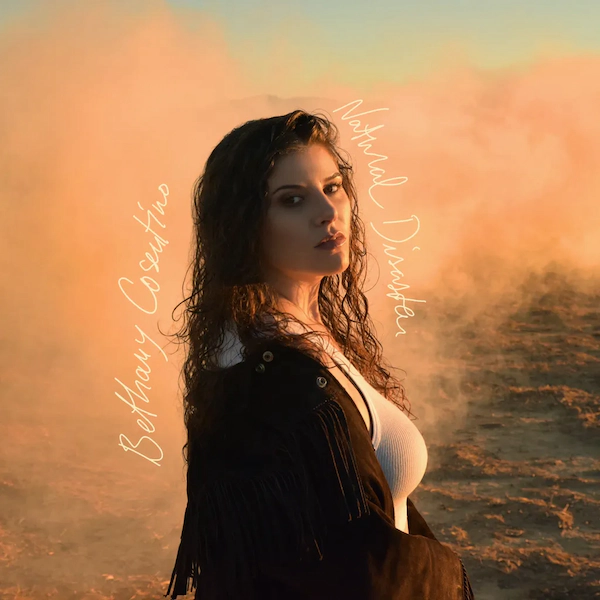
On the debut solo album from Best Coast’s Bethany Cosentino, the Los-Angeles based singer / songwriter takes close account of the endless catastrophes and upheavals of modern life, offering a high-minded and open-hearted response that makes room for compassion, imagination, and a radical sense of possibility.
“If you had asked Bethany Cosentino — best known for the last decade and a half as the frontwoman of acclaimed band Best Coast — a few years ago if she was going to make a solo album, the answer would have been a quick “no.” But then everything changed. Literally everything. The list is long and we all know it: A global pandemic; climate change ravaging the world; a diseased patriarchy stomping daily on democracy and basic human rights; countless national tragedies; a never-ending, pervasive sense of doom. It’s against this backdrop that Cosentino was forced to take stock of it all and jump off the merry-go-round of countless album cycles and tours.
“I don’t think I ever really had the opportunity to look at my life under such a magnifying glass, because I was always preoccupied in some capacity,” she explains. “It allowed me an opportunity to really ask myself: What do you want? What happens if you stop living your life for other people, and you finally subscribe to the idea that you don’t owe anyone anything, but you owe yourself everything?”
The official visualizer for Bethany Cosentino’s“Easy” and “It’s Fine” from her upcoming solo debut album ‘Natural Disaster’, out July 28th.
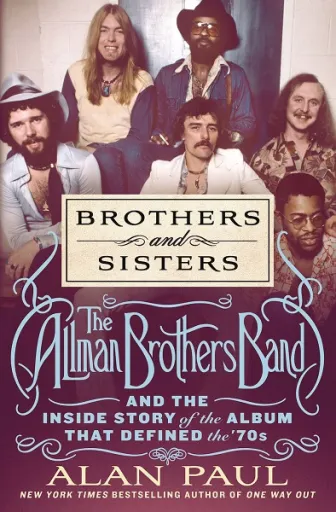
“Brothers and Sisters: The Allman Brothers Band and the Inside Story of the Album That Defined the ’70s” a new book that will be released on July 25th by Maplewood resident Alan Paul, is more about the story than the album. It uses a great album as a launching pad for a thorough exploration of an artist at a unique and fascinating point in their history.
Paul’s book says everything that needs to be said about the Allman Brothers Band in the heady five-year period between the death of its uncontested leader Duane Allman in 1971 and the breakup of the band in 1976. “Brothers and Sisters” featuring the band’s biggest hit, “Ramblin’ Man” came out in 1973). Also, as Paul writes, “Telling the story of the album reveals a larger story, a story about the nation itself.”
Paul, who has conducted extensive interviews with just about everyone in the Allman Brothers world (and also draws on hundreds of hours of interviews by Kirk West for a book that never got written), has previously written the definitive book on Allman Brothers Band history, “One Way Out: The Inside History of the Allman Brothers Band.” given everything that happened to the band from ’71 to ’76. Here is a summary of what Paul covers in great detail, in every case in the book:
• The despair created by Duane Allman’s death — followed by the death of another band co-founder, bassist Berry Oakley, in 1972 and the band’s subsequent reinvention, with singer-songwriter-guitarist Dickey Betts taking on a greater role, and keyboardist Chuck Leavell and bassist Lamar Williams making vital contributions.
• The emergence of Betts and Gregg Allman as solo artists. Allman released his first solo album, “Laid Back” in 1973; Betts followed with “Highway Call” in 1974.
• The deep bond between The Allman Brothers Band and The Grateful Dead, which peaked with the Summer Jam at Watkins Glen festival featuring both groups, along with The Band at a raceway outside of Watkins Glen, New York, in 1973. The event attracted 600,000 fans, which is significantly more than Woodstock did.
• The emergence of Southern rock as a nationally known genre, with groups like The Marshall Tucker Band and Lynyrd Skynyrd — which had their first hits in 1973 and 1974, respectively following The Allman Brothers Band’s lead.
• A feud with Rolling Stone magazine, which had published an unflattering feature on the band in 1971. The band agreed to another feature, in 1973, written by a young Cameron Crowe, with Gregg Allman turning out to be an elusive but ultimately cooperative interview subject. (Crowe’s 2000 film “Almost Famous” is partially based on his experiences with the band).
• The band’s friendship with Jimmy Carter, who was serving as governor of Georgia during this time period though he had his eyes on the presidency (he officially announced his candidacy in December 1974). A 1975 benefit concert gave Carter’s campaign an infusion of cash when it really needed it, and the Allmans’ support helped raise his national profile.
•Gregg Allman’s unlikely relationship with Cher, whom he met in early 1975 and wed later that year. Their rocky marriage ended with a 1979 divorce. (Betts, incidentally, became romantically involved with Cher’s personal assistant and friend, Paulette Eghiazarian, and married her in 1977.)
• The band’s growing dissatisfaction with their manager, Phil Walden, and the recording and publishing deals he had set up for them. Like many musicians of their generation, the Allmans didn’t pay much attention to contracts early on, were taken advantage of, and tried to resolve their problems with lawsuits, later.
• The 1976 drug trafficking trial against the band’s road manager Scooter Herring, in which Gregg Allman testified, to his bandmates’ dismay and (arguably unreasonable) disapproval. They were already growing apart, but this was the final straw in the breakup.
Paul, of course, takes a close look at “Brothers and Sisters”, too, which, in addition to “Ramblin’ Man,” includes top-notch songs such as “Jessica,” “Wasted Words,” “Southbound” and “Come and Go Blues.” I and, I think, many other Allman Brothers Band fans consider previous albums “The Allman Brothers Band at Fillmore East” (1971) and “Eat a Peach” (1972) to be superior, musically. But “Brothers and Sisters” had “Ramblin’ Man,” and “Ramblin’ Man” was the main factor behind all the extra-musical chaos that fills much of this book.
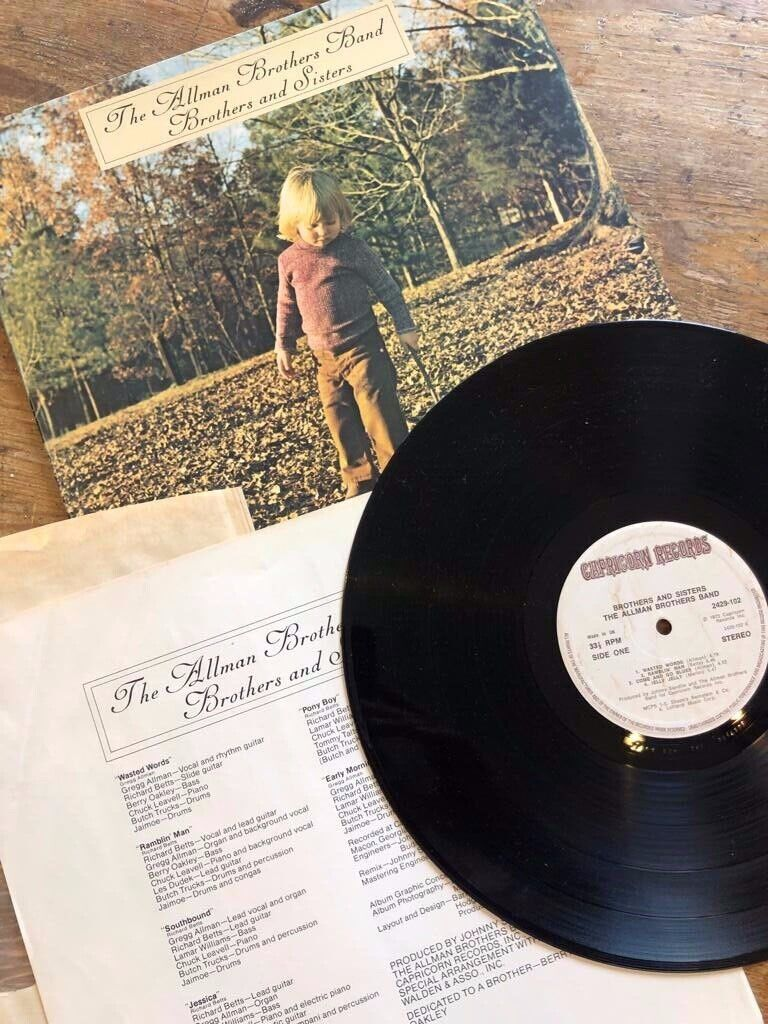
Allman Brother Band member Butch Trucks’ son Vaylor is pictured on the cover of the Allman BrothersBand’s 1973 album “Brothers and Sisters.”
“I didn’t realize what a huge difference having a top-five song would make because we never had never had a hit single,” Paul quotes Betts as saying. Betts also says that when “Ramblin’ Man” became a hit, “everything changed. The band reached a whole other level. The places we played got bigger, the crowds were huge and the money was just pouring in.”
Did “Brothers and Sisters” define the ’70s, as Paul asserts in his book title? I wouldn’t go that far. But it certainly played a big part in one of the decade’s most remarkable rock ‘n’ roll stories, which becomes a real page-turner via Paul’s authoritative storytelling.
As Paul writes in the book’s preface, the band was “teetering on collapse” before and after the album came out. Yet the music was so strong it made them superstars, anyway.
He also writes in the preface that the book “covers the band’s evolution from a modern blues group based in Georgia but rooted in the studios and music halls of New York, San Francisco, and Miami to a group forging a new, distinctively southern sound a Macon sound that deeply impacted not only music but also the nation’s culture and politics.”
Replacing Eric Clapton with Peter Green was John Mayall’s masterstroke. While the guitarist stayed less than a year he left an indelible mark on “A Hard Road” with the instrumental “The SuperNatural” – exploring the sustained tone he’d use for “Albatross” in Fleetwood Mac – and The Same Way, which was an embryonic “Man Of The World”. Mayall had moved on too. There’s an unexpected zest to Leaping Christine and he jousts on bottle-neck with Green on Elmore James’ “Dust My Broom“. New drummer Aynsley Dunbar freshens up the rhythm section but its Mayall’s blend of original songs and covers that gives the Bluesbreakers their own identity.
John Mayall’s third LP and the follow-up to the mighty “Beano Album” had some big shoes to fill. But with Peter Green on board in place of the departed Eric Clapton, and Aynsley Dunbar taking over on drums, “A Hard Road” was an undisputed triumph and remains one of the truly essential pure blues rock albums of the era.
Mayall recognised the value of his new guitarist and Green was given acres of space to show off his skills. He contributed two timeless guitar instrumentals – a masterful version of Freddie King’s “The Stumble” and his own “The Super-Natural”, the latter an ethereal proto-Santana style piece, almost worth the price of admission alone. Green also took lead vocals on Willie Cobbs’ 1961 song “You Don’t Love Me” (later immortalised by the Allman Brothers) and the self-penned “The Same Way”. John Mayall wrote eight of the 14 tracks and provided the suitably rustic sleeve artwork.
The Bluesbreakers was a band in constant flux and during Peter Green’s brief 11-month stint with Mayall, no fewer than five drummers passed through the ranks, all of them still well-known names today. As well as Aynsley Dunbar, there was “Beano Album” veteran Hughie Flint, who was there when Peter joined and Keef Hartley who arrived just before he quit. Mick Fleetwood and Mickey Waller also briefly came and went in the interim.
Notes:
The 2003 double CD reissue of “A Hard Road” contained no fewer than 22 bonus tracks, compiling all the non-album studio recordings Peter Green made with the Bluesbreakers between 1966–1968. These included singles, B sides and the rare UK-only 1967 John Mayall and Paul Butterfield EP collaboration “All My Life”. A 2006 single disc CD contained 14 extra tracks, mostly drawn from the same sources but adding four additional BBC recordings
“A Hard Road” reached #8 in the UK in 1967, Mayall’s third highest chart showing overall, after “Bare Wires” and “The Beano Album”
BBC Radio 1’s The Friday Rock Show hosted by Tommy Vance in the 80s used the “A Hard Road” version of “The Stumble” as its theme music for many years
Standout track: “The Super-Natural“
Blues highlight: “Someday After A While (You’ll Be Sorry)”
John Mayall: Vocals, guitar, harmonica, piano, organ, Peter Green: Guitar, vocals, John McVie: Bass, Aynsley Dunbar: Drums, Plus:John Almond: Saxophone, Alan Skidmore: Saxophone, Ray Warleigh: Wind instruments.
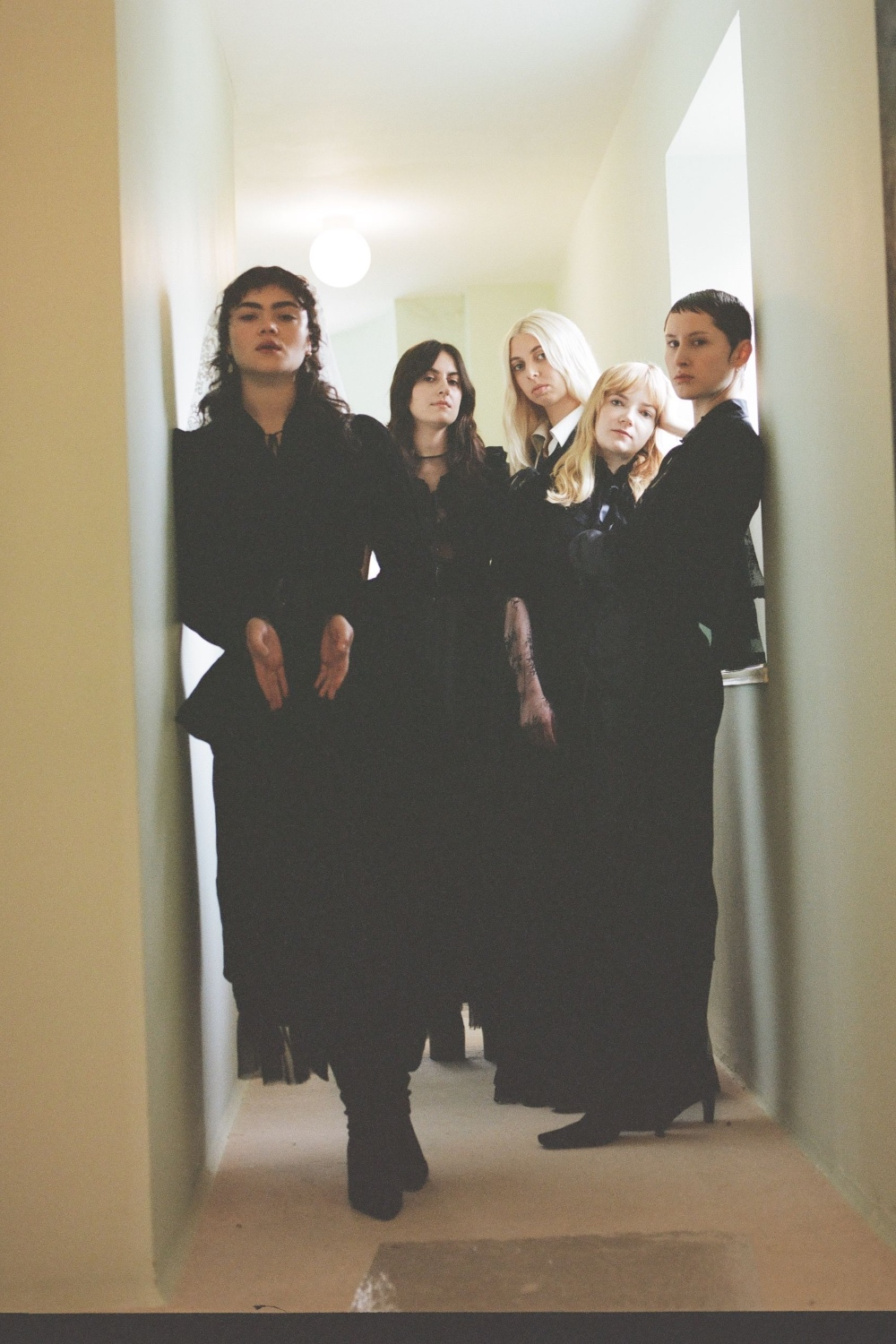
Beneath virtually every live clip of The Last Dinner Party, a familiar question seems to pop up again and again: where can I hear more? An elusive band that only exists live on stage, the answer up until now has been simple – get down to one of their shows.
The band’s origin story isn’t “particularly romantic,” concedes bassist Georgia Davies, who first met guitarist and backing vocalist Lizzie Mayland at their uni halls on a quest for beer. Later that week, the pair bumped into and befriended Abigail at New Cross boozer Marquis of Granby. Emily Roberts (lead guitar) and Aurora Nischevi (keys), who later completed the band’s line-up, both come from more classical backgrounds and studied at The Guildhall School of Music and Drama. “I think it’s really lucky that we’ve all come from such different places musically,” Abigail says.
The well-earned buzz surrounding the band has echoes of the feral excitement that followed Savages’ earliest live shows at The Macbeth. As ringleader Abigail Morris puts it, neatly summarising their stylings: “We’re just five dads trapped in gorgeous young bodies.”




 The Fat Angel Sings

