When the grunge explosion of the early ‘90s elevated Seattle’s flannel-clad misfits out of the divey clubs of downtown and into the mainstream, a new generation of restless artists filled the void left in the Pacific Northwest’s underground music scene. Lync perfectly captured the spirit of that era, blending the passionate chaos of the DC and San Diego scenes with the rough-hewn DIY pop sensibilities of Olympia’s thriving indie community into one unified sound. Though they were only a band for two years, they helped define the next era of the Northwest underground, inspiring countless other artists and instigating the creation of beloved records from the region.

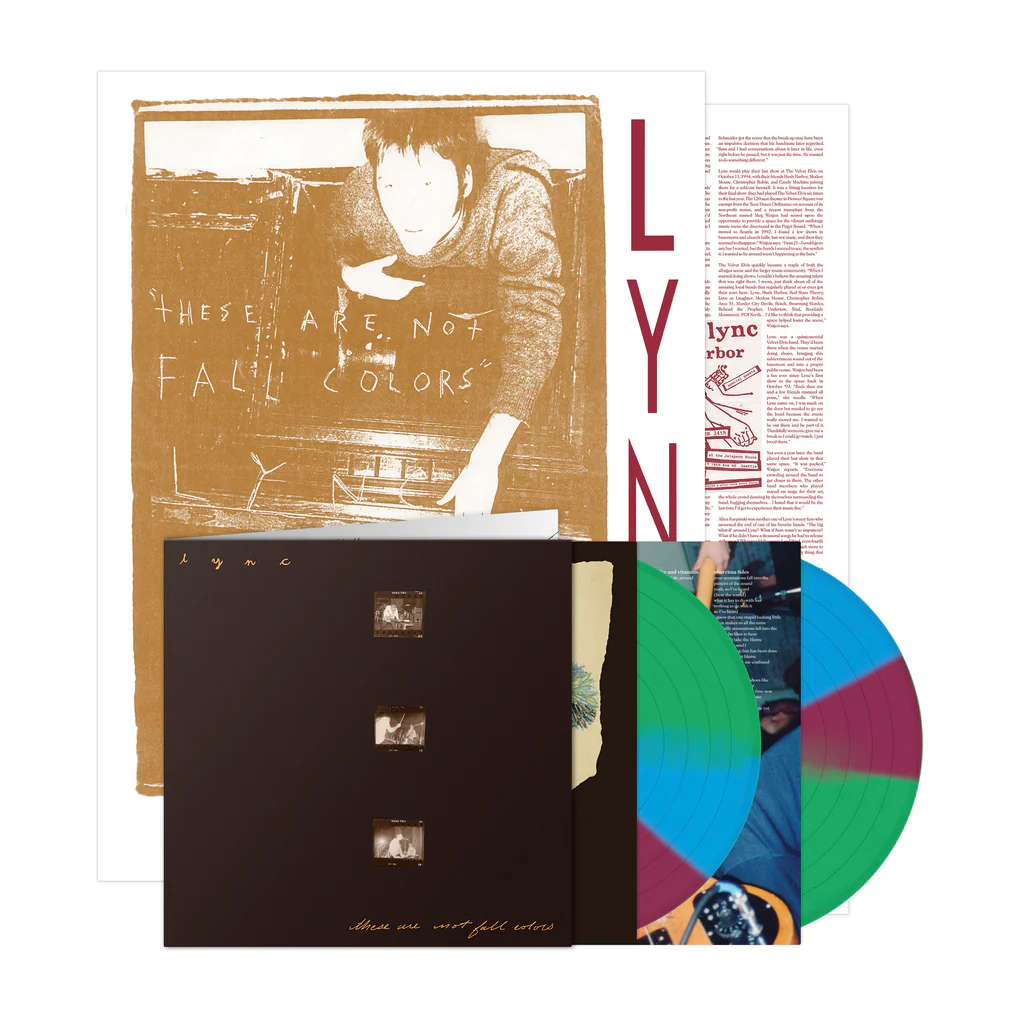
After being out of print for over a decade, the band’s sole LP “These Are Not Fall Colors” has been remastered and expanded into a 2xLP with the inclusion of “Can’t Tie Yet”—a compilation track from the album’s recording session—into a deluxe edition available courtesy of Suicide Squeeze Records.

Originally released on K Records in the summer of ’94 just a few months before the band called it quits, “These Are Not Fall Colors” is a boisterous collection of scrappy basement-show anthems played on duct-taped-together gear. Led by the off-kilter melodies of late singer/guitarist Sam Jayne and hammered into place by the driving bass of James Bertram and drum battery of David Schneider, the album’s eleven songs channel that undefinable sound of the early ‘90s before descriptors like “post-hardcore” and “emo” became pejorative terms. Sure, you get a sense of the more sophisticated mid-tempo punk approach on songs like “B” and “Silverspoon Glasses,” and maybe catch wind of wistful songwriting on “Pennies to Save” and “Cue Cards,” but Lync seemed to cull their ideas from whatever bits of inspiration they could find in the gray gloom churning it together into a style uniquely their own. 

Despite Lync’s short existence, modest aspirations, and DIY approach, their work had a ripple effect. Jayne and Bertram appeared on Beck’s “One Foot in the Grave” album. Jayne would go on to make music under the moniker of Love As Laughter. Built to Spill’s Doug Martsch was so enamored by the album that he enlisted Bertram and Schneider to serve as his rhythm section on the “There’s Nothing Wrong with Love” tour. “These Are Not Fall Colors” engineer Phil Ek would go on to help record and produce records by Fleet Foxes, Band of Horses, and The Shins. Bertram and Green would also go on to form the revered indie rock group Red Stars Theory. At times it feels like you could pick any major Northwest indie rock group from the ‘90s and ‘00s and trace their DNA back to Lync.

“These Are Not Fall Colors” out October 20th, 2023 on Suicide Squeeze Records.
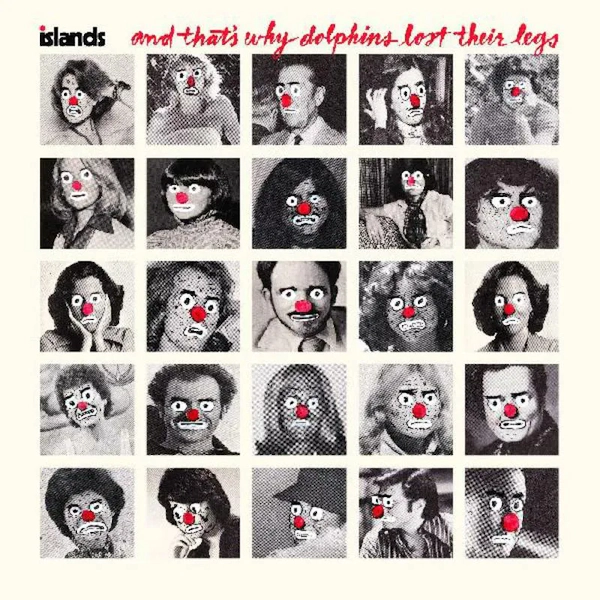
If Islands’ last record, (2021’s “Islomania“) was a Saturday Night Fever dream, then the follow up– 2023’s “And That’s Why Dolphins Lost Their Legs” is the Sunday Morning comedown.

Taking a giant leap forward, replete with addictive hooks at every turn, “Dolphins” (the 9th record in the catalogue), stands out as the strongest and most articulate Islands record yet. Nick Thorburn and crew manage to tap into both the pain and the joy of living, (sometimes within the very same breath), while musically stripping things down to their simplest element: a bouncing bassline, a snappy kick and snare, or a persistent, hooky guitar line.

Though “Dolphins” is arguably their biggest musical departure (which is saying something, coming from a band that has constantly reinvented their sound from album to album), the DNA of Thorburn’s first band The Unicorns can clearly be heard throughout songs like “Headlines”, “Life’s A Joke” and “And All You Can Do is Laugh”.

“Dolphins”, which came together over a methodical, carefully considered multi-year process, continues Thorburn’s fruitful collaboration with co-producer Patrick Ford (!!!), and features production on a few songs from Chris Coady (Beach House) and Mike Stroud (Ratatat).

“And That’s Why Dolphins Lost Their Legs” out August 25th, 2023

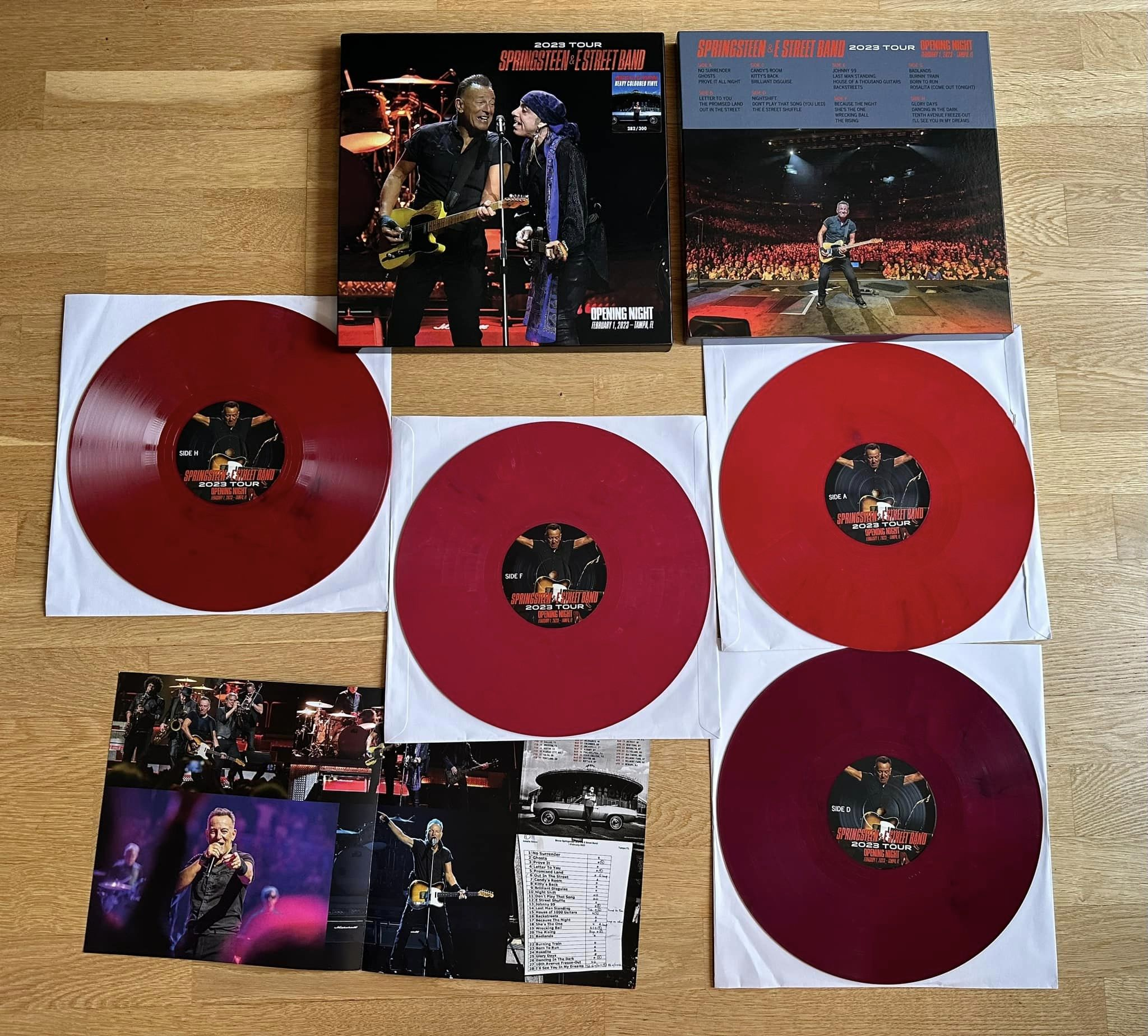
  • 28-song opening night set.
  • Six songs from 2020’s “Letter To You”: “Ghosts,” “Letter To You,” “Last Man Standing,” “House Of A Thousand Guitars,” “Burnin’ Train” and “I’ll See You In My Dreams”
  • “Last Man Standing” features a new arrangement.
  • “I’ll See You In My Dreams” is performed solo acoustic to end the show. Bruce takes the opportunity to talk about his late friend and Castiles bandmate George Theiss before dedicating the song to Emily Marcus (daughter of legendary rock journalist and long-time Springsteen ally Greil Marcus), who passed away a few days prior.
  • Two songs from 2022’s “Only the Strong Survive” in their first E Street Band performances: “Nightshift” (written by Franne Golde, Dennis Lambert and Walter Orange, popularized by The Commodores) and “Don’t Play That Song” (written by Ahmet Ertegun and Betty Nelson, popularized by Ben E. King).
  • “Johnny 99” is performed in the “Wrecking Ball” tour arrangement.
  • Concert stalwarts including “Because The Night” and “Dancing in the Dark” are performed in tighter, shorter versions.
  • Rare inclusion of a new song, “Burnin’ Train,” as the first track of the encore.

Bruce Springsteen sauntered onstage Wednesday night (February 1st) with nothing to prove and all the determination to prove it anyway. The E Street brethren opened their much-anticipated 2023 tour at Tampa’s sold-out Amalie Arena with a show high on highs and prove-it-all-night uplift. Twenty-eight songs total, starting with a bombastic “No Surrender” and ending with the sombre solo acoustic “I’ll See You in My Dreams.”

When the house lights kicked on for the seven-song encore, which commenced with the live debut of “Burnin’ Train,” it signalled an even looser, grittier performance, a whole lot of fun, but a little barroom sloppy, too. “Professor” Roy Bittan is a brilliant pianist to be sure, “Born to Run” and “Rosalita” and “Glory Days” still run hot on full tanks of Jersey fuel.

Bruce Springsteen – Lead vocal, electric and acoustic guitars, harmonica; Roy Bittan – Piano, keyboards; Nils Lofgren – Electric and acoustic guitars, lap steel, backing vocal; Patti Scialfa – Guitar, percussion, backing vocal; Garry Tallent – Bass; Stevie Van Zandt – Electric and acoustic guitars, backing vocal; Max Weinberg – Drums; Jake Clemons – Tenor saxophone, percussion, backing vocal; Charlie Giordano – Organ, keyboards; Soozie Tyrell – Violin, acoustic guitar, percussion, Anthony Almonte – Percussion, backing vocal; Ada Dyer – Backing vocal; Curtis King – Backing vocal; Lisa Lowell – Backing vocal; Michelle Moore – Backing vocal; Barry Danielian – Trumpet; Ed Manion – Baritone and tenor saxophone;  Ozzie Melendez – Trombone; Curt Ramm – Trumpet

May be an image of 3 people and text

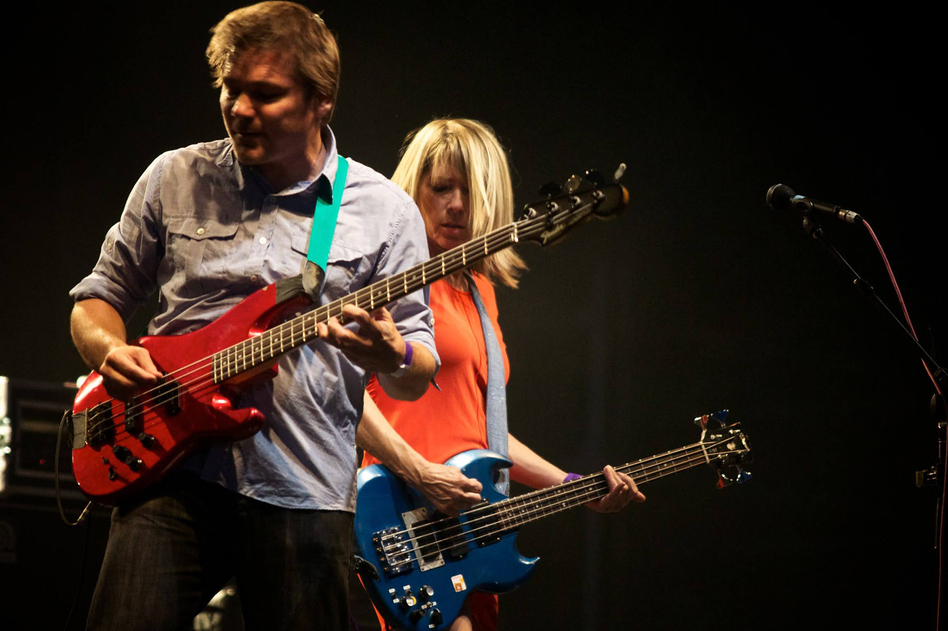
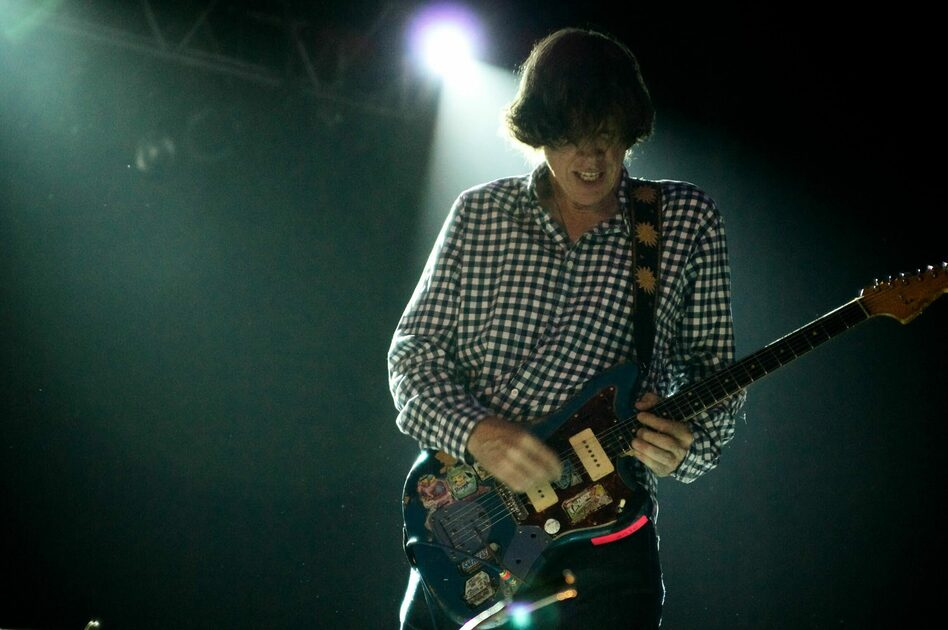
No one knew Sonic Youth was making its last stand — not even Sonic Youth itself.

“It was a period of regrouping. But in spite of some personal problems, it was still business as normal: ‘We’re going out to do a summer show in our hometown,’ ” admits co-founder Lee Ranaldo from his New York apartment.This cycle was not either for Sonic Youth or its fans:

Despite a period of relative inactivity, with nearly no shows in eight months, most members of one of American indie rock’s most beloved, raucous and best bands assumed they’d be back to work soon enough. Their Friday night show on a sprawling outdoor stage alongside the East River in Brooklyn on August 12th, 2011, was simply the latest in their decadelong string of summertime New York sets.

They had, as always, recruited an excellent cast of openers: Kurt Vile & the Violators, the emerging pride of Philadelphia, and Wild Flag, a Sleater-Kinney offshoot still a month from releasing its debut LP.

Sensing nothing unordinary, especially that they were on the precipice of the end, the band issued only one photo pass to a short-lived New York music blog. But two months and two days after that concert, the night would become the stuff of legend and history, not only for an unorthodox set list where Sonic Youth performed several songs for the first time in decades but also because it was, indeed, the end. The personal problems Ranaldo sensed exploded into public view:

After three decades as bandmates and 27 years of marriage, Kim Gordon and Thurston Moore the first couple of indie rock, a pair whose creative partnership had given countless Gen X disciples life goals were splitting. With their marriage’s fracture, the band would also end. In the years to come, through interviews and memoirs and gossip columns, the source of that split would become clear: a common middle-aged affair. Sonic Youth played five more shows that November, fulfilling a contractual obligation for a festival swing through South America. Those were hard and perfunctory gigs, so that night in Brooklyn remained special. “I always refer to it as the last show, because it was the last one where we weren’t cognizant that we were going to stop playing,” says Ranaldo, sighing. “There’s a lot of complicated feelings in the aftermath, but we all left that concert feeling like we did a wonderful job.”For that final moment, at least, Sonic Youth’s future seemed wide open. 

This week, Silver Current Records will release a remixed version of the concert, previously issued online as a pandemic-era Bandcamp exclusive. In retrospect, it is almost impossible not to hear the strange set of non-hits as an onstage conversation about the scandal that would soon engulf Sonic Youth. Moore sings of cheating cads during “Psychic Hearts,” a relative obscurity from a solo album. Gordon commands the crowd to “support the power of women / use the power of man.” But in real time, it wasn’t like that. This was just a show meant to stand out for the songs the band played, not what those songs signified.

For the first time, the band members, their crew and their fans remember that concert and its aftermath in a series of candid interviews about the end of one of America’s great rock institutions. (Gordon and Moore declined interview requests; their memoirs, both of which address the band’s end, have been quoted.) This is a history of what might have been one night in a busy band’s long career, and what it came to represent.

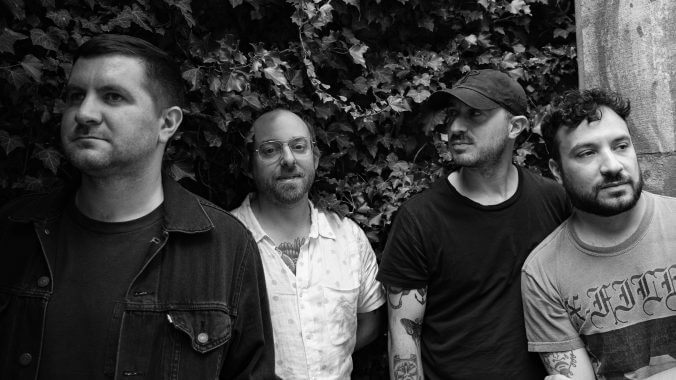
Philadelphian punk heroes The Menzingers are returning with their seventh studio album. “Some Of It Was True” is set to arrive October 13th via Epitaph Records, and the momentum begins via lead single “Hope Is A Dangerous Little Thing.” The track is anthemic yet personal, as the band’s songwriting takes a powerful, melodic turn towards their brightest chapter yet.

“Some Of It Was True” was produced by prolific visionary Brad Cook (Bon Iver, The War on Drugs, Waxahatchee) and was recorded in El Paso at Sonic Ranch. The product that came from those sessions is a project that greatly mirrors the Menzingers’ incredible, enduring live energy and spirit.

“This record just feels different for us,” guitarist and vocalist Gregor Barnett explains. “It’s a really important one in our catalogue, and a pivotal moment in our history. We have the liberty of our fans growing with us now, and after writing these lyrical songs about where we are in life, we decided to take other peoples’ stories and make something bigger out of it.”

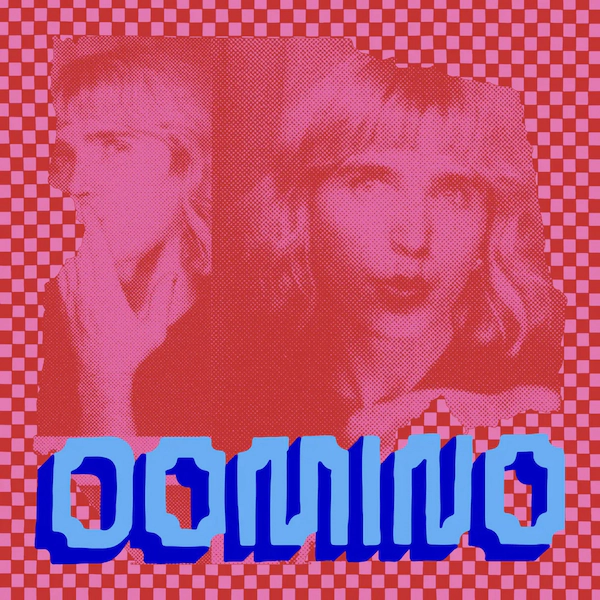
DINERS – ” Domino “

Posted: August 21, 2023 in MUSIC

This is Diners’ 7th full length album, Diners four singles made their way into some of our best listened too songs at various points this summer “The Power” I heard “Domino” album title track way back in April and that guitar solo came wailing in for the first time, my interest was immediately.

On “Domino,” her energetic new album, she’s taken a turn toward overdriven, uptempo power pop, applying her affirming lyricism to an unabashed rock record. With production help from Portland songwriter Mo Troper, “Domino” places her breezy melodies alongside stomping Big Star guitars and hazy fuzz bass, lending a new urgency to her anthems. “This is the rock record that I always wanted to make,” Broderick says. “I know that any time I turn it on, it’s what I set out to do.”

Because the truth is, the hype for “Domino” is as real as any excitement around a record could ever be. Across 10 songs, Diners spearheaded by songwriter and multi-instrumentalist Blue Broderick—have turned 25 minutes into an entire universe. 

“Domino” is the perfect example of the many ways that a three-minute song can truly sing. The album is all killer, no filler for real. There’s something about precise and sharp hooks that are epic in their own right, but Blue’s work here is especially hypnotic and cathartic in that regard. 

“Domino” is bubblegum mastery glossed with retro incantations that fit nicely in a modern, un-retro world; a wondrous excursion into the limitlessness of epic hooks and saccharine storytelling,

Produced by patchwork pop provocateur and distortion spin doctor Mo Troper. “Domino” is the rock record that Blue has always wanted to make. Though she asserts that, in the past, he didn’t have the skills to write and arrange songs like “The Power” or “So What,” that doesn’t erase the fact that she’s a brilliant guitar wizard who had all of those parts baked and ready to go by the time Troper got involved.

HOZIER – ” Unknown “

Posted: August 21, 2023 in MUSIC

Hozier’s new ballad ‘Unknown’ is ready to set your heart ablaze! The Irish singer-songwriter continues to captivate audiences with his soul-stirring melodies and thought-provoking lyrics.

‘Unknown’ is a poignant ode to love, a testament to the lengths we’d go to, crossing seas and fires, for the ones we hold deal. It’s a song that resonates deep within, reminding us that love is not a product of loneliness, but a longing to be truly seen and know

Don’t miss out on this heartrending exploration of love’s profound depths. Listen to ‘Unknown’ now and let Hozier’s masterful storytelling take you on an unforgettable sonic journey!

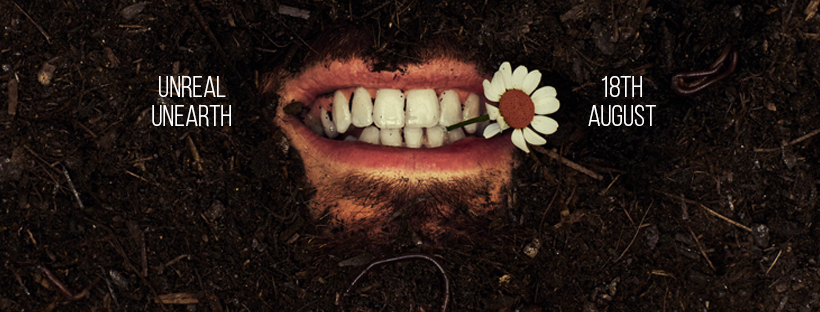
“Unreal Unearth” is packed full of poetic lyricism, heavyhearted remorse, hopeful anticipation and an honest expression of the joys and sorrow of being a human. This is undoubtedly his best work. The more straightforward tracks may be too saccharine at times, but Hozier’s gravitational artistry more than makes up for any slight missteps off the path. The song order is an improbable hero, as the pacing and experience the listener goes through only accelerates the impact. There is a sharp balance across the entirety of “Unreal Unearth” it’s never top-heavy nor is it ever stagnant, the sonic IV constantly dripping musicality into your body. From choir swells to poetic lines that find a way to hit you unexpectedly, the album is a tremendously soulful experience.

After these past few years of writing, recording, working, pacing, scribbling, and ample time staring out the window, i’m feeling immensely proud to announce the release of the new album, “Appaloosa Bones”, which comes out august 18th. the first single, “The Fall,” , “Appaloosa Bones” is Isakov’s first album in five years, and it feels like a homecoming in more ways than one. Many of the musical textures which defined Isakov’s early corpus dominate his new record: spacious, grand pauses, uncomplicated stylistics, disarming sincerity and an unassuming, affecting joie de vivre. It’s not that his music is energizing or jumpy—often the opposite, really—it’s that it’s almost entirely free of cynicism, instead embracing the sort of romantic, humanist mindset that feels so far removed from 21st-century reality.

It’s a comforting thing, especially if you tie Isakov’s thematics with the lush Americana that girds his aesthetic landscape. He makes music for an uncorrupted country, one scattered with swaying fields and rushing brooks, straightforward heartbreaks and neatly-ending stories.

“The Fall”, debut single from the new album, “Appaloosa Bones”, coming August 18th

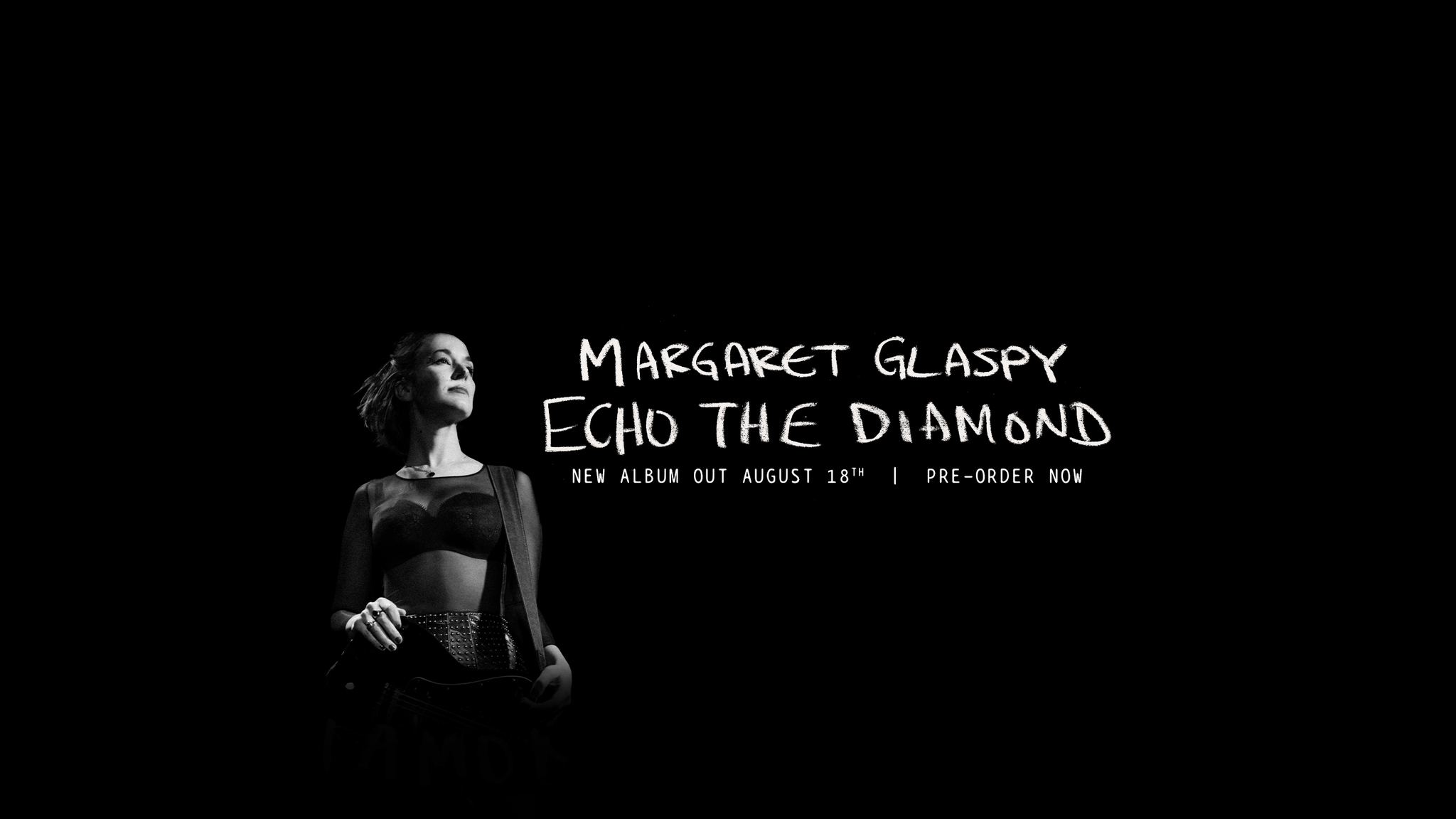
I discovered Margaret Glaspy by way of her Tiny Desk concert six years ago. She’d just released her debut record, “Emotion and Math”, in 2016 and was establishing herself as one of the most formidable guitar players much of what Glaspy was making back then. It was her guitar-playing—which was gravitational like an unshakable center-piece—that pulled me in; it was her storytelling that convinced me to stick around. “Emotions and Math,” album Glaspy masterfully takes pop instrumentation and employs a raucous blues top coat. Glaspy spent a long while on the road, performing “Emotions and Math” for audiences across the globe.

“I’ve gotta get out of this tree, off of this limb,” she sings across the chorus of “Emotions and Math.” “I’m a woman acting like a kid, a skinny mess that’s breathless from telling you all the things that I’m gonna do.” On her second LP, “Devotion”, released in 2020, her lyricism got thwarted into focus in an even greater way, as she muted her guitar just a hair and turned aglow a distinctive, enchanting realm of synth-rock and piano-pop.

“Echo the Diamond” is a revelation from the hermetic roars of lead single and album opener “Act Natural” to the bare-bones, solemn and otherworldly “Memories,” Glaspy is circumventing doing too much by trusting her gut.

What comes of it is her best work yet, a monolithic reaction to and document of grief, love and an unbounding sense of self-actualization. “Echo the Diamond” is spiritual in that way, as it lets every moment arrive organically. Many of the songs we hear on the final cut are either first takes or rehearsals yet they sound divine and worn-in. “Echo the Diamond” was recorded in three days, though its impact will stretch much, much further than that.

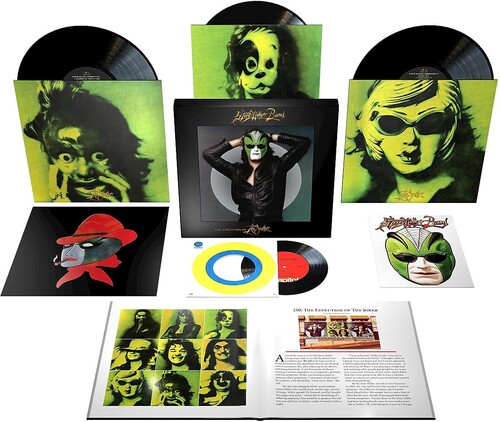
Steve Miller is honoring the 50th anniversary of his chart-topping, Platinum eighth studio album, 1973’s “The Joker”, with a new set chronicling the artistic journey that led to its creation. J50: The Evolution of The Joker” showcases Miller’s process as he expands and reimagines his craft, ultimately finding a strikingly original new sound that brought him to a wider audience than ever before and set the stage for even greater successes to come. It arrives September 15th, 2023, via Sailor/Capitol/UMe on 2-CDs or 3LPs + 7”.

“J50” dives deep into the creative process of writing and assembling “The Joker” and amplifies its enduring magic by chronologically placing the original album tracks alongside 27 previously unreleased recordings from Miller’s personal archive – including songwriting demo tapes made by Miller on his TEAC 4-track in hotel rooms on the road and at live performances, plus studio outtakes and rehearsals – as well as six audio commentary tracks from Miller and exclusive liner notes from both Miller and journalist Anthony DeCurtis. The vinyl version includes a reproduction of a vintage “The Joker” iron-on and a limited-edition lithograph.

Hear some of the previously unreleased recordings below. The Gangster of Love had already had several successful albums but hadn’t sniffed a hit single when this was released in October 1973. It topped the chart on January 12th.

“J50: The Evolution of The Joker” is highlighted by “The Joker Suite,” an extended piece showcasing the musical path to the album’s hit title track, “The Joker,” with the previously unreleased “Lidi” and “Travelin’.

Miller shared how “Sugar Babe” evolved, with a series of three audio clips. “[The song] turned into a powerful electric riff in the studio, but in this first recording it’s just a small seed of an idea,” says Miller. “Eventually it got defined on the stage and in the studio and that’s what you hear.”

“The Joker” was originally released worldwide in October 1973 and quickly became a hit in the United States crossing over from FM underground radio to the AM pop radio of the day. Shortly thereafter, the song went to No#1, first in the USA and the rest of the world followed.

This mainstream breakthrough success was certainly fuelled by dramatic shifts in both the line-up and Miller’s own approach to songcraft. “J50” kicks off with acoustic live renditions of “Children of the Future,” “Brave New World” and “Space Cowboy,” recorded while on the road in 1972. Miller had long nurtured his still-growing audience with constant touring, routinely visiting hundreds of cities each year. Backed by Dickie Thompson on keyboards, Gerald Johnson on bass, and John King on drums, the lineup marked the Steve Miller Band’s first iteration as a quartet. Fuelled in part by Thompson’s B3 organ and electric Hohner clavinet, the band developed a distinctive new sound, blending Miller’s signature psychedelic blues with a focused songcraft that expertly merged his many inspirations and influences into something wholly original and all his own.

Their lengthy sets were highlighted by covers of R&B gems like Young Jessie’s “Mary Lou” and The Clovers’ “Your Cash Ain’t Nothin’ But Trash,” both of which would be featured on “The Joker”.

Energized by his band’s nightly workouts, Miller spent his late-night hours recording on a TEAC 4-track tape machine in hotel rooms across the nation, working on new songs largely on 12-string guitar. In July 1973, the band hit Capitol Records’ Studio B in Los Angeles and quickly got to work, recording, mixing, and mastering the album in just 17 days with Miller producing.

When you go into the studio, be ready to do the whole performance the first time you do it, because that’s going to be the best time you do it,” Miller says. “The whole thing is to capture the first performance. That’s a lot of what “The Joker’s” about. It was all first takes, and first takes are always better than perfect takes.

Like if you take ‘The Joker.’ ‘Some people call me the Space Cowboy.’ What the hell was that? Then it continues and it gets your attention again: the slide guitar, the chorus, the harmony, the wolf whistle. It all adds up. All of these things are just elements of writing. You learn those elements, and you’re always playing with them.”

Miller’s new songs, from the album-opening “Sugar Babe” and longtime live favorite “Shu Ba Da Du Ma Ma Ma Ma,” to the easygoing blues shuffle, “The Lovin’ Cup” (extended by a driving, live acoustic version of Robert Johnson’s “Come On In My Kitchen,” with foot-stomping percussive accompaniment) and the devastating, slow-burn “Evil,” the latter recorded on stage at Boston, MA’s Aquarius Theater. “Something To Believe In” closes “The Joker” on a warm, reassuring romantic pop lullaby. “Like clear water in a mountain stream,” he sings, “l will come to you in your dreams/Like pictures reflected in a mountain lake/I will be with you when you wake.”

Released as a single in October 1973, “The Joker” proved, in Miller’s words, “a real, no kidding, non-stop hit.” With its title track seemingly everywhere (as well as its indelible masked album cover by famed photographer Norman Seeff), The Joker album positioned Miller for the next, vitally important stage of his career.