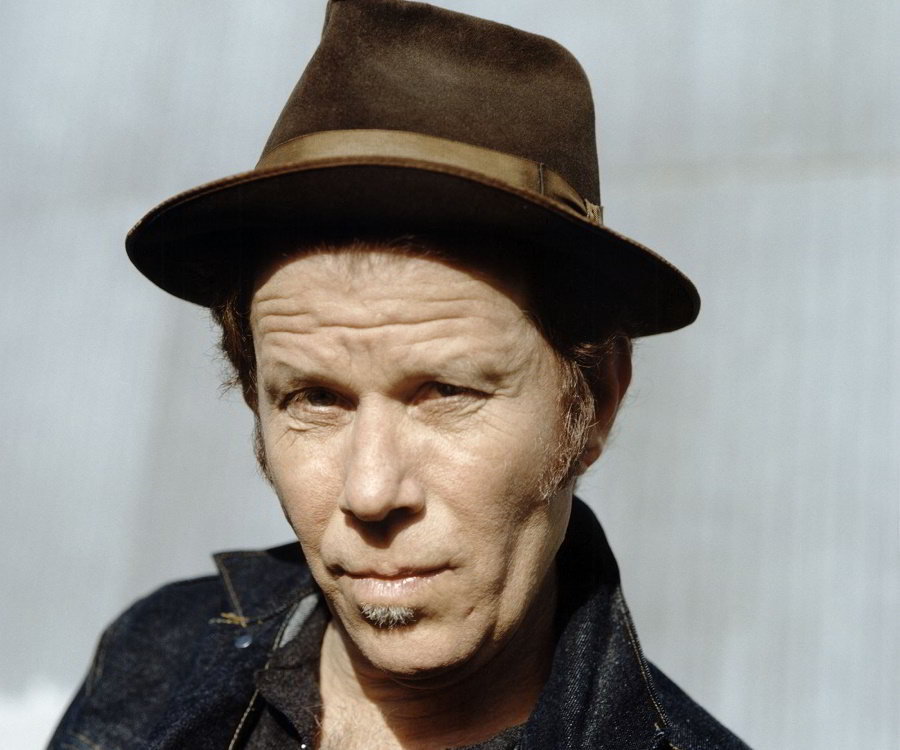
Tom Waits middle-period albums–released on Island Records between 1983 and 1993—have been newly remastered from the original tapes and will be reissued on 180g vinyl this fall via Island/UMe. The series kicked off on September 1st, 2023, with Waits’ transformative creative breakthrough, “Swordfishtrombones” (1983), its sprawling sequel, “Rain Dogs” (1985), and the trilogy-completing, tragi-comic stage musical, “Franks Wild Years” (1987), It;s almost 40 years to the day that “Swordfishtrombones” was released, ushering in a new and critically acclaimed musical era for Tom Waits and his long time songwriting and production partner, Kathleen Brennan.

All these bulletproof songs, one after another: remembering Tom Waits’s extraordinary mid-career trilogy. the magnificent album sequence that began with “Swordfishtrombones”.

Tom Waits’s 1983 album, “Swordfishtrombones“, there is, in among a lot of fabulously unhinged musical experimentation (Tony Bennett described the record as “a guy in an ashcan sending messages”), a 90-second ballad of such tender beauty that it explains all the rest. The song was written for Waits’s wife, Kathleen Brennan – “She’s my only true love/ She’s all that I think of, look here/In my wallet/That’s her” – and named after the town, Johnsburg, Illinois, in which Brennan grew up. The pair had got together on the set of Francis Ford Coppola’s 1981 film “One from the Heart”, for which Waits was writing the music and Brennan editing the script, married a couple of months later at 1am at the 24-hour Always Forever Yours Wedding Chapel in Los Angeles.

The union liberated Waits from what may have appeared his inevitable fate: of the ultimate bar-room balladeer who descends into dissolution and obscurity. The singer had spent the first decade or so of his career toying with that possibility, living partly in the Tropicana motel on Sunset Boulevard, or in his car, a 1955 Buick, writing and singing about dereliction and doomed love, and playing up to a reputation for “wasted and wounded” chaos. For the first time, having met Brennan, he said: “I now believe in happy endings.” The experimentation of “Swordfishtrombones” was the first expression of that faith. “My life was getting more settled,” Waits recalled. “I was staying out of bars. But my work was becoming more scary.”
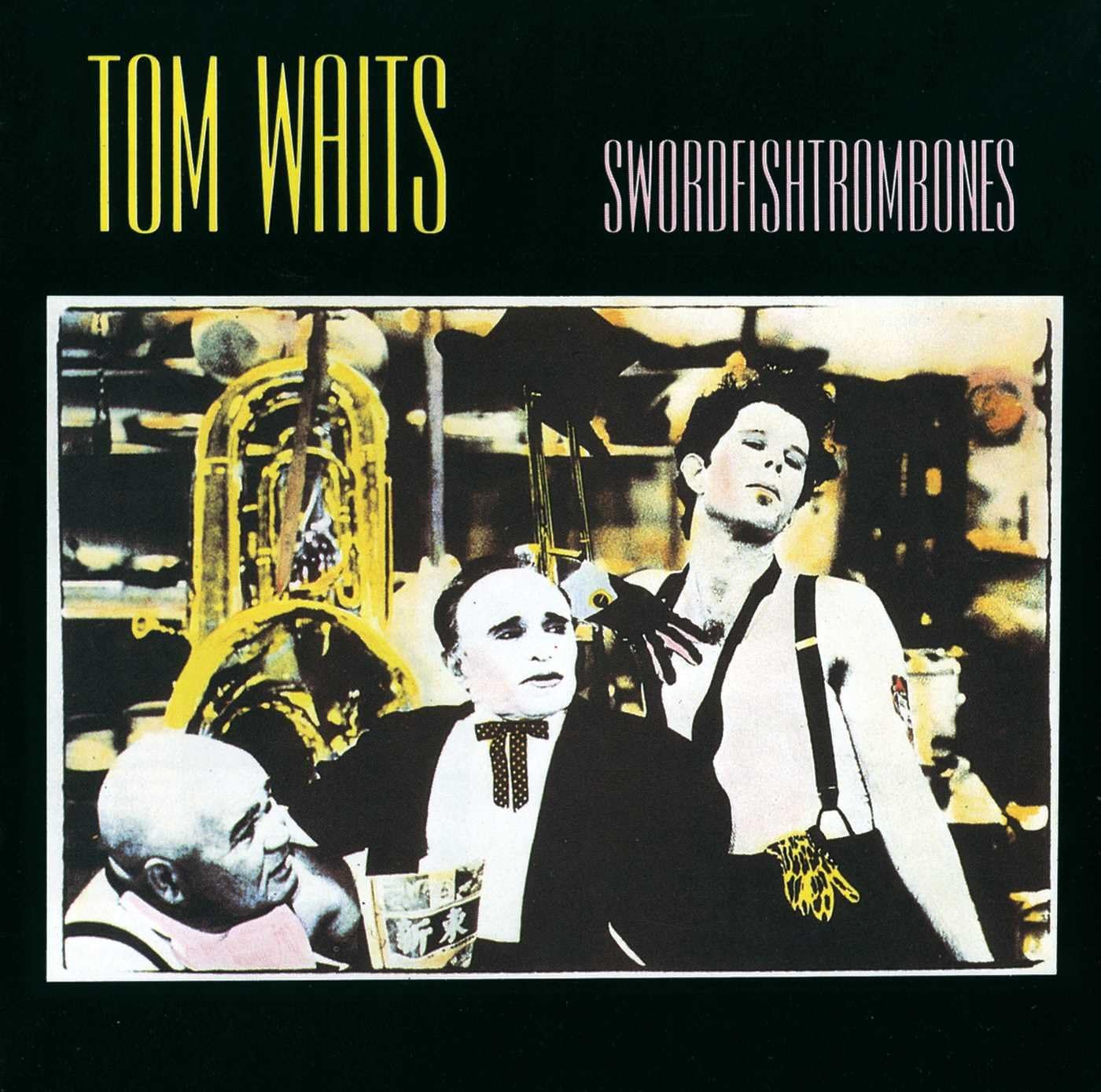
“Swordfishtrombones” (the title a winking tribute to Beefheart’s magnum opus, Trout Mask Replica) was a Waits-arranged pastiche, a variety of atmospheres from different sound planets. There is the warped, marching-army-ants music of “Underground,” an impressionist chant about people living below cities, but there was also the poignancy of the spare piano ballad, “Soldier’s Things,” the good bar yarn, “Frank’s Wild Years” (pre-figuring the musical of the same name), and the raggedy anthem to neighbourhood chaos, “In the Neighbourhood.” Yet the album was rejected by his long-standing record label, Asylum.

It was Brennan who gave Waits the courage to retire some of the seductive “piano has been drinking” myths of his own creation and to follow his restless musical intelligence, wherever it might take him. That album came out not long before the arrival of their first child. Two more albums (and two more children) followed in quick succession in the mid-1980s, “Rain Dogs” and “Franks Wild Years“. These are records of startling originality and playfulness, of cacophonous discord and sudden heart breaking melody, in which it seemed the artist was trying to incorporate the whole history of American song into his loose-limbed poetic storytelling.

To find the sounds he was looking for, the singer assembled around him a fearless collection of virtuoso musicians – the guitarists alone included Keith Richards and Marc Ribot. Waits once said in an interview, his band were required to do more than just keep up. “It’s like Charlemagne or one of those old guys said,” he noted. “You want soldiers who, when they get to a river after a long march, don’t start rooting for their canteen in their pack, but just dive right in.”

Waits was fresh off a 1982 Academy Award nomination for the “Tin Pan Alley”-style songs for Francis Ford Coppola’s “One From the Heart”. Island Records founder Chris Blackwell promptly signed him and released the album, the first Waits produced. 
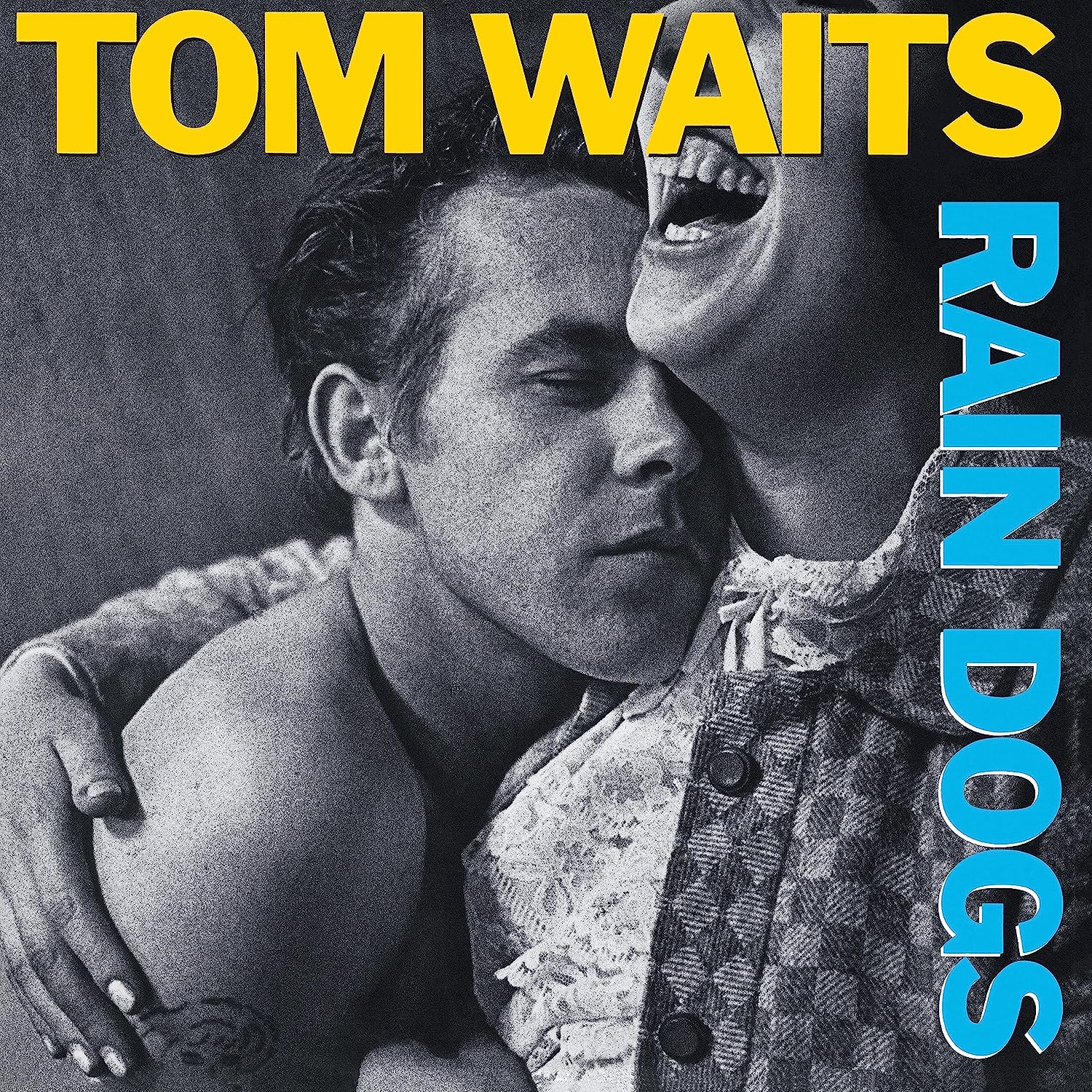
“Rain Dogs” came next Waits and Brennan moved to Lower Manhattan in 1984, when Brennan suggested it might be good for creativity. She was right. The 53-minute, 19-track album was a kind of mutant, late 20th century musical “Canterbury Tales” with a shape-shifting band. There were banjos and marimbas and bowed saw and parade drum and howling horns (and Keith Richards and Marc Ribot) on this rollicking, rough-hewn opus—and Waits was using his voice in increasingly weird-and-wild ways. The songs were stories, sagas, laments, breakdowns, character studies, comedies, cabaret numbers, and the moving anthem, “Downtown Train,” which was later covered by Patty Smyth and Rod Stewart.

For the second album of his trilogy, “Rain Dogs”, Waits and Brennan had moved from the west coast to New York, into a loft apartment in Little Spain, not far from Union Square, which Waits furnished with stuff he found on the streets. He was, he said at the time, completely overwhelmed with the immersive noise and talk of the city. “For the most part it’s like an aquarium,” he told one interviewer. “Words are everywhere. You look out of the window and there’s a thousand words.” That clamour of found poetry made its way into his songs, just as the skip-reclaimed furniture found its way into the apartment. He had a sense, he told David Letterman at the time, that living in lower Manhattan was like “being aboard a sinking ship. And the ocean is on fire.” That feeling ran through “Rain Dogs” (the name is a reference to the city’s rough sleepers, “people who sleep in doorways… who don’t have credit cards… who fly in this whole plane by the seat of their pants”).

Marc Ribot recalled last week the first day of recording. “We were in the old RCA Studios, which harkens back to a time when the labels owned studios,” he said. “This was a historic place, high ceilings, wood panels, a huge room, which could record an orchestra; we set up in a clump in the middle. There was a lot of amazing old equipment and amplifiers from something called the guitar society and a lot of unusual instruments.”

To loosen up his sound, Waits had mostly abandoned his go-to saxophone and double bass, filling the gap with all kinds of percussion and drums, marimbas and harmoniums and squeeze boxes. At the precise moment when music was becoming synthesised and digitised and sampled, he insisted on its traditions of heavy lifting. (“Anyone who has ever played a piano,” he liked to say, “would really like to hear how it sounds when dropped from a 12th-floor window.”)

He became interested in reviving the legacy of Harry Partch, who in the 30s and 40s had lived a hobo life in America, travelling in box cars, picking up ideas for instruments from junkyard materials, even creating his own form of notation. “I use things we hear around us all the time,” Waits said, “…dragging a chair across the floor, or hitting the side of a locker real hard with a two by four, a brake drum with a real imperfection, a police bullhorn… the problem is that most instruments are square and music is always round.” Keith Richards has recalled how when he arrived in the studio he thought: “Hello! He had a Mellotron… which was loaded entirely with train noises.”

Tom spent the previous couple of years in New York, researching what a lot of downtown composers and avant-whatever musicians were doing,” Ribot recalls. “I think he was working with a really wide palette – but it wasn’t just to be weird. The key to Tom’s music is that he’s dealing not only with a lot of different music of the past, but with our memory of those musicians. We hear the music of the past on old scratchy records. He had this bass marimba because he was interested in a lot of Caribbean sounds, but specifically the way they sounded on 1920s and 1930s recordings rather than on today’s technology. He was interested in the whole history of folk and blues, but also a wider kind of Americana beyond that.”

Waits was writing through the night in an artist’s community building in Greenwich Village (he used to get home at 5am, just in time to feed his baby daughter). “There were tiny little rooms and each one had a piano in it,” he later recalled. “You could hear opera, you could hear jazz guys, you could hear hip-hop guys. And it all filtered through the wall.”

If the departure lounge for this new sound had been “Swordfishtrombones”, then the real disembarkation was its successor, “Rain Dogs”. That album opened with a sort of frenzy of dockside rhythm, press-ganging the band and the listener into places they might not have been before. “We sail tonight for Singapore,” Waits rumbled over the cacophony in his most guttural voice, and you didn’t for a moment doubt him. The voyage then took you to all manner of destinations.

Michael Blair, who later played with Lou Reed and Elvis Costello, provided percussion on the album. “For a multi-percussion player, it was like: pinch me, please. You know, how many times in your life would anyone ever get a chance to play with somebody who wrote so well, all these bulletproof songs, one after another. They could all really be pop songs, if you arranged them in a different way. Or if the singer had a different type of

Waits, he recalls, would never be specific about what he wanted; it would be “play like a Russian barmitzvah, or Alice in Wonderland”. “You didn’t say, ‘What does that mean, Tom?’ – you just went for it. I think when something began to sound like the song he wrote in his mind, that’s where we started.”

Ribot remembers how Waits would often be writing the lyrics moments before he sang them. “The groove was the main thing, which he would keep trying to communicate with the way he was moving his body and guitar.” As Richards recently said in an interview with Uncut: “[Tom] had a lot of rhythms going on in his head and in his body… the groove is another word for the grail. People search for it everywhere, and when you find it you hang on to it.”

“I think what a lot of people trying to sound like Tom Waits didn’t get,” Blair says, “is that for that ‘junkyard’ sound to work, you’ve got to first have a song that will stand up to having an axe taken to it.” Just when his tracks become most alarming, Waits would remind you of their haunting structure, like Picasso reminding you he could still draw like an old master if he wanted to.
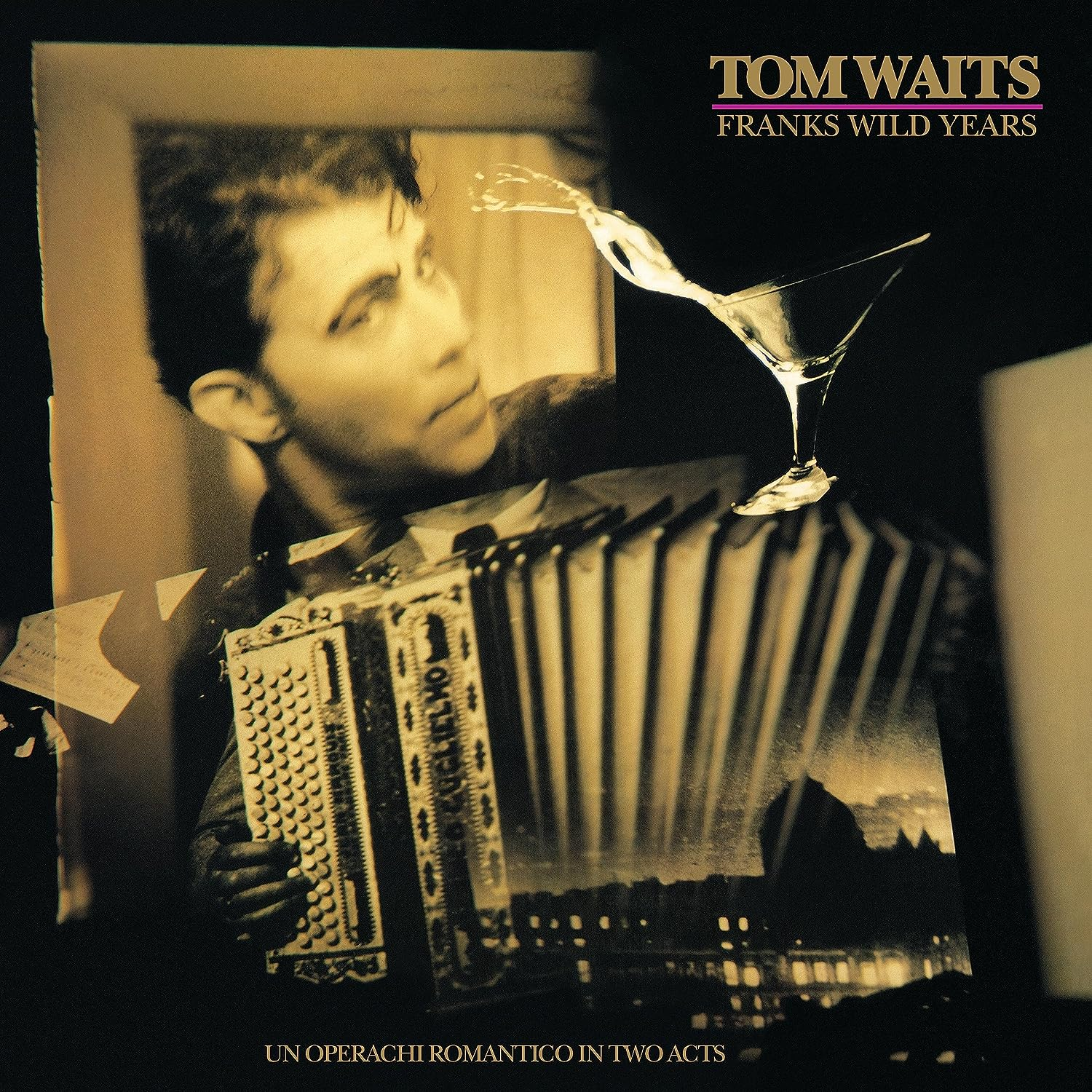
“Franks Wild Years”, the album, is based on the Waits musical of the same name, performed with Waits in the lead role by Chicago’s Steppenwolf Theater (directed by Gary Sinise) during the summer of 1986. Recorded mostly in Hollywood, the idea for “Franks” came from the “Swordfishtrombones” spoken-word piece in which a used-furniture salesman (Frank), suffocating in middle-class existence with a “spent piece of used jet trash” wife and her blind Chihuahua, Carlos, burns down his house. With smoking rubble in his rear-view mirror, he hits the freeway with the parting quip, “Never could stand that dog.”

Waits and Brennan developed this into Frank as an accordion player escaping the mythical town of Rainville for a calamitous but noble journey to Las Vegas and New York, in search of stardom. In the end, broke and bewildered, Frank—“a guy who stepped in every bucket on the road,” as Waits put it—dreams his way back to Rainville, while freezing on a park bench in St. Louis. Until he suddenly wakes up and finds himself home in the saloon where it all started.

“It closes a chapter, I guess,” Waits said when “Franks” was released. “Somehow the three albums seem to go together. Frank took off in “Swordfishtrombones“, had a good time in “Rain Dogs” and he’s all grown up in “Franks Wild Years.”

Waits’ vocal character varies wildly throughout the work’s 17 songs, and is no more impressive than when the gruff, growly singer turns to impeccable Sinatra-esque phrasing on the Vegas number, “Straight to the Top.”

Waits mythology has it that the original beat of the opening track of “Rain Dogs”, Singapore, was provided by Blair, the classically trained percussion maestro, whacking a cupboard with a hammer. Is that true?

Blair laughs. “It is actually. We had this sort of Kurt Weill accordion and oompah sound, and Tom wanted to give a sense that the world is going to fall apart. We had a look around the studio, in the kitchen and the bathroom, wondering what might give that sound, of someone trying to break the door down. There was an old dresser in one of the storage rooms. All the way through it’s me with a real hammer bashing it. We could have sampled it, I suppose, but it would not have been the same.”

The New York Times named “Rain Dogs” the best album of 1985, and though sales in America were slow, Waits was beginning to find a new audience in Europe. The subsequent tour – which like all of Waits’s sporadic tours ever since have been the hottest ticket in any city – proved that he was sailing in the right direction.

Waits once recalled to the journalist Barney Hoskyns how, before he made “Swordfishtrombones”, he had a terrible nightmare. He was in a Salvation Army store and flipping through a stack of old vinyl records when he came upon one of his early singer-songwriter efforts. “The sleeve,” Hoskyns related, “stared at him reproachfully and he knew something had to change. He had to create something unique, ‘something you’d want to keep’.” Forty years on, still married to Brennan, living somewhat reclusively on a smallholding farm where they write and create together – “I wash, and she dries” is how he describes it – he is seeing that ambition come true.

All albums were mastered by Chris Bellman at Bernie Grundman Mastering under the guidance of Waits’ long time audio engineer, Karl Derfler. The new vinyl editions will come with specially made labels featuring photos of Waits from each era in addition to artwork and packaging that has been painstakingly recreated to replicate the original LPs, which have been out of print since their initial release.
The Rolling Stones’ record label placed a pair of ads hinting at new music, two neighbourhood London newspapers confirm.

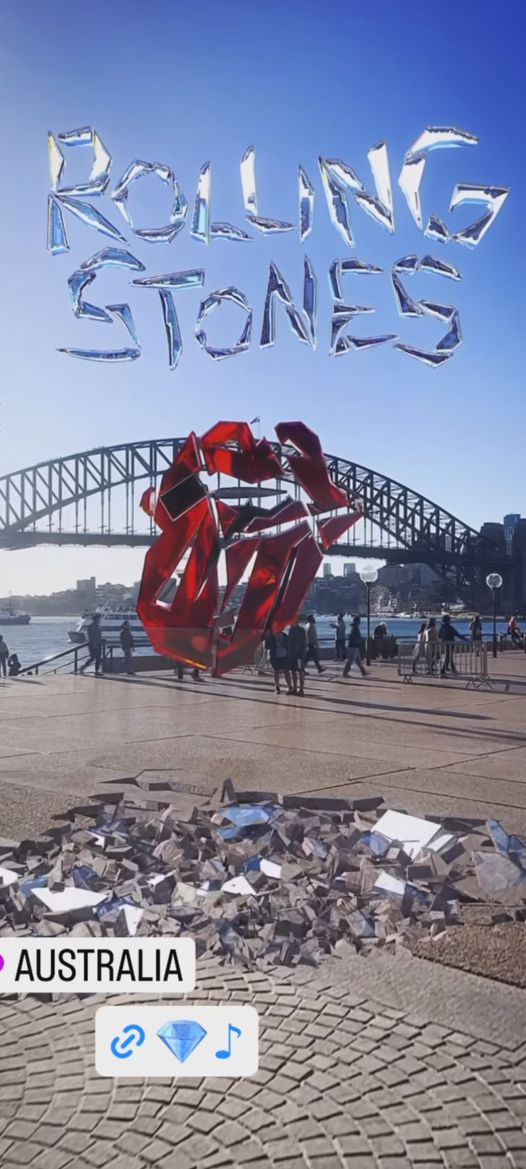
References to Stones songs were woven throughout the advertisements, which were supposedly for a company called “Hackney Diamonds”. Broad speculation followed that this might be the title of a new record. The Rolling Stones’ familiar logo dotted the “i” in the word “diamonds,” and the promo also referenced 1962 – when the group was founded.

For the faithful fans, a very long wait is over: The seminal rock band is back with ‘Hackney Diamonds’, their first original studio album since 2005’s ‘A Bigger Bang’. The LP is set to debut worldwide on Wednesday with an exclusive YouTube livestream. The same event will feature Mick Jagger, Keith Richards & Ronnie Wood chatting on stage with Jimmy Fallon from the London borough of Hackney — a neighbourhood “at the heart of” the new album, per the band’s official press release — about the new music & new era ahead.

The announcement followers a teaser campaign along with a sneak preview of a song, “Don’t Get Angry With Me.” Ironically, that promotion did make a few people angry, since the website where you could supposedly hear a snippet of the tune kept crashing. But YouTube, one imagines, is prepared to handle heavy demand on Wednesday…

Senior Editor Simon Murfitt says the ads – and the new album – are real. “It’s very exciting to have such a massive band announcing their new album in our papers, especially in such a cryptic manner,” Murfitt said in a statement published in the Hackney Gazette and Islington Gazette. The same reports said Universal Music Group made the ad buy.

Hot on the heels of announcing their forthcoming studio album ‘Hackney Diamonds’, The Rolling Stones release its first single ‘Angry’ on CD and etched 10″.

The Rolling Stones’ elaborate teaser campaign for their new studio album took another big step today (September 1st, 2023) when they shared a brief audio clip of a new track, “Angry.” 

Any new album would be the Rolling Stones’ first since the 2021 death of co-founding drummer Charlie Watts, who was subsequently replaced on the road by Keith Richards’ solo drummer, Steve Jordan. The Rolling Stones’ last album of original material dates back to 2005’s “A Bigger Bang”.

The ads, which also said “Opening September 2023,” sparked considerable excitement around the offices of these community publications. “I have already had several emails requesting back copies,” Murfitt added, “and no doubt the papers will become collector’s items for music fans.”

The latest teaser follows one on August 29th at around 4 p.m. ET when the band’s social media platforms displayed images of the artwork for the upcoming album, “Hackney Diamonds”. Photos of the artwork were displayed on buildings throughout the world (e.g., Wellington Arch in London, the Brooklyn Bridge), and the microsite for the album title went “live.” The album is poised to be announced on September 6th at 9:30 a.m.

The Rolling Stones have been discussing new music for several years. A collection of blues covers, 2016’s “Blue and Lonesome”, actually grew out of ongoing sessions – but then Watts died. “It’ll be interesting to find out the dynamics now that Steve’s in the band,” Richards later said “It’s sort of metamorphosing into something else.”

CNN confirmed that Paul McCartney sat in with the Rolling Stones for one song. it was suggested that Ringo Starr might take a guest turn, as well.

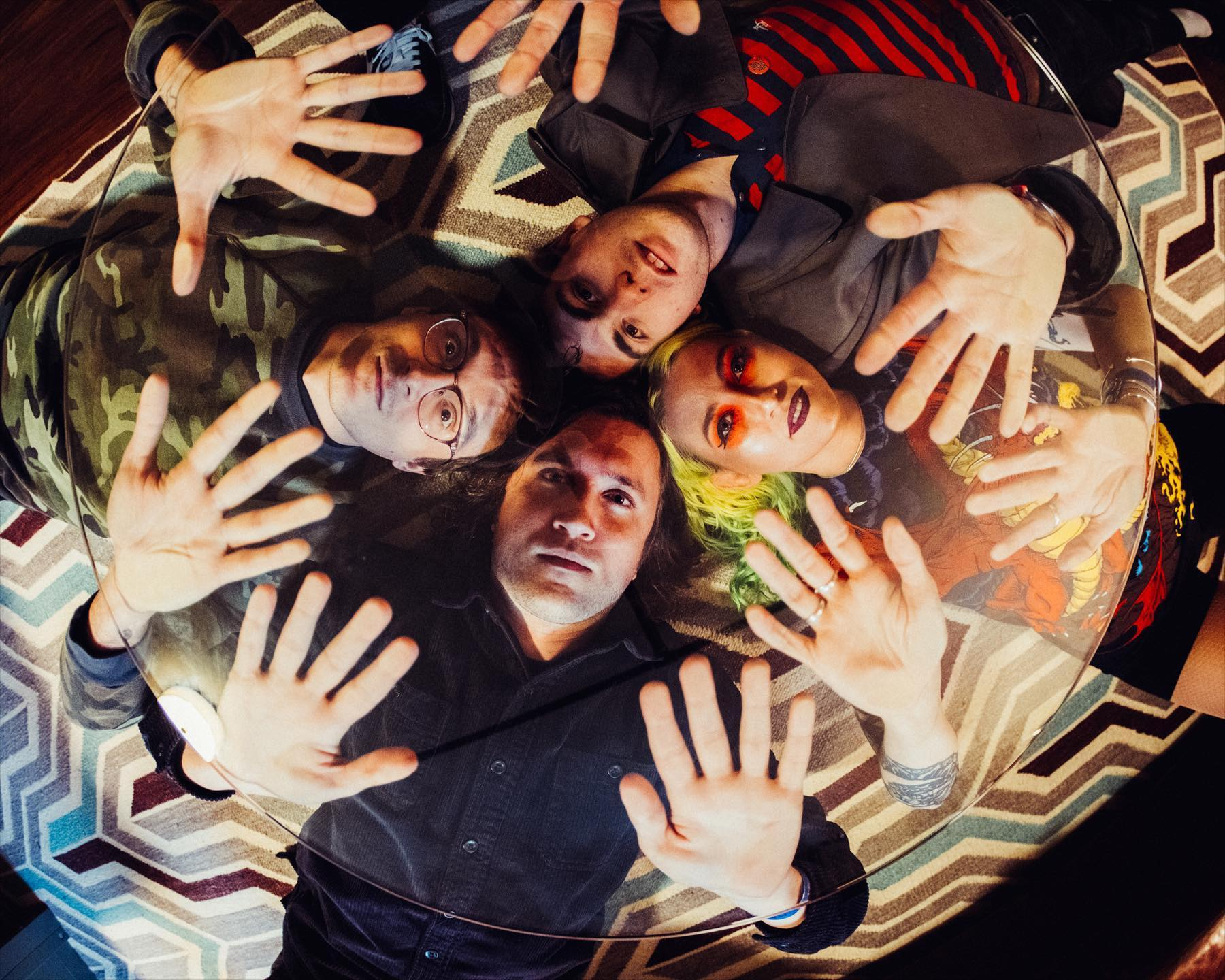
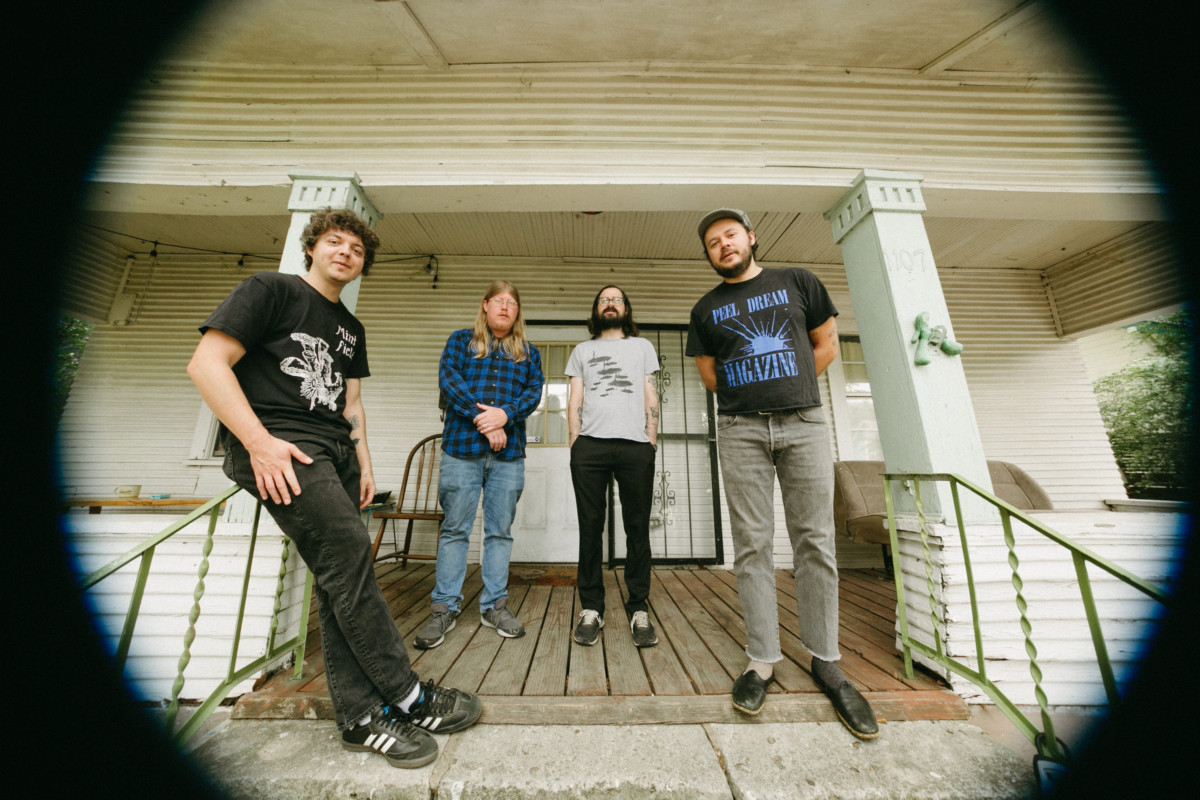
Over the course of five years and five LP’s, Los Angeles veterans, Frankie and the Witch Fingers, have been mutating and perfecting their high-powered rock n’ roll sound. After savagely touring the USA and Europe, this four-headed beast has shown no signs of relenting—appearing like summoned daemons and dosing crowds with cerebral party fuel.

The main attraction of Frankie and the Witch Fingers is their explosive performance. With their rowdy and visceral approach to live shows, each member brings their own devilry to induce an experience of bacchanal proportions.

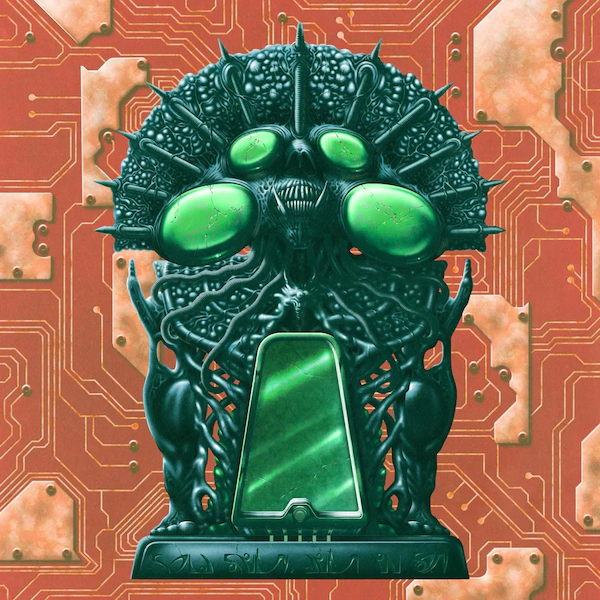
They weld their arsenal of influences to a chassis of nail-bitten bombast. On “Data Doom” the band hurtles the listener head first into the wood-chipper of technological dystopia, systemic rot, creeping fascism, the military-industrial profit mill, and a near-constant erosion of humanity that peels away the soul bit by bit. With a fuse lit by these modern-day monstrosities the band seeks to find salvation through a thousand watt wake-up of rock n’ roll exfoliation.

Using absurd lyrical imagery—soaked in hallucination, paranoia, and lust—the band’s M.O. strikes into dark yet playful territory. This sense of radical duality is astir at every turn, in every time signature change. Airy vocal harmonies over heavily-serrated riffs. Low-key shamanic roots under vivid high-strangeness. Rambling stretches and punctuated licks. Cutting heads and kissing lips. All this revealing a stereophonic schizophrenia that has flowed throughout their body of work: an ebb & flow of flowery-poppy horror.

The band has shared album highlight “Mild Davis” with a mind-bending animated music video. Inspired by Miles Davis’ early-70s electric work, the track’s dizzying 7/4 meter winds through chunky riffs, commanding vocals and proggy synths before crash-landing in a minefield of angular guitar harmonies.

The band’s latest incarnation is primed to break new sonic ground, edging into the funky and preternatural. Just when you think the trip couldn’t get any weirder, Frankie and the Witch Fingers cranks up the dial, shatters the mundane, and summons new visions. 

Frankie & The Witch Fingers – “Data Doom” released this week on Greenaway Records

TY SEGALL – ” Void “

Posted: September 2, 2023 in MUSIC

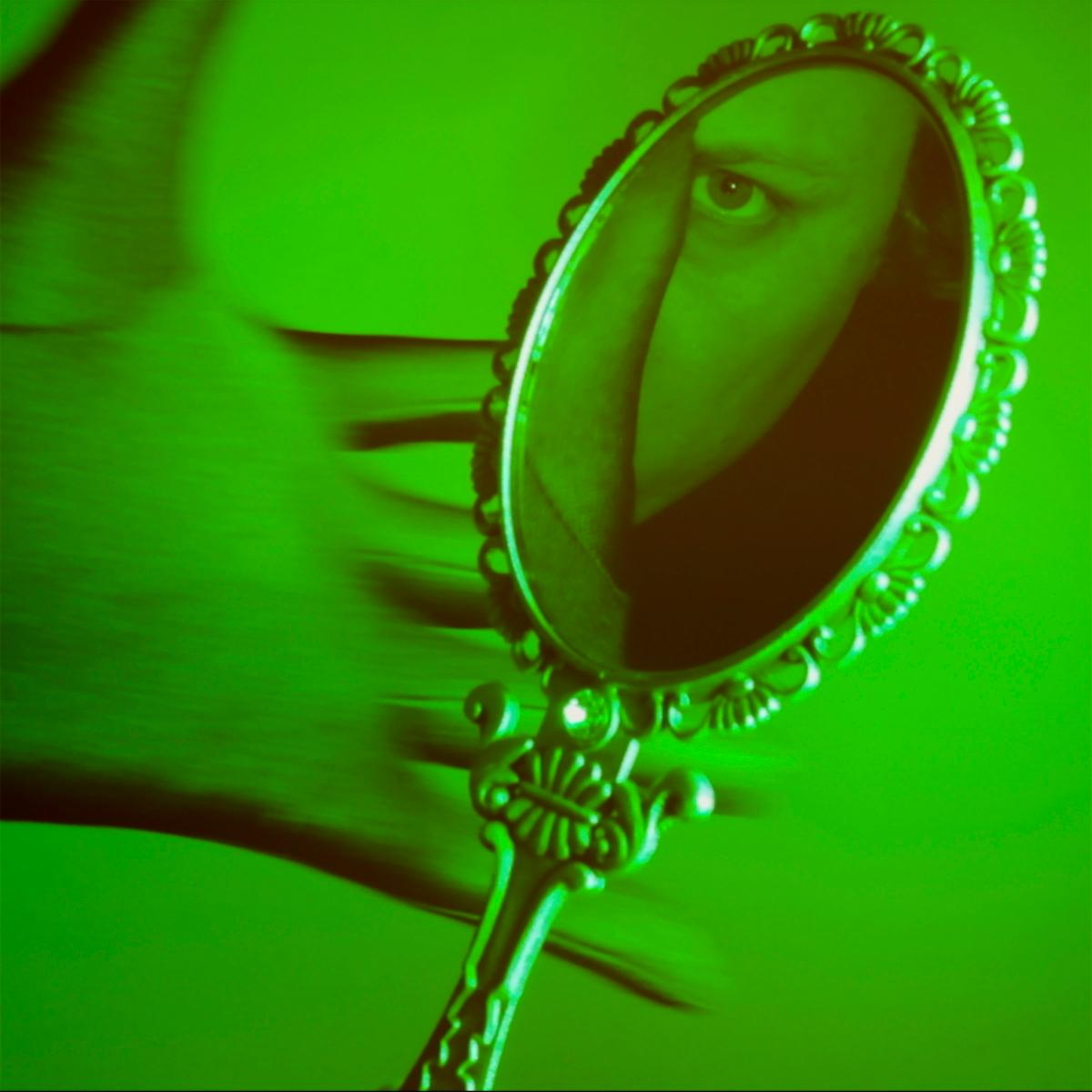
The world ripples, gurgles and expels! It’s not a mirage, it’s not unendurable heat, either. It’s just everything, viewed through a stained glass lens. Out of the void comes Ty Segall – with a new single/video!

With his new single, Ty’s bringing it all in a sustained blast, beginning with a shimmering frisson of acoustic guitars, a sub-aqueous release of oxygen rising as bubbles. As we spiral into sensory isolation, each bubble seems like another life – but which one’s ours? Doors are flying open, with comings and goings. This is a trip! But it’s not the beginning of the journey to the center of whatever and what you find there. This is the delirium that comes at the end.

At 6:43, “Void” upends some of the expectations a seasoned Ty Segall listener may bring to the song, building slowly, riding its initial lick through swells, drifting dreamily with the undertow pulling urgently beneath, withholding verse-chorus-type payoffs until the latter stages, then building towering climaxes on top of each other.

Directed by Ty and Denee Segall, the video for “Void” casts Ty’s mind through memory, and awe-inspiring vistas of his natural world, experienced as a senses-overwhelming nightmare of mirage, illusion and dread-filled challenge. Wandering landscapes saturated with altered color, in and out of the focus of the lens, it recalls the way recollection is filtered and distorted in strange ways, with quizzical symbology and dreamlike contradictions. One moment, it’s “experience joy and walk outside,” then “it’s all fake, what I’ve seen outside.” Sometimes, you never know what you’re gonna get!

“Void” is out now!

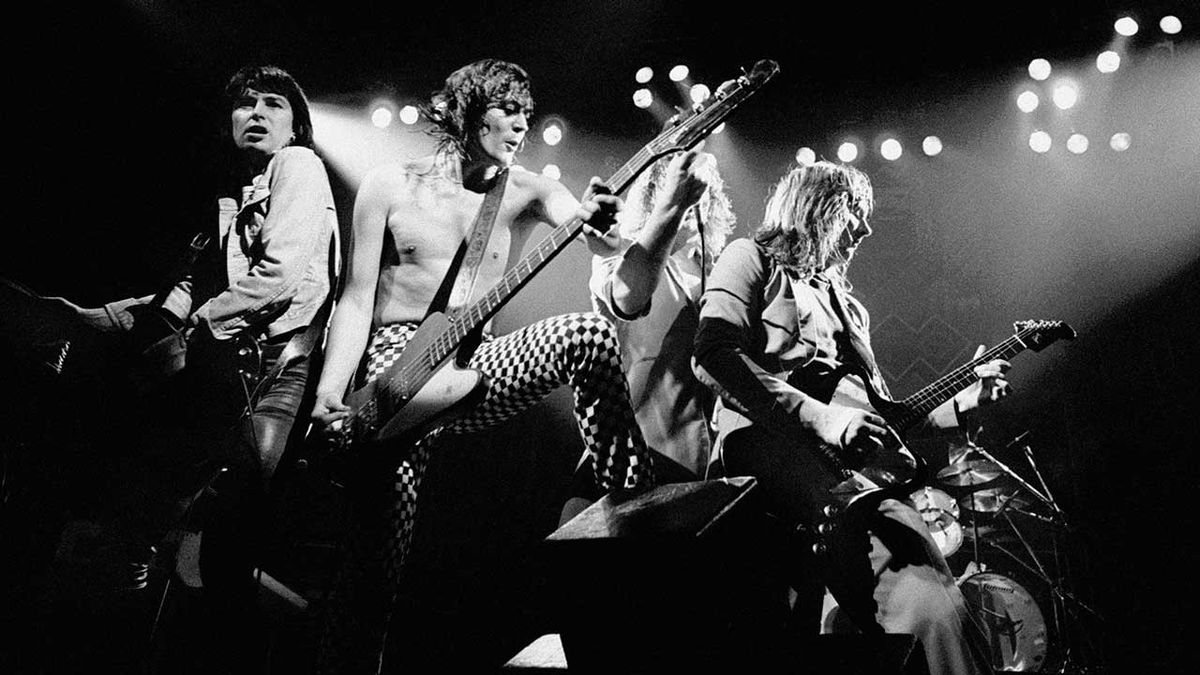
UFO led by Vocalist Phil Mogg, formed the British space metal outfit UFO in 1969. Originally known as Hocus Pocus, the group, which took the name UFO in honour of a London club, debuted in 1971.

Chrysalis/EMI have had a seriously good crack at remastering and reissuing their UFO’s back catalogue. The studio albums scrubbed up a treat and were relaunched a little while ago with rare material and live tracks. Then came the nicely researched and packaged collections with a bit more bonus material . Finally, last year came the excellent official bootleg live box set 75-82. 

By 1985’s ‘Misdemeanor,’ UFO, like many of their classic-rock peers, had been tragically infected by ‘80s studio disease: a grotesque but common affliction that covered its victim in sonic warts like synthesizers, triggered snare drums and squeaky guitars. Whether you want to hear the many shades of ‘Doctor Doctor’ or ‘Rock Bottom’ captured here, or want to explore bucket loads of other worthy stuff.

  • Bass – Paul Gray
  • Drums – Jim Simpson
  • Guitar – Atomik Tommy ‘M’
  • Keyboards, Backing Vocals – Paul Raymond
  • Lead Vocals – Phil Mogg

Originally recorded & filmed for “The Misdemeanor Tour” VHS release

releases November 17th, 2023

This was recorded 10 years ago and is finally going to see a proper release on vinyl and digitally!!! Put five of the best musicians in PDX at the time together and this is what happens. We are so excited and honoured to be able to release this and to top it off the mighty Cardinal Fuzz jumped on board!.

The Musicians :Collin Hegna (BJM, Federale) – Bass, Keyboards • Peter Holmström (The Dandy Warhols) – Guitar
Matthew Hollywood (BJM) – Guitar, Vocals • Jason Anchondo (The Warlocks) – Drums
William Slater (Grails) – Guitar, Piano

Originally released September 28th, 2018

SPEEDY ORTIZ – ” Rabbit Rabbit “

Posted: September 1, 2023 in MUSIC

Five years after the release of “Twerp Verse”Speedy Ortiz returned last month to call out picket-line crossers with the simmering-yet-upbeat single “Scabs.” Turns out there’s more where that came from—today the band is announcing their fifth LP “Rabbit Rabbit” with another new track weeding through the ethics of fair labour called “You 02.” Leaning further into their grunge origins than the previous track, which more closely hewed to “Twerp Verse’s” pop sensibilities, the new single contemplates the ever-present issue of idols with questionable ideologies.

“Mostly when I’ve met my musical heroes, they’re kind and principled people,” Dupuis shared in a statement, explaining that the song’s title references a season of the Netflix series You that felt pertinent to the lyrics. “But occasionally someone whose work I love(d) reveals themselves to be anti-union, or anti-‘woke,’ or some other gear-grinding ugliness. That’s who I wrote ‘You S02’ about, the song’s frenzied guitar and synth solos mirroring the crazymaking intensity wafting off people who act like that.”

Arriving with the track is a music video indebted to “woke”-ism urtext They Live, with the band rocking way more glamorous sunglasses to learn the truths behind the artists glowingly written up in the press. Something, something, something, play bubblegrunge and kick ass—and they’re all out of patience for the systems that made “bubblegrunge” a buzzword in late 2021.

JEFF ROSENSTOCK – ” Hellmode “

Posted: September 1, 2023 in MUSIC

Jeff Rosenstock makes increasingly chaotic albums for an increasingly chaotic world. With each passing year, it feels like the temperature of the universe boils five degrees hotter, and with each new album, Rosenstock’s music grows more unwieldy and lawless. Louder, faster, more feral. Which brings us to 2023—a planet on fire, a mere 90 seconds to midnight on the doomsday clock, and the release of Rosenstock’s appropriately titled, anarchic record, “Hellmode”.

“To me, the album feels like the chaos of being alive right now,” Rosenstock says of “Hellmode”. “We’re experiencing all these things at the same time that trigger our senses, and emotions that make us feel terrible. We’re just feeling way too much all at once!” But for all its textured turmoil, there are also surprising glimpses of clarity and grace to be found in “Hellmode”, when Rosenstock deliberately slows things down in places that are prettier and more delicate, rare moments of shelter in the storm. Which only makes it more rewarding when these moments unexpectedly unravel and spiral back into extreme, manic chaos, like abruptly being flung into a Nintendo game on level 99.

“Hellmode” marks the fifth studio album the prolific Rosenstock has released in the last ten years under his own name, following the dissolution of his beloved cult projects Bomb the Music Industry! and The Arrogant Sons of Bitches. Also tucked into his rapidly expanding catalogue is a live record, a ska reimagining of his 2020 album “No Dream”, and various dumps of stray songs and loose singles.

And somewhere on the side, he has found time to score the Emmy-nominated animated series Craig of the Creek. Rosenstock’s rising profile and critical acclaim over the last decade have been something of an anomaly. He’s a proud torchbearer of the punk sonics, aesthetics, and ethos of his youth, leaning into pop punk and ska sensibilities that were deemed Decidedly Uncool by the gatekeepers of the time. (On any given day at a big outdoor music festival, he is likely the only musician who will bust out a saxophone solo.) But when Rosenstock celebrates these styles, he somehow ends up getting praise from tastemakers and landing on prominent year-end lists.

Maybe it’s because his appreciation doesn’t feel like cheap nostalgia or surface-level cosplay. Everything he does is just so damned sincere.

That success is something Rosenstock has been conflicted about, and fuels some of the anxiety that runs through “Hellmode”. “It’s weird feeling success at the worst possible time, while the world falls apart,” he says. “These things I’ve been unintentionally working towards for the last two decades have come to fruition now, when everything is on fire.”

To record “Hellmode” in the summer of 2022, Rosenstock once again enlisted his long time studio collaborator, Jack Shirley, the Grammy-nominated master of heaviness who has recorded all of Rosenstock’s studio albums. But this time, they took a slightly more ambitious approach, booking time at the legendary EastWest Studios in Hollywood. They recorded to tape in Studio 2, the same hallowed ground where System of a Down recorded Toxicity, and where Whitney Houston laid down vocal tracks for The Bodyguard soundtrack.

The newfound studio resources produced the biggest and most expansive Jeff Rosenstock record to date.“I looked at it like: Well, we’re never gonna make a major label debut record. But I really like the sound of a lot of those records from the 90s—the Rob Cavallo stuff, the Jerry Finn stuff,” Rosenstock says. “So what would we do if we were in the studio trying to make that kind of record? It’s funny, I feel like in 2023, you can write an unabashedly poppy punk song and it’s probably not gonna be on the radio anyway, so it doesn’t feel like a sellout move. We felt free to make something that just kicks as much ass as possible.” 

releases September 1st, 2023

HOLY WAVE – ” Five Of Cups “

Posted: September 1, 2023 in MUSIC

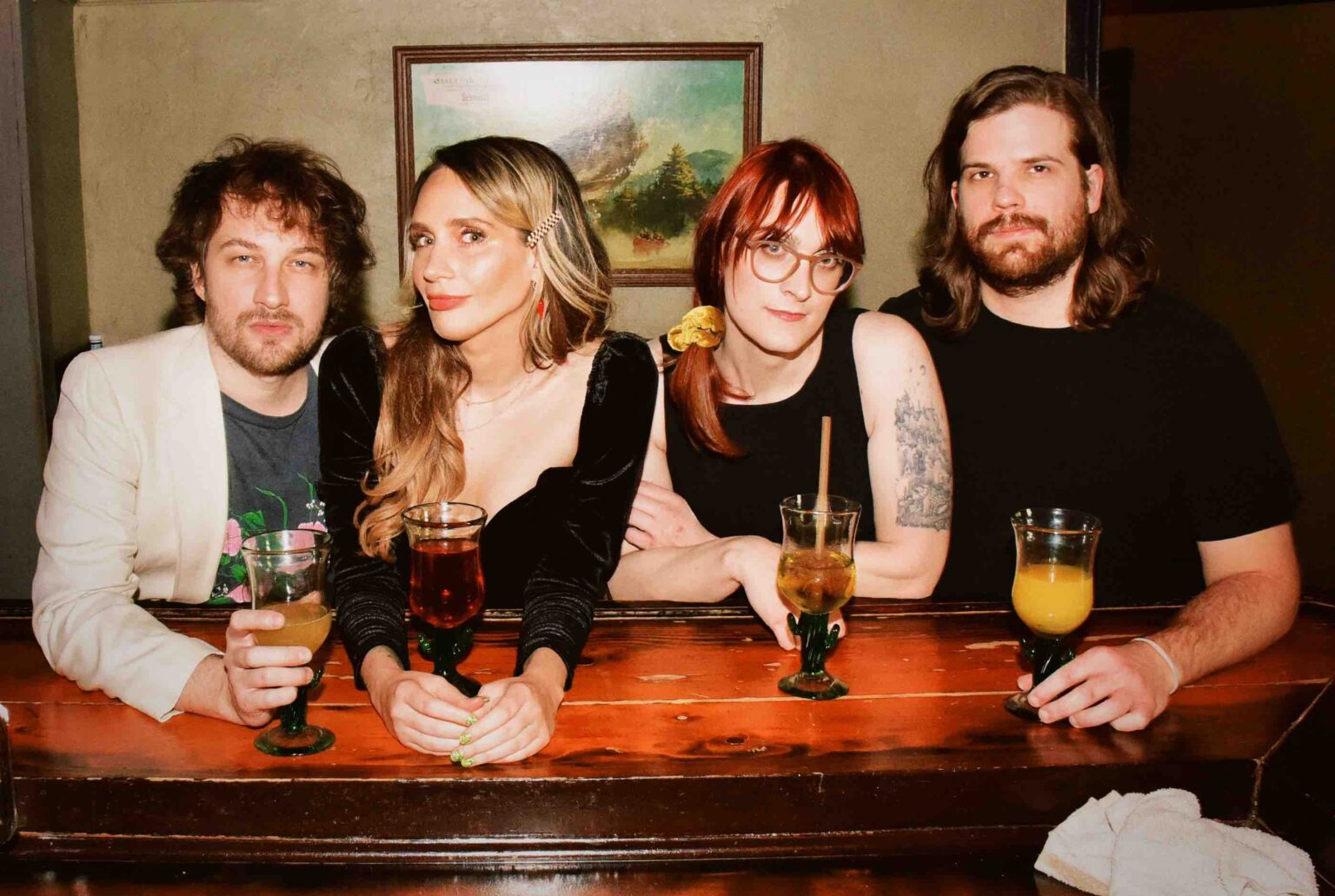
The Sixth studio album from Texan psychedelic dream pop auteurs Holy Wave. Treading a fine line between delicious wistfulness and transcendent ecstasy, there’s an effortless sense of gentle propulsion to these nine tracks (which includes the single ‘Chaparral’). Features Lorena Quintanilla and Alberto Gonzalez from psych duo Lorelle Meets The Obsolete.

“Five of Cups” is the newest LP by Holy Wave, a four-piece band from Austin, Texas, that’s been releasing music since the early part of the last decade. For this release, Holy Wave hasn’t strayed too far from the sound that made them popular: the drifting, atmospheric indie-rock that freshly folds shoegaze and surf into revivalist psychedelia.The title track begins the album, and it kicks off with the screech of a synthesizer that demands your attention before meandering itself into a depressing story told by a drunkard who lost everything and now finds himself lighting cigarette butts and drinking to excess on the French Riviera. The sadness apparent in the soft chords of the lead guitar contrasts with the siren-like synth in a way that delineates anxious panic on an existential level.In “Path of Least Resistance”, the band permeates single notes from a synthesizer onto the background of the track, punctuated by what could be a cowbell, as melodic chimes dance in the forefront and lyrics mull over regrets and wasted time.

Like many albums, “Five of Cups” is not without moments of self-indulgence. Some songs, such as “Nothing is Real”, tend to linger in repetitive patterns that border on monotony. Even within these moments, however, the band’s intention of weaving a deep, trance-like atmosphere through the haze of production and adept execution is evident. On this LP, Holy Wave saves their best for last. The three tracks that conclude “Five of Cups” are far and away the most musically complex and interesting tracks on the album, most notably those with guest spots from two acts who’ve released albums this year: Lorelle Meets the Obsolete and Estrella del Sol.“The Darkest Timeline”, which features the duo Lorelle Meets the Obsolete, is led by synths that pulse and scream over the entirety of the track, backed by a bassline that grooves back and forth underneath soothing vocals from Lorena Quintanilla.

The song builds with these elements until breaking into flow when the lead guitar and drums take precedence on the epically dreamy crescendo, where communication between guitar and synth creates a lush soundscape that sets under the momentum of a drum kit and choral performances that, together, emulate dusk. Fittingly, the following track, “Nothing in the Dark”, gets sentimental about finding solace in dimly lit rooms at night over a quirkily arpeggiated lead guitar.

The album wraps on a high note with “Happier” featuring Estrella del Sol. The song spotlights a relentless rhythm guitar, well-accented by the chiming of synths, and a lyrical subject that’s less than optimistic on the substance of living one’s life according to the manifesto of an American dream and sports a protagonist with all his boxes checked but still needs to pop pills for depression. In the album’s final verse, sung in Spanish, the protagonist is urged to stop running and face life in front of him.

The sounds explored on this album are far from anything new or cutting-edge. Everything feels reminiscent of the sound Dan Auerbach, Richard Swift, Lana Del Rey, and Mac Demarco were creating around ten years ago. “Five of Cups” is the seventh album released by Holy Wave, but they’re not covering new territory here. Apart from retreading old ground, it’s a solid release. However, the fact that it’s Holy Wave that made this album is essentially incidental, as this is the kind of work any alt band in any city could’ve, would’ve, or did make in the mid-10s. So, if you’re looking for vocal performances washed out from an echo effect to the point of being unintelligible while accompanied by routine psychedelic guitar licks and effective use of synth, then “Five of Cups” will fit the bill.

released August 4th, 2023

All songs written by Holy Wave.
Holy Wave is Ryan Fuson, Kyle Hager, Joseph Cook, Julian Ruiz.

Experimental Health” is the 14th album from The Telescopes and their third release on the Weisskalt label. The album was created entirely independently by Stephen Lawrie in a remote cottage in West Yorkshire between January to May 2022.

“Experimental Health” is folk music made with broken toys and cheap synths – mostly Pocket Operators and miniature synths. There are no guitars present on the album, most of the instrumentation costing £50 or less. The complexity of sound rests within the simplicity of the composition and musical arrangements.

released February 24th, 2023

All songs written by Stephen Lawrie