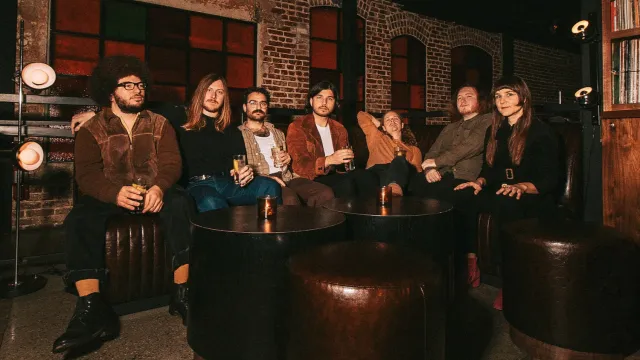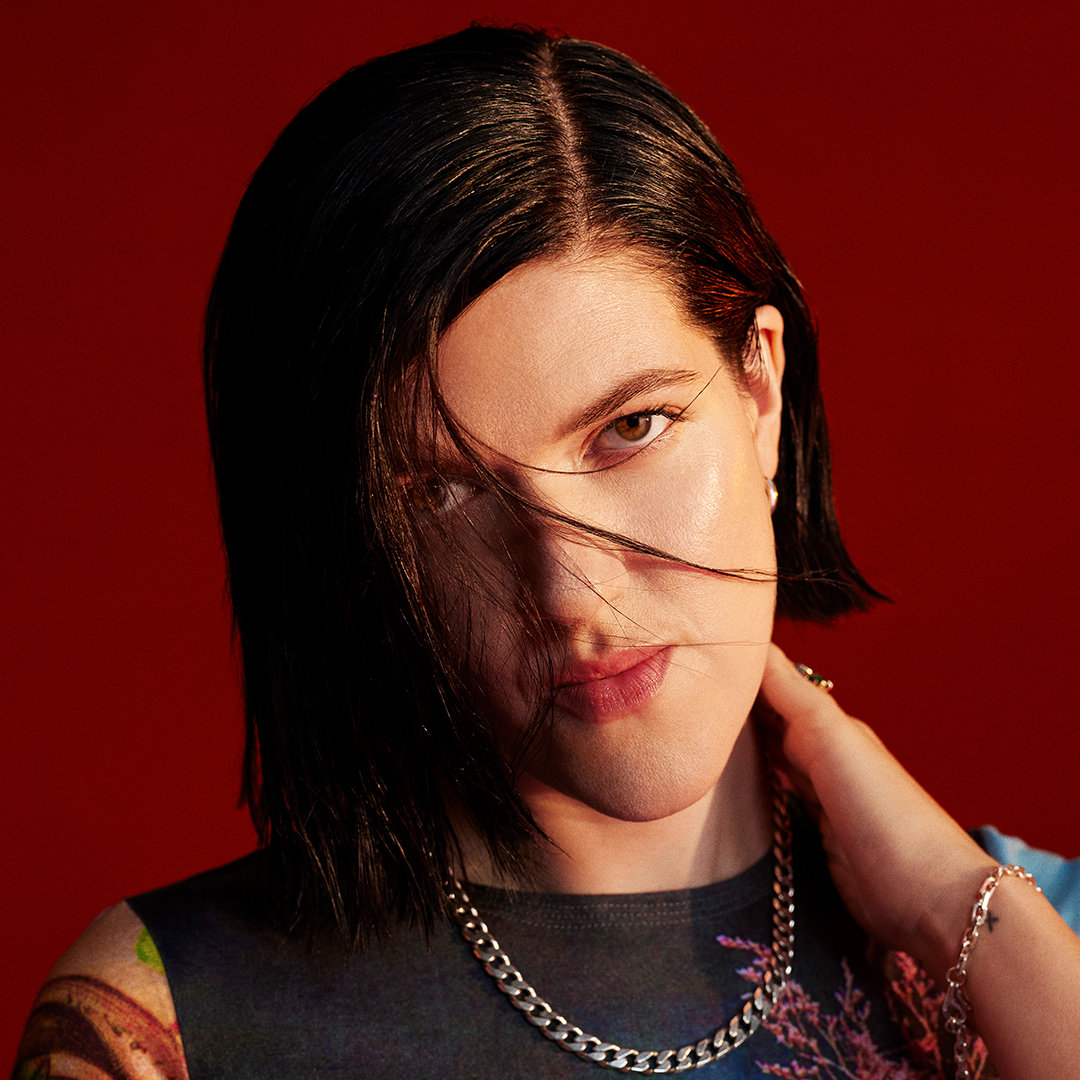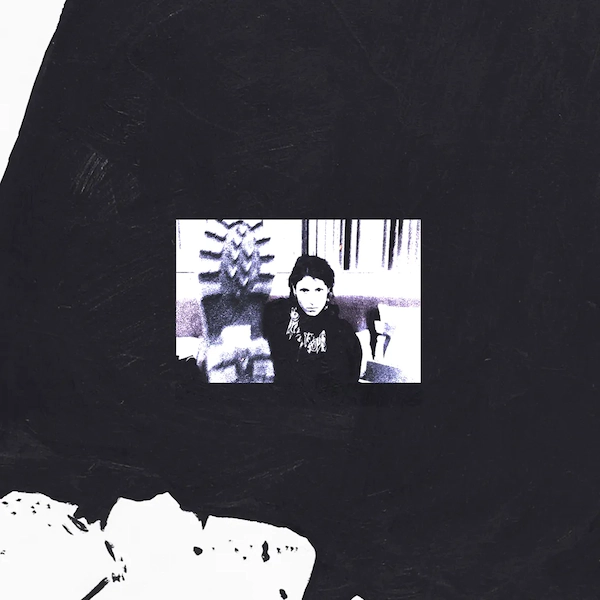
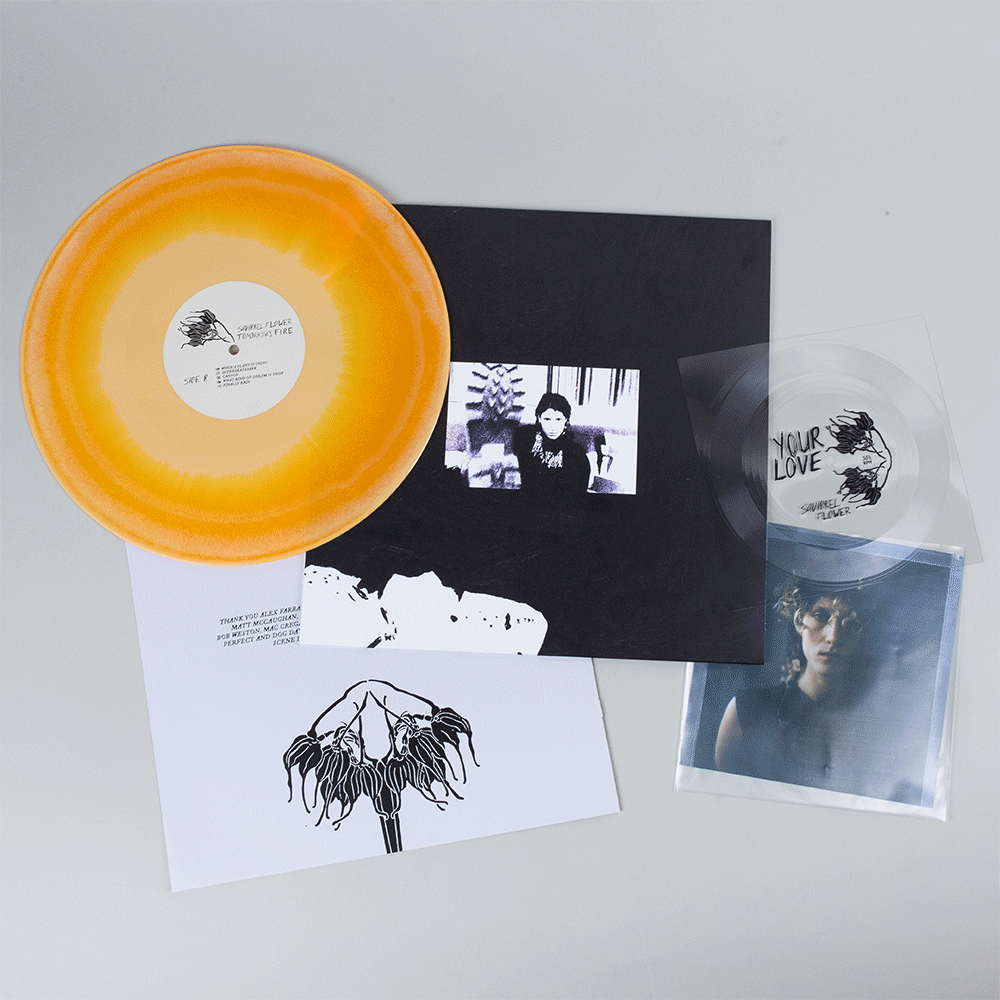
An hour south of Chicago, along the shores of Lake Michigan, sits the Indiana Dunes, a protected expanse of shoreline recently designated a National Park. When Ella Williams first visited the Dunes, she was awed by the juxtaposition of its natural splendor within the surrounding industrial corridor of Northwest Indiana. “Every time I go there, it changes my life,” she says, without a hint of hyperbole. “You stand in the marshlands and to your left is a steel factory belching fire and to your right is a nuclear power plant.” Across the water, Chicago waits, its glistening towers made possible by the same steel forged here. For as long as she’s been making music, Ella Williams’ songs have been products of the environments they’re written in, born out of the same world they so vividly hold a mirror to. This environment is where her magnetic new album, “Tomorrow’s Fire”, lives. 

The music Williams makes as Squirrel Flower has always communicated a strong sense of place. Herself-released debut EP, 2015’s early winter songs from middle america, was written during her first year living in Iowa, where the winter months make those of her hometown, Boston, seem quaint by comparison. Since that first offering, Squirrel Flower amassed a fanbase beyond the Boston DIY scene with several releases. The most recent, “Planet (i)”, was informed by climate anxiety, while the subsequent “Planet” EP marked an important turning point in Williams’ prolific career; the collection of demos was the first self-produced material she’d released in some time. With a renewed confidence as a producer, she helmed “Tomorrow’s Fire” at Drop of Sun Studios in Asheville alongside storied engineer Alex Farrar (Wednesday, Indigo de Souza, Snail Mail). Working tirelessly through long studio sessions with no days off, Williams and Farrar tracked many of the instruments, building the songs together during the first week, and then assembled a studio band that included Matt McCaughan (Bon Iver), Seth Kauffman (Angel Olsen band), Jake Lenderman (aka MJ Lenderman),and Dave Hartley (The War on Drugs) lending their contributions. 

While her early work is often hushed and minimal, there has always been a barely contained storm in Williams’ music. “Tomorrow’s Fire” is that storm breaking open, a rock record, made to be played loud. As if to signal this shift, the album opens with the soaring “i don’t use a trash can,” a re-imagining of the first ever Squirrel Flower song. Here, she nods to those early shows, when her voice, looped and minimalistic, had the power to silence a room. Lead singles “Full Time Job” and “When a Plant is Dying,” narrate the universal desperation that comes with living as an artist and pushing up against a world where that’s a challenging thing to be. The frustration in Williams’ lyrics is echoed by the music’s uninhibited, ferocious production. “There must be more to life/ Than being on time,” she sings on the latter’s towering chorus. Lyrics like that one are fated to become anthemic, and “Tomorrow’s Fire” overflows with them. “Doing my best is a full time job/ But it doesn’t pay the rent” Williams sings on “Full Time Job” over careening feedback, her steady delivery imposing order over a song that is, at its heart, about a loss of control. 

The album glides effortlessly over emotional states of being, lightness and heaviness. “Intheskatepark,”written in the summer of 2019, four years later sounds like a dispatch from a bygone world. The scuzzypop production nods to Guided By Voices, as Williams sings about crushing under summer sunshine. “I had a light,” Williams repeats mournfully on “Stick,” her voice at once aching and powerful, a sense of rage fermenting as the song goes on, until it explodes in the second half. “This song is about not wanting to compromise, just being at the end of your rope,” Williams says. “Stick” harnesses that exasperation and turns it into a battle cry for anyone who is exhausted but feels like they’re not working hard enough,who had to get a job they hate to make rent, who lost their light and can’t seem to find it again. Finding that light is important. “I feel like I lost myself for a bit”, Williams says, “trying hard to be what I thought people wanted me to be, suffocated by the pressure of being perceived. Now, I want to be unapologetic, uncompromising.’ Role models like Kim Gordon, Patti Smith, and PJ Harvey, alongside inspiration from contemporaries and friends led Williams to the most uncompromising version of her music. 

Williams also cites artists like Jason Molina, Tom Waits, and Springsteen as fonts of inspiration for “Tomorrow’s Fire”, musicians who knew how to write into the mind of a stranger, who could tell you the story of a life in under four minutes. “The songs I write are not always autobiographical, but they’re always true,” Williams says. Nowhere is Springsteen heard more clearly than on “Alley Light,” an electrifying song narrated from the perspective of a down-on-his-luck guy whose car is fated to die anyday now and whose girl just wants to escape. There’s a vintage sheen to it, but “Alley Light” captures the very familiar feelings of loss that come with living in a 21st century city, where you blink and the store fronts change. Williams notes, ‘It’s about a man in me, or a man who I love, or even a man who is a stranger to me.’ 

Springsteen also leads back to one the strongest recurring themes for Williams both on this album and throughout her career, family. With her musical family members often playing on previous records,‘Canyon’ tells the story of Williams’ mother. As a teen, sneaking out to go to a Springsteen concert with her boyfriend. “She was a rebel,” Williams says, “I always learn more about myself through stories of her life and I wanted to honor that”. The biggest her sound has ever been, ‘Canyon’ echoes like rocks fallingfrom cliffs, breaking apart. The vast natural landscape meeting industrialism–field recordings of metal grinding taken by her sibling at their job as a steelworker layered with the wall of guitar. 

“Tomorrow’s Fire” might sound like the title of an apocalypse album, but it’s not. It references the title of a novel Williams’ great-grandfather Jay wrote about a troubadour, named for a line by the Medieval Frenchpoet Rutebeuf, a troubadour himself: “Tomorrow’s hopes provide my dinner / Tomorrow’s fire must warm tonight.” Centuries on, the quote spoke to Williams, who describes the fire as a tool to wield in the face of nihilism. “Tomorrow’s Fire” is what we take solace in, what we know will make us feel okay in the morning, how we light the path we’re walking on.“We may have to try a little harder every year to be playful, to shove away the bitterness” Williams says of the lessons learned from her ancestor, “but it’s always worth it to remain playful and hopeful, even if the stakes are really fucking high”. 

Closing track ‘Finally Rain’ speaks to the ambiguity of being a young person staring down climate catastrophe. The last verse is an homage to her relationship with her loved ones – ‘We won’t grow up.’ A stark realization, but also a manifesto. To be resolutely committed to a life of not ‘growing up,’ not losing our wonder while we’re still here.

“I have always been obsessed with how darkly thoughtful Squirrel Flower’s music is…I’m obsessed with her as a guitarist. She is so good. I’m really thrilled she has new music coming out.”
– Marissa Lorusso, NPR Music
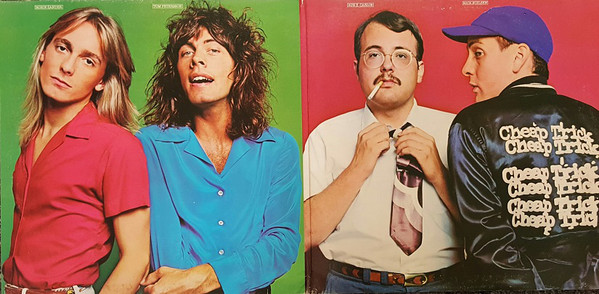
Cheap Trick’s second album release, “In Color”, which celebrates its 45th anniversary in September, sounds every bit as fresh as its first—and so, frankly, do the band’s third and fourth studio albums. And there’s a reason: The band (notably chief songwriter and guitarist Rick Nielsen) had stockpiled scores of worthy songs long before the band had ever entered the studio.

As one who grew up in Illinois, aware of Cheap Trick a full year before the band’s Epic Records signing and February 1977 debut album, I was hearing songs from the first four albums as early as October 1975. It was then that, on a tip from a kindred musical spirit, I checked them out at a 150-capacity dive called the UpRising Tavern in the university town of DeKalb, Ill.

There, for a $5 cover that seemed steep at the time, one was treated to three sets with that line up that look, that logo, and, best of all, those songs. The band’s 1977 self-titled debut album captured its edge, an unvarnished document of what we saw onstage around that time. Jack Douglas took the Rockford, Ill. band to New York’s Record Plant in fall 1976 and emerged with edgy power-pop songs like “He’s a Whore,” “Elo Kiddies” and “Taxman Mr. Thief.” Combined with the band’s unconventional look (two pretty boys, two nerds), the quirky songs turned heads and the album became a full-fledged critical sensation.

So when it came time to record the second album, the band changed coasts, and producers. Tom Werman (Blue Öyster Cult, Motley Crüe) took the band to Los Angeles’ Kendun Recorders, and a few other changes were made. Keyboardist Jai Winding was brought in as a session player (he was retained through subsequent albums “Heaven Tonight” and “Dream Police”, also produced by Werman). Winding’s keyboard swirls softened the occasionally stark spaces between Nielsen’s guitar runs and gave singer Robin Zander’s vocal phrasing a new platform. For Epic’s purposes, it also brought Cheap Trick closer to the radio—even if it would eventually take a live version of one of the “In Color” songs “I Want You to Want Me”, culled from the band’s 1978 live “At Budokan” album, to finally break through.

For us Midwest fans with a few road miles already logged, “In Color” collected many of the songs we’d seen in the band’s early live sets: “Hello There” with Nielsen’s ear-nabbing guitar chords remains their onstage opener to this day; “Downed,” “Oh Caroline” and “You’re All Talk.”

The latter, a raw sounding rocker, would have been at home on the Jack Douglas-produced debut. But it brought some needed edge to “In Color.”

There were also songs we hadn’t yet heard onstage, but would become imminent concert classics: “Big Eyes,” “Southern Girls,” “So Good to See You” and of course “I Want You to Want Me.”

The band always held back a few good non-LP B-sides, and the flip to the original 45 of “I Want You…” was an uptempo guitar-driven instrumental called “Oh Boy.” Nielsen jokingly said in an interview, “[‘Oh Boy’] marks the singing debut of Bun E. Carlos. But since Bun E. has never sung, there are no vocals on it.” (In fact, there eventually was a vocal version of “Oh Boy” also—Zander on vocals, of course, not Carlos recorded in 2003.

Reviews were solid: Rolling Stone called the songs “anthemic.” Robert Christgau, in his Consumer Guide, noted that Cheap Trick “doesn’t waste a cut.” Stephen Thomas Erlewine’s review in AllMusic, commissioned long after the life of the album, inevitably noted Werman’s “shiny, radio-ready sound,” while commending Nielsen’s “encyclopedic knowledge of rock ’n’ roll, as well as the good sense to subvert it with a perverse sense of humor.” He concluded, “Portions of the album haven’t dated well, simply due to the glossy production, but the songs and music on “In Color” are as splendid as the band’s debut.”

No fewer than five of “In Color’s” songs were included in the live album “At Budokan“, released 19 months after “In Color“. And the song many had thought the least likely to break the band, “I Want You to Want Me,” live rendition, distinguished by Zander’s English-as-a-second-language introduction of “I…want…YOU…to…want…ME.” And the band was off for the big time.

“At Budokan” may have reflected Werman’s production, Cheap Trick recorded another live album in that window. It was an edgier, grittier set recorded at the Whisky a Go Go in the middle of “In Color’s” L.A. sessions, yet not released until last year. It was titled “Out to Get You! Live 1977″, and has been called one of the best live albums of the rock era.

Cheap Trick went on to record two more studio albums with Werman, and a discography that (by my count) comprises 18 subsequent albums.

Los Angeles band Hooveriii (say Hoover 3) find a way to align the stars differently. but with every release dating back to their 2015 debut, Mastermind Bert Hoover says this of the band’s forthcoming album “Pointe,” due out October 13th “Every record is kind of a response to the last record, and I like listening to people’s discographies like that. “When we finished [2022’s] ‘A Round Of Applause,’ we were in rock mode playing with a lot of rock and psych bands and I was really thinking about what do you do with a fourth record?”

The band cites influences such as ’60s psychedelic act Pisces, Phil Lynott’s solo work and electronic pioneers Tangerine Dream.

“The Ship That I Sail,” which arrived this week with (yet another) great animated video from Rob Fidel, is a dark, menacing track accented by Gabe Flores’ stinging guitar. The album’s first single, “The Tall Grass” (Alex Bulli directs the video), is loopier in a psych-pop sort of way.

“Pointe” will be Hooveriii’s third full-length in three years. It features contributions from a big cast of talent — Flores, Kaz Mirblouk, James Novick, Owen Barrett, Gabriel Salomon, Anna Wallace, Paco Casanova, Matt Zuk, Jon Modaff, Shaughnessy Starr, Olaf Selland and Ari B. Jones.

Hooveriii’s currently touring supporting Mudhoney .

The Flaming Lips 2002 album “Yoshimi Battles The Pink Robots” was a huge album in the UK, selling over 300,000 units on its way to Platinum certification. The success was driven by 4 hit singles, including the title track and the Lip’s most popular song “Do You Realize??” The band frequently toured the UK during the album cycle, playing larger venues than previous tours, and were frequent guests on several radio shows.

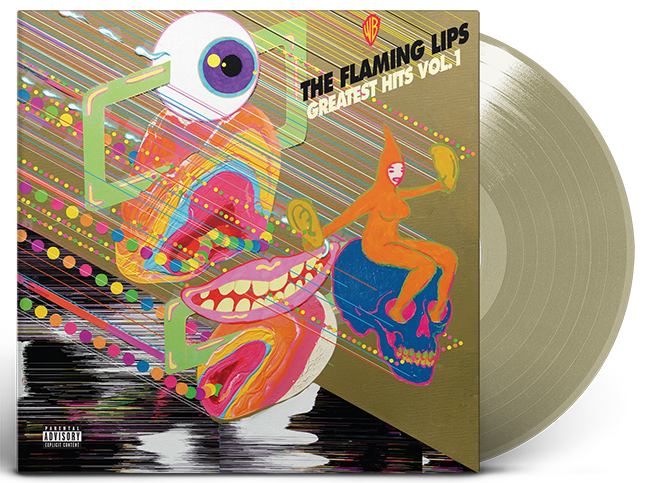
The Flaming Lips compile a selection of their best-loved tracks from throughout their storied career. The band remastered the album with long time producer Dave Fridmann at Tarbox Road Studios. “Greatest Hits Vol. 1” compiles eleven Warner-era singles and album tracks. This release includes singles from “Transmissions From The Satellite Heart” (1993), “Clouds Taste Metallic” (1995), “The Soft Bulletin” (1999), “Yoshimi Battles The Pink Robots” (2002), “At War With The Mystics” (2006), “Embryonic” (2009) and “Oczy Mlody” (2017). The Flaming Lips’ “Do You Realize??” is also featured on the Marvel Studios’ Guardians Of The Galaxy Vol. 3: Awesome Mix Vol. 3 (Original Motion Picture Soundtrack), available now on Hollywood Records.

The Flaming Lips haven’t had any real chart hits as such, but they are releasing “Greatest Hits Vol. 1” which is a sprawling 52 track 3 CD collection containing some of their best-loved songs and more obscure ditties from 1992 onward. It even includes that song that was only released on an MP3 stick inside a gummy skull.

The LP version is a more concise and recognisable Only a 11 track best of.

The 3CD – This significantly expands the concept of their “hits” and gathers some of their best-loved album tracks from the aforementioned albums plus deep cuts from their Warner album debut, “Hit To Death In The Future Head” (1992), along with music from, “Zaireeka” (1997), “The Flaming Lips And Heady Friends” (2012) and “The Terror” (2013). The Deluxe Edition also compiles a generous hatful of International single B-sides, studio outtakes and several previously unreleased tracks to present an essential view into the extraordinary body of work from one of the most influential and enduring rock bands of all-time. Some the aural treasures found on disc 3 are among the rarest recorded curios in The Lips musical medicine chest including the previously unreleased demo track “Zero To A Million” which features The Lips short-lived line-up that included Jonathan Donahue on guitar (Mercury Rev) and Nathan Roberts on drums. This track was on the original cassette tape which led to The Lips Warner Bros. Records signing. Another early obscurity “Jets (Cupid’s Kiss Vs. the Psyche of Death)” is one of the three tracks from The Lips first-ever WBR CD EP, “Yeah, I Know It’s A Drag…Wastin’ Pigs Is Still Radical”. Various tracks included here that have never been available on CD until now include the epic, fan favourite “The Captain” which was left off “The Soft Bulletin” and a welcome addition to this set. 

“We Can’t Predict The Future” is taken from a June 2000 John Peel BBC Session. “Your Face Can Tell The Future, and You Gotta Hold On are outtakes from At War With The Mystics sessions. Another rare gem, “Noodling Theme”, is from the 2001 Lips soundtrack to director Bradley Beesley’s indie-film “Okie Noodling” about bare-handed fishing in Oklahoma. Those lucky enough to attend early screenings were handed a copy of this now ultra-rare 3-song CD upon entry. “Spiderman Vs Muhammed Ali”, originally recorded for 2007’s Music from and Inspired by Spider-Man 3 soundtrack has never released in any form. Prior to this collection, “Enthusiasm For Life Defeats Existential Fear Part 2” existed on a USB drive – along with two other tracks – buried within the edible Gummy Fetus sold on tour in 2011. Closing out the collection is Silent Lord which is comprised of The Lips mash-up of “Silent Night” with Spacemen 3’s “Lord, Can You Hear Me” from a Christmas 2008 limited edition 7” picture disc.

Each of the tracks in this collection has been remastered from the original tape sources by The Flaming Lips and long-time producer Dave Friedmann at Tarbox Road Studios. The resultant sound quality of these recordings is now far superior to all previously released versions. The most comprehensive of any Lips compilation to date, this becomes an essential piece of the puzzle into the wonderful and strange world view of The Flaming Lips.

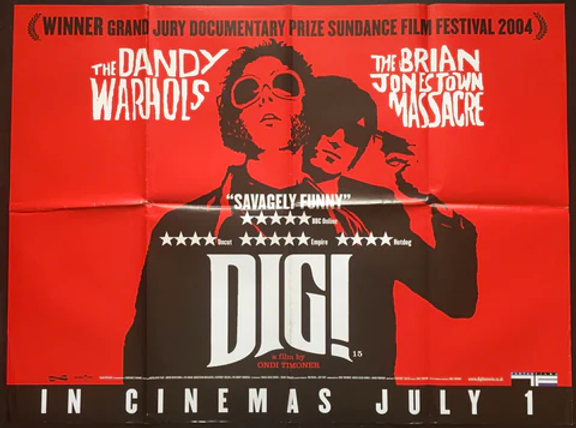
Dig! (2004) Music Documentary

Posted: September 10, 2023 in MUSIC

Dig!” should be everyone’s number-one music documentary. It really is the film that reignited a new music documentary movement. It was made over seven years, following the increasingly divergent careers of Portland, Oregon’s The Dandy Warhols and San Francisco’s The Brian Jonestown Massacre, as the former signs to a major label and the latter toil on the underground circuit, often a victim of their own excesses.

Dig!” really makes you question the concept of “selling out”. The Dandy Warhols were given an opportunity – and they took it – but it’s clear that if the same opportunities were afforded to The Brian Jonestown Massacre, which you see they almost were, they would likely have been taken as well.

The fate of two bands that start in the same underground scene divides over several years and the events are captured in real-time. There is a key scene when The Brian Jonestown Massacre, barely scraping by at the time, visit The Dandy Warhols recording in a huge mansion and the encounter brims with passive aggression and things left unsaid. one of the most shockin’ documentaries about ROCK. The Brian Jonestown Massacre vs. The Dandy Warhols.

You can see it in Anton Newcombe’s eyes when he hears his friends’ ‘Not If You Were The Last Junkie On Earth’ on the radio and he realises: this is a smash hit!

What is interesting looking back is that The Brian Jonestown Massacre stayed the more interesting of the two bands. The Dandy Warhols went off the boil pretty quickly and you wonder if that’s because of the pressure the major label deal they had to deliver on. On the other hand, it shows just how quickly you can be the flavour of the month with people wanting to sign you – and not being the flavour of the month because you’re absolutely barking mad!

I think the legacy of Dig! is that every man and his dog realised that there’s a real worth in making these documentaries because the careers of bands truly are great stories waiting to be told.

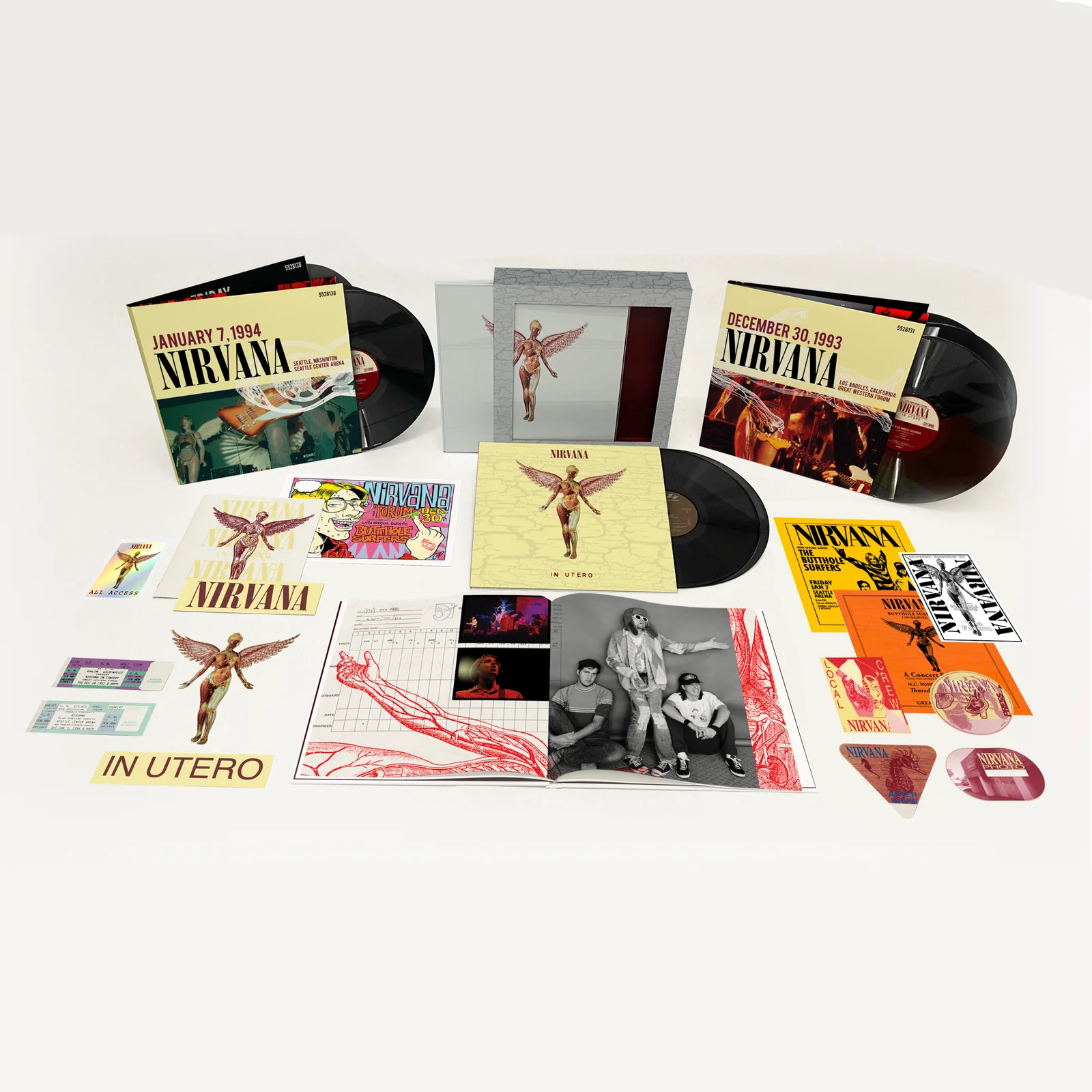
Super Deluxe 8LP Box Set

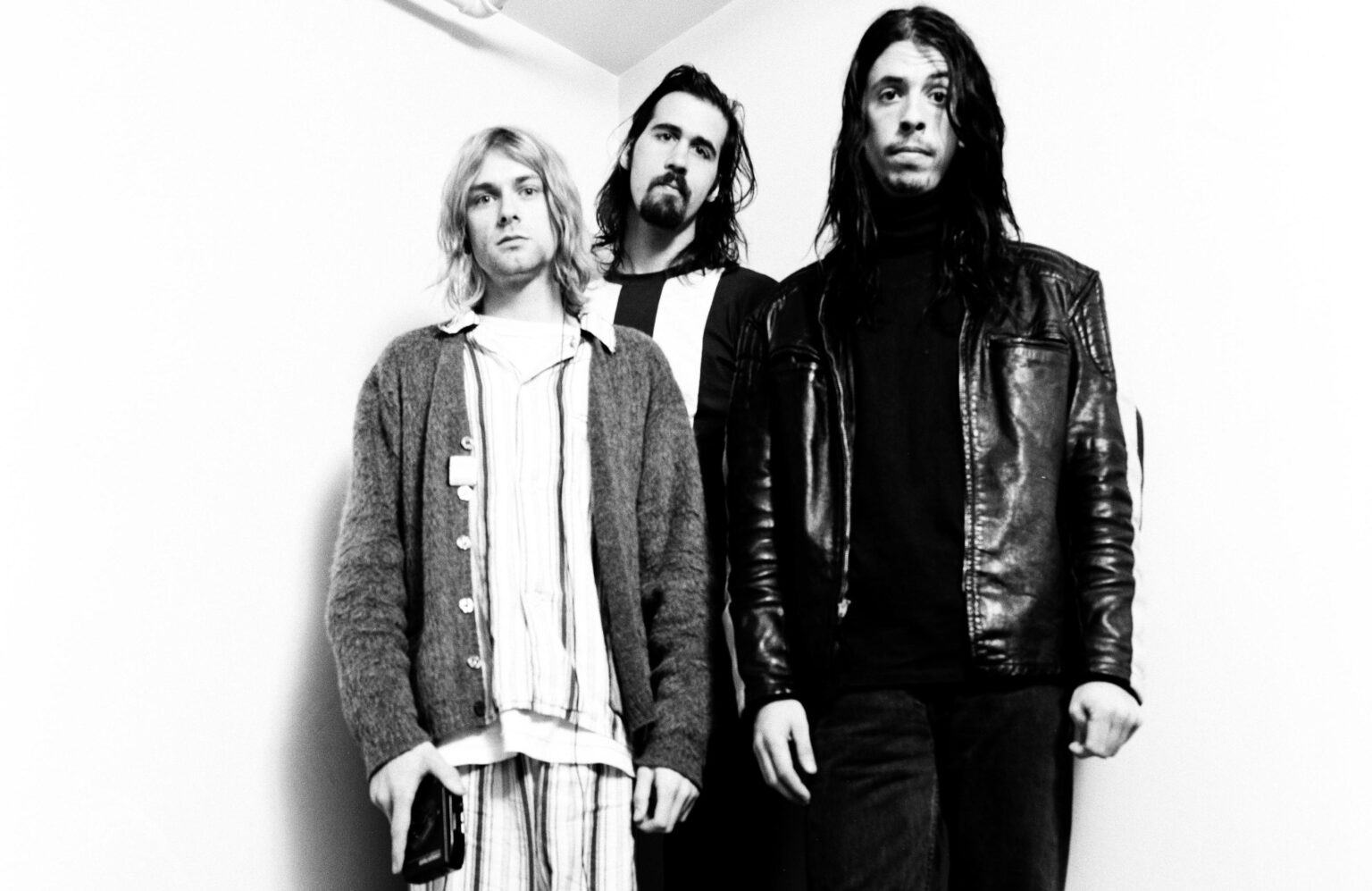
With Nirvana’s final record “In Utero” celebrating 30 years since it was originally birthed into the world on September 21st, a month later will see the release of a massive reissue project celebrating the record’s legacy. Dropping October 27th, the expanded, remastered edition includes over 50 additional tracks between its five B-sides and bonus tracks and several LPs comprised of previously unreleased live recordings, including the band’s last-ever set in Seattle in 1994.

In Utero” marked the third album from the band – comprised of Kurt Cobain, Krist Novoselic and Dave Grohl – and became their final album of original material before Kurt died by suicide at age 27 in April 1994, following a battle with drugs and depression.

The reissue comes in all shapes and sizes, with Deluxe and Super Deluxe Box Sets available on both vinyl and CD as well as in digital format. The Super Deluxe vinyl set comes with all sorts of additional benefits, such as a 48-page hardcover book featuring unreleased photos, a 20-page fanzine, a tour poster lithograph and gig fliers, and plenty more collectible items.

Among the unreleased material, two full “In Utero”-era concerts, namely “Live In Los Angeles” (1993) and the band’s final Seattle performance, “Live In Seattle” (1994), are included in addition to six bonus live tracks from Rome, Springfield, and New York. Seattle producer and engineer Jack Endino who produced the band’s 1988 debut album, “Bleach” has reconstructed the live tracks from stereo soundboard tapes for this year’s reissue.

Additionally, “In Utero’s” original twelve songs, along with five bonus tracks and B-sides, have been newly remastered from the original analogue master stereo tapes by Bob Weston at Chicago Mastering Services—who assisted Albini as the only other engineer at the original sessions.

Nirvana recorded “In Utero” in just over the course of six days in February 1993 at Pachyderm Studio in Cannon Falls, MN with Albini.

Retrospectively, the album was rated it a rare perfect score of “10.0” , “In Utero is the sort of painful shock that, paradoxically, re-instills the empowering sensation of feeling alive.” Upon its arrival back in 1993, David Fricke wrote in Rolling Stone, “In Utero” is a lot of things—brilliant, corrosive, enraged and thoughtful, most of them all at once. But more than anything, it’s a triumph of the will.”

The Super Deluxe Edition box sets also boast a removable front-cover acrylic panel with the album’s iconic Angel; a 48-page hardcover book with unreleased photos; a 20-page newly designed fanzine; a Los Angeles tour poster lithograph by hot rod artist Coop; replicas of the 1993 record store promo Angel mobile, three gig fliers, two ticket stubs for Los Angeles and Seattle, an All-Access tour laminate, and four cloth sticky tour backstage passes: Press, Photo, After Show, and Local Crew.

To say that Nirvana’s third and ultimately final studio album “In Utero” was one of the most impactful records of the modern era would be an understatement. Originally released September 21st, 1993, “In Utero’s” unadorned sonic rawness was received by critics and fans with equal measures of shock and elation, as Steve Albini’s recording laid bare every primal nuance of the most confrontational yet vulnerable material Kurt Cobain, Krist Novoselic and Dave Grohl would ever put to record.

The 30th anniversary of “In Utero”, several multi-format reissues will arrive on October 27th, 2023. Configurations include a limited-edition 8LP Super Deluxe box set, 5CD Super Deluxe box set, 1 LP + 10” edition, 2CD Deluxe edition, and a Digital Super Deluxe edition.

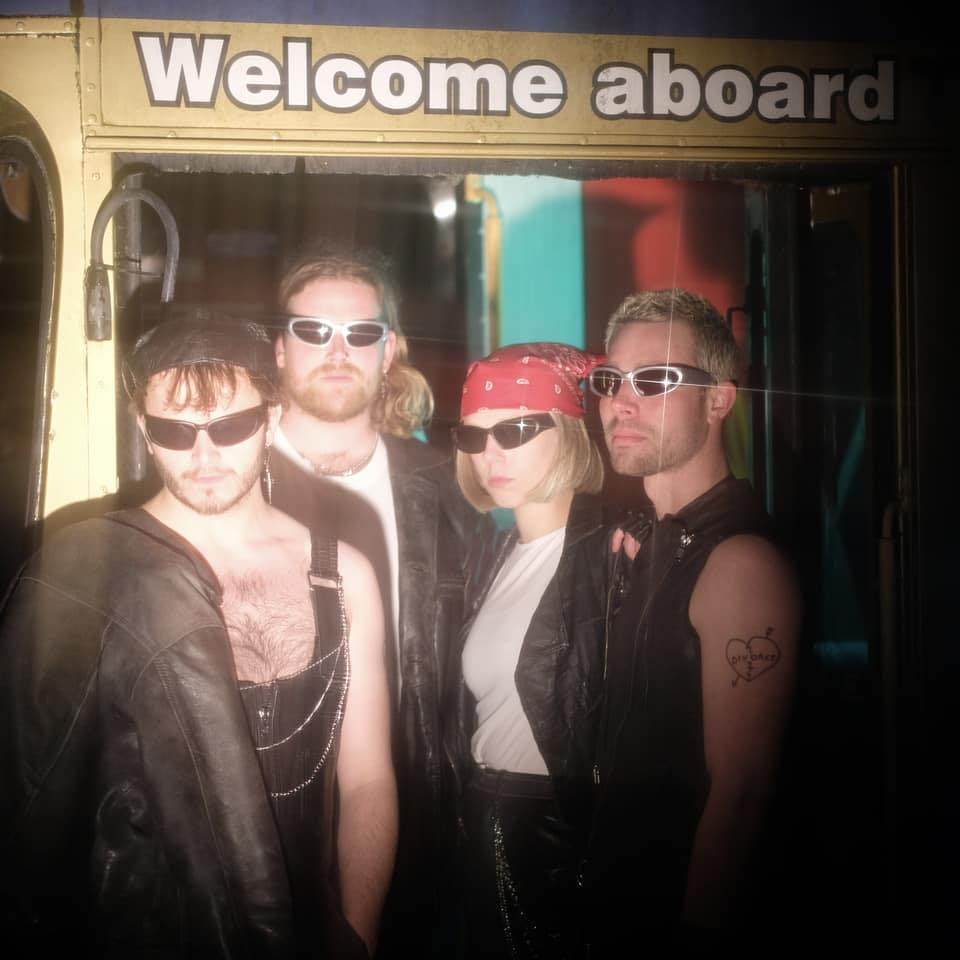
A short while ago, we released the second single from the now announced EP, “Heady Metal”, for you all to hear. The single is called “Scratch Your Metal”, and I (Tiger Cohen-Towell ) am going to tell you a little bit about the song. At the end of last year I had started a course at Goldsmiths University in London, but I had not yet found a place to live so was commuting for a few weeks from Nottingham and staying with friends. One of my dear friends, Eve, who’s an actor, let me use her room while she was away filming.
She’d been learning some keyboard for a part she’d gotten and she had this Yamaha keyboard by the bed, and I couldn’t resist fucking around on it, and I ended up writing “Scratch Your Metal“. Lyrically, the song pays homage to unromantic-romantic love, accepting that people are made up of many flaws, and embracing a full human instead of just the parts that are easy. I think when I wrote it I wanted it to sound a bit like Divorce does Tears for Fears or something.
I’d been listening to a lot of The Blue Nile, a band that my partner Jocelyn introduced me to, and because the song is largely about my partner it felt like a really integral reference that I wanted to reflect in the production. We all listened to The Blue Nile a lot on our autumn 2022 tour and we love their cinematic use of synthetic sounds, it felt like something we wanted to try and work into the Divorce sonic palette. My parents were both 80s teenagers so the pop music of that era was very formative for me musically, I love the unashamed camp-ness of it, this song is very much a leaking-out of my fondness for it. 
We’re also all big Caroline Polachek fans; I think when Felix first heard my scrappy voice note of the song he definitely took inspiration from her when he wrote guitar parts to lay on it, and we went ham on the amount of guitar on this track (didn’t really think about doing it live when we piled 67 parts into the first verse). It was very freeing for us to do a track like this, I think we’re eager to not be pigeon-holed into a genre, I think like Queen CP we’re sort of maximalists with an array of different sounds that we want to try. Why do one thing when you can do many?
The video was such a joy to film, we all just basically got dressed up and danced to the song, we have a few exclusive BTS shots just for you. It was so uncanny seeing the older versions of ourselves, Clump did such a good job of casting them, massive shout out to those guys for making everyone feel so comfortable and nice on set too!

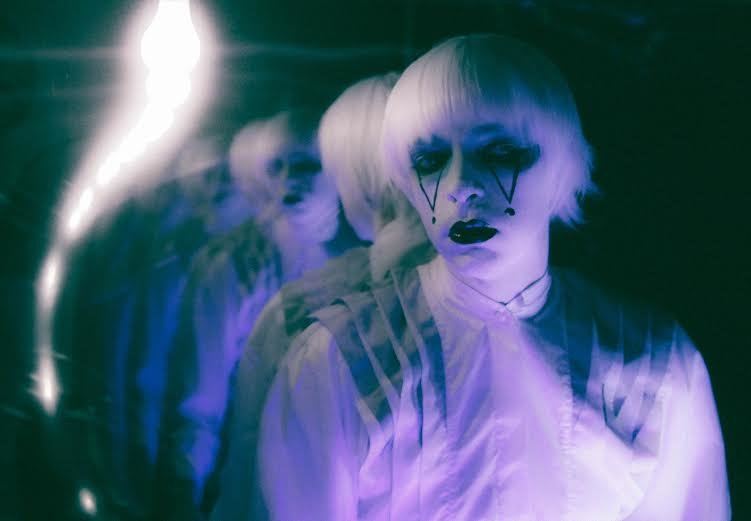
The latest 32-minute EP from Drab Majesty marks the start of a stirring new chapter in the band’s majestic legacy. Written during a 2021 retreat to the remote coastal Oregon town of Yachats, Deb Demure leaned into the neo-psychedelic resonance of a uniquely bowl-shaped 12-string Ovation acoustic/electric guitar. After early morning hikes in the rain, Deb would record ambient guitar experiments the rest of the day, tapping into “flow states,” letting the sound lead the way.

These sessions were then refined or recreated, and later elevated further with key collaborations by Rachel Goswell (Slowdive), Justin Meldal-Johnsen (Beck, M83, Air), and Ben Greenberg (Uniform, Circular Ruin Studio). “An Object In Motion” is true to its title, capturing the chrysalis moment of an artist evolving, reborn and untethered, silhouetted against an open horizon.

“Cape Perpetua” kicks off the collection’s divergent palette: sparkling acoustic finger-picking refracted through delay, equal parts raga and reverie. Melodies and moods congeal and dissipate, at the threshold of rustic American primitivism, brooding neo-folk, and pastoral melancholia. “The Skin And The Glove” deploys jangle to different effect – baggy, soaring, grey-skied kaleidoscopic pop in the spirit of Stone Roses, Primal Scream, and The Glove. Rachel Goswell lends her iconic freefall voice to The Cure-esque ballad, “Vanity,” infusing poetic gravity to the doomed refrain: “If the valve breaks / then the earth quakes / and history finds a way / to put you in your place.”

“Yield To Force”, the closing track of the EP, may be the most anomalous offering of the set. A 15-minute instrumental odyssey of cyclical strings, ominous slide guitar, and simmering synthesizer, the piece sways and spirals like a long zoom into distant storm clouds. Demure finesses the guitar with a restless but regal grandeur, unfolding a panorama of peaks, shadows, and plateaus. It’s music both intuitive and prophetic, tracing the slow swing of pendulums across an endless plain. Taken as a whole, ‘An Object In Motion’ presents a showcase of potential futures from Drab Majesty’s evolving domain, their sound poised to bloom at the precipice of transformation. 

releases September 22nd, 2023

ANJIMILE – ” The King “

Posted: September 9, 2023 in MUSIC

Boston-based artist Anjimile returns with a new album “The King”, and his 4AD Records debut and the follow-up to 2020’s “Giver Taker”. “If “Giver Taker” was an album of prayers,” the singer-songwriter explained in press materials, “The King” is an album of curses.”

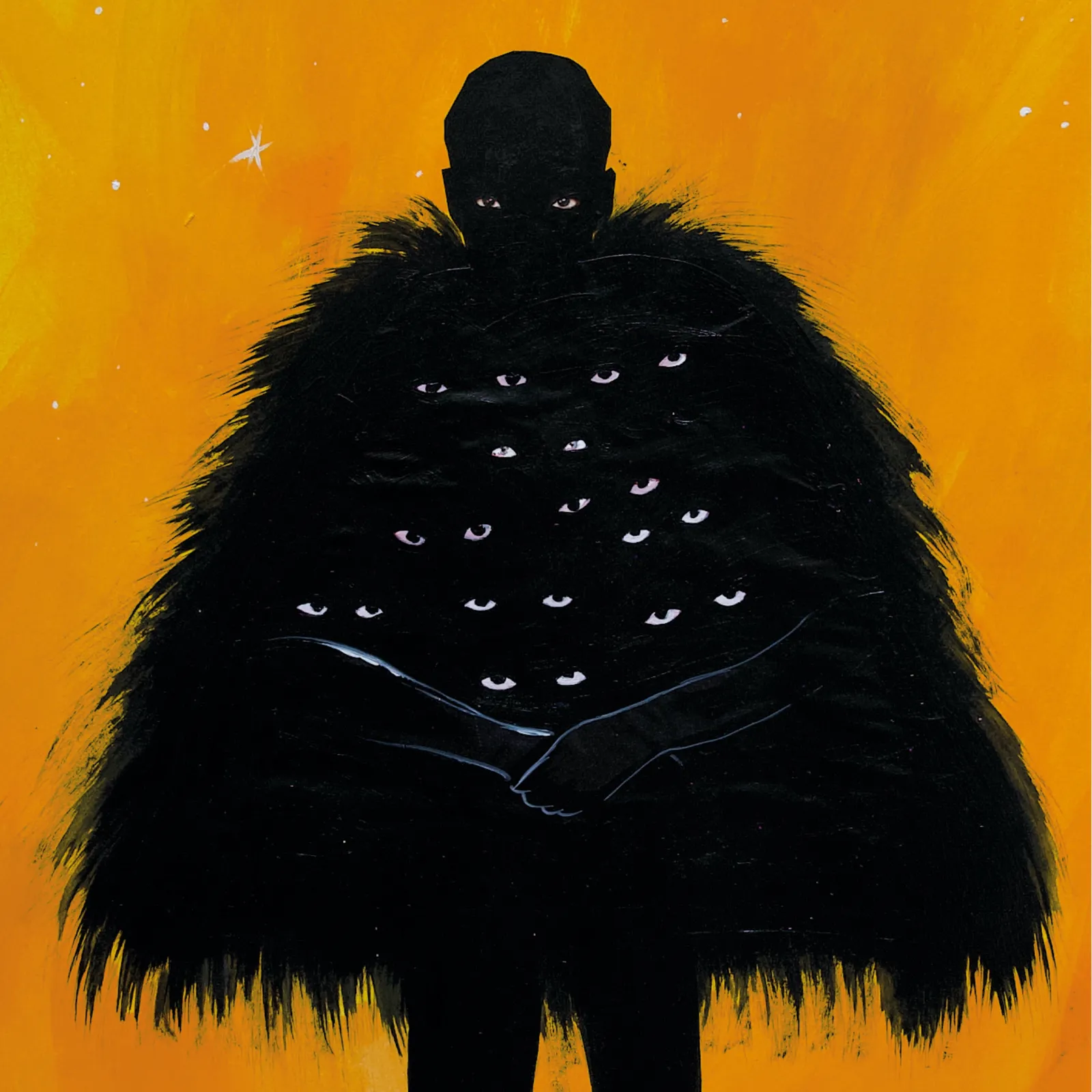
Anjimile Chithambo, better known as Anjimile, announces his new album, “The King”, out September 8th, his first full-length since 2020’s breakthrough “Giver Taker”. To herald the announcement, he shares lead single, ‘The King’, accompanied by a visualiser by Daniela Yohannes, whose striking painting takes centre stage on the album cover.

Highlighting the artistic shift from “Giver Taker” to now, ‘The King’ opens with a lofty, melodic choir, an intro that belies the song’s motives. Suddenly, sinister arpeggios interrupt the reverie, and the voices grow darkly serious. Deeply steeped in the confusion, grief, and rage of being Black in America, ‘The King’ pushes back against the tired adage, “what doesn’t kill you makes you stronger,” hissing, “What don ’t kill you almost killed you// What don’t fill you//pains you// drains you.”

The title track’s haunting, baroque pop is evidence enough for Anjimile’s thesis. Across the record’s 10 tracks, including the sombre “Father,” Anjimile draws inspiration from religion, Philip Glass, and his own lived experiences. He also enlists a number of special guests for the project, such as Justine Bowe, Brad Allen Williams, Sam Gendel, and Big Thief’s James Krivchenia.

“The most remarkable thing about “The King”, however, is that its synthesis of sound and vision makes it feel so thoroughly like a monumental record.”
– Paste (Album of the Week)
Anjimile tells you to accept your suffering, not run away from it, lest your unattended wounds drag you into the abyss.” – Pitchfork (7.5/10)
“An innovative examination of distorted American life.” – Uncut (8/10)
“A record of cold, hard truths.” – Loud and Quiet (7/10)
“The inventive nature of Anjimile is really fascinating.” – NPR Music

released September 8th, 2023

ROMY – ” Mid Air “

Posted: September 9, 2023 in MUSIC

“Mid Air” is an album about celebration, sanctuary and salvation on the dance floor. It’s an album that deals with love, grief, relationships, identity and sexuality and is a love letter to the queer clubs where Romy found community and connection. It’s a coming-out album in a way, although she came out in my personal life a long time ago, but it’s also a coming-through album – through grief and heartache, towards euphoria.

“Mid Air” sees Romy working alongside producers Fred again.. and Stuart Price, as well as her bandmate Jamie xx on recent single “Enjoy Your Life”. Also featuring the previous single (and crossover anthem) “Strong”, “Mid Air” is the perfect encapsulation of a sound Romy describes as “emotional music to dance to”. It’s a sound that’s set to unify dancefloors, distilling Romy’s love of club classics and classic song writing and finding the sweet spot – like much of Romy’s favourite music – between euphoria, escapism, sadness and melancholy.

To celebrate news of the album, Romy today releases her latest single, the Fred again..-produced “Loveher”. It’s a pivotal track for Romy and acts as both the album opener and the first song to be written for the record. Romy and Fred were first paired together to write songs for other people, but their fast friendship and musical connection proved to be a spark for something new. After writing “Loveher”, a declarative pop song about the intimacy of falling in love with a woman, “Fred asked me, who could this be for?” explains Romy “and I tentatively said… ‘maybe me?’”. A proud and positive queer love story, this was the beginning of “Mid Air”

released September 8th, 2023