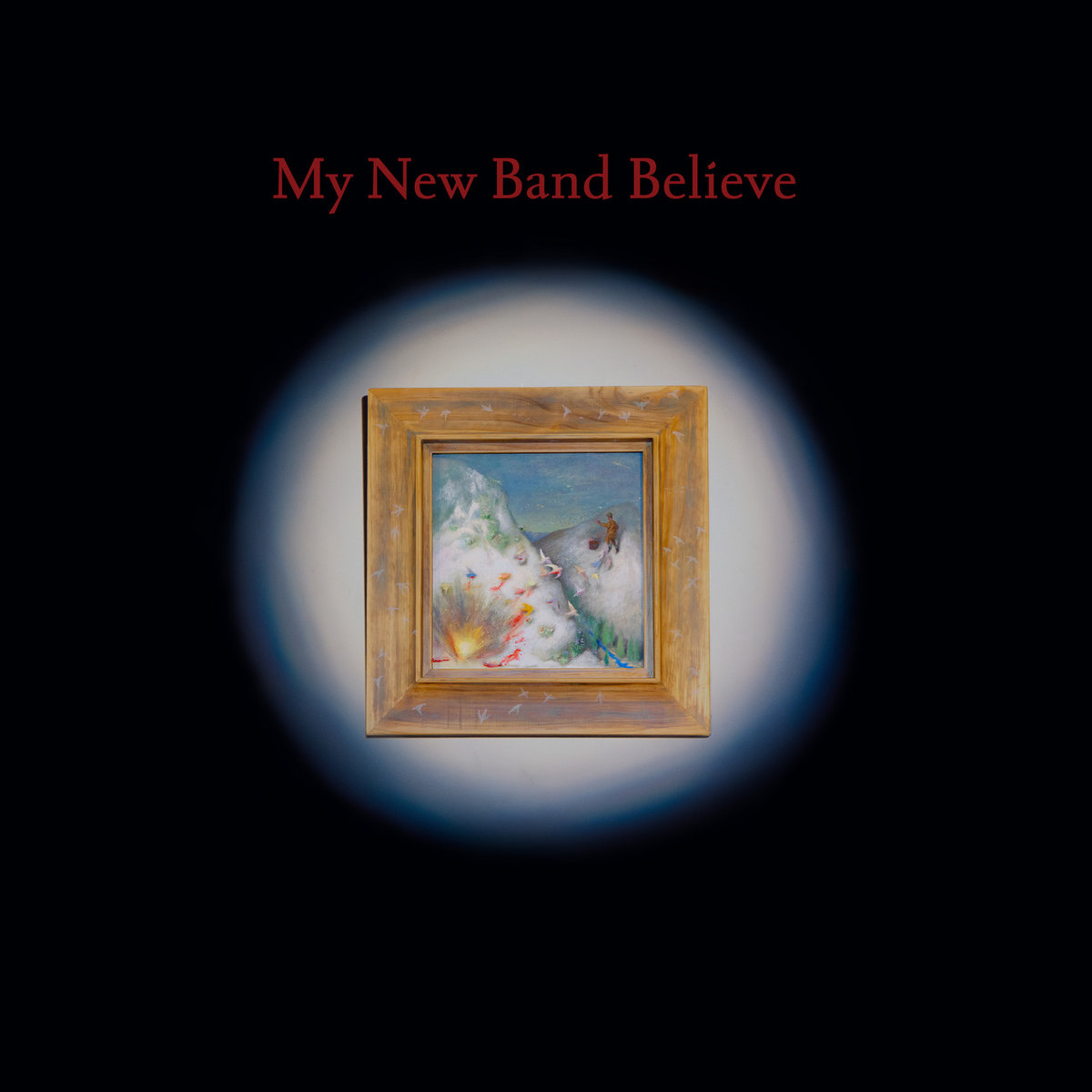
Black Midi’s Cameron Pictonmathy punk for acoustic, high drama sophistipop with My New Band Believe, Many were sad when mathy Londoners black midi broke up two years ago, but I’m enjoying the burning embers more than the original fire. At first, most of the attention focused on Geordie Greep, who burst out of the gate with his impressively wigged-out “The New Sound“. The band’s other singer/guitarist, Cameron Picton, kept a lower profile but emerged last year with a solo project that has since evolved into My New Band Believe.
Picton has gone even further afield than Greep with My New Band Believe, but in a more grounded way. Acoustic guitars are at the center of this pretty, lushly arranged record that at times recalls the string-laden, wildly romantic sophistipop of the ’80s.
Songs flow into one another, swooping daringly with the melodrama of a film score, as Picton moves the action from Paris to Seville and then to London for a little English prog. You can’t take all the math out of him after all.
Interestingly, My New Band Believe announced a non-LP single, “Numerology,” which is out today as well and was perhaps too singular a pop song to squeeze onto the album. And the day before the album’s release he shared another new song. Picton is moving fast and it’s exciting to think where he’ll land next.
“Hey, what’s up with Total Control?” the answer is not much. The Melbourne band who raged near the epicenter of the city’s incestuous, mullet-clad “dolewave” post-punk scene haven’t played live since 2020 and the members have scattered.
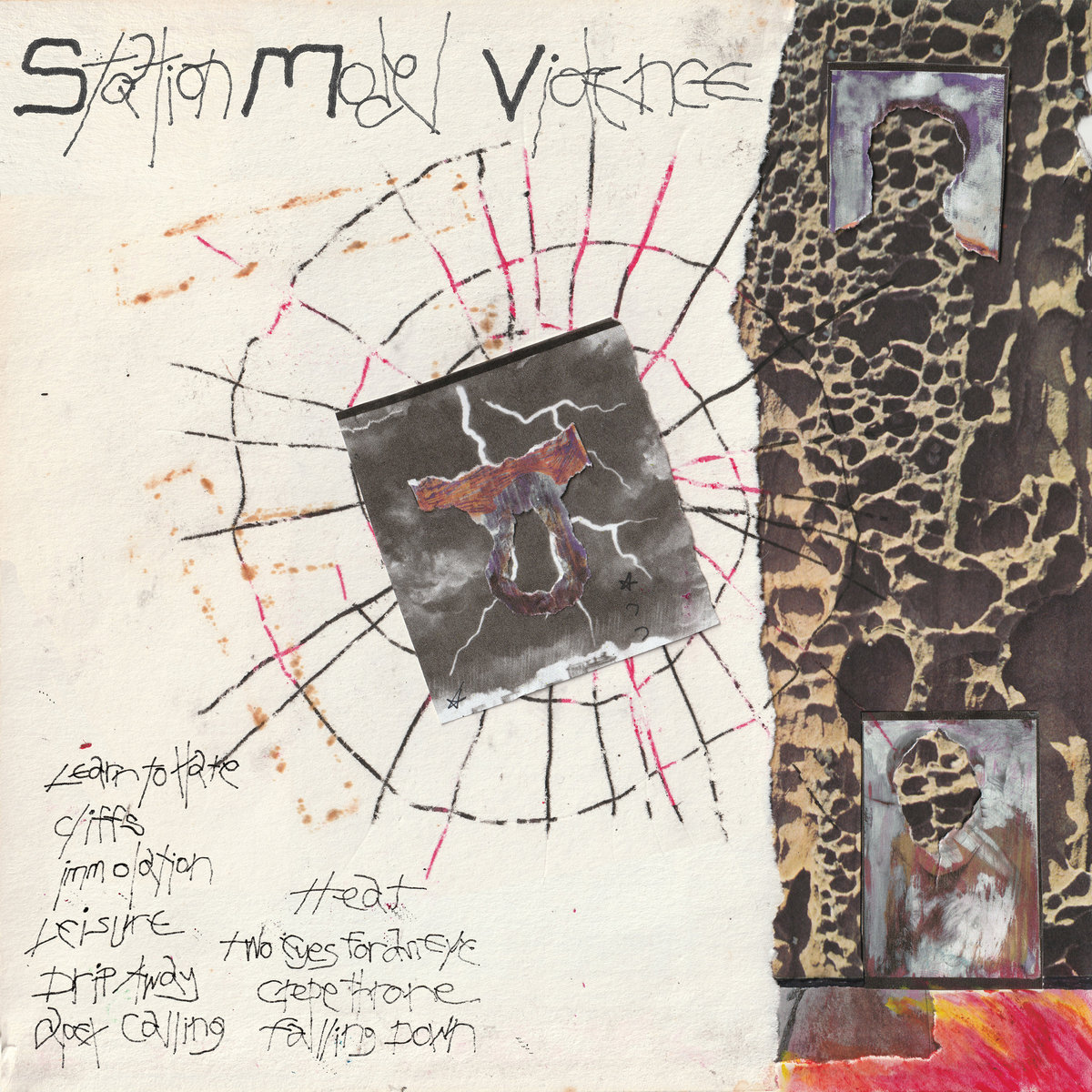
I thought of that moment when Buz first played me the demo for the song which would become ‘Heat’, when first he asked me to play music with him. I heard it, smelled the fresh coconut juice and the sour sweat on Iggy’s leathery hide. I knew that we would do it right. Station Model Violence in 2024 with Buz Clatworthy, who also records as R.M.F.C. Clatworthy’s guitar style goes a long way toward making the band — and their self-titled debut — not just a Total Control clone, even if there’s plenty of shared DNA. Along with the incendiary, angular shredding, he leans heavily on 12-string guitar, adding a chiming, jangly shimmer.
I moved to Sydney at the end of 2022. It was toward the end of two years of Melbourne lockdown that started in the immediate wake of the Total Control tour of Japan at the end of 2019 and was the longest time in 20 years that I had not travelled overseas or played music.
Station Model Violence is heavy, darkly glam, melodic, psychedelic, punishing, and hypnotic. It’s the kind of record where you put it on and immediately think, “Oh yeah, this is the stuff.” It absolutely rips. You might want to head straight to “Heat,” the band’s first single, built on a descending riff and tom-heavy drumming that just keeps building, adding hooks along the way.
After moving to Sydney I had an overwhelming need to start a new band and sing again. Total Control and Straightjacket Nation would be difficult to gather any momentum with my living interstate, and also I wanted to settle here and start something new and try and obliterate some of the stasis that entered my veins from the lockdown.
Low Life asked me to play a solo show with Iceage at the opera house, but I had no ambitions for solo performance and had no songs, so I formed a band called KX Aminal with Greta, Michael and Micky from Den, and Josh from Diat.
KX Aminal are an important part of the Station Model Violence story. When we were writing songs for KX Aminal, Josh and Greta and I were drunk on fine chablis and playing a guitar line that sounded very much like Crisis, and Josh turned to me and looked me in the eye and mumbled “it smells like Kwisis”. Later Buz acknowledged this was something he would always want to hear when writing songs with a band, and on this point it was destined. We would write songs together to smell like Kwisis.
Anyway, KX Aminal went into stasis and I got the itch again. Buz had written a few demos that didn’t work as R.M.F.C. songs and he asked me to have a listen to hear if I could sing something on it, and over the winter of 2024 I visited his home studio and we recorded some vocal ideas with his demos.
We released a demo for ‘Learn To Hate’ “recorded after eating mushrooms on fabulous winter evening” and formed a lineup for a one off show in late 2024 with Micky (Den), Yuta (The Lewers) and Georgia (G2g). This was the final Idiota Civilisaaaztatatanini show, so a nice loop back with Josh who is my spiritual aminal and guide.
After this show, Yuta and Georgia left, and Michael (Den), Alan (R.M.F.C.) and Kuceli (Gaud) joined. Seeing as Micky, Michael, Kuceli and I played in KX Aminal and we never got to record those songs, we decided to absorb some of them into Station Model Violence.
We combined some of those KX songs with the demos Buz wrote and wrote a couple of new songs together and played a couple of shows, and then recorded an LP with Mikey in Melbourne and Micky in Sydney at the start of 2025.
The album was mixed over the course of the year as we had created this incredibly dense beast and much credit is due to the patience and persistence of Mikey Young.
The first single, ‘Heat’. Revisit that image of the coconuts and the drill and pastoral psychedelicism and the smell of KWISIS.
Following “Everything Must Go” and “Chain Yer Dragon”,Goose return with “Big Modern!”, expanding their indie rock core with neon-tinted synths, propulsive rhythms and anthemic songwriting. Tracks like ‘Good2B’ and ‘Good Times // End Times’ sit alongside ‘Big Modern’ and ‘Torero’, balancing immediacy with a more ambitious studio approach. It’s a confident step forward, capturing the band’s instinct for melody while widening their sound into something bigger and more dynamic.
The announcement follows an array of cryptic teases from Goose, including a hilarious video posted to social media last Friday starring Emmy Award-nominated actor Jake Lacy (The White Lotus, The Office, Girls), who then accompanied the band as they sat courtside at the following night’s New York Knicks vs. Chicago Bulls game at NYC’s Madison Square Garden. Lacy sat between the four members of Goose, each of whom wore bright yellow hoodies spelling out “FACE” – a key lyrical component of their fan favourite song, “Big Modern!” The teaser video and MSG appearance capped off two weeks of speculation inspired by guerrilla marketing in major US cities featuring the words “Big Modern!” along with a BIGMODERN.com website displaying Morse code for mysterious phrases and interactive messaging based on Goose fans’ thoughts across social media.
A fully immersive world of sound that ingeniously captures what it feels like to move through today’s overstimulated, hyperconnected society, “Big Modern!“is heralded by today’s premiere of the rapturous new single, “Good2B.” From its first percussive note, the track offers up an unstoppable disco-funk energy, with sun-drenched congas, slinking bass lines, and organ hits dancing over an endless lyrical parade of people, places, and things. It’s joyous and messy; reward and distraction. It’s everything you could ever want, everywhere, all of the time, and all of it goes down smooth. But despite its intoxicating lightness, “Good2B” is laced with an anxious undercurrent. It’s a never-ending party with a looming expiration date.
“‘Good2B,’ and “Big Modern!” as a whole, deal with the occasional state of flow amidst absurdity,” says Goose’s Rick Mitarotonda. “It’s doing the electric slide down the grocery aisle between the Pop-Tarts and Frosted Flakes. Hyper-convenience, hyper-connected; lost in the digital sauce and feeling pretty good about it. All while we’re left with the nagging questions: how long can this feeling last? How long can all of it last?”
Rick Mitarotonda (vocals, guitar), Peter Anspach (vocals, keys, guitar), Trevor Weekz (bass), and Cotter Ellis (drums) — traverse genres with their unique brand of irresistible songcraft, fluid musicianship, and spirited improvisational performance.
Yes return with their 24th studio album, “Aurora”, on June 12th.
“Making this record was joyful, a chance to play, explore and give everything to the music,” stalwart guitarist Steve Howe said in an official statement. “We’re not trying to echo the past; we’re carrying the spirit of Yes forward and turning it into something new.” The main eight-song cycle will be bolstered by two bonus tunes. video for Yes’ advance single title song, created by Matt Hutchings of Greg Lake, Oasis and Iron Maiden fame.
Howe was joined on these sessions by keyboardist Geoff Downes and bassist Billy Sherwood, who both had earlier Yes stints in the band through then ’80s and ’90s. Frontman Jon Davison and drummer Jay Schellen complete the line-up.
The title track was one of the first songs Yes worked on as sessions began, not long after the conclusion of 2024’s Classic Tales of Yes Tour. They’d only just begun sketching out ideas but everything began to quickly coalesce around “Aurora.”
“The title immediately resonated with Steve Howe,” Davison said, “and sparked visual inspiration for artist Roger Dean, setting a conceptual tone that would guide the project.”
They worked both together and apart to complete “Aurora”, with producer Howe and Downes as the “central creative axis,” according to a news release. “It’s always been about collaboration,” Howe said. “Somebody can write a song, but until everybody puts their contribution in it isn’t really a Yes song.”
This will be the third album in five years for a suddenly resurgent Yes, following two U.K. Top 40 hits with 2021’s “The Quest” and 2023’s “Mirror to the Sky“. The group had only issued a pair of new studio projects over the previous two decades.
A special expanded version of “From a Page“, featuring additional material from 2011’s “Fly From Here”, is set for a release on April 24th. Yes was planning to kick off another tour around the same time, but pushed those dates back to May when Howe had to undergo an unexplained medical procedure.
“Aurora” will be released in digital, special-edition CD digipak and gatefold 2LP 180g vinyl editions. The limited-edition 2LP/2CD/Blu-ray package features light green vinyl discs. Instrumental versions of the songs are on the bonus compact disc; the Blu-Ray includes Dolby Atmos, 5.1 surround sound & 24-bit stereo mixes.
Joni Mitchell’s 50 Greatest Songs And More In The New MOJO!
Sixty years since her first song was released and 50 since the magical “Hejira”, we present the 50 best tracks by one of the all-time songwriting greats and tell her origin story, with the help of colleagues and famous fans: “She defies the golden rule of songwriting.”
Also in this month’s issue: Jonny Greenwood on Radiohead and more; Wilco’s Jeff Tweedy interviews Elvis Costello; Emmylou Harris’s last stand; Gong take flight, in a teapot. Plus: unseen Velvet Underground; unheard Shane MacGowan; Kevin Morby; Tori Amos; Musical Youth; The Lovin’ Spoonful; Fiery Furnaces; Robert Margouleff; Vanilla Fudge; Lee “Scratch” Perry; Country Joe McDonald; White Denim; Paul Weller on Billie Eilish, and more!
This month’s covermount CD is Back To The Garden – A Tribute To Joni Mitchell. 15 brilliant Joni covers by Roberta Flack, Fairport Convention, kd lang, Margo Price, Fleet Foxes, Tom Rush and more!
The new issue of MOJO Magazine is on UK newsstands from Tuesday, April 14th
Jack White Electrifies With New Songs ‘Derecho Demonico’ & ‘G.O.D. And The Broken Ribs’ on ‘SNL’: The Detroit rocker returned as musical guest alongside host Jack Black on April 4th.
After making a cameo in a star-studded monologue alongside host Jack Black, the 50-year-old Detroit rocker took the stage to deliver two just-released, electrifying tracks: For his first performance, White appeared on a blue-lit stage stacked with wooden crates and a white statue featuring a glass skeleton head, performing “Derecho Demonico” with a backing band. Later in the show, he returned wearing a jacket emblazoned with a NASA logo — likely a nod to the recently launched, moon-bound Artemis II mission — to deliver the feral “G.O.D. and the Broken Ribs.
“Well, it’s the beginning of the world now/ And there’s nobody left… Let’s start again… Let’s do it all over again,” the artist sings on the track.
During the opening monologue, White joined in for a surprise performance of the White Stripes’ “Seven Nation Army.” The segment also featured host Black alongside several returning members of the show’s Five-Timers Club, including Tina Fey, Jonah Hill, Candice Bergen and Melissa McCarthy.
Saturday’s episode marked Black’s fifth time hosting, while White served as the musical guest for the the sixth time, including his SNL debut with the White Stripes in 2002.
Musical guest Jack White performs “G.O.D. And The Broken Ribs” on Saturday Night Live.
Both tracks have been produced by White with backing from his longtime live band, Patrick Keeler (drums), Dominic Davis (bass) and Bobby Emmet (keys).
The songs are released ahead of his sixth appearance on Saturday Night Live this weekend – with host, Jack Black.
Both are available now via Third Man Records at all DSPs and streaming services. A limited-edition Tri-Color and Black 7” vinyl will go on sale on April 4th at thirdmanrecords.com and Third Man shops in Nashville, Detroit and London.
The Lemon Twigs’ two previous Captured Tracks albums, “A Dream Is All We Know” (2024) and “Everything Harmony” (2023), certainly indicated something of a ground zero in their then five album career. “It was the beginning of making records that we would listen to ourselves,” says Michael D’Addario, the younger Twig brother, now aged 26. By the time of “A Dream Is All We Know” and the future Michael classic, “My Golden Years”, The Lemon Twigs’ new era had truly begun. And now comes the third Lemon Twigs album for Captured Tracks, “Look For Your Mind!“, which, underneath its poppy exterior, contains an undercurrent of paranoia and suspicion.
Opening with title track, “Look For Your Mind”, a jangly Michael number, the listener is introduced to the guitar-driven harmony sound that is the cantering theme of the album. Much of what was achieved on “A Dream Is All We Know” is here, just more laser focused.
It’s classic Twigs, indebted to the golden age of guitar pop, but in no way slavish.
New to this album is the inclusion of live Twigs Reza Matin (drums) and Danny Ayala (bass), as well as Eva Chambers of Tchotchke, to the rhythm section. With the brothers previously having handled everything in the studio themselves, this shows a new-found sense of freedom.
“Gather Round” is one of “Look For Your Mind!’s” bigger productions. A Brian song with joyous orchestrations, it feels like a turn of the century campaign song. The writer is looking for an uncorrupted leader, but resolves that collective action is the only way forward. Musically, it’s ornate and delightfully 1967, but the mood and sentiment is distinctly 2026. “Every time we try to write something that’s completely straightforward, we can’t help adding an element which comes out of left field.” explains Brian.
Brian’s “Fire And Gold” starts off with a ringing power pop riff before turning everything inside out. It’s also the first song on the album to feature the powerhouse drummer, Reza Matin, whom the brothers favourably compare to Big Star’s Jody Stephens, The Raspberries’ Jim Bonfanti, and The Move’s Bev Bevan.
Closing side one on the vinyl record is Michael’s beautiful ballad, “Mean To Me”, with vocals The Beach Boys would be happy to have committed to wax 60 years ago, care of Michael, Brian and Danny.
The closer of the second side, “Your True Enemy”, completely throws a spanner in the works. “We at first approached the song as a simple rock arrangement, but it didn’t fit the moodiness of the lyric,” states Brian. “So that’s when we started to get more experimental.”
The Lemon Twigs have shared a new track, “2 or 3”, the latest taster for Michael and Brian D’Addario’s recently announced new album, “Look For Your Mind!, due May 8th on Captured Tracks.
Brian says “we played for the first time in Buenos Aires last year and I woke up the next morning having dreamt the chorus. It’s a rare thing for me and even rarer that I end up remembering the words. I had to interpret what ‘She’s lived 2 or 3 as many lives as me’ meant. It made me think of a guy who wasn’t cultured or worldly enough for his girlfriend and had to pretend to be interested in fine art and history.”
The Lemon Twigs sixth studio album may at first seem like a direct continuation of the previous two, but it is also a lot more, with nods to the earlier records, a new found collective spirit, and most importantly great songwriting.
Largely self-produced, with assistance from bassist Adam Langellotti, keyboard player Matthew Jugenheimer, drummer Kyle Spence, guitarist Jesse Trbovrich and longtime Violators producer Rob Schnapf.
Says Vile, “Chance to bleed” is some new kinda higher energy rager. Recorded with my band of bros the Violators in Athens, GA… and then on down the road to Memphis, TN where we got town legend Greg Cartwright to rip with us (KV lead gtr on the left and Greg lead on the right!) I finished this jam out in L.A. with Rob Schnapf at the mixing board and by then it was flyin, baby. The video is a hoot: I invited my Memphis friends back out for that and there’re a ton of other legendary guests so keep your eyes peeled. (Yo, Schoolly D!) Love, KV
Listen to Kurt Vile’s new single, “Chance To Bleed”
It’s taken from his upcoming album, “Philadelphia’s been good to me” released May 29 via Verve Records.
Angine de Poitrine are inescapable right now. They’re a Canadian duo who have been catapulted to viral success after a KEXP session recorded at the 48th edition of the Trans Musicales festival in Rennes, France.
Everyone was struck by their visual aesthetic and the sonic carnival on show – two clearly talented musicians wearing oversized papier-mâché masks and polka-dotted costumes, jamming to dissonant rock.
One has long noodly hair, a Pinocchio nose,plays a double-necked guitar, and looks like they’ve been struck from above by an inverted white pyramid. The other appears to be the bastard lovechild of a dalmatian and the Black Knight from Monty Python and the Holy Grail.
What we know for sure is that Angine de Poitrine are from Quebec and formed in 2019 as a joke. They use the pseudonyms Klek de Poitrine (the knight on drums) and Khn de Poitrine (the guitar and bass prodigy). Their first album, ‘Vol.1’ was released in 2024; their self-released ‘Vol.II’ just dropped at the beginning of April. They label themselves as “space-time voyagers” who form a “mantra-rock, Dadaist, Pythagorean-Cubist orchestra”.
Now, there’s a niche. Incidentally, ‘Angine de Poitrine’ literally translates to ‘angina of the chest’, and if you are experiencing some really painful chest pain caused by insufficient blood flow to the heart muscle, treat it with the seriousness it deserves. Rest up and seek professional help. Your doctor should prescribe you some nitroglycerin for the symptoms.
Their songs are largely instrumental compositions, a form of math rock which boasts layered loops, strange time signatures, funky grooves, some Middle Eastern influences, and enough verve to make King Gizzard & The Lizard Wizard devotees stand to attention like roused meerkats.
More than that, it’s fun. If you needed a Rock God seal of approval, it came courtesy of Foo Fighters frontman Dave Grohl, who has been won over by the off-kilter charms of Angine de Poitrine, describing them as “completely bonkers”.
Grohl was full of praise for Angine, whipping out his smartphone at one point to share a video of the duo.
Angine de Poitrine performing live at ESMA in Rennes, France, during Trans Musicales 2025. Recorded December 04, 2025.
Songs: Sarniezz 00:32 Mata Zyklek 06:10 Fabienk 13:09 Sherpa 20:33 Khn de Poitrine – Microtonal Guitars Klek de Poitrine – Drums






 The Fat Angel Sings
