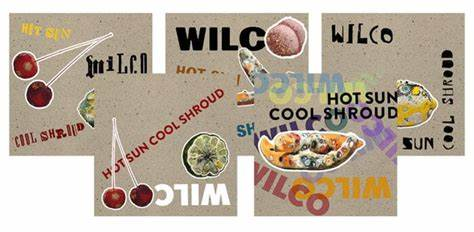
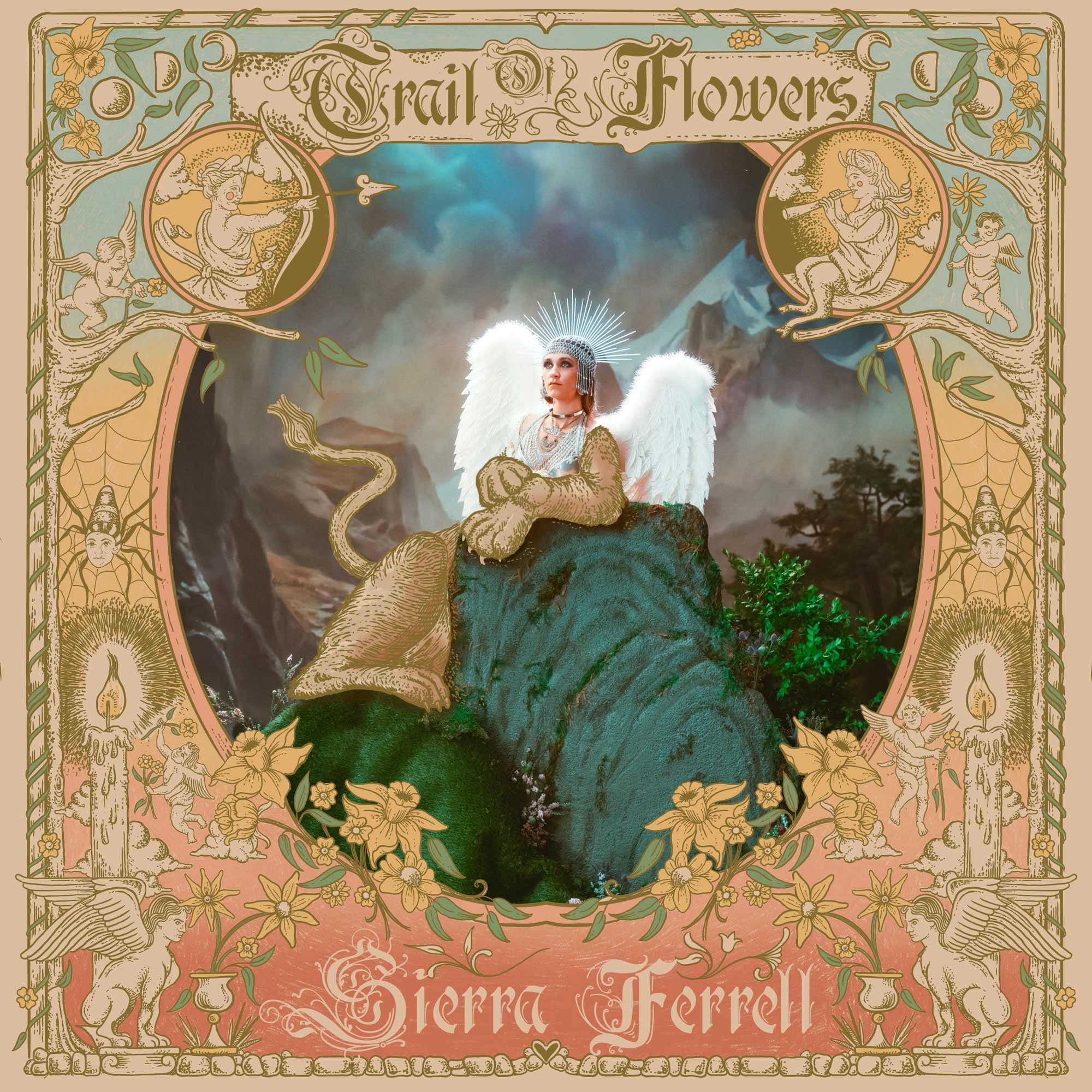
“Released in the fall of 1985, The Replacements’ major label debut “Tim” peaked at No. 192 on the Billboard charts, selling just 75,000 copies. Over time, however, the record would find a mass audience among successive generations thanks to the enduring appeal of anthems like “Bastards Of Young” and “Left Of The Dial” and ballads like “Swingin Party” and “Here Comes A Regular”.

Even with “Tim’s” evolving status as an all-time classic, The Replacements remained unsatisfied with the sound of the record, largely centered on the mix done by the album’s producer, Rock And Roll Hall of Famer Tommy Erdelyi, aka Tommy Ramone.

Now, after four decades, the LP has finally been given a long overdue sonic overhaul as part of “Tim: Let It Bleed Edition”, arriving September 22nd.

The Replacements’ “Let It Be” is the best record ever made—or, that’s what I declared on my Twitter feed The prompt was to pick one safe and one unsafe choice for the all-time greatest album, and I’ll let you be the judge of which pick of mine fits where. It’s not lost on me, though, that both records were made in Minnesota—or, in broader terms, the Midwest, region of America. The Replacements largely existed in that zone, especially by way of their song “I Will Dare,” which was a fixture on local stations .

Paul Westerberg, Tommy Stinson, Chris Mars and Bob Stinson—lovingly called The ‘Mats, a truncation for The Placemats—were four kids who grew up a half-a-day’s drive away from my residence in Ohio. They also happened to make some of the most crucial music of the last century, despite their best, continuous efforts to squash that destiny long before it could fully unfurl.

A clip of Westerberg and the boys performing an out-of-tune rendition of “Bastards of Young,” blissfully unbothered (in actuality, I admittedly never caught a glimpse of it) by the frontman yelling “Come on, fucker” at Bob Stinson just inches away from his microphone. What I really saw were four unkempt, unbothered dudes playing their instruments who sang and laughed and proudly showed off shit-eating grins like we’d all done so often.

I’d find The Replacements again some years later, when I was knee-deep in my first watch of One Tree Hill. In a Season Three episode, Sheryl Lee (Laura Palmer, for the unhip folks) delivers a monologue about the greatest moment of her character’s life happening when she and her friends attended an outdoor festival in Winston Salem, North Carolina and watched Paul Westerberg play “Here Comes a Regular” after a torrential downpour caused an hours-long power loss. “In typical fashion,” Lee says. “He finished the song, smiled and then threw up and fell off the stage.” It was a fictional account about the miraculous wonder of a very real and very perfect song. The details were embellished, but the magic was all the same—“Here Comes a Regular” is, maybe, the greatest ballad ever written or, at the very least, a song that transcends generations.

“Here Comes a Regular” is the subdued, emotional closer on “Tim”, the fourth Replacements album and their first for Sire Records. Prior to that point, the band had been attached to Twin/Tone Records, a label founded by Peter Jesperson, the manager of the Minneapolis record store Oar Folkjokeopus and the guy who discovered the Replacements (and later managed them). But “Tim”, which came out in September 1985, was a sonic turning point for the band, who’d taken the raw, oral intensity and early indie leanings of “Let It Be” and transposed them into these mature, understated articulations on growing up under the microscope of newfound fame—and it arrived such a far distance away from the bold, biting volume of “Hootenanny” and “Sorry Ma, Forgot to Take Out the Trash”.

It’s “Tim” that remains a favourite Replacements project. From the gauzy gallows imagery of “Swingin Party” to the honky-tonk-coloured “Waitress In the Sky” to the jangly “Kiss Me On the Bus,” it’s an untouchable assemblage of tracks. Westerberg had found a lot of influence in everyone from Roy Orbison to Nick Lowe to Big Star, particularly in how each of them constructed pop melodies—and, in turn, “Tim” is a real halcyon affair brimming with golden, catchy rock cuts. Lines like “unwillingness to claim us, you got no war to name us” and “if being alone’s a crime, I’m serving forever” and “everybody wants to be someone here” .

Part of the story—and, perhaps, the downfall—of the Replacements is that they were drunken Midwesterners who kamikazed their own potential. There’s a mythology there, this idea that, because they were chaotic and self-implosive back then, they’ve retained that same youthful and raucous energy far into adulthood. The truth of it is that Westerberg found his way into recovery in the 1990s, Tommy has maintained a busy career in bands like Guns N’ Roses, Soul Asylum and Perfect and Mars has dedicated his post-Replacements years to his artwork. Bob passed away in 1995 from organ failure that came about after years of drug use.

Four years ago, Rhino Records put out “Dead Man’s Pop”, a remix of the band’s ill-fated 1989 album “Don’t Tell a Soul”. In 2023, the label are returning to the well with “Tim: Let It Bleed Edition”, a large box-set that—at its core—reshapes and restores Tim to its original intended form, along with demos, live cuts and alternate mixes. But the release of “Tim: Let It Bleed Edition” is a paradox in many ways: The Replacements, for a long, long time, have held the opinion that “Tim” and “Don’t Tell a Soul” have always sounded terrible but, if it was fully up to them, we’d never be hearing any of these outtakes or rarities.

“Tim: Let It Bleed Edition” features a special disc of nearly 20 songs performed live at the Cabaret Metro in Chicago on January 11th, 1986. It was a week before they’d travel east and play a last-minute gig at Saturday Night Live, filling in for the Pointer Sisters, who had to cancel mere days before the live show. It’s one of the better live recordings of the band you’ll hear, as they tumble through “Tim” songs in a truly anarchic showboat of messy intensity. The Replacements often played drunk and would play bits and pieces of un-rehearsed songs and covers instead of the material they were supposed to be spotlighting. To think that that same band would go on to play one of the most prestigious late-night shows ever, it felt like a victory for DIY, homegrown bands who didn’t have industry connections or big label deals—but, perhaps, that was just as much a detriment as it was a promise of hope.

Though that Metro gig is an outlier for its streamlined song selection and the band’s harnessed, unfiltered energy, the spirit that oozes out of the set greatly foreshadowed what was to come on Saturday Night Live a week after its recording—when they played “Bastards of Young” and “Kiss Me on the Bus” bonkers sloshed, after drinking and taking drugs with guest host Harry Dean Stanton in their dressing room in-between the dress rehearsal and live show. Between the band wearing mismatched combinations of each other’s clothes and Bob tripping and falling on his guitar and breaking it, I suppose it’s no shock that The Replacements were banned from SNL and banned for 30 years (Westerberg would return and do a solo performance in the 1990s.

The “Tim: Let It Bleed Edition” deluxe box set is built around a stunning new mix of “Tim” by legendary producer/engineer Ed Stasium (RamonesTalking Heads) and features a collection of previously unheard tracks (Sons of No One: Rare & Unreleased) and a classic concert from 1986 (Not Ready For Prime Time).”

Guitar: Bob Stinson Drums: Chris Mars Guitar, Vocals: Paul Westerberg Bass: Tommy Stinson

Jethro Tull have issued a 40th Anniversary deluxe edition of their 14th album, “The Broadsword and the Beast“. Originally released in 1982, the ground-breaking album captivated fans with its distinctive blend of rock, folk, and progressive influences. The album’s masterful storytelling, accompanied by Ian Anderson’s unmistakable flute melodies, garnered critical acclaim and has become a fan favourite over the years. The title arrived via Rhino/Parlophone on September 1st, 2023, as a Monster Edition with 5-CDs and 3-DVDs and a 4-LP vinyl edition.

It’s not entirely unheard of, a rock band seldom grows so prolific that they enter the studio and produce three albums’ worth of material at once. Rarer still is that they would shelve two-thirds of what they created, consigning the tapes to generations in dusty attics or trickling out the songs on various compilations over the course of decades. But such was the case with Jethro Tull and the colossal sessions that resulted in their 1982 album “The Broadsword and the Beast”.

For “Broadsword”, the revamped Jethro Tull took more of a hybrid approach; still employing the emerging technology of the day, but squeezing in a few more traditional motifs to satisfy the faithful while spinning tales of beasts and Vikings. A more whimsical cover painting was also used (complete with runic border for extra fantasy points) and front man Ian Anderson wisely reappraised his image, ditching the dodgy white jumpsuit and returning to the slightly less dodgy leather doublet that he could have plucked from the costume department of a Terry Gilliam film. It would only be a year later when a cleaner-cut solo Anderson would materialize in a business suit on his altogether more contemporary “Walk Into Light” album, but in 1982 he was still the wild-eyed character bounding about the “Broadsword” tour’s pirate ship stages .

‘The Broadsword and the Beast’ originally released in April 1982 and according to Ian Anderson in the liner notes of the remastered CD, contains some of Jethro Tull’s best music. This 4 LP set (one a double LP) in a card slipcase will feature a 28-page 12×12 booklet and include ‘The Broadsword and the Beast’ (Steven Wilson remix of original LP), ‘Double-Edged Sword’ (Steven Wilson mixes of additional Broadsword recordings March 1981 to January 1982) plus ‘The Maison Rouge’ demos.

“Broadsword: The Monster Edition” It’s certainly among the most expansive entries in the Tull Box Set series, but of course its allure lies in how much one likes the music in the first place. “Broadsword” may not firmly reside in the love-it-or-hate-it category, but it can occasionally be divisive. For those who dig it, well, this is an absolute must have. Now on his fourteenth Tull album remix, seasoned veteran Wilson finds room for improvement in sonics and clarity with what was at times a flat sounding recording, particularly in the drum department. His tweaks are sensible ones, boosting and refining where he can, while maintaining the artists’ original vision and resisting any urge to make radical changes based on personal preference. We’ve all heard some pretty dire remixing jobs over the years, where undisciplined technicians make mincemeat of our favourite albums, so it’s understandable when some are wary or even scoff at the idea of anyone monkeying around with our beloved Tull music. But rest assured, Wilson is the man for the job and I think the accolades will far outweigh the criticisms, as they have with most or all of the previous Tull albums he’s worked on. 

Benefitting from a unified band approach to its construction, with a couple of key ingredients in particular elevating the material. First and foremost? Martin Barre. His bold guitar work rises to the fore here, each of the songs flecked with his bluesy licks and coloured by his squealing riffs. Also of note is Scottish keyboard whiz Peter-John Vettese whose impressive ear and musical savvy brought a new angle to Tull’s music of this period (and would become even more dominant on “Walk Into Light” and the follow-up Tull album “Under Wraps”. Vettese, though not as outwardly interesting as his inimitable predecessors had been, was nonetheless something of a character both on and off stage, and his period synths lent Tull’s music a different energy, with sometimes darker tones that blended well with Anderson’s compositions. An immensely important member during this time, Vettese – the man and the musician – is well spoken of by all parties involved.

Anderson reveals that “Broadsword” itself (original working title: Indian War Dance) is something of a sister song to “Stormwatch‘s” “Dun Ringill”. The piece remains one of the most striking on the album, with Barre and Vettese combining to produce a thick atmosphere, each afforded a larger share of the aural space thanks to drummer Gerry Conway, whose simpler playing provides a solid rock backbeat 

“Clasp” is another strong, moody piece which hints at the music Anderson and Vettese would soon make for “Walk Into Light”, and “Flying Colours” exudes a pulsing energy with some plum bass playing from Dave Pegg.

“Pussy Willow” ranks among the most gorgeous of Tull songs, with Anderson’s dreamy verses drifting around Vettese’s relaxed piano melodies as he skillfully crafts poetic lyrics about mundane city life (one wonders if it might have been an influence on Fish with the song Chelsea Monday). The driving, rocky pace of the chorus balances the song brilliantly, and Wilson has given it more punch here. Anderson refers to the ‘Scottishness’ of this song, a correlation he makes several times in his thoughts on this album. Like with the stirring ballad “Slow Marching Band”, for example, another beautiful and touching composition that sees Conway dotting the track with rousing beats while Anderson turns in one his best vocal performances on the album. It’s another that has never sounded better, and it serves as a reminder of just how good each of these songs really are on their own, even if the album as a totality does not have much of a unifying theme.

“Jack-A-Lynn”. Anderson’s wistful solo acoustic version is as haunting now I’ve always felt the final electric band version does not live up to the delicateness of this recording. Anderson reveals in an embarrassed tone that he doesn’t want to detail this song’s meaning, as it’s one of the few times he’s allowed a real relationship to seep into his songwriting.

Martin Barre expands:

It had things on it that were really good, but maybe there were too many contrasts. It wasn’t a focused album, musically. “Fallen on Hard Times” is a great rock-blues, really strong, so that’s one direction; “Pussy Willow” is a beautiful song, but in another direction; “Slow Marching Band” is wonderful; “Beastie” is a great rock anthem; “Watching Me, Watching You” is fun, a sort of precursor to the sequencer style of music of later. So it’s a great album, but perhaps it’s too diverse; they’re all great songs, but whether they belong on one album, I don’t know Martin Barre.

In the case of “Broadsword”, the mind boggles that further songs from these sessions are now seeing the light of day, when umpteen have already been issued as bonus tracks over the years. Having expanded to such a degree, can there really be more? The answer is a resounding yes, as the “Broadsword” domain has now ballooned to a whopping three and a half hours… and that’s not counting the live concert recordings or surround mixes found elsewhere in this set.

Jethro Tull‘s line-up at the time featured Anderson on lead vocals and flute, Martin Barre on guitar, Dave Pegg on bass guitar, mandolin and backing vocals, Peter-John Vettese on keyboards, piano, synthesizer and backing vocals, and Gerry Conway on drums and percussion. The original album was produced by Paul Samwell-Smith. Wilson noted that the collection includes 28 additional studio tracks. And Anderson shared an unboxing video on his birthday, August 10th.

Disc 1 – “The Broadsword and The Beast” – Steven Wilson remix
Disc 2 – Early 1981 Sessions – Steven Wilson remix
Disc 3 – Demo recordings

Genesis ‘BBC Broadcasts’ is an extensive collection of broadcast material from one of the biggest selling recording artists of all time and one of Britain’s most internationally renowned bands. Curated by founder member Tony Banks and the group’s long-time engineer and producer Nick Davis it is available as a 53-track 5-CD set and 24-track triple LP.

These collections represent the cream of the group’s work recorded by the BBC between 1970 and 1998, and it includes contributions from all three of the group’s vocalists, Peter Gabriel, Phil Collins and Ray Wilson. With notes by author Michael Hann, and packaged with a 40-page booklet, ‘BBC Broadcasts’ contains favourites such as ‘Home By The Sea’, ‘Mama’, ‘Duchess’, ‘Carpet Crawlers’, ‘No Son Of Mine’ ‘Turn It On Again’ and many more.

With only a handful of these tracks previously officially available, Genesis ‘BBC Broadcasts’ acts as both a collector’s cornucopia and an alternative “greatest hits”. Stretching from the very beginnings of the band’s career via appearances on ‘Night Ride’ and John Peel, the set encompasses both of the group’s Knebworth performances (1978 and 1992) as well as their much-loved 1980 show at London’s Lyceum, and triumphant sell-out run of shows at Wembley in 1987.

Rounded out by material from the NEC Birmingham in 1998 and Paris Theatre and Nightride sessions from the early 70s, as well as the much sought-after encore version of ‘Watcher Of The Skies’ at Wembley Empire Pool in 1975, Genesis ‘BBC Broadcasts’ is a veritable treasure trove.

Curated by Genesis founding member Tony Banks “BBC Broadcasts” is a 24-track, 3-LP set including a treasure trove of rare and previously unreleased material.

The BBC recorded Genesis many times over the years, including radio broadcasts and in-studio sessions. However, the band has released only some of this material; their 2008 box set Genesis 1970-1975, for example, included three early songs (“Shepherd,” “Pacidy” and “Let Us Now Make Love”) tracked for the BBC Night Ride program in February 1970. All three songs also appear on “BBC Broadcasts”.

Nick Davis, who has worked frequently with Genesis as a producer, engineer and surround-sound mixer, first teased the BBC box set in late September. He and founding keyboardist Tony Banks curated the collection, which is packaged with a 40-page booklet.

“So, there is BBC stuff coming out, especially that Lyceum gig, which is very good,” . “It’s a lot of material, some from very early all the way through to the very end, I think. … There’s no multitracks, so there’s only stereo or mono. It’s mastering, trying to make it sound as good as we can. Sometimes it’s sonically compromised, but I think all of it sounds OK.”

Genesis also worked with the BBC for the 2014 documentary “Genesis: Together and Apart”, which featured a reunion interview with the classic ’70s quintet: Gabriel, Collins, Banks, Mike Rutherford and Steve Hackett. Seven years after that project, the band’s popular trio line-up Banks, Rutherford and Collins) reunited onstage for The Last Domino?, their first tour since 2007.

Amid that trek, since described as their farewell run, Genesis released the 2021 best-of package “The Last Domino? – The Hits“, which mirrors the tour’s standard set list.

Featuring Gabriel-era sessions and tracks from the band’s 1978 Knebworth and 1980 Lyceum shows, the set comes with inner bags containing extensive sleeve notes by respected music writer Michael Hann.

Back with their first original music since since 2020, this is the start of a new era. Each single will be presented with an official music video and full global marketing campaign at the start of a brand-new cycle. The album is produced by Colin Pastore the songbook of Spanish Love Songs frontman Dylan Slocum. Painstakingly honest lyricism and rousing punk rock tunes have helped his band to steadily grow in popularity over the last eight years, but this fourth album shows that they’re still capable of surprises.

The most immediately striking change may disappoint those expecting another album of gruff melodi-core in the vein of The Menzingers or Jawbreaker. Right from the start of opener Lifers, with its shimmering synths and sparkling production sheen, it’s clear that Spanish Love Songs are now operating closer to the drivetime alt.rock of The Killers than any of their former contemporaries. This new direction was partly heralded by Brave Faces Etc, their post-lockdown reimagining of 2020’s third album “Brave Faces Everyone“, and it’s undeniable that it sets them up for much broader appeal, really bringing out their anthemic nature in a way that often gestures in the direction of Springsteen.

JW FRANCIS – ” Dream House “

Posted: December 31, 2023 in MUSIC

Every year, about 6 weeks before Valentine’s Day, I make the following post on social media: If you send me the name of your Valentine, and the reason you love them, I’ll write a song for them on your behalf.

That is how “Dream House” was born, 3 years ago. Over the past three years, I have received over 300 requests from fans to write songs for their loved ones. All of the songs on “Dream House” come from this project, some of them have been reworked to speak more to the artist’s life, others have remained exactly as they were first written. Ultimately, this is an album about caring for others, and the way we express it

released January 27th, 2023

All songs written by JW Francis

GIRL AND GIRL – ” All I See “

Posted: December 31, 2023 in MUSIC

Australia’s Girl and Girl is an exciting, four-piece garage rock outfit that features frontperson Kai James and his Aunty Liss on drums, with long time friends Jayden Williams on guitar and Fraser Bell on bass.

The first release for Sub Pop is the official video for their new single, “All I See.” Girl and Girl frontperson, Kai James, says about the single and video: “Lyrics came last for ‘All I See,’ about 3 years after the track, and when I finally sat down and wrote them, I was pretty anxious about whether I had them right or not. A new Miley Cyrus track played on the radio that afternoon, she too, was singing about houses burning down, and I took that as confirmation. So I thanked Miley Cyrus and her great new track ‘Flowers’ and never looked back.”

Girl and Girl are currently working on new music for their Sub Pop debut. 

“All I See” by Girl and Girl, out now on Sub Pop Records.

DEYARMOND EDISON – ” Epoch “

Posted: December 31, 2023 in MUSIC

DeYarmond Edison Epoch

“Epoch” begins with a dilemma. why the avant-Americana quartet DeYarmond Edison is worth remembering, this box set would have to start with the recordings they made closer to the end of their mayfly lifespan. But to tell the whole story, it would have to start with Mount Vernon, whose songs, as the accompanying book gently concedes, may grate on the adult sensibilities. That they appear at the beginning anyway shows just how hard “Epoch” comes down on the side of storytelling.

It’s a work of music journalism as much as a portfolio of songs, excavating how Justin Vernon, Joe Westerlund, and brothers Brad and Phil Cook grew up together in Wisconsin, rampantly evolved in North Carolina, and split off asymmetrically, with three of them earning modest acclaim as the band Megafaun as Bon Iver.

The box is divided into six chronological parts, beginning with “All of Us Free”, an LP that captures DeYarmond Edison taking shape in the late 1990s and early ’00s. The second LP, “Silent Signs”, reproduces their second album, which they recorded just before leaving Eau Claire. “That Was Then” consists of four CDs documenting the performances, these discs form the messy, brilliant heart of the box and the band. The LP “Epoch, Etc”. is the sound of them breaking apart under the stress, and “Hazeltons” is Vernon breaking out on his own. The set concludes with the LP “Where We Belong”, with an A-side of recrimination and a B-side of reconciliation.

DeYarmond Edison lasted only a year in Raleigh, but this is where they pushed their trusty roots rock to its limits and beyond—in public. Their sound took as its provenance all the Black and Southern and mountain music recorded by Alan Lomax, the electronic webs and tape delays of Steve Reich, the drone-country collage of Richard Buckner, the pastoral graces of Bill Frisell, the free energies of jazz, the cellular structure of procedural music, and the microtones of bowed cymbals, all of it spinning the chrysalis from which Bon Iver would emerge.

Vernon, a guitarist and singer, and Westerlund, a drummer, started playing together in middle school, but “Epoch” picks up in 1998, when they fused with bassist Brad Cook and pianist Phil Cook as Mount Vernon. Singer Sara Jensen is appealing on “We Can Look Up,” but Vernon is still figuring out whether he wants to be Adam Duritz or Lead Belly.

Vernon’s writing turned inward, his meanings shrouded in melancholy weather reports from real places that already lay half in childhood dreams. By 2004, when they released their debut album as DeYarmond Edison, Vernon was ripening into his husky voice. On the first LP here, you can hear their expanding horizons in a trumpeting electronic bauble from one of Vernon’s solo projects and “The Orient,” a mystic mountain of organ chords that ends disc 1.

The second disc reproduces “Silent Signs”, the album DeYarmond Edison made before leaving Eau Claire at the peak of their local fame. Now Dan was off to college, and Joe tagged back in. “Lift,” 97 seconds of gorgeously suspended gongs, horns, and soft feedback, tunes the listener’s antenna to the experimentation stirring in the sturdy songs to come. On the title track, the horns hang in graceful swags, the harmonica an almost strident drone. Vernon attenuates simple chord progressions into shards and curls, his songs unrolling in many pensive stages. Other highlights include the surprisingly good Tom Waits impression “Time to Know,” the salty-sweet Stevie Nicks homage “Dead Anchor,” and the whispering banjo-and-vibraphone mirage “Ragstock.”

The young Vernon is portrayed as being driven by jealous rivalry with area bands like Amateur Love, which was gaining steam in Eau Claire. Even worse, the Cook brothers were members. Vernon made them choose. The compromise, which probably made sense in their mid-twenties, was that they would go all in on DeYarmond Edison, but it would be a collaborative vessel for their new interests, and they would relocate to Raleigh, a city they knew as an alt-country hotbed in the ’90s, with a Southern halo thanks to “Wagon Wheel.”

Vernon tasked his bandmates with singing leads instead of their customary harmonies. Westerlund brought in jazz tunes and experimental practices from Bennington. Brad Cook gave a crash course in 20th-century electronic composition. And Phil Cook led a deep dive into early, unamplified American music: Delta blues, spirituals, string and jug bands.

Filling the second two CDs of “That Was Then”, the concert mixes songs from their records with restrained versions of their discoveries at Bickett. It delivers an ideal version of “Silent Signs,” stretched and spectral like Sam Amidon, and the beautiful “Red Shoes,” which has the cloudy mixture of doubt and regret that marks Vernon’s best songs, and the darkly spun charmer “Song for a Lover (of Long Ago),” where the enigmatic repetition of the word “ring” is both a matured take on the circular prosody of “Bones” and a holographic step toward Bon Iver.

Lost in the studio, DeYarmond Edison dissolved mid-session, leaving 1,000 copies of a reissued “Silent Signs” to rot in a barn in Durham. Vernon returned to Wisconsin to make “For Emma, Forever Ago”, and the others went on without him as Megafaun. “We were like three framers and a contractor,” as Phil Cook put it. “Then the contractor left. And then we just built a bunch of fucking houses.”

Still, the final DeYarmond Edison recordings, collected on the “Epoch, Etc”. disc, were some of their best, with new versions that balanced graceful song writing and experimental taste. ard of local gospel music, Westerlund a well-circulated drummer and solo artist.

Kristian Matsson has never remained in one place for very long. Having spent much of the last decade touring around the world as The Tallest Man on Earth, Matsson has captivated audiences using, as The New York Times describes, every inch of his long guitar cord to roam the stage: darting around, crouching, stretching, hip-twitching, perching briefly and jittering away. Mr. Matsson is a guitar-slinger rooted in folk, and his songs are troubadour ballads at heart.

Now, Matsson returns as The Tallest Man on Earth with “Henry St.”, his sixth studio album following 2012’s “There’s No Leaving Now“, full of vivid imagery, clever turns-of-phrase, and devastating, world-weary observations and 2015’s “Dark Bird Is A Home”, his most personal record surreal and dreamlike (Pitchfork). “Henry St”. notably marks the first time he recorded an album in a band setting. My entire career Ive been a DIY person mostly fuelled by the feeling that I didn’t know what I was doing, so Id just do everything myself. But now, longing for the energy that’s only released when creating together with others, Matsson invited his friends to come and play. Nick Sanborn (of Sylvan Esso) produced “Henry St“., which includes contributions from Ryan Gustafson (of The Dead Tongues) on guitar, lap steel and ukulele, TJ Maiani on drums, CJ Camerieri (of Bon Iver) on trumpet and French horn, Phil Cook on piano and organ, Rob Moose (of Bon Iver, yMusic) on strings and Adam Schatz on saxophone.

Fruit Bats is an American indie rock band that was founded in 1997 in Chicago, Illinois. Originally starting as a four-track recording project by songwriter Eric D. Johnson, the band has evolved into a touring act with a constantly changing line-up. With their unique blend of indie folk and rock, Fruit Bats have become a staple in the music scene.

Since their inception, Fruit Bats have captivated audiences with their heartfelt lyrics and infectious melodies. Their music resonates with listeners, offering a refreshing take on indie rock. With each album release, they continue to push boundaries and explore new sonic territories.

Eric D. Johnson rarely lingers at one location too long. As a kid growing up in the Midwest, Johnson’s family moved around a lot, but it wasn’t until he became a touring musician years later that motion became a central part of his identity. That transient lifestyle stoked an enduring reverence for the world he watched pass by through a van window. A sense of place is a unifying theme he’s revisited with Fruit Bats throughout its many lives. From the project’s origins in the late ’90s as a vehicle for Johnson’s lo-fi tinkering to the more sonically ambitious work of recent years, Fruit Bats has often showcased love songs where people and locations meld into one. It’s a loose song structure that navigates what he calls “the geography of the heart.” “The songs exist in a world that you can sort of travel from one to another,” says Johnson. “There are roads and rivers between these songs.”

Those pathways extend straight through the newest Fruit Bats album, aptly titled “A River Running to Your Heart”. Self-produced by Johnson—a first for Fruit Bats—with Jeremy Harris at Panoramic House just north of San Francisco, it’s Fruit Bats’ tenth full-length release and one that finds the project in the middle of a creative resurgence. After two decades of making music, hard-earned emotional maturity has seeped into Johnson’s songs, resulting in a more complex sound that’s connected with audiences like no other previous version of Fruit Bats. “A River Running to Your Heart” represents the fullest realisation of that creative vision to date. It’s a sonically diverse effort that largely explores the importance of what it means to be home, both physically and spiritually. And while that might seem like a peculiar focus for an artist who’s constantly in motion, for Fruit Bats, home can take many forms—from the obvious to the obscure.

Lead single “Rushin’ River Valley” is a self-propelled love song written about Johnson’s wife that clings to the borrowed imagery of the place where she grew up in northern California. Then, there’s the gentle and unfussy acoustic ballad “We Used to Live Here,” which looks back to a time of youthful promise and cheap rent. But the wistful “It All Comes Back” is perhaps the most stunning and surprising track on the album, Johnson’s production skills on full display. Built upon intricate layers of synths, keyboards, and guitars, it’s a pitch-perfect blend of tone and lyricism that taps into our shared apprehensions and hopes for a post-pandemic life. “We lost some time / But we can make it back / 4 Let’s take it easy on ourselves, okay?” sings a world-weary but ultimately reassuring Johnson in the song’s opening lines. It’s the kind of performance that makes you hope Fruit Bats stays in this one place, at least for a little while longer…

Whether you’re a long-time fan or new to their sound, exploring the discography of Fruit Bats is sure to be an enriching experience. Don’t miss out on the opportunity to discover this incredible indie folk-rock act that has made waves in the industry for over two decades.

Proof of Life” is the fourth studio album and second major label album by American singer-songwriter Joy Oladokun. It was released by Amigo RecordsVerve Forecast Records, and Republic Records. The album has been supported by five singles released throughout 2022 and 2023. The album features guest appearances from Mt. Joy, Manchester Orchestra, Chris Stapleton, Maxo Kream, and Noah Kahan.

In a press release about the album, Oladokun said that she intended for the songs on “Proof of Life” to be “helpful anthems” and to resonate with “anybody who feels normal and needs a little musical boost to get through the day”