
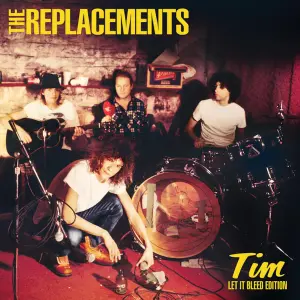
“Released in the fall of 1985, The Replacements’ major label debut “Tim” peaked at No. 192 on the Billboard charts, selling just 75,000 copies. Over time, however, the record would find a mass audience among successive generations thanks to the enduring appeal of anthems like “Bastards Of Young” and “Left Of The Dial” and ballads like “Swingin Party” and “Here Comes A Regular”.
Even with “Tim’s” evolving status as an all-time classic, The Replacements remained unsatisfied with the sound of the record, largely centered on the mix done by the album’s producer, Rock And Roll Hall of Famer Tommy Erdelyi, aka Tommy Ramone.
Now, after four decades, the LP has finally been given a long overdue sonic overhaul as part of “Tim: Let It Bleed Edition”, arriving September 22nd.
The Replacements’ “Let It Be” is the best record ever made—or, that’s what I declared on my Twitter feed The prompt was to pick one safe and one unsafe choice for the all-time greatest album, and I’ll let you be the judge of which pick of mine fits where. It’s not lost on me, though, that both records were made in Minnesota—or, in broader terms, the Midwest, region of America. The Replacements largely existed in that zone, especially by way of their song “I Will Dare,” which was a fixture on local stations .
Paul Westerberg, Tommy Stinson, Chris Mars and Bob Stinson—lovingly called The ‘Mats, a truncation for The Placemats—were four kids who grew up a half-a-day’s drive away from my residence in Ohio. They also happened to make some of the most crucial music of the last century, despite their best, continuous efforts to squash that destiny long before it could fully unfurl.
A clip of Westerberg and the boys performing an out-of-tune rendition of “Bastards of Young,” blissfully unbothered (in actuality, I admittedly never caught a glimpse of it) by the frontman yelling “Come on, fucker” at Bob Stinson just inches away from his microphone. What I really saw were four unkempt, unbothered dudes playing their instruments who sang and laughed and proudly showed off shit-eating grins like we’d all done so often.
I’d find The Replacements again some years later, when I was knee-deep in my first watch of One Tree Hill. In a Season Three episode, Sheryl Lee (Laura Palmer, for the unhip folks) delivers a monologue about the greatest moment of her character’s life happening when she and her friends attended an outdoor festival in Winston Salem, North Carolina and watched Paul Westerberg play “Here Comes a Regular” after a torrential downpour caused an hours-long power loss. “In typical fashion,” Lee says. “He finished the song, smiled and then threw up and fell off the stage.” It was a fictional account about the miraculous wonder of a very real and very perfect song. The details were embellished, but the magic was all the same—“Here Comes a Regular” is, maybe, the greatest ballad ever written or, at the very least, a song that transcends generations.
“Here Comes a Regular” is the subdued, emotional closer on “Tim”, the fourth Replacements album and their first for Sire Records. Prior to that point, the band had been attached to Twin/Tone Records, a label founded by Peter Jesperson, the manager of the Minneapolis record store Oar Folkjokeopus and the guy who discovered the Replacements (and later managed them). But “Tim”, which came out in September 1985, was a sonic turning point for the band, who’d taken the raw, oral intensity and early indie leanings of “Let It Be” and transposed them into these mature, understated articulations on growing up under the microscope of newfound fame—and it arrived such a far distance away from the bold, biting volume of “Hootenanny” and “Sorry Ma, Forgot to Take Out the Trash”.
It’s “Tim” that remains a favourite Replacements project. From the gauzy gallows imagery of “Swingin Party” to the honky-tonk-coloured “Waitress In the Sky” to the jangly “Kiss Me On the Bus,” it’s an untouchable assemblage of tracks. Westerberg had found a lot of influence in everyone from Roy Orbison to Nick Lowe to Big Star, particularly in how each of them constructed pop melodies—and, in turn, “Tim” is a real halcyon affair brimming with golden, catchy rock cuts. Lines like “unwillingness to claim us, you got no war to name us” and “if being alone’s a crime, I’m serving forever” and “everybody wants to be someone here” .
Part of the story—and, perhaps, the downfall—of the Replacements is that they were drunken Midwesterners who kamikazed their own potential. There’s a mythology there, this idea that, because they were chaotic and self-implosive back then, they’ve retained that same youthful and raucous energy far into adulthood. The truth of it is that Westerberg found his way into recovery in the 1990s, Tommy has maintained a busy career in bands like Guns N’ Roses, Soul Asylum and Perfect and Mars has dedicated his post-Replacements years to his artwork. Bob passed away in 1995 from organ failure that came about after years of drug use.
Four years ago, Rhino Records put out “Dead Man’s Pop”, a remix of the band’s ill-fated 1989 album “Don’t Tell a Soul”. In 2023, the label are returning to the well with “Tim: Let It Bleed Edition”, a large box-set that—at its core—reshapes and restores Tim to its original intended form, along with demos, live cuts and alternate mixes. But the release of “Tim: Let It Bleed Edition” is a paradox in many ways: The Replacements, for a long, long time, have held the opinion that “Tim” and “Don’t Tell a Soul” have always sounded terrible but, if it was fully up to them, we’d never be hearing any of these outtakes or rarities.
“Tim: Let It Bleed Edition” features a special disc of nearly 20 songs performed live at the Cabaret Metro in Chicago on January 11th, 1986. It was a week before they’d travel east and play a last-minute gig at Saturday Night Live, filling in for the Pointer Sisters, who had to cancel mere days before the live show. It’s one of the better live recordings of the band you’ll hear, as they tumble through “Tim” songs in a truly anarchic showboat of messy intensity. The Replacements often played drunk and would play bits and pieces of un-rehearsed songs and covers instead of the material they were supposed to be spotlighting. To think that that same band would go on to play one of the most prestigious late-night shows ever, it felt like a victory for DIY, homegrown bands who didn’t have industry connections or big label deals—but, perhaps, that was just as much a detriment as it was a promise of hope.
Though that Metro gig is an outlier for its streamlined song selection and the band’s harnessed, unfiltered energy, the spirit that oozes out of the set greatly foreshadowed what was to come on Saturday Night Live a week after its recording—when they played “Bastards of Young” and “Kiss Me on the Bus” bonkers sloshed, after drinking and taking drugs with guest host Harry Dean Stanton in their dressing room in-between the dress rehearsal and live show. Between the band wearing mismatched combinations of each other’s clothes and Bob tripping and falling on his guitar and breaking it, I suppose it’s no shock that The Replacements were banned from SNL and banned for 30 years (Westerberg would return and do a solo performance in the 1990s.
The “Tim: Let It Bleed Edition” deluxe box set is built around a stunning new mix of “Tim” by legendary producer/engineer Ed Stasium (Ramones, Talking Heads) and features a collection of previously unheard tracks (Sons of No One: Rare & Unreleased) and a classic concert from 1986 (Not Ready For Prime Time).”
Guitar: Bob Stinson Drums: Chris Mars Guitar, Vocals: Paul Westerberg Bass: Tommy Stinson

