SWELL MAPS – ” The Albums “

Posted: September 29, 2024 in MUSIC
First ever official biography of Swell Maps out in Feb

Swell Maps were one of the key post-punk bands. The much-loved outfit swerved from lo-fi glam anthems to noise collage and were never ever dull and packed full of thrilling ideas. Through crackling, jarring scuzz and fuzz, Swell Maps’ two LPs – 1979’s “A Trip to Marineville” and “Jane from Occupied Europe” a year later – cut through krautrock, post punk, art punk and ambient noise in their short-lived existence.

Born out of suburban boredom, teenage brothers Nikki Sudden and Epic Soundtracks founded Swell Maps in Solihull in 1972, but only properly formed after the 1977 release of their juddering debut single ‘Read About Seymour’. Embodying the DIY spirit of the age, the track is messy, disjointed and chaotic, the guitar lines fall over one another in tandem with the tuneless vocals that provided a statement of intent from the brothers and their new bandmates, one that would follow into their full-length LPs.

Their next standout single, ‘Lets Build a Car’ more directly channels their contemporaries; straightforward riffs echoing the Ramones, instrumentation akin to Germs’ ‘Lexicon Devil’, and gargled lyrics provide a punk staple. With these singles in their arsenal, Swell Maps buried them within their two sprawling masterpieces, plunged into a dense and brilliant context, amongst rock ballad, jangling art-punk and sparse industrial pieces.

The group, also featuring the late Nikki Sudden and Nikki’s brother, the late Epic Soundtracks, along with Phones Sportsman, John Cockrill, and Richard Earl emerged in the late 1970s, and are now known as legendary pioneers of what is now referred to as “alternative rock” or “post-punk” with their blend of punk rock mixed with experimental and psychedelic sounds. Both albums standing at 22 tracks and a run time of an hour, Swell Maps’ two albums envelop the listener in a soundscape previously unheard, fusing experimental instrumentals filled with harsh piano chords and feedback, with surf rock tracks seemingly found in the gutter.

Together they released four 7” singles, the first in 1977 on their own Rather Records and two critically acclaimed albums in a brief but dramatic career, that led to them topping the UK independent charts, and influencing bands such as Sonic Youth, Nirvana, and Blur.
The sounds within the songs are in a constant battle with one another, melody is hidden beneath the grit of grating guitar, choruses appear from the depths of abrasive noise, before disappearing again as the tracks become looser and freer. Nikki Sudden’s guitar slices through the dirty, low-fi feedback, alongside the constantly pushing drums; their music is relentlessly inventive, without losing focus.

The debut, “A Trip to Marineville” is a white knuckle, violent introduction to Swell Maps. They do not waste any time, the opener of ‘H.S. Art’ boasts driving punk rock, staccato keys and an almost catchy chorus, whilst the brilliant ‘Full Moon in my Pocket’ shows the band wearing their influences on their sleeve, placing surreal lyrics onto a Can backbone. In stark contrast, the album contains the haunting ‘Gunboats’, which slowly builds to a crescendo of improvisational sound over its eight minutes, along with ‘Adventure into Basketry’ – an experimental opus acting as the centrepiece of the album.

Months later, the band released “Jane from Occupied Europe”, a less exhilarating listen than its predecessor, but still retaining an industrial menace, showing Swell Maps subtract from their music without losing impact. The album includes ‘Lets Buy a Bridge’, alongside the constant groove of ‘Secret Island’, which slowly unravels as the record moves on, after the restricted surf drums of ‘Robot Factory’. The echoing keys and indistinguishable noises that recur maintain the tone of a truly original project.

Shortly after the release of “Jane from Occupied Europe“, the band split during a tour of Italy, assigning Swell Maps to history, and leaving a legacy of consistent moments of ahead-of-its-time. After Swell Maps broke up in 1980, Jowe joined the Television Personalities. Ten years with the TVPs saw Jowe making more influential records, touring Europe regularly, and playing in Japan and the USA.

Swell Maps created great songs that pushed the boundary of what albums could sound like, leaving an immeasurable impact on the future of western guitar music. These albums provided a wealth of material for future innovation among post punk bands such as Sonic Youth, Pavement, Nirvana and Stereolab, even reaching the contemporary stylings of Parquet Courts. Swell Maps took the abrasive genius of Can, harnessed the pent-up aggression that comes with living in Solihull, and utilised punk ethic to create music far beyond their time. They demand a re-listen, some tracks last less than a minute and others creep closer to 10, every note and noise is disquietingly perfect.

“Secret Island” by Swell Maps, taken from the Peel Session recorded on 18 March 1980

Since the deaths of Soundtracks in 1997 and Sudden in 2006, Head has become the band’s archivist. “It’s difficult and sometimes even uncomfortable and slightly painful because two of my ex-comrades are no longer with us,” he says. “Nikki and Epic were very important members of the band. Well, we all had an important part to play. There were no passengers, we were all very vocal, all very creative.”

Today he still regularly releases recordings, solo and with multiple groups, and is the steward of the Swell Maps legacy. In his 155-page biography of the band, Jowe takes us to each members’ formative years and reveals what made them experiment with challenging music and eventually come together to form Swell Maps.

The First-ever official biography of Swell Maps, “Swell Maps 1972-1980” penned by band member and co-founder Jowe Head. Swell Maps were formed in Jowe’s home town of Solihull, West Midlands with various school friends in 1972.

Through his own recollections and utilizing interviews with former members, he explores the early days of the band, and details stories that bring the reader into the inner workings of the band as they travelled through the late 70s cultural scene in Europe. The last section of the book updates the whereabouts of all the key players.

The book includes dozens of full-colour images of band memorabilia from the author’s personal collection, including photos, posters, flyers, artwork, original lyrics, and more. Additionally, a 7” vinyl single is included that features tracks never before released anywhere.

“The first Swell Maps single I bought still to this day gives me a soul scorched buzz’n’rush….The Swell Maps had a lot to do with my upbringing.”—Thurston Moore

Jowe Head spent time in two of the UK’s coolest underground bands: Swell Maps and Television Personalities…a lovably skewed indie-pop tunesmith.” —Time Out New York

·Contains 7” with six exclusive never-before-released tracks culled from the band and solo member archives.

Tracklisting:
1. *Securicore
2. *Come Upstairs and See My Chemistry Set
3. *Harmony In Your Bathroom
4. **Double Dose
5. ***Elegia part 1
6. ****Votive Offering

*These 3 tracks were edited from a 1977 demo session. Two of the songs have never been released before in any form.
**Double Dose – is a 1979 radio jingle, the master tape recently rediscovered
***Elegia part 1 – is an out-take from “Jane From Occupied Europe ” studio sessions.
****Votive Offering – is an experimental home-recording

·Packed with full colour photos and images of posters, flyers, album art, and other assorted band ephemera. ·Detailed appendix contains a discography, notes on selected songs, concert dates, and set lists among other items.

·First comprehensive biography to focus on Swell Maps.

·
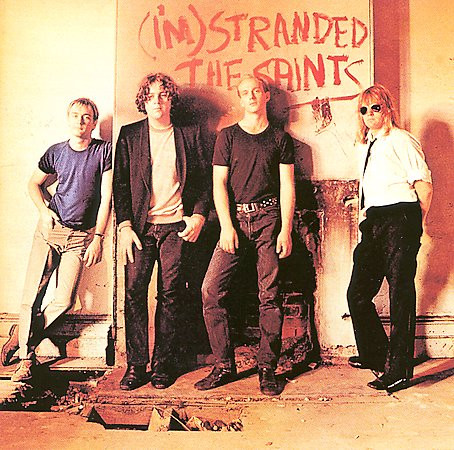
September. 28th in 1976: pioneering Australian punk group The Saints reissued their soon-to-be hugely influential debut single “I’m Stranded” (backed with “No Time”) on the Power Exchange label, where it would receive broad distribution (they had previously released a private pressing of the single on their own Fatal Records, that is now a collector’s item); the single pre-dated vinyl debuts by such UK punk rock peers as Sex Pistols, Buzzcocks, The Damned & The Clash…

In order to understand how pop-punk broke in Australia, The Saints arrived at a time where tensions in their native Brisbane were considerably high — police would often break up shows, and punk music served as a major ‘fuck you’ to authorities at large.

It’s often said that Australia’s Saints were the Antipodean Ramones, having developed similarly minus awareness of Da Brudders. But Ed Kuepper was more chaotic and violent-sounding than Johnny Ramone—and was capable of lead work as blistering as, say, Brian James’. Kuepper made the Saints their own entity. The Saints were one of Australia’s earliest punk bands and they’ve gone down in history as the first group outside of the United States to release a record. They followed 1976’s “(I’m) Stranded” single with a 1977 album of the same name, and the punk world was forever altered. Every song on the album is full of swagger, urgency, and sincerity as the band blazes through scorching rock numbers and a few blues-drenched ballads. Once you hear Chris Bailey exclaim “Come on!” or hear the buzzsaw whirlwind that is Ed Kuepper’s guitar playing, you’ll know why The Saints are one of Australia’s greatest musical exports.

Released in February 1977: Australian punk band The Saints followed up the roaring domestic success of their single “(I’m) Stranded” with their debut album of the same name, on EMI Records (Australia)/Harvest Records (UK)/Sire Records (US); full of rough, exhilarating rock’n’roll noise, it remains one of the greatest debut LPs of the era; “Erotic Neurotic” was the second single, released that May shortly before the band relocated to the UK; in 2010, the album was ranked #20 in the book ‘100 Best Australian Albums’…

Although not given their due at the time, this band and this song have gone on to serve as the blueprint for how Australians typically approach the genre. There’s a strong underlying sense of melody here, too. While John Lydon and Iggy Pop would often just howl and squawk, Chris Bailey knew how to get his hooks in. By doing so, he created one of the most famous choruses in Australian rock history, in turn paving the way for pop-punk.

The Saints are an Australian rock band, which was formed in Brisbane in 1974 as punk rockers. The founders were Chris Bailey (singer and guitar), Ivor Hay (drums) and Ed Kuepper (guitar and composer). Next to Pilar Bailey. In 1975, contemporaries with the Ramones Americans, The Saints used the fast rhythms, the strident voice and guitar “buzz saw” that characterizes the first years of punk. With their first single, “(I’m) Stranded,” in September 1976, they became the first punk band outside the United States to release a record, ahead of other well-known groups, including the Sex Pistols and The Clash .

They are one of the first and most influential groups of the genre, according to Bob Geldof, “Rock music in the seventies was changed by three bands: The Sex Pistols, The Ramones and The Saints.” In early 1979, The Saints split, leaving Bailey to continue with the band, with a variable lineup, like a pop punk band. The band was included in the Australian Recording Industry Association (ARIA) Hall of Fame in 2001

Australian band the SAINTS

Video  —  Posted: September 29, 2024 in WE LOVE

AMERICAN FOOTBALL – ” Covers “

Posted: September 29, 2024 in MUSIC

Alongside and in celebration of American Football (25th Anniversary Edition) arrives American Football (Covers), an ingeniously programmed set that highlights not only the way American Football fuelled an eventual “emo revival,” but also and perhaps more important how their songs and sounds infiltrated and inspired so many corners of music. From string-swept and imaginative folk to idiosyncratic international pop, from intricate instrumental splendour to open-road shoegaze wonder, “(Covers)” traces—or at least teases—the endless ways the source material has cut across borders of generation, genre, and geography. It affirms just how important the nine songs three college kids cut in four days remain.

Kinsella’s lyrics on “American Football” were specific in detail but vague in situation. What we knew was that a relationship was collapsing with less animosity than regret, a sense of future nostalgia shaping words that asked how an ex-couple might feel as the summer passed and they maybe saw each other again. This framework, then, is a perfect invitation for different singers to climb inside and find their own interpretation.

There is, for instance, a sweet sense of hope to Iron & Wine’s opening rendition of “Never Meant,” Sam Beam’s singular falsetto pealing like an apology, hoping to pull his lover back toward a relationship’s center. Ethel Cain, meanwhile, lingers and wallows in the uncertainty of the paradoxically titled “For Sure.” Above long, soft drones and guitars that twinkle like stars being extinguished forever, she settles into this song about never really knowing what’s happening. Doom is a foregone conclusion. It is beautiful and tragic, every scene of being together rendered as a pure hypothetical.

In one of the most faithful interpretations here, M.A.G.S. borrows the bitterness and conviction of “I’ll See You When We’re Both Not So Emotional,” less a break-up song than a reckoning with the breaks reality sometimes requires. His keyboard-traced and drum-driven version is sweet but sharp, a reminder that a stop can be an act of self-care. Blondshell slinks into a similar realization during “The Summer Ends,” taking shelter beneath a haze of multi-tracked harmonies and circular guitars to wonder what it’s going to take to move toward happiness—for herself and her partner, either together or apart. “Both been so unhappy,” she sings faintly after a fever breaks. “So let’s just see what happens/when summer ends.” Appropriate for a band who could never have predicted what the future held for these songs, American Football is about not knowing what’s up ahead. Each band here sings that eternal plight in their own tone and tongue.

When American Football wrote and recorded these nine songs in 1999, they were also punk kids who were becoming interested in jazz and modern classical. The touchstones that always appear are Miles Davis, Steve Reich, and The Sea and Cake, but the bigger lesson is their interest in engaging other textures and approaches than distortion and drive. That’s clear in the sparkling guitars and shifting rhythms, in the traces of trumpet and whiffs of keys. And it is obvious on (Covers) in the assorted shapes these songs take.

Though never forsaking the tune itself, Manchester Orchestra imbue “Stay Home” with Reich’s pulsing repetition and Electric Miles’ opalescent glow. They find a way to reconnect the song to its burgeoning references. Yvette Young, of Covet, uses webs of guitar, layers of granular synthesis, and lines of mercurial strings to turn the once-skeletal “You Know I Should Be Leaving Soon” into a lush world. And there at the end, John McEntire, busy back in 1999 scheming Tortoise’s Standards and The Sea and Cake’s Oui, routes “The One With the Wurlitzer” into a Motorik anthem. It feels as emotionally unsure as all of American Football, the beat pushing forever forward while the bittersweet keys seem to turn backward, staring off at what might have been.

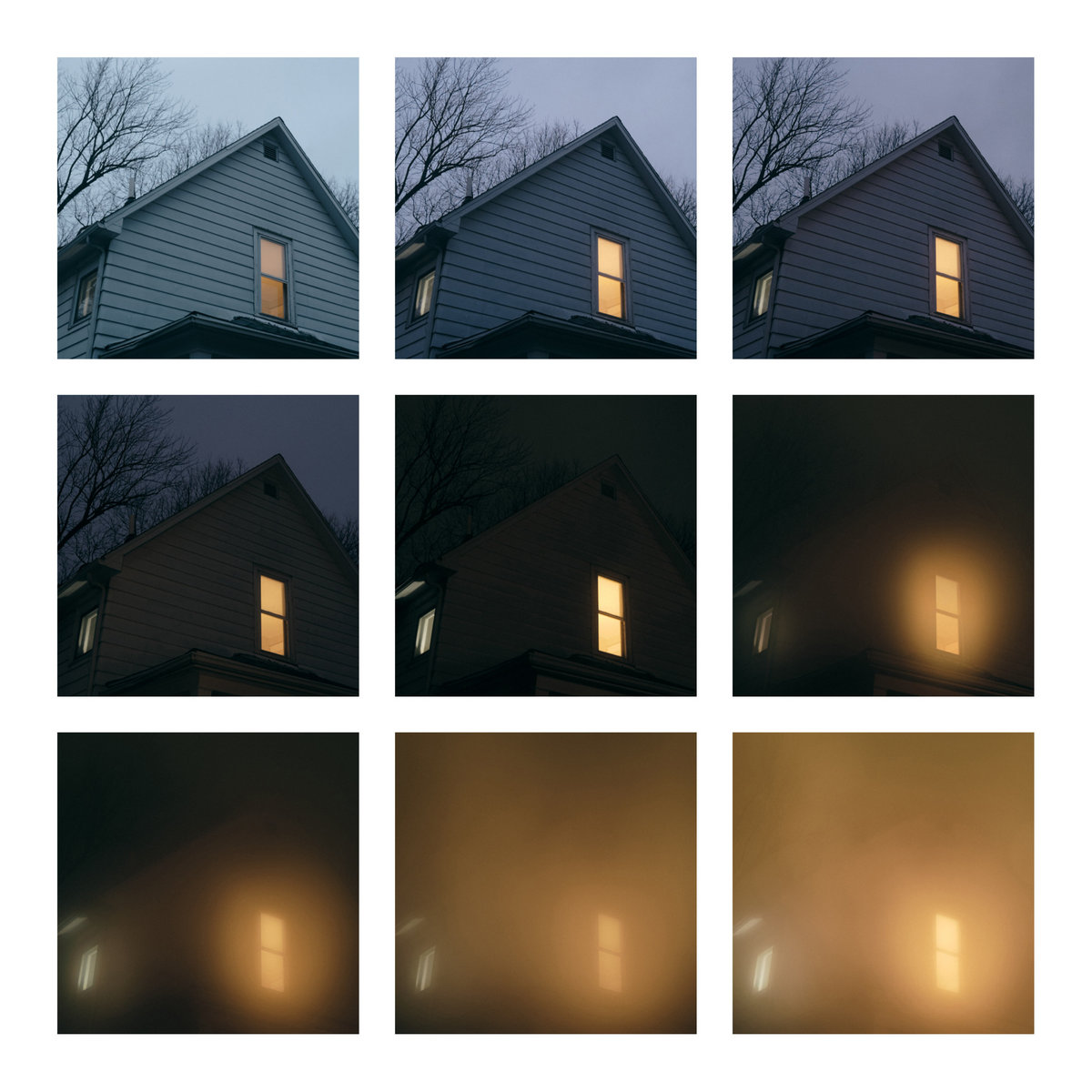
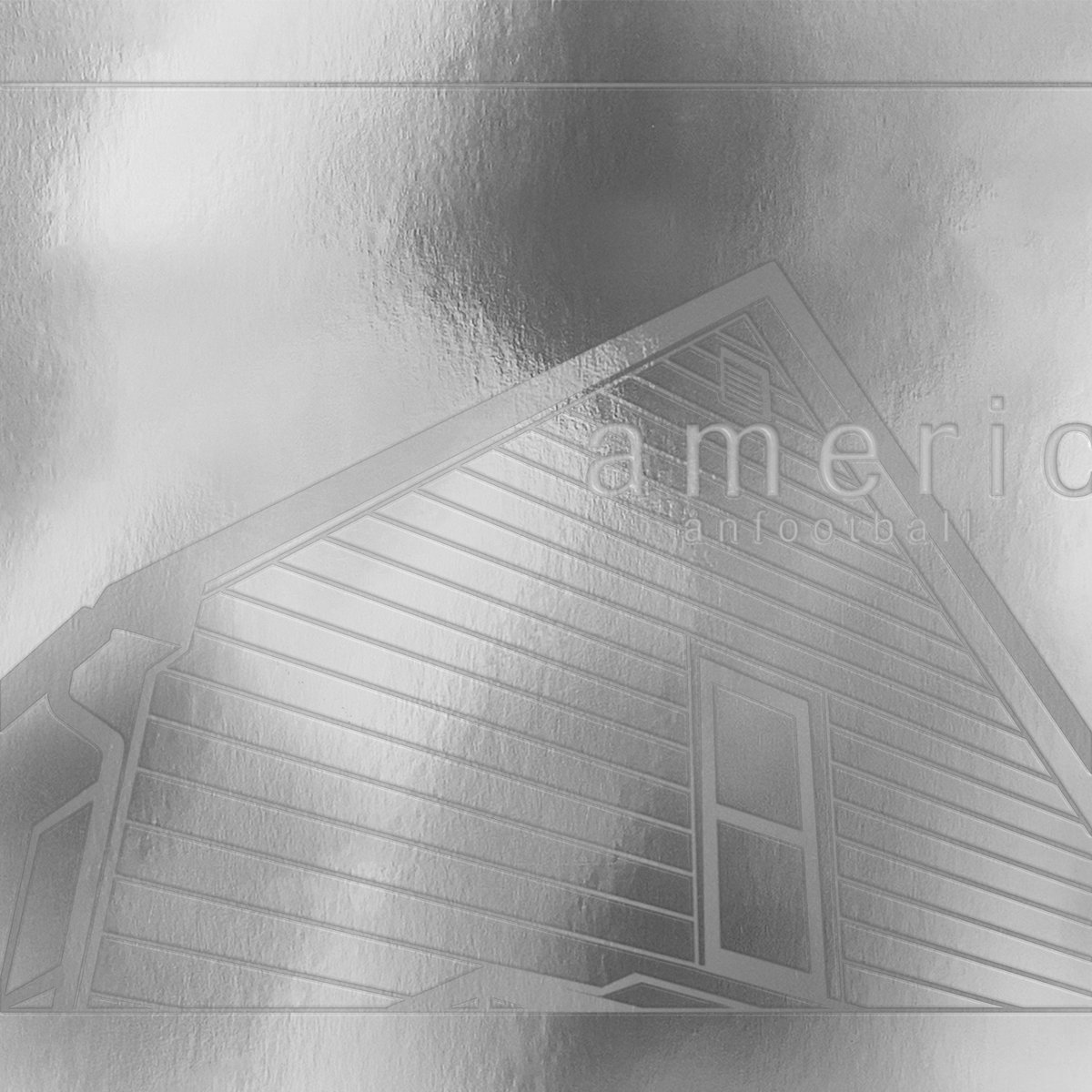
On the sidewalk outside of the famous house on the cover of American Football, several lines mark where Chris Strong likely stood when he snapped the photo. They are invitations to capture the scene, just as Strong did in 1999. But on the cover of (Covers), nine different images show the home during subsequent phases of the night, the glow from the upstairs window eventually overrunning the frame. That’s more fun than a mere replication, the same lesson that this compilation holds: Eschewing mimics for acts that took a little bit of American Football and made their own way, (Covers) is a testament to the imagination not only of the original but to those who continue to find it twenty-five years after the band assumed they were done. 

releases October 18th, 2024

All songs originally by American Football

American Football exploded onto the emo scene in the late 90s, releasing a self-titled record which quickly elevated them to cult band status before splitting in 2000. They would reform in 2014 due to popular demand, going on to release a further two critically acclaimed eponymous albums as they enjoyed their now widespread fame.

American Football cut its first—and, for a long time, only—LP in four days, as the spring of 1999 slid into summer. Steve Holmes, Steve Lamos, and Mike Kinsella were college kids who knew that as soon as their album of spacious and tenderly sad songs was done they likely would be, too. Aside from a few shows, they would break up at the end of the school year and perhaps go on to other bands, jobs, and lives. And for a long while, of course, that is exactly what happened: American Football’s sole album was a twinkling and circuitous entry in the annals of Midwest emo, remarkable for its musical tenderness and lyrical ellipses but largely unremarked upon, too.

But what happened over the next two decades is an inspiring saga of wonderful work slowly finding its audience. American Football went from cult classic to emo linchpin, its reputation and sales accreting like sand piling up in some endless hourglass. The little white house on its cover, a physical manifestation of the Anywhere, U.S.A. melancholy of its songs, became a musical landmark. Reunions, reissues, and two new albums followed, American Football finally climbing atop its own steady growth curve and staring out to the massive and enchanted crowd it had created, to the scene it had helped foster. Made at the end of the last century, American Football, or “LP1“, unequivocally stands as one of this century’s most influential rock records.

This September sees American Football arrive in the UK to play a handful of headline shows. Set an event reminder right now as tickets are expected to sell out – fast!

When Polyvinyl released “American Football” in 1999, it was still an upstart label, an outgrowth of a fanzine with a simple business model and a pure passion for releasing the music co-founders Matt and Darcie Lunsford loved. They didn’t gripe much, then, when their new trio splintered into other acts.

Both label and band have grown in the quarter-century since in ways neither would have predicted. After a years-long hunt for the original Digital Audio Tapes and a subsequent quest for a machine that would render them properly, American Football has been lovingly remastered by original mastering engineer Jonathan Pines in Urbana’s Private Studios, where it was recorded. The intertwined guitars have more sparkle, the drums more bounce and flash, the occasional bass more depth. This is the definite version. 

Steve Holmes – guitars, wurlitzer
Steve Lamos – drums, percussion, trumpet
Mike Kinsella – vocals, guitars, bass

Releases October 18th, 2024

STEVIE NICKS – ” The Lighthouse “

Posted: September 28, 2024 in MUSIC

The Fleetwood Mac Stevie Nicks has returned with a hard-hitting protest anthem for women’s rights.

The track, titled “The Lighthouse”, sees Nicks offer a guiding hand to the women of America, and tackles issues such as the overturning of Roe v. Wade, which ended the constitutional right to have an abortion. Co-written with Magnus Birgersson and Vincent Villuis, the track arrives with a stunning music video, featuring Nicks performing at the top of a lighthouse, surrounded by gothic candelabras and doves, the latter an iconic Nicks motif.

It’s also her first new music since the release of her Buffalo Springfield “For What It’s Worth” cover in 2022. “The Lighthouse” begins with a hushed piano melody and the crashing of waves, as the dictionary definition of the track’s title appears on screen: ‘a guide for weary travellers through stormy seas / a beacon of light providing a sense of direction, safety and hope / a powerful beam that illuminates a path from darkness and uncertainty toward light’. 

With muted vocals, Nicks croons ‘I have my scars, you have yours…don’t let them take your power’. For the chorus, the percussion smacks like thunder and hypnotic guitar riffs rumble, as the melody takes an intense, stormy turn. Meanwhile, the video displays powerful footage of protests from around America.

“I wrote this song a few months after Roe v. Wade was overturned,” Nicks says in a statement. “It seemed like overnight, people were saying ‘What can we, as a collective force, do about this?’ For me, it was to write a song.

“It took a while because I was on the road. Then early one morning, I was watching the news on TV and a certain newscaster said something that felt like she was talking to me — explaining what the loss of Roe v. Wade would come to mean. I wrote the song the next morning and recorded it that night.”

She continues, “That was September 6th, 2022. I have been working on it ever since. I have often said to myself, ‘This may be the most important thing I ever do.’ To stand up for the women of the United States and their daughters and granddaughters — and the men that love them. This is an anthem.”

On October 12th, Stevie Nicks will feature as the musical guest on comedy-sketch show Saturday Night Live, her first time on the programme since 1983.

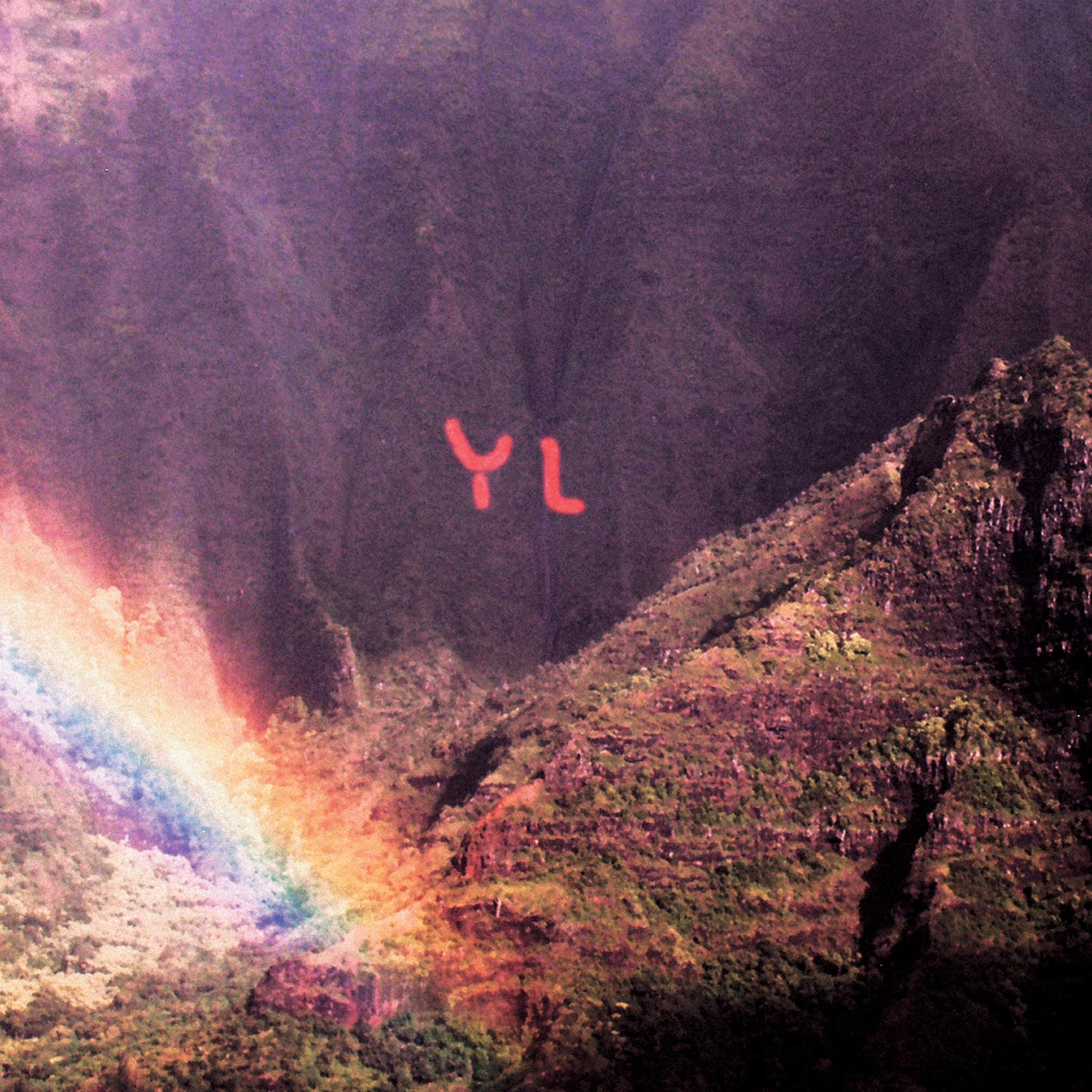
This year, Fat Possum Records celebrates the 10th anniversary of Youth Lagoon’s debut album “The Year of Hibernation”. 45rpm Double Cream Colour Vinyl includes the album as well as 3 bonus songs. The artwork is expanded into a gatefold vinyl with updated artwork and printed inner sleeves by Collin Fletcher.

‘The Year of Hibernation’ turns 13 years old today. When I recorded it, I was going to Boise State University — skipping classes to use the school’s pianos to write these songs cuz I knew that was more important. I took out a student loan to pay for recording. People made fun of my voice. I didn’t listen. I just worked. They said I was delusional. I was. I did everything everyone told me not to. Trust the inner world at all costs. That is life itself.

To celebrate the 10th anniversary, “Traces” has been completely remixed and remastered by our producer and engineer, Paul van Zeeland, and also prepared for it’s first ever release on deluxe Limited Edition vinyl. The remix sounds spectacular and provides a fresh view on the original mix while retaining the spirit and feel of the original album.

Stunning new album artwork was created by Antonio Seijas especially for this 10th Anniversary edition.

Image  —  Posted: September 27, 2024 in MUSIC

A new Advance Base song signals the changing of the seasons. Maybe that’s because of the extraordinary wealth of Christmas music Owen Ashworth has released under the moniker over the past twenty-plus years, his snow-globe keyboard and bitter-cold realism capturing the season’s bleakness. A new album, “Horrible Occurrences”, is out December 6th — all adds up — and “The Year I Lived in Richmond” is its opening track.

A twinkling murder ballad, it is plainspoken but vivid, delivered in Ashworth’s effortless drawl, cut up by tiny falsetto howls. However chilly the story, Ashworth never loses his warmth. 

“Horrible Occurrences” is the title of Owen Ashworth’s new album as Advance Base, and there is truth in advertising. In these songs—all centered around a fictional town called Richmond and featuring an interlinked cast of characters—you will hear stories of death and disappearance, climactic confrontations and unsolved mysteries. “Richmond is just this place where all the bad memories live,” Ashworth says with a laugh, and nearly 30 years into his song-writing career, none of his records have packed quite the emotional intensity of this one. And yet something alchemical happens in the telling of these tales. Like a masterful short story collection, “Horrible Occurrences” is inspiring and alive, idiosyncratic and electric, pulling you closer with each word.

Image  —  Posted: September 26, 2024 in MUSIC

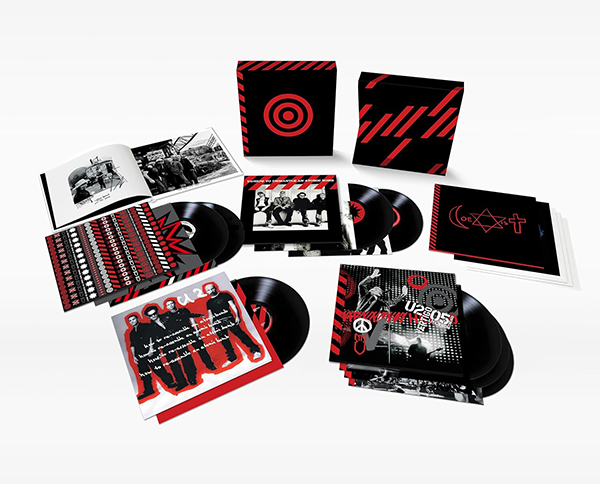
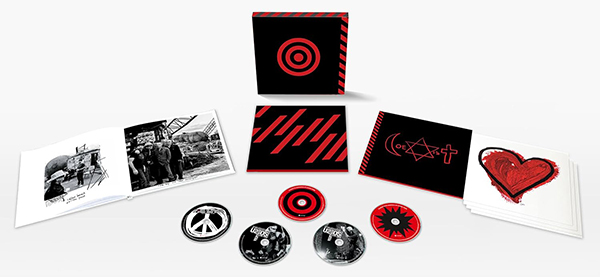
U2 are reissuing ‘How to Dismantle an Atomic Bomb’, their 2004 album featuring “Vertigo,” for its 20th anniversary. The new release, dubbed the ‘Re-Assemble Edition’, is out November 22nd via Interscope. It includes a remastered version of the original album, along with a handful of previously unreleased songs. Two of those tracks, “Country Mile” & “Picture of You (X+W),” are out now.

“How To Dismantle An Atomic Bomb” (remastered to celebrate the 20th Anniversary, with bonus track ‘Fast Cars’) & How To Re-Assemble An Atomic Bomb (the shadow album – a collection of ten tracks including new, unreleased songs recently rediscovered in the archive of the original album sessions, now released for the first time), out November 22nd.

“The sessions for ‘How to Dismantle an Atomic Bomb’ were such a creative period for the band, we were exploring so many song ideas in the studio,” the Edge said in a statement. “We were inspired to revisit our early music influences, and it was a time of deep personal introspection for Bono who was attempting to process—dismantle—the death of his father.”

He continued, “For this anniversary edition, I went into my personal archive to see if there were any unreleased gems and I hit the jackpot. We chose 10 that really spoke to us. Although at the time we left these songs to one side, with the benefit of hindsight we recognize that our initial instincts about them being contenders for the album were right, we were onto something…”

The band’s eleventh studio album was a massive success, with two of its singles, ‘Vertigo’ and ‘Sometimes You Can’t Make It On Your Own’, reaching No 1 in the UK charts, and the other two (‘All Because of You’ and ‘City of Blinding Lights’) both going top five. The album went to number one virtually everywhere and won eight Grammy Awards, including ‘Album of the Year’.

This reissue campaign, offers two big box sets: a 5CD super deluxe or an 8LP vinyl super deluxe, that offer the same audio content, The box sets come with hardback photo books by Anton Corbijn featuring handwritten notes by the photographer and “never-before-seen” photos and 8 prints in a folio sleeve.

“How To Dismantle An Atomic Bomb” is re-released on 22nd November 2024, via UMR.