“Unbound” is my way of connecting the songs from “She Reaches Out” with where I’m at now; embodying them in a new way after living with them for so long. As she concludes her “She ReachesOut” trilogy, the proto-gothic songwriter is one step closer to transformation.
The proto-gothic singer, with one hoof in sepulchral folk, the other in darkwave and doom metal, repeats this process of attaching and detaching every 30 days, a cyclical practice that’s also part of a larger arc that has defined her life since 2020. She’s attempting both to slough off a past self and remould from the corpuscles of old flesh her future self she’s still yet to shake the hand of; she’s not who she was, though she’s not quite who she will be either — “The calmer self of my future,” she says.
Chelsea Wolfe presents “Unbound“, the final release in the “She Reaches Out To She Reaches Out” triptych featuring special, stripped-down versions of “Whispers In The Echo Chamber”, “Dusk”, “The Liminal”, and “Place In The Sun”, plus a cover of Spiritbox’s “Cellar Door.“
Wolfe strips the songs down to their raw essence – just her voice, a guitar, or piano – capturing vulnerability and unfiltered truth. The music stands exposed, stripped and skyclad, each track a rite of passage, a descent into the heart.
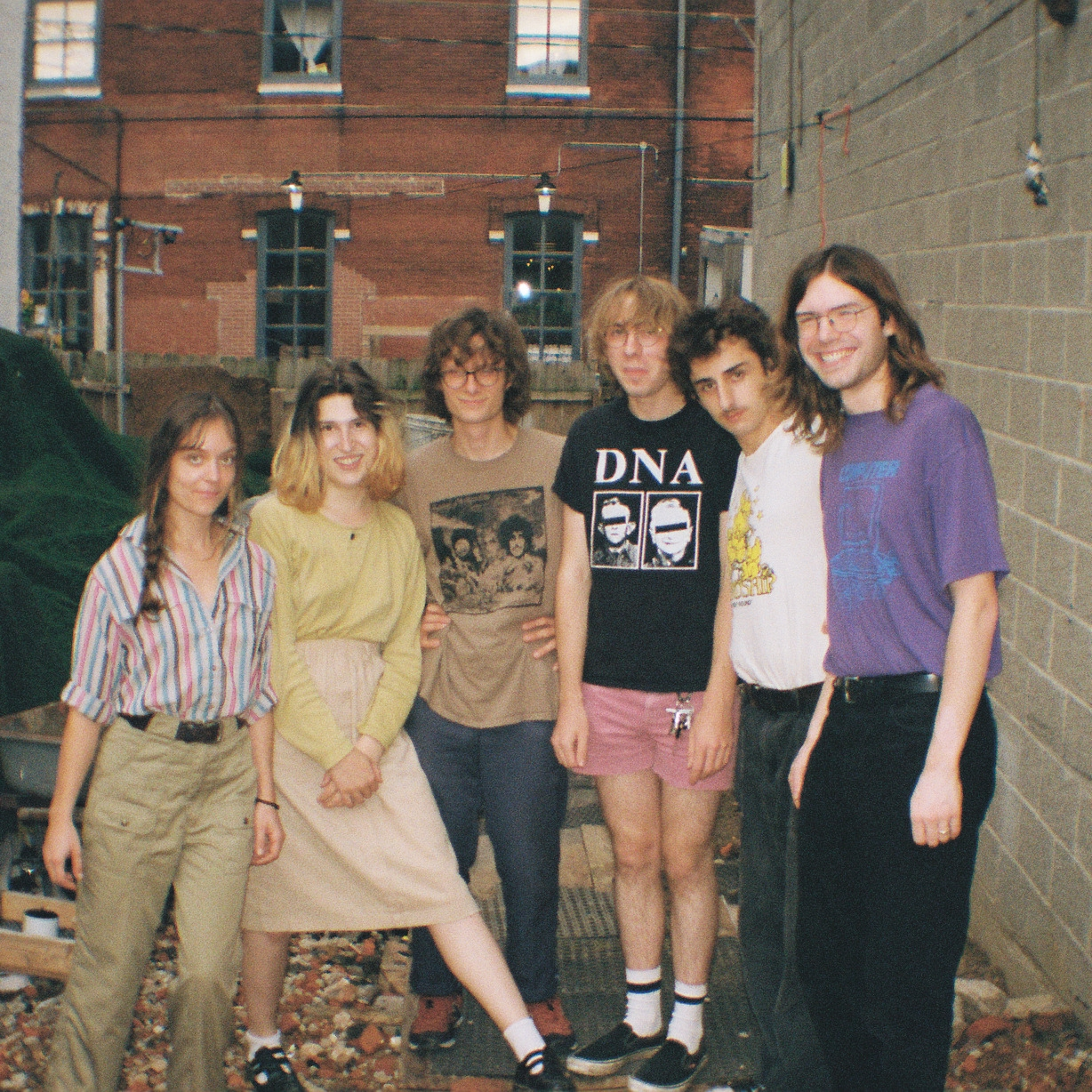
For Nottingham quartet Divorce, home is a feeling. Initially meeting as teenagers through the city’s close-knit DIY scene, the band – completed by members Tiger Cohen-Towell (vocals / bass), Felix Mackenzie-Barrow (vocals / guitar), Adam Peter Smith (guitar / synth) along with Kasper Sandstrøm (drums) they all came together as Divorce in mid-2021, releasing a slew of genre-defiant singles that quickly caught the attention of tastemakers the world over.
Vocalist and bassist Tiger Cohen-Towell explained: “Being a musician can be brutal. I feel like you hear more and more songs coming from artists purely about the trials and tribulations of being a musician, feeling like you aren’t getting enough, or feeling like you’ve got too much and you don’t deserve it. It’s gotten a bit meta if you think about it.
Sonically rich and lyrically open-hearted, ‘Drive to Goldenhammer’ sees Divorce assemble a shelter for themselves amid the chaos and leave the front door open to everyone. This album pays homage to seeking place and home; one of the great human levellers. Much of life feels at odds with this particular need. And to Goldenhammer; you are a reason to keep driving. We will find you again and again!
‘All My Freaks’ is about that too, written from the perspective of a humorous/tragic caricature of an up-and-coming artist, this song is laughing at our own egos and yet acknowledging the power that they wield.
To be so well-regarded as a touring band, Led Zeppelin certainly shied away from releasing live albums.
They released just one official concert recording during their ’70s-era heyday, 1976’s bombastic, oft-criticized “The Song Remains the Same“. The LP was an international smash, selling more than four million copies in the U.S. alone. But it was hardly the definitive release. Zeppelin wouldn’t release another live album for more than 20 years. Even then, 1997’s “BBC Sessions” was as notable for what it didn’t include (like, say, the previously unreleased “Sunshine Woman”?) as what it did.
An expanded version called “The Complete BBC Sessions” followed almost two decades later, very belatedly rectifying the problem. With two more Led Zeppelin albums one from the peak of their powers (2003’s “How the West Was Won”, featuring material from a pair of 1972 concerts the band performed in California) and another in the autumn of their years (2012’s “Celebration Day“, from the December 2007 concert at London’s O2 Arena).
The multi-platinum Led Zeppelin, career-retrospective release from 2003, completed their official live discography. Those four albums are joined by one partial reunion, 1994’s “No Quarter: Jimmy Page andRobert Plant Unledded“, and Jimmy Page’s Led Zeppelin-focused Black Crowes collaboration on 2000’s “Live at the Greek”.
It’s not much, especially considering that classic-rock contemporaries like the Rolling Stones and the Who have issued more than a dozen live projects apiece. Thankfully, more than one of those later-period live Zeppelin projects can be considered the essential.
‘The Song Remains the Same’ (Led Zeppelin, 1976)
Perhaps The classic Led Zeppelin live release, the album was recorded and filmed during their three day residency at the Madison Square Garden, New York, July 27th–29th, 1973, and released three years later. It’s been discussed intensely by fans ever since due to a series of different, and sometimes controversial reasons. This live album was produced from performances held at Madison Square Garden in New York City, part of Led Zeppelin’s 1973 tour across North America. Eddie Kramer was responsible for recording the tracks on-site using the Wally Heider Mobile Studio truck. The final mixing of the songs took place at Electric Lady Studios in New York and Trident Studios in London. The artwork for the album features an image of a rundown cinema located within the Old Street film studios in London, a site where Led Zeppelin prepared for their 1973 tour.
The performances are great, and although we can hear Plant’s voice changing due to overuse, many live versions of their songs included here are regarded by most fans as definitive. “No Quarter,” “Dazed and Confused,” “Stairway to Heaven,” “Moby Dick,” “The Song Remains the Same,” and “The Rain Song” are all legendary and sometimes extended by improvisations.
The album didn’t follow the track-list of the movie, so some songs were only in the movie, and others were only on the album. In 2007 things changed dramatically: A remastered version of “The Song Remainsthe Same” was released, and the track list of the double CD was extended to include songs that were not on the original album and movie, like “Over the Hills and Far Away,” “The Ocean,” “Misty Mountain Hop,” and the complete “Heartbreaker.”
Led Zeppelin opens with the tough one-two punch of “Rock and Roll” and “Celebration Day” but then eventually dissolves into a well-named 27-minute version of “Dazed and Confused.” It was a time of sex, drugs and rock ‘n’ roll. But, as “The Song Remains the Same” definitively confirms, sometimes the former had a huge impact on the latter. At least listeners didn’t have to contend with goofy segues from the film version where Robert Plant rescues a fair maiden from a tower.
The reissue was expanded and remastered under the supervision of Jimmy Page, providing a more complete and enhanced listening experience that better represents the band’s live performance.
Regardless, this is Led Zeppelin at their peak, playing a setlist filled with classics.
‘No Quarter’ (Jimmy Page and Robert Plant, 1994)
Some long-time fans were likely disappointed that this live reunion didn’t include Led Zeppelin’s other then surviving member, John Paul Jones. But Plant and Page weren’t looking to reanimate past glories. Instead, “No Quarter: Jimmy Page and Robert Plant Unledded” was a genre-bending, chance-taking project where they eschewed straight-ahead renditions of songs like “Stairway to Heaven” in order to dig deeper into the Middle Eastern and classical influences that permeated “Kashmir” – and then followed that fascinating thread into brand new places.
‘BBC Sessions (Led Zeppelin, 1997)
The BBCis a great source of interesting live recordings by many classic bands from the 60’s and 70s, and Led Zeppelin are no exception to this. The 1997 version of this album came out as a double CD, with the first disc being a collection of tracks recorded throughout 1969. It took two tries to get this album release right, as the original two-disc “BBC Sessions” included songs from four 1969 radio appearances and an April 1971 concert from London’s Paris Theatre but also some unfortunate edits and omissions. “The Complete BBC Sessions“, issued in 2016, resolved both issues.
The downside to Disc 1 are a lot of repeat tracks. However, the upside are several tracks not available elsewhere, like “The Girl I Love She Got Long Black Wavy Hair,” and very nice covers of “Travelling Riverside Blues” by Robert Johnson and “Somethin’ Else” by Eddie Cochran. You can hear Zeppelin’s development as a live band, from the early recording in March 1969 through the later recording in August (with great versions of “You Shook Me” and “How Many More Times”).
Disc 2 is probably more interesting, with an almost-complete recording of a show from April 1971, which sees the band relaxed relative to other recordings of that era), and most interestingly, they play songs that at the time were unreleased, such as “Black Dog” and “Stairway to Heaven!” There’s also a very powerful version of “Since I’ve Been Loving You,” a rare and longer version of “Thank You,” and also a fun medley of covers during “Whole Lotta Love” (sadly incomplete).
In 2016, as part of the reissue campaign, this album was remastered and expanded, including a third disc with more songs from 1969, and a couple from the 1971 show that were cut (“What Is and What Should Never Be” and “Communication Breakdown”). Also found was another entire disc of new material, including the previously unreleased “Sunshine Woman.” The only mild complaint that remains: This is Led Zeppelin in their ascent but not at their peak. The BBC Sessions are a great way to hear early LedZeppelin live.
The collection showcases the band’s raw energy and versatility in a live setting, offering unique versions of their classic songs as well as some tracks that were never released on their studio albums. The album was produced by Jimmy Page and offers a glimpse into the band’s formative years, capturing their live performance prowess.
‘Live at the Greek’ (Jimmy Page and the Black Crowes, 2000)
Contractual issues meant the Black Crowes couldn’t include any of their own songs from these double-billed shows on the subsequently released LP. That might have been seen as great news for Led Zeppelin fans, since it presumably meant “Live at the Greek” would be focused on Jimmy Page’s deep well of material. It was. So why didn’t this more consistently work? Black Crowes frontman Chris Robinson later admitted, “I’m not a big fan of Robert Plant’s lyrics or his singing.” Unfortunately, at various times on “Live at the Greek”, it really shows.
‘How the West Was Won’ (Led Zeppelin, 2003)
As they settled in for a pair of June 1972 concerts at the Los Angeles Forum and Long Beach Arena, Led Zeppelin was no longer searching for the just-right blend of their own influences and creativity. “How theWest Was Won” brings us two and a half hours of music on three CDs. Some songs are cut (apparently they also played an acoustic version of “Tangerine,” and encored with “Communication Breakdown” and “Thank You”), but what is on par with “The Song Remains the Same“, and at times even better.
The opening with “Immigrant Song” and “Heartbreaker” is incendiary, the early version of “Over the Hills and Far Away” is a rare occasion to hear Plant singing the original high melody, the acoustic set is loose and fun, the jamming in “Dazed and Confused” and “Whole Lotta Love” is some of their best, and the last ever performance of “Bring It On Home,” extended out to nine minutes, is a perfect ending to this wonderful album.
In 2018, a remastered version was released, which sounds slightly better, but probably for copyright reasons, omitted “Hello Mary Lou” from the “Whole Lotta Love” medley, which was included in the 2003 version. The career-defining “IV” had just been released, with the deeply underrated “Houses of the Holy” just over the horizon. This, finally, was Led Zeppelin at the height of their considerable on-stage powers. Better late than never.
The performances on “How the West Was Won” are often cited among the best in the band’s career, making this album a crucial part of Led Zeppelin’s discography and a must-have for fans .
‘Led Zeppelin’ (Led Zeppelin, 2003)
The multi-platinum “Led Zeppelin” lacks a tight one-tour focus but makes up for that with its dramatic sweep. Every micro-era from their decade of dominance in the ’70s is touched upon, as live material from 1969, 1970, 1972, 1973, 1975 and 1979 offers new intrigue for both long-time fans and newcomers alike. Of particular note is a complete concert from January 1970 at Royal Albert Hall and the August 1979 set at Knebworth that marked Led Zeppelin’s last-ever U.K. performance.
This DVD is probably the best introduction to live Led Zeppelin, as it includes a selection of performances from 1969 through 1979. Most of the first disc is dedicated to the Royal Albert Hall concert from 1970, and even though it’s incomplete, it’s still more than an hour and a half of excellent video showing the band without fancy lights, just playing their early songs in a very solid way. From the opening “We’re Gonna Groove,” to the very long “How Many More Times,” and the spectacular “Moby Dick,” there is much to enjoy here.
On the second DVD we get four tracks from Madison Square Garden in 1973, two of which didn’t make the cut for “The Song Remains the Same” movie (“The Ocean” and “Misty Mountain Hop” We finally get a complete version “Black Dog” and a slightly different “Since I’ve Been Loving You” which was probably included because it was played right after “Misty Mountain Hop”.
After this, things get even more interesting, with 50 minutes from Earls Court in 1975 (the acoustic set, followed by incredible versions of “In My Time of Dying” and “Trampled Underfoot,” along with “Stairway to Heaven”), and another 50 minutes from Knebworth 1979, especially worthy at least for “Achilles Last Stand” and “Kashmir.” When the “Mothership” compilation was released around 2007 to coincide with their big reunion, there was a version with an added DVD. That’s basically a shorter version of the 2003 release, with fewer songs so it could fit on one disc and without bonus tracks.
There are various TV appearances included. A favourite is from March 1969 and was recorded for Danish TV. The band rips through four songs, including a rare “Babe I’m Gonna Leave You,” is one of the best early Zeppelin videos I’ve ever seen.
‘Celebration Day’ (Led Zeppelin, 2012)
The legendary 2007 reunion concert at the O2 Arena in London, with Jason Bonham (John’s son) on drums. It took five years to be officially released on both CD and DVD. There were multiple editions, one of which included a full rehearsal, but the main thing, of course, was the concert itself. It was a real celebration, after a series of not so good reunions from the past (Live Aid 1985, Atlantic concert in 1988, etc.).
After they’d been gone so long, “Celebration Day” was perhaps understandably over celebrated in the moment. As with its participants, there are times when these renditions creak with age, times when the seams show where none did before. Still, if this ends up as the group’s last testament, then the wait was well worth it. This isn’t Led Zeppelin at their peak, but that hardly seemed possible at such a late date. Instead, “Celebration Day” fully redeemed those misfire band reunions in the ’80s.
The show has wonderful sound and professional camera work, and the band’s performance, while subdued compared to their younger selves (understandably so), is still incredibly solid. Highlights include one of the best versions ever of “Kashmir,” rarely played songs like “Good Times Bad Times,” “Ramble On,” and “For Your Life,” and a whole bunch of classics with very little jamming. This is probably the only occasion in which Page plays an almost note-for-note version of the “Stairway to Heaven” solo.
Robert Plant’s more mature voice (which sounds amazing), but the magic is still there, and Jason does an excellent job on drums. This is a legendary reunion, and there is not much to add to that.
‘Live at L’Olympia, Paris: October 10th, 1969’ (2014)
In 2014 Jimmy Page started a long series of re-releases of the whole Led Zeppelin discography, with every album was remastered and also available in an extended version, with bonus material added. While with most albums we got a second CD of rough mixes and demos of songs from the main album, with “Led Zeppelin I” actually came an almost full recording of a concert.
Recorded by the BBC in October 1969 in Paris, a few days before the release of their second album, and broadcast on radio, this concert was already available as a bootleg for a long time. The sound is slightly better than the old bootleg, but sadly, the recording is cut to fit on a single CD.
Most of the spoken parts in between songs are not present, Bonham’s “Moby Dick” is completely absent, and almost half of “How Many More Times” is cut. Still, it’s an hour and ten minutes of early Led Zeppelin playing material from their first album, a very early version of “Heartbreaker” and probably the most unique part, an instrumental snippet of “Good Times Bad Times” leading into “Communication Breakdown” at the beginning of the concert. It’s a high energy show with a bit of a messy sound due to the original recording quality, but still an enjoyable listening experience. Of course, the bootleg is still out there if you want to listen to the missing bits.
Red Hot’s new “TRAИƧA” compilation, which benefits “vital LGTBQ+ organizations at the same time it culturally invigorates the fight for trans rights,” Here is a preview with two more advance singles. The first has Julien Baker covering Belle and Sebastian‘s “If You’re Feeling Sinister” classic “Get Me Away From Here, I’m Dying.” She’s joined for the rendition by a regular collaborator, producer Calvin Lauber, and it also features SOAK and Quinn Christopherson. “JB approached me with the idea to do this cover, and to bring in SOAK and Quinn Christopherson, both friends of ours and people we’ve played shows with, as guest features on the song,” Calvin says. “However we found ourselves all on opposite sides of the country (JB in LA, myself in Nashville, QC in Alaska, and SOAK in the UK) so this song ended up being produced totally remote Postal Service style, sending ideas back and forth over email. JB sent me her draft of the song and a rough arrangement and asked me to do my thing with it.
I ended up playing drums, guitar, synth, pretty much everything laying around my studio. It’s a pretty dense track, I think we both wanted it to feel dynamic but big at the same time. We were both pretty inspired by 80s new wave and like, Interpol for this one.”
Yaeji and Teddy Geiger‘s new track for the compilation, “Pink Ponies,” is also out today. “When I heard the demo and lyrics Teddy sent for the first time, I was packing my bags to return to the US from another brief stay with my family in Korea and it brought me to tears,” Yaeji says. “It’s rare to be invited into a space where I can fully let my artistry and intentions sing in this way.
What Teddy laid down was a beautiful invitation that allowed me to flow exactly the way my soul intended. The artist’s role is that of a truth teller, and this song and project is one example of the power of music and collective artistry.”
Ty Segall and Corey Madden of Color Green have formed the new duo Freckle, and will release their self-titled debut album on January 31st via Ty’s God? imprint through Drag City. There’s not a lot of concrete info about the project, but with both Ty and Corey part of the Los Angeles psych scene, they were bound to cross musical paths.
When a Freckle pops up, that’s when you know that the sun has gotten through. Don’t let ‘em tell you it’s skin damage – more like the sign of time well spent, as always, in the light. Freckle the band’s like that. Freckle is, then, a Californian, the hive mind of Corey Madden and Ty Segall. This LP reminds all of us that when the clouds are out you can still get sunburned.
The track “Taraval,” which is quite lovely ’60s-style acoustic psych pop, and Ty’s tenor and Corey’s baritone sound really good on the harmonies.
“I think this is the best thing we’ve ever done, it’s a proper step up.” It’s immediately clear that the Hull band have broken new ground on “Microtonic”. “The last album was essentially like a bridge between the two albums,” the band say of 2023’s “I Don’t Know“. “With that one we knew what we were trying to do but with this one we’ve fully cracked it.”
Bdrmm’s trademark sound hasn’t disappeared by any means, the band’s more guitar-heavy beginnings a blueprint and influence on many of the groups breaking through in the here and now, a time when shoegaze is enjoying its strongest revival since its inception in the 80s, but those guitars are now incorporated into a broader, more expansive and varied sonic palette. “Microtonic”, recorded with long-term band collaborator Alex Greaves, features guest appearances from Working Men’s Club and Olivesque of Nightbus.
This new collection brings together classic radio sessions from Television Personalities, the masters of DIY post-punk and indie pop. Featuring two 80s BBC sessions that aired on John Peel and Andy Kershaw, along with a super rare 1992 WMBR set, this double LP features covers of Buzzcocks, The Raincoats and Daniel Johnston with previously unreleased songs and a bonus download WFMU session from 1993. “Catchy hooks and schoolboy wit are in abundant supply.”
The Television Personalities’ splendid DIY skills and loveable ramshackle persona led them on many a subversive trip both on record and playing live. But it was the radio that first introduced them to the world in a whirlwind of repeated spins. John Peel let outsiders everywhere tune in to their altered world. And, at the height of punk they parodied the new revolution, their single ‘Part Time Punks’ becoming a Peel staple, and the clamour to hear more eventually resulting in a session in 1980. Through the 80s, Daniel Treacy had matured into a gifted storyteller turned pop culture narrator who placed the modern world in his own hazy shade of focus. His songs were loveable, immediately identifiable and pin prick sharp; they were tidily observational, and often magically acute. This was a gifted raconteur, an inspiration and an essential alternative to the hiss and flutter of “normal” radio, a medium that by the late 80s had just about abandoned them.
‘Tune In, Turn On, Drop Out’ captures this pilgrim’s progress to pop nirvana, a psychedelic wonderland shaded by dark and brooding memories, all played out through a crackling transistor radio secreted under the pillow so that these sketches of society remain perfectly personal, a direct line into Dan’s psyche.
What began as a solo project by guitarist Ritchie Blackmore while he was then still a member of Deep Purple, grew into eight studio albums by a band that occupied The Man In Black’s time after he quit Purple following the “Stormbringer” album in 1975, until their comeback with “Perfect Strangers” in 1984.
On record, Rainbow’s greatest claim to fame – perhaps even above other-worldly guitar playing – was to launch the career of Ronnie James Dio before he left the band to join Black Sabbath in 1979.. The singer made only three Rainbow studio albums and once he was sacked the band quickly abandoned his sword-and-sorcery stylings to seek chart success. Rainbow’s early work primarily featured mystical lyrics with a neoclassical metal style, then went in a more pop-rock oriented direction following Dio’s departure from the group.
Three British musicians joined in 1979—singer Graham Bonnet, keyboardist Don Airey and then-former Deep Purple bassist Roger Glover—and this line-up gave the band their commercial breakthrough with the single “Since You Been Gone” from their album “Down to Earth”.
That came with the fourth record, on which Graham Bonnet sang, but then he was soon replaced by JoeLynn Turner. Rainbow never made two studio albums with the same line-up because, as Blackmore admits, he grew tired of member when they wanted more money, more limelight, or both.
Ritchie Blackmore constantly sought songwriters. Delivering on this front were his ex-Purple bandmate Roger Glover (also serving as Rainbow’s producer and bassist) and Turner, who served on four and three albums, respectively. After breaking up in 1984, Blackmore reformed Rainbow in 1993 with a new line-up, which recorded their eighth and last studio album to date “Stranger in Us All” (1995). Blackmore’s change in direction, from rock to Renaissance and medieval-influenced music, led to Rainbow’s second dissolution in 1997. He revived the band once again in 2015, Their catalogue is a mixed quality and to complicate matters there’s an eighth studio album made 12 years after Rainbow initially folded, with yet another new line-up. Everything you see here should only be studio albums.
Ritchie Blackmore’s Rainbow (1975)
Rainbow’s debut album began as an experiment for Ritchie Blackmore, then still touring with Deep Purple, for which he hired their support band Elf (mainly for their singer Dio) to record a cover of “Black Sheep Of The Family“, then “Sixteenth Century Greensleeves“, for a potential single solo release.
“Ritchie Blackmore’s Rainbow”, which the exiting of Deep Purple the guitarist recorded somewhat on the fly, in a pique of newfound inspiration, with the help of Ronnie Dio and his then-backing band Elf. And a stellar first effort it was, too, packed with memorable baroque hard rockers, imaginatively reworked covers, and arguably the prettiest pure ballad of Blackmore’s career in the whimsical “Catch the Rainbow.”
The guitarist’s respect for and rapport with the singer was instant and soon an album containing classics-to-be “Man On The Silver Mountain (much loved by John Bonham) and a true classic rock song, “Catch The Rainbow” The albums slowest and longest song. Just a song that breathes with beautiful guitar and smooth vocals. , “Temple Of The King” and a hard-rocking instrumental cover of The Yardbirds’ “Still I’m Sad” emerged – along with Blackmore’s resignation from Deep Purple.
The rest of Elf didn’t macth the pedigree of Dio and Blackmore, and Martin Birch’s production is a little flat, but Rainbow never again delivered as many great songs on one album.
Rainbow Rising (1976)
The Second album “Rainbow Rising” contains just six songs and runs for less than 35 minutes, but is indisputably the jewel in the band’s crown. A year after their debut, Rainbow were much improved by the arrival of drummer Cozy Powell on thunderous drums alongside Jimmy Bain on bass. More importantly, Blackmore and Dio were on a creative hot streak that gave power even to three tracks overshadowed the highlights. The first of these highlights opens the album with a swirling keyboard introduction (played by the other new recruit, Tony Carey) then grows dramatically into the riff-driven mysticism of “Tarot Woman” with its epic synthesizer intro, courtesy of the talented Tony Carey, remains one of its most popular highlights — as crucial to establishing the definitive Rainbow sound as other “Rising” favourites like “Run With the Wolf”’ or “Starstruck.”
The fantasy stylings approach perfection, though, on side two. There, the pairing of two eight-and-a-half minutes epic tracks “Stargazer” which found the Blackmore/Dio partnership operating at the pinnacle of its creative powers and, with a little help from the Munich Philharmonic, inventing symphonic metal.
“Light In The Black” lyrically linked but stylistically very different – takes Rainbow to heights seldom matched by any other hard rock/power metal band.
Both songs feature guitar solos among Blackmore’s finest. The first (complete with swirling riff and orchestral backing) tells of a wizard who for nine years enslaves devotees to build a tower of stone from which he will fly; the second is a fast-and-furious reaction to the lie of the wizard’s failure. Together they are sublime. Cozy Powell, and Ronnie James Dio were becoming legendary at this time.
The album’s galloping epic, “A Light in the Black,” which brings this landmark to an extended climax rarely challenged before or since. That’s because this reeling juggernaut is a tour de force for all involved: with Dio wailing like a banshee, bassist Jimmy Bain and drummer Cozy Powell hammering away in rhythmic telepathy, and Blackmore challenging keyboardist Tony Carey to a deadly soloing joust as phenomenal as any he ever engaged in with Deep Purple organist Jon Lord.
If only this album was properly recorded, produced and mixed. The longtime fans have wanted that to happen ever since it was released. What a shame that you can’t really hear Jimmy Bain(on bass guitar)!!!His pulsing bass really helped propel those songs…and those heavy grooves with Cozy Powell….!!! Maybe,in the future this album will finally be remixed and produced in a way that allows every Instrument to be heard.” This is Rainbow at their very best.
Long Live Rock’n’Roll (1978)
The third album of the Rainbow catalogue, the last to feature singer Ronnie James Dio, is a divisive one. It’s not really a patch on either of its predecessors but it does feature Dio and a scalding opening rocker in “Kill The King“, the near seven-minute epic “Gates Of Babylon” (a close relative of and worthy rival to Led Zeppelin’s Kashmir) plus the unexpectedly good-time slant of the title-track.
Words can barely describe the glory of the “Long Live Rock ‘n’ Roll” album’s centerpiece, which fuses Eastern scales and Blackmore’s deep love for classical music onto hard rock foundations as imposing as the granite walls surrounding that fabled city. This is heavy metal at its most majestic.
This album marks the end of the Dio era Rainbow, a trilogy of almost unbeatable, inspired, rock lps, which still resonate and provoke strong opinions amongst the hordes of fans who adore this style of heavy rock, to this day, Blackmore and Dio went their separate ways, Ritchie started to flirt with the american aor style of rock, whilst Ronnie re-appeared fronting a rejuvenated Ozzy-less Black Sabbath, and released two quite magnificent studio albums. “Long Live Rock N Roll” is another tour de force, only bettered by “Rising“.
“LA Connection” was a half-decent top 40 single in the UK, but “The Shed (Subtle)” is very poor. Dio aficionados always point to his superb singing on “Rainbow Eyes“, but others see that song as an atypical and over-long ballad whose main redeeming feature is its position at the end of the album because that makes it easier to skip.
Down To Earth (1979)
No one really knew what to expect after Ronnie james Dio’s departure. But it wasn’t a hit single written by Russ Ballard called “Since You’ve Been Gone“. Nor was it a second hit, “All Night Long” (derided as sexist,) – much less Rainbow appearing on Top Of The Pops with a singer Graham Bonnet sporting a Hawaiian shirt and a Beach Boys haircut.
Rainbow had “gone mainstream” but did so at a time when the pre-MTV charts were open to rock acts muscling in. Alongside the singles, “Down To Earth delivered heavyweight counterpoints, not least the standout epic “Eyes Of The World”, the blues of “Love’s No Friend” and the frantic closer “Lost In Hollywood“, that connected the new Rainbow to the Dio era even as the funkier groove of Makin’ Love” pointed elsewhere.
Difficult To Cure (1981)
The follow-up to 1979’s hit album Down To Earth was conceived as a second outing for Graham Bonnet – but he was sacked after the backing tracks had been recorded. So instead it became the first to feature Joe Lynn Turner – and also drummer Bobby Rondinelli (replacing Cozy Powell, who joined the MichaelSchenker Group). Blackmore is full of trademark driving riffs but this a band effort, not just the lead guitar. Joe Lynn Turner comes in as new vocalist and immediately hits the right notes, strong and powerful and a fine example of the classy Rainbow tradition of previous vocalists.
Many fans suggest the arrival of these two Americans (particularly the singer) saw Rainbow sacrifice their heritage in search of the US market . The tracks are almost all rockers, but “No Release” and the Hendrix-influenced blues of “Midtown Tunnel Vision” slow down the tempo a bit to give the listener a chance to catch breath. “I Surrender” did marvelously for a rock track in hitting number 3 in the UK singles chart.
Arguably, it fared better in the UK by spawning two hits: a cover of Russ Ballard’s I Surrender – which rose to number 3 and the Blackmore-Glover original “Can’t Happen Here“. Elsewhere, long-term fans enjoyed the guitar fireworks on the Jeff Beck-like instrumental “Vielleicht Das Nächste Mal (Maybe Next Time), the positively electrifying “Spotlight Kid”. and the Hendrix-influenced blues of “Midtown Tunnel Vision”.
Straight Between The Eyes (1982)
This is a pretty consistent set of songs without reaching any great heights. I think the best of this lot is ‘Eyes of Fire’ maybe because its middle-eastern influences means it sounds more like something from the Dio era, It does have one really good song on it – the single “Stone Cold” but everything else suggests the band were devoid of fresh ideas. “Bring On The Night (Dream Chaser)” re-uses part of the “Gates Of Babylon” chorus; Tite Squeeze re-works the riff to another earlier Rainbow album track
“The Shed (Subtle); Tearing Out My Heart” plays like a new version of Purple’s “Mistreated” and “Eyes Of Fire” misfires badly as it steals a bit of everything Rainbow had ever succeeded with before, but omits craft. “Death Alley Driver” and “Power” were written to be played live but aren’t great studio cuts.
Bent Out Of Shape (1983)
The longer Rainbow continued, the harder it became to make a case for them. Come their seventh album , Blackmore was the only constant member and saw nothing weird about including a re-working of Howard Blake’s theme to the animated children’s film Snowman.
As producer, Roger Glover has widened their sonic horizon without losing sonic muscle, making sure that the album is, at its core, hard rock. “
Only “Firedance”, “Drinking With The Devil” and the instrumental “Anybody There” played to fans of the original Rainbow. The singles Street Of Dreams and “Can’t Let You Go” proved the AOR direction had some merit – even if the target was usually missed. Keyboard player Dave Rosenthal and drummer ChuckBurgi were last seen touring together in Billy Joel’s band.
Final Vinyl – (1986)
“A take it or leave it souvenir for the Rainbow faithful, this mostly live retrospective is not surprisingly heavy on the Joe Lynn Turner era, Ritchie throwing a few bones to former relations Dio (too-long versions of “Man on the Silver Mountain” and “Long Live Rock ‘n’ Roll”) and Bonnett (“Since You’ve Been Gone” from the infamous Monsters of Rock Festival appearance). The JLT stuff is kept concise and powerful for the most part, stadium rockers like “Spotlight Kid” and “Power” working well on the big stage, a live with strings version of the stupid “Difficult to Cure” being the main clock watching moment. Main points of interest here though are the non-LP studio cuts, a cowbell-clunkin’ Down to Earth outtake, “Bad Girl,” and JLT sounding more like Paul Rodgers on the brawny B-side “Jealous Lover” both making this set worth some spare change for the curious, at least.”
Stranger In Us All (1995)
“Stranger in Us All” feels like Blackmore‘s shot-in-the-dark, semi-inspired effort to reconnect with his hard rock fan base. Around this same time, he was gearing up his Renaissance-flavored new age project, “Blackmore’s Night”.
Made after Blackmore had quit Deep Purple for the final time, this (like Rainbow’s first) was intended as a solo record but the label BMG Records insisted it be billed under the band’s name. The singer this time was Doogie White – whose strong and versatile voice has echoes of both Dio and Turner. White co-wrote most of the material with Blackmore who plays as if re-invigorated by songs close in style to Rainbow’s 1975 debut.
“Hunting Humans (Insatiable)” is strongest, but the haunting Ariel and the rock arrangement of Grieg’s Hall Of The Mountain King are also of superior quality. As the short-lived Ronnie Romero-fronted “Rainbow” of 2016 only played live, this remains the last rock album of Blackmore’s career – before he shifted direction entirely to Blackmore’s Night alongside (his now wife) Candice Night, who also features here.
Elbow released the great “Audio Vertigo” earlier this year and are following it up with a new EP that will be out early next year. Details are still TBA but first single “Adriana Again” sounds very promising.
Elbow share the video for brand new single, the motorik-driven “Adriana Again” The Manchester quintet show a strong guitar-led krautrock influence on their brand new single, for which they have shared a brand new video and of which singer Guy Garvey says, “it’s got a groove but it’s got some pretty Sabbathy guitars on the chorus.” “It’s like we built a new vehicle for ourselves, and we wanted to give it another spin,” adds Garvey. “What we did with some trepidation in changing the sound for “Audio Vertigo” was so well received that we feel confident to keep pushing forward.”
Music video by Elbow performing “Adriana Again” Universal Music Operations Limited
Here’s a collaboration you might not have seen coming: Bauhaus frontman Peter Murphy and CultureClub‘s Boy George teamed up for a new duet single, “Let The Flowers Grow” which was produced and co-written by Killing Joke bassist Youth.
“Let the Flowers Grow” is a beautiful new duet single from legendary artists Peter Murphy and Boy George. Epic orchestration and soaring vocal performances by both of these incredible artists create a deeply emotional masterpiece.
“It caught my ear for its melodic beauty as well as a Roy Orbison-like voice that sang the song,” says Murphy, who asked Youth if he could have a go at finishing the song, which he did. “When I heard the mix, I was satiated in every way,” says Boy George. “I have always loved Pete’s voice and his writing on this adds a beautiful darkness.
The production feels very epic, like Scott Walker.”