R.E.M. – ” Document “

Posted: January 5, 2025 in MUSIC

R.EM.’s “Document” It’s not a stretch to say that not only did this record change the trajectory of the band but also the “College Rock” landscape. R.E.M.’s “Document”, the Athens, Ga., quartet’s fifth studio release, was also their breakthrough album. Its first of three singles, “The One I Love,” the beneficiary of I.R.S.’s long game of career development for the band, And, of course, it was “Document” that catapulted them from “indie darlings” to full-fledged pop stars. Sadly, especially for employees of indie I.R.S. Records who had invested hearts, souls and long hours into R.E.M.’s build, it was also the band’s final effort for the label, before moving on to the greener and more global pastures of Warner Bros. Records.

In 1987, R.E.M was still very much an indie rock darling. That would change with the release of “Document”, “The One I Love” we all learned to say “LEONARD BERSTEIN!” at just the right time on “It’s The End of the World.” The sound is ever more confident.

The album, released on August 31st, 1987, was co-produced by the band and engineer Scott Litt, whose combined engineer, producer and remix credits include the dB’s (he produced their standout album “Repercussion“), Nirvana (remixed “Heart Shaped Box” and “All Apologies”) and Patti Smith as well as producing some of R.E.M.’s initial Warner Bros. albums.

“Document” continued to capture R.E.M.s live energy on record, in the tradition of its two predecessors, “Lifes Rich Pageant” (1986) and “Fables of the Reconstruction” (1985). Michael Stipe’s vocals grew more assertive, and lyrics easy to make out (compared with the murmured phraseology of the band’s debut 1982 EP and 1983 LP).

“Welcome to the Occupation,” which flows out of the lead track, “Finest Worksong,” reportedly about occupation in Central America: “Disturbance in the Heron House” was described by Stipe in 2009: “The song was my take on Animal Farm, an uprising dismissed by the powers that be.”

The song strikes a commonality with R.E.M.’s prior work thanks to Peter Buck’s guitar jangling once again. No stranger to an odd and unexpected cover song every now and again was one of the more whimsical moments on R.E.M.’’s Lifes RIch Pageant), “Document” includes “Strange,” a cover song by post-punk band Wire’s debut album, “Pink Flag“. Stipe refers to himself in the first line (“Michael’s nervous” replacing Wire’s line “Joey’s nervous”).

One of the standouts on “Document“—the song that seemed most relevant at the time, and ever since—was the side one closer, “It’s the End of the World as We Know It (And I Feel Fine).” Based loosely around a then-unreleased song called “Bad Day (PSA),” the song seemed inspired by Bob Dylan’s “Subterranean Homesick Blues,” with its own apocalyptic take. In the course of its mile-a-minute lyrics, the band references several historical notables with the initials.

The waltz-tempoed “Fireplace” found thematic connection with the topical songs of side one with its repeated lyrics of “crazy crazy world, crazy crazy times.” Los Lobos member Steve Berlin’s saxophone added a new hue to R.E.M.’s repertoire,

Document” has not one but two songs referencing birds, at least in the abstract. Side one’s “Disturbance at the Heron House” is bookended by side two’s “King of Birds.” It has been interpreted as the natural instinct of birds to sense earthquakes and other natural disasters. Conversely, the song, which features dulcimer by Buck, might have addressed Stipe’s reluctant but by now indelible rock stardom:

The album closes with one of its deepest tracks, a rocker titled “Oddfellows Local 151.” The song is not literally about the Oddfellows—a social organization not unlike the Moose or Elks—but, as Buck revealed in an interview, rather a group of homeless individuals living not far from Stipe, whom the lead singer likened to such an organization: “Document” was the work of a band spreading its aural and lyrical wings, at once more understandable word-for-word, while in spots as opaque as “Chronic Town“. Only R.E.M. could give us an ostensible love song that’s really a funeral for a relationship.
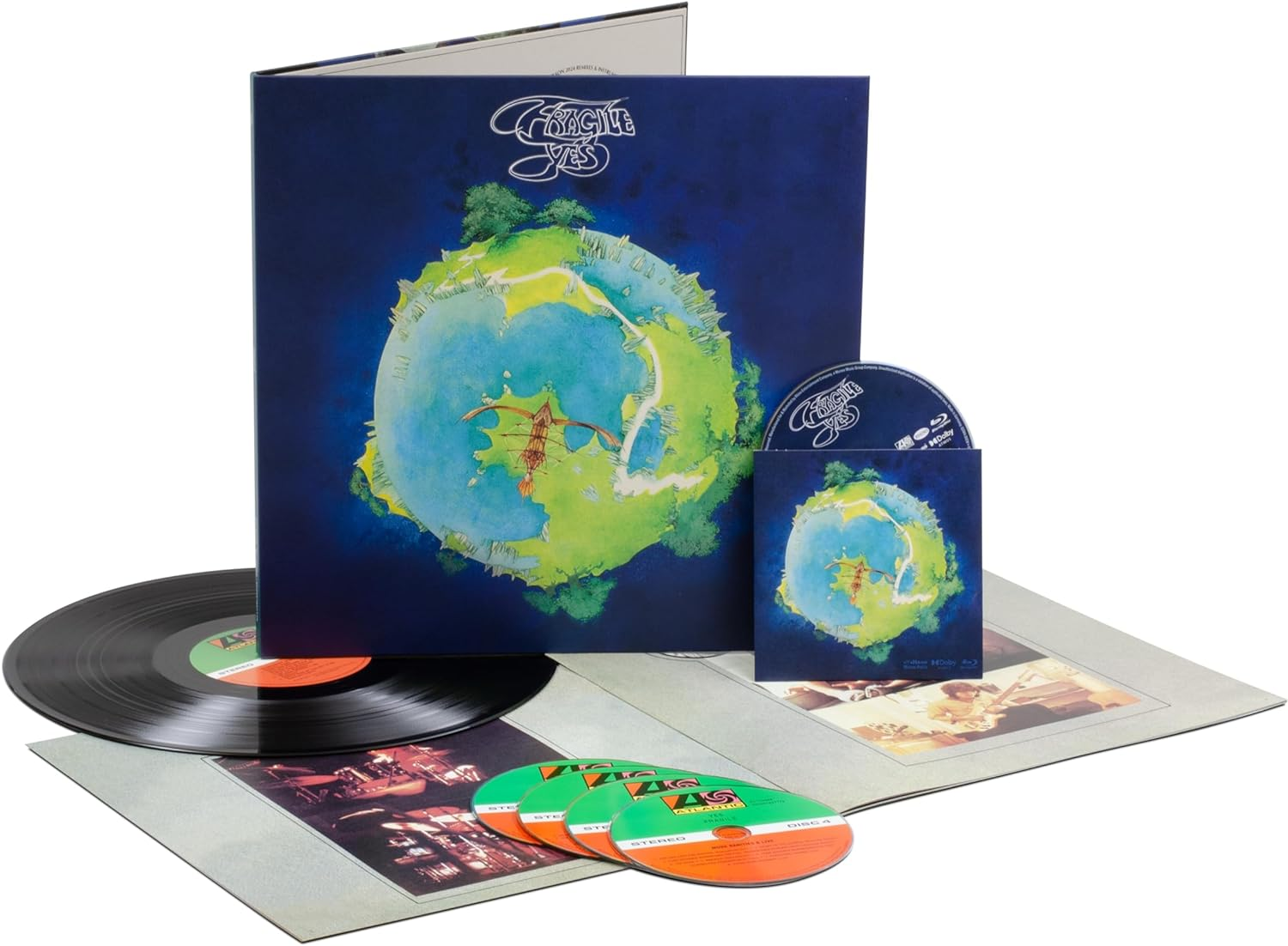



Formed by singer Jon Anderson, bassist Chris Squire, keyboardist Tony Kaye, guitarist Peter Banks and drummer Bill Bruford in 1968, they released two LPs on Atlantic Records before Banks was out and Steve Howe in for “The Yes Album”, their breakthrough disc, in early 1971. Yes intended to produce their follow-up with the same musicians, but Kaye reportedly balked at expanding the keyboard sound beyond his comfort zone (Hammond B-3 organ and piano), and the more adventurous Rick Wakeman was recruited after they’d already started work on the album that became their second big hit, “Fragile”.

Wakeman had done stellar work as a member of the folk-rock group Strawbs, and was a go-to session man who had to turn down an offer to join David Bowie’s band in order to throw in with Yes. Classically trained, Wakeman was excited by the Moog and ARP synthesizers, Mellotron and electric piano he’d added to his keyboard arsenal.

For the 45th anniversary of the remarkably durable breakthrough album by the progressive rockers YES which has turned out to be anything but “Fragile”. I’m not sure why the memory of walking home in the snow from the record store the first week of 1972  with the new Yes album  under my arm.

Indeed, the original idea of producing a double-LP combining live and studio tracks was ditched, and recording with Atlantic’s Tom Dowd in Miami didn’t pan out either. Instead, Yes hunkered down in London during the summer of 1971, using Advision Studios and their familiar engineer Eddie Offord as co-producer.

For their follow up, Yes had chosen to augment their line up of Jon Anderson on vocals, the late Chris Squire bass/harmony vocals, Steve Howe guitar/harmony vocals, and the incomparable Bill Bruford on drums with ex-Strawbs electronic keyboard wizard Rick Wakeman for such rock classics as “Roundabout”, ”Long Distance Runaround”, ”Heart of the Sunrise”, and “South Side of the Sky”. Both Anderson and Wakeman join us “In The Studio” for  this first of several interviews ramping up to April’s Rock Hall induction

“Fragile” eventually included a number of “solo” pieces, with each member responsible for helming a short contribution. Even after the LP—released in November 1971 in the U.K. was a hit, Squire told journalist David Hughes, “I’d agree with people who knocked us for the solo pieces, but in a way you’ve got to appreciate the circumstances. We had to get another album out quickly from a purely financial point of view. We have a lot of mouths to feed, Rick had to buy a vast amount of new equipment when he joined, and it all costs much more money than people seem to imagine.”

Particularly as we had already spent so much time and effort on [11-minute track] ‘Heart of the Sunrise’. So we opted for the solos, which were easier to rehearse and record.”

Swapping out the fully competent Tony Kaye for keyboard virtuoso Rick Wakeman put Yes on an completely new level; by the time they recorded “Fragile” the group had a veritable genius on each instrument. More indulgent than “The Yes Album“, as each member gets their own solo showcase (with mixed results), the high points on this one are among the best things Yes ever did. While “Roundabout” functions as a seminal prog-rock touchstone, it’s the other extended tracks that make “Fragile” far greater than the sum of its parts. “South Side of the Sky” provides ample evidence for why the Wakeman upgrade was obligatory, and “Heart of the Sunrise” remains the most purely distilled product of this band’s considerable powers.

Fragile” begins with the phantasmagoric “Roundabout,” which became one of Yes’ signature tunes. The full 8:30 is a travelogue of intriguing musical ideas, so expansive it seems impossible only five musicians perform it all. Based on Howe’s original instrumental “guitar suite,” Anderson worked it into a real song, with joyous lyrics that tantalize with trippy imagery: “In and around the lake/Mountains come out of the sky and they stand there/One mile over we’ll be there and we’ll see you/Ten true summers we’ll be there and laughing too.”

The dramatic intro features two pianos played backwards and Howe’s expert flamenco stylings. (He’s one of the few great electric guitarists who don’t lose anything switching to acoustic.) Squire plays what amounts to a propulsive “lead bass,” and Wakeman colours with a rushing swirl of keyboards, background and foreground in the deeply layered mix. Time signatures change, Bruford never falters on basic kit or expanded percussion, and complex multi-tracked vocals are captured expertly by Offord. The slow interlude at five minutes is magical, and yields to an aggressive Hammond B-3 workout from Wakeman, and another series of snaking electric guitar parts that somehow combine Wes Montgomery and Jimi Hendrix. Howe favored hollow-bodied electric guitars like the Gibson ES-175 and ES-5 Switchmaster, giving him a jazzier sonic signature.

Each member contributes at the top of their virtuosity, from Bruford’s ever-surprising offbeats, Wakeman’s authoritative grand piano, and the stacked Anderson-Squire-Howe vocals. At 5:30, a muscular, pounding section with Howe’s electric juxtaposed with Anderson’s high keen is a Led Zep-level cruncher. Howe’s concluding solo is one of his best. It fades into the sound of (synth) wind that began the track, ending side one.

Side two of the original LP begins with a very quick Bruford-penned intro titled “Five Per Cent for Nothing” before another Yes classic, “Long Distance Runaround,” kicks in. Although it might not be obvious, Anderson told a journalist he wrote the lyrics as both a critique of religion and a commentary on the shooting of students at Kent State: “I still remember the dream there/I still remember the time you said goodbye/Did we really tell lies/Letting in the sunshine” and “Cold summer listening/Hot colour melting the anger to stone” are perhaps the lines that gesture in that direction.

“Long Distance Runaround” is quintessential Yes, combining delicate effects with powerful counter-streams. Howe’s jazzy dual-guitar figures open the track, quickly joined by Squire’s dominating bass. Listen to how masterfully Bruford takes his punctuation cues from both of them, finding a middle ground of support. The tempo and atmosphere change with Anderson’s entry at forty-five seconds in, as the track becomes positively poppy, and Wakeman’s piano provides a deceptively simple doo-wop accompaniment. 

Howe’s concluding Echoplex effect leads into Squire’s piece “The Fish (Schindleria Praematurus),” an Afro-funky one-man jam with a dazzling array of interlocking effects, with (as the album credits note) “each riff, rhythm and melody” produced by Squire on sonically manipulated basses. 

The album cover was the first produced for Yes by Roger Dean, who would design their logo, stage sets and posters for decades. 

Fragile” is the definitive versions of Classic Yes Albums, joining “Close To The Edge”, “The Yes Album” & “Relayer” Remixed by Steven Wilson in 5.1 & Stereo

Beach Fossils have pretty eclectic taste. Over the past few years, the Brooklyn indie rock veterans have covered Yung Lean and Disclosure, and they went on tour with Post Malone. But sometimes Beach Fossils’ taste can be fairly predictable. For example: They like Duster.

Beach Fossils have just shared a cover of “Inside Out,” a highlight from Duster’s 1998 slowcore bible “Stratosphere”. The new rendition feels a little brighter and less lo-fi, but still has that cozy feeling of the original. Numero Group released the single, so maybe the label has a covers compilation in the works? 

Beach Fossils is an American indie rock band that was formed in 2009 in Brooklyn, New York. With their unique sound and captivating lyrics, they have become a prominent figure in the music industry. Their music resonates with audiences of all ages and backgrounds, making them a favorite among music enthusiasts. From their humble beginnings to their current success, Beach Fossils continues to push boundaries and create innovative music that leaves a lasting impression.

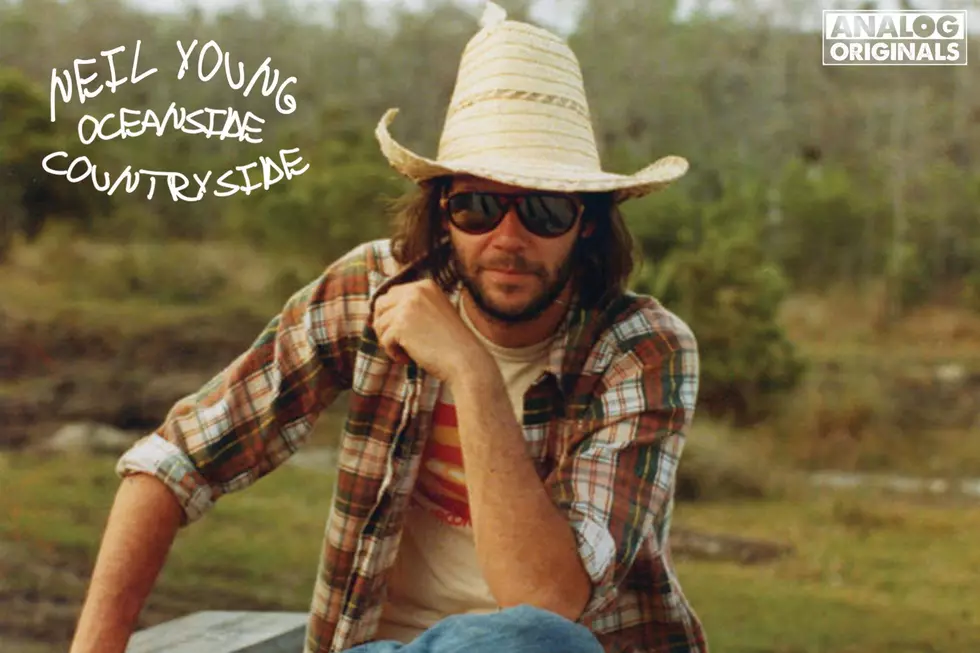
Neil Young is releasing another gem from the vault. The Rock and Roll Hall of Fame icon announced on Friday (Jan. 3) that one of his great “lost” albums, “Oceanside Countryside“, will be released on February 14 through Reprise Records.

Neil Young has announced the release of the previously unissued album “Oceanside Countryside”, recorded between May and December 1977. part of Young’s Analogue Originals series. The 10 songs share themes with the record that replaced “Oceanside Countryside” release in 1978, “Comes a Time”. Three songs – “Goin’ Back,” “Human Highway” and “Field of Opportunity” appeared on Neil Young’s ninth album when it was released in October of that year.

“This analogue original album was recorded in 1977 and unreleased,” Young notes in a statement accompanying the announcement. “These songs are the original mixes done at the time of the recordings in the order I planned for the album. I sang the vocals and played the instruments on “Oceanside” in Florida at Triad studios and Malibu at Indigo studio. I sang the vocals and recorded with my great band of friends, Ben Keith, Joe Osborn, Karl T. Himmel, and Rufus Thibodeaux at Crazy Mama’s in Nashville on Countryside.

“I hope you enjoy this treasure of an Analogue Original recording, recorded by Tim Mulligan, as much as I do. Listening to it now, I think I should have put it out back then.” The vinyl version of “Oceanside” will include tracks on the CD of the same name from Young’s Archives Vol. III release. Young noted that the track-list for the upcoming album – which was recorded on tape – reflects how he originally planned to release the LP, which will be available in analogue and on vinyl for the first time ever with the original mixes done at the time of the recording.

The album’s first side features Young performing solo; Side Two includes assistance from steel guitarist Ben Keith, fiddle player Rufus Thibodeaux, drummers Karl T. Himmel and The Band’s Levon Helm, and bassists Joe Osborne and Tim Drummond.

The release noted that the versions are “not always the same.” Specifically, the versions of “Lost in Space,” “Captain Kennedy” and “The Old Homestead” on the analogue original vinyl release date from the “Hawks & Doves” album from 1980. In addition, “Field of Opportunity” and “Dance Dance Dance” are the original versions that have backing vocals from Young instead of Nicolette Larson, whose vocals appeared on “Archives Vol. III”.

While these songs have appeared on other Young albums over the years, and “Oceanside Countryside” tracks were issued as part of 2024’s “Archives Vol. III (1976-1987)”, the upcoming release marks the debut of several previously unreleased versions and the first time the track listing reflects the album’s original planned running order.

track listing: for “Oceanside Countryside“.
Side One: Oceanside
1 Sail Away
2 Lost In Space
3 Captain Kennedy
4 Goin’ Back
5 Human Highway

Side Two: Countryside
1 Field Of Opportunity
2 Dance Dance Dance
3 The Old Homestead
4 It Might Have Been
5 Pocahontas

Release on February 14th,

Image  —  Posted: January 2, 2025 in MUSIC

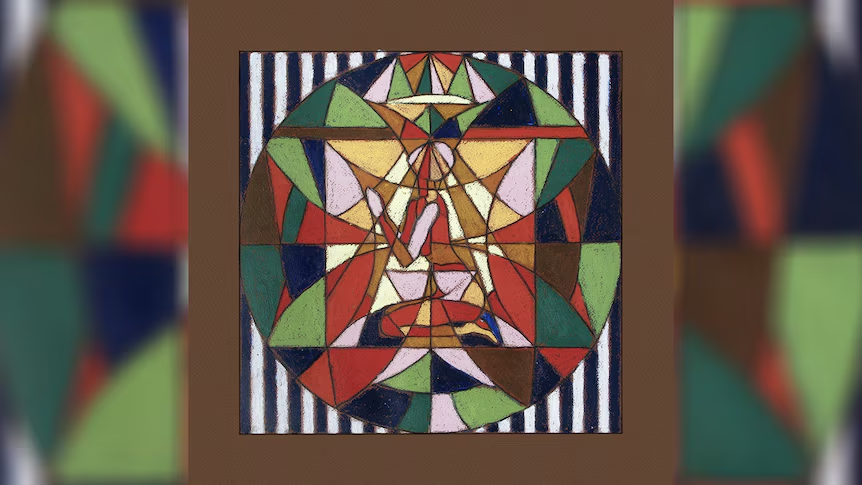
From the teen emerging out of Britain’s mid-00s indie folk scene (alongside Noah & The Whale, Mumford & Sons and Mystery Jets), to becoming the preternaturally gifted heir apparent to Joni Mitchell, Laura Marling has subtly evolved her sharp examinations on life, love, and womanhood across seven albums.

On 2020’s excellent “Songs For Our Daughter”, she spun gentle tunes for an imaginary child. Last February, Marling actually became a mother and now her eighth album, “Patterns in Repeat”, finds the 34-year-old meditating on parenthood.

From the opener ‘Child of Mine’ one of the most gorgeous things Marling has ever made – to the title track, an ode to her kid to hear in the future, that new-found responsibility has seeped into Marling’s intimate, poetic songcraft.

The record was largely written and recorded while Marling’s baby daughter was nearby, inspiring a hushed atmosphere. As such, these beat-less songs augment Marling’s sublime voice and finger-picked guitar serenades with little more than delicate choral vocals and soft string arrangements (inspired by Leonard Bernstein’s score for West Side Story).

The lilting piano of the tender ‘No One’s Gonna Love You Like I Can’ could rock an infant to sleep, then ‘Lullaby’ literally does what it says on the tin. The musical serenity is tempered with Marling’s sincere lyrics, in which parenthood has prompted a profound awareness of mortality and wider questions about lineage.

The aching ‘Looking Back’ was written more than 50 years ago by Marling’s father – then in his 20s – and concern an old man, “a prisoner in this chair”, keenly aware his best years and memories are well and truly behind him.

The death of one of her father’s close friends inspired ‘Your Girl’, which conflates concerns for the four daughters they left behind with Marling’s own deeper appreciation of her relationship with her parents.

‘Caroline’ has the air of Leonard Cohen or The National, sung from the perspective of an aging gentleman fondly remembering an old flame like some cherished, half-forgotten song: ‘It went la, la, la, la/something something Caroline’. It’s the kind of cheekily self-reflexive song writing that only an established professional of Marling’s calibre could pull off.

Peacefully paced and gracefully candid, this album is the sound of Marling embracing her transition from one life to another. She’s also gazing over the bigger picture and finding familial patterns that cycle through generations. Most poignantly, on the album’s musical siblings, ‘Patterns’ and ‘Patterns In Repeat’. On the latter track, Marling addresses her daughter in tessellating, tumbling melodies: ‘I want you to know that I gave it up willingly / nothing real was lost in the bringing of you to me.’

It’s a heartwarming declaration from someone who has never compromised her independence or integrity.

In fact, Marling was initially ambivalent about having children at all, spooked by the stereotype that it would diminish her artistic freedom. “If you’ve ever been worried that your creativity will suffer if you have a baby — it won’t,” she’s plainly stated. That said, raising her daughter has shifted all other things in the singer-songwriter’s life to secondary priorities.

“I definitely, absolutely don’t want to go on tour again. I just didn’t realise I had this incredible, massive gift for care,” says Marling, who further asserts in interviews she’s entertaining the idea of winding up her career entirely. If that, tragically, proves to be true, then “Patterns in Repeat” would prove an idyllic swan song to an impressive body of work; a testament that instead of motherhood robbing women of their artistry, it can help it blossom.

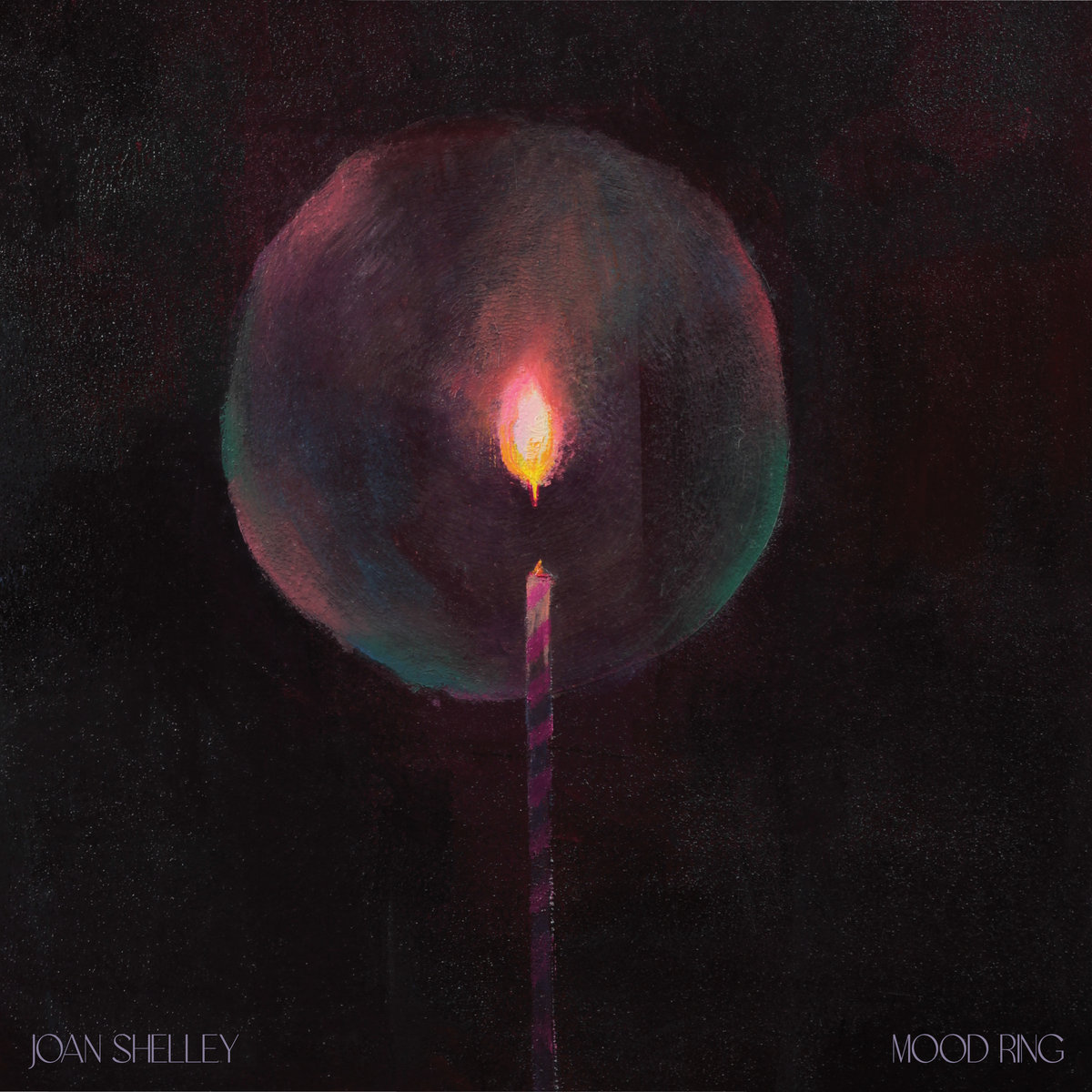
This brief but impactful new EP embraces the sounds of ’60s and ’70s folk music across five instantly-timeless songs Joan Shelley has been relatively quiet in the public sphere since the release of her excellent 2022 album “The Spur”, and we’ve since learned that’s due in part to a couple major life changes: she gave birth to her daughter and moved from the place she was raised in rural Kentucky. Throughout all of that, she’s written five new songs that make up her brief but impactful new EP “Mood Ring“. Made with contributions from James Elkington, Nathan Salsburg, Julia Purcell, Lou Krippenstapel, and Jim Marlowe, the EP is the latest in a long line of instantly-timeless records from Joan, and it captures all the same magic that we’ve come to expect from her.

True to Joan’s usual form, it echoes ’60s/’70s folk singers like Joni Mitchell and Sandy Denny while fitting in nicely with a range of likeminded contemporaries–anything from Jessica Pratt to Bonny Light Horseman to Joanna Newsom–and the songs feel like classics that you’ve known your whole life. It’s a type of music that never really goes out of style, and every new Joan Shelley release reminds you that she’s one of this genre’s most reliably strong songwriters around.

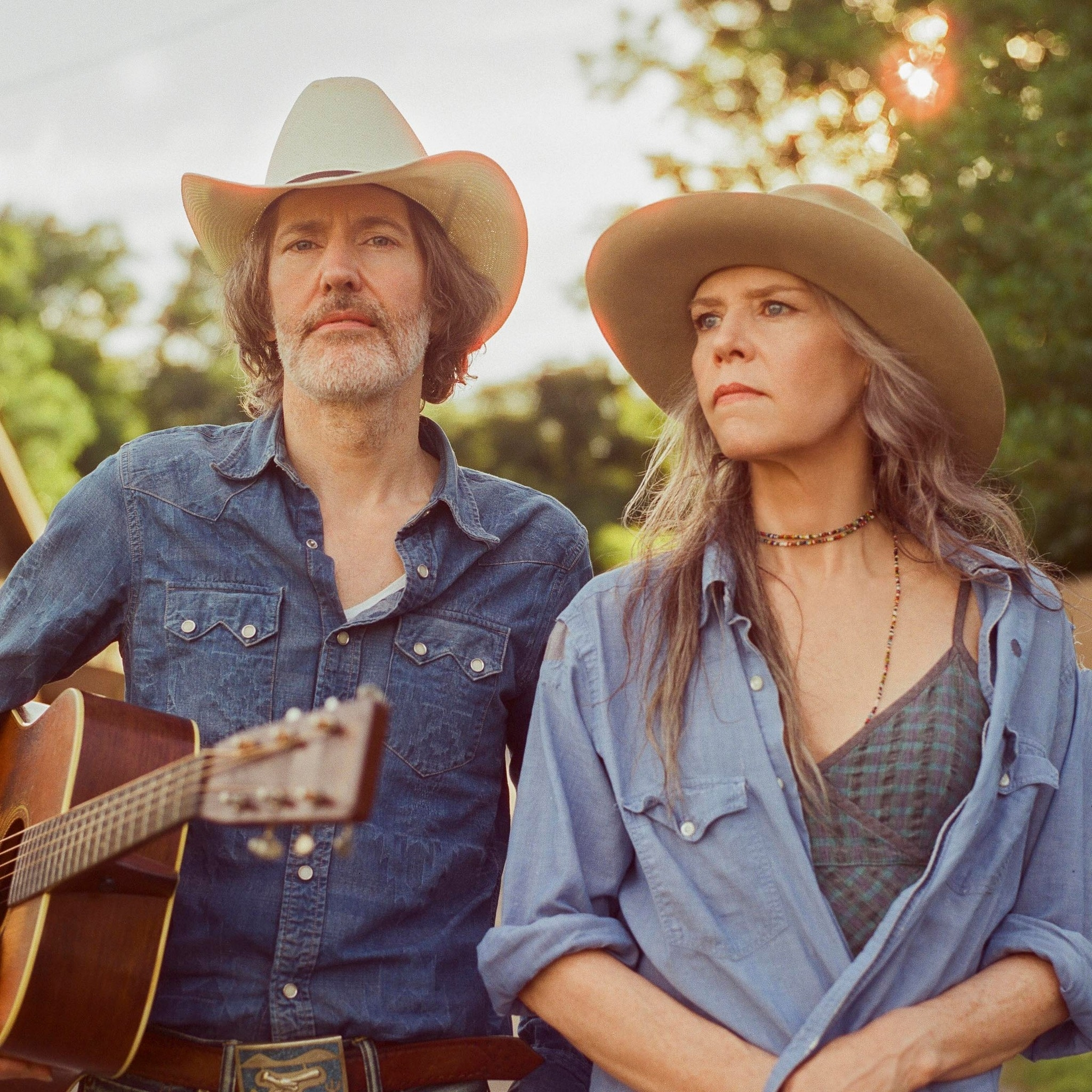
After nearly a decade since her last solo album, Gillian Welch and her lifelong collaborator David Rawlings returned in 2020 with the Grammy-winning covers album “All the Good Times (Are Past & Gone)”–the first album officially credited to both of them–and four years later, they returned with their first joint album of original music, “Woodland”. Often times, “Woodland” fills the room with nothing more than the warmth of their acoustic guitars and voices. Other times, gorgeous strings and some light drumming help flesh things out. Throughout it at all, Gillian and David deliver a collection of folk songs as remarkable as anything on their timeless classics like “Time (The Revelator)” and “Soul Journey“. Coming off an album on which some of the material was written over a hundred years ago, the original music of “Woodland” captures a similar feeling, sounding like the past and the future all at once.

Almost three decades after their first, Gillian Welch and David Rawlings make a record that takes what they’ve learned in song writing, what they’ve listened to, and a bit of life experience too, and turns it all into an album of many, many highs.

released August 23rd, 2024

Allegra Krieger has been busy; her fifth album, “Art of the Unseen Infinity Machine” arrived just over a year after last year’s great “I Keep My Feet On The Fragile Plane”, and less than a year after its collection of b-sides. It’s also a clear step forward from “Fragile Plane“, incorporating a wider range of sounds and collaborators into her sombre, ’70s-folk-inspired sound, from the fully fleshed out indie rock of “Never Arriving” to “How Do You Sleep”, which is scorched with noisy guitar. Krieger’s juxtapositions of NYC as a place where beauty and tragedy live side by side are sharp as ever — she calls the city “my favourite place in the whole wide world” on “Into Eternity,” but it’s also where she escaped a fire in her Chinatown apartment building that killed four of her neighbours last summer, inspiring “One or the Other.” Her incisive observations have the same quiet staying power of her melodies, and both stick around long after you’ve first heard them. 

Allegra Krieger (vox, guitar, piano) Kevin Copeland (bass), Jacob Matheus (guitar), Will Alexander (drums)

released September 13th, 2024

All songs written by Allegra Krieger and recorded at Figure 8 Recording in Brooklyn, New York. November 2023

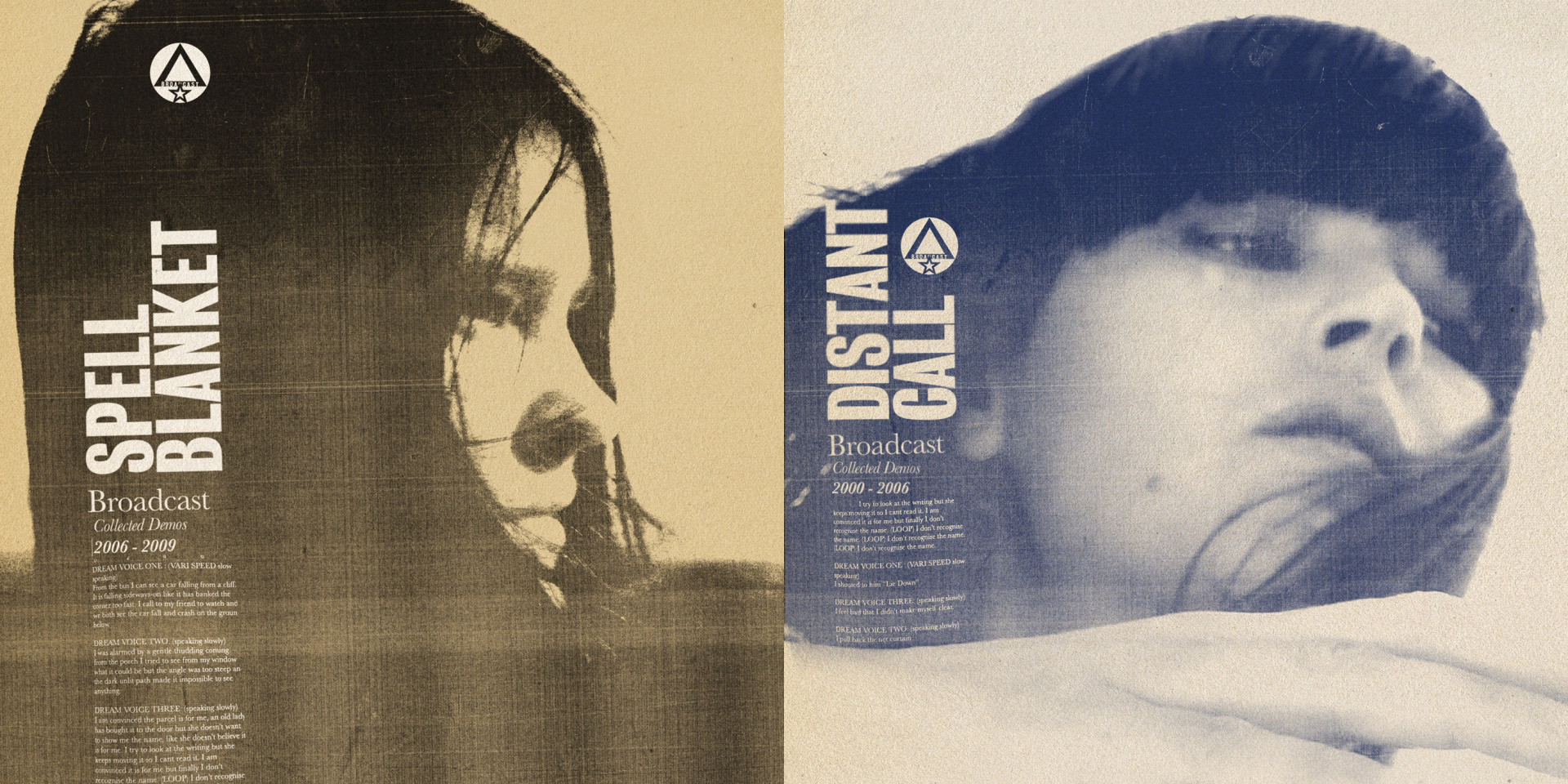
Broadcast’s last release, “Distant Call” opens with appropriate poignancy, with a demo version of ‘Tears In The Typing Pool’ from “Tender Buttons“, the band’s third album. Coloured by dreamy melancholy, the song centres on the idea of letting go – the key theme to its parent album, which was released shortly after the death of singer Trish Keenan’s father. 

Delivered through the pink noise of four-track tape, the lulling ballad takes one to a fluid temporal realm where serotinal 60s baroque pop fragility merges with the urban balladry of Elliott Smith. The undulating pace, punctuated by soft downstrokes on acoustic guitar, is steady, just like the ticking clock or the passing time. 

Broadcast ceased to be in 2011 when Trish Keenan died from the H1N1 flu. We’ll never truly know what might’ve been, but “Spell Blanket” collects demos she and bandmate James Cargill had made from 2006 – 2009 following their final studio album, 2005’s “Tender Buttons”. Most of these 26 songs fall firmly into “song sketch” territory, not more than Trish and a guitar or keyboard, and sometimes it’s just her singing into a tape recorder (or answering machine) but her voice and melodies still have the power to bewitch even without Broadcast’s full sound lab at full power. “Distant Call“, meanwhile, offers up demos from 2000 – 2006, with skeletal versions of songs fans would come to know and love. Any chance to hear more from Keenan is welcome and worthy of cherishing.

Distant Call” follows May’s “Spell Blanket – Collected Demos 2006-2009“, which looked into what would be the collective’s fifth album, built out of the demos that Keenan left after her tragic passing in 2011 at the age of 42. The singer had contracted pneumonia during the band’s tour in Australia. Though the band understandably ceased to be, Broadcast co-founder James Cargill announced that the demos left by Trish would form a new album. The resulting record was built of sonic ephemera from seance-like recitations and sketches, featuring everything from cut-up lyrics to more developed compositions that showed a quirky psych and freak-folk flavour. “Distant Call“, however, reflects on previously released tracks as relics from an unreachable and, indeed, distant past. The ghostly sound of demo recordings emphasises the record as a farewell to the band and a memorial to Keenan. Notably, “Distant Call” is released on the singer’s birthday, 28th September.

Trish Keenan’s softly intoning vocals were the defining stylistic element of Broadcast’s sound, where pagan folk sensibility meets quirky psychedelia. Originally from The Future Crayon, ‘Still Feels Like Tears’ is more instant, channelling the vulnerability and tenderness of Vashti Bunyan’s Just Another Diamond Day and nursery rhymes. The combination of psych and folk is best captured on beguiling ‘Come Back To Me’, a hypnotic arpeggio-led chant of a song, bringing to mind The Mock Turtles’ cover of ‘The Willow Song’ from The Wicker Man. This is one of the two previously unheard tracks. The second is ‘Please Call To Book’, recorded by Keenan in the wake of the Let’s Write A Song project where Broadcast fans were encouraged to send lyrics on a postcard. 

Whilst it is somewhat overused in the contemporary culture framework, the term hauntology inevitably comes to mind for those entering the realm of Broadcast. Having initially emerged as a vehicle for their appreciation for the futuristic music of the 1960s, Broadcast boldly traversed temporal dimensions. Both Cargill and Keenan had attended a psychedelic revival night at Birmingham’s Sensateria Club where the two heard the first and only album by The United States and America, originally released in 1968 and later described by Keenan as a “bible”. 

The core of “Distant Call”, however, is the material from the band’s most mature albums “Haha Sound” and “Tender Buttons”. Both were more experimental and less retro-oriented than their debut Noise Made By People, making references from John Barry to the Doctor Who soundtrack. Talking to Stool Pigeon, Keenan said that unlike the first album “Ha Ha Sound” was like a jewellery box, full of sparkling things”. It is therefore remarkable to hear charmingly plain versions of initially lush sounding ‘O How I Miss You’ and the dizzyingly ecstatic waltz of ‘Ominous Cloud’. 

Still, the minimalist folky sound recalls another earlier project of Trish Keenan – her duo Hayward Winters also featuring Birmingham musician Jude Owens. Given that the narrative of folk music disobeys the concept of time, this too is intrinsically ghostly. The haunting nature of these stripped-down demo versions is reinforced by the spectral presence of the singer, whose persona has inevitably undergone mythologisation akin to other prematurely deceased artists. Keenan’s interest in the occult, her unusual childhood (in an interview with Ben Cardew of Stool Pigeon the artist said that she had been brought up by a sex worker) and her retromaniac stance come to the fore. It’s interesting to see how the media’s image of Broadcast transformed after Keenan’s passing – changing from cult band to something “quietly beguilingly influential,” as The Guardian’s obituary of Keenan put it, citing tributes from Graham Coxon and The Decemberists’ frontman Colin Meloy. 

Nevertheless, in juxtaposition with the complexity of Broadcast’s studio albums, “Distant Call” is a reminder of how different the image an artist offers through their music can be from their personality. “Keenan would send her friends CDs of music she’d discovered or TV shows she had enjoyed”, wrote Stephen Worthy in The Guardian a few days after the singer’s death. “Life was an exercise in discovery, and she wanted to share it with everyone”. After her passing, a link to a freshly-made compilation of psych and world music was posted to the public on Twitter. Keenan had made it for a friend who received it before the band went to Australia. The existence of these demos suggests that she treated her audience, too, as friends with whom she was eager to share, whether via songs, memories or her physical presence.