Archive for the ‘MUSIC’ Category

See the source image

From their psychedelic beginnings under the leadership of the mercurial Syd Barrett, the immense scope of their venerated 70s’ conceptual juggernauts, to their stadium filling 80’s pomp, the heady sonic sound of Pink Floyd has always been marked by exceptionally inventive guitar work. David Gilmour’s soaring leads, peerless riffs and electrifying chord choices continue to inspire young guitarists to this day.

Across the band’s fifteen studio albums, some of the most remarkable sounds in the history of recorded music have been captured. In their 1970-85 peak, Gilmour’s expressive guitar existed in tight interplay with Roger Waters rigorous, melodic bass playing, Richard Wright’s lush synthetic textures and Nick Mason’s solid drums.

To compile this run down of the most astonishing guitar moments, we’ve looked at their back catalogue for another spin, choosing not just solos, but some of the many examples of chords, textures and overall moods that still make the hair stand on-end, whittling them down to bring you this ultimate shortlist of Floyd moments that shine like the sun.

“Run Like Hell” (The Wall, 1979)

As we pace towards The Wall’s climax, the dark funk of Run Like Hell primes us to close the book on 1979’s dystopian double-album. Originating as a piece of music Gilmour had earmarked for his first solo album, Run Like Hell is a masterclass in tension and release, its tight arrangement allowing for minimal musical flourishes (the only solo here, being Richard Wright’s dazzling synth centrepiece). With its springy, palm-muted single notes rooted in D, flashes of light illuminate this foundation via some stirring, descending chord shapes which take us on a colourful drive back to the tonic. The verse lurches us dramatically between Em, F, C and B, before we’re once again back with the feel-good jog of that central riff. It’s an irresistible listen, and a notable mood-enhancer.

Shades of Run Like Hell can still be found on Gilmour’s eponymous debut, as elements of it pepper the track Short and Sweet – just compare the intros.

“Mother” (The Wall, 1979)

Gradually building outwards from a fragile acoustic arrangement, Mother develops into a beautiful standout, ejecting much of The Wall’s pervasive themes of oppression and representing a tender (but cynical) nod to conventionality. It’s an ideal musical footing from which to showcase a similarly restrained, yet undeniably gorgeous, Gilmour solo, which launches out of the mix at the 2:50 mark. The solo manoeuvres around the G, C, D chord structure with awe-inspiring grace – emphasising the root notes of each chord and guiding our ears to further chordal transitions. It’s a prime example of Gilmour’s genius for making the sophisticated sound completely effortless, and is among the most wondrous guitar moments on The Wall.

Though it sounds softer on the ear than many other Floyd arrangements, Mother skips between a variety of odd time signatures, including 5/8 and 9/8. Consequently, Nick Mason found it a tricky one to record, and a session player had to come in to lock down the final drum track.

“Fat Old Sun” (Atom Heart Mother, 1970)

An early example of Gilmour’s guitar dexterity, Fat Old Sun’s hypnotic acoustic arrangement works to lull the listener into a state of placid serenity, with a few delicate licks atmospherically fluttering at the edges of the mix. As we sail past the three-minute mark, Gilmour unchains his inner beast and stomps on his Arbiter Fuzz Face pedal. The lead part morphs from hefty low E-string riffing to vibrant scale runs. While the studio version is an underrated gem, the live version pushed the musical ideas even further, extending the song’s run time and developing that beastly solo into an evolving electric blues jam.

Fat Old Sun was a David Gilmour track through and through, with Richard Wright being the only other Floyd member to appear on the studio recording.

“The Final Cut” (The Final Cut, 1983)

The grandiose title track from Roger Waters’ final contribution to the Floyd canon, and a treatise on the horrors of the military, The Final Cut still allows Gilmour the space to shine, gate crashing the largely guitar-free arrangement near its conclusion. Wrenching out every square millimetre of heartbreak from the song, Gilmour’s solo routes his Stratocaster tone through an Electro Harmonix Big Muff, occasionally doubled up to provide emphasis. Though the record was beset with conflict behind the scenes, this emotive track underlined the supreme musical alchemy of Waters and Gilmour – even if they couldn’t bear to be in the same room as each other.

Though they put their bad blood to one side for that legendary Live 8 performance back in 2005, Waters and Gilmour remain at loggerheads to this day. Waters last year posted a video to his YouTube channel, criticising the official Pink Floyd website’s lack of coverage for his work and claiming that a recent ‘Camp David’ for surviving Floyd members, hoping to resolve the tension, bore no fruit.

 “One of These Days” (Meddle, 1971)

Kickstarting their decisive sixth record with a springy bass-dominated intro, One of These Days initially finds Gilmour’s low-mixed guitar whirling mechanically in the background. As the track tunnels forward, some high leads begin to dance around the periphery, before David fully invades the spotlight as we pass the five minute mark, unleashing a flowing firestorm of tension-releasing brilliance. With double-tracked guitars hard-panned to the left and right speakers, the aural effect is akin to a duel – albeit one with himself.

The dominant double-tracked bass guitars are actually played by both Waters and Gilmour, on either side of the stereo image. When asked about the dull-sounding bass tone by Guitar World, Gilmour said, “We didn’t have a spare set of strings for the spare bass guitar. We sent a roadie out to buy some new strings, but he wandered off to see his girlfriend instead.”

Pink Floyd didn’t have an overall vision for Meddle, and its eventual shape was honed from recording 24 new pieces of music

“Hey You” (The Wall, 1979)

At the centre of this fan favourite lay one of The Wall’s most compelling guitar moments, sandwiched amid some insistent riffing howls a remarkable solo that quotes the familiar 1-2-3-4 riff pattern that also appears throughout the album, as a recurring musical theme. It then speeds away and finds its own melodic path. This key moment aside, the track is awash with interesting guitar work, with acoustic arpeggios cascading through E and D minor added ninth chords in an ominous fashion throughout the track’s running time. Its detuned tone a nod to Nashville tuning.

Waters felt that Hey You was largely removed from The Wall’s overriding narrative, and ditched it from inclusion in the Alan Parker-directed movie version. He would later admit that the song was really about the break-up of his first marriage.

“Wish You Were Here” (Wish You Were Here, 1975)

With its country-ish Em7, G to A7sus4 chord sequence filtered through a tinny AM radio sound, soon contrasted by a closely mic’d lead part, the opening of the title track to Pink Floyd’s celebrated mid-70s masterpiece is designed to replicate the effect of a novice guitarist, practicing along to what they’re hearing on the radio. This effective approach fed into the record’s larger theme of remembrance for both their former bandmate Syd Barrett, and a nostalgic reflection on their own collective journey. Wish You Were Here may be a relatively straightforward, acoustic piece, yet the song’s simple licks and the gentle five-note central riff are considerably evocative.

Wish You Were Here is among the few rare examples of a true Waters and Gilmour collaboration, with the two, side-by-side, working out the song’s structure together in the studio.

“Interstellar Overdrive” (The Piper at the Gates of Dawn, 1967)

While David Gilmour naturally dominates any discussion of Pink Floyd’s greatest guitar moments, it’s important to remember the quixotic individualism of erstwhile frontman Syd Barrett, and his own painterly approach to the instrument. There’s no better example than Interstellar Overdrive.

At the core the early Floyd’s debut album, Barrett boldly leads his young bandmates on a fractured and intense sonic journey. Equipped with his 1962 Fender Esquire (customised with several small circular mirrors), Barrett rendered vicious atonal sounds from the instrument, utterly bewitching many astounded listeners, who found him a compelling figurehead for the psychedelic age. Though Syd’s mental health decline led to his departure the following year, this type of pioneering abstract soundscape would establish the template for prog rock.

As the band’s originator, Barrett re-christened his young band (formerly The Tea Set) by merging the names of two of his favourite artists, Pink Anderson and Floyd Council

“The Fletcher Memorial Home” (The Final Cut, 1983)

Lifting Waters’ venomous diatribe against the failure of global leadership to jubilant heights, Gilmour’s solo here is perhaps the single finest musical moment on The Final Cut. With impressive levels of sustain, David’s triple-tracked Strat is flavoured by both his go-to Big Muff and a touch of the Electric Mistress flanger. The result is suitably epic-sounding, ascending skyward as it steals all the thunder from Waters’ impassioned vocal performance, before effectively resolving itself to a simple three-note motif, which repeats with a towering might near the song’s conclusion. Though the track’s overwrought theatricality may not be to everyone’s taste, that sublime Gilmour moment makes it a journey worth taking.

The Fletcher Memorial Home is among the small number of tracks on The Final Cut that Gilmour enjoys. Speaking to Record Collector, he said “There are a couple of reasonable tracks, at best. I did vote for The Fletcher Memorial Home to be on the Echoes compilation. I like that. Fletcher, The Gunner’s Dream and the title track are the three reasonable tracks on that. The rest is dross.”

“Us and Them” (The Dark Side of the Moon, 1973)

In the hierarchy of the very greatest guitar solo-ists, Gilmour is undeniably near the very top. But, though he’s a king of in-the-spotlight flair, what’s equally as important is his proficiency with stunning chordal movements, deft arpeggios and considered texture-building.

One of The Dark Side of the Moon’s pivotal tracks, Us and Them originated as a Richard Wright piano piece, but the final version’s atmosphere of floaty serenity was largely conjured by Gilmour’s delicate picking pattern, calmly sprinkling across the notes of Dsus2, Esus2, Dm major 7 and G, while maintaining the stable pulse of an open D string. This hypnotic piece of music is technically uncomplicated, but through its dreamy colouration via a Shin-ei UniVibe pedal (which replicates a rotary speaker effect) working in tandem with Wright’s placid organ sound, one of Floyd’s most transcendent serene landscapes is built.

Us and Them started life as a proposed soundtrack piece for Michelangelo Antonioni’s Zabriskie Point, then dubbed ‘The Violent Sequence’. It was rejected however, and the band brought the idea into the sessions for their next album.

“Have a Cigar” (Wish You Were Here, 1975)

One of the wackiest sounding things in the whole Floyd canon, Have A Cigar’s manic, unsteady arrangement supports a lyric that cynically stabs at the hollow nature of the recording industry. Its circular opening riff musically illustrates this precariousness, while the occasional short squalls of guitar noise hint at the fast-paced, constantly shifting nature of the rock ’n’ roll lifestyle. It’s an infectious piece, with its shouty lead vocal famously delivered by Roy Harper, after Gilmour and Waters were both unhappy with their respective versions.

It’s not until the 3:20 mark that Gilmour delivers on the promise of his short stabs. Striding forward, he assuredly wrestles the bamboozling arrangement to the ground, via one of his most lively solos. Sticking to the key of E minor, Gilmour showcases several of his trademark half-step bends, before expressing the song’s overt aggression with a few relentless multi-string strikes. After more than a minute of pure, unfettered Gilmour, we’re abruptly wooshed away and suddenly we’re listening to an AM radio… a dramatic lead in to the album’s title track.

Have a Cigar’s key lyric, ‘By the way, which one’s Pink?’ was a question the band were routinely asked. “There were an awful lot of people who thought Pink Floyd was the name of the lead singer and that it was Pink himself, and the band.”, An annoyed Gilmour recalled in In The Studio With Redbeard.

“Pigs (Three Different Ones) ” (Animals, 1977)

Eleven minutes of unbridled anger, directed towards those who wield the true wealth in society. The first of Animals’s trilogy of major statements, Pigs multi-sectioned arrangement is hued by a spectrum of marvellous guitar work, from the gradual volume rises of pained single notes, to the mid-section’s riveting deployment of a Heil Talkbox that generates some astonishing animalistic sounds. The Heil allowed Gilmour to manipulate the guitar notes with a tube in his mouth, similar to how a vocoder is used on a synthesiser. At the song’s conclusion, a second, fiery solo rages out of the mix, revealing the guitarist at his most unhinged, with enraged hammer-ons and pull-offs, as well as double-note bends, this hysterical intensity is gradually faded away from, but even after eleven minutes, we just don’t want it to end.

Eagle-eyed viewers of Alfonso Cuarón’s 2006 dystopian masterpiece Children of Men can spot a familiar pig balloon flying outside Battersea Power Station. A visual homage to the cover of Animals.

“Echoes” (Meddle, 1971)

Effectively a 24-minute series of shifting structures in which Gilmour runs rampant, Echoes is the grand finale of 1971’s Meddle, and serves as an early indication of the complex musical heights that the band were aiming for. The floaty serenity of the song’s opening is punctuated by some sedate and thoughtful leads as Gilmour, together with his bandmates, conjure an opiated, dream-like state. Clocking in at over 23 minutes, there’s plenty of ebb and flow across the arrangement, with various conflicting sections that allow for some trailblazing soloing, wherein David demonstrates his wild whammy bar attack, and panicked riffery.

Echoes is one of the first cogent statements of the young Gilmour’s prowess, and Pink Floyd’s developing creative potency. A scant two years after the departure of Syd Barrett, Echoes illustrates that the band are still intent on furthering his ethos – probing the limits of composition and, on their way, veering into truly magical realms.

Waters would later claim that Andrew Lloyd Webber plagiarised a central melody of Echoes, for the title song of The Phantom of the Opera, though he never pursued his claim legally

“Another Brick in the Wall (Part 2)” (The Wall, 1979)

One of Floyd’s most widely-known songs. Another Brick in the Wall is a damning summation of the British educational system, set to a – then-in vogue – disco funk groove. Famously featuring the students of Islington Green School reciting that on-the-nose central message of ‘We don’t need no education…” the song’s hip arrangement, overseen by versatile producer Bob Ezrin, was a change of musical direction for Pink Floyd, and commercially viable enough to be issued as a single (staggeringly, the band’s first in the UK since 1968).

Gilmour’s funkadelic rhythm guitar is considerably cool, but it’s that solo, coming in at the 2:10 mark, that kicks hardest here, skating above the tightly-squeezed quagmire of the oppressive themes and the arrangement’s rigidity. Using his 1955 Gibson Les Paul Goldtop with P-90 pickups, direct into the mixing desk, Gilmour shoots over a warm organ tone, courtesy of Rick Wright, adding ascending bends, staccato runs and occasional lapses back into that rhythmic territory. It’s a masterclass of considered, genre-flipping, guitar brilliance.

The single smashed its way to the top of the UK charts in November 1979, becoming the band’s only number 1, and actually the final number one British single of the decade.

“High Hopes” (The Division Bell, 1994)

Evocative church bells mark the end of the road, as The Division Bell’s final cut presents a reflective Gilmour, wandering through the fields of his memory, recalling youthful days and longing aspirations. High Hopes is one of the strongest songs of that latter-era Floyd period, with its piano-oriented arrangement continually orbiting a central three-note motif.

While the song’s intrinsic sentimentality is pored over, via some quite beautiful lyrics, it’s not until the closing solo that we truly zone in to Gilmour’s pain at the passage of time, expressed with some screaming slide guitar. It’s a solo that crystallises the agony of nostalgia, with Gilmour revelling in the dramatic potential of his Jedson lap steel guitar, reaching hitherto unscaled tonal heights. Gilmour’s guitar work here somehow sounds both technically masterful, and yet profoundly human. It’s a finale that cements his symbiosis with the instrument.

The title of the song was actually suggested by Gilmour’s close friend, The Hitchhiker’s Guide to the Galaxy author, Douglas Adams.

“Money” (The Dark Side of the Moon, 1973)

We’re sizing up the big boys now, as the laddering bass of this Dark Side of the Moon classic swirls down a sinkhole into one of Pink Floyd’s most captivating sonic maelstroms. Money’s stilted 7/8 time signature, and rigid 12-bar blues influence serve as perfect container for the band’s musings on capitalism, but this Waters-constructed structure is obliterated by a galvanised Gilmour, as his double-tracked solo takes flight, propelled by a more conventional 4/4 rhythm.

In the studio, Gilmour impressively provided a note-for-note replication of the solo’s first section when building up the mix, while in the second section he deactivated all echo effects, presenting a dry, close tone, purposefully intending to present an illusion of a small blues band playing in a tiny room.

The dynamics shift further for the third section as Gilmour’s frenzied attack intensifies, fuzz is reactivated and additional overdubs are thrown into the mix. The interplay between Waters and Gilmour is wonderful, as Gilmour’s lively lead goads Waters’ imperious bassline, snapping into rhythm with it, before frantically mugging it and running away with its proverbial wallet. It’s a gas.

The cash register tape loop heard throughout the song was recorded, hand-spliced and manually looped in the studio by Roger Waters and producer Alan Parsons.

“Dogs” (Animals, 1977)

Like Echoes before it, this pivotal Animals track provides ample breathing room for Gilmour to pace his soloing out, while also revealing the scope of his abilities. Rolling, syncopated acoustics tread us softly into a dynamic aural landscape, with various dimensions of synth sounds forging a route around the perilous environment. This feeling of uncertainty is further emphasised by the odd chord structure of D minor ninth, E♭maj7sus2/B♭, Asus2sus4, and A♭sus2(♯11).

A pulsing solo materialises at the 1:45 mark, clearing our path towards a tranquil oasis, represented by the soaring, double-tracked central riff, which seizes and defines the arrangement at the 3:45 mark. A second solo pushes us into an eerie mid-section, before Gilmour charges away with a more reverb-saturated solo at the 13 minute mark.

As we near the end, we fall back, once again, on that divine central riff. Gilmour had started using his new 1959 Fender Telecaster for the Animals sessions, detuned a full step to D G C F A D. Played with a far harder edge than ever before, this prog rock powerhouse, focused on the ruthless competitiveness of business, has long been a fan favourite.

Dogs originated near the end of the Dark Side of the Moon tour in 1974, and was originally titled You’ve Got to Be Crazy.

“Shine On You Crazy Diamond” (Wish You Were Here, 1975)

A piece of music that isn’t a glorious example of guitar mastery wholly due to its searing solos, soul-tickling central riff or moving chord choices – the sorcery of this band-defining piece is how all these elements work together, in conjunction with a rich, aural under-bed of keys and synths. Widely considered Floyd’s masterpiece, Diamond’s unsettling, multi-sectioned movements serve as a fitting memoriam to their former figurehead Syd Barrett.

Divided into two tracks, its nine-part structure bookends the listening journey of Wish You Were Here. For those chilling four-notes, B♭, F, G and E, which make up the central riff, sound engineer Brian Humphries recalled, in The Story of Wish You Were Here that,  “Dave wanted a big sound, so the guitar was recorded in a different studio. He put his amps and speakers down in Studio One – the classical music studio – and mic’d it from a distance.” Its echoey resonance defines the tone of the piece, which exponentially develops into a soulful hymn to what could have been. Smokey riffing permeates the opening of the piece, while the second solo wails with a desperate, impetuous anger. It’s a timeless listen, and arguably serves as the finest listening experience in the entire Floyd canon.

Gilmour developed the ‘Sound on Sound’ effect when performing this song live, allowing him to split his guitar signal two ways. He would send the signal of a strummed chord to a Roland Delay, while then switching his attention to soloing on top of the sustained chord via the other signal path. Outputting these different signals to two Hiwatt amps.

“Time” (The Dark Side of the Moon, 1973)

There are few who wouldn’t consider Time to be among the god-tier of Pink Floyd tracks. With a profoundly affecting lyric which laments the passage of time, Gilmour’s fizzy solo confidently slides and dances around the central melody, weaving something similar to a web of fiery sound over the repetitive plod of the F♯minor, A, E, F♯minor verse chords. The gnarly tone of his Stratocaster (according to Gilmour-tech resource gilmourish.com) was a combination of the Coloursound Power Boost set for full overdrive, a Dallas Arbiter Fuzz Face and the Binson Echorec, all pumped through his ever-reliable Hi-Watt 100W heads and WEM Super Starfinder cabinets.

But the beauty of the Time solo isn’t just down to its finely-honed sonic quality, it’s how Gilmour plays it, conveying the track’s torment in pure sound. “I think a guitar solo is how my emotion is most freely released, because verbal articulation isn’t my strongest communication strength,” Gilmour told the New Zealand Herald in 2015. Time’s winding solo is a prime example of this, manifesting the anguish of a life fading too quickly via six strings.

The song’s chorus is co-sang by Richard Wright, and would be his last vocal contribution to the band until Wearing the Inside Out on 1994’s The Division Bell.

“Comfortably Numb” (The Wall, 1979)

Could it be any other? Universally regarded as the most exemplary examples of guitar solo-ing ever, Comfortably Numb‘s transcendent second solo was actually pieced together from a number of lead parts that Gilmour had trialled. But the final, assembled result would serve as the ultimate demonstration of Gilmour’s virtuosity. Flourishing on his black Stratocaster, channelled through his EHX Big Muff, with an emphasis-adding touch of delay, David’s euphoric phrasing and intense performance hoists our mood following the constrictive menace of the verse.

“I just went out into the studio and banged out five or six solos.” Gilmour told Guitar World in 1993, “From there I just followed my usual procedure, which is to listen back to each solo and mark out bar lines, saying which bits are good. Then I just follow the chart, whipping one fader up, then another fader, jumping from phrase to phrase and trying to make a really nice solo all the way through.”

This technique bore life-affirming fruit. Gilmour’s ultimate tour-de-force, Comfortably Numb has now grown into an ever-evolving live-staple. Live versions from the P.U.L.S.E tour and his solo Gdańsk show are notable executions of how Gilmour continued to develop this spectacular piece.

As with Run Like Hell, the basic chord sequence and rough topline of Comfortably Numb were first sketched out as a prospective solo track for Gilmour’s first album, before being re-shaped into The Wall’s most memorable song.
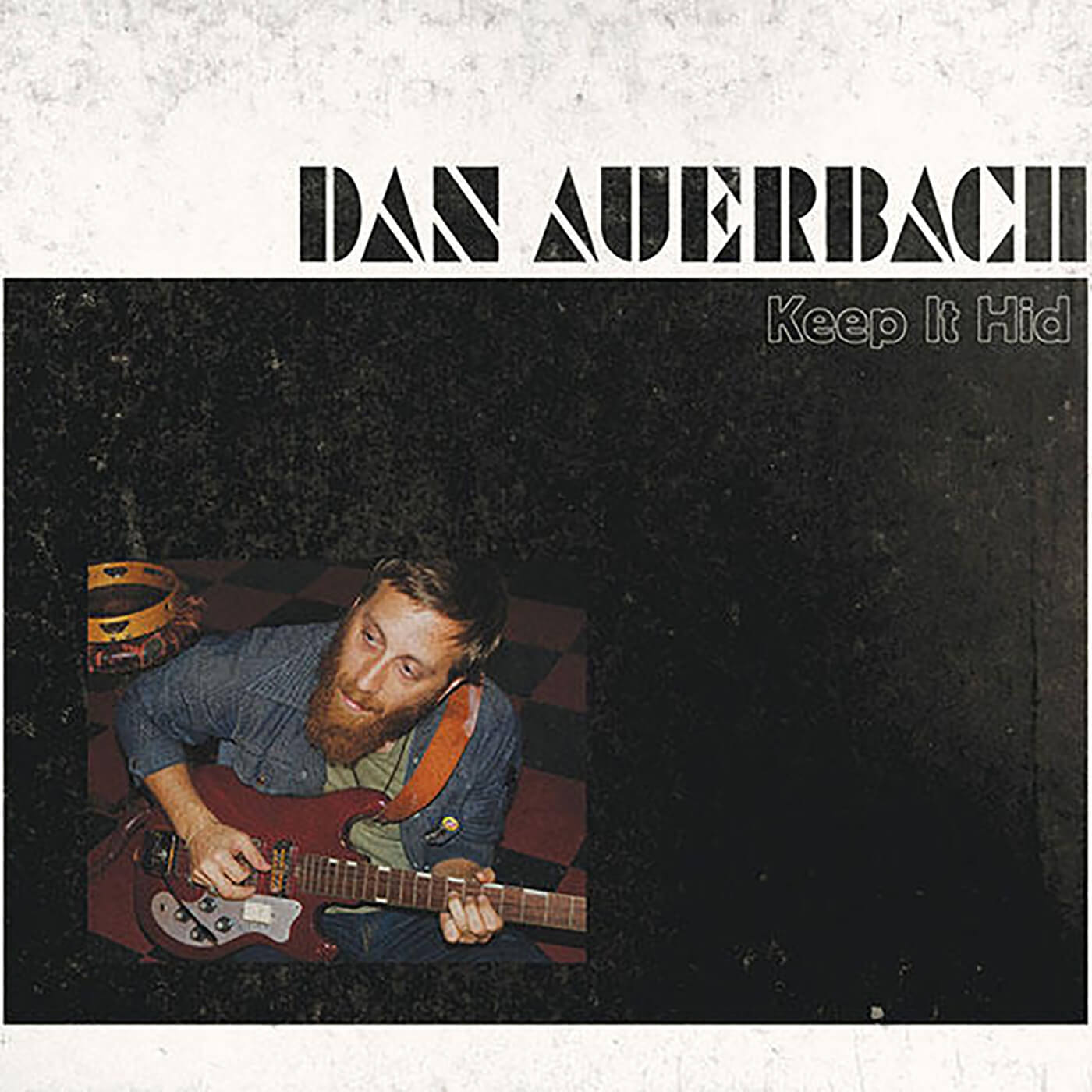
Dan Auerbach - Keep It Hid

It took Akron, Ohio duo The Black Keys over a decade of playing together as a two-piece to countenance any kind of major change. Not surprising, really, given that over the span of four studio albums up to 2006’s Magic Potion – their first album of all-original material – they’d crystallised their raw talent into a winning formula without having to compromise the smears of feedback, the dirt under the fingernails and the literal basement-tape recording ethos that characterised their sound.

By 2008’s Attack & Release, however, their horizons were expanding. Auerbach’s curt, anguished vocals were still underpinned by a relentless production line of feral blues-rock riffs and Carney’s dynamic, expressive drums, but working with an outside producer in Brian Burton (aka Danger Mouse) had admitted instrumental flourishes, keys, bass and outside musicians into the mix – among them was guitarist Marc Ribot, who’d played in Tom Waits’ band with Carney’s saxophonist uncle Ralph. It was also obvious from duet Things Ain’t Like They Used To Be (the album’s sole Auerbach-only song writing credit) that his writing talent was in bloom, pushing up against the limits of the two-piece format.

Following his first taste of recording a Black Keys album in a pro studio with Attack & Release, Auerbach spent the next couple of years creating his own custom recording environment in Akron, collaborating with studio expert, musician and producer Mark Neill and drummer, multi-instrumentalist and co-engineer Bob Cesare to create Akron Analog. During this process, Cesare became a key collaborator on the material that was to become Keep It Hid, playing the majority of the drums on the finished album, while Neill engineered it. All of the finished tracks, save for When The Night Comes, were recorded at Akron Analog.

Auerbach said this new environment was everything he could ever want in a studio: “The live room is acoustically correct. The sounds are perfectly balanced so you can record by playing live. It has the tape machines I want, the recording console that I want, the microphones that I want. I could stay in there all day, sometimes. I just love the sound and the idea of playing in a room with other people, which is what the majority of the record is.

Though he later confirmed that the solo album wasn’t an attempt to divorce himself from the Black Keys sound, there was tension between the pair at the time, with Auerbach neglecting to inform his bandmate that he was even making the album. Confusingly enough, while Auerbach toured it, Carney formed a side project along with four other Ohio-based skinbeaters called Drummer, in which he played bass.

Auerbach was only 29 when Keep It Hid was created, but he’d already become a byword for retro nostalgia, thanks to The Black Keys’ intense revisioning of ancient blues forms and (along with Jack White) his appreciation for forgotten, long-obsolete US ‘Sears catalogue’ guitar models. The guitar Auerbach is cradling on the cover is a 1965 Tesico Del Rey ET-300 and the fact that the charms of Teisco, Silvertone Guild and Harmonys guitars were rediscovered at all is mostly down to Jack White and Auerbach popularising them.

“Especially on record since I started, I’ve played more Harmony guitars than anything,” Auerbach said. “I really love some of those late-50s, 60s Harmony guitars… they play really well, they hold up for the most part… they use DeArmonds made in Toledo, Ohio – they’re just really funky, high output, they just sound good, you know.”

Yet Keep It Hid sounds authentically old as the hills and this is aided by the ears of engineer Mark Neill. “He did it completely analogue, no digital effects or anything,” Auerbach recalled. “Any slap-back is a big old tape machine. Any reverb is a giant eight-foot-long metal plate. We stayed pretty true to the idea of recording and mixing in an old-school way.”

Mustering his family and friends around him in this new environment, playing and harmonising with his guitarist uncle John Quine and even co-writing with his father on Whispered Words (Pretty Lies), Auerbach whittled down a stockpile of songs mostly written on the road into a sprawling 14-track sequence, with one Wayne Carson cover. “I had about 20 songs that I thought were real keepers, and about 35 altogether. I sort of had my mind made up which songs were gonna make the album,” he told Cleveland Scene. “It was all intentional, every little twist and turn on the record. And it’s really split up like side A and side B on an LP.”

These ‘twists and turns’ were the sound of Auerbach shining the spotlight on the influences and musicality which, if not exactly kept hid, had certainly been constrained by the two-piece setup. Keep It Hid’s rich sonic world is what’s most consistently overlooked. Spacious arrangements highlight Auerbach’s plaintive vocals on the likes of Whispered Words (Pretty Lies) and When The Night Comes in a way that’s rarely been equalled elsewhere in his work.

The album’s stark musical contrasts are effortlessly resolved, to the extent that the homely acoustic ballads that bookend the album (Trouble Weighs A Ton and Goin’ Home) and the deep tremolo and effects-soaked twin guitars of Heartbroken, In Disrepair somehow seem like sides of the same coin. Similarly, the filtered guitar wig-out of Street Walkin, the anachronistic drum-machine intro of Real Desire and the Creedence-esque My Last Mistake make for odd, yet still compatible bedfellows.

Auerbach’s knack for smuggling in dark lyrical themes under the cover of disarmingly straightforward melodies and innocent-seeming song structures works like a charm on The Prowl, with its shards of menacing guitar and distorted Tom Waits-esque vocals, and the swampy minor-blues of When I Left The Room. The latter’s spectral wails of reversed lead playing link with other strange ambiences, including the 53-second sound collage of Because I Should and the outros of the last two songs, where he manages to make an instrument as innocent as the glockenspiel sound eerie.

Listening to Keep It Hid a decade on, the old adage that ‘they don’t make them like they used to’, rings true – and neither, as it turns out, does Auerbach. His next solo album, Waiting For A Song, eight years later, was different altogether – beautifully crafted and more polished, but ultimately less intimate and memorable.

It could be argued that the most pivotal album in The Black Keys’ career – the one that provided the sonic stepping stone between uncompromising two-piece and the triple-Grammy-winning swagger of the following year’s psychedelic falsetto-and-fuzz-drenched commercial breakthrough Brothers album – wasn’t even a Black Keys album. It was Keep It Hid, an intimate, still underrated tour de force.

Dan Auerbach, Keep It Hid (Nonesuch Records, 2009)

indie rock-shoegaze-folk from Denver, singer songwriter shoegazer Isadora Edens history includes living in New Orleans and New York City where underground music scenes the likes of the late, great Sidewalk Cafe shaped her talent for forlorn, connectable music. The soft elocution in her young, muted alto reflects her well-travelled soul; one who’s stories we believe regardless of how few words they contain or how many years they took to accrue.

Selected guitar and vocal only versions of songs from EP “All Night

Released April 6th, 2021

vocals, harmonies, guitar, music, lyrics: Isadora Eden
harmonies, production, mixing, mastering: Corey Coffman
music: Sumner Erhard

“This is a hymn about two souls far apart and the forces that keep them together despite everything; their true desire and love create the strongest bond that holds them together and in balance. It’s a melancholic message of hope: the
darker the night gets, the more the light will shine when we see the dawn rise.” says the band.

An ongoing chainsaw riff comes and goes like a scary ghost in your worst nightmare, pushing this pitch-black ripper slowly but surely towards a hair-raising finale. This scorching psych jam moves and grooves like a vicious serpent on a
destructive mission. But don’t be afraid, you’re not alone wails the vocalist with petrifying passion in the bone-chilling chorus. Soulmates never leave each other alone. ‘Goodnight’ is the most demonic love song I heard in ages.

Following up their previous single “Scallywag”, an irreverent song mocking silly superstitions, false mysticism and money-grabbing clairvoyants, The Lancasters return with a whole different beast of a single, called “Goodnight.”

The rock trio delivers a heartfelt song, a melancholic, passionate and explosive poem for those who feel connected to someone special despite being far apart, something we all can relate to in these times.

ISLAND – ” Yesterday Park “

Posted: May 20, 2021 in MUSIC

Island are an Alternative guitar band from London. The band include frontman Rollo Doherty’s, guitarist Jack Raeder, bassist James Wolfe and drummer Toby Richards.

Their music is arena-baiting, both explosive and atmospheric. Gigantic hooks emotionally build with ambient blues and immersive catchy song-writing

‘Yesterday Park’ is an album about nostalgia, that feeling of looking back, not to one specific time or place but rather the feeling associated with the hazy blur of childhood and teenage memories.

The songs cover a lot of different themes, but at their heart they all stem from formative memories. When writing we considered how our understanding of past experiences had shifted through the many different retrospective lenses we have. Life has become more complex and we wanted to capture that feeling of looking back, finding the beauty in those simple moments that exist as silver-linings in our memories. That reflection also brought us to think differently about the complexity and challenges of life today. It inspired us to consider the importance of taking responsibility for the harm that the world is doing to itself, at the same time as needing to take more responsibility in our own lives.

We had the majority of the album written just before everything shut down in March last year, but, since taking that enforced pause, the songs have grown to take on new significance for us. Nostalgia is a feeling that has become more relevant for everyone in the last year, with more time and space to reflect on past experiences.

We regrouped in the summer in a strange, semi-locked-down London to record ‘Yesterday Park’. Although we’d always previously self produced our music, we wanted to expand our sound for this record in order to best capture that feeling we wanted to create, and we began working with producer Mikko Gordon (Thom Yorke, Arcade Fire). We stepped away from some of our old approaches and brought in new ideas, experimenting with more complex production that we had previously shied away from. Introducing new textures, instrumentation and recording techniques allowed us to better create that reflective feeling we were aiming for. We drew a lot of influence from the 90s, and particularly beat-driven 90s hip-hop which inspired a lot of the grooves in the album.

After being apart from each other for months, away from any chance to perform, hunkering down in our hometown and focusing in on making ‘Yesterday Park’ was a really intense experience for us, and emphasised that cathartic feeling of reflecting on the past.

Island return with their second album Yesterday Park on tastemaker NYC label Frenchkiss Records. 

The Allman Brothers Band will reissue a 2018 album that features recordings from the group’s appearance at New York’s Fillmore East a year before its more famous shows there. The Allmans were still making a name for themselves when Bill Graham booked them, alongside Love, as openers for the Grateful Dead at the New York City concert hall on February 11th, 13th, and 14th. 1970. Owsley “Bear” Stanley III, the Dead’s soundman, had set up shop for the headlining act and managed to capture the complete opening sets.

Bear’s Sonic Journals: Allman Brothers Band Fillmore East February 1970 is set for reissue on June 18th and includes three CDs of material recorded by the Grateful Dead’s late sound engineer Owsley “Bear” Stanley.

The deluxe edition, out on all platforms on June 18th via Orchard Distribution, allows fans to listen until Bear ran out of tape, including gaps in the recordings when the soundman had to change the reel. Of note on these tapes are the three of the earliest recordings to several Allman Brothers classics, the recordings include the three earliest known live concert recordings of Dickey Betts Song “In Memory of Elizabeth Reed“.

“What I love about that song is if you have a bunch of top-shelf players, they can express themselves beautifully in that song, once they learn it,” Betts commented. “I don’t have a favourite version, but my least favourite is the studio version that we did.”

The “Bear’s Sonic Journals” set was recently remastered from the original tapes in Syanley’s archives, which boasts more than 1,300 live concert recordings from acts like Miles Davis, Johnny Cash, Jefferson Airplane Fleetwood Mac and Janis Joplin and others. The Allman Brothers Band performing ”Mountain Jam’‘ live at the Fillmore East in New York City, on February 13th 1970.

A little more than a year after these February 1970 shows, the Allman Brothers Band returned to the Fillmore East. It was then that their classic 1971 LP, “At Fillmore East” as recorded over two nights in March 1971. That album helped break the band to a wider audience. Since its release 50 years ago, the original LP has been reissued several times with additional material, most recently in 2014 as a six-disc set.

The upcoming release will also offer liner notes and rare band photos from the Fillmore East in February 1970 and more. 

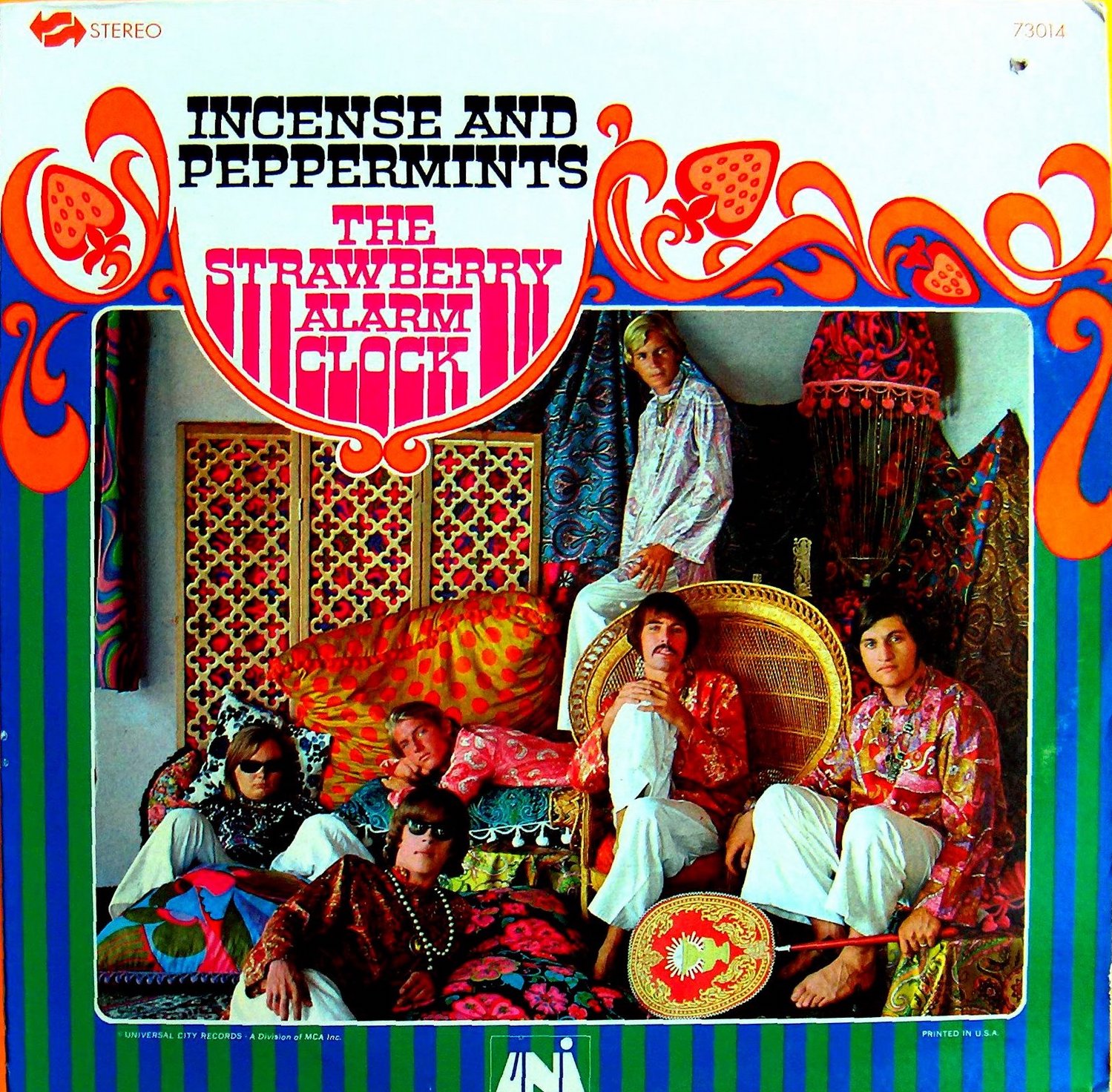
It was one of the biggest hits of 1967 and remains one of the most memorable, an intoxicating psychedelic-lite feel-good tune dripping with kaleidoscopic organ, taut and tough guitar licks, uplifting vocal harmonies, a bit of cowbell and prototypically opaque Summer of Love lyrics urging listeners to “Turn on, tune in, turn your eyes around.”

It was called “Incense and Peppermints,” and the group, in the spirit of the times (Vanilla Fudge, Chocolate Watch Band, Peanut Butter Conspiracy), was “Strawberry Alarm Clock”. As is so often the case in rock lore, there’s more to the story than you might have known.

For starters, there was the lead singer, who was not even a member of Strawberry Alarm Clock. But that’s getting ahead of ourselves. They began as Thee Sixpence, a Los Angeles-based garage-style band that had already cut four singles for Bill Holmes’ All-American Records: “Long Day’s Care” b/w “Can’t Explain.” “My Flash on You” b/w “Fortune Teller,” “In the Building” b/w “Hey Joe” and “Heart Full of Rain” b/w “First Plane Home.”

For their next All-American single, the band recorded an original titled “The Birdman of Alkatrash,” with “Incense and Peppermints” as the intended B-side. The song was based on an instrumental concept by Thee Sixpence’s keyboardist, Mark Weitz, and guitarist, Ed King, but when it was released, full credit had been given to John S. Carter and Tim Gilbert, who had come up with the lyrics and part of the melodic idea but were not even members of the band.

In an interview, Weitz explained: “I wrote the intro (the oriental-sounding riff), the verses and the ending (the major sevenths) while Ed King, at my request for some help on completing the song, co-wrote the bridge (the F # part) and of course the lead guitar parts. At the time when the music was recorded at Art Laboe’s Original Sounds studio in Hollywood, there was only a temporary title to the song, and lyrics had not yet been written. Our producer Frank Slay decided to send the fully mixed music track (recorded on eight tracks of mono!) to John Carter, a member of the band the Rainy Daze, who Slay also produced at the time. John Carter was solely responsible for conjuring up the lyrics and the controversial melody line extracted out of the finished musical track. Frank Slay ultimately credited that melody line solely to the writing team of John Carter and Tim Gilbert. To this day, they have received 100 percent of the royalties.”

There would be one other strange development before the single was released. While the SAC was in the studio recording the track, a visitor who sang with a band called the Shapes ended up becoming the uncredited lead singer of the soon-to-be hit. The others—King, Weitz, guitarist Lee Freeman, bassist Gary Levetro, drummer Randy Seol—were relegated to playing the instruments and singing harmonies and backup vocals. Steve Bartek, a non-member at the time, played flute on the song.

Weitz again: “When it came time to record the vocal tracks, none of the members of the Alarm Clock sounded right for the lead vocal. We all tried. Greg Munford (a 16-year-old guitar player also produced by Holmes) was a guest in the studio that day, and gave a go at it. His voice sounded best, and we all agreed on keeping his vocal track on the final version.”

Munford never became a member of Strawberry Alarm Clock, but it’s his voice you hear when you play that recording.

“The Birdman of Alkatrash” was released as the A-side by All-American but, before long, disc jockeys had discovered the B-side and began playing it on the radio instead. MCA Records also heard it and decided to pick up the distribution, re-releasing the single in May 19th, 1967, on its Uni subsidiary—with the band’s name now Strawberry Alarm Clock, the flavourful part taken from the Beatles’ “Strawberry Fields Forever” and the rest from a small alarm clock in Weitz’s bedroom.

It took a while, but “Incense and Peppermints” finally entered the singles chart at the end of September. By the week ending Nov. 18, it had reached #1, and became 1967’s #23 biggest hit overall.

“Incense and Peppermints” topped the Record World chart on November 18th, 1967

Although they are known largely as a one-hit wonder today, Strawberry Alarm Clock stuck around long enough to place three further singles on the chart. Their Incense and Peppermints album itself rose to #11 largely on the strength of the hit single. SAC constantly underwent line-up changes during its brief reign—Bartek and George Bunnell, a guitarist and bassist, joined the group after the “Incense” sessions and the latter became one of the group’s main songwriters and the group—and managed to release three further albums into 1969, none of which cracked the chart.

They also appeared in two films, 1968’s Psych-Out, a hippie exploitation film starring a young, ponytailed Jack Nicholson as a character named Stoney, and 1970’s Beyond the Valley of the Dolls. For the former, they contributed four songs, including the self-explanatory and utterly enchanting “The Pretty Song from Psych-Out,” which played over the opening credits.

In 1971, no longer affiliated with a record label, Strawberry Alarm Clock split up. The following year, guitarist Ed King relocated to the South in order to join a group that had opened for Strawberry Alarm Clock on tour. Their name: Lynyrd Skynyrd.

Various reunions have taken place since the early ’80s, and the current lineup of Strawberry Alarm Clock includes Weitz, Bartek, Seol, Bunnell and drummer Gene Gunnells from an early incarnation.

May be an image of 1 person and text

Jackson Browne has shared a new video for “My Cleveland Heart.” The single is a cut off “Downhill From Everywhere“, Browne’s forthcoming album, which is due out on July 23rd.

The single was co-written with Browne’s longtime guitarist Val McCallum. Meanwhile, the video was directed by Alissa Torvinen, who was worked with the likes of Pink, Melanie Martinez and Phoebe Bridgers. In fact, Bridgers has a cameo on Browne’s new video, helping aid a robotic heart transplant.

“What an honour to collaborate with Jackson,” Torvinen said in a statement. “His creativity is inspiring, not solely in music, but in everything he puts his energy into. We came up with a script for the video very serendipitously, and Phoebe joining us was a wonderful surprise. The way she received Jackson’s heart and the shot of her watching from the wings . . . perfectly dark and poetic and Phoebe.”

Regarding the album as a whole, Browne had this to say: “There’s a deep current of inclusion running through this record. I think that idea of inclusion, of opening yourself up to people who are different than you – that’s the fundamental basis for any kind of understanding in this world.” Fans can pre-order the record starting on May 21st.

In addition to the new album, Jackson Browne will be on tour this summer and fall alongside fellow singer songwriter James Taylor. “Downhill From Everywhere“, coming on July 23rd, 2021.

Pond are back with new single “Pink Lunettes” which is by far the danciest thing they’ve ever released, like something out of Miami Vice in 1987. “I think we managed to jitter along the neon tightrope between totally unhinged, strobing spontaneity and focused forward momentum,” says frontman Nick Allbook.

Pond have now announced the release of their ninth studio album, helpfully called ‘9’, and shared a new single called ‘America’s Cup’.

The record will be the first Pond album not to be produced by Tame Impala’s Kevin Parker since 2012’s ‘Beards, Wives, Denim’. Instead the band have self-produced, with bandmates James Ireland and Jay Watson of Gum mixing.

‘America’s Cup’ follows the new direction of previous single “Pink Lunettes” with a thumping funk bassline with Prince like glamour. The style is also befitting of the lyrics, which focus on the gentrification of Western Australia and Fremantle after Australia’s 1983 win of the America’s Cup.

“It’s about Fremantle before Alan Bond gave the big ball of gentrification it’s final shove, when it was cheap and harsh and the broken relics of the pre-87 port city were young, groovy cats in a secret idyll wedged between the river and the sea,” Frontman Nicholas Allbrook said in a press release. “It’s also about blokes being different versions of whatever the hell we’ve been taught were supposed to be.”

Pond’s ‘9’ will be released on October 1st. Allbrook reflected that the theme of the album was “biography…or observation”.

“A lot of the lyrics seem to focus on single people’s lives, or the lives of small moments or small things when you zoom real close up and they reveal something deeper,” he said

“Stuff like my cheap Chinese slippers, or a soiled teddy bear, or Agnes Martin… In the Rorschach test of re-reading lyrics, one thing that sticks out is a fixation on leaving behind a time of golden optimism and uncynical abandon. We can’t look at ourselves the same anymore, and the world we’ve built provides a scary lense for viewing our past.”

‘9’ is the band’s first studio album since 2019’s ‘Tasmania’, a record upon release describing it as “a timely record, given our current apocalyptic weather conditions”.

Billie Marten

Billie Marten once said her youth was the worst thing about her. Society’s obsession with age, especially in the context of art, can be something of a poisoned chalice. Early articles about the singer-songwriter focused her supposedly ‘precocious’ talent, and in a statement accompanying this album, she speaks about having previously concealed herself in her music and being “obsessed with what people thought of me”. Confidence and clarity has come with age – and with it her biggest, boldest music.

Marten’s third album ‘Flora Fauna’ is a collection of songs that acknowledge the need to weed-out toxic behaviours, using metaphors in nature to nod to both her imperfections and personal growth or humankind’s precariousness. All this is sound tracked, largely, by a departure from the pretty but safe acoustic sound of her 2016 debut ‘Writing Of Blues And Yellows’ and its 2019 follow-up ‘Feeding Seahorses By Hand’. Marten learned bass and listened to lots of Krautrock around this record; the melodies here are her most moreish, her stories are her most open and experimentation is at its broadest.

‘Ruin’ sees Marten ruminate on her tendency to self-destruct (“Got a war with my body”). She illustrates the conflict of being cognisant of that but proceeding anyway (“I’ve been committing a crime”) by shifting from springy beats and bass on the verses to sharp, darting guitars and kinetic drums on the chorus. These beat switches course through the album elsewhere. It’s a welcome refresh of her song writing.

On ‘Garden Of Eden’, Marten sings about nature as a tonic to modern-day overwork (“Eat the sun, and water up”), while ‘Ruin’’s chorus houses looser beats and more joyful tones, unfurling like a flower in a garden where she’s ready to “feel alive” again.

As with the sitar-spun knots of ‘Heaven’, ‘Human Replacement’ sees Marten push for more curious sounds amid themes of women’s safety and religious faith. A noodling bassline, paired with kitchen pot percussion and Marten’s unnerving, spoken word-esque delivery introduces ‘Human Replacement’’s tale of feeling “not safe in the evening” because “you could be taken”. Jabbing piano chords and screeching strings make for an explosive chorus: a clarion call for every woman’s right to be left alone when out at night.

On ‘Flora Fauna’, Marten navigates a newfound confidence while examining what it takes to survive and thrive. It’s her most mature, vivid work yet – and would be impressive from an artist of any age.

forthcoming album ‘Flora Fauna’