On June 4th 2021, Night Beats – the Texas-born brainchild of Danny Lee Blackwell – will release their fifth full-length, ‘Outlaw R&B’, via Fuzz Club Records. The album arrives following the 2019 ‘Myth of A Man’ LP (produced by Dan Auerbach of The Black Keys and released by Heavenly Recordings) as well as last year’s ‘That’s All You Got’ 7”. Made during the height of the California wildfires (where Blackwell currently resides), rioting in the streets and a nation in lockdown, the raucous technicolour rock’n’roll of ‘Outlaw R&B’ is a call to rejoice in some sorely needed post-apocalyptic hedonism.
The album arrives following the 2019 ‘Myth of A Man’ LP (produced by Dan Auerbach of The Black Keys and released by Heavenly Recordings) as well as last year’s ‘That’s All You Got’ 7” single. Made during the height of the California wildfires (where Blackwell currently resides),
Blackwell says of the album: “Outlaw R&B” is music for the borderless, the free, the outcasts and the forgotten. The outlaw is the runner. Those whose minds aren’t sold by perfect pitch and clean fingernails. Through this medium you can escape the confines of mental feudalism and bask in the euphoric glow of psychedelic R&B.” Where the last NightBeats LP was a distinctly polished and soulful affair, ‘Outlaw R&B’ sees the band return to their natural habitat: riotous, acid-fried rock’n’roll to lose your head to.
Danny Lee Blackwell of Night Beats has shared a video of him performing an intimate, stripped-back version of the recent single ‘That’s All You Got’
The ‘That’s All You Got’ 7” – featuring Robert Levon Been of Black Rebel Motorcycle Club across both tracks – is out now
Night Beats anticipated fifth album of original material Outlaw R&B, which sees the Texas-reared band shift gears from 2019’s Southern rock tinged ode to Nashville—which followed three LPs riffing on Roky Erickson’s psych-rock legacy—to reflect band leader Danny Lee Blackwell’s relocation to Southern California. The record’s early singles straddle the line between both influences while sounding indebted to the blown-out, Wall-of-Sound rock of the ’60s and the bluesy sounds revived by Myth of a Mancollaborator Dan Auerbach, all with a dose of acid Western imagery.
Blackwell took to LA’s Elysian Park for his recent “Neighbourhood” set, where he played an acoustic rendition of album opener “Stuck in the Morning” with some moody dusk lighting. Beforehand, he took an introspective trip to the strip mall that once housed the iconic Gold Star Studios to reminisce on the city’s musical legacy
Blackwell says of the album: “Outlaw R&B is music for the borderless, the free, the outcasts and the forgotten. The outlaw is the runner. Those whose minds aren’t sold by perfect pitch and clean fingernails. Through this medium you can escape the confines of mental feudalism and bask in the euphoric glow of psychedelic R&B.” Where the last NightBeats LP was a distinctly polished and soulful affair, ‘Outlaw R&B’ sees the band return to their natural habitat: riotous, acid-fried rock’n’roll to lose your head to.
Bat For Lashes has released a livestream she performed this April as a live album. The stripped-back set, which features reworkings of songs from across her catalogue, is titled “Livestream at Home. Los Angeles, 2021”. It’s out today—check it out below, along with the tracklist, which includes her cover of the Carpenters classic’ “We’ve Only Just Begun.”
Under the moniker Bat For Lashes, Natasha Khan has marked herself as a true innovator. The singer-songwriter and multi- instrumentalist has had her work described as distinctively haunting, darkly fantastical, ripe with magic realism. The gilt-decorated dream world that she creates has seen her nominated for the Mercury Music Prize three times,
The first live ‘Bat For Lashes’ album, Natasha plays an emotional and intimate stripped back set recorded during a livestream at home and broadcast during a global pandemic in 2021. This album contains old and new love songs including some never before heard re-worked versions of classic Bat For Lashes material, a beautiful and personal document of a unique moment in time.
The Oh Sees at the peak of their prog obsession, super jammed out and totally dominating.
“The chapel sf 10.2.19” is a 53 minute, beautifully recorded, hi-fidelity live explosion of orc puke and kraut-gone-punk rock dominance by one of the rippingest bands of the 21st century. This 2 x Album set on limited edition transparent blue and bone coloured vinyl with Side D etching and faithfully (re)created tmoq-style bootleg album art.
Psych-punk psychic warrior, ear worm-farmer, and possessor of many stamped passport pages John Dwyer does not let up. His group Oh Sees (aka Thee Oh Sees, OCS, The Oh Sees, etc) have transmogrified to fit many a moment – from hushed druggy folk to groovy demonic pop chants to science fictional krautrock expanse and beyond – to suit his omnivorous whims.
OH SEES and additional musicians: John Dwyer: lead guitar, vocals, flute and others Tim Hellman: Bass guitar Dan Rincon: Drums Paul Quattrone: Drums Tomas Dolas: Keys
“The Oh Sees at the peak of their prog obsession, super jammed out and totally dominating. The Chapel, SF 10.2.19.
“A Few Stars Apart” is a testament to finding a human connection: between close family and friends, as well as one’s own heart. Produced by Grammy-winning producer Dave Cobb, the album was inspired by the stillness Lukas Nelson found while riding out the beginning of the pandemic with his family in Texas and was recorded with the full band live on eight-track tape over three weeks at Nashville’s historic RCA Studio A. The 11 songs reveal what it means to come home again, to be still, and to find community — and yourself. “I’m from what one might say is the ultimate road family—I’ve been on the road my entire life,” shares Nelson. “I’ve never been anywhere longer than three months, and suddenly here we are, the four of us together. And thank god we were together. I can’t remember the last time we had that much time together as a family. We had a lot of really important bonding that happened during that time. And I have to say, as terrible as the pandemic has been in so many ways, for my inner peace, I was able to take a lot of good from this time. I was able to pause and reflect.”
Already one of Rolling Stone’s “54 Most Anticipated Albums of 2021,” A Few Stars Apart” is a testament to finding a human connection: between close family and friends, as well as one’s own heart. Produced by Grammy Award winning producer Dave Cobb, the album was inspired by the stillness Nelson found while riding out the beginning of the pandemic with his family in Texas, The eleven songs reveal what it means to come home again, to be still, and to find community—and yourself.
“Perennial Bloom (Back To You)” is off of Lukas Nelson & Promise of the Real’s new album, “A Few Stars Apart”,
King Gizzard & The Lizard Wizard have announced their new album “Butterfly 3000”. Their second studio LP of 2021 following March’s “L.W” is due out June 11th via the band’s own KGLW label. . “Butterfly 3000” which they just dropped without sharing any pre-release music, at first seems to be their biggest left turn yet, driving straight into festival friendly indiepop. Every song is in a major key, guitar riffage takes a backseat to bright synthesizer arpeggiations, tempos slow to optimal mass-arm-waving speeds, and choruses are bigger and more immediate.
Because it’s been almost three months since they released a new album, King Gizzard & The Lizard Wizard have announced they’ll be back with Butterfly 3000. It’ll be their 18th album and according to the press release it’s a suite of 10 songs that “all began life as arpeggiated loops composed on modular synthesisers” before being fleshed out and transformed by the six-piece band. The band describe this one as “melodic + psychedelic.”
Apart from announcing that it’s coming, the band are not playing the usual promo game of releasing a bunch of tracks before the release date, instead just letting the whole thing drop on 6/11. They’re not even sharing the album art (which is a autostereogram designed by regular collaborator Jason Galea) or the song titles, just listing question marks by the track numbers.
For Butterfly 3000, the band has chosen to forgo an advance single, artwork, or track list, revealing only the number of songs (10), that the record was built around modular synth loops, and that the cover will feature a “cross-eyed autostereogram” by long-time collaborator Jason Galea.
“Butterfly 3000” might be their most fearless leap into the unknown yet; a suite of 10 songs that all began life as arpeggiated loops composed on modular synthesisers, before being fashioned into addictive, optimistic and utterly seductive dream-pop by the six-piece. The album sounds simultaneously like nothing they’ve ever done before, and thoroughly, unmistakably Gizz, down to its climactic neon psych-a-tronic flourish. This is undoubtedly the most accessible and jubilant album of their career.” Says bassist Lucas Harwood: “We are all so pumped to release this, and of course for y’all to hear it. I think it’ll be a divisive record among fans — but healthy debate is a good thing.
For me, it really feels like a distilling of all of our various influences and musical personalities — reaching for places we haven’t reached for before and having confidence in sparsity — every part is considered, important and confident. I think we’re throwing away our youthful tropes of adding layers and layers of sound. That’s fun and will always hold a place within Gizzard, but this record is different. It’s probably the most positive Gizzard record too — almost completely in major keys! It feels good to release something so uplifting in such a gloomy, pessimistic global landscape at the moment.”
“At the end of 2016, after 10 years and seven albums, Nick Thorburn quietly decided to put an end to Islands and retire from music. “This seemed like a perfect time to put a cap on things and close out the circle,” Thorburn says. He switched focus, selling and producing a pilot television script, creating a graphic novel, and scoring a few films and the occasional BBC radio show. Thorburn’s years-long leave of absence resulted in a kind of rock ’n’ roll Rumspringa, with Nick unable to shake the bug for making records. After a sudden burst of creativity from a few weeks of working in his kitchen studio, Thorburn had written dozens and dozens of songs informed by everything from late-’70s avant-disco to Thea Lim’s time-travel novel An Ocean of Minutes, and would write dozens more over the next year and a half, almost all with a clear focus on rhythm and groove. “At the time I still wasn’t sure what this new music was going to be, or if coming back to Islands even made any sense,” says Thorburn. “But once we started playing, it quickly became clear this would be the next Islands album.”
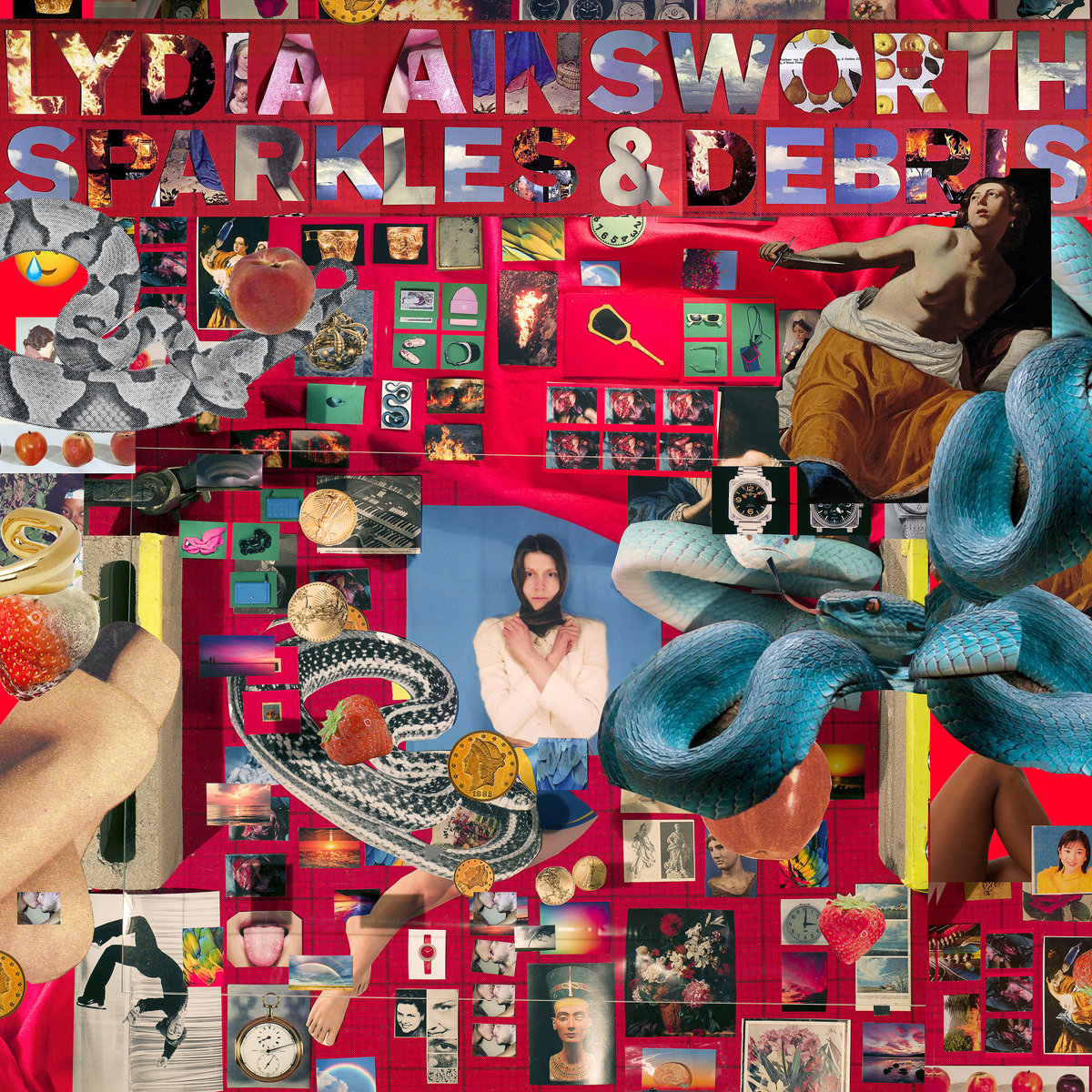
Acclaimed singer, composer and producer Lydia Ainsworth will share her upcoming fourth album “Sparkles & Debris” on May 21st via Zombie Cat Records. The record follows 2019’s Phantom Forest and blends live drums, guitars and bass with Ainsworth’s signature vast electronic landscapes.
“Longing seems to be a major theme running through my songs on this album,” says Ainsworth. “Whether that is longing in love, longing to be free from oppression, or longing for the muse of inspiration to make an appearance. I have included some spells and charms in there as well that have proven effective, if any of my listeners want to use them for help with their own desires.”
Written and produced by Ainsworth in Toronto, New York and Los Angeles over many years, Sparkles & Debris reflects her usual composer’s mindset and instinct for idiosyncratic melodies and structures. The album also marks a departure from the more solitary creative process that her previous releases were born from. Ainsworth recorded all her vocals at her engineer/mixer Dajaun Martineau’s studio in Toronto. Mark Kelso provided live drums and Neil Chapman and John Findlay added electric guitar and bass in the city’s Desert Fish and Noble St. studios. These live elements blend with Ainsworth’s own samples, programming and voice to create the record’s sonic tapestry.
Lydia Ainsworth is an internationally acclaimed singer, composer and producer whose 2015 debut album Right from Real was nominated for a Juno Award for best electronic album and shortlisted for the Polaris Prize. In 2017 her second LP, Darling of the Afterglow, brought with it headlining tours of North America, Europe and Japan as well as support tours with Perfume Genius. In 2019 she released Phantom Forest, and that same year, “Earth Song,” her collaboration with Kyle Dixon and Michael Stein, appeared in the last episode of Season 3 of Stranger Things. Her original scores for film and commercials have screened at festivals such as Sundance, Cannes and Hot Docs.
“Sparkles & Debris” Releases May 21st on Zombie Cat Records
This summer, Margo Price will release “That’s How Rumors Get Started“, an album of ten new, original songs that commit her sky-high and scorching rock-and-roll show to record for the very first time. Co-produced by Margo and longtime friend Sturgill Simpson, the LP marks Price’s debut for Loma Vista Recordings, and whether she’s singing of motherhood or the mythologies of stardom, Nashville gentrification or the national healthcare crisis, relationships or growing pains, she’s crafted a collection of music that invites people to listen closer than ever before.
“That’s How Rumors Get Started” follows Margo’s 2017 album All American Made, which was named the #1 Country/Americana album of the year by Rolling Stone, and one of the top albums of the decade by Esquire, Pitchfork and Billboard, among others. In its wake, Margo sold out three nights at The Ryman Auditorium, earned her first Grammy nomination for Best New Artist, and much more.
Margo Price has released a video of her covering Joni Mitchell’s seasonal classic, “River”.
This solo version was recorded at Pulse Studios in Price’s adopted hometown of Nashville. songs are like tattoos, River by Joni Mitchell is one of mine. I recorded a version, just me on the piano
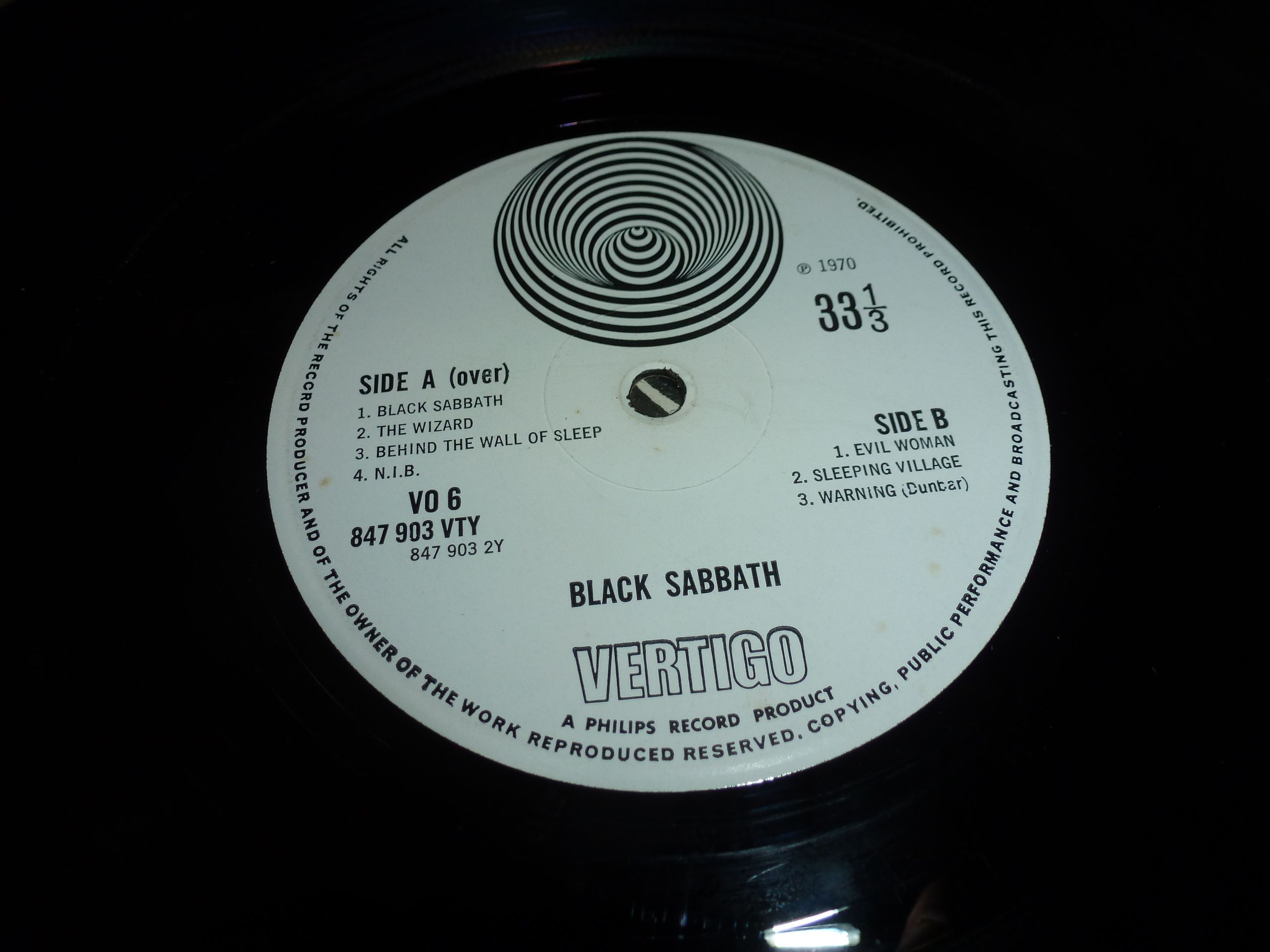
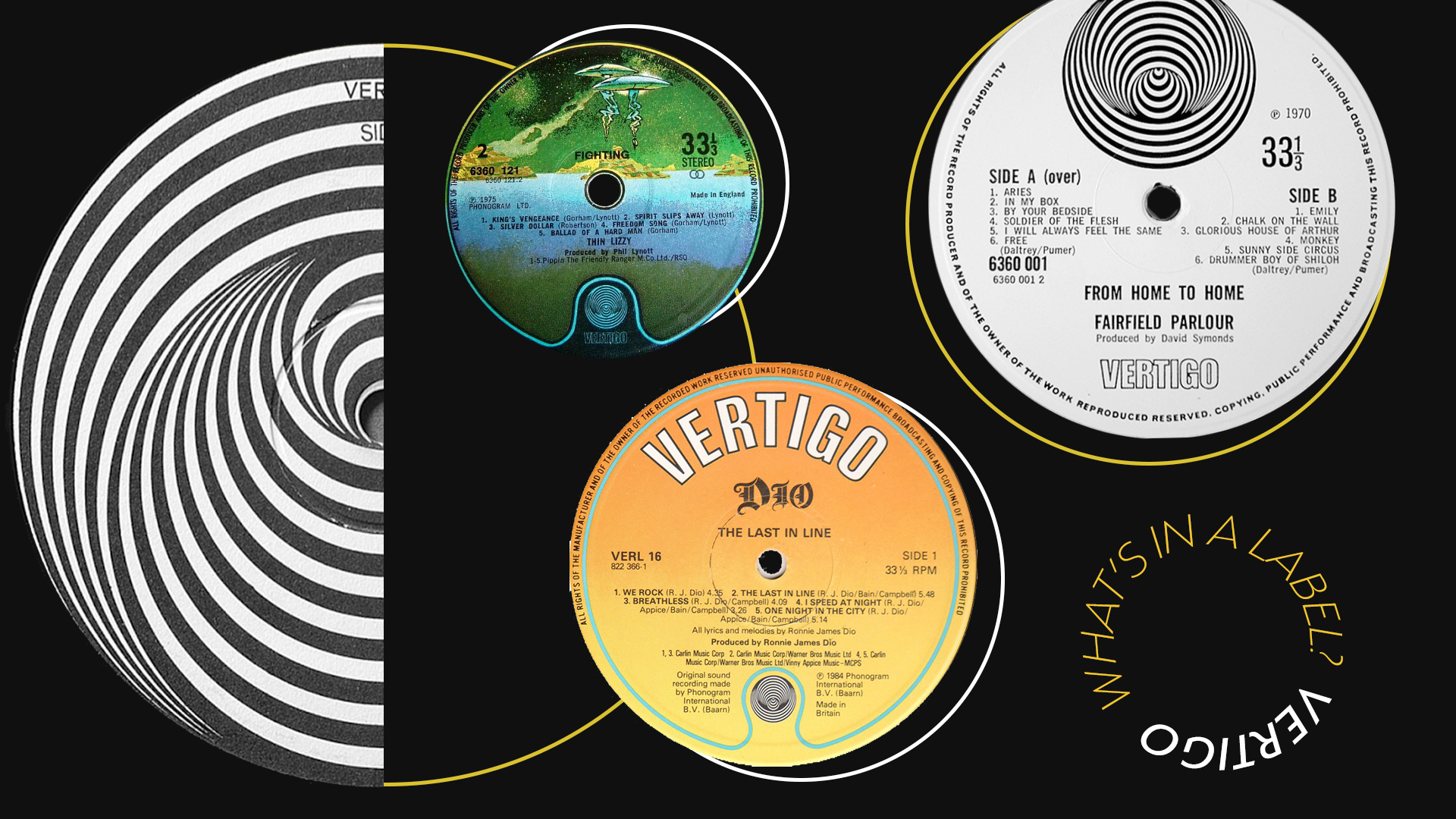
As the 70s dawned, so did a brand new sound – progressive rock. And at the centre of it all was influential British label Vertigo Records, home of Gentle Giant, Magna Carta, Black Sabbath and more, home also to bands such as Colosseum, Jade Warrior and Affinity. Ben and other bands from ‘the “cutting edge” of the early-’70s British prog-folk-post-psych circuit’. The first Vertigo releases came with a black and white spiral label, which was replaced with the Roger Dean designed spaceship in 1973.
The spiral logo. The eclectic bands and classic rock albums… Vertigo Records represented the vibrancy and expectation of progressive rock in its infancy. But if the heritage left behind by the imprint has inspired and impressed for the past 40 years, then its birth was far more prosaic. In fact, it happened simply because of the impotency of its parent company, Philips.
“You have to understand where things were when I joined Philips,” recalls Olav Wyper, the man who created the Vertigo concept. “I’d started off in the music business with EMI, before spending three years at CBS from 1966, as head of marketing and sales. Then I took over running Philips’ UK operation in 1969. And the company I inherited had lost its way. They had two separate A&R departments, each following their own policies. There was nothing at all unifying everyone.”
Wyper’s first task was to get the whole of the label working on the David Bowie single Space Oddity, ensuring that this was a massive hit, thereby giving the whole of Philips a much needed boost. However, such was the complete lack of credibility at the label that Wyper determined a new subsidiary had to be introduced, which could actively pursue hot young bands.
“I already had an interest in progressive music through my time at CBS. When I joined, we had a lot of progressively-inclined names – from Laura Nyro to Big Brother & The Holding Company – who enjoyed considerable media coverage in Britain, but couldn’t sell anything. So, I came up with the idea of the sample albums like “The Rock Machine” and “The Rock Machine Moves On”, which showcased all these acts including Simon and Garfunkel and Blood, Sweat and Tears with lesser known bands including Spirit, The Peanut Butter Conspiracy and others., and gave them the chance to get noticed. As a result, we sold loads of records.
“What I wanted from Vertigo was to create a progressive music label. I already had the name in my mind – as a former advertising copywriter and journalist, I was always good at coming up with that sort of thing – so now we just needed the bands to go with it.”
The Phillips company that up to that point focused on classical recordings and easy listening music, started producing psychedelic and rock albums since the mid-1960s. However they needed to compete with other major labels such as Decca and EMI who created subsidiaries (Deram, Harvest) to focus on progressive music. Olav Wyper was quickly flown in a private jet to Eindhoven, Netherlands, to meet with the suits at Phillips’ headquarters. He quickly signed a deal to have full control over a new label, supervising its A&R, marketing and art direction. The Vertigo label was born.
Working together with young A&R executives Mike Everett and Dick Leahy, Wyper went out in active search of talent: “In those days, no label would think of signing anyone who wasn’t already working with a solid fan base, so we saw loads of gigs, looking for the sort of acts who fitted in with our vision.”
The first signing to Vertigo were Colosseum, who were already working on their second album. “Valentyne Suite” was the second album released by the band. It was Vertigo Records‘ first album release, and reached number 15 in the UK albums chart in 1969. The group consisted of excellent musicians who could play long instrumental pieces and lengthy solos. They had eclectic tastes in music, the reason for the varied styles that you can hear on this album. Keyboardist Dave Greenslade, who will later form the progressive rock outfit Greenslade with Colosseum’s bass player Tony Reeves, talks about his background: “We would listen to Vaughan Williams, Stravinsky, Richard Strauss, and all these other wonderful composers. I don’t suggest that I’m anywhere near these artists, but it opened my mind to another way of writing; something different to rock and roll in the 1950s which was great fun but limited. With Jon Hiseman and Tony Reeves, I used to go to Ronnie Scott’s quite a lot and listen to Bill Evans.
“Gerry Bron, who was a manager and booking agent at the time, was producing the new album from Colosseum, “Valentyne Suite“. And, as the first record (Those Who Are About To Die Salute You) had been on Philips, we met up to discuss things. That’s how they became the first band to sign to the new label. I was a fan of theirs anyway; I loved the band’s jazz-rock approach, and also knew many of the band personally. Through Gerry I also picked up Juicy Lucy, Uriah Heep and Manfred Mann Chapter Three, which was the new, progressive project from Manfred Mann.”
Wyper also momentously signed Black Sabbath – almost by accident. Perhaps the two best-known releases for Vertigo in 1970 were by the same band. Time to introduce Black Sabbath, one of the first bands to join Vertigo’s roster. Olav Wyper ended up one night in Birmingham, arriving a day too early for a meeting. Always on the lookout for new talent, he asked a hotel worker for a recommendation.
“I’d gone up to Birmingham for a meeting, but gone a day too early. So, I ended up in my hotel that evening with nothing to do.”
On the advice of a young hotel worker, he ended up seeing Black Sabbath play a local pub. He was so impressed that…What he saw in that pub is likely a set that was later recorded for the band’s debut album. His experience was similar to that of other listeners in the audience. Guitarist Tony Iommi remembers Black Sabbath’s early performances: “They just stopped and stared in disbelief: ‘What IS that? We knew then we had something special. That’s what sealed our future direction, when we saw the look on their faces. We arrived at the height of the Vietnam War and on the other side of the hippie era, so there was a mood of doom and aggression.”
“I took them and their manager Jim Simpson out for a meal at a Chinese restaurant three doors down from the venue. And we ended up signing a heads of agreement [a tentative contact] on the tablecloth.”
Like many other early albums on the Vertigo label, Black Sabbath’s debut was essentially a recording of the band’s live set, completed in a single day. Olav Wyper on the label’s recording technique: “The reason these records sound good is because these bands didn’t need to do much overdubbing. They could all play in the studio as they played ‘live.’ So that’s the reason it sounds less processed and more lifelike
Black Sabbath’s debut album was released on 13th February 1970 and it opens with a song called, what else… Black Sabbath. If the beginning of the song sends shivers down your spine, you are not alone and you can come out from under the bed. Iommi remembers the recording of the song: “When I first played the riff to ‘Black Sabbath,’ that set the standard for the rest of the album. When you heard those doomy guitar notes behind Ozzy, the hairs on your arms prickled. We knew it was good and different. The special effects like the chiming bell and the thunderstorm were put afterwards. I think it was Rodger’s idea.”
Producer Rodger Bain worked with the band on their first three albums, and later continued to work with hard rock bands including Budgie and Judas Priest.
Black Sabbath quickly followed up with a second album in September of 1970, an album that sealed their place in the pantheon of hard rock/metal. We are talking about “Paranoid“, a record that produced three of the band’s most acclaimed songs: War Pigs, Paranoid and Iron Man. The title track got to #4 in the UK charts and earned the band a performance at Top of the Pops. Tony Iommi remembers: “It was like – oh no – we don’t really want this. We are not a pop group – We’re heavy underground. We were on the same show as Cliff Richard and Engelbert Humperdinck and must have stuck out like a sore thumb.”
My favourite song on the album is one that features no heavy guitar riffs, no satanic messages and no pounding bass and drums. Ozzy Osbourne’s voice is fed into a rotating Leslie speaker in this atmospheric track called Planet Caravan. Bassist Geezer Butler: “We didn’t want to come up with the usual love crap, so it is about floating through the universe with your loved one.” And about that jazzy guitar solo: “Tony, he used to love Django Reinhardt, Joe pass, and he used to play that a lot which didn’t really fit in with the heavier stuff. But it gave him a chance to show where his roots were.”
One more heavy rock band to release a debut album on Vertigo in 1970 is Uriah Heep, named after the manipulative character from David Copperfield, written by Charles Dickens in 1850. The band’s line up was formed when organist Ken Hensley joined the ranks of the band Spice late in 1969. This boosted the band’s sound significantly, as guitarist Mick Box remembers: “We’d actually recorded half the first album when we decided that keyboards would be good for our sound.
Their debut album …Very ‘Eavy …Very ‘Umble (Very ‘Umble was Uriah Heep’s catch phrase in the book) starts with “Gypsy”, a track which was also released as a single. One minute into the song Mick Box unleashes one of heavy rock’s best-known guitar riffs, backed up by Ken Hensley’s fantastic Hammond work. The song became the band’s anthem for many years. The album hit the racks in a striking sleeve that featured a cobweb-covered human being screaming as if in torment. Look very closely and you’ll see the subject is none other than David Byron. Bron had set up a photo session at which a cobweb machine had been hired to create the olde-world effect. Box wasn’t too enthusiastic about the results so went off to the pub and upon returning in a ‘suitably refreshed’ state decided it might be amusing to spray the contents of the device all over his singer.
I tapped him on the shoulder and I went ‘Ssshhssssshhh!’ with this glue all over his face,” guffaws Mick at the memory. “I found it absolutely hilarious and the photographer was quick enough to pick up his camera and snap away. And of course they were the pictures that we used. The cover looked fantastic, it really caught the eye.”
With this first batch of signees, Wyper set the tone for the next two years, a period which would also see the likes of Jade Warrior, Magna Carta, Dr. Strangely Strange, Nirvana (the original one), Warhorse and Gentle Giant sign to Vertigo.
“Our attitude was, obviously, that anything we signed had to be good. But it should also broadly fit into the progressive style, whether it was folk, jazz or rock. We did pick up a surprising range of acts, but they were all characterised by being ‘progressive’ in nature.”
However, what made the label stand apart was its attention to detail, and the fact that each release was presented as a work of art.
“I was determined that the packaging would be fresh and innovative, that every record would be seen as totally artistic. So, we put out our records in gatefold sleeves. Back then, this rarely happened, and only for big names. The idea of having new acts treated in this way was unheard of.”
Of all the albums the label released in 1970, about 30 albums in total
On top of this, Wyper also hired an aspiring young photographer to design most of those initial sleeves, giving them a coherence that helped to create a label style.
As you may have noticed from the album covers for Colosseum’s “Valentyne Suite” and Black Sabbath’s debut, the striking photographs are very unique and bear similar artistic style.
“The first British pop promo was for Fleetwood Mac and their big suprising hit “Albatross” and I’d gone down to the shoot, when I was at CBS. I got talking to the young guy who was the focus puller, and he’d told me that he was studying photography at the Royal College Of Art. In the end, he invited me down to an exhibition he was mounting there at the end of term. It was stunning. His work and ideas were just incredible. So, I hired him on the spot. His name was Keith MacMillan, who did a lot of those early Vertigo covers under the name of Keef; that helped us to have an identity.”
Equally as vital was the famed spiral logo, which has become so much a part of the Vertigo lore. The initial idea was created by Wyper himself.
“I wanted something on the A-side of a record that drew you in. So that when the record spun you felt as if everything was pulling you towards the record. I did the rough designs, and then a lady – Maggie – in our art department came up with the final version. What we did was use this to take up the whole of the label on the first side of a record, so it really stood out. For collectors, it was these releases that are especially sought-after today. After I left, the powers-that-be reduced the size and the impact, which was such a shame.”
The Vertigo imprint enjoyed considerable artistic and commercial success in its infancy, fuelled by Wyper’s desire to drag Philips as a whole into a fresh era.
Like Uriah Heep, Cressida also took its name from a literary giant: William Shakespeare, and his tragic play Troilus and Cressida. Bass player Kevin McCarthy remembers them becoming one of the first bands to sign with the label: “We had never heard of Vertigo and of course had no idea how iconic the label would become. But it didn’t matter. We just thought it meant we were on our way to achieving some success.”
Label head Olav Wyper said of the album: “That first Cressida album is as good as it gets – those guys were entitled to the crown of ultimate ‘progressive’ bands as much as King Crimson, but unless you are into Vertigo or deeply into progressive music from the era, my bet is you never heard of the band.”
Affinity and their self-titled debut album included a number of great interpretations of well-known songs, including a long jam on Bob Dylan’s All Along the Watchtower, made famous by Jimi Hendrix’s timeless cover. This is a treasure for lovers of the Hammond organ (the band bought the Hammond that was previously used by Brian Auger).
Although the album received great reviews and the band was touring, they did not last long and remaining recordings with a modified lineup were released only many years later.
The album’s cover resembles Black Sabbath’s debut in style, again the distinct colouring created by photographer Marcus Keef.
“An Old Raincoat Won’t Ever Let You Down” was the debut solo studio album from still then Faces frontman Rod Stewart, Several other members of the Faces also appear on the album, as well as keyboard player Keith Emerson and Jeff Beck drummer Micky Waller released in the United Kingdom in February 1970 it was the fourth release on the label.
“I changed so much about the company. Even the reception area, which I completely overhauled, and made sure that it was staffed by young people who were music fans. Before there had been a very unwelcoming concierge.”
After releasing their debut album on Fontana in 1969, Magna Carta signed with Vertigo, starting a brilliant streak of three albums over the next few years. The first was “Seasons“, an excellent progressive folk album made even better due to the involvement of Gus Dudgeon, Tony Visconti and Rick Wakeman. The three collaborated on David Bowie’s single “Space Oddity” the previous year. The album features the acoustic guitars of Chris Simpson and Lyell Tranter and heavenly vocal harmonies.
Rick Wakeman plays as a session musician on a number of songs on the album, including a nice organ accompaniment and short solo on Ring of Stones. Magna Carta remained a favourite of Wakeman. After they released their milestone album “Lord of the Ages” in 1973, he hailed it as “arguably one of the greatest albums of its kind ever made.”
Excellent work by guitarist Davey Johnstone before he joined Elton John’s band.
From the opposite end of the folk spectrum comes Dr. Strangely Strange, a wonderfully wonderful band that sadly released just one album with the label, and even sadder, their last one. Heavy Petting they were joined by guitarist Gary Moore of Thin Lizzy. Joe Boyd: “I think I remember discussing using Gary Moore with them. The mix of acoustic and electric was in the water in those days. The LP package featured an elaborate cut-out designed by Roger Dean. This was one of his first hand-drawn fonts, for which he became world-famous with album covers for Yes and other artists. Dean on the cut-out sleeve: “You had to treat it very gently – you can’t really slide it on a shelf next to other record covers without damaging the flaps – it’s a real pain – though it’s not like Sticky Fingers, which will do damage to other covers!”
However, Wyper’s tenure at Philips and Vertigo lasted only two years. In 1971, he was headhunted by RCA and their boss Keith Glancey. Once more inheriting a label in total disarray, Wyper tried the same trick as he’d pulled off with Vertigo, by establishing Neon Records, and signing the likes of Quintessence, Centipede (Canterbury band led by pianist Keith Tippett) and Fair Weather (with Andy Fairweather Low). However, this time it didn’t quite work as well.
“We had a few successes, but couldn’t do it again. I think everything about Vertigo was just aligned so well…the people at the label, the artists we signed, the way we packaged and marketed the albums. It was a special time.”
Some have suggested that Vertigo was Philips’ direct response to the fact that EMI had launched the Harvest label so successfully. But Wyper sees things a little differently.
“To my way of thinking, if you look at where Harvest were in 1969, they really had lost their way artistically. So yes, they were the first to do this sort of thing – create a special label for young progressive acts who reflected the times – but they’d gone past their best by the time we arrived on the scene.”
Vertigo, too, suffered from a loss of focus once Wyper left. He himself attributes this to the way the parent Dutch company took control of things, to the detriment of the original vision.
“When I first joined Philips, the UK office was regarded as a lame duck by the rest of the European companies. Anything we released they automatically rejected. So, when the first batch of releases was ready for Vertigo, I personally went round to every managing director of Philips at each office round the continent, to get them on our side. The German company, in particular, was very enthusiastic about it all.
“But it was always a constant struggle to convince the Dutch that it was worthwhile putting records out on Vertigo. They were always badgering me to put them on Philips releases instead, and could never understand the advantages which Vertigo offered. They hadn’t fully appreciated the battle I had to wage because of Philips’ bad reputation when I joined. So, there were a succession of arguments between me and them, which I won, but it was a battle.”
So, when Wyper left, Philips began to impose their own ideas…
“The people who took over from me suddenly found themselves under intense pressure. Philips decided to dump a load of inappropriate bands onto the label. For instance they put Status Quo onto Vertigo – which to my mind was just crass lunacy.”
There’s little doubt that the glory years for Vertigo were those early times, when Wyper and his team proved than an innovative, imaginative and quality-fuelled approach to a label could reap dividends. It’s for this reason that Vertigo has remained among the most acclaimed of labels.
“There was a long period of time, when Vertigo’s stock fell dramatically, mainly because of the way it was handled by the parent company – which is now Universal. But in the past few years, the early releases – with the original logo – have become collectible again, and I am quite proud of the way there is now a real respect for what we tried to do – and for the most part delivered. There was even a three-CD box set a few years ago (Time Machine, 2005), which helped to underline what we achieved.
“My philosophy with Vertigo was always to involve everyone. Even the head of classical music for Philips at the time, Jack Boyce, came up with ideas for the label. At its height, the whole of Philips became a hive of activity, centred around Vertigo.”
Therein lies the secret to why Vertigo was such a considerable success. It was a specialist label that was inclusive, rather than exclusive. A unique vision from a record company visionary. A one-off that’s left a legacy so dynamic and enormous that, when the label was activated a few years ago, even the likes of Metallica deemed it an honour to have the famous spiral logo swirling on their releases.
North London’s Sorry have today shared their brand new EP“Twixtustwain” alongside the official digital release of their two 2017 mixtapes Home Demo/ns Vol I. and Home Demo/ns Vol. II,reworked and available across streaming platforms for the very first time. Sorry have also shared the videos for EP tracks ‘Don’t Be Scared’, ‘Things To Hold Onto’, and ‘Favourite’ created by Flasha Prod. (Sorry’s own Asha Lorenz and longtime collaborator Flo Webb) completing a full audio-visual compliment which also includes the previously released ‘Cigarette Packet’ and ‘Separate’. Their first new project since the release of sensational debut album “925” on DominoRecording’s last year, the “Twixtustwain” EP finds the band delving back into a more experimental, cut-and-paste electronic palette all the while still coursing with their signature gnarled sensitivity.
Home Demo/ns Vol. I + II are the band’s beloved early mixtapes, being made available digitally in full for the first time since their original AV release.
Containing some of Sorry’s cult fan favourites and original versions of songs that would come to full form on their debut album “925“, Home Demo/ns Vols. I+II provide a snapshot of deep cuts that have proved a foundation of the band’s beloved, genre-defying catalogue to date.
All music and production by Asha Lorenz & Louis O’Bryen
Home Demo/ns Vol. I + II are the band’s beloved early mixtapes, being made available digitally in full for the first time since their original AV release.
Containing some of Sorry’s cult fan favourites and original versions of songs that would come to full form on their debut album 925, Home Demo/ns Vols. I+II provide a snapshot of deep cuts that have proved a foundation of the band’s beloved, genre-defying catalogue to date.
Earlier this year Sorry released their live LP “A Night At the Windmill” – captured during their socially distanced show at the venue last year – as a Bandcamp exclusive limited to 500 pressings, with all proceeds going to The Windmill in Brixton.






:format(jpeg):mode_rgb():quality(90)/discogs-images/L-2266-1488839188-8991.png.jpg)






 The Fat Angel Sings