Seattle indie singer-songwriter Noah Gundersen’s “Atlantis” is not so much a song as it is a full experience. Like the water surroundings its fabled subject, “Atlantis” washes over you — first in small waves, then growing in scale with thudding drum machines and ruminative guitar and piano. Gundersen’s crisp voice aligns so well with Phoebe Bridgers as the two swap couplets and verses before coming together in perfect harmony on the chorus.
Noah Gundersen returns with his much anticipated new album,“A Pillar of Salt“. The project is a return to form for Gundersen, coupling heartfelt lyrics with his signature understated vocal performance. With over 100 Million career streams and 100k album sales, this album is sure to take Noah’s career to the next level. Featuring singles “Sleepless in Seattle” and the track “Atlantis,” a stunning duet with Phoebe Bridgers, fans old and new will be celebrating this triumphant piece of art.
Taken from the new album “A Pillar of Salt”, out now.
Phoebe Bridgers‘ music feels like it’s ripped straight from her head, the candid and well-thought lyrics tinged with a bit of blood from the pain she’s been reconciling. It’s also her heartfelt delivery that makes her one of the most recognizable rock acts—not to mention her unmistakable skeleton uniform. Earlier this year she’s shared a cover of Tom Waits‘ “Day After Tomorrow” with the same kind of affecting performance that makes it seem like the track’s lyrics were taken from that same part of her brain that gave us “Punisher”last year.
“Day After Tomorrow” takes the perspective of a soldier away at war who’s coming back home, wrestling with the acceptance of killing other people for a national agenda. “I still don’t know how I’m supposed to feel / About all the blood that’s been spilled with God on his throne,” she sings quietly. “You can’t deny, the other side don’t want to die anymore than we do / What I’m trying to say is, don’t they pray to the same God that we do?” Fuck.
You could consider “Day After Tomorrow” a Christmas song if you like; there’s a bit where a choir sings “Silent Night” over jingle bells. It follows Bridgers’ tradition of releasing a holiday song where the profits go to charity—this year, the proceeds for her Waits cover go to the International Institute of Los Angeles’ Local Integration & Family Empowerment Division, which provides refugees, immigrants, and survivors of human trafficking with the resources they need to become self-sufficient and start new lives in Southern California.
I like to stumble towards a band with no agenda, no purpose, uncovering sound almost on accident. This is how I first heard Wednesday. The band came to me and I don’t remember how, or why. They simply arrived, “I Was Trying To Describe You To Someone” soaked into summer of 2020, and in sound, in spirit, in central concerns and the execution of them, it took me back to an era before the current era, which I’d needed at the time.
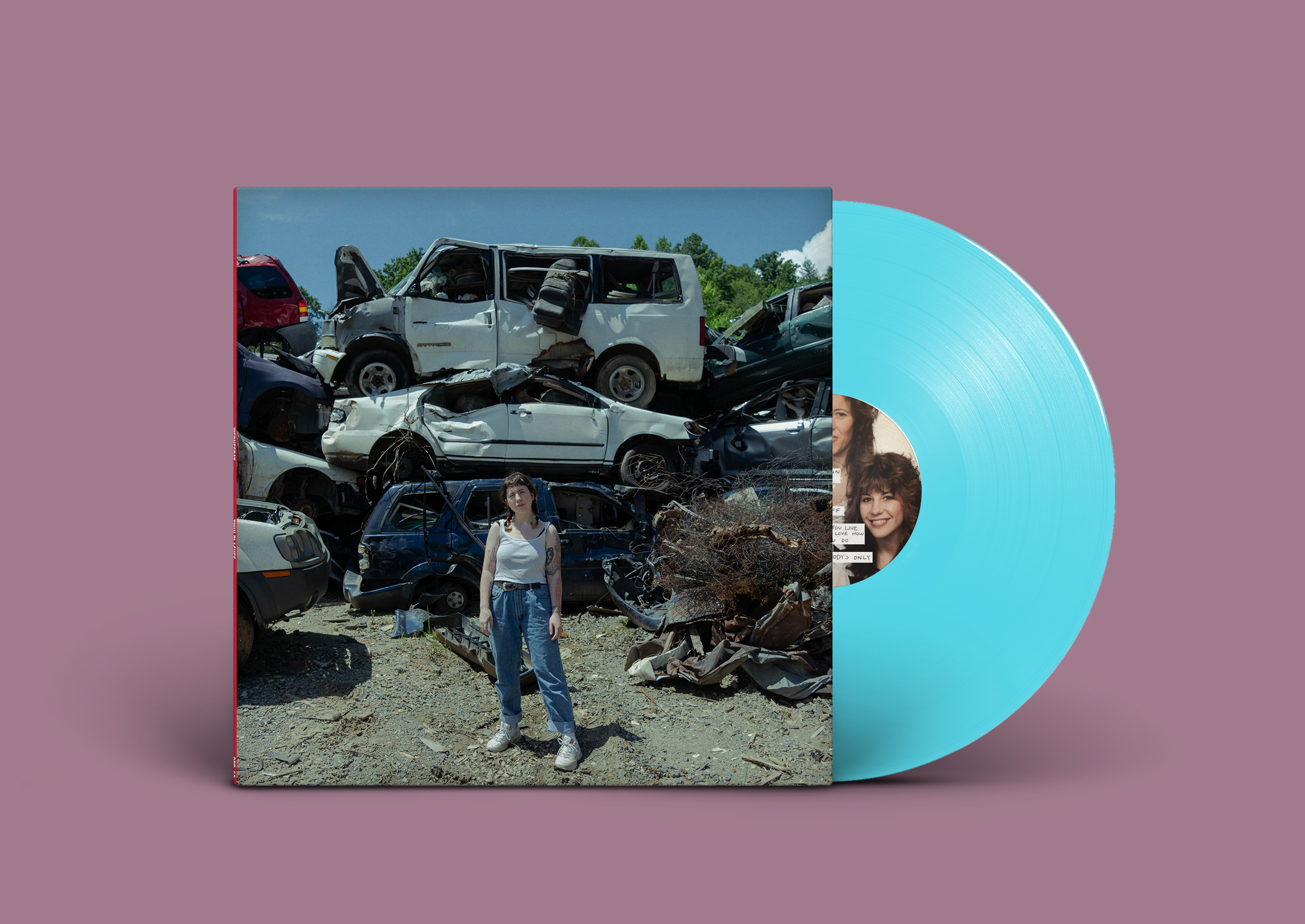
Wednesday turn old memories into emotional kindling. Led by vocalist and lyricist Karly Hartzman, the Asheville five-piece takes ghostly imagistic echoes of small-town ennui and sets them ablaze in the searing flames of fuzzed-out shoegaze, watching them burn away oh so prettily. From the twangy Americana balladry of “How Can You Live If You Can’t Love How Can You If You Do” to the gnarled heaviness of the title track, these past traumas make for some remarkably present indie rock.
I love “Twin Plagues” first for its songs, plainly. If you, listening to Wednesday for the first time around or even the second time around, stumble onto this album, I promise you the songs will be what grab you first, beyond any of my foolish high-level emotional theorizing or projections. Every band that loves the pursuit of their craft the way this band does is one to follow, because getting to sit on the side lines and watch them level up is a real generosity. “Twin Plagues” is overflowing with hooks, but what most delighted me about the band from the start has taken a leap: they have managed, somehow, to get even better at structuring their noise from one movement of a song to the next.
The idea of the “song” itself is flexible in their hands, so much so that each song holds two, or three songs within. This, again, generosity. “Cody’s Only” is a ballad until it begins to threaten a storm of volume, and then, in its final act, it becomes something else altogether. “One More Last One” is a shoegaze-y trip that swells and swells until it overflows, but it doesn’t stop. It keeps offering and offering and offering. I say “noise,” and never in a dismissive sense. Everything has a place, and so much of its place is to serve the true heart of this album, and the true heart of Wednesday’s music, which is allowing cracks through which tenderness can enter and exit as needed.
“I feel all our songs, consciously or not, are about alienation.” These are the words of Brandon MacDonald, vocalist and lyricist for Home Is Where. And they ring true– despite the amiable, palpable chemistry between the musicians, and the folksy, organic warmth at the centre of their songs, the Palm Coast, Florida act perform a dizzying tightrope act, dancing between intimate melodies and gently progressive song writing flourishes with a dexterity that belies their sonic base of aggressive, throat-shredding emotive hardcore. The end result is the sound of a band beleaguered by chronic anxiety and acutely aware of their atomization under late capitalism; a glum cloud hangs over even the least subdued moments of vibrancy throughout their milieu. And yet, despite the disaffection, something about Home IsWhere demands communality, demands engagement, demands acknowledgment. Originally forming in 2017, Home Is Where at first consisted of MacDonald— a multi-instrumentalist who also contributes saw and harmonica– as well as guitarist Trace George and drummer Joe Gardella. It was this line-up of the band that initially played their first show without any music actually written; an audience member who was spontaneously chosen to play bass, Connor O’Brien, gelled so perfectly with the rest of the group that he was immediately asked to join permanently, an offer he enthusiastically accepted.
Brandon MacDonald is one of the more compelling voices to emerge this year no matter how you define voice, be it the blunt nasal singing that inevitably drew Jeff Mangum comparisons, a facility for punctuating heady lyrics with bracingly simple hooks (“Hey Samantha!”), or a creative vision that hybridizes and synthesizes umpteen subgenres from the emo and indie rock realm into startlingly original and unpredictable music. On debut album I Became Birds, MacDonald and her Home Is Where bandmates cram more wild ideas into 19 minutes than most bands muster in a decade.
Released March 5th, 2021 all music written by home is where / all lyrics written by BrandonMacDonald.
Over the past decade, Jenn Wasner seemed to have an unusually healthy relationship to her work. In 2011, she and fellow Baltimorean Andy Stack experienced a breakthrough with their third album as indie-rock duo Wye Oak, the ruminative and stormy “Civilian” rave reviews, syncs on The Walking Dead and One Tree Hill, 200 gigs in one year. Burned out by their moment in the sun, Wasner decided to abandon the pursuit of career growth to remain connected to her music and unencumbered by external expectations, following in the footsteps of her irreducible hero, Arthur Russell.
She formed a duo, Dungeonesse, with musician Jon Ehrens, and made one fantastic dance-pop album bizarrely reminiscent of UK garage’s Top 40 sweet spot. Wye Oak dropped guitars for synths (a mild outrage-stirring shift in early 2010s indie). Wasner released her solo debut as Flock of Dimes, and has played with artists not limited to Sharon Van Etten (whom Wasner met while waitressing during Van Etten’s set at a Baltimore cafe),
Most recently, Wasner joined Bon Iver, and was due to spend 2020 playing arenas with them. Then the start of the pandemic collided with the painful end of a relationship, becoming “the spark that lighted the tinder that blew up my entire life”. Stasis and a blank schedule compounded her devastation. “I had become incredibly adept at outrunning myself, and I had a whole slew of very high-functioning coping mechanisms in place. I had spent the better half of a decade always moving, always on tour, always working on something, distracted from being with myself.” She was horribly good at it, she says, covering up childhood trauma and “deep, deep grief” by creating “a life and a body of work [whereby] I could reverse-engineer a love and acceptance of myself without actually building it from the ground up”
Now she was stuck at home, knocked sideways. “I really thought that I knew myself really well, and I was a happy person,” she says. “It’s pretty astonishing to me that we can have such enormous blindspots about ourselves, and sometimes it takes a certain collision with another person or experience.”
Her stirring second album as Flock of Dimes, “Head of Roses“, blossoms from this tension. Wasner, a subtly profound lyricist, attempts to understand heartbreak from both sides, and her own habit of loving from what Joni Mitchell called “icy altitudes”. Amid muscular guitar, pulsing synths and her elegantly conversational vocals, shifting from forlorn haunting to sky-searching lament, she hides razorblades of self-admonishment and failure. “Making a sorry attempt at compersion,” she sings on the lovely country-tinged Awake for the Sunrise, referencing the polyamorous concept of celebrating a partner’s other relationships, “with a hand halfway down my throat.”
It’s easy to tell why all those musicians want Wasner around. A bright-eyed 34-year-old who bears a striking resemblance to actor Zoe Kazan, she is full of careful observations about the things that divide us from one another, and heart from mind. She is strikingly open and easy going, though she admits she doesn’t love the interview dynamic – uncomfortable with “receiving what I would consider a disproportionate amount of attention” and with attempting to articulate the message of the record. “It’s not just how I talk about it, it’s how it’s felt, how it’s received.”
The catastrophe of last spring meant Wasner couldn’t deal with her emotions in her usual “cerebral, intellectualised sort of way”. She had to address how that gap had opened up. “I’ve been at war with my body in a lot of ways,” she says. “It’s something that I’ve tried to dominate and control, and in many ways disconnect from, and I think that’s a natural reaction that we have to any painful experience that we’re trying to avoid. In so many cases, the avoidance of that difficult emotion is the cause of much worse consequences than learning how to be present with it and feel it.”
One potential source she considered was going on tour as a teenager – an earlier version of Wye Oak was called Monarch – “spending the bulk of my life in these largely male-dominated spaces when my sense of self was still developing”, she says. “My desire to accommodate whoever I happen to be around at any given moment has sometimes left me feeling like I’ve got a foot in a multitude of worlds and I don’t really have a strong sense of who I am.”
Another went back further. Wasner sensitively broaches growing up watching her parents struggle with addiction and mental illness, “and doing so with very little money, very little resources, and being at a point in the class system where you have to work constantly to keep your head above water”.
She had always told herself it hadn’t affected her: she got a scholarship to a local boarding school to get some distance, and felt grateful that she had built a life that is “good and easy”. Yet, she says, “having to sit with the reality of their suffering, which breaks my heart every day, made me feel as though I didn’t have a right to enjoy myself – that if they didn’t get to stop, I should never get to stop either. And that I had to earn my good life by working constantly. Turns out that doesn’t really do anything for them or anyone else, it just exhausts me and makes me a shittier version of myself.”
Wasner didn’t realise how hard she was on herself until other people pointed it out. “For the majority of my life, I’ve mistaken self-compassion for self-optimisation.” Although Head of Roses is peppered with bitter lyrics about deserving her fate, she says she’s made some progress in the year since. “I’ve been learning how shame and self-loathing are the very things that keep us going back to those same self-reinforcing negative behaviour patterns and spirals. It’s really forgiveness that is the way out, the way forward, and compassion for oneself.”
Among those self-lacerating lyrics, Wasner often sings about turning away from love: “I want the lightning,” she sings over the lovely, thumbed electric guitar of Lightning, “but I can’t live like that.” Distance has been another coping mechanism. Six years ago, she moved alone to North Carolina as a way to fully appreciate her community back in Baltimore, a strange move by anyone’s logic.
“I used to think I was just drawn to change,” she says. “And I think the influx of new experiences and places and people is definitely part of feeling alive and vital and connected. But there’s also fear.” Growing up “feeling heavily depended upon” prompted her to cultivate and fiercely protect her own stability. “I think in some ways I’ve made it too much of a priority,” she says. “I think there’s a way to balance it out and let other people into that world, but I haven’t quite figured out how.”
Wasner worried that “Head of Roses” might feel navel-gazing “at a time when there’s so much thought and energy being directed towards the collective sphere”. Then she saw the link between emotional denial and the state of the world. “That natural defensiveness, the hoop our brains jump through to help us avoid pain and suffering, is I think part of what got us into this predicament in the first place.”
Music, she says, has a way of softening those defences. While Wasner has a way with lyrics about shame and searching that stop you in your tracks, her trademark might be breath-taking melodic catharsis: the chorus of her new song One More Hour breaks open in a way that feels like watching your ribs crack and the night sky flood out. Making this album, she says, was “about feeling, for me to be able to override that disconnect between my brain and my heart and my body. I believe that music is one of the art forms that is most adept at making that transition for others, too.” For Wasner, the challenge is retaining her spiritual connection to her work (“it feels silly to say, but it’s real, it gives my life a sense of purpose and meaning”) while having to commodify it. “But showing up as your flawed human self, that’s what I want to do with my art.”
It’s a year since her life blew up. She’s rehearsing for live-streamed shows, but struggling to get back into the heartbroken headspace of Head of Roses. “When you write a song, you trace your own outline in the air and then you keep walking,” she says. “I’ve always had a little bit of friction in the experience of trying to get back into that old version of myself.”
She says she feels “wildly different” to that person: calmer, slower, “at ease in a way that I really can’t remember ever feeling before: I don’t feel like I’m reaching for something ahead of me, or dwelling in something that’s behind me, but that I’m fully fixed and satisfied where I am.” The trick now is to cultivate that feeling over the old instinct to control. “I’m hopeful that maybe my life can unfold in some directions that might surprise me.”
Tucked away inside Betty’s, a remote Chapel Hill recording studio owned and run by Sylvan Esso, songwriter and multi-instrumentalist Jenn Wasner (aka Flock of Dimes) enlists the talents of friends and local NC indie-electronic musicians for the live debut of “2 Heads.” As the first track on Wasner’s critically acclaimed ‘Head of Roses,’ released earlier this month, “2 Heads” is an evolving blend of Wasner’s undaunted vocals, fluttering synth arpeggios, and rich, sustaining bass lines by way of cello and Matriarch. Wasner, on lead vocals and at the helm of two Matriarch analog synthesizers, is joined for this performance by Andy Stack (Wye Oak, Joyero) on cello; Alexandra Sauser-Monnig (Daughter of Swords, Mountain Man), Molly Sarlé (Mountain Man), and Amelia Meath (Sylvan Esso, Mountain Man) on backing vocals; and Nick Sanborn (Sylvan Esso, Made of Oak) with an assortment of Eurorack effects modules. ‘Head of Roses’ is out now on Sub Pop.
Sunlight to blue … Blue to blackness” – This was one of the more upbeat title suggestions for the very bare, back to basics, reflective album from The Durutti Column. Originally released in June 2008, “Sunlightto Blue…” was a conscious response to the previous two polished and ‘studio-based’ releases. Here he created some sparse, simply beautiful ‘sketches’ as he once called them, more reminiscent of his work from the early eighties. Many of the pieces are instrumentals played on his Juan Montero flamenco guitar, and he returns to ‘Without Mercy’ for the last track ‘Grief’ whilst reinventing ‘Never Known’ from LC. Now, for the first time, the LP is available remastered and re-packaged as a gatefold double 12” 180gram vinyl release.
This album also saw the debut of the then talented young pianist and singer, Poppy Morgan, who co-wrote the melancholy Ananda as a duet with what Reilly dryly called ‘intrusive guitar’. For the uninitiated, Vini was the first artist signed to Manchester’s influential Factory Records, co-wrote and played on Morrissey’s first solo album ‘Viva Hate’, and was heavily featured in the Manchester music culture film, ’24 Hour Party People’. Vini Reilly has recorded under the name The Durutti Column since 1978 and has a rich portfolio of work, releasing over twenty albums in this time. Ever critical of Vini’s voice, but ever a fierce champion of his talent, the late Tony Wilson would surely appreciate this return of The Durutti Column.
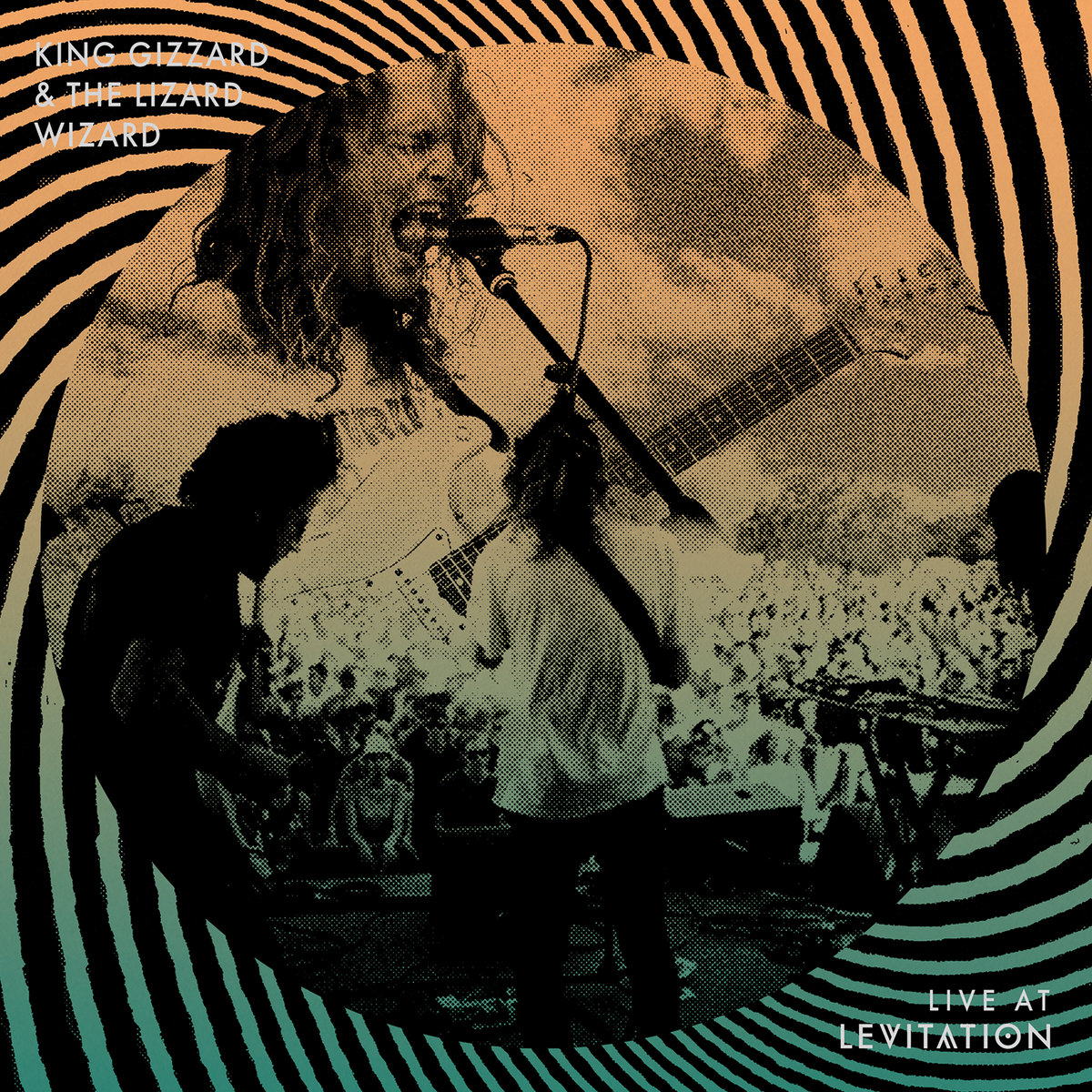
Levitation revealedon Friday that the fourth installment of the festival/studio’s “Live at Levitation” series, featuring King Gizzard & The Lizard Wizard. The live double-LP captures the Australian psych-rock outfit’s sets at the Austin, TX festival in 2014 and 2016.
Available now on Bandcamp and vinyl, “Live at Levitation ’14 and ’16″ finds King Gizzard & The LizardWizard before they became a household name in the underground. The 2014 set was actually the group’s first time performing in North America, with frontman Stu Mackenzie gushing, “We’ve never played in America before. Thanks for having us!”
The raw energy of the band is apparent in the 2014 show, featuring spirited takes on the then-unreleased “I’m In Your Mind Fuzz” suite as well as the massive “Head On/Pill” that closes the first LP. Following this maiden U.S. voyage, the band travelled to Brooklyn, NY to record “I’m In Your Mind Fuzz” (2014) and “Quarters!” (2015).
Returning to Austin in 2016, the band would not let Levitation’s cancellation due to severe weather rain on its parade. Instead, King Gizzard staged two shows at the now-defunct Barracuda in Austin. The second LP of Live at Levitationhosts one of those concerts. Audio for both shows was recorded by Craig Lawrence and then mixed by Stu at the band’s studio in Melbourne, Australia and mastered specially for vinyl.
There will be four unique vinyl pressings—Mind Fuzz Melt Down Splatter, Gamma Knife Nightmare Swirl, Evil Death Blob Splatter, and Sleepwalker Swirl—each limited to 2,000 copies. Housed in a matte gatefold jacket, each sleeve is embossed with a gold foil numbered one through eight thousand. The records are already printed and ready to ship as a thank you from LEVITATION to all of the fans that have dealt with pre-orders and shipping delays throughout the pandemic.
Elvis Costello & The Imposters have released their new song, “Paint the Red Rose Blue,” which you can check out below.
According to Costello, the song is “The account of someone who has long-courted theatrical darkness, only for its violence and cruelty to become all too real. In its wake, a bereft couple learn to love again, painting a melancholy blue over the red of romance.” “Paint the Red Rose Blue” is the second song to be released from the band’s new album, “The Boy Named If“, out January 14th 2022, the new album of urgent, immediate songs with bright melodies, guitar solos that sting and a quick step to the rhythm.
Earlier this week, Costello shared a new video for his song “Magnificent Hurt,” the lead track from “The Boy Named If”. The clip features marionette figures made by Tony Sinnett, who conceived the idea along with Costello himself. Animation is by Arlo McFurlow, artwork by Eamon Singer, and the video was edited by Elliot Thomas.
The 13-track The Boy Named If, produced by Costello and Sebastian Krys, includes a guest vocal by Nicole Atkins on the track “My Most Brilliant Mistake.” The album is Costello’s sixth release since October 2020 and will be available on CD, vinyl, cassette, as a download, via streaming and in a numbered, signed, 88-page hardback storybook edition.
“Magnificent Hurt” was described by Spin as “organ-thumping,” while Stereogum called it “a straight-up rocker that sounds a whole lot like something that Costello might’ve made in the late 70s. The song has a pounding backbeat, some perfect organ interjections from long time bandmate Steve Nieve, and a lead vocal with some real snarl in it.”
cultfollowing.co.uk said the song proved that Costello was “back with a bite.” It went on: “He and the Imposters are gearing up for another setlist of quality entertainment…his vocal powers remain unchallenged and as strong as ever. He adapts with the vocal array now presented to him to deliver a story of bridging the gap between risk and reward.”
Just Released: “Abstract Blues,” a 2-song collaboration from J Mascis & Kim Gordon with Fred Armisen featured on Bass on the title track. Although Kim Gordon and J Mascis have been friends for decades and have performed live together a handful of times, they’ve never released music together. “Abstract Blues” marks the first recorded collaboration as a duo, and was originally written and performed in 2020 for SMooCH, a benefit for Seattle Children’s Hospital. In the video for the song, Fred Armisen plays bass, and Mascis’s son Rory plays drums (J played the drums on the recording). “Abstract Blues” is also being released in celebration of Mascis’s birthday today.
With a career spanning nearly four decades, Kim Gordon is one of the most prolific and visionary artists working today. A co-founder of the legendary Sonic Youth, Gordon has performed all over the world, collaborating with many of music’s most exciting figures including Tony Conrad, Ikue Mori, Julie Cafritz and Stephen Malkmus. Most recently, Gordon has been hitting the road with Body/Head, her spellbinding partnership with artist and musician Bill Nace.
Despite the exhaustive nature of her résumé, the most reliable aspect of Gordon’s music may be its resistance to formula. Songs discover themselves as they unspool, each one performing a test of the medium’s possibilities and limits. Her command is astonishing, but Gordon’s artistic curiosity remains the guiding force behind her music.
Near the end of Reagan’s first term, the Western Massachusetts hardcore scene coughed up an insanely shaped chunk called Dinosaur. Comprised of WMHC vets, the trio was a miasmic tornado of guitar noise, bad attitude and near-subliminal pop-based-shape-shifting. The contours of their sound ebbed and flowed and mutated for 13 years – with the one constant being the scalp-fryingly loud guitar and deeply buried vocals of J Mascis – before the name was retired. Near the end of the band’s reign, J began releasing solo material, starting with the live, acoustic album “Martin + Me“. His solo work allowed the bones of J’s songs to be totally visible for the first time, surprising fans with how melodically elegant his compositions were, even if J still seemed interested in swallowing some of the words that most folks would have sung. While Dinosaur Jr reactivated in 2005, J maintained a concurrent focus on his solo work, resulting in four additional albums presented with a minimum of bombast and a surfeit of cool.
Released today for Sub Pop Records Singles Club & available for streaming and download at all digital retailers.
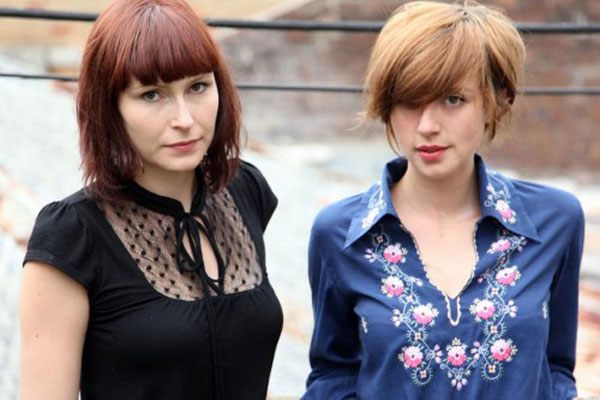
Super Wild Horses are two Melbourne gals who switch between guitar, drums and keyboard. Formed in 2009, they play taut, minimal and decidedly garage based pop music that relies heavily on dual harmonies over sparse arrangements. Following the release of their one sold-out EP in 2009, they have played around Australia with the likes of Eddy Current Suppression Ring, Jon Spencer, The Drones and My Disco, including a much-talked about Golden Plains Sunday morning set.
The band’s debut album, ‘Fifteen’ is a heady concoction of hits, from the softly crushing sunny pop tracks that seduce and mesmerize on contact, to the impossibly catchy, noise-laden numbers that channel these ladies’ choppy expertise of stripped-down tension and texture. Recorded by Eddy Current Suppression Ring’s Mikey Young, this breakthrough album perfectly captures the chunky guitar/drum wallop and ripe vocal melodies. Truly an original sound in these modern times, which reflects nuances of alt-pop heroes from Dolly Mixture to The Breeders to later-era Bikini Kill, with all the hooks in between.
HoZac Records is proud to announce the much anticipated debut album by Melbourne duo Super Wild Horses. It’s rare that such a striking balance between tough and tender can be executed as well as it has on this long-player, bridging post-punk simplicity with savagely primitive propulsion, all wrapped up in a scratchy indie-pop envelope, sealed and delivered right into your vulnerable skull.
In addition to this, they have garnered an international cult following and had a song featured on a Bonds TV commercial.










 The Fat Angel Sings