Liverpool duo Hannah Merrick and Craig Whittle, aka King Hannah have announced their debut LP “I’mNot Sorry, I Was Just Being Me” for February 25th via City Slang. The announcement is accompanied by the release of the new single “All Being Fine”. Originally inspired by Smog and noisy, lo-fi 90s bands, the track pulls the listener in immediately with its upbeat on the outside, sinister on the inside atmospherics, coming across like the aural equivalent of the opening of David Lynch’s classic film “Blue Velvet” – the bloody finger lying in the lush green grass. The video’s sun-drenched visual, directed by Whittle, is a perfect pairing, showcasing the band at their best: enigmatic, mysterious, but blackly humorous with it.
“All Being Fine” sets the stall perfectly for the rest of “I’m Not Sorry, I Was Just Being Me” , drenched as it is in cinematic, often immersive and offbeam soundscapes, punctuated by lyrics that are darkly romantic and thrillingly sardonic in equal measures. Written and then recorded with additional musicians Ted White, Jake Lipiec, and Olly Gorman in just eight months, the LP is a bold, memorable, even startling document of a dream shared, an ambition fulfilled and a vision realized. “I’m Not Sorry, I Was Just BeingMe” is a spectacular debut from the duo and a clear indication this is the beginning of a long, fruitful journey for King Hannah.
King Hannah make music that lives somewhere between the gorgeously meditative pop of Yo La Tengo and the beautiful drama of Sharon Van Etten, the latter of which gave them a co-sign for their 2020 EP. The foundation of “I’m Not Sorry, I Was Just Being Me” lives in Merrick’s, Raymond Carver-Esque realism-inspired lyrics.
Formed in 2017, the duo met waiting tables in Liverpool. Having seen Merrick perform years before and being serendipitously assigned to show Whittle the ropes at the new job, he immediately pestered her to play music with him. A writing routine was formed leading to their debut EP T”ell Me Your Mind And I’ll Tell You Mine”, which garnered early attention from The Guardian, Under The Radar, Brooklyn Vegan, Stereogum and more.
Simon Townshend will be one of the artists playing support at this summer’s BST Hyde Park concert in London on Friday 8th July when Pearl Jam are headlining two days of shows.
Simon has been a close friend of Pearl Jam’s Eddie Vedder for many years and Eddie is a regular guest at Who shows.
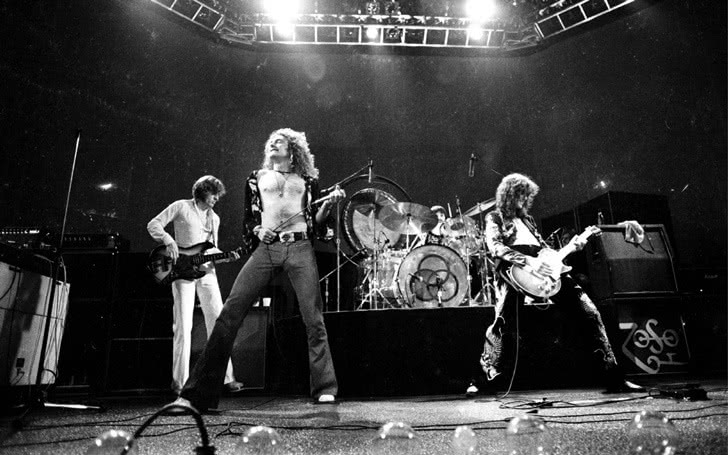
Led Zeppelin released their sixth album “Physical Graffiti” in the UK. Recording sessions had been disrupted when bassist and keyboard player John Paul Jones had proposed quitting the band, supposedly to become choirmaster at Winchester Cathedral, England, although in reality he just needed time to rest after Zeppelin’s demanding tour schedule. The group decided on a double album so they could feature songs left over from their previous albums “Led Zeppelin III”, Led Zeppelin IV” and “Houses OfThe Holy”.
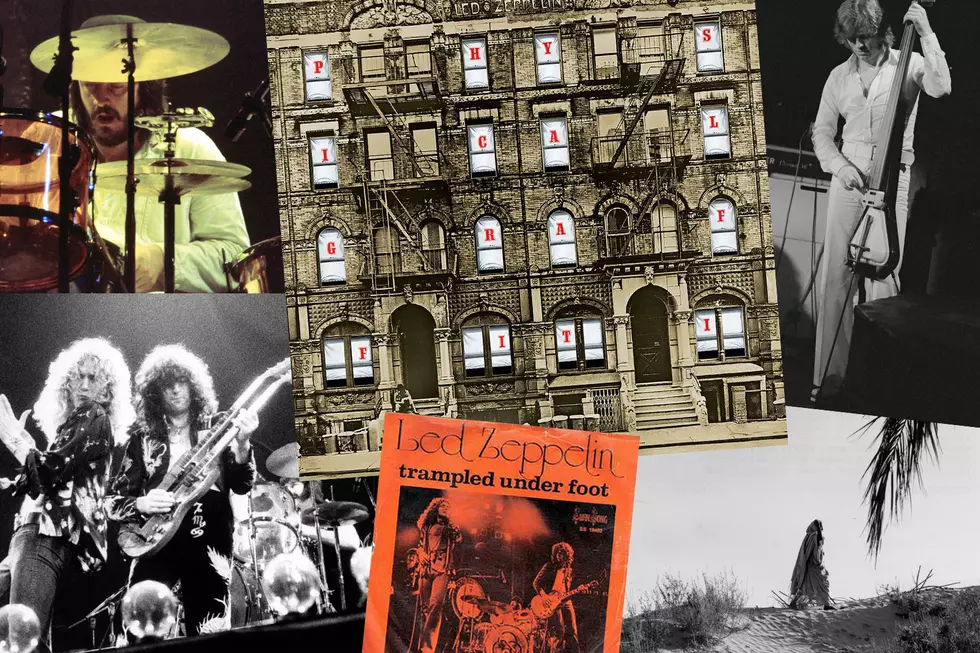
Released as a double album in 1975, Physical Graffiti was the band’s longest and most ambitious record to date. While double albums were already considered hit or miss by this point, fans were undoubtedly cautious about what this 83-minute collection had in store for them. Thankfully, they were not just surprised, but stunned at the glorious package of auditory goodness that was coming their way. The Physical Graffiti sleeve design features a photograph of a New York City tenement block, two five-story buildings located at 96 and 98 St. Mark’s Place in New York City. The images on the interchanging windows of the cover included a picture of drummer John Bonham wearing ladies tights (taken during a Roy Harper gig in London) and both Robert Plant and tour manager Richard Cole in drag – along with an array of legendary faces including: astronaut Neil Armstrong, The Virgin Mary, rock & roll singer Jerry Lee Lewis and German actress and singer Marlene Dietrich.
With songs that span between almost every genre, Physical Graffiti consisted of studio tracks and a handful of outtakes, resulting in a collection that serves almost like a retrospective of the group’s recorded output rather than a studio album. Featuring stunning highlights like ‘Trampled Under Foot’ and the exceptional ‘Kashmir’, there’s a reason that many people point towards this record as the moment at which Led Zeppelin’s career peaked.
Released on the 24th February 1975, Led Zeppelin released this their sixth album Physical Graffiti in the UK. Recording sessions had been disrupted when bassist and keyboard player John Paul Jones had proposed quitting the band, supposedly to become choirmaster at Winchester Cathedral, England, although in reality he just needed time to rest after Zeppelin’s demanding tour schedule. The group decided on a double album so they could feature songs left over from their previous albums Led Zeppelin III, Led Zeppelin IV and Houses Of The Holy.
By the time Led Zeppelin released Physical Graffiti in 1975, they no longer needed to prove anything. “All of us knew that it was a monumental piece of work, just because of the various paths that we’d trodden along to get to this,” says the group’s guitarist and producer Jimmy Page, in one of the music rooms at London’s Olympic Studios where the double-LP was originally mixed. “It was like a voyage of discovery, a topographical adventure.”
After refining the band’s blend of heavy-hitting blues-rock and introspective English folk on their five previous records, Led Zeppelin made Physical Graffiti their victory lap. They were now successful enough to operate their own record label, Swan Song, and the album, their first offering on the imprint was their lengthy battle cry. Clocking in at a little over 80 minutes, Physical Graffiti contained some of their hardest-rocking tunes (“The Wanton Song,”“Custard Pie,” “Houses of the Holy”), trippiest epics (“Kashmir,” “In the Light,” “Ten Years Gone”) and sweetest rock & roll diversions (“Black Country Girl,” “Boogie With Stu”). The record showed Led Zeppelin at both their most excessive and most impressive.
Page has given Physical Graffiti an overhaul remastering the original LP and compiling an album-length bonus disc of alternate mixes and early sketches of the songs on the record. Some are subtle, like the understated rough mix of “Houses of the Holy” and overdub-free version of “Trampled Under Foot” (titled “Brandy and Coke”), and others are drastic, such as “Everybody Makes It Through,” a psychedelic draft of what would become the LP’s portal to other worlds, “In the Light.”
When Page recalls the first rumblings of the album, he remembers the excitement he felt about returning to Headley Grange, the 18th century English estate where the group had recorded its landmark fourth LP. “I knew what we could do at Headley Grange after having had such a rewarding and productive experience there before,” he says. “I knew the secrets of what could be done there.” I knew how we did the drums in the main hall for Led Zeppelin’s fourth album “When the Levee Breaks.” And some numbers would come out of thin air, like for example the way “Rock & Roll” did on the fourth album and then on Physical Graffiti, “Trampled Under Foot,” which came out of thin air like that, just starting out of a riff. I was basically musically salivating on the way there. I was just looking forward to the whole process of everybody being there and just having a whole run at basically working out whatever material I had had or anyone else might’ve had.
I had the ideas for the riff on “Kashmir” the cascading part, which is actually electric 12-string and it’s brass on the record, from something that I had been working on before we even went to Headley. It was another piece of music entirely, and right at the very end of it, while I was playing along, I played the acoustic guitar part in reverse, and there was a sort of fanfare, or the cascades, followed by the riff, and I thought, “Whoa.” It just occurs right at the end. I said, “Oh, boy, I can visualize this. It’s going to be built around the drum kit, and I’m going to get in there with John Bonham.” It’s the first thing that I ran through with him, because I just know that he is gonna love it, and he loves it, and we just play the riff over and over and over, because it’s like a child’s riff. Musically, it’s a round, like “Frère Jacques,” where you can lay things on top of it. That was the idea of having this riff that was gonna be really intense, and probably pretty majestic as well, but quite intriguing. But the fact was, it was going to be built around the sound of Headley, and the drums in the hall. That’s how I heard it, and that’s how I saw it, but I also heard it with orchestra in mind.
It was the first track where we actually heard the complement of a full orchestra on top of the brass, and the strings. We’d used strings on “Friends,” on the third album, just a small string session, but this was really something that was meant to be pretty epic and substantial.
Robert Plant attributed the lyrics to “Kashmir” to a trip you two took in Morocco. It had already been taking on a really magnificent and substantial shape, and Robert said, “You know, I’ve got some lyrics that I wrote when we were in Morocco I’d like to try on this,” and that’s what he did. But that was way after the event of actually having the whole of the structure of the song.
There were three tracks that were left off of the fourth album, and that was “Boogie With Stu,” “Night Flight” and “Down by the Seaside.” If you think about it, you couldn’t have substituted anything off the fourth album with any of those tracks, quite rightly so. Each of them had their own individual charm and character.
“Houses of the Holy” was a track that wasn’t included on the album Houses of the Holy, that was four things straight away [to include]. And, you know, given the chance of having a good run at this writing and recording process, I didn’t want it to be a double-album with any padding on it. It would be a double-album with all character pieces, the way that Led Zeppelin did their music with the sort of ethos of it, if you like, that everything sounded different to everything else. It was the first [Led Zeppelin] album that was going to be on the Swan Song record label that Peter Grant had helped put together for the band with Atlantic.
Having a record label was a really cool idea, because it gave us a chance to showcase people that we really liked and respected, so, as an example, Paul Rodgers’ band, Bad Company, which was one of the first releases and also, the Pretty Things, we all did highly of, and I thought what they did on Swan Song was good.
“Boogie With Stu”
Even perfect albums have their weak links, and “Boogie With Stu” — named after Rolling Stones sideman Ian Stewart, who sat in on this tune — is one of Physical Graffiti‘s. The song has its fans, those who champion its melange of ‘50s rock, clack-clack percussion and Stewart’s boogie-woogie piano, but everyone else can hear why the track sat in the vaults since 1971. Ian Stewart the Rolling Stones session pianist and road manager— revs up this low-key jam, a leftover from the “IV” sessions. (He also played, more famously, on that album’s “Rock and Roll”) Given the hassle that ensued upon release of “BoogieWith Stu,” not to mention the middling quality of the music, it probably should have remained a castaway. “Ian Stewart came by and we started to jam,” Page told Guitar World in 1993. “The jam turned into ‘Boogie With Stu,’ which was obviously a variation on ‘Ooh My Head’ by the late Ritchie Valens, which itself was actually a variation of Little Richard‘s “Ooh My Soul.” What we tried to do was give Ritchie’s mother credit because we heard she never received any royalties from any of her [late] son’s hits, and Robert did lean on that lyric a bit. So what happens? They tried to sue us for all of the song! We had to say bugger off. We could not believe it. So anyway, if there is any plagiarism, just blame Robert.”
“Night Flight”
Another leftover from the fourth album’s sessions, “Night Flight” languished in the vaults for almost four years before being unearthed to pad Physical Graffiti’s double-album ambitions, but that doesn’t mean it’s without merit. Composed primarily by John Paul Jones, whose Hammond organ dominates the song, “Night Flight” boasts a memorable lyric by Robert Plantabout a young man trying to avoid the Vietnam draft. Over Page’s twangy, luminescent chords, Jones’ rippling Hammond organ and Bonham’s funky drum groove, Plant recounts the story of a draft dodger fleeing the prospect of war for a train ride into the unknown. The song’s nifty instrumental flourishes (see Jones’ rapid-fire bass notes around 2:39) offer some forward motion, but it’s easy to understand why they shelved it during the sessions for Led Zeppelin IV.The group never played “Night Flight” live, unless you count a sloppy July 1973 soundcheck during the Houses of the Holy tour. At least Jeff Buckley, a noted Zeppelin devotee, dusted it off two decades later for a solo guitar version found on the deluxe Live at Sin-é LP.
“Bron-Yr-Aur”
“Bron-Yr-Aur” returned listeners to the remote cottage nestled deep in the Welsh countryside where Jimmy Page and Robert Plant (whose parents owned it) composed the bulk of 1970’s “Led Zeppelin III”. And just as that landmark album provided a welcome creative departure in the group’s career, this spartan but strikingly beautiful acoustic performance by Page does for the predominantly electrified proceedings on Physical Graffiti. This acoustic guitar instrumental, a moment of calm within the free-for-all of Physical Graffiti, reflects Page’s fascination with the British folk revival. And if it sounds a bit out of step with the rest of album, there’s a reason — the track dates date to the Led ZeppelinIIIsessions, and it’s named after the Welsh cottage where they wrote much of that record. Page plays an open C-style guitar tuning, his dreamy fingerpicking accentuated with huge dollops of reverb. “It’s a C[-type] tuning but not a C tuning,” he noted in 2010’s Led Zeppelin – III Platinum Album Edition: Piano/Vocal/Chords. “I made it up.”“Bron-Yr-Aur” their shortest-ever song at a little more than two minutes — never became a live staple, though Led Zeppelin played it for a brief period during the acoustic set on their sixth American tour in summer 1970. More famously, it appeared on the soundtrack to their experimental 1976 concert film, “The Song Remains the Same”.
“Sick Again”
Tucked way at the very end of Physical Graffiti, “Sick Again” is nevertheless a corker of a band performance, pushed into overdrive by Jimmy Page’s slippery guitar and John Bonham’s merciless drum assault. Like its lyrics, in which Robert Plant takes pity (well, not that much pity) on the hordes of groupies that would nightly sacrifice themselves to their rock gods, the music leaves listeners clamouring for more. Outside of the shifting time signature and Bonham’s cymbal-heavy drumming, “Sick Again” is one of the most straightforward rockers from this period of Zeppelin history. Somehow Plant’s vocal still gets buried in the mix, masking a lyric inspired by encountering very young groupies on tour.”It’s a shame, really — if you listen to ‘Sick Again,’ the words show I feel a bit sorry for them,” Plant said in 1975. “‘Clutching pages from your teenage dream in the lobby of the Hotel Paradise/Through the circus of the L.A. queen, how fast you learn the downhill slide.’ One minute she’s 12 and the next minute she’s 13 and over the top. Such a shame. They haven’t got the style that they had in the old days … way back in ’68.”
“Black Country Woman”
“Black Country Woman”s backstory is arguably more intriguing than the song itself, which was recorded in Mick Jagger’s backyard during the “Houses of the Holy”sessions, where it captured the sound of an airplane overhead, giving new meaning to the concept of field recordings. Lyrically, the song simply transplants a classic cheating-woman blues motif to Plant and Bonham’s origins in England’s “BlackCountry.” This acoustic lark, originally titled “Never Ending Doubting Woman Blues,” opens with production chatter, an airplane passing overhead and Plant requesting that they leave in the noise. No moment better encapsulates Physical Graffiti’s “let’s get weird” aesthetic than that random intro: LedZeppelin, aiming to experiment, recorded the song during the Houses of the Holysessions, hauling their gear into the garden of Mick Jagger‘s country home, Stargroves. “Black Country Woman” is a bottom-tier Zeppelin cut with a generic blues riff, but Bonham’s massive drumming salvages the recording.
“The Wanton Song”
It may not be the brightest light on Physical Graffiti, but with its overdriven guitars and relentless riff, “The Wanton Song” showcases Led Zeppelin working in their fundamental, frill-free heavy rock element. With Jimmy Page as its driving force, the song’s forceful musical bed (including a mildly dissonant counterpoint riff midway through) is perfectly suited to the lusty and uncensored sexual conquest of its lyrics. Before the band began its Headley Grange sessions, Page had already worked out the foundations of several tracks at his home multi-track studio: “Ten Years Gone,” “Sick Again,” the bulk of “Kashmir” and this funky cut. “The Wanton Song” was one of the first riffs they fleshed out as a band, and Bonham’s crunching kick-drum accents elevated the groove to near-classic status.
Looking back decades later, Plant wasn’t satisfied with his vocals on the studio version, calling them “almost unfinished” in Led Zeppelin by Led Zeppelin. Perhaps that’s why the singer revived the song numerous times over the years, both with Page and as a solo artist. (He even used it to open his set at Bonnaroo 2015.)
“Down by the Seaside”
‘Down By The Seaside’ was heavily influenced by Neil Young’s ‘Down By The River’. It was recorded in 1971 and was intended for release on ‘Led Zeppelin IV’ but was held for ‘Physical Graffiti’. At the absolute opposite end of the sonic spectrum from “The Wanton Song” (and thus representative of the turn-on-a-dime song writing fearlessness that made Zeppelin so lovable), “Down by the Seaside” is a wistful fantasy awash in trembling guitars and bluesy electric piano breakdowns. And that’s before it briefly transforms into a completely different tune halfway through; like an instance of song writing Jeckyll and Hyde, the likes of which kept Led Zeppelin fans ever on their toes. Few Led Zeppelin songs qualify as “breezy,” but here’s an exception. Page and Plant first wrote the laid-back “Down By the Seaside” as an acoustic number in 1970, later reworking it as an expanded electric cut during sessions for their fourth LP. It’s obvious why they left it on the cutting-room floor for five years what song could this have possibly knocked off III, IVor Houses of the Holy? But it makes sense within the eclectic stew of Physical Graffiti. Zeppelin never played it live, but Plant did cover “Seaside” with Tori Amos for the 1994 tribute LP, “Encomium”.
“Houses of the Holy”
Another session holdover, this time from the 1973 album that bears this name, “House of the Holy” is a timeless Led Zeppelin number that wouldn’t have sounded out of place on any of their LPs. But we’ll gladly celebrate its inclusion on Physical Graffiti, where it provides a grounding presence to the oft-experimental surroundings with the help of John Bonham’s squeaky drum pedal so perfect the band didn’t even feel the need to “fix” it in the final mix.
Not even Bonham’s annoyingly squeaky kick drum pedal can derail this lightning bolt of a song, a leftover from their previous album of the same name. What an embarrassment of riches only a band at a peak this lofty could shelve one of the catchiest songs in its entire catalogue .Once you dig in Page’s stammering funk riffs and Bonham’s cowbell-heavy groove, you’ll notice the weirdness of Plant’s lyrics — a hybrid of his most juvenile sex metaphors and nerdiest fantasy imagery (“There’s an angel on my shoulder/In my hand a sword of gold/Let me wander in your garden/And the seeds of love I’ll sow“).(Though Bonham’s “Squeak King” pedal, a nickname for his Ludwig SpeedKing, is famously audible throughout, it’s even more noticeable on other songs, including “The Ocean” and “Since I’ve Been LovingYou.”
“Custard Pie”
Leave it to Led Zeppelin to kick off the album many consider their magnum opus with a simple recipe for one of their favourite desserts. Wait, what? Yes, the song is actually about sex (as usual), despite it collecting a clever pastiche of vintage blues lyrics (from Robert Johnson, Blind Boy Fuller, etc.) over JohnBonham’s rock-solid foundation and Jimmy Page and John Paul Jones’ dueling guitar and Clavinet riffs. And did we mention the absolutely massive, continent-sized groove?.
“Custard Pie” Robert Plantcranks up the sexual bravado and bluesy swagger to the max on Physical Graffiti‘s opener, barking out cheap innuendo over Page’s tightly coiled riff, John Bonham’s booming drums and John Paul Jones’ funky Clavinet-and-bass combo. The singer even throws in a harmonica solo, rounding off a classic full-band showcase. But looking back, Plant was never fully satisfied with the track.”
On ‘Wanton Song’ and ‘Custard Pie,’ there are things that I can hear that are almost unfinished,” he admitted in the 2018 book Led Zeppelin by Led Zeppelin. “Hindsight is a cussed bedfellow, but it’s great to fly in the face of it all and meld something tangible, a kind of union between the intent of the much and some sort of vocal release. … Some songs are finished, some songs aren’t.
Even now. Led Zeppelin never played this one live, unless you count the informal, partial reunion — staged one decade after Bonham’s death at the 1990 wedding of the late drummer’s son Jason.
“Trampled Under Foot”
This may prove to be a rather contentious choice this low in the rankings of Physical Graffiti songs, but “Trampled Under Foot” is a singular cut in Zeppelin’s canon, since John Paul Jones’ hypnotic funk-inspired Clavinet riff, rather than Jimmy Page’s guitar, drives it. Nevertheless, the tune has snagged more radio airplay than almost any other Physical Graffiti song, and is apparently one of Robert Plant’s favourites, to boot. Easily the funkiest Led Zeppelin song, “Trampled Under Foot” finds Plant tapping into the same car-metaphor model that Robert Johnson flaunted on 1936’s “Terraplane Blues.” But the groove is king: The song which Plant, Page and Jones developed under the working title “Brandy and Coke” could easily exist as an instrumental, highlighted by the interplay between Bonham’s primal thud, Page’s stabbing licks and Jones’ greasy Clavinet. The track, which developed from a spontaneous jam, is a perfect showcase for Jones’ underrated keyboard work. Many critics have compared it to Stevie Wonder‘s equally infectious pattern on “Superstition.” I suppose you could — I wouldn’t say that it was a sort of Stevie Wonder-like thing, but other people could,” Page has said . “Actually, the more I think about it, I see why other people do say that.”
“The Rover”
A quintessential Led Zeppelin hard rocker, “The Rover” matches a menacing Jimmy Page lick with JohnBonham’s reliable pounding and John Paul Jones’ busy bass work, while Robert Plant muses about life on the road with one of the world’s most powerful touring machines. Seems simple, right? Well, it is, but only the greatest talents can turn simplicity into amazement, and that about sums up the enduring wonder that is Led Zeppelin.
“The Rover” is a fitting title for this bruising blues-rocker, which took time rounding into shape. Page and Plant recorded a hilariously sloppy acoustic demo at Headley Grange in 1973, but they reconstructed the tune into its greasy electric arrangement during the Houses of the Holysessions (alongside “BlackCountry Woman” and “D’yer Maker”). After it didn’t make the final cut of that LP, Led Zeppelin revived “The Rover” for Graffitiwith some remixing and fresh overdubs. (The sleeve credit “Guitar lost courtesy Nevison. Salvaged by the grace of Harwood” is likely a reference to mixing difficulties, using the last names of engineers Ron Nevison and Keith Harwood.) Despite the rough gestation and its absence, in full form, from a live set list
“The Rover” became a favourite for both Page and Plant. Songs like ‘The Rover,’ for example, everything worked,” Plant said. “The marriage between my lyrical intention, the way I sang it and the way those guys played, there were many times like that. I thought it all worked, there couldn’t have been any more that I could have added, or more that I could have taken away to make it work as a consummate finished article.
In 2015, Page praised the song’s defining “whole guitar attitude swagger.” “I’m afraid I’ve got to say it, but it’s the sort of thing that is so apparent when you hear ‘Rumble’ by Link Wray — it’s just total attitude, isn’t it?” . That sort of thing … is sort of probably in my DNA to be honest with you.”
“In the Light”
One of Physical Graffiti’s best-loved epics, “In the Light” features the sort of song writing innovation and clever instrumental gimmicks that set Led Zeppelin apart from every other heavy rock band of the ‘70s and beyond. John Paul Jones’ synthesizer intro is backed by Jimmy Page sliding a violin bow across his guitar to create a droning effect. The ensuing sequence of counterpoint melodies and riffs strung out over John Bonham’s deliberate beats and underneath Robert Plant’s soaring wails comprise a kaleidoscope of sound with few parallels in the classic-rock world.
One of Led Zeppelin’s most prog-leaning tracks, “In the Light” developed from a similar rehearsal piece called “In the Morning” (available in bootleg form) and another, more polished take later issued as “Everybody Makes It Through” on Physical Graffiti‘s deluxe reissue. Jones, Page and Plant all contributed to the writing, and it’s a true full-band effort just take the droning intro: a mingling of Page’s bowed acoustic guitar, Jones’ colourful synthesizer solo and Plant’s stacked vocals, which Page told Rolling Stone remind him of “some choral music that I had heard from the Music of Bulgaria.” But there’s a surprise around every other corner, as a series of winding riffs navigate darkness into light.
In the liner notes for the band’s 1993 box set,The Complete Studio Recordings, Plant ranked the song among the band’s “finest moments,” along with “All My Love” and “Kashmir.” Despite their satisfaction, they never played “In the Light” live.
“In My Time of Dying”
Zeppelin’s greatest epic, all 11 minutes of it, brings the first side of Physical Graffiti to an awe-inspiring blues workout, almost as if the band was daring fans to flip the record over and see what wonders lay beyond. Let’s celebrate Jimmy Page’s extensive slide guitar vamps across “In My Time of Dying” along with John Bonham’s intentionally reverb-drenched drum sound, based on the same effect used on the fourth album’s “When the Levee Breaks.” ‘In My Time of Dying’ is a reworking of Blind Willie Johnson’s‘Jesus, Make Up My Dying Bed’ from 1927. Another variation of the song was recorded by Bob Dylan.
Bob Dylan covered this spooky gospel spiritual on his 1962 debut, moaning about death and ascension over a creaky acoustic guitar pluck. But Led Zeppelin transformed the traditional piece into an epic on par with “Stairway to Heaven” stacking riff upon riff into a staggering monolith. Page took great pride in the song’s vast dynamic range the development from crawling slide-guitar licks to explosive, metallic grooves. Fittingly, it’s one only two tracks on the album (along with the laid-back blues of “Boogie WithStu”) credited to the full quartet. “There were no edits or drop-ins or overdubs to the version you hear,” the guitarist said. “This is Led Zeppelin just going for it for an 11-minute song with all the changes in it and everything and the musical map that you have to remember when it goes 1-2-3-4, tapes rolling.”
There was a hell of a lot to sort of remember along the way, but we were up for all of this,” he told In the Studio With Redbeard, noting how he deliberately avoided listening to much popular music to preserve his sense of curiosity. This song, “so radical relative to any sort of blues that anyone else had done,” defines that originality.
“Ten Years Gone”
With all due respect to “Stairway to Heaven,” Led Zeppelin never crafted a more musically and emotionally satisfying power ballad than “Ten Years Gone”. With its brilliantly arranged contrasts of heavy and light, aching vocal performance by Robert Plant and panoramic sweep leading up to its final crescendo, this is a veritable song writing clinic by the masters of the craft. Everything that should have been put in was, and everything that should have been left out was too. The end result is absolute perfection.
“Ten Years Gone” is a true balance of Page and Plant, weaving the guitarist’s cinematic riffs with the singer’s introspective lyrics. “There’s a number of sections on ‘Ten Years Gone’ and movements, and I’d already sort of constructed all of this before going in,” Page said of the song’s layered arrangement.
Plant tapped into the track’s core wistfulness by drawing on a personal tale of doomed love. “I was working my ass off before joining Zeppelin,” he said “A lady I really dearly loved said, ‘Right. It’s me or your fans.’ Not that I had fans, but I said, ‘I can’t stop, I’ve got to keep going.’ She’s quite content these days, I imagine. She’s got a washing machine that works by itself and a little sports car. We wouldn’t have anything to say anymore. I could probably relate to her, but she couldn’t relate to me. I’d be smiling too much. Ten years gone, I’m afraid.” “Ten Years Gone” become a live favourite, but, like many of Zeppelin’s more elaborate pieces, it proved difficult to replicate. In an effort to flesh out the tune, Jones played a triple-neck instrument with a six-string guitar, 12-string guitar and mandolin, all while playing bass pedals with his feet.
“Kashmir”
When you think ofPhysical Graffiti, “Kashmir” tends to be the first and last song that comes to mind. As colossal as the Zeppelin legacy itself, “Kashmir” captures all four band members at the peak of their talents: You have Jimmy Page’s unconventional DADGAD tuning inspired by similar modal Arabian ones; Robert Plant’s vivid impressions of his travels across Northern Africa; John Bonham’s thunderous but meticulously planned percussion; and John Paul Jones’ orchestral arrangement, both for real strings and his Mellotron. The final achievement is mesmerizing, majestic, mind-blowing. “Kashmir” remains an indestructible cornerstone of classic rock.
It’s the most majestic Led Zeppelin song not named “Stairway to Heaven” and its roots are suitably elaborate. Page developed the track’s symphonic arrangement from the seed of a previous piece dating back before the Graffitisessions, using the cascading guitar fanfare to develop a brand new epic.
“I had a particular idea for a mantric riff with cascading overdubs,” the guitarist recounted inLed Zeppelinby Led Zeppelin. “I started playing the riff with John Bonham and we just locked in played it nonstop. It was so infectious, such a delight and just so us. I overdubbed the electric 12-string to what was later the brass parts; I had visualized this piece as being mighty, orchestral, even threatening. When I heard the playback of myself and drums, I knew this was truly innovative. This is the birth of ‘Kashmir” Page and Bonham built off the vast reverberations of the drum sound captured in the Headley Grange hallway — the drummer’s contribution was so crucial, he wound up with a co-writing credit. Page expanded the stark riffs with brass and strings; Jones added an eerie mellotron; and Page crafted a vivid lyric inspired by a recent drive through south Morocco — not, as the title might imply, the Indian region of Kashmir.
“It’s one of my favourites,” the singer wrote in the liner notes for 1993’s The Complete StudioRecordings box set. “That, ‘All My Love’ and ‘In the Light’ and two or three others really were the finest moments. But ‘Kashmir’ in particular. It was so positive, lyrically.” Page concurred: “There have been several milestones along the way,” he said in 1977. “That’s definitely one of them.
“Physical Graffiti” received glowing reviews, Rolling Stone said the double album was “the band’s Tommy, Beggar’s Banquet and Sgt. Pepper rolled into one: Physical Graffiti is Led Zeppelin’s bid for artistic respectability.” Billboard magazine’s 5-star review stated: “(Physical Graffiti) is a tour de force through a number of musical styles, from straight rock to blues to folky acoustic to orchestral sounds.” In 1998 Q readers voted “Physical Graffiti” the 28th-greatest album of all time.
Certified 16x Platinum in the U.S., the commercial success of Led Zeppelin’s “Physical Graffiti” was equalled by its critical reception. Generally regarded as one of the greatest double albums of all time, the set has been hailed by the likes of Rolling Stone, Mojo and the Rock and Roll Hall of Fame. The band’s first release on its Swan Song label, the collection represents a creative tour de force that explores the group’s dynamic musical range, from the driving rock of “Custard Pie” and acoustic arrangement of “Bron-Y-Aur Stomp” to the Eastern raga of “Kashmir” and funky groove of “Trampled Under Foot.”
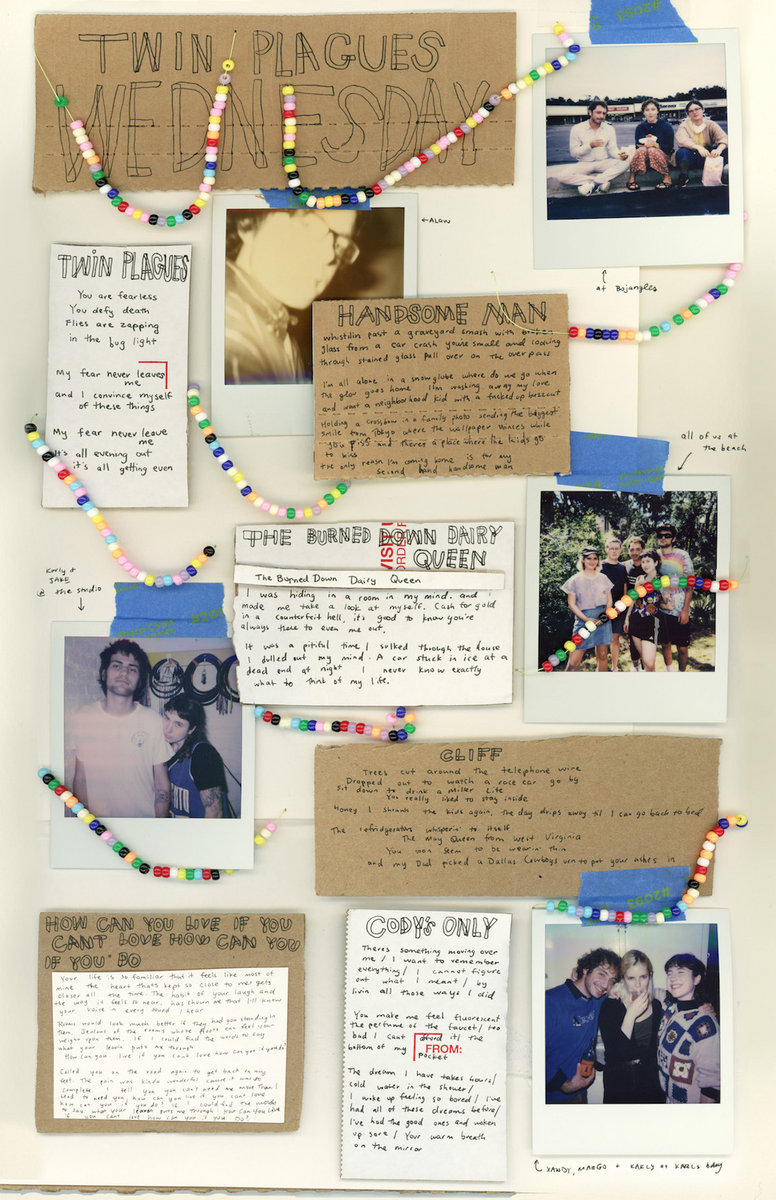
I love Twin Plagues first for its songs, plainly. If you, listening to Wednesday for the first time around or even the second time around, stumble onto this album, I promise you the songs will be what grab you first, beyond any of my foolish high-level emotional theorizing or projections. Every band that loves the pursuit of their craft the way this band does is one to follow, because getting to sit on the side-lines and watch them level up is a real generosity. Twin Plagues is overflowing with hooks, but what most delighted me about the band from the start has taken a leap: they have managed, somehow, to get even better at structuring their noise from one movement of a song to the next. The idea of the “song” itself is flexible in their hands, so much so that each song holds two, or three songs within.
This, again, generosity. “Cody’s Only” is a ballad until it begins to threaten a storm of volume, and then, in its final act, it becomes something else altogether. “One More Last One” is a shoegaze-y trip that swells and swells until it overflows, but it doesn’t stop. It keeps offering and offering and offering. I say “noise,” and never in a dismissive sense. Everything has a place, and so much of its place is to serve the true heart of this album, and the true heart of Wednesday’s music, which is allowing cracks through which tenderness can enter and exit as needed. Tenderness that, it seems to me, is always wrestling underneath whatever else might be happening on a song’s surface.
What I also hope you, listener, might adore about this album is the exact moment at the start of “The Burned Down Dairy Queen” when Karly sings I was hiding in a room in my mind / and I made me take a look at myself. So much of these songs meditate on the past in far less romantic ways than I have found myself meditating on the past, and I was desperate for the recalibration that this album provided. I was desperate for making myself less blurry in my own memories and reckoning with my full, multitudinous self. The self that was once unkind, or less gentle, or less curious than I am now. I needed this album to remind me to embrace the fullness of my unfinished nature, the years I have lived and – with any luck – the years I have to go.
So, yes, the songs are good. You will maybe roll down your windows on a comfortable day on the right stretch of road in a warm season and turn the volume up when “Birthday Song” gets good and loud and sing-along-able. You might sit atop a rooftop at night, closer to the moon than you were on the ground, and let “Ghost Of A Dog” churn and rattle you to some night time realization that you couldn’t have had in silence.
Vocals/ Guitar: Karly Hartzman Guitar: Jake Lenderman Lap Steel/ Vocals on “One More Last One”: Xandy Chelmis Bass : Margo Schultz Drums: Alan Miller
Songs Written by Karly Hartzman with the exception of “One More Last One” which is written by Xandy Chelmis, “Three Sisters” which is co-written by Jake Lenderman & “Ghost of a Dog” written by Edie Brickell and Kenny Withrow
Songs Arranged by Wednesday Released August 13th, 2021
Girlpool’s new album Forgiveness is out in April via ANTI-Records, and the latest single is the mellow, tuneful “Dragging My Life Into a Dream.”
“I wrote ‘Dragging My Life Into a Dream’ after going out to a party,” Avery Tucker says. “I had spent the last year confronting being on my own in a way I had been avoiding for a long time. Although I knew that I was growing and still needed to heal from past relationships, I missed feeling connected to somebody and inspired. This song is about romanticizing a past time and also longing for my heart to feel open and innocent again.”
In the visual, Tucker plays a store clerk who drifts into daydreams of wearing a white linen suit and lounging on the beach. He sings about imagining a past lover at a party as he contemplates a time before the pain and heartache: “I want my innocence back, I don’t wanna be this bad / But I’m so insecure these days / Still chasing the heart I pushed away.” With a wistful tone and gentle guitars, “Dream” reflects upon the harsh reality of growth, letting the mind drift into bittersweet memories from time to time.
The LA-based duo of Avery Tucker and Harmony Tividad, who make music together as Girlpool, are getting ready to release their fourth album, titled “Forgiveness“, which is out April 29th on ANTI- Records. Following 2021’s “Faultline” and “Lie Love Lullaby” from last month, they’ve now shared the third single from the release “Dragging My Life Into a Dream” with a self-directed video.
Over the course of eight albums and over 15 years together, the Baltimore based dream pop duo Beach House has come to be associated with certain concepts. Mystery, the curious nature of love and existence, the idea that there’s a bit of life in even the littlest things—that’s the essence of what Victoria Legrand and Alex Scally create together. So when the two repeatedly describe their songs as entities with their own agency and mindsets in our conversation, it totally tracks. “Songs tell you what they want,” Legrand says at one point. “That song refused to be grown,” Scally says later as we’re discussing “Hurts toLove,” a highlight of Beach House’s eighth LP and first double album, “Once Twice Melody“.
The product of three years’ work, “Once Twice Melody” takes Beach House in more new directions than ever before and that’s a big deal given that, for close to a decade, the duo’s calling card was its consistency. Through the lo-fi crackle of 2008’s “Devotion“, the blue notes of 2010’s yearning “TeenDream”,or the gleaming, sky-reaching sounds of 2012’s “Bloom“, you just knewyou were hearing Beach House. Scally’s triplet guitar arpeggios, Legrand’s husky “oohs”and “aahs,” the steady whirr of bleary synths, lyrics that evoke feelings and, at their most concrete, loosely tell stories—these elements remained the core of Beach House for nearly a decade.
2018’s “7 “shifted things somewhat. It felt more indebted to the roaring side of shoegaze, whereas the duo’s previous music hewed closer to the side of the genre more focused on its transfixing qualities. On “Once Twice Melody“, the duo continues expanding its boundaries and delivers a towering collection whose diversity is largely the source of its excitement. Where “Hurts to Love” is the first Beach House song that might make you want to dance, “Masquerade” is a moon-streaked burst of arena-ready, industrial-flecked pop, and “Sunset” is a dusky acoustic ballad. The album’s 18 songs are a reminder of something Beach House devotees have always known: Scally and Legrand can conjure magic from melody in virtually any form.
Amid “Once Twice Melody’s” variations, Beach House remains rich in texture, overflowing with imagistic lyrics open to interpretation, and immersed in wonder and awe.
Although the New Riders of the Purple Sage are often grouped among the pioneering country-rock bands of the late ’60s and early ’70s like Poco, the “Flying Burrito Brothers“, the “Sweetheart of the Rodeo ” period Byrds, and even Dylan himself with his John Wesley Harding and “Nashville Skyline” albums but theirs was a different undertaking. While country and rock did indeed reside at the core of their sound, anchored by pedal steel guitar and the twangy fretwork of lead guitarist David Nelson, NRPS as their name has always been abbreviated was born of another sensibility, one that shared much with their friends and mentors the Grateful Dead.
Like the Dead, the origin of the New Riders is traceable directly to the folk music scene centred in the region south of San Francisco encompassing San Mateo and Santa Clara counties, in particular the city of Palo Alto. During the early ’60s, the area was a hotbed for aspiring folkies and bluegrass connoisseurs, many of whom banjoist/guitarist/vocalist Jerry Garcia, singers/songwriters/guitarists David Crosby, Paul Kantner and Jorma Kaukonen and others traded ideas as they worked the local clubs.
By 1965, with the advent of the Beatles, the calling of rock and roll was too tempting to resist: Crosby was going strong with the Byrds, Garcia had co-founded a band initially calling itself the Warlocks (soon to become the Grateful Dead); and Kantner and Kaukonen had just launched (along with singer MartyBalin) a rock outfit they called Jefferson Airplane.
San Francisco itself served as ground zero for the psychedelic culture that began shifting from well-kept secret to international phenomenon during this time, luring thousands of young people to the area these musicians enjoyed while performing at venues like the Fillmore Auditorium and the Carousel Ballroom in the city.
Numerous rock bands, most based either in the Bay Area or the vicinity of Los Angeles, looked to country music as a refuge from the sizzling, cranium-searing electricity of what was being labelled acid-rock or psychedelic music a desire to simplify life seemed to go hand in hand with the lonesome sound of steel guitars, fiddles and songs touting the richness of a rural, less encumbered lifestyle away from the clatter of the city
The ever-restless, hyper-prolific JerryGarcia counted himself among those looking for new outlets. Although the Grateful Dead were arguably at their most experimental and electric at the time, he began learning to play the pedal steel, an instrument inextricably associated with country music. He incorporated it into Dead concerts but that avenue didn’t allow him to fully explore its potential.
He teamed up with his Peninsula friend Nelson, who had been keeping busy with a group called the New Delhi River Band, and singer-songwriter John Dawson, who went by the nickname Marmaduke. Working up songs largely written by Dawson, as well as some choice covers, the trio also had assistance from Dead bassist Phil Lesh and drummer Mickey Hart and morphed into the New Riders of the Purple Sage, taking their name from the 1912 Western novel Riders of the Purple Sage by Zane Grey.
With Dave Torbert (who had been a member of the New Delhi outfit) replacing Lesh on bass, the quintet began gigging around the Bay Area in 1969 and, by the spring of the following year, opening for the Dead on tour. A typical gig of the period might find the Dead beginning a concert with an all-acoustic set, followed by the New Riders and finally the electric Dead: with Garcia participating in all three configurations, he might keep busy onstage for upwards of six or more hours.
As the New Riders gained in popularity in their own right, and with the Dead finding a wider audience via their acoustic-based 1970 albums “Workingman’s Dead” and “American Beauty“, it was not long before record companies began sniffing around. Columbia Records, run by the renowned Clive Davis, signed the group and they went into San Francisco’s Wally Heider Studios toward the end of 1970 to record their debut album, self-producing with the help of engineer Stephen Barncard. They ultimately laid down 10 original Dawson compositions that varied in style and temperament, drawing nearly all of the songs from their live setlists.
The album, self-titled, was the only official NRPS release to feature Garcia on pedal steel, and as such it serves as a shining example of his uncanny ability both to absorb the traditional techniques.
There would be one more personnel change as the album sessions were underway, however: Drummer Mickey Hart was out (he also left the Dead for a period of four years), and Spencer Dryden, who had driven Jefferson Airplane during that band’s prime years of 1966-70, was in. He proved a better fit, a steadier, more rock-solid sticksman than Hart, less prone to tossing in offbeat, sometimes ill-considered percussive accents. Hart appeared on two tunes, “Dirty Business” and “Last Lonely Eagle,” both of which also featured pianist George “Commander Cody” Frayne, the leader of the rising local band Commander Cody and His Lost Planet Airmen.
Dawson was the primary creative force of the New Riders of the Purple Sage. As sole composer and lead vocalist throughout the album, this was his vision. The album’s lead track, “I Don’t Know You,” also served often as the opening number during the group’s concerts. A melodic, uptempo rocker, it tells a simple but mysterious tale of a woman appearing in the protagonist’s life unexpectedly, or maybe not: “I don’t know you, you’ve been lately on my mind,” sings Marmaduke as Nelson and Torbert join in harmony, but soon after he’s telling another story: “Come sit beside me, I’m not sure if you’re still there.
“Whatcha Gonna Do,” which follows, slows the pace, the singer again musing on a woman of no fixed presence: “Where you gonna go on the planet today?” he asks to a springy rhythm, then leaves her appearance to chance: “Take a look around ya now and what do you see?/If you could go somewhere’s else now, where would that be?/When you find a place to hide, come and tell me where it is now/I’ll still be sitting here, singing in the air.”
A long time staple of the band’s live shows, “Portland Woman” is an oft-told but usually not quite as frankly tale of a traveling musician’s yearning for temporary companionship: “If I don’t find someone tonight, I just won’t make it through,” Dawson laments. He heads back out on the road the next day, but this time he’s having second thoughts: “The little girl that I had found, her I left behind/But I haven’t felt too good since I left Portland yesterday/I’m going back to Portland town now, what more can I say?” he sings with longing and firmness in his voice.
Another NRPS perennial, and a guaranteed crowd-pleaser, was “Henry” is an unabashed tribute to a high-volume smuggler of weed heading toward Acapulco, then back to the States through the rugged mountains of Mexico, to the “50 people waiting back at home for Henry’s load.” One of the speedier songs on the album—reflecting Henry’s “fast, fast, fast” driving down the “twisty mountain roads”—it was always a fun romp, packed with crisp country licks from Nelson and a playful, bluegrass-y pulse from the rhythm section, that gave the band’s drug-happy fans an opportunity to celebrate a very different kind of outlaw than those usually found in country tunes.
“Dirty Business” is he album’s most unorthodox tune, a showcase for the extreme sounds that Garcia had already discovered he could get out of his pedal steel. At times taking it so far from country music as to be nearly unrecognizable haunting, eerie, unsettling sounds, just plain nasty his performance here is the epitome of his visionary approach to the instrument. Garcia gives the ballad a sense of foreboding and dread that its lyrics of the “dirty business” perpetrated behind the scenes at a coal mine where frustrated workers and management are at odds.
An age-old country music standby story of the great train robbery is next. “Glendale Train”—which reprises the band’s favoured stepped-up bluegrass tempo and features Garcia returning to the banjo, is one of several tunes on the recording that find the Dawson-Nelson-Torbert trio engaging in harmonies.
In 1971, songs warning of impending environmental cataclysm were few and far between, but in “Garden of Eden,” Dawson was on it. The “cool clear water ain’t quite as cool and clear as it out to be,” he proclaims, and there’s “smoke fillin’ everywhere.” We “live in the Garden of Eden,” he reminds us, “don’t know why we want to tear the whole thing to the ground.” Sad to say, those who could do something about it didn’t—the song, despite its pretty melody, is just as relevant today as in 1971.
“All I Ever Wanted” is a thing of beauty, a tender, sensitive love song which gives Garcia an outlet to display the most tear-jerking sounds that can be coaxed from a pedal steel guitar. Marmaduke’s vocal performance can’t exactly be called a croon, but the soft edges he brings to the lyric how much more to the point does it get than “All I ever wanted was your loving?” define the sound of affection.
It’s followed by “Last Lonely Eagle,” one of the most powerful songs on the album and another that was years ahead of its time. With stellar vocal harmonies driving the appropriately uplifting chorus, and a sense of drama balancing out its discomfiting message, Dawson writes of those who’ve “forgotten their dreams and they’ve cut off their hair” (hello, David Crosby!), while imploring us to “Take a last, flying look at the last lonely eagle/He’s soaring the length of the land/Shed a tear for the fate of the last lonely eagle, for you know that he never will land.”
Finally, there’s the stomping “Louisiana Lady,” in the grand tradition of a road warrior trucker our intrepid traveller has been on the road for a full week, “so beat my vision’s just a yellow haze.” If he pops a little speed and drives faster, he can cut an hour off the time on his way to New Orleans, where “it’s gonna be worthwhile, I’m gonna see my lady smile.” Another crowd-rouser in concert, the song, like several of its predecessors, features stunning harmony and a vibe that’s somewhere between hardcore hippie and good ol’ American traditional music,
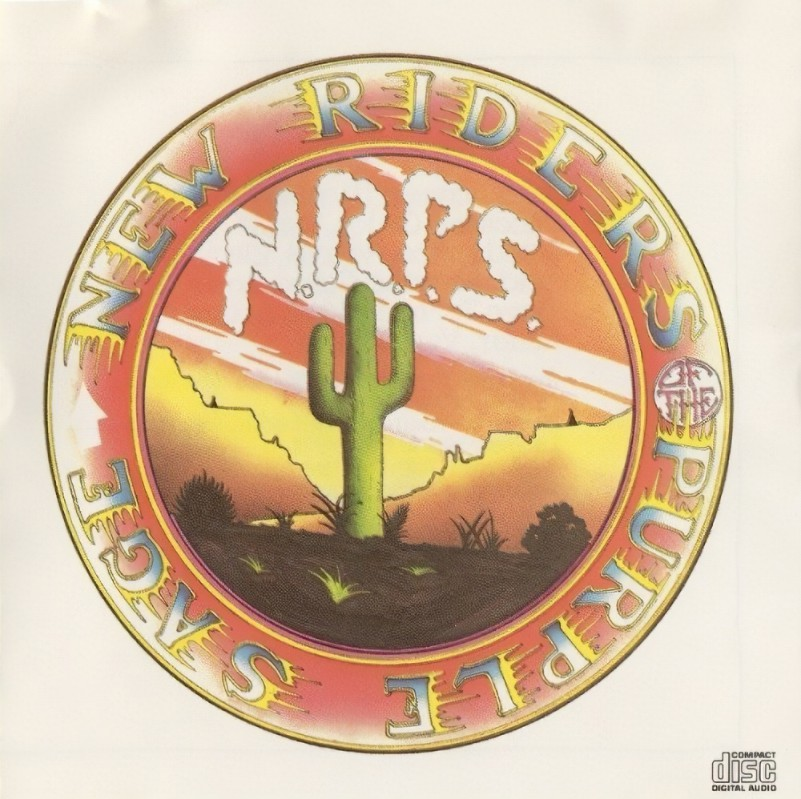
Released in August 1971, the album featured, on its cover, the band’s striking red, white and blue, and orange and gold, logo a green cactus standing tall at its centre that would become familiar to all of its fans. the album helped establish the New Riders as an entity apart from the Grateful Dead, although they would continue to open shows for the more successful band for years, even while touring on their own. The 1972 follow up, “Powerglide”, Garcia would bow out of the group, concentrating full-time on the Dead, replaced by Buddy Cage on steel the band had seen him performing with Canadian folkies Ian and Sylvia.
Sadly, all but one of the key members of the 1971 New Riders—Garcia, Dawson, Torbert and Dryden all have passed. Only Nelson still survives, still leading a NRPS group while also performing with his own David Nelson Band. Their debut album remains an invigorating, prescient listen more than 50 years after its release.








 The Fat Angel Sings