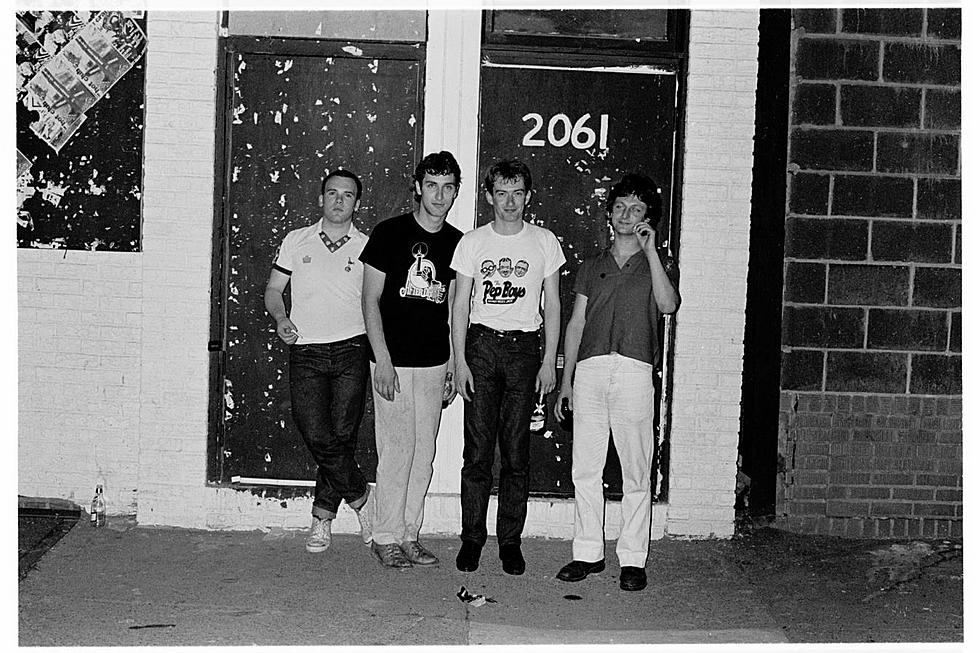
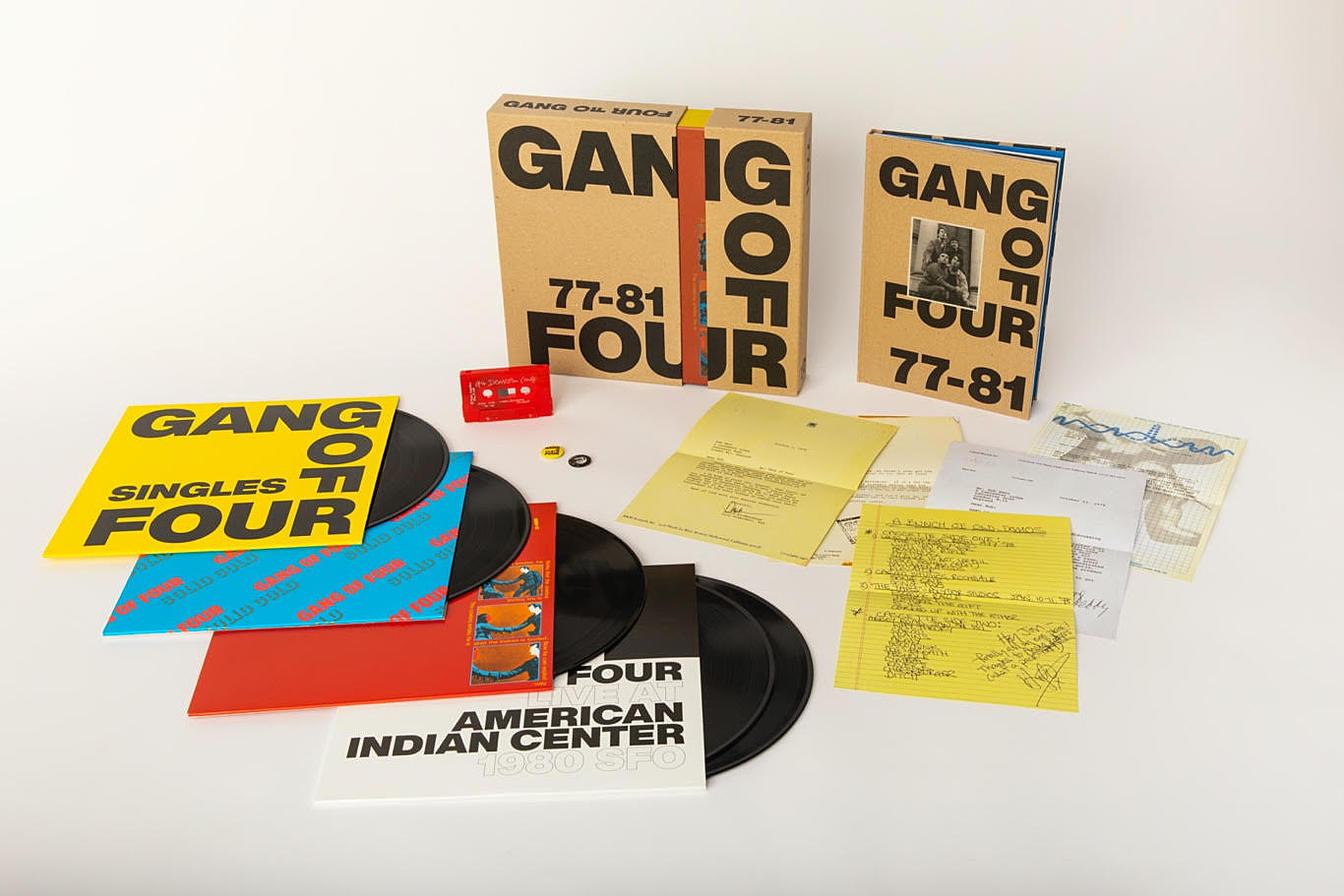
For many, the music Gang of Four made during those years was the sound of post-punk — a searing, danceable form of aggression featuring a rhythm section informed by punk, pub rock, disco and dub, sliced and diced by “angular” guitars, with shout-along, socially conscious lyrics. The influence of tracks like “To Hell with Poverty,” “Damaged Goods,” “Anthrax,” “Not Great Men” and “What We AllWant” is still being felt today. All those songs are on “Gang of Four 77-81” which features everything the original line-up released through Warner Brothers — 1979’s “Entertainment!” and 1981’s “Solid Gold”, as well as non-LP singles that ended up on the “Yellow” and “Another Day / Another Dollar” EPs — plus a fantastic live album from 1981 and a cassette of early demos.
“It’s really the balls, isn’t it?” Hugo Burnham is deservedly chuffed, talking about the fantastic new box set chronicling his band Gang of Four‘s ground breaking first four years that featured the original line-up of himself, guitarist Andy Gill, bassist Dave Allen and vocalist Jon King. “This was really a labour of love Jon. We, Jon, did such a great job.”
You can also feel Gang of Four’s influence in the box set’s 100-page handbound book, designed by Jon King, that features essays and recollections from the band (including Gill who died last year), as well as friends and fans including Flea, R.E.M., Sofia Coppola, Henry Rollins, Pylon, Mission of Burma, Peter Hook (Joy Division/New Order), Mekons, writer Greil Marcus, and more, plus never-before-seen photos, show flyers and other memorabilia. It really is an amazing package, design-wise, and you can watch a video of Jon King unboxing it below.
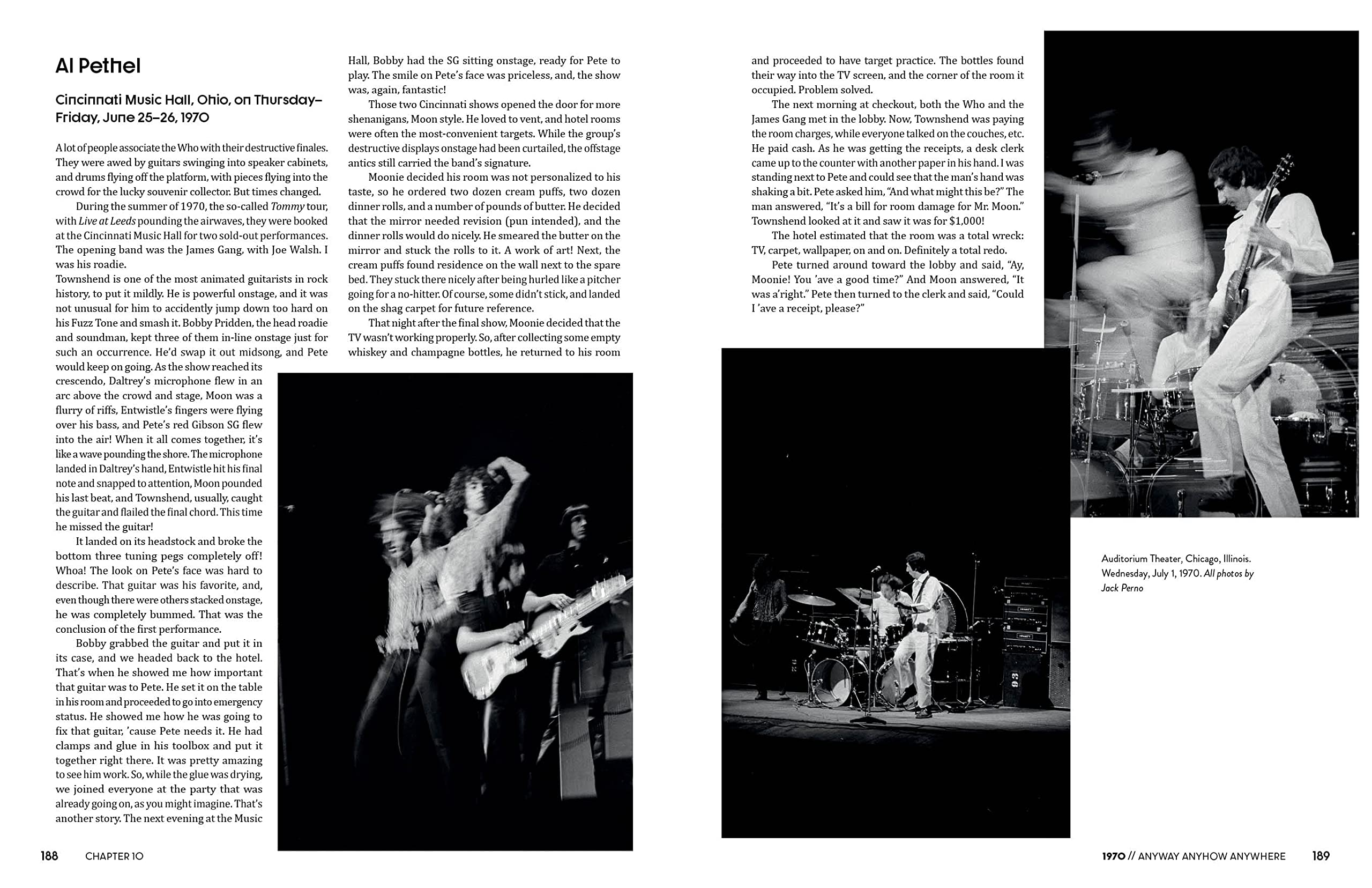
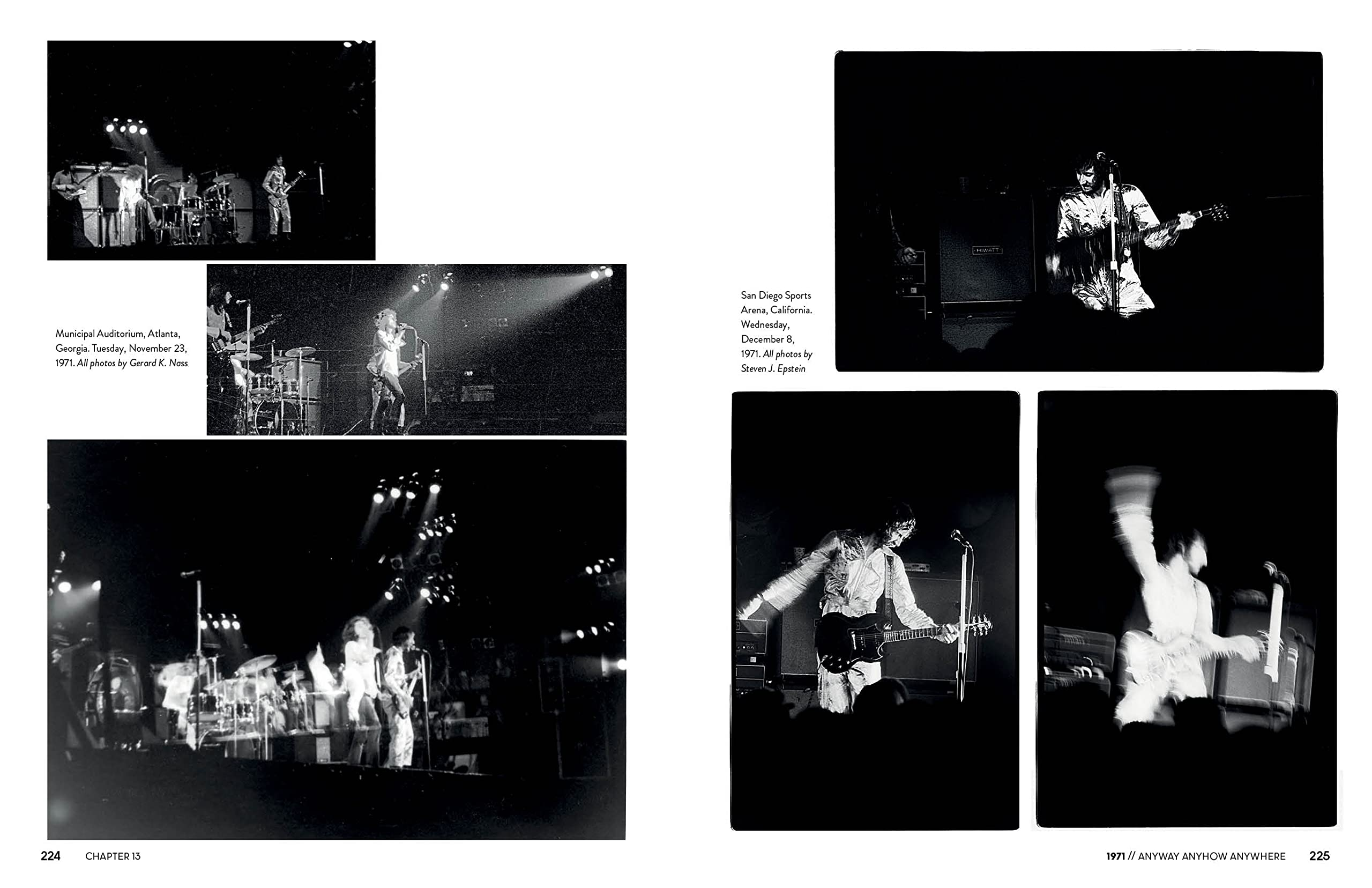
The Who’s legendary stage performances will be celebrated with a new book that features previously unpublished photographs and untold stories. The Who: Concert Memories from the Classic Years, 1964-1976 from author Edoardo Genzolini, arrives May 28th, 2022, via Schiffer Publishing. Pete Townshend describes it as “extremely insightful.”
From the publisher’s announcement: Most know that the legendary English rock band The Who performed concerts at ear-splitting volume, smashed their instruments, and became one of the world’s most influential groups. Their period from 1964 to 1976 saw the creation of such classic songs as “My Generation,” “Pinball Wizard,” and “Won’t Get Fooled Again,” as well as the “Tommy”, “Who’s Next”, and “Quadrophenia” albums. But how many know the stories of those fans affected by their music and live performances, or the angst and insecurities that drove Pete Townshend to new heights during this time?.
Who saw Townshend handing his guitar from the stage to a grateful fan, and what happened next? Who has seen photos of bassist John Entwistle being anything but the “Quiet One”? What happened backstage at Woodstock and the Monterey Pop Festival? The reader will be thrown into untold stories, hundreds of previously unpublished photographs, and uncirculated recordings clarifying the misinformation, myths, and legends. It’s a labour of love from a fan for fans that gives voice to a collective consciousness that might otherwise fall silent over time.
In an April 8th, 2020 email sent to the book’s editor and contributor Jeremy Goodwin, Townshend wrote, “Edoardo’s book looks wonderful. The photos are very special. His take on The Who, and on me, is intriguing and extremely insightful. I wasn’t always a pleasant person to be around in the early days. It’s good to see that sometimes I managed to do some decent things for fans.”
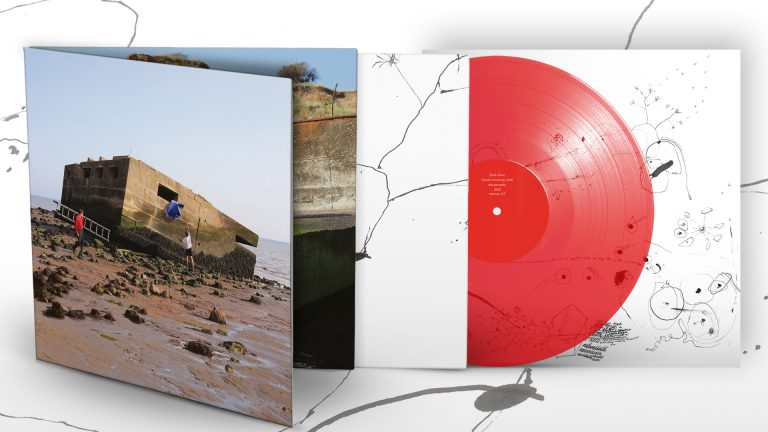
Rough Trade-signed eight-piece making sweeping soundscapes on the grandest scale, UK eight-piece caroline’s eponymous debut album often cascades with force like an avalanche, squalling and rumbling on the edge of all-out collapse. At other points they slip back into impossibly fragile moments of quiet a simple bassline or a rattle of snare the only sound amid a dark sea of silence. caroline know exactly the right balance between restraint and release. These songs are expansive and emotive pieces, their rich palette drawing on a mixture of choral singing, Midwestern emo and O’Malley and Llewellyn’s roots in Appalachian folk.
The self-titled debut album from London-based eight piece caroline is out now. On it, songs can cascade like an avalanche with the full force of so many instruments, squalling and rumbling on the edge of all-out collapse. At other times they slip back into impossibly fragile moments of quiet – a simple bassline or a rattle of snare the only sound amid a dark sea of silence. caroline know exactly the right balance between restraint and release. “Sometimes things sound much better when there’s empty space,” says Llewellyn. “Sometimes you might populate [a song] with too many things and forget that an element on its own is enough.”
Elsewhere on the record the band have employed a collage-like technique, combining snippets of lo-fi recordings from a myriad of different locations, a barn in France, the members’ bedrooms and living rooms, the atmospheric swimming pool in which they also filmed sublime live sessions for ‘Dark blue’ and ‘Skydivingonto the library roof’ – with more traditional group sessions at the Total Refreshment Centre and their studio in Peckham.
The growth that began as a scrappy guitar band above a pub many years ago is still continuing. caroline’s astounding debut album is merely the first step.
caroline is an eight piece, based in London. Started by Jasper Llewellyn, Mike O’Malley, Casper Hughes in early 2017, caroline initially evolved out of weekly improvisation sessions.
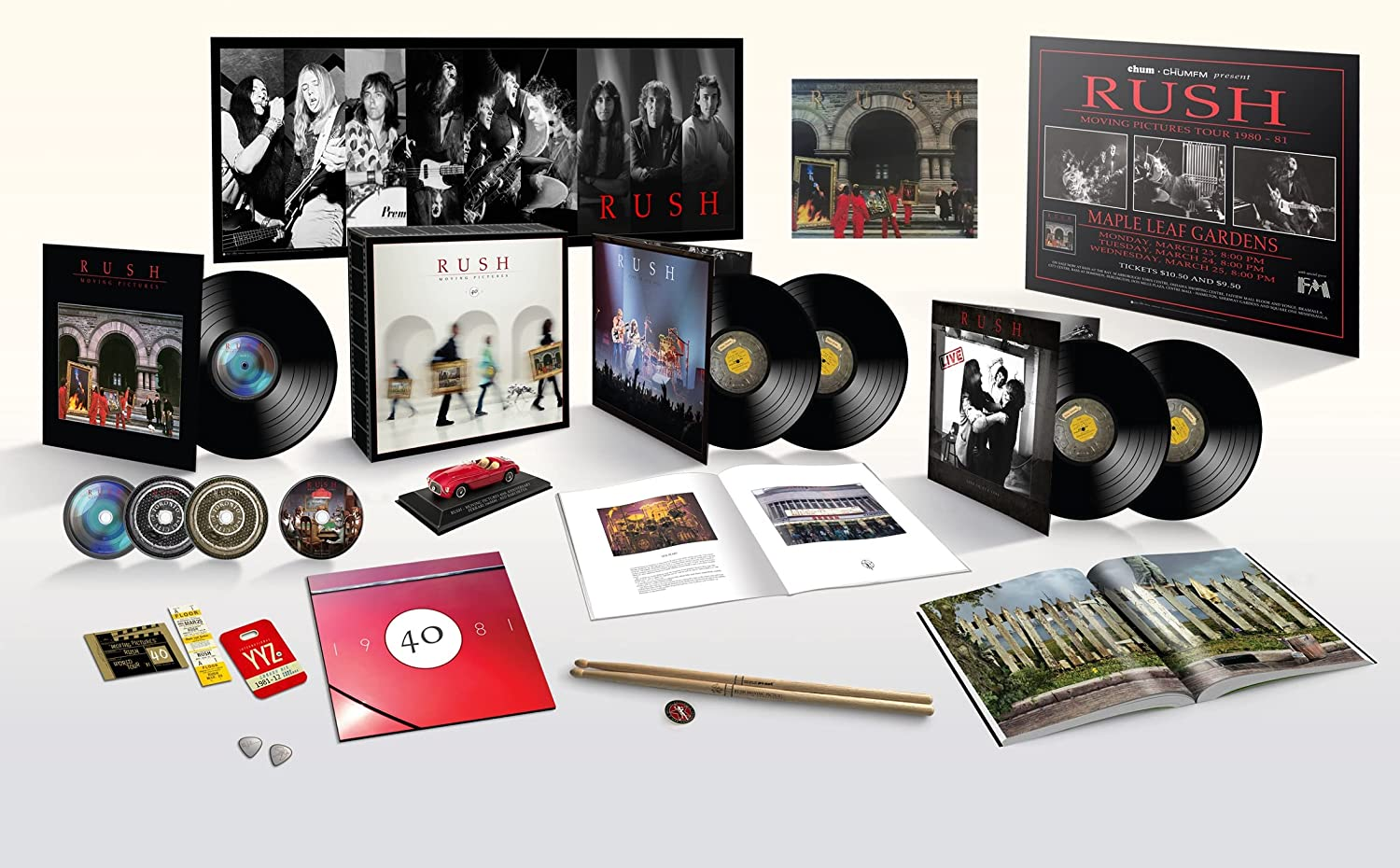
Rush’s groundbreaking 1981 album, “Moving Pictures”, is receiving an expanded edition for its 40th anniversary with previously unreleased and newly restored bonus live content.
The band’s eighth studio album was originally released on February 12th, 1981, and its adventurous yet accessible music catapulted the forward-thinking Canadian band to even newer heights as it began navigating the demands of a new decade. The album’s seven songs expertly blended Rush’s intrinsic prowess for channelling its progressive roots into radio-friendly arrangements, a template the band had mastered “to a T” all throughout its previous album, 1980’s deservedly lauded Permanent Waves. MovingPictures was also the second of many Rush recording sessions at Le Studio in Morin-Heights, Quebec, which was ultimately nicknamed the trio’s own personal Abbey Road recording studio.
The album’s lead-off track, “Tom Sawyer,” became one of Rush’s most cherished FM favourites in addition to taking its rightful place as a perpetual concert staple for decades to come. Next, the band shifts into the multi-generational dreamscape of “Red Barchetta” which chronicles the thrills and chills of a high-stakes backroads car race. The instrumental barnburner “YYZ” lovingly named after the airport identification code for Toronto’s Pearson International Airport, runs the gamut of the band’s forever impressive progressive chops in under four minutes flat. Side A closes out with the observational luminescence of “Limelight” a timeless, if not prescient look at how introverted artists grapple with public demands while trying to maintain a personal level of earned privacy.
The Super Deluxe Edition includes three CDs, one Blu-ray Audio disc, and five high-quality 180-gram black vinyl LPs. The set encompasses the Abbey Road Mastering Studios 2015 remastered edition of the album for the first time on CD, along with two discs of previously unreleased and newly restored bonus live content newly mixed from the original analog live multi-tracks by Rush’s original producer, Terry Brown, featuring the band’s complete, unreleased Toronto concert from Maple Leaf Gardens in Toronto, Ontario, on March 25th, 1981 (designated here as “Live In YYZ 1981”). The fourth bonus disc is a Blu-ray Audio disc with the core album newly mixed from the original multi-tracks in Dolby Atmos (a Rush catalogue first!), Also included on the Blu-ray are four bonus videos: a brand-new video for “YYZ” plus three remastered vintage promo videos for “Tom Sawyer,” “Limelight,” and “Vital Signs.”
The new collections arrive April 15th, 2022, via UMe/Mercury and Anthem Records, in various configurations: including the Super Deluxe Edition, 3-CD Deluxe Edition, 5-LP Deluxe Edition, LP Edition, and digital.
On October 27th, 1971, Lou Reed walked into the first recording session of his solo career. “I’m So Free: The 1971 RCA Demos” is a collection of those rare recordings [previously available as a short-lived digital release for copyright purposes – TSD]. This is Lou as few have ever heard him: it’s the songwriter at work, pure and alone, before the noise, swagger and legend. Released on vinyl for the first time, the 13 tracks on this LP are an unprecedented addition to Reed’s rock & roll life on record.
His next four decades – more than 30 studio and concert albums of lyric challenge, incendiary guitar and iron-willed vision until his death in October 2013 start here.
The final iterations of these demos can be found across Reed’s discography on albums including Lou Reed, Transformer, Berlin, and Sally Can’t Dance.
Bob Seger dropped a lyric video for the title track to “Against the Wind”, which turns over 40 years old. The clip follows the lyric video for “Night Moves,” on his newly launched YouTube channel. Bob Seger had already set a high standard. Early in his career, he had established himself as a no-nonsense heartland rocker, beloved in his native Michigan and already making inroads in other parts of the nation as well. A series of early albums on Reprise, Capitol and Camden Records established a certain tone and tenacity, but it was his first national hit, “Ramblin’ Gamblin’ Man,” that found him elevated to the status of iconic heartland rocker, primed to please multitudes of air guitarists in venues large and small.
The first album recorded with the band in tow, 1976’s “Live Bullet”, provided the big breakthrough, and with two successive efforts, “Night Moves” and “Stranger in Town”, both formally credited to Bob Seger and the Silver Bullet Band,
‘Against the Wind’ is Classic Bob Seger imagery with animated horses, motorcycles, and vast American highways flash across the screen with each line of the track. “It seems like yesterday,” he sings, “But it was long ago/Janey was lovely, she was the queen of my nights/There in the darkness with the radio playing low.”
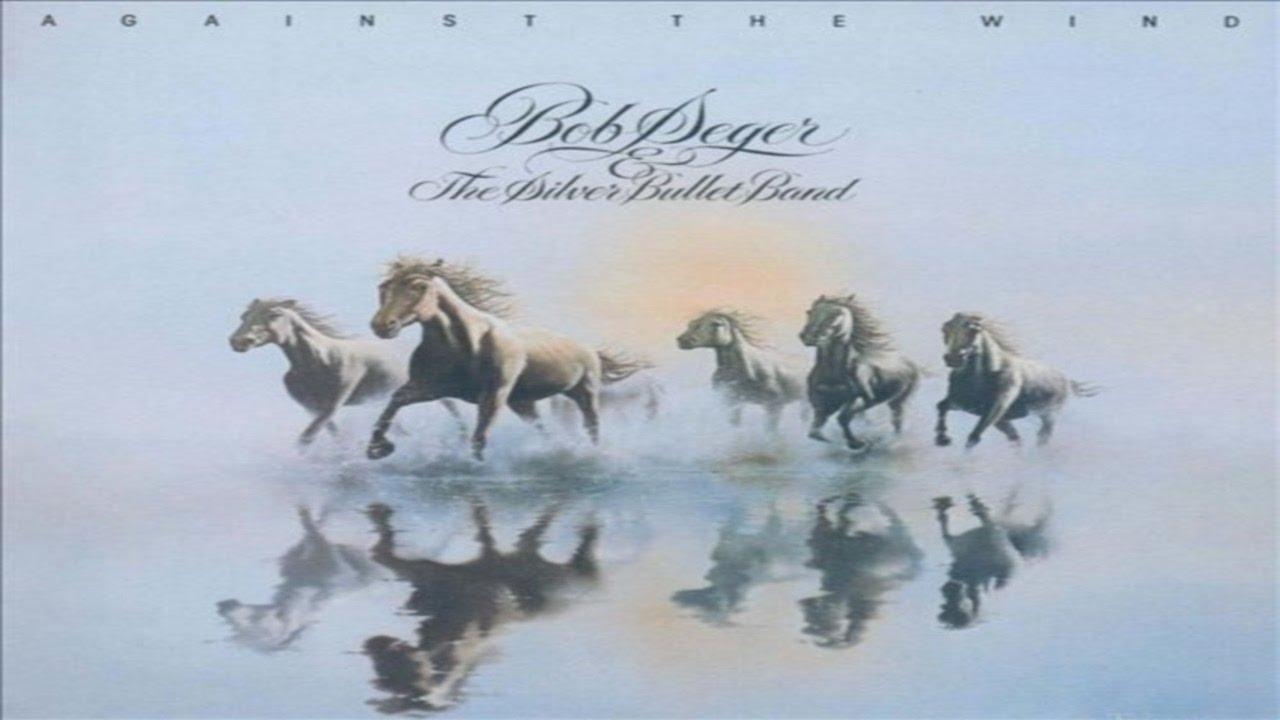
Released on February 25th, 1980, with his Silver Bullet Band, “Against the Wind” is Seger’s only Number One album. “Knowing the difference between when people are using you and when people truly care about you, that’s what ‘Against the Wind’ is all about,” he said of the track in 1980. “The people in that song have weathered the storm, and it’s made them much better that they’ve been able to do it and maintain whatever relationship. To get through is a real victory.”
Side one was stocked with a pair of songs that some observers perceived to have sexist connotations “The Horizontal Bop,” an obvious reference to the joys of intercourse, and “Her Strut,” said to be inspired by Seger’s admiration for Jane Fonda, but also interpreted as offering some sentiments that were demeaning to women. In retrospect, however, the latter seems quite the opposite, given that it asserts the strength of the woman in question. Seger’s ricochet-like guitar solo brings it all home.
Still, it’s the ballads that best define the album overall. The title track offers an homage to determination and defiance, or as Seger himself told one interviewer at the time, it’s “about trying to move ahead, keeping your sanity and integrity at the same time.” To most listeners, however, it came across like an anthemic ode to maintaining perseverance and commitment despite all the odds.
“Fire Lake,” a song originally intended for the “Beautiful Loser” album but shelved due to the fact it was incomplete at the time. In some ways, it brings close comparison to any number of early efforts by would-be rival Bruce Springsteen, thanks to its aural imagery and description of some simple summer joys. With three of the Eagles Glenn Frey, Timothy B. Schmit and Don Henley providing the harmonies,
Given Seger’s successful streak of multi-platinum albums released from the mid-’70s to the early ’80s, it’s difficult to discern any one album that stands out overall. Yet even now, some 40 years on, “Against the Wind” still ranks as one of Bob’s best.
He finally launched his catalogue on streaming services in 2017, making him one of the last major artists to do so. However, many of his earliest records, like “Smokin’ O.P.’s” and “Back in ’72″, remain unavailable both digitally and in print. “Jack White is always asking me about that,” he explained in 2018. “He wants to remix them all and said he’d do it for free. Maybe when I retire I’ll get serious about it.”
Bob Seger & The Silver Bullet Band – Against The Wind Released on February 25th 1980
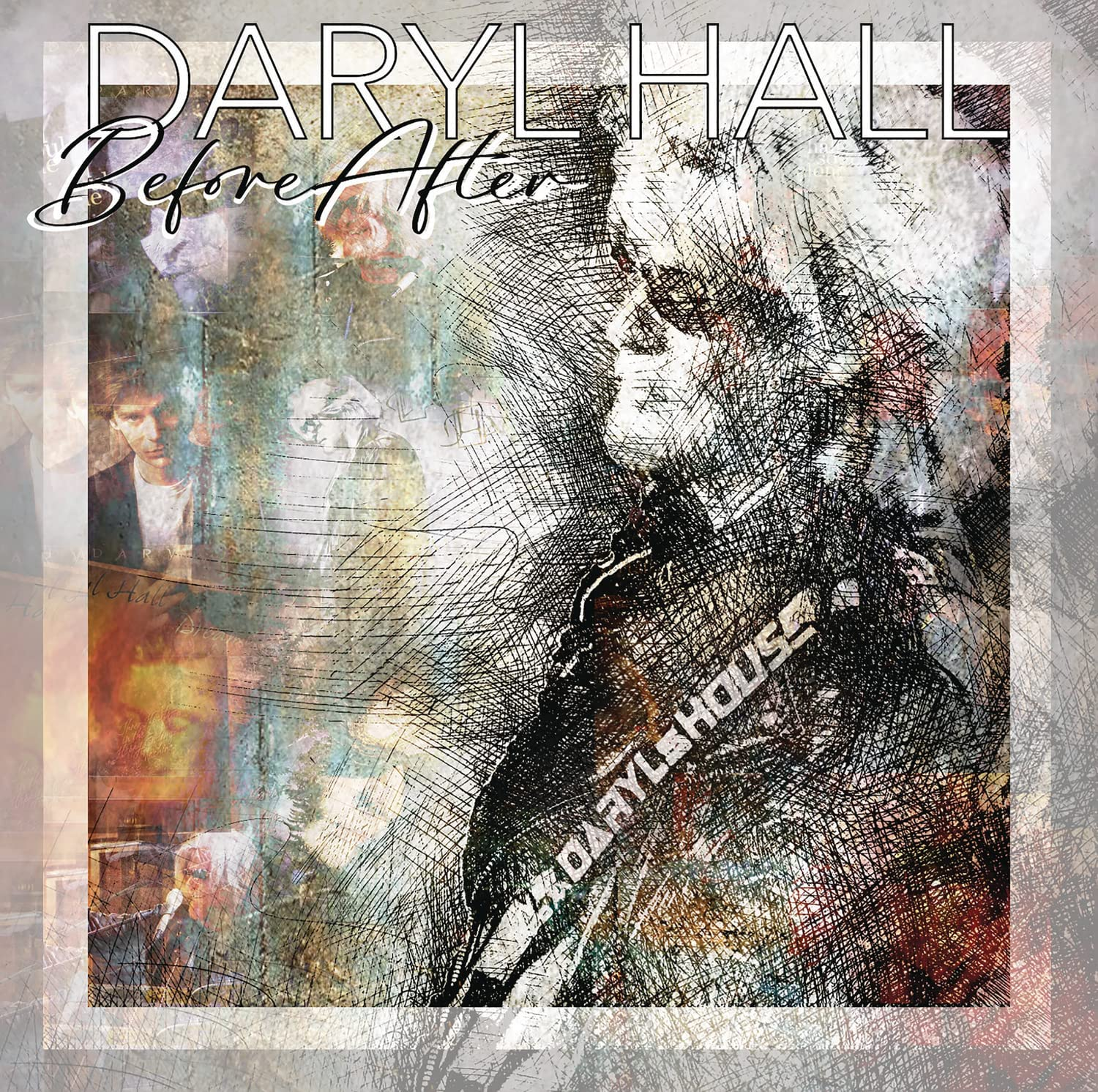
Daryl Hall will be releasing his first solo retrospective with the release of “Before After”. The two-disc set arrives April 1st, 2022 via Legacy Recordings. On the same date, the Rock and Roll Hall of Famer will also embark on his first solo tour in a decade, performing with the Daryl’s House Band on historic stages like NYC’s Carnegie Hall and Nashville’s Ryman Auditorium, with a special guest and newly inducted Rock Hall member Todd Rundgren supporting. Compiled and sequenced by Hall, “Before After” features 30 tracks spanning all five of his solo albums, from the 1980’s Robert Fripp-produced “Sacred Songs” through 2011’s “Laughing Down Crying”, which was co-produced with long time Hall collaborator T-Bone Wolk, who passed before the album was released Of Fripp, whose adventurous work with King Crimson may have seemed an odd bedfellow alongside Hall’s soulful style, Hall says, “We were friends before we did ’Sacred Songs” and have a lot of common ground — more than people realize. He would just play things and I’d sing lyrics out of the blue and come up with things spontaneously. We had the ability to do that together and do something that I think was pretty unique.”
Additionally, the collection features six never-released performances from the web and television series “Live From Daryl’s House“, which Hall launched in 2007 with the then-novel idea of “playing with my friends and putting it up on the internet.
“I picked this collection of songs from my solo albums because I feel they encapsulate certain periods of my career.” says Hall. “It also shows the diversity of working with collaborators like Robert Fripp or DaveStewart. And, having some tracks from “Live From Daryl’s House” on it, really makes the compilation complete.” A version of “North Star” with singer/guitarist Monte Montgomery. “It just blew me away,” Hall says of the latter. “I see ‘Live From Daryl’s House’ as much a part of my body of work as any of my recorded albums I’ve done.”
“I’m all about deeper cuts,” he says. “I play ‘Do What You Want’ a lot on stage with Hall and Oates and there’s a good chance I’ll play that on the solo tour too. On ‘Live From Daryl’s House,’ I’d always say to the guest, what do you want to do? And they’ll say, let’s play ‘You Make My Dreams,’ and I’d say, ‘No. no. Go deep. Find a song you just discovered and we’ll play that.’”
As for “Live From Daryl’s House,” which began life as a web show in 2007 and more recently begin airing on AXS-TV, Hall says he is “very much into the idea of bringing it back” after a 2020 pandemic-related hiatus. The show has featured collaborations with everyone from Cheap Trick and Smokey Robinson to Chromeo and Aloe Blacc. “We have some plans and they have not been finalized, but I’m trying to get it back out into the world again.”
Hall has shared one of the collection’s exclusive previously unreleased tracks, a recording of Eurythmics’ 1984 hit, “Here Comes the Rain Again,” performed with that song’s co-writer, Dave Stewart.
The version featured on “Before After”, was performed on “Live From Daryl’s House” Episode 46 in 2012, and reflected Hall and Stewart’s deep collaborative roots. Stewart produced Hall’s 1986 album, “Three Hearts in the Happy Ending Machine”, and co-wrote three songs on the album.
Hall has already written nine songs with Stewart for a new solo project, which he plans to work on throughout the year.
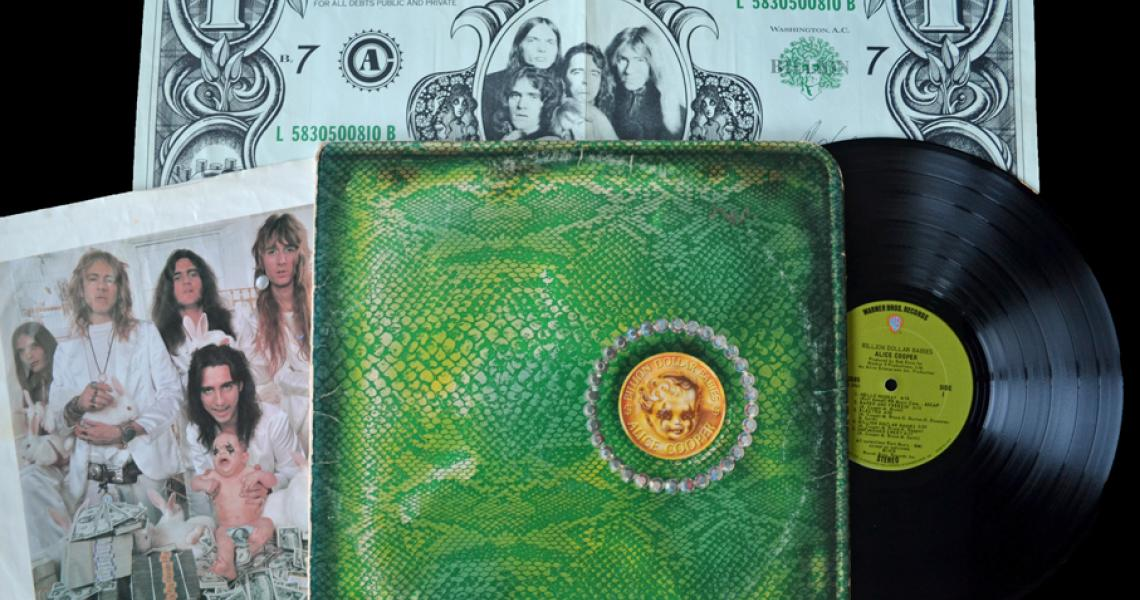
This week in 1973: ALICE COOPER went top of the US albums chart with the group’s 6th studio release, ‘Billion Dollar Babies’, on Warner Bros. Records – it also topped the UK charts in March & was a highly influential album, Produced by Bob Ezrin, it featured the charting singles “Elected”, “Hello Hooray”, “Billion Dollar Babies” & “No More Mr. Nice Guy”; the original Alice Cooper band of Glen Buxton, Michael Bruce, Dennis Dunaway & Neal Smith at the height of their powers were augmented in the studio by the guitar wizardry of Dick Wagner & Steve Hunter, while UK singer-songwriter Donovan added background vocals to the title track; Chris Cornell of Soundgarden deemed it one of his favourite records; David Byrne of Talking Heads claimed that it inspired him to write the song, “Psycho Killer”; in 2005, ‘Billion Dollar Babies’ was ranked among ‘The 500 Greatest Rock & Metal Albums of All Time’..
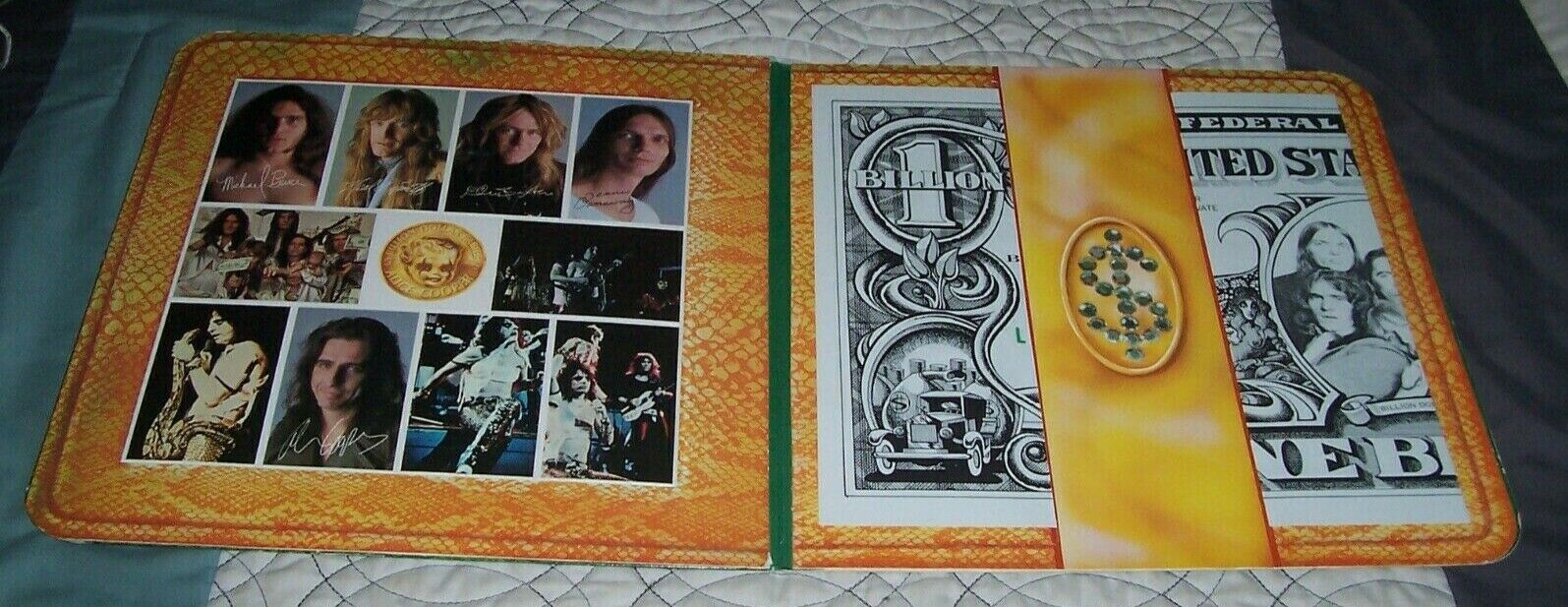
Looking back at the history behind the incredible packaging of the band’s all-time masterpiece “Billion Dollar Babies.” How did Alice Cooper (the group) celebrate the success of their worldwide smash single “School’s Out”? By mocking their newfound fame and fortune on their next album “Billion Dollar Babies.” And how would they top the elaborate school-desk-&-panties packaging that adorned the “School’s Out” album? With packaging crafted to work as a bi-fold wallet and containing a giant One Billion Dollar bill! Designed by Pacific Eye & Ear, the “B$B” packaging was pure genius. The embossed “wallet” gatefold sleeve was designed to look like it was crafted from snakeskin (of course!) and also contained band pics you could remove and insert into your actual wallet!
Once the wallet-sized photos were popped out of the inner gatefold, you got a wide-open view of the album’s inner sleeve, which is where we are now going to focus our attention…In 1972, British photog David Bailey shot controversial pics of Cooper, wearing only a boa constrictor, for Vogue Magazine; later that year Bailey was invited to shoot pics for Alice Cooper’s “B$B” album.
The shoot must have been a blast. Five hairy degenerates and a baby! Plus machine guns, white rabbits, and a million (real) dollars, as Alice himself tells it: “We brought in a million dollars of real money from Brinks. What you didn’t see in that picture were the two guys with machine-guns who were guarding the money.”
Few people would have predicted, based on the band’s first two albums, that Alice Cooper would become a dominant musical presence throughout the first half of the ’70s. But beginning with their third record, 1971’s “Love it to Death“, the group embarked on a creative run that secured their place among America’s greatest rock bands. Comprised of Neal Smith on drums, Dennis Dunaway on bass, Michael Bruce and Glen Buxton on guitars and, of course, “Alice” (Vincent Furnier) on vocals, the quintet made deep inroads into rock radio, churning out pop-rock anthems like “School’s Out,” “I’m Eighteen” and “Elected.” Released on February 25th, 1973, “Billion Dollar Babies” marked the apex of the group’s phenomenal rise, securing their place as a musical and cultural force.
“It can all be traced back to the song ‘Caught in a Dream,’ from the “Love it to Death” album,” recalled Smith, speaking in Performing Songwriter magazine. “Back then, we were predicting our future, and “Billion Dollar Babies” was that prediction come true. To go from a time when no one would pay a penny to see us, to having one of the biggest-selling albums ever, for that time … well, we certainly had the last laugh on that score.”
Sessions for the album began at the Galecie Estate, a Greenwich, Connecticut-based mansion purchased by the group following the success of their 1972 album, “School’s Out”. For several songs, the group ran a microphone into an empty greenhouse built with marble floors and glass walls, in order to capture a particular echo effect. Producer Bob Ezrin was central to the proceedings.
The group travelled to England and gathered at London’s Morgan Studios to work on additional tracks. A parade of rock stars converged on the sessions, but only one—Donovan, who shared vocals with Alice on the title song ended up appearing on the finished album. Dunaway regrets that others who were present including Harry Nilsson, Keith Moon, Marc Bolan, and Flo and Eddie (aka Mark Volman and Howard Kaylan of the Turtles) weren’t fitted in somehow.
“It’s too bad we didn’t get more,” he recalls. “It would have been great to have had backing vocals from Flo and Eddie. And Harry Nilsson had an incredible voice. It’s just unfortunate that it was uncontrollable because he was drinking so much. He would fall across the mixing board and knock all the faders out of whack. But then he would stumble out into the studio and sit down at the piano, and his voice and what he was playing would sound incredible. Keith Moon was the same way. Moon was hilarious, but when he sat at the drums he couldn’t even stay on the stool.”
Despite the raucous atmosphere, what emerged from the sessions was a collection of concise, imaginative songs that tempered Alice Cooper’s predilection for the macabre with generous slabs of humour. Smith credits Bruce as the band’s main composer, although he, Dunaway and Ezrin contributed significantly as well. Alice, of course, served as the band’s primary wordsmith.
“Michael was the main musical writer in the band, although Dennis and I wrote as well,” says Smith. “Alice would help with melodies and some of the music, but his specialty was really the lyrics. In the case of ‘No More Mr. Nice Guy,’ for instance, Michael wrote the song, and then Alice tweaked the lyrics, and then we went into the studio and arranged it with Ezrin. But it worked other ways, too. Everyone in the band helped arrange songs.
Notwithstanding “Billon Dollar Babies’ macabre themes, Cooper took his lyrical cue from an unlikely source. “My favourite lyricist was Chuck Berry,” he says. “When I first heard something like ‘Nadine,’ or ‘Maybellene,’ I understood those songs told a story. As the lyrics went along, you really got a picture of what was going on. Rife with infectious melodies, catchy guitar riffs and sparkling wit, “Billion DollarBabies” became Alice Cooper’s most successful album, topping the charts in both America and in the U.K. The record also spawned four classic singles: “Elected,” “Hello Hooray,” “No More Mr. Nice Guy” and the title track. In the wake of the album’s release, the band undertook their biggest tour ever.
Unfortunately, the rigors of the road, the failing health of key member Glen Buxton who died in 1997, a few weeks shy of his 50th birthday—and a growing divide between Cooper-the-singer and the rest of the group were beginning to take a heavy toll. The band forged on to make one more album, 1974’s “Muscle of Love”, but in the midst of a well-earned hiatus, Cooper opted to leave the group and pursue a solo career.
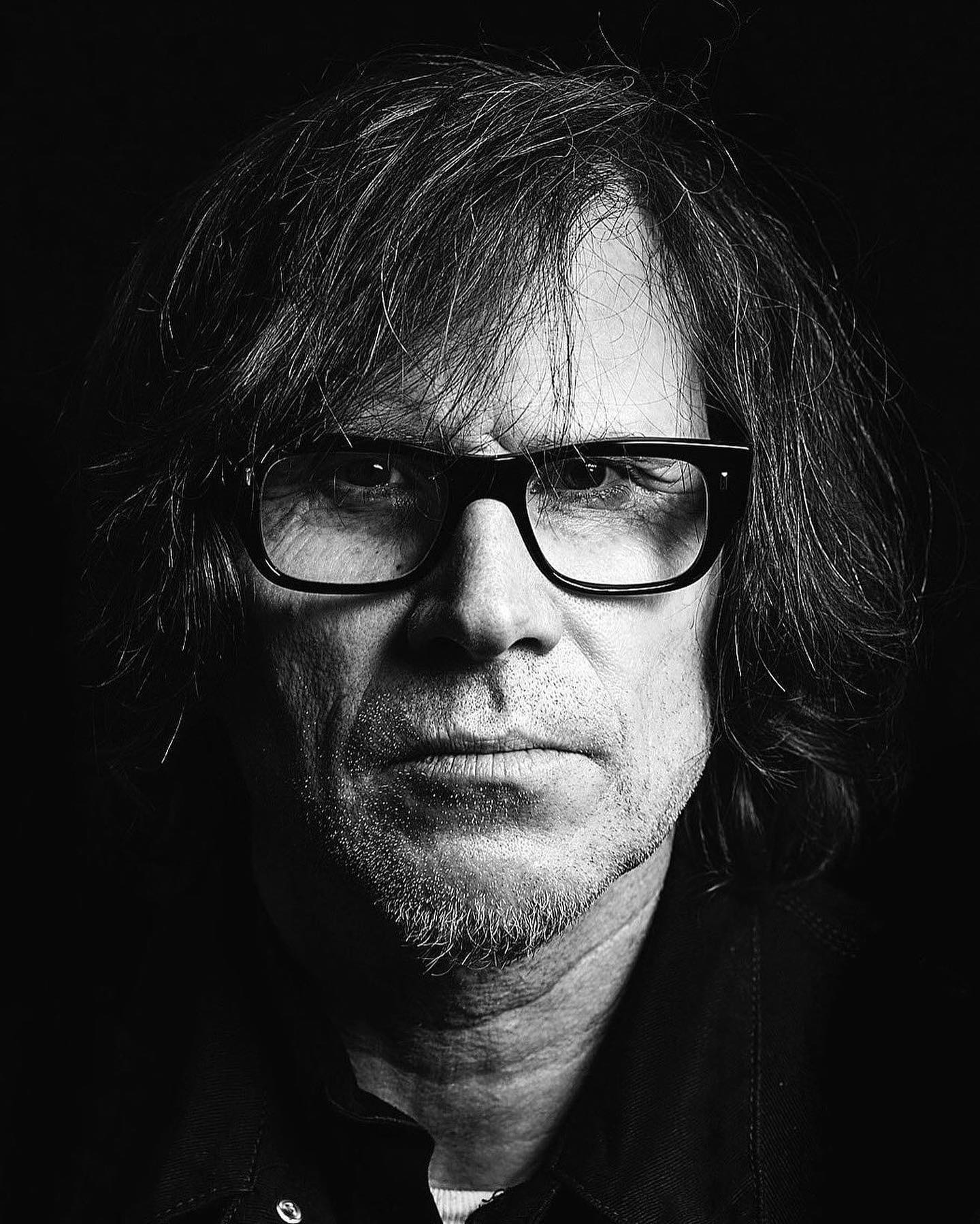
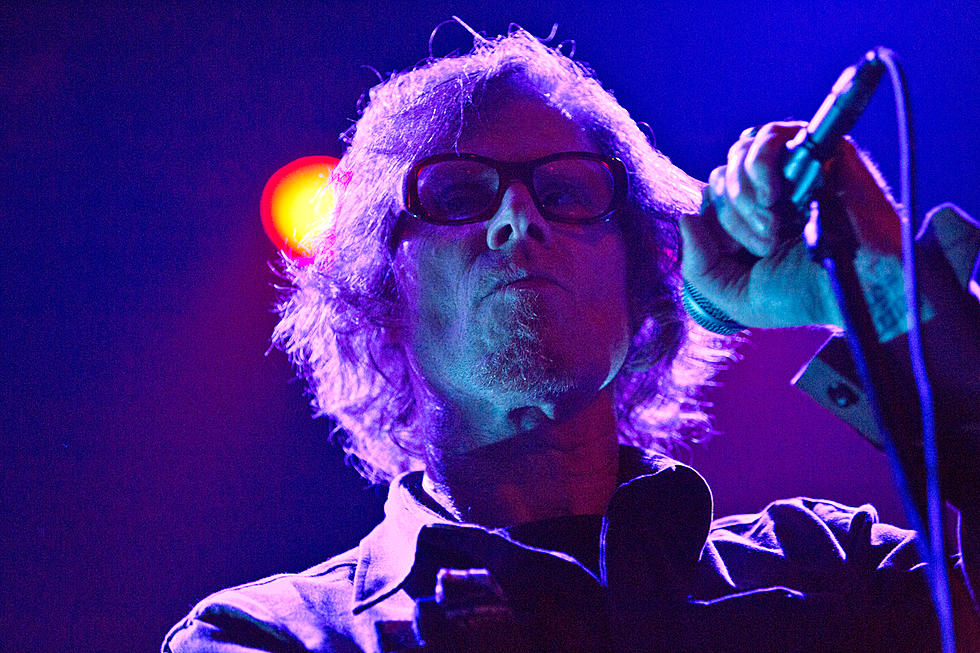
Grunge pioneer Mark Lanegan of Screaming Trees, Queens of the Stone Age, The Gutter Twins and more has passed away at the age of 57.
The former Screaming Trees frontman, Queens of the Stone Age collaborator and esteemed solo artist Mark Lanegan has sadly died aged 57. A statement issued on his official Twitter account reads: “Our beloved friend Mark Lanegan passed away this morning at his home in Killarney, Ireland. Rest in peace Mark Lanegan. There are no words to describe this tremendous loss. Mark was a rare talent, a true visionary, with a one-of-a-kind voice that propelled Seattle’s Screaming Trees to grunge stardom in the ’90s was also a prolific solo artist, a member of many bands, and a collaborator to many artists.
Born on 25th November 1964 in Ellensburg, Washington, Lanegan shot to fame in the mid 1980s as a member of pioneering grunge band Screaming Trees.Lanegan released seven albums with ScreamingTrees before their split in 2000 – an eighth album, “Last Words: The Final Recordings“, followed in 2011.
Just watch the video of his onstage meltdown at the 1992 Roskilde Festival when poor sound and booze pushed Lanegan into the red, leading him to toss a monitor speaker offstage, which destroyed an expensive TV camera. As Dave Grohl put it in the pages of the grunge oral biography Everybody Loves Our Town, “[You] don’t wanna mess with that dude. Give him a microphone, let him sing, then get the fuck out of his way.”
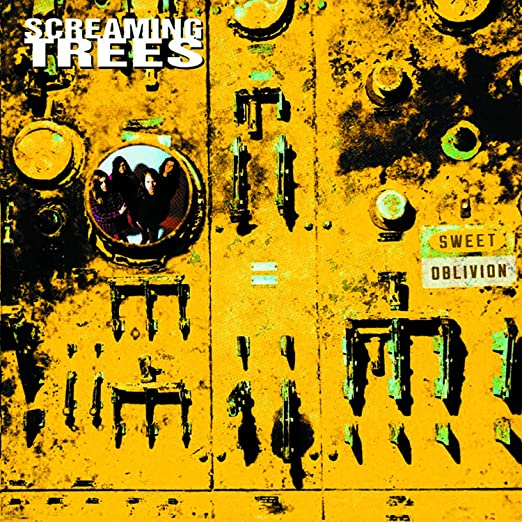
Lanegan was often locked in a kind of devil’s bargain as an artist. Some of his best work came out of his worst moments. His levelled-up vocal performances and shattering lyrics on Screaming Trees’ “Sweet Oblivion” which included the Singles soundtrack hit, “Nearly Lost You” and “Dust” arrived through a haze of booze and junk.
The sixth and best album by the Screaming Trees “Sweet Oblivion” was a winning mix of West Coast grunge, knotty punk and 70s hard rock. It should have put the band on a similar commercial level as Nirvana, yet it didn’t pan out that way.
But it’s Sweet Oblivion’s Zeppelin-esque opening cut that ranks among the Trees’ greatest works. Opening with a bouncy, grooving riff and peppered with wild bends and huge open chords, “Shadow of the Season” effectively distils everything the Conner brothers’ guitar-bass relationship had been building towards. Of course, it helps that it’s propelled by the recently joined Barrett Martin’s expansive drumming style and an especially wide-ranging vocal performance from Lanegan, whose octave-leaping dexterity mirrors the intensity of Gary Lee Conner’s guitar.
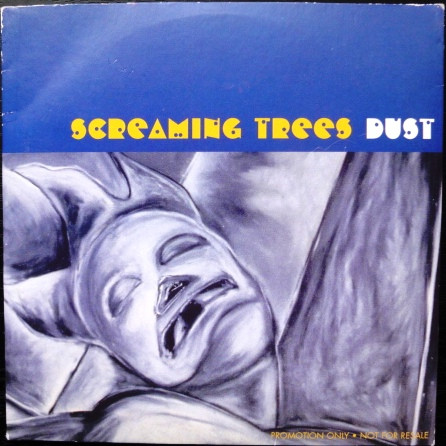
“Dust” actually turned out to be more of a signpost to Lanegan’s solo career than the guns-blazing final huzzah that fans may have envisioned. There’s a haunting blues quality to much of the album, though it’s undoubtedly the razor-backed product of a band with a steady grip on rock dynamics, the Eastern flavours of the outstanding “Halo Of Ashes” and the ringing “Dying Days” being undeniable proof. The band didn’t officially call it quits until 2000, but “Dust “proved to be a worthy send-off.
He will be dearly missed—and for those who haven’t heard his early solo masterpiece, “Whiskey For The Holy Ghost“, please take a listen to its first track, “The River Rise,” and remember this towering artist.
For many of the million-plus people who bought that record in the months after its 1992 release, the Mark Lanegan story begins and ends with the Trees’ contribution, a roiling rocker called “Nearly Lost You.” But the amazing thing about Lanegan was how, with each passing year, the singer made that commercial milestone seem more and more like a footnote in a journey that saw him outlast grunge and outlive his more famous friends in the scene to become one of rock’s most venerable vagabonds.
Lots of people gave Lanegan microphones during his 57 years on this planet. Through them, he found his voice, that voice that cut through every song he lent it to like a burst of blue smoke or the tonic sting of cheap booze. Lanegan spent decades curing his instrument, building up its strength and elasticity through his time fronting Screaming Trees while simultaneously soaking it in cigarettes, alcohol and sundry intoxicants. By the time that band slipped from agit-psychedelia into the meaty blues stomp of their major-label peak, and Lanegan started kicking around the undergrowth of American roots music on his early solo efforts, the voice was nicely weathered beyond its years. It matched the weight of his words, copious with regret, the lure of devils and fools, and deep, unsated hunger.
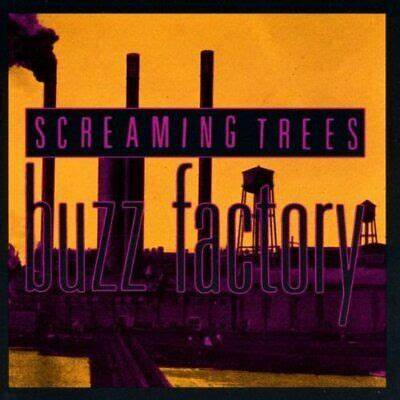
Buzz Factory is the best example of the Trees’s early output on SSTRecords. There are heaving great riffs, and the music carries a raw, unvarnished quality, veering from the Soundgarden-ish “Black Sun Morning” to the Stooges-like “Subtle Poison“. There’s plenty to admire, though, not least “Where TheTwain Shall Meet” and “Flower Web”. Buzz Factory was the band’s last album for SST, after which they went briefly to Sub Pop before a more extended tenure with Epic.
He was given a second chance to clutch a microphone stand before teeming masses of fans as an auxiliary member of Queens of the Stone Age. He enjoyed serving as the counterpoint to softer voices like Greg Dulli, Martina Topley-Bird and Isobel Campbell. He let electronic producers like Moby, UNKLE and Soulsavers bend their circuits to his frequency. He tried on songs by The xx, Alan Lerner, Leadbelly and Guns ‘N’ Roses. There were guest appearances on records by The Breeders, the Eagles Of Death Metal, Masters Of Reality,Mike Watt and Creature With The Atom Brain, to name but a few.
In 1994, Lanegan formed the supergroup Mad Season alongside Alice in Chains’ Layne Staley and Pearl Jam’s Mike McCready, together with drummer Barrett Martin of Screaming Trees, and bassist John BakerSaunders. They released one album, ‘Above’, the following year.
in part to help Staley overcome his own vices – and the group’s loose jams quickly began to take shape, culminating in their sole album, “Above”. Mark Lanegan was drafted in to contribute vocals to two tracks, but clearly delivered a lot more, receiving co-writing credits on both. While the grungy “I’m Above” might be the obvious pick here, it’s the jazzier “Long Gone Day” that pushes the group out of its comfort zone, and is all the better for it.
He released his first solo album ‘The Winding Sheet’ his 1990 debut solo album four years before Nirvana popularized the song by Lead Belly’s “Where Did You Sleep Last Night” on MTV Unplugged. Kurt handled guitar and backing vocals, while Krist played bass and Lanegan’sScreaming Trees bandmate Mark Pickerel handled drums, and as legend has it, it came from a 1989 session where the four of them covered a handful of Lead Belly songs in 1990 and went on to enjoy a successful and critically revered solo career. Lanegan also carved out an impressive discography as a solo artist, releasing 12 albums His 12th and most recent record ‘Straight Songs of Sorrow’ was released in May 2020.
Digging into the self-torture of his past for “Sing Backwards” resulted in “Straight Songs of Sorrow“, a collection of electrified blues and folky pleas for forgiveness and relief.
Lanegan survived the depths of addiction to heroin and alcohol, which he recounted with unflinching honesty in “Sing Backwards”. It’s a brutal but bracing read, with Lanegan offering no quarter to any of his former bandmates, collaborators and acquaintances.
When you revisit Screaming Trees today, it’s sometimes hard to square the band’s paisley-patterned sound with the intimidating image Lanegan cultivated later on. The group’s major label debut, “UncleAnesthesia“, was released eight months before Nirvana’s Nevermind in 1991, just missing the grunge goldmine.
Then again, its lead single, “Bed of Roses” wasn’t really grungy at all, gesturing instead to the jangly sounds of R.E.M. While the long-haired, leather-clad Lanegan seen in the song’s video looks every bit the bar-brawling rocker, his voice—deep and sonorous, but not yet displaying the ravages of a hard-knock life suggests that, if the cultural tides had turned a different way, Lanegan could’ve been the American Morrissey.
After the Trees’ 1996 album “Dust” failed to capitalize on their post-Singles bump, Lanegan’s solo career became his primary outlet. His records dug even deeper into country, blues, and soul, their quieter presentation drawing out the raspy resonance of his voice.
On this understated beauty from 2001’s “Field Songs”, Lanegan pays ultimate tribute to the Gun Club’s Jeffrey Lee Pierce, the hero-turned-friend who originally made the underground safe for blues-loving punks back in the early ’80s. “Kimiko’s Dream House” sees him complete the lyrics to an unfinished song Pierce had gifted him shortly before his 1996 death. And Lanegan sounds genuinely humbled by the opportunity, turning in one of the most gentle and graceful performances of his career.
Regarded by Lanegan as one of his best albums, “Field Songs” once again featured Mike Johnson, but was bolstered by Soundgarden bassist Ben Shepherd, who proves himself an innovative, idiosyncratic guitarist on this standout release.
The resultant record traverses dark blues, sweet lullabies and driving Middle Eastern-influenced indie, but the dusty troubadour tones of opener “One Way Street” ensured it quickly became a fan favourite and a staple on Lanegan’s setlists for decades to come. Johnson and Shepherd instantly conjure a Western atmosphere with their neatly nuanced chord arpeggiations, complete with lashings of tremolo and razor-sharp acoustic leads. It’s the perfect accompaniment to Lanegan’s keen drawl.
Just as his associations with Nirvana helped Screaming Trees get a leg up in the early ’90s, In 2000 he turned up on Queens Of The Stone Age’s “Rated R”, That said, his gruff vocals on “In The Fade” render it reassuringly potent. He also added back-ups to “Leg Of Lamb”, “Auto Pilot “and Homme’s personal favourite, “I Think I Lost My Headache“.
“Songs For The Deaf” was a loose concept piece that barrelled through California, accompanied by fictional visits from small-town radio stations. As such, Lanegan’s oddly carefree vocals brought a Biblical weirdness to “God Is In The Radio“, while “Hangin’ Tree” was fairly dripping with barely concealed malice. He’s also to the fore on both the title track and “Song For The Dead“, intoning over the din like some malignant sprite. Signing up as a full-time member of the band the following year. He also squeezed in another project, joining buddy and Afghan Whigs mainman Greg Dulli in the Twilight Singers, before the pair struck out alone as the Gutter Twins. Perhaps unsurprisingly, he quit QOTSA in 2005, though he continued to sing on their albums and occasionally tour with them.
Lanegan’s Queens of the Stone Age tenure had a reinvigorating effect on his solo career both commercially and aesthetically. His first album to chart internationally, 2004’s “Bubblegum“,
Lanegan may have still been a member of QOTSA, but “Bubblegum” was the undisputed highlight of his solo career thus far. Not that he was entirely alone – PJ Harvey fetches up on “Come To Me” and pulsating duet “Hit The City”, Izzy Stradlin and Duff McKagan add ballast to the wonderfully weary “Strange Religion“, and Josh Homme rams a knuckleduster into the clanging rock of Methamphetamine Blues. These redemptive songs of lust, longing and drug psychosis are at times scuffed and melancholic, at others inflamed and scary. Also aboard are old mucker Greg Dulli,QOTSA’s Nick Oliveri and former Mrs Lanegan Wendy Rae Fowler. The album is also notable for birthing Lanegan’s long-serving working relationship with producer and guitarist Alain Johannes, best known for his playing with QOTSA, Chris Cornell and Them Crooked Vultures. Besides his ear for a great-sounding record, Johannes is an awe-inspiring guitarist with a limitless vocabulary,
Uprooted the earthy qualities of Lanegan’s previous solo releases in favour of busted drum-machine rhythms and atomic fuzz, as exemplified by the raucous industrial funk of “Methamphetamine Blues” Borrowing a page from the Queens’ supergroup playbook, Lanegan corralled an all-star cast for the album paving the way for Lanegan’s next iteration as the most voracious collaborator in rock.
Johannes would go on to produce all of Lanegan’s solo records from “Bubblegum” onwards, up until his final release, “Straight Songs of Sorrow“, in 2020. As the guitarist told this writer in 2015: “He has an incredibly timeless voice that can coexist with any orchestrations or styles – he brings them towards himself, so it just becomes him: it’s Lanegan.”
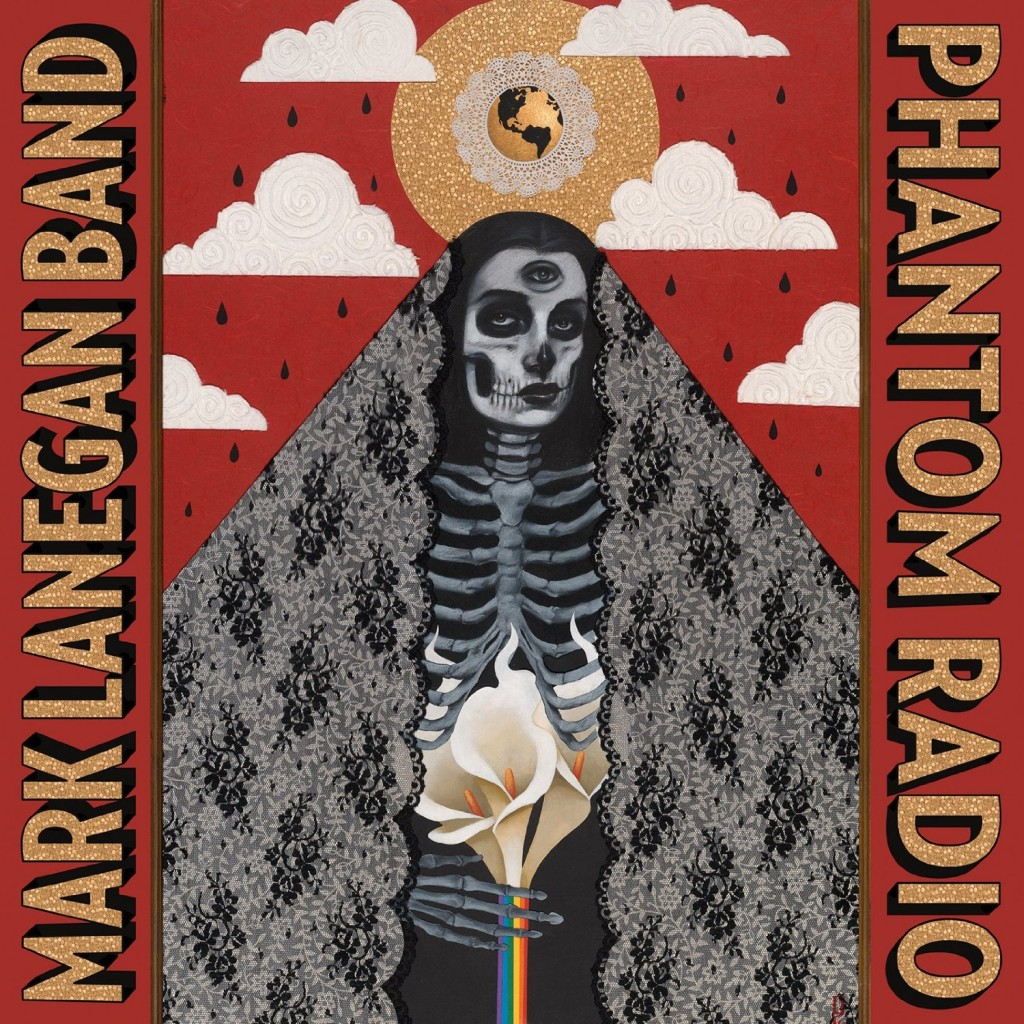
2012’s“Blues Funeral”, was his first solo album in eight years, sparked a period of prolificity, with four more albums – “Imitations”, “Phantom Radio”, “Gargoyle” and“Somebody’s Knocking” released over the following years, before his final collection, “Straight Songs of Sorrow”,arrived in 2020.
Of all the artists Lanegan parterned with over the years, his most surprising remains Isobel Campbell, who was singing and playing cello for indie-pop aesthetes Belle and Sebastian back when Lanegan and the Trees were still lording over mosh pits at Lollapalooza. But rather than amplify the considerable contrast between Lanegan’s low croon and Campbell’s pristine pitch with typical he-said/she-said duets, their three albums together stake out common ground.
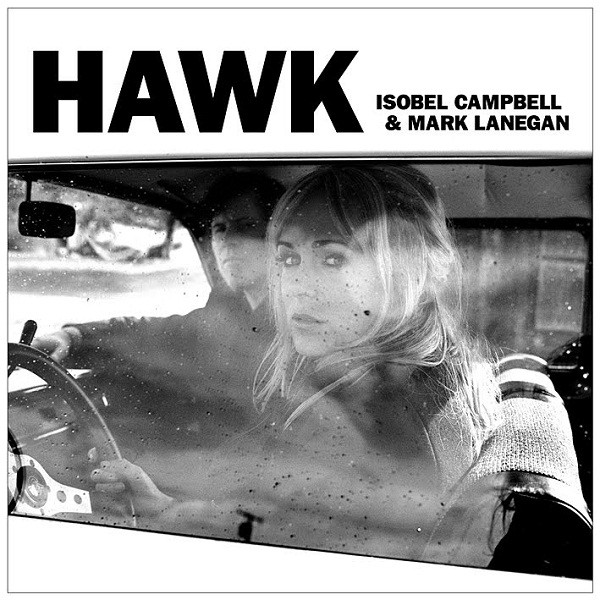
The third and best collaboration “Hawk” with the former Belle & Sebastian singer continued the duo’s fetishistic pursuit of the Old West, Campbell’s dust-caked songs and stirring arrangements provide the ideal vehicle for Lanegan’s lived-in growl, be it the acoustic blues of “You Won’t Let Me Down Again”, “Time Of The Season” or the boot-heel bluster of “Get Behind Me”. “Snake Song”, too, is suitably venomous, though Lanegan comes on like a bruised Appalachian romantic on “Eyes Of Green“, complete with fiddle solo.
Their vocals are layered into imperfect harmonies that can feel both charming and, at times, a little unsettling, with Campbell sounding less like Lanegan’s singing partner than a voice trapped inside his head. But this orchestral-soul delight from 2006’s “Ballad ofthe Broken Seas” emphasizes the pure joy and deep mutual respect in their odd-couple pairing, with the two making like Nancy Sinatra and Lee Hazlewood performing on some late-’60s variety TV special.
Glaswegian guitarist Jim McCulloch is one of the unifying factors across all three records, lending cinematic chord sweeps and acoustic strums. ““You Won’t Let Me Down Again” is a perfect marriage between Lanegan’s rockier edge and Campbell’s ethereal folk, and further bolstered by the appearance of the Smashing Pumpkins’ James Iha and Seattle guitar vet Jeff Fielder.
Where Lanegan’s solo records plumbed the darkest nights of his soul with an unflinching documentarian’s eye, Afghan Whigs/Twilight Singers auteur Greg Dulli did the same through a seedy cinematic lens. After they guested on each other’s records, a full-on union between these two dark princes of alt-rock was all but inevitable.
The bonds between Lanegan and ex-Afghan Whigs man Greg Dulli run deep. They began playing on each other’s records around the turn of the millennium and toured for a while as the Twilight Singers. (Dulli also credits Lanegan with saving him from a potentially lethal cocaine habit.)
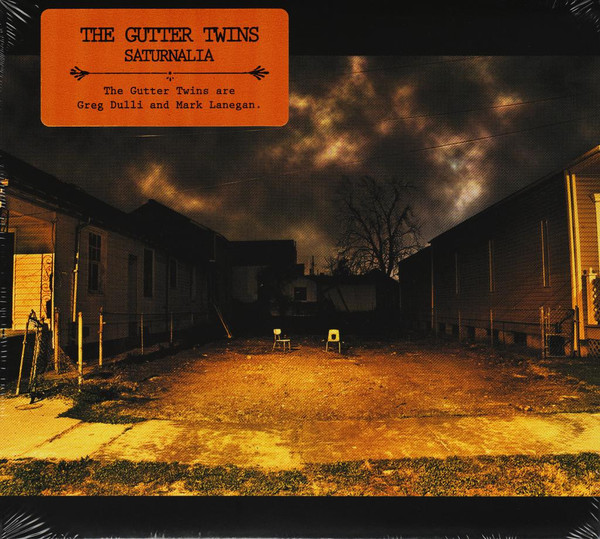
Their one and only album together as the Gutter Twins, “Saturnalia“, feels like the musical version of the long-awaited Pacino/De Niro matchup in Heat—a tense cat-and-mouse game between two wily veterans cast against an extravagant rock-noir backdrop. Had it been released, say, a dozen years earlier, the punchy “Idle Hands” could very well have turned out to be a bigger hit than anything the Trees or Whigs released at the time.
His solo debut “The Winding Sheet” saw Lanegan dispense with the noisy rockisms of his Screaming Trees persona, but his new career didn’t really begin to fly until this ravishing follow-up. The mood is almost uniformly dark, Lanegan essaying boozy tales of sorrow and defeat with a voice that sounds like a busted squeeze box. It’s as close as he ever got to making his own down-home album. Breathy whispers, strings and acoustic guitars poke through the porch light, while songs like “Pendulum” herald the arrival of Lanegan the literate poet, with a reach and breadth only hinted at previously.
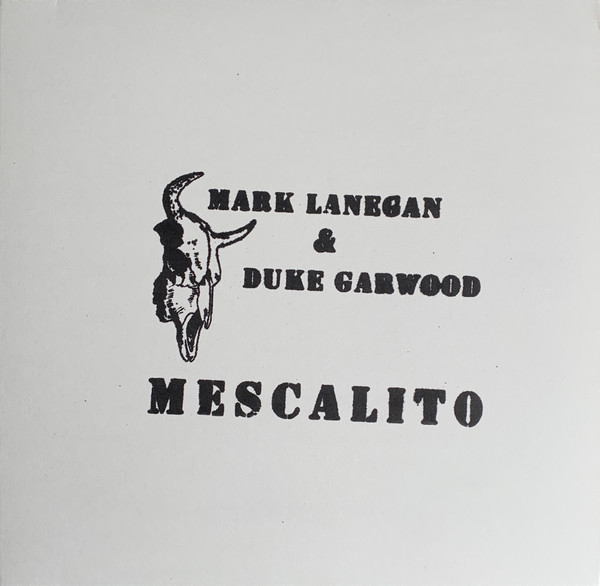
This meeting of “kindred spirits” was a spinoff from The Gutter Twins, where multi-instrumentalist DukeGarwood served as a touring member.
The resultant collaboration spawned two albums, both of which were predominantly led by Garwood’s spidery acoustic playing and deft electric touch: 2013’s “Black Pudding” and 2018 follow up, “With Animals”. As a result, “Black Pudding” is an essential listen for all guitarists with even a passing interest in Lanegan: Garwood’s instrumentals are beautifully orchestrated and dextrously executed, casting an otherworldly spell brought back to Earth by Lanegan’s rich, gritty baritone.
In particular, “Mescalito” expertly weaves this bountiful six-string vocabulary with the drum machines favoured by the singer in his later years.
Ever since his Screaming Trees days, Lanegan was synonymous with a dark, dusty, dangerous corner of the American musical landscape. So it was a bit of a surprise to find him, on his ninth solo album, “Phantom Radio” ensconced under the grey skies of 1980s England. From the deep, chiming gothic guitar of opener “Harvest Home” to the chilly synths and Hooky bass line of “Floor Of The Ocean”, on “PhantomRadio” he channelled Joy Division, Echo And The Bunnymen and The Cure alongside Depeche Mode at their most downcast.
And then, of course, there’s that voice. Always threateningly beautiful, if anything Lanegan proved here he was getting better with age – grittier by the year, and more soulful, while retaining the melancholic warmth that made his previous projects so special.
“A beloved singer, songwriter, author and musician he was 57 and is survived by his wife Shelley. No other information is available at this time. The family asks everyone to respect their privacy at this time.”
Mark Lanegan’s best albums marked him out as one of rock’s great voices. Here are the very best, from the Screaming Trees to Queens Of The Stone Age and beyond, via an extraordinary solo career.
Lanegan’s sprawling discography presents an artist constantly striving for the beauty that life so often denied him. He was always seeking new ways to unlock the sanctity of a song—be it through folk, blues, metal, hardcore, funk, trip-hop, or electronic music. Trying to condense a career as vast and varied as Lanegan’s into a brief list may be a fool’s errand, but here are eight songs that served as crucial pit stops on his never-ending road to redemption.
Superchunk are one of those bands where the alchemy always seems to come from them playing together, so the fact that ‘Wild Loneliness’ saw all the members recording separately due to the pandemic makes for an intriguing proposition. Mind you, these circumstances don’t seem to have lessened the group’s ability to craft upstart and punkish alt-rock. Indeed, ‘Wild Loneliness’ is one of the liveliest sets in this whole list, a testament to the band’s continued chops and commitment.
Like every record Superchunk has made over the last thirty-some years, “Wild Loneliness” is unskippably excellent and infectious. It’s a blend of stripped-down and lush, electric and acoustic, highs and lows, and I love it all. On “Wild Loneliness” you hear echoes of Come Pick Me Up, Here’s to Shutting Up, and Majesty Shredding. After the (ahem, completely justifiable) anger of “What a Time to Be Alive“, this new record is less about what we’ve lost in these harrowing times and more about what we have to be thankful for.
There’s some hefty guests you’ll hear this year with the likes of R.E.M.’s Mike Mills, Sharon Van Etten, FranklinBruno, Camera Obscura’s Tracyanne Campbell , Wye Oak’s Andy Stack, Owen Pallett, plus two members of Teenage Fanclub.
“Wild Loneliness” is out February 25th, 2022, on Merge Records







 The Fat Angel Sings