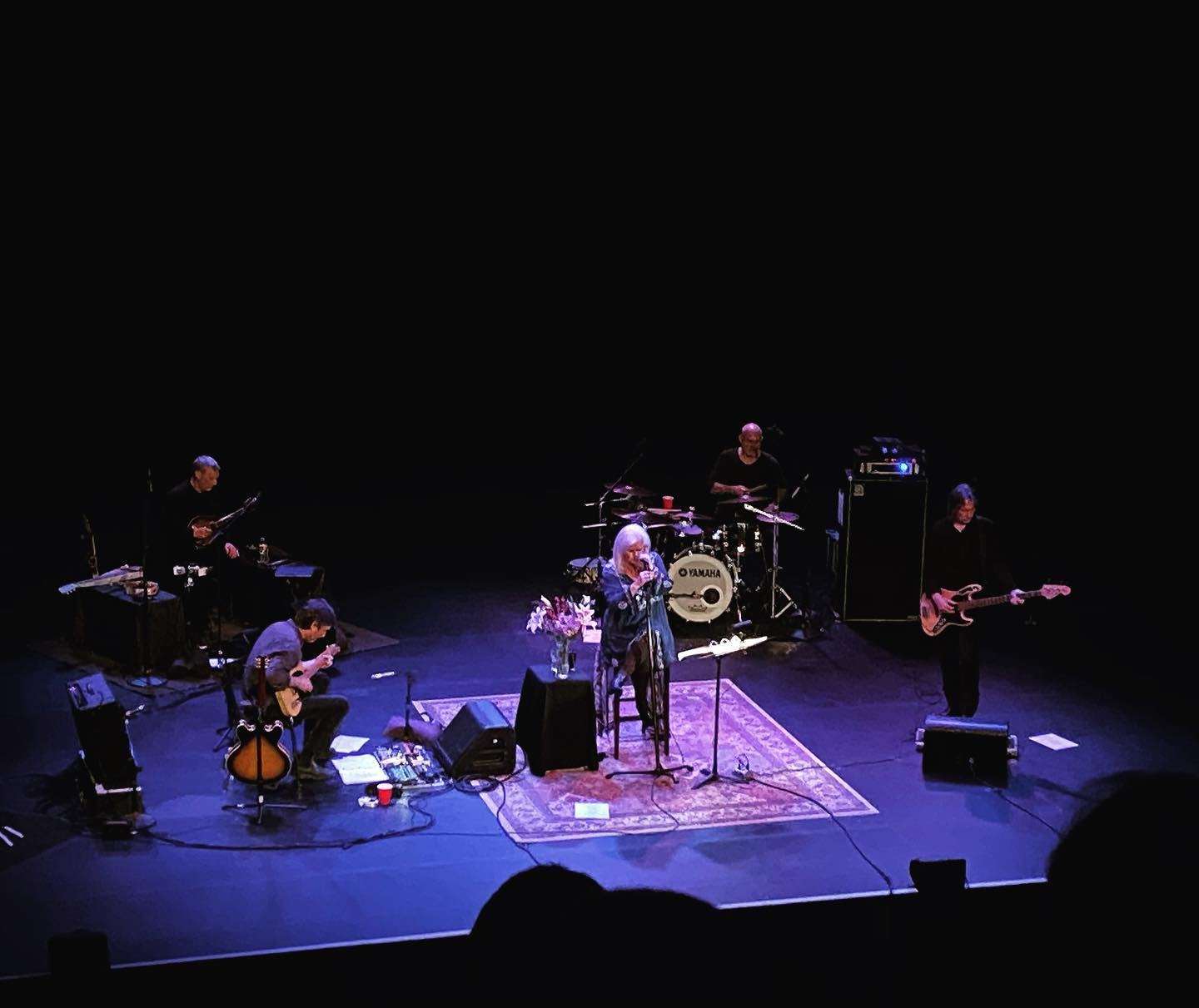
“Saying Cowboy Junkies ‘cover’ songs doesn’t quite do them justice. Like greats from the classic pop standards era, the Cowboy Junkies interpret the music of others. They embrace the songs, adapting them in their own style. The band’s latest release, “Songs Of The Recollection“, finds the band as distinctive and individual as when they started. Long admired for their carefully chosen covers, the new album consists of nine songs by some of the band’s favourite artists. Some of the tracks are newly recorded, while some are collected from earlier projects. Listen to “Songs Of The Recollection” and you’ll hear works originally written and recorded by Neil Young, Gordon Lightfoot, Bob Dylan, The Cure, Gram Parsons, Vic Chesnutt, The Rolling Stones and David Bowie that the Junkies make their own — and make them sound perfectly natural beside each one another. “Long before we were musicians, we were music fans,” says guitarist Michael Timmins.
We didn’t grow up sitting around the kitchen table playing instruments and harmonizing. We grew up sitting around the record player listening to each other’s record collections and having our minds blown. This was the passion that we shared.”
Musicians Margo Timmins (vocals) Michael Timmins (guitar) Peter Timmins (drums) Alan Anton (bass and keyboards) Jeff Bird (electric mandolin)
Songs of the Recollection which is released on March 25, 2022.
Today marks the 20th Anniversary of Tom Petty and The Heartbreakers’ induction into the Rock & Roll Hall of Fame by Jakob Dylan in 2002. TPATH performed legendary renditions of “American Girl” and “Mary Jane’s Last Dance” at the ceremony. “Tom Petty made us all believe by singing about ordinary experience in an extraordinary way. His vocals captured our soul with songs that sounded like hits the first time we heard them. He made his mark on music and our lives.” – Greg Harris, Rock Hall CEO
In celebration of the band as well as the critically acclaimed documentary Tom Petty, Somewhere You Feel Free: The Making of Wildflowers the Rock Hall has opened a new exhibit to spotlight the Wildflowers album. The exhibit features artifacts from the Wildflowers-era sessions and tour, including handwritten lyrics, instruments, and items from Tom’s personal wardrobe and has been extended through December 2022.
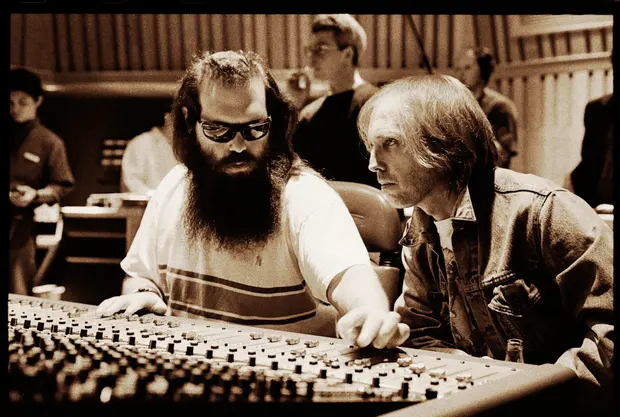
Last year, they sanctioned a four-CD box set titled Wildflowers and the Rest, which restored 10 songs excised from the original release, along with demos, alternative takes and live recordings of material from the original sessions performed over the next two decades. Wharton’s film draws on two primary sources – footage shot in the 90s during the Wildflowers recording sessions and fresh interviews she conducted with the Heartbreakers’ Mike Campbell and Benmont Tench, as well as with the album’s producer, Rick Rubin, and Petty’s daughter, Adria. The vintage footage, shot by the longtime Petty chronicler Martyn Atkins, ran four hours. Only 11 minutes of it has been seen before, as part of a press kit created at the time. The new documentary project began, said Wharton, after Petty’s daughter “found these cans of film in Warner Bros’ vault that she didn’t know existed. She felt something should be done with them,” she said.
The album Tom Petty considered to be the best work of his career chronicled the most tumultuous period of his life. Between the summer of 1992 and the spring of 94, the stretch in which he recorded his classic album Wildflowers, Petty’s 22-year marriage to the mother of his two children fell apart, he fired the drummer with whom he had worked since his Heartbreakers band began nearly three decades before, and he left both the record company for which he recorded all of his hits and the producer who shaped some of his biggest ones. “He was blowing up every aspect of his life,” said Mary Wharton, who directed a new documentary set in that dense era, titled Tom Petty, Somewhere You Feel Free: The Making of Wildflowers. “From his personal life to his business life to his creative life, Tom was trying to figure out how to put things back together in a way that made sense to him in that moment.”
In early 2020, a collection of 16mm film from 1993-95 was discovered in the archive of legendary artist Tom Petty. The film was shot while Tom was on a prolific song writing streak for years making what he intended to be a double album called Wildflowers. Tom Petty was known for being reclusive about his personal life and his creative process. “Somewhere You Feel Free” allows you to spend 90 minutes immersed in the candid and musically rich world of Tom’s creativity as he makes his first album with legendary producer Rick Rubin. With collaborators providing unrivalled access and featuring never before seen footage captured during the making of Wildflowers – Tom’s personal favourite album. “Tom Petty,Somewhere You Feel Free”, a small slice of rock history that becomes a loving and lovely portrait, has the ability to change the way you hear and see him too.” – “An enthralling experience” –
On 2nd October 2017, Tom Petty died at the age of 66 from what was ruled an accidental overdose of opioids, sedatives and an anti-depressant. An official statement by the family at the time stated that the musician had been taking that mix of medications to numb the escalating pain of emphysema, issues with his knees and a badly fractured hip.
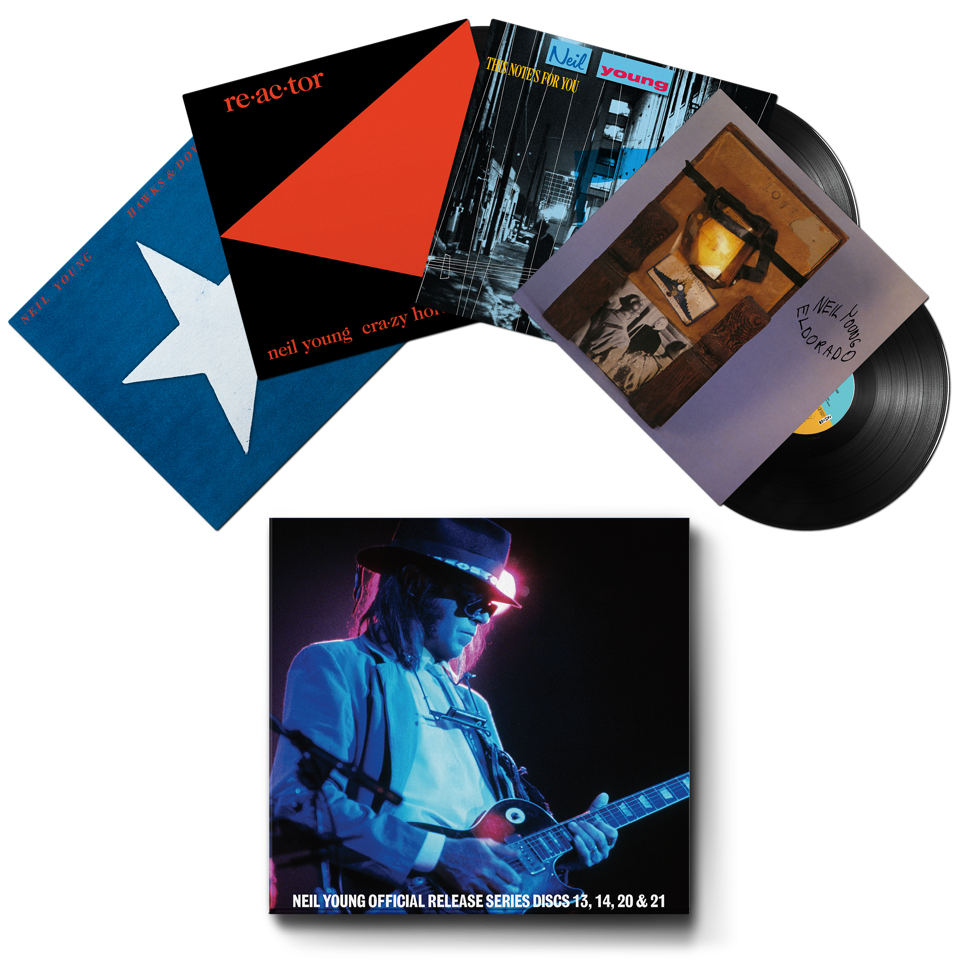
A new box set will bring together three of Neil Young’s ’80s albums, along with a rare EP making its widest release yet.
Official Release Series Volume 4, available April 29th, runs the gamut of Young’s eclectic output in the ’80s – likely because it only covers his releases on his long-time home base of Reprise Records. (From 1982 to 1987, Young signed instead to Geffen Records.) The ’80s were a time of transition and experimentation for Young – much of it done on Geffen, though sparks of that restless spirit are present on this set.
Young’s experiments and excavations led to some unique works that feature prominently in this box. The decade kicked off with the quick-fire “Hawks & Doves”, drawn from sessions spanning from the mid-’70s to 1980, the year of the album’s release. (At just under a half-hour, it’s one of his shortest LPs.) Neil’s dreaded ’80s run where he would release widely despised albums for much of the decade, I got more and more nervous about what these albums would actually be like. And while “Hawks & Doves” isn’t seen as the absolute bottom-of-the-barrel of his discography like certain other albums released only a few years later, it does get enough hate for me to become worried about just how far he may have fallen after such a long streak of amazing albums. Distracted by family strife, Young’s follow-up to the classic Rust NeverSleeps was a ragged collection of thrown-together country tunes and sundry offcuts. “Hawks & Doves” is wildly uneven, its title track flatly awful, but the good bits – the sinister “Captain Kennedy“, the beautiful “Lost in Space”, “The Old Homestead’s” lengthy allegory for his own career – are fantastic.
It’s often seen as Young’s first major dip in quality, something that would take a while for him to recover from. But while I can see why this isn’t as well-received as its predecessors, and it is certainly one of the weakest moments of his career thus far, it certainly isn’t a bad album by any means.
Young reunited with Crazy Horse for his next work, 1981’s“Re·ac·tor;”A Crazy Horse album that’s grinding, dark and repetitious (deliberately so; it’s influenced by a gruelling programme of treatment undergone by Young’s son), “Re-ac-tor” is hard work, occasionally uninspired and sometimes magnificent, as on the ferocious din of Surfer Joe and Moe the Sleaze and the concluding Shots.
This LP was notable for Young’s growing interest in the Synclavier synthesizer, which would figure prominently on his Geffen work, particularly the following year’s “Trans”. Inspired by his quadriplegic son Ben, an electronic Neil Young concept album with vocodered vocals was an incredibly bold move, so much so that Young padded it out with more straightforward material. The end result was a curious mess; the loveliness of “Transformer Man” was fully revealed only when Young played it acoustically on 1993’s MTV Unplugged.
After that at-times rocky tenure on Geffen, Young returned to Reprise in 1988 with a new band, The Bluenotes (later renamed Ten Men Working after objections from Harold Melvin). Their album together, This Note’s for You, sprung from blues-based mini-sets Young began incorporating into his sets a year prior. (“Nobody was yelling for ‘Southern Man’ like they’ve done throughout my whole fucking career,” he’d later quip.) Now armed with a new band and a full horn section,
“This Note’s for You” also found Young issuing some of his most incisive musical commentary of the decade, thanks to the sardonic title track that mocked the big-budget, sponsor-heavy tours from many of MTV’s biggest stars. While the broadsides against some artists was sharp enough that MTV itself initally banned the clip, they’d eventually award it a Video Music Award for Video of the Year.
The box closes out with a harder-to-find Young title: the 1989 EP “Eldorado”. Recorded primarily with bassist Rick Rosas and drummer Chad Cromwell, who’d played in The Bluenotes and here were dubbed The Restless, these five tracks laid the groundwork to Young’s next album “Freedom“, released later that year and featuring the rock radio hit “Rockin’ in the Free World.” But only three of the five tracks here actually ended up on “Freedom“, and in remixed form: “Eldorado” (editing some formidable guitar work by Frank “Pancho” Sampedro), a cover of the Mann-Weil-Lieber-Stoller hit “On Broadway,” and “Don’t Cry.” The other two tracks, “Cocaine Eyes” and “Heavy Love,” remain only available on this mini-album, which never came out beyond Australia and Japan. That, of course, changes with this set.
The ORS Vol 4 box set collects an eclectic set of decade-spanning sounds. “Hawks & Doves” (1980) revisits his folk roots and explores some of his most country-leaning offerings; the blistering “Re•ac•tor” (1981) showcases a stomping set of heavy, overdriven rock with Crazy Horse; and “This Note’s for You” (1988) casts Young as a big band leader, belting out intricately arranged blues. “The Eldorado EP” (1989) is full of feral distortion and earthy crunch featuring Young backed by The Restless (Chad Cromwell and Rick Rosas). It includes two thundering tracks — “Cocaine Eyes” and “Heavy Love”— not available on any other album. Those who pre-order “ORS Vol 4” will receive an instant download of “Cocaine Eyes.” All Greedy Hand Store purchases of “ORS Vol 4″ box sets come with free hi-res digital audio downloads from the Xstream Store at NYA.
Available on LP and CD, the box set includes classic ‘80s records “Hawks & Doves”, “Re•ac•tor”, and “This Note’s for You“, as well as the “Eldorado” EP, previously released only in Japan and Australia.
Both vinyl and CD box sets will be available for pre-order today and out on April 29th.
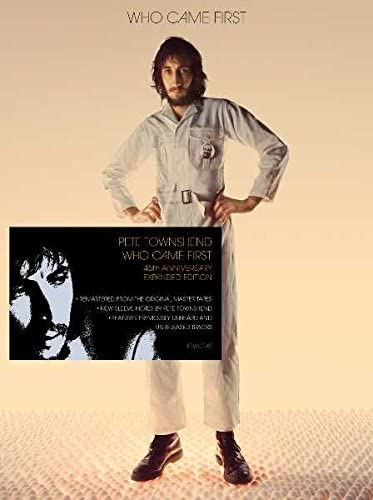
Originally released in October 1972, The 45th anniversary reissue of Pete Townshend’s debut solo album, “Who Came First“, came out April 2018.The original album collected together tracks from Townshend’s private pressings of his tributes to his then-guru Meher Baba, “Happy Birthday” and “I Am“, as well as demos from the unrealized concept album “Lifehouse“, part of which became The Who’s classic “Who’s Next” album.
The original album contains Townshend’s early versions of such favourites as “Pure and Easy,” “Time isPassing,” “Nothing Is Everything (Let’s See Action)” and “Sheraton Gibson”.
After the Who unleashed the barnstorming wee-wee on the wall that was “Who’s Next” in August 1971 There was excitement and confusion that accompanied “Who Came First” when it finally arrived in October 1972. With Pete standing on the front cover glaring out with violent intent to his recruits in what appeared to be a car mechanic’s freshly-cleaned overalls sporting a badge on his lapel of some grinning moustached Indian Guru geezer whilst standing on a platform of un-hatched chicken eggs in Doc Martens – I was intrigued and frankly a tad suspicious.
Housed in its glossy gatefold sleeve and sporting a natty foldout ‘Wave’ poster within it’s essentially a bunch of outtakes from the Lifehouse Project (tracks that had formed the guts of “Who’s Next”) with some new stuff and cover versions thrown in – Pete’s first solo album seemed weirdly low-key almost. But on repeated listens of this PT solo record, its music stood alone his ideas too. This was also a more leisurely sounding project – Folksy – Country and Americana – more melodic in its approach.
Some of the tracks on “Who Came First” misses the dynamic of the Who band members especially RogerDaltrey’s distinctive vocals that somehow elevated everything PT wrote. The opening side 1 piece “Pure And Easy” was written and recorded by The Who for the Lifehouse Project in 1971 and has been a CD Bonus Track for “Who’s Next” reissues in 1995 and the 2003 Deluxe Edition 2CD set. But that version is the New York Record Plant Sessions mix of 4:30 minutes – here Townshend uses his own Home Demo version at 5:32 minutes. Up next is the thematically fitting, truly lovely and evocative Folk melody of “Evolution” with the FacesRonnie Lane on Lead Vocals. Here he covers one of his own songs called “Stone” (re-named “Evolution” ) that first turned up on Side 1 of the Faces March 1970 debut album “First Step”. Its lyrics wittily talk of consciousness evolving over millennia – a spiritual theme central to Baba teachings. Lane and Townshend were not just good friends but a singer-songwriter match made in musical heaven They would do a celebrated duet album together released October 1977 called “RoughMix” on Polydor Records all fabulous stuff – and an LP that once again returned to both Country and Americana tunes and styles something that clearly both men loved and were steeped in. Lane was also a BM follower at the same time as Townshend and the Live Version of “Evolution (Stone)” on Disc 2 at his Memorial Concert in 2004 is seriously charged stuff (sung by Pete. You can feel it in the band, the audience and Pete’s awkward but emotional spoken intro about consciousness.
Even better is “Forever is No Time At All” written by Billy Nicholls and Katie McInnerary (with Nicholls at the microphone). Both followers of Meher Baba – Ronnie Lane and Billy Nicholls also shared a musical connection between them. Nicholls had done an ultra-rare withdrawn LP for Immediate Records in 1968 called “Would You Believe” (on Immediate IMCP 009). This hallowed and revered beast because the players on it are liable to send most collectors into hysteria – John Paul Jones pre Led Zeppelin, SteveMarriott, Ian McLagan, Kenney Jones and of course Ronnie Lane of the Immediate period Small Faces, Caleb Quaye of Elton John’s band and Hookfoot alongside ace piano sessionman Nicky Hopkins. Townshend rated Billie’s opinions and Nicholls also had an extraordinarily expressive voice – something wonderfully British about it – a little like Ronnie Lane.
The records most famous song has a history all to itself as well. The full 6:15 minute album-version of “Let’s See Action” ending Side 1. I’d agree with most fans by saying that the edited and more punchy single mix of “Let’s See Action” issued a full year prior as a stand alone band 7” single (Track 2094-012, October 1971) with Roger Daltrey on lead vocals – is way better. But any number of variants on this track is all right by me. Over on Side 2 the cover version of Ray Baker’s “There’s A Heartache Following Me” is a Country Strum that predates the whole sound achieved on “Rough Mix” six years later. Maud Kennedy’s poem make up the lyrics to “Content” – clearly one of Pete’s faves on the album – a song that is both pretty and somehow sad too – alone with the truth – trying to be brave settling for being contented with his lot. With all of its fawning and swooning towards Baba – “Parvardigar” kind of makes me cringe but if you’re a fan – the Audio is fantastic.
Opening the Bonus Tracks CD is “His Hands” – an instrumental that was recorded for the third and last Meher Baba magazine disc in the Goring-On-Thames converted studio Pete purchased in 1971. Lovely and so apt to this project – that leads into “The Seeker”. Not as good in any way as the officially released WHO single – it’s still a thrill to have any variant of it over and above. Both “Day Of Silence” and “Sleeping Dog” again were on the Ryko CD – the first track referring to 10 July – a day where Baba followers observe ‘silence’ all day as he had done every year since 1925. “Sleeping Dog” reflects the domestic bliss he was feeling at the time (wife and kids in bed while he recorded). Can’t say any of the Edits impressed but the near 10-minute “Baba O’Riley” is an absolute blast – here the “Who’s Next” opener given free reign. Just when you expect “…out here in the fields…” to come roaring in you get more of the opening and then that riffage. It then layers more and more keyboards with a WHO twist – fab. And despite the sudden break at the end of “Nothing Is Everything” the shorter guitar and vocals demo already displays brilliance and I can see why he included it.
The anniversary edition was remastered by long time Who collaborator Jon Astley using the original master tapes. CD1 is the original album as it was released. CD2 includes unreleased tracks, alternative versions of many of the songs and live performances.
The 2-CD expanded version of the album features eight previously unreleased tracks (including a breath-taking and nearly 10-minute instrumental version of “Baba O’Riley”), new edits, alternative versions and live performances.
Also included in the eight panel digipak are new sleeve notes provided by Townshend himself, the original poster from the 1972 release and a 24-page booklet which contains rare images of Meher Baba and Townshend in his recording studio. The cover photo of Townshend, taken by Graham Hughes (who also shot the cover of The Who’s Quadrophenia), was updated for the release.
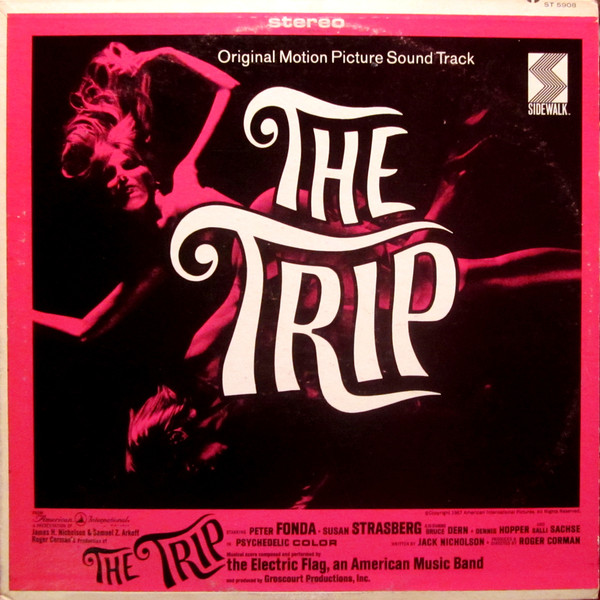
The Electric Flag (American Music Band) – “The Trip” LP
Legendary director Roger Corman, known for his B-movies for the American International Pictures, had filmed 1967’s The Trip about an LSD trip. The filming was done during a 17-day period in and around Sunset Strip in Los Angeles and starred Peter Fonda, Susan Strasberg, Bruce Dern, Salli Sachse and Dennis Hopper.
Gram Parson’s International Submarine Band was originally suggested to record the soundtrack but Corman did not feel that Parson’s group’s music fit the movie. Peter Fonda suggested Mike Bloomfield’s band, which did not yet have a name. The recording was done over a ten-day period for Sidewalk Records, owned by Mike Curb, which had distribution through Capitol Records. The movie was released and the soundtrack followed a short time later. It was a landmark album that broke barriers, and featured a mixed racial group that played a unique blend of blues, rock, classical and avant-garde music—the first rock band to have horns (ahead of Chicago and Blood, Sweat and Tears) and the first to feature a Moog synthesizer. Since the band did not have a name, the group was credited as The American Music Band..
Virtually all of the 50th anniversary retrospectives commemorating the Monterey Pop Festival of June 16-18th, 1967, focused on the weekend’s breakout artists and big-name stars—Janis Joplin, Jimi Hendrix, OtisRedding, the Who, Ravi Shankar. But one of the most anticipated performances among attendees of the festival has been largely obliterated with time: that of the Electric Flag.
If the name draws a blank, perhaps it’s because they weren’t very flashy or because they didn’t last long enough to make much of an impact. They only cut two albums with the original line-up, the first a soundtrack to a cheesy psychedelic exploitation film titled “The Trip” that barely made a dent, getting only a handful of reviews (mostly indifferent) in the nascent rock press.
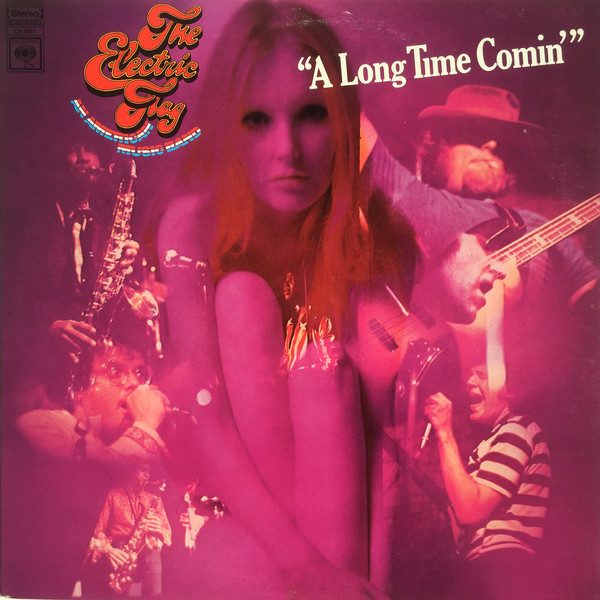
But the Electric Flag’s other album is a stone gem. “A Long Time Comin’” remains a favourite of many and holds up better than so much music of its era, even if it’s become something of a footnote over the long haul.
A bit of background. The Electric Flag was the brainchild of Mike Bloomfield, who, as one of the two guitarists in the exalted Paul Butterfield Blues Band, had become the very definition of American rock guitar god before such a designation really existed. Bloomfield had, in the mid-’60s, seen his reputation explode precipitously. Discovering and falling in love with his city’s blues music in his teens, he took up the guitar and began to find work as his skills increased exponentially. Even before he met Butterfield, he was often invited to sit in with the great black Chicago blues masters at a time when such a thing just wasn’t done—particularly by a white Jewish kid.
He’d joined the Butterfield outfit—Butterfield on vocals and harmonica, Elvin Bishop on second guitar, keyboardist Mark Naftalin, drummer Sam Lay and bassist Jerome Arnold—in 1965 and played on the group’s self-titled debut album for Elektra Records, recorded that September and released the following month. But even before that, in the summer of ’65, the buzz around Bloomfield had already grown—enough so that Bob Dylan tapped him to play lead guitar on his new “Highway 61 Revisited” album and on “Like a Rolling Stone,” the single that would establish Dylan as a rock god and send him on his way toward becoming one of the most significant cultural icons of the century.
Bloomfield stayed with the Butterfield organization long enough to record one more album the following year, the masterful “East-West”, which (with Billy Davenport replacing Lay) took the group beyond the confines of blues into music that owed as much to modal jazz and raga as it did to Muddy Waters and Howlin’ Wolf. The extended jam that formed the basis of the title track remains even today an astounding listen, far ahead of its time. The other tracks, including its instrumental cover of Nat Adderley’s “Work Song,” Robert Johnson’s “Walking Blues,” Allen Toussaint’s “Get Out of My Life Woman” and even Michael Nesmith’s “Mary, Mary,” all added up to one of the most impressive albums of the ’60s, a ground breaker on par with the sounds coming from England via bands like Cream, who also used the blues as a take off point but didn’t stay there very long.
By early 1967 Bloomfield was getting restless. He knew it was time to move on from the Paul Butterfield Band into his own thing and set out to put together a band that would stay rooted in black music, with an emphasis on funky soul as well as Chicago-style blues. That would mean a horn section—Bloomfield, like so many of his contemporaries, was enamoured of the acts signed to Memphis’ Stax Records and the musicians who played in the label’s house band. He wanted something similar, but also wanted to keep his new creation open-ended enough to incorporate elements of other genres such as jazz and gospel, as well as the psychedelicizing that was so prevalent in the studios and rock stages of the day.
One by one, Bloomfield found his band. Setting up camp in Marin County, north of San Francisco, he recruited keyboardist Barry Goldberg, who’d played with Dylan at the game-changing 1965 Newport Folk Festival, and bassist Harvey Brooks, who’d been on “Highway 61″. While in New York, Bloomfield saw a 19-year-old drummer named Buddy Miles backing up soul giant Wilson Pickett, decided the kid was the best drummer he’d ever witnessed, and made him an offer he couldn’t refuse. He hired Nick Gravenites, a fellow Chicagoan who’d already settled in San Francisco, where he worked with locals like Big Brother and theHolding Company and Quicksilver Messenger Service.
The horn players—Peter Strazza and trumpeter Marcus Doubleday—arrived via recommendations. The new band, dubbed the Electric Flag and appended with a descriptive subtitle—“An American MusicBand”—had barely had any time to discover its direction when they were hired to provide the soundtrack for “The Trip”, starring Peter Fonda that, as its title makes clear, existed solely to exploit the popularity of LSD among a growing segment of the youth market. The band (augmented by Paul Beaver on Moog synthesizer) rehearsed and recorded in Hollywood during April and May 1967, turning out a set of hastily composed Bloomfield tunes with titles like “Flash, Bam, Pow,” “Psyche Soap” and “The Other Ed Norton.” The soundtrack album was eventually released on the low-budget Sidewalk label but Bloomfield and the others had largely forgotten about the project once they finished their part.
Anyway, they had bigger things to think about: They’d been invited to make a high-profile public debut at the Monterey Pop Festival in June. Their set at the fest was short—only four songs—and although Bloomfield would say that it did not display what the Electric Flag was fully capable of, they were well received. Documentarian D.A. Pennebaker filmed the band’s entire set but elected not to include any of their music in his film, Monterey Pop.
This outtake, the band’s opening number, a savage workup of the traditional “Wine” featuring a killer Bloomfield guitar solo, is proof that perhaps Pennebaker made the wrong call at least once while assembling his film. With Monterey behind them, the Electric Flag set about recording in earnest their proper debut album, which they’d begun days before the festival. Now signed to Columbia Records, they took several months to make the record. By the time it was completed in early 1968, they’d already begun to splinter, with Goldberg the first to leave.
But what a stunner they finally released that March. The appropriately titled “A Long Time Comin”, which included contributions not only from the official band members but also multi-instrumentalist Herb Rich, Stemsy Hunter on alto saxophone, Michael Fonfara (Goldberg’s replacement) on keys and a host of guests, remains—a virtually perfect album.
Naturally, Bloomfield’s guitar is showcased often. Right off the bat he solos ferociously on top of whatever else is happening throughout the opening number, a sizzling cover of Howlin’ Wolf’s “KillingFloor” (prefaced by a snippet of a speech by then-President Lyndon Johnson, followed by laughter).
Gravenites’ vocals are alternately smooth and tough, cool and self-assured on tracks like “Groovin’ IsEasy” and the breakneck-paced “Wine,” and Miles, in addition to emerging as one of the hottest new drummers on the scene, also proved a formidable soul vocalist.
“A Long Time Comin’was a fine, modern production (by John Court) that earned raves from progressive-minded listeners seeking a new direction and, especially, from fellow musicians. Alongside other new bands like Blood, Sweat and Tears and Chicago, the Electric Flag ushered in a new branch of jazz- and soul-informed rock that valued tight horn charts as well as guitar pyrotechnics. “A Long Time Comin’ lives up to Bloomfield’s desire to create an American music pastiche, from the soul-stomper “Over-Lovin’ You” to “Texas,” a more traditional slow blues. Goldberg’s “Sittin’ in Circles” is a multi-textured ballad that he’d also record with his own group, the Barry Goldberg Reunion.
That it didn’t last is both a shame and, in retrospect, inevitable. Although they played a number of highly touted gigs (including a run at San Francisco’s Fillmore Auditorium opening for Cream), Bloomfield would grow weary of the idea quickly—his next move, in May 1968, was to team with Al Kooper, another Dylan alumnus, who’d vacated his role as the keyboardist/vocalist of Blood, Sweat and Tears, for an album they called “Super Session” (also featuring ElectricFlag members Brooks and Goldberg, as well as Stephen Stills). It out-performed the Flag’s debut.
The Electric Flag attempted to stay afloat in the wake of Bloomfield’s departure, with Miles the nominal frontman now, but it was a losing proposition. Miles would form his own Buddy Miles Express and then entertain an invitation to join Jimi Hendrix in the short-lived Band of Gypsys (Buddy Miles died in 2008). Bloomfield’s solo career found him staying close to the blues of his roots, some projects more artistically viable than others. Although he continued to record and perform live regularly, he never recaptured the glory he achieved as a bona fide rock guitar hero.
The Electric Flag—with Bloomfield, Miles, Gravenites and Goldberg aboard—reunited for a while in 1974 but by that point the spark they’d captured briefly seven years earlier had left.
Mike Bloomfield died February. 1981, victim of a drug overdose, found slumped in his car. He has since been the subject of books and a documentary film and was inducted into the Rock and Roll Hall of Fame in 2015 as a member of the Butterfield crew. Most aficionados agree he reached the pinnacle of his creativity during the stretch that took him from Dylan sideman through Butterfield and into the ElectricFlag. But even at his most uninspired, later in his life, there were few guitar players that could do what he could with six strings.
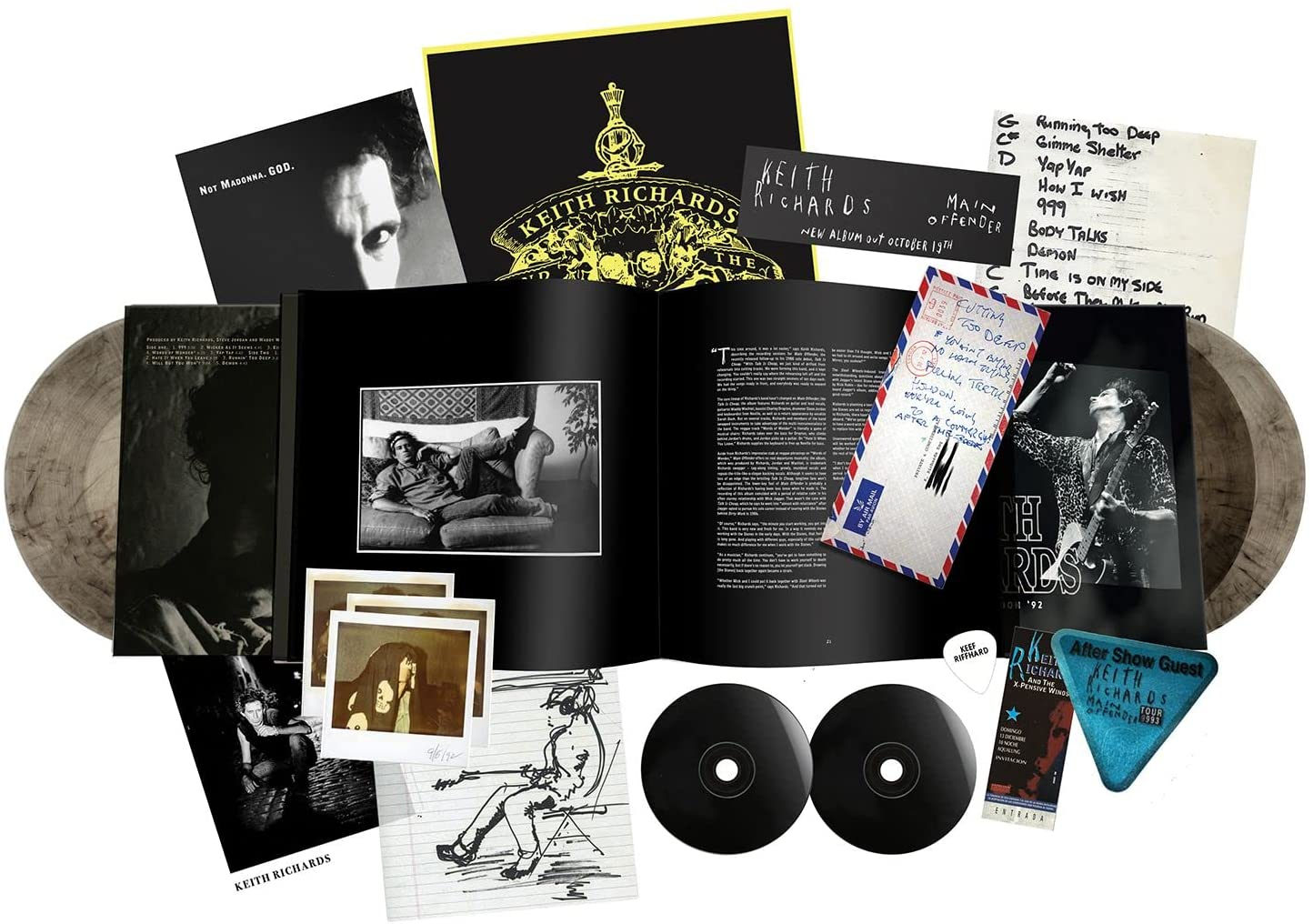
“Main Offender“, the second solo album by Rolling Stones guitarist Keith Richards, was released in 1992, four years after “Talk Is Cheap“, and features Richards’ band The X-Pensive Winos, comprised of drummer Steve Jordan, guitarist Waddy Wachtel, bassist Charley Drayton, keyboard player Ivan Neville, singer Sarah Dash and backing vocalists Bernard Fowler and Babi Floyd.
Keith Richards’ second solo album, 1992’s “Main Offender”, recorded with the X-Pensive Winos, has received a variety of 30th Anniversary editions featuring a host of previously unreleased live recordings. The title released in multiple formats on March 18th, 2022, via BMGRecords, spanning from a single CD or LP through a Deluxe edition and Super Deluxe edition. The bonus highlight is the “Winos Live inLondon ‘92” performance recorded at the Town & Country Club, in Kentish Town, featuring such RollingStones tracks as “Gimme Shelter” and “Happy.”
The album was originally released in October 1992 and features the much-loved X-Pensive Winos: Jordan, guitarist Wachtel, bassist Charley Drayton, keyboard player Neville, singer Sarah Dash and backing vocalists Bernard Fowler and Babi Floyd.
Richards says: “This is the second time around and the Winos are kind of developing…If I hadn’t have taken the Winos on the road, this record would probably have been totally different than it is. I tried to avoid making too much sense on this record because to me that ambiguity and mystery, and a little provocation to make you think, is something far more powerful and more important than just wagging your finger and saying, ‘I know what he’s saying — don’t do this, do that.’ If you’re a musician, silence is your canvas, and you never want to fill in the whole thing because then you’ve just covered it all … One of the most interesting parts about music is where you don’t play.”
In 2021, Jordan sat behind the drum kit for the Rolling Stones’ U.S. tour. “Once again, it was Charlie Watts that nominated Steve to take his place because he knew he wasn’t going to be able to make the tour,” Richards said. “He thought that he was going to maybe just replace for a bit, but as it turned out, well … And Steve’s been a great friend of the band since we both got together. And so Mick and I and Steve worked sometimes together in rehearsing places. So he was not like a total stranger, but for me it felt very comfortable to have my old friend solid there on the seat.”
“Steve and I had been working. We just finished Hail! Hail! Rock ‘n’ Roll, the Chuck Berry movie. And by then, we were hooking, pretty much solid all the time. I said, ‘We should keep this thing going, man. What if I call Waddy Wachtel and Ivan Neville?’ And everything just fell into place. And it’s yeah, a little dream band of mine that. Hey, it’s 30 odd years ago now. But I always remember that period working with the Winos as such. It was like a vacation there. Hard working man, because those cats are very meticulous. Because they knew that it was my first time out as a lead, as a front thing.
The 10-tracks on “Main Offender” include the singles “Wicked As It Seems,” “Eileen” and “Hate It WhenYou Leave.” The album was produced by Richards, Wachtel and Jordan. The bonus live album was mixed and produced by Jordan.
“Main Offender” is the latest collection of Richards’ archival material to be released and follows 2021’s “Live at the Hollywood Palladium” and 2019’s expanded edition of his first solo album, “Talk is Cheap”.
Keith Richards ‘Main Offender’ (30th Anniversary Edition) featuring the previously-unreleased Keith Richards & the X-Pensive Winos “Live In London ’92” concert – available March 18th:
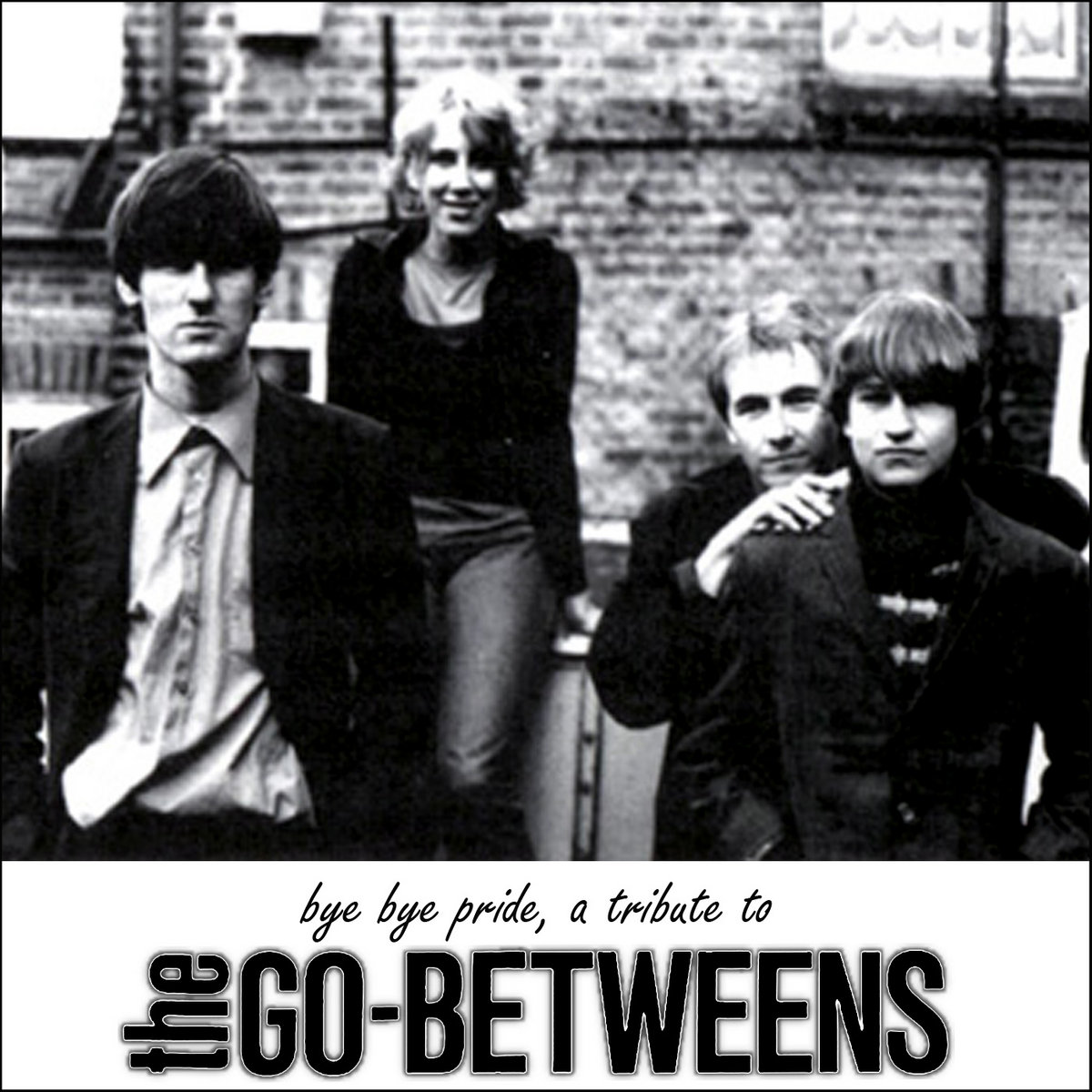
Geniuses will always be geniuses …..And I could not define in another word what happened in Brisbane, Australia in the distant year of 1977 ….
The Union of Robert Forster and Grant McLennan generated one of the most beautiful bands that the universe has given us, the name, well everyone knows, or should know, The Go-Betweens.
This project is our small tribute to the magnificent work that these magicians created. My special thanks to all the bands that are part of this project. And, briefly, the main feeling everyone wants with this project is that…. “Loves Goes On”…anyway.
In memory of the eternal Grant William McLennan.
All songs were originally recorded by The Go-Betweens
Realization and production: The Blog That Celebrates Itself Records
An extensive 6CD box set devoted to one of the key innovators of the ‘60s psychedelic sound featuring their entire output, rarities and demos.
Featuring the first CD issue of the mono mix of the ‘Mass In F Minor’, the collection also compiles the original dedicated mono 45 mixes, plus rare cuts, early demos, and extended takes, as well as the legendary live recording of the band captured in Stockholm during their European tour in late 1967, all lovingly remastered by Alec Palao. To complement these unique psychedelic sounds the box set includes a comprehensive history of the group by Gray Newell, featuring in-depth recollections from original vocalist James Lowe, and from key member of the later incarnation of the band, Richard Whetstone, making this the definitive Electric Prunes’ collection.
The Electric Prunes came together in Southern California during 1966 and soon became regarded as one of the seminal US psychedelic groups, thanks to the hit singles ‘I Had Too Much (To Dream Last Night)’ and ‘Get Me To The World On Time’.
Through their various incarnations, the Prunes recorded five albums for the Reprise label between 1967 and 1969 with legendary producer Dave Hassinger helping to create their unique and distinctive psychedelic sound.
Under the direction of composer and arranger David Axelrod, the Prunes helped pioneer the Religious Rock genre with the ‘Mass In F Minor’ and ‘Release Of An Oath’ LPs. This collection brings together their entire output for the very first time, including stereo and mono versions of their first three albums.
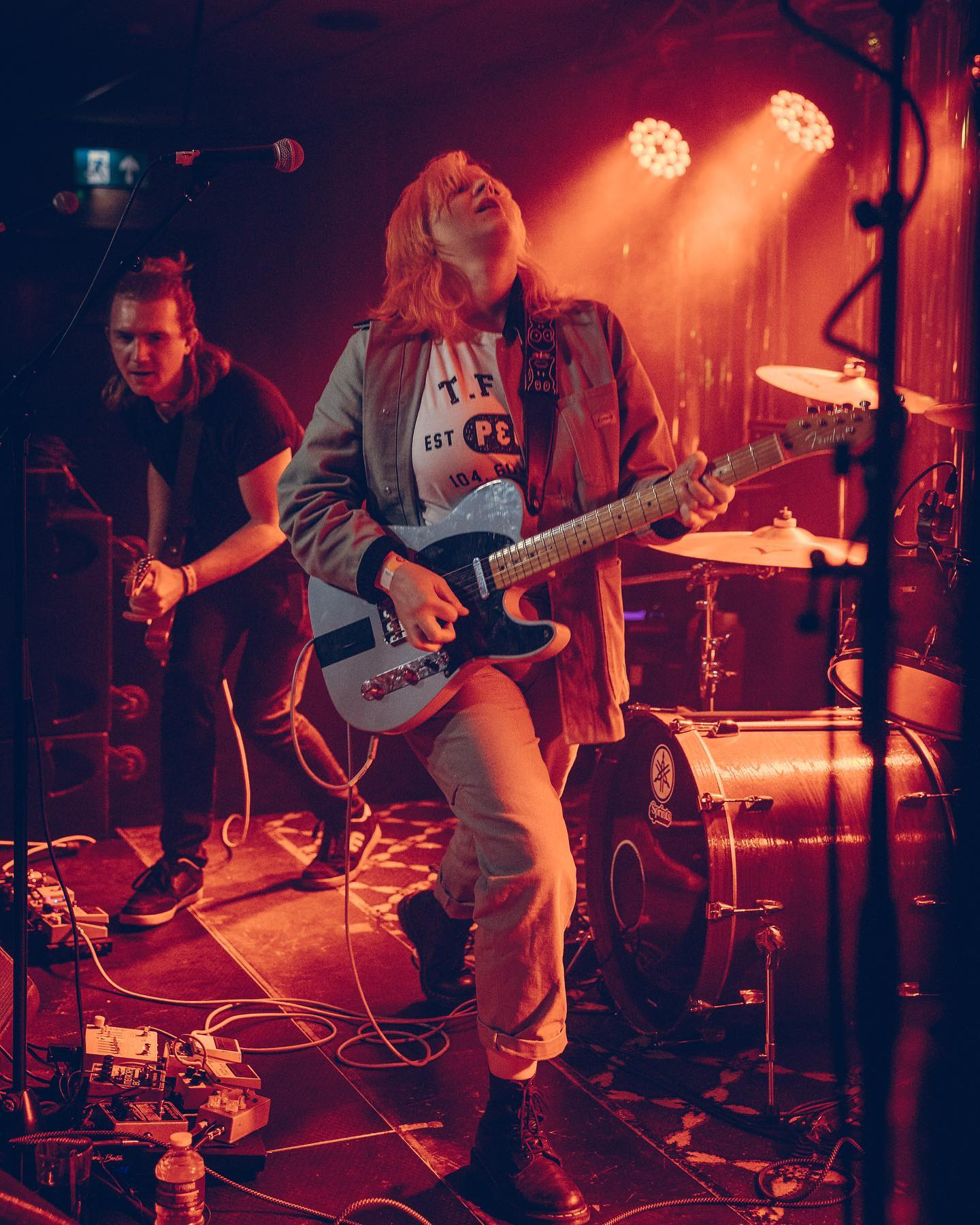
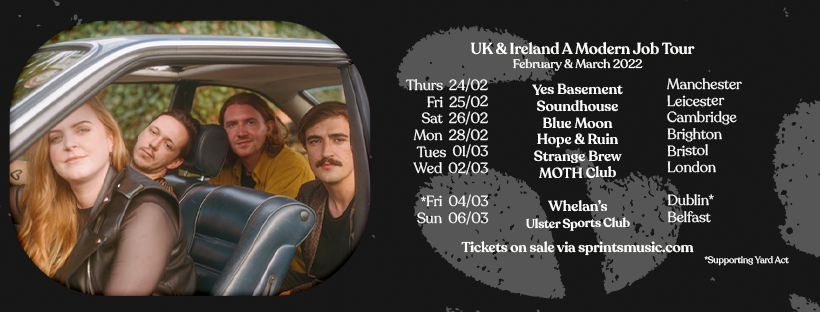
Dublin based band Sprints have released their second EP “A Modern Job” via Nice Swan Records. The 5 track EP is again produced by Daniel Fox of Gilla Band and follows their 2021 debut EP release “Manifesto“.
Formed in 2019 Sprints comprise guitarist and vocalist Karla Chubb, guitarist Colm O’Reilly, drummer Jack Callan and bassist Sam McCann. Together they are a formidable whole, producing raucous, spine-tingling and intensely personal songs. As Karla further explains: “Our only ethos in music is to write something that matters and that means something. It’s all about expressing our identities and injecting our personalities into it.”
The EP opens with ‘How Does The Story Go?’. The lyrics include the line: “I’m the only fucker in this place who isn’t doing fine, and I’m not fine.” Singing along to this feels cathartic and liberating. The irony here is the majority are probably thinking and feeling the same, and to sing this en masse releases that negativity. The track refers to a friend who is moving on: “The cards are stacked, and the house is packed and I wanna go home”.
Next track ‘Modern Job’ which as Karla states: “is just really my entire life’s crisis in one song.”
The pressures of society and the media to achieve the things which they dictate will make us happy can be over-bearing. Sprints write gems of lyrics which are instantly relatable: “I wish I didn’t count the days by the things I didn’t say.” Sprints sing they wish they had it all, but know that self-acceptance is the key to happiness, and if that means not conforming to society’s norms then so be it.
The first unreleased track on this EP is ‘Delia Smith’ and I’m intrigued by the opening line: “My Mum always liked Delia Smith and I drank drank drank just to deal with my shit.”
Again its raw and that electric guitar mid-track adds a fizzing static. The lyrics are brutally honest sung in the first person. Wrapped in a punk soundscape the delivery is passionate and heartfelt with the vocals building in their intensity: “Who want to be special anyway, Me fucking me and I’m not ashamed”.
‘Little Fix’ is the last single and continues the energy and social commentary of the pressure of fitting into society. The closing track is ‘I’m In A Band’ and it’s a riot. Begins with scuzzy guitars which continue throughout the track. Here Karla shares lead vocals with bassist Sam. Karla sings as if bored by the questioning: “Everybody asks, everybody asks, are you in a band? Yeah I’m in a band Everybody asks, everybody asks, are you any good? Yeah I think we’re good”
When it comes to Sam the lyrics are: “Everybody says, everybody says, are you in a band? Yeah I’m in a band, Everybody says, are you any good? Yeah I think we’re tough” Just that slight tweak shifts the meaning with humour. The energy does not let up until the final note and by the time you get to the end of this track, trust me, you will start this EP all over again, after all ‘How Does The Story Go?’
Sprints travel to Sustin Texas event SXSW, have various festival appearances in the summer, and headline their biggest gig to date at The Dome Tuffnell Park in October.
In 2020, Ganser navigated the tricky task of releasing their sophomore LP “Just Look at That Sky” during the height of a pandemic, not realizing that its art rock tendencies, dark humour, and themes of internal emotional weather would resonate with the likes of Rolling Stone, The Quietus, Paste, Vice, Sound Opinions, Bandcamp, Brooklyn Vegan, and more year-end lists. With tour plans cancelled, the challenge of safely filming, directing and editing music videos, and speaking out on sexism and racism within the music industry online a constant conversation, the band made new connections with artists also confronted with making art in 2020. Now, they return with an EP of collaborations “Look at the Sun”, partnering with a diverse guestlist of artists for remixes of tracks from the critically acclaimed JLATS.
“I feel like there’s a group of us that released any kind of art project in 2020, we were all on Twitter wondering what the hell was going on, doomscrolling. We were all reacting to everything that was happening in real time, it felt like a surreal limbo. In a way, it was very vintage internet, commiserating with folks we’ve never met in person yet. The idea of getting back into the world, finally meeting Sadie and Bartees, it’s something to look forward to.” -Alicia Gaines, Ganser
The remix EP, “Look at the Sun“, draws its collaborators from a wide range of connections. From past shared stages in the form of GLOK’s Andy Bell and Girl Band’s Adam Faulkner, to 2020 tours meant to be with Algiers, and new relationships built online in lockdown (Sad13, Bartees Strange), “Look at the Sun” embodies connections made online when real-life ones weren’t possible. The process was not unlike choosing the attendants of an ideal dinner party, whose styles would play well while also bringing their unique sound to the table. What resulted was an incredible mix of talented artists collaborating to make something truly lovely in the wake of a very hard year.
Released May 6th, 2021
Ganser is Alicia Gaines, Nadia Garofalo, Brian Cundiff, & Charlie Landsman. All songs written & performed by Ganser except “Bags for Life” trumpet and trombone performance by Kevin Natoli & Michael Cox.




:format(jpeg):mode_rgb():quality(90)/discogs-images/R-8189152-1457562831-9287.jpeg.jpg)


 The Fat Angel Sings