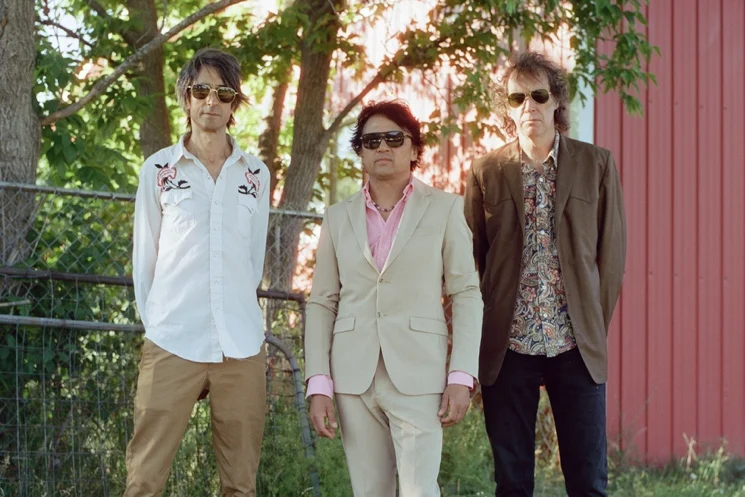
This summer, it looked like the Sadies might never play together again. Singer-guitarist Dallas Good had died tragically a few months earlier, and drummer Mike Belitsky was set to have emergency wrist surgery, forcing them to cancel live dates. Knowing that they might never play together again, they staged an intimate show for family and friends, and they reached out to documentarian Ron Mann to film it.
The resulting film,“The Sadies Stop and Start” a life-affirming performance film that captures a band in a moment of urgency, playing together as if it might be for the very last time.
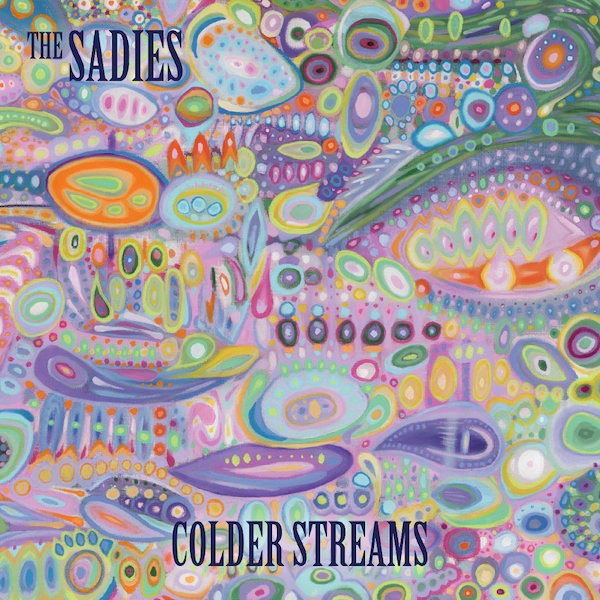
In “Stop and Start”, the Sadies play gorgeous cuts from this year’s “Colder Streams” named one of the best albums of 2022. Performing as a trio, the songs are sparse and beautiful, the stripped-down arrangements highlighting Travis Good’s lightning-fingered guitar solos and plaintive cries. “Are you still there? / Tell me when you get the message,” he howls on “So Far So Few” before tearing into a fuzzy, feedback-soaked surf solo, Belitsky and bassist Sean Dean holding down the rapturous rhythm. A shrine to Dallas, located at the side of the stage, is a poignant reminder of who’s missing.
“Stop and Start” was beautifully captured by Ron Mann, who was only given one day’s notice to assemble a crew — and the results feel as if you’re right there with the Sadies in the cellar, moving amongst them as they perform and sharing the emotional intensity of the moment. The crystal clear audio was expertly captured by James McKenty in his mobile recording trailer, In Record Time Studio.
Watch the premiere of the 23-minute film below, along with a statement from the band.
The Sadies “Stop and Start” captures a moment in time. That time was uncertain and dark. Still reeling from losing Dallas, we found out that Mike needed to have emergency wrist surgery. We needed to play these songs, not knowing if we would ever have the opportunity again.
Since their formation in 1994, Toronto’s Sadies have developed, even perfected, a style of music that is uniquely their own. Possessing a deep fondness and reverence for the best of country, bluegrass and blues (CBGB!), they are equally informed and influenced by everything from 60s garage and psychedelic rock (Pebbles, Nuggets, et al) to surf instrumentals and punk rock.
The quartet’s newest album, “Colder Streams”, is their best album yet. Produced by Arcade Fire’s Richard Reed Parry, the 11-song platter exhibits again why The Sadies are in a league of their own
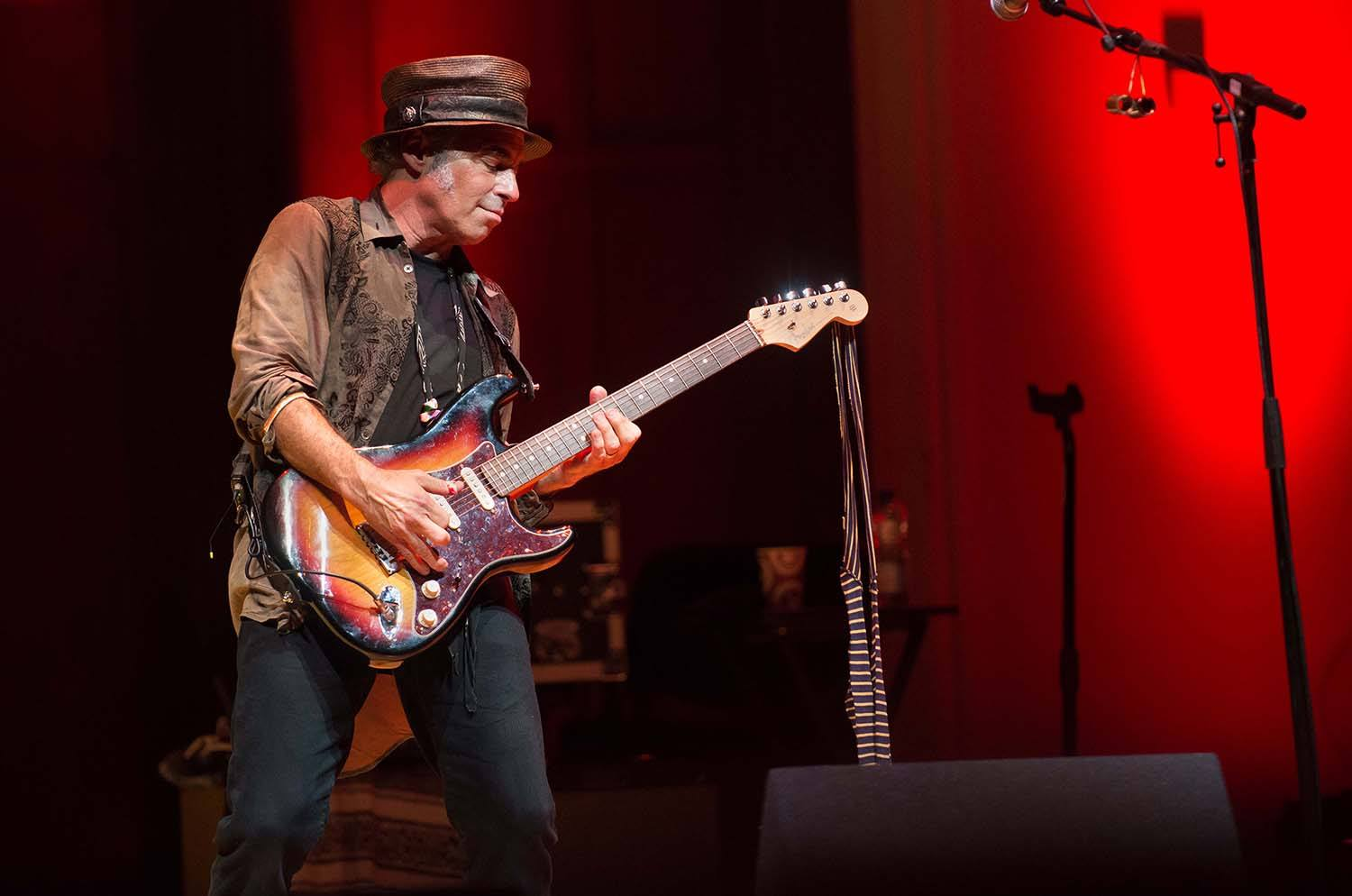
For over fifty years, Nils Lofgren has been astonishing audiences with his wizardry on the guitar. At the age of just nineteen, he was a key contributor to Neil Young’s classic album ‘After the Gold Rush’ and this experience helped to launch a glittering career in music. Hugely respected for his work with Neil Young and Crazy Horse and as a member of Bruce Springsteen’s E Street Band since the 1980s, Lofgren consistently delivers tremendously high levels of technical ability, along with passion and musical freedom.
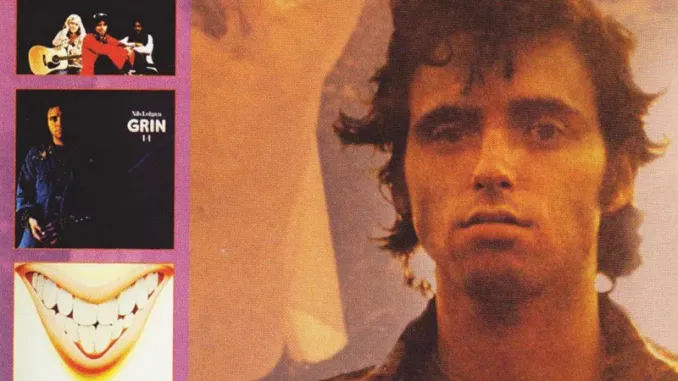
After four albums with his band Grin in the early 1970s, Lofgren embarked on a solo career, beginning with his critically-acclaimed self-titled 1975 debut, which was described as, “…the best rock album this year,” by the influential Jon Landau in his Rolling Stone review. Over the years, Lofgren has shared studios or stages with the likes of Lou Gramm, Lou Reed, Patti Scialfa, Willie Nelson and Jerry Lee Lewis. Twice, he was invited to be part of Ringo Starr’s All Starr Band alongside Rick Danko and Levon Helm. Back in the day, he was well-known for his on-stage athletics, playing the guitar while literally somersaulting on a trampoline.
Probably the first time most of us heard of Nils Lofgren was when he appeared on Neil Young’s ‘After The Goldrush’ album. He was 19 at the time and had his own band, Grin. Their four albums, released in the wake of ‘After The Goldrush’ are all recommended but it was when Lofgren delivered his first solo album in 1975 that he really took off. Bedecked in rock’n’roll gypsy clothing, an ace guitarist (who also played accordion and piano) and who used his high school gymnastics background on stage when he would play a guitar solo while somersaulting on a trampoline, his live shows were quite spectacular. Nils remains a close affiliate of Young and Crazy Horse, but he’s also been an integral part of Springsteen’s E Street Band since around 1984 while he has continued to deliver his own albums which never fail to delight.
Although revered for his other-worldly fretboard skills, there is much more to Nils Lofgren. His singing voice is simply gorgeous, silken smooth and full of emotional warmth. Also, he is a fine songwriter, equally comfortable creating out-and-out rockers and melodic ballads. Lofgren is especially adept at arranging extended songs with engrossing sonic interludes and circular musical journeys, making his many live albums a particular joy. Those classic songs seem to change and grow each time they’re played. Indeed, it’s on the stage that Lofgren’s talent truly shines. One of my favourite gig experiences was being in the middle of the front row, smiling from start to finish as this wonderful multi-instrumentalist played the harp and the accordion, tap-danced the percussion and soared with his mesmerising guitar. Lofgren’s 1997 ‘Acoustic Live’ album is a stunning example of his talent, featuring newer versions of many great songs.
Nils musical journey is fascinating, His heart and warmth come through in his music and songs if you’re new to the guitar-maestro’s work, then these are some of the best place to start.
GRIN
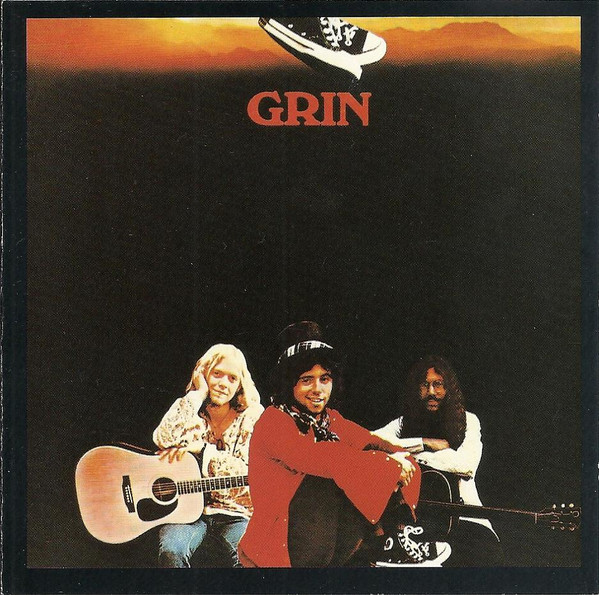
In 1968, Lofgren formed the band Grin with bassist George Daly (later replaced by Bob Gordon), and drummer Bob Berberich, former players in the DC band The Hangmen. The group played in venues throughout the Washington, D.C., area. During this time Lofgren met Neil Young while Young was performing at the Georgetown club The Cellar Door, and began a long association. Young invited Lofgren to come to California and the Grin trio (Lofgren, Daly and Berberich) drove out west and lived for some months at a home Neil Young rented in Laurel Canyon. Lofgren would eventually use his album credits from working with Young to land Grin a record deal in 1971.
Daly left the band early on to become a Columbia Records A&R Executive and was replaced by bassist Bob Gordon, who remained through the release of four critically acclaimed albums of catchy hard rock from 1971 to 1974, with guitar as Lofgren’s primary instrument. The single “White Lies” got heavy airplay on Washington, D.C.-area radio. Lofgren wrote the majority of the group’s songs, and often shared vocal duties with other members of the band (primarily drummer Bob Berberich). After the second album he added brother Tom Lofgren as a rhythm guitarist. Grin failed to hit it big, and were released by their record company.
“Grin” (Spindizzy/Epic) 1971:
‘Like Rain’ This song, from the first of Lofgren’s albums with his band Grin, grows and ebbs and flows in absorbing layers, including his accordion. It’s an early example of his romantic lyricism and ability to craft gorgeously melodic, sweeping ballads. We hear both sides of Lofgren’s vocal: the smooth style familiar from most of his songs and a gruffer, grittier tone at key moments, over tinkling piano, swirling keys, powerful drums and Tom Lofgren’s guitar. ‘Like Rain’ is the opening track on this tremendously dynamic album, full of adventurous sounds that might be called country-rock.
In the brilliant notes that accompany Lofgren’s career-collecting box-set ‘Face the Music’, he says of this song: “Still one of my best songs and mainstays of my live performances. Wrote it in my old room I shared with brother Tom at my parent’s Wilmett Court home in Bethesda, MD. Only 17 years of age, I seemed to get lucky, tapping into the feeling that beautiful relationships seemed an impossibility in our crazy world, and at best, would come and go, emotionally and inevitably.” It’s incredibly mature song writing from the young Nils Lofgren.
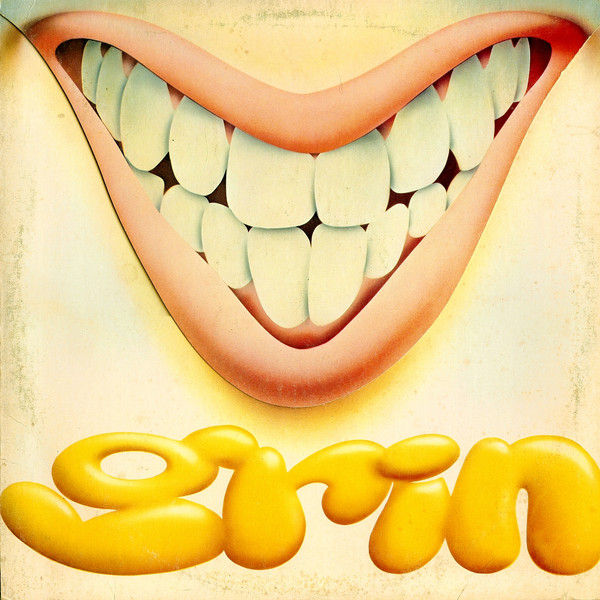
“1+1” (Spindizzy/Epic) 1972:
Kicked off by the delicious pop confection “White Lies,” “1+1” is the best of Nils Lofgren’s work with his trio Grin. That single never got higher than number 75, though, and the album sold very little outside of Lofgren’s home base in the northern Virginia and Maryland suburbs of Washington, D.C. Nonetheless, this is an enjoyable recording produced by Neil Young associate David Briggs. Lofgren’s guitar playing is strong throughout, and the songs are often cleverly constructed and quite catchy, if lightweight. His high-pitched singing voice sounds better when he’s not trying to be gravelly and works fairly well in the power pop settings that inform most of this disc.
‘Moon Tears’ Is a great early rocker from Lofgren’s Grin, full of energy and dynamism. The sound is full and powerful and euphoric, despite the fact that it was written as a heartbroken lament to lost love. Lofgren’s singing is hard and edgy, gritty and desolate, while his guitar is stirring with a typically vibrant solo sweeping through the song. At just over two minutes, it’s a short, direct song that explodes into life and leaves you wanting more: a perfectly-crafted song worthy of any of the great rock acts of the early 1970s.
“All Out” (Spindizzy/Epic) 1973:
“Gone Crazy” (A&M) 1973
While still a member of his first serious band Grin, Nils briefly joined Crazy Horse, writing two songs for their eponymous 1971 album. He re-recorded one of them for Grin’s final long player, ‘73’s “Gone Crazy”, as a eulogy to late Crazy Horse guitarist Danny Whitten.
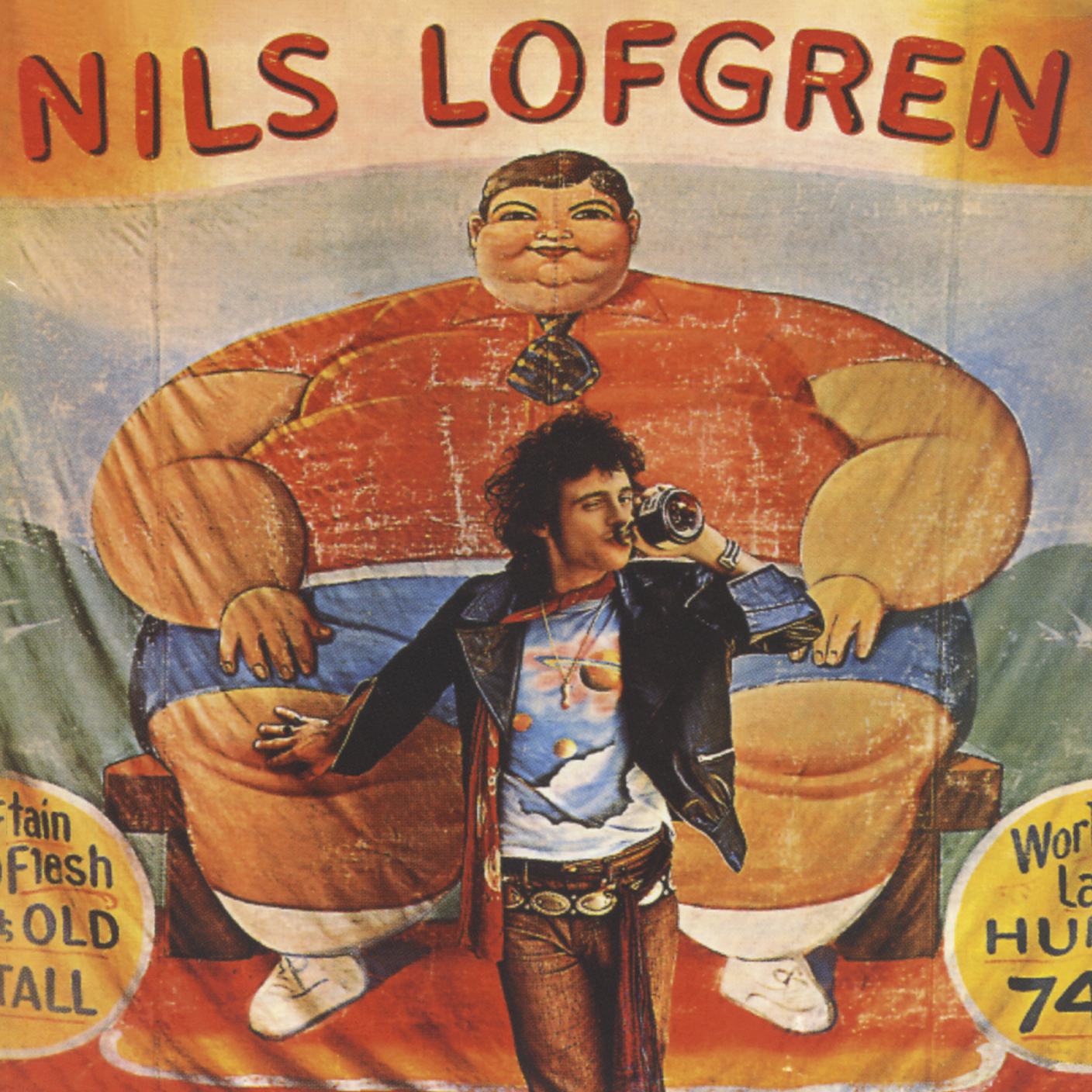
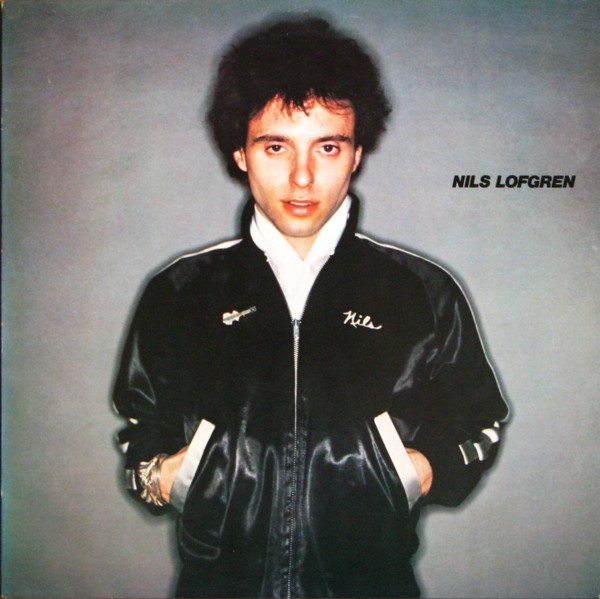
“NilsLofgren“
With the passage of time “Nils Lofgren” debut album has come to be regarded as an overlooked classic, and with good reason — Lofgren has rarely been in better form on record as a songwriter, vocalist, musician, and bandleader. While Lofgren doesn’t lay down a firestorm of guitar on each selection (with his piano unexpectedly high in the mix), when he does solo he makes it count, and the rough but tasty chordings and bluesy accents that fill out the frameworks of the songs give the performances plenty of sinew.
After Grin disbanded in 1974, Lofgren released his self-titled debut solo album, one of Nils Lofgren’s most popular songs. Nils is on fire on this one. His guitar playing lights it up all over this track. Written about Keith Richards, this song was released on Lofgren’s first solo album simply entitled “Nils Lofgren“. The record was released in 1975. The power trio on this great album featured Nils Lofgren on guitar and vocals, the great Aynsley Dunbar on drums and Wornell on bass.
‘Keith Don’t Go (Ode to The Glimmer Twin)’ was written as a letter to one of Lofgren’s musical heroes, The Rolling Stones’ Keith Richards, urging him to take care of himself during those turbulent years. It’s a way of saying thanks for the inspiration and joy Richards gifted the world with his music. Lofgren’s riffs and and the driving percussion are urgent and insistent and this remains a fan-favourite. However, it’s worth noting that the song sounds even more ominous when Lofgren performs it as a slower acoustic version; played this way it has the feel of something more plaintive, a desperate plea. ‘Keith Don’t Go’ is one of Lofgren’s most powerful, impactful songs.
Just as importantly, this is as good a set of songs as Lofgren has assembled on one disc, consistently passionate and forceful, from the cocky “If I Say It, It’s So” and “The Sun Hasn’t Set on This Boy Yet” to the lovelorn “I Don’t Want to Know” and “Back It Up,” while “Keith Don’t Go (Ode to the Glimmer Twins)” comes from the heart of a true fan and “Rock and Roll Crook” suggests Lofgren had already learned plenty about the music business by this time.
The production on Nils Lofgren is simple but simpatico, giving all the players plenty of room to shine, and Lofgren’s rhythm section (Wornell Jones on bass and Aynsley Dunbar on drums) fits the album’s funky but heartfelt vibe perfectly. Lofgren has made harder rocking and flashier albums since his debut, but he rarely hit the pocket with the same élan as he did on “Nils Lofgren“, and it remains the most satisfying studio album of his career.
‘Goin’ Back’ The closing song from Lofgren’s acclaimed 1975 solo debut is just a classic tune. There’s an insistent rolling rhythm and flowing keys, over which Lofgren delivers a softly wistful vocal, almost dreamy in its nostalgic tones as he sings of, “…goin’ back to the days // when I was young enough to know the truth.” As time passes and our innocence fades, our recollections of youth hold something magical over us and that sense of what we’ve lost is bittersweet, “I can recall the time // When I wasn’t ashamed to reach out to my best friends.” Lofgren captures those feelings in ageless melody.
A tour de force of unquenchable vitality and disarming subtlety” is how Rolling Stone magazine described Lofgren’s self-titled solo debut in 1975, the same year he visited the Old Grey Whistle Test for his first appearance on UK television. This song was also the title track of a promotional live album much sought after by Nils collectors.
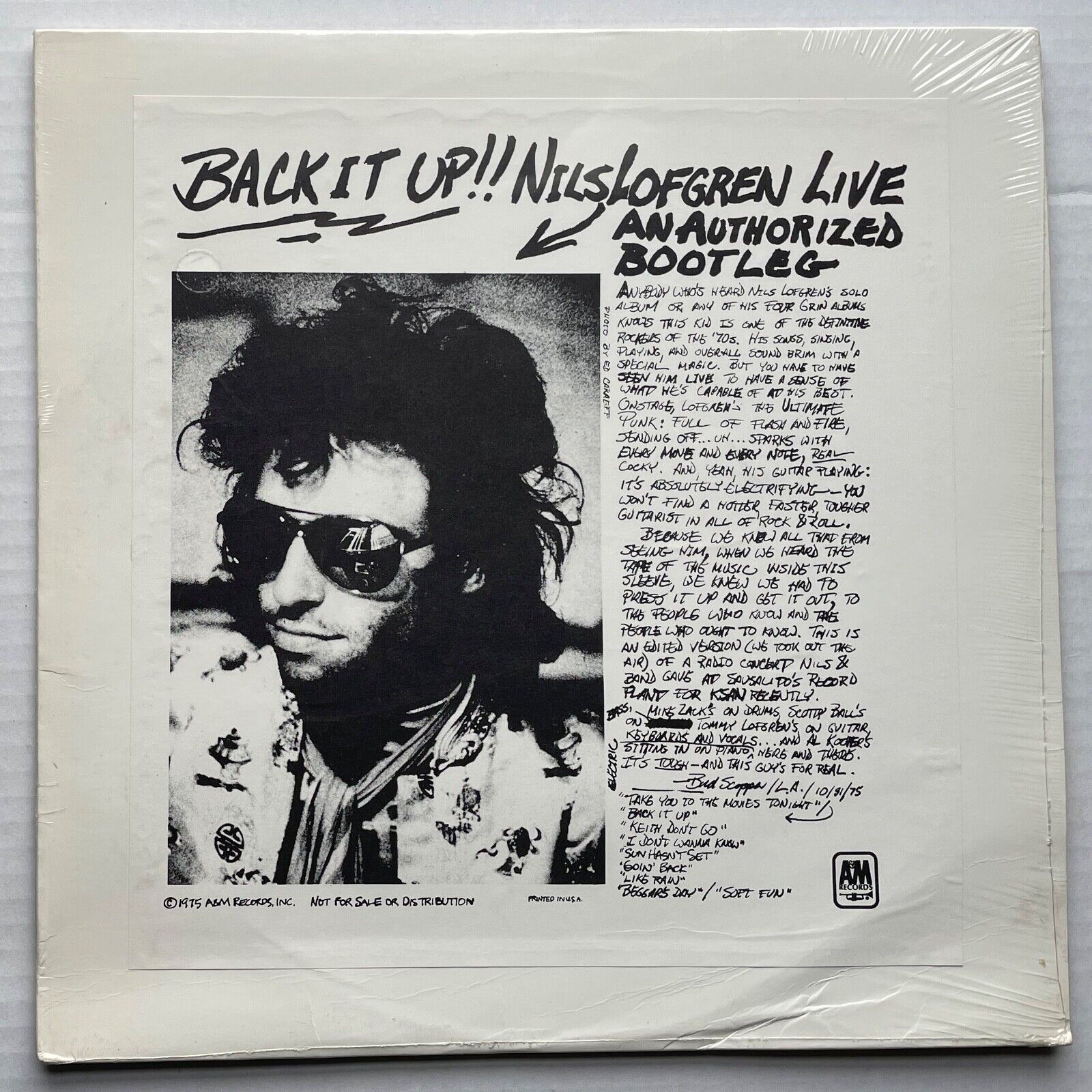
“Back It Up”
Finally available on wide release 32 years after it was a limited-edition, and much coveted, vinyl release sent to 1,000 radio stations and critics (each one with a sticker hand-glued to the cover), this 44-minute live radio station concert is half as long and more than twice as exciting as Nils Lofgren’s official live concert souvenir, 1977’s “Night After Night”. Al Kooper, who was then doing pre-production on Lofgren’s second solo effort, sits in on keyboards and the stripped-down band also featuring Nils’ brother Tommy on second guitar and a bassist and drummer keeps the sound lean and mean.
There are only seven tracks, with five grabbed from Lofgren’s then recently released debut, along with two tunes from Grin, the band he recorded four albums with that also included his brother. In retrospect, the sound is a little dry and the 2007 CD reissue doesn’t remix it or add any additional tracks (there may not have been any), but this is nevertheless a classic album, arguably Lofgren’s finest, The singer and guitarist also plays decent piano on a stunning version of the Goffin & King nugget “Goin’ Back,” rearranged substantially from the Byrds’ more popular cover.
The only real rockers are the opening title track and the closing “Beggar’s Day”; the latter tune, dedicated to Crazy Horse’s DannyWhitten (Lofgren was a member of that band for a brief period), is a highlight of Lofgren’s catalogue.
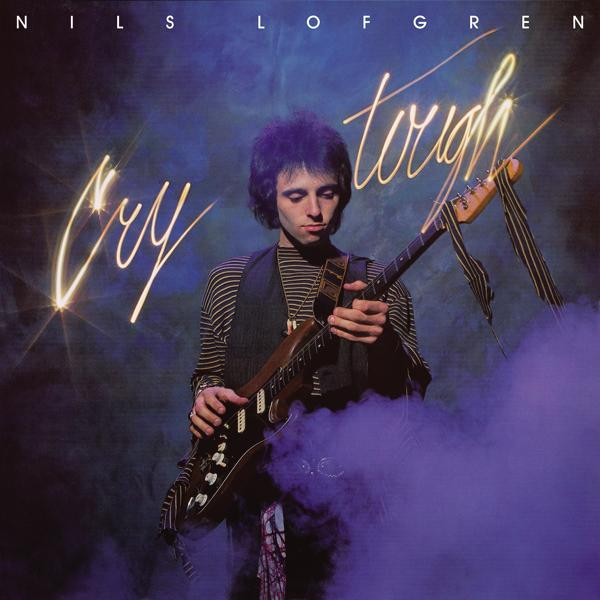
“Cry Tough“
Nils Lofgren turned up the guitar heroics on his 1976 album “Cry Tough” and the results were a lot closer to what fans had hoped for from the whiz kid from Grin. There’s no denying that the guy is a great guitar player, but his gifts as a guitarist and songwriter have been maddeningly inconsistent, and while 1975’s self-titled solo debut was one of his high-water marks as a tunesmith, he gave himself more room to strut his stuff on guitar here without bringing many memorable tunes to the table.
It’s significant that two of the sharpest and most effective tracks on “Cry Tough”, “Incidentally … It’s Over” and “Can’t Get Closer (WCGC),” feature the same rhythm section that backed Lofgren on his debut; produced by David Briggs, they sound straightforward, compelling, and emotionally direct, while most of the rest of the album (produced by Al Kooper) features a larger band, a glossier approach, and somehow allows Lofgren to effectively sound lost on his own album. Lofgren certainly plays up a storm on “Cry Tough”, and his soloing on “You Lit a Fire” and “It’s Not a Crime” is inspired.
“Cry Tough” was voted number 10 in the 1976 NME Album round up; The song was released on the “Cry Tough” album in 1976. The song featured a host of musical legends. Al Kooper who had founded the band Blood Sweat & Tears and also produced all the early Lynyrd Skynyrd albums Kopper played organ on the track.
The great Chuck Rainey who was a studio legend and played bass on some of the classic Steely Dan recordings as well as hundreds of other albums was also along for the ride on the song.
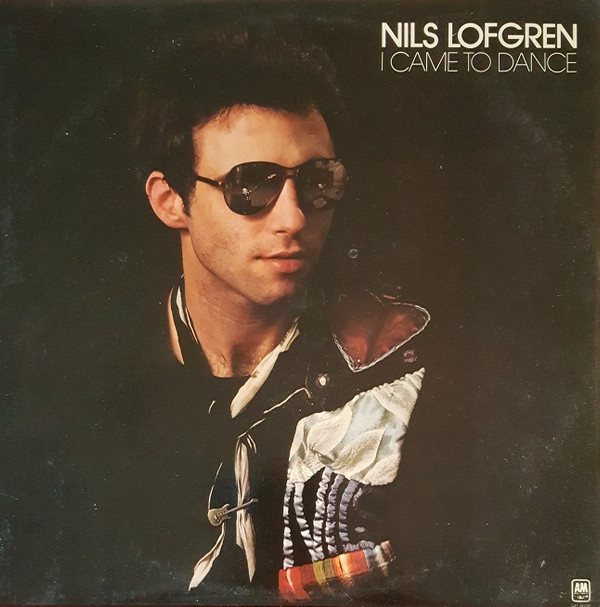
“I Came to Dance”
“I’m not Bob Dylan, but I never miss a beat” sings Nils Lofgren on 1977’s “I Came to Dance”, a very polished collection of nine songs produced by the guitar virtuoso and drummer Andy Newmark. As well as Lofgren’s own “Code of the Road” and “Happy Ending Kids.” and “Goin’ South” are both so quirk. Everything is in tune, played to perfection, and without a bum note, but therein lies the problem. It’s all too perfect when rock & roll needs a little mayhem. On “To Be a Dreamer” Lofgren’s personality gets lost in the “tried to take it serious” approach he writes about in “To Be a Dreamer.”
However, the re-working of Jagger/Richards’ “Happy” does inject some excitement into the grooves, a plodding, funky, and very cool rendition with Lofgren’s best vocal on the record, surrounded by other singers who take a cue from Jimmy Miller’s party atmosphere on “Tumblin’ Dice.” This final track is where the assembled cast finally gets it — they cut loose and have fun with Mick and Keith’s lyrics, come to think of it) never sounding so direct. The entire album would have come to life if all involved stopped being so precise and just let it rip.
“I Came to Dance” in particular received a scathing review in the New Rolling Stone Record Guide. The grooving song “I Came To Dance,” was the title track of the album with the same title. The record was released in 1976. “I Came To Dance,” was the opening track on the album. The song written by Nils Lofgren. One of the things we love so much about this song was the inclusion of the great piano player Reverend Patrick Henderson on the track. The man played piano with such a soulful funky groove that was a hallmark of some of those classic Doobie Brothers recordings that you thought was Michael McDonald. Sometimes it was, and sometimes it was the Reverend.
“Nils”
Nils Lofgren’s song “No Mercy,” was released on the 1979 album entitled “Nils“. This was an album in which the record company looked to try and turn Nils into a big name by bringing in a producer named Bob Ezrin who had worked with Alice Cooper, Pink Floyd, Flo & Eddie. Deep Purple and many other classic rock bands.
“No Mercy,” with special effects recorded at Madison Square Garden, The double entendre being the rock musician oftentimes works on the same stage as the fighter, of course, punching away in the ring of life. Nils Lofgren is a veteran who has performed with Springsteen, Neil Young, and so many others, working here with producer Bob Ezrin brings in his various contacts which colour the recordings he makes, insuring a product that is as much the producer’s as it is Nils Lofgren’s. With backing vocals and a big sound, “I’ll Cry Tomorrow” is smooth and blends in nicely with this collection. Randy Newman’s “Baltimore,” with solid drumming by Alan Schwartzberg and a great hook, gets six minutes plus to play out. It’s is fun to hear Newman’s work put in this setting. Wagner and Lofgren write the semi-acoustic pop “Shine Silently,” with a charming vocals by Nils.
The song “Shine Silently,” was released on the great “Nils” album. The record was released in 1979. While Nils is really well known for his killer guitar work, we hope this list defines just how brilliant he was writing ballads.
It, and the Lou Reed/Nils Lofgren song “I Found Her,” are the two best tracks on the album. “I Found Her” sounds like ’60s pop that neither Lou or Nils have been affiliated with, truly unique for both artists. “A Fool Like Me,” also written by the duo, has more pop sensibilities than Reed’s work on some of his own recordings during this period — his three titles with Nils Lofgren here are a good addition to his songbook.
In ‘No Mercy’, the changes in pace and volume almost seem to reflect the passing rounds and the ebb and flow of the boxing match narrated through the verses. Engineer Brian Christian visited an inner-city bout to sample the sounds of a speed bag, anthem and bell that can be heard at the beginning and in the middle of the song, lending it an authenticity to match the lyrics all about the harshness and brutality of the ring: “I hungered this title but now it don’t seem right // I fight back tears while I destroy his life.” In his ‘Face the Music’ box set notes, Lofgren remembers working the corner for martial artist Danny Boccagno and the contrast between the viciousness of the fights and the honour, respect and dignity of the fighters. This inspired the song’s broader theme: even good people sometimes need to inflict harm on others in order to survive or protect their own. For this 1979 solo album, Lofgren teamed up with producer Bob Ezrin, who was known for his work with the likes of Deep Purple, Pink Floyd and Lou Reed. It was Ezrin who suggested collaborating with Lou Reed, which would lead to co-writing a set of songs and the great 2019 album ‘Blue with Lou’ decades later.
The result was a brilliant album. But that really wasn’t much of a surprise because all of Nils records leading up to the 1979 album have been brilliant.
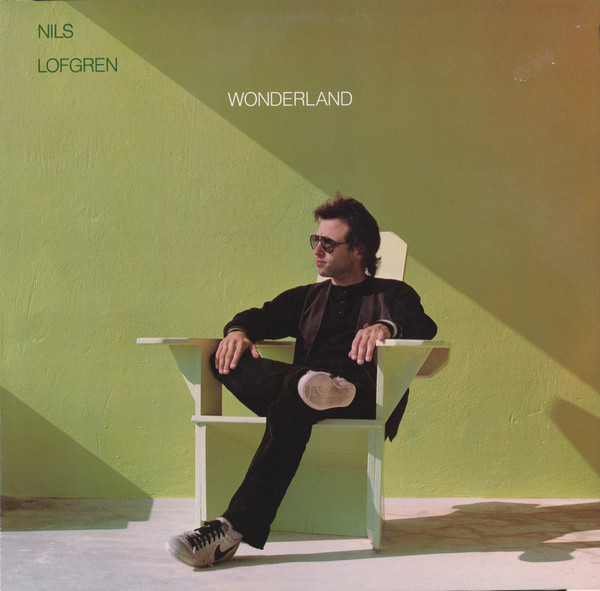
“Wonderland”
“Wonderland” is a surprisingly commercial work from guitarist/vocalist Nils Lofgren, opening with a very catchy and impressive “Across the Tracks,” followed quickly by the beautiful “Into the Night,” which has flavours of Springsteen, though Lofgren’s vocal is more precise and radio-friendly than his boss, the Boss. That’s the strange thing about the music biz — when a voice is superior and the music more commercial, it still takes a back seat to personality. And take, for example, the only cover here, Bobby Womack’s classic “It’s All Over Now.” Everything’s in tune, but the band sounds like it was programmed by a computer and Lofgren’s vocal has none of the drive found in his originals.
Indeed, on the very next track, “I Wait for You,” which has that Springsteen swagger with Lofgren’s to-the-point presentation. The excellent production by the singer along with his rhythm section — bassist Kevin McCormick and drummer Andy Newmark – The title track reflects that observation perfectly. The vibes on “Lonesome Ranger” add spice, and having Edgar Winter, Carly Simon, and Louise Goffin adding their voices to the mix on this LP is indicative of the class spread all over these tracks. More cohesive than the 1979 classic Bob Ezrin-produced Nils album, “Wonderland” has tons of great moments, sparkling guitar work, and a groove that is commanding. The key thing that’s missing to bring music this good to the masses is an overpowering persona, and it seems Nils Lofgren is just too nice a guy to put that driving arrogance behind the sounds to catapult them onto AM and FM radio. Even more of a pity is that Backstreet/MCA couldn’t do it for him.
In ‘Wonderland’, Nils Lofgren describes the world as it should be: a world in which, “…the boys and girls like to dance on the way to school // And even the pretty girls think that being nice is cool.” It’s a straightforward message, calling for more compassion and less conflict and judgement. In today’s social media-driven environment, lines like, “And you don’t get singled out every time you’re wrong or right,” are still especially resonant. The original is a catchy slice of well-crafted pop-rock. But it’s definitely worth checking out the multiple other versions to be found on live albums, like ‘Acoustic Live’, in which the bright strum shimmers alongside Lofgren’s heartfelt lyrics.
Also released on the album “Wonderland“. The record was released in 1983. “Across the Tracks,” was a very popular video on MTV in the early 1980s. Nils Lofgren’s gymnast background was on full display in the video. Such a great song that rocks hard and just make you feel good.
“Flip”
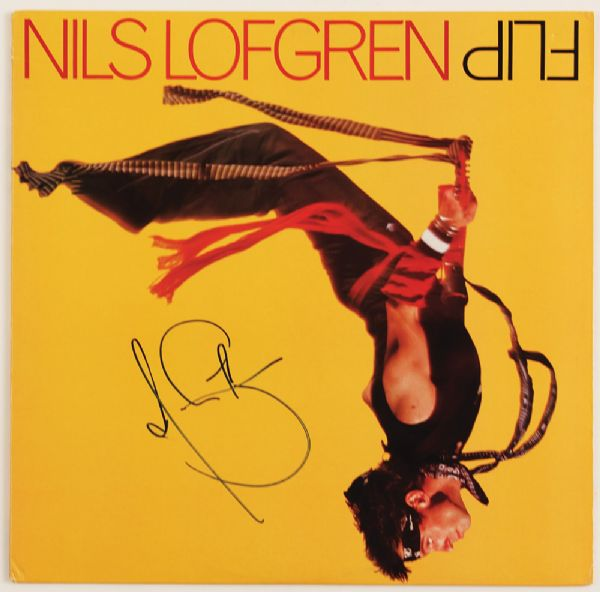
When Steve Van Zandt took a break from The E Street Band in 1984, Bruce Springsteen called upon Nils as his touring replacement, the boost to his profile propelling his ’85 album “Flip” into the charts. This song, with its video showcasing Lofgren’s famed gymnastic and trampolining talents, gave him his only entry in the UK singles chart.
The tenth album from Nils Lofgren and his first for Columbia Records is a very polished affair with excellent production from Lofgren and Lance Quinn. The material is written by Lofgren, and it is all strong to very strong, with lyrics bordering on lecturing the listener. “Flip Ya Flip,” the title track, and “Big Tears Fall” are the most commercial songs here, “Flip Ya Flip” a real odd one, though. Lofgren calls the guys “buddy,” telling them to “lift your pretty head, hold it high” and the gals he calls “sister,” terms of endearment for sure from a macho figure who has full-fledged membership in the “E Street” gang. Is the title track about an off-colour gesture or life on a trampoline or indiscernible sexuality? Perhaps all of the above. “Secrets in the Street,”“From the Heart,” and “Delivery Night” have their moments as well, and if any of this material got consistent airplay, there’s a good chance “Flip” could have found an audience beyond Lofgren’s loyal cult following. His guitar-playing is first rate, and the sonics are more pronounced than Jeffrey Baxter’s ideas on 1981’s “Night Fades Away“, “Sweet Midnight” has that ever-present ’80s snare drum prominent in the mix with Lofgren’s guitar right next to it, and the vocals perhaps a little too far in the background, no doubt one of the problems. It’s another tune which should have been able to garner some kind of attention, if not on Top 40 at least in the dance clubs. An image of Lofgren in mid-air adorns the yellow cover, with the album title upside down — anyone who witnessed the band Grin live got to see Lofgren do somersaults onstage.
Lofgren is an important artist who deserves a breakthrough hit and a retrospective combining the most accessible tracks from his rich catalogue. “Flip” is a decent outing worthy of more than a few spins.
“Code Of The Road”
This release illuminates Nils Lofgren’s life as a cult solo artist, long before the masses learned to recognize him as the other headband-clad guitarist in Bruce Springsteen’sE Street Band. Billed as BBC One tapes from London’s famed Hammersmith Odeon, a good portion of this 17-track affair seems markedly clinical. The band is undeniably tight, the sound is crisp, and the playing is well-executed, yet the respective presences of brother Tom Lofgren and former Mitch Ryder & the Detroit Wheels drummer Johnny “Bee” Badanjek the show gets hotter as the disc progresses, with the greatest dust kicked up on trademark Lofgren anthems like “The Sun Hasn’t Set (On This Boy Yet),” “I Came to Dance,” and “Keith Don’t Go,” an unabashed salute to the embattled Rolling Stone’s legal mishaps. It’s not hard to see why Lofgren remained such an acquired taste before Springsteen scooped him up.
This release might be a decent starting point for non-believers, but long-time fans should probably stick with their well-worn copies of “Night After Night,” instead.
“Silver Lining”
Over the years, Nils Lofgren’s solo output has been inconsistent and erratic; you never know if a Lofgren album will be excellent, decent, competent, mediocre, or flat-out disappointing. But when Lofgren is inspired, he’s definitely inspired — and one of his more inspired albums is 1991’s “Silver Lining”. 1991 was the year in which Lofgren turned 40, and it was also the year in which he resumed his solo career after spending six years as a sideman for Bruce “The Boss” Springsteen. While Lofgren has provided his share of uneven albums, “Silver Lining” is impressively solid and consistent. The singer/guitarist who wrote all ten of the songs soars on everything from tough, gritty rockers like “Walkin’ Nerve” and “Gun and Run” to the sentimental “Valentine,” which employs Springsteen on background vocals. And the Boss isn’t the only distinguished guest who joins Lofgren on “Silver Lining” other guests include Billy Preston (of “Nothing From Nothing” and “Will It Go Round in Circles” fame) on organ and keyboards and ex-Beatle Ringo Starr on drums and background vocals.
With a groove that fell somewhere between John Waits “Missing You,” and The Police and Sting’s Every Breath You Takes, NilsLofgren created his own magical masterpieces with his heart warming song “Valentine.” With Bruce Springsteen supplying backing vocals, Nils wonderful song “Valentine,” presented fans with a song for the ages. Two all star legendary musicians performing together and showing us all how its done. Not just among our favorite Nils Lofgren songs, but one of our favourite songs of all time. Thanks Nils! The song “Valentine,” was released on Nils’ Silver Lining” album. Released on Rykodisc in 1991.
‘Valentine’ Built on an insistent, grooving rhythm and engrossing guitar interludes, ‘Valentine’ is particularly notable for the way Lofgren’s voice combines with that of Bruce Springsteen, who guests on the song. They work off each other perfectly, two great artists, whose vocals genuinely complement one another. Kevin McCormick’s clean production highlights the sheer quality of Lofgren’s guitar-work, which always feels so natural in the context of the song, never intrusive or like an optional extra. It just flows and the last couple of minutes are simply exquisite. People will remember the harmony vocal with Springsteen but it’s Lofgren’s playing that sets this apart. ‘Valentine’ is an example of the fine song writing and musicality for which fans and other artists love Nils Lofgren.
On ‘Girl in Motion’, Lofgren delivers one of his finest vocals, a gorgeously catchy and absorbing melody that remains with you long after listening. It’s a song that’s also always a highlight on his many live recordings, a song that seems to flex and grow during his shows into something hypnotic and spectacular, whether performed acoustic or electric. ‘Girl in Motion’ envelopes the listener in sweeping currents of guitar, modulating, bending and twisting. It’s the perfect example of how he finds the dramatically fine balance between guitar that feels free, expressive and inventive and yet remains within the melodic structure of the song, growing from it and within it rather than added onto it.
Although Lofgren is a rocker first and foremost, he is hardly oblivious to soul music and the blues. “Trouble’s Back” is especially bluesy, and “Bein’ Angry” is greatly influenced by ’60s and early ’70s soul. The latter is among the tunes that employ Preston, and his organ playing proves to be a major asset. Like Tina Turner, Prince, and Sly Stone, Preston is an artist who has both rock and R&B credentials — and because Lofgren is obviously going for a rock/soul ambience on “Bein’ Angry,” Preston is perfect for the tune. Never the least bit disappointing, “Silver Lining” is an album that Lofgren can easily be proud of.
“Crooked Line“
This great song was released on Nils Lofgren’s second Rykodisk album entitled “Crooked Line“. The album was released in 1993. The album served as the follow up to his very successful “Silver Lining” album released in 1991. The wonderful 1980s CD label signed a great one with Nils Lofgren.
“Crooked Line” evokes Lofgren’s Young-ian roots, and it’s therefore appropriate that original mentor Neil Young guests on the sessions. Neil adds distinctive background vocals and harmonica to the country-folk ramble “You,” and lets loose with some grungy electric guitar for “Drunken Driver.” Not that he steals any of the limelight from Lofgren, who offsets his trademark tough but melodic string-bending with tasteful acoustic pop forays like “Shot At You.” The guitarist leaves flashy pyrotechnics to others, preferring to cut his material with direct, slashing simplicity.
“Damaged Goods”
Lofgren remains, in essence, a guitar hero, and on the album’s 12 tracks, he seems to have spent more time working on the riffs and textures he could get out of his guitars than on anything else. He is accompanied by drummer Andy Newmark and bassist Roger Greenawalt (who also produced, engineered, and mixed the record), with some string and choral parts added here and there, and Branford Marsalis sitting in on saxophone on a couple of tracks. The songs all have lyrics and vocals, but those seem to have come after the fact, as addenda to complete tracks built out of Lofgren’s guitar playing.
Sometimes he sings of love gone wrong, other times he sings in the identities of characters. (“Only Five Minutes” is about an ex-con who falls off the wagon and goes back to jail on New Year’s Eve; “Trip to Mars” details the complaints of a veteran police officer.) Occasionally, he seems to be singing from the heart, or at least the head, as in the philosophical “Life” (co-written with Lou Reed). But it’s still the guitar work that matters. “Heavy Hats” concerns a man’s taking on responsibility as his child is about to be born, and “Nothin’s Fallin'” sounds like a sincere account of an adult son dealing with an aging father’s illness.
“Acoustic Live”
“Acoustic Live” is a small treasure for long time Nils Lofgren fans. Capturing Lofgren alone in front of an appreciative audience, knocking out such favorites as “You,” “No Mercy” and “Keith Don’t Go,” plus six new songs. Even with the new songs, there are no real revelations, only a selection of little gems that will certainly bring a smile to the face of any long-time Lofgren fan.
Highlights also include “Black Books’ is a song full of resignation, a dark country narrative that delivers genuine heartbreak and sorrow. Lofgren’s voice aches as he tells his tale: “One last time from Freddie’s Joint // We drove out to Lover’s Point // Shared our last kiss eye to eye // Spoke of tender times long past // Said they weren’t meant to last // Too many different needs to satisfy // She wants new shoulders to cry on // New back seat to lie on // And she always gets her way.” The original on ‘Damaged Goods’ is an absorbing song but it’s the version on Lofgren’s acclaimed ‘Acoustic Live’ album that remains one of my all-time favourites. His fluid guitar solo, fingers sweeping up and down the fretboard, is a natural, growing, organic thing.
“Nils Lofgren Band Live”
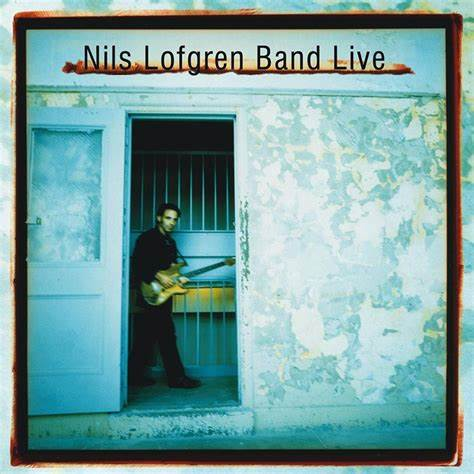
Nils Lofgren is an accomplished solo artist in his own right, having issued numerous critically acclaimed (yet often commercially overlooked) solo albums. He’s also issued countless live albums over the years, and 2003 saw the latest entry, “Live”. As with most double-disc live sets from veteran rockers, various entries from Lofgren’s career are touched upon — including a wink to his early band, Grin (which is represented by “White Lies” and “Lost a Number”), plus a classic track from his brief affiliation with Crazy Horse (the Danny Whitten-penned “I Don’t Wanna Talk About It”). Also included are newer solo tracks, such as the hop-a-long album opener, “Puttin’ Out Fires,” as well as a rendition of “The Star Spangled Banner” — which is not the expected instrumental Hendrix-esque guitar showcase . As fans have known for decades, Lofgren is one heck of a multi-talented gentleman, and “Live” offers further evidence.
“Sacred Weapon”
“Sacred Weapon” is Nils Lofgren’s 17th studio album in a career that’s spanned more than 30 years, and it’s to his credit that after all this time it’s hard to know what to expect from the guy when he makes a record. Above and beyond all else, Lofgren is a hell of a good rock & roll guitar player, but while he gives himself some powerful six-string workouts here, on “Sacred Weapon” he seems more interested in baring his soul and looking into the nooks and crannies of human relationships than in reeling off solos. Vocals have never been Lofgren’s strongest suit, and his voice, reedy and wavering, but there’s a naked emotion in “The Comfort Your Love Brings,” “You’re Not There,” “Whiskey Holler,” and “In Your Hands” (the latter a duet with Willie Nelson) that compensates for the flaws in his instrument, and he puts a soulful force behind his performances that’s inarguably affecting. The songwriting follows suit, and for every loose-limbed rocker like “Can’t Take the Rock,” one or two deeply personal songs cut to the emotional quick, and the album includes musical homages to two fallen heroes, Walter Payton (“Triedand True”) and David Briggs (“Mr. Hardcore”). Some of “Sacred Weapon” works and some of it doesn’t, but what does stick is powerful and heartfelt enough to make this one of Lofgren’s best solo albums since 1991’s “Silver Lining“, and proof he can write fine songs of his own when he’s properly inspired.
“Old School
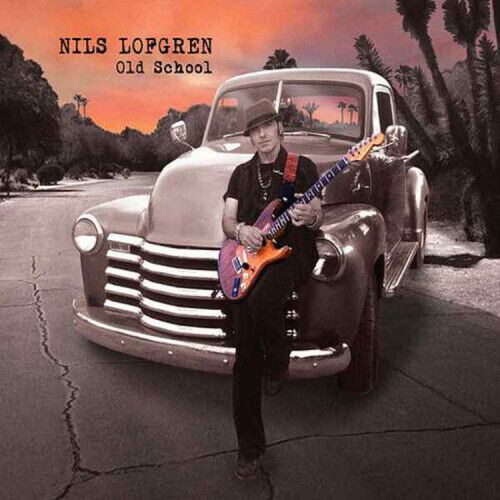
Listen to Nils guitar playing on this track. Wait a second, check that. Listen to Nils’ guitar playing on every track, on every album and every live performance. One of the most enjoyable guitar players to listen to of all time. Its as simple as that. This great guitar driven track entitled “Old School,” was the title track from the Nils Lofgren “Old School” album. The record was released in 2011.
As its title implies, getting older is on Nils Lofgren’s mind for his first album of new material since 2006. Besides the title track, “60 Is the New 18,” “Miss You Ray” (dedicated to Ray Charles), and “Ain’t Too Many of Us Left” speak to the frustrations facing an aging rocker in a young man’s game. To his credit, Lofgren doesn’t modernize his style to endear himself for a younger audience, but has written 11 out of these dozen selections in the same melodic rock format that he’s adhered to since his days in Grin. The distinctive electric guitar sound that made Lofgren so invaluable as a backing soloist is tamped down for the most part, although it weaves throughout songs that rely more on melody, lyrics, and singing than hotshot six-string work. Guest vocals from Paul Rodgers and Lou Gramm minimally enhance a few tracks, but Sam & Dave’s Sam Moore shines on his duet for the chorus for “Ain’t Too Many of Us Left,” a song that also gives Lofgren a chance to unwind on guitar.
Heartfelt ballads such as the lovely “When You Were Mine,” the haunted memories of the closing “Why Me,” the acoustic “Let Her Get Away,” “Love Stumbles On” wistful recollection, and especially “Irish Angel” work particularly well with Lofgren’s grainy, somewhat compromised voice. Perhaps his advancing years have shifted Lofgren’s focus from the rockers that used to dominate his albums to the slower, more reflective compositions here. Regardless, he’s in good form; spirited on the rockers and appropriately melancholy on the softer material.
“The Loner: Nils Sings Neil”
Nils Lofgren is a guitar hero who does great work in the employ of others and is wildly inconsistent as a solo artist and vocalist. Lofgren is at his best when he can strut his stuff on electric guitar, so why would anyone want to listen to an album of him performing Neil Young tunes on acoustic guitar and piano? “The Loner: Nils Sings Neil” but against the odds it turns out to be a sweet and heartfelt surprise, a moving interpretive album and one of Lofgren’s best solo efforts to date. Lofgren can’t bring the same kind of fire to his acoustic guitar work that he does on electric, and his voice is a wavering tenor that doesn’t carry a lot of weight, but Lofgren has the advantage of recording and touring with Young in the past, and it’s clear that these songs speak to something in his heart — he knows this music, and when he sings he hits a clear and unaffected emotional sound.
At first, it’s hard not to wish that Lofgren had overdubbed a bit of accompaniment on these tracks, but let the album sink in and the spare, minimal recording and arrangements work in favour of the songs; the nakedness of these performances brings the emotional core of the material front and centre, and Lofgren sings “Only Love Can Break Your Heart,” “Don’t Be Denied,” and “Don’t Cry No Tears” with sincere clarity, allowing each word to carry its full message. Of course, it doesn’t hurt that Neil Young is one of rock’s finest songwriters and Lofgren has chosen 15 superb selections from his catalogue, but there’s more to cutting a good cover than simply picking a good song. “The Loner: Nils Sings Neil” demonstrates that Lofgren knows what makes these songs so powerful, and he doesn’t cover up the essentials with these spare but soulfully direct interpretations; the result is a small and simple triumph.
“Blue With Lou”
Nils’ first studio release in eight years features five previously unheard songs co-written by Lou Reed. Produced by Nils and Amy and recorded live at his home studio in Arizona with longtime collaborators Andy Newmark (drums) and Kevin McCormick (bass), featuring Cindy Mizelle vocals. Saxophonist Branford Marsalis is featured on a new recording of the Lofgren-Reed composition “City Lights.”
Lofgren and Reed wrote a clutch of songs which appeared on their 1979 albums “Nils” and Lou Reed’s “The Bells“, but these six songs weren’t all that the duo wrote together. After Reed’s death, Lofgren excavated the songs that weren’t recorded at the time, adding six new tunes and a version of “City Lights” — originally from “The Bells” for good measure. Tracking live in his home studio with drummer Andy Newmark and bassist Kevin McCormick, Lofgren achieves a lean, sinewy sound that gives the tight group plenty of room to roam, and they occasionally do, stretching out the title track to seven minutes and “Cut Him Up” to six. Such a concentration on a muscular band dynamic naturally moves “Blue with Lou” closer to Lofgren’s camp than Reed’s, but the latter’s DNA still shines through in both the rhymes and rhythms.
This song is so beautiful and sad that it can be tough to listen too. It’s so painful to lose a dog. The love and companionship that one cerebrates throughout life with a beautiful loving dog can be so hard to let go of. You can hear it in Nils voice on this one and we can all relate to it. The song “Remember You,” was released on Nil’s album “Blue With Lou“. The album was released in 2019. It’s as an album filed with songs written by Nils Lofgren and Lou Reed. You need to own this one.
Lofgren’s originals may not carry the same swagger, but when they’re surrounded by these Reed co-writes, they’re given a slight lift: the whole affair simultaneously feels like an affectionate tribute to a departed friend and a resuscitation of Lofgren’s gut-level rock & roll.
Lofgren’s work with Neil Young and Bruce Springsteen is well known, but his 1979 collaboration with Lou Reed is less heralded. Although he didn’t play on the record itself, Nils co-wrote three tracks on Reed’s album “The Bells”, including this tribute to Charlie Chaplin.
“Weathered”
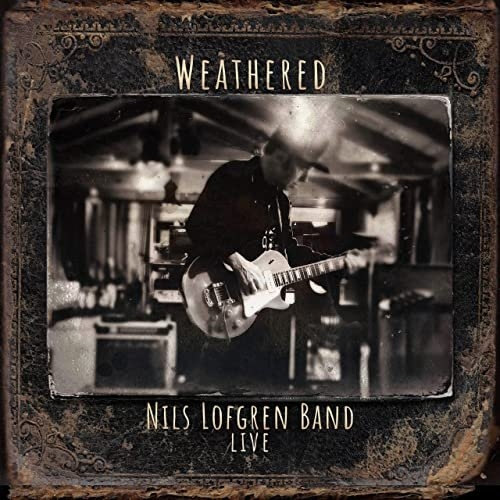
A “Live” double album recording of rare full band shows from Nils Lofgren on his most recent U.S. tour. For the first time in over 15 years, with a full rock band of dear friends, Nils Lofgren hit the road with a new album, “Blue With Lou“, featuring songs co-written with Lou Reed. Every town, club, staff and audience played a part in these live recordings, inspiring the band every night. Audience and band alike sharing their souls, gifts, spirit and energy make for a fresh, new live sound for Nils.
Features Nils Lofgren on vocals, guitars and keyboards, Tom Lofgren on vocals, guitars, keyboards and percussion, Kevin McCormick on bass guitar and vocals, Cindy Mizelle on vocals and percussion, and Andy Newmark on drums and groove.
Includes reworked classics from Nils’ vast catalogue, new live recordings from his most recent studio album, and a few choice cover renditions, including Nils’ brothers Mike and Mark addition on “Mind Your Own Business” and a tasty jam intro to “Papa Was a Rolling Stone”, leading into his classic, “I Came to Dance”.
Pinkshift, are a vehemently unapologetic punk band whose songs rail against prejudice and oppression while also examining in great depth the human condition. Foregoing more traditional careers in the hard sciences / medicine, Baltimore natives AshritaKumar (singer), Paul Vallejo (guitar), and Myron Houngbedji (drums), are inspiring fans in a different way.
The band smashes any preconceived notions of what a punk band should look or sound like. After self- releasing the viral hit “i’m gonna tell my therapist on you” and the “Saccharine” EP, Pinkshift partnered with Hopeless Records to release their debut album, “Love Me Forever”. Produced by Will Yip (Turnstile, Code Orange, Tigers Jaw), the band put together an emotionally cathartic, raucous, and powerful debut that centers their unique perspective as POC individuals in a scene that historically did not represent them.
Ever since Pinkshift burst onto the scene with their “Saccharine” EP last year, you had the feeling that we were in for something incredible. Now, with their debut LP, “Love Me Forever,”the band are more polished and twice as creative as ever before. On this album, they combine the frantic screamo energy of the bands of Warped Tours past, with cutting lyrics, and the smooth vocal hooks that will make any pop punk fan swoon, and that’s before we get into some of these shredding guitar solos throughout. All in all, Pinkshift were able to craft an action packed debut LP that has firmly established them as one of the top prospects in the pop punk world.
“Havasu” is the second album from Pedro the Lion after Dave Bazan resurrected the project with the searing “Phoenix” in 2019, and like that album “Havasu” focuses on Bazan’s childhood living in a particular place. “Havasu” is a much smaller affair than “Phoenix”, focusing on just one preteen year in Bazan’s life, but this smallness allows for a close look at the seemingly minor turning points that cascade into major formative moments.
Lake Havasu is a community of winding hillside roads, launched in the 1960s alongside a brick-for-brick rebuild of the original London Bridge. “It’s this very synthetic, gimmicky place set in this soulful, desolate landscape,” laughs Pedro the Lion’s David Bazan, who moved to the Arizona city for one year in seventh grade. Bazan collected his earliest childhood experiences for 2019’s Phoenix, the prolific artist’s celebrated return to the Pedro moniker and the first in a planned series of five records chronicling his past homes. To write its sequel, Bazan traveled to Havasu four times over several years, driving past his junior high campus, a magical skating rink, and other nostalgic locations that evoked feelings long suppressed. “An intersection I hadn’t remembered for 30 years would trigger a flood of hidden memories,” he says. “I was there to soak in it as much as possible.”
Driving the inscrutable loops of Havasu’s lakeside, Bazan listened through an audiobook of Tom Petty’s biography, eventually dialoguing with Petty’s voice in his mind. A revelation from the book—that Petty subconsciously wrote the song “Wildflowers” as an act of kindness toward himself—inspired Bazan to approach his own work with radical generosity toward his young self. “I wanted to be there for that kid,” he offers. “That twelve year old still needs parenting, and still needs to process.”
To revisit his past with openness, Bazan modified harmful work habits he’d accepted as necessary. That meant doing away with deadlines, and accumulating moments of play as he felt moved to—“Rather than squeezing stones every single time. I’m on a slow journey away from that,” he clarifies. As he worked through the music that became “Havasu”, flexibility and curiosity informed the arrangements. Bazan began writing on a simple synthesizer and drum machine setup. He detoured to a more elaborate assortment of analog electronic equipment, then woodshed his original two-handed keyboard arrangements on fingerpicked acoustic guitar.
Concurrently relearning his catalogue for a weekly series of livestream concerts also renewed his gratitude toward song writing. “I was trying to evaluate what I have to show for 20 years of kicking my own ass,” Bazan quips about the strenuousness of full-time touring. “But the garden of my songs is what I’ve been building.
It doesn’t have to be an ego test.” Approaching his discography with appreciation reconciled cognitive dissonance about the music of his childhood, which Bazan had dismissed as cheesy. “As a kid, that Richard Marx song would come on and I would swoon. I’ve been working my whole life to pretend that wasn’t there, and I wanted to honor the sappy, emotional kid that I was. It helped me see myself,” he admits.
When he entered the studio with co-producer and engineer Andy D. Park (who worked in the same capacity on Phoenix), Bazan planned to make a desolate, desert-informed record. But the duo quickly realized a rock configuration closer to Pedro’s classic sound would convey the landscape and stories best. Bazan switched to a Les Paul, which brought smoothness and linearity; though he’d planned to use a drum machine, he laid down scratch drum kit and bass as an experiment.
Listening back the next day, those initial rhythm section takes had a sense of joy and ease that augmented the record’s themes of psychic healing. “First Drum Set,” which faithfully chronicles Bazan’s lifesaving switch from clarinet to drums, builds the explosive jubilation of musical self-discovery into triumphant fills, like a throbbing heartbeat overflowing with love. “Teenage Sequencer” takes on the rattling anxiety of mind-body disconnect, using trepidatious bass, vacillating guitar slides and hopeful tambourine to evoke the crushed-out ups and downs of the mutable edge of thirteen. “There goes nature, pulling me along like a sequencer,” sings Bazan, wondering: “Will I always be a teenager now?” And on “Making the Most Of It,” stuttering hi-hat adorns downtempo, arpeggiated guitar, adding playfulness to a reckoning with concealed emotion. “I can go along to get along, but let me know when I can quit making the most of it,” Bazan shrugs. Yet the contrasting optimism of the music reflects an imperative to communicate feelings both light and heavy: to break through the scar tissue of tender memory and find peace.
Though Bazan wrote, arranged, and performed most instruments himself—as is characteristic of most of his work, solo and with Pedro the Lion—several key collaborators helped him find the self-accepting tenderness needed for “Havasu”. Pedro live drummer Sean T. Lane makes appearances on every track, but on a self-constructed noisemaking instrument called “the bike.” It’s composed of various metal objects and strings mounted on a bicycle frame, rigged with contact mics and run through a drone-accentuating pedalboard. “It can be percussive, it can be ambient. It’s a real nightmare machine.
It’s just great,” Bazan enthuses, highlighting its crucially menacing counterpoint to the otherwise “wistful, melancholy, guilty pleasure romcom” progression of “Own Valentine.” A warm moment exploring his synth setup with longtime collaborator AndyFitts led to the insistent new wave sound of “Too Much.” And on album opener and cinematic scene-setter “Don’t Wanna Move,” a riff appears that was first devised by Pedro guitarist Erik Walters and used on Phoenix’s closer. “I was psyched to open this record with it,” Bazan says. “I’m trying to have a flow between the records, so if people want to engage with that, there’s something there.”
Though the next three albums in the series are not fully written, Bazan currently understands Phoenix and “Havasu” together as a completed exposition in a traditional three-act structure. “I want to paint a picture of how my family and parents and everyone I love got coopted by nationalistic, authoritarian religion,” he lays out. “I’m planting the seeds for that, and my own culpability is part of it.” Though these careful compositions pave the way for darker stories in later acts, Bazan resolutely emphasizes the curative nature of returning to “Havasu”, mentally and musically. “It gave me the ability to make vulnerable choices, and connect with a part of my younger self that I didn’t want to turn my back on,” he suggests. “I worked through a lot of self-judgment, and was kinder to myself on this record than I have been before in any songs.” The result is an open-hearted acknowledgment of shame and elation both, spaciously but delicately arranged in affirmation of the nurturing those feelings deserve—even if the kid in need of validation has long since grown up and moved away.
released January 20th, 2022
Produced by Andy D. Park & David Bazan
All songs written & arranged by David Bazan Except: Track 1 music written with Erik Walters & Track 2 music written with Andy Fitts
Hailing from Chicago (by way of LA and Boston), Rat Tally emerged in 2019 with an impressively fully formed sound on her self-released debut EP, “When You Wake Up”. The release quickly caught the attention of 6131 Records, who were eager to work with the young, clearly very talented songwriter.
Rat Tally (Addy Harris) Writing sad music for sad people. Or happy people. Or whoever.Upon first listen to Rat Tally’s debut LP, “In My Car”, I was struck by the wispy vocals, strumming guitars, and dark comedic energy that immediately brings to mind some Phoebe Bridgers’ best tracks. But as I listened again and again, I came to appreciate vocalist and songwriter Addy Harris’s ability to write catchy hooks and short lines with the depth of a novel: “But I’m okay if you’re okay / I’m too lazy to say I’m not / Even if I wanted to explain / It would probably take too long.” Now on maybe my one thousandth listen, I believe that “In My Car” may be the best song writing of the entire year. We’ve already seen another lyrical songwriter rise up from 6131 records to larger indie rock stardom (Julien Baker), and I think Rat Tally is well on her way down that path. I can’t wait to see what is next, but until then,
Rat Tally (the moniker of musician Addy Harris) has a special way of capturing the most specific moments of life, magnifying them for examination, and putting a finger on the essence. All the while, encapsulating these moments in lyrics that perfectly balance the poetic and relatable. Add to that a songwriting sensibility that’s rooted in the strong melody, creating a perfect bedroom pop vibe.
I’ll be listening to “In My Car” a couple thousand more times.
Songs by Addy Harris Performed by: Jacob Allen (bass, vocals) Jeff Crenshaw (drums, keys, vocals) Melina Duterte (vocals) Max Grazier (lead guitar, vocals) Seamus Guy (banjo, violin, vocals) Addy Harris (Vocals, guitar, cello) Madeline Kenney (vocals) Sean Sakamoto (bass) Cole Szilagyi (lead guitar, vocals)
“Talking Secret,” Milly’s A-side single for Dangerbird Records’ Microdose monthly music series, finds the band in peak form. A lurching drum beat sets the song into motion as Dyer’s voice rides along a tidal wave of fuzzed out guitars, gently uttering “With one look, I’ll fall apart. I’ll take the hook out of the shark.” Across its duration “Talking Secret” vacillates between torrential downpour and ominously restrained dirge, reminiscent of both the dense guitar landslides of classic Smashing Pumpkins and the creaking tension of Codeine.
Slowly rolled out over the start of the year, the songs on Greet Death’s “New Low” felt like a constant in 2022, capturing the mundane repetitiveness of recent years with a gloomy mood built mainly from acoustic guitars, drawn-out tempos, measured vocals, and an echoey, open feeling that hangs over the songs like an ever-present fog over a graveyard. Lines like “sometimes it feels like everything is coming to an end / I wish I could escape from this existential dread,” or “now I’m afraid / I don’t feel anything / it’s all the same / I hate everything,” or “I hate the things I used to love / I’m fucked and now I’m done” might sound heavy-handed or overly emotive if they didn’t fit so well in the somber landscape Greet Death has created on “New Low”.
Another great release, not unlike death. My favourite track is a toss-up between “Punishment Existence” and “Your Love is Alcohol”, but the end of Alcohol hits hard, not unlike alcohol.
What’s even more impressive is how purely listenable the EP is—20 minutes of the year’s most understatedly great rock music that rises above the punishing existence described in the songs by embracing the feeling of doom, rather than running from it.
With its buzzing live-performance energy, Martha’s fourth full-length “Please Don’t Take Me Back” finds the band at their grittiest and rawest, but also their most refined and tightest, spitting out clever anti-capitalist screeds over infectiously bouncy power pop. Always a band with a chip on their shoulder lyrically, Martha deliver some killer lines here, from the joyfully bleak “optimism faded / dreams annihilated / fuck this place, I hate it,” to the unnervingly surreal “I was in a daydream while upstream a toxic river rose / I was staring right through a poison sky / nothing I was seeing was feeling like it was real at all / I’ll be in a daydream the day I die” to the meditative, rejuvenating mantra of “I smoked a cigarette / and burned the flag / and lit the candle.” Musically, the group has never captured their spark as much as on this record, sounding like it was recorded live, particularly at moments like the riff-and-drums opening of “Hope Gets Harder” or the emphatic bass hit going into the second verse of “Please Don’t Take Me Back.” Diehard fans of the group may not be ready to place anything above “Blisters in the Pit of My Heart“, but “Please Don’t Take Me Back” certainly makes a case for being Martha’s strongest album yet—a snapshot of a band flawlessly executing their formula while still sounding as fresh and urgent as a group recording an upstart debut record.
“Hope Gets Harder’ is a song about England,” Martha say. “A uniquely fucking terrible idea. A place governed by the most absurdly mediocre people in history. Selfish, rich, thick, malevolent ghouls propped up by a bootlicking, self-congratulating, stenographic, client-journalist news media that puts North Korea to shame. England is a grey, damp artifice, vibrating to a quasi-fascist background hum, where the majority live miserable hopeless lives, so that a tiny minority can live in extravagant luxury. As we lurch violently from one crisis to the next, it feels like the light of any hope for the future is slowly dying.
But we have to try and find hope in one another, and together we have to fight like hell for a more socially and ecologically just world. No fate but what we make for ourselves. Abolish england. Fuck the king.” All this set to a very catchy melody. Martha’s new album “Please Don’t Take Me Back” is out October 28th.
Martha’s new album ‘Please Don’t Take Me Back’ comes out on 28th October 2022, via Specialist Subject Records and Dirtnap Records.
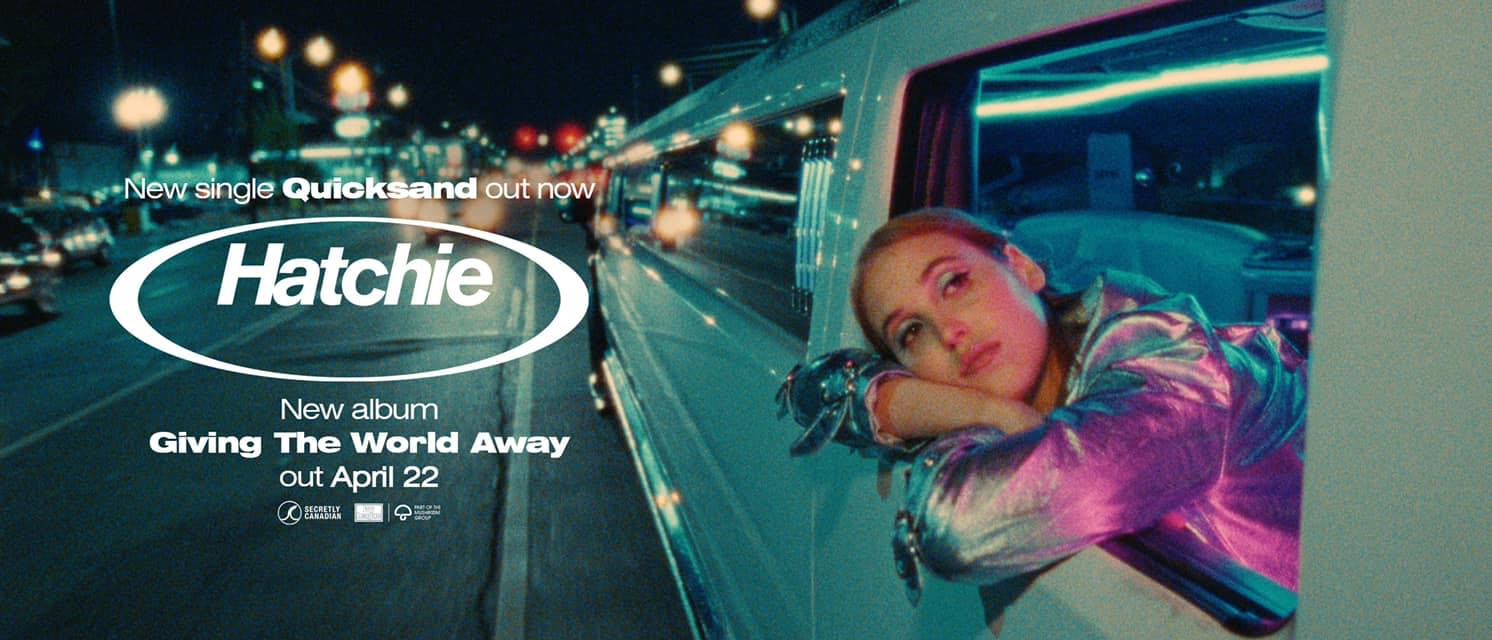
Hatchie’s stunning new album release, “Giving The World Away“, is worlds away from her previously established dream-pop universe (see: 2018’s Sugar & SpiceEP and 2019’s debut LP, Keepsake). When told standout album track The Rhythm gives us industrial, Gary Numan vibes, Hatchie (aka Brisbane-bred artist Harriette Pilbeam) looks chuffed before admitting that translating this particular track song for her recent live performances around the country “was a bit of a process”: “I think one of the main things with us is figuring out the drum sounds. Because we do have some live backing tracks, so we can sample some stuff, but we wanna do as much live as possible to really get that live sound, I guess, so it doesn’t feel like we’re like cheating… We got there in the end.”
During previous Hatchie tours, Pilbeam has played bass as well as singing, but she’s temporarily cast her beloved bass aside for her latest run of Australian shows. “I’m just singing at the moment,” she clarifies, “but I think we’ll be changing that up depending on where we’re touring. In America, we’ll be driving around and it’s a lot easier to have one less person in the van. So I think I’ll be going back to playing bass rather than getting someone in on bass, but we’ll see.”
We can’t help but wonder whether Pilbeam had separation anxiety when she first took the stage, sans bass. “A little bit, yeah,” she allows. “I definitely didn’t realise how much I have been hiding behind the bass; I think in some ways it’s easier, because you really can just stay in one place. If you’re singing into the mic and holding a bass, you can’t really do much so the pressure’s kind of off in some ways. But, in another way, it means it’s really hard to connect with your audience when you’re stuck in one place with just, like, your eyes moving around. So I think there’s a really fine balance that I’ve managed to find after a few shows of no bass, but it took a little bit to figure out, for sure.”
When asked how deliberate Hatchie’s sonic evolution was during the making of Giving The World Away,Pilbeam explains, “I really wanted to step it up and kick it up a notch and write songs that were for bigger stages and for, you know, really specific visual and light shows, and I really wanted to match that energy. But it was partly just a natural progression, with my confidence from being in bands for ten years and being in this project for – I think it’s coming up on five years now! But it was definitely gradual and took me a while to get here. I think the show now is very different from a Hatchie show you would’ve seen four years ago.”
Formerly a member of Go Violets (before they disbanded in 2014), Pilbeam also fronted the indie-rock band Babaganouj – singing and playing bass – but made her solo debut as Hatchie after quietly uploading her debut single Try to triple j Unearthed back in May, 2017. Hatchie quickly became a buzz act and, looking back on her rapid ascent during this time, we wonder whether she perhaps struggled with Imposter Syndrome. “Oh, yeah, for sure,” Pilbeam admits. “I mean, I think most people do. Especially because of how quickly everything happened in that first two years, I felt like nothing could have prepared me for the progression I had – which was amazing, but it was definitely difficult to keep up with emotionally so, yeah! It’s been a really wild journey.”
While Hatchie steadily gained traction, Pilbeam supplemented her income working in “cafés and stuff like that”. “I quit the last [café job] in 2018 when we went to South By Southwest,” Pilbeam details, “and then I managed to just live off touring. And I moved back into my parents’ at that stage as well just to kind of make ends meet.”
But then when Covid the fun sponge hit, Pilbeam’s hopes of making a living from her chosen artform alone were immediately dashed. “I did about 12 months in retail and then I started a Patreon, where I share music and do special releases every month,” Pilbeam shares of how she managed to eke out a living once touring ground to a halt. “I honestly didn’t mind retail; I think retail’s better than hospitality. But, I mean, there’s good and bad in both worlds.”
When told this scribe’s go-to anxiety dream is being thrown in the deep end, working in a super-busy store for the first time and not knowing what to do or where anything is, Pilbeam sympathises, “Oh, I hate that! I know exactly what kind of dream you mean – it’s awful!” Has Pilbeam had any recurring nightmares? “What do I have?” she ponders. “I’ve had bad dreams to do with touring, definitely. I had one nightmare where my band was all too drunk to play and they messed the show up, which was a really terrible one. And that’s never happened, but maybe it’s a hidden fear of mine? Yeah,I guess being unable to play a show is definitely a fear of mine, particularly because – before the pandemic – I think we used to play shows no matter what. I played shows with hardly any voice, I played shows when I had a vomiting bug and it never felt like an option to cancel shows. Whereas now, with Covid restrictions and things, cancelling shows – or postponing shows, at least – feels almost normal. So I think, yeah! I’ve had a lotta dreams about having to cancel shows and it being the worst thing in the world.”
We discuss how emerging artists often say yes to absolutely everything, because they’re worried that knocking back even a single opportunity could mean they miss their ‘one shot’.
“There’s definitely a delicate balance with that,” Pilbeam offers. “I know that over the last few years I’ve definitely realised that I was saying no to a lot of opportunities, whether it was interviews or shows or writing sessions with artists. There was a lot of things that I was saying no to, ‘cause I wasn’t quite comfortable yet. And sometimes that’s definitely for the best, but sometimes I think you do need to say yes to things that scare you and take a leap of faith. So, again, it’s about finding that balance of going with your gut and definitely pushing yourself in some ways – and saying yes to a lot more than maybe you were previously – if you really wanna make a change. But also not getting yourself into uncomfortable situations.
“A lot of it comes down to who you work with and, yeah, just working with people that you really know and trust, which is definitely what I do: I like to work with the same people for a long period of time rather than jumping around a lot… I’ve done the whole project with my husband Joe [Agius, formerly of The Creases] from the beginning, we collaborate on everything. And I think the only thing that’s really changed is my record label in the US [Hatchie signed with Secretly Canadian in September, 2021] – just because we kind of took the opportunity to move to a bigger team that could cover more ground internationally.”
In February 2020, Pilbeam and her husband Joe – who is also a member of Hatchie’s touring band – went to LA to collaborate with some different songwriters. “That was really like a test, that trip,” Pilbeam points out. “Joe was the only person that I felt truly comfortable writing with at that point… We feel comfortable nutting out ideas and just figuring out what’s the best for the song, and not really worrying about ego or anything like that, and, yeah! I think we have a shorthand language for everything as well, so we get things done a lot quicker. And we can fill in each other’s gaps with knowledge – and our ability on different instruments and things like that – so it works really well.
“It was really important to me that [Agius] was a part of that process as well, because we really understand each other creatively – and personally – and it makes the whole process a lot easier and, yeah! We really see eye to eye on everything, so it just made sense.”
After spending “just under two weeks” working with a few different songwriters (Pilbeam: “We did something like eight sessions in eight days. I think we had one day off in the middle”), some successful new song writing partnerships emerged. “Four of the songs from that week ended up on the record, including two songs that we did with Jorge Elbrecht: This Enchanted and Lights Off – those were two really important songs to me; I knew they belonged on the record and they really dictated how the rest of the record ended up sounding. So it was a really great trip and it was unfortunate that we couldn’t go back and continue working on the album with Jorge [in person] as we intended to, because of the pandemic, but he ended up producing the whole record over the internet. And we’ve since gone back over and done more writing with him, so it’s been a really good collaborative relationship.”
Giving The World Away’s lead single This Enchanted (released in September, 2021), boasts uplifting, anthemic keys – a nod to piano house – and calls to mind Saint Etienne to this pair of ears. When this early-‘90s UK indie-dance outfit is mentioned during our chat, Pilbeam beams broadly, “Yep, totally. Saint Etienne was exactly who we were talking about when we did This Enchanted, so I’m really glad that you’re picking it up.”
This Enchanted’s accompanying film clip stars Pilbeam sporting white feathered angel wings not dissimilar to those worn by Claire Danes as Juliet in Baz Luhrmann’s Romeo + Juliet. This homage was “kind of accidental”, however: “The wings were a last-minute addition to the This Enchanted video shoot. We were shooting that night and Joe – who directed the video as well – decided that it needed another element to add a bit of interest and a bit more depth, I guess, to the story. ‘Cause it makes you think a bit more about where the character is walking to and from – you know, has she come from a party or something like that? I like that I’m looking out into the cityscape and I think someone from my record label, when we sent it to them, remarked about how it looked like I was a fallen angel from the sky who was trying to figure out where to go next. So I like that it kind of creates a bit of mystery.” A still from this music video also graces Giving The World Away’s album cover.
Pilbeam felt inspired to write another of the songs on Giving The World Away, Take My Hand, after reading one of Nick Cave’s poetic responses to a question – submitted by a 16-year-old girl who was struggling with body image issues – on his website, The Red Hand Files (excerpt: “I often wonder how much accumulated misery a hotel mirror contains as it reflects back at us what appears to be our essential self”).
“I had started writing [Take My Hand] – I had the demo going – but I didn’t really have a direction in mind and I wasn’t sure where to take it,” Pilbeam recalls of this particular song’s genesis. “I think I had some basic lyrics in there that weren’t really specific to any experience, and didn’t really tell you much about myself personally, and I really wanted to explore something a bit more important to me. And I don’t remember how I came across it, because I’m not like a regular reader of that series [The Red Hand Files], but I was reading that particular message that he’d written to a young girl who was struggling with her body image and it really spoke to me. Because that’s something that I have struggled with a lot, particularly when I was younger.
“And it was something that I’d never really spoken about in my music, but it’s such a big part of my life so it felt odd to not address it. So I really wanted to explore that theme. And [Cave’s response] was kind of a kicking off point for it, because he had some really lovely advice for her… Someone like Nick Cave, who I would never guess could relate to that feeling a teenage girl was experiencing – you would never think that those two people had such a shared experience. But it can be really comforting to know that someone like him could at least somewhat understand what she’s going through.”
While writing this song, Pilbeam also happened to be reading a collection of essays, Trick Mirror: Reflections On Self-Delusionby Jia Tolentino, which contained “some really personal moments of self-reflection” from the author. Pilbeam then explains how this work informed her own lyric writing: “Just how personally she went with it really encouraged me to dig a bit deeper and not really spare any detail when it came to emotionally exploring my past, I guess.”
The second single to be lifted from Giving The World Away, Quicksandfeaturesa bleak, almost gothic bassline during the verses. But as soon as the immediately catchy, upbeat chorus enters, you’ll wanna make a beeline for the nearest dancefloor. Within this song, a couple of autobiographical phrases – “I used to think that this was something I could die for/ I hate admitting to myself that I was never sure,” and, “It’s all I know and I’m taking it back” – perfectly illustrate Pilbeam’s commitment to opening up and revealing more of her authentic self via lyrical content.
Pilbeam reflects on writing Quicksand: “There were elements of me feeling really unsure about what I wanted for so long, whether or not it had panned out exactly how I wanted it to and, if it had, whether it was what I still wanted, and, yeah! It definitely applies to my music career as well, but – at least at that point in time – it really applied to every element of my life, whether it was my romantic relationship or my friendship or, you know, things that I was going through personally.
“It really was like every element of my life was just seemingly perfect and what I had always wanted, but I wasn’t sure if it was still what I wanted. Whether it was, yeah, really big life things or really little things, it was just this overwhelming feeling that I had to really process.
“And whether it’s, like, some sort of positive progression that I had with my mental health, or a friendship that I’ve managed to improve, or something to do with my music achievements – or anything, really – I think I forget that good things that are happening to me that might seem normal now, didn’t even seem possible a few years ago. So I really need to sit and reflect on my present more, because I was really focusing on my past – and my future – way too much and getting really anxious and overwhelmed and disappointed, and I didn’t realise how good I have it.”
So it sounds like Pilbeam’s enforced break from touring actually strengthened her resolve. “It definitely reminded me how badly I want it and how hard I’m willing to work for it,” she agrees. “I hope that I’ll never complain about touring again, ‘cause I definitely miss it a lot more than I thought I would. So I’m promising myself that I’m not gonna take touring for granted ever again, because it’s been really hard not having it.”
At the time of our Zoom chat, Pilbeam and her hubby were packing up their house: “We’re going over [to the States] for shows and I think we’re gonna be moving around a little bit, but our home base is gonna be LA for at least a few months in between tours.”
Aside from LA’s outstanding Mexican restaurants, what else does Pilbeam rate about The City Of Angels? “Oh, Mexican restaurants is definitely the one,” she concurs, before adding, “I think the fact that you can go to the dingiest bar and they’ll make you a margarita – it’s just standard over there – whereas here people are like, ‘Um, no, you can have a vodka, lime and soda’,” she laughs.
“Also, I think it’s such an incredible creative hub; not just for songwriters and musicians, but for everyone in the arts industry. We went over for a few months at the end of last year and met so many people that we really wanna work with. And made a lot of new friends as well, because everyone’s kind of there for similar reasons. So it’s a really vibrant, fast-paced place, but it’s also got a few similarities to Brisbane in terms of the weather and the fact that it’s just sprawling suburbs and less like a city.”
So is Pilbeam a frozen or classic margarita gal? “I go for both. I like a spicy margarita as well, but I don’t discriminate when it comes to margaritas. I think a frozen mango margarita is a bit of a game changer as well, so I highly recommend that.”
At long last, It’s here! The Camp Trash LP , We promise you that this thing was entirely worth the wait. “The Long Way, The Slow Way” picks up where “Downtiming” left off and explodes into new directions. You already know that Camp Trash know how to write a hook, but they refuse to play it safe. Their debut LP explores different tempos and different moods that show a lot of depth to a band that is clearly on the verge of something big.
Camp Trash isn’t just a real band—they’re a really great band. Their debut LP “The Long Way, The Slow Way” dropped in the middle of this summer. That’s appropriate, as it’s wall-to-wall bangers from the clean opening riff of “Mind Yr Own” to the post-metal detour of “Another Harsh Toyotathon” to the loving comedown of “Feel Something.” No matter when or where you are when you press play on “The Long Way, The Slow Way”, it’s sunny and 75 when Bryan Gorman urges you to “give it a rest, let it ride.”
That’s the biggest lesson in “The Long Way, The Slow Way”, a record nearly a decade in the making—there’s nothing wrong with taking your time. Sometimes you end up with a masterpiece.