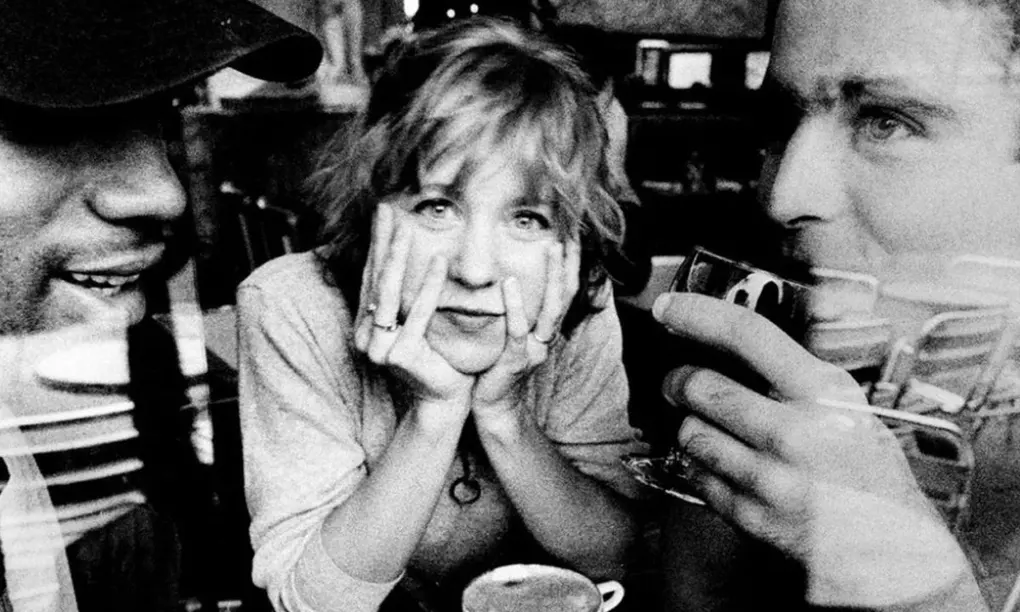
San Francisco’s underground institution The Reds, Pinks and Purples have today both announced details of a new album, The Town That Cursed Your Name and shared the video for ‘Life In The Void’, the first track to be taken from the album.
Released on 24th March, the album is their fifth in as many years, testament to the prolific nature of Glenn Donaldson, the Bay Area songwriter who leads the project. Talking about ‘Life In The Void’, Donaldson said:
‘Life in the Void’ is dedicated to everyone who ever felt trapped in a shitty life situation or loved someone who fell apart in slow motion.”
“The Town That Cursed Your Name” is available on CD, two vinyl formats – pastel green and a limited cream vinyl edition with a bonus 7” available only via Bandcamp/Tough Love website – as well as the usual digital formats. The band undergo a short US tour with Destroyer in May.
It’s ok to play out of time, Music toys with time. Or, maybe songs reflect back that time is always toying with us. The world of a song takes hold of us like an eternity to be lost in, with its repetitions and variations, but ultimately, as with everything else, it has a start and then ends. And there’s no place to lose time like San Francisco, where there are no seasons and all the seasons occur within one day; where the fog takes the space where your plans might have been; where there’s insane wealth all around and everyone you know and love is hanging on at the periphery and making art on any given Tuesday night. About Glenn Donaldson’s new record, “The Town That Cursed Your Name”, he says, “I realized as I was piecing it together that it’s a song cycle about trying to live while also feeling called to make music”. It’s a double life when it works and a deeper doubleness to mirror the Gemini nature of songs themselves. “The Town That Cursed Your Name” contemplates this problem with wryness, generosity, and the micro- and macroscopic realness Donaldson is known and loved for.
Whereas the 2022 collection “Summer at Land’s End” was a softer, gauzier world, “The Town That Cursed Your Name” is heavier, with fuzzed lines running through. ‘Leave It All Behind’ starts out with an amorphous whine but quickly launches into something both supremely melodic and buzzing at the edges. ‘Here Comes the Lunar Hand’ is an impressionist geometry that seems to capture the album’s themes without telling you how. Lyrically, Donaldson embraces the earnestness of his heroes Paul Westerberg and Grant McLennan. Sonically, late ’80s college rock is filtered through song-forward lo-fi acts like East River Pipe and House of Tomorrow-era Magnetic Fields. Like the images that accompany his releases – flowers and residential street scenes are pushed to the breaking point with colour – Donaldson’s songs are at the same time dazzling and lurid, beautiful and burdened, not unlike life as a musician around here.
In the liner notes, Donaldson dedicates the record “to everyone who ever tried to start a band in the Bay”. There will be many knowing smiles at his title, ‘It’s Too Late For An Early Grave’. But, this dedication captures something else about the particular strain of sincerity that laces the city water supply – the front man around here is on stage under those lights evincing the fervor not of the pop star but of the biggest fan
“The Town That Cursed Your Name”, out 24th March via Slumberland (North America/Japan) & Tough Love (R.O.W).
Rose City Band is the most current nom-de-plume of American guitarist Ripley Johnson, co-founder of psychedelic rock acts Wooden Shjips and Moon Duo. Offering up a lysergic take on Americana and country music, ‘Garden Party’ is Johnson’s fourth Rose City Band album in as many years, and finds Johnson heading up a rotating ensemble including crack players like pedal steel guitarist Barry Walker and his Moon Duo bandmate Sanae Yamada.
On “Garden Party”, Rose City Band’s country psychedelic rock evokes the wide-open spaces of the American west and free spirits who call it home. Led by acclaimed guitarist and vocalist Ripley Johnson, Rose City Band are some of the best players in contemporary rock: pedal steel guitarist Barry Walker, keyboardist Paul Hasenberg, bassist Dewey Mahood (aka Plankton Wat), drummer Dustin Dybvig, and features Sanae Yamada of Moon Duo on Synthesizer. “Garden Party” is both a celebration of summer and all it brings: friends gathering at backyard BBQs, cold beers on a hot porch, 12-foot sunflowers, and an exaltation of the value and respite of a moment of calm; the pleasures of time in the garden to appreciate the beauty of a contorted carrot, or a morning on a stoop watching a hummingbird.
Freedom, contentment, and joy were the sources for the songs; they certainly bring the listener right there. From the soaring guitar solos to the driving rhythms, the elegant pedal steel lines to the organ grooves, “Garden Party” has a live band’s energy captured in exquisite detail. “Garden Party” is an invitation, a welcoming hand extended, and a joyous ride. Like all great music, the album taps into the listeners’ emotional center and takes them to their happy place – their sunny spot.
Recorded at Center for Sound, Light, and Colour Therapy in Portland and mixed by John McEntire, the band’s sounds surround and embrace you. “Garden Party’s” last two tracks feature special guest Sanae Yamada (Moon Duo) who added some synth magic to the final two tracks. Ripley says it best “I always like when an album starts in one place and ends in another” What a beautiful journey it is!
The Chills are difficult to stylistically define because their diverse sound traverses lush psychedelia, whimsy and gloom, punk rock and bright jangly pop. Known for their revolving door policy on band members, perhaps rivalled only by the Fall (there have been at least 33 members of the Chills over their 41-year career), the one constant is Martin Phillipps.
The Chills a New Zealand rock band that was formed in Dunedin in 1980. The band is essentially the continuing project of singer/songwriter Martin Phillipps, who is the group’s sole constant member. For a time in the 1990s, the act was billed as Martin Phillipps & The Chills. In the 1980s and 1990s, The Chills had some significant chart success in their homeland and were a cult band in other parts of the world as one of the earliest proponents of the Dunedin sound.
Singer-songwriter Martin Phillipps formed The Chills in 1980 with his sister Rachel Phillipps on keyboards and Jane Dodd on bass after the demise of his punk band, The Same. Also included in the initial line-up were guitarist Peter Gutteridge and drummer Alan Haig. Phillipps’s earlier band, the Same, had formed in 1978 and performed alongside punk bands Toy Love and The Enemy.
The Chills were initially signed by Flying Nun Records and were one of the four bands recorded for the infamous “Dunedin Double” EP in 1982. By this time, the band consisted of Martin Phillipps, Alan Haig, keyboard player Fraser Batts and bassist Terry Moore. One of the tracks recorded, “Kaleidoscope World”, became a signature song for the band’s early years.
Rachel Phillipps returned (replacing Batts) and Martyn Bull took over from Haig on drums in time for the band’s first single “Rolling Moon”, which was a chart hit in 1983. However, Bull’s sudden illness caused the band to then take a year off.
The Chills became essentially a solo project spearheaded by Martin Phillipps, the band’s lead singer and sole songwriter. Band personnel turnover was near-constant—The Chills went through over 20 different line-up changes with Phillipps as the only constant member. Members of the band from 1984 on have included Terry Moore, Alan Haig, Peter Allison, David Kilgour, Steven Schayer, Martin Kean, Justin Harwood, Caroline Easther, Jimmy James Stephenson, Jillian Dempster, and OliWilson among others. Several of these musicians went on to further success in bands ranging from The Verlaines to Luna.
The band’s first post-Wrinkle in Time release was the 1984 single “Pink Frost”, which became the band’s biggest hit to that time. It was initially recorded in 1982 by the three-piece band of Martin Phillipps, Terry Moore, and Martyn Bull, before receiving new overdubs in 1984.
“Just the thought fills my heart with pink frost … ” Is it a nod to Pink Moon or Pink Flag? It seems more in line with Syd Barret. filmed at Lover’s Leap where the atmospheric music video for this song was filmed. This haunting, iced-over song reached number 17 on the New Zealand singles chart and still sounds heart-stopping. “Pink Frost” is my favourite. It’s an obvious choice but the ‘vibe’ of the song is so intertwined with my memories of what Dunedin was like, I can’t go past it.
It’s one of those songs that immediately stops you in your tracks whenever you hear it. While it was recorded in 1982, Martyn Bull died in 1983 so it was released posthumously as a single in 1984. If you look at the 7” you’ll see it has “For Martyn” etched on the A-Side.
“This is the Way“ Fill your head with alcohol, comic books and drugs …” From the dreamy “The Lost” EP. I never knew there was a video of this until now. The autoharp, the juice bottle, the simplicity. Dexterously filmed by Chris Knox in one shot at his flat. Phillipps has said the clip documents the band at a sad time. Bassist Martin Kean had left the band but agreed to come back to do some promotional work, including this video. “He makes a personal point by not showing his face throughout the clip but there is also an overall feeling of sadness to the video anyway,” Phillipps wrote on a Facebook post when he unearthed and shared this video.
The a six-song EP called The LostEP. This EP did not feature any of the band’s previous (or future) singles and peaked at #4 on the New Zealand singles charts in 1985. The Chills undertook their first European tour that same year. This single was followed by the #12-hit single “Doledrums”
One of the very few (perhaps only) Chills songs not written and sung by Phillipps, “Hidden Moon” is the much stronger b-side to the dour and plodding “Doledrums“, a song I’ve never liked (see the Puddle’s Thursday for a more celebratory ode to dole day), and is the work of Martin Kean.
A daft and joyful tune, it’s short and sharp and rhymes “bay” with “May” and “fool” with “cool”. Infectiously fun.
In 1986, the band issued the minor international hit “I Love My Leather Jacket”, recorded at The Point Studio by Danny Hyde. “I Love My Leather Jacket” was dedicated to late drummer, Bull, who had bequeathed the said item of clothing to Phillipps in his will. “I love my leather jacket, I love my vanished friend.” Iconic and irresistible, this is like slowed down glam rock and has a steady stomp, driving repetitive riffs and swirling stabs of keyboard. Famously written as a tribute to former Chills drummer the late Martyn Bull who died of leukemia aged 22. Bull had bequeathed his leather jacket to Phillipps and this song is his bittersweet and philosophical tribute to his dearly missed bandmate and friend. And as the song goes, Phillipps did wear the jacket all the time as he said . “I wore it constantly … I travelled the world in it and I crashed out at parties using it as a blanket. It was very much a part of who I was for many years.”
This whimsical b-side to “I Love My Leather Jacket” features on “Kaleidoscope World” and was accompanied by a promotional video the band made while on tour in London. In it, it’s nice to see them having what looks like fun for once.
Kaleidoscope World
The Chills finally released their first album, “Kaleidoscope World”, in 1986; the album was a compilation of various previously released singles, EP tracks, and songs from the “Dunedin Double” EP.
Brave Words
The band released their first proper album, “Brave Words”, in 1987. The band spent most of 1987 (February through mid-December) promoting the album by touring Europe, interspersed with four July dates in New York and Boston. A full-fledged North American tour occurred in the fall of 1988; tour dates would be a regular part of the band’s life for the next several years.
This clever, droll but hilarious and bouncy b-side of “House with a Hundred Rooms” is one of the best gleaming examples of Phillipps’ skill as a lyricist. “The balloons have all shrunk, the streamers have faded, the punch has gone flat and the record’s outdated. All the dips and meringues and the cakes have gone mouldy.
“House with a Hundred Rooms” There are three different versions of this song that I know of, including a sensationally raucous 1982 live version under the title “After They Told Me She Had Gone”. Mayo Thompson from avant garde rock group Red Krayola produced this 12” version though, and it’s the best. Gauzy and wistful, it’s drenched with melancholic yearning.
It sounds distant, like it’s beaming in from a different room or from underneath the floorboards. And when that unexpected, uplifting organ drifts in from out of nowhere at the end, the song ends on a quietly joyous note.
Nobody rang, nobody told me … ” On the back cover of the 12” the band members are shown wearing party hats and blowing streamers, surrounded by balloons, but looking comically glum.
This cover version of The Byrds song. Appeared on 1989 CD “Time Between: A Tribute To The Byrds”
Phillipps goes to an early source of inspiration with this plaintive cover of the Vietnam protest song by the Byrds. Charting the inner world of a freshly recruited soldier on the morning he is to be drafted into the Vietnam war and the existential dilemma he faces, the song begins with the idealistic “sun warm on my face” and ends on the sombre line “today was the day for action. Leave my bed to kill instead. Why should it happen?” It has a slow, repetitive keyboard motif and does without the bombastic clatter of the original’s battlefield sound effects.
Submarine Bells
In 1990, the band were signed to a worldwide record deal with their music appearing on the Warner Brothers imprint Slash Records in North America. Their 1990 album “Submarine Bells” included their biggest international hit, the whimsically titled “Heavenly Pop Hit”. It sounds simple while being deceptively complicated, dashing through chords from different keys inexplicably, and both the lyrics and the music never resolve – they just move on to the next breathless metaphor about the earth or the experience of being alive, or they leap onto some grammatical pun (I love the line, ‘the tension is ended, the sentence suspended’). It sounds like a hyperactive mind in love. And that chorus – it comes out nowhere, it’s almost wordless, and it’s one of the most moving fragments of music I’ve heard in pop. With typical South Island humility, Phillipps then dismisses his miracle with the refrain – ‘it’s a heavenly pop hit – if anyone wants it.’
If I had to pick a single song to summarise the brilliance and the precariousness, the tightrope walk of being Martin, I’d pick the tile track of their 1990 album, “Submarine Bells” Jesus, this is a beautiful song. 27 years after I first heard it, it still makes my eyes go faraway.
In part, it’s the temerity of it I love. On an album with the radio perfection of Heavenly Pop Hit, and the fast, fast, faster guitars of The Oncoming Day and Familiarity Breeds Contempt, “Submarine Bells” is a bewitching way to end. And the very end of the song (and therefore of the album), in which Martin begins with “okay” and ends with “oh, Kay”, was such a state of the art example of my favourite genre, the completely hopeless love song, that every time I hear it I’m delighted afresh, again.
“I know deep down, hidden in you, submarine bells chime.” I don’t even really know what it’s about. Not exactly. But I don’t need to know that. It’s the way the music invites us to bring ourselves in. And for me, it’s a song about longing and hope and shyness and possibility. Or something. Martin was flying then.
“Submarine Bells” was the band’s first record on a major label and hit number one on the New Zealand charts. It only clocks in at 36 minutes but is a complete journey which saw the group refine some pretty serious songwriting. A lilting and delicate song, the impossibly named “Effloresce and Deliquesce” is an eerie folkish lullaby shanty with breathlessly rapid fire vocal delivery, a sense of high drama and urgency. In lesser hands a song like this would be embarrassingly twee.
The tune was also a hit in the US, charting at #17 on the Billboard Alternative Airplay Chart; it remains their only American chart appearance.
Soft Bomb
The group’s follow-up album, 1992’s “Soft Bomb”, featured a totally different Chills line-up (save for Phillipps), and spun off the hit “The Male Monster from the Id”.
Originally released in 1992, The Chills’ third album ‘Soft Bomb’ came out on Slash/Warners.The Chills’ finest hour.” Perfect Sound Forever, Featuring contributions from giants of contemporary American music like Van Dyke Parks and ex dB’s PeterHolsapple as collaborators.
A cohesive song cycle that brought together indie pop jangle, Phillipps’ clever lyrics, a “drunken piece of music hall” (AllMusic), an offbeat homage to Randy Newman, filmic string-laden scores, some grown up licks and three thematic interludes. it’s a roller coaster 17-song, 51 minute trip, a conceptual classic that embraces styles and genres.
“Their songs call like rare, exotic wines, intoxicating and addictive and beautifully melancholic, while simultaneously inspiringly uplifting.” Repeat Fanzine ‘Soft Bomb’ is an eclectic slow cooked musical stew, rich and rewarding from the much-loved storytelling songwriter MartinPhillipps.
Phillipps announced the dissolution of the Chills after the “Soft Bomb” tour, and joined David Kilgour in a loosely organized covers band known as The Pop Art Toasters, which released a self-titled EP in 1994. Shortly thereafter, though, the ‘Toasters dissolved, and Phillipps put together another Chills line-up and resumed gigging.
Sunburnt
This seemingly constant turnover of personnel is often cited as one of several reasons for the band’s lack of consistent “saleability”, and is referred to by the local music scene as “the curse of the Chills“. The “curse” struck again with the recording of the album “Sunburnt” in England, in the summer of 1995.
Two band members were refused entry into the UK, so session musicians had to be recruited at the last moment. Dave Mattacks of Fairport Convention and XTC’s Dave Gregory provided drum and bass work for the album, with Phillipps the only other credited musician (aside from guest keyboards played by producer Craig Leon). This album was issued in early 1996 under the group name Martin Phillipps and The Chills.
After that, the band again split, with Phillipps appearing in another one of David Kilgour’s bands, the Heavy Eights. Nevertheless, Phillipps continued to recruit new Chills members for live shows and played at least a few shows as The Chills every year from 1997 on. For much of the late 1990s, though, Phillipps was laid low with hepatitis C, a side effect of drug addiction problems. He released an album of solo home demos (Sketch Book: Volume One) in 1999; the demos themselves dated from 1988–1995.
Brave Words & The Secret Box
While they had formed in 1980, the Chills only released their first proper album “Brave Words” in 1987. But the band actually had enough material to release two albums prior. Released in 2001, “the Secret Box” is a dizzying set of three CDs which collects some of these rarities along with a slew of singles, EPs, live recordings, studio outtakes, demos, radio sessions and even jingles. If you can get your hands on this set, you won’t be disappointed.
It includes “Balancing” a kaleidoscopic instrumental which was recorded live at the Cook in Dunedin in 1981. A hectic and majestic narcotic swirl of squally guitar, chiming keys, steady motorik drumming and phenomenal bass, it accelerates to a crescendo and you can almost hear the audience’s jaws drop at the end.
Released in 2000, “Secret Box“, was a three-CD box set of Chills live tracks, demos, radio sessions, and rarities was released.
In 2014, an eight-song Chills mini-album called “Stand By” was issued, the first all-new Chills material in nine years. Phillipps’s album liner notes promised: To celebrate the first European tour in 20 years from Dunedin’s finest, we are pleased to announce a special tour release, ‘Stand By’. Featuring two never before release tracks, ‘Find Your Own Way Home’ and a cover of ‘Solitary Man’ (available via a special download / ICE fanclub membership insert), all audio is re-mastered especially for the 2014 European Tour. Released July 27th, 2014
I am preparing to take the band in quite a new direction on the next album. And on that we will begin work shortly.
Despite Phillipps’s claim, however, no new Chills album appeared for over a decade.
In May 2010, the band played two shows in Australia, their first shows outside New Zealand since 1996. Three years later, after another nine-year hiatus from the recording studio, a single newly recorded Chills track called “Molten Gold” was issued.
The track, released on Martin Phillipp’s 50th birthday (July 2nd, 2013), was a non-album 7” single with the re-recorded “Pink Frost 13″ as a B-side.
The BBC Sessions
Beckoned by John Peel himself, the first time The Chills entered the BBC studios in Maida Vale it was a dream come true for the little band that could from New Zealand. Exporting the kind of unique pop smarts that only emanate from Dunedin, they were only too happy to graduate to the fully stocked studio and show the UK what they really had to offer.
Removed from past budget restrictions, but pushed forward by the time constraints of a one day recording, the results produced a rush of superior recordings of their early material, without losing any of the charm so vital to their appeal. This was the real sound of The Chills. Released November 3rd, 2014
Silver Bullets
Following on from ‘The BBC Sessions’ on Fire Records, The Chills release their first full length album in nearly two decades. ‘Silver Bullets’ released October 30th, 2015 the band issued “Silver Bullets“, their first album-length release in 19 years, hails the return of one of New Zealand’s most respected exports; Bursting with chiming Dunedin-pop anthems, melodic rock and Phillipps’ playful punk-rock tendencies, the thrilling new album brings them to the next chapter.
Recorded at Albany Street Studios in Dunedin (NZ) the album instantly reaffirms Phillipps’ aptitude for writing intelligent and timeless pop songs delivered with conviction. Whether tackling issues on the economy, fighting with ‘Silver Bullets’ or the observant nature of Southern Lights on ‘Aurora Corona’, The Chills complex pop resonates in a cacophony of dark-edged songs. Their underlying melancholy remains and is offset by their signature catchy melodies bringing a haunting depth to their idiosyncratic sound.
In February 2017, the band released the David Bowie song “Conversation Piece”.
Snow Bound
On September 14th, 2018, the band released its seventh album, “Snow Bound” The latest postcard from The Chills’ epic journey is an album about “consolidation, re-grouping, acceptance and mortality,” claims the chief Chill. “Hopefully a kind of Carole King ‘Tapestry’ for ageing punks.”
The Chills’ epic journey is an album about “consolidation, re-grouping, acceptance and mortality,” claims the chief Chill. On ‘Snow Bound’ lost heroes are lamented, relationships are re-evaluated, atonement is sought, mortality is mulled over and fake news is undercut.
On ‘Snow Bound’ lost heroes are lamented, relationships are re-evaluated, atonement is sought, mortality is mulled over and fake news is undercut. It’s serious stuff, the thoughts of a dysfunctional 50-something wrestling with maturity and discovering that their post-punk DIY beliefs still have a real voice that resonates between the fans of their early years and which can now pass down to the next generation.
Casting our minds back, we can recall that The Guardian mused, “They sound almost like the musical embodiment of autumn,” when confronted with ‘Silver Bullets’. Three years on, ‘Snow Bound’ nestles heartily in its own winter of discontent. And all this with a humalong melodic verve, Phillipps’ gift for the tempered dalliance of verse and chorus and those gorgeous euphoric organ fills. Let the soul-searching commence…
Journeyman songwriter Martin Phillipps returned with a Chills track ‘You’re Immortal’. An uplifting and provocative encounter told in the grand baroque pop manner of Love’s ‘Forever Changes’ with a gorgeous Chills-approved melody line that harks back to the band’s greatest hits. It’s an anthem for the times, a quest for hope set amid the misinformation of the day and the tip of a fast-melting iceberg, no less.
“These are unprecedented times but, as usual, the young feel invulnerable and the elders are concerned. The old people (like me) want to feel more involved but they also know that their time of influence has largely passed.
So we learn from the young and admire them as they make their own mistakes yet still, hopefully, shape extraordinary history we could not have imagined.” Martin Phillipps on ‘You’re Immortal’
Taking us out of the year, ‘You’re Immortal’ marks a new epoch for The Chills with 2021 set to be an exciting year…
Scatterbrain
Now in 2021, Phillipps is now taking stock of things – everything. Yes, everything. The result is this triumphant new Chills’ album ‘Scatterbrain’, a thought-provoking and evocative take from a man who has lived through good times and bad. A mature and honest reflection on life, destiny and the fate of our times delivered in beautiful melodies with Phillipps’ trademarked incisive turn of phrase.
Viewed from the perspective of a man understanding his age and indeed his own mortality, the new album takes a mature look at matters arising with a side order of perspective. ‘Scatterbrain’ is a life passing before your ears as uncertainty increases and fake news rumbles on; during which aliens invade, Phillipps scales the walls beyond abandon as he probes the minutiae of worlds within worlds and the hourglass fills. A landmark album from one of the great modern song writers, it’s pure pop music for the new normal and we can’t wait to see how it ends…
The independent scene that emerged from Dunedin, New Zealand, in the early 1980s had all the strange qualities musical trainspotters around the world associate with isolation. Hamish Kilgour from the Clean describes the city as a cauldron, with the low-hanging sky its lid. It’s a creative pressure cooker from which artists must escape.
In the decades since, the bands that steamed from the top of that cauldron have gone global. Next to the Clean, the biggest name is Martin Phillipps, the legendary leader – of 21 different lineups – of the Chills. They were the definitive Dunedin band, with a strange, light, airy, eerie, breezy magic that both matched the city’s geography and transcended it.
But they were cursed. The subtitle of “The Chills: The Triumph and Tragedy of Martin Phillipps” – a new documentary by Julia Parnell and Rob Curry – tells you that this is, first and foremost, a portrait of the artist. A consummate songwriter, Phillipps appears as both a driven man and a lost boy, emotionally cut off from those drawn into his orbit to help him realise his vision.
The film opens in the interior of Phillipps’ home. Over the haunted opening notes of “Pink Frost” (“That’s fine art, according to me,” we hear Iggy Pop say, on a radio show), Phillipps pulls out his keyboard – then breaks into “Heavenly Pop Hit”, which wasn’t so much his biggest hit as his nearest miss.
Spliced amid scenes of festival crowds, ecstatic gigs and the video clip of the song, Phillipps climbs into a decrepit car and drives himself to hospital to receive the results of his liver function tests. Phillipps has hepatitis C. He is told, with medical precision, that he has a 31% chance of dying within 12 months.
Then he is given a guarantee: “If you do keep drinking, Martin, you will die,” the physician says.
There is so much about the Chills’ story that is, on the face of it, cliched. After a number of acclaimed singles and EPs, Phillipps, whose best songs are touched with a sense of wonder, signs his band to a multi-album deal with a US label, Slash. When the hits fail to materialise, he sinks into a fog of heroin addiction, alcoholism, depression and withdrawal.
But Parnell and Curry treat their subject with unusual sensitivity, helped by Phillipps’ extraordinary candour. He allows them access to every step of his treatment process, as well as to his archives (he is an obsessive collector). Around him, other band members, each of them individually numbered, step forward to speak.
What they have to say is just as unfiltered. The former drummer Caroline Easther (Chill No 12) says Phillipps made her feel anxious. The bassist Justin Harwood (Chill No 14) comments that he didn’t know if he was needed or expendable. He came to the latter conclusion after Phillipps told him he planned to write the bass parts on the band’s next album himself.
Another bassist, Terry Moore (No 6), who played in two stints with the band, wonders if he’s going to be next. The drummer Jimmy Stephenson (No 15) has been left traumatised. In tears, he pulls out a gold record of the band’s biggest album, “Submarine Bells”, the glass cracked after falling off his wall in an earthquake: to him it’s symbol of both “great success and shattered dreams”.
In between, we watch Phillipps going through piles of junk as he reassesses his life, sorting the detritus from the essentials. Preparing for an art exhibition – while spray-painting a mummified cat – he muses that “it’s much more fun working as a team on anything. But I’m not going to sacrifice the quality for just a bit of team spirit.” Phillipps remained Chill No 1.
It’s beautifully filmed, suffusing the documentary with an atmosphere to match the Chills’ glorious music, and we get to hear much of that, too. But it’s never allowed to get in the way of the story – there’s no recounting of the band’s discography and, other than Neil Finn and the aforementioned Iggy Pop, no higher luminaries are called on to affirm the band’s standing.
Phillipps’ story resonates because despite his self-involvement, it’s bigger than he is. It’s about artistic integrity, self-realisation, self-acceptance and a reflection on mortality. Towards the end of this sad, lovely film, the emotional rush is equivalent to the Dunedin surf washing on to the cold beaches – it finishes far more optimistically than it promises to.
As a fan, I wanted to punch the air. And of course, it will be fans of the Chills who queue up first to see this documentary. If you’ve not yet had the distinctive pleasure of hearing his band, the triumph and tragedy of Phillipps’ story will make you one for life.
Dunedin’s finest, The Chills follow their acclaimed seventh studio album ‘Scatterbrain’ with a special 7” vinyl “Scatterbrain-Storms: Outtakes“. This special release features three brand new tracks ‘The Dragon with the Sapphire Eyes’, ‘No One KnowsBetter Than Me’ and ‘Nowhere’.
‘Scatterbrain-Storms: Outtakes’ is a three-track release of bonus material from 2021’s ‘Scatterbrain’, the seventh studio album from Martin Phillipps’ The Chills. Consisting of material that actually predates its parent LP, written before the tone and themes were established, it was initially offered to fans on the Dunedin band’s recent tour.
“We felt these were too good not to be released and were actually the first three songs we wrote for ‘Scatterbrain’ before it’s lyrical tone and musical direction became established. It was important to us to offer fans something special on the tour” Martin Phillipps
Recorded at Port Chalmers Recordings Services, “Scatterbrain-Storms: Outtakes” was produced by Tom Healy with assistance from Tom Bell. The Chills are Martin Phillipps, Oli Wilson, Erica Scally, Callum Hampton and Todd Knudson.
“A worthy addition to a glorious canon” Uncut
‘Scatterbrain’ is a life passing before your ears as uncertainty increases and fake news rumbles on; during which aliens invade, Phillipps scales the walls beyond abandon as he probes the minutiae of worlds within worlds and the hourglass fills. ‘Scatterbrain’ is a landmark album from one of the great modern song writers, it’s pure pop music for the new normal and we can’t wait to see how it ends.
The Pale Fountains were formed in Liverpool in 1980 by Mick (as he was then known) Head with ChrisMcCaffery on bass, Thomas Whelan on drums, trumpeter Andy Diagram and guitarist Ken Moss.
Signing with Virgin Records in late 1982, this was the first time the music world became aware of the work of singer-songwriter Michael Head. Inspired by 1960s music such as Love, Burt Bacharach and The Beatles, the group released their debut single “(There’s Always) Something on My Mind” on Les Disques du Crépuscule before signing a major label deal in October 1982. Although the Pale Fountains failed to make much commercial headway, the band earned critical praise for the two albums released on the Virgin Label “Pacific Street” released in (1984) and …“From Across the Kitchen Table” the following year (1985), was produced by Ian Broudie, who later found fame with The Lightning Seeds
Melding the most forward-thinking aspects of Eighties pop to the lush, acoustic-based psychedelic rock of Love, 1984’s ‘Pacific Street’ was the debut album from Liverpudlian indie band The Pale Fountains. Fronted by Michael Head (later of perennially underrated Shack) the group cut against the grain of much Eighties indie in Britain with a mellow, bossa nova-influenced sound.
“Pacific Street”
The bounciness of the Pale Fountains went penalized in the days of Echo and the Bunnymen and the Smiths. “Optimism — yuck.” Michael Head’s stylistic hopscotch and wide-eyed sunnyness might have translated better in the late ‘90s, had he stuck with that program for his later band, Shack. If the band had set their sights on one or two areas of their record collections for inspiration instead of darn near everything, “Pacific Street” might not have been so out of place when it was released.
At the time of its release in February 1984, Head described “Pacific Street” as “like a greatest hits LP, except we haven’t had any hits!” It not only showcases the ambition of 80s pop in general, but the very specific singularity of the Liverpool scene, that seemed to add love and (Arthur Lee’s) Love to everything recorded. It reflects the swing away from the post-punk and funk of the early years of the decade, aiming for a mellower, bossa-nova influenced pop. It is difficult to understand how tracks such as “Unless” and “(Don’t Let Your Love) Start A War” were not big hits and are not viewed as standards.
Bold indeed, the expanded version of “Pacific Street” (issued by VirginRecords with four bonus tracks) veers from every angle of ‘70s AM soft rock, stylish soul pop à la Orange Juice (but not as effective), Bacharach/David, and Brazilian jazz. You can imagine Dionne Warwick singing the chorus of “Abergele Next Time”; the non-album single “Palm of My Hand” veers dangerously close to muzak, and the steel drum-and-trumpet combos were more than enough to incite gagging from the pop underground. Too bad. Like the following “From Across the Kitchen Table”, “Pacific Street” wasn’t able to succeed on the charts, so the too varied and too happy Pale Fountains were left in limbo. For all its faults, the band’s debut isn’t half bad, and it doesn’t sound horribly outdated decades later.
“From Across the Kitchen Table”
The Pale Fountains’ second record produced by Ian Broudie ditches a couple of the scatter-brained influences of the debut, so it makes for a slightly more consistent listen. Not all of the odd wrinkles are abandoned, though; they still sound as if they are trying too hard to distinguish themselves from the rest of the flock. The Pale Fountains’ strength lies in folksy pop, but on a few too many occasions, the incessant smoothness and inability to latch onto one style holds them back. Surprisingly, the title track is almost synth-pop, but a smattering of horns makes sure it isn’t completely such. On “September Sting,” they try their hands at Laurel Canyon country-rock and fall flat on their jumpers. When they want to, they can write finely tuned, sophisticated pop songs that are quite pleasant. Instrumentally, “Stole the Love” doesn’t sound a great deal different from the Smiths. “Shelter” and “Jean’s Not Happening” are fine strummers.
1985’s . . . “From Across The Kitchen Table” was produced by Ian Broudie, soon to form and redefine sugar-pop with The Lightning Seeds. The album is more unified than its predecessor as it was recorded over a shorter period of time. Lead single “Jean’s Not Happening” is one of the great lost indie gems of the 80s, complete with a powerful string arrangement. The closing song, “September Sting”, is a joyous slice of scouse-a-billy that points the way clearly to later groups such as The Las.
Near four decades later, Michael Head is adored by his hardcore following and the wider world freshly discovers him as each of his new releases achieves widescale acclaim, whether it be his subsequent band, Shack, or his current outfit, the Red Elastic Band. But The Pale Fountains was where it all began.
Though a decent record and an improvement over the debut, “Kitchen Table” frustrates. They were too anxious to zig or zag when they could have stayed the course. After establishing themselves as a cult band, the Pale Fountains eventually broke up, with Michael Head forming the similarly cultish band Shack.
Two compilations have been issued: “Longshot For Your Love” (Marina, 1998) and “Something On MyMind” (Crépuscule, 2013), the latter with a bonus live CD recorded in 1982.
H. Hawkline (aka Huw Evans) is releasing a new album, “Milk For Flowers”, which was produced by Cate Le Bon, on March 10th via Heavenly. Now he has shared another single from it, “Plastic Man,”.
Evans had this to say about the song in a press release: “The last song written for the album, need more than must, twirling cane and top hat gliding down a molten stairway in the middle of summer. Tim Presley wrote that opening guitar line—I watched him piece it together like a scribble, animating itself into a Muybridge off-cut.”
Amusingly, the video for “Plastic Man” is almost exactly the same as the one for the album’s title track, “Milk For Flowers,” which was shared last year. If you watch both videos, some of the vocals from “Plastic Man” match up with Evans’ mouth movements and at other parts in the video the vocals are synched to “Milk For Flowers.” Evans explains: “‘I’m going to make one video and just change the music.’ I laughed to myself, thinking about it, and then I thought about it and it made sense. Sometimes your song changes but everything else stays the same; it causes previously dormant plates of emotion to grind against the familiar and mundane, new monuments jut up from your earth, empty buildings, a landscape rearranged.”
“Milk For Flowers” Due Out March 10th via Heavenly Records
Chicago duo Whitney (Julien Ehlrich and Max Kakacek) have shared a new song, “For a While,” and announced some new U.S. tour dates for March.
“For a While” is actually an earlier song, it’s been a live favourite from the era of their 2016-released debut album, “Light Upon the Lake”, and was a live favorite back when it was titled “Rolling Blackouts.” The song was finally recorded in 2022. Whitney produced the song with Brad Cuook, Jonathan Rado, and Ziyad Asrar, It features contributions from Macie Stewart (violin), Will Miller (horns), Lia Kohl (cello), Malcom Brown (keys), Rado (organ), and Asrar (synth).
Ehrlich had this to say about the song in a press release: “The lyrics of ‘For a While’ were inspired by a time Max and I drove past a burning car on the side of the highway in Northern Illinois. From what we could see everyone made it out safely, but in that moment we were both struck by the ubiquity of anonymous tragedy.
Over the course of writing ‘For A While’ that experience evolved into a feeling of gratitude and love for all the people who aren’t able to be with us today. We’ve been working on this song for a few years and a few different phases of our lives. It’s seen some people come and go. We love you all.”
Frankie Rose are releasing her first new album in six years, “Love As Projection”, on March 10th via Slumberland Records. Now she has shared its second single, “Sixteen Ways,” via a music video. Scott Kiernan directed the video, which was choreographed by Neil Schwartz and features dancers Dainique Jones, Misato Obana, Youlmae Kim, and Shion Uesaka.
After spending nearly two decades establishing herself across New York and Los Angeles independent music circles, Frankie Rose returns with a fresh form, aesthetic, and purpose embodied in her new album “Love As Projection.” Celebrated by countless critical and cultural outlets over the years for her expansive approach to songwriting, lush atmospherics, and transcendent vocal melodies and harmonies, “Love As Projection” is a reintroduction of her iconic style through the new lens of contemporary electronic pop. Featuring beautiful, ethereal songs like lead-off single “Anything,” “Sixteen Ways” and “Come Back,” this album is more than a rebirth, a refinement, a resurgence – it’s a culmination of influence and the most personal and accessible collection of art-pop that Frankie has delivered yet.
Rose had this to say in a press release: “I wanted to make a dance video choreographed by 80s Baby (Neil Shwartz) but with the ESPTV (Scott Kiernan) aesthetic. I trusted them completely and just let them create a world for me. The result is a video that feels like a fever dream in the black lodge complete with my very own machine elves.”
Schwartz had this to add: “I wanted to make sure that the movement matched the aesthetic and wanted to create clean lines focusing more toward the upper body. We focused on the arms to create flowing pictures that would match and complement the synths, beats, and Vocals, and overall musicality of the track. I wanted to give individuality movement to each dancer while still including a cohesive sea of flowing colors that complimented each dancer to bring about a visual harmony of pictures and shapes.”
Previously Frankie Rose shared the album’s first single, “Anything,”
A previous press release described the album in more detail: “Painstakingly written, recorded, and engineered through some of the most tumultuous times in history, this new collection of songs harnesses the power and propulsion of Frankie’s early DIY-centric punk days without losing sight of the immersive, dreamlike world-building she’s been known for in recent years. Her love of new wave hooks and post-punk drive remain omnipresent, elevated by her utilization of modern production and an improved, polished palate of state-of-the-art instrumentation.”
Rose’s last regular album was the sci-fi themed “Cage Tropical”, released in 2017 via Slumberland/Grey Market. Although in 2019 she did release an album in which she covered The Cure’s 1980-released album “Seventeen Seconds”in its entirety as part of Turntable Kitchen’s Sounds Delicious series.
“Love As Projection” Due Out March 10th via SlumberlandRecords
Brooklyn post-punk five-piece Geese have shared a new song, “Cowboy Nudes,” via a music video. Andy Swartz and Cameron Winter directed the video. Geese frontman Cameron Winter had this to say about “Cowboy Nudes” in a press release:
“The song is about life getting better, and more fun, after the end of the world.
“When we were doing overdubs I wanted to add something Eastern-sounding on the second verse, so I had our drummer Max bring over this busted up sitar we’d had lying around since high school. I went to buy some new strings at a world music store, and the guy told me one pack was $80. I thought he was kidding so I bought two. He was not; sitar strings aren’t cheap. I didn’t even end up fully restringing it, I just played the one not-broken string. So you better appreciate that goddamn sitar on the second verse.
“I’m also proud of the line about falling in love with a tumbleweed.”
“Cowboy Nudes” follows the band’s debut album, “Projector”, released in 2021 via Partisan/Play It Again Sam. News about their follow up album is promised soon.