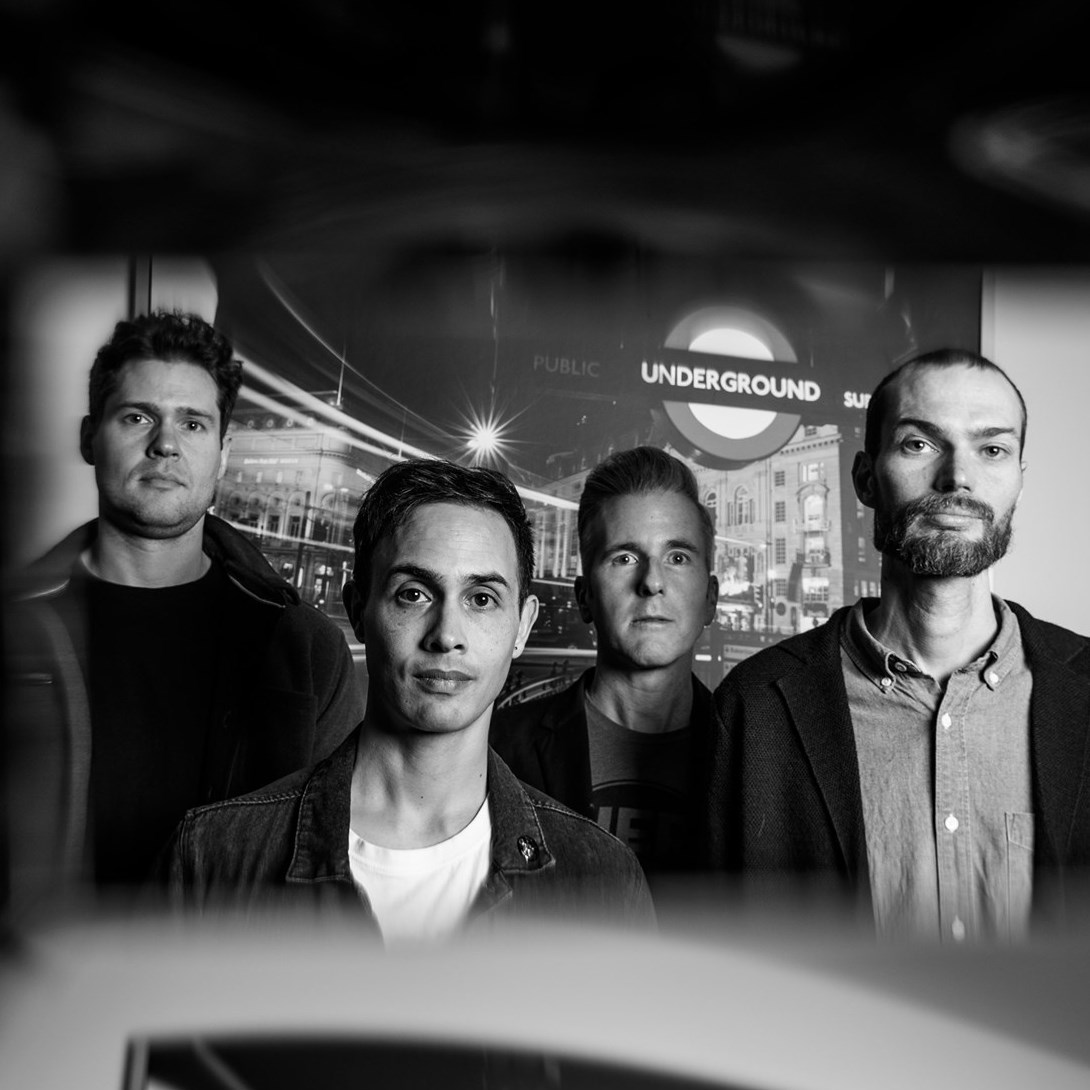
Over the course of two well-received albums and various singles and compilation appearances, Jeanines have captured the ears of discerning listeners with a sound that recalls a diverse swathe of pop history, from 60s folk-pop and girl-group tunes to 80s DIY pop to solid gold 90s touchstones like The Aislers Set, The Cat’s Miaow and the post-Black Tambourine bands of Pam Berry.
Now they’re back with their second single since 2022’s “Don’t Wait For A Sign” and the hits just keep on coming. “Each Day” is moody jangler that delivers melodic and emotional heft that belies its brief 1:43 length. Destined for 1,000 indiepop mixtapes, it’s exactly the kind of song that the 7″ was invented for. “What The Echoes Say” is a strummy delight, showcasing Alicia Jeanine’s lovely vocal harmonies to maximum effect. Lovely. “Tilt In Your Eye” wraps up this ace single — it was Jeanines’ contribution to “Where It’s At Is Where You Are’s” ace 2019 compilation “The Moon And Back” and appears here on vinyl for the first time.
Five albums deep into their career, it was already fairly clear what Protomartyr’s MO was—if not made evident through the relatively minimal stylistic changes between each post-punk opus, then through frontman Joe Casey nearly speaking them over the din created by his band on each song. Yet with their sixth LP, “Formal Growth in the Desert”, the world has changed so drastically since the release of 2020’s “Ultimate Success Today“that a shift in the band’s outlook seemed mandatory.
“Formal Growth” sees Casey wandering existential terrain for both himself and his band as he struggles to make sense of the past three years. “During quarantine and after, without shows to play or any real reason to get up in the morning, I felt I had reverted to my pre-Protomartyr days—uselessness and self-loathing,” he notes in the track-by-track breakdown of the album’s themes he’s shared with us, highlighting what he later claims is one of the album’s most burning questions: “Can you hate yourself and still deserve love?”
Fortunately for the band this line of heavy self-reflection has long soundtracked some of their strongest instrumentals, “Formal Growth”being no exception. While Casey finds himself lost in deserts both literal (the LP was recorded at Sonic Ranch in West Texas) and figurative (“I had taken a trip to the desert and felt meaningless next to the ancient rock, but consoled myself with the fact that dogs still liked me,” he quips), the band sounds fully locked in in a way that reflects the 15 years they’ve spent together as a unit crafting the ominously spacious soundscapes that largely define their latest record.
With “Formal Growth in the Desert” Casey talked us through each track, explaining their origins with the dry and occasionally self-deprecating humor we’ve come to associate with the band. “We had been waylaid by COVID for so long, I was hoping it would be triumphant, but I’ll settle for whatever defeatist litany this ended up as,” he concedes.
1. “Make Way” This always seemed to be the opening track, even when we had just a handful of songs. At least, it always sounded like an opening track. I wanted to address the last couple of years in an oblique way, the mass forgetting we all seem to be in agreement on. We often use the first song as a table setter: “Here’s what to expect on this one.” This one feels more like a “previously on Protomartyr” recap.
2. “For Tomorrow” I like the speed of this one. The trap for a lot of bands as they get older and fatter is to slow down. While I’ve fallen into this trap knowingly in my daily life, it’s good to hear the rhythm section up the tempo. Lyrically, this song touches ever so softly on what I think the “theme” of the record is. During quarantine and after, without shows to play or any real reason to get up in the morning, I felt I had reverted to my pre-Protomartyr days—uselessness and self-loathing. The song’s about seeing that in yourself and others, maybe trying to hide that from the world and loved ones. The “Special Way” is a liquor store near my old house. We call them “party stores” in Detroit. Life is a party, you know.
3. “Elimination Dances” The second single and possibly a toe-tapper? A toe-dragger, at least. We honed this one on a couple of mini tours we did at the end of 2021 and last year. For me, it’s all about the bassline. I’m realizing, having to write what these songs “mean,” that my overarching lyrical obsession is my opposition to time. The very first song on our very first album had a line, “time’s wrong.” Anyway, I had taken a trip to the desert and felt meaningless next to the ancient rock, but consoled myself with the fact that dogs still liked me.
4. “Fun in Hi-Skool” When I rail against time, I’m thoughtful and deep. When assholes do it, they are pathetically attacking youth and all they possess. Well, maybe I do it too. I did the vocals and lyrics very late at night after a full day of laying down other tracks. I’m glad it captures the rawer, wilder sound of our live shows while having this weird, alien gloss over it. Basically it’s about obsessing over “the glory days” to your own peril. I think “at least you had fun in hi-skool” could be used as an insult. The title comes from a Marx Brothers vaudeville routine, which is a kind of dumb meta joke. Anybody pining for those “good old days” when the current crop of old peoples’ “good old days” were happening are long dead now.
5. “Let’s Tip the Creator” Life is hard enough, but what makes it stingfor me is this crop of billionaires flopping around, monopolizing culture, our time, and being so utterly stupid about it. The title sort of comes from Mark Zuckerberg’s video about the Metaverse, or whatever dumb name he has for the lamest thing I had ever seen. In the video, you can “tip” artists for their digitized work—just the most boneheaded, dehumanizing way to look at the world. The song goes through a couple “fictionalized” rich assholes and their follies. It would be a comedy song if they didn’t have such a throat-grip on the livelihoods of so many people.
6. “Graft vs. Host” I suppose I fear time because I witnessed what it did to my mother. After 10 years of suffering with dementia she, thankfully, peacefully passed away. She was so full of love and joy, as most great moms are. The difficulty of having that kind of positive person exit in such a painfully protracted way and trying to look for that joy in the world without them, that’s what this song is about.
7. “3800 Tigers” It’s a good idea to start side B with a Detroit song, so we did. “Eat ’Em Up Tigers” is a slogan that’s been around since the ’60s here. It was really made famous by James Van Horn, an old fella who would be outside of most Tigers baseball games shouting that and collecting money. He died in a hit and run a couple years back—a tragic loss for the city. The song also has a nod to Lou Whittaker, my favorite Tiger from childhood who deserves to be in the Hall of Fame. It would be an all-out celebratory song if not for the references to the low number of wild tigers on the planet and the possible brutal future of sport in the far-flung future.
8. “Polacrilex Kid” Polacrilex is a generic name for nicotine gum. An annoying habit you pick up after quitting smoking and any time after you pick up smoking again. I wanted to write a realistic comeback song. We had been waylaid by COVID for so long, I was hoping it would be triumphant, but I’ll settle for whatever defeatist litany this ended up as. It does contain what I think is the thesis of the album (if music was boring and not fluid and inexplicable): “Can you hate yourself and still deserve love?”
9. “Fulfillment Center” Love comes up again in this song. Love in the face of the grindingly hopeless capitalism of the Midwest. You see a lot of the world through touring, go through many states and highways in America, and it’s often the ass-end. This song could probably be longer, with more sad adventures of these two characters. I would love to bore the world with a 15 minute story song someday. But I think brevity is the point. It doesn’t take that long to get disillusioned, even with love by your side.
10. “We Know the Rats” A weird one in that it came out of my experience having my house burgled four times in the span of two weeks. It’s weird because, while I certainly felt existential despair after dealing with the Detroit Police Department and having my family’s legacy thumbed through and stolen, the song turned out to be somewhat positive. A real “know thy enemy” song. Finding an enemy, no matter how large or amorphous, can give the despairing life purpose. It’s not necessarily a greeting card message, but spite has a place in breaking up the morass.
11. “The Author” One last song about my mother. Not much to explain here besides a feeling of gratitude, and I love how the song ends and I didn’t want to mess it up with some trite words. I find both this and “Graft vs. Host” to be the most emotionally honest songs on here and the instrumental codas both contain the most truth.
12. “Rain Garden” A real rain garden behind a real Coney Island (what we call diners that serve a certain kind of hot dog in Detroit) next to a Taco Bell. Again, the music is profound and gigantic and I just wanted to poetically sing (or whatever it is I do) about finding love after a couple of real shit years and do it matter-of-factly. The second half moves in such a musically cosmic way I figured I should evoke a bit of The Song of Solomon just to express how serious I am about love. So there you go: a winding, bitter, sad, and funny road to love. And we got there in less than 40 minutes.
The Detroit post-punk band’s lyrics are as incisive as ever on their 6th album, and their music is maybe even punchier, its intensity bolstered by a more elegant sense of songcraft and by continued innovations in their sound (on this album it’s a steel pedal.) Passionate, urgent, and empowered. Highlights: “Fun In Hi Skool,” “For Tomorrow,” “Polacrilex Kid”
‘Formal Growth In The Desert’ out 2nd June 2023 on DominoRecordings.
Longings unveil their second full-length album, “Dreams In Red”, revealing a broad post-punk vision of haunting atmospheres and driving melodies. Eight new songs with a sense of urgency, ranging from the abrasive to the abstract.
From the woods of Western Massachusetts, Longings are a powerhouse trio featuring Cole Lanier (California X, Rogue Trooper), Meghan Minior (Siamese Twins, Ampere), and Will Killingsworth (Orchid, Vaccine).
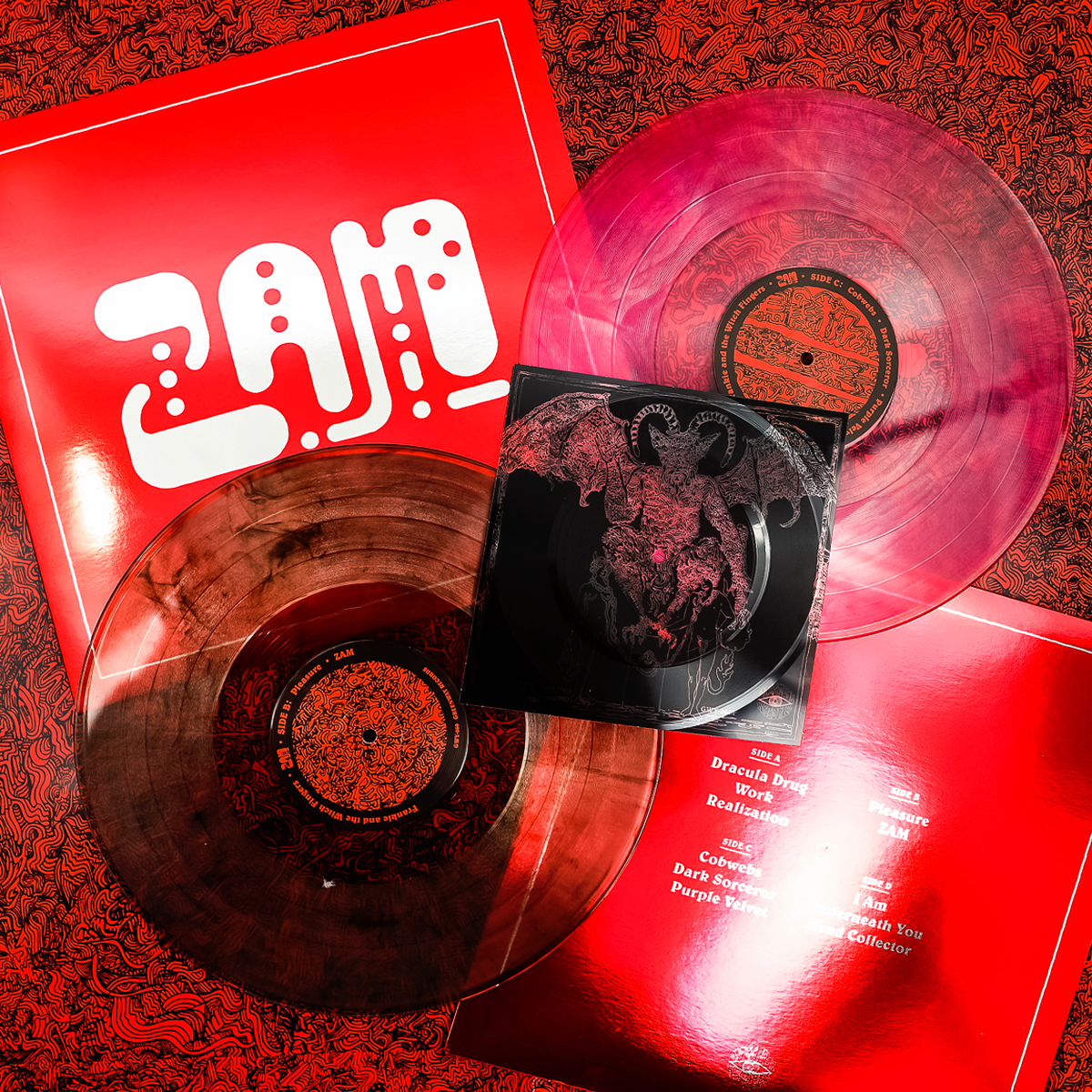
“ZAM”, the Double-Album underground breakout release from Los Angeles Psych heavyweights Frankie and the Witch Fingers, completely out of print since its initial release in 2018. This is the record fans have been asking for. RSD Exclusive 2xLP colour vinyl edition of 5000.
Frankie and the Witch Fingers’ latest LP, “ZAM”, bleeds beyond borders and boundaries. Its opening preternatural sounds bubble up out of the primordial soup, spilling into our world, invading the inner recesses of the listener’s mind. Like a two-headed snake wrapped around the skull, the album pendulates between winding instrumentals and dancey riffs that pop like supernovas out of the black void. Just when a song goes one way, it propels another through long stretches of a cosmic inferno.
Bringing glimmers of krautrock and funk, its eleven tracks unleash a versatile and tenacious weight, slithering between the sexy, the aggressive, the vivacious, and the disorienting—until the living invasion is felt—“ZAM”—a supernatural entity summoned by four madmen obsessed with tearing open a gateway to dark space. After being pulled apart atom-by-atom, the listener is reconfigured on the other side, born unto starry wasteland. Where head is separated from body. Where music is seen and apocalyptic soundscapes flow to revelation. A funhouse undercurrent pulses through the album’s epoch, reflecting a carnival mosaic shrewdly lulling and doggedly brutal. As one track bleeds into the next, that hour of running time becomes wormhole travel, until the listener returns earthbound, transmuted, craving more odyssey.
New Artwork featuring RSD exclusive Mirror/Reflective Jacket Artwork & Bonus Flexi 7″” with an unreleased demo. 24″” x 24″” double sided full colour poster. RSD Hype Sticker on Shrink. Proudly reissued by Greenway Records. Mirror Red & Chrome Wide-Spine Jacket Double 12″” – A/B on Black Smoke & C/D on Red Smoke Vinyl Poly-Lined Inner Sleeves Unreleased Demo Flexi 7″” Double Sided 24″”x24″” Poster
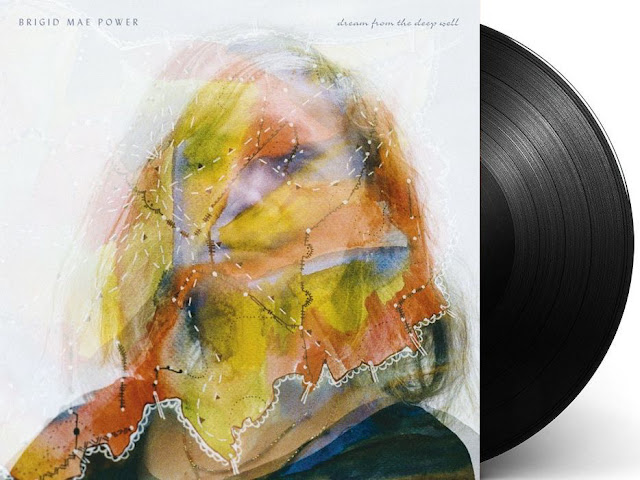
“Dream From The Deep Well” is the new album from celebrated Irish singer songwriter Brigid Mae Power. Recognised as a purveyor of dreamier pop with folky leanings, this new album is a departure; a unique marriage of traditional stylings and very modern melodies; a breath-taking soundtrack which underpins her gorgeous vocal.
Filled with personal tales of offspring and grandparents, the lovelorn and the lost, it’s the essence of re-imagined folk music, from the traditional intro and outro that act as bookends. It’s folk music, but not as we know it. In these ever-confusing and often annoying times, Brigid brings us modern folk for modern folk, with her evocative vocal, doubling back on itself with strings, steel guitar, horns and mellotron adding to its baroque loveliness. It’s waving back at her rootsy past, daubing new colours on a much-loved canvas. “Dream From The Deep Well” is a new visionary beginning from a gifted songwriter.
Elsewhere, there’s the lovelorn longing of her version of Tim Buckley’s ‘I Must Have Been Blind’, alongside a moving tribute to the late Ashling Murphy, a 23-year-old Irish primary school teacher and traditional Irish musician who was attacked and killed while jogging along the Grand Canal just outside Tullamore, County Offaly. It’s a harrowing story, delivered with overwhelming compassion. In the best tradition of old school folk music, it opens up a pressing issue to a wider audience.
It’s an album that’s politically primed and socially aware; a broadside for us all, this is Brigid Mae Power’s most complete album yet.
Rising artist THALA finds strength in her vulnerability on new EP “In Theory Depression”. After forging a path in hazy, lo-fi indie, this forthcoming release is home to her sharpest, boldest songwriting yet, rendering these deeply personal explorations of self in vivid, ‘90s influenced indie-rock, and looming, psych-inspired walls-of-sound.
“‘Easy Out’ is finally here This song honestly means so much to me. I know it’s what every artist says about their songs & I’m probably no different, but it just feels so good to have this song out in the world. For you to listen to, for you to ponder away over, for you to stare at a wall or up into the skies, for you to cry to. I’m so incredibly grateful for the amazing team of people who continue to shape my universe with me. You are all so special & talented!! It blows my mind xxxx I’m forever in awe.” THALA
“In Theory Depression”marks the artist’s most introspective writing yet, but as much as the lyrics excavate from hidden depths, they’re often paired with widescreen, cinematic-sounding melodies. It brings to mind both the dazzling soundscapes of Mazzy Star, the witty bite of Liz Phair, and the subtle punk influences of Juliana Hatfield, who also spins the genre’s more relentless strains into snarling and bittersweet alternative pop.
‘Curtain Call’ is out now!! And with that being said you can now pre-order my EP ‘In Theory Depression’ everywhere in the whole wide world – I’ve poured all my heart and soul into this & can’t wait to share all of these 6 beautiful songs with you! They are so close to my heart. Don’t think I’ve ever written anything more personal iml. I’m so freaking excited for this next chapter!! There’s much more to say but for now this is all you need to know. Special thanks to everyone involved in making this. Ty for believing in me when I struggle to do so. Your support means everything!!!
Seattle’s National Honor Society only appeared on my radar recently thanks to the excellent God Is In The TV Zone website, but their new LP has been on my turntable since. It’s the soundtrack to your summer you didn’t know existed or that you needed. Straight off the bat there’s an infectious riff that you’ll be humming allday on ‘As She Slips Away’.
Coming from the North Western States more known for having a climate similar to ours but just with even more rain, they’ve found the cracks in the clouds. They’re also self confessed Anglophiles, and you can certainly hear the influences scattered across the LP in jangle pop from the 80’s and 90’s, but there’s also a big slice of a certain close harmony group from the 1960’s that spent a fair bit of time surfing on the same west coast but just a bit further south where it’s warmer and sunnier most of the time. A close contemporary reference would beWe Are Scientists, their ear for pop hooks with indie rock sensibilities. ‘Jacqueline’ has a distinct feel to it, right down to its guitar solo.
There are so many highlights to this record, ‘The Following’has a psychedelic edge but then brass chimes and they croon their way home. ‘The Trigger’has something of britpop feel to it. The harmonies are more layered and has a cyclical lyric that spins and spins without out staying it’s welcome. Their debut was one of the unlucky ones to appear in the depths of the first lockdown and now their second album has the feeling of the release of those shackles, a brighter, sunnier outlook, like those 90’s summers that went on forever.
“The Following” was the 3rd single from the album “To All The Distance Between Us“, out April 21, 2023 on Shelflife Records, Discos De Kirlian, and Subjangle
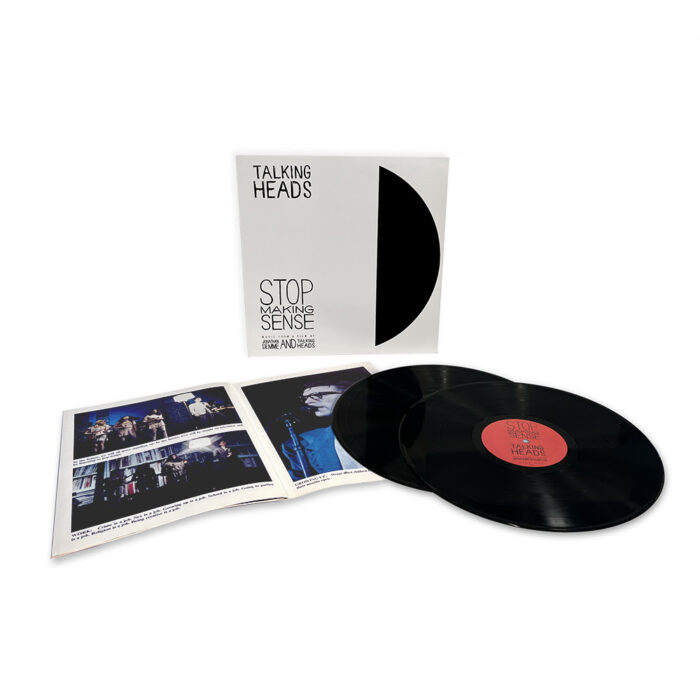
After the success of the Talking Heads’ ground-breaking concert film,“Stop Making Sense” the group has decided to mark its 40th anniversary with a newly restored 4K version of the movie, which will return to theaters for a global run with A24. Rhino Records will also release a deluxe soundtrack version of the complete “Stop Making Sense” concert on August 18th.
Rhino will also delivered two previously unreleased tracks from the film adaptation of the album. Included are takes on “Cities” and “Big Business / I Zimbra.” As a preview of today’s announcement, they’re shared “Cities.” Along with the audio, the limited edition vinyl version features a 28-page booklet with previously unpublished photos and new liner notes from all four band members: Tina Weymouth, David Byrne, Chris Frantz and Jerry Harrison.
The inspiration for “Stop Making Sense” arrived when director Jonathan Demme saw Talking Heads during their 1983 tour for “Speaking in Tongues”. Afterward, he approached the ensemble with the idea of making the show into a concert film.
They agreed and worked together over the next several months to finalize the presentation. Ultimately, Demme filmed three concerts at Hollywood’s Pantages Theater in December 1983 to create the video.
“Stop Making Sense” focuses mainly on music by Talking Heads but does include a few songs recorded with member adjacent acts, like Tom Tom Club’s “Genius Of Love” and “What A Day That Was” and “Big Business” from Byrne’s 1981 album, “The Catherine Wheel”. In addition, the film captures classic performances of staple tunes like “Burning Down The House,” “Girlfriend is Better,” and more.
Via press release, Byrne offered: “We had done a live album before this, but coupled with the film, and with the improved mixes and sound quality, this record reached a whole new audience. As often happens, the songs got an added energy when we performed them live and were inspired by having an audience. In many ways, these versions are more exciting than the studio recordings, so maybe that’s why a lot of folks discovered us via this record.”
Based out of Chicago, Anna Holmqvist has been sharing music under the Ester moniker for a decade and counting, first as a solo project and more recently with a full band. The band’s debut album, “Turn Around”, was released back in the Spring of 2020, Anna and her bandmates started 2023 with their first new material since their debut, double-A single “Red Rover/Change Is Allowed”. The band are announcing a new EP, “Laundry”, set for release on Audiosport Records, as well as premiering the record’s title track.
“Laundry” was recorded with Anna’s long-term collaborator, cellist Katelyn Cohen, creating a beautiful contrast between the more processed tones of Anna’s guitar runs, against the rich swells of Katelyn’s sonorous strings. The track was inspired by a slightly unlikely visitor attraction, as Anna recalls, “I wrote ‘Laundry’ after visiting the world’s largest laundromat in Berwyn, Illinois”. While not obviously about doing your washing, the song does have a sense of freshness and re-invigoration.
Recorded, mixed and mastered by Nick Broste Music and lyrics by Anna Holmquist Cello and backing vocals by Katelyn Cohen
“Laundry” EP is out in November via Audiosport Records. released July 7th, 2023