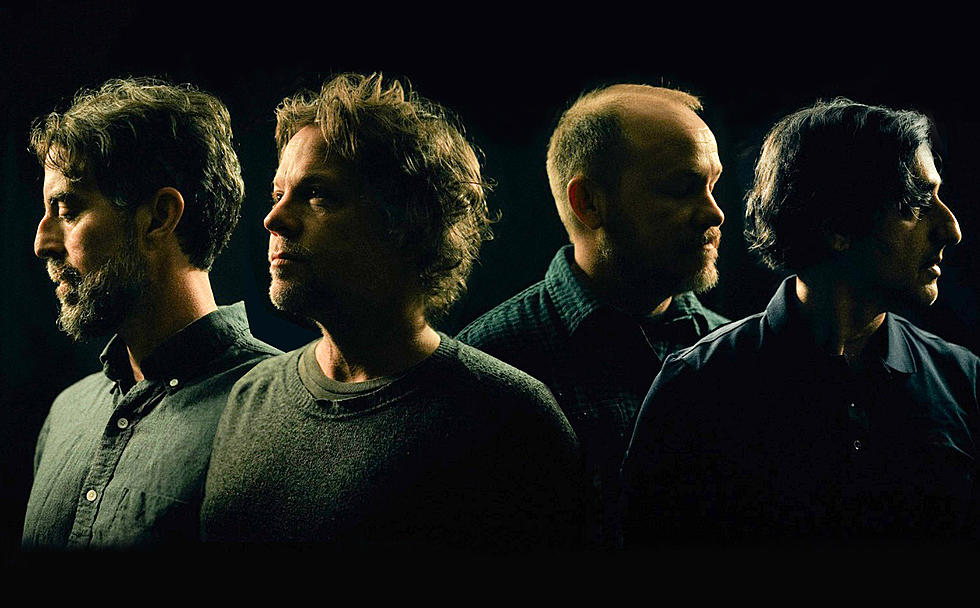
“Hiding in Plain Sight” almost didn’t happen at all. Frustrated and insecure with his own singing voice prior to the pandemic, Drugdealer founder and primary songwriter Michael Collins was nearly ready to throw in the towel. Then, amidst the windswept art colony of Marfa, Texas, a chance encounter with the visionary artist and composer Annette Peacock changed his outlook. While attending Mexican Summer’s Marfa Myths festival, Collins ran into Peacock backstage. “I was so inspired by [Annette]. But similarly to all these other vocalists I’d worked with, I didn’t feel like I had it in me.” he recalls. “I told her my plight, then I played her a song, and she told me I wasn’t singing high enough for my speaking voice. When I returned to LA, I started coming up with new progressions, which I’d modulate up three half steps. It forced me to find a new way to sing.”
In the valley of the shadow of doubt, during a period when Collins was considering giving up on music and embarking on his lifelong dream of filmmaking, a furtive conversation with a legend allowed him to find his own distinctive voice.
On “Hiding in Plain Sight”, Collins steps forward leading a collaborative group of players through Pacific Coast Highway cruisers, power pop, roadhouse country, trench coat jazz, and late night soul investigating the journey of life and love, of self acceptance and understanding your place in a world of change.
If the pandemic resembled a lost weekend full of messy midnight jams, the unsung LA songwriter Scott Archdale was Michael Collins’ natural counterpart. The two friends spent countless nights writing and singing songs when there wasn’t much else to do. “Lip Service,” the brilliant new single from Drugdealer, was written by Collins and Archdale as “normal life” resumed, the night before Drugdealer set out on its first post-shutdown tour.
As they had so many nights before, the duo sat down at Collins’ studio off Sunset in Echo Park without much of a plan. That night, “Lip Service” flowed out with a giddy urgency, recalling Lowe and Costello at their most threadbare. The song’s unnamed object of desire could be a new friend, a love interest, or, simply, the chance to roam free once again.
A Jason Isbell record always lands like a decoder ring in the ears and hearts of his audience, a soundtrack to his world and magically to theirs, too. “Weathervanes” carries the same revelatory power. This is a storyteller at the peak of his craft, observing his fellow wanderers, looking inside and trying to understand, reducing a universe to four minutes. He shrinks life small enough to name the fear and then strip it away, helping his listeners make sense of how two plus two stops equaling four once you reach a certain age — and carry a certain amount of scars.
“There is something about boundaries on this record,” Isbell says. “As you mature, you still attempt to keep the ability to love somebody fully and completely while you’re growing into an adult and learning how to love yourself.”
“Weathervanes” is a collection of grown-up songs: Songs about adult love, about change, about the danger of nostalgia and the interrogation of myths, about cruelty and regret and redemption. Life and death songs played for and by grown ass people. Some will make you cry alone in your car and others will make you sing along with thousands of strangers in a big summer pavilion, united in the great miracle of being alive. The record features the rolling thunder of Isbell’s fearsome 400 Unit, who’ve earned a place in the rock ‘n’ roll cosmos alongside the greatest backing ensembles, as powerful and essential to the storytelling as The E Street Band or the Wailers.
They make a big noise, as Isbell puts it, and he feels so comfortable letting them be a main prism through which much of the world hears his art. He can be private but with them behind him he transforms, and there is a version of himself that can only exist in their presence. When he plays a solo show, he is in charge of the entire complicated juggle. On stage with the 400 Unit, he can be a guitar hero when he wants, and a conductor when he wants, and a smiling fan of the majesty of his bandmates when he wants to hang back and listen to the sound.
The roots of this record go back into the isolation of the pandemic and to Isbell’s recent time on the set as an actor on Martin Scorsese’s Killers of the Flower Moon. There were guitars in his trailer and in his rented house and a lot of time to sit and think. The melancholy yet soaring track “King of Oklahoma” was written there. Isbell also watched the great director work, saw the relationship between a clear vision and its execution, and perhaps most important, saw how even someone as decorated as Scorsese sought out and used his co-workers’ opinions.
“It definitely helped when I got into the studio,” Isbell says. “I had this reinvigorated sense of collaboration. You can have an idea and you can execute it and not compromise — and still listen to the other people in the room.”
The first of five focus tracks from the album, “Death Wish,” is about being in love with someone suffering from depression, with a powerful universal undercurrent about the fragility of life and the power and limits of love. That grown-up kind of love. Musically the track is beautiful and fascinating. Isbell, clearly, has been listening to The Cure and tiny little tracers of post-punk find their way into this song and others. Matt Pence, the drummer and engineer, came into the studio to help with the drum sound. He got a bunch of kits set up and they arrived on structure for “Death Wish.”
The kick drum hits on the two, which was weird and disconcerting, even upsetting, until it clicked. Now it feels complicated and intricate, yet never fragile, like the subject of the song itself. As the first track it announces that Isbell is an artist growing, exploring new musical frontiers. The Sylvia Massy-added strings make it big and ambitious, almost like a James Bond theme song.
“Middle of the Morning” was a lockdown song. Melancholy, honest, with those Isbell phrases that will sneak into your vocabulary – ahem, “farmhand’s ghost” – the narrator, who both is and is not Jason himself, describes the feeling of being stuck in place, wheels and mind spinning, feeling like some essential part of yourself lives just outside your reach.
“It was about trying to keep my mind from unraveling over the couple of years there,” he says now.
In “Cast Iron Skillet,” which will be sung by audiences and printed on merch for years to come, Isbell returns to a common theme. He is southern in accent, and family tree, and in musical ancestors, but he uses his art to tear down the worst of the south and try to build a new, better, more loving region in its place. The engine in this song is breaking open the myths and legends he learned, from the small and insignificant to the large and deadly. The characters are murderers and racists, human beings who weren’t always those things, and in between the lines is an author grappling with the forces of nurture and nature.
“I think nostalgia is an abomination,” he says. “I think it is a crime. I think it’s unnatural.”
Isbell says “Save the World” was the hardest for him to write and record, going through several drafts and changing perspective. It is the hardest to listen to as well, describing the moment another school shooting hits the cable news ticker or the newspaper headlines. It’s not about a victim of the crime, or even anyone adjacent, merely worried parents trying to raise children in a world where something like this could happen. This is songwriting as journalism, very sophisticated journalism, and the music reflects the lyrics. There’s no reverb. No crutch. Everything feels bone dry, like the song is being played only for you.
“This Ain’t It” is a romp, with a live vocal take and live guitars except for the overdubs on the outro. This is the 400 Unit in a room playing, wings spread in flight, more southern sounding than anything Isbell has written in years. The spirit of Keith Richards is all over this track and the best part about the terrible fatherly advice being given here is that the father in the song, a totally untrustworthy narrator, really believes what he is saying.
releases June 9th, 2023
Jason Isbell – Vocals, Background Vocals, Electric Guitar, Acoustic Guitar, Baritone Guitar, Electric Slide Guitar
Dexys are back with their brand new album ‘The Feminine Divine’ It’s their first original LP in 11 years.
The group’s fifth album of original material is produced once again by Pete Schwier, along with acclaimed session musician and producer Toby Chapman, and sees frontman Kevin Rowland with a fresh perspective and newfound positivity.
Described as a “personal, if not strictly autobiographical, record portraying a man whose views have evolved over time,” the project explores every-changing views towards the concept of masculinity. It’s an idea reflected in the artwork for the project – a painting inspired by Pele, the Hawaiian goddess of fire and volcanoes – with two tracks on the album featuring the word Goddess in the title.
Clocking in at nine new tracks, ‘The Feminine Divine’ is a combination of music hall-esque swagger and synth-heavy cabaret, penned in collaboration with original Dexys’ trombonist Big Jim Paterson, along with Sean Read and Mike Timothy.
Album opener “The One That Loves You” was originally written by Kevin in 1991.
Alongside the album announcement, Dexys have released its first single, the horn-heavy, dance-hall-inspired “I’m Going To Get Free”, with the track out now digitally.
“The Feminine Divine” is out July 28th on 100% Records
Aerosmith finally broke through with 1975 album “Toys in the Attic“, but their collective creativity was still peaking. So they went right back into their private studio, the Wherehouse just outside of Boston, to rehearse fresh material before moving the proceedings to the Record Plant in New York City.
There was a lot to live up to, beyond the success of “Toys in the Attic”. January saw Columbia Records re-release “Dream On,” and the three-year-old single finally caught on as a rightful anthem on U.S. rock radio right alongside Lynyrd Skynyrd’s “Free Bird” and Led Zeppelin’s “Stairway to Heaven.” It was the first Aerosmith track to reach the Top 10, “Rocks” arrived in stores following that milestone on May 1976.
Guitarist Joe Perry had wanted to call their previous album “Rocks“, but the title suited this nine-song follow up much better. It’s a thick and ballsy statement LP that most acts can only dream of putting together.
“Diamonds are called rocks, and nothing is harder than a diamond,” Perry said in his book named after the record, Rocks: My Life In and Out of Aerosmith. “I wanted the hardest-rocking record imaginable.”
Producer Jack Douglas was back onboard, and he came up with the idea to bring the Record Plant’s mobile recording truck to Massachusetts and back it into the Wherehouse. This way Aerosmith could use the comfortability and warm sound of their home turf to begin building out a fuller record more representative of their truest musicianship.
Perry and Steven Tyler were writing songs at the singer’s new house in Lake Sunapee, N.H., while the rest of the group started pre-production with Douglas. “Rocks” would see guitarist Brad Whitford and bassist Tom Hamilton taking on a greater role in the songwriting process, with Douglas encouraging them along the way.
“This was a big album for Aerosmith,” Douglas said in Walk This Way: The Aerosmith Autobiography. “It had to make a big statement about how loud and hard they were, how unapologetic they felt about being who they were – this brash, rude, sexual hardcore rock band.”
The result was one of Aerosmith’s very best records, and a moment of inspiration for a slew of musicians – notably Slash from Guns N’ Roses and James Hetfield of Metallica.
Here’s a track-by-track breakdown of how they got there:
“Back in the Saddle” Inspired by country crooner Gene Autry’s “Back in the Saddle Again,” Douglas wanted Tyler to use the image as a metaphor for the band’s quick return.
“Steven went into the stairwell for two hours,” Douglas said in Walk This Way, “and came back with reams of paper with ideas on them, and we cut the vocals.”
Douglas placed a shotgun microphone 10 inches away from Tyler’s mouth to capture his notorious screams. The singer then started playing with the effects on the device, and moved his head so he’d be singing under or above it at different points, resulting in a raspy and in-your-face delivery.
Tyler also handled the sound effects, stomping his cowboy boots on a large piece of plywood for a tough, rootsy effect. He created the sound of spurs by gaffer taping tambourines and bells to each, with help from David Johansen after the New York Dolls singer had stopped by the studio. Tyler used two coconut halves to mimic galloping horses, heard toward the end of the track.
There were multiple, ill-fated and injury-plagued takes, however, as Tyler tried to add a bullwhip. He eventually settled on using a 30-foot microphone cord in its place, with a cap gun to get the cracking sound. Perry came up with the riff on a six-string bass while doing heroin in his bedroom, as “Back in the Saddle” became one of a handful of “Rocks” tracks born out of his and Tyler’s usage of the drug.
“The music flew out of me – all the parts, all the riffs. It came in one special delivery package,” Perry said in his autobiography. “I was still in the stage when the drugs were opening doors to my imagination. And I was lucky enough to have a connection that got me heroin as close to pure as I would ever see.”
This was also the first of five songs where Whitford played lead guitar, hinting at the larger role he’d take on “Rocks“. “Back in the Saddle” later became the album’s final single, just cracking the Top 40 in early 1977.
Last Child” Whitford came up with the riff for “Last Child,” earning a co-writing credit while developing it further with Tyler at the drums. Perry then came up with some chord changes, and Douglas invited guest picker Paul Prestopino into the sessions when the band decamped to New York City to finish the record.
“There’s a slide guitar part on ‘Last Child’ that I had Paul double with what we called a ‘slide banjo,’” Douglas said. “There’s not supposed to be such a thing, but this metallic sound gave the song a subtle, organic feel that sounded great on a rock ‘n’ roll record. Steven just loved that kind of stuff.” “Last Child” reached No. 21 when it was released as the first single from “Rocks”.
Rats in the Cellar” “I wrote ‘Rats in the Cellar’ as a tip of the hat, or an answer to ‘Toys in the Attic,’” Tyler said in his memoir Does the Noise inMy Head Bother You? “Rat/cellar – toys/attic. Meanwhile, in real life, ‘Rats’ was more like what was actually going on. Things were coming apart, sanity was scurrying south, caution was flung to the winds, and little by little chaos was permanently moving in.”
Originally titled “Tit for Tat,” the song was heavily inspired by Fleetwood Mac’s “Searching for Madge.” Perry’s chugging, bluesy, classic solo aligned perfectly with Tyler’s lyrics.
“Both he and I were intent on getting into the grit and grime of the basement,” Perry said in Rocks: My Life In and Out of Aerosmith. “The band was getting lower, downer and dirtier, so the cellar seemed like the best place to go. That’s where we found the rats.”
According to Hamilton, “Rats in the Cellar” epitomized where the band was musically at the time. “The end of ‘Rats’ is this fuckin’ thing that builds and builds,” he said in Walk This Way. “It’s us doing the Yardbirds’ trip – because we were so blown away by the idea of taking this music and making it balls to the wall.”
“Combination” Perry arrived with a stockpile of riffs for songs – but that’s all they were. So out of pure boredom, he started writing lyrics. The result was Perry’s first shared lead vocal, as “Combination” in many ways became his signature track as a singer.
“This was a touchy subject because singing was Steven’s jealously guarded territory,” Perry said in Rocks: My Life In and Out of Aerosmith. “Being in a band with one of the best singers in the world set up an inevitable comparison. In that comparison, I ain’t gonna look too good. But what the fuck? I couldn’t let that stop me. As the great blues prophet John Lee Hooker once said, ‘If it’s in him, it’s gotta come out.’
“Beyond that, anytime the spotlight shone on me, I detected a bit of jealousy from the other guys,” Perry added. “After a while, though, the band came around and supported me, as long as I sang the song as a semi-duet with Steven.”
“Sick as a Dog” One of the earliest songs put together for the album, “Sick as a Dog” grew out of a rough Hamilton idea initially dubbed “Uncle Tom’s Cabin.” What made the track unique is that the bass player switched to guitar, while Perry was on bass.
When the band recorded “Sick as a Dog” at the Record Plant, Perry would take off the bass and hand it to Tyler, then pick up a guitar to do his solo. “Looking like the Keystone Cops, we did this three or four times before we figured out who was going to run where and through what door,” Perry said in his autobiography. “It took a while, but we ended up with a great live take.”
“Nobody’s Fault” “Nobody’s Fault” is, along with “Round and Round” from “Toys in the Attic“, one of the darkest and hardest compositions in the Aerosmith catalogue. In fact, it’s so heavy that the thrash band Testament saw fit to cover it on their second record, 1988’s The New Order.
As with “Round and Round,” “Nobody’s Fault” was co-written by Whitford, who also handled both lead and rhythm guitar. “I had this one lick that lasted about a minute,” Whitford said in Walk This Way. “We recorded it and Jack wrote ‘Soul Saver’ on the box. We kept changing it until we had a different sounding take on this cool lick.”
Tyler’s lyrics echo the bleakness of the music, with an earthquake theme inspired by the natural disaster in Nicaragua that left thousands dead in 1972. A subsequent temblor in southern California, then learning about the fault line that ran underneath a New Jersey nuclear-power plant, ended up sparking a deep-seated band-wide fear – but also an inspirational performance.
Tyler calls this track “one of the highlights of my creative career” in Does the Noise in My Head Bother You?, while Joey Kramer said “Nobody’s Fault” features some of the best drumming he’s ever done.
“Get the Lead Out” Oozing sex and sleaze, “Get the Lead Out” is a showcase for Perry, who called the song a “straight-up exhortation to get up and dance” in Rocks: My Life In and Out of Aerosmith.
Tyler wanted to get an opera singer to double his voice for a portion of the track where he sings, “No no/No no/No no.” Douglas recruited an unknown from the Metropolitan Opera to come to the studio.
“But he couldn’t anticipate the note because in opera there’s nothing before the downbeat,” Douglas said in Walk This Way: The Autobiography of Aerosmith. “We worked with him all night, blew his voice out, and in the end, I had to move the vocal up by playing it off the synch-head instead of the playback head. I think we traumatized the poor guy.”
“Lick and a Promise” Led by Kramer’s fade-in drum intro, “Lick and a Promise” is about playing for and winning over an audience according to Tyler. “Such a snapshot of us in those days, a clear moment in time for me,” he said in Does the Noise in My Head Bother You?
The song was meant to sound like Aerosmith were playing live, and there’s a part in the final third where listeners can hear a crowd calling for more. In reality, there were just six people in the studio – including drug dealers and assistants.
Douglas recorded them and doubled it, then repeated that and boosted it until the recording came to resemble an arena full of fans.
“Home Tonight” Stylistically like nothing else on “Rocks”, “Home Tonight” repeated the “Toys in the Attic” formula of closing things out with a ballad, much as that LP did with “You See Me Crying.”
Aerosmith had high hopes for the track, which grew out of a turn by Tyler at the piano. They released it as this project’s second single, hoping “Home Tonight” would follow in the hitmaking footsteps of “Dream On.” Instead, the track didn’t make much of an impact, stalling at No. 71 on the charts.
Tyler later underscored the connection by occasionally performing a snippet of “Home Tonight” as an in-concert intro to “Dream On.”
The aptly named “Rocks” is hands down one of the best rock albums of the 1970s. Recorded right before the band free-fell into a morass of addiction and bad vibes, “Rocks” is Aerosmith at their hot mess best. It’s firmly in my top ten favourite rock albums. This shit is savage.
“Sick as a Dog” and “Lick and a Promise” are particular favourites. We all know “Last Child” and“Back in the Saddle,” two of Aerosmith’s most blistering jams. If you maintain that Sober Aerosmith lost its edge in the 80s and 90s, this is the record for you to have.
Jenny Lewis has confirmed her fifth solo album “Joy’All” is coming out June 9th via Blue Note/Capitol Records. The announcement comes with new single “Psychos,” which might have the realest lyric I’ve heard in a minute: “I’m not a psycho / I’m just trying to get laid.” Amen!
“I started writing some of these songs on the road, pre-pandemic,” Lewis said about the album. “Then put them aside as the world shut down, and then from my home in Nashville in early 2021, I joined a week-long virtual songwriting workshop with a handful of amazing artists, hosted by Beck. The challenge was to write one song every day for seven days, with guidelines from Beck. The guidelines would be prompts like ‘write a song with 1-4-5 chord progression,’ ‘write a song with only cliches,’ or ‘write in free form style.’”
“Joy’All”out June 9th via Blue Note/Capitol Records.
The Canadian indie-rock band The New Pornographers have graced the new year with a new single from their upcoming album, “Really Really Light,” from “Continue as a Guest”, set to release on March 31st with Merge Records. Singer/guitarist A.C.Newman took an old track written by Destroyer’s Dan Bejar that didn’t make their 2014 album “Brill Bruisers” and reworked it into something new. It has a classic feel to it, with Newman drawing inspiration from artists like Jeff Lynne and Tom Petty.
The best New Pornographers songs are more than the sum of their very talented parts. That’s the case for several tracks on “Continue As Guest”, the ninth album from the band, whose members now include A.C. Newman, Neko Case, Kathryn Calder, Todd Fancey, John Collins and Joe Seiders. Longtime member Dan Bejar co-wrote the opening track “Really Really Light” with Newman but is otherwise uncredited on the LP, which was largely recorded remotely.
Standout track “Bottle Episodes” captures the claustrophobia and societal breakdown common in pandemic-era music, but Newman’s perspective is as razor-sharp as ever: “Seen you with some famous shadows, not familiar but I’ve seen the names / And the two-way mirrors on the ceiling stretch them into funhouse shapes / Here inside the TV glow of these bottle episodes.”
Players: A.C. Newman – vocals, guitar, bass, keyboards John Collins – bass, guitar, keyboards Joe Seiders – drums, vocals Kathryn Calder – keyboards, vocals Neko Case – vocals Todd Fancey – guitar Zach Djanikian – bass, guitar, soprano and tenor saxophones
Additional player: Paul Rigby – pedal steel
The New Pornographers’ new album ‘Continue as a Guest’ out 3/31/23 on Merge Records.
“Crispy Crunchy Nothing” is a love letter to being alive even with all the nitty gritty details considered. The sophomore album from the Toronto/Ottawa-based band Packs, it encapsulates all of the messy, magical, and confusing moments that make up the human condition. Its 14 tracks offer a slice of life that doesn’t shy away from the painful lows or exhilarating highs we all face. The follow-up to “WOAH“, their stripped-down EP released over the summer,
Madeline reunited with bandmates Dexter Nash (lead guitar), Noah O’Neil (bass) and Shane Hooper (drums, backup vocals) for a weeklong recording retreat at a cabin on Lac Sarrazin in rural Quebec that they dubbed the Trout House, where the quartet bashed out all of the album’s 14 tracks and where the sauna doubled as nightly ritual and recording booth. After spending 18 months fleshing out demos over a Google Drive folder, uncertain of the band’s IRL future, the week was propelled by the kinetic energy of old friends reuniting in person, making sense of the smorgasbord of gear they crammed into the cabin.
And while the specter of death looms over “Crispy Crunchy Nothing” and its brisk, folk-rock vignettes of loneliness, yearning and confusion, so too does Madeline’s sense of humour. It’s bone-dry, tucked within her drawling vocals, and buried beneath guitars that alternately sneer and twang. But it’s there, the album’s beating heart — a sense of purpose and unflinching resolve evident even in its title, taken from Madeline’s description of biting into a moldy apple.
“Crispy Crunchy Nothing” sees the quartet returning to the gleaming garage rock that defined their 2021 debut, “Take The Cake”. At it again with a full band to back her, band leader Madeline Link combines the scruffy sound that put Packs on the map with country influences, both contemporary and classic, to create an album that sounds like it was made by the kids that would sneak booze into the state fair. Simultaneously incorporating the woozy-whimsy of Alex G and the twang of legends like Hank Williams (who Link would listen to with her dad during lockdown), they cover as much ground sonically as they do emotionally.
From “Take The Cake” out 5/21 on Fire Talk / Royal Mountain.
In terms of packaging, Roxy Music’s suave European futurism was glam incarnate. If you’re looking for a single image to accompany glam’s encyclopedic entry then look no further than “For Your Pleasure’s” inner sleeve. Bryan Ferry’s bolero Elvis; Andy MacKay’s green-flecked quiff; Eno’s space age lady-boy… here, at last, was an album that looked exactly like it sounded. A million stylistic miles from the sluttiness of their contemporaries, Roxy Music offered sophistication, ennui and lounge lizard languor. No proletarian foot-stomping on “In Every Dream Home A Heartache”, just casual, alienated, impenetrable cool.
The track from their second album “For Your Pleasure”, released in March 1973. Placed at the end of the LP’s first side, many listeners mistakenly lifted the turntable arm prematurely due to the fake fade-out. But the song fades in again with a glorious phase shift effect. Phil Manzanera plays a fantastic guitar solo to close that song.
“For Your Pleasure” captured the group’s zany art school whimsy in glittering hits like ‘Editions of You’ and its only single, ‘Dothe Strand’. The latter opens the album to introduce a fast fashion theme intrinsic to the glam era and in keeping with the glamorous cover photo of Ferry’s then-partner, Amanda Lear. The album throbs with lavish opulence in the instrumentals and Ferry’s sensual croon, but as early on as ‘Beauty Queen’, the LP’s second track, shadows are never far away. As Ferry sings: “Valerie please believe / It never could work out / The time to make plans / Has passed, faded away,” all hope has already been dashed in the opening lines of the song.
Brian Ferry talked about the album:
“The first album was interesting and obviously pointed to several different directions, but “For Your Pleasure” was a big album for me. We’d been on the road and were much more experienced and integrated. We recorded in Air Studios with engineers in lab coats, high above Oxford Street, with people running around below. It felt like the center of everything. The album just felt more mature: darker, with better singing.”
Brian Eno talked about him leaving the band after this album:
“It was a typical clash of young male egos. What had happened was that because I was visually so bizarre-looking, I got a lot of press attention. I made good photographs. That distorted the impression of where the creative leadership of the band was. It was definitely Bryan’s band.”
Roxy Music performing “In Every Dream Home a Heartache” live on the BBC program The Old Grey Whistle Test. First broadcast on April 3rd, 1973.
The band’s second full-lengther, their last stand with Eno on board, their sonic high watermark. The A side has the hits (“Do The Strand”, “Editions Of You”, “In Every Dream Home A Heartache”), but I says the B side is even better: the epic, metronomic, Krauty stomp of “The Bogus Man” and the ambient gloom of the title track being the highlights. No other band sounded like them at that time, which is why they were the best UK outfit of the early ’70s
The sinister edge of the album bleeds into the second side and its nine-minute documentation of a sexual stalker on the loose, pursuing his wicked fantasies, ‘The Bogus Man’. The track displays Roxy Music’s staggering level of sonic command with a bouncing rhythm teeming with furtive tension that’s somehow more revealing of the song’s narrative than the lyrics. “For YourPleasure” finally takes a bow with its classy title track, which begins an airy ballad but works itself into a perfect sound storm infused with an impressive blend of tape loop effects. The track perfectly exemplifies the album’s most admirable quality: combining pop sensibilities with a progressive edge is no easy feat.
Roxy Music’s saxophonist Andy Mackey once said: “We were never a typical rock ‘n’ roll band. We were basically a group of art students, and my focus was always about creating this theatrical style and look, a really strong image.”
After releasing their first four albums in less than three years, Led Zeppelin took what seemed like forever to release their fifth. In fact, it was less than 17 months. But after the regularity of their previous releases, the gap this time seemed eternal.
On March 28th, 2023, the 50th anniversary of “Houses of the Holy”, Jimmy Page shared some insight into the recording process. “My original idea for the opening tracks… was that a short overture would be a rousing instrumental introduction with layered electric guitars that would segue in to ’The Seasons,’ later to be re-titled ‘The Rain Song.’ Again there would be a contrasting acoustic guitar instrumental movement with melotron that could lead to the first vocal of the album and the first verse of the song.
Page continued. “The first set of recordings were done at Olympic Studios with George Chkiantz. We then came to record at Stargroves, Sir Mick Jagger’s country home, and like Headley Grange, with the Rolling Stones’ recording truck.
“I bought my home studio demo of a rough sketch of ‘The Rain Song’ on cassette to rehearsals to illustrate the sequence and textures of this piece to the band. During the routining of the overture now titled ‘The Plumpton and Worcester Races,’ the half time section was born and the overture shaped in to the song, ‘The Song Remains The Same.’ These rehearsals were done in Puddle Town on the River Piddle in Dorset, U.K.
“‘The Song Remains The Same’ was played on a Fender 12 string, the same one used on ‘Becks Bolero,’ with my trusty Les Paul Number One on overdubs in a standard turning. The ‘Rain Song’ was an unorthodox tuning on acoustic and electric guitars. On live shows, it became a work-out feature for the double neck.”
“I had a home demo of ‘The Rain Song’, but unfortunately the tapes have been lost. Which is a real bastard,” he said at the time. “I literally had the full piece from beginning to end. I had the Mellotron idea and everything on it.”
For the album’s cover art the band and their management turned to the accomplished English design studio, Hipgnosis, for inspiration. Co-founder Aubrey Powell, inspired by Arthur C. Clarke’s 1953 science fiction novel, Childhood’s End, selected the remote area in Northern Ireland called Giant’s Causeway, a natural series of rock and columns which attracts over one million visitors each year, for the location of a photo shoot.
Siblings Stefan Gates—just five at the time—and his slightly older sister, Samantha, were selected for what proved to be a treacherous assignment. The children were pictured on the cover as they ascended the rocky terrain. Both are unclothed. There are laws in place that allow the use of photographs of underage, nude models in art, provided the images are not indecent, obscene or pornographic. (The Protection of Children Act is in place to ensure that children are not exploited.)
“Houses of the Holy” was released on March 28th, 1973. The album, featuring such Led Zeppelin favourites as “Over the Hills and Far Away,” “Dy’er Maker” and “The Song Remains the Same”—but not, ironically, the song “Houses of the Holy”—was another enormous success, reaching #1 in both the U.K. and U.S.
On April 26th, 2019, Michelle W, the administrator of the popular Led Zeppelin–Ultimate Fan Page group on Facebook wrote: “So…apparently Facebook has decided to remove my previous post this morning that included a link to a petition that someone started regarding being blocked/banned for posting anything that included the “Houses of the Holy” album cover.
“Facebook told me that my post violated their Community Standards resulting in it being removed. I have requested a review. Unfortunately, it doesn’t look like they will allow any posting of that album. “It appears that those who control what goes on Facebook allow the hate crimes, demeaning posts to women and sexually explicit pages yet continue to block/ban an iconic album cover.”
Three days later, Michelle wrote: “Facebook continues to remove and ban posts related to “Houses of the Holy“. So just to test things, I reported Nirvana’s album cover. You would think a baby boy’s penis would go against their standards…but as you can see, it doesn’t. “I figured if they are going crazy removing all trace of the “Houses of the Holy” cover for nudity, why not Nirvana? It’s interesting how one cover that depicts nudity is not against the standards, but a 46-year-old classic album does.
“Who would have thought that in 2019, an album cover could cause so much trouble on a social media site that allows much worse.” It took a while, but Facebook’s “problem” with the album cover was finally resolved.