Archive for the ‘MUSIC’ Category

FENNE LILY – ” Big Picture “

Posted: April 14, 2023 in MUSIC

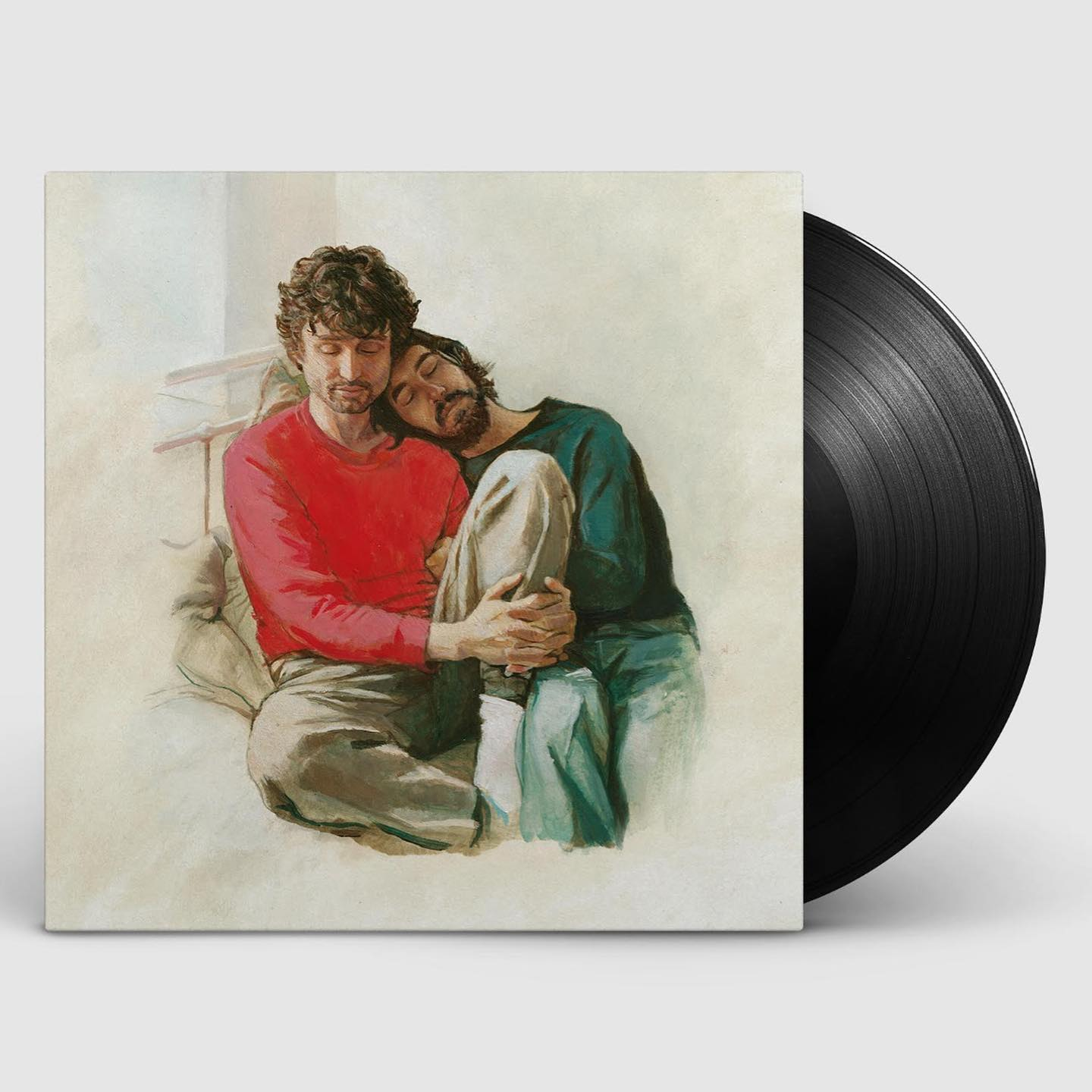
Bristol-born musician Fenne Lily’s third album “Big Picture” is one of the best forthcoming singer/songwriter projects on the docket in 2023. A follow-up to 2020’s “Breach”, “Big Picture” is beautiful and tender, brimming with sharp lyricism and storytelling. The album was mixed by Jay Som’s Melina Duterte and some of the songs were done with contributions from Christian Lee Huston and Katy Kirby.

Headlined by the mystical lead single “Lights Light Up,” Lily, again, is showcasing why she is one of the brightest songwriters we’ve got right now. “Lights Light Up” features a hypnotizing, supple guitar part paired with a well-paced snare drum. “We held each other while everything burned up ’round us / And inside of me, too / That’s called love,” Lily sings on the track. 

While the album was written alone in Fenne’s Bristol flat – a fact intentionally reflected in its compact sonic quality – “Big Picture” was transformed from a solitary venture into a unifying collaboration during the recording process when she was joined by her touring band, Melina Dutere of Jay Som (mixing), Christian Lee Hutson (guitar and co production), and Katy Kirby (vocals).

Notably, these 10 songs are Fenne’s first and only to have been written over the course of a relationship; 2018’s “On Hold” and 2020’s “Breach” both confront the pain of retrospection, saying goodbye to a love that’s gone. “Big Picture” does the exact opposite — rooted firmly in the present, it traces the narrative of two people trying their hardest not to implode, together.

A gorgeous and gripping portrait of Fenne’s last two years, “Big Picture” was pieced together in an effort to self-soothe. Tracked live in co-producer Brad Cook’s North Carolina studio, the album delineates the phases of love and becomes a map of comfort vs claustrophobia.

“Big Picture” is a detour from Lily’s tales of retrospect on her previous album, as she fills the track list with vivid imagery of the present, sketching out a novela-in-song about two people doing whatever they can to keep their heads above water. “Writing this album was my attempt at bringing some kind of order to the disaster that was 2020,” Lily said of the album in a statement. “By documenting the most vulnerable parts of that time, I felt like I reclaimed some kind of autonomy.” “Big Picture” is a confident catalogue of love amid a mirage of unanswerable questions and doubts.

Fenne Lily from the upcoming album ‘Big Picture’, out April 14th on Dead Oceans.

ANGEL OLSEN – ” Forever Means “

Posted: April 14, 2023 in MUSIC

Recorded during the same sessions as last year’s excellent “Big Time”, “Forever Means” is a mostly intimate affair thanks to the bluesy energy that flows throughout. “Nothing Free” is a seductively melancholic interplay between piano, saxophone and organ while the title track is a stripped-back cut, centring the heartbreaking vulnerability of Olsen’s vocals. Each track on “Forever Means” has a relatively unique identity, but Olsen’s enthralling vocals neatly tie it all together.

Olsen’s flight is both upward and inward. In the process of making this album, she found a new sound and voice, a blast of fury mixed with hard won self-acceptance.

Last year’s “Big Time” brought Angel Olsen to a deeper, truer sense of self than ever before. Borne from the twin stars of grief and love, the album delivered a beautiful sense of certainty, the sure-footed sound of an artist fully, finally at home with herself. But within that wisdom comes the realization that there is no finish line, no destination or static end point to life while you’re living it, and “Forever Means” collects songs from the “Big Time” sessions that hold this common theme. They are, in Olsen’s words, “in search of something else.”

“I was somewhere traveling,” says Olsen, “stopped for a few days and wandering the city, and I was thinking ‘what does ‘forever’ really mean? What are the things I’m seeking in friendship or love, and how can ‘forever’ be attainable if we’re always changing?’” Sitting with the reality of that entropy, Olsen realized “maybe the secret to ongoing love is to embrace change as part of love itself, that forever must have something to do with playing, looking, constantly searching things out for yourself, never letting yourself think you’re finished learning or exploring.”

“‘Forever’”, says Olsen, “remains curious while trying also to be kind and honest.” And so it is with opener “Nothing’s Free”, a song that is, according to Olsen, “about that point when self-denial breaks, and you notice how long you’ve been restraining who you are.” It is as hypnotic and haunting as anything Olsen has ever written, backed by a sax and organ pairing that feel wholly new to her canon. “Holding On” stretches that endless curiosity even further, as Olsen leans into a song that is “rare in my music, not meant for singing, more for getting lost in.”

All this packs into the four precious songs that comprise “Forever Means”, songs from Olsen’s roads traveled and the ones ahead. “Nothing’s free / like breaking free” Olsen sings, comfortable with the costs of her clarity, her heart and voice fixed on the present, the future, the not-yet-known and the beautifully unknowable. 

releases April 14th, 2023

No photo description available.

“Tango in the Night” is the final album the band would record as an infamous quintet. It’s a pop and production masterpiece, yet remains this monolithic, lucrative idea of a Fleetwood Mac record. In reality it’s this brilliant album that is really the first Buckingham/McVie Record.

Made at a time of complete turmoil in the band. If you were a Fleetwood Mac fan in 1987 this album definitely caught you off guard because at that time no one expected the most successful line-up of Fleetwood Mac to reunite again.
Not only that but the band members themselves at that time were really in no position to record a Fleetwood Mac record. Stevie Nicks, coming off a successful solo career, was dealing with her cocaine abuse. John McVie was a full blown alcoholic, and Mick Fleetwood also was dealing with his personal demons, still addicted to cocaine and actually broke, having to file for bankruptcy.
if it wasn’t for Christine McVie and especially Lindsey Buckingham, this album never could’ve been made.
Taking a painstaking 18 months to record, both Lindsey and especially Christine had arrived to the sessions (which took place at Lindsey’s home) with some of their strongest songs to date.

It started with “Sara.” The first two Fleetwood Mac albums to feature Lindsey Buckingham and Stevie Nicks—the self-titled album and then “Rumours” featured production typical of the pop-rock generated in Los Angeles in the ’70s. They were professional and pristine, exhibiting an instrumental and emotional warmth that was, in terms of the actual recording technique and the cerebral atmosphere of the people making the records, a product of isolation. On their next record, “Tusk”, Buckingham shifted the balance of Fleetwood Mac’s studio pop. He deliberately produced his songs so that they sounded trebly and makeshift as if they were translated from brain to tape as quickly as possible—and produced Nicks’ and Christine McVie’s songs with a lush and carefully-sculpted dimensionality. “Sara,” a song Nicks wrote to a daughter she never had, is so gently shaped that every instrumental and vocal materializes in the song like vapor in the atmosphere. Nicks said that when she writes songs, she tries to “make little worlds” for the listener. Whether intentional or not, this sensibility invaded Buckingham’s production of the song; “Sara,” as it appears on “Tusk”, is its own world.

The follow-up to “Tusk”, 1982’s “Mirage”, was a kind reflexive scaling back; both Warner Bros. and Buckingham wanted to regenerate the success and the coherent atmosphere of “Rumours”. It didn’t take.

After a brief tour, the band went on hiatus. Nicks released two successful solo albums; McVie and Buckingham put out one each. In 1985, Buckingham had begun work on an additional solo album, when Mick Fleetwood suggested Buckingham fold his new songs into the more monolithic, more lucrative idea of a Fleetwood Mac record.

The resulting album, “Tango in the Night”, is exactly that: a monolithic, lucrative idea of a Fleetwood Mac record. It was recorded over eighteen months between 1986 and 1987, mostly at Buckingham’s home studio in L.A. Buckingham devoted himself to the record, labouring intensely over its songs, its sounds, and the integrity of its design. Recording technology had advanced substantially since the early ’80s, and Buckingham found the methods by which he could determine the shape and temperature of a Fleetwood Mac song had expanded.

“Most of the vocal parts were recorded track by track,” . “The voices used in the textured vocal choirs were mostly mine. I used a Fairlight machine that samples real sounds and blends them orchestrally.” Out of these newly available materials, he could practically build an entire band, which was useful at the time. Mick Fleetwood was almost entirely consumed by his cocaine habit at the time, and the band had been experiencing an internal drift for years. “Constructing such elaborate layering is a lot like painting a canvas and is best done in solitude,” Buckingham added.

Out of these 18 months recording Stevie Nicks participated in the sessions for only two weeks and when she did show up most of the time she seemed either uninterested, high, or drunk. It’s not surprising that Lindsey had to cut/splice many of her recorded tracks to make them listenable.

The album’s artwork, “Homage a Henri Rousseau” by Brett-Livingstone Strong, is so lush and romantic that it walks a fine line between formal elegance and kitsch, blending the terrestrial with the celestial. It’s an accurate illustration of “Tango in the Night’s” sound design, of the glitterings and humid shimmers that Buckingham placed in the songs. He made each track on “Tango” just as he produced “Sara”: less an arrangement of bass, guitar, drums, and vocals than a complete world, a living panorama. There’s a phenomenal wholeness to the recordings on “Tango” that seems like a superficial compensation for how deeply fragmented the band was at the time.

After Nicks resurfaced from her cocaine addiction at the Betty Ford Clinic, she visited Buckingham’s studio for a few weeks. Three of her recordings figure into the finished “Tango”, only two of which were written by her. Her voice, invariably hoarse after years of cocaine abuse, often warps or fails the already incomplete material. She howls her way through “Seven Wonders,” a song written mostly by Sandy Stewart. (Nicks receives credit because she misheard “All the way down you held the line” as “All the way down to Emmiline”; For all of its bluster, the song is not only enhanced by the incidents of its arrangement but is the incidents of its arrangement; try to imagine the song without its synth hook and hear the rest of it evaporate. On “When I See You Again,” Nicks’ voice almost crumbles and shatters into atoms. “Stevie was the worst she’s ever been,” Buckingham has said 2013. “I didn’t recognize her…I had to pull performances out of words and lines and make parts that sounded like her that weren’t her.” Fittingly, each verse and chorus that Nicks sings sounds generated by a different uncanny assemblage of Stevie, among them one who sings in a kind of mutilated whisper. After the bridge, Nicks completely disappears. Buckingham finishes the song.

Buckingham’s songs on “Tango” are less knotted than they were on “Tusk” and “Mirage”, newly permissive of space. The first single, Buckingham’s “Big Love,” is a song that inadvertently simulates the essential failure of the album. It is devoted to a totally abstracted and imaginary form of love, while “Tango in the Night” is devoted to a totally abstracted and imaginary form of Fleetwood Mac (neither of which could be assembled in reality). The song’s arrangement feels austere and detached, a by product of the narrator’s alienation, but it’s also decorated with overlapping, pointillist guitar phrases. Even the empty spaces on “Tango” feel like deliberately-wrought emptinesses—for instance, the airy synths that hover over the verses of McVie’s “Everywhere,” or Buckingham’s title track, which through its sense of space imparts the feeling of rowing through fog and mystery.

Still, it’s McVie whose work is most realized by Buckingham’s impressionism. Her “Everywhere” is the best song on the record. Like “Big Love” it too is about encountering an idea too big to contain within oneself (love, again). But where “Big Love” apprehends it with icy suspicion, “Everywhere” responds with warmth, empathy, and buoyancy, describing a kind of devotion so deeply felt that it produces weightlessness in a person. Its incandescent texture is felt in almost any music that could be reasonably described as balearic. Elsewhere, “Isn’t It Midnight,” McVie’s co-write with Buckingham and her then-husband Eddy Quintela, seems an inversion of the values of “Everywhere,” a severe ’80s guitar rock song that gets consumed by a greater, more unnerving force by its chorus, as if it’s succumbing to a conspiratorial dread. “Do you remember the face of a pretty girl?” McVie sings, and Buckingham echoes her in an unfeeling monotone (“the face of a pretty girl”) while behind him synths chime in a moving constellation, UFOs pulsing in the dark.

Christine’s songs, (co-written with her new husband at the time Eddy Quintela,) like “Everywhere”, Mystified”, “Little Lies”, and “Isn’t It Midnight”, have became radio staples all over the world.

Lindsey’s album tracks like “Caroline”, “You And I (Part II)”, (the excellent Part 1 Of The song is now included on the expanded 30th Anniversary edition,) the killer title track which has some of his most ferocious guitar playing, to “Family Man”-a song that also should’ve been a huge hit yet many radio stations thought he was saying “Mother F**ker” instead of “Mother/Father” which made program directors hesitant to play the song.

This is the essence of “Tango in the Night”: something falling apart but held together by an unearthly glow. More of a mirage than “Mirage”, it is an immaculate study in denial (its most enduring hit revolves around McVie asking someone to tell her “sweet little lies”). It’s a form of dreaming where you could touch the petals of a flower and feel something softer than the idea of softness. In this way, “Tango” seems to emerge less from Buckingham’s pure will and imagination than from a question that haunts art in general: How can one make the unreal real, and the real unreal?

The remaster of “Tango in the Night” isn’t as topographically startling as  “Mirage”, where new details seemed to rise out of the mix as if in a relief sculpture; it sounded good on CD in 1987. The reissue does sound warmer and brighter, and the instruments feel less digitally combined, which lifts background elements to the surface, like the seasick drift of the bass notes in “Caroline” and the coordinated staccato harmonies in the title track. The reissue also includes two discs of b-sides, demos, and extended remixes, several of which were previously unreleased. “Special Kind of Love” is described as a demo but sounds like a completely developed Buckingham song, gentle and simple, with every edge expressively filigreed; it could’ve been a potential second sequel to “You and I.” “Seven Wonders” appears in an earlier, more relaxed arrangement, with Lindsey’s guitar warmly swanning between the notes that would eventually be reconstructed in perfect digital isolation by a synthesizer.

The demos also reveal the ways in which the songs could fold into and out of each other. On the “Tango in the Night” demo you can hear Buckingham, at the edge of every chorus, begin to invent the trembling choral part that opens “Caroline.” Nicks’ eventual solo track “Juliet” is present in two of its primordial forms—as the instrumental “Book of Miracles” (credited to both Buckingham and Nicks) and as a five-minute “run-through.” The run-through is especially curious, reducing “Book of Miracles” to a formulaic blues-rock over which Nicks’ voice produces a just-barely musical static, full of wobbles and distortions and exclamations. After the take she says, ecstatically, “I thought that was wonderful! I didn’t play! I did not play because I am so smart!”

Nicks exhibits a strange, dissonant giddiness in this moment that isn’t present in any of the band member’s memories of the recording process. At the time, in his interview with the Times, Buckingham imaginatively described “Tango in the Night” as a restorative process. “This album is as much about healing our relationships as “Rumours” was about dissension and pain within the group,” he said. “The songs look back over a period of time that in retrospect seems almost dreamlike.” Twenty-six years later, Buckingham summarized the experience to Uncut magazine in more severe terms:“When I was done with the record, I said, ‘Oh my God. That was the worst recording experience of my life.’”

The jealousy and resentment he felt toward Nicks for the success she experienced in her solo career, and the prevailing feeling that his architectural work on the band’s records went unnoticed and unappreciated, had built to a flashpoint. Later in 1987, the band met up in anticipation of the promotional tour for “Tango”, for which they had already secured dates and signed contracts. At the meeting, Buckingham announced he was quitting the band. “I flew off of the couch and across the room to seriously attack him,” Nicks said in 2013. “…I’m not real scary but I grabbed him which almost got me killed.” They spilled out of McVie’s house and into the street. Buckingham ran after Nicks and threw her up against a car. She “screamed horrible obscenities” at him, and he walked away, from the moment and the band. What’s left, after these harsh fragments of reality are swept away, is Tango in the Night”: a remarkably complete album, Just a dream.

Once “Tango In The Night” became a huge commercial success the band, including Stevie Nicks, was eager to go on the road only to be shot down by Lindsey.
After a very bad meeting gone wrong at Christine’s home, Lindsey would end up quitting the band, only to be replaced by two musicians (sound familiar?) And even though the tour would become successful without Lindsey the magic just wasn’t there. (Once again. Sound familiar?) In the end the music from “Tango In The Night” deserved better.
Hard to believe that even through all of that turmoil and botched world tour, that today it’s the second most successful Fleetwood Mac album after  “Rumours”.
In retrospect it’s been proven that “Tango In The Night” is Lindsey’s baby. He recorded, produced, and did all of the arrangements at the sessions. It shouldn’t be surprising that by the time the record was finished he was emotionally and physically drained.
It’s ironic that the 31st Anniversary of this album occurred when we all received the news that Lindsey had left Fleetwood Mac again for a “ tour disagreement” (yeah right) except this time he was supposedly fired. (I still don’t know how Lindsey can be justifiably fired from the band that he,more than any other member, is responsible for their success.)
It’s also a shame that as of today it’s the last album recorded by the “classic five” lineup of the band.
For years fan had hoped for one more studio album, but now with the recent death of Christine McVie that will never happen.

The reissue of Fleetwood Mac’s studio album featuring the quintet of Lindsey Buckingham, Mick Fleetwood, Christine McVie, John McVie and Stevie Nicks. It contains several hit singles including “Big Love,” “Seven Wonders,” “Everywhere,” and “Little Lies.” [Available in Regular, Deluxe and Super Deluxe editions. Deluxe adds a disc of rare recordings and non-album tracks. Super Deluxe adds a third CD featuring 12” remixes and more, a DVD containing five music videos, and the 180gm vinyl repress.

“Tango In The Night” continues to impress. What we know now with all of the excellent outtakes that have come to light that it easily could’ve been a double album. After 18 months of drama though, one can understand why it wasn’t.

Fleetwood Mac
* Lindsey Buckingham – guitars, keyboards, Fairlight CMI, lap harp, percussion and drum programming, vocals
* Stevie Nicks – vocals
* Christine McVie– keyboards, synthesizers, vocals
* John McVie – bass guitar
* Mick Fleetwood – drums, percussion

John Darnielle has written almost 600 songs now, and some of them are very sad, dealing with hard drugs and tragic ends, hurting yourself and others, sicknesses of both body and brain, off-brand alcohols. They are told in beautiful, unnerving, specific detail because he is a very good writer, and also some of them are just true stories about his own life.

Reissued a limited, quadruple-LP pressing of “The Jordan Lake Sessions Volumes 1 & 2” from the Mountain Goats.

The pre-order period is from April 7th to April 17th only, and is exclusively available through the Merge Records website and Merge Bandcamp.

Originally released December 4th, 2020

John Darnielle – vocals, guitar, piano
Peter Hughes – bass
Matt Douglas – keyboards, guitar, saxophone, piano
Jon Wurster – drums

LLOYD COLE – ” On Pain “

Posted: April 14, 2023 in MUSIC

Lloyd Cole will release a new album, ‘On Pain’, on 23rd June ’23 on the earMUSIC label. ‘On Pain’ is Lloyd Cole’s twelfth album as a solo artist and features eight new Lloyd Cole songs, four of which are co-written by Commotions founding members Blair Cowan and Neil Clark, who also perform on the record. The album is produced by Chris Merrick Hughes and was recorded in Lloyd’s attic studio

Says Lloyd: “I’m excited to still be finding new methods, new perpectives, new sounds. The album may be nearing commercial death, but my career has been in that state for almost 30 years and here we are, still, and I still want to make albums. I still want to be heard. I’m very much looking forward to being on stage with Neil, and Blair in October. We have no intention of producing a retro show.”

Lloyd Cole has released 16 studio albums including three with The Commotions ‘Rattlesnakes’ (84), ‘Easy Pieces’ (’85), “Mainstream” (’87)] eleven solo albums ‘Lloyd Cole’ (’90), ‘Don’t Get Weird On Me Babe’ (’91), ‘Bad Vibes’ (’93), ‘Love Story’ (95), ‘Plastic Wood’ (’01), ‘Music In A Foreign Language’ (’03), ‘Anti Depressant’ (’06), ‘Broken Record’ (’10), ‘Standards’ (’13), ‘1D’ (’15), ‘Guesswork’ (’19)],  one with The Negatives ‘The Negatives (2000)] and one with Hans Joachim Roedelius  ‘Selected Studies Vol. 1’ (’13).

Lloyd Cole drops two (p)remixes of unreleased track ‘Wolves’ ahead of album release. ‘Wolves – Red Star Mix’ by Lloyd Cole and ‘Wolves – LycanthroMix’ by Martyn Ware (Heaven 17, The Human League) & London based sound designer Charles Stooke are now available on all major streaming platforms.

With the aid of AI and Canadian film director Doug Arrowsmith Lloyd has fashioned two ground breaking, hallucinogenic films for these mixes.

Lloyd Cole plays Sunday 29th October NOTTINGHAM Albert Hall

Our ‘Live at the Murmrr Theatre’ release will be available on eco vinyl 22nd April for Record Store Day at participating stores as part of @recordstoredayuk. this was a special show for us and we are psyched to have this record out there existing in the real world

A Live recording of the one-night-only DIIV Unplugged show at Murmrr Theatre in Brooklyn on August 17th, 2017. Mixed by Jarvis Taveniere, mastered by Alex DeTurk. Includes unique arrangements of songs off DIIV’s first two albums (“Oshin” and “Is The Is Are“), as well as covers of My Bloody Valentine and Alex G

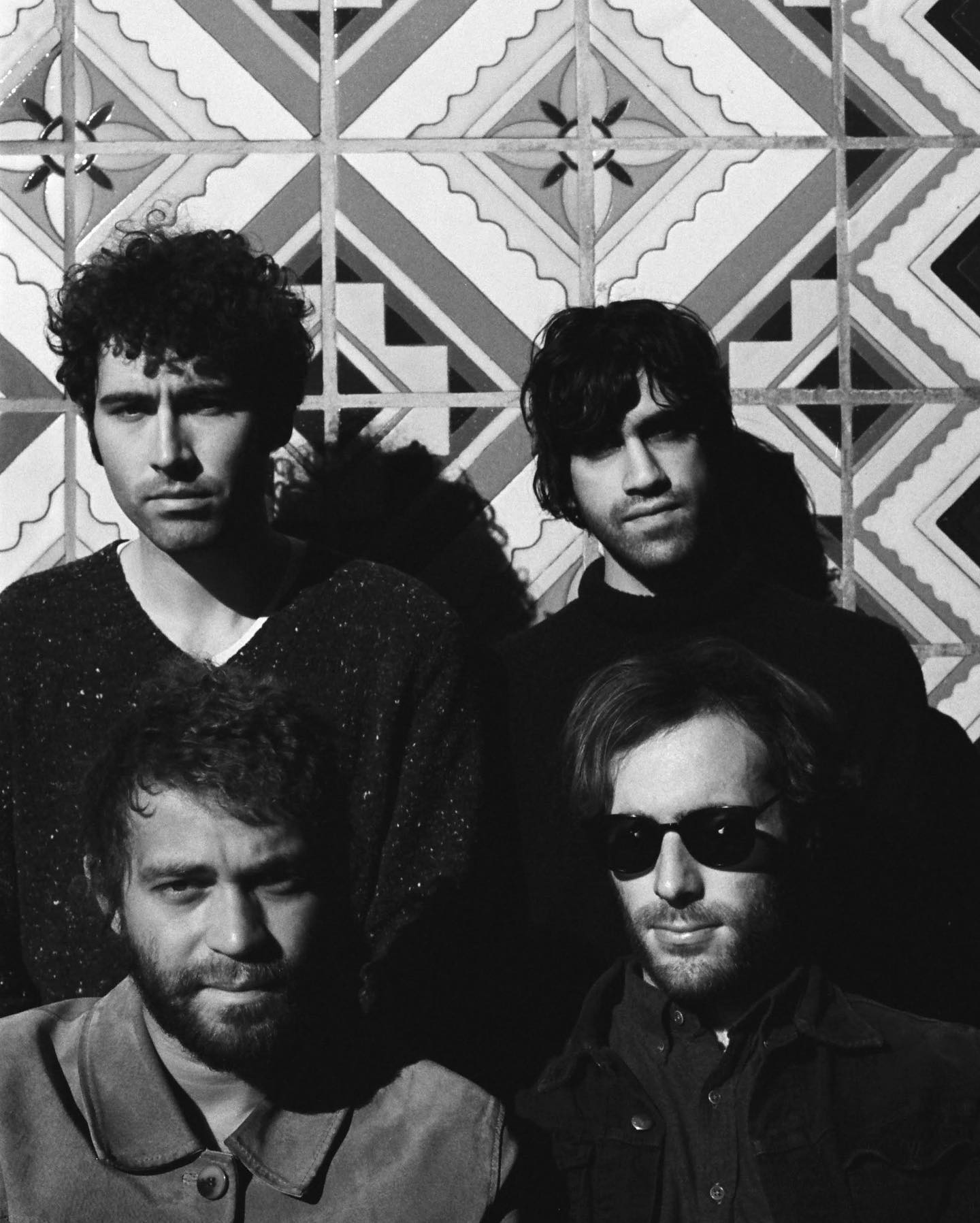
DIIV—Zachary Cole Smith [lead vocals, guitar], Andrew Bailey [guitar], Colin Caulfield [vocals, bass], and Ben Newman [drums]—craft the soundtrack to personal resurrection under the heavy weight of metallic catharsis upheld by robust guitars and vocal tension that almost snaps, but never quite…

The wash of sound that DIIV music uses on studio albums has been toned back ever so slightly in this recording (think brushed drums, piano, electric guitar and bass with acoustic accompaniment) to reveal the gentle beauty behind each song.. yet what a feast for my ears. Thank you for this in the season of comfort, warmth, and thanks. The DIIV songs are so gorgeous, but OH MY just hear their take on My Bloody Valentine’s wash of sound

Eric Clapton’s 1991 live album “24 Nights” will be re-issued in June as “The Definitive 24 Nights”, with two massively expanded super deluxe box sets. Eric Clapton’s ground-breaking run of 24 concerts at London’s Royal Albert Hall were some of the most ambitious shows of his career. Each night featured him performing a career-spanning set with one of three line-ups – a rock band, a blues band, or an orchestra conducted by Michael Kamen.

The original double live album and home video delivered great performances but only covered a fraction of what was filmed and recorded. That’s about to change.”

Eric Clapton’s “24 Nights”, which originally appeared in 1991, culled from 15 superlative performances from a series of concerts that year and in 1990 at London’s famed Royal Albert Hall, where he has appeared more than 200 times. The set clocked in at well over an hour and a half and filled two CDs, but that’s nothing compared with the new limited-edition “The Definitive 24 Nights”. This six-CD (or eight-LP), three Blu-ray box set, released June 23rd, 2023, adds nearly three dozen previously unreleased songs for a total of 48 remastered audio tracks, plus there is video of all the material. It comes with a numbered lithograph and a 48-page, LP-sized hardcover book with abundant photos and extensive liner notes by journalist David Fricke.

All audio has been restored, remixed and remastered and the three types of concert have been effectively formatted into three double albums which all fit on two CDs or three vinyl records (the exception is the Blues concert which fits on 2LPs). The two super deluxe edition box sets bring all of these together, which is why the CD version has six CDs and the vinyl edition has eight LPs.

Both box sets include three blu-rays (unavailable anywhere else), details of which are scant but which clearly will be devoted to the three types of show. A limited theatrical presentation called “Across 24 Nights” is planned for May which features a Dolby Atmos soundtrack, so that suggests the blu-rays included in the box set should also feature a Dolby Atmos soundtrack (not confirmed). “Clapton has performed at the Albert Hall] over 200 times , more than any other artist,” Warner Records said in a statement. “He also holds the record for the longest run of concerts at the venue. He set it in 1990 with 18 shows, then broke it the following year with 24 concerts. These were some of the most ambitious shows of Clapton’s career.

The biggest highlight from the orchestral concert – and possibly the entire boxed set – is the previously unreleased 30-minute epic, ‘Concerto for Guitar.’ Kamen composed the piece especially for Clapton, which made its live debut at Albert Hall.”

Clapton surrounded himself with superlative musicians for these concerts. The roster includes the likes of Johnnie Johnson, Jimmie Vaughan, Chuck Leavell, Phil Collins, Robert Cray, Buddy Guy, Albert Collins, Nathan East, Greg Phillinganes, Steve Ferrone, Ray Cooper and Jerry Portnoy.

Each box set also includes a hardcover book and an individually numbered lithograph featuring a photograph of Clapton by Carl Studna.

The three concerts (Rock, Blues and Orchestral) are also available individually as 2CD+DVD sets or 3LP (Rock, Orchestral) or 2LP (Blues) vinyl sets. The 18-track rock set culls material from throughout Clapton’s career, including his solo work “Wonderful Tonight,” Bob Marley’s “I Shot the Sheriff” as well as his days with John Mayall’s Bluesbreakers “All Your Love”, Cream “White Room,” “Sunshine of Your Love”, Blind Faith Steve Winwood’s “Can’t Find My Way Home” and Derek and the Dominos “Layla”.

The 14-track blues set also draws on the Derek and the Dominos repertoire for Big Bill Broonzy’s “Key to the Highway” and Billy Myles’ “Have You Ever Loved a Woman” and additionally offers such classics as Lowell Fulson’s “Reconsider Baby,” Robert Johnson’s “Sweet Home Chicago,” Lightnin’ Hopkins’ “Black Cat Bone,” Big Maceo Merriweather’s “Worried Life Blues” and “You Better Watch Yourself” and “Everything’s Gonna Be Alright,” both by Walter Jacobs (aka Little Walter).

The 15-song third program finds Clapton’s band backed by the National Philharmonic Orchestra, conducted by the famed late composer Michael Kamen. It includes different versions of some of the songs on the first two sets and a few other numbers. Among them: the spectacular, previously unreleased half-hour “Concerto for Guitar,” which Kamen wrote for Clapton. That concerto is just one of many tracks in this collection where Clapton’s guitar work is nothing short of awe-inspiring. The sounds he draws from his instrument are on par with what Jimi Hendrix produced—in other words, incredible enough to make you understand what prompted graffiti purveyors to spray-paint “Clapton is God” on walls around London and New York in the sixties.

The “Definitive 24 Nights” and the individual “24 Nights” sets will be released on 23rd June 2023 via Warner Music.

Public Image Ltd have announced their first new album in eight years and an accompanying UK tour for later in the year.

The band decided to continue plans to announce their 11th studio album and first album in 8 years, “End of World”, following the sad passing of John’s wife of more than 4 decades, Nora Forster, on 5th April. “End of World” will be released on 11th August 2023 on PiL Official via Cargo UK Distribution, followed by a 38-date UK and European Tour.

Earlier this year, PiL released “Hawaii”, the most personal piece of song writing and accompanying artwork that John Lydon has ever shared. The song is a love letter to John’s wife Nora, who passed away from Alzheimer’s. A pensive, personal yet universal love song that has resonated with many since its release in January, the song sees John reflecting on their lifetime well spent and in particular one of their happiest moments together in Hawaii. John said, “Nora loved the album, she wouldn’t have wanted us to postpone it or change any of our plans.”

Previously he has said of “Hawaii”, “It is dedicated to everyone going through tough times on the journey of life, with the person they care for the most.

PiL is widely regarded as one of the most innovative and influential bands of all time. PiL’s music and vision has earned them 5 UK Top 20 singles and 5 UK Top 20 albums. With a shifting line-up and unique sound – fusing rock, dance, folk, pop and dub – Lydon guided the band from their debut album “First Issue” in 1978 through to 1992’s “That What Is Not”, before a 17 year hiatus. Lydon reactivated PiL in 2009, touring extensively worldwide and releasing two critically acclaimed albums “This is PiL” in 2012 followed by their 10th studio album “What The World Needs Now”… in 2015, and picked up fantastic acclaim from both press and public. “What The World Needs Now”… was self-funded by PiL and released on their own label ‘PiL Official’ via Cargo UK Distribution. In 2018 PiL celebrated their 40th anniversary with a career-spanning box set and documentary, both called ‘The Public Image Is Rotten’, and a 32-date UK/Europe tour, plus dates in Japan. John Lydon, Lu Edmonds, Scott Firth and Bruce Smith continue as PiL. They are the longest stable line-up in the band’s history and continue to challenge and thrive. 

The new album, titled ‘End Of World’, is set for release on August 11th and is dedicated to frontman John Lydon‘s late wife Nora Forster, who died last week at the age of 80. She had been living with Alzheimer’s disease for five years and Lydon had been her full-time carer.‘End Of World’ features the song ‘Hawaii’ as its closing track, The band had used the song in their bid to represent Ireland at this year’s  Eurovision Song Contest, but they lost out to Dublin quarter Wild Youth.

To coincide with the announcement, Public Image Ltd. released the album’s opening track, ‘Penge’, which John has described as “something of a mediaeval Viking epic.”