After three critically acclaimed EPs “Party Food”, “After Party“, and “Nothing Is Real“, they are now finally set to release their debut album,” Killjoy”, which expands their sound but also retains all the energy that made them such an exciting proposition. Coach Party’s“Killjoy” carries an ethos that taps into a desperate desire to live life with the joyous freedom of youth, and a reckoning with just how hard it is to do so. It’s a traverse into the depths of mid-20s despair, in all its resentful, god-complex ridden, horned-up glory. Back in 2019, CoachParty announced their arrival with the frenetic fuzzed-up debut single “Oh Lola.” While they didn’t quite explode out of the Isle of Wight in the same way as fellow islanders Wet Leg Coach Party’s progress has nevertheless been thrilling to watch.
The record is painfully intimate and raucously human; a melodic, crashing fall down the rabbit hole of the dissatisfied mind. When I first heard “Born Leader,” It was one of those catatonic, “holy shit” moments you get when you hear a song that feels like you should’ve been the one who wrote it. With the explosive unhinged rush of songs such as recent single “Parasite” and “Micro Aggression,” but also more reflective moments on tracks such as “Be That Girl” and the wistful “Always Been You.” It’s an album that flows beautifully.
The album does feel like a synthesis—or, perhaps, a culmination—of a band that’s taken its time to get off the ground in the most polished, sharp-toothed iteration it could strain for. But there’s a kernel of inspiration they know they’ve got, and they’re nursing it carefully—and with big plans in mindilljoy
Semisonic, the Nineties rock outfit behind the perennial late-night anthem “Closing Time,” are back with a new song, their first album in over 20 years, “Little Bit of Sun”, out November 3rd.
Semisonic have announced their first new album in over 20 years. “Little Bit Of Sun”, an exploration of acoustically-driven vulnerability and their own indelible mark on the world of power pop, In the wake of “Grow Your Own” and the titular “Little Bit Of Sun,” the band have unveiled another single called “The Rope,” a breakup ode to L.A. that frontman Dan Wilson wasn’t initially sure fit in with the band’s oeuvre. It’s sunny and propulsive, sweetly reflective and self-aware with a bouncy instrumental underpinning
“The Rope” has a bright alt-rock crunch bolstered by brisk horns and piano, as well as a rich halo of backing vocals. The song arrives with a charming music video, directed by Otto Harder and Philip Harder, in which a dog breaks free of its owner and enjoys a bit of time on the lam before getting lonely, spotting a “lost dog” poster, and dashing home.
“The Rope” follows two previously released singles, “Little Bit of Sun” and “Grow Your Own,” both of which will appear on “Little Bit of Sun” as well. The new album was recorded in Semisonic’s hometown of Minneapolis and will feature contributions from Jason Isbell and My Morning Jacket’s Jim James. The band also worked with songwriters like Lori McKenna and Amy Allen, with the latter co-writing “The Rope.”
“My approach as an artist has always been to write from where I am now,” he said. “It’s been two decades since Semisonic made a full record together, so it was interesting to write from the perspective of returning to the band and finding it inspiring but very different. I couldn’t help but think about the early days, about the formative influences that shaped and inspired us, but a lot of the songs are about the present moment in my life.”
Little Bit of Sun will mark Semisonic’s first studio album since 2001’s All About Chemistry, though the band did return with new material in 2020, dropping the EP, You’re Not Alone. Frontman Dan Wilson — who’s enjoyed a very successful songwriting career in the interim, working with artists like the Chicks and Adele — spoke about writing a new album with Semisonic after such a long time.
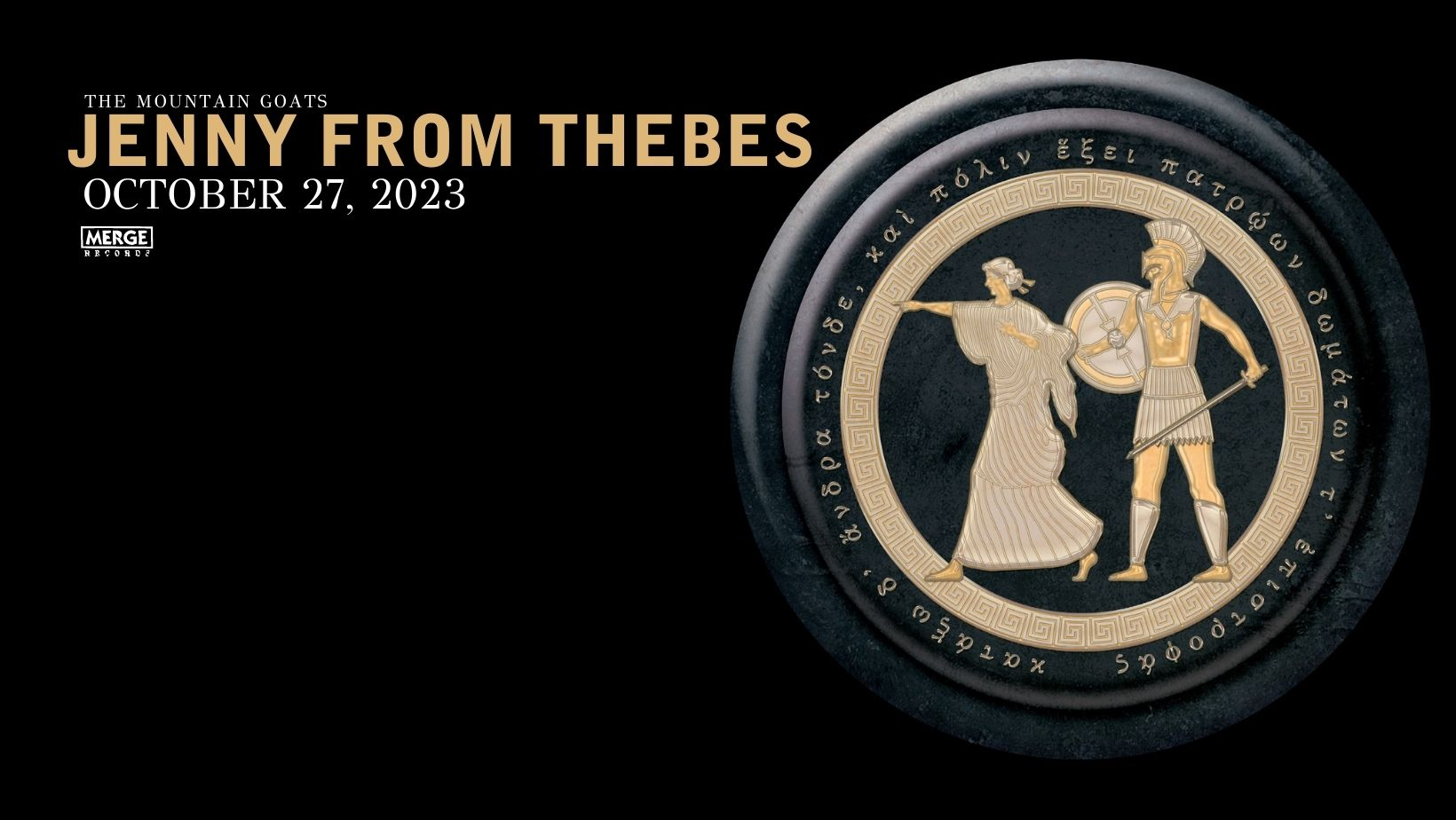
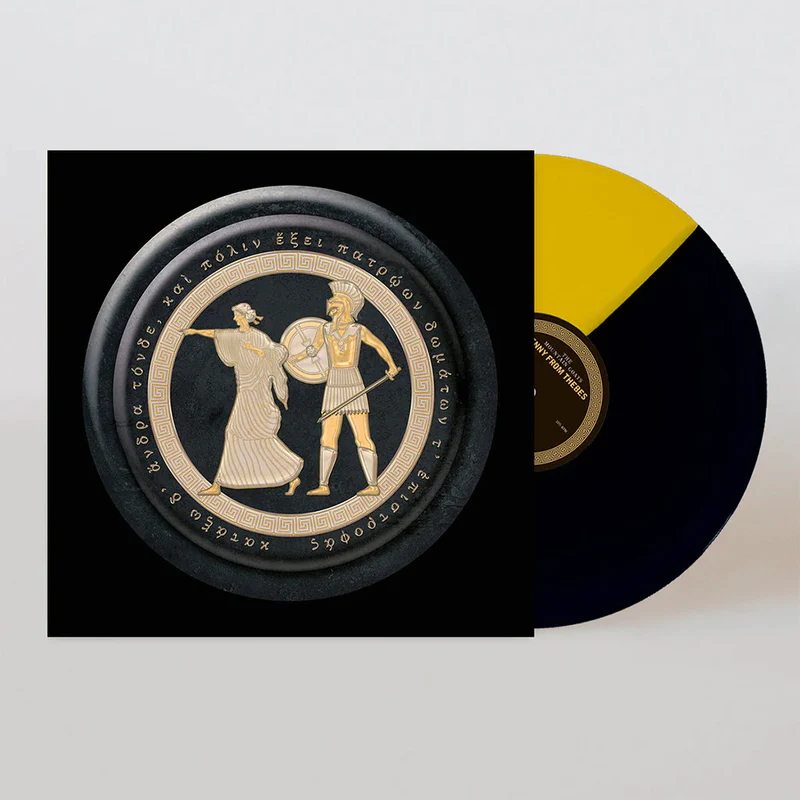
Serving as a sequel to 2002’s “All Hail West Texas”, the new album is “a rock opera about a woman named Jenny, who buys a Kawasaki to ride as far away as she can from a town she’s been carrying on her shoulders too long,” per bandleader John Darnielle. Its 21-year-old predecessor was a loose, rough around the edges and broad-spanning concept album that, over time, has become critically lauded. Our new star Jenny made her first appearance on that LP, and now she gets her story told in full in typically off-kilter Mountain Goats style.
Lead single “Clean Slate” sets the scene of Jenny’s life: The house she rents, the couch surfers she aids, the transformation she’s undergoing. It’s got that special admixture of nonchalance and deep humanity that make the Mountain Goats so irresistible, replete with Darnielle’s crisp drawl and a jazzy, cinematic combination of horns, shakers and piano—all of which set the stage for Jenny’s next chapter.
“Jenny from Thebes” began its life as many albums by the Mountain Goats do, with John Darnielle playing the piano until a lyric emerged. That lyric, “Jenny was a warrior / Jenny was a thief / Jenny hit the corner clinic begging for relief,” became “Jenny III,” a song which laid down a challenge he’d never taken up before: writing a sequel to one of his most beloved albums. The Mountain Goats’ catalogue is thick with recurring characters Jenny, who originally appears in the “All Hail West Texas” track bearing her name, as well as in “Straight Six” from “Jam Eater Blues” and “Transcendental Youth” side two jam “Night Light,” is one of these, someone who enters a song unexpectedly, pricking up the ears of fans who are keen on continuing the various narrative threads running through the Mountain Goats’ discography before vanishing into the mist. In these songs, Jenny is largely defined by her absence, and she is given that definition by other characters. She is running from something. These features are beguiling, both to the characters who’ve told her story so far and to the listener. They invite certain questions: Who is Jenny, really? What is she running from? Well, she’s a warrior and a thief, and, this being an album by the Mountain Goats, it’s a safe bet whatever she’s fleeing is something bad. Something catastrophically bad. “Jenny from Thebes” is the story of Jenny, her southwestern ranch style house, the people for whom that house is a place of safety, and the west Texas town that is uncomfortable with its existence. It is a story about the individual and society, about safety and shelter and those who choose to provide care when nobody else will. Recorded at Tulsa, Oklahoma’s legendary The Church Studio with Grammywinning producer/engineer Trina Shoemaker, “Jenny from Thebes” is a lush collection of showtunes, pushing Darnielle as a vocalist and the Mountain Goats as a band, broadening their sonic palette once again by leaning into influences like Godspell, Jim Steinman, and The Cars. Lifted by Matt Douglas’ horn and string arrangements, the dreamy guitar of Bully leader (and Bleed Out producer) Alicia Bognanno and backing vocals from Kathy Valentine of The Go-Go’s and Matt Nathanson, “Jenny from Thebes” is a widescreen musical in scope, a melodrama of richly detailed characters and sweeping emotions.
“Jenny from Thebes”, out October 27th on Merge Records.
The importance of Sufjan Stevens lies in his classic ability to create great songs (like the full “Illinoise” album), but also to recognize great talent via his Asthmatic Kitty label (Lily & Madeleine got their start on his label.) He has twelve albums in his catalogue with a new one on the horizon.
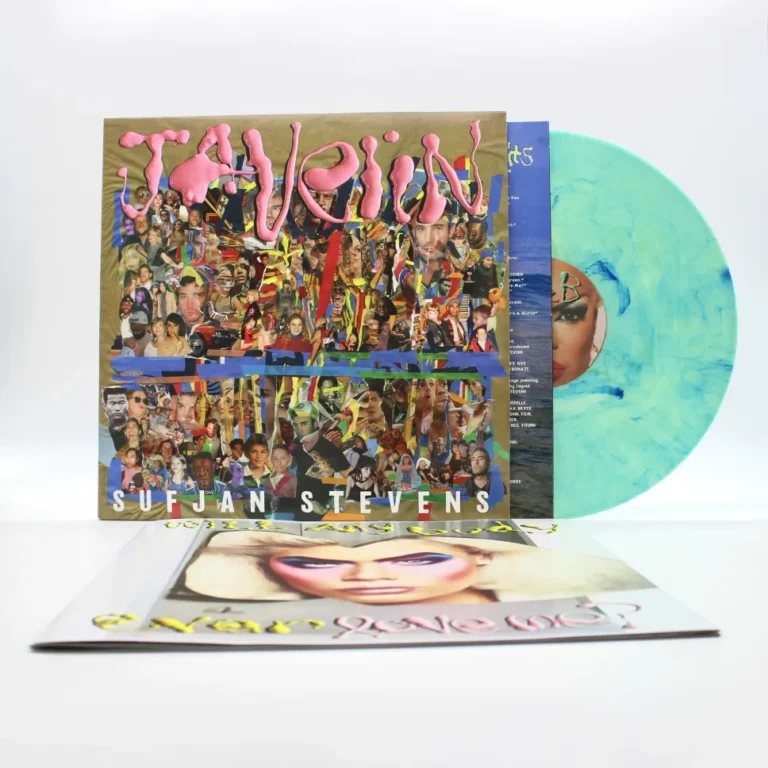
Each track on “Javelin”starts intimately: the trickle of an acoustic guitar, the patter of a lidded piano, and the cascade of a coruscant arpeggio. And then, of course, there is that disarming voice, the throughline in one of the most eclectic catalogue’s of any songwriter this century – soft but strong, as if the very scenes of hurt and hope it is about to share have only galvanized it through the decades. “Javelin” pairs musical sweep with emotional breadth, an entire lifetime of feeling woven into 42-minutes. On “Javelin”, Sufjan, as you may know him best, returns: offering gorgeous if pained glimpses of himself, so that we may see ourselves more fully. This album is classic Sufjan. A must own.
It’s his latest foray in a scattered grouping of primarily singer-songwriter focused LPs, which have seen the artist gain mass acclaim for his evocative, heart-wrenching storytelling style. Lead single “So You Are Tired” is typical Stevens at his most poignant, compassionate and searching with a relentless introspective streak. As insistent on painful honesty as always, You can hear a track from the album below “So You Are Tired”.
On October 6, Sufjan Stevens returns with a new collection of songs contained within “Javelin“. Crafted at his home, all of “Javelin” is his own personal draft. The album will feature 10 new Stevens compositions just how you’d expect them.
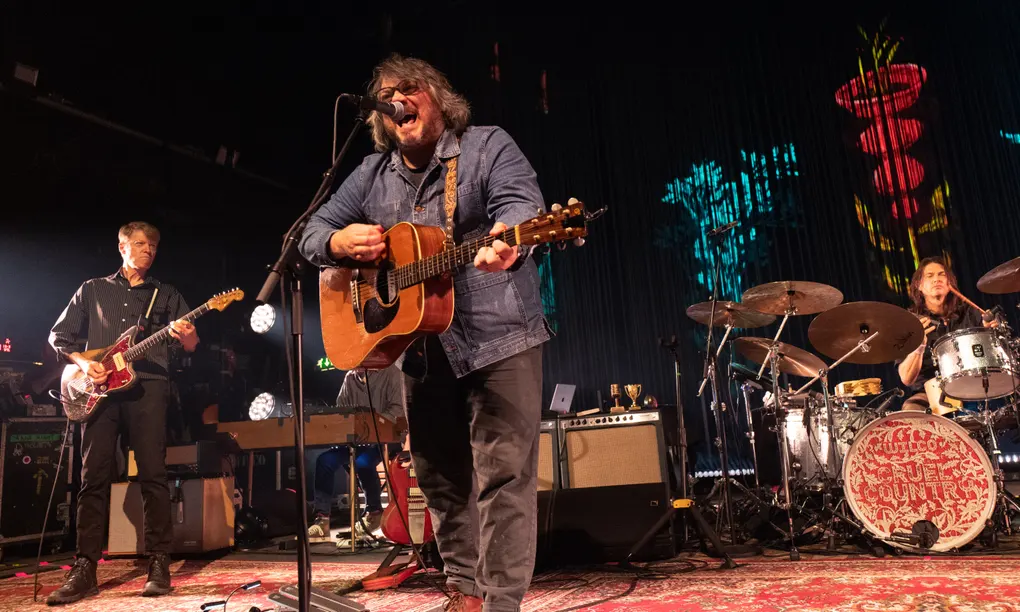
Wilco’s latest and their 13th studio album promises a new pivot for a band long regaled for its ability to reshuffle and renew. Produced by Cate Le Bon, the LP sees Wilco’s first outside production since 2007’s “Sky Blue Sky”. “Cousin” shines with instrumental influence from Le Bon’s glimmering, electric vault. The record explores the strained, persistent human connections of a fractured world, the ever-intertwining relations we can’t ignore despite our best efforts. “I’m cousin to the world,” frontman Jeff Tweedy notes cheekily. “I don’t feel like I’m a blood relation, but maybe I’m a cousin by marriage.” Lead single “Evicted” is Tweedy and Wilco at their folksiest and most desperate.
In typical fashion, a warm, thrumming guitar underlies his imploring twang, a summoning song for a love that, for the band, seems always just out of reach. Nels Cline’s ever-impeccable guitar sparkles in hypnotic, swaying loops as Tweedy layers familiarly over him, but synths and 12-strings carry the tune in new musical directions. “Am I ever going to see you again?” he croons, the eternal question which promises to encircle
Since hitting the scene in 2020 with their stunning debut LP “Introduction, Presence“, Brooklyn-based trio Nation of Language have been consistently churning out delicate, soulful synth-pop swagger ripe with post-punk influences and poetic, thoughtful lyrics. Together, Ian Devaney, Aidan Noell and Alex MacKay are steadfast in their trajectory, quickly ascending into the echelons of the musical zeitgeist. The 2021 album “A Way Forward” cemented Nation of Language’s greatness, and the band capitalized on that with a pair of singles—”Androgynous” and “From the Hill”—in 2022.
Devaney, who hails from Westfield, NJ and is the band’s principal songwriter, nimbly builds nostalgic hooks and loops from such synth-pop and post-punk masters as Kraftwerk, Depeche Mode, Human League, Flock of Seagulls and Talking Heads — into brand new songs that are as irresistible as their predecessors.
A third album, “Strange Disciple”, is coming in September, but, for now, we have “Sole Obsession” to gush over. As always, the synths are shimmering, the bass and drums waltz together in perfect harmony and frontman Devaney’s vocals careen like the perfect amalgamation of Bernard Sumner and Andy McCluskey. It’s a perfect dancefloor number about devotion and human compulsions. To accompany the tune, Nation of Language have released a sublime, cinematic music video that aids in the band’s exploration of desire and fixation.
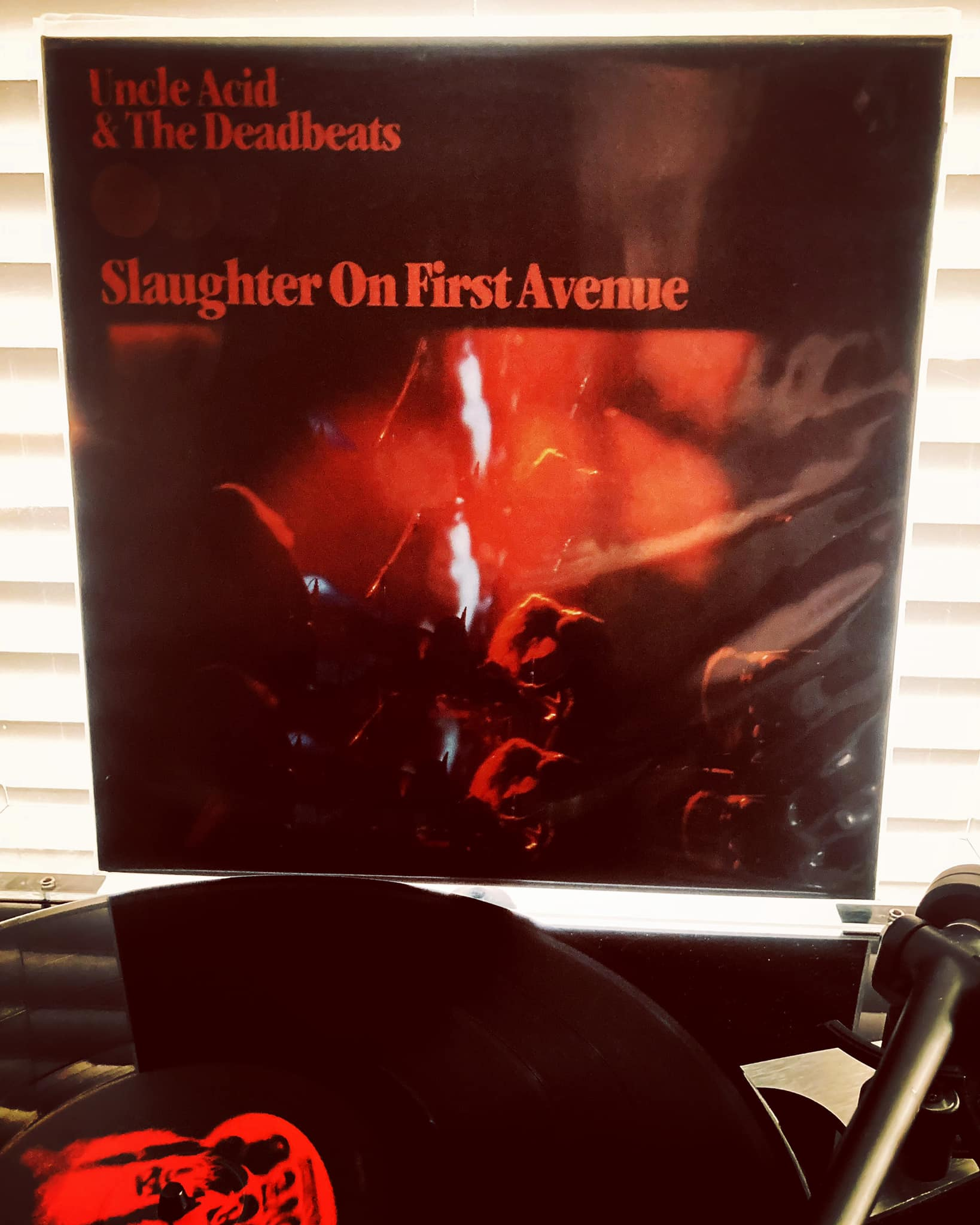
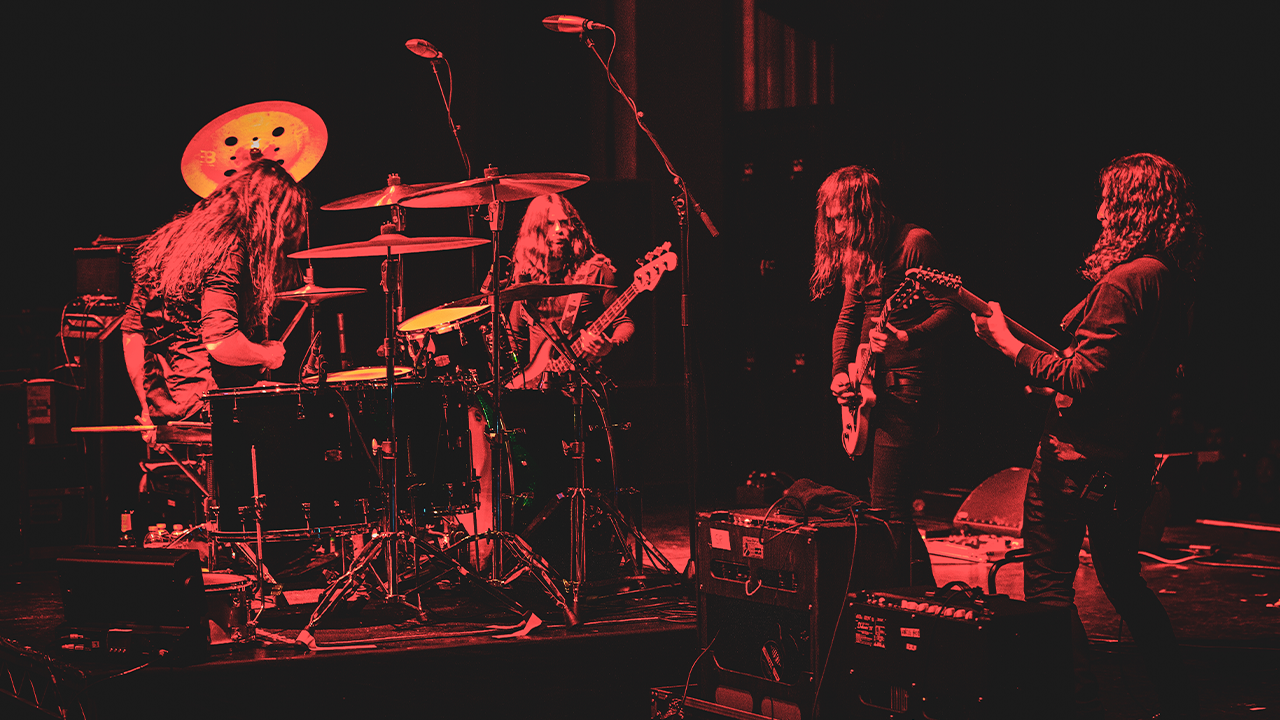
The band announced their new live record “Slaughter On First Avenue” released in July, and you can check out the track “Dead Eyes Of London” right now. “Slaughter On First Avenue” was recorded live at two shows the band performed in 2019 and 2022 at the First Avenue venue in Minneapolis, MN.
“People have been asking for a live record, and sometimes it’s nice to give people what they want,” said frontman Kevin Starrs. “Especially if you follow it up with something they definitely don’t want! Overall it’s a very raw sounding recording, and that’s just how it was on the night. There was no specific reason for choosing the first show, other than some guy just turned up and offered to record it, so we let him! It’s a proper live record with all the mistakes kept in.
“The second show had a few different songs so it made sense to add those in. The first show was better, though. I remember the crowd was pretty wild that night. The second show was more subdued and a bit looser. That was just as gigs started happening again, so I think people were still a bit cautious. Either that or all the wild ones had died!”
There could also be a new Uncle Acid record, Starrs said it’s coming sooner than you think: “Yes, There will be another record which will hopefully appear at some point without warning or explanation,” Kevin Starrs avows. “It will be completely different to anything else we’ve done. You can think of it as a late night detour. Its appeal will be extremely limited but that’s OK… ‘When you’re slapped, you’ll take it and like it!'”.
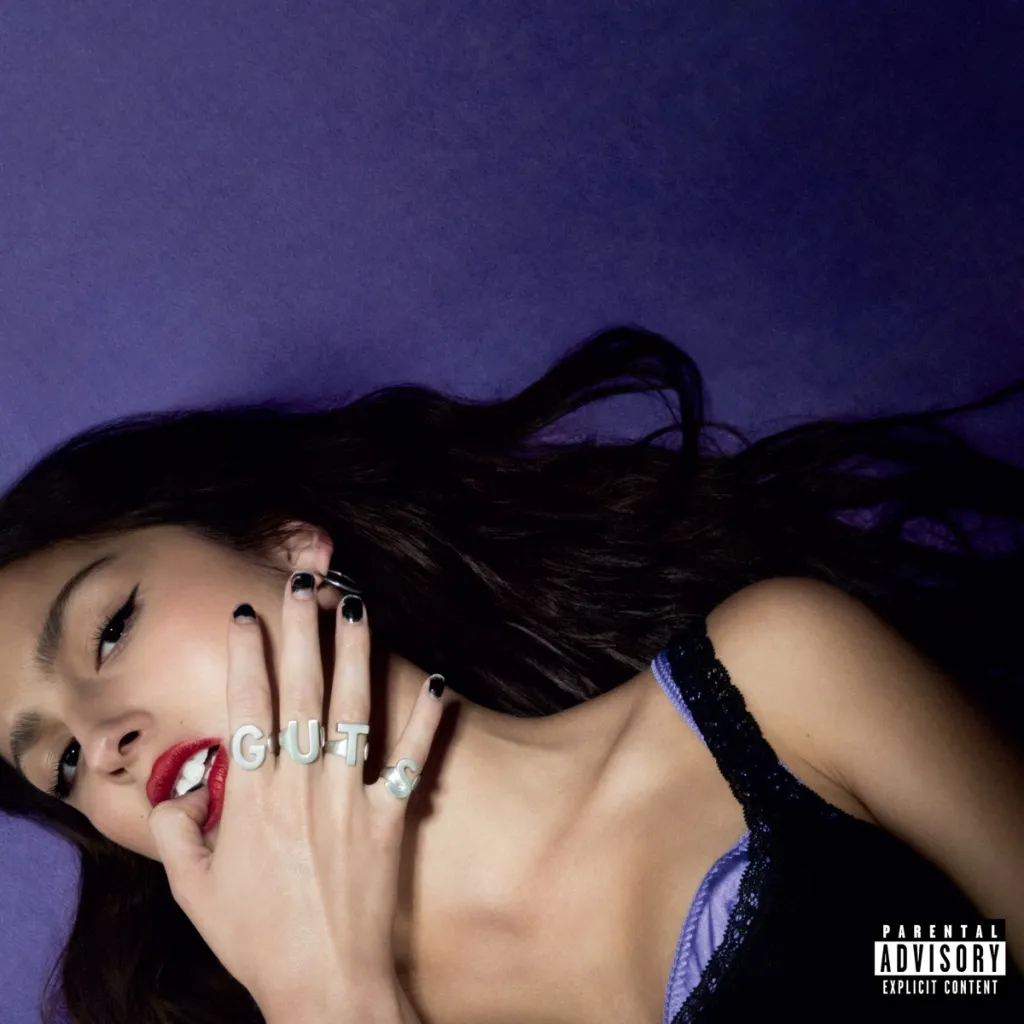
It wouldn’t be outrageous to say that Olivia Rodrigo is the most exciting pop star in the world right now, and the hype around her forthcoming sophomore album, “Guts”, couldn’t have been bigger. , the 20-year-old singer has turned in her second blockbuster smash. It’s another heartbreak-fuelled pop record with a similar amount of unabashed emotion. But Rodrigo’s follow up album also incorporates musical elements inspired by her admiration for 90s and 2000s rock heroes like Katheen Hanna and Jack White as well as her background as a theatre kid.
With a debut like SOUR, the expectations were high—but Rodrigo completely shattered all of them. Lead single “Vampire” was daring and theatrical, a grand evolution for the singer who defied all odds with the record-breaking “drivers license” two years ago.
Her second single, “bad idea right?,” was another top-tier entry by Rodrigo, who is fully tapping into 1990s pop-rock with effortless finesse. “Guts” has cemented her sonic trademark as an instructive vessel of relentless catchiness. The “my brain goes, ‘ah’” chorus in “bad idea right?” will stick with you, as will the rest of this collection. The construction throughout is melodical to an unfathomable degree.
The aptly-titled “love is embarrassing,” a standout track. Rodrigo explains her romantic re-evaluation in the line, “Just watch as I crucify myself/ For some weird second string loser who’s not worth mentioning.” There’s plenty to extract about Rodrigo’s songwriting in just this single line: “Crucify” is her verb of choice (very dramatic), “Weird second string loser” is how she describes her crush (genuinely funny), the chorus it lands in is full of bright guitars and a motorik, New Wave-style beat at its best.
OliviaRodrigo is on top of the world right now, and there’s no way she falls anytime soon.
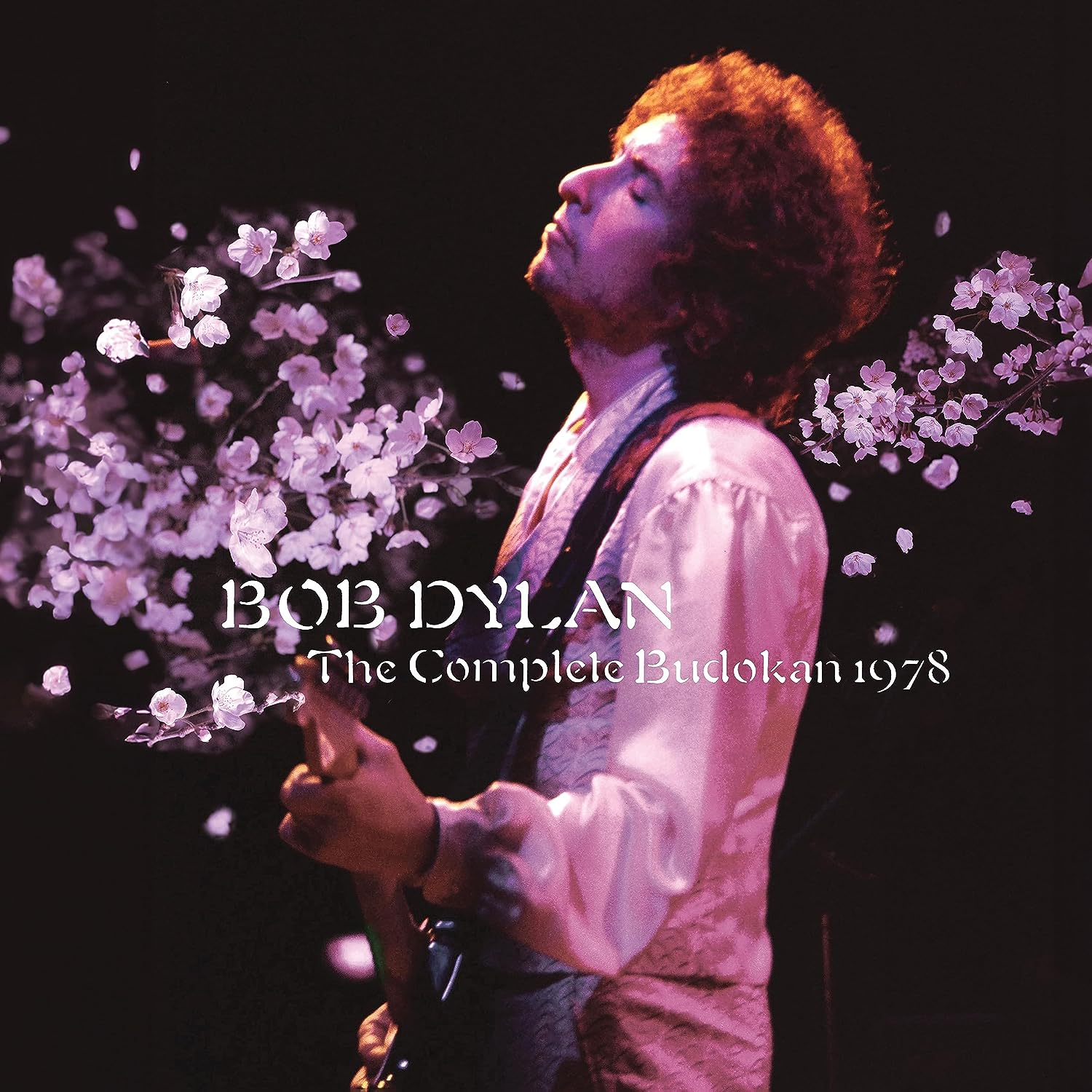
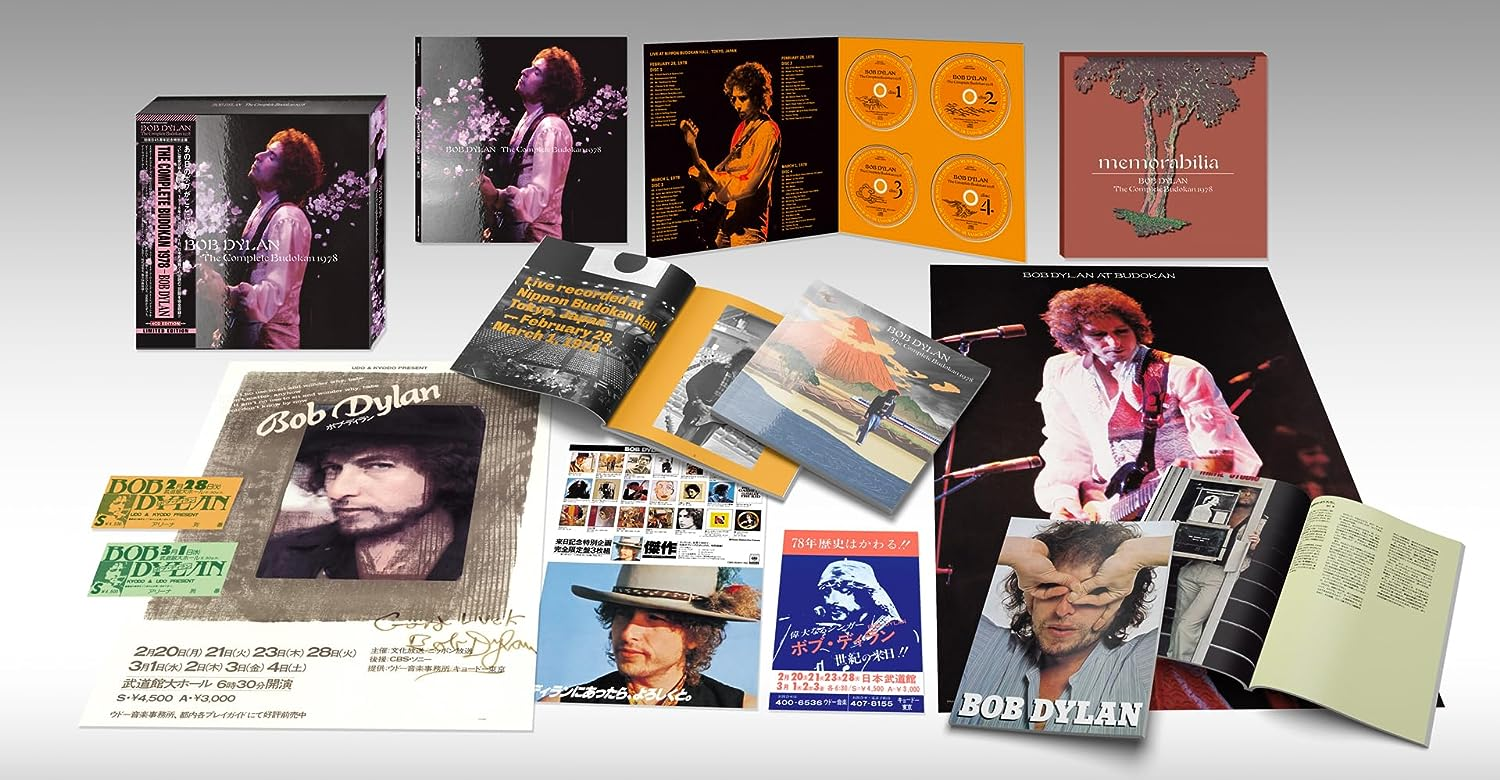
Columbia and Sony’s Legacy Recordings will issue “The Complete Budokan 1978” a new 4CD or 8LP vinyl box that marks the 45th anniversary of Bob Dylan’s 1978 world tour and includes two complete shows from Tokyo’s Nippon Budokan Hall (February 28th and March 1st, 1978). There’s 58 tracks in total, 36 of which are previously unreleased. The audio is newly remixed from the original multi-track tapes.
For his 1978 performances, Dylan (rhythm guitar, harmonica, vocals) led an ensemble featuring Billy Cross (lead guitar), Ian Wallace (drums), Alan Pasqua (keyboards), Rob Stoner (bass, vocals), Steven Soles (acoustic rhythm guitar, vocals), David Mansfield (pedal steel, violin, mandolin, guitar, dobro), Steve Douglas (saxophone, flute, recorder), Bobbye Hall (percussion), Helena Springs (vocals), Jo Ann Harris (vocals), and Debi Dye (vocals). The original Bob Dylan At Budokan album was produced by Don DeVito, who also helmed Dylan’s “Street-Legal“, recorded and released during the 1978 world tour, featuring the same musicians.
With more than a nod to the Tokyo venue, the 4CD box set is imported from Japan and includes a 60-page photo book of sleeve notes and previously unpublished photos of Dylan on-stage and behind-the-scenes. It also includes facsimile memorabilia such as concert tickets, pamphlets, posters, and flyers etc.
This box set is also available in full as an 8LP vinyl collection but that’s only available in Japan. A 2LP vinyl ‘highlights’ edition, called “Another Budokan”, features 16 previously unreleased tracks from the big box.
‘The Complete Budokan’ sees Bob Dylan’s 1978 live album expanded. It now features both complete concerts, newly mixed. 4CD and 8LP vinyl sets available, plus a 2LP ‘highlights’ edition.
We are excited to announce that in celebration of Tom’s Birthday we will be reissuing the album “Mojo” this fall in partnership with Warner Records. “Mojo”, Tom Petty & The Heartbreakers’ 12th studio album, will be reissued on limited-edition translucent ruby red vinyl on October 20th.
What makes “Mojo” special is that it was recorded live in the band’s legendary rehearsal space, “The Clubhouse” in Los Angeles. There are no over-dubs or studio trickery. What you hear is what Tom and the Heartbreakers created live at that time. In 2010, Tom Petty said, “With this album, I want to show other people what I hear with the band. “Mojo” is where the band lives when it’s playing for itself.” As for the songs, “Mojo” showcases Rock ‘n’ Roll, to Country, to electric and acoustic Blues, to classic moody ballads. This limited edition is being released to coincide with the celebration of Tom’s birthday.
“It’s not news that these guys rock… the Heartbreakers have their “Mojo” working like they never have before—which is a fine thing indeed.” — Billboard
“Mojo” is dynamite—Petty and the Heartbreakers’ matured return to the elementary fury of their first golden-twang era, capped by 1981’s “Hard Promises.” — Rolling Stone
recently uncovered in the Petty Archives — a small quantity of original, archival stock “Mojo” 2010 Tour Posters. Shop these treasures from the Vault now, while supplies last.
Direct from the Petty Archives – this dynamic video of Tom and The Heartbreakers playing the seminal Sonny Boy Williamson II track “Help Me” from the “Mojo” Sessions. Tom’s vocal and the bands’ playing are red hot. Hope you enjoy discovering it as much as we did.
Footage shot by Sam Jones and edited by Justin Kreutzmann.
“Help Me” is one of two previously unreleased tracks on the newly remastered, digital exclusive “Mojo [Extra Mojo Edition]out 20th October